
Author: openjargon

  • Top ASX shares to buy for your superannuation fund in May 2024

    An older man throws his hands up in excitement as he rides a carnival swing high up in the air.

    Deciding which ASX shares to buy for your superannuation fund is not easy. After all, you have toiled all your working life to earn this money, and hopefully, it will afford you a happy, financially secure, and stress-free retirement.

    Likewise, your super investment is not something you should constantly meddle with. This means you’ll want the ASX shares within it to be high-quality companies you can hold for the long term — not risky stocks you need to dip in and out of regularly.

    Whether you run your own self-managed super fund (SMSF) or simply like to add a few personal touches to your retail super fund, read on!

    Because we asked our Foolish contributors which ASX shares they reckon deserve a place in your superannuation fund in May.

    Here is what the team came up with:

    6 best ASX shares for your super fund right now (smallest to largest)

    • VanEck Morningstar Wide Moat ETF (ASX: MOAT), $891.95 million
    • Collins Foods Ltd (ASX: CKF) $1.10 billion
    • iShares S&P 500 ETF (ASX: IVV), $7.74 billion
    • Medibank Private Ltd (ASX: MPL), $10.05 billion
    • Coles Group Ltd (ASX: COL), $21.75 billion
    • Westpac Banking Corp (ASX: WBC), $92.60 billion

    (Market capitalisations as of market close 10 May 2024).

    Why our Foolish writers rate these ASX stocks as super!

    VanEck Morningstar Wide Moat ETF

    What it does: This ASX exchange-traded fund (ETF) gives investors exposure to a diversified portfolio of attractively priced US companies with sustainable competitive advantages.

    By James Mickleboro: There are few better investors to follow in the footsteps of than Warren Buffett. Since the 1960s, the Oracle of Omaha has consistently beaten the market and delivered outsized returns for his Berkshire Hathaway business.

    The remarkable thing is that Buffett hasn’t achieved his success by using complex investment strategies. His approach is about as simplistic as it gets on the stock market, and time and time again, he has beaten the market.

    Buffett does this by buying high-quality companies with sustainable competitive advantage at fair prices. The VanEck Morningstar Wide Moat ETF replicates this strategy, making it super easy for investors to invest in companies that Buffett would buy without having to do any research.

    Over the past decade, the index this ETF tracks has generated an average total return of 16% per annum, significantly better than the long-term market average of 10% per annum.

    Motley Fool contributor James Mickleboro does not own units of the VanEck Morningstar Wide Moat ETF.

    Collins Foods Ltd

    What it does: Collins Foods is a major franchisee of KFC outlets in Australia and owns a growing network of KFCs in Germany and the Netherlands. The company is also responsible for the Taco Bell chain in Australia.

    By Tristan Harrison:  I’ve long admired the simple growth potential of this ASX 200 company and recently bought shares. I decided to take advantage of the more than 20% decline in the Collins Foods share price since January.

    What’s simple about the growth? The company just needs to keep opening/acquiring new locations to grow its scale.

    The HY24 result showed everything I think Collins is capable of continuing into the future. Revenue rose 14.3%, underlying earnings before interest, tax, depreciation and amortisation (EBITDA) increased 16.7%, and underlying net profit went up 28.7%. Seeing the profit levels rise (noticeably) faster than revenue is a good sign for future profit scaling of the business.

    KFC Australia saw a same-store sales (SSS) growth of 6.6% in HY24, while KFC Europe’s SSS growth was 8.8%. That’s a solid organic growth rate without taking into account any new stores.

    Collins Foods opened four new KFC locations in Australia in HY24 and eight in the Netherlands. I think Europe’s large population gives the company a long growth runway.

    In terms of the dividend, the annual payout has increased every year over the past decade. The current grossed-up dividend yield is around 4.25%.

    Motley Fool contributor Tristan Harrison owns shares of Collins Foods Ltd. 

    iShares S&P 500 ETF

    What it does: The IVV ETF is a low-cost, index-based ASX ETF that tracks the performance of the 500 largest United States companies comprising the S&P 500 Index (SP: .INX).

    By Bronwyn Allen: I like the kind of stocks you can buy and hold forever for my superannuation fund. My super is a long-term savings vehicle for my retirement, so I want it full of boring yet reliable long-term growth stocks.

    And it helps that the world’s most successful investor, Warren Buffett, has long recommended that no-fuss investors like me avoid individual stock picking and just consistently throw money into low-cost S&P 500 index funds instead.

    He says: “Just keep buying. American business is going to do fine over time, so you know the investment universe is going to do very well.” Buying the IVV ETF means owning a slice of mega global companies like Microsoft, Apple, Nvidia, Amazon, Alphabet, and Meta Platforms.

    The IVV ETF is also one of the 10 cheapest ETFs on the ASX with a management expense ratio (MER) of 0.04%, so it fits Buffett’s brief very well.

    The iShares S&P 500 ETF share price is currently $52.61, up 29% over the past 12 months and it’s 91% higher over five years.

    Motley Fool contributor Bronwyn Allen does not own units on the iShares S&P 500 ETF. 

    Medibank Private Ltd

    What it does: Medibank Private is Australia’s largest private health insurance provider in the country. More than 4 million people entrust their health coverage to Medibank or its more affordable Ahm label.

    By Mitchell Lawler: Health insurance is an industry where size matters. The more members an insurer has, the greater its bargaining power to secure better arrangements with hospitals and other health-based organisations.

    It’s a flywheel effect: More members lead to better prices, which in turn generates more members. Once that flywheel is spinning, competitors can struggle to keep pace.

    Importantly, Medibank Private is a business that I see being as relevant in 30 years as it is today. That’s critical when it comes to holding compounding investments inside a superannuation fund.

    The last thing anyone wants is a chunk of their retirement being vaporised in a business that goes bust. In my opinion, the odds of that happening to Medibank are minuscule.

    Motley Fool contributor Mitchell Lawler does not own shares of Medibank Private Ltd.

    Coles Group Ltd

    What it does: Coles is the second-largest supermarket operator in Australia, with a huge network of stores around the country. Coles also owns the bottle shop chains Liquorland, Vintage Cellars, and First Choice.

    By Sebastian Bowen: The qualities investors typically look for in shares to include in a superannuation fund are stability, certainty, and a reliable dividend. Coles arguably offers all three in spades.

    Coles is a consumer staples stock, meaning it sells goods we all need, rather than necessarily want.

    It’s hard to imagine a future where a decent chunk of the Australian population doesn’t visit Coles to buy food and drinks or stock up on household essentials. As long as there is a local Coles offering these goods at a relatively low cost, Australians will visit it on a regular basis.

    This makes Coles’ earnings base highly defensive, which should help anyone with this company in a super fund sleep well at night.

    Coles has also built up a very strong dividend track record since it was listed on the ASX back in late 2018. The company has yet to deliver a dividend cut and has increased its annual dividends every year since its ASX debut.

    At recent pricing, investors can grab Coles shares with a fully franked dividend yield of more than 4%.

    Motley Fool contributor Sebastian Bowen does not own shares of Coles Group Ltd.

    Westpac Banking Corp

    What it does: Established in 1817 as the Bank of New South Wales, Westpac provides a range of consumer, business, and institutional banking and wealth management services. It has operations throughout Australia, New Zealand, and the near Pacific region.

    By Bernd Struben: I think Westpac shares deserve a place in most every superannuation portfolio.

    The big four bank recently completed all 354 activities of its risk transformation plan, improving its risk governance. Westpac today is a simpler and stronger business than it was in recent years.

    And I was pleasantly surprised by Westpac’s first-half results.

    Despite an inflation-exacerbated 8% increase in half-year operating expenses to $5.40 billion, Westpac’s $3.51 billion net profit, excluding notable items, was down only 1% year-on-year. And with Australia’s economic growth forecast to rebound to 2.5% in 2025, the bank looks well placed to increase those profits.

    Atop announcing a share-price-boosting additional $1 billion worth of on-market share buybacks, management also declared an interim dividend of 90 cents per share. Westpac shares now trade on a fully franked trailing yield of 5.5%.

    The Westpac share price is up 26% in 12 months.

    Motley Fool contributor Bernd Struben does not own shares of Westpac Banking Corp.

    The post Top ASX shares to buy for your superannuation fund in May 2024 appeared first on The Motley Fool Australia.

    Wondering where you should invest $1,000 right now?

    When investing expert Scott Phillips has a stock tip, it can pay to listen. After all, the flagship Motley Fool Share Advisor newsletter he has run for over ten years has provided thousands of paying members with stock picks that have doubled, tripled or even more.*

    Scott just revealed what he believes could be the ‘five best ASX stocks’ for investors to buy right now. We believe these stocks are trading at attractive prices and Scott thinks they could be great buys right now…

    See The 5 Stocks
    *Returns as of 5 May 2024

    More reading

    Suzanne Frey, an executive at Alphabet, is a member of The Motley Fool’s board of directors. John Mackey, former CEO of Whole Foods Market, an Amazon subsidiary, is a member of The Motley Fool’s board of directors. Randi Zuckerberg, a former director of market development and spokeswoman for Facebook and sister to Meta Platforms CEO Mark Zuckerberg, is a member of The Motley Fool’s board of directors. The Motley Fool Australia’s parent company Motley Fool Holdings Inc. has positions in and has recommended Alphabet, Amazon, Apple, Berkshire Hathaway, Meta Platforms, Microsoft, Nvidia, and iShares S&P 500 ETF. The Motley Fool Australia’s parent company Motley Fool Holdings Inc. has recommended the following options: long January 2026 $395 calls on Microsoft and short January 2026 $405 calls on Microsoft. The Motley Fool Australia has positions in and has recommended Coles Group. The Motley Fool Australia has recommended Alphabet, Amazon, Apple, Berkshire Hathaway, Collins Foods, Meta Platforms, Microsoft, Nvidia, VanEck Morningstar Wide Moat ETF, and iShares S&P 500 ETF. The Motley Fool has a disclosure policy. This article contains general investment advice only (under AFSL 400691). Authorised by Scott Phillips.
  • Apple is revamping Siri with generative AI to catch up with chatbot competitors, report says

    Tim Cook
    Analysts and fans alike anticipate Apple will make generative AI announcements at WWDC in June.

    • Apple plans to implement generative AI into its virtual assistant Siri, NYT reported.
    • Apple reportedly wants the AI Siri to be able to chat, summarize texts, and do existing tasks better.
    • The report comes amid fears that Apple is lagging behind competitors when it comes to gen AI.

    Siri is getting a generative AI makeover, according to a new report.

    Apple plans to bring generative AI to its virtual assistant, The New York Times reported Friday. With the technology, Apple hopes Siri will get better at tasks it already does and take on new abilities like summarizing text messages and chatting, rather than responding to one question at a time like it does now, the Times reported, citing three sources familiar with Apple's work.

    The generative AI processing will happen on-device, according to the report — a departure from how chatbot apps like OpenAI's ChatGPT, which is also available on iPhone and Android as well as the web, process users' questions through massive data and cloud servers.

    Apple did not immediately respond to Business Insider's request for comment ahead of publication.

    The report comes amid talk that Apple is playing catchup to competitors on AI, as the company hasn't yet made any generative AI announcements.

    Apple, however, is expected to say more about its work on AI at its annual WWDC conference in June.

    The iPhone company's CEO, Tim Cook, has teased during earning calls that big news about generative AI products is right around the corner.

    This is a developing story…

    Read the original article on Business Insider
  • A Gen Xer struggles to afford housing and groceries, but her income is about $100 too high to get help

    Aerial view of Stillwater, Minnesota
    Stillwater, Minnesota

    • Melinda Binkley, 56, struggles to afford basics but earns 'too much' for assistance, she said.
    • Binkley is part of a growing group who live above the poverty live but can't afford necessities.
    • The federal poverty line doesn't account for cost-of-living differences, leaving many without help.

    Melinda Binkley, 56, has tried to apply for safety net programs before — like SNAP — but she's told her household makes too much money, usually by less than $100.

    "I go through all that legwork, and I get everything that's on the application," Binkley said."Then, within days, they are either emailing me or calling saying 'you're too high'… I feel like it wastes my time."

    Binkley lives in Stillwater, Minnesota and said she receives around $1,499 a month in Supplemental Security Income benefits, according to documents reviewed by Business Insider. She doesn't currently work due to medical reasons, but has in the past. BI verified that her husband brings home about $1,200 every two weeks from his job at a medical supply company, but Binkley said his income varies because he has health issues and can't always work a full-time schedule.

    The couple is part of a growing number of Americans who live above the federal poverty line but struggle to afford basic necessities. The poverty line isn't adjusted to reflect cost-of-living differences in individual cities or states and is set at $20,440 a year for a family of two.

    About 29% of US households are now ALICEs — people who are asset-limited, income-constrained, and employed. This compares to 13% of Americans who live below the federal poverty level, according to the Census Bureau's American Community Survey data and cost-of-living estimates analyzed by United Way's United For ALICE program.

    "There is nothing in between that allows people to get assistance or help of any sort," Binkley said, referring to the gap between the poverty line and middle class. "We always tend to fall right in that part of the economy."

    Binkley hopes to move one day

    Primarily, Binkley said she struggles with her rent and utility bills. She has worked out a deal with her landlord where she can make different payments for rent whenever she and her husband have the funds, but she worries that they might face eviction if they fall any further behind, she said.

    Binkley said extreme temperatures in Minnesota and limited insulation in her home also mean she can pay almost $5,000 dollars anually in electricity bills to keep the heat on.

    For food, Binkley said she is especially thankful for her local food pantries, where she often goes to pick up canned goods. However, she said there used to be more food pantry options available during the pandemic when "everybody was having issues."

    Binkley added that she can afford to go to the grocery store sometimes, but only for basic, perishable goods like milk and bread.

    Although Binkley is enrolled in Medicare and her husband gets a basic healthcare plan through work, she estimates they pay at least $350 a month out-of-pocket for medications — and it's often more.

    "My husband will go without his meds, especially the more expensive ones," she said. "He will go without to make sure that I have mine, and I don't like that."

    Binkley hopes she can leave Minnesota soon for Idaho. Her sister, whom she says is her biggest supporter, lives there and Binkley wants to be closer.

    She's slowly trying to prepare herself and her husband for the move by sorting through their belongings and trying to stabilize finances. In the meantime, she's doing her best to "make ends meet."

    "That is one thing that keeps driving me to make my payments, get things caught up, and set a little bit aside each week or each month, Binkley said. "Being able to use a big UHaul and finally get out of here."

    Are you making above the poverty line but still struggling to afford daily life? Reach out to this reporter at allisonkelly@insider.com.

    Read the original article on Business Insider
  • Read the email Target sent employees about changes to its Pride collection after ‘challenging’ last year

    A Pride month display at a Target in Wisconsin
    A Pride month display at a Target in Wisconsin last year.

    • Target is shrinking its Pride celebration this year following last year's backlash.
    • On Friday, the company emailed members of the employee resource group for LGBTQ+ supporters.
    • "As we all know, last year was challenging, and we've made some changes this year," the note said. 

    Target responded to media coverage in an email to LGBTQ+ employees after news broke that the retailer plans to shrink the number of stores carrying its Pride collection this year, according to a memo obtained by Business Insider.

    On Friday, Target confirmed it will reduce the number of stores that carry its assortment of LGBTQ+ merchandise for Pride month in June.

    The company said it will offer a collection online and certain stores "based on historical sales performance." The reduction, first reported earlier Friday by Bloomberg, is a sharp departure from prior years when Target featured Pride displays prominently at all of its stores across the US.

    Shortly after Target released its public statement, the company's VP of Brand Marketing Carlos Saavedra emailed the Pride+ Business Council, which is Target's employee resource group for LGBTQ+ supporters.

    In the note, obtained by Business Insider and reproduced in full below, Saavedra says teams across Target have been working on this year's plans "for months" and were preparing an internal preview of the campaign for May 14. Online Pride collections in prior years have launched as early as May 1.

    "As we all know, last year was challenging, and we've made some changes this year based on guest insights and sales trends," Saavedra said. "Stores were chosen based on where we've historically seen the strongest sales demand."

    Saavedra also noted the disruption caused by Friday morning's media attention: "This isn't the way we envisioned kicking off Pride, and we hoped you'd be one of the first audiences to hear about our plans."

    A source on the council told BI that the employee group was previously much more involved in highlighting vendor partners for Pride, but that did not happen this year.

    Read the email from Target to the LGBTQ+ employee group:

    Pride+ community,

    As you know, team members across Target have been working on our Pride 2024 plans for months. Ann, Jeff and I were looking forward to sharing an overview of all the ways we'll celebrate at our Pride+ meeting on May 14.

    Unfortunately, the opportunity to give you a preview was interrupted by some external media coverage. Of course, this isn't the way we envisioned kicking off Pride, and we hoped you'd be one of the first audiences to hear about our plans. Still, we won't let this distract us from the intent behind this month – celebrating and supporting our amazing community.

    While you may have already seen media coverage, there are a few points we'd like you to hear directly from us ahead of our meeting on May 14:

    1. Our Pride+ community has once again poured time and energy into a fantastic slate of events to help us celebrate, grow and connect. Thank you to each one of you who played a role. We're excited to share all the details on Tuesday!
    2. As we have for several years, Target will have a presence at local Pride events, including parades in Minneapolis, New York City and other local communities – reinforcing our commitment to the LGBTQIA+ community.
    3. We will once again offer a Pride assortment to help our guests celebrate. As we all know, last year was challenging, and we've made some changes this year based on guest insights and sales trends. That includes a more curated assortment that's rooted in celebration across adult apparel, home and food and beverage. The assortment will be available to everyone online and in select stores. These stores were chosen based on where we've historically seen the strongest sales demand.

    Above all, please know our intention is to bring our culture of care to life for our LGBTQIA+ team members – not just during June, but year-round. We remain committed to this wonderful community, and we are so excited to celebrate Pride with you all.

    As always, I'd like to end by expressing our gratitude to each of you. Thank you for all you do to make Target a caring, supportive and welcoming place. We look forward to seeing many of you on May 14.

    Carlos, Ann and Jeff


    If you work for Target and would like to share your perspective, please contact Dominick Reuter via email or text/call/Signal at 646-768-4750. Responses will be kept confidential, and Business Insider strongly recommends using a personal email and a non-work device when reaching out.

    Read the original article on Business Insider
  • Here are 2 top ASX 200 shares I’d buy now for passive income

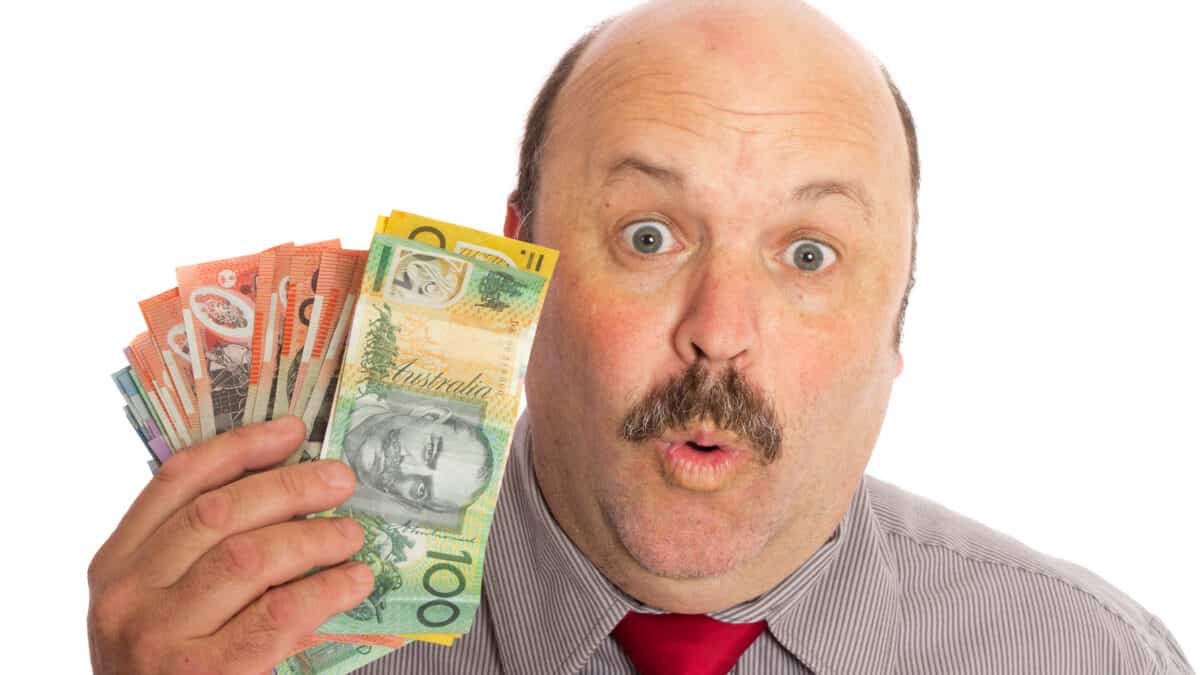
    Man holding Australian dollar notes, symbolising dividends.

    When it comes to reliable passive income, Aussie investors have a large field of quality dividend stocks to choose from.

    In narrowing the field down to just two, I’ve limited myself to S&P/ASX 200 Index (ASX: XJO) dividend stocks.

    That’s because the bigger companies tend to have less volatile share price moves. And their dividend payouts tend to be more reliable than some of their smaller peers.

    I’ve also drilled down to ASX 200 companies that pay fully franked dividends. This should see me holding onto more of my passive income at tax time. In the long term, those franking credits can make a particularly big difference in retirement.

    And while two stocks aren’t enough to offer proper diversification, I do want to ensure that both ASX 200 shares I’d buy now for passive income operate in distinctly different markets.

    Finally, I need to keep in mind that future yields may be higher or lower than past yields, depending on a range of company-specific and macroeconomic factors.

    With that out of the way…

    Two ASX 200 stocks for outsized passive income

    The first company I’d buy now for passive income is ASX 200 mining stock Fortescue Metals Group Ltd (ASX: FMG).

    Fortescue enjoyed a strong first half of FY 2024.

    For the six months ending 31 December, the company reported a 41% year on year increase in net profit after tax (NPAT) to US$3.3 billion.

    In light of the profit surge, management boosted the interim dividend by 44% from the prior year to $1.08 per share. Eligible investors will have received that payout on 27 March.

    Fortescue also paid a final dividend of $1.00 per share on 28 September.

    That brings the full year’s passive income payout from the ASX 200 miner to $2.08 per share.

    At Friday’s closing price of $26.21 a share, this dividend gem trades on a fully franked trailing yield of 7.9%.

    Which brings us to the second company I’d buy now for outsized passive income, ASX 200 bank share Westpac Banking Corp (ASX: WBC).

    Westpac reported its half-year results this past week.

    Despite the big four bank’s net profit before one-offs declining 8% year on year to $3.51 billion, management declared an interim dividend of 75 cents per share as well as a 15 cents per share special dividend, both fully franked.

    At 90 cents per share, that’s up almost 29% from last year’s interim dividend. This is the kind of growth I like to see. It’s too late to snag that payout, but investors who owned shares at market close on Tuesday 7 May, can expect to be paid on 25 June.

    Westpac shares also delivered a final dividend of 72 cents a share, paid on 19 December.

    That brings the bank’s full-year passive income payout to $1.62 a share.

    At Friday’s closing price of $26.66, Westpac shares trade on a fully franked trailing yield of 5.5%.

    The post Here are 2 top ASX 200 shares I’d buy now for passive income appeared first on The Motley Fool Australia.

    Wondering where you should invest $1,000 right now?

    When investing expert Scott Phillips has a stock tip, it can pay to listen. After all, the flagship Motley Fool Share Advisor newsletter he has run for over ten years has provided thousands of paying members with stock picks that have doubled, tripled or even more.*

    Scott just revealed what he believes could be the ‘five best ASX stocks’ for investors to buy right now. We believe these stocks are trading at attractive prices and Scott thinks they could be great buys right now…

    See The 5 Stocks
    *Returns as of 5 May 2024

    More reading

    Motley Fool contributor Bernd Struben has no position in any of the stocks mentioned. The Motley Fool Australia’s parent company Motley Fool Holdings Inc. has no position in any of the stocks mentioned. The Motley Fool Australia has no position in any of the stocks mentioned. The Motley Fool has a disclosure policy. This article contains general investment advice only (under AFSL 400691). Authorised by Scott Phillips.

  • Despite Biden’s warning, Israel’s Netanyahu tells TV personality Dr. Phil there’s ‘no other choice’ but to assault Rafah

    Israeli Prime Minister Benjamin Netanyahu.
    Israeli Prime Minister Benjamin Netanyahu.

    • Israel's Netanyahu told Dr. Phil he plans to assault Rafah despite US warnings.
    • US President Joe Biden has threatened to cut off weapon shipments if Israel presses forward.
    • Netanyahu reaffirmed his goal of eradicating Hamas and returning hostages.

    After President Joe Biden threatened to withhold additional weapons if Israeli forces pressed forward with a ground assault of the southern Gaza city of Rafah, Israeli Prime Minister Benjamin Netanyahu said an assault on Rafah is the only way to defeat Hamas and reiterated that Israel will "stand alone" if it must.

    "We will do what we have to do to protect our country, protect our future," Netanyahu said in an interview with television personality Phil McGraw, more commonly known as Dr. Phil, that aired Thursday.

    "That means we will defeat Hamas, including in Rafah, we have no other choice," the prime minister said.

    On Wednesday, Biden warned that he would cut off weapon shipments to Israel if its military moved forward to attack Rafah, where over one million Palestinian civilians reside and have sought refuge following Israel's ground offensive in the Gaza Strip.

    "If they go into Rafah, I'm not supplying the weapons that have been used historically to deal with Rafah, to deal with the cities, to deal with that problem," Biden said in an interview with CNN's Erin Burnett, adding that "we're not going to supply the weapons and the artillery shells have been used."

    Last week, the US put a hold on a shipment expected to contain 1,800 2,000-pound bombs and 1,700 500-pound bombs. There is now a possibility that more weapons may be withheld.

    Many of these weapons are precision weapons, but they still have the potential to cause significant collateral damage.

    "If you want to avoid civilian casualties, you need these weapons rather than imprecise weaponry," Netanyahu argued during the interview, referring to US precision weapons. "If Israel has to stand alone, we we'll stand alone."

    When he was asked why his goal is to eradicate all of Hamas and its battalions, Netanyahu claimed that Hamas is trying to blackmail Israel in order to stay in Gaza, establish power, and commit an event similar to the Oct. 7 terror attack.

    In addition to eliminating Hamas' battalions, Netanyahu also confirmed that his goals of getting hostages back has not changed since the start of Israel's war with Hamas.

    "I've known Joe Biden for many years, 40 years and more. We often had our agreements, but we've had our disagreements. We've been able to overcome them. I hope we can overcome them now," he said.

    Read the original article on Business Insider
  • The Apple ‘crush’ ad for the new iPad wasn’t bad, actually

    a squishy ball being crushed for an Apple ad
    A stress ball gets crushed by a hydraulic press in Apple's latest ad. Yes, it was shocking to some, but the backlash was extreme.

    • Apple's "crush" ad for the new iPad Pro drew massive backlash.
    • Apple apologized, saying it "missed the mark" and pulled the ad from TV.
    • But seriously folks … it's just an iPad ad. 

    There's been a huge backlash to the ad Apple put out this week to promote its updated iPads. In the ad, a hydraulic press squishes a piano, trumpet, books, paint cans — and then reveals the new iPad Pro.

    The sentiment that this was "off" was immediate — to many, it was a dystopian scenario where tools of human art and creativity are destroyed and replaced with a machine. It hit a nerve in the current moment of anxiety about AI having the potential to replace humans, especially in the arts.

    The blowback to the iPad ad went far beyond just a handful of disgruntled tweets from the anti-tech peanut gallery — it became its own mini-crisis news cycle, and even people in tech piled on. ("Steve wouldn't have ever shipped that ad," tweeted Y Combinator founder Paul Graham about Steve Jobs.)

    Eventually, Apple told AdAge that it was canceling the TV run of the ad and admitted that it "missed the mark."

    [youtube https://www.youtube.com/watch?v=ntjkwIXWtrc?feature=oembed&w=560&h=315]

    But, please. Let's be serious here. I'm all for analyzing advertisements and thinking critically about how large companies market themselves. Noting that this ad had a darker allegorical meaning —the CRUSHING of humanity's soul and replacing it with a machine — is fine. Well done.

    But come on. It's also very clear that the point of the ad is to show off that the new iPad is very thin. It can pack a lot of apps into a small package.

    It's just not that deep.

    The iPad ad concept is simply pretty dull

    The concept of the ad is so basic that people have noticed it's not even new — a 2008 ad for a camera is nearly identical: a hydraulic press crushes a bunch of bulky physical camera parts to reveal the new slim digital camera.

    I'd wager that Apple wasn't intentionally copying the 2008 ad; rather, the idea is so obvious and dull that more than one company thought it up. Plus, crushing things in hydraulic presses to watch them go sploosh is a whole meme on TikTok and YouTube. A YouTube channel dedicated to hydraulic press crush videos has more than 9 million followers.

    I might be a little more nervous if this ad weren't for an iPad. Let's say OpenAI made an ad crushing up books, newspapers, and magazines and then revealed the ChatGPT logo. As someone whose job is "generating short articles of text," well, that might make me a little sweaty.

    But this is an ad for a freaking iPad. It's not trying to replace pianos; it's a tablet with GarageBand software installed. It's not replacing painting; it's a tool with graphic design apps. If the iPad aspires to actually replace anything, it would be a laptop — Apple's own product. iPads have been around for over a decade, and the only thing they've successfully replaced is the in-flight entertainment system on a plane for a preschooler.

    We may have techlashed too close to the sun

    The fact that the outrage was so strong about this ad is baffling to me. I spend a lot of my time thinking about the sinister ways that tech companies are causing real harm, or are developing products without thinking through the possible risks. There's plenty of examples of this. Does Apple as a company do bad things? I'm sure!

    But debuting a thinner iPad Pro … that's … not it. In fact, a thin iPad sounds very nice! A good thing! I think it's cool that an iPad can do all those things and be thinner than a phone. Neat!

    Apple is masterful at carefully crafting its image through its marketing, so it's not unreasonable to over-analyze its advertisements. But the reaction to this ad feels like a knee-jerk sentiment that anything tech is bad and anti-human. Sometimes that's true! But sometimes … an iPad is just an iPad.

    Read the original article on Business Insider
  • The oldest shopping mall in each of the 50 states

    the arcade cleveland
    The Arcade in Cleveland is one of the oldest indoor shopping centers in the entire country.

    • Shopping malls were some of the most popular hangout spots in the late 20th century.
    • Some are still open to shoppers, while others have been demolished or redeveloped.
    • From tiny arcades to massive malls, here is the oldest mall in every state.

    If you grew up in the US during the last several decades, there's a good chance your local mall was the place to be after school or on weekends.

    After World War II, developers started building massive shopping complexes, usually in the suburbs or on the outskirts of cities. Anchored by department stores like Macy's, Sears, and Nordstrom, the centers contained dozens or hundreds of shops, as well as spaces for musical performances, food courts, water fountains, and other attractions.

    While many of these early monuments to consumerism are still standing, others have been torn down to make way for apartments, big-box stores, or other developments. 

    Business Insider found the oldest mall in each of the 50 states. Here's the full list.

    ALABAMA: Eastwood Mall in Birmingham opened in 1960.
    A Party City at a shopping mall in Birmingham, Alabama
    A Party City on the site of the former Eastwood Mall.

    When Eastwood Mall opened in 1960, it was the third-largest mall in the nation with 300,000 square feet. It had 43 stores and 2,200 parking spaces. The mall was closed in 2004 when tenants went out of business, and the mall was demolished two years later. 

    Today, the site is home to a new shopping center, including a Walmart and a Party City.

    ALASKA: Bentley Mall in Fairbanks opened in 1977.
    bentley mall
    Bentley Mall is still in operation.

    Although Bentley Mall opened in 1977, the shopping center is still in operation today. It's the only enclosed shopping center in North Fairbanks, Alaska, with national brands including Claire's, Papa John's, and Hot Topic.

    ARIZONA: Christown Spectrum Mall in Phoenix opened in 1961.
    Holiday decorations, including a Christmas tree and a lighted ornament-shaped entryway, sit near an entrance to the Christown Spectrum Mall.
    Holiday decorations stand near an entrance to the Christown Mall.

    When the Christown Spectrum Mall opened its doors in 1961, it was the biggest mall between Houston and Los Angeles. It was also the first enclosed, air-conditioned mall in the state. Today, the mall is still in operation with around 50 stores and dining options

    ARKANSAS: The Phoenix Village Mall in Fort Smith opened in 1970.
    Irish Maid Donuts, a shop at Phoenix Center, is seen on the site of the former Phoenix Village Mall in Fort Smith, Arkansas.
    A Donut shop on the site of the former Phoenix Village Mall.

    The Phoenix Village Mall was the first mall to open in the state and had 489,000 square feet. It was a popular destination for shoppers until Central Mall was opened in the '80s. The Phoenix Village Mall was closed in the early 2000s as retailers went out of business. 

    Today, the site is still home to a shopping center, including a Goodwill thrift store and a donut shop, though it's much smaller than the original.

    CALIFORNIA: Lakewood Center in Lakewood opened in 1950.
    lakewood center calif
    Lakewood Center was the first mall in California.

    When Lakewood Center opened in the '50s, it was the first shopping mall in the state. At first, it was a four-story shopping center but it grew to include additional shops, offices, a hospital, a bowling alley, and a post office. It quickly became a "shopping city." Today, the mall is still in operation and houses close to 200 stores

    COLORADO: Cherry Creek Shopping Center in Denver opened in 1949.
    cherry creek shopping center
    Cherry Creek Shopping Center still attracts shoppers.

    When Cherry Creek Shopping Center first opened in 1949, it was the third mall in the country. The mall underwent a complete renovation and expansion in 1990, and it's still in operation today, housing anchor stores Nordstrom, Neiman Marcus, and Macy's. 


    CONNECTICUT: Ridgeway Center in Stamford opened in 1947.
    A Starbucks at Ridgeway Shopping Center in Stamford, Connecticut.
    A Starbucks at Ridgeway Center.

    Ridgeway Center was not only the first mall in Connecticut, but it was also the first one in New England. When it opened, it was 110,000 square feet of space, housing stores like Pennsylvania Drug, Deena's, and The Lurie Company. The mall is still in operation today and has over 30 stores

    DELAWARE: Concord Mall in Wilmington opened in 1968.
    concord mall delaware
    Concord Mall remains open.

    Concord Mall opened in the late '60s and has remained a landmark in the Wilmington community for decades. The 800,000-square-foot mall is still operating these days with just over 50 stores and restaurants.

    FLORIDA: Biscayne Shopping Center in Miami opened in 1955.
    Sabor Tropical Supermarket in Miami
    A supermarket at Midpoint

    Biscayne Shopping Center had 38 stores and a restaurant when it opened in the '50s as an open-air shopping center. It was also home to Miami's first JCPenney. Today, the shopping center is still operating but is known as Midpoint instead of Biscayne Shopping Center.


    GEORGIA: Lenox Square in Atlanta opened in 1959.
    lenox square mall
    Lenox Square is still open and attracting shoppers.

    Ten years after Lenox Square mall opened in Atlanta, it was the largest shopping mall south of Washington, DC. It was estimated that 30,000 people came to shop at the stores every day on average. Today, the mall is still in operation with close to 300 stores

    HAWAII: Kahala Mall in Honolulu opened in 1954.
    kahala mall hawaii
    Kahala Mall opened up in 1954.

    When Kahala Mall opened in 1954, it was known as Waialae Shopping Center. At first, there was a grocery store, a drugstore, and a department store. Under its new name, the mall is still in operation and has a Macy's and Whole Foods.

    IDAHO: Karcher Mall in Nampa opened in 1965.
    karcher mall idaho
    Karcher Mallgot a facelift in 2019.

    Karcher Mall in Nampa is the oldest mall in Idaho and has been open for 58 years. In 2019, however, the mall started undergoing a complete renovation of the 37-acre property. Three years later, it changed owners and was renamed District 208.

    The complex is now being overhauled to include apartments, an "amenity-packed clubhouse and a swimming pool" in addition to retail space, Idaho Business Review reported in September, when the first group of apartments welcomed residents.

    ILLINOIS: Market Square in Lake Forest opened in 1916.
    A Starbucks at Market Square in Lake Forest, Illinois
    A Starbucks at Market Square.

    Market Square is said to be the "first planned shopping center" in the country, dating back over 100 years. Today, the shopping center is still in operation as a historic landmark in the community, and it houses brands like Williams-Sonoma, Starbucks, and Lululemon.

    INDIANA: Washington Square Mall in Evansville opened in 1963.
    Annale's Twice Chosen consignment store in Evansville, Indiana
    A bridal shop at Washington Square Mall.

    When Washington Square Mall opened its doors for the first time in the early '60s, it was the first enclosed shopping center in the state. In its 200,000 square feet, there were 30 stores, a grocery store, a pharmacy, and a bowling alley. These days, many of the storefronts are empty, and there are just a handful of remaining tenants, including a bridal consignment store and a pizza restaurant.

    IOWA: Village Shopping Center in Davenport opened in 1956.
    A Ross Dress for Less store is seen through a car window in Iowa
    A Ross store at Village Shopping Center.

    When first opened, the Village Shopping Center was 14,000 square feet with 29 stores. It was the first mall-like structure to ever open in the Midwestern state. Today, the shopping center is still in operation and has grown to 250,000 square feet. It boasts tenants including a Ross, a pet supply store, and a Five Below.

    KANSAS: Mission Center Mall in Mission opened in 1956.
    The Kansas City skyline is seen at dusk, with several skyscrapers and freeways in the foreground
    The Kansas City skyline.

    When Kansas' first mall opened in the middle of the '50s, it was actually a shopping center. In 1989, the Mission Center Mall was built in its place, but that mall was demolished in 2006.

    A new development on the site, which would have included both shopping and apartments, was in the works for around 20 years before officials in the Kansas City suburb withdrew support for the developer last July, according to the Kansas City Star. The property's fate is now unclear.


    KENTUCKY: Mall St. Matthews in Louisville opened in 1962.
    matt st matthews kentucky
    Mall St. Matthews features a JCPenney.

    When Mall St. Matthews opened in the '60s, it was the first indoor mall in Louisville and in the state. At the time, it was known as The Mall and housed department stores like JCPenney, Kaufman-Straus, and Rose's. Mall St. Matthews is still a popular destination for shoppers in Kentucky. 

    LOUISIANA: Lakeside Shopping Center in New Orleans opened in 1960.
    lakeside new orleans mall
    Lakeside Shopping Center is still in operation.

    Lakeside Shopping Center is one of the oldest malls in the country, and it started out as an open-air shopping center. The mall is still in operation, but it has completely transformed into an enclosed mall and has become one of the most popular shopping destinations in the southern city. 

    MAINE: Pine Tree Shopping Center in Portland opened in 1959.
    A Dollar Tree store in Portland, Maine
    A Dollar Tree at Pine Tree Shopping Center.

    Pine Tree Shopping Center had only 12 stores when it first opened in the late '50s and eventually grew to 20 retailers. Some brands at the mall included W.T. Grant, Woolworth's, Child World, Rexall, and Zayre. The mall today has been completely renovated and now includes big box stores.

    MARYLAND: Harundale Mall in Baltimore opened in 1958.
    A sign for Harundale Plaza in Maryland
    Harundale Plaza is the second oldest mall in the country.

    Not only was Harundale Mall the first shopping center in Maryland, but it's also the second oldest mall in the country. The mall was a success for several decades until it closed in 1999. Harundale Plaza, a strip mall, opened in its place. 

    MASSACHUSETTS: Shoppers World in Framingham opened in 1951.
    shoppers world mass
    Shoppers World features more than 40 stores.

    As people moved out of Boston, many settled down in Framingham, and a shopping center was needed. Shoppers World was the result, and it had 44 stores and 6,000 parking spots. The mall was torn down in 1994, but a new Shoppers World has taken its place and is still open today. 

    MICHIGAN: Northland Mall in Southfield opened in 1954.
    A metal sculpture reads "Northland Center"
    Northland Center

    When Northland Mall opened in Michigan, it had 7,500 parking spots and retailers like J.L. Hudson department store and, according to the Detroit Historical Society, was the world's largest shopping center. The mall closed its doors in 2017. That same year, the city of Southfield pitched building Amazon's second headquarters at the now-defunct Northland Mall.

    Current plans call for Costco to build a business center on the site, CBS Detroit reported last year. The development will also include residential and other retail space, FOX 2 Detroit reported.

    MINNESOTA: Southdale Center in Edina opened in 1956.
    southdale center
    Southdale Center has been around since the 1950s.

    When the Southdale Center opened in 1956, it was the first "fully enclosed, climate-controlled" mall in the US, according to the Guardian. The mall is still in operation today and has a Macy's, an AMC theater, and an Apple store. More recent additions include a co-working space and pickleball courts, NPR's Marketplace reported in November.


    MISSISSIPPI: Jackson Mall in Jackson opened in 1970.
    The US and Mississippi flags wave above the skyline of Jackson, Mississippi.
    Jackson Mall now houses doctor offices.

    Jackson Mall was the first mall in the state of Mississippi. When it opened its doors, the mall had Penny's, Gayfers, and Woolco as its anchor department stores. Although the mall was successful for several decades, it eventually closed down and was turned into Jackson Medical Mall, housing several doctors' offices. 

    MISSOURI: Country Club Plaza in Kansas City opened in 1922.
    country club plaza missouri
    Country Club Plaza remains a shopping center.

    Country Club Plaza was designed to look like the city of Seville, Spain, and housed several high-end retailers, like Saks Fifth Avenue. But the shopping center also had Sears and Woolworth's for its anchor department stores. Today, the strip mall is still open and hosts retailers like West Elm and Barnes & Noble.


    MONTANA: Holiday Village Mall in Great Falls opened in 1959.
    holiday village mall
    Holiday Village Mall now features a Big Lots.

    Holiday Village Mall opened with Albertson's as its anchor store. The mall is now anchored by  Big Lots, Hobby Lobby, JCPenney, PetSmart, Ross Dress for Less, and Scheels All Sports. The mall is still in operation.

    NEBRASKA: Crossroads Mall in Omaha opened in 1960.
    Crossroads Mall
    Crossroads Mall was destroyed in 2020.

    The mall originally opened with the Brandeis department store and has held major chains like Sears, Target, and Dillard's. However, the mall was demolished starting in 2020. A redevelopment plan for the site includes housing, shops, and entertainment venues, though the project has been in the planning stage for years, the Nebraska Examiner reported in March.

    NEVADA: The Boulevard Mall in Paradise opened in 1968.
    The Boulevard Mall
    The Boulevard Mall is still operating.

    When the mall first opened, it contained four department stores and 40,000 additional square feet of retail space. The mall is still open and has 140 stores, but a few of its main anchors, including Macy's, JCPenney, and Sears, have closed.

    NEW HAMPSHIRE: The Nashua Mall in Nashua opened in 1969.
    woolco discount mart
    Woolco discount mart is now closed.

    When the Nashua Mall first opened, it was one of the many malls that featured a Woolco Discount Mart. The mall closed in 2003.

    NEW JERSEY: Garden State Plaza in Paramus opened in 1957.
    Westfield GSP
    Westfield Garden State Plaza has more than 200 stores.

    The original anchor was Bamberger's, with Gimbels and JCPenney added in 1958. The mall has since been renamed Westfield Garden State Plaza. It's home to about 220 stores.

    NEW MEXICO: Coronado Center in Albuquerque opened as an open-air mall in 1965.
    Coronado Center
    Coronado Center features a Sears.

    The mall was remodeled to become an enclosed mall in 1975. Its original anchors included Sears and Rhodes Brothers, which was rebranded as Liberty House. The Sears has since closed, but other anchors like The Cheesecake Factory, Macy's, and Barnes & Noble remain.

    NEW YORK: Paddock Arcade in Watertown was built in 1850.
    PADDOCK ARCADE
    Paddock Arcade has been in operation for more than 100 years.

    The use of the historic mall has been uninterrupted since the 1850s, an incredible feat as many malls have closed as a result of the retail apocalypse. The center plays host to local restaurants and small businesses, such as an art and antique shop.

    NORTH CAROLINA: Charlottetown Mall in Charlotte opened in 1959.
    The Metropolitan shopping center in Charlotte, North Carolina
    The Metropolitan

    The mall became the first enclosed shopping mall in the Southeast. Over the years, the mall gained "dead mall" status as developers failed to revive it. In 2005, the site was torn down and later redeveloped. 

    Today, the site is home to the Metropolitan, a new mall complex.

    NORTH DAKOTA: The Grand Cities Mall in Grand Forks opened in 1964.
    grand cities mall
    The Grand Cities Mall now has an Ace Hardware.

    The Grand Cities Mall made history as the first enclosed mall to open in the state of North Dakota. Today, the mall includes an Ace Hardware, and the space formerly occupied by Kmart is now a newly built strip mall, including indoor storage units, the Grand Forks Herald reported in November 2022.

    OHIO: The Arcade in Cleveland was built in 1890.
    the arcade cleveland
    The Arcade is still in operation.

    Not only is The Arcade Cleveland the first indoor shopping center in Ohio, but it's also one of the oldest indoor shopping centers in the entire country. It cost $875,000 to build, and began to deteriorate over the years. However, in 2001, a massive $60 million renovation brought the shopping center back to its original glory.

    Today, the mall is still open, though many of the shopfronts are empty.

    OKLAHOMA: Penn Square Mall in Oklahoma City opened in 1960.
    Penn Square Mall
    Penn Square Mall has been around since the 1960's.

    Penn Square Mall was originally built as an outdoor shopping center before being enclosed in 1982. The mall is still in operation today with JCPenney, Macy's, and Dillards stores acting as the mall's anchors.

    OREGON: The Lloyd Center in Portland opened in 1960.
    lloyd center
    Lloyd Center was once the biggest mall in the Northwest.

    When the Lloyd Center first opened, it claimed to be the largest mall in the country, and it was the largest mall in the Northwest. The mall's tenants today include Ross, Barnes & Noble, and Forever 21.

    PENNSYLVANIA: North Hills Village Mall in Ross Township opened in 1957.
    North Hills Village
    North Hills Village closed then reopened.

    The strip mall opened in the 1950s with Gimbels as its main anchor. It was enclosed in 1976 but became open-air again in 1996. Today, the center's stores include Target, Petco, and Five Below.

    RHODE ISLAND: Arcade Providence was built in 1828.
    Customers line up outside a restaurant in Providence's Arcade building.
    Arcade Providence was called Westminster Arcade when it first opened.

    Arcade Providence claims that it's "the nation's oldest indoor shopping mall," according to the Providence Warwick Convention & Visitors Bureau. When it was first opened, it was called the Westminster Arcade. 

    It's still open today and includes 17 storefronts and three restaurants. There are also micro-apartments, most of which measure 300 square feet or less, Business Insider reported in 2016.

    SOUTH CAROLINA: The Arcade Mall in Columbia first opened in 1912.
    The Arcade Building Downtown
    The Arcade still attracts shoppers.

    Originally named The Equitable Arcade, the century-old mall is listed on the National Register of Historic Places. The roof was enclosed in 1970, and it has continued to attract business.

    SOUTH DAKOTA: The Western Mall in Sioux Falls opened in 1968.
    Western Mall
    Western Mall features a Best Buy.

    When the Western Mall first opened, it had 25 stores inside its enclosed shopping complex, the first of its kind in the state. The complex is still home to a movie theater, a Best Buy, and more.

    TENNESSEE: The Arcade opened in Nashville in 1903.
    nashville arcade
    The Nashville Arcade is still in operation.

    Remodeled after an arcade in Italy, The Arcade in Nashville is now home to 50 tenant spaces and offices, restaurants and cafés, art spaces, and more.

    TEXAS: NorthPark Center in Dallas opened in 1965.
    NorthPark Center
    NorthPark Center is home to about 200 retailers.

    When the NorthPark Center first opened, it was the largest climate-controlled retail establishment in the world. The shopping center has around 200 stores today.

    UTAH: Cottonwood Mall in Holladay opened in 1962.
    The Skyline of Salt Lake City, Utah, featuring skyscrapers and snow-covered mountains in the background.
    The Salt Lake City skyline.

    Now closed, Cottonwood Mall was the first enclosed shopping mall in Utah. It was located in Holladay, a suburb of Salt Lake City.

    In 2008, the main building was demolished. The TGI Friday's and Macy's located on the property both shut their doors not too long afterward. The site is now slated to be redeveloped to include stores and residential units.

    VERMONT: The Ethan Allen Shopping Plaza in Burlington opened in 1951.
    A Hannaford supermarket at Ethan Allen Center in Burlington
    A grocery store at Ethan Allen Shopping Plaza.

    The Ethan Allen Shopping Plaza is known as the state's first strip mall. According to the New England Historical Society, the mall featured the Ethan Allen Bake Shop, Plouffe's Pharmacy, Ben Franklin, Carvel Ice Cream, a bowling alley, and a movie theater when it opened.

    Today, its tenants include a pizza restaurant, a pet grooming and supply store, and a branch of the local library.

    VIRGINIA: The Village at Shirlington in Arlington opened in 1944 as the first large-scale shopping center in the Washington, DC area.
    village at shirlington
    The Village at Shirlington.

    The state's first enclosed mall, Ballston Quarter, which originally opened as Parkington Shopping Center, would open seven years later in 1951. Both shopping destinations are still in operation today.

    WASHINGTON: Bellevue Square in Bellevue opened in 1946.
    bellevue
    Bellevue Square has grown a lot since its opening.

    The open-air shopping center, which originally had only 16 stores, has since grown to its current 5.5 million-square-foot space and been renamed "The Bellevue Collection."

    WEST VIRGINIA: Middletown Mall in White Hall opened in 1971.
    Apple Annie's at Middletown Commons in West Virginia
    A restaurant at Middletown Commons.

    Middletown Mall was the first large-scale shopping center in the state, as well as the first enclosed mall to open in the state. Known today as Middletown Commons, the complex has been renovated and includes stores such as Aldi, Dollar General, and Michael's.

    WISCONSIN: Bayshore Town Center in Glendale opened in 1954.
    bayshore
    Bayshore Town Center has struggled in recent years.

    It was originally an outdoor mall but it was enclosed in 1974. The mall has struggled in recent years, with many of its vacant retail spaces becoming replaced by offices and apartments. In 2019, the owners announced a renovation project, and the complex, known simply as Bayshore, boasts Target, Trader Joe's, Ulta Beauty, and even a poke shop.

    WYOMING: White Mountain Mall in Rock Springs opened in 1978.
    The interior of the White Mountain Mall
    White Mountain Mall still attracts shoppers in Wyoming.

    One of only three malls in the entire state, White Mountain Mall opened its doors with JCPenney and Zales among its tenants. The mall boasted 35,000 square feet of leasable area at the time. The mall is still in operation today.

    Read the original article on Business Insider
  • ‘Something could break’: The Fed risks recession, bank failures if it doesn’t cut rates soon, economist Mark Zandi says

    FILE PHOTO: Federal Reserve Chairman Jerome Powell holds a news conference following a closed two-day Federal Open Market Committee meeting in Washington, U.S., September 18, 2019. REUTERS/Sarah Silbiger
    Federal Reserve Chair Jerome Powell holds a News Conference

    • The Fed risks "breaking" something in the economy if it delays rate cuts, according to Moody's Mark Zandi.
    • Higher interest rates raise the odds of recession or bank failures, the economist warned.
    • "If I were king for the day, I would really be cutting rates at this point," Zandi told Yahoo Finance.

    The Federal Reserve would be better off cutting interest rates as soon as possible, as there are parts of the economy at risk of "breaking" if rates don't come down, according to Mark Zandi, the chief economist of Moody's Analytics.

    Speaking to Yahoo Finance on Thursday, Zandi warned of the consequences that could arise if the Fed doesn't cut interest rates over the next few months. Keeping rates at their current level raises the risk of recession, and could expose other cracks in the financial system, Zandi warned.

    "Those rates are corrosive on the economy. They wear the economy down, and at some point, something could break. The risk that they're taking here is that they undermine the economy and recession occurs," the top economist said. "If I were king for the day, I would really be cutting rates at this point, because I do think the economy could use that relief."

    The strength of the economy suggests that the US isn't close to hitting a recession, Zandi noted, but higher interest rates have already started to take their toll on the economy. Elevated borrowing costs have led to sluggish loan growth and are "eroding" credit conditions, he noted, which could stress banks' balance sheets.  

    Zandi pointed to regional banking failures last year, with the initial collapse of Silicon Valley Bank sparking a brief banking crisis that led two other lenders to fail.

    "That's the kind of thing I'm worried about in the context of persistently high interest rates," he said.

    Other market commentators have warned of more banking turmoil as borrowing costs stay elevated. Billionaire investor Barry Sternlicht predicted the US could face weekly banking failures, in part due to the impact of high interest rates on commercial property loans. 

    But central bankers look poised to keep interest rates higher for longer, as the Fed is looking for more evidence that inflation is on track to fall back to its 2% target. Prices have grown hotter than expected for the last three months, with inflation clocking in at 3.5% in March.

    The Fed will likely wait another two or three months before moving to ease monetary policy, Zandi predicted, as central bankers are waiting on cooler inflation data.

    Markets are eyeing April inflation numbers to roll out next week, but hopes for aggressive rate cuts this year have been dashed. Investors are pricing in just one or two cuts by the end of 2024, according to the CME FedWatch tool, down from six predicted at the start of the year. 

    Read the original article on Business Insider
  • My AI dating your AI could be the future of online dating, Bumble founder says. ‘No. No. Truly.’

    Bumble dating app
    Bumble.

    • Bumble's founder discussed how AI could influence dating at the Bloomberg Technology Summit.
    • Whitney Wolfe Herd said "AI dating concierges" could court each other on humans' behalf.
    • She said AI could also help modern daters become better flirts. 

    Fed up with dating? AI might be able to do that for you, too.

    Bumble founder Whitney Wolfe Herd discussed how AI could influence modern dating at the Bloomberg Technology Summit this week.

    During a conversation with Bloomberg's Emily Chang, Wolfe Herd said Bumble hopes to use AI to foster "healthy and equitable relationships," noting that the technology could help take pressure off of human users.

    She floated the idea of an "AI dating concierge" as an example.

    former Bumble CEO Whitney Wolfe Herd
    Bumble founder Whitney Wolfe Herd.

    "You could, in the near future, be talking to your AI dating concierge," Wolfe Herd said. "You could share your insecurities."

    Wolfe Herd said AI could advise human users on navigating those insecurities and communicating with others.

    "If you want to get really out there, there is a world where your dating concierge could go and date for you with other dating concierge," she said.

    When the audience chuckled, Wolfe Herd responded: "No. No. Truly."

    "And then you don't have to talk to 600 people. It could scan all of San Francisco for you and say, 'These are the three people you really ought to meet,'" Wolfe Herd said. "So that's the power of AI if harnessed the right way."

    Wolfe Herd also talked about AI and dating with Bloomberg in September 2023. During an appearance on "The Circuit with Emily Chang," Wolfe Herd said AI could help modern daters by teaching them how to flirt.

    "The average US single doesn't date because they don't know how to flirt, or they're scared they don't know how," she said. "What if you can leverage the chatbot to instill confidence, to help someone feel really secure before they go and talk to a bunch of people they don't know?"

    new bumble CEO Lidiane Jones
    Bumble CEO Lidiane Jones.

    Wolfe Herd served as CEO of Bumble until January 2024, when the former CEO of Slack Technologies, Lidiane Jones, took over.

    Recently, Bumble announced it would no longer require women to send the first message, marking a shift from its signature feature.

    Jones said in a press release that the new feature, dubbed "Opening Moves," would give women more flexibility in engaging with matches. The feature allows women to set a question that all their matches can respond to, including men.

    "In listening to our community, many have shared their exhaustion with the current online dating experience, and for some, that includes making the first move," Jones said. "We're also hearing from women that empowerment today is not only about control but it's also about agency, and we're excited to offer more choice in how women make the first move with our new Opening Moves feature."

    Read the original article on Business Insider