Author: openjargon

  • Can anyone topple Nvidia as the king of artificial intelligence investments?

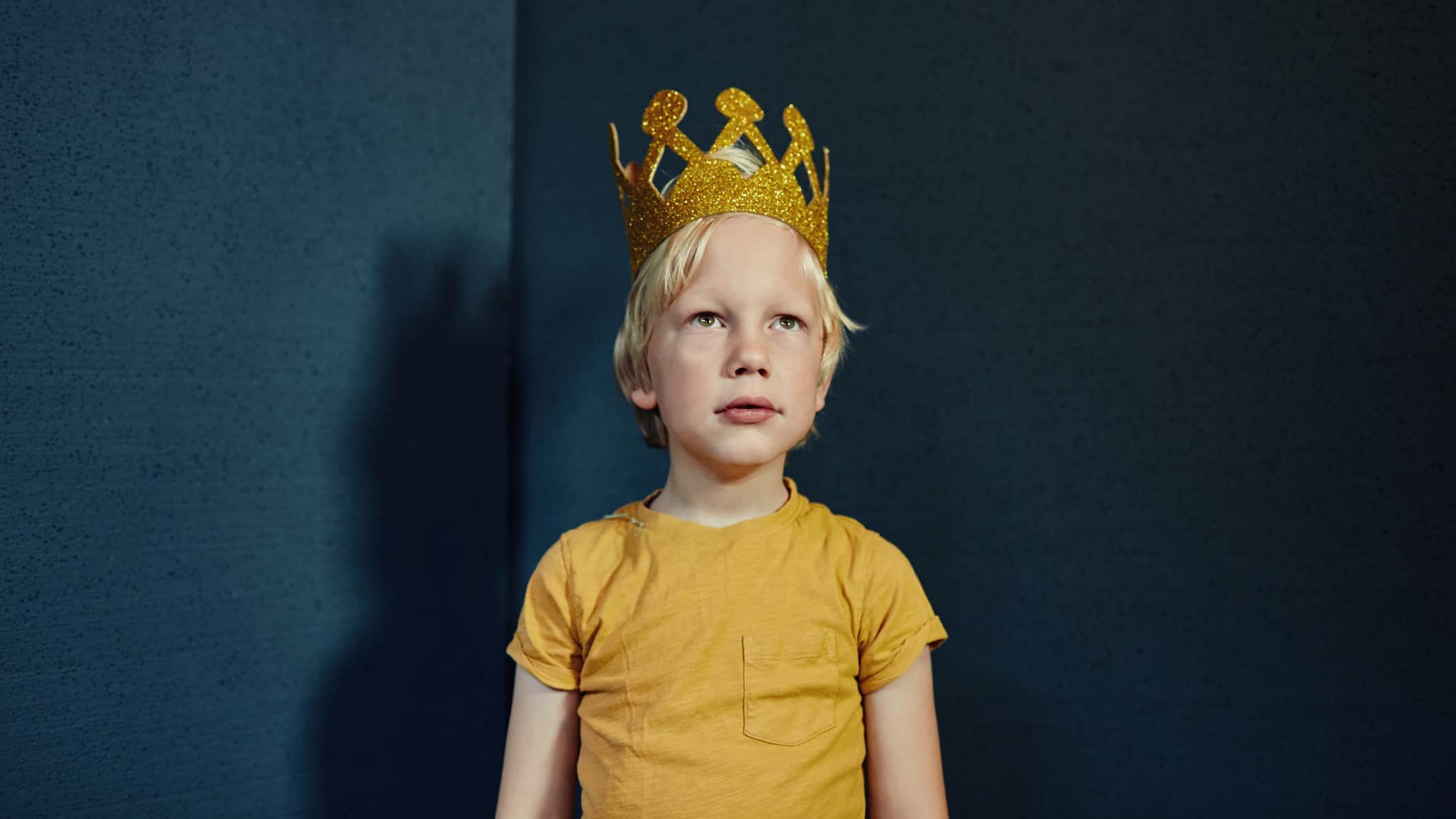
    A boy with a gold crown stands stoically looking straight ahead.

    This article was originally published on Fool.com. All figures quoted in US dollars unless otherwise stated.

    You would be hard-pressed to find an investor who doesn’t consider Nvidia (NASDAQ: NVDA) the pinnacle of artificial intelligence (AI) companies. Its graphics processing units (GPUs), which crunch AI workloads, are best in class by a wide margin and have been used by practically every company interested in AI. 

    But are there any companies that could dethrone Nvidia?

    Nvidia’s direct competitors aren’t even close

    Part of the fear of investing in Nvidia is wondering what will happen if and when the music stops. Right now, the company is firing on all cylinders. But the question remains: What happens when enough GPUs have been purchased to satisfy AI demand?

    There are some factors influencing the answer to that question, such as the average lifespan of a GPU used for server computing. That is estimated to be around three to five years, which would mean there will be a replacement cycle. But if the demand for Nvidia GPUs is met, then the next round of AI technology might look somewhat different.

    If that happens, which company could take the spot atop the AI mountain? Some might point to Advanced Micro Devices as a potential successor. AMD competes directly with Nvidia in the data center GPU space but has been getting smoked.

    However, AMD has recently generated momentum with various cloud-computing providers starting to add its GPUs as an alternative. They don’t want to be devoted solely to Nvidia hardware because that would give it too much pricing power over them. But because Nvidia still has much better technology, AMD will likely only be considered as an alternative.

    Another candidate is Taiwan Semiconductor, (TSMC for short), the chip foundry that supplies Nvidia and thereby makes its products possible. But TSMC also supplies chips to AMD and other companies, which makes it a neutral factor in the AI investment race.

    Besides, TSMC expects massive growth driven by AI demand over the next few years. In its latest conference call, management said, “For the next five years, we forecast [AI revenue] to grow at 50% [compound annual growth rate] and increase to higher than 20% of our revenue by 2028.” That’s strong growth, but it also means Nvidia could continue its dominance since it’s a key customer for TSMC.

    The companies applying AI depend on Nvidia

    But all of the above is just the hardware side; what about application and use?

    Microsoft and Alphabet are both massive customers for Nvidia’s GPUs. Not only do they have internal uses for them, but they also buy them to power their respective cloud computing services.

    They also started designing their own AI chips, so they don’t have to buy them from Nvidia. However, these chips are highly workload-specific, so general-purpose GPUs like Nvidia’s will still account for the lion’s share of computing power.

    Software companies like Palantir are also bringing AI capabilities to the masses. Its clients still need plenty of computing power to run its models, and it gives them the tools to create them. This could make the company a potential successor to Nvidia as a leading AI investment, since it will continue to see demand for its platform long after AI computing capacity is built out.

    But all roads lead back to Nvidia, which is why it has been and will continue to be the most popular AI investment. Nvidia is on top of the AI world right now, and there currently doesn’t appear to be any company that can dethrone it. 

    This article was originally published on Fool.com. All figures quoted in US dollars unless otherwise stated.

    The post Can anyone topple Nvidia as the king of artificial intelligence investments? appeared first on The Motley Fool Australia.

    Wondering where you should invest $1,000 right now?

    When investing expert Scott Phillips has a stock tip, it can pay to listen. After all, the flagship Motley Fool Share Advisor newsletter he has run for over ten years has provided thousands of paying members with stock picks that have doubled, tripled or even more.*

    Scott just revealed what he believes could be the ‘five best ASX stocks’ for investors to buy right now. We believe these stocks are trading at attractive prices and Scott thinks they could be great buys right now…

    See The 5 Stocks
    *Returns as of 5 May 2024

    More reading

     Suzanne Frey, an executive at Alphabet, is a member of The Motley Fool’s board of directors. Keithen Drury has positions in Alphabet and Taiwan Semiconductor Manufacturing. The Motley Fool Australia’s parent company Motley Fool Holdings Inc. has positions in and has recommended Advanced Micro Devices, Alphabet, Microsoft, Nvidia, Palantir Technologies, and Taiwan Semiconductor Manufacturing. The Motley Fool Australia’s parent company Motley Fool Holdings Inc. has recommended the following options: long January 2026 $395 calls on Microsoft and short January 2026 $405 calls on Microsoft. The Motley Fool Australia has recommended Advanced Micro Devices, Alphabet, Microsoft, and Nvidia. The Motley Fool has a disclosure policy. This article contains general investment advice only (under AFSL 400691). Authorised by Scott Phillips.

  • 17 celebrities who have left Los Angeles on where they moved and why they did it

    Slyvlest Stallone, Amanda Syfried, Matthew McConaughey side-by-side
    (L-R) Sylvester Stallone, Amanda Seyfried, Matthew McConaughey.

    • More than 817,000 people moved out of California from 2021 to 2022, per most recent census data. 
    • It's not just regular people: Celebrities leave Los Angeles for places including Texas and Florida.
    • Here are 17 celebrities who left LA — plus where they chose to move to and why. 

    California is the US state with the most people moving out, with about 817,000 leavers between 2021 and 2022, according to the most recent census data.

    And while regular people ditch the Golden State, several celebrities, who can typically afford to live wherever they want, have also decided California is no longer the place for them.

    Singer-turned-talk show host Kelly Clarkson traded Los Angeles for New York City post-divorce for in 2022, while actor Sylvester Stallone said earlier this year that he and his family are "permanently" vacating California for South Florida.

    Popular moving destinations for Californians include Arizona, Florida, and Texas.

    People have told Business Insider recently that reasons for leaving LA and California include high taxes, expensive home prices, and challenging social and political conditions. Some celebrities remain tight-lipped when sharing moves of their news, simply saying they're looking for a fresh start. Other high-profile actors, however, admit that the fast-paced, stressful scene in Hollywood can be another motivation.

    Los Angeles, in particular, is experiencing an exodus of wealthier people in search of places where their money goes further.

    Take Gus Lira, a managing partner at a private jet charter company, who had a condo in Malibu overlooking the ocean. California taxes were wearing him down, so he decided to move to Nevada.

    "For me, really the main reason, and for many of the people that I know, is just taxes," Lira told Business Insider in January. "You can't get ahead when you get $100 and they take $60."

    Business Insider compiled a list of 17 celebrities — some in celebrity couples — who left California for greener pastures, presented in alphabetical order by last name. We tried to include both where they moved to and why they left LA.

    Jessica Biel and Justin Timberlake left LA to shield their kids from the glare of the paparazzi.
    Jessica and Justin
    Jessica Biel and Justin Timberlake.

    The power couple has dealt with the paparazzi for most of their professional careers. But they had enough of their kids also having to endure it.

    Since 2018, Biel, Timberlake, and their two kids have lived predominantly at their properties in Tennessee and Montana.

    "You get hammered on the East Coast. You kind of get hammered on the West Coast. That's why we don't really live there anymore," said Biel in a May 22 episode of SiriusXM's "Let's Talk Off Camera With Kelly Ripa," seemingly referring to her former home of LA. "We're just trying to create some normalcy for these kids."

    Dean Cain left LA for Las Vegas because of the "incredible taxation" and "horrible regulations for business" in California.
    Dean Cain
    Dean Cain.

    Dean Cain, best known for playing Clark Kent/Superman in "Lois & Clark: The New Adventures of Superman," was fed up with how things were run in California.

    The actor split for Vegas last year.

    "It's the most ridiculous large government, incredible taxation, horrible regulations for business," he told Fox News Digital in 2023. "Very anti-business."

    Cain said California's personal income tax felt especially high.

    "I moved to Las Vegas. I live in Nevada now," he added. "I have 10 times as nice a house. I'm not kidding. Ten times as nice a house as I had in Malibu. The house is absolutely stunningly built. Gorgeous, beautiful. Everything is brand new."

    Kelly Clarkson didn't just move from LA to New York — she took her daytime talk show with her.
    Kelly Clarkson
    Kelly Clarkson.

    Kelly Clarkson felt she had a new lease on life when she moved to New York City last year.

    After finalizing her divorce from ex-husband Brandon Blackstock in 2022, she didn't just take her kids east. She also brought "The Kelly Clarkson Show" — it started taping in New York in season 5.

    "I was very depressed for the last three years — and maybe a little before that, if I'm being honest. I think I really needed the change," the Grammy winner told People. "I needed it for me and my family as well. My kids are thriving here. We're just doing so much better, and we needed a fresh start."

    John Goodman left LA in the late '80s.
    John Goodman in a suit
    John Goodman.

    John Goodman figured out a long time ago that Los Angeles wasn't for him and has been living in New Orleans since the late 1980s.

    Like many, the Emmy winner first visited Crescent City to party. In the late 1970s, he showed up with his fraternity pals. A few years later, as an actor, he was shooting the movie "Everybody's All-American" alongside Dennis Quaid, Jessica Lange, and Timothy Hutton when he met his future wife, Anna Beth. He's been attached to the city ever since.

    "I used to come down here every time I'd get a few dimes to rub together, and it felt like I was missing something unless I was here," he told "Today" in 2023. "I consider myself very lucky to be here."

    Nicole Kidman and Keith Urban moved to Tennessee to be closer to the country music scene.
    nicole kidman keith urban
    Nicole Kidman and Keith Urban.

    A year after Nicole Kidman tied the knot with country-music star Keith Urban, the two got the heck out of LA.

    In 2007, they moved to Nashville, where the Australian Oscar winner dove headfirst into Urban's world.

    "That country-music community is a very warm community," she told People in 2016. "It's very protective. Keith's been a part of it for decades now. It's his home, it's our home."

    Matthew McConaughey headed to Texas to help his family.
    Matthew McConaughey leaning against a viewfinder
    Matthew McConaughey.

    A few years before the McConaissance led to Matthew McConaughey's best actor Oscar win, he and his wife Camila Alves fled Hollywood for his home state of Texas.

    The two settled in Austin in 2012 after buying a 10,800-square-foot mansion. According to a profile in Southern Living, it was initially because of a "family crisis," as he needed to help his mother and two brothers. That led to the couple deciding to stay put to raise their three children there.

    "Ritual came back," McConaughey said of being back in Texas. "Whether that was Sunday church, sports, dinner together as a family every night, or staying up after that telling stories in the kitchen, sitting at the island pouring drinks and nibbling while retelling them all in different ways than we told them before."

    Amanda Seyfried headed to upstate New York for a taste of the simple life.
    Amanda Seyfried attends the 28th Annual Critics Choice Awards at Fairmont Century Plaza on January 15, 2023, in Los Angeles, California.
    Amanda Seyfried.

    With movies like "Mean Girls" and "Mamma Mia!" in her filmography, you would think Amanda Seyfried would want to lay her head down somewhere glamorous.

    But she actually prefers life on a farm.

    Seyfried spends most of her time on a farm in the Catskills, a mountain range north of New York City, told Architectural Digest reported in 2023. in 2023 that that she purchased in 2014.

    "It's insane how much I can feel so accomplished and successful here without having to be in a successful movie," she told The New York Times in 2020.

    Sylvester Stallone wanted a new start in Florida.
    Sylvester Stallone
    Sylvester Stallone.

    After decades of living in Los Angeles — including in his first dingy apartme.nt on Balboa Boulevard, which would become the inspiration for his iconic character Rocky Balboa — Sylvester Stallone packed up and left town in 2023.

    This was first revealed in early 2024, during season two of his reality series "The Family Stallone".

    "After a long, hard consideration, your mother and I have decided, time to move on and leave the state of California permanently, and we're going to go to Florida," Stallone said. "We're going to sell this house."

    Stallone and his wife, Jennifer Flavin, gave multiple reasons for the relocation, including the desire for a fresh start after their children moved out of the family home.

    Rod Stewart went back to his roots in England.
    Rod Stewart

    The legendary rocker decided that at 79 years old, it was time to stop traveling across the pond.

    Last year, he put his sprawling 38,500-square-foot Beverly Hills property, which he has lived in since 1975, on the market.

    Selling the home is bittersweet for Stewart: "I don't want to sell it, and the kids don't want me to sell it either," Stewart told People. "There's too many fond memories. I've lived [in LA] since 1975, and I adore the place."

    But he said he's making England a more permanent home since wrapping up his latest world tour and Las Vegas residency last year.

    Hilary Swank moved to a Colorado ski town.
    hilary swank

    The Oscar winner is loving her new life in the mountains of Telluride, Colorado, on 168 acres with five rescue dogs.

    She and her husband, Philip Schneider, bought the land in 2016, broke ground in 2018, and finally completed the home in 2020.

    A year later, she put her LA home on the market and has been living it up in the great outdoors.

    "I have been looking for land since I was in my mid-20s," Swank told Architectural Digest in 2022. "I find nature to be my happiest place, and animals are my other happiest place. And to be with both of them is everything to me."

    Ryan Reynolds and Blake Lively left LA after just six months of dating.
    Blake Lively and Ryan Reynolds attend "The Adam Project" New York Premiere on February 28, 2022 in New York City
    Blake Lively and Ryan Reynolds.

    When you know, you know. After less than a year of dating, Ryan Reynolds and Blake Lively packed up their stuff and left Hollywood for the suburbs of New York City.

    In 2012, after six months of dating, the couple bought a $2.3 million home in Pound Ridge, New York.

    "We don't live in LA. We live on a farm in New York," said the "Deadpool" star in a 2015 interview. "And we don't lead a wild and crazy life. It's not that hard. It's not a big deal."

    Julia Roberts hasn't lived in LA for decades.
    Julia Roberts with her hands up while being photographed at the 2022 Cannes Film Festival
    Julia Roberts.

    The Oscar winner realized many years ago that Los Angeles wasn't for her.

    Roberts moved to a 32-acre ranch in Taos, New Mexico, in 1995.

    The "Pretty Woman" star told Oprah back in 2003 that in New Mexico, everything is "clear."

    "Around here, I come and go like it's nothing," she said. "Los Angeles is such a town of show business, and I'm a terrible celebrity. I find it difficult — it's the beast that must be fed."

    James Van Der Beek moved his family out of LA after he and his wife renewed their vows in Austin.
    James Van Der Beek in a jacket
    James Van Der Beek.

    In 2020, James Van Der Beek and his wife Kimberly renewed their wedding vows for their 10th anniversary in Austin, Texas.

    A year later, they moved their six kids from LA to Austin, where they now live on a 36-acre property.

    "We wanted to get the kids out of Los Angeles," Van Der Beek told Austin Lifestyle in 2021. "We wanted to give them space and we wanted them to live in nature."

    Mark Wahlberg moved his family to Las Vegas for a "fresh start."
    Mark Wahlberg looking at camera
    Mark Wahlberg.

    Boston-born Mark Wahlberg set out to LA years ago to make it as an actor. Over his career, he realized he rarely stayed there to make any of his movies. So, in 2022, he packed up and moved his family to Las Vegas.

    He told The Talk in October 2022 that in Nevada his four kids can more easily pursue their hobbies, including golfing, riding horses, and playing basketball.

    "We came here to just kind of give ourselves a new look, a fresh start for the kids, and there's a lot of opportunity here," Wahlberg told The Talk. "I'm really excited about the future."

    Read the original article on Business Insider
  • Elon Musk really doesn’t want to live forever

    Elon Musk.
    Elon Musk.

    • Elon Musk isn't interested in living forever.
    • In a recent interview, Musk said if people live too long they inhibit new ideas.
    • Several tech leaders have been leveraging their wealth to fight the effects of aging.

    Unlike some of his contemporaries, Elon Musk isn't interested in living forever.

    During an interview at the Cannes Lions International Festival of Creativity on Wednesday, the Tesla CEO said he hadn't made any investments in the longevity industry.

    "I think it is important that we die at least at some point," he told Mark Read, CEO of advertising giant WPP. "If we live for too long, I think it does ossify society. There's no changing of the leadership because leadership never dies."

    He added that this could inhibit new ideas as people won't change their minds.

    "Think of some of the worst individuals in the world. How long do you want them to live?" he joked.

    Musk has made similar comments in the past. In 2021, he called death "important," adding he didn't think anyone should "try to live for a super long time."

    Several of Musk's Silicon Valley contemporaries have been dabbling in longevity, leveraging their wealth to fight the effects of aging.

    Jeff Bezos, Peter Thiel, and OpenAI's Sam Altman have all invested in companies trying to reverse aging at the cellular level. Others, including Google's Sergey Brin, are using their money to combat age-related conditions, such as cancer and Parkinson's disease.

    Some entrepreneurs, like Kernel CEO Bryan Johnson, have taken on intensive nutrition, exercise, and wellness plans to try and slow or even reverse the aging process.

    Musk has long been concerned about the effect an aging population could have on the world.

    He has previously warned that society could "crumble" if people don't have children and has cited low birth rates as one of the "biggest risks to civilization."

    Representatives for Musk did not immediately respond to a request for comment from Business Insider, made outside normal working hours.

    Read the original article on Business Insider
  • The luxury conglomerate behind Cartier is beating LVMH at its own game

    Photo collage featuring a tag with the Richemont logo, jewelry from Cartier (Trinity ring and Love bracelet), and a Van Cleef Vintage Alhambra pendant
    Richemont, the conglomerate that owns brands like Cartier and Van Cleef & Arpels, has been heating up the luxury space.

    • Richemont, the conglomerate behind brands like Cartier, is outperforming its competition.
    • Its focus on hard luxury, like jewelry and watches, has helped it through a rough economic climate.
    • Plus, over-indexing in China and a clear direction for leadership have helped the company shine.

    LVMH is the biggest luxury conglomerate in the world. As the owner of brands like Louis Vuitton, Moët & Chandon, and Bulgari, the French company has become synonymous with luxury — and made a lot of money doing it, as demonstrated by CEO Bernard Arnault's position as the third-richest man in the world.

    But there's another corporation beating LVMH at its own game, and you probably haven't even heard of it: Richemont.

    Switzerland-based Richemont, behind brands like Cartier, Van Cleef & Arpels, and Piaget, is having a moment.

    Its stock has climbed more than 20% since the start of the year, outperforming LVMH as well as Kering, which sells brands like Gucci and Saint Laurent. It's a boon for investors seeking reassurance that European luxury stocks aren't over — especially in China.

    "Richemont has provided reassurance to investors on several points. Cartier and Van Cleef are continuing to show very strong momentum and notable growth," Chiara Battistini, JPMorgan's head of European luxury and sporting goods research, told Business Insider over email.

    One major benefit in this uncertain economic climate: Richemont is skewed to hard luxury, including the iconic designs of Cartier, which has been creating jewelry for high-flying members of society for more than 150 years, as well as Van Cleef.

    !function(){“use strict”;window.addEventListener(“message”,(function(a){if(void 0!==a.data[“datawrapper-height”]){var e=document.querySelectorAll(“iframe”);for(var t in a.data[“datawrapper-height”])for(var r=0;r<e.length;r++)if(e[r].contentWindow===a.source){var i=a.data["datawrapper-height"][t]+"px";e[r].style.height=i}}}))}();

    "In tough times, because we are in tough times right now in luxury, there is a tendency to buy less, buy better," Erwan Rambourg, the global cohead of consumer and retail research at HSBC, told BI. "At the end of the day, if you have to buy one piece of jewelry from one jeweler, it's going to be Cartier."

    In the first quarter of this year, Richemont's largest brands all saw positive year-over-year growth on Google Trends and an increase in website visits, according to a JPMorgan report from May. Meantime, brands like Louis Vuitton and Gucci saw declines in both areas.

    Even LVMH's Arnault has noticed: "In the competition, there's a very good group, that is the Richemont Group," he said in January, going on to compliment the group's chairman, fellow billionaire Johann Rupert. "Rupert, we consider as an outstanding leader. And I don't, in the slightest, wish to upset his strategy."

    All that glitters is gold

    Unlike luxury conglomerates LVMH and Kering, Richemont focuses disproportionately on hard luxury — literally, the stuff made from hard materials like gold, gemstones, and diamonds. In the 2024 fiscal year, jewelry made up 69% of its revenue and watches 18%.

    It's a good time to be in that business. During difficult macroeconomic times or when people are squeezed, they are more likely to splurge on something they know will hold value, like metals and gems, than on something less durable and more trend-driven, like clothing or handbags (with Hermès being a notable exception).

    "At times of economic crisis — I mean, not that everyone runs out and buys a Cartier watch or a Van Cleef & Arpels necklace — but they are a safer bet," Fflur Roberts, the head of global luxury goods at Euromonitor, told BI.

    Part of the reason is that a classic Cartier piece — like the rectangular Tank watch launched in 1919 or the three-banded Trinity ring, which debuted five years later — is unlikely to go out of style. The Love collection, a Cartier classic featuring a screw motif, has been around for five decades and still makes up more than 20% of the company's revenue, HSBC's Rambourg said.

    A picture of Princess Diana with her hands folded in a namaste post, wearing a long white dress.
    Cartier products — like the Tank Francaise, pictured here on Princess Diana — have timelessness that appeals to people splurging on large purchases.

    "It doesn't have the fashion risk to the same extent as, for instance, apparel and even leather goods," Jelena Sokolova, a senior equity analyst for Morningstar, told BI of the fine jewelry business. "All of this favors the most established brands: Cartier and Van Cleef."

    Jewelry is also a good investment. A 2022 study by Credit Suisse and Deloitte called fine jewelry and watches "safe havens" in "uncertain times," with steady single-digit returns and low volatility.

    "The world might come to an end, and your piece of jewelry might still be worth something," Rambourg said.

    And when it comes to buying bling as an investment, no one wants to roll the dice on something new.

    "When people are concerned about putting their money in other, more traditional financial assets, then jewelry has become an area where people are investing," Euromonitor's Roberts said. "Spending a bit more and getting a really true heritage luxury brand like Cartier" is safer, she added.

    China cha-ching

    Last month, rumors swirled that Van Cleef planned to raise its prices in China — and chaos ensued. Local news outlets reported lines forming at the country's 30-plus stores as customers rushed to buy Alhambra bracelets, which cost anywhere from $1,420 for a single clover on a yellow gold chain to $61,500 for a five-clover diamond design.

    The frenzy shows just how devoted Chinese consumers are to the now-iconic clover pieces, which can be seen on the wrists and necks of the country's influencers and street-style inspirations.

    The popularity is reflected in the data. Driven by Richemont's top brands, Cartier and Van Cleef, sales gained 7% in the country, including Hong Kong and Macau, in Richemont's 2024 fiscal year.

    van cleef necklace
    The Van Cleef & Arpels Alhambra line, pictured on an attendee of Art Basel Hong Kong, has been a hit in China.

    Meanwhile, some luxury conglomerates, like Gucci's parent company Kering, have struggled in that market. While Richemont's results in the country have been touch-and-go depending on the quarter, the company is still beating out the competition.

    "They are over-indexed in China compared to their peers," Sokolova said.

    Part of that is related to the increasing popularity of jewelry in the country. In 2023, jewelry and watches overtook handbags as the top-spending category in China, according to a McKinsey report. By 2027, its share of discretionary spending is expected to gain another four percentage points.

    On top of that, the philosophy of buying a tried and true brand — and specifically recognizable items from one of these brands — is even stronger in China. Branded jewelry is expected to increase from 15% of the market in 2019 to 25% to 30% in 2025, according to a 2021 McKinsey report. That growth is driven by customers in Asia.

    From the aforementioned Alhambra line, which was called out on Richemont's earnings call, or Cartier's Love collection, no one does branded like Richemont.

    "If you're in a bar or restaurant, you're sitting at a distance, you can recognize the Labra pendant from Van Cleef. You can recognize the Love ring or the Love bracelet or the Trinity," Rambourg said. "It's the equivalent of putting a big fat logo on a bag."

    Passing down the crown jewels

    There's another piece of hardware that Richemont has handled well: its scepter.

    In May, the company announced a new CEO, Nicolas Bos, a Cartier veteran who transformed Van Cleef from an unprofitable brand to Richemont's second-biggest cash driver.

    It was welcome news in an industry in which many companies remain family-run — a model accompanied by uncertainty. LVMH and Prada have both been caught up in media speculation around who will take over when their patriarch and matriarch, respectively, step aside.

    While chairman Rupert is still staying on — the controlling shareholder, he founded the company by spinning the international brands off of his father's South African conglomerate in 1988 — Bos' appointment provides some relief for investors. The company's announcement caused shares to tick up 6%.

    Nicholas Bos
    Nicholas Bos was recently named Richemont's new CEO, putting investors worried about a succession plan at ease.

    "The No. 1 question I've had for the past two years is who's going to replace Rupert? What's the post-Rupert world?" Rambourg said. "They just bought themselves a lot of time by nominating a 51-year-old to run the group."

    The appointment also included a restructuring of the company, naming one CEO for the entire conglomerate, which "provided better clarity and more straightforward structure on corporate governance," JPMorgan's Battistini said.

    That said, Bos does have his work cut out for him, particularly regarding the YNAP, the group's online fashion retailer that owns sites like Net-A-Porter. It's a lossmaker for a company, and a deal to offload it fell apart in December. Last week, it was reported that the platform would pull out of China amid dwindling sales.

    But as they say, heavy is the head that wears that crown — but perhaps not the arm that wears the Cartier Love bracelet.

    Read the original article on Business Insider
  • I wanted to have a name in Spanish and English like my dad. I learned names can be adaptable.

    Woman wanted her name to be in Spanish
    The author's dad is Chilean and went by a Spanish and English version of his name.

    • I had three other Lauren's in my class, and I secretly wanted to be the only one. 
    • My chilean father went by George, as a way to assimilate to his life in the US. 
    • I wanted to have a name in Spanish and English, like he did. 

    My first day of 5th grade continues to be memorable decades later. When the teacher did roll call in a class of 30 students, three of us had the name Lauren. I was surprised. I secretly wished I was the only one.

    I've always loved my name, and up until age 10, I had no idea Lauren was popular. Over the years, I'd become used to parents in the early 80s naming their kids just like me.

    My Chilean father, Jorge, moved to the United States when he was 28 years old. Everyone called him George. His official documents, such as his passport and driver's license, had his birth name — Jorge. Like most immigrants, he did his best to assimilate. Adopting an English version of his name was one way to minimize calling attention to himself and help him blend into the melting pot of the United States. He made it easier for his colleagues and clients to say his name.

    As a kid, I thought it was cool that he had two names — one in Spanish and one in English. I wanted to have two names, too, like him, even though my dad didn't teach me Spanish.

    My name doesn't exist in Spanish

    When I'd visit my abuelita a couple of times a year, who didn't speak much English — she learned it when she was 50 years old, I'd always ask her, "How would you say my name in Spanish?" Her reply was always the same — "Your name doesn't exist in Spanish." I felt let down, bummed.

    I didn't understand it at the time, but I was seeking and wanting to be a part of something bigger — intangible, of course. I wanted something that seemed within reach and yet so far away. I understand now, as an adult, that I wanted to be a part of my dad's culture and connect with him and his family, including my abuelita. I wanted to feel like I belonged.

    Questioning whether my name existed in Spanish was my way of creating a connection with my abuelita despite language differences. After all, neither one of us spoke the other's native tongue. I may not have been successful or received the answer I was hoping for, but now I understand my question had a deeper meaning.

    I started saying my name differently when speaking in Spanish

    In my late 20s, I moved to Spain to teach English as a language assistant in a high school. My real goal was to learn Spanish and speak fluently. I quickly learned that when I said my name, whether it was to make a reservation at a restaurant or deal with in-person bureaucratic paperwork, most Spaniards would ask me to repeat my name numerous times. Over time, I stopped saying my name as if I were in the United States (Lor-in). Instead, I deferred to pronouncing my name as it sounds in Spanish (Lao-wren) to save myself time and frustration from reiterating it too many times.

    Similar to what I imagine my dad must have experienced living in the United States, I learned it's easier to adapt. Not only is it more convenient for the other person, but it also saves me the hassle of repeating myself and being reminded constantly that I'm foreign.

    It turns out my abuelita wasn't exactly right. Lauren may not be a Spanish name or have a direct translation, yet it's possible to pronounce it in Spanish. My name is adaptable in both languages. I appreciate that my name can have two pronunciations, even if it's a reminder that I'm from somewhere else. And as a daughter of a Chilean immigrant, it may be ironic that I was always seeking to blend in and belong.

    Read the original article on Business Insider
  • There are 4 social styles, from ‘firefly’ to ‘evergreen.’ Here’s what yours says about your relationships.

    4 female friends walking and laughing in a city
    • In the "Art and Science of Connection," author Kasley Killam, MPH outlined 4 social styles.
    • Beyond being an introvert or extrovert, you're a butterfly, wallflower, firefly, or evergreen.
    • Killam described each style and why it's important to get out of your connection comfort zone.

    When it comes to relationships, there are more communication styles and personality differences than just "introvert" or "extrovert."

    "I noticed that introversion and extroversion don't really capture the nuance of how we approach socializing, solitude, and connection in our lives," Kasley Killam, MPH and author of "The Art and Science of Connection" (out on June 18) told Business Insider. From both her research and experiences talking to communities all over the world, she came up with four social styles that people generally fall under: butterfly, wallflower, firefly, and evergreen.

    She said that besides only looking at the quantity of connection a person craves, these styles also address the "quality of connection that people prefer."

    Killam shared what each style says about relationships — and why it's still good to push yourself out of your comfort zone, no matter where you fall.

    Butterfly, happy with all kinds of talk

    A nod to "social butterfly," the butterfly personality style describes "someone who likes a really high amount of interaction but is comfortable and happy with more casual connection," Killam said.

    It doesn't mean that they only like small talk — butterflies are excited to get deep, too, she said. They're just glad to be engaged in all types of conversations, and often.

    Wallflower, content with some distance

    As the name suggests, a wallflower is "a bit more shy but really comfortable and happy with less frequent interaction," Killam said. They can also be fine with more casual connections, she said.

    In the book, she also mentioned that wallflowers often prefer staying out of the limelight, but that doesn't mean they enjoy feeling like floater friends. Like anyone else, they "have the inner desire and ability to love and be loved," she said.

    Firefly, deep conversations with recharge time

    Fireflies burn bright before disappearing into the night, describing someone who loves deeper interactions but also craves solitude.

    Killam identifies as a firefly herself. "I love deep conversations with friends and family," she said, whether one-on-one or in small groups. But she also requires time to recharge alone.

    Evergreen, a pro at opening up

    Evergreen plants stay lush all year long, not just seasonally. Similarly, an evergreen is "someone who likes a lot of frequent interaction, and also deeper," Killam said.

    While they might look like butterflies at first glance, Killam said the kinds of conversations they have speak to their nature. Taylor, a woman she mentioned in the book, "really only enjoys and feels fulfilled by socializing with people who she has deep connections to," such as close friends and family. Evergreens are the people who phone a best friend or parent every day.

    Your social type should be flexible

    Killam said there's no one perfect style, and that each has pros and cons. That means "there's value in stretching beyond what might be comfortable to explore what ultimately is best for each of us," she said.

    For instance, she said more introverted styles like wallflowers and fireflies benefit from pushing themselves to socialize more. As a firefly, "the times in my life when I felt most meaningfully connected are times when I socialized more than I would typically choose," Killam said.

    Meanwhile, if you're an extroverted style like an evergreen or butterfly, you should try to "cultivate a connection with yourself and to prioritize some alone time as well," Killam said. That way, you can "go deep in the relationships that are most important."

    Read the original article on Business Insider
  • A cardiologist shares 1 simple change you can make to your diet to protect your heart health

    a woman drinking iced tea on the beach
    Sugary beverages add around 500 calories a day to many people's diets, increasing your risk of heart health issues. Start by cutting back on sodas, sweetened coffees, and alcohol.

    • A cardiologist said the biggest heart health mistake is waiting too long to make healthy changes.
    • Factors like diet and exercise play a big role in your risk of heart disease, heart attack, and stroke.
    • A simple way to make your diet more heart-healthy is to switch up your drinks first. 

    If you want to live a long life, the best time to pay attention to your heart health is right now, according to a doctor.

    The biggest mistake people make about heart health is waiting until it's too late to take action, said Dr. Gregory Katz, a cardiologist at NYU Langone.

    "People think it's something that happens suddenly. Sometimes they look up and are like, 'How the hell did I have a heart attack or stroke?' The seeds are planted very early on," Katz told Business Insider.

    Your habits today, such as eating well and exercising, can make a big difference in protecting your heart and preventing heart disease, heart attack, and stroke later in life, he said.

    While medication can help, patients sometimes put off taking drugs that could help them manage their risk in favor of trying to change their habits first.

    "Taking medication is not a moral failing. That's an important message," Katz said.

    The trick is focusing on changes you can actually stick to, according to Katz.

    "People are not honest with themselves about what lifestyle changes they're actually going to make," he said. "A large percentage of patients tell themselves they'll make changes, and suddenly five years later, their cholesterol is still high."

    To make heart-healthy habits stick, focus on making small, sustainable changes — one of the simplest is reducing your sugar intake from drinks, Katz said.

    Cutting liquid calories can be transformative

    High cholesterol and other heart health risks are linked to diets high in processed food, added sugar, red meat, and saturated fat, which are common for the average American.

    In contrast, diets for better heart health involve eating lots of veggies, whole grains, legumes, and unsaturated fats like olive oil, which help lower your cholesterol.

    But it can be tough to transform your diet overnight, and making too many changes at once can backfire

    One of the simplest ways to make your diet more heart-healthy is to cut back on sweetened drinks or boozy beverages, according to Katz.

    "Drinking calories and drinking alcohol are the biggest modifiable risk factors. The number of people I see drinking 500 calories a day blows my mind," he said. "Just because it's simple doesn't make it easy."

    Sodas, juices, sugary coffees, and cocktails can all contribute to health risks like heart disease, type 2 diabetes, and cancer, evidence suggests.

    A dietitian previously told BI a good strategy to cut back on sweet drinks is to replace them with alternatives like:

    • seltzer with a splash of fruit juice
    • unsweetened tea
    • water flavored with citrus or herbs like mint

    Swapping out liquid calories is a good first step to improving key factors for better heart health (and a longer life), such as healthy blood pressure and cholesterol levels and stable blood sugar.

    Read the original article on Business Insider
  • I run a 7-figure online business and half my sales come from TikTok. Here’s how I’m preparing for the worst if the app gets banned.

    A dollar bill with the TikTok logo stamped through on a blue background.
    Online business owners who rely on TikTok to generate sales are preparing for the worst in the face of a ban.

    • Mason Kuhr, 25, launched an online business selling wellness products in 2021 after college.
    • His business brought in $3.8 million in sales in 12 months, partly due to advertising on TikTok. 
    • Kuhr predicts his sales could drop 50% if TikTok is banned in the US. He's preparing for the worst.

    This as-told-to essay is based on a conversation with Mason Kuhr, a 25-year-old business owner living in the US, about the potential TikTok ban. The following has been edited for length and clarity.

    I'm skeptical about a TikTok ban in the US. But if it were to happen, I estimate that my $3.8 million business would be cut by half. So, I choose to be prepared rather than caught off guard.

    I launched my business, The Stampede Network, in 2021. I was 22, fresh out of college, and at the end of my athletics career. I moved into my parent's basement without knowing what I wanted to do, but I knew it wasn't working 9-to-5.

    I lived with my parents with no income of my own. I had some savings. I used it all to experiment with dropshipping, but nothing took off.

    My weight-loss journey was the beginning of my business

    I started struggling with weight issues. After completing a self-transformation program and getting back in shape, I signed up for TikTok in March 2021 and started posting about my weight-loss journey.

    Four months later, my TikTok account had 10,000 followers; by the end of 2021, I had 74,000 followers.

    I unsuccessfully tried to monetize my following by selling ebooks, fitness programs, and merchandise.

    Flipping through different wellness forums searching for new products to sell, I stumbled upon a discussion about a company making bee bread pastilles made of pollen. The company offered fulfillment services for third-party sellers, so I ordered a sample.

    Bee bread is a natural superfood, and I loved the product. I added them to my Shopify store, connected with the manufacturer's order fulfillment service, and made a 60-second TikTok video about my new product. In a matter of minutes, people went crazy about it.

    By the end of the day, the video had generated over 1.2 million views. And I had made over $25,000 in sales.

    I've relied on the same sales tactic from day one

    The pastilles sold well, but I realized one product wouldn't be enough for my business to grow. I've continually expanded my offering, introducing new wellness products to boost sales and brand recognition. I switched from third-party fulfillment services to ordering products in bulk and handling order fulfillment in-house. In the last 12 months, we made $3.8 million in sales.

    I regularly create and post content on my TikTok promoting my product. I experiment with messages, hooks, and angles.

    I hire other TikTokers using Creators Corner to replicate my best-performing videos. These creators produce their videos, sticking to my script but adding a personal touch.

    Later, I gather all the creators' stats to see which posts have generated the most traction. This data shows me which pain points and messages resonate most with the audience.

    Finally, I produce a new video that embodies all the best-performing elements and scale it up with targeted ad spending to maximize sales. I can spend as much as $150,000 a month on TikTok ads.

    Last year, I made $3.8 million in sales, with a third from TikTok

    My company's revenue is evenly split between TikTok Shop, Amazon, and Shopify store sales. If TikTok were taken down, I'd lose one-third of my sales overnight.

    However, many customers discover my products on TikTok and then purchase them on Amazon or Shopify. So, TikTok's impact on my business is greater than the direct sales it generates. In total, my revenue might drop by up to 50%.

    The Stampede Network would be one of many businesses in the US that would suffer if TikTok was banned.

    I understand why US officials are suspicious of TikTok. If the Chinese government owns and controls the platform, I see how it risks national security. Conversely, TikTok brings a lot of money into the American economy, so the government is cautious about hasty decisions regarding its ban.

    I feel that TikTok doesn't believe the ban will happen. They've made enormous investments to launch their shop feature in the US, including the Fulfilled by TikTok services and fulfillment centers nationwide. I'm skeptical the ban will ever go through.

    I have an action plan in place if TikTok gets taken down

    In such a case, YouTube would become my business' primary social media platform. I'm getting familiar with the platform since its audience differs from TikTok's.

    For example, TikTok users are highly spontaneous buyers. Whereas YouTube users make more informed buying decisions. I'm learning how to talk to a YouTube audience to succeed on this platform.

    If you're freaking out about the TikTok ban, I'd suggest you choose a back-up platform and start to make yourself familiar with its users. Experiment with content and ads to learn what works and what doesn't.

    I also suggest growing your email list. I regularly remind my TikTok followers to subscribe, allowing us to stay in touch, whatever happens. Email is a powerful tool for both community building and generating sales.

    And while TikTok is still here, I'm just going to milk it as much as possible — I'm planning to spend on ads like there is no tomorrow. Because there might not be.

    Read the original article on Business Insider
  • A woman is seeking $1 million, saying she saw her husband drown after being electrocuted in a jacuzzi at a Mexican resort

    An outdoor jacuzzi at a resort in Mexico
    The lawsuit says that Jorge Guillen drowned after being electrocuted in a jacuzzi.

    • A Texas woman is seeking over $1 million in damages after her husband died at a Mexican resort.
    • The wrongful-death lawsuit claims that he died after being electrocuted in a jacuzzi and drowned.
    • The lawsuit accuses three companies linked to the resort of negligence.

    A Texas woman is seeking over $1 million in damages, saying she watched her husband get electrocuted and then drown while in a hot tub during a family vacation in Mexico.

    In a wrongful-death lawsuit filed in El Paso County District Court in Texas, first published by Inside Edition, Lizzette Zambrano accused three companies associated with the Sonoran Sea Resort of negligence.

    It follows the death of her husband, Jorge Guillen, on June 11, 2024, while they were on holiday at the resort in Sonora, northern Mexico.

    According to the lawsuit, Guillen stepped into the hot tub and was immediately "exposed to an electrical current in the water," causing him to keel over and become submerged.

    The lawsuit said that Zambrano tried to grab her husband from the water but she was also electrocuted and fell into the jacuzzi.

    According to the lawsuit, another guest managed to pull Zambrano out, but attempts to get Guillen, using a shepherd's cross and other items, were unsuccessful.

    "The metal from the objects carried the electrical current and began shocking the rescuers," the lawsuit said.

    Zambrano claims in the lawsuit that resort staff did not try to engage the emergency shutoff for the jacuzzi or try to rescue her or her husband.

    Guillen died of drowning, the lawsuit said, while Zambrano was hospitalized but survived the incident.

    According to the lawsuit, the defendants showed negligence by not providing warnings about faulty jacuzzi wiring, and breached their duty of care by failing to keep the resort reasonably safe.

    Casago, the vacation rental company that manages the resort, did not immediately respond to Business Insider's request for comment.

    Guillen is described in the lawsuit as "an industrious, affectionate, loving, compassionate, energetic, cooperative, patient, and attentive father."

    The couple's family has raised more than $55,000 on a GoFundMe campaign, which says it is fundraising to bring Guillen's body home and to cover Zambrano's medical expenses.

    At the time of writing, the Sonoran Sea Resort's website includes a note indicating that the swimming pools and jacuzzis are temporarily closed.

    Read the original article on Business Insider
  • I weighed 434 and my doctor said I could die. I lost 163 pounds by riding a stationary bike and focusing on portions and lean proteins.

    A man before and after losing a substantial amount of weight.
    August Miller, left, at 434 pounds and, right, at 271 pounds today.

    • August Miller was told by his doctor that he was morbidly obese.
    • It was a wake-up call for the dad who'd already been diagnosed with pre-diabetes.
    • Miller lost 163 pounds on the Weight Watchers plan and said he is glad to be alive.

    This as-told-to essay is based on a conversation with August Miller. It has been edited for length and clarity.

    I'm 6ft 2 tall and maintained a healthy weight growing up. I was pretty athletic and served in the military after high school.

    Then, in my early 20s, I started getting heavier. My wife, Teresa, got pregnant with our daughter, Sarah, now 33, and I did the classic thing of gaining sympathy weight.

    I became your typical fast foodie. I had a problem with portions, and it didn't help that I worked as a DJ. I'd finish work at 2 a.m. and stop at burger joints on the way home.

    I was scared that I'd break a chair because of my size

    It was the worst thing because I'd eat so much before bed. I also drank a lot of soda — at least two cans of Coke a day. Then, at weekends, I'd get through those 2-liter bottles in no time at all.

    I did zero exercise. At that age, I didn't think about my health and longevity. You think you're unbeatable and going to live forever.

    Still, I was uncomfortable in my own skin. I dreaded visiting a restaurant with booths because I couldn't fit in. I'd ask for a chair to be placed at the end of the table.

    Social situations were difficult for me at the time. I'd look at the seating beforehand if I went to a wedding. I was always afraid I would break the chair.

    A middle-aged couple posing in front of a cruise ship.
    Miller and his wife, Teresa, before he lost weight.

    Then, in December 2017, I had what I can only describe as a "bad doctor's visit." I hadn't seen a doctor in a long while because, like many guys, I kept putting it off.

    I stepped on the scale, and it registered 434 pounds. I was shocked. As far as I knew, I hadn't developed any medical conditions. But I was wrong. I was diagnosed with pre-diabetes.

    Teresa had expressed concern about my weight in the past — but always in a loving way. But it's a wake-up call when a doctor says your BMI is off the charts and you're morbidly obese.

    I knew that I wanted to stay alive for my wife and daughter. I didn't want to leave them without a husband or dad.

    I could choose the food that I liked — as long as I counted the points

    Teresa had previously succeeded with Weight Watchers, so I agreed to attend a meeting in January 2018. The meeting was predominantly women, and I felt a bit out of place, but it was nothing to put me off.

    They explained the plan, where certain foods have a certain number of points. You were held accountable. I'm now an engineer and like to work with figures and charts. I also downloaded the app, which made it so much easier to keep track of my progress.

    It wasn't restricting and I could pick the foods that I liked. I just had to know their point value and the best portions. I used a kitchen scale and finally paid attention to what I put down my throat.

    A middle-aged dad and his daughter wearing sunglasses
    Miller drew support from family, including his daughter, Sarah.

    Teresa and I shopped together and planned our menus for the whole week. I'd have oatmeal almost every morning and some fruit with my coffee.

    For lunch and dinner, I'd have a lean protein such as chicken or pork loin with a salad or vegetable and a serving of brown rice. I'm Mexican American and don't like anything bland. I used marinades and hot sauces.

    As for exercise, I started incorporating movement into my day. I began with walking and then riding a bike. Then, I got into spin classes. Now, I'm an avid Peloton fan. I ride five to six days a week. I also take our two dogs on long walks.

    My family has supported me all the way

    The weight has come off slowly and surely. It's usual to lose more initially, then ebbs and flows. I now weigh 271 pounds and intend to lose another 20 to 25 pounds to reach my goal. I'm no longer pre-diabetic. I happily sit in a booth at a diner.

    Meanwhile, Teresa has been my biggest cheerleader. Sarah said she is very proud of her dad. They're relieved to know that I'm here for them.

    Do you have an interesting story about weight loss that you'd like to share with Business Insider? Please send details to jridley@businessinsider.com.

    Read the original article on Business Insider