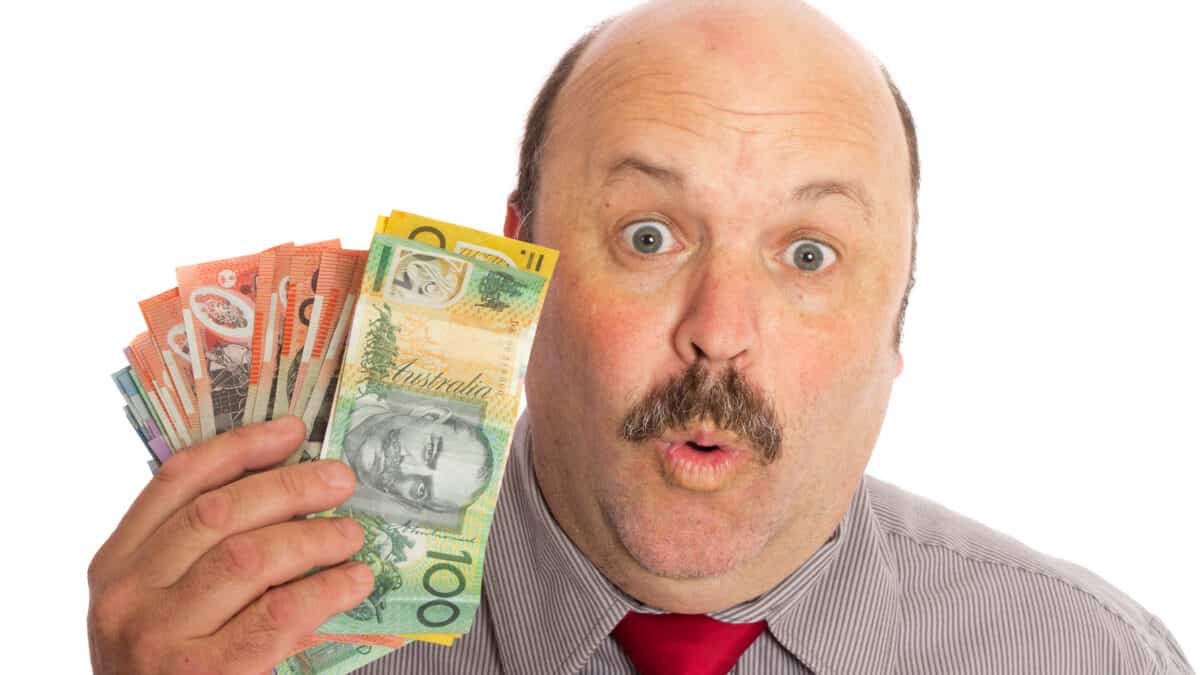
When it comes to reliable passive income, Aussie investors have a large field of quality dividend stocks to choose from.
In narrowing the field down to just two, I’ve limited myself to S&P/ASX 200 Index (ASX: XJO) dividend stocks.
That’s because the bigger companies tend to have less volatile share price moves. And their dividend payouts tend to be more reliable than some of their smaller peers.
I’ve also drilled down to ASX 200 companies that pay fully frankeddividends. This should see me holding onto more of my passive income at tax time. In the long term, those franking credits can make a particularly big difference in retirement.
And while two stocks aren’t enough to offer proper diversification, I do want to ensure that both ASX 200 shares I’d buy now for passive income operate in distinctly different markets.
Finally, I need to keep in mind that future yields may be higher or lower than past yields, depending on a range of company-specific and macroeconomic factors.
With that out of the way…
Two ASX 200 stocks for outsized passive income
The first company I’d buy now for passive income is ASX 200 mining stockFortescue Metals Group Ltd (ASX: FMG).
Fortescue enjoyed a strong first half of FY 2024.
For the six months ending 31 December, the company reported a 41% year on year increase in net profit after tax (NPAT) to US$3.3 billion.
In light of the profit surge, management boosted the interim dividend by 44% from the prior year to $1.08 per share. Eligible investors will have received that payout on 27 March.
Fortescue also paid a final dividend of $1.00 per share on 28 September.
That brings the full year’s passive income payout from the ASX 200 miner to $2.08 per share.
At Friday’s closing price of $26.21 a share, this dividend gem trades on a fully franked trailing yield of 7.9%.
Which brings us to the second company I’d buy now for outsized passive income, ASX 200 bank shareWestpac Banking Corp (ASX: WBC).
Westpac reported its half-year results this past week.
Despite the big four bank’s net profit before one-offs declining 8% year on year to $3.51 billion, management declared an interim dividend of 75 cents per share as well as a 15 cents per share special dividend, both fully franked.
At 90 cents per share, that’s up almost 29% from last year’s interim dividend. This is the kind of growth I like to see. It’s too late to snag that payout, but investors who owned shares at market close on Tuesday 7 May, can expect to be paid on 25 June.
Westpac shares also delivered a final dividend of 72 cents a share, paid on 19 December.
That brings the bank’s full-year passive income payout to $1.62 a share.
At Friday’s closing price of $26.66, Westpac shares trade on a fully franked trailing yield of 5.5%.
Wondering where you should invest $1,000 right now?
When investing expert Scott Phillips has a stock tip, it can pay to listen. After all, the flagship Motley Fool Share Advisor newsletter he has run for over ten years has provided thousands of paying members with stock picks that have doubled, tripled or even more.*
Scott just revealed what he believes could be the ‘five best ASX stocks’ for investors to buy right now. We believe these stocks are trading at attractive prices and Scott thinks they could be great buys right now…
Motley Fool contributor Bernd Struben has no position in any of the stocks mentioned. The Motley Fool Australia’s parent company Motley Fool Holdings Inc. has no position in any of the stocks mentioned. The Motley Fool Australia has no position in any of the stocks mentioned. The Motley Fool has a disclosure policy. This article contains general investment advice only (under AFSL 400691). Authorised by Scott Phillips.
Israel's Netanyahu told Dr. Phil he plans to assault Rafah despite US warnings.
US President Joe Biden has threatened to cut off weapon shipments if Israel presses forward.
Netanyahu reaffirmed his goal of eradicating Hamas and returning hostages.
After President Joe Biden threatened to withhold additional weapons if Israeli forces pressed forward with a ground assault of the southern Gaza city of Rafah, Israeli Prime Minister Benjamin Netanyahu said an assault on Rafah is the only way to defeat Hamas and reiterated that Israel will "stand alone" if it must.
"We will do what we have to do to protect our country, protect our future," Netanyahu said in an interview withtelevision personality Phil McGraw, more commonly known as Dr. Phil, that aired Thursday.
"That means we will defeat Hamas, including in Rafah, we have no other choice," the prime minister said.
On Wednesday, Biden warned that he would cut off weapon shipments to Israel if its military moved forward to attack Rafah, where over one million Palestinian civilians reside and have sought refuge following Israel's ground offensive in the Gaza Strip.
"If they go into Rafah, I'm not supplying the weapons that have been used historically to deal with Rafah, to deal with the cities, to deal with that problem," Biden said in an interview with CNN's Erin Burnett, adding that "we're not going to supply the weapons and the artillery shells have been used."
Last week, the US put a hold on a shipment expected to contain 1,800 2,000-pound bombs and 1,700 500-pound bombs. There is now a possibility that more weapons may be withheld.
Many of these weapons are precision weapons, but they still have the potential to cause significant collateral damage.
"If you want to avoid civilian casualties, you need these weapons rather than imprecise weaponry," Netanyahu argued during the interview, referring to US precision weapons. "If Israel has to stand alone, we we'll stand alone."
When he was asked why his goal is to eradicate all of Hamas and its battalions, Netanyahu claimed that Hamas is trying to blackmail Israel in order to stay in Gaza, establish power, and commit an event similar to the Oct. 7 terror attack.
In addition to eliminating Hamas' battalions, Netanyahu also confirmed that his goals of getting hostages back has not changed since the start of Israel's war with Hamas.
"I've known Joe Biden for many years, 40 years and more. We often had our agreements, but we've had our disagreements. We've been able to overcome them. I hope we can overcome them now," he said.
The sentiment that this was "off" was immediate — to many, it was a dystopian scenario where tools of human art and creativity are destroyed and replaced with a machine. It hit a nerve in the current moment of anxiety about AI having the potential to replace humans, especially in the arts.
The blowback to the iPad ad went far beyond just a handful of disgruntled tweets from the anti-tech peanut gallery — it became its own mini-crisis news cycle, and even people in tech piled on. ("Steve wouldn't have ever shipped that ad," tweeted Y Combinator founder Paul Graham about Steve Jobs.)
Eventually, Apple told AdAge that it was canceling the TV run of the ad and admitted that it "missed the mark."
But, please. Let's be serious here. I'm all for analyzing advertisements and thinking critically about how large companies market themselves. Noting that this ad had a darker allegorical meaning —the CRUSHING of humanity's soul and replacing it with a machine — is fine. Well done.
But come on. It's also very clear that the point of the ad is to show off that the new iPad is very thin. It can pack a lot of apps into a small package.
It's just not that deep.
The iPad ad concept is simply pretty dull
The concept of the ad is so basic that people have noticed it's not even new — a 2008 ad for a camera is nearly identical: a hydraulic press crushes a bunch of bulky physical camera parts to reveal the new slim digital camera.
I'd wager that Apple wasn't intentionally copying the 2008 ad; rather, the idea is so obvious and dull that more than one company thought it up. Plus, crushing things in hydraulic presses to watch them go sploosh is a whole meme on TikTok and YouTube. A YouTube channel dedicated to hydraulic press crush videos has more than 9 million followers.
I might be a little more nervous if this ad weren't for an iPad. Let's say OpenAI made an ad crushing up books, newspapers, and magazines and then revealed the ChatGPT logo. As someone whose job is "generating short articles of text," well, that might make me a little sweaty.
But this is an ad for a freaking iPad. It's not trying to replace pianos; it's a tablet with GarageBand software installed. It's not replacing painting; it's a tool with graphic design apps. If the iPad aspires to actually replace anything, it would be a laptop — Apple's own product. iPads have been around for over a decade, and the only thing they've successfully replaced is the in-flight entertainment system on a plane for a preschooler.
We may have techlashed too close to the sun
The fact that the outrage was so strong about this ad is baffling to me. I spend a lot of my time thinking about the sinister ways that tech companies are causing real harm, or are developing products without thinking through the possible risks. There's plenty of examples of this. Does Apple as a company do bad things? I'm sure!
But debuting a thinner iPad Pro … that's … not it. In fact, a thin iPad sounds very nice! A good thing! I think it's cool that an iPad can do all those things and be thinner than a phone. Neat!
Apple is masterful at carefully crafting its image through its marketing, so it's not unreasonable to over-analyze its advertisements. But the reaction to this ad feels like a knee-jerk sentiment that anything tech is bad and anti-human. Sometimes that's true! But sometimes … an iPad is just an iPad.
The Arcade in Cleveland is one of the oldest indoor shopping centers in the entire country.
Jessica B./Yelp
Shopping malls were some of the most popular hangout spots in the late 20th century.
Some are still open to shoppers, while others have been demolished or redeveloped.
From tiny arcades to massive malls, here is the oldest mall in every state.
If you grew up in the US during the last several decades, there's a good chance your local mall was the place to be after school or on weekends.
After World War II, developers started building massive shopping complexes, usually in the suburbs or on the outskirts of cities. Anchored by department stores like Macy's, Sears, and Nordstrom, the centers contained dozens or hundreds of shops, as well as spaces for musical performances, food courts, water fountains, and other attractions.
While many of these early monuments to consumerism are still standing, others have been torn down to make way for apartments, big-box stores, or other developments.
Business Insider found the oldest mall in each of the 50 states. Here's the full list.
ALABAMA: Eastwood Mall in Birmingham opened in 1960.
A Party City on the site of the former Eastwood Mall.
Sadie W./Yelp
When Eastwood Mall opened in 1960, it was the third-largest mall in the nation with 300,000 square feet. It had 43 stores and 2,200 parking spaces. The mall was closed in 2004 when tenants went out of business, and the mall was demolished two years later.
Today, the site is home to a new shopping center, including a Walmart and a Party City.
ALASKA: Bentley Mall in Fairbanks opened in 1977.
Bentley Mall is still in operation.
Melisa S./ Yelp
Although Bentley Mall opened in 1977, the shopping center is still in operation today. It's the only enclosed shopping center in North Fairbanks, Alaska, with national brands including Claire's, Papa John's, and Hot Topic.
ARIZONA: Christown Spectrum Mall in Phoenix opened in 1961.
Holiday decorations stand near an entrance to the Christown Mall.
Bree B./Yelp
When the Christown Spectrum Mall opened its doors in 1961, it was the biggest mall between Houston and Los Angeles. It was also the first enclosed, air-conditioned mall in the state. Today, the mall is still in operation with around 50 stores and dining options.
ARKANSAS: The Phoenix Village Mall in Fort Smith opened in 1970.
A Donut shop on the site of the former Phoenix Village Mall.
Ron N./Yelp
The Phoenix Village Mall was the first mall to open in the state and had 489,000 square feet. It was a popular destination for shoppers until Central Mall was opened in the '80s. The Phoenix Village Mall was closed in the early 2000s as retailers went out of business.
Today, the site is still home to a shopping center, including a Goodwill thrift store and a donut shop, though it's much smaller than the original.
CALIFORNIA: Lakewood Center in Lakewood opened in 1950.
Lakewood Center was the first mall in California.
Mona T./ Yelp
When Lakewood Center opened in the '50s, it was the first shopping mall in the state. At first, it was a four-story shopping center but it grew to include additional shops, offices, a hospital, a bowling alley, and a post office. It quickly became a "shopping city." Today, the mall is still in operation and houses close to 200 stores.
COLORADO: Cherry Creek Shopping Center in Denver opened in 1949.
Cherry Creek Shopping Center still attracts shoppers.
Cherry Creek Shopping Center/ Yelp
When Cherry Creek Shopping Center first opened in 1949, it was the third mall in the country. The mall underwent a complete renovation and expansion in 1990, and it's still in operation today, housing anchor stores Nordstrom, Neiman Marcus, and Macy's.
CONNECTICUT: Ridgeway Center in Stamford opened in 1947.
A Starbucks at Ridgeway Center.
George M./Yelp
Ridgeway Center was not only the first mall in Connecticut, but it was also the first one in New England. When it opened, it was 110,000 square feet of space, housing stores like Pennsylvania Drug, Deena's, and The Lurie Company. The mall is still in operation today and has over 30 stores.
DELAWARE: Concord Mall in Wilmington opened in 1968.
FLORIDA: Biscayne Shopping Center in Miami opened in 1955.
A supermarket at Midpoint
Ali C/Yelp
Biscayne Shopping Center had 38 stores and a restaurant when it opened in the '50s as an open-air shopping center. It was also home to Miami's first JCPenney. Today, the shopping center is still operating but is known as Midpoint instead of Biscayne Shopping Center.
GEORGIA: Lenox Square in Atlanta opened in 1959.
Lenox Square is still open and attracting shoppers.
Lenox Square/ Yelp
Ten years after Lenox Square mall opened in Atlanta, it was the largest shopping mall south of Washington, DC. It was estimated that 30,000 people came to shop at the stores every day on average. Today, the mall is still in operation with close to 300 stores.
Karcher Mall in Nampa is the oldest mall in Idaho and has been open for 58 years. In 2019, however, the mall started undergoing a complete renovation of the 37-acre property. Three years later, it changed owners and was renamed District 208.
The complex is now being overhauled to include apartments, an "amenity-packed clubhouse and a swimming pool" in addition to retail space, Idaho Business Review reported in September, when the first group of apartments welcomed residents.
ILLINOIS: Market Square in Lake Forest opened in 1916.
A Starbucks at Market Square.
Kristen A./Yelp
Market Square is said to be the "first planned shopping center" in the country, dating back over 100 years. Today, the shopping center is still in operation as a historic landmark in the community, and it houses brands like Williams-Sonoma, Starbucks, and Lululemon.
INDIANA: Washington Square Mall in Evansville opened in 1963.
A bridal shop at Washington Square Mall.
LeAnna M/Yelp
When Washington Square Mall opened its doors for the first time in the early '60s, it was the first enclosed shopping center in the state. In its 200,000 square feet, there were 30 stores, a grocery store, a pharmacy, and a bowling alley. These days, many of the storefronts are empty, and there are just a handful of remaining tenants, including a bridal consignment store and a pizza restaurant.
IOWA: Village Shopping Center in Davenport opened in 1956.
A Ross store at Village Shopping Center.
RE A./Yelp
When first opened, the Village Shopping Center was 14,000 square feet with 29 stores. It was the first mall-like structure to ever open in the Midwestern state. Today, the shopping center is still in operation and has grown to 250,000 square feet. It boasts tenants including a Ross, a pet supply store, and a Five Below.
KANSAS: Mission Center Mall in Mission opened in 1956.
The Kansas City skyline.
Joe Sohm/Visions of America/Universal Images Group via Getty Images
A new development on the site, which would have included both shopping and apartments, was in the works for around 20 years before officials in the Kansas City suburb withdrew support for the developer last July, according to the Kansas City Star. The property's fate is now unclear.
KENTUCKY: Mall St. Matthews in Louisville opened in 1962.
LOUISIANA: Lakeside Shopping Center in New Orleans opened in 1960.
Lakeside Shopping Center is still in operation.
Eddie S./ Yelp
Lakeside Shopping Center is one of the oldest malls in the country, and it started out as an open-air shopping center. The mall is still in operation, but it has completely transformed into an enclosed mall and has become one of the most popular shopping destinations in the southern city.
MAINE: Pine Tree Shopping Center in Portland opened in 1959.
A Dollar Tree at Pine Tree Shopping Center.
Steff D./Yelp
Pine Tree Shopping Center had only 12 stores when it first opened in the late '50s and eventually grew to 20 retailers. Some brands at the mall included W.T. Grant, Woolworth's, Child World, Rexall, and Zayre. The mall today has been completely renovated and now includes big box stores.
MARYLAND: Harundale Mall in Baltimore opened in 1958.
Harundale Plaza is the second oldest mall in the country.
Ric. P/Yelp
Not only was Harundale Mall the first shopping center in Maryland, but it's also the second oldest mall in the country. The mall was a success for several decades until it closed in 1999. Harundale Plaza, a strip mall, opened in its place.
MASSACHUSETTS: Shoppers World in Framingham opened in 1951.
Shoppers World features more than 40 stores.
Jen G./ Yelp
As people moved out of Boston, many settled down in Framingham, and a shopping center was needed. Shoppers World was the result, and it had 44 stores and 6,000 parking spots. The mall was torn down in 1994, but a new Shoppers World has taken its place and is still open today.
MICHIGAN: Northland Mall in Southfield opened in 1954.
Current plans call for Costco to build a business center on the site, CBS Detroit reported last year. The development will also include residential and other retail space, FOX 2 Detroit reported.
MINNESOTA: Southdale Center in Edina opened in 1956.
Southdale Center has been around since the 1950s.
Southdale Center/ Yelp
When the Southdale Center opened in 1956, it was the first "fully enclosed, climate-controlled" mall in the US, according to the Guardian. The mall is still in operation today and has a Macy's, an AMC theater, and an Apple store. More recent additions include a co-working space and pickleball courts, NPR's Marketplace reported in November.
MISSISSIPPI: Jackson Mall in Jackson opened in 1970.
Jackson Mall now houses doctor offices.
RORY DOYLE/AFP via Getty Images
Jackson Mall was the first mall in the state of Mississippi. When it opened its doors, the mall had Penny's, Gayfers, and Woolco as its anchor department stores. Although the mall was successful for several decades, it eventually closed down and was turned into Jackson Medical Mall, housing several doctors' offices.
MISSOURI: Country Club Plaza in Kansas City opened in 1922.
Country Club Plaza remains a shopping center.
Country Club Plaza/ Yelp
Country Club Plaza was designed to look like the city of Seville, Spain, and housed several high-end retailers, like Saks Fifth Avenue. But the shopping center also had Sears and Woolworth's for its anchor department stores. Today, the strip mall is still open and hosts retailers like West Elm and Barnes & Noble.
MONTANA: Holiday Village Mall in Great Falls opened in 1959.
Holiday Village Mall now features a Big Lots.
Channing C./Yelp
Holiday Village Mall opened with Albertson's as its anchor store. The mall is now anchored by Big Lots, Hobby Lobby, JCPenney, PetSmart, Ross Dress for Less, and Scheels All Sports. The mall is still in operation.
NEBRASKA: Crossroads Mall in Omaha opened in 1960.
Crossroads Mall was destroyed in 2020.
Evan E./Yelp
The mall originally opened with the Brandeis department store and has held major chains like Sears, Target, and Dillard's. However, the mall was demolished starting in 2020. A redevelopment plan for the site includes housing, shops, and entertainment venues, though the project has been in the planning stage for years, the Nebraska Examiner reported in March.
NEVADA: The Boulevard Mall in Paradise opened in 1968.
NEW HAMPSHIRE: The Nashua Mall in Nashua opened in 1969.
Woolco discount mart is now closed.
Jack Riddle/The Denver Post/Getty Images
When the Nashua Mall first opened, it was one of the many malls that featured a Woolco Discount Mart. The mall closed in 2003.
NEW JERSEY: Garden State Plaza in Paramus opened in 1957.
Westfield Garden State Plaza has more than 200 stores.
Westfield Garden State Plaza/Yelp
The original anchor was Bamberger's, with Gimbels and JCPenney added in 1958. The mall has since been renamed Westfield Garden State Plaza. It's home to about 220 stores.
NEW MEXICO: Coronado Center in Albuquerque opened as an open-air mall in 1965.
NEW YORK: Paddock Arcade in Watertown was built in 1850.
Paddock Arcade has been in operation for more than 100 years.
Vincent J./Yelp
The use of the historic mall has been uninterrupted since the 1850s, an incredible feat as many malls have closed as a result of the retail apocalypse. The center plays host to local restaurants and small businesses, such as an art and antique shop.
NORTH CAROLINA: Charlottetown Mall in Charlotte opened in 1959.
Not only is The Arcade Cleveland the first indoor shopping center in Ohio, but it's also one of the oldest indoor shopping centers in the entire country. It cost $875,000 to build, and began to deteriorate over the years. However, in 2001, a massive $60 million renovation brought the shopping center back to its original glory.
Today, the mall is still open, though many of the shopfronts are empty.
OKLAHOMA: Penn Square Mall in Oklahoma City opened in 1960.
Penn Square Mall has been around since the 1960's.
Penn Square Mall/Yelp
Penn Square Mall was originally built as an outdoor shopping center before being enclosed in 1982. The mall is still in operation today with JCPenney, Macy's, and Dillards stores acting as the mall's anchors.
OREGON: The Lloyd Center in Portland opened in 1960.
Lloyd Center was once the biggest mall in the Northwest.
Rose E./Yelp
When the Lloyd Center first opened, it claimed to be the largest mall in the country, and it was the largest mall in the Northwest. The mall's tenants today include Ross, Barnes & Noble, and Forever 21.
PENNSYLVANIA: North Hills Village Mall in Ross Township opened in 1957.
North Hills Village closed then reopened.
Jay D./Yelp
The strip mall opened in the 1950s with Gimbels as its main anchor. It was enclosed in 1976 but became open-air again in 1996. Today, the center's stores include Target, Petco, and Five Below.
RHODE ISLAND: Arcade Providence was built in 1828.
Arcade Providence was called Westminster Arcade when it first opened.
Lane Turner/The Boston Globe via Getty Images
Arcade Providence claims that it's "the nation's oldest indoor shopping mall," according to the Providence Warwick Convention & Visitors Bureau. When it was first opened, it was called the Westminster Arcade.
It's still open today and includes 17 storefronts and three restaurants. There are also micro-apartments, most of which measure 300 square feet or less, Business Insider reported in 2016.
SOUTH CAROLINA: The Arcade Mall in Columbia first opened in 1912.
SOUTH DAKOTA: The Western Mall in Sioux Falls opened in 1968.
Western Mall features a Best Buy.
Philip Beaver/Yelp
When the Western Mall first opened, it had 25 stores inside its enclosed shopping complex, the first of its kind in the state. The complex is still home to a movie theater, a Best Buy, and more.
TENNESSEE: The Arcade opened in Nashville in 1903.
The Nashville Arcade is still in operation.
Tina C./Yelp
Remodeled after an arcade in Italy, The Arcade in Nashville is now home to 50 tenant spaces and offices, restaurants and cafés, art spaces, and more.
TEXAS: NorthPark Center in Dallas opened in 1965.
NorthPark Center is home to about 200 retailers.
Paul D./Yelp
When the NorthPark Center first opened, it was the largest climate-controlled retail establishment in the world. The shopping center has around 200 stores today.
UTAH: Cottonwood Mall in Holladay opened in 1962.
The Salt Lake City skyline.
Joe Sohm/Visions of America/Universal Images Group via Getty Images
Now closed, Cottonwood Mall was the first enclosed shopping mall in Utah. It was located in Holladay, a suburb of Salt Lake City.
In 2008, the main building was demolished. The TGI Friday's and Macy's located on the property both shut their doors not too long afterward. The site is now slated to be redeveloped to include stores and residential units.
VERMONT: The Ethan Allen Shopping Plaza in Burlington opened in 1951.
A grocery store at Ethan Allen Shopping Plaza.
Kara M/Yelp
The Ethan Allen Shopping Plaza is known as the state's first strip mall. According to the New England Historical Society, the mall featured the Ethan Allen Bake Shop, Plouffe's Pharmacy, Ben Franklin, Carvel Ice Cream, a bowling alley, and a movie theater when it opened.
Today, its tenants include a pizza restaurant, a pet grooming and supply store, and a branch of the local library.
VIRGINIA: The Village at Shirlington in Arlington opened in 1944 as the first large-scale shopping center in the Washington, DC area.
The Village at Shirlington.
John A./Yelp
The state's first enclosed mall, Ballston Quarter, which originally opened as Parkington Shopping Center, would open seven years later in 1951. Both shopping destinations are still in operation today.
WASHINGTON: Bellevue Square in Bellevue opened in 1946.
Bellevue Square has grown a lot since its opening.
Pragnesh P./Yelp
The open-air shopping center, which originally had only 16 stores, has since grown to its current 5.5 million-square-foot space and been renamed "The Bellevue Collection."
WEST VIRGINIA: Middletown Mall in White Hall opened in 1971.
A restaurant at Middletown Commons.
Ken M/Yelp
Middletown Mall was the first large-scale shopping center in the state, as well as the first enclosed mall to open in the state. Known today as Middletown Commons, the complex has been renovated and includes stores such as Aldi, Dollar General, and Michael's.
WISCONSIN: Bayshore Town Center in Glendale opened in 1954.
Bayshore Town Center has struggled in recent years.
WYOMING: White Mountain Mall in Rock Springs opened in 1978.
White Mountain Mall still attracts shoppers in Wyoming.
Nikki Z./Yelp
One of only three malls in the entire state, White Mountain Mall opened its doors with JCPenney and Zales among its tenants. The mall boasted 35,000 square feet of leasable area at the time. The mall is still in operation today.
Federal Reserve Chair Jerome Powell holds a News Conference
Reuters
The Fed risks "breaking" something in the economy if it delays rate cuts, according to Moody's Mark Zandi.
Higher interest rates raise the odds of recession or bank failures, the economist warned.
"If I were king for the day, I would really be cutting rates at this point," Zandi told Yahoo Finance.
The Federal Reserve would be better off cutting interest rates as soon as possible, as there are parts of the economy at risk of "breaking" if rates don't come down, according to Mark Zandi, the chief economist of Moody's Analytics.
Speaking to Yahoo Finance on Thursday, Zandi warned of the consequences that could arise if the Fed doesn't cut interest rates over the next few months. Keeping rates at their current level raises the risk of recession, and could expose other cracks in the financial system, Zandi warned.
"Those rates are corrosive on the economy. They wear the economy down, and at some point, something could break. The risk that they're taking here is that they undermine the economy and recession occurs," the top economist said. "If I were king for the day, I would really be cutting rates at this point, because I do think the economy could use that relief."
The strength of the economy suggests that the US isn't close to hitting a recession, Zandi noted, but higher interest rates have already started to take their toll on the economy. Elevated borrowing costs have led to sluggish loan growth and are "eroding" credit conditions, he noted, which could stress banks' balance sheets.
Zandi pointed to regional banking failures last year, with the initial collapse of Silicon Valley Bank sparking a brief banking crisis that led twoother lenders to fail.
"That's the kind of thing I'm worried about in the context of persistently high interest rates," he said.
Other market commentators have warned of more banking turmoil as borrowing costs stay elevated. Billionaire investor Barry Sternlicht predicted the US could face weekly banking failures, in part due to the impact of high interest rates on commercial property loans.
But central bankers look poised to keep interest rates higher for longer, as the Fed is looking for more evidence that inflation is on track to fall back to its 2% target. Prices have grown hotter than expected for the last three months, with inflation clocking in at 3.5% in March.
The Fed will likely wait another two or three months before moving to ease monetary policy, Zandi predicted, as central bankers are waiting on cooler inflation data.
Markets are eyeing April inflation numbers to roll out next week, but hopes for aggressive rate cuts this year have been dashed. Investors are pricing in just one or two cuts by the end of 2024, according to the CME FedWatch tool, down from six predicted at the start of the year.
Bumble's founder discussed how AI could influence dating at the Bloomberg Technology Summit.
Whitney Wolfe Herd said "AI dating concierges" could court each other on humans' behalf.
She said AI could also help modern daters become better flirts.
Fed up with dating? AI might be able to do that for you, too.
Bumble founder Whitney Wolfe Herd discussed how AI could influence modern dating at the Bloomberg Technology Summit this week.
During a conversation with Bloomberg's Emily Chang, Wolfe Herd said Bumble hopes to use AI to foster "healthy and equitable relationships," noting that the technology could help take pressure off of human users.
She floated the idea of an "AI dating concierge" as an example.
Bumble founder Whitney Wolfe Herd.
Jerod Harris/Stringer/Getty Images
"You could, in the near future, be talking to your AI dating concierge," Wolfe Herd said. "You could share your insecurities."
Wolfe Herd said AI could advise human users on navigating those insecurities and communicating with others.
"If you want to get really out there, there is a world where your dating concierge could go and date for you with other dating concierge," she said.
When the audience chuckled, Wolfe Herd responded: "No. No. Truly."
"And then you don't have to talk to 600 people. It could scan all of San Francisco for you and say, 'These are the three people you really ought to meet,'" Wolfe Herd said. "So that's the power of AI if harnessed the right way."
"The average US single doesn't date because they don't know how to flirt, or they're scared they don't know how," she said. "What if you can leverage the chatbot to instill confidence, to help someone feel really secure before they go and talk to a bunch of people they don't know?"
Jones said in a press release that the new feature, dubbed "Opening Moves," would give women more flexibility in engaging with matches. The feature allows women to set a question that all their matches can respond to, including men.
"In listening to our community, many have shared their exhaustion with the current online dating experience, and for some, that includes making the first move," Jones said. "We're also hearing from women that empowerment today is not only about control but it's also about agency, and we're excited to offer more choice in how women make the first move with our new Opening Moves feature."
Gunners from 43rd Separate Mechanized Brigade of the Armed Forces of Ukraine fire at Russian position with a 155mm self-propelled howitzer 2C22 "Bohdana" in the Kharkiv region on April 21, 2024.
Photo by ANATOLII STEPANOV/AFP via Getty Images
Russia has launched a major attack in Ukraine's northeastern Kharkiv region.
Kyiv said Russia was hammering positions with guided bombs, artillery, and armored assaults.
Zelenskyy said Ukrainian forces have responded to the attack, but "a fierce battle is underway."
Russian forces have launched a new assault in the northeastern Kharkiv region of Ukraine, using artillery, bombs, and armored vehicles to try and break through Kyiv's defensive lines.
The Ukrainian defense ministry said Friday that it has managed to repel Russia's attacks so far, but noted that "battles of varying intensity continue." Kyiv said its forces are defending strongholds in the Kharkiv region, and reserve units have been deployed to the area. There are fears it could be part of a renewed drive for the city of Kharkiv that Russia failed to seize in the war's early months.
Moscow's forces over the past day have used guided aerial bombs to carry out strikes around Vovchansk, a small city near the border with Russia, the Ukrainian defense ministry said. The city is dozens of miles northwest from the front lines.
On Thursday night, Russia increased the pressure by using artillery to pound Ukraine's first defensive lines, the defense ministry said. Early this morning, Moscow tried using armored vehicles to break through the lines.
Rescuers work at a house in Kharkiv on May 10, 2024 after a Russian missile attack.
Photo by Ukrinform/NurPhoto via Getty Images
"Ukraine met them there with our troops, brigades and artillery. It is important that they can increase their forces and bring more troops in this direction. This is a fact," Ukrainian President Volodymyr Zelenskyy said, confirming the assault during a Friday press conference with his Slovakian counterpart in Kyiv.
"But our army and our military command were aware of this and calculated their capabilities to meet the enemy with fire. Now a fierce battle is underway," Zelenskyy added.
The Russian assault raises fears that the war, which has long been fought in eastern and southern Ukraine, may expand to a new front in the north, which may be probing Ukraine's defenses for weaknesses. It also follows warnings from officials and experts that Moscow had been building up forces in the area.
The Russian aerial attacks and shelling over a few days could locate and hammer Ukrainian positions. "In a worst case scenario, it creates favorable conditions for armored vehicle commitment," Dara Massicot, an expert on the Russian military at the Carnegie Endowment for International Peace, wrote on X.
A police officer examines fragments of a guided bomb after a Russian air attack on Kharkiv on April 30, 2024.
AP Photo/Andrii Marienko, File
Analysts at the Institute for the Study of War think tank noted that the new operation is unlikely to result in Russia seizing Kharkiv, Ukraine's second-largest city, which has come under intense aerial attacks in recent weeks. The analysts said Moscow lacks enough troops in the area, and did not try to attack the city from multiple directions. This could, however, change in the future.
Instead, Russia's ongoing operation likely has other objectives, the analysts said. These include pinning down Ukrainian forces in the northeast to create opportunities for Moscow to advance in other sectors of the front line, as well as create a buffer zone in the area. This could allow Russia to defend against cross-border raids.
Andrii Kovalenko, the head of the counter-disinformation department in Ukraine's National Security and Defense Council, said the Russian assault resembles a simulated large-scale attack with limited forces carrying out combat reconnaissance.
Moscow has lost troops and equipment, Kovalenko wrote on the Telegram messaging app. Business Insider could not immediately confirm this.
Jim Simons attends IAS Einstein Gala honoring Jim Simons at Pier 60 at Chelsea Piers on March 14, 2019 in New York City.
Sylvain Gaboury/Getty Images
Jim Simons, the legendary hedge fund manager who founded the prolific Renaissance Technologies, died on Friday, according to the foundation he started.
The MIT math professor and former NSA codebreaker was 86 years old.
"Jim was an exceptional leader who did transformative work in mathematics and developed a world-leading investment company," Simons Foundation president David Spergel said in a statement.
This is a developing story. Please check back for updates.
Rep. Cory Mills of Florida voted against aid to Israel. Now he wants to impeach Biden for threatening to withhold some of it.
Tom Williams/CQ-Roll Call via Getty Images
Rep. Cory Mills wants to impeach Biden after he threatened to withhold some aid to Israel.
But the Florida congressman voted against that very aid — twice.
He also inaccurately conflates Biden's move with the Ukraine quid pro quo that got Trump impeached.
Rep. Cory Mills wants to impeach President Joe Biden for withholding military aid to Israel that the Florida Republican voted against — twice.
While stressing that he would continue to supply defensive weapons to Israel, Biden said in a CNN interview earlier this week that the US would not supply further offensive weapons — including bombs and artillery shells — to the Jewish state if it proceeds with a full-scale invasion of Rafah, which could lead to a humanitarian catastrophe. The US has already paused the transfer of thousands of other bombs.
Mills, a freshman lawmaker and former arms dealer, argued that Biden's move amounted to a quid pro quo. "Joe Biden is pressuring Israel, our biggest ally in the Middle East, by pausing their funding that has already been approved in the House, if they don't stop all operations with Hamas," Mills told Fox News. "It's a very clear message, 'this for that.'"
Yet when the House voted to approve that very aid last month, Mills was among the 21 Republicans who voted against it, leading the American Israel Public Affairs Committee (AIPAC) to halt fundraising to the Florida congressman.
Mills was among the 14 Republicans who voted against a clean standalone Israel aid bill in February. While otherwise staunchly pro-Israel, Mills has said that he is only supportive of a version of the Israel aid package that included billions in cuts to the Internal Revenue Service — a complete non-starter for Democrats, who control the Senate and White House.
He has also expressed opposition to providing aid to Gaza, and April's package included more than $9 billion in humanitarian aid.
I have been a strong advocate of Israel’s right to defend their citizens and eliminate terrorist organizations such as Hamas. I have personally gone to Israel right after the horrific Oct 7th attacks and helped evacuate/ rescue 255 Americans. I supported the $14B in additional…
Like other Republicans, the Florida congressman is likening Biden's moves to former President Donald Trump's leveraging of military aid to pressure Ukraine into investigating Hunter Biden, which spurred Trump's first impeachment.
Trump was impeached in part for engaging in a corrupt scheme to benefit himself politically, while Biden is withholding the aid out of concern about Israel's conduct — something that President Ronald Reagan did in 1983.
Additionally, the Trump administration was found to have broken the law with his delay of Ukraine aid. Biden could find himself in the same position if he withholds the aid indefinitely, but as one expert told Business Insider, Biden isn't required to send the aid immediately.
Part II: The yellow highlighted area was verbatim of Rep. Nadler’s impeachment articles accusing and impeaching President Trump for “Quid Pro Quo”. I have submitted to House counsel and will pursue action tomorrow morning using the Dems’s own language, but Biden’s actual abuse of… pic.twitter.com/bYHrMUG1qr
When you buy through our links, Business Insider may earn an affiliate commission. Learn more
The best 85-inch TVs offer a cinematic experience even in big spaces.
Steven Cohen/Business Insider
The best 85-inch TVs deliver a viewing experience that smaller displays simply can't match. Though sets this big used to be few and far between, manufacturers now offer 85-inch versions of several of their most popular models, and though still expensive, they've come down a lot in price.
We've tested and researched the top options available to choose the best 85-inch TVs you can buy. The TCL QM8 offers the best balance between price and performance at this size thanks to its bright QLED panel and high-contrast Mini LED backlight. But if you want an 85-inch TV without breaking the bank, TCL's cheaper Q6 QLED is a more budget-friendly alternative often on sale for under $900.
We also have picks for OLED and 8K models at this size, so all home theater needs are accounted for.
Note: LCD-based TVs (LED, QLED) are often manufactured in an 85- or 86-inch screen size, but OLED displays are sold in a slightly smaller 83-inch size. For that reason, we've included 83-inch OLED TVs in this guide.
When it comes to balancing price and image quality, TCL's QM8 QLED is the best 85-inch TV you can buy. It's incredibly bright while maintaining excellent contrast thanks to the precision of its Mini LED backlight with local dimming. And despite its extra-large size, it's often available for $1,700, an unbeatable value for a big display with this level of performance.
Though we typically recommend OLED models, like the Samsung S90C, as our top pick in many of our other best TV guides, OLEDs at this screen size jump up a lot in price, and most are missing the color and brightness perks that their smaller counterparts offer. We think an OLED will still deliver the best overall image quality, but at this size, the QM8 QLED has a big edge in price for most people.
The QM8's color volume is especially impressive thanks to its quantum dot filter, which you won't find on competing OLEDs over 77 inches. Quantum dots also help the TV achieve a peak brightness of around 2,000 nits, which is more than enough to enjoy the full benefits of most HDR content.
It has a leg up over cheaper QLED models thanks to the QM8's high number of local dimming zones, which helps it achieve deep black levels without major halos around bright objects. However, contrast still can't match the pixel precision of an OLED panel, so you might see the dimming zones at work during certain scenes when watching TV in a dark room.
When reviewing the QM8, we also noticed slight issues with shadow details getting lost in dimmer scenes, but this can be mitigated by adjusting some of the display's settings. But the QM8's biggest weakness is its viewing angles. Colors and contrast distort when you sit off to the side of the screen. If you want a similar 85-inch QLED TV with better off-axis viewing, we recommend Samsung's more expensive QN90C. Otherwise, you'll need to pay substantially more for an OLED like the Samsung S90C or LG C3.
With Google TV built-in, the QM8 offers a reliable interface and easy access to all of the best streaming services. The TV is also a great fit for gamers thanks to its fast panel with up to a 144Hz refresh rate when paired with a compatible PC. The TV's build and design aren't as premium as more expensive models, but the QM8's strengths far outweigh its cons.
A 2024 version of this TV was revealed at CES in January, but it hasn't hit stores yet. TCL says the new model can hit a whopping 5,000 nits, a big upgrade. However, it's rare for HDR videos to call for that level of high brightness. We also expect the new model to cost much more, so the 2023 QM8 remains our top recommendation while supplies last.
Samsung's 83-inch S90C OLED is more than double the price of most QLED TVs at this size, but the S90C delivers an infinite contrast ratio with true black levels and wider viewing angles than any QLED, leading to a notable upgrade in overall image performance, especially if you like to watch TV in a dim home theater environment.
We still think our top pick, the TCL QM8 QLED, is a better overall value for most people on the hunt for a TV this big, but if you're willing to spend twice as much, this midrange OLED has some key perks. In a dark home theater environment, the S90C's pixel-level contrast control outmatches any QLED we've tested, offering one of the best movie-watching experiences you can get from an 83-inch TV.
And though not as bright as the QM8 or LG's more expensive G4 OLED, the S90C still gets bright for most needs. However, unlike smaller versions of the S90C, the 83-inch model does not use quantum dots in its panel. This means that it can't match the color volume or color gamut that you'd get on TVs that do use quantum dots, so bright colors won't look quite as intense as they do on sets like the QM8.
In this performance class, there's also the 83-inch LG C3 OLED to consider. At this size, the C3 and S90C both use similar, if not identical, display panels. The C3 does have a slight edge since it supports Dolby Vision for a more accurate HDR experience, but the 83-inch C3 is often $500 more than the 83-inch S90C. If you find the C3 on sale for the same price as the S90C, it's a slightly better midrange OLED at this size. But since it's typically cheaper, the S90C clinches this spot.
LG's 83-inch G4 OLED is ideal for buyers willing to spend top dollar to get the most premium viewing experience there is in a TV this big. It's the most advanced OLED available at 83 inches, besting the overall picture quality of all our other picks. Of course, it also has the highest price tag of any TV you'll find in this guide.
First things first, buyers should note that the 83-inch G4 is designed with wall mounting in mind. So much so that it doesn't include a traditional TV stand. Instead, you get a bracket that lets you mount it flush to your wall with virtually no gap. It looks beautiful hung up this way, but you can still buy a stand separately if wall mounting isn't an option for your room.
Outside of its elegant style, the G4 is a picture-quality powerhouse. Using LG's latest OLED Evo panel, it offers all the benefits that OLEDs are known for, including an infinite contrast ratio, perfect black levels that disappear into a dark room, and wide viewing angles so you get a great image no matter where you sit.
The 83-inch G4 doesn't include a stand but LG sells stands separately for an extra cost.
Steven Cohen/Business Insider
On top of all that, the 83-inch G4 incorporates MLA (Micro Lens Array) technology to boost its brightness. This feature was missing from the 83-inch edition of last year's G3, and it enables a sizable upgrade in luminance over competing 83-inch OLEDs, like the Samsung S90C. During our tests, we measured a peak of around 1,550 nits on the 65-inch G4, which should also carry over to the 83-inch option.
Though the Samsung S95D OLED can get brighter in short bursts, that model is not available in 83 inches. As it stands, the 83-inch G4 is the brightest OLED you can get in such a large screen size, and it delivers gorgeous HDR highlights while maintaining great performance even in rooms with a lot of light.
LG's solid webOS smart TV interface rounds out the package with access to every major app, along with nice perks like hands-free voice control and a remote that supports motion controls so you can navigate menus by waving the remote at the screen to move a virtual cursor.
Our top pick, the TCL QM8 QLED, still delivers a better price-to-performance ratio, and our midrange OLED pick, the Samsung S90C, offers similar contrast capabilities for less money. But, if budget isn't a concern and you want the absolute best image quality you can get at this size, the LG G4 is the 83-inch TV to beat.
Best 8K display
Though we think most buyers are better off with a high-end 4K TV, 8K displays like the Samsung QN900 series have their fans, especially at extra-large screen sizes. At 85 inches, an 8K TV will offer some benefits over 4K thanks to higher pixel density, which means you can sit very close without seeing individual pixels like you would on a 4K set this large.
However, it's important to remember that the perks of 8K are subtle. There's still no native 8K content to watch outside a few YouTube videos, and though the TV's upscaling looks great, it's not a huge improvement over watching the same content on a 4K TV with similar capabilities.
Samsung's QN900 TVs deliver incredible image quality, but their 8K resolution isn't a big selling point. (2024 QN900D model pictured above.)
Steven Cohen/Business Insider
But even ignoring its 8K resolution, the QN900C is just a stunning QLED TV through and through. Its Mini LED backlight is one of the best out there, and it gets about as close to OLED-level contrast as we've seen on a display like this. It also has an incredible peak brightness of about 2,300 nits, and it can sustain that brightness much better than an OLED.
This is one of the best Samsung TVs you can buy, but its impressive picture quality is more a result of its dimming performance and quantum dot colors rather than its actual pixel count. If you're willing to spend top dollar for high-end picture quality, we still think you're better off with a 4K OLED like the LG G4, but if you're set on buying an 8K display, the QN900C is easily one of the best 85-inch TVs to snag.
Buyers should note that Samsung now sells a 2024 edition of this display, called the QN900D. We tested the new model and it performed much like the QN900C during our evaluation. But since the QN900D costs a lot more than the QN900C, we still recommend the older model as the better buy.
Best on a budget
The best 85-inch TVs don't come cheap. Even basic models rarely dip below $800, and those sets make many performance sacrifices to get that cheap. However, there is one 85-inch TV that still manages to deliver solid image quality for a typical sale price of just under $900: the TCL Q6 QLED.
Other options that cost a bit less, like the Hisense A7 and the step-down TCL S4, use regular LED panels without quantum dots, which limits their color volume and brightness performance. But the Q6 offers a more vibrant and accurate HDR image while remaining competitively priced for its size.
That said, the Q6 still has drawbacks compared to pricier models. Viewing angles are narrow, so picture quality takes a big hit if you sit to the side of the screen. This is common for TVs in this class, so if viewing angles are a priority over color gamut, we recommend going with an alternative budget model like the 86-inch LG UQ75. And like many TVs in this class, the Q6 is limited to a 60Hz screen rather than 120 or 144Hz, which makes it less suited for high-end 4K gaming.
Though brighter than cheaper 85-inch sets, the Q6 maxes out at around 500 nits, lower than the 600-nit range we typically recommend as a starting place for budget HDR TVs. It also lacks local dimming, so it can't adjust brightness across different zones on the screen. This leads to elevated black levels compared to step-up models, like the TCL Q7.
For most screen sizes, our go-to budget pick is the Hisense U6K which does have local dimming. But unfortunately, that model isn't offered in sizes above 75 inches. As it stands, the Q6 is the most affordable 85-inch QLED TV you can buy, and compared to its direct competitors, it delivers great value for the money.
How we test 85-inch TVs
A peak brightness test pattern displayed on an LG OLED TV.
Steven Cohen/Insider
To choose the best 85-inch TVs, our team relied on a combination of hands-on testing and research informed by more than a decade of experience covering the home entertainment product market.
When we review TVs, we typically evaluate each model's 65-inch option since that's considered the industry's flagship size. However, a specific model's overall performance often remains comparable across sizes 55 inches and up. For example, an 83-inch LG C3 OLED and a 65-inch C3 OLED have the same specs. The only notable difference is the size of each panel.
However, there are instances when certain TV models have more dramatic differences across their screen sizes. For instance, the Samsung S90C uses quantum dots on its 55-, 65-, and 77-inch models but does not use quantum dots on its 83-inch model. This means the 83-inch model can't match the color performance of its smaller counterparts. We take all of these differences into account when recommending TVs and detail these instances when they pop up.
To evaluate displays, we look at key picture quality elements like color performance, clarity/sharpness, contrast control, HDR brightness, refresh rate, smart TV interface speed, off-angle viewing, and overall value. We use an X-Rite iDisplay Plus colorimeter and test patterns on the Spears & Munsil HDR Benchmark 4K Blu-ray disc to check brightness and other objective image attributes.
We also rely on various movies and TV shows to look at real-world performance in both bright and dark rooms. We've selected specific scenes to compare quality across TVs with black levels, shadow detail, HDR capabilities, and upscaling in mind. Sources include 4K, 1080p, and standard definition (SD) material from Blu-rays, streaming services, and cable TV.
85-inch TV FAQs
The subtle benefits of 8K resolution are more noticeable on 75- and 85-inch TVs.
Steven Cohen/Business Insider
Is 85 inches a good TV size?
The best 85-inch TVs can provide a level of immersion that smaller displays can't achieve, and they're especially good for larger rooms since you can sit farther away and still get a cinematic experience. Though there are fewer 85-inch models to choose from compared to smaller screen sizes, several of our picks for the best 4K TVs are sold in 83 to 85-inch versions.
However, many rooms simply can't accommodate a TV this big, and 85-inch sets are typically pricey. If you need a smaller display, check out our guides focused on other sizes:
Generally, you should expect to pay at least $900 to snag one of the best 85-inch TVs, though high-end models cost $5,000 or more.
We've seen entry-level 85-inch LED TVs on sale for as low as $750, but budget QLED models typically start at around $1,000, and midrange options with local dimming and higher brightness capabilities sell for around $1,500 to $1,800. High-end 85-inch QLED 4K TVs with the best performance usually cost around $2,000 to $3,000, and 8K models can be between $5,000 and $7,000.
If you want one of the best OLED TVs in this class, you can find 83-inch options starting at around $3,500, while high-end 4K OLEDs this big can cost as much as $6,500.
For details on how OLED and QLED TVs compare in performance, check out our full QLED vs. OLED guide.
Is 4K resolution enough for an 85-inch TV?
In general, 4K resolution is plenty to deliver a sharp and detailed image on an 85-inch TV. That said, the higher pixel density of an 8K display can present some improvements in picture clarity if you sit very close to your TV.
On an 85-inch set, improvements in pixel smoothness should start to become most visible if you sit less than five feet from your display. However, for most people, this subtle benefit is not worth the extra money that an 8K TV costs.
Do 85-inch TVs offer good sound quality?
Though there are rare exceptions, even the best 85-inch TVs tend to offer middling audio performance. Built-in TV speakers typically use small drivers placed in areas that muffle sound. They can get the job done for casual viewing, but we recommend shoppers invest in a dedicated speaker system or soundbar to get the best audio performance.