
Author: openjargon

  • What could $50,000 in ASX shares become in 10 years?

    A woman shrugs and pulls awkward expression with her face.

    If you want to build wealth in the share market, buy-and-hold investing is arguably one of the best ways to do it.

    To demonstrate, let’s look at what could happen if $50,000 was invested in ASX shares and allowed to compound over the next 10 years.

    The long-term return of the share market

    Over long periods, the Australian share market has delivered strong total returns.

    Those returns come from two main sources. The first is capital growth as company earnings expand and share prices rise. The second is dividends paid by companies like Commonwealth Bank of Australia (ASX: CBA) and BHP Group Ltd (ASX: BHP) to shareholders.

    When both are combined, it is not unreasonable to expect long-term returns somewhere around the high single digits per year.

    For the sake of this example, let’s assume a total return of 9% per annum. That’s not guaranteed and the market rarely moves in a straight line, but it sits within the range of long-term historical returns for equities.

    Importantly, this assumes dividends are reinvested rather than spent, allowing compounding to do its work.

    The power of compounding

    Compounding is one of the most powerful forces in investing.

    Instead of simply earning returns on your initial investment, you begin earning returns on the gains generated in previous years.

    At first the impact can feel modest. But over time it starts to accelerate.

    If $50,000 earned a 9% annual return and those returns were reinvested each year, here’s how the investment could grow over a decade:

    Year 1: $54,500
    Year 3: $64,750
    Year 5: $76,900
    Year 7: $91,400
    Year 10: approximately $118,400

    By the end of the 10-year period, that original $50,000 investment could potentially grow to roughly $118,000.

    In other words, the portfolio would have more than doubled.

    The market rarely moves in a straight line

    Of course, real investing never looks as smooth as a spreadsheet.

    There will almost certainly be years where the market falls. Corrections, volatility, and negative headlines are simply part of the investing journey.

    But historically, patient investors who stay invested in quality businesses and reinvest dividends have been rewarded over time.

    The key is focusing on the long-term compounding of returns rather than the short-term ups and downs of the market.

    Building wealth over time

    A decade may feel like a long time, but in investing terms it is actually quite short.

    Many of the world’s most successful investors have built their wealth over several decades by allowing compounding to work quietly in the background.

    For investors who continue adding new money to their portfolios over time, the results can become even more powerful.

    Foolish takeaway

    A $50,000 investment in ASX shares might not sound life-changing at first.

    But if that investment were able to generate an average return of 9% per year and those returns were reinvested, it could grow to roughly $118,000 in 10 years.

    That’s the power of long-term investing and compounding. And for patient investors, the real magic often begins after the first decade.

    The post What could $50,000 in ASX shares become in 10 years? appeared first on The Motley Fool Australia.

    Wondering where you should invest $1,000 right now?

    When investing expert Scott Phillips has a stock tip, it can pay to listen. After all, the flagship Motley Fool Share Advisor newsletter he has run for over ten years has provided thousands of paying members with stock picks that have doubled, tripled or even more.*

    Scott just revealed what he believes could be the ‘five best ASX stocks’ for investors to buy right now. We believe these stocks are trading at attractive prices and Scott thinks they could be great buys right now…

    * Returns as of 20 Feb 2026

    .custom-cta-button p {
    margin-bottom: 0 !important;
    }

    More reading

    Motley Fool contributor Grace Alvino has positions in Commonwealth Bank Of Australia. The Motley Fool Australia’s parent company Motley Fool Holdings Inc. has no position in any of the stocks mentioned. The Motley Fool Australia has recommended BHP Group. The Motley Fool has a disclosure policy. This article contains general investment advice only (under AFSL 400691). Authorised by Scott Phillips.

  • ASX 200 resilient in face of latest RBA interest rate increase

    Percentage sign with a rising zig zaggy arrow representing rising interest rates.

    After kicking the day off in positive territory, the S&P/ASX 200 Index (ASX: XJO) traded close to flat for much of Tuesday.

    At 2:30pm AEDT, the benchmark Aussie index was back up just under 0.2% at 8,598.7 points.

    That’s when the Reserve Bank of Australia (RBA) reported its latest interest rate decision. The benchmark index initially gained on the decision, before retracing to 8,596.1 points, still up around 0.2% for the day.

    As you’re likely aware, on 3 February, at its first meeting of 2026, the RBA increased the official cash rate by 0.25% to 3.85% amid concerns over resurgent inflation.

    That marked the first time ASX 200 investors were faced with an interest rate hike since November 2023, when the RBA lifted rates to 4.35%. The central bank then cut rates by 0.25% three times in 2025.

    Today, the RBA announced its second interest hike of the year.

    With market expectations of another rate increase at around 60% this morning, ASX 200 investors look to be taking the news in stride.

    Here’s why the RBA opted to lift interest rates again today.

    ASX 200 steady as RBA hikes interest rates

    The RBA reported that it decided to increase the cash rate target by another 0.25%, bringing Australia’s official interest rate to 4.10%.

    “While inflation has fallen substantially since its peak in 2022, it picked up materially in the second half of 2025,” the board said.

    Some of those inflationary pressures that see ASX 200 investors facing higher interest rates remain on the domestic front, driven by stronger-than-expected growth in domestic demand.

    “Information since the February meeting suggests that some of the increase in inflation reflects greater capacity pressures,” the RBA noted.

    The central bank also pointed to surging global energy prices fuelled by the United States and Israel’s war with Iran as potentially driving broader price increases.

    “In addition, the conflict in the Middle East has resulted in sharply higher fuel prices, which, if sustained, will add to inflation. Short-term measures of inflation expectations have already risen.”

    And ASX 200 investors and mortgage holders alike would do well to prepare for higher rates for longer.

    “The board judged that there is a material risk that inflation will remain above target for longer than previously anticipated,” its members revealed.

    All told, markets are facing plenty of uncertainty.

    According to the RBA:

    Globally, the conflict in the Middle East poses substantial risks in both directions. A longer or more severe conflict could put further upward pressure on global energy prices; this will push up near-term inflation and could also increase inflation further out if it impairs supply capacity or price rises get built into longer term inflation expectations.

    Higher prices and prolonged uncertainty may cause growth to be lower in Australia’s major trading partners and also in Australia.

    Unlike the recent unanimous decisions, five board members voted to lift the cash rate today, while four voted to keep it on hold.

    Despite the higher rate environment, the ASX 200 has gained 9.5% over the past year.

    The post ASX 200 resilient in face of latest RBA interest rate increase appeared first on The Motley Fool Australia.

    Wondering where you should invest $1,000 right now?

    When investing expert Scott Phillips has a stock tip, it can pay to listen. After all, the flagship Motley Fool Share Advisor newsletter he has run for over ten years has provided thousands of paying members with stock picks that have doubled, tripled or even more.*

    Scott just revealed what he believes could be the ‘five best ASX stocks’ for investors to buy right now. We believe these stocks are trading at attractive prices and Scott thinks they could be great buys right now…

    * Returns as of 20 Feb 2026

    .custom-cta-button p {
    margin-bottom: 0 !important;
    }

    More reading

    Motley Fool contributor Bernd Struben has no position in any of the stocks mentioned. The Motley Fool Australia’s parent company Motley Fool Holdings Inc. has no position in any of the stocks mentioned. The Motley Fool Australia has no position in any of the stocks mentioned. The Motley Fool has a disclosure policy. This article contains general investment advice only (under AFSL 400691). Authorised by Scott Phillips.

  • Buy, hold, sell: BHP, CSL, and Woodside shares

    A man casually dressed looks to the side in a pensive, thoughtful manner with one hand under his chin, holding a mobile phone in his hand while thinking about something.

    There are a lot of blue-chip ASX 200 shares to pick from on the Australian share market.

    But not all are necessarily buys right now.

    So, to narrow things down, let’s see what analysts are saying about three of the most popular shares on the ASX 200 index. Here’s what you need to know:

    BHP Group Ltd (ASX: BHP)

    BHP is the world’s largest mining company and a major producer of commodities such as iron ore, copper, and metallurgical coal.

    One positive currently working in its favour is the strength in copper prices. Copper is widely viewed as one of the most important commodities for electrification, renewable energy infrastructure, and electric vehicles. With demand expected to rise strongly over the coming decade, BHP’s significant exposure to copper could become an increasingly valuable part of its portfolio.

    But does this make BHP shares a buy?

    Morgan Stanley has an overweight rating on the mining giant with a $56.00 price target. Meanwhile, Ord Minnett has an accumulate rating with a $54.00 price target. This compares favourably to the current BHP share price of $49.39.

    CSL Ltd (ASX: CSL)

    CSL is one of Australia’s largest healthcare companies and a global leader in plasma therapies, vaccines, and biotechnology products.

    Unlike some other ASX heavyweights, CSL has not enjoyed much positive momentum recently. Its shares have come under significant pressure and are trading well below their historical highs, which has left the company looking relatively cheap compared to its long-term valuation.

    Is this an opportunity to buy a high-quality healthcare business with global operations, a large research pipeline, and strong positions in specialised treatment markets?

    Despite its struggles, brokers remain positive on CSL and see value in its shares. Morgans has a buy rating on the healthcare giant with a $241.34 price target, while UBS also has a buy rating and a $235.00 price target. This compares to the current CSL share price of $139.86.

    Woodside Energy Group Ltd (ASX: WDS)

    Woodside is Australia’s largest oil and gas producer and generates the bulk of its earnings from global energy markets.

    One of the major positives currently supporting the company is the strength in oil prices, which are trading above US$100 per barrel due to the war in the Middle East. Higher oil prices typically translate into stronger cash flow for energy producers, which can support dividends and investment in new projects.

    Does this make Woodside shares a buy?

    Well, due to recent share price strength, brokers are largely on the fence with this one. UBS currently has a neutral (hold) rating on the company with a $28.10 price target, while Macquarie also has a neutral rating with a $30.00 price target. This compares to the current Woodside share price of $31.51.

    The post Buy, hold, sell: BHP, CSL, and Woodside shares appeared first on The Motley Fool Australia.

    Should you invest $1,000 in BHP Group right now?

    Before you buy BHP Group shares, consider this:

    Motley Fool investing expert Scott Phillips just revealed what he believes are the 5 best stocks for investors to buy right now… and BHP Group wasn’t one of them.

    The online investing service he’s run for over a decade, Motley Fool Share Advisor, has provided thousands of paying members with stock picks that have doubled, tripled or even more.*

    And right now, Scott thinks there are 5 stocks that may be better buys…

    * Returns as of 20 Feb 2026

    .custom-cta-button p {
    margin-bottom: 0 !important;
    }

    More reading

    Motley Fool contributor James Mickleboro has positions in CSL and Woodside Energy Group Ltd. The Motley Fool Australia’s parent company Motley Fool Holdings Inc. has positions in and has recommended CSL and Macquarie Group. The Motley Fool Australia has positions in and has recommended Macquarie Group. The Motley Fool Australia has recommended BHP Group and CSL. The Motley Fool has a disclosure policy. This article contains general investment advice only (under AFSL 400691). Authorised by Scott Phillips.

  • Why the New Hope share price is sliding today as coal debate heats up

    Coal miner holding a giant coal rock in his hand and making a circle with his other hand.

    Shares in New Hope Corporation Ltd (ASX: NHC) are heading south on Wednesday after fresh comments about Australia’s energy transition.

    At the time of writing, the New Hope share price is down 5.85% to $4.99. Despite today’s decline, the coal producer’s shares remain up more than 24% in 2026.

    The move follows the company’s latest results and renewed attention to management’s comments on Australia’s energy policy and transition.

    Here’s what investors need to know.

    Coal still needed to keep the lights on

    According to The Australian, New Hope chief executive Rob Bishop said the current global energy crisis highlights challenges for renewable power. He noted it may take time before renewables can fully replace coal.

    Bishop said recent geopolitical tensions have once again exposed vulnerabilities in global energy supply. Disruptions across oil and LNG markets linked to the Middle East conflict have pushed energy prices higher and reminded policymakers about the importance of reliable power.

    The New Hope boss argued that renewable energy still has a long way to go before it can fully support Australia’s electricity needs, particularly when it comes to maintaining consistent power supply.

    Bishop said:

    Energy is important; it goes into everything we use. So we need to make sure the lights stay on and we need a base load which is going to do that.

    At the moment, renewables don’t provide that power source, and until that happens, we’re going to need coal to keep the economy running.

    Debate around coal fired power continues

    The comments come as debate continues over Australia’s energy transition and the role coal will play in the country’s future power mix.

    Bishop said investment is more likely to flow toward extending the life of existing power stations rather than building entirely new coal plants.

    While some politicians have proposed new coal fired generation, he suggested such projects would require major policy backing and would take a long time to deliver.

    “There would have to be a big change in policy at federal and state levels for that to happen,” Bishop said.

    Coal prices surge as global supply tightens

    The comments also come as global coal markets have been strengthening again.

    Newcastle coal futures are a key benchmark for Australian thermal coal exports. Prices recently climbed to around US$140 per tonne amid geopolitical disruptions to energy supply chains.

    Higher coal prices have historically been a major driver of earnings for Australian producers.

    New Hope exports most of the coal produced at its operations. This includes the Bengalla mine in New South Wales, with much of the supply heading to customers across Asia.

    What next for the New Hope share price?

    Despite ongoing debate about coal’s long-term role in the global energy mix, the sector continues to benefit from strong demand across parts of Asia.

    Based on the current share price, New Hope has a market capitalisation of about $4.2 billion.

    Although the company’s shares are weaker today, the stock has still delivered a solid performance over the past year as energy markets remain tight.

    The post Why the New Hope share price is sliding today as coal debate heats up appeared first on The Motley Fool Australia.

    Should you invest $1,000 in New Hope Corporation Limited right now?

    Before you buy New Hope Corporation Limited shares, consider this:

    Motley Fool investing expert Scott Phillips just revealed what he believes are the 5 best stocks for investors to buy right now… and New Hope Corporation Limited wasn’t one of them.

    The online investing service he’s run for over a decade, Motley Fool Share Advisor, has provided thousands of paying members with stock picks that have doubled, tripled or even more.*

    And right now, Scott thinks there are 5 stocks that may be better buys…

    * Returns as of 20 Feb 2026

    .custom-cta-button p {
    margin-bottom: 0 !important;
    }

    More reading

    Motley Fool contributor Aaron Teboneras has no position in any of the stocks mentioned. The Motley Fool Australia’s parent company Motley Fool Holdings Inc. has no position in any of the stocks mentioned. The Motley Fool Australia has no position in any of the stocks mentioned. The Motley Fool has a disclosure policy. This article contains general investment advice only (under AFSL 400691). Authorised by Scott Phillips.

  • Life360 and two ASX 200 shares for smart investors to buy

    people lined up and using smart phones and laptops

    Building long-term wealth in the share market often comes down to owning high-quality businesses.

    These companies typically have strong competitive advantages, large market opportunities, and strategies that allow them to expand over time.

    With that in mind, here are three ASX 200 shares that could be worth considering for smart investors looking to build wealth over the years ahead.

    Life360 Inc (ASX: 360)

    The first ASX 200 share that could be a top long-term investment is Life360.

    It operates the world’s leading family safety and location-sharing platform, helping families stay connected through features such as location tracking, safe driving reports, and emergency assistance. The company has built a massive global user base, which gives it a powerful foundation for monetisation through subscriptions, advertising, and connected hardware devices.

    The platform is growing rapidly. Life360 finished FY 2025 with approximately 95.8 million monthly active users, up 20% year over year, while Paying Circles increased 26% to 2.8 million subscribers. Revenue for the year climbed 32% to US$489.5 million, highlighting the strength of its freemium model and growing monetisation.

    Looking ahead, management believes the business has the potential to scale significantly. The company is targeting 150 million monthly active users and US$1 billion in annual revenue, supported by subscription growth and the expansion of its advertising platform. With a large user base, growing monetisation engines, and strong guidance for further growth, Life360 could have a long runway ahead.

    Goodman Group (ASX: GMG)

    Another ASX 200 share that could be worth considering is Goodman Group.

    The company owns, develops, and manages logistics properties and data centres in major global cities. These assets play a critical role in the digital economy, supporting industries such as e-commerce, logistics, and cloud computing.

    Importantly, Goodman is increasingly positioned to benefit from the rapid growth in data infrastructure. Data centres now account for 73% of its development work in progress, reflecting strong demand from hyperscale technology companies and cloud providers. The company also has a significant 6.0 gigawatt global power bank across key markets, giving it the ability to develop new data centre projects over time.

    With a portfolio valued at $87.4 billion, strong capital partners, and a pipeline of development opportunities, Goodman appears well placed to benefit from long-term demand for digital infrastructure.

    ResMed Inc (ASX: RMD)

    A third ASX 200 share that could be worth a closer look is ResMed.

    It is a global leader in connected devices and digital platforms designed to treat sleep apnoea and other respiratory conditions. It combines medical devices, masks, and cloud-connected software to support patients and healthcare providers.

    One of the most compelling aspects of the business is the size of its addressable market. Sleep apnoea alone is estimated to affect more than one billion people globally, yet fewer than 20% of sufferers in the United States and less than 10% in the rest of the world are diagnosed or treated.

    This large and underpenetrated market provides a significant long-term growth opportunity. Combined with its growing digital health ecosystem and innovation pipeline, ResMed could continue to expand its global leadership in sleep and respiratory care for many years to come.

    The post Life360 and two ASX 200 shares for smart investors to buy appeared first on The Motley Fool Australia.

    Should you invest $1,000 in Life360 right now?

    Before you buy Life360 shares, consider this:

    Motley Fool investing expert Scott Phillips just revealed what he believes are the 5 best stocks for investors to buy right now… and Life360 wasn’t one of them.

    The online investing service he’s run for over a decade, Motley Fool Share Advisor, has provided thousands of paying members with stock picks that have doubled, tripled or even more.*

    And right now, Scott thinks there are 5 stocks that may be better buys…

    * Returns as of 20 Feb 2026

    .custom-cta-button p {
    margin-bottom: 0 !important;
    }

    More reading

    Motley Fool contributor James Mickleboro has positions in Goodman Group, Life360, and ResMed. The Motley Fool Australia’s parent company Motley Fool Holdings Inc. has positions in and has recommended Goodman Group, Life360, and ResMed. The Motley Fool Australia has positions in and has recommended Life360 and ResMed. The Motley Fool Australia has recommended Goodman Group. The Motley Fool has a disclosure policy. This article contains general investment advice only (under AFSL 400691). Authorised by Scott Phillips.

  • This ASX mining stock just jumped again. Here’s what it announced today

    Two mining workers in orange high vis vests walk and talk at a mining site.

    The Dateline Resources Ltd (ASX: DTR) share price is on the move today after the mining explorer released an update.

    At the time of writing, the Dateline share price is up 3.30% to 47 cents.

    The stock has delivered extraordinary gains over a longer timeframe. Dateline shares are now up more than 100% in 2026 and have surged an astonishing 8,950% over the past 12 months.

    Here is what the company revealed today.

    Dateline completes airborne survey at Music Valley project

    Dateline announced that it has completed a high-resolution airborne magnetic and radiometric survey over its Music Valley heavy rare-earth element (HREE) project in California, United States.

    The helicopter-based survey covered 2,172 line kilometres over the expanded project area.

    The program was completed ahead of schedule.

    The survey was flown with 50 metre spacing between lines at about 30 metres above the ground. This should produce detailed data to help geologists better understand the area.

    Dateline said the data has now been delivered to Mitre Geophysics for processing, inversion, and analysis.

    The results will be integrated with ongoing field mapping and rock chip sampling programs currently underway at the site.

    Mapping and sampling programs underway

    Alongside the airborne survey, Dateline confirmed that field mapping and sampling activities have commenced at Music Valley.

    The company said its rare earths element specialists are currently working across the expanded project area to collect geological data and rock samples.

    The initial exploration focus will be on outcrops of Pinto Gneiss and surrounding contact zones. These are believed to host potential rare earths mineralisation.

    Rock chip samples collected during this program will be sent for laboratory analysis, with assay results expected in around 5 to 7 weeks.

    Dateline said the work will help it better understand the geology of the area and identify potential locations for future drilling.

    Managing Director Stephen Baghdadi noted that completing the airborne survey is an important step in the company’s exploration plans.

    He added that the data will now be combined with fieldwork to guide the next stage of exploration across the project area.

    A closer look at Dateline

    Dateline is a mining and exploration company focused on projects in North America.

    The company’s flagship asset is the Colosseum Gold-REE Project, located in San Bernardino County, California.

    Dateline also holds 100% of the Music Valley heavy rare earth project, which sits in the same broader geological region.

    Rare earths elements are considered strategically important minerals due to their use in electronics, renewable energy technologies, and defence applications.

    Exploration activity is continuing at the Music Valley project, with assay results expected in the coming weeks.

    The post This ASX mining stock just jumped again. Here’s what it announced today appeared first on The Motley Fool Australia.

    Should you invest $1,000 in Dateline Resources Limited right now?

    Before you buy Dateline Resources Limited shares, consider this:

    Motley Fool investing expert Scott Phillips just revealed what he believes are the 5 best stocks for investors to buy right now… and Dateline Resources Limited wasn’t one of them.

    The online investing service he’s run for over a decade, Motley Fool Share Advisor, has provided thousands of paying members with stock picks that have doubled, tripled or even more.*

    And right now, Scott thinks there are 5 stocks that may be better buys…

    * Returns as of 20 Feb 2026

    .custom-cta-button p {
    margin-bottom: 0 !important;
    }

    More reading

    Motley Fool contributor Aaron Teboneras has no position in any of the stocks mentioned. The Motley Fool Australia’s parent company Motley Fool Holdings Inc. has no position in any of the stocks mentioned. The Motley Fool Australia has no position in any of the stocks mentioned. The Motley Fool has a disclosure policy. This article contains general investment advice only (under AFSL 400691). Authorised by Scott Phillips.

  • If the oil price remains above US$100, Woodside shares could be raining dividends before Christmas

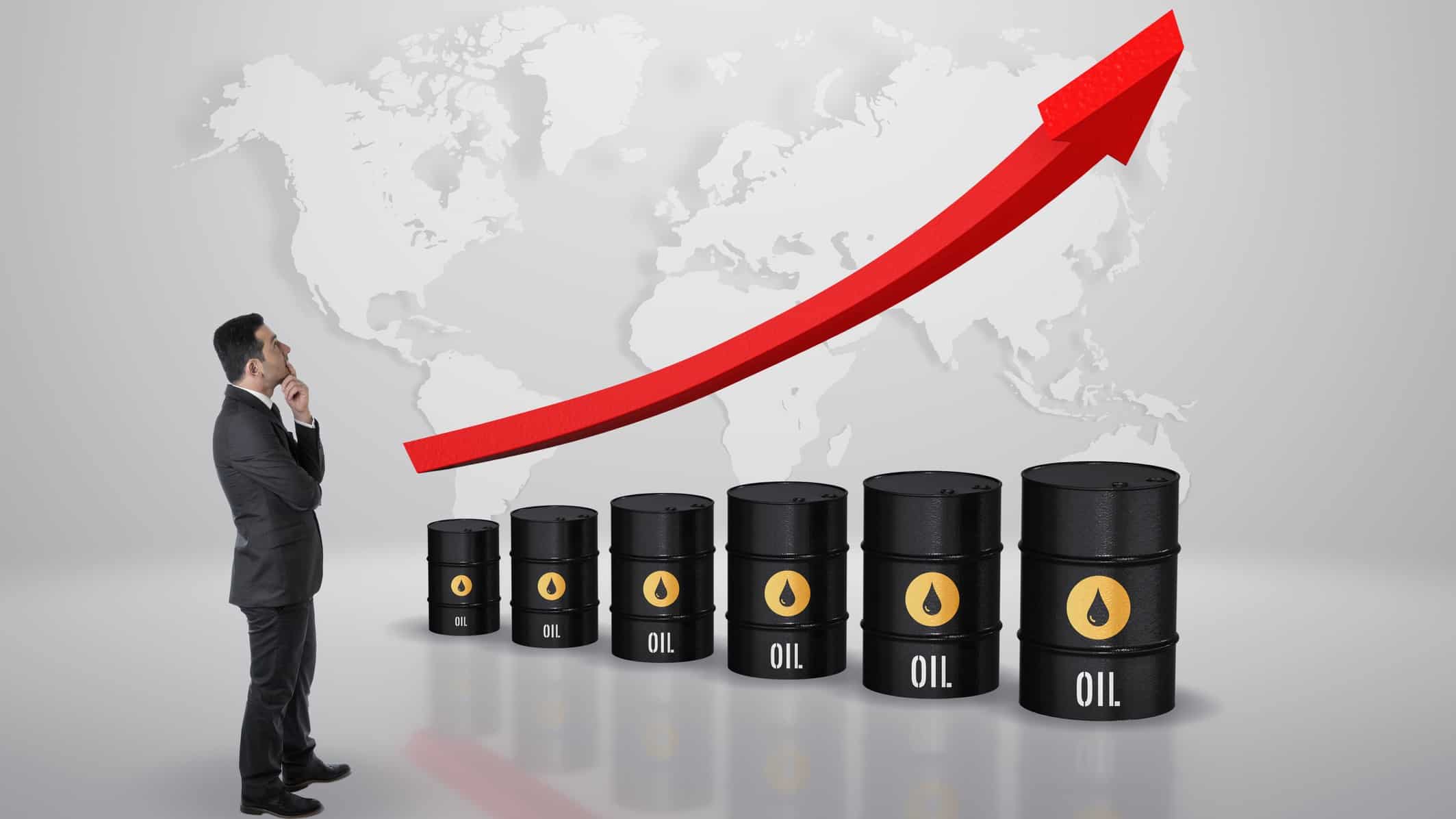
    a man in a business suit looks at a map of the world above a line up of oil barrels with a red arrow heading upwards above them, indicting rising oil prices.

    Woodside Energy Group Ltd (ASX: WDS) shares have been on fire in 2026.

    In early afternoon trade today, shares in the S&P/ASX 200 Index (ASX: XJO) energy stock are down 0.2%, trading for $31.66 apiece.

    Despite that minor dip, Woodside shares remain up a whopping 34.2% since the closing bell sounded on 31 December.

    For some context, the ASX 200 is down 1.5% year to date.

    Taking a step back, shares in the ASX 200 oil and gas stock are up 38.8% since this time last year.

    And that doesn’t include the $1.653 in fully-franked dividends the company paid (or shortly will pay) eligible stockholders over the year. At the current share price, this sees Woodside trading on a fully-franked trailing dividend yield of 5.2%.

    But passive income investors could see a significantly juicier dividend yield from the company’s next interim dividend payout. Woodside should be paying its interim dividend in late September or early October, in plenty of time to help pay for those Christmas presents.

    Here’s what’s happening.

    Woodside shares surging alongside global oil prices

    On 31 December, a barrel of Brent crude oil was trading for US$60.85, according to data from Bloomberg.

    Today, as the United States and Israeli war with Iran continues to disrupt global oil markets, that same barrel is fetching US$102.97. This sees the oil price up a blistering 69.2% in 2026. And it’s seen investors piling into Woodside shares amid expectations of higher profits and dividends to come.

    Now, we’re fervently hoping that the Middle East conflict ends sooner rather than later. An acceptable resolution should see oil prices come back down. There’s no shortage of oil, after all, just a shortage of safe shipping routes.

    But if the conflict does drag on, and the oil price remains near or above US$100 per barrel, investors could see a return to the supersized dividends delivered by Woodside shares in 2022 and early 2023.

    As you may recall, following Russia’s invasion of Ukraine in early 2022, the Brent crude oil price rocketed to US$118 per barrel in March of that year, with oil topping US$122 per barrel in June. The oil price remained above US$100 per barrel through August 2022. And it led to outsized profits for ASX 200 energy stocks like Woodside.

    And the company wasn’t stingy when it came to sharing the wealth.

    On 10 October 2022, Woodside paid a fully-franked interim dividend of $1.60 a share. The company then paid an all-time high final dividend of $2.154 a share on 5 April 2023.

    That equates to a full-year payout of $3.754 a share.

    At the current Woodside share price, that would equate to a fully-franked yield of 11.9%.

    Or more than twice the actual trailing dividend yield Woodside stock is currently trading on.

    But then that yield is based on the far lower oil and gas prices the company received in 2025.

    Should the oil price remain above US$100 per barrel for much of this year, passive income investors may well see that yield approach the levels they enjoyed three years ago.

    The post If the oil price remains above US$100, Woodside shares could be raining dividends before Christmas appeared first on The Motley Fool Australia.

    Should you invest $1,000 in Woodside Energy Group Ltd right now?

    Before you buy Woodside Energy Group Ltd shares, consider this:

    Motley Fool investing expert Scott Phillips just revealed what he believes are the 5 best stocks for investors to buy right now… and Woodside Energy Group Ltd wasn’t one of them.

    The online investing service he’s run for over a decade, Motley Fool Share Advisor, has provided thousands of paying members with stock picks that have doubled, tripled or even more.*

    And right now, Scott thinks there are 5 stocks that may be better buys…

    * Returns as of 20 Feb 2026

    .custom-cta-button p {
    margin-bottom: 0 !important;
    }

    More reading

    Motley Fool contributor Bernd Struben has no position in any of the stocks mentioned. The Motley Fool Australia’s parent company Motley Fool Holdings Inc. has no position in any of the stocks mentioned. The Motley Fool Australia has no position in any of the stocks mentioned. The Motley Fool has a disclosure policy. This article contains general investment advice only (under AFSL 400691). Authorised by Scott Phillips.

  • Should you buy the dip on ASX mining shares?

    thoughtful investor sitting at computer

    ASX mining shares have been the worst hit by the Iran war, with the materials sector falling 14.15% so far this March.

    A stronger indicator of the decline is the S&P/ASX 300 Metal & Mining Index (ASX: XMM), which has dropped 14.6% this month.

    The US and Israel began hitting Iran on 28 February (US time), sending oil prices skyrocketing and ASX shares lower.

    As we reported earlier, ASX shares have experienced their steepest fortnightly fall since June 2022, when inflation surged to 6.2%.

    Energy is the only riser among the 11 market sectors since the war broke out, while materials is the biggest faller.

    The Iran war has caused a global fuel crunch, which has direct implications for mining operations.

    Mining companies need fuel to run large machinery and processing plants.

    They now face higher fuel costs, and there may be shortages if the conflict continues much longer, potentially impacting production.

    There are market impacts, too.

    ASX mining shares have been on a tear as Australian investors embrace what appears to be the dawn of a new long-term mining boom.

    However, the war in Iran has dampened investor sentiment.

    This is potentially prompting some investors holding ASX mining shares to take their impressive short-term profits now.

    Lower sentiment is driving a ‘risk-off’ appetite, leading some investors to prefer to ‘wait and see’ before investing further.

    Warwick Grigor from mining specialist Far East Capital notes the trend, particularly in relation to ASX gold mining shares, commenting:

    After being surprisingly resilient to the fluctuations in the gold price whilst toying with a market correction, the downward movement in many stocks accelerated last week, reflecting a heavy downward shift in sentiment.

    Interestingly, the hardest hit stocks were in the gold sector. The doesn’t quite make much sense. Maybe it was profit taking.

    Since the war began, the gold price has fallen by 5%, while the S&P/ASX All Ords Gold Index (ASX: XGD) has declined by 20.8%.

    Should you buy the dip?

    Buying the dip means buying ASX shares that have experienced a share price decline.

    Arguably, the best time to buy the dip is when ASX shares have fallen due to poor short-term sentiment, not company-specific issues.

    As we’ve reported, Australia appears to be at the dawn of a new mining boom, with 5 key factors driving a new commodities supercycle.

    Those five factors are unchanged by the war in Iran. In fact, the war has highlighted the growing importance of several of them.

    What’s happening with the major ASX mining shares?

    The market’s largest ASX mining share has fallen significantly since the Iran war began.

    This month, the BHP Group Ltd (ASX: BHP) share price has decreased by 15.4%.

    Today, the BHP share price is $49.42, up 0.47%, but well down on its historical record of $59.39 reached on 3 March.

    Bank of America retains a buy rating on BHP shares with a 12-month price target of $68.

    Several other brokers rate the mining stock a hold.

    Last week, RBC Capital reiterated its hold recommendation on BHP shares and raised its target from $55 to $57.

    The Rio Tinto Ltd (ASX: RIO) share price has fallen 6.3% since the war broke out.

    Today, Rio Tinto shares are $156.74, up 1.3%.

    Morgan Stanley kept its hold rating on Rio Tinto shares last week and lifted its target from $140 to $146.

    The Fortescue Ltd (ASX: FMG) share price has dropped 7.4% in March so far.

    Today, Fortescue shares are $19.59, down 0.5%.

    Last week, RBC Capital reiterated its hold recommendation on Fortescue shares and reduced its price target from $23 to $21.

    The market’s largest ASX gold mining share, Northern Star Resources Ltd (ASX: NST) has fallen 33.2% in March, however, company-specific issues have contributed to the dramatic drop.

    Today, the Northern Star Resources share price is $20.19, down 2.1%.

    Yesterday, Morgans kept its buy rating but reduced its 12-month target from $35 to $30 after the miner’s second guidance downgrade.

    The market’s largest ASX lithium mining share, PLS Group Ltd (ASX: PLS), has fallen 10.7% since the war began.

    The PLS Group share price is $4.64 today, down 2.6%.

    Last week, UBS reiterated its hold rating with a $4.95 target, while RBC Capital kept its buy rating and raised its target from $5.20 to $5.40.

    The post Should you buy the dip on ASX mining shares? appeared first on The Motley Fool Australia.

    Should you invest $1,000 in BHP Group right now?

    Before you buy BHP Group shares, consider this:

    Motley Fool investing expert Scott Phillips just revealed what he believes are the 5 best stocks for investors to buy right now… and BHP Group wasn’t one of them.

    The online investing service he’s run for over a decade, Motley Fool Share Advisor, has provided thousands of paying members with stock picks that have doubled, tripled or even more.*

    And right now, Scott thinks there are 5 stocks that may be better buys…

    * Returns as of 20 Feb 2026

    .custom-cta-button p {
    margin-bottom: 0 !important;
    }

    More reading

    Bank of America is an advertising partner of Motley Fool Money. Motley Fool contributor Bronwyn Allen has positions in BHP Group. The Motley Fool Australia’s parent company Motley Fool Holdings Inc. has no position in any of the stocks mentioned. The Motley Fool Australia has recommended BHP Group. The Motley Fool has a disclosure policy. This article contains general investment advice only (under AFSL 400691). Authorised by Scott Phillips.

  • Forget CBA shares, this ASX bank stock is tipped to soar another 70%

    A man in his 30s holds his laptop and operates it with his other hand as he has a look of pleasant surprise on his face as though he is learning something new or finding hidden value in something on the screen.

    Commonwealth Bank of Australia (ASX: CBA) shares are fairly flat in Tuesday lunchtime trade. At the time of writing, the ASX bank stock is down 0.1% to $175.35.

    Despite today’s softer share price, CBA stock is still 8.83% higher for the year-to-date and 21.22% higher over the year.

    CBA shares spiked over 12% in 48 hours mid-February after the bank posted an unexpectedly-positive half-year FY26 result. Since then, the bank shares have remained in the spotlight but have been relatively stable. 

    But I don’t think the latest share price gains will continue. CBA shares are significantly overvalued relative to its peers and aren’t supported by the bank’s core business strength or earnings. 

    At the same time, the bank is facing ongoing net interest margin pressure thanks to intense market competition and regulatory changes.

    More interest rate hikes could also put even more pressure on banks to compete.

    I think CBA shares will suffer more overall weakness this year. In fact, I think CBA shares could possibly crash below $100 in 2026.

    The good news is that there is another ASX bank stock that analysts are tipping for huge upside.

    The ASX bank shares tipped to soar higher

    Analysts expect all the big four banks’ shares to drop in 2026. Data shows that experts think CBA shares carry the most downside risk, with a downside of up to 48.67% at the time of writing. This could see CBA shares tumble down to just $90 a piece.

    But the outlook for Judo Capital Holdings Ltd (ASX: JDO) is another story.

    Australian-based Judo Bank provides financial services and lending to small and medium enterprises (SMEs) with annual turnovers of up to $100 million. Its business lending starts at $250,000, and it also offers personal term deposit products and home loans.

    The bank was founded in 2016 and received its banking license in 2019, and was listed on the ASX in 2021. So it’s relatively new in comparison to majors like CBA. 

    Judo Bank has also had a strong start to FY26. At its latest AGM, it said lending momentum was strong over the first quarter and that it’s confident it can achieve FY26 guidance of $180-$190 million. Guidance was confirmed again when it posted its first-half FY26 results in mid-February.

    The bank posted a 32% hike in net profit at $59.9 million. It also confirmed it had delivered “above system growth” in gross loans and advances, with $13.4 billion, up 7% over the half and 15% year on year.

    At the time of writing, Judo Bank’s shares are down 0.54% to $1.46 a piece. For the year-to-date, the shares are 18.78% higher, and they’re down 23.05% over the past month alone.

    Analysts aren’t spooked, though. The latest strong results announcement suggests the share price plummet is likely due to investors taking their gains off the table after a strong price rally. Judo shares soared over 31% between November and early February this year.

    What do the analysts expect next?

    TradingView data shows 12 out of 13 analysts have a buy or strong buy rating on Judo shares. The average target price is $2.25, while the maximum is $2.50 per share over the next 12 months.

    At the time of writing, that implies a potential 53.67% to 71% upside for investors.

    The post Forget CBA shares, this ASX bank stock is tipped to soar another 70% appeared first on The Motley Fool Australia.

    Should you invest $1,000 in Commonwealth Bank of Australia right now?

    Before you buy Commonwealth Bank of Australia shares, consider this:

    Motley Fool investing expert Scott Phillips just revealed what he believes are the 5 best stocks for investors to buy right now… and Commonwealth Bank of Australia wasn’t one of them.

    The online investing service he’s run for over a decade, Motley Fool Share Advisor, has provided thousands of paying members with stock picks that have doubled, tripled or even more.*

    And right now, Scott thinks there are 5 stocks that may be better buys…

    * Returns as of 20 Feb 2026

    .custom-cta-button p {
    margin-bottom: 0 !important;
    }

    More reading

    Motley Fool contributor Samantha Menzies has no position in any of the stocks mentioned. The Motley Fool Australia’s parent company Motley Fool Holdings Inc. has no position in any of the stocks mentioned. The Motley Fool Australia has no position in any of the stocks mentioned. The Motley Fool has a disclosure policy. This article contains general investment advice only (under AFSL 400691). Authorised by Scott Phillips.

  • IAG shares jump 12%: Buy, sell or hold?

    A shocked man holding some documents in the living room.

    Insurance Australia Group Ltd (ASX: IAG) shares are 0.41% higher in early-afternoon trade on Tuesday. The uptick means the shares have jumped around 12% over the past week, to $7.28 a piece. 

    IAG shares are now 9.01% lower for the year-to-date and 3.2% lower than 12 months ago.

    What has happened to IAG shares so far in 2026?

    IAG shares have been volatile over the past 12 months, fluctuating between $6.39 and $9.18 per share. 

    Most recently, the shares crashed nearly 18% last month. 

    There was no price-sensitive news out of the company at the time, so it’s possible the share price decline started with investors taking gains off the table ahead of the company’s first-half FY26 results mid-month.

    The company’s half-year FY26 results showed a significant drop in profit. For the six months to 31st December 2025, IAG’s revenue was up 23.3%, but its net profit after tax dropped 35.1%. 

    Despite the decline, IAG maintains its FY26 profit guidance of between $1,550 million and $1,750 million. But investor sentiment had already been dented, and the share price continued tumbling to a two-year low of $6.44 in early March.

    At the same time, extreme country-wide weather conditions such as bushfires and widespread flooding have created headwinds for the insurance business.

    Many have raised concerns about the number of insurance claims and reinsurance costs. And investors are apprehensive about what this might mean for the business.

    There isn’t any more price-sensitive news out of IAG to explain the latest turnaround. But analysts reiterated their buy ratings on the stock following the results announcement last month, flagging that the shares are now undervalued and oversold. Perhaps investor sentiment is finally following suit?

    And there could be a lot more to come…

    Earlier this year, IAG successfully integrated its RACQ Insurance (RACQI) business into its main catastrophe cover and expanded its WAQS arrangements to cover 35% of the consolidated business. 

    The company has maintained RACQI’s separate, standalone reinsurance program, which includes quota share and catastrophe protections.

    For 2026, IAG’s total catastrophe reinsurance program provides main catastrophe cover for two events up to $10 billion, with an attachment point at $500 million.

    And analysts expect that the combined impact of recent catastrophes and broader claims inflation will influence upcoming renewals as insurers manage loss ratios and capital requirements.

    This means that if weather conditions normalise or decline, earnings could rebound quickly, potentially leading to higher dividends, a share buyback, and increased investor confidence in IAG shares.

    TradingView data shows analysts are very bullish on IAG shares. Out of 11 analysts, 7 have a buy or strong buy rating. The maximum target price is $9.80, which implies a 36.36% upside at the time of writing. 

    The post IAG shares jump 12%: Buy, sell or hold? appeared first on The Motley Fool Australia.

    Should you invest $1,000 in Insurance Australia Group Limited right now?

    Before you buy Insurance Australia Group Limited shares, consider this:

    Motley Fool investing expert Scott Phillips just revealed what he believes are the 5 best stocks for investors to buy right now… and Insurance Australia Group Limited wasn’t one of them.

    The online investing service he’s run for over a decade, Motley Fool Share Advisor, has provided thousands of paying members with stock picks that have doubled, tripled or even more.*

    And right now, Scott thinks there are 5 stocks that may be better buys…

    * Returns as of 20 Feb 2026

    .custom-cta-button p {
    margin-bottom: 0 !important;
    }

    More reading

    Motley Fool contributor Samantha Menzies has no position in any of the stocks mentioned. The Motley Fool Australia’s parent company Motley Fool Holdings Inc. has no position in any of the stocks mentioned. The Motley Fool Australia has no position in any of the stocks mentioned. The Motley Fool has a disclosure policy. This article contains general investment advice only (under AFSL 400691). Authorised by Scott Phillips.