Author: openjargon

  • Netflix’s co-CEO shares how he pitched Trump on the Warner Bros. deal

    Sarandos Trump 2x1
    Netflix co-CEO Ted Sarandos appealed to President Donald Trump as he battles Paramount Skydance's David Ellison for control of Warner Bros.

    • Netflix made a winning bid for Warner Bros., but Paramount Skydance isn't conceding yet.
    • Paramount CEO David Ellison has rapport with Trump, but Netflix executive Ted Sarandos might also.
    • Sarandos pitched Netflix as a company that can "create and protect jobs" if it buys Warner Bros.

    Before Netflix made its winning bid for Warner Bros., its co-CEO pitched President Donald Trump directly on the merits of the deal.

    The pair found common ground, Netflix co-CEO Ted Sarandos said.

    "The president's interests in this are the same as ours, which is to create and protect jobs," Sarandos said of Trump at the UBS media conference on Monday afternoon.

    Sarandos said he'd talked to Trump "many times since the election about the different challenges facing the entertainment industry."

    "The president cares deeply about the entertainment industry, and he loves the entertainment industry," Sarandos continued.

    Trump praised Sarandos on Sunday, calling him a "great person" who he said had done "one of the greatest jobs in the history of movies." Still, Trump said Netflix's "big market share" in the streaming space "could be a problem" as it tries to buy Warner Bros. Discovery's streaming and studio assets.

    The Netflix-Warner Bros. deal reached on Friday is worth $82.7 billion, including $72 billion in equity. WBD's TV networks like CNN or HGTV, aren't in the proposal.

    Rival suitor Paramount Skydance responded on Monday with a hostile bid in the form of a $30-per-share, all-cash offer for all of WBD, including the declining TV networks. Netflix's offer is $27.75 per share, comprising mostly cash and some stock. There's debate among analysts about whether Netflix's or Paramount's renewed offer is more attractive, as it depends on the value of WBD's TV networks.

    Paramount's move "was entirely expected," Sarandos said.

    Paramount CEO David Ellison, who seems to be on Trump's good side, went on CNBC on Monday morning to tout his company's public offer as "pro-consumer, pro-creative talent," and "pro-competition." Ellison said his company's offer had "faster regulatory certainty to close" than Netflix's. Ellison's father, Oracle cofounder Larry Ellison, is a longtime Trump ally and one of the richest people on the planet.

    However, Netflix also seems to be building rapport with Trump. That could help explain why Netflix's Sarandos and fellow co-CEO Greg Peters are optimistic about their deal.

    "We are very confident that regulators should, and will, approve it," Peters said of the WBD deal.

    Sarandos pitched the streaming giant's proposed acquisition as a net positive for the labor market, despite the concerns of many in Hollywood. He also said the company is "deeply committed" to releasing movies from Warner Bros. in theaters, "exactly the way they've released those movies today."

    That overture could help ease Trump's concerns. Sarandos pitched Netflix as a great job saver.

    "What the president has been interested in, in this deal, has been: To what extent does it protect and create jobs in America?" Sarandos said.

    Read the original article on Business Insider
  • Better artificial intelligence stock: Palantir Technologies vs. Nvidia

    ASX share investor sitting with a laptop on a desk, pondering something.

    This article was originally published on Fool.com. All figures quoted in US dollars unless otherwise stated.

    Key Points

    • Palantir trades at a stratospheric 109 times revenue while Nvidia’s 24 times sales looks almost (almost!) reasonable by comparison.
    • Palantir’s military-style data analytics platform limits its addressable market compared to Nvidia’s universal AI infrastructure play.
    • Both stocks are priced for a perfect AI future that may not materialize smoothly, and investors could find better opportunities elsewhere in the AI ecosystem.

    The stock market hasn’t been the same since OpenAI unleashed ChatGPT to the public three years ago. As of Dec. 4, the S&P 500 (SNPINDEX: ^GSPC) market index has posted a 75% total return since then. The tech-heavy Nasdaq-100 index gained a dividend-adjusted 118% over the same period.

    But the kings of artificial intelligence (AI) are soaring far above these not-so-pedestrian returns. AI chip champion Nvidia (NASDAQ: NVDA) is up more than tenfold and AI platform master Palantir Technologies (NASDAQ: PLTR) more than doubled Nvidia’s stellar gains:

    PLTR Total Return Level data by YCharts

    But past performance is never a guarantee of future results. What matters to today’s investors is a fundamentally different question — which AI stock is the better investment for new money today?

    When AI valuations go orbital

    Let’s address the elephant in the room, or the rocket ship in the stratosphere directly above Wall Street. Palantir’s stock has gone absolutely parabolic in 2025, trading at roughly 109 times trailing revenue. That triple-digit figure is not a typo. For context, even during the dot-com bubble’s wildest moments, most high-flyers topped out around 50 times sales.

    Nvidia, meanwhile, has seen its valuation actually compress even as its business keeps breaking records. At about 24 times revenue, it’s still priced for perfection. However, compared to Palantir, Nvidia’s stock price looks almost reasonable.

    Mind you, Nvidia is already absolutely massive and it should be harder to keep the hypergrowth going from an annual revenue base of $187 billion. Palantir’s trailing-12-month sales look minuscule in comparison, stopping at $3.9 billion. The law of large numbers says that Nvidia’s sales growth must slow down at some point. Meanwhile, Palantir’s long-term value is limited by its focus on the smaller market of government contracts. The company is pushing into commercial contracts too, but how many businesses need military-style data analytics?

    The political cycle wild card

    Palantir’s recent surge coincides suspiciously with a favorable shift in the federal spending environment. The company’s government revenue, while growing at a respectable 40% year over year, suddenly seems poised for acceleration as Washington embraces AI-powered defense and intelligence applications.

    But here’s the risk nobody’s talking about: government contracts follow political cycles. What happens if spending priorities shift after the 2026 midterms? What if the regulatory environment becomes less friendly to aggressive data analytics? Palantir’s commercial business is growing faster at 54%, but government contracts still represent nearly half of revenue. That’s a lot of exposure to political winds that can change direction every two years (with sharper shifts around the four-year presidential election cycle).

    Nvidia faces its own unique challenge — its biggest customers are becoming its biggest competitors. Amazon, Alphabet, and Microsoft are all developing custom AI chips while still buying billions worth of Nvidia’s GPUs. It’s like selling weapons to armies that are simultaneously building their own armories. Nvidia can maintain this delicate balance, but it requires constant innovation and careful relationship management.

    “Less overvalued” wins by default

    I can’t believe I’m writing this, but at current prices, Nvidia is the better buy — and that’s despite my concerns about customer competition and a still-rich valuation. Here’s why:

    • Valuation sanity: OK, “sanity” is a stretch but at 24x sales vs. 109x, Nvidia’s premium is at least loosely grounded in financial reality.
    • Proven moat: CUDA’s ecosystem lock-in is real and tested, while Palantir’s competitive advantages remain harder to quantify.
    • Diversification: Nvidia sells to everyone in AI; Palantir’s concentration in government and large enterprises limits its addressable target market.
    • Profit machine: Nvidia’s 57% net margin vs. Palantir’s 20% shows who’s actually printing money today.

    But here’s the real takeaway: Both stocks are priced for a perfect AI future that may not materialize as smoothly as bulls expect. Palantir needs flawless execution and continued government AI spending to justify its valuation. Nvidia needs to fend off increasingly capable competitors while maintaining its innovation edge. Both might actually succeed in the long run, but it won’t be easy. 

    For investors seeking AI exposure today, the smartest move might be looking elsewhere in the ecosystem — perhaps at the hyperscalers building AI services, semiconductor equipment makers enabling the whole industry, or even “boring” companies successfully implementing AI to improve their operations. Sometimes the best investment isn’t choosing between two expensive options — but finding a completely different third path.

    So, if forced to pick between these two AI titans, I’d reluctantly choose Nvidia. But I reduced my Nvidia exposure in 2025, converting some of my AI-boom paper gains into cash profits.

    My highest-conviction call in this duel is simple: Neither stock really offers a compelling risk/reward balance for new money at December 2025 prices. The AI revolution is real, but that doesn’t mean every AI stock is a buy at any price.

    This article was originally published on Fool.com. All figures quoted in US dollars unless otherwise stated.

    The post Better artificial intelligence stock: Palantir Technologies vs. Nvidia appeared first on The Motley Fool Australia.

    This article was originally published on Fool.com. All figures quoted in US dollars unless otherwise stated.

    Should you invest $1,000 in Nvidia right now?

    Before you buy Nvidia shares, consider this:

    Motley Fool investing expert Scott Phillips just revealed what he believes are the 5 best stocks for investors to buy right now… and Nvidia wasn’t one of them.

    The online investing service he’s run for over a decade, Motley Fool Share Advisor, has provided thousands of paying members with stock picks that have doubled, tripled or even more.*

    And right now, Scott thinks there are 5 stocks that may be better buys…

    * Returns as of 18 November 2025

    .custom-cta-button p { margin-bottom: 0 !important; }

    This article was originally published on Fool.com. All figures quoted in US dollars unless otherwise stated.

    More reading

    Anders Bylund has positions in Alphabet, Amazon, and Nvidia. The Motley Fool Australia’s parent company Motley Fool Holdings Inc. has positions in and has recommended Alphabet, Amazon, Microsoft, Nvidia, and Palantir Technologies. The Motley Fool Australia’s parent company Motley Fool Holdings Inc. has recommended the following options: long January 2026 $395 calls on Microsoft and short January 2026 $405 calls on Microsoft. The Motley Fool Australia has recommended Alphabet, Amazon, Microsoft, and Nvidia. The Motley Fool has a disclosure policy. This article contains general investment advice only (under AFSL 400691). Authorised by Scott Phillips.

  • 7 ASX mining shares to buy for Christmas amid upgrades from Macquarie

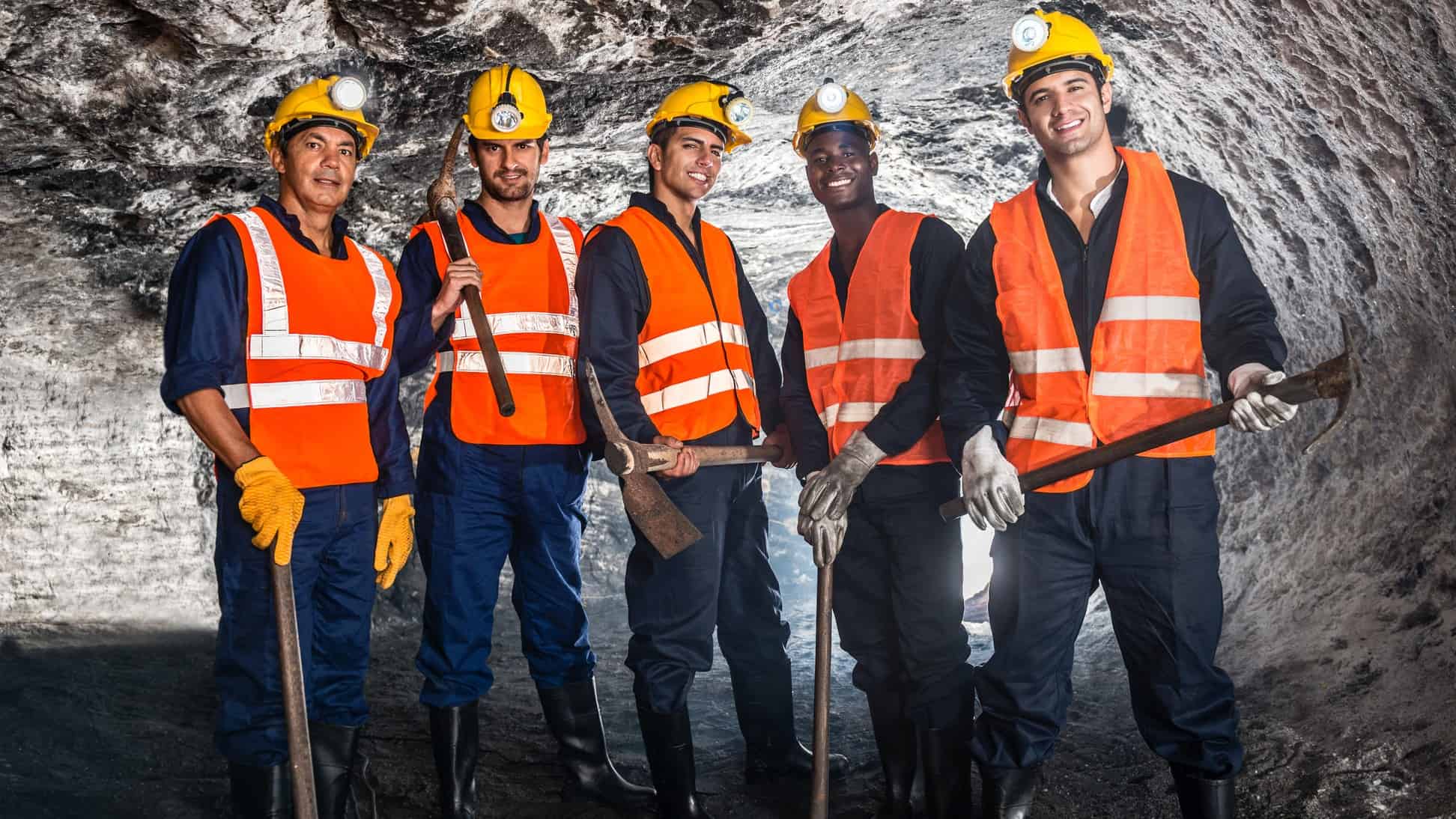
    Five happy miners standing next to each other representing ASX coal mining shares which some brokers say could pay big dividends this year

    Looking to buy a few, or even seven, ASX mining shares to slip into your Christmas stockings?

    Then Macquarie Group Ltd (ASX: MQG) has some new stock upgrades for you.

    In the broker’s latest Commodities Update report, it notes that for 2026:

    In the short term (CY26) we are overweight Gold (Au) with a 22% increase to CY26 price to US$4,225/Oz; we are 8% above VA consensus. Our Spodumene prices are 15%/20% below consensus/spot for CY26, but we note our med-long prices are 15% above consensus.

    We are even-weight (within 5% of consensus) on Iron Ore (Fe), Met-Coal, Aluminium (Al), Thermal Coal and Nickel (Ni) in CY26E, but note our Fe and Thermal outlooks weaken over time.

    Here’s what that all boils down to for these seven upgraded ASX mining stocks.

    From underperform to neutral

    Two large-cap ASX mining shares just earned upgrades from an underperform rating to neutral.

    The broker noted that Mineral Resources Ltd (ASX: MIN) shares were raised to neutral, with the diversified S&P/ASX 200 Index (ASX: XJO) miner seeing “large EPS changes in FY26/27 as iron ore and lithium prices are materially raised”.

    With Macquarie’s bullish outlook on the gold price, ASX 200 gold stock West African Resources Ltd (ASX: WAF) also earned an upgrade to neutral.

    Macquarie expects these five ASX mining shares to outperform

    Turning to the Aussie mining stocks Macquarie expects to outperform in 2026, ASX 200 coal miner Whitehaven Coal Ltd (ASX: WHC) was raised from neutral to outperform.

    Macquarie said:

    WHC remains our preferred coal exposure, which benefits from an expanded earnings multiple from 4.0x to 5.0x due to a recent tightening of the spread against peers (BHP/RIO, etc).

    In the diversified ASX mining share space, Macquarie said “We prefer Rio Tinto Ltd (ASX: RIO) to BHP Group Ltd (ASX: BHP) and prefer South32 Limited (ASX: S32) outright.”

    The broker upgraded South32 to outperform “given prospects of an improved returns outlook and a favourable catalyst backdrop”.

    And three ASX gold stocks join the outperforming list.

    Macquarie raised Newmont Corp (ASX: NEM) to outperform, stating:

    We switch our large-cap preference from NST to NEM, due to its relatively attractive valuation (P/NPV of 0.9x vs NST at 1.1x) and underperformance over the last three months with NEM +21% and NST +36%.

    Ora Banda Mining Ltd (ASX: OBM) also earned an upgrade to outperform.

    Macquarie noted:

    We still expect gold to trade at historically high levels in the near-term while also being held back by an upturn in global growth and a monetary policy easing cycle that falls short of market expectations.

    And stating, “we remain overweight gold”, Macquarie also raised ASX mining share Resolute Mining Ltd (ASX: RSG) to an outperform rating.

    Happy Christmas stock shopping!

    The post 7 ASX mining shares to buy for Christmas amid upgrades from Macquarie appeared first on The Motley Fool Australia.

    Should you invest $1,000 in BHP Group right now?

    Before you buy BHP Group shares, consider this:

    Motley Fool investing expert Scott Phillips just revealed what he believes are the 5 best stocks for investors to buy right now… and BHP Group wasn’t one of them.

    The online investing service he’s run for over a decade, Motley Fool Share Advisor, has provided thousands of paying members with stock picks that have doubled, tripled or even more.*

    And right now, Scott thinks there are 5 stocks that may be better buys…

    * Returns as of 18 November 2025

    .custom-cta-button p {
    margin-bottom: 0 !important;
    }

    More reading

    Motley Fool contributor Bernd Struben has no position in any of the stocks mentioned. The Motley Fool Australia’s parent company Motley Fool Holdings Inc. has no position in any of the stocks mentioned. The Motley Fool Australia has recommended BHP Group. The Motley Fool has a disclosure policy. This article contains general investment advice only (under AFSL 400691). Authorised by Scott Phillips.

  • 2 of the best ASX dividend shares to buy in December

    Happy man working on his laptop.

    There are lots of ASX dividend shares to choose from on the local market.

    To narrow things down, let’s take a look at two that Bell Potter thinks are among the best to buy in December.

    Here’s what the broker is saying about them:

    Harvey Norman Holdings Ltd (ASX: HVN)

    This leading household goods retailer could be one of the best ASX dividend shares to buy now according to Bell Potter.

    It highlights that the company is one of the most diversified retailers in terms of both categories and regions, while also benefitting from its significant property portfolio. It commented:

    Despite the strong re-rate in the name, HVN trades at ~2.0x market capitalisation to freehold property value as Australia’s single largest owner in large format retail with a global portfolio surpassing $4.5b and collectively owning ~40% of their stores (franchised in Australia and company operated offshore). This sees our view that of the 1-year forward ~19x P/E multiple as justified considering the multiple catalysts near/mid-term.

    Bell Potter has a buy rating and $8.30 price target on its shares.

    As for income, the broker is forecasting fully franked dividends of 30.9 cents per share in FY 2026 and then 35.3 cents per share in FY 2027. Based on its current share price of $7.32, this would mean dividend yields of 4.2% and 4.8%, respectively.

    Universal Store Holdings Ltd (ASX: UNI)

    Another ASX dividend share that has been rated as a best buy by Bell Potter is Universal Store.

    It is a leading youth focused apparel, footwear, and accessories retailer with around ~85 stores under its flagship Universal Store brand. It is also expanding its presence with stand-alone formats for its private label brands Perfect Stranger and Thrills stores.

    Bell Potter thinks its shares are undervalued, especially given its positive growth outlook. It said:

    At ~18x FY26e P/E (BPe), we see UNI trading at a discount to the ASX300 peer group and see the multiple justified by the distinctive growth traits supporting consistent outperformance in a challenging category, longer term opportunity with three brands, organic gross margin expansion via private label product penetration (currently ~55%) and management execution.

    While catalysts associated with further interest rate cuts for Australia in CY25 are not imminent post the third rate cut in August, we continue to see the youth customer prioritising on-trend streetwear and expect UNI to benefit with their leading position.

    The broker has a buy rating and $10.50 price target on its shares.

    With respect to dividends, Bell Potter is forecasting fully franked payouts of 37.3 cents per share in FY 2026 and then 41.4 cents per share in FY 2027. Based on its current share price of $8.41, this would mean dividend yields of 4.4% and 4.9%, respectively.

    The post 2 of the best ASX dividend shares to buy in December appeared first on The Motley Fool Australia.

    Should you invest $1,000 in Harvey Norman Holdings Limited right now?

    Before you buy Harvey Norman Holdings Limited shares, consider this:

    Motley Fool investing expert Scott Phillips just revealed what he believes are the 5 best stocks for investors to buy right now… and Harvey Norman Holdings Limited wasn’t one of them.

    The online investing service he’s run for over a decade, Motley Fool Share Advisor, has provided thousands of paying members with stock picks that have doubled, tripled or even more.*

    And right now, Scott thinks there are 5 stocks that may be better buys…

    * Returns as of 18 November 2025

    .custom-cta-button p {
    margin-bottom: 0 !important;
    }

    More reading

    Motley Fool contributor James Mickleboro has positions in Universal Store. The Motley Fool Australia’s parent company Motley Fool Holdings Inc. has no position in any of the stocks mentioned. The Motley Fool Australia has positions in and has recommended Harvey Norman. The Motley Fool Australia has recommended Universal Store. The Motley Fool has a disclosure policy. This article contains general investment advice only (under AFSL 400691). Authorised by Scott Phillips.

  • Here’s the dividend forecast out to 2030 for Coles shares

    a woman smiles widely as she leans on her trolley while making her way down a supermarket grocery aisle while holding her mobile telephone.

    I believe owning Coles Group Ltd (ASX: COL) shares is a great option for dividends because of both its consistently rising passive income and the size of the dividend yield.

    On top of the pleasing dividend, Coles has a defensive earnings base – we all need to eat, of course.

    The business has grown its dividend each year since it was listed several years ago, and we’re going to take a look at how large the dividend could grow in the coming years.

    FY26

    Coles has started FY26 strongly, in the first quarter of FY26, it delivered group total sales revenue of $10.96 billion, representing 3.9% growth – this beat UBS’ expectations.

    Broker UBS said that Coles supermarkets are executing strongly and leveraging key investments.

    Those investments include Witron automated distributed centres, which are improving product availability in NSW and Queensland. Ocado customer fulfilment centres (CFCs) helped drive 28% online sales growth in the FY26 first quarter.

    UBS also pointed out that Coles supermarkets are delivering ongoing promotional effectiveness, which are fewer and better, and product ranging is better (which is increasingly store-led), according to UBS. Both of these advantages have been enabled by the supply chain.

    With the effective execution of its strategy, UBS is projecting that the business could decide to pay an annual dividend per share of 79 cents following an increase of the company’s net profit.

    If Coles does decide to pay that projected amount, it would mean a grossed-up dividend yield of 5.2%, including franking credits.

    FY27

    The company could see further dividend growth in the 2027 financial year, thanks to the strength of its revenue and net profit.

    UBS is forecasting the business could grow its dividend to a pleasing 93 cents per share in FY27. If that comes true, it would translate into a grossed-up dividend yield of 6.1%, including franking credits, at the current Coles share price.  

    FY28

    The 2028 financial year could get even better for owners of Coles shares.

    In FY28, the board of directors of Coles is projected by UBS to declare an annual dividend per share of 97 cents. If that happens, the business could have a grossed-up dividend yield of 6.3%.

    FY29

    The broker is projecting that the business could deliver more profit and dividend growth for investors in FY29. UBS is currently suggesting the Coles annual dividend per share could climb to $1.01.

    If that happens, Coles would deliver investors a grossed-up dividend yield of 6.6%, including franking credits, using the valuation at the time of writing.

    FY30

    The final year of this series of projections is expected to see the biggest dividend of all.

    UBS forecasts that Coles may deliver investors an annual dividend per share of $1.04. That means the business could provide a grossed-up dividend yield of 6.8%, including franking credits.

    The post Here’s the dividend forecast out to 2030 for Coles shares appeared first on The Motley Fool Australia.

    Should you invest $1,000 in Coles Group Limited right now?

    Before you buy Coles Group Limited shares, consider this:

    Motley Fool investing expert Scott Phillips just revealed what he believes are the 5 best stocks for investors to buy right now… and Coles Group Limited wasn’t one of them.

    The online investing service he’s run for over a decade, Motley Fool Share Advisor, has provided thousands of paying members with stock picks that have doubled, tripled or even more.*

    And right now, Scott thinks there are 5 stocks that may be better buys…

    * Returns as of 18 November 2025

    .custom-cta-button p {
    margin-bottom: 0 !important;
    }

    More reading

    Motley Fool contributor Tristan Harrison has no position in any of the stocks mentioned. The Motley Fool Australia’s parent company Motley Fool Holdings Inc. has no position in any of the stocks mentioned. The Motley Fool Australia has no position in any of the stocks mentioned. The Motley Fool has a disclosure policy. This article contains general investment advice only (under AFSL 400691). Authorised by Scott Phillips.

  • 2 ASX blue-chip shares offering big dividend yields

    Man holding out $50 and $100 notes in his hands, symbolising ex dividend.

    There are a number of reasons why ASX blue-chip shares usually make strong investments each year. Stability, strong earnings generation each year and (usually) a good dividend yield together can be very appealing.

    I wouldn’t focus purely on the dividend income. I think it’s a good idea for investors to ensure that the target business has a good outlook for earnings growth too, otherwise the dividends may not be reliable, with the share price lacking that organic tailwind.

    The two ASX blue-chip shares I’m going to highlight both have strong dividend yields.

    Telstra Group Ltd (ASX: TLS)

    The Australian telecommunications giant is one of the most impressive names for payouts because of how generous it is with its dividend payout ratio. In recent times, it has paid out close to all of its net profit generation each year, though it has held onto a higher proportion of its cash earnings.

    The company has invested significant sums into its spectrum assets and 5G network to ensure that it has the most appealing network for customers. More subscribers mean the business can spread its costs across more users.

    We saw this effect in the FY25 result, with mobile revenue climbing 3% and operating profit (EBITDA) climbing 5%.

    I’m expecting the company’s EBITDA and net profit margin to slowly rise over the rest of the decade. I’m particularly optimistic this can happen if Telstra can win more broadband customers onto its wireless (5G-powered) offering, which would enable a higher margin from that household (rather the margin going to the NBN).

    I think it’s quite likely the ASX blue-chip share will hike its FY26 annual dividend to at least 20 cents per share, which could mean a grossed-up dividend yield of 5.8%, including franking credits. If it paid a dividend of 21 cents per share, it’d be a grossed-up dividend yield of 6%, including franking credits.

    Charter Hall Long WALE REIT (ASX: CLW)

    The other business I want to highlight for its yield is a real estate investment trust (REIT) that owns a diversified portfolio of properties which are, on average, long-term rental leases.

    Charter Hall Long WALE REIT has a weighted average lease expiry (WALE) of around nine years, meaning its rental earnings are locked in for the long-term.

    The business owns properties in a number of areas including service stations, hotels and pubs, telecommunication exchanges, data centres, distribution centres and more. I like that this lowers the risk of being too exposed to one subsector.

    This REIT has lots of blue-chip tenants, which is one of the reasons why it’s able to provide investors with pleasing defensive earnings. Its rental income (on a per-property basis) is growing thanks to regular rental increases that are either fixed or linked to inflation, providing a tailwind or rental profits and the distribution.

    Charter Hall Long WALE REIT is expecting to grow its FY26 distribution to 25.5 cents per security, translating into a forward distribution yield of 6.3% thanks to its 100% distribution payout ratio.

    The post 2 ASX blue-chip shares offering big dividend yields appeared first on The Motley Fool Australia.

    Should you invest $1,000 in Telstra Corporation Limited right now?

    Before you buy Telstra Corporation Limited shares, consider this:

    Motley Fool investing expert Scott Phillips just revealed what he believes are the 5 best stocks for investors to buy right now… and Telstra Corporation Limited wasn’t one of them.

    The online investing service he’s run for over a decade, Motley Fool Share Advisor, has provided thousands of paying members with stock picks that have doubled, tripled or even more.*

    And right now, Scott thinks there are 5 stocks that may be better buys…

    * Returns as of 18 November 2025

    .custom-cta-button p {
    margin-bottom: 0 !important;
    }

    More reading

    Motley Fool contributor Tristan Harrison has no position in any of the stocks mentioned. The Motley Fool Australia’s parent company Motley Fool Holdings Inc. has no position in any of the stocks mentioned. The Motley Fool Australia has positions in and has recommended Telstra Group. The Motley Fool has a disclosure policy. This article contains general investment advice only (under AFSL 400691). Authorised by Scott Phillips.

  • Billy McFarland’s Fyre Festival follow-up included a bathroom barge, French Montana, and another viral food photo

    Billy McFarland
    Billy McFarland is back.

    • Billy McFarland hosted the PHNX 2025 festival over the weekend.
    • McFarland aimed to redeem himself with excursions and a bathroom barge after the failed Fyre Festival.
    • Viral food photos and a modest turnout marked the event, but no major disasters occurred.

    Billy McFarland is trying to rise from the ashes of Fyre Festival.

    His latest event is PHNX — pronounced "Phoenix." It attracted dozens of attendees over the weekend. Like the original Fyre Festival, it was heavily documented by camera crews and social media users.

    Since being released from prison in 2022, after pleading guilty to wire fraud charges related to Fyre Festival, McFarland has been planning redemption from the disastrous 2017 festival that left hundreds of attendees stranded, hungry, and thirsty on a Bahamian island and became the subject of a hit Netflix documentary.

    On Saturday and Sunday, McFarland ran it back with a smaller crowd, a mix of parties, excursions, and musical guests like French Montana as the headliner on Utila Bay, an island off the coast of Honduras.

    @pyrtbilly

    To everyone who laughed at the bathroom barge. To everyone who said there wouldn’t be power. Who wants to be part of history? See you in 4 days.

    ♬ original sound – Billy McFarland

    General admission tickets to PHNX cost $599. VIP passes went for up to $140,000 and included round-trip flights from Miami. PHNX offered all attendees brunch, lunch, dinner, and a handful of excursions, including scuba diving and a cave hike, in their ticket packages.

    The itinerary was a far cry from the events that unfolded in 2017. Where unsanitary or simply unavailable bathrooms became a hallmark of Fyre Festival's failures, McFarland showed off a "bathroom barge" of floating port-a-potties for PHNX. He also shared fresh fruit stands and food options, including lobster, steak, and fresh salads — a much different menu from the infamous cheese sandwiches served at the first Fyre Festival.

    Festival-goers, McFarland, and performers took their followers along for the ride at PHNX 2025. The event was also available via livestream for paying viewers.

    One performer, a DJ who goes by 220 Kid, documented his time at the festival in several videos. His post about the vegetarian food option went particularly viral. The plate of rice and a single cob of corn drew scrutiny and a call back to the meager cheese sandwiches from 2017.

    @220kidmusic

    Where my cheese sandwiches at

    ♬ original sound – 220 Kid

    Rappers Slim Jxmmi and Bobby Shmurda showed up, and a clip from headliner French Montana's set showed a modest crowd dancing.

    @maddsofficial

    Confirmed ! French showed up every artist did! Love this island so much ! #fyrefestival #PHNX

    ♬ original sound – Madds

    "We set out to bring 400 people and a dozen artists to a private island in the Utila Bay Islands, and the experience exceeded every expectation," McFarland said in a statement. "PHNX 2025 was a milestone moment for us."

    Videos showed dozens of festival-goers on the dance floor at different times. It's unclear how many people attended.

    PHNX appeared to sidestep the big issues that defined Fyre, but it's too early to tell whether the event represents a meaningful reset for McFarland.

    "This is only the beginning — a major announcement is coming soon," McFarland said.

    Read the original article on Business Insider
  • The best-selling country musicians of all time

    Taylor Swift performs at Madison Square Garden on August 27, 2009 in New York City.
    Taylor Swift performs at Madison Square Garden on August 27, 2009 in New York City.

    • The best-selling country artists of all time include Elvis Presley, Tim McGraw, and Shania Twain.
    • We used RIAA's data to compile this list based on total album units sold in the US.
    • Only three artists on this list debuted in the 2000s: Carrie Underwood, Taylor Swift, and Luke Bryan.

    Did you know two of the top three best-selling musicians of all time are country music artists?

    Elvis Presley and Garth Brooks trail only the Beatles in record sales.

    Country music is one of the most popular genres in music, with its own set of stars, award shows, and hall of fame.

    We used the Recording Industry Association of America's (RIAA) list of best-selling artists, ranked by albums sold, to pick out the top 25 most successful country musicians of all time.

    To qualify as a country star, a musician's output had to primarily appear on country charts, or the artist had to be inducted into the Country Music Hall of Fame, nominated in the country genre at the Grammys, or have received nominations at country award shows like the CMAs or the ACM Awards.

    Here's who made the cut, from No. 25 to No. 1.

    25. Hank Williams Jr. — 19.5 million units
    Hank Williams Jr. performs at Shoreline Amphitheatre on October 4, 1997 in Mountain View, California.
    24. Luke Bryan — 20 million units
    luke bryan
    Luke Bryan performing at Super Bowl LI.

    23. Brooks & Dunn — 21.5 million units
    Kix Brooks and Ronnie Dunn of Brooks and Dunn perform onstage for All for the Hall a concert hosted by Keith Urban and Vince Gill benefiting the Country Music Hall of Fame and Museum at Bridgestone Arena on December 05, 2023
    22. Carrie Underwood — 22.5 million units
    Carrie Underwood performs onstage during "The Denim & Rhinestones Tour" at Madison Square Garden on February 21, 2023
    21. Jimmy Buffett — 23 million units
    jimmy buffett
    19 (tie). Kid Rock — 23.5 million units
    Kid Rock performs in concert during day two of KAABOO Texas at AT&T Stadium on May 11, 2019 in Arlington, Texas.
    19 (tie). Johnny Cash — 23.5 million units
    American rock and country singer-songwriter Johnny Cash (1932 - 2003), circa 1965.
    18. Vince Gill — 24 million units
    Singer/Songwriter Vince Gill performs at The OMNI Coliseum in Atlanta Georgia October 01, 1999
    16 (tie). Toby Keith — 25.5 million units
    Toby Keith performs onstage for the BMI Icon Award during the 2022 BMI Country Awards at BMI on November 08, 2022
    16 (tie). Faith Hill — 25.5 million units
    Musician Faith Hill performs during the Soul2Soul Tour at Barclays Center of Brooklyn on October 27, 2017
    15. Linda Ronstadt — 30 million units
    American singer Linda Ronstadt performs on stage at the Poplar Creek Music Theater in Hoffman Estates, Illinois, July 26, 1981.
    14. Willie Nelson — 31.5 million units
    Musician Willie Nelson performs during the Georgetown to Austin March for Democracy rally on July 31, 2021 in Austin, Texas.
    13. The Chicks — 33 million units
    The Dixie Chicks perform at the 45th Annual Grammy Awards at Madison Square Garden on February 23, 2003
    12. John Denver — 33.5 million units
    American musician John Denver (1943 - 1997) performs on stage at Chicagofest, Chicago, Illinois, August 9, 1982.
    11. Kenny Chesney — 37 million units
    Kenny Chesney onstage during the 2023 BMI Country Awards at BMI Nashville on November 07, 2023 in Nashville, Tennessee.
    9 (tie). Tim McGraw — 41 million units
    Tim McGraw performs during the Windy City Smokeout on August 5, 2022 in Chicago, Illinois. (
    9 (tie). Reba McEntire — 41 million units
    Reba attends the 56th Annual CMA Awards at Bridgestone Arena on November 09, 2022 in Nashville, Tennessee.
    8. Alan Jackson — 44.5 million units
    Singer/Songwriter Alan Jackson performs at The OMNI Coliseum in Atlanta Georgia February 19, 1991
    7. Kenny Rogers — 47.5 million units
    Kenny Rogers performing on stage, 1978.
    6. Shania Twain — 48 million units
    Shania Twain attends the 15th Annual Academy Of Country Music Honors at Ryman Auditorium on August 24, 2022 in Nashville, Tennessee.
    5. Alabama — 49 million units
    Country Group Alabama L/R: Jeff Cook, Teddy Gentry, Mark Herndon and Randy Owen open "My Home Is Alabama" Nightclub in Birmingham Alabama September 10, 1980
    4. George Strait — 69.5 million units
    American Country musician George Strait plays guitar as he performs onstage at the Tweeter Center, Tinley Park, Illinois, May 5, 2001.
    3. Taylor Swift — 110 million units
    Taylor Swift performs onstage for the opening night of "Taylor Swift | The Eras Tour" at State Farm Stadium on March 17, 2023
    2. Elvis Presley — 146.5 million units
    Rock and roll musician Elvis Presley performing on the Elvis comeback TV special on June 27, 1968.
    1. Garth Brooks — 162 million units
    Co-host Garth Brooks speaks onstage during the 58th Academy Of Country Music Awards at The Ford Center at The Star on May 11, 2023 in Frisco, Texas
    Read the original article on Business Insider
  • Netflix vs. Paramount: Why each media giant says it has the best Warner Bros. Discovery offer

    David Ellison of Paramount Skydance and Ted Sarandos of Netflix
    David Ellison of Paramount Skydance and Ted Sarandos of Netflix are mounting rival bids for Warner Bros. Discovery.

    • Paramount Skydance made a hostile bid for Warner Bros. Discovery after Netflix won a bidding war.
    • Both companies cited regulatory approval, Hollywood employment, and consumers in their pitches.
    • Here's how each media giant is making its case to stakeholders.

    Hollywood's latest high-drama battle of the titans: Paramount versus Netflix.

    David Ellison's Paramount made a hostile bid for Warner Bros. Discovery after WBD rebuffed its multiple offers and accepted Netflix's offer to buy its studio and streaming business.

    This means Ellison, who is backed by his billionaire father, Larry Ellison of Oracle, is making his case directly to shareholders on why he'd be the best owner for WBD.

    "We have faster regulatory certainty to close," Ellison said. He called the deal "pro-consumer, pro-creative talent," and "pro-competition."

    Netflix didn't respond to the hostile bid but has said that by combining its streaming hits with WBD's classic library and prestige HBO fare, it can supercharge its offering.

    "Together, we can give audiences around the world even more value and choice, and get one step closer to being the most loved and the most valued entertainment company," Netflix co-CEO Ted Sarandos said in announcing the deal Friday.

    Here's how the companies made their cases to various stakeholders, which include investors, employees, Hollywood talent, and regulators.

    Paramount Skydance says it is offering a higher price and more certainty

    Financials: Paramount offered $30 per WBD share for all of WBD, compared to Netflix's offer of $27.75 per WBD share for its streaming and studios business, excluding its TV networks, such as CNN and TNT. While Netflix's offer was a mix of cash and stock, Ellison emphasized that Paramount's offer is all cash, and $17.6 billion more than the Netflix deal, an $82.7 billion offer that includes $72 billion in equity.

    Approval: Ellison repeatedly argued that he's more likely to win regulatory approval than Netflix is. He said he anticipated approval coming in as little as 12 months. President Donald Trump said he'll be "involved" in evaluating the deal. Larry Ellison is a longtime ally of Trump, and the firm of Trump's son-in-law, Jared Kushner, is part of the Paramount offer.

    Hollywood and consumers: Ellison argued that the Paramount deal would be good for jobs and consumers. He said Paramount is committed to growing the film and TV output of both businesses, including a theatrical slate of 30-plus releases a year. It's a pointed contrast with Netflix, whose preference for getting movies onto its streaming service quickly has created friction with the film industry. (Netflix has said it would continue to release Warner Bros. movies in theaters.) Ellison said adding WBD would make Paramount a robust competitor to Netflix, while Netflix buying WBD would extend its dominance in streaming and give it more power to raise prices to consumers.

    Netflix says its offer would be better for consumers and creators

    Financials: Netflix said the deal would give it a number of financial benefits. While Netflix is the top subscription streaming service, it has a ways to go in creating culture-defining IP. A big part of Netflix's pitch is that it'll be able to build on WBD's famous franchises like DC Comics and Harry Potter, fueling a flywheel that'll expand its business. WBD would have to pay a $2.8 billion breakup fee if it accepts a different offer, which Netflix said limited its risk. On the other hand, Netflix would have to pay a $5.8 billion breakup fee if the deal were blocked by regulators.

    Approval: Wall Street analysts have generally characterized Netflix as having a tougher approval path. However, the company has been making the pitch to Trump and his administration. Trump said Sunday that Netflix co-CEO Ted Sarandos visited him last week. Trump said Sarandos was a "great person" who has done "one of the greatest jobs in the history of movies." However, Trump added that Netflix has "a very big market share," which "could be a problem." Netflix expressed confidence in the approval process, saying it expects the deal to close in 12 to 18 months, after WBD completes its spinoff of linear channels into a new company, Discovery Global.

    Hollywood and consumers: Netflix said the deal would provide better choice and value for consumers by bringing together the Warner Bros. film and TV show libraries with its own offerings, and help the WBD's creators reach a bigger audience. Netflix said many of its subscribers don't subscribe to HBO Max.

    With Hollywood employment stagnating, Netflix also argued that the addition of Warner Bros. would let it expand its production and increase jobs over the long term. It expects to achieve $2 billion to $3 billion in cost savings from the deal, primarily coming from eliminating overlapping support staff.

    Read the original article on Business Insider
  • LinkedIn cofounder Reid Hoffman says he learned a lesson from a visit to Epstein’s island: ‘Note to self, Google before going’

    Reid Hoffman
    Hoffman said he was told Epstein would be more likely to donate if he visited the island.

    • Reid Hoffman said he once spent a night on Epstein's island in connection with MIT fundraising efforts.
    • The LinkedIn cofounder told the Newcomer podcast that he had been told a visit would make Epstein more likely to donate.
    • Hoffman has previously apologized publicly for his interactions with Epstein.

    LinkedIn cofounder Reid Hoffman said he wishes he'd known a little more before agreeing to spend a night on Jeffrey Epstein's island.

    On the Dec. 1 episode of Eric Newcomer's podcast, Hoffman said that he visited the island as part of his fundraising work for the MIT Foundation and was told the visit would make Epstein more likely to donate to MIT.

    "Note to self: Google before going," Hoffman said on the podcast. He said he stayed on the island for one night, and that there was a pool, a "bunch of guest rooms," and a courtyard.

    Epstein island
    Hoffman said he went to the island once.

    Hoffman has maintained that he only interacted with Epstein, whose 2019 death while awaiting trial on sex-trafficking charges was ruled a suicide, through his work fundraising for the MIT Media Lab. On the "Newcomer" podcast, he called Epstein a "masterful networker," and recalled a 2015 dinner he hosted for an MIT researcher in Palo Alto, California.

    Hoffman said that Joi Ito, former director of the MIT Media Lab, asked him if Epstein could attend the dinner, which was also attended by Meta CEO Mark Zuckerberg and Tesla CEO Elon Musk. Similar to his visit to the island, Hoffman said he was later told that the financier had said he was more likely to donate if he attended the dinner.

    "He's kind of going through the network, trying to meet people and so forth," Hoffman said on the podcast. Hoffman also reiterated previous apologies for his involvement with Epstein.

    In 2019, a spokesperson for Zuckerberg confirmed the dinner to Business Insider and said it was the only time the Facebook cofounder met Epstein. A spokesperson for Musk also confirmed the Tesla CEO's attendance.

    In a 2019 email to Axios, Hoffman acknowledged multiple interactions with Epstein, which he said were strictly for fundraising purposes, and said he had been told MIT had vetted and approved the convicted sex offender's participation. He said in the email he was "deeply regretful" of the involvement.

    "I went and kind of made a, you know, very public apology because it was like, okay I realized this and I'd already at that point had ramped down connection with him, right, to like no meetings and all the rest of the stuff, under any context," Hoffman said on the podcast. "And I think he still would drop me an email every so often and say, 'Hey, can we get on the phone?' I say, 'Oh, maybe sometime,' which is, you know, code for never, right?"

    Hoffman said that justice for the late pedophile's victims is important, and urged the government to release, unredacted, "every single piece of intel that they have about Epstein."

    In November, President Donald Trump signed a bill that will release the Department of Justice's files on Epstein after months of pressure from Congress, including some fellow Republicans. The department has until Saturday, December 19, to comply with the order.

    Trump has also ordered the DOJ to investigate Hoffman, along with other individuals he views as political enemies, including former President Bill Clinton and former Treasury Secretary Larry Summers, over their ties to Epstein.

    Hoffman, a billionaire and major Democratic donor, has previously said that he had to hire security after Musk fueled conspiracy theories about his relationship with Epstein.

    Read the original article on Business Insider