
Author: openjargon

  • ASX bank stocks: Buy, sell, or hold?

    ASX bank share price represented by white Piggy Banks on green background

    ASX bank stocks dominate the Australian share market, particularly the big 4 major banks: Commonwealth Bank of Australia (ASX: CBA), Westpac Banking Corp (ASX: WBC), National Australia Bank Ltd (ASX: NAB), and ANZ Group Holdings Ltd (ASX: ANZ). Together, the 4 majors make up around a quarter of the S&P/ASX 200 Index (ASX: XJO) by market capitalisation.

    There are more smaller players outside of the majors, though. Macquarie Group Ltd (ASX: MQG), Bank of Queensland Ltd (ASX: BOQ), Bendigo and Adelaide Bank Ltd (ASX: BEN), and Judo Capital Holdings Limited (ASX: JDO) are alternative options for investors looking for banking exposure. Bendigo Bank is the only one not listed on the ASX 200 Index.

    At the time of writing, CBA shares are down 0.81% to $150.82, Westpac shares are down 0.86% to $37.08, NAB shares are 0.74% lower at $40.12, and ANZ shares are down 0.12% to $34.69.

    Outside of the majors, Macquarie shares are 0.12% lower at the time of writing to $195.73; BOQ shares are 0.16% higher at $6.35 a piece; Bendigo shares are 0.2% higher at $10.10 each; and Judo shares have climbed 1.93% to $1.69.

    Which ASX bank stocks are a buy?

    While sentiment around Macquarie shares is mixed, overall, analysts are pretty positive on the stock. Out of 14 analysts, 7 have a buy or strong buy rating on the shares, and the maximum target price is as high as $264.98. This implies a potential 34.9% upside from the share price at the time of writing.

    Broker consensus for Judo Bank shares is a strong buy. The maximum target price is $2.40, implying a potential 42.26% upside for the ASX bank stock over the next 12 months. Analysts and investors appeared to be pleased with the bank’s latest AGM update and think the stock is currently undervalued with the likelihood of a substantial upside ahead.

    Which ASX bank stocks are a sell?

    Analysts think CBA’s premium share price is far too expensive right now, and overdue a correction. The majority have a sell rating on the banking giant’s stock, with a target price as low as $96.07 each. This implies a potential 36.26% downside over the next 12 months, based on the share price at the time of writing. The team at Medallion Financial Group urges investors to be cautious about buying the stock.

    Westpac shares are also tipped to sink further over the next 12 months. The team at Macquarie has an underperform rating on the stock and a target price of $31. This implies a potential 22.7% downside at the time of writing. The bank is expected to have limited growth over the coming years.

    Analysts also have a sell rating on NAB shares. The team at Morgans said the bank missed consensus expectations of flat earnings in the second half of FY25. The broker has a sell rating and $31.46 target price on the stock. This implies a potential 21.6% downside for investors. 

    Bendigo Bank shares have been dealt an underperform rating and $10.50 target price by the team at Macquarie. This implies a potential 3.9% upside could be ahead for the bank, using the current trading price. The broker said it isn’t overly impressed with the bank’s latest results, saying it missed consensus expectations by 8%.

    BOQ shares are also on the chopping board right now. The majority of analysts have a sell or strong sell rating on the shares. They expect the price could drop as low as $4.64 over the next 12 months. That’s a potential 27.2% downside at the time of writing. Macquarie analysts said the bank’s valuation is stretched and that there is a downside risk to its earnings and margins.

    Which ASX banks stocks are a hold?

    ANZ is lagging behind the other big 4 banks, and while its shares are higher for the year to date, brokers at Macquarie said the bank is showing early signs of revenue underperformance. The broker has a neutral rating on ANZ shares with a target price of $35, which implies a 0.9% upside at the time of writing.

    The post ASX bank stocks: Buy, sell, or hold? appeared first on The Motley Fool Australia.

    Should you invest $1,000 in Macquarie Group Limited right now?

    Before you buy Macquarie Group Limited shares, consider this:

    Motley Fool investing expert Scott Phillips just revealed what he believes are the 5 best stocks for investors to buy right now… and Macquarie Group Limited wasn’t one of them.

    The online investing service he’s run for over a decade, Motley Fool Share Advisor, has provided thousands of paying members with stock picks that have doubled, tripled or even more.*

    And right now, Scott thinks there are 5 stocks that may be better buys…

    * Returns as of 18 November 2025

    .custom-cta-button p {
    margin-bottom: 0 !important;
    }

    More reading

    Motley Fool contributor Samantha Menzies has no position in any of the stocks mentioned. The Motley Fool Australia’s parent company Motley Fool Holdings Inc. has positions in and has recommended Macquarie Group. The Motley Fool Australia has positions in and has recommended Bendigo And Adelaide Bank and Macquarie Group. The Motley Fool has a disclosure policy. This article contains general investment advice only (under AFSL 400691). Authorised by Scott Phillips.


  • How much upside does Macquarie tip for Rio Tinto shares?

    Three miners looking at a tablet.

    Rio Tinto Ltd (ASX: RIO) shares are having a strong session on Thursday.

    In afternoon trade, the mining giant’s shares are up over 2.5% to $138.88.

    Investors have been bidding its shares higher after the copper price climbed to a new record high overnight.

    Can its shares keep rising? Let’s see what analysts at Macquarie Group Ltd (ASX: MQG) are saying about the miner.

    What is the broker saying?

    Macquarie is feeling positive about Rio Tinto’s outlook and believes there are still opportunities for the miner to continue to improve its business. It said:

    Although RIO has outperformed BHP in Australia, we think there is scope for continued underlying business improvement at this week’s Capital Markets Day (CMD) via: A streamlined operating model – Deploying roles back to assets, reducing overheads and bureaucracy; Iron ore cost out – a transformation program may look to close the FCF gap to BHP from ~US$7-8/t to ~US$4/t. Unlocking copper growth – including OT ramp-up, Kennecott U/G options, Resolution and Codelco JV opportunities. Ally optimisation – Value chain optimisation in aluminium leading to more bauxite exports and re-powering of Tomago and Boyne. Lithium rationalisation – Deferring hard rock decisions and uncommitted brine capital, assessing DLE potential.

    In light of this, the broker continues to prefer Rio Tinto over rival BHP Group Ltd (ASX: BHP). This is due partly to BHP’s latest failure to reach a deal for copper miner Anglo-American (LSE: ALL). It notes that it continued interest in Anglo-American could be interpreted as dissatisfaction with its own copper portfolio. It adds:

    We continue to prefer UK based RIO both at home (ASX) and away (LSE). Whilst expectations of RIO’s improvement may be priced in, BHP’s recent AAL move may see continued discounts due to perceived copper program flaws. BHP will need to demonstrate a suitable investment case to turn the tables.

    Should you buy Rio Tinto shares?

    While Rio Tinto is its preference, it still only has a neutral rating and $130.00 price target on its shares. This is below its current share price, which could indicate they have peaked for the time being.

    Commenting on its recommendation, Macquarie said:

    Neutral. With Fe supply growth, we think RIO will announce a simplified operating model at this CMD and reduce costs to buffer returns to shareholders. We continue to prefer RIO to BHP over a six-month outlook, with BHP’s riskier catalyst backdrop outweighing superior asset quality.

    TPs increase to A$130/£50ps for ASX/LSE on higher Ebitda and iron ore NPV increase. Unchanged valuation approach (50/50 Ebitda multiple/NAV).

    The post How much upside does Macquarie tip for Rio Tinto shares? appeared first on The Motley Fool Australia.

    Should you invest $1,000 in Rio Tinto Limited right now?

    Before you buy Rio Tinto Limited shares, consider this:

    Motley Fool investing expert Scott Phillips just revealed what he believes are the 5 best stocks for investors to buy right now… and Rio Tinto Limited wasn’t one of them.

    The online investing service he’s run for over a decade, Motley Fool Share Advisor, has provided thousands of paying members with stock picks that have doubled, tripled or even more.*

    And right now, Scott thinks there are 5 stocks that may be better buys…

    * Returns as of 18 November 2025

    .custom-cta-button p {
    margin-bottom: 0 !important;
    }

    More reading

    Motley Fool contributor James Mickleboro has no position in any of the stocks mentioned. The Motley Fool Australia’s parent company Motley Fool Holdings Inc. has positions in and has recommended Macquarie Group. The Motley Fool Australia has positions in and has recommended Macquarie Group. The Motley Fool Australia has recommended BHP Group. The Motley Fool has a disclosure policy. This article contains general investment advice only (under AFSL 400691). Authorised by Scott Phillips.

  • Down 71% since October, should you buy DroneShield shares now?

    Man controlling a drone in the sky, symbolising DroneShield share price.

    DroneShield Ltd (ASX: DRO) shares are enjoying a welcome day of strong gains today.

    Shares in the S&P/ASX 200 Index (ASX: XJO) drone defence company closed yesterday trading for $1.835. During the Thursday lunch hour, shares are swapping hands for $1.925 apiece, up 4.9%.

    For some context, the ASX 200 is just about flat at this same time.

    I mention that today’s gains are especially welcome, as DroneShield shares have come under intense selling pressure since the stock notched a record closing high of $6.60 on 9 October.

    How intense?

    Well, according to my trusty calendar, the ASX 200 stock has plunged 70.8% from that record high. Though, I should note that the share price remains up an impressive 175% since this time last year.

    But with the stock now well off its October levels, is it a screaming bargain or the veritable falling knife?

    Are DroneShield shares now on sale?

    Red Leaf Securities’ John Athanasiou recently ran his slide rule over the company (courtesy of The Bull).

    “The company provides artificial intelligence based platforms for protection against advanced threats, such as drones and autonomous systems,” Athanasiou said.

    “The stock plunged after disclosures to the ASX revealed DRO directors had been selling their holdings,” he noted of the recent collapse in DroneShield shares.

    “The company announced that November contracts were inadvertently marked as new ones rather than revised contracts due to an administrative error,” he added.

    Explaining his sell recommendation on the ASX 200 tech stock, Athanasiou concluded:

    In our view, such an error raises governance and confidence concerns among investors. The shares have fallen from $6.60 on October 9 to trade at $1.997 on November 27. We believe the shares will remain under pressure.

    What’s been happening with the ASX 200 defence stock?

    As Athanasiou mentioned above, investors pummelled DroneShield shares on 13 November following revelations that CEO Oleg Vornik had sold 14.81 million shares in the company the week before. A number of other company directors also sold significant shareholdings in the company that same week.

    While Vornik’s divestments earned him $49.47 million, the news sent shares in the ASX 200 defence stock to close down 31.4% on the day.

    Atop from further pressure following on acknowledgement of the erroneous contract announcement, the stock plunged another 19.6% on 19 November.

    That came after DroneShield announced the unexplained resignation of its United States CEO, Matt McCrann. McCrann’s resignation was effective immediately.

    The post Down 71% since October, should you buy DroneShield shares now? appeared first on The Motley Fool Australia.

    Should you invest $1,000 in DroneShield Limited right now?

    Before you buy DroneShield Limited shares, consider this:

    Motley Fool investing expert Scott Phillips just revealed what he believes are the 5 best stocks for investors to buy right now… and DroneShield Limited wasn’t one of them.

    The online investing service he’s run for over a decade, Motley Fool Share Advisor, has provided thousands of paying members with stock picks that have doubled, tripled or even more.*

    And right now, Scott thinks there are 5 stocks that may be better buys…

    * Returns as of 18 November 2025

    .custom-cta-button p {
    margin-bottom: 0 !important;
    }

    More reading

    Motley Fool contributor Bernd Struben has no position in any of the stocks mentioned. The Motley Fool Australia’s parent company Motley Fool Holdings Inc. has positions in and has recommended DroneShield. The Motley Fool Australia has no position in any of the stocks mentioned. The Motley Fool has a disclosure policy. This article contains general investment advice only (under AFSL 400691). Authorised by Scott Phillips.

  • $10,000 invested in DHHF ETF 3 years ago is now worth…

    Young girl drinking milk showing off muscles.

    BetaShares Diversified All Growth ETF (ASX: DHHF) is $39.83 apiece, down 0.075% on Thursday.

    DHHF targets growth investors, whose primary focus is capital gains.

    It provides exposure to approximately 8,000 shares listed on more than 60 global exchanges.

    Instead of following a single index like most exchange-traded funds (ETFs), DHHF invests in a selection of other ETFs.

    About 37% of the portfolio is ASX shares, 43% is US shares, and the balance are international shares in developed and emerging markets.

    These include Japan 3.6%, China 2.1%, Canada 1.7%, Britain 1.5%, Taiwan 1.4%, India 1.2%, and Germany 1.2%.

    Betashares describes DHHF as “an all-in-one investment solution”.

    The provider says:

    The Fund is invested in a blend of large, mid and small cap equities from Australia, global developed and emerging markets, offering investors exposure to an ‘all-cap, all-world’ share portfolio with the potential for high growth over the long term.

    The ETF provides exposure to approximately 8,000 equity securities listed on over 60 global exchanges, in one ASX trade.

    The DHHF ETF pays distributions, or dividends, quarterly.

    Australian investors are automatically enrolled in the distribution reinvestment plan (DRP); however, you can opt out if you like.

    The management fee is 0.19% per annum, which BetaShares says is the lowest fee for an all-in-one diversified growth ASX ETF.

    Let’s take a look at how DHHF has performed over the past three years.

    $10,000 in DHHF 3 years ago…

    On 5 December 2022, DHHF ETF closed at $27.95 apiece.

    If you had put $10,000 into the DHHF ETF then, it would have bought you 357 units (for $9,978.15).

    There’s been a capital gain of $11.88 per unit since then, which equates to $4,241.16 worth of capital gains.

    So, your $10,000 portfolio of BetaShares Diversified All Growth ETF units is now worth $14,219.31.

    In terms of distributions, the DHHF has paid a total of $2.31 per unit over the past three years.

    That totals $824.67 in income from your 357 DHHF ETF units, which would have been automatically reinvested under the DRP.

    Total returns for the DHHF ETF…

    Your capital gain of $4,241.16 plus your distributions of $824.67 gives you a total return in dollar terms of $5,065.83.

    Now remember, you invested $9,978.15 purchasing your 357 units of DHHF ETF on 5 December 2022.

    This means you have received a total return, in percentage terms, of 50.7% (excluding the impact of compounding due to the DRP).

    Since inception on 15 December 2020, the BetaShares Diversified All Growth ETF has produced an average annual return of 12.69%.

    The post $10,000 invested in DHHF ETF 3 years ago is now worth… appeared first on The Motley Fool Australia.

    Should you invest $1,000 in Betashares Diversified High Growth Etf right now?

    Before you buy Betashares Diversified High Growth Etf shares, consider this:

    Motley Fool investing expert Scott Phillips just revealed what he believes are the 5 best stocks for investors to buy right now… and Betashares Diversified High Growth Etf wasn’t one of them.

    The online investing service he’s run for over a decade, Motley Fool Share Advisor, has provided thousands of paying members with stock picks that have doubled, tripled or even more.*

    And right now, Scott thinks there are 5 stocks that may be better buys…

    * Returns as of 18 November 2025

    .custom-cta-button p {
    margin-bottom: 0 !important;
    }

    More reading

    Motley Fool contributor Bronwyn Allen has no position in any of the stocks mentioned. The Motley Fool Australia’s parent company Motley Fool Holdings Inc. has no position in any of the stocks mentioned. The Motley Fool Australia has no position in any of the stocks mentioned. The Motley Fool has a disclosure policy. This article contains general investment advice only (under AFSL 400691). Authorised by Scott Phillips.

  • Why BHP, DroneShield, Lotus Resources, and Nuix shares are pushing higher today

    Excited couple celebrating success while looking at smartphone.

    The S&P/ASX 200 Index (ASX: XJO) is out of form and on course to record a small decline on Thursday. In afternoon trade, the benchmark index is down slightly to 8,592.3 points.

    Four ASX shares that are not letting that hold them back today are listed below. Here’s why they are rising:

    BHP Group Ltd (ASX: BHP)

    The BHP share price is up over 3% to $44.42. This has been driven by a strong night of trade for the copper price, which is lifting a number of miners today. The copper price hit a new all-time high of US$11,400 per tonne on the London Metal Exchange. This means the base metal has now risen by more than 30% since the start of the year. Its increased use in the energy transition has been behind its strong rise.

    DroneShield Ltd (ASX: DRO)

    The DroneShield share price is up 3% to $1.89. This is despite there being no news out of the counter drone technology company. However, with its shares down heavily over the past month, it seems that some investors believe they have been oversold and are snapping them up. DroneShield shares remain down over 50% since this time last month. Bell Potter remains bullish and has a buy rating and lofty $5.30 price target on its shares.

    Lotus Resources Ltd (ASX: LOT)

    The Lotus Resources share price is up over 6% to 17 cents. This morning, this uranium producer released an update on its Kayelekera Mine in Malawi. Management advised that the processing plant achieved pleasing throughput and recovery levels in November. As a result, it continues to expect steady state operational production in the first quarter of 2026. Lotus’ managing director, Greg Bittar, said: “Production for the planned operating time in November has been very pleasing and provides us with the confidence that nameplate throughput levels and other key production parameters can be achieved.”

    Nuix Ltd (ASX: NXL)

    The Nuix share price is up almost 2% to $1.84. This follows news that the investigative analysis software provider is making an acquisition. Nuix has agreed to acquire Linkurious, which is a graph-powered AI decision platform, for up to 20 million euros (~A$35.4 million). Nuix’s interim CEO, John Ruthven, said: The acquisition of Linkurious is an exciting accelerator for our strategic vision to enable our customers with insights from complex data at unparallelled speed and scale. This injection of graph-native expertise, proven link analysis technology and quality customers will allow us to bring immediate value to our customers.

    The post Why BHP, DroneShield, Lotus Resources, and Nuix shares are pushing higher today appeared first on The Motley Fool Australia.

    Should you invest $1,000 in BHP Group right now?

    Before you buy BHP Group shares, consider this:

    Motley Fool investing expert Scott Phillips just revealed what he believes are the 5 best stocks for investors to buy right now… and BHP Group wasn’t one of them.

    The online investing service he’s run for over a decade, Motley Fool Share Advisor, has provided thousands of paying members with stock picks that have doubled, tripled or even more.*

    And right now, Scott thinks there are 5 stocks that may be better buys…

    * Returns as of 18 November 2025

    .custom-cta-button p {
    margin-bottom: 0 !important;
    }

    More reading

    Motley Fool contributor James Mickleboro has no position in any of the stocks mentioned. The Motley Fool Australia’s parent company Motley Fool Holdings Inc. has positions in and has recommended DroneShield. The Motley Fool Australia has recommended BHP Group and Nuix. The Motley Fool has a disclosure policy. This article contains general investment advice only (under AFSL 400691). Authorised by Scott Phillips.
  • Why Firefly Metals, Pantoro Gold, Step One, and Vulcan Energy shares are sinking today

    Frustrated stock trader screaming while looking at mobile phone, symbolising a falling share price.

    The S&P/ASX 200 Index (ASX: XJO) is having a subdued session on Thursday. In afternoon trade, the benchmark index is up a fraction to 8,599.8 points.

    Four ASX shares that are acting as a drag today are listed below. Here’s why they are falling:

    Firefly Metals Ltd (ASX: FFM)

    The Firefly Metals share price is down over 5% to $1.84. This morning, the copper and gold developer announced that it has received firm commitments for $134.1 million equity raising. The proceeds will underpin a resource growth campaign and progress upscaled mining studies at its Green Bay Copper-Gold Project in Canada. FireFly’s managing director. Steve Parsons, said: “This highly successful raising means we can embark on a no-holds-barred drilling campaign aimed at creating further shareholder value in a very timely manner.”

    Pantoro Gold Ltd (ASX: PNR)

    The Pantoro Gold share price is down 5% to $4.60. This appears to have been driven by weakness in the gold industry, which has offset the release of an announcement this morning. Pantoro provided an update on the ongoing underground and surface diamond drilling program at its Scotia Underground Mine. Its managing director, Paul Cmrlec, said: “These latest drilling results reinforce our confidence in the Scotia geological model, with stacked high-grade lodes continuing at depth and along strike.”

    Step One Clothing Ltd (ASX: STP)

    The Step One share price is down 37% to 31 cents. Investors have been rushing to the exits after the underwear seller announced dismal sales results for the first half. It advised that it expects half year revenue to be in the range of $30 million and $33 million. This represents a decline of between 31% to 37% on the prior corresponding period. Step One’s EBITDA is expected to be a loss of between $9 million and $11 million, which is down from a profit of $11.3 million a year ago. This includes a $10 million obsolescence provision against legacy stock that it has been unable to shift.

    Vulcan Energy Resources Ltd (ASX: VUL)

    The Vulcan Energy share price is down 31% to $4.24. This has been driven by the lithium developer completed a major capital raising this morning. Vulcan Energy’s institutional offer raised 398 million euros (A$710 million) at $4.00 per new share. This represents a 34.7% discount to its last close price. Vulcan’s managing director and CEO, Cris Moreno, said: “We would like to thank our existing shareholders for their continued support and welcome our new shareholders onto the register, including strategic investors. The Placement will enable Vulcan to transition from development phase into execution phase with project execution of Project Lionheart due to commence in the coming days.”

    The post Why Firefly Metals, Pantoro Gold, Step One, and Vulcan Energy shares are sinking today appeared first on The Motley Fool Australia.

    Should you invest $1,000 in FireFly Metals right now?

    Before you buy FireFly Metals shares, consider this:

    Motley Fool investing expert Scott Phillips just revealed what he believes are the 5 best stocks for investors to buy right now… and FireFly Metals wasn’t one of them.

    The online investing service he’s run for over a decade, Motley Fool Share Advisor, has provided thousands of paying members with stock picks that have doubled, tripled or even more.*

    And right now, Scott thinks there are 5 stocks that may be better buys…

    * Returns as of 18 November 2025

    .custom-cta-button p {
    margin-bottom: 0 !important;
    }

    More reading

    Motley Fool contributor James Mickleboro has no position in any of the stocks mentioned. The Motley Fool Australia’s parent company Motley Fool Holdings Inc. has no position in any of the stocks mentioned. The Motley Fool Australia has no position in any of the stocks mentioned. The Motley Fool has a disclosure policy. This article contains general investment advice only (under AFSL 400691). Authorised by Scott Phillips.

  • Top fundie names 2 ASX 200 copper shares to buy today

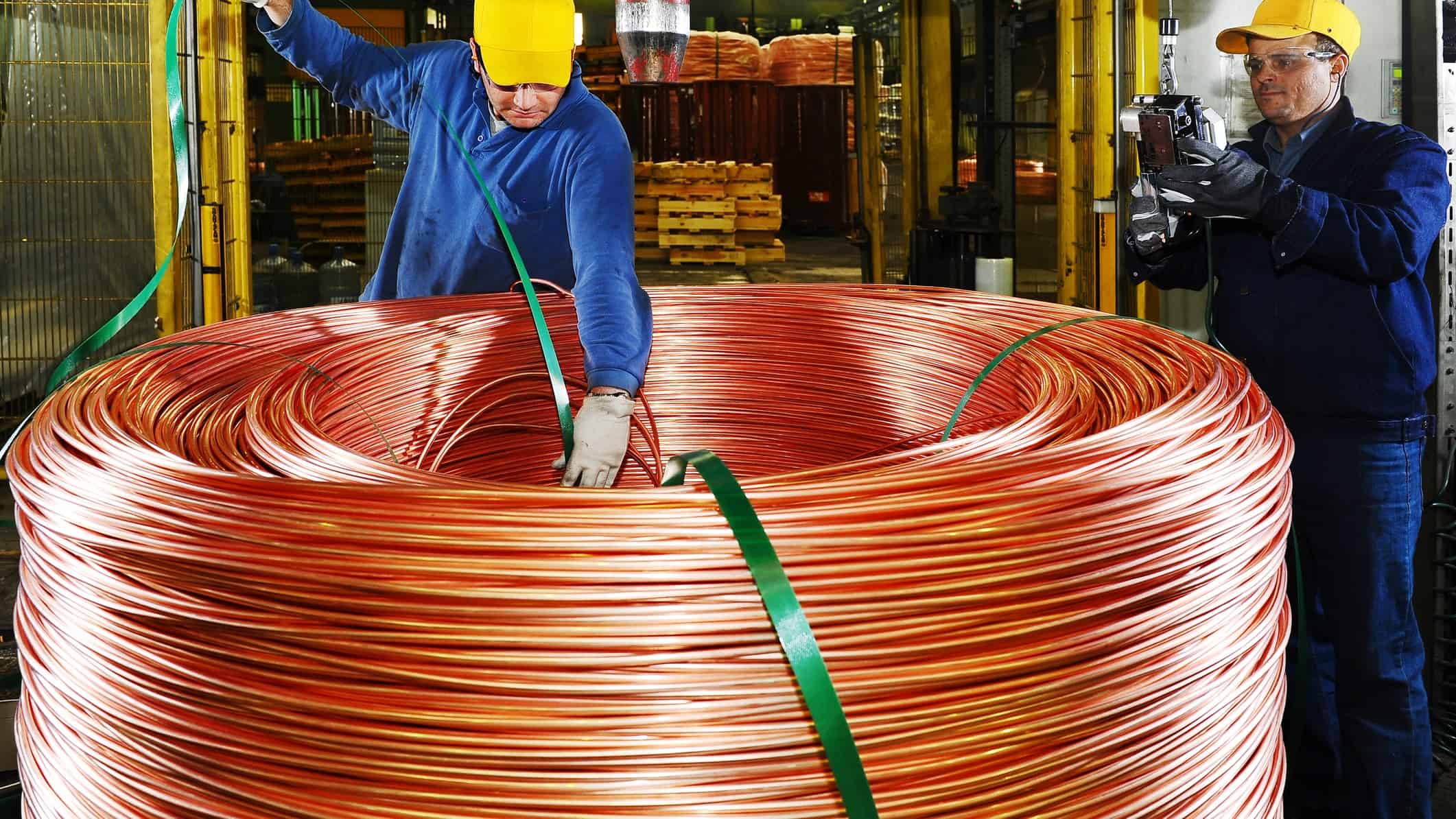
    Two workers working with a large copper coil in a factory.

    S&P/ASX 200 Index (ASX: XJO) copper shares are going ballistic today.

    This comes as the price of the red metal notched new all-time highs overnight, topping US$11,532 per tonne. Copper is currently trading for US$11,489 per tonne.

    That sees the copper price up a remarkable 31% year to date.

    The surging price has obviously come as welcome news to Aussie copper miners and their shareholders.

    And according to Jun Bei Liu, portfolio manager at Ten Cap, strong global demand for the non-corrosive, conductive metal – critical in the global energy transition as well as its more traditional uses in construction and plumbing – should see continued growth in 2026.

    Two ASX 200 copper shares well-placed to gain

    “It’s almost like copper is the tech of the resources [sector] – the exciting part,” Liu said (quoted by The Australian Financial Review).

    Lie added:

    The demand needed for the energy transition is increasingly interesting. And should there be any sell-off, you’ve certainly seen a lot of support for copper and copper equities.

    As for which Aussie miners she likes, Liu said ASX 200 copper shares Sandfire Resources Ltd (ASX: SFR) and dual-listed, Canadian-based Capstone Copper Corp (ASX: CSC) are in the “sweet spot” amid rising copper prices.

    Sandfire Resources shares are up 4.5% in late morning trade today, changing hands for $17.08 apiece. This sees the Sandfire share price up 83.5% year to date.

    Meanwhile, shares in Capstone Copper, which first began trading on the ASX in April 2024, are up 7.4% today, trading for $14.17 each. Capstone Copper shares have gained 39.9% in 2025.

    And if Liu is correct, these ASX 200 copper shares could deliver another year of strong outperformance in the year ahead.

    Why is the copper price smashing new all-time highs?

    The copper price looks to be catching fresh tailwinds on two fronts.

    First, the United States may well still impose hefty tariffs on imports of the red metal, which has raised concerns of pending global supply shortages. That’s because traders are working to front-run any tariffs by shipping large volumes of copper to the US now.

    The copper price, and ASX 200 copper shares, also look to be getting a boost following a rush of orders to pull the red metal from London Metal Exchange warehouses.

    Commenting on the surging copper price, Helen Amos, a commodities analyst at BMO Capital Markets Ltd, said (quoted by Bloomberg):

    Of course, with copper there is a really compelling fundamental story, and investors recognise that miners are having real difficulties maintaining and growing supply. But there’s also a price arbitrage between the US and the rest of the world, and that’s probably the most dominant factor driving prices higher at the moment.

    The post Top fundie names 2 ASX 200 copper shares to buy today appeared first on The Motley Fool Australia.

    Should you invest $1,000 in Capstone Copper right now?

    Before you buy Capstone Copper shares, consider this:

    Motley Fool investing expert Scott Phillips just revealed what he believes are the 5 best stocks for investors to buy right now… and Capstone Copper wasn’t one of them.

    The online investing service he’s run for over a decade, Motley Fool Share Advisor, has provided thousands of paying members with stock picks that have doubled, tripled or even more.*

    And right now, Scott thinks there are 5 stocks that may be better buys…

    * Returns as of 18 November 2025

    .custom-cta-button p {
    margin-bottom: 0 !important;
    }

    More reading

    Motley Fool contributor Bernd Struben has no position in any of the stocks mentioned. The Motley Fool Australia’s parent company Motley Fool Holdings Inc. has no position in any of the stocks mentioned. The Motley Fool Australia has no position in any of the stocks mentioned. The Motley Fool has a disclosure policy. This article contains general investment advice only (under AFSL 400691). Authorised by Scott Phillips.

  • This retail stock could deliver healthy double-digit returns after a steep fall this week

    Woman thinking in a supermarket.

    Shares in Metcash Ltd (ASX: MTS) took a tumble earlier this week after the company released its half-year results, but that’s created a buying opportunity, according to the team at Jarden.

    Metcash on Monday reported first-half revenue of $8.5 billion, up 0.1%, while its underlying net profit fell 5.9% to $126.7 million.

    Decent result given the conditions

    Group Chief Executive Doug Jones said it was a solid result “in tough trading conditions”.

    He went on to say:

    Importantly, we’ve maintained good momentum in our core business, and our independent networks remain healthy and confident despite the challenging conditions. Our food business is now highly diversified and very resilient. Food again delivered earnings growth despite the significant and unprecedented decline in the sales of our largest product category, tobacco.

    Mr Jones said while the grocery market was at its most competitive in years, Metcash’s IGA network was itself “now more competitive than ever”.

    The ongoing pleasing performance in food reflects the success of our core wholesale and logistics functions, improvements made to the IGA network’s value proposition, our investment in Campbells & Convenience underpinning its leading position in supply to the petrol and convenience market, and our expansion in foodservice through the Superior Foods acquisition.

    Mr Jones said in the liquor division, there was sales growth in “a more difficult market”, while in hardware and tools, there were “early signs of improvement in trade activity”.

    Metcash declared an interim dividend of 8.5 cents per share, fully franked.

    Shares looking cheap

    The team at Jarden ran the ruler over the results, and while they downgraded their price target on Metcash shares, they still rate the company outperform and for it to deliver double-digit shareholder returns.

    The Jarden analysts said the result was about 5% below consensus estimates, “driven by misses in the higher-multiple hardware and liquor divisions”.

    Looking forward, however, there was a case for optimism with some early green-shoots in food (ex-tobacco) and hardware, with Total Tools like fir like up 9.8% in the first four weeks of 2H26. However, liquor (flat) was softer, and remains at risk into 2H26. We upgrade Metcash to overweight following recent underperformance, with the view the business is seeing green shoots, is highly cash-generative and is positively leveraged to the cycle with a compelling valuation.

    The Jarden team has a $3.80 price target on the stock, compared with the current price of $3.39, which would represent a 12.1% return if achieved. That figure does not include the dividend yield of 5.3%.

    Macquarie this week slashed its own price target for Metcash to $3.50, down from $4.

    The post This retail stock could deliver healthy double-digit returns after a steep fall this week appeared first on The Motley Fool Australia.

    Should you invest $1,000 in Metcash Limited right now?

    Before you buy Metcash Limited shares, consider this:

    Motley Fool investing expert Scott Phillips just revealed what he believes are the 5 best stocks for investors to buy right now… and Metcash Limited wasn’t one of them.

    The online investing service he’s run for over a decade, Motley Fool Share Advisor, has provided thousands of paying members with stock picks that have doubled, tripled or even more.*

    And right now, Scott thinks there are 5 stocks that may be better buys…

    * Returns as of 18 November 2025

    .custom-cta-button p {
    margin-bottom: 0 !important;
    }

    More reading

    Motley Fool contributor Cameron England has no position in any of the stocks mentioned. The Motley Fool Australia’s parent company Motley Fool Holdings Inc. has positions in and has recommended Macquarie Group. The Motley Fool Australia has positions in and has recommended Macquarie Group. The Motley Fool has a disclosure policy. This article contains general investment advice only (under AFSL 400691). Authorised by Scott Phillips.

  • Down 8% and 11% in November – Is this the start of a long slide for NAB and CBA shares?

    Happy young woman saving money in a piggy bank.

    By all measures, November was a horrid month for the major ASX bank stocks. Let’s take a look at what happened to National Australia Bank Ltd (ASX: NAB) and Commonwealth Bank of Australia (ASX: CBA) shares last month.

    November saw the NAB share price sink from $43.62 down to $40.10, a fall worth 8.07%. The ASX’s largest bank, CBA, fared even worse. CBA shares dropped from $171.64 at the start of last month to $152.51 each by the end of last week. That’s a plunge worth 11.15%.

    Commonwealth Bank had the added distinction of hitting a three-month high of $178.57 during early November, too, meaning that its shares fell more than 15% from that peak by the end of the month.

    Sure, it’s not like it was a great November for the broader markets. The month just gone saw the S&P/ASX 200 Index (ASX: XJO) take a hit. But it only dropped 3%, meaning that the two ASX banks significantly underperformed.

    NAB does have something of a get-out-of-jail-free card, though. It traded ex-dividend for its final dividend of 2025 on 11 November, with investors set to receive a fully-franked 85 cents per share payout on 12 December next week. Given that this dividend is worth a yield of just over 2% at current prices, we can cut NAB a bit of slack there.

    But even so, both banks have been major underperformers in recent weeks. So is the pain over for NAB and CBA shares? Or are these banks set for a rough December, and perhaps 2026, too?

    Are there choppy waters ahead for NAB and CBA shares?

    Well, as with all shares, making short-term predictions is folly. For years, CBA famously defied accusations from many expert investors of being overvalued. For all I, nor anyone else, knows, anything could happen with either CBA or NAB this month and in 2026.

    But I won’t be buying either share.

    It’s important to remember that neither NAB nor CBA are actually growing very fast right now. CBA reported a 4% rise in cash net profit after tax to $10.25 billion for its 2025 financial year back in August. Last month, NAB revealed flat cash earnings for its FY 2025, alongside a 2.9% slide in statutory net profits to $6.76 billion.

    Yet both stocks trade at what could be considered a premium (CBA especially so). Commonwealth Bank shares are still on a price-to-earnings (P/E) ratio of 25, while NAB is sitting at 18.

    In contrast, JPMorgan Chase & Co (NYSE: JPM), the American bank regarded as one of the best in the world, is currently on an earnings multiple of 15.46.

    What’s worse, some experts are even predicting that NAB might be forced to cut its cherished dividend in the near future.

    So I wouldn’t be surprised to see NAB and CBA shares drift lower over the coming year. There’s simply not enough growth in their futures to justify a rising share price. At least in my view. The market could disagree with me and send them higher, of course. But I’m happy to watch that, if it happens, from the sidelines.

    The post Down 8% and 11% in November – Is this the start of a long slide for NAB and CBA shares? appeared first on The Motley Fool Australia.

    Should you invest $1,000 in National Australia Bank Limited right now?

    Before you buy National Australia Bank Limited shares, consider this:

    Motley Fool investing expert Scott Phillips just revealed what he believes are the 5 best stocks for investors to buy right now… and National Australia Bank Limited wasn’t one of them.

    The online investing service he’s run for over a decade, Motley Fool Share Advisor, has provided thousands of paying members with stock picks that have doubled, tripled or even more.*

    And right now, Scott thinks there are 5 stocks that may be better buys…

    * Returns as of 18 November 2025

    .custom-cta-button p {
    margin-bottom: 0 !important;
    }

    More reading

    JPMorgan Chase is an advertising partner of Motley Fool Money. Motley Fool contributor Sebastian Bowen has no position in any of the stocks mentioned. The Motley Fool Australia’s parent company Motley Fool Holdings Inc. has positions in and has recommended JPMorgan Chase. The Motley Fool Australia has no position in any of the stocks mentioned. The Motley Fool has a disclosure policy. This article contains general investment advice only (under AFSL 400691). Authorised by Scott Phillips.

  • Jury hears how Netflix director lost a fortune on options trades — days after streamer sent him $11M for ‘visionary’ show

    Director Carl Erik Rinsch at a 2015 event in Los Angeles.
    Director Carl Erik Rinsch at a 2015 event in Los Angeles.

    • Director Carl Erik Rinsch is on trial in NY, fighting charges he scammed Netflix out of $11 million.
    • Prosecutors say Rinsch blew money meant for his sci-fi series on luxuries and playing the market.
    • On Tuesday, jurors saw how he lost a fortune on options trades soon after Netflix wired the cash.

    Director Carl Eric Rinsch made so many failed, seven-figure option bets after Netflix wired him $11 million that his broker at Wells Fargo tried — and failed — to stop him, a New York fraud jury heard on Tuesday.

    "I can afford to lose the money," Rinsch said, according to testimony by his former Wells Fargo advisor, Ronald See.

    And when the brokerage hit the brakes — limiting him to $250,000 per transaction — the show developer was undaunted.

    On March 30, 2019, just three weeks after receiving the $11 million, Rinsch instructed See, of Wells Fargo Advisors, to wire his remaining $8.5 million to Citibank so he could establish a new brokerage account with Charles Schwab.

    "They won't put restrictions on me there," Rinsch wrote See in a letter shown to jurors.

    Rinsch, 48, is on trial in federal court in Manhattan, fighting charges that he had no right to use the $11 million Netflix sent him on anything other than "White Horse," the 120-minute TV series he'd already spent $44 million of Netflix's money on. (Rinsch ultimately never finished a single episode of the clones-versus-humans sci-fi thriller.)

    Defense lawyers counter that the $11 million was actually Rinsch's contractually-promised payment for having completed principal photography, and was his money to spend as he pleased.

    Either way, testimony on Tuesday by two of Rinsch's former financial advisors showed that he was eager to spend the cash prosecutors say the director had quickly moved into his Wells Fargo account.

    The streamer wired Rinsch the $11 million on March 6, 2020, as the COVID-19 pandemic halted film production worldwide.

    Over the next three weeks, he then lost some $5.8 million, almost all of it on highly risky options trades involving Gilead Sciences, which was developing COVID-19 treatment drugs. (See would earn a $22,000 fee on these losses, the defense pointed out on cross-examination.)

    The director was off to the races again as soon as he switched to Charles Schwab, according to testimony.

    "I could send $3 mm personal to get started," he wrote to his new financial advisor, Adam Checchi, who also testified on Tuesday.

    "I understood that to mean three million from his personal funds," Checchi said under questioning by a federal prosecutor.

    Checchi told jurors that Rinsch would soon lose almost $6 million more, mostly on failed, highly risky bets that Gilead's stock would rise and that the S&P 500 would decline.

    "I'm not a broad, diversify kind of guy," Rinsch explained in a late March 2020 email, adding that he pursues "aggressive" option trading "fully expecting to lose it all."

    Earlier in the day, former Netflix executive Peter Friedlander, who on Monday called Rinch's project "visionary," completed a second day of testimony.

    On overhead screens, defense attorney Benjamin Zeman showed Friedlander — and the jury — emails from August 2019, in which Rinsch begged for "immediate support" with casting in Brazil.

    "Show is set to collapse," Rinsch wrote.

    The defense is blaming the implosion of White Horse on Netflix's decision to pull support for the project in September 2020.

    In the email chain projected throughout the courtroom on Tuesday, Zeman attempted to show jurors that a year earlier, Friedlander was already cold toward the show developer's requests for help.

    "His own delays in decisions have caused this," Friedlander wrote in forwarding Rinsch's email to Mike Posey, an original series vice president, and others, including production executive Shelley Stevens and Rahul Bansal, an original series director.

    Rinsch would continue asking for support — and money — for another six months before Netflix forwarded the $11 million payment at the center of the trial. The project was ultimately written off by Netflix as a tax loss eight months later, in November 2020.

    Rinsch's trial is expected to continue through next week. He faces up to 90 years in prison if convicted of wire fraud, money laundering, and engaging in unlawful monetary transactions.

    Read the original article on Business Insider