
Author: openjargon

  • Up 21% this year! This fast-recovering ASX dividend share might not be a bargain forever

    One hundred dollar notes blowing in the wind, representing dividend windfall.

    ASX dividend share Metcash Ltd (ASX: MTS) has sparked renewed interest among income-focused investors. Over the past 12 months, the share price has increased by 21%, although it has slowed down slightly in the past month.

    With solid operational momentum, improving cash flow and attractive dividend yields, the wholesale distribution heavyweight is emerging as a compelling pick if you’re after passive income.

    Resilient food and liquor distribution

    Metcash’s diversified business – spanning food, liquor, and hardware divisions – is showing strength. The food and liquor divisions are resilient, as they distribute food and liquor to hundreds of independent retailers across Australia, including IGA, Cellarbrations, IGA Liquor, The Bottle-O, Porters, and Thirsty Camel.

    The ASX dividend share also operates a foodservice component, which supplies commercial customers, including hotels, restaurants, cafes, and others.

    Softer market hits hardware division

    Metcash is also the second-largest player in the Australian hardware market, as it owns businesses such as Mitre 10, Home Hardware, and Total Tools. The hardware business has gone through a few difficult years because of weak construction activity. Now, it looks like things might turn around.

    After a challenging FY25, analysts are projecting that the company’s earnings could increase by approximately 10% to $300 million in FY26 (and another 10% in FY27).

    The latest trading update was a step in the right direction. In the 18 weeks to 31 August 2025, total sales excluding tobacco increased 5.1% (or 1.1% including tobacco). Total food sales were up 8.6% excluding tobacco sales, total liquor sales were up 1.5%, and Total Tools and Hardware Group sales were up 1.8%.

    Reliable payouts

    On the income reliability front, Metcash has paid two fully franked dividends every year since 2017. The business pays around 70% of its underlying net profit as a dividend, which led to a total dividend per share of 18 cents in FY25. That translates into a trailing grossed-up dividend yield of 6.75%, including franking credits.

    UBS projects the ASX dividend share to increase its payout every year between FY25 to FY29. That could be great news for investors focused on passive income.

    Most analysts also predict moderate to strong upside from Metcash’s share price of $3.76 at the time of writing. They have set an average price target of $4.30, which suggests a share price gain of 15%. That could lift total Metcash earnings, including dividends, past the 20% mark.  

    Broker Shaw and Partners sees the ASX dividend share as a good option for income investors, but it only rates it as a hold. It notes:

    We suggest holding Metcash for stable income and defensive positioning. It offers a solid dividend yield, resilient earnings and reliable cash flow in uncertain markets. Its exposure to essential consumer goods and regional retail provides downside protection, making it a suitable hold for income-focused investors seeking stability over aggressive growth.

    The post Up 21% this year! This fast-recovering ASX dividend share might not be a bargain forever appeared first on The Motley Fool Australia.

    Should you invest $1,000 in Metcash Limited right now?

    Before you buy Metcash Limited shares, consider this:

    Motley Fool investing expert Scott Phillips just revealed what he believes are the 5 best stocks for investors to buy right now… and Metcash Limited wasn’t one of them.

    The online investing service he’s run for over a decade, Motley Fool Share Advisor, has provided thousands of paying members with stock picks that have doubled, tripled or even more.*

    And right now, Scott thinks there are 5 stocks that may be better buys…

    * Returns as of 18 November 2025

    .custom-cta-button p {
    margin-bottom: 0 !important;
    }

    More reading

    Motley Fool contributor Marc Van Dinther has no position in any of the stocks mentioned. The Motley Fool Australia’s parent company Motley Fool Holdings Inc. has no position in any of the stocks mentioned. The Motley Fool Australia has no position in any of the stocks mentioned. The Motley Fool has a disclosure policy. This article contains general investment advice only (under AFSL 400691). Authorised by Scott Phillips.


  • Why is the BHP share price lifting today?

    Miner standing in front of trucks and smiling, symbolising a rising share price.

    The BHP Group Ltd (ASX: BHP) share price is marching higher today.

    Shares in the S&P/ASX 200 Index (ASX: XJO) mining giant closed on Friday trading for $40.37. In morning trade on Monday, shares are swapping hands for $40.61 apiece, up 0.6%.

    For some context, the ASX 200 is up 1.1% at this same time.

    There are a lot of moving parts potentially impacting the BHP share price today.

    So, let’s dig in.

    BHP share price up on axed Anglo American takeover

    After making no less than three bids in its $74 billion takeover offer for global miner Anglo American (LSE: AAL) in 2024, BHP eventually walked away from the table.

    But the Aussie mining giant didn’t lose interest in acquiring Anglo American and recently resumed acquisition discussions that were reported in the media late last week.

    Today, however, the BHP share price could be impacted after the miner announced that following preliminary discussions with the Anglo American board, it is no longer considering a merger of the two companies.

    The ASX 200 miner stated:

    Whilst BHP continues to believe that a combination with Anglo American would have had strong strategic merits and created significant value for all stakeholders, BHP is confident in the highly compelling potential of its own organic growth strategy.

    This means that BHP will not be making any further bids for Anglo American in the medium term, with a few possible exceptions.

    Those include a third party announcing a firm intention to make an offer for Anglo American. Or if Anglo American’s board agrees to today’s statement aside.

    What else is happening with the ASX 200 miner?

    The BHP share price is in the green today despite media reports that China isn’t done with its efforts to take greater control of iron ore pricing in its arrangements with BHP.

    The government has reportedly told Chinese commodity traders and steel mills to no longer buy low-grade iron ore referred to as ‘Jingbao fines’. The share price impact on the ASX 200 miner today appears to be limited, as this only represents a small percentage of BHP’s iron ore exports to China.

    China is said to be making the move to reduce the global influence of the US dollar on its trading practices.

    According to Carolin Kautz, a China analyst at SinoVise (quoted by The Australian Financial Review):

    They have been pushing for companies to settle in [yuan], and now they have more leverage to do this. They want to reduce their reliance on American dollars…

    This is not about turning the yuan into a reserve currency. Beijing is offering settlement in its own currency to reduce dollar dependence, especially for partners in the Global South. The structural barriers like capital controls haven’t gone away.

    What else is impacting the BHP share price?

    The ASX 200 miner should be enjoying some modest tailwinds from the 0.3% boost in the iron ore price over the weekend. The industrial metal is trading for US$104.245 per tonne.

    Copper, BHP’s number two revenue earner and growing, is also up 0.4% to US$10,777.50 per tonne.

    The post Why is the BHP share price lifting today? appeared first on The Motley Fool Australia.

    Should you invest $1,000 in BHP Group right now?

    Before you buy BHP Group shares, consider this:

    Motley Fool investing expert Scott Phillips just revealed what he believes are the 5 best stocks for investors to buy right now… and BHP Group wasn’t one of them.

    The online investing service he’s run for over a decade, Motley Fool Share Advisor, has provided thousands of paying members with stock picks that have doubled, tripled or even more.*

    And right now, Scott thinks there are 5 stocks that may be better buys…

    * Returns as of 18 November 2025

    .custom-cta-button p {
    margin-bottom: 0 !important;
    }

    More reading

    Motley Fool contributor Bernd Struben has no position in any of the stocks mentioned. The Motley Fool Australia’s parent company Motley Fool Holdings Inc. has no position in any of the stocks mentioned. The Motley Fool Australia has recommended BHP Group. The Motley Fool has a disclosure policy. This article contains general investment advice only (under AFSL 400691). Authorised by Scott Phillips.

  • We’re financially independent millennials. Here are 5 tips for Gen Zers who want to do the same.

    Alan and Katie riding bicycles by the beach
    Alan and Katie share their advice for those who discover FIRE in their 20s.

    • After retiring early, Katie and Alan Donegan share their tips for Gen Zers chasing financial independence.
    • They emphasize the importance of compounding, mindful spending, and building savings accounts.
    • The couple advises prioritizing health early and committing to lifelong learning.

    This as-told-to essay is based on conversations with Katie and Alan Donegan, who retired at the ages of 35 and 40, respectively. The couple is originally from the UK and has been nomadic since 2020. The essay has been edited for length and clarity.

    Katie: Alan and I retired in 2019 after running our own separate businesses for several years. We heard about financial independence, retire early, after we got married, and we wanted that freedom and lifestyle for ourselves. We started our savings and investing journey in 2015.

    Alan: I didn't earn very much in my 20s. I was a bit of a mess — I had lots of different jobs and eventually started my own entrepreneurship consulting business at 28. I spent my early 30s figuring out my business, and it wasn't until my late 30s that I started to make a good living.

    When you're in your 20s, a year feels like a lifetime, but you have so much potential, and there is so much opportunity coming for you. We tell 20-year-olds that they are not even anywhere close to their best earning years.

    Here are five things we tell Gen Z'ers who are looking to become financially independent or retire early.

    1. Compounding is your friend

    Katie: In the FI world, there is this idea that you have to have a million dollars invested, and people often say, "I will never earn a million, there's no way."

    We keep telling them that they don't have to earn a million. Compounding will earn at least half of it for you. At this young age, if you can just invest a little money and let it grow over the years, it is phenomenal.

    2. Learn how to spend

    Alan: Another piece of advice is to get the spending balance right. When people discover FI at such a young age, they are excited about the idea of retiring in their 30s. They think: let me pin my expenses to the floor and do things like ditch a friend's wedding to save. Don't do that — enjoy your life.

    Katie: Equally, your enemy is lifestyle inflation, trying to keep up with your friends, and societal expectations. You have to stand up to pressures such as acquiring a larger house or another status symbol when you secure a certain promotion. Most people increase their spending when they start earning more.

    Alan: Happiness doesn't have to cost money. It could be cooking dinner with friends, or playing board games, going for a run, or arm wrestling the neighbor.

    Work out where you get your happiness from and invest your time, energy, and money there. I get zero happiness from expensive watches or expensive random things, but I love Marvel, and I invest my resources there.

    3. Have these four accounts

    Katie: Build three to six months of your basic expenses in case things hit the fan, such as losing your job. Have another account with a little bit of cash for planned spending over the next couple of years, such as a car, money saved for a holiday, or other short- to medium-term expenses.

    Alan: Everything else should go into tax-advantaged accounts. And after you've used your tax-advantaged allowance, invest the rest in a brokerage account.

    4. Don't stop learning

    Alan: 20-year-olds out there don't spend enough time learning on their own. The mindset is: I've done education, education was done to me at university, and I'm now educated, and that's it.

    Traditional education will earn you a wage, but lifelong learning will earn you a fortune. Reading books, studying, taking courses, learning from people who are excellent at what they do, and modeling them, will really help you. Ask people how they got their current job or what they would do if they were your age.

    Education shouldn't stop when you leave school. It should start.

    5. Focus on your health

    Katie: Another thing you should learn, which we are learning now, is about health and things like vitamins and mineral supplements, eye masks for better sleep, and water.

    You don't have to optimize for everything, but try to follow the 80-20 rule: eat well, sleep well, move your body 80% of the time, and enjoy yourself the other 20% of the time.

    Read the original article on Business Insider
  • I spent 22 years as a military wife. After our divorce, I finally lived the dream we’d planned together.

    Bryanne Salazar on a log bridge on Cát Bà island in Vietnam.
    Bryanne Salazar on a log bridge on Cát Bà island in Vietnam.

    • After 22 years as a military wife, Bryanne Salazar's marriage ended after her husband retired.
    • After moving to Hawaii, she booked a solo trip to Thailand and Vietnam to conquer her fears.
    • The journey taught her how to live on her own terms.

    For 22 years, I was a military wife, putting aside my needs to support my husband's career — all for the promise that after retirement, when our children were grown, we'd travel the world together.

    In 2018, retirement finally came, and not long after, our nearly 25-year marriage crumbled. When his military career ended, it felt like he lost his sense of purpose. I tried to hold things together, but the unhappiness and bitter fights left me drowning, too.

    It wasn't love that kept me there, but fear. I came from a toxic home and no longer had contact with my family, so I worried that without my husband and children, I'd have no one. That fear kept me complacent until the pain of staying was greater than the fear of leaving.

    Our divorce was finalized in February of 2022, and just before, I had moved to Hawaii to stay with a recently widowed woman.

    I gave myself a year to heal

    It was time to figure out who I was on my own. I walked for exercise, but over time it became an act of penance.

    Some days I covered more than 12 miles, each step bringing realizations about my marriage and myself. I realized that I'd been a people-pleaser who sacrificed my own needs for others, only to resent them for it.

    During that year, I dove into therapy, read voraciously, leaned on female friendships, and stayed close to my sons through video calls and visits. I worked hard to unlearn the habit of putting everyone first, but me.

    Near the end of 2022, I was fulfilled but restless — ready for something new.

    Woman standing on a bridge in Bangkok, Thailand.
    Salazar on a bridge in Bangkok at the beginning of her trip.

    First stop: Thailand

    On December 31, I booked a solo flight to Bangkok. I had little savings but wanted to see the world.

    When I told friends and family, everyone — including my adult sons — asked if I was afraid. I was nervous, but fear was no longer in the driver's seat of my life.

    "You're so brave, Mom," my oldest son told me. I may not have felt it then, but I promised I would be what he saw in me.

    Two days before my 43rd birthday, I landed in Bangkok. I was consumed by the food and temples, and by the freedom of being entirely on my own.

    Hair braided by a former prisoner in Chiang Mai. Thailand.
    Salazar got her hair braided by a former prisoner in Chiang Mai.

    Six days later, in Chiang Mai, I visited a massage studio that employed former female prisoners. My late mother had once been incarcerated, and I felt drawn to the place. After the massage, my masseuse asked if she could braid my hair — that small act of kindness made me cry.

    In Thailand, I felt free. Some days I slept late and ate too much; others I explored sacred sites. It was the first trip I'd ever taken where I didn't have to conform to someone else's desires.

    I was living for me.

    Bryanne and Lee in Hanoi, Vietnam during a motorcycle tour.
    Salazar got a motorcycle Lee in Hanoi.

    Second stop: Vietnam

    Eleven days later, I flew to Hanoi and was struck by the city's chaotic yet charming atmosphere. Crossing the streets felt like an act of courage — all it took was confidence and a steady pace forward.

    One afternoon, I hopped on the back of a motorcycle with a kind man named Lee, who offered to show me his city. Instead of landmarks, he took me to the sites where bombs had struck during the Vietnam War. He told me that his family had fled to Cambodia during the city's destruction.

    "Hanoi people are strong," Lee told me. He was right. They had lost everything and rebuilt. I realized the city's vibrant pulse came from determination and grit — from picking up the pieces and starting over.

    In a small way, I was doing the same.

    Kayaking around Ha Long Bay in Vietnam.
    She went kayaking around Ha Long Bay in Vietnam.

    Ready to start over

    I ended my trip with a cruise and some kayaking on Ha Long Bay, where the quiet and gray skies gave me time to reflect. I hadn't just dreamed of adventure; I made it happen and proved my son right.

    Once home in Hawaii, I decided to bring my gap year to a close and restart my career as a freelance writer and book editor. It was time to get back to the business of living — but this time, on my terms.

    Do you have a story about taking a gap year that you want to share? Get in touch with the editor: akarplus@businessinsider.com.

    Read the original article on Business Insider
  • ‘It was like magic’: how 4 people with no coding background used AI to build apps

    Cynthia Chen
    With AI-assisted coding tools, people with no technical background are building real projects in their free time.

    For non-technical people, vibe coding is opening doors.

    When vibe coding took off earlier this year, many saw it as the domain of developers tinkering with tools. For a growing number of non-technical people, it's become a way to finally bring an idea to life, improve their work processes, or carve out a creative side hustle.

    Four people told Business Insider how they built their apps after hours of work and parenting, and the lessons they learned along the way.

    The product designer who vibe coded a dog ID app

    Cynthia Chen
    Cynthia Chen built Dog-e-dex from scratch through vibe coding.

    Cynthia Chen, a product designer, had dreamed for years of an app to catalogue dogs spotted.

    In her free time over about two months, she built Dog-e-dex: an iOS app that lets users snap pictures of dogs, identify the breed, and save their profiles.

    The San Francisco-based designer with no formal engineering training had turned to platforms like Replit, ChatGPT, and Cursor. It wasn't until she discovered Anthropic's Claude in January that things started to click.

    She copied the code generated from Claude into Xcode — a tool for building apps on Apple devices — even when she didn't fully understand how it worked. "It was like magic," she said.

    "Every time I pressed the preview button, it was an exciting little gift opening," she added.

    Chen said people who want to vibe code should treat prompting AI like "gentle parenting."

    Cynthia Chen
    Cynthia Chen likened good prompting to "gentle parenting."

    "You have to be very intentional, very specific, and I think you have to be very nice," she said.

    Sometimes, AI needs to be "babied," she said. When Claude got stuck, she broke down instructions step-by-step until it understood.

    The mother who built an app to help others emotionally reset

    When Karima Williams felt herself spiraling emotionally, she turned to Claude, which she said helped her process emotions she wasn't ready to share with others.

    The 34-year-old mother from Maryland told Business Insider that talking to AI also helped her become a better parent. AI was her reset button, helping her decompress before stepping into mom mode.

    Seeing how useful Claude was for her own venting, Williams vibe coded a web app to help people offload and regulate their emotions.

    What worked was telling Claude to talk to her like she's 10 or 15 years old, Williams said. As she didn't know how to structure a product or set up a backend, Claude would walk her through what needed to be done.

    "I also tell it to tell me one thing at a time, because it can be overwhelming," she added.

    Williams also said speaking to AI worked better than typing.

    "It makes it 10,000 times easier for me to say what I need to say and then get the context out," she said, adding that she dictates to AI about 90% of the time.

    The accountant who vibe codes after his kids are in bed

    Wei Khjan Chan
    After nearly two decades in accounting, Wei Khjan Chan feared AI would take his job. To stay ahead, he picked up vibe coding.

    For more than 18 years, Wei Khjan Chan worked as an accountant, a profession often considered vulnerable to automation.

    To stay ahead of the curve and make a bigger impact in his field, the audit partner at an accounting and advisory firm in Malaysia picked up vibe coding after attending coding workshops in June.

    "It'll be great if I get to know AI earlier. At least I replace myself rather than let other people replace me," the 39-year-old told Business Insider.

    Chan built a web app to speed up filing expense claims after business trips. Using AI-powered optical character recognition, it scans receipts and automatically exports them into the right files for his company's finance teams.

    He also used AI to automate his workflow, such as generating invoices. "Without the vibe coding tools and the skill set, an accountant is unable to do this," he said.

    Chan said that when he first started experimenting with AI, he was advised to write long, detailed prompts. But experience taught him that smaller, iterative steps work better.

    "The initial prompt is very important to set everything right," he said. After that, when changes are needed, it's more effective to adjust one small part at a time instead of piling on an entire wish list.

    Wei Khjan Chan
    Wei Khjan Chan vibe-coded a web app to speed up filing expense claims.

    For debugging, Chan watches if the error message changes — a sign that the AI is working through the issue. If the same error persists, he resets the chat and reframes the request with fresh examples.

    Chan also said vibe coding doesn't require endless hours of grinding. The father of two usually vibe codes after his kids go to bed, adding a feature here or refining a function there. Over time, it builds up, and the pieces eventually come together.

    "It's like playing a game," he said.

    The HR professional who said AI acts like a 'young, over-enthusiastic intern'

    Laura Zaccaria, a Singapore-based HR professional, taught herself to build an AI-assisted web app while on maternity leave.

    The new mom signed up for a coding class in June and created a family meal planner.

    She vibe coded mostly in the evenings or when her baby was napping. On weekends, her husband took care of the baby while she worked.

    Zaccaria told Business Insider that learning vibe coding gave her confidence she could keep evolving as both a mother and a professional.

    When she was vibe coding, Zaccaria said she sometimes got stuck in a loop. AI can be like a young, over-enthusiastic intern, she added.

    "You need to know when to pause and ask yourself: Where was I not clear?" she said. "Sometimes it's OK to scrap the whole conversation and start afresh."

    "I realized I hadn't phrased things properly, or I had asked for something too big. Then I'd have to break it down again," she added.

    Do you have a story to share about vibe coding? Contact this reporter at cmlee@businessinsider.com.

    Read the original article on Business Insider
  • Pro Medicus shares charge higher on big news

    Researchers and doctors with futuristic 3d hologram overlay for body anatomy or dna in hospital clinic.

    Pro Medicus Ltd (ASX: PME) shares are starting the week in a positive fashion.

    In morning trade, the health imaging technology company’s shares are up almost 3% to $258.50.

    Why are Pro Medicus shares rising?

    Investors have been bidding the company’s shares higher today after it announced three more contract wins ahead of its annual general meeting.

    This update is hot on the heels of an announcement last week which revealed that the company has signed a five-year, $44 million contract with Advanced Radiology Management in the United States.

    According to today’s release, its wholly owned U.S. subsidiary, Visage Imaging Inc, has signed three new contracts with a combined minimum contract value of $29 million. These contracts will be fully cloud-deployed and are planned to be completed within the next six months.

    The first contract is a $6.5 million five-year contract with Children’s of Alabama, which is a leading paediatric hospital in Birmingham, Alabama.

    The second is a $9.5 million, seven-year contract with Roswell Park Comprehensive Cancer Center. It is a cancer research and treatment facility located in Buffalo, New York.

    The final one is with Vancouver Clinic, which is a physician-owned and governed group in Vancouver, Southwest Washington. That contract is worth a minimum of $13M over a seven-year period.

    Management notes that these new contracts bring the company’s minimum total contract value (TCV) for sales for the first half of FY 2026 to $273 million.

    Commenting on today’s news, Pro Medicus’ founder and CEO, Dr Sam Hupert, said:

    They comprise a children’s hospital, a cancer center, and a physician-owned and run regional healthcare provider. This diversity reinforces our belief that our product is ideally suited to virtually all segments of the market, from smaller groups all the way through to some of the largest IDN’s and academic medical centers in the US.

    The good news is that Pro Medicus’ sales pipeline remains strong despite its recent wins. And with a major conference on the horizon, it could be a very busy period for the company. Dr Hupert commented:

    Despite very robust sales in the half, our pipeline remains strong with a broad range of opportunities both in terms of size and market segments. We also have the all-important RSNA conference in Chicago later this month which is shaping up to be our biggest yet.

    The post Pro Medicus shares charge higher on big news appeared first on The Motley Fool Australia.

    Should you invest $1,000 in Pro Medicus right now?

    Before you buy Pro Medicus shares, consider this:

    Motley Fool investing expert Scott Phillips just revealed what he believes are the 5 best stocks for investors to buy right now… and Pro Medicus wasn’t one of them.

    The online investing service he’s run for over a decade, Motley Fool Share Advisor, has provided thousands of paying members with stock picks that have doubled, tripled or even more.*

    And right now, Scott thinks there are 5 stocks that may be better buys…

    * Returns as of 18 November 2025

    .custom-cta-button p {
    margin-bottom: 0 !important;
    }

    More reading

    Motley Fool contributor James Mickleboro has positions in Pro Medicus. The Motley Fool Australia’s parent company Motley Fool Holdings Inc. has recommended Pro Medicus. The Motley Fool Australia has recommended Pro Medicus. The Motley Fool has a disclosure policy. This article contains general investment advice only (under AFSL 400691). Authorised by Scott Phillips.
  • DroneShield share price hit as company strikes back

    An Army soldier in combat uniform takes a phone call in the field.

    The DroneShield Ltd (ASX: DRO) share price is taking a hit today.

    Shares in the S&P/ASX 200 Index (ASX: XJO) drone defence company closed on Friday trading for $1.715. In morning trade on Monday, shares are changing hands for $1.680 apiece, down 2%.

    For some context, the ASX 200 is up 1.1% at this same time.

    As you’re likely aware, the DroneShield share price has come under tremendous pressure since rocketing to a record closing high of $6.50 on 9 October.

    Among other issues, investors have been selling amid media speculations that the company’s sales could be impacted by the rise of drones using fibre optic technology.

    And, of course, on 13 November, the share price crashed 31.4% following news that CEO Oleg Vornik had sold $49.47 million shares in the company the previous week, with several other directors also offloading sizeable shareholdings.

    Today, DroneShield sought to reassure the market with a response to recent media reporting.

    DroneShield share price slides on media response

    Acknowledging that in recent weeks the company’s level of stakeholder engagement has fallen short of expectations as it’s been focused on engaging with the Australian Securities Exchange, DroneShield chairman Peter James said:

    DroneShield is committed to undertaking an independent review of its continuous disclosure and securities trading policies and other areas, as stated in the 20 November 2025 response to the ASX.

    That review will be overseen by independent directors, Simone Haslinger & Richard Joffe. It reflects DroneShield’s commitment to transparency and continuous improvement as the company grows.

    As for the growth outlook for the DroneShield share price, CEO Oleg Vornik said, “The fundamental business of DroneShield remains strong and unchanged.”

    Vornik added:

    The company continues to deliver record revenues, expand globally, and invest in technological innovation to meet evolving customer needs. Record revenues in 2025 have been driven by repeat customers, reflecting market confidence in DroneShield’s solutions.

    The company noted that Vornik continues to hold a mix of vested and unvested performance options in DroneShield.

    What about fibre optic drones?

    The DroneShield share price has also faced headwinds amid recent analyst and media speculations that fibre-optic drones are becoming commonplace on battlefields and cannot be taken out by DroneShield’s jamming technology.

    In response, the company said it relies on feedback from frontline customers and insights from real-world deployments. DroneShield noted that its solutions are informed by extensive operational experience and customer engagement.

    Management said that recent reports implying fibre-optic drones are becoming mainstream “are not consistent with field realities”. They cited a recent interview with a Ukrainian Deputy Prime Minister who described fibre-optic drones as “sluggish” and said these are rarely used due to operational challenges.

    Leadership news

    On the global leadership front, DroneShield reported that Tom Branstetter, Vice President of Sales and Business Development, who the company said has been a key contributor to the success of its US presence in recent years, has taken on a larger role and will lead the company’s US operations in the interim.

    With today’s intraday fall factored in, DroneShield shares are down 74.2% from the 9 October all-time highs.

    Taking a step back, shares remain up 121.5% over 12 months.

    The post DroneShield share price hit as company strikes back appeared first on The Motley Fool Australia.

    Should you invest $1,000 in DroneShield Limited right now?

    Before you buy DroneShield Limited shares, consider this:

    Motley Fool investing expert Scott Phillips just revealed what he believes are the 5 best stocks for investors to buy right now… and DroneShield Limited wasn’t one of them.

    The online investing service he’s run for over a decade, Motley Fool Share Advisor, has provided thousands of paying members with stock picks that have doubled, tripled or even more.*

    And right now, Scott thinks there are 5 stocks that may be better buys…

    * Returns as of 18 November 2025

    .custom-cta-button p {
    margin-bottom: 0 !important;
    }

    More reading

    Motley Fool contributor Bernd Struben has no position in any of the stocks mentioned. The Motley Fool Australia’s parent company Motley Fool Holdings Inc. has positions in and has recommended DroneShield. The Motley Fool Australia has no position in any of the stocks mentioned. The Motley Fool has a disclosure policy. This article contains general investment advice only (under AFSL 400691). Authorised by Scott Phillips.

  • Warren Buffett Is Selling Apple and Piling Into This “Magnificent Seven” Stock Trading at a Fraction of Tesla’s Valuation

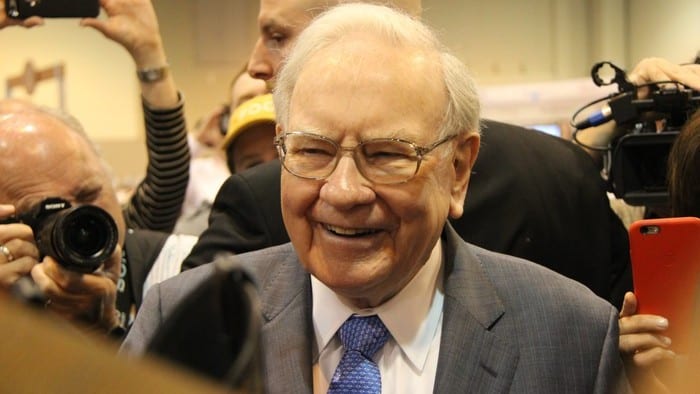
    a smiling picture of legendary US investment guru Warren Buffett.

    This article was originally published on Fool.com. All figures quoted in US dollars unless otherwise stated.

    Key Points

    • Berkshire Hathaway’s sale of Apple isn’t entirely unexpected, considering its prior sales.
    • Interestingly, Berkshire put some of its war chest of capital to work, taking a new stake in another “Magnificent Seven” company.
    • While many investors view large artificial intelligence stocks as overvalued, Berkshire purchased one of the cheaper names in the group, potentially following its longtime value-oriented strategy.

    Due to the strong performance of Berkshire Hathaway‘s stock over many decades and to its leader, the legendary Warren Buffett, investors are always excited to get a glimpse at Berkshire’s recent portfolio moves each quarter. Large funds are required to disclose changes to their portfolio no later than 45 days after the end of each quarter.

    Even with Buffett set to step down at the end of the year, Berkshire is one of the strongest companies in the world and has an extraordinary team of investors. In the third quarter, Berkshire sold more of its stake in Apple and piled into another “Magnificent Seven” stock that trades at a fraction of Tesla‘s valuation.

    Berkshire continues to offload its largest position

    In Q3, Berkshire sold another 15% of its Apple shares, reducing its position to 238.2 million shares, which were valued at $60.6 billion at the end of the quarter. Apple remains Berkshire’s largest equity holding, consuming 21% of Berkshire’s massive $309 billion equities portfolio.

    It shouldn’t surprise investors too much to see Berkshire continuing to pare its Apple position. As Buffett said back in 2020 when Berkshire dumped all of its airline stocks during the pandemic, “When we sell something, very often it’s going to be our entire stake: We don’t trim positions. That’s just not the way we approach it any more than if we buy 100% of a business. We’re going to sell it down to 90% or 80%.”

    Investors must also realize, if they haven’t already, that due to Berkshire’s size, the company cannot enter and exit positions as easily as a retail trader on Robinhood. Its positions are so large that it takes time to build positions to the desired size, and conversely, it takes time to offload positions. Since the start of 2023, Berkshire has now slashed its stake in Apple by 74%, indicating that the large conglomerate is preparing for a full exit.

    It’s tough to pinpoint exactly when Berkshire started to sour on the company, but Apple has faced issues this year due to tariffs and what many investors perceive to be a lack of an artificial intelligence (AI) strategy. The stock has recovered from its losses earlier this year and is now performing well. Who knows, perhaps the company’s decision not to invest as much in AI infrastructure may prove prudent, but investors at Berkshire seem to have made up their minds.

    Initiating on this cheaper “Magnificent Seven” name

    Berkshire’s significant move came from the initiation of a new position in Alphabet (NASDAQ: GOOG)(NASDAQ: GOOGL). The company purchased over 17.8 million shares, valued at more than $4.3 billion, at the end of Q3. The position consumes 1.6% of Berkshire’s portfolio.

    Alphabet has had an eventful year. Last year, a federal judge ruled that Google deployed monopolistic practices in its search and advertising business that violated antitrust law. The U.S. Department of Justice asked the courts to order Alphabet to divest its Google Chrome business as punishment. Chrome is a key component of Alphabet’s large search business, and investors were concerned this might come to fruition.

    Ultimately, though, the courts did not compel Google to do this. Furthermore, the federal judge in its ruling stated that Google could continue the practice of paying companies, such as Apple, tens of billions of dollars to use Google as their default search engine on the Safari browser. Investors hailed the ruling as a win for the company.

    Investors have also been concerned about how AI chatbots like ChatGPT may impact Google’s search business but have since been more satisfied with the performance of Google’s overviews and AI Mode, giving them greater confidence in Google’s ability to retain its leading 90% market share of the search market.

    Buffett and the team at Berkshire are value investors at their core, meaning they seek to invest in companies trading at a discount to what Berkshire views as their intrinsic value. While many are wary of the red-hot and highly valued AI sector, Alphabet has traded at the bottom of the group in terms of forward price-to-earnings, with a valuation that is a fraction of Tesla’s.

    GOOG PE Ratio (Forward) data by YCharts.

    It’s easy to see why Berkshire is intrigued with Alphabet. The stock is cheap compared to peers, and the company runs several industry-leading businesses with high growth potential aside from search, including YouTube, WayMo’s autonomous vehicle fleet, Google Cloud, and even its own chip business.

    This article was originally published on Fool.com. All figures quoted in US dollars unless otherwise stated.

    The post Warren Buffett Is Selling Apple and Piling Into This “Magnificent Seven” Stock Trading at a Fraction of Tesla’s Valuation appeared first on The Motley Fool Australia.

    This article was originally published on Fool.com. All figures quoted in US dollars unless otherwise stated.

    Should you invest $1,000 in Alphabet right now?

    Before you buy Alphabet shares, consider this:

    Motley Fool investing expert Scott Phillips just revealed what he believes are the 5 best stocks for investors to buy right now… and Alphabet wasn’t one of them.

    The online investing service he’s run for over a decade, Motley Fool Share Advisor, has provided thousands of paying members with stock picks that have doubled, tripled or even more.*

    And right now, Scott thinks there are 5 stocks that may be better buys…

    * Returns as of 18 November 2025

    .custom-cta-button p { margin-bottom: 0 !important; }

    This article was originally published on Fool.com. All figures quoted in US dollars unless otherwise stated.

    More reading

    Bram Berkowitz has no position in any of the stocks mentioned. The Motley Fool Australia’s parent company Motley Fool Holdings Inc. has positions in and has recommended Alphabet, Apple, Berkshire Hathaway, and Tesla. The Motley Fool Australia has recommended Alphabet, Apple, and Berkshire Hathaway. The Motley Fool has a disclosure policy. This article contains general investment advice only (under AFSL 400691). Authorised by Scott Phillips.

  • Why I think this ASX small-cap stock is a bargain at $6.11

    A woman wearing glasses and a black top smiles broadly as she stares at a money yarn full of coins representing the rising JB Hi-Fi share price and rising dividends over the past five years

    The ASX small-cap stock Australian Ethical Investment Ltd (ASX: AEF) has a compelling outlook, and it could be a great buy right now at $6.11. As the chart below shows, it has dropped by 25% since the August 2025 peak.

    This business describes itself as one of Australia’s leading ethical investment managers. It provides investment management products that align with its values and provide long-term, risk-adjusted returns. Its investments are guided by the Australian Ethical Charter, which influences its ethical approach and underpins its culture and vision.

    As a business that provides investment funds, its success is heavily linked to its funds under management (FUM). So, recent share market volatility has also led to shareholders being uncertain in the short term. But this makes the ASX small-cap stock seem like a bargain for a few reasons.

    Superannuation inflows

    Australian Ethical is a provider of superannuation as well as normal investment products.

    Aussies regularly contribute to their superannuation, whether that’s through the mandatory employee contribution of 12% of their wage, or other non-mandatory contributions.

    Australian Ethical sees positive superannuation contributions each quarter – in the three months to 30 September 2025, it saw $0.12 billion of superannuation net inflows. This helped the FUM grow from $13.94 billion at June 2025 to $14.28 billion at September 2025.

    I’m expecting the company to continue seeing superannuation net inflows for the long term, which is positive for its future earnings potential.

    Investment returns by the ASX small-cap stock

    FUM growth is key for the business because of how it generates management fees for Australian Ethical.

    Investment markets are not guaranteed to rise every quarter or every year. But, the fund manager can benefit from increasing FUM thanks to the rise of share markets as profits grow over time.

    In the first quarter of FY26, the business reported a $0.28 billion boost to FUM over the three months, thanks to investment returns. If Australian Ethical’s investment team performs adequately, the investment returns could deliver a majority of the FUM growth, so it’s essential.

    During FY25, its FUM benefited from $593 million of organic net flows and $1.05 billion from investment performance.

    Better valuation with rising earnings

    A number of the company’s financial metrics are going in the right direction at a good pace.

    In FY25, revenue grew by 19% to $119.4 million, and operating expenses only increased by 14% to $84.5 million, leading to 29% growth of underlying net profit after tax (NPAT) to $23.8 million.

    Pleasingly, as this fund manager grows, it doesn’t necessarily need to see expenses grow at the same pace. If FUM rises 15%, it doesn’t need 15% more people or 15% more office space to manage that money. In FY25, the cost-to-income (CTI) ratio improved to 71.4%, compared to 73.7% in FY24.

    If the company continues growing its FUM, then its margins could continue rising, helping accelerate its bottom line.

    Following its 25% decline, I think the ASX small-cap stock looks much better value.

    The post Why I think this ASX small-cap stock is a bargain at $6.11 appeared first on The Motley Fool Australia.

    Should you invest $1,000 in Australian Ethical Investment right now?

    Before you buy Australian Ethical Investment shares, consider this:

    Motley Fool investing expert Scott Phillips just revealed what he believes are the 5 best stocks for investors to buy right now… and Australian Ethical Investment wasn’t one of them.

    The online investing service he’s run for over a decade, Motley Fool Share Advisor, has provided thousands of paying members with stock picks that have doubled, tripled or even more.*

    And right now, Scott thinks there are 5 stocks that may be better buys…

    * Returns as of 18 November 2025

    .custom-cta-button p {
    margin-bottom: 0 !important;
    }

    More reading

    Motley Fool contributor Tristan Harrison has positions in Australian Ethical Investment. The Motley Fool Australia’s parent company Motley Fool Holdings Inc. has positions in and has recommended Australian Ethical Investment. The Motley Fool Australia has recommended Australian Ethical Investment. The Motley Fool has a disclosure policy. This article contains general investment advice only (under AFSL 400691). Authorised by Scott Phillips.

  • Why is this ASX 300 tech stock rocketing 21% today?

    A man has a surprised and relieved expression on his face. as he raises his hands up to his face in response to the high fluctuations in the Galileo share price today

    Gentrack Group Ltd (ASX: GTK) shares are starting the week with a bang.

    In morning trade, the ASX 300 tech stock is up a massive 21% to $8.01.

    This follows the release of the utilities and airport software company’s full year results for FY 2025.

    ASX 300 tech stock rockets on results day

    For the 12 months ended 30 September, Gentrack posted an 8% increase in revenue over the prior corresponding period to NZ$230.2 million. This was in line with its guidance for the financial year.

    Recurring revenue jumped 13% to NZ$155.4 million, with both its Airports (Veovo) and Utilities divisions contributing to the uplift.

    The company’s Utilities arm saw revenue increase 7% to $193.4 million. This was driven by a 12% rise in recurring revenue from new customer wins and platform upgrades.

    The airports division, Veovo, also delivered a strong year, operating across more than 25 countries and 150 airports. Revenue rose 15% to NZ$36.8 million, with underlying revenue growth of 30% excluding hardware sales. Recurring revenue increased 18%, supported by new customer wins in the UK and Middle East and upgrade activity across the Asia–Pacific region.

    EBITDA came in at NZ$27.8 million for the 12 months, which represents 18% growth over the prior year. Importantly, the company emphasised that this result was achieved despite expensing all R&D and g2.0 investment costs.

    On the bottom line, the ASX 300 tech stock record a statutory net profit after tax of $20.9 million, marking a substantial 119% year-on-year increase. This result included a $2.2 million loss relating to Gentrack’s 10% stake in Amber, as well as $3.2 million in foreign exchange gains from the appreciation of key currencies such as the British pound.

    Cash generation remained strong in FY 2025, with year-end cash of $84.8 million. This is up $18.1 million from FY 2024.

    However, the board has elected not to pay a dividend, noting that both the Utilities and Veovo businesses operate in high-growth and consolidating markets. It believes that capital is best directed toward expansion.

    Outlook

    The ASX 300 tech stock’s management team is confident that its growth will continue in FY 2026.

    It signalled further momentum ahead, stating that it is “confident that revenue growth will be higher in FY26 than in FY25.” Though, it concedes that it is too early to provide detailed guidance.

    Looking further out, Gentrack reiterated its mid-term target of more than 15% compound annual revenue growth and an EBITDA margin of 15%–20%, with all development costs continuing to be expensed.

    Despite today’s strong gain, the company’s shares remain down by 30% since the start of the year.

    The post Why is this ASX 300 tech stock rocketing 21% today? appeared first on The Motley Fool Australia.

    Should you invest $1,000 in Gentrack Group right now?

    Before you buy Gentrack Group shares, consider this:

    Motley Fool investing expert Scott Phillips just revealed what he believes are the 5 best stocks for investors to buy right now… and Gentrack Group wasn’t one of them.

    The online investing service he’s run for over a decade, Motley Fool Share Advisor, has provided thousands of paying members with stock picks that have doubled, tripled or even more.*

    And right now, Scott thinks there are 5 stocks that may be better buys…

    * Returns as of 18 November 2025

    .custom-cta-button p {
    margin-bottom: 0 !important;
    }

    More reading

    Motley Fool contributor James Mickleboro has no position in any of the stocks mentioned. The Motley Fool Australia’s parent company Motley Fool Holdings Inc. has positions in and has recommended Gentrack Group. The Motley Fool Australia has positions in and has recommended Gentrack Group. The Motley Fool has a disclosure policy. This article contains general investment advice only (under AFSL 400691). Authorised by Scott Phillips.