Author: openjargon

  • Meghan Trainor said she pooped with her son to potty train him

    Singer Meghan Trainor poses on stage during a performance
    Meghan Trainor has been open about her parenting journey since she gave birth to her first son in 2021.

    • Meghan Trainor said that her son sat on his potty while she sat on the toilet bowl. 
    • The Grammy-winning singer shared her parenting method on Dax Shepard's podcast, "Armchair Expert".
    • Experts say potty training methods should be tailored to each child's needs.

    Meghan Trainor has a trick for potty training her son and it involves answering nature's call together.

    In an interview with Dax Shepard on his podcast "Armchair Expert" on Monday, the "Made You Look" singer shared her potty training method while discussing anal fissures.

    "We're potty training my kid, so don't attack me internet, but I pooped with him," Trainor, 30, told Shepard. "He was on his little potty, and I was over here. I know I can smell my poop, but we were like, 'We did it, buddy!'"

    This is not the first time Trainor has brought up toilet talk. In 2021, she was interviewed with her brother Ryan Trainor on the "Why Won't You Date Me?" podcast hosted by Nicole Byer. "They poop together. She's pooping and Daryl's like, 'I'm going to go hang out with you now!'" Ryan said about his sister and her husband on the show.

    Trainor told Byer that she and her husband, actor Daryl Sabara, had installed two toilet bowls side by side in their house. The setup has also helped ease nighttime parenting duties.

    "Because we have young babies, so we're getting up every hour on the hour, and this dude pees like a girl. So I was like, get out of my way, I have to piss," she told Shepard. "So I solved this crime, and I was like, we're gonna pee at the same time."

    She clarified, however, that their shared bathroom time was limited to peeing.

    Trainor and Sabara married in December 2018 after dating for almost two years. They welcomed their son, Riley, in February 2021 and their second son, Barry Bruce, in July 2023.

    Since then, Trainor has been open about motherhood and parenting, including developing post-traumatic stress disorder after the complicated birth of her first son.

    Trainor is not the only celebrity sharing her potty training methods. In 2020, actor Kristen Bell said in her podcast "Momsplaining with Kristen Bell" that when her older daughter was 21 months, she and her husband, Dax Shepard, had simply suggested she use the toilet.

    "We were lying in bed giggling about this, my husband and I, like, 'Why does everyone make a big deal out of this potty training? It's so easy. Just tell the kid to use the toilet,'" she said.

    She went on to explain that it wasn't as easy with her younger daughter, who was still wearing diapers at 5.

    While methods for potty training vary, Paul Patterson, MD, a board-certified pediatrician, told Business Insider that potty training should be tailored to each child's needs.

    "Each child and family is unique and thus so must the approach be to potty training," he said.

    Read the original article on Business Insider
  • This old 2020 email from Mark Zuckerberg might just be the explanation for his extreme makeover

    Meta CEO Mark Zuckerberg said in an email to his colleagues in January 2020 that he believed he was "the most well-known person of my generation."
    Meta CEO Mark Zuckerberg said in an email to his colleagues in January 2020 that he believed he was "the most well-known person of my generation."

    • Meta CEO Mark Zuckerberg has upped his style game dramatically since the pandemic.
    • The billionaire has ditched his array of gray t-shirts for shearling brown jackets and gold chains.
    • But Zuckerberg's transformation may have been part of a plan to appear more relatable.

    Mark Zuckerberg has certainly stunned the world with his transformation from a hoodie-loving nerd to a chain-wearing tech bro.

    However, the extreme makeover may have less to do with Zuckerberg's evolving taste in fashion than with a concerted plan to make the billionaire more relatable to people his age.

    In January 2020, the Meta CEO exchanged a series of emails with his colleagues and then-board member Peter Thiel on how they could better sell Facebook to millennials.

    But what's more interesting was the personal brand that Zuckerberg hoped to cultivate as part of Meta's plan to woo millennials, as outlined in one email exchange.

    "While our company has a special role in the lives of this generation, this is likely particularly important for how I show up because I am the most well-known person of my generation," Zuckerberg wrote in an email on January 4, 2020.

    Zuckerberg's emails, first reported by the newsletter Internal Tech Emails, were among the company documents and correspondence that the state of Tennessee filed as evidence in its lawsuit against Meta.

    In October, Tennessee Attorney General Jonathan Skrmetti filed a lawsuit against the social media giant. The lawsuit, which was filed alongside 41 other states, accused the company's product Instagram of causing "mental health harms to its young users."

    https://platform.twitter.com/widgets.js

    Interestingly, Zuckerberg wasn't the only one who saw himself as a youth icon.

    In an email on December 31, 2019, Thiel said that the company's popularity among the young meant that Zuckerberg "has been cast as the spokesman for the Millennial generation."

    Zuckerberg, Thiel said, is seen as "the single person who gives voice to the hopes and fears and the unique experiences of this generation, at least in the USA."

    "I think this overall shift is something we should consider for how our company communicates and shows up more broadly, but it's something I'm definitely going to think about more in terms of how I communicate," Zuckerberg wrote in response several days later on January 4.

    To be sure, Meta may no longer be the most popular social media platform for millennials. The company has seen increased competition from the likes of TikTok, which hooked users with its focus on short-form videos.

    Zuckerberg, on the other hand, might've been able to stick to the plan. The billionaire has ditched his once-standard uniform of gray t-shirts for shearling brown jackets and gold chains.

    The results speak for themselves. This year alone, Zuckerberg has gone viral every couple of weeks with his striking fashion choices.

    Last week, Zuckerberg got some attention when he posted an Instagram video of himself hydrofoiling while wearing a tuxedo on Independence Day.

    "Happy birthday, America!" Zuckerberg wrote in his post.

    The image makeover has also delivered a huge PR boost for Zuckerberg, who wasn't always seen as the coolest guy in tech.

    After all, Zuckerberg's reputation was tarnished during the 2018 Cambridge Analytica scandal, when Facebook was accused of allowing the data of millions of users to be improperly accessed by the political analytics firm.

    The Meta chief's image revamp did not go unnoticed by his fellow billionaires. Spotify founder Daniel Ek told Forbes in an interview last year that he thinks Zuckerberg's new public persona is "a lot more authentic."

    "He's learned a lot over these past few years and he has a new fire in the belly," Ek, who has known Zuckerberg for years, told the outlet. "He's realized he needs to act responsibly because he's got this enormous platform."

    Representatives for Zuckerberg didn't immediately respond to a request for comment from BI sent outside regular business hours.

    Read the original article on Business Insider
  • You can’t use Canva’s AI to create political flyers or spread medical misinformation, the CEO said

    Melanie Perkins, a cofounder and the CEO of Canva.
    Melanie Perkins, the CEO of Canva, told The Verge what she doesn't want people to use Canva AI for.

    • Canva bans its AI tool from creating images of political candidates or medical terms.
    • The decision aims to prevent harmful or inappropriate content, CEO Melanie Perkins told The Verge.
    • Canva's AI policies appear more artist-friendly than Adobe and Meta, which faced backlash.

    Design juggernaut Canva has drawn hard lines around what its AI tool can and can't make.

    Canva's AI feature, called Magic Media, doesn't work with medical or political terms, because such content may be harmful or inappropriate, CEO Melanie Perkins said in an interview with The Verge published on Monday. Canva's software can be used to create anything from party invitations to social media content to presentation templates.

    "Canva has been designed to be a platform where you can come in and take your idea and turn it into a design, but there are certain things we shouldn't be generating," Perkins, who cofounded the 11-year-old company, said.

    For example, Perkins said that if the tool is prompted to create images of political candidates, it will simply tell the user: "You can't do that."

    Users can still create designs with political or health content on the platform on their own.

    Canva also does not allow AI to be used for generating contracts, legal or financial advice, spam, or adult content, according to its AI product terms.

    The company also has a clear policy on AI scraping. Canva does not train its AI on creators' content without permission, and users can opt out of their designs being used for AI training any time, according to a company blog.

    By default, all users are opted out of private design content from being used to train AI models, a Canva spokesperson told Business Insider.

    Last year, the company created a $200 million fund to pay users who opt into AI training in the next three years.

    Canva's stance on AI differs markedly from those of other content creation giants, Adobe and Meta, which have come under fire within the creative community in recent months.

    Last month, Meta faced backlash from artists who were angered by Meta using their public photos on Instagram and Facebook to train its artificial intelligence models. Several artists told BI that they're moving to platforms like Cara that ban the use of AI. Meta did not respond to a request for comment at the time.

    Around the same time, artists protested how Adobe sent users a re-acceptance of its "Terms of Use," which led some people to think AI would scrape their art and content. A wave of artists boycotted Adobe, boosting sign-ups for alternatives like Linearity, and Affinity, which Canva acquired earlier this year.

    At the time, Adobe said in a blog post that content belongs to users and it would never be used to train generative AI tools.

    A spokesperson for Adobe referred BI to the company's AI guidelines, which direct users not to create hateful or adult content and not seek medical advice from AI features. The guidelines do not mention whether such content can be generated in the first place.

    Read the original article on Business Insider
  • Russia’s war economy is so hot that at least 12 of its oligarchs received $11 billion in dividends over 15 months

    Former Lukoil President Vagit Alekperov and Russian President Vladimir Putin.
    Former Lukoil President Vagit Alekperov, who pocketed the most dividends from January 2023 to March 2024, and Russian President Vladimir Putin.

    • Russia's economy is boosting wealth for of oligarchs, some of whom are sanctioned.
    • A dozen Russian tycoons pocketed $11.4 billion in dividends for all of 2023 up until the first quarter of 2024.
    • The payouts illustrate how Russia's biggest companies are still raking it in despite the West's isolation of its economy.

    Russia's wartime economy has not only made some poor people better off — some of Russia's oligarchs are getting richer, too.

    At least 12 businesspeople received more than 1 trillion rubles, or $11.4 billion, in dividends for all of 2023 and the first quarter of 2024, according to Bloomberg on Tuesday. The outlet based its calculations on publicly disclosed information.

    Many of the tycoons who received the dividend windfall are closely tied to Russian President Vladimir Putin, according to the news outlet. Some of them have been sanctioned by the West.

    The biggest winners from the dividend payouts were commodities exporters that have benefited from Russia's pivot of its trade eastward toward China, India, and other countries in the global south. Their key customers were previously from Europe.

    The biggest winner was Vagit Alekperov, a key shareholder and former president of oil giant Lukoil, who received 186 billion rubles in dividends, per Bloomberg. He has been sanctioned by the UK and Australia.

    Alexey Mordashov, chairman and a main shareholder of steel company Severstal, pocketed 148 billion rubles in dividends. The US, the UK, and the EU have sanctioned him.

    Meanwhile, Vladimir Lisin, the chairman of Novolipetsk Steel, raked in 121 billion rubles in dividends.

    The payouts illustrate how Russia's biggest companies are still profiting despite the West's isolation of the country's economy, which grew 5.4% in the first quarter of this year from a year ago.

    Russia's war-driven economy is so hot that the World Bank upgraded it to a "high-income country" last week.

    However, Russia's Center for Macroeconomic Analysis and Short-Term Forecasting — a key think tank — warned the country's economy could cool and slip into crisis in the second half of this year should the Bank of Russia hike interest rates, reported Kommersant, a business news outlet, on Monday.

    Elvira Nabiullina, Russia's central bank chief, has signaled an interest-rate hike ahead due to higher-than-expected inflation.

    Russia's key interest rate is already at 16% to cool price rises, but inflation hit 8.3% in May — well above the official 4% target.

    Read the original article on Business Insider
  • Analysts love Woodside and these ASX dividend stocks

    Young woman using computer laptop smiling in love showing heart symbol and shape with hands. as she switches from a big telco to Aussie Broadband which is capturing more market share

    There are lots of ASX dividend stocks to choose from on the Australian share market, but which ones could be buys in July?

    Three shares that were recently picked out as buys by analysts are listed below. Here’s what its analysts are saying about them:

    HomeCo Daily Needs REIT (ASX: HDN)

    HomeCo Daily Needs could be a top option for income investors. It is a property company with a focus on neighbourhood retail and large format retail assets (retail parks).

    Morgans rates HomeCo Daily Needs highly. This is due to the resilience of its cashflows and exposure to accelerating click and collect trends. Together with its development pipeline, the broker feels the company is well-positioned for growth.

    Morgans expects this to underpin dividends per share of 8 cents in FY 2024 and then 9 cents in FY 2025. Based on the current HomeCo Daily Needs share price of $1.20, this will mean dividend yields of 6.7% and 7.5%, respectively.

    The broker currently has an add rating and $1.37 price target on its shares.

    NIB Holdings Limited (ASX: NHF)

    Another ASX dividend stock that could be a buy is private health insurer NIB.

    Goldman Sachs is positive on the company. It highlights that NIB “offers defensive exposure to the private health insurance sector which is experiencing favourable operating trends.”

    The broker expects this to support the payment of fully franked dividends per share of 31 cents in FY 2024 and 30 cents in FY 2025. Based on the current NIB share price of $6.88, this would mean 4.5% and 4.3% yields, respectively.

    Goldman currently has a buy rating and $8.10 price target on NIB’s shares.

    Woodside Energy Group Ltd (ASX: WDS)

    Finally, Morgans is also positive on Woodside and thinks it could be an ASX dividend stock to buy. Woodside is of course one of the world’s largest energy companies with a portfolio of high-quality operations and projects.

    The broker thinks that recent share price weakness has made now “a good time to add to positions.” Especially given that it believes Woodside “will still generate substantial high-quality earnings for years to come.”

    Morgans expects this to underpin fully franked dividends of $1.25 per share in FY 2024 and then $1.57 per share in FY 2025. Based on the current Woodside share price of $28.59, this equates to 4.4% and 5.5% dividend yields, respectively, for investors.

    The broker has an add rating and $36.00 price target on its shares.

    The post Analysts love Woodside and these ASX dividend stocks appeared first on The Motley Fool Australia.

    Should you invest $1,000 in Homeco Daily Needs Reit right now?

    Before you buy Homeco Daily Needs Reit shares, consider this:

    Motley Fool investing expert Scott Phillips just revealed what he believes are the 5 best stocks for investors to buy right now… and Homeco Daily Needs Reit wasn’t one of them.

    The online investing service he’s run for over a decade, Motley Fool Share Advisor, has provided thousands of paying members with stock picks that have doubled, tripled or even more.*

    And right now, Scott thinks there are 5 stocks that may be better buys…

    See The 5 Stocks
    *Returns as of 24 June 2024

    More reading

    Motley Fool contributor James Mickleboro has positions in Woodside Energy Group. The Motley Fool Australia’s parent company Motley Fool Holdings Inc. has positions in and has recommended Goldman Sachs Group. The Motley Fool Australia has positions in and has recommended NIB Holdings. The Motley Fool Australia has recommended HomeCo Daily Needs REIT. The Motley Fool has a disclosure policy. This article contains general investment advice only (under AFSL 400691). Authorised by Scott Phillips.

  • CBA shares up amid higher revised predictions for home price growth

    A woman wearing yellow smiles and drinks coffee while on laptop.

    Commonwealth Bank of Australia (ASX: CBA) shares are trading 1.47% higher on Tuesday at $128.30.

    CBA shares are outperforming the S&P/ASX 200 Index (ASX: XJO), which is up 0.82%.

    Australia’s biggest home loan lender has released revised growth predictions for home prices.

    Let’s check them out.

    CBA shares going in the same direction as home values

    In a note released last week, CBA increased its forecast growth for home values in the calendar year 2024.

    CBA senior economist Belinda Allen said:

    We have held a long-term view that national home prices would lift by 5% this calendar year.

    In recent months we have highlighted upside risks to this forecast based on acute housing shortages, strong demand and below average listings on the market.

    As a result of these factors and monthly home price rises remaining stronger than expected we revise our forecasts to expect a 7% lift this year.

    As we recently reported, the national median home value, which reflects all types of property in a single data point, rose by 8% in FY24 (total returns of 12.2% with rental income), according to CoreLogic data.

    But the strongest markets recorded far greater growth than the national median.

    Perth home values screamed 23.6% higher in FY24. Brisbane values leapt 15.8% and Adelaide values weren’t far behind at 15.4%.

    The key reason for these cities’ outperformance was tight supply and demand.

    The number of homes for sale is significantly below the long-term averages for each city. Plus, demand is high given these markets offer much greater affordability than Sydney, Melbourne and Canberra.

    What about interest rates?

    Allen said higher interest rates — which mean higher mortgage repayments and limitations on credit availability for new buyers — along with cost-of-living pressures would normally slow the pace of home prices or even push them lower. But that’s not happening due to the tight supply and demand.

    “… the leading indicators such as new lending, auction clearance rates and even sentiment continue to point towards gains in home prices,” she said.

    The possibility of an increase in interest rates due to sticky inflation may limit the upside risk to home values and slow the pace of price growth, she added.

    CBA predicts an interest rate cut in November, and Allen said this could provide a tailwind for home values. Her economics team sees further price gains ahead in 2025.

    She said:

    Our first look at home prices for 2025 sees further gains nationwide, although significant capital city divergences remain.

    An expected easing cycle by the RBA and still acute supply shortages should see prices rise, but growing affordability challenges should limit the size of these gains.

    We expect a lift of 5% over calendar year 2025 with the mid-tier capital cities again outperforming Sydney and Melbourne.

    Property price predictions for 2024 and 2025

    Here are CBA’s forecasts for home values growth in the calendar years of 2024 and 2025.

    Capital city Growth prediction 2024 Growth prediction 2025
    Perth 22% 12%
    Adelaide 14% 9%
    Brisbane 13% 7%
    Sydney 5% 4%
    Melbourne 0% 4%
    Source: CBA

    What’s next for CBA shares?

    The outlook for CBA shares among brokers is varied.

    Goldman Sachs is bearish.

    Goldman describes CBA shares as “in uncharted valuation territory” based on the premium they usually trade for relative to their return on equity (ROE) forecast.

    The broker has a sell rating on CBA and a 12-month share price target of $82.61.

    This implies a 35% fall from today’s CBA share price.

    UBS also expects CBA shares to fall but not by as much as Goldman.

    The broker has a 12-month share price target of $105, implying an 18% downside risk from here.

    Braden Gardiner from Tradethestructure recently told The Bull that traders in CBA shares “may want to consider locking in some gains if the share price falls below $116”.

    The post CBA shares up amid higher revised predictions for home price growth appeared first on The Motley Fool Australia.

    Should you invest $1,000 in Commonwealth Bank Of Australia right now?

    Before you buy Commonwealth Bank Of Australia shares, consider this:

    Motley Fool investing expert Scott Phillips just revealed what he believes are the 5 best stocks for investors to buy right now… and Commonwealth Bank Of Australia wasn’t one of them.

    The online investing service he’s run for over a decade, Motley Fool Share Advisor, has provided thousands of paying members with stock picks that have doubled, tripled or even more.*

    And right now, Scott thinks there are 5 stocks that may be better buys…

    See The 5 Stocks
    *Returns as of 24 June 2024

    More reading

    Motley Fool contributor Bronwyn Allen has positions in Commonwealth Bank Of Australia. The Motley Fool Australia’s parent company Motley Fool Holdings Inc. has positions in and has recommended Goldman Sachs Group. The Motley Fool Australia has no position in any of the stocks mentioned. The Motley Fool has a disclosure policy. This article contains general investment advice only (under AFSL 400691). Authorised by Scott Phillips.

  • Here’s what the iron ore price will be this time next year: Westpac

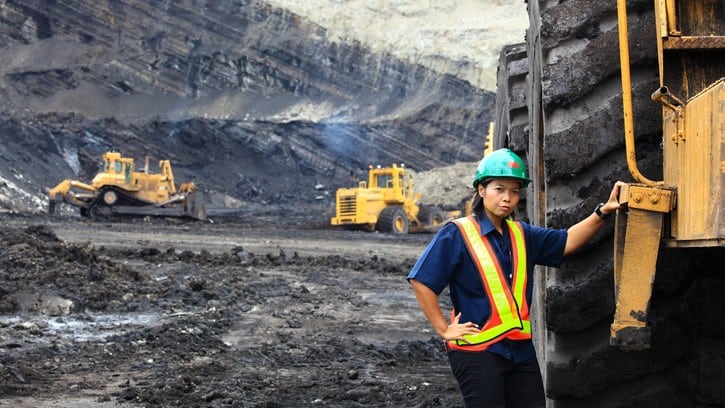
    Female miner standing next to a haul truck in a large mining operation.

    The iron ore price fell 1.55% in overnight trading to close the session at US$111.31 per tonne.

    This is weighing on iron ore shares today, with many underperforming the S&P/ASX 200 Index (ASX: XJO).

    The ASX 200 is up 0.78% at the time of writing.

    The BHP Group Ltd (ASX: BHP) share price is up 0.53% to $43.71.

    Mineral Resources Ltd (ASX: MIN) shares are only just in the green, up 0.053% to $56.36 apiece.

    The Fortescue Ltd (ASX: FMG) share price is down 0.23% to $21.77.

    Champion Iron Ltd (ASX: CIA) shares are 0.31% lower at $6.45.

    The Rio Tinto Ltd (ASX: RIO) share price is an outlier, up 0.87% at $120.94.

    What’s happening with the iron ore price this week?

    Analysts at Trading Economics say a four-day rally last week inspired some profit-taking.

    Secondly, investors are continuing to assess the outlook for demand in China.

    China is the world’s biggest consumer of iron ore.

    The country imports 76% of the iron ore dug out of the ground worldwide every year. Therefore, the rate of demand there has a very significant influence on the iron ore price.

    Australia is one of the world’s biggest producers of iron ore. China’s custom was worth $115.6 billion in export earnings to us in 2023, according to the Department of Resources.

    That’s why we tend to see a pullback in ASX iron ore shares when the commodity price falls or we hear negative news out of China.

    According to Trading Economics analysis of last night’s fall in the iron ore price:

    Data also pointed to rising iron ore inventories on Chinese ports, signaling weaker demand from steel mills for metal production. Markets now look ahead to the Third Plenum later in July where top Chinese officials are expected to tackle plans on “comprehensively deepening reform and advancing Chinese modernization,” with investors looking for further policy support for the property sector.

    Will the iron ore price rise or fall from here?

    Westpac Banking Corp (ASX: WBC) has released its latest forecasts for various commodities.

    Westpac Senior Economist Justin Smirk expects the 62% spot iron ore price to fall from here.

    He tips the iron ore price will dip to an average of US$102 per tonne in the September quarter and US$90 per tonne in the December quarter.

    He sees a further decline to between US$85 per tonne and US$87 per tonne from the March 2025 quarter to the March 2026 quarter.

    This time next year, Smirk thinks the iron ore price will be averaging US$85 per tonne.

    The Australian Government also forecasts the commodity’s value to fall. Its latest official forecast points to a fall in the 62% spot price to a nominal average of US$96 per tonne in 2024.

    It predicts a further decline to a nominal average of US$84 per tonne in 2025 and US$77 per tonne in 2026.

    This will contribute to reduced iron ore export earnings from $138 billion in 2023–24 to $114 billion in 2024–25 and $102 billion in 2025–26.

    What will this do to ASX mining share prices?

    The iron ore price has a direct impact on the earnings of ASX 200 miners.

    Miners are price takers, so their earnings are subject to global commodity values. Production volumes also have an impact, of course.

    Usually, when the commodity price is rising or falling, ASX mining share prices follow suit.

    The post Here’s what the iron ore price will be this time next year: Westpac appeared first on The Motley Fool Australia.

    Should you invest $1,000 in Bhp Group right now?

    Before you buy Bhp Group shares, consider this:

    Motley Fool investing expert Scott Phillips just revealed what he believes are the 5 best stocks for investors to buy right now… and Bhp Group wasn’t one of them.

    The online investing service he’s run for over a decade, Motley Fool Share Advisor, has provided thousands of paying members with stock picks that have doubled, tripled or even more.*

    And right now, Scott thinks there are 5 stocks that may be better buys…

    See The 5 Stocks
    *Returns as of 24 June 2024

    More reading

    Motley Fool contributor Bronwyn Allen has positions in BHP Group and Commonwealth Bank Of Australia. The Motley Fool Australia’s parent company Motley Fool Holdings Inc. has no position in any of the stocks mentioned. The Motley Fool Australia has no position in any of the stocks mentioned. The Motley Fool has a disclosure policy. This article contains general investment advice only (under AFSL 400691). Authorised by Scott Phillips.

  • There’s a reason AI firms can barely conceal their contempt for the creative industry

    OpenAI's Sora product.
    Columbia University marketing professor Olivier Toubia told BI that AI companies and creatives are locked in a zero-sum game as they battle for the same audiences.

    • AI companies have been upfront with their goal to disrupt the creative industry. 
    • But they have barely been able to hide their contempt for the artists they are trying to displace.
    • A Columbia professor told BI the rivalry stems from both groups "competing for the same pot of revenue."

    AI companies may be hard at work disrupting the creative industry, but some firms can barely hide their disdain for the artists their product might hurt.

    Last month, OpenAI's CTO Mira Murati raised eyebrows when she appeared to brush aside the seismic impact that AI could have on the job market for creatives.

    "Some creative jobs maybe will go away, but maybe they shouldn't have been there in the first place," Murati said at an event at her alma mater, Dartmouth College, on June 8. "You know, if the content that comes out of it is not very high quality."

    In fact, Murati isn't the only tech executive who has ruffled the feathers of creatives recently.

    Artists and designers were left fuming after Adobe's update to its Terms of Use suggested that the company could use creator content to train its AI models. In June, Adobe uploaded a blog post informing its users that its AI models weren't trained on customer content.

    Columbia University marketing professor Olivier Toubia told BI that tech executives' cavalier attitudes could stem from callousness rather than carelessness.

    "This might just be insensitivity or snobbism," Toubia said. "Perhaps, some tech executives do not have much respect for creative jobs that rely on 'softer' skills as they live in a world where someone's value is determined largely by their technical skills."

    But the friction we are now seeing between AI companies and artists certainly goes beyond culture clashes, says Toubia. In fact, the two groups could be locked in an existential struggle as they battle for the same audiences.

    "Unless AI leads to an increase in how much creative and non-creative content we consume, the pie seems to be pretty fixed, and therefore, we are in a zero-sum game," Toubia said.

    "Given this, any money that would go to tech firms for the production of creative content will probably be at the expense of more traditional creative producers," he continued. "AI companies and creatives are competing for the same pot of revenue."

    Tech companies certainly aren't slowing down their efforts to broaden their share of the creative pie.

    Video giant YouTube has entered licensing negotiations with major record labels, such as Sony and Universal, to obtain training material for its AI song generators.

    Toubia told BI that such developments could have mixed consequences for artists hoping to make a living from their work.

    "On the positive side, if you are a creator with a stable job, you could become much more productive thanks to AI and produce more content," Toubia said. "But if you are a creator looking for a job, there may not be as many jobs available."

    "I think AI companies will want to make money," the marketing professor said. "I'm not sure they care about the creative industry or would be motivated to take steps to protect it."

    Representatives for Murati at OpenAI did not immediately respond to a request for comment from Business Insider sent outside regular working hours.

    Read the original article on Business Insider
  • Yep, people still haven’t forgiven Ted Cruz for Cancún

    Sen. Ted Cruz of Texas at a press conference on Capitol Hill on October 31, 2023.
    Sen. Ted Cruz of Texas.

    • Some people are still mad at Ted Cruz for leaving Texas high and dry during deadly storms in 2021.
    • Cruz's post on Hurricane Beryl had people reminding him about how he vacationed in Cancún in 2021.
    • "You'll probably avoid it on your flight to Cancun right," said an X user.

    Some people still haven't forgiven Sen. Ted Cruz for flying to Cancún while Texas weathered deadly winter storms in 2021.

    As Hurricane Beryl slammed Texas as a category one hurricane on Monday and knocked out power for nearly three million homes and businesses, Cruz reposted an X post from "MattressMack."

    The post showed Gallery Furniture owner James McIngvale, also known as "MattressMack," talking about how the furniture retailer would support Texans during this hurricane as it did during Hurricane Harvey in 2017.

    https://platform.twitter.com/widgets.js

    "Mack is an American hero," Cruz wrote in his repost.

    He added: "Stay safe & avoid high water as the hurricane makes landfall."

    But people were not so easy to forgive — or forget. Cruz's post was flooded with comments reminding him of how he went on a vacation to Cancún, Mexico, while winter storms in 2021 took the lives of nearly 250 Texans.

    Cruz took his family to the five-star Ritz-Carlton resort in Cancún but cut his trip short after receiving immense backlash for leaving Texas during a crisis.

    https://platform.twitter.com/widgets.js

    One X user, calling him "Cancun Cruz," wrote that, unlike Cruz, "Mack actually stays and helps people."

    "Got your flight booked to Cancun for Monday?" the user added.

    https://platform.twitter.com/widgets.js

    Another X user quipped: "Instead of storm warnings, Texas sends out a text whenever Ted goes to the airport."

    Cruz did express some regret for his trip to Cancún back in 2021 after Texans gathered outside his home to protest.

    "It was obviously a mistake, and in hindsight, I wouldn't have done it," Cruz said to reporters outside his house in the aftermath of the storms, which left millions without clean drinking water, power, and heat.

    However, a year later, he joked about the trip as another winter storm approached Texas.

    Writing about inflation, he joked that ticket prices to Cancún were "up 32%" in an X post in February 2022. The joke didn't land well at the time, either, if the comments on that post are anything to go by.

    Representatives for Cruz didn't immediately respond to requests for comment from Business Insider sent outside regular business hours.

    Read the original article on Business Insider
  • China is freaking out after discovering the ‘open secret’ that its cooking oil was ferried for years in chemical tanks that weren’t cleaned

    A worker is working at a tank truck production workshop in Fuyang city, East China's Anhui province, April 28, 2024.
    A worker is working at a tank truck production workshop in Fuyang city, East China's Anhui province, April 28, 2024.

    • China was hit by another major food scandal, this time involving cooking oil in chemical tanks.
    • State media found that tank trucks were delivering chemicals and edible oil interchangeably without cleaning.
    • The revelation ignited an explosion of backlash from the Chinese public this week and calls for investigations.

    A new cooking oil scandal has erupted in China, about a decade after the country's infamous crackdown on restaurants reusing gutter oil and sewage grease.

    The furor follows a bombshell investigation published on July 2 by state media outlet Beijing News, which found multiple cases of tank trucks transporting edible cooking oil immediately after delivering chemicals used for coal-to-liquid processing.

    The report's author, Han Futao, found that none of the tank interiors were cleaned between loads.

    Han described one case in which a tank truck in Hebei province delivered chemicals in Qinhuangdao before rushing to Sanhe days later to be filled with soy oil.

    Several truck drivers told Beijing News the practice was a widespread cost-saving measure used by firms with thousands of trucks — an "open secret" in the industry, as Han wrote.

    In some seasons, the truckers said, drivers would transport industrial wastewater before delivering edible oils.

    These chemicals aren't classified as flammable or hazardous, or Chinese law would mandate that they be transported in special tanks.

    But the report has since ignited outrage on China's social media platforms, which have become inundated with viral topics discussing the scandal.

    National regulations have been a key target for public anger. They recommend that oil companies only use tank trucks dedicated to edible substances, but the guideline is only encouraged and isn't mandatory.

    "Shouldn't a kerosene can be a kerosene can and a cooking oil can be a cooking oil can? Even if they are cleaned, they are not necessarily that clean," said one top comment on Weibo, China's version of X.

    The backlash ballooned even further when people began reposting regulatory warnings from 2013 about the practice in Hunan province, indicating its use for more than a decade.

    2005 local news report describing the mixing of edible oils with "hazardous chemicals" during transport went viral, too.

    "They've been caught before, but the problem persists. Is the punishment harsh enough?" one blogger wrote.

    "19 years ago, the media reported that the tanks were mixed with food. Why hasn't it been solved yet?" wrote another.

    Days after Beijing News' report, state media jumped in with scathing commentary.

    "If this is an 'open secret in the industry,' where does it put the public's health and life safety? Where does it put the dignity and justice of the law?" wrote People's Daily columnist Zhang Jingshan on Monday evening.

    Sinograin, a state body that oversees China's grain and oil stocks, published a statement on Saturday saying it had launched an investigation into the "mixed-use of tank trucks."

    But the statement has been followed by calls online for a wider investigation involving higher authorities.

    "Checking your own unit is like covering your ears while stealing a bell," wrote one blogger demanding an explanation. "This needs the attention of the relevant departments. Food is a major issue of people's livelihoods and shouldn't be underestimated!"

    Food safety in China has already been sensitive for years, in the wake of multiple scandals involving gutter oil and deadly chemicals in baby milk powder.

    The repeated controversies have contributed to growing distrust in cities toward commercially sold foods in supermarkets and grocery stores, sparking a campaign by the central government to promote food safety in the country.

    Read the original article on Business Insider