Russia is planning to send youth to a summer camp in North Korea. The decision comes after the two countries signed a new strategic pact that includes mutual defense clauses.
Read the original article on Business Insider
Russia is planning to send youth to a summer camp in North Korea. The decision comes after the two countries signed a new strategic pact that includes mutual defense clauses.
STEFANI REYNOLDS/AFP via Getty Images
This past weekend, President Joe Biden went to Camp David for a family gathering that had been planned before his widely panned debate performance against former President Donald Trump.
While at the presidential retreat, Biden's family urged him to remain in the 2024 race amid some Democratic consternation over his chances this fall, with presidential son Hunter Biden being one of the most vocal advocates of his father remaining the party's nominee.
And in recent days, Hunter Biden has upped his presence at the White House, advising his father and taking part in meetings with him alongside high-level aides, according to NBC News.
Per NBC News, Hunter Biden has also been spotted conversing with other top-level White House staffers.
Hunter Biden is no stranger to the White House residence, but he has generally not taken part in meetings involving the president's work.
The development comes just weeks after Hunter Biden, who for years has been fodder for GOP attempts to paint the presidential family in an unflattering light, was recently convicted on felony gun charges.
The president checks in with Hunter Biden often and has steadfastly supported him, especially when Hunter Biden in the past has battled alcohol and drug addiction.
An individual who spoke with CNN about Hunter Biden's increased presence at the White House this week said he "popped into" a few meetings and calls that his father held with several advisors.
Two individuals with knowledge of Hunter Biden's plans remarked that he stayed in Washington to partake in Independence Day festivities with his family later in the week.
White House senior deputy press secretary Andrew Bates in a statement to NBC News said that Hunter Biden returned with his father from Camp David and "went with the President straight into speech prep," referencing Joe Biden's remarks on Monday where he blasted the US Supreme Court's ruling on presidential immunity.
Brie Schmidt
One day in January 2022, it hit me: I had outgrown my life in Japan.
I was an American living in Tokyo and still felt like a fish out of water after six years, despite my many attempts at mastering Japanese, perfecting my bow, and learning how to (politely) push my way through the crowded rush-hour trains.
My first few years in Japan were exciting and dreamy, what many would expect when they imagine living in Japan.
I visited stunning shrines and temples, sipped oolong-hai cocktails with friends in izakayas, spent hours exploring the streets of Shibuya — back then, Japan felt like my playground.
© Marco Bottigelli/Getty Images
Eventually, some of the drawbacks of living in the Land of the Rising Sun started to wear on me.
No matter how quiet and inconspicuous I tried to be, I received stares (and occasionally glares) in my suburban neighborhood because of how much I stood out as someone who is not Japanese.
After all, only 2.5% of the country's population is non-Japanese. Although Japanese culture is fascinating, I started to miss diversity and multiculturalism.
Living in Japan also felt increasingly lonely with each year I stayed. For one, Japanese society is known for being reserved, and striking up a conversation with a stranger in big cities like Tokyo is often viewed as a transgression against the order and harmony woven into most interactions.
On top of that, Japan is literally isolated, surrounded by water on all sides. This can make it challenging to get out and visit other countries.
I was eager to explore new places and make more connections — and Japan no longer seemed to align with these values.
After my revelation in early 2022, my husband — a Japanese national I met within my first year in the East Asian country — and I assumed the only other option was to live in the US, where I'm from. But we struggled to settle on an American city that fit our ideal lifestyle and goals.
To stall our decision, we sold our home in Tokyo and traveled around Europe as digital nomads for a few months.
Our adventure began in 2023 and included a stop in the Netherlands, which we were surprised to discover felt like home.
In Amsterdam, we tallied up the perks that Japan lacked: multiculturalism, locals who made small talk with us about our little dog, and convenient travel to other countries, among others.
And without the stares and unwanted attention I'd once received, I noticed a refreshing sense of freedom.
During our trip, I also learned about the Dutch American Friendship Treaty, an agreement that allows American entrepreneurs to obtain residence in the Netherlands with little hassle.
Staying in Europe long-term never seemed realistic, but with this program, I saw it could be a feasible option.
Yasonya/Getty Images
Less than a year after our trip to the Netherlands, we returned to the country as residents rather than tourists.
I've felt welcomed by my neighbors, already made friends from numerous countries and backgrounds, and even found it easier to visit my family in the US compared to when I was living in Japan.
The Netherlands is often ranked as one of the happiest countries in the world, and although many Dutch locals would scoff at their position on the list (complaining seems to be a national pastime here), I've found evidence to support it.
Aside from the open, friendly people and ease of travel, I'm routinely delighted by the little things here, like my neighborhood's "used goods" box where residents pass down their belongings to a new owner, the people leisurely reading in the park on a weekday afternoon, and the bike lanes that make it so easy to live a car-free life. These charming observations would have been rare in Tokyo.
Of course, I'm still new to the Netherlands, and I know my feelings may change with time — as they did in Japan. People and places can both evolve, and though a country might feel like home during one phase of life, it might not feel that way forever.
I've learned to embrace that feeling while it lasts, whether it's for two years or seven or the rest of my life. For now, I've decided that living in the Netherlands is what my dream life looks like.
Elizabeth Frantz, Reuters
For President Biden, debate prep was not a strict 9-to-5 job. In the six days leading up to Thursday's damaging performance, Biden never began his preparations before 11 a.m. and always had time for an afternoon nap, sources told the New York Times.
The report is based on interviews with current and former aides, donors, political advisors, and administrators who spent time with the president over the past few weeks. Though the White House insists that Biden is in good physical and cognitive shape, many of the sources noted that he has seemed increasingly confused in recent months.
During the debate, Biden was incoherent at times, trailing off mid-sentence and haphazardly stringing together facts. Biden's team cut debate preparations by two days, citing the president's exhaustion after jam-packed trips to Europe. He spent those days resting at his home in Delaware.
Still, aides said that his preparations at Camp David were robust.
Of the reported late-morning start time, White House spokesperson Andrew Bates told The Times that "the president was working well before then, after exercising." Bates said that, as of Tuesday, the White House physician saw no reason to reevaluate Biden for Parkinson's disease.
The White House did not immediately respond to Business Insider's request for further comment.
By comparison, a different New York Times article from 2012 detailed how Barack Obama prepared for his second debate after an abysmal initial showdown against Mitt Romney. According to the article, he followed a rigorous schedule and only left the camp once, briefly.
Sources close to Biden have largely seen him oscillate between mental agility and disorientation — in some moments he is sharp on questions of national security and in others mixes up basic facts, like the countries of France and Italy.
While in Europe, Biden visited Normandy for a D-Day event. There, members of his own generation were divided on his capacity to serve.
"He did not appear any different to me in person than he does on television — and that is as a person who is fragile and not really in charge," Bill Casassa, a 98-year-old honoree who supports Trump, told the Times.
Yet Marvin E. Gilmore Jr., who is just shy of his 100th birthday, attested to the opposite: "There was nothing I saw in him that said he was an old man."
Donald Trump has a lighter schedule than the president and does not exercise regularly, but does seemingly partake in the occasional nap himself, namely at his own criminal trial.
AP Photo
During the Great Depression, the most tragic economic collapse in US history, more than 15 million Americans were left jobless and desperate for an income.
By 1932, nearly one in four Americans was out of a job, and by 1933, unemployment levels reached an estimated 25%.
For comparison, during the coronavirus pandemic, the US unemployment rate spiked to 14.7% in April 2020.
These photos reveal how desolate the country looked during the Great Depression, when food and job lines stretched for blocks.
This story was originally published in May 2020 and was updated in July 2024.
Rolls Press/Popperfoto/Getty Images
AP
AP
AP
Getty Images
AP
Arthur Rothstein/Hulton Archive/Getty Images
American Stock/Getty Images
AP
Staff/Mirrorpix/Getty Images
AP
AP
Getty Images
AP
Library of Congress
Minnesota Historical Society/CORBIS/Corbis via Getty Images
MPI/Getty Images
B. Newman/Three Lions/Getty Images
Paul Briol/Cincinnati Museum Center/Getty Images
Library of Congress
AP Photo

On Tuesday, the S&P/ASX 200 Index (ASX: XJO) had another poor session and dropped into the red. The benchmark index fell 0.4% to 7,718.2 points.
Will the market be able to bounce back from this on Wednesday? Here are five things to watch:
It looks set to be a good day for the Australian share market on Wednesday after a positive session in the United States. According to the latest SPI futures, the ASX 200 is expected to open the day 20 points or 0.25% higher. On Wall Street, the Dow Jones was up 0.4%, the S&P 500 pushed 0.6% higher, and the Nasdaq climbed 0.85%.
ASX 200 energy shares Beach Energy Ltd (ASX: BPT) and Woodside Energy Group Ltd (ASX: WDS) could have a poor session after oil prices dropped overnight. According to Bloomberg, the WTI crude oil price is down 0.4% to US$83.04 a barrel and the Brent crude oil price is down 0.15% to US$86.47 a barrel. This may have been driven by profit taking after oil hit a two-month high.
The Liontown Resources Ltd (ASX: LTR) share price is undervalued according to analysts at Bell Potter. In response to its funding news, the broker has retained its speculative buy rating and $1.85 price target on the lithium developer’s shares. It said: “The LG CN funding is a pragmatic solution to remove the onerous terms associated with traditional bank debt and increase the company’s cash liquidity headroom. [â¦] Under our modelled assumptions, we expect that LTR is fully funded to free cash flow.”
ASX 200 gold shares Evolution Mining Ltd (ASX: EVN) and Northern Star Resources Ltd (ASX: NST) will be on watch following a flat night for the gold price. According to CNBC, the spot gold price is up a fraction to US$2,339.5 an ounce. This follows an update from the US Federal Reserve which revealed that it isn’t ready to cut rates yet.
Analysts at Goldman Sachs think BHP Group Ltd (ASX: BHP) shares would be a good option for investors. This morning, the broker has reaffirmed its buy rating and $48.40 price target on the mining giant’s shares. Goldman notes that BHP’s shares have an “attractive valuation, but at a premium to RIO. Although we believe this premium can be partly maintained due to ongoing superior margins and operating performance.”
The post 5 things to watch on the ASX 200 on Wednesday appeared first on The Motley Fool Australia.
Before you buy Bhp Group shares, consider this:
Motley Fool investing expert Scott Phillips just revealed what he believes are the 5 best stocks for investors to buy right now… and Bhp Group wasn’t one of them.
The online investing service heâs run for over a decade, Motley Fool Share Advisor, has provided thousands of paying members with stock picks that have doubled, tripled or even more.*
And right now, Scott thinks there are 5 stocks that may be better buys…
See The 5 Stocks
*Returns as of 24 June 2024
More reading
Motley Fool contributor James Mickleboro has positions in Woodside Energy Group. The Motley Fool Australia’s parent company Motley Fool Holdings Inc. has positions in and has recommended Goldman Sachs Group. The Motley Fool Australia has no position in any of the stocks mentioned. The Motley Fool has a disclosure policy. This article contains general investment advice only (under AFSL 400691). Authorised by Scott Phillips.

The Telstra Group Ltd (ASX: TLS) share price just closed out a financial year to forget.
Shares in the S&P/ASX 200 Index (ASX: XJO) telco ended FY 2023 trading for $4.30 apiece. On Friday, the final trading day of FY 2024, shares closed at $3.62.
That saw the Telstra share price down a painful 15.8% over the 12 months.
For some context, the ASX 200 gained 7.8% over this same period.
Now, shareholders will have gotten some reprieve from the two fully franked dividends the company paid out over the year. Telstra shares currently trade on a trailing yield of 4.85%.
Here’s what put the ASX 200 telco under pressure in FY 2024.
Among the headwinds hitting the Telstra share price over the financial year just past is ongoing inflationary pressure.
In February, Telstra CEO Vicki Brady indicated that sticky inflation was making the company’s cost reduction plans more difficult.
“While our cost reduction ambition is being challenged by high inflation, we still expect to achieve the large majority of this by FY25,” she said.
Telstra since revealed its plans to cut as many as 2,800 employees as part of that cost-cutting initiative. And in a move that’s divided analysts, the ASX 200 telco has said it will no longer increase its monthly mobile charges in line with inflation, as it has been doing.
Investors also appeared displeased when Telstra announced on 17 August that it would not sell its holdings in InfraCo Fixed.
“After thoroughly examining alternatives, we have concluded that the greatest value to be created for shareholders is by maintaining the current ownership structure of InfraCo Fixed, for at least the medium term,” Brady said.
Some analysts had expected the asset sale to unlock additional value for the company. The Telstra share price closed down 2.8% on the day.
Investors also didn’t react positively to Telstra’s half-year results, released on 15 February. Despite the company reporting a 1.2% year on year increase in income to $11.7 billion, and an 11.5% boost in net profit after tax, which came in at $1.0 billion for the six months to 31 December, the Telstra share price closed down 2.3% on the day.
The selling was spurred by the underperformance of the telco’s NAS (network applications and services) business, which negatively impacted its guidance.
Brady said on the day:
Given the performance in our NAS business, we are tightening our FY24 underlying EBITDA guidance range to $8.2 to $8.3 billion. FY24 guidance across other measures is reaffirmed.
Prior guidance was for earnings before interest, taxes, depreciation, and amortisation (EBITDA) to be between $8.2 billion and $8.4 billion.
As for the new financial year, Telstra finished trading on the second day of FY25 yesterday at $3.61.
The post How come the Telstra share price crashed 16% in FY 2024? appeared first on The Motley Fool Australia.
Before you buy Telstra Corporation Limited shares, consider this:
Motley Fool investing expert Scott Phillips just revealed what he believes are the 5 best stocks for investors to buy right now… and Telstra Corporation Limited wasn’t one of them.
The online investing service heâs run for over a decade, Motley Fool Share Advisor, has provided thousands of paying members with stock picks that have doubled, tripled or even more.*
And right now, Scott thinks there are 5 stocks that may be better buys…
See The 5 Stocks
*Returns as of 24 June 2024
More reading
Motley Fool contributor Bernd Struben has no position in any of the stocks mentioned. The Motley Fool Australia’s parent company Motley Fool Holdings Inc. has no position in any of the stocks mentioned. The Motley Fool Australia has positions in and has recommended Telstra Group. The Motley Fool has a disclosure policy. This article contains general investment advice only (under AFSL 400691). Authorised by Scott Phillips.
Lee Celano/Getty Images/Westside Estate Agency
Just days after making a record-breaking Malibu mansion sale for $210 million, Oakley founder James Jannard is back with another mammoth listing.
The sunglasses mogul just put his Beverly Hills cement compound up for sale at $68 million, as first reported by Realtor.com.
Jannard, who recently surpassed Jay-Z and Beyoncé to claim the title of California's most expensive home real estate sale ever, has an estimated net worth of $1.3 billion, according to Forbes.
After starting Oakley in 1975, Jannard eventually sold the company 32 years later for $2.1 billion to Italian company Luxottica. He later founded the digital cinema camera company Red Digital Cinema before retiring in 2019.
Scroll down to check out inside the mansion.
Westside Estate Agency
Westside Estate Agency
Westside Estate Agency
Westside Estate Agency
Westside Estate Agency
Westside Estate Agency
Westside Estate Agency
Westside Estate Agency
Westside Estate Agency
Westside Estate Agency
Westside Estate Agency
Russian Defence Ministry Press Service via AP
Russia missed out on an opportunity to steamroll Ukraine and secure notable battlefield gains, former Australian major general Mick Ryan said on Tuesday.
"Russia has built strategic momentum with its assaults on Ukraine in the past six months. However, they have largely failed to exploit their opportunities," Ryan, a fellow at the Center for Strategic and International Studies, wrote on X. "Russia appears to have blown what might have been its last chance to strike a decisive blow against Ukraine in this war," he said.
The former general said Russia missed an opportunity to make gains that emerged in late 2023 when Ukraine wrapped up its unsuccessful counteroffensive, running short on munitions and manpower.
Ryan argued that "the Russians over the last six months have generally failed to capitalise on this convergence of opportunities."
This situation, he said, "was probably Russia's best opportunity to make significant gains on the battlefield which it could then turn into significantly increased political and diplomatic pressure on Ukraine for peace negotiations."
He pointed to Russia's limited progress, noting that the Russians have paid in hundreds of lives for each kilometer of territory captured. That's a "poor return on investment – in any war," Ryan said. And casualties have been on the rise.
Russia has been largely using its troops in small, costly actions, a war of attrition strategy President Vladimir Putin openly discussed last month. Ryan said this tactic is counterproductive and prevents the Russians from actually building a bigger, better quality force, a "large force that might be able to undertake larger scale offensive operations."
After visiting Ukraine earlier this year, Ryan predicted that Russia's efforts to influence Ukraine's supporters could be an issue, as it had already led some Americans to minimize Ukraine's critical situation and turn away from supporting US aid efforts.
In his latest argument, he said that Russia's campaign has notably been unconvincing to Ukraine's most prominent backers.
While Russia may have time to ramp up its offensive attacks, Ukraine is trying to improve its own military posture at a steady pace.
"The question now is whether Ukraine, which seeks to liberate more of its territory occupied by Russia, can build all the different physical, moral and intellectual elements of offensive combat power to do better than Russia has either later this year or in 2025," Ryan concluded.
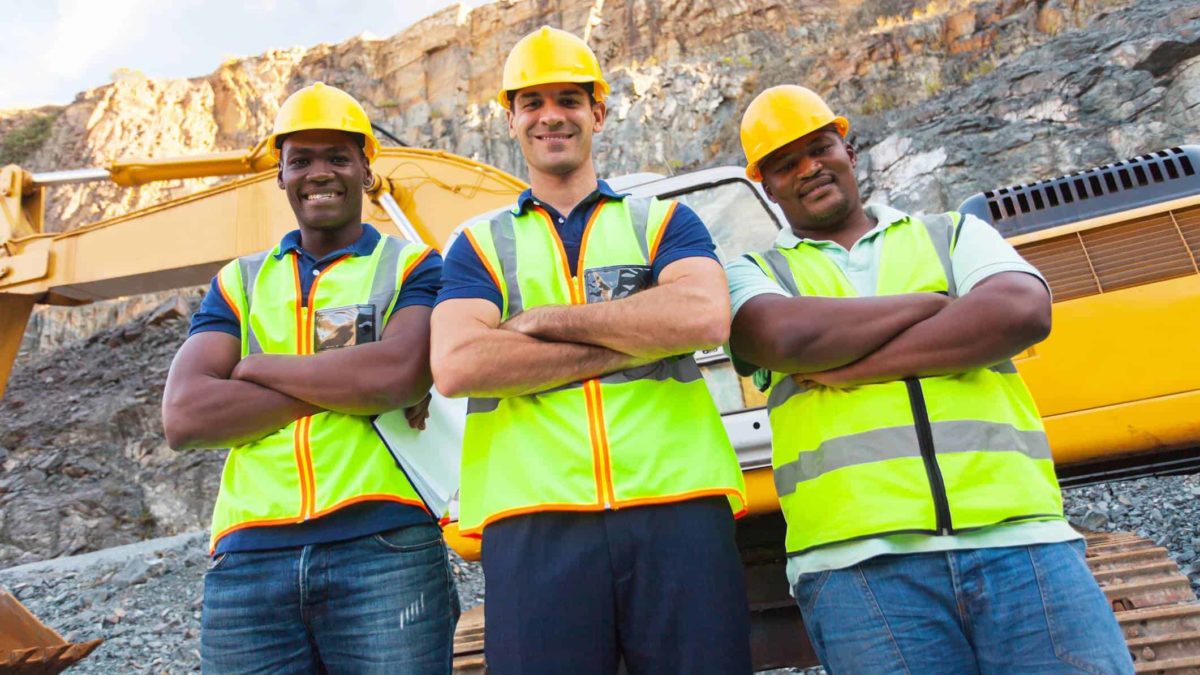
The performance of ASX 200 mining shares in FY24 was mixed amid some commodity prices rising while others were volatile and fell (or absolutely tanked in the case of lithium).
At the time of writing, silver is up 28% and gold is up 21% over the past 12 months, according to Trading Economics. Copper is up 16.5% and platinum is up 8%.
On the flipside, lithium is down by more than 70% and iron ore is off 5%.
So, perhaps it’s no surprise that the top three fastest-rising ASX 200 mining stocks are involved in one of the star commodities of FY24.
And that’s gold.
The gold price reached all-time record highs repeatedly throughout FY24. Last night, the market reset the peak price once again at about US$2,338 per ounce.
The apparent peaking of interest rates around the world was one factor in the gold price’s rise over FY24.
Another was global geopolitical tensions, which encouraged investors and central banks to take on extra exposure to this traditional safe-haven asset.
Data from S&P Global Market Intelligence shows these are the top three ASX 200 mining shares for FY24.
Red 5 is a gold explorer and producer with assets in Western Australia’s Eastern Goldfields area. They include the Darlot Gold Mine and the King of the Hills project.
Red 5 was the most outstanding of the ASX 200 mining shares for price growth in FY24. The Red 5 share price rose by 89.5% over FY24.
There were two significant surges for the Red 5 share price in FY24.
The first was in August after the company announced outstanding drilling results and the completion of 95% of the FY24 mine plan at the King of the Hills mine.
The second run was sparked in February after Red 5 released its 1H FY24 results. The company reported significant lifts in gold production and a 77% bump in sales revenue. Its net profit after tax (NPAT) was $29 million compared to a loss of $28.5 million in 1H FY23.
In other news, Red 5 announced a proposed merger with fellow ASX 200 gold producer Silver Lake Resources Ltd (ASX: SLR) in February.
West African Resources has a 90% interest in the Sanbrado Gold Operations and Kiaka Gold Projects in West Africa. The Government of Burkina Faso owns the remaining 10% in both projects. The company also owns the Toega Gold Deposit, which is 14km away from Sanbrado.
The West African Resources share price rose by 86.1% over FY24. The share price ramped up mostly in the second half of FY24 after the miner issued a resource, reserve and 10-year production update in February.
The miner forecasts production of 4.03Moz of gold between 2024 and 2033. This was 415,000 ounces higher than the previous forecast. The mine plans extend to 2034 at Sanbrado and 2042 at Kiaka, assuming an average gold price of US$1,400 per ounce. It expects peak gold production in 2029.
The company increased its mineral resources estimate by 181,000 ounces to 12.8Moz of gold and decreased its ore reserves estimate by 275,000 ounces to 6.1Moz of gold.
Construction costs at Kiaka are on-budget, with first production expected in 3Q FY25. The company is fully funded via a US$265 million debt facility till that point.
Emerald Resources owns projects in Cambodia and Australia. Its flagship mine, Okvau, is 100% owned and located 275km northeast of Phnom Penh.
The Emerald Resources share price rose by 72.2% over FY24. It rose pretty steadily throughout the year.
In the last production update issued in April, Emerald Resources reported gold production of 28,539 ounces. That was at the upper end of its guidance of 25,000 ounces to 30,000 ounces per quarter.
The company reported sales of 28.5koz of gold in the March 2024 quarter at an average price of US$2,069 per ounce.
In other news, the company completed its takeover of Bullseye Mining via compulsory acquisition last month.
The post 3 best-performing ASX 200 mining shares of FY24 appeared first on The Motley Fool Australia.
Before you buy Emerald Resources Nl shares, consider this:
Motley Fool investing expert Scott Phillips just revealed what he believes are the 5 best stocks for investors to buy right now… and Emerald Resources Nl wasn’t one of them.
The online investing service heâs run for over a decade, Motley Fool Share Advisor, has provided thousands of paying members with stock picks that have doubled, tripled or even more.*
And right now, Scott thinks there are 5 stocks that may be better buys…
See The 5 Stocks
*Returns as of 24 June 2024
More reading
Motley Fool contributor Bronwyn Allen has no position in any of the stocks mentioned. The Motley Fool Australia’s parent company Motley Fool Holdings Inc. has no position in any of the stocks mentioned. The Motley Fool Australia has no position in any of the stocks mentioned. The Motley Fool has a disclosure policy. This article contains general investment advice only (under AFSL 400691). Authorised by Scott Phillips.