Author: therawinformant

  • 2 ASX shares targeting huge growth during the 2020s

    A man drawing an arrow on a growth chart, indicating a surging share price

    There are a good number of companies on the Australian share market aiming to grow their earnings at a solid rate over the 2020s.

    Two ASX growth shares that stand out with particularly bold growth targets are listed below. Here’s what they are targeting over the medium term:

    Altium Limited (ASX: ALU)

    Altium is an electronic design software company which has exposure to the growing Internet of Things and artificial intelligence (AI) markets. These markets are underpinning the proliferation of electronic devices globally, which has been driving strong demand for software subscriptions. At the end of FY 2020, Altium had a total 51,006 subscriptions and was generating revenue of US$189.1 million.

    Looking ahead, management appears confident this strong demand will continue. It is aiming to double its subscriptions to 100,000 and grow its revenue by 164% to US$500 million by FY 2025/26. If it achieves its subscription goal, management believes it will have market domination and be in a position to compel key industry stakeholders to support its agenda to transform electronic design and its realisation.

    Domino’s Pizza Enterprises Ltd (ASX: DMP)

    Another ASX share that is targeting strong growth over the medium to long term is Domino’s. It is the Domino’s Pizza master franchise holder in Australia, New Zealand, Belgium, France, the Netherlands, Japan, Germany, Luxembourg, and Denmark.

    At the end of FY 2020, the pizza chain operator had a network of 2,668 stores across these countries. While this is certainly a large number, management still sees significant room for growth in the future. It is aiming to more than double its network to 5,500 stores by 2033. In addition to this, it has a medium term target of growing its same store sales by 3% to 6% per annum. Management appears confident the combination of the two will drive strong sales growth over the 2020s.

    Where to invest $1,000 right now

    When investing expert Scott Phillips has a stock tip, it can pay to listen. After all, the flagship Motley Fool Share Advisor newsletter he has run for more than eight years has provided thousands of paying members with stock picks that have doubled, tripled or even more.*

    Scott just revealed what he believes are the five best ASX stocks for investors to buy right now. These stocks are trading at dirt-cheap prices and Scott thinks they are great buys right now.

    *Returns as of June 30th

    More reading

    James Mickleboro has no position in any of the stocks mentioned. The Motley Fool Australia’s parent company Motley Fool Holdings Inc. owns shares of and recommends Altium. The Motley Fool Australia has recommended Domino’s Pizza Enterprises Limited. We Fools may not all hold the same opinions, but we all believe that considering a diverse range of insights makes us better investors. The Motley Fool has a disclosure policy. This article contains general investment advice only (under AFSL 400691). Authorised by Scott Phillips.

    The post 2 ASX shares targeting huge growth during the 2020s appeared first on Motley Fool Australia.

    from Motley Fool Australia https://ift.tt/36QxxFw

  • Is the Sezzle (ASX:SZL) share price a buy?

    the words buy now pay later on digital screen, afterpay share price

    Is the Sezzle Inc (ASX: SZL) share price a buy?

    Sezzle is one of the buy now, pay later businesses on the ASX. Like others in the sector, it offers interest-free instalment plans at online stores and some in-store locations.

    In Sezzle’s latest quarterly update, for the three months to 30 September 2020, it said that its active consumers had increased by 178.1% to 1.79 million and active merchants went up 178.3% to 20,890.

    What has been happening recently?

    The Sezzle share price has gone up by just over 280% since the start of 2020. However, the Sezzle share price has actually dropped 44% since 28 August 2020.

    The ASX company has been delivered triple digit growth this year with its sales metrics.

    For the three months to 30 September 2020, Sezzle saw its underlying merchant sales (UMS) rise by 231.5% to US$228.2 million. This represented growth of 21.4% quarter on quarter.

    It also reported that its merchant fees went up 260.6% to US$13 million, which represented quarter on quarter growth of 22.5%. Merchant fees as a percentage of UMS rose 46 basis points year on year to 5.7% – this was an increase of 5 basis points quarter on quarter.

    The trend of lower year on year gross losses on notes receivable and net transaction losses as a percentage of UMS continued in the third quarter, resulting in “relatively low” loss rates.

    Finally, Sezzle’s active consumer repeat usage rose to 89%, this was an increase of 748 basis points year on year, it was an increase of 41 basis points quarter on quarter.

    At the time of the announcement, Sezzle’s executive chairman and CEO Charlie Youakim said: “We are extremely proud of our team and what they have accomplished in 2020, but we are not done. Our product initiatives and merchant pipeline have never been better and the current quarter has gotten off to a solid start. We believe we are well-positioned, as we head into our strongest seasonal months of November and December.”

    At the end of the quarter the company had US$117.9 million of cash and cash equivalents to fund more growth.

    Commenting on the company’s cash flows, Sezzle CFO Karen Hartje said: “Our strong balance sheet position at 30 September allows us to pursue our growth strategies and weather the protected effects of COVID-19. We also continue to see COVID-19 hardship requests decline to negligible levels. The combination of lower hardship requests and the continued improvement in our active customer repeat usage rate have played key roles in keeping our loss rates at relatively low levels.”

    Sezzle said that it nearly achieved its annualised run-rate goal of US$1 billion in UMS in the third quarter of FY20, with a run rate of US$986 million based on September’s performance.

    Is the Sezzle share price a buy?

    The Motley Fool Hidden Gems service still rates Sezzle as a buy as part of a well-diversified portfolio.  

    Edward Vesely commented that the growth numbers from the quarter were very impressive. However, the company continues to trade at a high multiple compared to last year’s revenue. He said that whilst that multiple is steep, “if strong growth rates can be maintained, then this multiple will fall drastically. For comparison’s sake, when we recommended Sezzle just over a year ago, the company was valued at a price/revenue multiple of around 50 times. That is, strong growth has seen that multiple reduce, despite a more than tripling of the share price.”

    Where to invest $1,000 right now

    When investing expert Scott Phillips has a stock tip, it can pay to listen. After all, the flagship Motley Fool Share Advisor newsletter he has run for more than eight years has provided thousands of paying members with stock picks that have doubled, tripled or even more.*

    Scott just revealed what he believes are the five best ASX stocks for investors to buy right now. These stocks are trading at dirt-cheap prices and Scott thinks they are great buys right now.

    *Returns as of June 30th

    More reading

    Tristan Harrison has no position in any of the stocks mentioned. The Motley Fool Australia’s parent company Motley Fool Holdings Inc. recommends Sezzle Inc. The Motley Fool Australia has recommended Sezzle Inc. We Fools may not all hold the same opinions, but we all believe that considering a diverse range of insights makes us better investors. The Motley Fool has a disclosure policy. This article contains general investment advice only (under AFSL 400691). Authorised by Scott Phillips.

    The post Is the Sezzle (ASX:SZL) share price a buy? appeared first on Motley Fool Australia.

    from Motley Fool Australia https://ift.tt/36I10RP

  • 2 ASX dividend shares with yields of 4%+

    dividend shares

    While a number of companies have been forced to cut, defer, or suspend dividends this year because of the pandemic, a few have continued largely unaffected.

    Two ASX dividend shares which have continued to pay their shareholders generous dividends are listed below. Here’s what you need to know about them:

    National Storage REIT (ASX: NSR)

    National Storage is one of the ANZ region’s leading self-storage operators. Over the last few years, the company has been growing at a solid rate thanks to its strong position in a fragmented market and its growth through acquisition strategy. In respect to the latter, National Storage has continued to make acquisitions to bolster its network through the pandemic.

    During FY 2020 there were over $200 million of acquisitions transacted. Since then, the company has completed eight acquisitions totalling $139 million. Furthermore, management advised that its forward-looking acquisition pipeline remains strong and it is working hard on completing a number of development projects.

    At its annual general meeting, management revealed that it expects to report underlying earnings per share of 7.7 cents to 8.3 cents in FY 2021. It also advised that it intends to payout 90% to 100% of its earnings to shareholders as distributions. Based on the middle of both guidance ranges (8 cents and 95% payout ratio) and the current National Storage share price, this equates to a 4.3% yield.

    Rural Funds Group (ASX: RFF)

    Rural Funds is an agriculture-focused property group which owns 61 properties across five agricultural sectors. In FY 2020, Rural Funds was on form despite the pandemic and reported an 8% increase in property revenue to $72 million. Interestingly, approximately 78% of its revenue came from corporate or listed tenants. These include almond producer Select Harvests Limited (ASX: SHV) and wine giant Treasury Wine Estates Ltd (ASX: TWE).

    It also reported that its weighted average lease expiry (WALE) stood at a sizeable 10.9 years at the end of the financial year. Combined with its fixed rental increases, these long leases are underpinning management’s long term goal of growing its distribution by 4% per annum.

    This is exactly what the company is planning to do this financial year. Management has provided FY 2021 distribution guidance of 11.28 cents per share, up 4% year on year. Based on the current Rural Funds share price, this works out to be a 4.3% yield.

    These Dividend Stocks Could Be Your Next Cash Kings (FREE REPORT)

    Motley Fool Australia’s Dividend experts recently released a brand-new FREE report revealing 3 dividend stocks with JUICY franked dividends that could keep paying you meaty dividends for years to come.

    Our team of investors think these 3 dividend stocks should be a ‘must consider’ for any savvy dividend investor. But more importantly, could potentially make Australian investors a heap of passive income.

    Don’t miss out! Simply click the link below to grab your free copy and discover these 3 high conviction stocks now.

    Returns As of 6th October 2020

    More reading

    Motley Fool contributor James Mickleboro has no position in any of the stocks mentioned. The Motley Fool Australia owns shares of and has recommended RURALFUNDS STAPLED and Treasury Wine Estates Limited. We Fools may not all hold the same opinions, but we all believe that considering a diverse range of insights makes us better investors. The Motley Fool has a disclosure policy. This article contains general investment advice only (under AFSL 400691). Authorised by Scott Phillips.

    The post 2 ASX dividend shares with yields of 4%+ appeared first on Motley Fool Australia.

    from Motley Fool Australia https://ift.tt/394MGWv

  • 5 things to watch on the ASX 200 on Wednesday

    watch broker buy

    On Tuesday the S&P/ASX 200 Index (ASX: XJO) was on form again and pushed higher. The benchmark index rose 0.2% to 6,498.2 points.

    Will the market be able to build on this on Wednesday? Here are five things to watch:

    ASX 200 expected to rise.

    The Australian share market looks set to extend its positive run on Wednesday despite a mixed night of trade on Wall Street. According to the latest SPI futures, the ASX 200 is expected to rise 14 points or 0.2% at the open. In late trade on Wall Street, the Dow Jones is down 0.4%, the S&P 500 has fallen 0.2%, and the Nasdaq is up 0.1%.

    Aristocrat Leisure full year result.

    The Aristocrat Leisure Limited (ASX: ALL) share price could be on the move today when it hands in its full year results. According to a note out of Goldman Sachs, its analysts have forecast revenue of $3.94 billion and net profit after tax before amortisation of $471 million. This will be a 10% and 47% decline, respectively, over the prior corresponding period. The gaming technology company has been impacted greatly by the pandemic.

    Oil prices soften.

    Energy shares such as Beach Energy Ltd (ASX: BPT) and Santos Ltd (ASX: STO) could come under pressure after oil prices softened overnight. According to Bloomberg, the WTI crude oil price is down 0.6% to US$41.08 a barrel and the Brent crude oil price is down 0.8% to US$43.46 a barrel. Oil prices came under pressure amid tightening restrictions globally to combat COVID-19.

    A2 Milk Company annual general meeting.

    The A2 Milk Company Ltd (ASX: A2M) share price will be on watch today when it holds its annual general meeting. Ahead of the meeting, the infant formula and fresh milk company is likely to provide the market with an update. All eyes will be on whether tough trading conditions have persisted since its last update.

    Gold price edges lower.

    Gold miners including Northern Star Resources Ltd (ASX: NST) and Saracen Mineral Holdings Limited (ASX: SAR) could have a subdued day of trade and the gold price edged lower. According to CNBC, the spot gold price is down 0.15% US$1,884.90 an ounce. Traders appear undecided on gold due to the recent vaccine news.

    Where to invest $1,000 right now

    When investing expert Scott Phillips has a stock tip, it can pay to listen. After all, the flagship Motley Fool Share Advisor newsletter he has run for more than eight years has provided thousands of paying members with stock picks that have doubled, tripled or even more.*

    Scott just revealed what he believes are the five best ASX stocks for investors to buy right now. These stocks are trading at dirt-cheap prices and Scott thinks they are great buys right now.

    *Returns as of June 30th

    More reading

    Motley Fool contributor James Mickleboro has no position in any of the stocks mentioned. The Motley Fool Australia owns shares of and has recommended A2 Milk. We Fools may not all hold the same opinions, but we all believe that considering a diverse range of insights makes us better investors. The Motley Fool has a disclosure policy. This article contains general investment advice only (under AFSL 400691). Authorised by Scott Phillips.

    The post 5 things to watch on the ASX 200 on Wednesday appeared first on Motley Fool Australia.

    from Motley Fool Australia https://ift.tt/3kFDaLs

  • 2 ASX small cap healthcare shares growing quickly

    Doctor pressing digitised screen with array of icons including one entitled health insurance

    Earlier this week I looked at a couple of healthcare shares that have been tipped as potential market-beaters.

    Today, I thought I would take a look at the healthcare sector again, but this time at the small end of town.

    Two small cap healthcare shares that have been growing quickly are listed below. Here’s what you need to know about them:

    Avita Medical Ltd (ASX: AVH)

    Avita Medical is a global regenerative medicine company best known for its Recell system. This is a spray-on skin treatment used for burns victims. Demand for its offering has been growing very strongly over the last couple of years. Pleasingly, this has continued in FY 2021. During the first quarter, Avita reported a 59% increase in U.S based RECELL revenue to US$5 million. This strong revenue growth was driven by a 27.2% increase in procedural volumes to 496 and the addition of 9 new accounts in the first quarter. The latter brings its total accounts to 86.

    Avita isn’t resting on its laurels and is busy seeking to expand the use of the Recell system. It is hoping to be able to treat vitiligo with the system in the future. In addition, the company recently announced a collaboration with Houston Methodist Research Institute that will see the pairing of Avita’s proprietary Spray-On Skin Cells with Houston Methodist Research Institute’s expertise in reversing cellular ageing. The project is seeking to establish proof-of-concept for the development of a novel approach to reverse ageing and rejuvenate skin.

    MedAdvisor Ltd (ASX: MDR)

    MedAdvisor is a growing medication management platform provider. Its main focus is on addressing gaps in personal medication adherence. It provides software that connects to pharmacy dispensing systems to automatically retrieve medication records. It also comes with an intelligent training, information, and reminder system to ensure correct and reliable medication use. During the first quarter, MedAdvisor reported a 53% increase in cash receipts to $3.5 million.

    The company also recently announced the acquisition of US-based Adheris for US$34.5 million (A$49 million). This acquisition will see MedAdvisor become a leader in tailored opt-out, direct-to-patient medication adherence programs in the USA. It will have an addressable network of 180 million+ patients, ~25,000 pharmacies (>57% of prescriptions in the USA) and a network of 618,000 prescribers (~60% of total).

    Where to invest $1,000 right now

    When investing expert Scott Phillips has a stock tip, it can pay to listen. After all, the flagship Motley Fool Share Advisor newsletter he has run for more than eight years has provided thousands of paying members with stock picks that have doubled, tripled or even more.*

    Scott just revealed what he believes are the five best ASX stocks for investors to buy right now. These stocks are trading at dirt-cheap prices and Scott thinks they are great buys right now.

    *Returns as of June 30th

    More reading

    James Mickleboro has no position in any of the stocks mentioned. The Motley Fool Australia’s parent company Motley Fool Holdings Inc. owns shares of Avita Medical Limited and MedAdvisor. The Motley Fool Australia has recommended Avita Medical Limited and MedAdvisor. We Fools may not all hold the same opinions, but we all believe that considering a diverse range of insights makes us better investors. The Motley Fool has a disclosure policy. This article contains general investment advice only (under AFSL 400691). Authorised by Scott Phillips.

    The post 2 ASX small cap healthcare shares growing quickly appeared first on Motley Fool Australia.

    from Motley Fool Australia https://ift.tt/2IBJKFY

  • Here are the stocks Warren Buffett has been buying and selling

    This article was originally published on Fool.com. All figures quoted in US dollars unless otherwise stated.

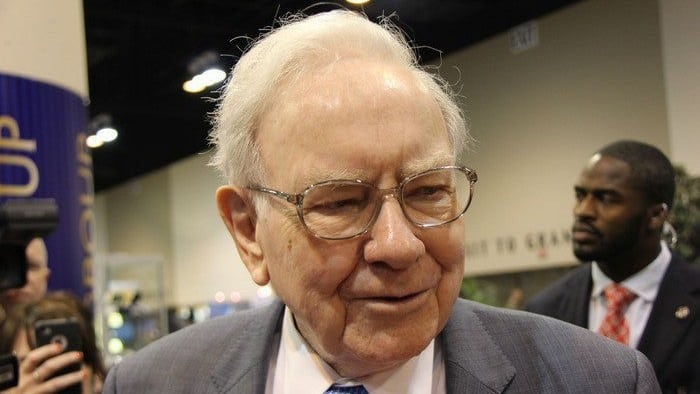
    Investor Warren Buffett

    This article was originally published on Fool.com. All figures quoted in US dollars unless otherwise stated.

    When Berkshire Hathaway (NYSE: BRK.A)(NYSE: BRK.B) released its third-quarter earnings report, we learned that Warren Buffett and his team had quite an active quarter in the stock market. The cost basis of Berkshire’s massive stock portfolio increased by about $9.6 billion, and it appeared that there had been some selling in the portfolio as well.

    Well, on Monday afternoon we got a glimpse of what the Oracle of Omaha has been buying and selling with the release of Berkshire’s Form 13F, which institutional money managers are required to file 45 days after the end of each quarter. Here’s a breakdown of the recent moves investors should know about.

    Here’s what Buffett and his stock pickers have been buying

    We already knew about a couple stock purchases Buffett and his lieutenants made – specifically that they spent more than $2 billion adding to their already large position in Bank of America and invested $720 million in Snowflake‘s recent IPO. But the company’s quarterly report indicated that this was just a tiny fraction of Berkshire’s stock buying activity.

    With that in mind, here’s a rundown of what stocks Berkshire Hathaway added to its portfolio in the third quarter:

    Company (Symbol)

    Shares Bought

    Market Value of New Shares (rounded)

    New Position?

    Bank of America (NYSE: BAC)

    85,092,006

    $2.35 billion

    No

    Snowflake (NYSE: SNOW)

    6,125,376

    $1.44 billion

    Yes

    General Motors (NYSE: GM)

    5,319,000

    $224 million

    No

    AbbVie (NYSE: ABBV)

    21,264,316

    $1.86 billion

    Yes

    Merck (NYSE: MRK)

    22,403,102

    $1.86 billion

    Yes

    Bristol Myers (NYSE: BMY)

    29,971,194

    $1.81 billion

    Yes

    Kroger (NYSE: KR)

    3,038,360

    $99 million

    No

    T-Mobile US (NASDAQ: TMUS)

    2,413,156

    $318 million

    Yes

    Pfizer (NYSE: PFE)

    3,711,780

    $136 million

    Yes

    Liberty Latin America Class K (NASDAQ: LILAK)

    66,567

    $780,000

    No

    Data source: Berkshire Hathaway SEC filings. Market value as of 16/11/2020.

    The biggest story on the buying side was the addition of not one but four big pharma stocks. Buffett (or one of his stock pickers) initiated stakes worth nearly $6 billion altogether, including three large and nearly equal-sized positions in AbbVie, Merck, and Bristol Myers.

    Aside from this, the initiation of a new position in T-Mobile US is also noteworthy, although a $318 million investment is rather small by Berkshire’s standards. This isn’t totally a surprise – Berkshire reportedly considered a large investment in Sprint (now a part of T-Mobile) in 2017.

    In addition to the stocks in the chart above, it’s also worth noting that Berkshire also repurchased more than $9 billion of its own stock during the quarter.

    Berkshire also hit the sell button on a few stocks

    While Berkshire was an active buyer of stocks in the third quarter, the quarterly report indicated that Buffett and company may have continued to pare back some of their other bank investments and that they may have taken some profits in their largest holding, Apple. Here are the particulars of these moves.

    Company (Symbol)

    Shares Sold

    Market Value of Shares Sold

    Did Berkshire Sell All Shares?

    Apple (NASDAQ: AAPL)

    36,326,710

    $4.37 billion

    No

    DaVita (NYSE: DVA)

    2,000,000

    $226 million

    No

    Wells Fargo (NYSE: WFC)

    110,202,265

    $2.74 billion

    No

    Axalta Coating Systems (NYSE: AXTA)

    650,000

    $18.4 million

    No

    Liberty Global (NASDAQ: LBTYA)

    1,300,000

    $29.3 million

    No

    Barrick Gold (NYSE: GOLD)

    8,918,701

    $229 million

    No

    M&T Bancorp (NYSE: MTB)

    1,616,561

    $205 million

    No

    PNC Financial (NYSE: PNC)

    3,430,759

    $433 million

    No

    JPMorgan Chase (NYSE: JPM)

    21,241,160

    $2.50 billion

    No, but sold 95% of stake

    Liberty Latin America (NASDAQ: LILA)

    160,478

    $1.9 million

    No

    Costco (NASDAQ: COST)

    4,333,363

    $1.69 billion

    Yes

    Data source: Berkshire Hathaway SEC filings. Market value as of 13/11/2020.

    We knew Berkshire sold some Apple, and Berkshire’s SEC filing confirmed it. The same goes for bank stocks, with the Wells Fargo, JPMorgan Chase, and other bank-stock sales adding up to nearly $6 billion.

    On the selling side, the biggest surprise is definitely the sale of the company’s entire Costco stake. This likely resulted in a big profit for Berkshire, as Costco stock is trading for about $380 per share right now, roughly 10 times what Berkshire likely paid for it.

    Also surprising is that Berkshire sold more than 40% of its Barrick Gold investment, which was just initiated during the second quarter.

    An active quarter that shows Berkshire is ready to put money to work

    Between Berkshire’s massive buybacks, this quarter’s wave of other stock purchases, and some other investments Berkshire has made recently, it is crystal clear that Warren Buffett is now in capital deployment mode. And with about $140 billion in cash and equivalents still on the balance sheet, this could be just the beginning.

    This article was originally published on Fool.com. All figures quoted in US dollars unless otherwise stated.

    Where to invest $1,000 right now

    When investing expert Scott Phillips has a stock tip, it can pay to listen. After all, the flagship Motley Fool Share Advisor newsletter he has run for more than eight years has provided thousands of paying members with stock picks that have doubled, tripled or even more.*

    Scott just revealed what he believes are the five best ASX stocks for investors to buy right now. These stocks are trading at dirt-cheap prices and Scott thinks they are great buys right now.

    *Returns as of June 30th

    More reading

    Matthew Frankel, CFP owns shares of Apple, Bank of America, Berkshire Hathaway (B shares), General Motors, and Wells Fargo and has the following options: short January 2021 $23 puts on Bank of America and short November 2020 $22.5 puts on Wells Fargo. The Motley Fool Australia’s parent company Motley Fool Holdings Inc. owns shares of and recommends Berkshire Hathaway (B shares) and recommends the following options: long January 2021 $200 calls on Berkshire Hathaway (B shares), short January 2021 $200 puts on Berkshire Hathaway (B shares), and short December 2020 $210 calls on Berkshire Hathaway (B shares). The Motley Fool Australia has recommended Berkshire Hathaway (B shares). We Fools may not all hold the same opinions, but we all believe that considering a diverse range of insights makes us better investors. The Motley Fool has a disclosure policy. This article contains general investment advice only (under AFSL 400691). Authorised by Scott Phillips.

    The post Here are the stocks Warren Buffett has been buying and selling appeared first on Motley Fool Australia.

    This article was originally published on Fool.com. All figures quoted in US dollars unless otherwise stated.

    from Motley Fool Australia https://ift.tt/3kxta6U

  • Average Aussie needs 22 weeks to earn what Elon Musk does in 5 minutes

    young man serving a group of customers at restaurant

    There’s always a lot of discussion about the levels of executive pay, especially in publicly listed companies that everyday retail investors own.

    Do chief executives really have that hard a job? Does intelligence or business acumen deserve as big a pay packet as rare athletic or dramatic talent?

    Regardless of which side of the debate you’re on, it’s amazing to see how much top executives take home compared to the average person on the street.

    For example, a study has found Tesla Inc (NASDAQ: TSLA) chief Elon Musk takes just 5 minutes to earn what an average Australian does in almost six months.

    According to Gigacalculator.com, a typical Australian worker needs to work for 22 weeks, 2 days and 3 hours to match what Musk makes over the duration of one pop song.

    Musk makes an astonishing $21,030 every 5 minutes.

    Rank Chief executive Company AUD earned in 5 minutes How long an average Australian needs to earn this much
    1 Elon Musk Tesla Inc (NASDAQ: TSLA) $21,030 22 weeks, 2 days and 3 hours
    2 Tim Cook Apple Inc (NASDAQ: AAPL) $4,725 5 weeks and 2 hours
    3 Tom Rutledge Charter Communications Inc (NASDAQ: CHTR) $4,133 4 weeks , 2 days and 1 hour
    4 Joseph Ianniello CBS Corporation (NASDAQ: VIAC) $4,118 4 weeks and 2 days
    5 Sumit Singh Chewy Inc (NYSE: CHWY) $3,821 4 weeks and 3 hours
    6 Jonathan Gray Blackstone Group Inc (NYSE: BX) $3,803 4 weeks and 3 hours
    7 Robert Swan Intel Corporation (NASDAQ: INTC) $3,498 3 weeks, 3 days and 6 hours
    8 Sundar Pichai Alphabet Inc (NASDAQ: GOOGL) $3,044 3 weeks, 1 day and 2 hours
    9 Satya Nadella Microsoft Corporation (NASDAQ: MSFT) $2,731 1 week, 4 days and 7 hours
    10 Douglas Ingram Sarepta Therapeutics Inc (NASDAQ: SRPT) $2,481 1 week, 2 days and 7 hours
    Source: Gigacalculator.com; Table created by author

    There is daylight between Musk and the second longest, Apple Inc (NASDAQ: AAPL) chief executive Tim Cook.

    “It would take Australians 5 weeks and 2 hours to earn the same amount the Apple CEO does in five minutes ($4,725),” Gigacalculator’s report read.

    “In the space of five minutes, Cook can buy three iPhone 12s without breaking a sweat.”

    Interestingly, the 10 highest paid CEOs in the world all work for publicly listed companies.

    In Australia, The Motley Fool previously reported IDP Education Ltd (ASX: IEL) boss Andrew Barkla is the highest paid CEO in the ASX 200. His $37.76 million salary equates to about $968.20 for 5 minutes of work.

    Do they deserve these pay packets?

    The study also found that 78% of Australians thought it “unjustified” for CEOs to earn millions per year. Even more (86%) thought the salary difference between them and the average Joe and Jane was “too wide” and needed to be reduced.

    Regardless of which side of the debate you’re on, the fact remains the performance of these business leaders have a huge bearing on the livelihood of many. Their decisions affect the fortunes of thousands or even millions of shareholders, staff, suppliers and customers.

    Perhaps chief executives should improve their communication skills to better publicise their work.

    Seven-out-of-ten Australians told the research that they don’t understand what CEOs do on a daily basis, while 65% demanded more transparency on their duties.

    Gigacalculator based its comparisons on an average gross annual full-time salary in Australia of $48,360. The study assumed CEOs worked an average of 62.5 hours each week, based on a Harvard Business Review report. The average Australian was assumed to have worked 40 hours each week.

    Our TOP healthcare stock is trading at a 30% discount to its highs

    If there’s one thing for sure, 2020 has been the year we embraced sanitisation. Scott Phillips has discovered a little-known Australian healthcare company could be set to reap the rewards of the post-covid world.

    Better yet, this fast-growing company is currently trading at a 30% discount from its highs. Scott believes in this stock so much, he’s staked $209k of our own company money on it. Forget ‘buy now pay later’, this stock could be the next hot stock on the ASX.

    Scott and his team have published a detailed report on this tiny ASX stock. Find out how you can access our TOP healthcare stock today!

    As of 2.11.2020

    More reading

    Suzanne Frey, an executive at Alphabet, is a member of The Motley Fool’s board of directors. Teresa Kersten, an employee of LinkedIn, a Microsoft subsidiary, is a member of The Motley Fool’s board of directors. Tony Yoo owns shares of Alphabet (A shares). The Motley Fool Australia’s parent company Motley Fool Holdings Inc. owns shares of and recommends Alphabet (A shares), Apple, Microsoft, and Tesla. The Motley Fool Australia’s parent company Motley Fool Holdings Inc. owns shares of Idp Education Pty Ltd. The Motley Fool Australia’s parent company Motley Fool Holdings Inc. recommends Chewy, Inc. and Intel and recommends the following options: long January 2021 $85 calls on Microsoft and short January 2021 $115 calls on Microsoft. The Motley Fool Australia has recommended Alphabet (A shares) and Apple. We Fools may not all hold the same opinions, but we all believe that considering a diverse range of insights makes us better investors. The Motley Fool has a disclosure policy. This article contains general investment advice only (under AFSL 400691). Authorised by Scott Phillips.

    The post Average Aussie needs 22 weeks to earn what Elon Musk does in 5 minutes appeared first on Motley Fool Australia.

    from Motley Fool Australia https://ift.tt/32SRkTj

  • The end of Stamp Duty… and the beginning of a new tax

    asx investor placing wooden house block on other blocks spelling words stamp duty

    I have a finance question for you:

    Would you rather pay a large, upfront fee for something, or a smaller annual one?

    Your answer, I hope, is ‘it depends’.

    Because, well, it does.

    It depends on a lot of things, but primarily: the two amounts in question, and the length of time over which the annual amount is paid.

    I reckon paying $100 upfront for something is meaningfully worse than paying $1 per year, on the reasonable assumption I won’t be around in 2120.

    Equally, if I have to pay for more than 5 years, I’d take the upfront option if the yearly payment was $20.

    In between those two scenarios, though, the numbers get very fuzzy, very quickly.

    And a lot of other considerations should be added in, too.

    I’d rather pay a gym membership monthly, rather than paying for a couple of years in advance, even at a decent discount.

    Why?

    Well, the gym might close. I might no longer be able to workout due to illness, injury or relocation. There might be a better gym that opens up down the street after 3 months.

    Or, you know, I might not go as often as I should — or I might stop going altogether — however unlikely that seems.

    And then there’s the discount. If I was offered $10/month or $230 upfront for two years, I’m pretty sure I’m taking the monthly deal.

    But if I could join for 2 years for $99?

    Well, then I start doing the maths. I only have to go for 10 of the next 24 months to break even. After that, I’m ahead.

    At $49 it’s probably a steal.

    But overall, as I said, ‘it depends’.

    Which is the first thought that came into my mind when I saw the news that the NSW Government is planning to replace one-off stamp duty, paid when you buy a property, with an annual land tax.

    Now, I have no interest in scaring the horses, so lets get a couple of things out of the way:

    1. It’s just a proposal, for now

    2. It’s proposed to only apply to future purchases; and

    3. The proposal suggests that buyers can choose either option.

    In a quote designed to make the proposal clearer, NSW Treasurer Dominic Perrottet said:

    “This will be like the Netflix of property tax.”

    So, is this a case of ‘Property Tax and chill’? Or are we being sucked into bingeing on more reality TV than is good for us?

    (I say ‘we’, because this isn’t just a NSW issue. You can bet your entire stamp duty bill that other state treasurers are watching this experiment very, very closely.)

    I’ll be frank: right now, the answer is, as I alluded to above, ‘it depends’.

    But I do have some concerns.

    First, how much is the annual tax likely to be?

    We don’t yet know if it’ll be an attractive option, relative to the current upfront scenario.

    Second, what is the impact on homeowners, particularly pensioners and other retirees, who might find themselves ‘asset rich, but cash poor’? 

    Do we face them being thrown out of their own homes? Or the explosion of ‘reverse mortgages’, allowing the finance industry to get its claws into previously debt-free retirees who feel they have no other option than to either sell up or give in?

    Third — and this is my great fear — will the new annual land tax become a tax on innumeracy and human frailty?

    Because, let’s face it, most of us aren’t anywhere near good enough with money.

    If you play the lotto, the dogs or the pokies, you’re likely to lose. But people do.

    If you carry a credit card balance, you’re getting screwed. But people do.

    If we take away Super, most of us won’t save enough for retirement, either.

    Put simply, we’re not very good, as a species at managing money.

    We’re even worse at thinking ahead. Making things ‘Future Scott’s’ problems is all too easy for me today.

    Future Scott would be much better served if I put down the chocky, and went for a run.

    Future Scott would be better off if I didn’t buy that new phone, or the new telly.

    Future Scott would have been hundreds of thousands of dollars better off if I hadn’t bought a new car when I was 25…

    You get the idea.

    So what are the odds that people are going to make good choices when they have the option of ponying up $50,000 in stamp duty today, or paying $3,000 a year in property tax forever?

    “Future Scott (or Future Sally, Future John or Future Samira) be damned”, in all probability.

    Lastly, you remember the property speculation that, in large part, caused the Global Financial Crisis in the US?

    You know one of the reasons we didn’t have the same thing here? 

    Stamp Duty.

    Yep, the cost of ‘flipping’ a house is currently prohibitive, thanks to the lump sum you lose every time you buy.

    Now, I can’t prove it, but don’t you reckon there would have been just a little more housing speculation if it was much, much cheaper to buy and sell?

    And, especially given the cost of housing here in Australia, don’t you reckon ‘more speculation’ is the last thing we need?

    Me too.

    Yes, there are likely benefits to the planned scheme. The list of potential drawbacks, above, isn’t supposed to paint the idea as ‘all bad’. But you’ll get plenty of ‘charm offensive’ speeches and articles on the positives, so this is my attempt to make sure you’re armed with all of the (potential) problems, too.

    And now you are. Choose wisely.

    Fool on!

    Where to invest $1,000 right now

    When investing expert Scott Phillips has a stock tip, it can pay to listen. After all, the flagship Motley Fool Share Advisor newsletter he has run for more than eight years has provided thousands of paying members with stock picks that have doubled, tripled or even more.*

    Scott just revealed what he believes are the five best ASX stocks for investors to buy right now. These stocks are trading at dirt-cheap prices and Scott thinks they are great buys right now.

    *Returns as of June 30th

    More reading

    Scott Phillips has no position in any of the stocks mentioned. The Motley Fool Australia’s parent company Motley Fool Holdings Inc. owns shares of and recommends Netflix. The Motley Fool Australia has recommended Netflix. We Fools may not all hold the same opinions, but we all believe that considering a diverse range of insights makes us better investors. The Motley Fool has a disclosure policy. This article contains general investment advice only (under AFSL 400691). Authorised by Scott Phillips.

    The post The end of Stamp Duty… and the beginning of a new tax appeared first on Motley Fool Australia.

    from Motley Fool Australia https://ift.tt/3pLwwam

  • Here are the US shares that CommSec customers are buying

    Road sign for 'Wall St' with US flags in background

    Most weeks, Commonwealth Bank of Australia‘s (ASX: CBA) CommSec brokering platform tells us the international shares (which are almost always American) proving popular with its customers.

    Because CommSec is one of the largest online brokers in the country, this data can be indicative of general investing trends in our market. This week’s data covers 9-13 November.

    So here are the top 10 United States shares that CommSec customers were buying last week:

    Most traded US shares on the ASX

    The five most traded international shares last week were the following:

    1. Nio Inc (NYSE: NIO) – representing 6.4% of total trades with an 81%/19% buy-to-sell ratio.
    2. Tesla Inc (NASDAQ: TSLA) – representing 4.7 % of total trades with a 77%/23% buy-to-sell ratio.
    3. Alibaba Group Holding Ltd (NYSE: BABA) – representing 2.9% of total trades with an 82%/18% buy-to-sell ratio.
    4. Pfizer Inc (NYSE: PFE) – representing 2.6% of total trades with a 90%/10% buy/sell ratio.
    5. Apple Inc (NASDAQ: AAPL) – representing 4.2% of total trades with a 57%/43% buy-to-sell ratio.

      The next five most traded shares were these:

    6. Xpeng Inc (NYSE: XPEV)

    7. Zoom Video Communications Inc (NASDAQ: ZM)

    8. Microsoft Corporation (NASDAQ: MSFT)

    9. Amazon.com Inc (NASDAQ: AMZN)

    10. Palantir Technologies Inc (NYSE: PLTR)

    What can we learn from these trades?

    We noted last week that the bullish patterns we had been used to seeing had been moderating somewhat. I wrote then that “our coverage of the US shares ASX investors were buying from 19-23 October shows none of the top 5 US shares having a buy-sell ratio of less than 80%/20%, yet 4 out of 5 of the top shares this week are below this ratio”.

    This week, we are continuing to see this trend play out. Only one stock in the top 5 this had a buy/sell ratio at or better than 90%/10%, which was Pfizer.

    Interestingly, Pfizer is a company that rarely features on this list. We can probably put its enthusiastic presence this week down to one factor: the company’s announcement of a more-successful-than-hoped coronavirus vaccine candidate last week.

    Other than that, we see similar trends playing out this week compared to last week. Electric vehicle companies Nio and Tesla continue to compete for that top spot. Last week saw Nio pip Tesla for the first time, and it’s notable to see this continue this week. Nio shares are up 65% over the past month though, so it’s not hard to guess where this interest is coming from. Investors seem to be cooling on big tech though. Only one FAANG stock makes the top 5 this week (Apple), and frequent ‘top 5er’ Amazon barely scraped in the top 10.

    Where to invest $1,000 right now

    When investing expert Scott Phillips has a stock tip, it can pay to listen. After all, the flagship Motley Fool Share Advisor newsletter he has run for more than eight years has provided thousands of paying members with stock picks that have doubled, tripled or even more.*

    Scott just revealed what he believes are the five best ASX stocks for investors to buy right now. These stocks are trading at dirt-cheap prices and Scott thinks they are great buys right now.

    *Returns as of June 30th

    More reading

    John Mackey, CEO of Whole Foods Market, an Amazon subsidiary, is a member of The Motley Fool’s board of directors. Teresa Kersten, an employee of LinkedIn, a Microsoft subsidiary, is a member of The Motley Fool’s board of directors. Sebastian Bowen owns shares of Pfizer and Tesla. The Motley Fool Australia’s parent company Motley Fool Holdings Inc. owns shares of and recommends Alibaba Group Holding Ltd., Amazon, Apple, Microsoft, Tesla, and Zoom Video Communications and recommends the following options: long January 2021 $85 calls on Microsoft, short January 2021 $115 calls on Microsoft, short January 2022 $1940 calls on Amazon, and long January 2022 $1920 calls on Amazon. The Motley Fool Australia has recommended Amazon, Apple, and Zoom Video Communications. We Fools may not all hold the same opinions, but we all believe that considering a diverse range of insights makes us better investors. The Motley Fool has a disclosure policy. This article contains general investment advice only (under AFSL 400691). Authorised by Scott Phillips.

    The post Here are the US shares that CommSec customers are buying appeared first on Motley Fool Australia.

    from Motley Fool Australia https://ift.tt/3nzkqim

  • CIMIC (ASX:CIM) share price on watch after $800m Australian Defence contract win

    The CIMIC Group Ltd (ASX: CIM) share price will be on watch on Wednesday following an after-market announcement.

    What did CIMIC announce?

    On Tuesday afternoon CIMIC revealed that its CPB Contractors business has been selected by the Australian Government’s Department of Defence to deliver the development phase of the Australia-Singapore Military Training Initiative (ASMTI) facilities project in North Queensland.

    In addition to this, CPB Contractors has been named as the preferred contractor to manage the second phase of the project. This is currently scheduled to commence mid-2022.

    The ASMTI facilities are being developed in order to support Australian Defence Force training and increased access by personnel of the Singapore Armed Forces to Australian military training areas.

    According to the release, combined, the two phases of the project are expected to generate approximately $800 million in revenue for CPB Contractors.

    The project design work will commence in early 2021 and construction of the ASMTI facilities is scheduled to be completed in late 2027.

    CIMIC Group’s Chief Executive Officer, Juan Santamaria, notes that the company has a long history of working with the Defence Force.

    He said: “We have a history of working with the Australian Defence Force, providing our regional projects experience and technical expertise to safely deliver key projects. We’re proud to continue to deliver long-term value to the Commonwealth.”

    This sentiment was echoed by CPB Contractors’ Managing Director, Jason Spears.

    Mr Spears commented: “CPB Contractors has been reliably delivering projects for the Department of Defence for more than 20 years. We will work collaboratively with the Department to ensure the economic opportunities created by this project are maximised through the involvement of local suppliers.”

    CPB Contractors has previously delivered some of Australia’s most significant Defence infrastructure projects. This includes the RAAF Base Williamtown Redevelopment Stage 2 and HMAS Albatross Redevelopment Stage 3 in New South Wales.

    Where to invest $1,000 right now

    When investing expert Scott Phillips has a stock tip, it can pay to listen. After all, the flagship Motley Fool Share Advisor newsletter he has run for more than eight years has provided thousands of paying members with stock picks that have doubled, tripled or even more.*

    Scott just revealed what he believes are the five best ASX stocks for investors to buy right now. These stocks are trading at dirt-cheap prices and Scott thinks they are great buys right now.

    *Returns as of June 30th

    More reading

    Motley Fool contributor James Mickleboro has no position in any of the stocks mentioned. The Motley Fool Australia has no position in any of the stocks mentioned. We Fools may not all hold the same opinions, but we all believe that considering a diverse range of insights makes us better investors. The Motley Fool has a disclosure policy. This article contains general investment advice only (under AFSL 400691). Authorised by Scott Phillips.

    The post CIMIC (ASX:CIM) share price on watch after $800m Australian Defence contract win appeared first on Motley Fool Australia.

    from Motley Fool Australia https://ift.tt/38QSwdM