Author: therawinformant

  • Warren Buffett bought 4 pharma giants in Q3

    This article was originally published on Fool.com. All figures quoted in US dollars unless otherwise stated.
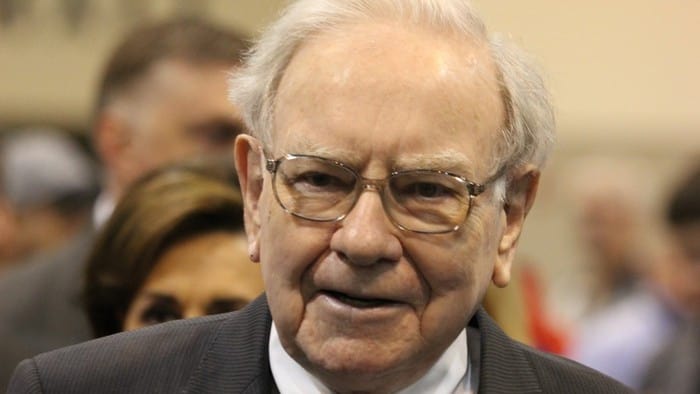
    share market investing expert warren buffett

    This article was originally published on Fool.com. All figures quoted in US dollars unless otherwise stated.

    Berkshire Hathaway (NYSE: BRK.A) (NYSE: BRK.B) filed its Form 13F with the Securities and Exchange Commission on Monday, which gave investors a look at what the Oracle of Omaha and his team of investors bought in the third quarter.

    Among the list were four pharmaceutical companies: AbbVie (NYSE: ABBV), Merck (NYSE: MRK), Bristol Myers Squibb (NYSE: BMY), and Pfizer (NYSE: PFE). The first three were similarly sized purchases of around $1.8 billion. The Pfizer purchase was substantially smaller, with a market value around $136 million.

    Within the industry, there doesn’t seem to be a theme among the four drugmakers.

    Merck and Bristol Myers are heavily into oncology. Bristol Myers expanded its cancer treatments last year with the acquisition of Celgene. Merck is hanging its hat on Keytruda with plans to spin out its women’s health and cardiovascular drugs, as well as some other brands into Organon & Co. next year.

    AbbVie is looking to diversify away from its reliance on its megablockbuster Humira, which treats a variety of inflammatory disorders. The pharmaceutical company made a big move into dermatology with the acquisition of Allergan, the maker of Botox, which closed earlier this year.

    Pfizer is currently most famous for its coronavirus vaccine, but the pharma giant is quite diversified. Like Merck, Pfizer is looking to get more focused by merging its Upjohn generic-drug business with Mylan in a new company called Viatris that’s scheduled to start trading on Tuesday. Investors will have to wait for the next Form 13F to see what Buffett does with the shares of Viatris that all Pfizer shareholders received.

    The pharmaceutical companies do have one thing in common: They’re all trading off their all-time highs and have been for all of 2020, suggesting Buffet might be bargain shopping.

    This article was originally published on Fool.com. All figures quoted in US dollars unless otherwise stated.

    Where to invest $1,000 right now

    When investing expert Scott Phillips has a stock tip, it can pay to listen. After all, the flagship Motley Fool Share Advisor newsletter he has run for more than eight years has provided thousands of paying members with stock picks that have doubled, tripled or even more.*

    Scott just revealed what he believes are the five best ASX stocks for investors to buy right now. These stocks are trading at dirt-cheap prices and Scott thinks they are great buys right now.

    *Returns as of June 30th

    More reading

    Brian Orelli, PhD has no position in any of the stocks mentioned. The Motley Fool Australia’s parent company Motley Fool Holdings Inc. owns shares of and recommends Berkshire Hathaway (B shares) and recommends the following options: long January 2021 $200 calls on Berkshire Hathaway (B shares), short January 2021 $200 puts on Berkshire Hathaway (B shares), and short December 2020 $210 calls on Berkshire Hathaway (B shares). The Motley Fool Australia has recommended Berkshire Hathaway (B shares). We Fools may not all hold the same opinions, but we all believe that considering a diverse range of insights makes us better investors. The Motley Fool has a disclosure policy. This article contains general investment advice only (under AFSL 400691). Authorised by Scott Phillips.

    The post Warren Buffett bought 4 pharma giants in Q3 appeared first on Motley Fool Australia.

    This article was originally published on Fool.com. All figures quoted in US dollars unless otherwise stated.

    from Motley Fool Australia https://ift.tt/2UCqUAA

  • Universal Store (ASX:UNI) share price rockets 22% higher after IPO

    The Universal Store Holdings Limited (ASX: UNI) share price finally hit the ASX boards on Tuesday after missing out due to the outage on Monday.

    And what a start the retailer’s shares have had! At one stage today, the Universal Store share price was up as much as 22% from its IPO price of $3.80 to $4.63.

    In afternoon trade its shares are currently changing hands for $4.58.

    The Universal Store IPO.

    Universal Store has landed on the Australian share market today after completing its initial public offering (IPO) which raised $147.8 million at $3.80 per share. This gave the fashion retailer a market capitalisation of $278.1 million.

    The proceeds from the offer are to be used to repay the company’s existing corporate debt facilities, increase cash held, pay transaction costs associated with the offer, and pay selling shareholders.

    Trading update.

    Ahead of its listing on the ASX boards, Universal Store released a trading update which revealed that it has started FY 2021 strongly.

    According to the release, based on unaudited accounts, Universal Store met the proforma first quarter FY 2021 forecast provided in its prospectus. This includes for revenue, earnings before interest, tax, depreciation and amortisation (EBITDA), and net profit after tax.

    Furthermore, it revealed that its sales momentum has continued for the last seven weeks (Monday 28 September to Sunday 15 November, inclusive).

    During this period, the company achieved group comparable sales growth of 33% versus the prior corresponding period.

    Another positive was its update on its Victorian operations. Management advised that on Wednesday 28 October, Universal Store re-opened its 12 previously closed Melbourne stores.

    Pleasingly, in the first two full weeks of trading to 15 November, the Victorian stores delivered comparable sales growth of 23% relative to the prior corresponding period.

    Universal Store’s CEO, Alice Barbery, said; “We are delighted to have all our Victorian stores open and trading again in the lead up to school holidays and the Christmas season. We are also encouraged by the prospects for our stores and online sales in Melbourne as restrictions are further eased over coming weeks.”

    Where to invest $1,000 right now

    When investing expert Scott Phillips has a stock tip, it can pay to listen. After all, the flagship Motley Fool Share Advisor newsletter he has run for more than eight years has provided thousands of paying members with stock picks that have doubled, tripled or even more.*

    Scott just revealed what he believes are the five best ASX stocks for investors to buy right now. These stocks are trading at dirt-cheap prices and Scott thinks they are great buys right now.

    *Returns as of June 30th

    More reading

    Motley Fool contributor James Mickleboro has no position in any of the stocks mentioned. The Motley Fool Australia has no position in any of the stocks mentioned. We Fools may not all hold the same opinions, but we all believe that considering a diverse range of insights makes us better investors. The Motley Fool has a disclosure policy. This article contains general investment advice only (under AFSL 400691). Authorised by Scott Phillips.

    The post Universal Store (ASX:UNI) share price rockets 22% higher after IPO appeared first on Motley Fool Australia.

    from Motley Fool Australia https://ift.tt/36He0qX

  • Charter Hall (ASX:CHC) share price lower despite Bunnings acquisitions

    Bunnings

    The Charter Hall Group (ASX: CHC) share price is sinking lower on Tuesday after announcing a new acquisition.

    The property company’s shares are down a sizeable 5.5% to $13.63 in afternoon trade.

    What did Charter Hall announce?

    This afternoon Charter Hall revealed that its wholesale partnership, LWHP, has made an acquisition. The LWHP partnership comprises VFMC, Telstra Corporation Ltd (ASX: TLS) Super, and Charter Hall.

    According to the release, the partnership has acquired a $353 million portfolio of six Bunnings Warehouse assets located in prime metropolitan markets.

    Bunnings Warehouse is Australia’s leading hardware retailer and owned by Wesfarmers Ltd (ASX: WES).

    The portfolio of modern Bunnings Warehouse retail stores was acquired on a yield of 4.63%. Approximately 85% of the portfolio is located in Sydney, Melbourne and Brisbane. It has a weighted average lease expiry (WALE) of 10 years and 2.5% annual rent reviews.

    Charter Hall’s Managing Director and CEO, David Harrison, commented: “We are proud to further expand our strong relationship with Wesfarmers and Bunnings Group. Across the Charter Hall platform we now have in excess of $2.4 billion invested in 59 Bunnings stores, 50 of which are located in metropolitan locations.”

    “This transaction represents our seventh Bunnings portfolio acquired since 2006 when we first recognised the strength of the Bunnings business, the relatively low rents per square metre of lettable area and the large prime sites Bunnings typically occupy,” he added.

    This sentiment was echoed by LWHP Fund Manager, Ben Ellis. He said: “This off-market acquisition extends the Bunnings relationship, expands our off-market transaction track record and enhances the diversity and breadth of the LWHP partnership which has been one of our most successful partnerships delivering an IRR since inception exceeding 15%.”

    Despite today’s decline, the Charter Hall share price is up 27% over the last 12 months.

    Where to invest $1,000 right now

    When investing expert Scott Phillips has a stock tip, it can pay to listen. After all, the flagship Motley Fool Share Advisor newsletter he has run for more than eight years has provided thousands of paying members with stock picks that have doubled, tripled or even more.*

    Scott just revealed what he believes are the five best ASX stocks for investors to buy right now. These stocks are trading at dirt-cheap prices and Scott thinks they are great buys right now.

    *Returns as of June 30th

    More reading

    Motley Fool contributor James Mickleboro has no position in any of the stocks mentioned. The Motley Fool Australia owns shares of and has recommended Telstra Limited. The Motley Fool Australia owns shares of Wesfarmers Limited. We Fools may not all hold the same opinions, but we all believe that considering a diverse range of insights makes us better investors. The Motley Fool has a disclosure policy. This article contains general investment advice only (under AFSL 400691). Authorised by Scott Phillips.

    The post Charter Hall (ASX:CHC) share price lower despite Bunnings acquisitions appeared first on Motley Fool Australia.

    from Motley Fool Australia https://ift.tt/3lyxC6G

  • Why the Unibail Rodamco Westfield (ASX:URW) share price is up 63% in 5 days

    rising retail asx share price represented by excited shopper holding lots of bags

    The Unibail-Rodamco-Westfield (ASX: URW) share price is on a tear again today, up 17% in late afternoon trading. That brings Unibail’s share price gains to a whopping 63% since the closing bell rang last Monday 9 November. Despite the past week’s stellar performance, the Unibail share price is still down 58% year to date.

    The brick and mortar retailer was already struggling with high debt levels and some questionable asset acquisitions heading into 2020. And then its share price was savaged by COVID-19 lockdowns and social distancing in Europe, the United States and Australia, which saw many of its shopping centres temporarily shuttered.

    What does Unibail Rodamco Westfield do?

    Unibail is one of Europe’s largest commercial real estate companies, owning a portfolio of quality retail and office complexes. It has assets in Europe, the United Kingdom and the US.

    Unibail acquired Australian shopping centre operator Westfield Corporation, created by the split of Westfield Group, in 2018. This saw the Unibail share price first list on the ASX. The company makes up part of the S&P/ASX 200 Index (ASX: XJO).

    Why is the Unibail share price up 17% again today?

    The Unibail share price began its upward surge last Tuesday 10 November. This came after the company announced shareholders had rejected the supervisory board’s 3.5 billion euro (AU$5.7 billion) capital raising via the issue of ordinary shares.

    The capital raising was part of the company’s wider ‘Reset’ plan and was intended to repay some of its outstanding debt.

    However, the resolution was stringently opposed by a group of activist investors, led by Leon Bressler and Xavier Niel, who succeeded in derailing the capital raise part of the Reset plan.

    In an ASX release yesterday, Unibail announced a major shakeup to its supervisory board that unfolded on Friday.

    Colin Dyer resigned as chair of the board, while remaining on as a member of the board.

    Leon Bressler was appointed as chair with immediate effect, while Xavier Niel took up the position on the board as member of the remuneration committee.

    Investors clearly appear pleased with the new management, alongside its decision to axe the controversial capital raising in favour of more aggressively disposing of non-performing assets.

    Today’s 17% leap in the Unibail share price would likely have occurred yesterday, had the ASX not shut down over a software update glitch.

    These 3 stocks could be the next big movers in 2020

    When investing expert Scott Phillips has a stock tip, it can pay to listen. After all, the flagship Motley Fool Share Advisor newsletter he has run for more than eight years has provided thousands of paying members with stock picks that have doubled, tripled or even more.*

    In this FREE STOCK REPORT, Scott just revealed what he believes are the 3 ASX stocks for the post COVID world that investors should buy right now while they still can. These stocks are trading at dirt-cheap prices and Scott thinks these could really go gangbusters as we move into ‘the new normal’.

    *Returns as of 6/8/2020

    More reading

    Motley Fool contributor Bernd Struben has no position in any of the stocks mentioned. The Motley Fool Australia has no position in any of the stocks mentioned. We Fools may not all hold the same opinions, but we all believe that considering a diverse range of insights makes us better investors. The Motley Fool has a disclosure policy. This article contains general investment advice only (under AFSL 400691). Authorised by Scott Phillips.

    The post Why the Unibail Rodamco Westfield (ASX:URW) share price is up 63% in 5 days appeared first on Motley Fool Australia.

    from Motley Fool Australia https://ift.tt/2IyRo3T

  • Why the Austal (ASX:ASB) share price is edging higher today

    Man in white business shirt touches screen with happy smile symbol

    The Austal Limited (ASX: ASB) share price is edging higher today. This comes after the global shipbuilder delivered a high-speed catamaran ferry to Chinese mainland ferry operator, Blue Sea Jet.

    At the time of writing, the Austal share price is up 2.51% to $2.86. In comparison, the S&P/ASX 200 Index (ASX: XJO) is 0.2% higher to 6,498 points.

    Austal designs and manufactures high performance vessels for commercial and defence customers worldwide. Most notably, Austal builds and services warships for the Australian Royal Navy and the United States Navy.

    Catamaran delivery

    Austal advised the market today that it has fulfilled a contract delivery of a 42m high-speed catamaran passenger ferry. Repeat customer, Blue Sea Jet is expected to put its ship in service immediately.

    The catamaran will ferry up to 272 people over the waters of the Dawan District between Guangdong, Hong Kong, and Macau.

    The vessel, named Xin Hai Chi, was constructed at the Aulong’s shipyard in Zhongshan City. It is the third ship to be designed and built for Blue Sea Jet since 2016.

    Joint venture program

    Austal highlighted that Aulong Shipbuilding is a joint venture program with Jianglong Shipbuilding of Zhuhai, China. Established in June 2016, the partnership aims to pursue commercial passenger and non-military vessel opportunities in mainland China.

    With an ownership stake of 40%, Austal has licenced a number of commercial aluminium vessel designs for marketing through China. Jianglong Shipbuilding provides local shipbuilding infrastructure, and manpower of up to 1,000 employees across two shipyards.

    Austal CEO David Singleton said the new delivery confirmed Aulong’s position as a preferred shipbuilder of China’s leading ferry operators. He added:

    Aulong has quickly developed a strong reputation for delivering China’s best high-speed craft – drawing on Austal’s expertise in commercial ferry design and Jianglong’s local shipbuilding capability.

    About the Austal share price 

    The Austal share price has been on the mends to recovery since the start of November. Its shares fell to an 8-month low of $2.59 in late October. This was just 15% higher than its multi-year low reached in March this year due to COVID-19.

    The company has a market capitalisation of $1.02 billion and a price-to-earnings (P/E) ratio of 11.5.

    Where to invest $1,000 right now

    When investing expert Scott Phillips has a stock tip, it can pay to listen. After all, the flagship Motley Fool Share Advisor newsletter he has run for more than eight years has provided thousands of paying members with stock picks that have doubled, tripled or even more.*

    Scott just revealed what he believes are the five best ASX stocks for investors to buy right now. These stocks are trading at dirt-cheap prices and Scott thinks they are great buys right now.

    *Returns as of June 30th

    More reading

    Aaron Teboneras has no position in any of the stocks mentioned. The Motley Fool Australia’s parent company Motley Fool Holdings Inc. owns shares of Austal Limited. The Motley Fool Australia has no position in any of the stocks mentioned. We Fools may not all hold the same opinions, but we all believe that considering a diverse range of insights makes us better investors. The Motley Fool has a disclosure policy. This article contains general investment advice only (under AFSL 400691). Authorised by Scott Phillips.

    The post Why the Austal (ASX:ASB) share price is edging higher today appeared first on Motley Fool Australia.

    from Motley Fool Australia https://ift.tt/35AdviQ

  • Flight Centre and Webjet were among the most traded shares on the ASX last week

    Stock market, ASX, investing

    This morning Australia’s leading investment platform provider CommSec released data on the most traded ASX shares on its platform from last week.

    Once again, there were a number of familiar faces filling up the top five over the period.

    Here’s the data:

    Flight Centre Travel Group Ltd (ASX: FLT)

    Investors were buying and selling this travel agent’s shares in large numbers last week after Pfizer announced very positive results from its phase three COVID-19 vaccine trials. This made Flight Centre the most traded share on the CommSec platform and attributable for 2.6% of total trades. Surprisingly, just 54% of trades came from the buy side. Buyers will have been happy to see the Flight Centre share price record a 12% weekly gain last week.

    Zip Co Ltd (ASX: Z1P)

    This buy now pay later provider was popular with investors again last week. It accounted for 2.2% of trades on the CommSec platform. And although 63% of trades came from buyers, it couldn’t stop the Zip Co share price dropping 0.7% over the five days. Investors were selling COVID-winners last week and rotating into beaten down shares.

    Afterpay Ltd (ASX: APT)

    Fellow buy now pay later provider Afterpay was also popular with investors and accounted for 2.2% of trades on the platform. As with Zip, most of these trades came from buyers. Approximately 61% of trades came from the buy side and helped drive the Afterpay share price 1.3% higher for the week. This was a decent result given the selloff of COVID-winners following the COVID-19 vaccine news.

    Webjet Limited (ASX: WEB)

    This online travel agent was another travel share that was heavily traded last week due to the vaccine news. It contributed 1.9% of the total trades on the CommSec platform. And although the Webjet share price was on fire and surged 18% higher, the buying and selling was evenly split. Approximately 47% of trades came from buyers and 53% from sellers.

    Qantas Airways Limited (ASX: QAN)

    This airline operator was the third travel share to make the top five last week. It accounted for 1.7% of trades on CommSec over the period. As with Webjet, the Qantas share price surged materially higher following the COVID-19 vaccine news. However, just 51% of these trades came from the buy side.

    Where to invest $1,000 right now

    When investing expert Scott Phillips has a stock tip, it can pay to listen. After all, the flagship Motley Fool Share Advisor newsletter he has run for more than eight years has provided thousands of paying members with stock picks that have doubled, tripled or even more.*

    Scott just revealed what he believes are the five best ASX stocks for investors to buy right now. These stocks are trading at dirt-cheap prices and Scott thinks they are great buys right now.

    *Returns as of June 30th

    More reading

    James Mickleboro has no position in any of the stocks mentioned. The Motley Fool Australia’s parent company Motley Fool Holdings Inc. owns shares of ZIPCOLTD FPO. The Motley Fool Australia owns shares of and has recommended Webjet Ltd. The Motley Fool Australia owns shares of AFTERPAY T FPO. The Motley Fool Australia has recommended Flight Centre Travel Group Limited. We Fools may not all hold the same opinions, but we all believe that considering a diverse range of insights makes us better investors. The Motley Fool has a disclosure policy. This article contains general investment advice only (under AFSL 400691). Authorised by Scott Phillips.

    The post Flight Centre and Webjet were among the most traded shares on the ASX last week appeared first on Motley Fool Australia.

    from Motley Fool Australia https://ift.tt/3kLtuzf

  • 3 ASX dividend shares with large yields and consistent payouts

    fingers walking up piles of coins towards bag of cash signifying asx dividend shares

    In this article are three ASX dividend shares that have large dividend yields and consistent payouts.

    The Reserve Bank of Australia (RBA) recently cut the official interest rate to just 0.10%.

    There are some businesses on the ASX that have yields much higher than that:

    JB Hi-Fi Limited (ASX: JBH)

    JB Hi-Fi has a grossed-up dividend yield of 5.9% at the current JB Hi-Fi share price. It has grown its dividend each year since FY13.

    In FY20 the company grew its final dividend by 76.5% to 90 cents per share, bringing the full year dividend to 189 cents per share – an increase of 33.1%.

    The dividend growth was supported by the increase in sales and net profit. Total sales increased by 11.6% to $7.9 billion whilst underlying earnings per share (EPS) went up by 33.2%.

    The ASX dividend share delivered much higher online sales due to the effects of COVID-19. JB Hi-Fi saw nearly $600 million of online sales, which was up 50% year on year. The fourth quarter saw online sales rise by 134%.

    That revenue growth has continued in the first quarter of FY21 where JB Hi-Fi Australia sales rose by 27.3% and The Good Guys revenue grew by 30.9%.  Melbourne metro stores are now re-open.

    Service Stream Limited (ASX: SSM)

    Service Stream is a business involved in the design, construction, operations and maintenance of assets across Australian networks.

    One of its biggest clients is the NBN. It recently extended its operations and maintenance master agreement with the NBN. This contract generated $330 million of revenue in FY20 and $280 million in FY19.

    Service Stream maintained its dividend in FY20, and had been steadily growing its dividend for years before that. At the Service Stream share price it currently offers a grossed-up dividend yield of 5.9%.

    The ASX dividend share’s management is working on diversifying its revenue away from telecommunications, expanding its client base, growing its exposure to a broad range of regulated essential infrastructure markets and building a base of long-term, capital light contractual agreements.

    Rural Funds Group (ASX: RFF)

    Rural Funds is an agricultural real estate investment trust (REIT). It owns a variety of farm types including cattle, vineyards, cropping (sugar and cotton), macadamias and almonds. Rural Funds used to own poultry assets, but it recently sold those. 

    It has a goal of steadily growing the distribution by 4% each year. This is supported by two pillars.

    There is contracted rental growth built into all of Rural Funds’ tenancy agreements. That indexation is either a fixed 2.5%, or it’s linked to CPI inflation, with some having market reviews.

    Rural Funds has also been working on investing in productivity improvements at its farms. The idea is that it will increase the value of the farm as well as unlock more rental income over time.

    The ASX dividend share’s properties are spread across different states and climactic conditions. It doesn’t carry the operational risks like the agricultural tenant does, but it does own water entitlements which can be leased to the farmers for them to be used, if needed.

    In FY21 the farmland REIT has provided distribution guidance growth of 4% to 11.28 cents per unit. At the current Rural Funds share price it has a forward distribution yield of 4.4%.

    At the end of FY20 it had an adjusted net asset value (NAV) per unit of $1.94. The asset value is adjusted to include the market value of the water entitlements, rather than the (lower) cost price of the water entitlements. That means it’s currently valued at a 31.9% premium.

    These Dividend Stocks Could Be Your Next Cash Kings (FREE REPORT)

    Motley Fool Australia’s Dividend experts recently released a brand-new FREE report revealing 3 dividend stocks with JUICY franked dividends that could keep paying you meaty dividends for years to come.

    Our team of investors think these 3 dividend stocks should be a ‘must consider’ for any savvy dividend investor. But more importantly, could potentially make Australian investors a heap of passive income.

    Don’t miss out! Simply click the link below to grab your free copy and discover these 3 high conviction stocks now.

    Returns As of 6th October 2020

    More reading

    Motley Fool contributor Tristan Harrison owns shares of RURALFUNDS STAPLED. The Motley Fool Australia owns shares of and has recommended RURALFUNDS STAPLED. The Motley Fool Australia has recommended Service Stream Limited. We Fools may not all hold the same opinions, but we all believe that considering a diverse range of insights makes us better investors. The Motley Fool has a disclosure policy. This article contains general investment advice only (under AFSL 400691). Authorised by Scott Phillips.

    The post 3 ASX dividend shares with large yields and consistent payouts appeared first on Motley Fool Australia.

    from Motley Fool Australia https://ift.tt/38NzzZk

  • Is buy now, pay later (BNPL) giving Aussies a headache?

    ASX 200 investor looking frustrated at falling share price whilst sitting at desk

    The buy now, pay later (BNPL) sector is probably one of the most dramatic success stories on the ASX over the past few years. You only have to go back a few years, and the whole BNPL idea was one of relative obscurity.

    Sure, investors were starting to notice a small company called Afterpay Ltd (ASX: APT), but you’d probably be unlikely to find too many people predicting that BNPL was about to become a mainstream concept.

    Fast forward to 2020 and it’s fairly obvious BNPL is here to stay. Not only has Afterpay spent the last few years making a bevvy of investors extremely wealthy (the Afterpay share price is up 200% in 2020 alone), but it has been joined by a small army of BNPL/payments/fintech competitors.

    These include Zip Co Ltd (ASX: Z1P), Openpay Group Ltd (ASX: OPY), Sezzle Inc (ASX: SZL), Splitit Ltd (ASX: SPT) and (more recently) Laybuy Holdings Ltd (ASX: LBY). Following in Afterpay’s footsteps, all of these companies have given investors healthy gains over the past year or so.

    Even Commonwealth Bank of Australia (ASX: CBA) – a relative dinosaur compared to the up-and-comers just listed – is getting on the BNPL train with its ‘Klarna’ product.

    Is BNPL credit?

    Now, BNPL hasn’t escaped its fair share of scrutiny. The sector was famously the subject of a parliamentary enquiry last year, which narrowly opted to not extend the same requirements as credit issuers to BNPL services. Although BNPL services do let customers spend ‘other people’s money’, its use doesn’t attract compounding interest like traditional credit products (such as credit cards and personal loans) do. That distinction had lead BNPL companies like Afterpay to argue that they are in fact, beneficial for customers who might otherwise use traditional forms of credit.

    But reporting from the ABC yesterday pours some cold water on that notion. According to the report, the corporate watchdog ASIC (the Australian Securities and Investments Commission) has found that as many as 1 in 5 consumers are missing BNPL payments.

    The report found that the number of BNPL transactions increased by 90% between FY2018 and FY2019 from 16.8 million to 32 million. However, that was accompanied by missing payment fee revenue climbing 38% to $43 million over the same period.

    Young people swarm in

    The ABC quotes the ASIC report as stating the following:

    While working for the majority of users, some consumers are suffering harm… From our research, we also found that some consumers who use buy now, pay later arrangements are experiencing financial hardship, such as cutting back on or going without essentials – for example meals – or taking out additional loans, in order to make their buy now, pay later payments on time.

    Of those BNPL customers who said they were cutting back, ASIC found that nearly half were under 30 years old: “Almost 70 per cent of those who had taken out another loan to make their buy now, pay later payments on time had also missed a payment, and half were under 30.”

    Users under the age of 35 accounted for 61% of completed transactions in FY2019. For transactions that incurred missed payment fees, customers under 35 reportedly accounted for 67%.

    Even after these findings though, ASIC has “stopped short” of recommending that the sector be regulated in the same way as credit card companies. BNPL lives to fight another day, it seems.

    Where to invest $1,000 right now

    When investing expert Scott Phillips has a stock tip, it can pay to listen. After all, the flagship Motley Fool Share Advisor newsletter he has run for more than eight years has provided thousands of paying members with stock picks that have doubled, tripled or even more.*

    Scott just revealed what he believes are the five best ASX stocks for investors to buy right now. These stocks are trading at dirt-cheap prices and Scott thinks they are great buys right now.

    *Returns as of June 30th

    More reading

    Sebastian Bowen has no position in any of the stocks mentioned. The Motley Fool Australia’s parent company Motley Fool Holdings Inc. owns shares of ZIPCOLTD FPO. The Motley Fool Australia’s parent company Motley Fool Holdings Inc. recommends Sezzle Inc. The Motley Fool Australia owns shares of AFTERPAY T FPO. The Motley Fool Australia has recommended Sezzle Inc. We Fools may not all hold the same opinions, but we all believe that considering a diverse range of insights makes us better investors. The Motley Fool has a disclosure policy. This article contains general investment advice only (under AFSL 400691). Authorised by Scott Phillips.

    The post Is buy now, pay later (BNPL) giving Aussies a headache? appeared first on Motley Fool Australia.

    from Motley Fool Australia https://ift.tt/3nAs9gp

  • Origin (ASX:ORG) share price rising on vaccine and green exports news

    close up shot of gas burner representing asx energy share price

    The Origin Energy Ltd (ASX: ORG) share price is on the rise today after the company announced plans to conduct feasibility studies into the potential of exporting “green” hydrogen and ammonia. Australia’s third biggest energy company by market capitalisation says that it will look into Tasmania’s Bell Bay Area as the most likely plant location for this project. At the time of writing, the Origin share price is up by 3.4% in today’s trading to $4.92 per share.

    What’s moving the Origin share price?

    The Origin share price is responding positively to news the company is about to carry out a $3.2 million feasibility study, partly funded by the Tasmanian Government. The study will look into the use of large-scale renewable energy to convert water into hydrogen through a process known as electrolysis. Origin says the hydrogen generated would have a capacity of more than 500 megawatts, and would then be combined with nitrogen to create green ammonia for shipping to export markets.

    This pivot to green exports is being considered despite the company owning a 37.5% stake in Australia Pacific LNG (APLNG), a major LNG exporter in Queensland that exports 8.6 million metric tonnes per year to Asian customers.

    Origin said in a statement that “hydrogen produced from renewable energy has tremendous potential to support decarbonisation in Australia and overseas, because it is one of the most abundant elements in the universe and can be produced with zero emissions.” It has put the expected output of zero-emissions ammonia from this project at more than 420,000 tonnes a year.

    Australia’s green energy landscape

    The announcement by Origin coincided with a report by the Grattan Institute Think-Tank. The report recommended the Australian Government start planning for a future without gas, because gas prices would not return to the cheap levels of the past, and because of the global commitment to reach net-zero emissions by 2050. 

    This recommendation, however, has been dismissed by industrial energy users, saying that lack of access to affordable gas would have a negative impact on manufacturing jobs. The Morrison Government has also said that it remains committed to the role of gas in Australia, saying that future supplies from the United States will drive LNG prices down, making it affordable for Australian households and manufacturers. 

    How has Origin performed in 2020?

    In October, Origin announced that its FY21 first-quarter revenue from its stake in the APLNG project fell 46%. This was as a result of lower oil and gas prices due to the ongoing pandemic. To add salt to the wound, a group of 10 investment banks in the US polled by The Wall Street Journal forecast that Brent crude oil price will only average $53.50 per barrel by the end of 2021 – far below its pre-COVID levels.

    The Origin share price has fallen by more than 40% this year as the coronavirus took a toll on its export business. As mentioned, the Origin share price is trading at $4.92 today, up by 3.4% amid the broader rise in the energy sector as new developments in a possible vaccine were announced over night. At this price level, Origin commands a market cap of $8.67 billion.

    Where to invest $1,000 right now

    When investing expert Scott Phillips has a stock tip, it can pay to listen. After all, the flagship Motley Fool Share Advisor newsletter he has run for more than eight years has provided thousands of paying members with stock picks that have doubled, tripled or even more.*

    Scott just revealed what he believes are the five best ASX stocks for investors to buy right now. These stocks are trading at dirt-cheap prices and Scott thinks they are great buys right now.

    *Returns as of June 30th

    More reading

    Motley Fool contributor Eddy Sunarto has no position in any of the stocks mentioned. The Motley Fool Australia has no position in any of the stocks mentioned. We Fools may not all hold the same opinions, but we all believe that considering a diverse range of insights makes us better investors. The Motley Fool has a disclosure policy. This article contains general investment advice only (under AFSL 400691). Authorised by Scott Phillips.

    The post Origin (ASX:ORG) share price rising on vaccine and green exports news appeared first on Motley Fool Australia.

    from Motley Fool Australia https://ift.tt/2Ka8cyl

  • Tesla Stock Jumps on News It Will Join the S&P 500

    This article was originally published on Fool.com. All figures quoted in US dollars unless otherwise stated.

    Tesla car driving along

    This article was originally published on Fool.com. All figures quoted in US dollars unless otherwise stated.

    In a move investors have long anticipated, S&P Global — the body that manages some of the most prominent stock indices in the U.S. — announced on Monday that Tesla (NASDAQ: TSLA) will be joining the S&P 500 Index before trading commences on Monday, Dec. 21. Tesla stock jumped on the news and is currently up more than 14% in after-hours trading.  

    The electric-vehicle maker was widely expected to make the cut in early September during the index’s quarterly rebalancing, but it failed to make the list at that time.

    Tesla stock has skyrocketed so far in 2020, gaining 388% as of the market close on Monday, pushing its market cap to nearly $387 billion. Because of the size of the addition, officials have yet to decide whether Tesla will be added all at once on the effective date, or if it will be divided into two separate tranches to be completed by the Dec. 21 deadline. S&P Global has taken the unusual step of eliciting investor feedback before making the decision.

    Being included in the index not only confers bragging rights but could also help push shares higher, as mutual funds, exchange-traded funds, and others that track the S&P 500 will be adding the stock to their portfolios. This increase in demand is likely to provide a temporary boost for Tesla shares.

    In mid-July, Tesla announced its fourth consecutive quarter of GAAP (generally accepted accounting principles) profitability, one of the last remaining hurdles the company needed to clear to be considered for inclusion in the index. However, Tesla was initially passed over, leaving some investors scratching their heads as to why.

    Some Wall Street analysts have speculated that the stock’s well-known volatility may have factored into the previous decision to snub Tesla. Others have suggested that the sale of regulatory credits, and the part that played in the company’s profits, may have also weighed on the verdict.

    This article was originally published on Fool.com. All figures quoted in US dollars unless otherwise stated.

    Where to invest $1,000 right now

    When investing expert Scott Phillips has a stock tip, it can pay to listen. After all, the flagship Motley Fool Share Advisor newsletter he has run for more than eight years has provided thousands of paying members with stock picks that have doubled, tripled or even more.*

    Scott just revealed what he believes are the five best ASX stocks for investors to buy right now. These stocks are trading at dirt-cheap prices and Scott thinks they are great buys right now.

    *Returns as of June 30th

    More reading

    Danny Vena owns shares of Tesla. The Motley Fool Australia’s parent company Motley Fool Holdings Inc. owns shares of and recommends Tesla. The Motley Fool Australia has no position in any of the stocks mentioned. We Fools may not all hold the same opinions, but we all believe that considering a diverse range of insights makes us better investors. The Motley Fool has a disclosure policy. This article contains general investment advice only (under AFSL 400691). Authorised by Scott Phillips.

    The post Tesla Stock Jumps on News It Will Join the S&P 500 appeared first on Motley Fool Australia.

    This article was originally published on Fool.com. All figures quoted in US dollars unless otherwise stated.

    from Motley Fool Australia https://ift.tt/3kHpPlD