
Category: Stock Market

  • $1,000,000 portfolio: One way to achieve 7-figure wealth

    A businessman in a suit adds a coin to a pink piggy bank sitting on his desk next to a pile of coins and a clock, indicating the power of compound interest over time.

    Most readers probably wouldn’t say no to owning a seven-figure investment portfolio. But getting to a $1,000,000 portfolio of ASX shares is no easy feat. It requires years of patience and discipline to be sure. However, the most important factor that will determine if one can get to a million-dollar portfolio is the harnessing of the power of compounding.

    Compound interest was not called the eighth wonder of the world by Einstein for nothing. It refers to earning interest on already-earned interest, and is the only real way most of us can effectively and efficiently build wealth on the share market outside of getting lucky on a moonshot investment.

    Even the legendary investor Warren Buffett almost entirely credits compounding as the reason why he is worth ~US$130 billion today. Buffett once said “My wealth has come from a combination of living in America, some lucky genes, and compound interest”.

    It also explains how his company Berkshire Hathaway Inc (NYSE: BRK.A)(NYSE: BRK.B) is worth US$876 billion right now.

    It isn’t too difficult to understand how the powers of compounding can exponentially grow your wealth over time.

    Let’s take a simple ASX index fund like the Vanguard Australian Shares Index ETF (ASX: VAS) to demonstrate. Since its ASX inception in 2009, this exchange-traded fund (ETF) has returned an average of 8.97% per annum (assuming dividends are reinvested).

    Compounding: How to get to a $1,000,000 portfolio of ASX shares

    Let’s say this index fund returns that same rate over the next 40 years (which one should never bank on, as past returns are no guarantee of future success). If one invested just $500 a month into this fund at that rate of return and reinvested all dividend distributions, they would have $97,815 after ten years. Not bad.

    But if they just kept at it for another ten years, that $97,815 would grow to $335,660. After another ten, they would have $916,970, which would hit $2.34 million if yet another ten years go by.

    That’s compounding in action—earning interest on interest on interest. The more time it has, the faster your wealth grows. So, using a simple ASX index fund generating a fairly standard return, you can see how this power of compounding, as well as patience and discipline, can get anyone to a seven-figure ASX share portfolio.

    Of course, you can do a few things to juice up your returns as well.

    It always helps to invest more. If you can stretch from investing $500 a month to $800, you’d end up with $3.74 million after those four decades instead of $2.34 million.

    If you learn about active share market investing and manage to pick out a portfolio of individual shares that return a collective 12% per annum instead of 8.97%, you’d have almost $6 million in shares after those 40 years, rather than $2.34 million.

    As such, you can see how this one simple concept of compound interest can work wonders for anyone’s wealth and can even get you a $1,00,000 portfolio.

    The post $1,000,000 portfolio: One way to achieve 7-figure wealth appeared first on The Motley Fool Australia.

    Should you invest $1,000 in Vanguard Australian Shares Index Etf right now?

    Before you buy Vanguard Australian Shares Index Etf shares, consider this:

    Motley Fool investing expert Scott Phillips just revealed what he believes are the 5 best stocks for investors to buy right now… and Vanguard Australian Shares Index Etf wasn’t one of them.

    The online investing service he’s run for over a decade, Motley Fool Share Advisor, has provided thousands of paying members with stock picks that have doubled, tripled or even more.*

    And right now, Scott thinks there are 5 stocks that may be better buys…

    See The 5 Stocks
    *Returns as of 5 May 2024

    More reading

    Motley Fool contributor Sebastian Bowen has positions in Berkshire Hathaway and Vanguard Australian Shares Index ETF. The Motley Fool Australia’s parent company Motley Fool Holdings Inc. has positions in and has recommended Berkshire Hathaway. The Motley Fool Australia has recommended Berkshire Hathaway. The Motley Fool has a disclosure policy. This article contains general investment advice only (under AFSL 400691). Authorised by Scott Phillips.


  • These ASX 300 shares could rise 35% to 65%

    A man clenches his fists in excitement as gold coins fall from the sky.

    If you are looking to supercharge your portfolio’s returns, then it could be worth looking at the ASX 300 shares in this article.

    That’s because analysts have named them as buys and tipped them to rise 35% and 65%. Here’s what you need to know about them:

    Accent Group Ltd (ASX: AX1)

    The first ASX 300 share that could deliver big returns over the next 12 months is Accent Group.

    It is the footwear focused retailer behind store brands such as HypeDC, Stylerunner, Platypus, and The Athlete’s Foot. It also has exclusive distribution rights in Australia for a number of popular global brands.

    Bell Potter thinks that Accent Group’s shares are cheap at current levels. The broker currently has a buy rating and $2.50 price target on them. Based on its current share price of $1.84, this implies potential upside of 36% for investors over the next 12 months.

    In addition, the broker is forecasting fully franked dividends per share of 13 cents in FY 2024 and then 14.6 cents in FY 2025. This equates to dividend yields of 7% and 7.9%, respectively.

    Domino’s Pizza Enterprises Ltd (ASX: DMP)

    This beaten down pizza chain operator’s shares could have major upside potential according to analysts at Ord Minnett.

    According to a recent note, the broker has an accumulate rating and $61.00 price target on the ASX 300 share. This implies potential upside of 65% for investors between now and this time next year.

    In addition, the broker is forecasting dividends per share of $1.08 in FY 2024 and $1.51 in FY 2025. This will mean dividend yields of 2.9% and 4.1%, respectively, for investors.

    Regis Resources Ltd (ASX: RRL)

    A third ASX 300 share that could deliver big returns for investors is Western Australia-based gold miner Regis Resources.

    Despite the booming gold price, Regis Resources’ shares are down 14% since the start of the year.

    Bell Potter thinks this could be a buying opportunity for investors. It highlights that it is “attracted to its all- Australian asset portfolio and organic growth options which are unique at this scale.”

    In addition, its analysts see “key opportunities in the fundamental, medium-term outlook and, in our view, these may also make RRL an appealing corporate target in the current conducive M&A environment.”

    Bell Potter has a buy rating and $2.80 price target on its shares. This implies potential upside of almost 50% for investors from current levels.

    The post These ASX 300 shares could rise 35% to 65% appeared first on The Motley Fool Australia.

    Should you invest $1,000 in Accent Group Limited right now?

    Before you buy Accent Group Limited shares, consider this:

    Motley Fool investing expert Scott Phillips just revealed what he believes are the 5 best stocks for investors to buy right now… and Accent Group Limited wasn’t one of them.

    The online investing service he’s run for over a decade, Motley Fool Share Advisor, has provided thousands of paying members with stock picks that have doubled, tripled or even more.*

    And right now, Scott thinks there are 5 stocks that may be better buys…

    See The 5 Stocks
    *Returns as of 5 May 2024

    More reading

    Motley Fool contributor James Mickleboro has positions in Domino’s Pizza Enterprises. The Motley Fool Australia’s parent company Motley Fool Holdings Inc. has positions in and has recommended Domino’s Pizza Enterprises. The Motley Fool Australia has recommended Accent Group and Domino’s Pizza Enterprises. The Motley Fool has a disclosure policy. This article contains general investment advice only (under AFSL 400691). Authorised by Scott Phillips.
  • Own the ASX’s Vanguard US Total Markets ETF (VTS)? Here’s what you’re invested in

    Diverse group of university students smiling and using laptops

    Interest in the Vanguard US Total Market Shares Index ETF (ASX: VTS) has been growing on the ASX in recent months. Perhaps the ultra-low management fee of 0.03% per annum is attracting investors to the broad-scale index fund.

    But this exchange-traded fund (ETF) is one of the largest in scope and scale on the ASX. It means what it says on the tin when it comes to ‘total market’.

    So today, let’s break down this rather unique ASX ETF and look at what you will actually own if you purchase VTS units on the share market today.

    What does the VTS ETF do for ASX investors?

    Unlike other US-based index funds like the iShares S&P 500 ETF (ASX: IVV) or the BetaShares Nasdaq 100 ETF (ASX: NDQ), the Vanguard US Total Market ETF doesn’t invest in a commonly known index. Nor does it hold just 500 or 100 companies respectively. Instead, it tracks the CRSP US Total Market Index, which, at last count, consisted of no fewer than 3,719 individual companies.

    In this way, the VTS gives ASX investors unrivalled access to the full spectrum of what American capitalism and the US public markets have to offer.

    However, unfortunately for ASX fans of true diversification, this VTS ETF isn’t quite as different from other US-based index funds as it might first appear. Yes, it has 3,719 individual holdings, against the IVV ETF’s 500. But this doesn’t mean that VTS offers six times more diversification.

    To illustrate, let’s look at the Vanguard US Total Market ETF’s largest holdings. They are none other than the big US tech giants we all know and may or may not love.

    Coming in at the top spot is tech behemoth Microsoft. Apple is next, followed by NVIDIA, Alphabet and Amazon. Then there’s Meta Platforms, Warren Buffett’s Berkshire Hathaway, and Eli Lilly & Co. Broadcom and JPMorgan Chase bring up the rear.

    3,719 vs. 500

    If every share had an equal weighting in the fund’s portfolio, those 10 shares would account for just 0.27% of the VTS portfolio. However, given that VTS is instead structured using the conventional market-capitalisation-weighted method, these 10 stocks make up a whopping 29.4% of this fund’s portfolio.

    This means that out of every dollar invested in VTS units, 29.4 cents will go to the 10 names listed above.

    That’s really not too different from the iShares S&P 500 ETF, which would see 34.73 cents out of every dollar going to those same 10 companies.

    Saying that, the iShares S&P 500 ETF charges a management fee of 0.04% per annum. So those who want the added diversification of VTS have no financial reason to go for another option.

    But if you think the iShares S&P 500 ETF and the Vanguard US Total Market ETF are wildly different funds, you might want to think again.

    The post Own the ASX’s Vanguard US Total Markets ETF (VTS)? Here’s what you’re invested in appeared first on The Motley Fool Australia.

    Should you invest $1,000 in Ishares S&p 500 Etf right now?

    Before you buy Ishares S&p 500 Etf shares, consider this:

    Motley Fool investing expert Scott Phillips just revealed what he believes are the 5 best stocks for investors to buy right now… and Ishares S&p 500 Etf wasn’t one of them.

    The online investing service he’s run for over a decade, Motley Fool Share Advisor, has provided thousands of paying members with stock picks that have doubled, tripled or even more.*

    And right now, Scott thinks there are 5 stocks that may be better buys…

    See The 5 Stocks
    *Returns as of 5 May 2024

    More reading

    JPMorgan Chase is an advertising partner of The Ascent, a Motley Fool company. John Mackey, former CEO of Whole Foods Market, an Amazon subsidiary, is a member of The Motley Fool’s board of directors. Randi Zuckerberg, a former director of market development and spokeswoman for Facebook and sister to Meta Platforms CEO Mark Zuckerberg, is a member of The Motley Fool’s board of directors. Suzanne Frey, an executive at Alphabet, is a member of The Motley Fool’s board of directors. Motley Fool contributor Sebastian Bowen has positions in Alphabet, Amazon, Apple, Berkshire Hathaway, Betashares Nasdaq 100 ETF – Currency Hedged, Meta Platforms, and Microsoft. The Motley Fool Australia’s parent company Motley Fool Holdings Inc. has positions in and has recommended Alphabet, Amazon, Apple, Berkshire Hathaway, BetaShares Nasdaq 100 ETF, JPMorgan Chase, Meta Platforms, Microsoft, Nvidia, and iShares S&P 500 ETF. The Motley Fool Australia’s parent company Motley Fool Holdings Inc. has recommended Broadcom and has recommended the following options: long January 2026 $395 calls on Microsoft and short January 2026 $405 calls on Microsoft. The Motley Fool Australia has positions in and has recommended BetaShares Nasdaq 100 ETF. The Motley Fool Australia has recommended Alphabet, Amazon, Apple, Berkshire Hathaway, Betashares Nasdaq 100 ETF – Currency Hedged, Meta Platforms, Microsoft, Nvidia, and iShares S&P 500 ETF. The Motley Fool has a disclosure policy. This article contains general investment advice only (under AFSL 400691). Authorised by Scott Phillips.

  • How you could retire rich by investing like Warren Buffett

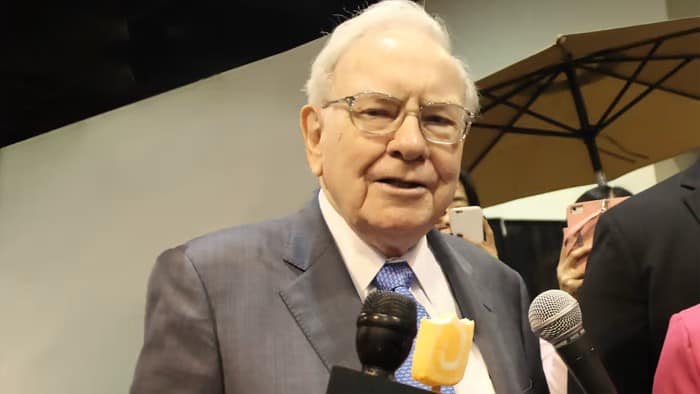
    A head shot of legendary investor Warren Buffett speaking into a microphone at an event.

    Over multiple decades, Warren Buffett has achieved stunning returns for Berkshire Hathaway Inc (NYSE: BRK.B).

    This makes the Oracle of Omaha a great person to follow when it comes to your own investments.

    Particularly given that Buffett doesn’t have any complex trading strategies or try to time the market. This means that even a beginner investor could try to replicate his investment style in an effort to retire rich.

    Retiring rich the Warren Buffett way

    Warren Buffett is known to take a very patient approach to investing. A famous quote of his encapsulates this. He said:

    Someone’s sitting in the shade today because someone planted a tree a long time ago.

    Let’s imagine that you were to invest $5,000 into ASX shares today. This is your seed.

    Well, thanks to the power of compounding, if you were to continue investing $5,000 each year for a total of 30 years and averaged a total return of 10% per annum, you would grow your investment portfolio to approximately $1 million. This is your tree. A very large tree that is providing you ample shade in retirement.

    But which ASX shares should you buy? Let’s take a look at what Warren Buffett looks for when he makes his investments.

    Buying ASX shares

    It can be tempting to try and find ASX shares that are trading at dirt cheap prices.

    However, chances are that anything you find at these levels will not be among the best companies out there. After all, the truly great companies rarely trade at such a discount because smart investors realise that snapping them up at fair prices is sufficient.

    Buffett spoke about this when he said:

    It’s far better to buy a wonderful company at a fair price than a fair company at a wonderful price.

    What makes a wonderful company? Well, Warren Buffett is known to have a penchant for companies with sustainable competitive advantages or wide moats.

    And given his track record of doubling the market return for over 50 years, it is hard to argue against this strategy.

    ASX shares that could tick these boxes for Buffett include hearing solutions company Cochlear Limited (ASX: COH), biotech giant CSL Ltd (ASX: CSL), and investment bank Macquarie Group Ltd (ASX: MQG). They could be worth further investigation.

    But overall, the secret to retiring rich isn’t so secret. It is simply investing in high quality companies at fair prices and letting compounding work its magic over many years.

    The post How you could retire rich by investing like Warren Buffett appeared first on The Motley Fool Australia.

    Should you invest $1,000 in Cochlear Limited right now?

    Before you buy Cochlear Limited shares, consider this:

    Motley Fool investing expert Scott Phillips just revealed what he believes are the 5 best stocks for investors to buy right now… and Cochlear Limited wasn’t one of them.

    The online investing service he’s run for over a decade, Motley Fool Share Advisor, has provided thousands of paying members with stock picks that have doubled, tripled or even more.*

    And right now, Scott thinks there are 5 stocks that may be better buys…

    See The 5 Stocks
    *Returns as of 5 May 2024

    More reading

    Motley Fool contributor James Mickleboro has positions in CSL. The Motley Fool Australia’s parent company Motley Fool Holdings Inc. has positions in and has recommended Berkshire Hathaway, CSL, Cochlear, and Macquarie Group. The Motley Fool Australia has positions in and has recommended Macquarie Group. The Motley Fool Australia has recommended Berkshire Hathaway, CSL, and Cochlear. The Motley Fool has a disclosure policy. This article contains general investment advice only (under AFSL 400691). Authorised by Scott Phillips.

  • Buy and hold these ASX ETFs for 10 years

    ETF with different images around it on top of a tablet.

    I think that buy and hold investing is one of the best ways to grow your wealth.

    This is because the longer you are able to leave your money in the market, the longer it has to compound.

    Compounding is what happens when you earn interest on top of interest or returns on top of returns.

    It explains why a 10% annual return turns $10,000 into $11,000 after one year and then almost $70,000 in 20 years.

    The only problem is that not everybody is confident enough to pick stocks to invest in for the long term. But don’t worry because exchange-traded funds (ETFs) are here to make life easy for investors.

    They remove the need to pick individual stocks and allow investors to buy large groups of them with a single click of a button.

    But which ASX ETFs could be good buy and hold options for investors? Let’s take a quick look at three:

    BetaShares NASDAQ 100 ETF (ASX: NDQ)

    The BetaShares NASDAQ 100 ETF could be a great buy and hold investment option for investors.

    It provides investors with exposure to many of the best companies in the world. These are the 100 largest (non-financial) stocks on Wall Street’s famous NASDAQ index.

    This is where you will find tech giant such as Amazon, Apple, Microsoft, Nvidia, and Tesla, as well as well-known non-tech companies including coffee chain behemoth Starbucks, energy drink seller Monster Beverage, yoga retailer Lululemon, and drinks giant PepsiCo.

    Collectively, these 100 companies have very bright long term outlook. It is for this reason that it could make the ETF a great place to invest over the next decade and even beyond.

    VanEck Vectors Morningstar Wide Moat ETF (ASX: MOAT)

    The VanEck Vectors Morningstar Wide Moat ETF could be another ASX ETF to buy and hold.

    In fact, it could be the epitome of what investors should look for when making long term investments.

    That’s because this ETF aims to invest in the style of Warren Buffett, who is the unofficial king of buy and hold investing. He has smashed the market over multiple decades thanks to his focus on buying high quality companies with sustainable competitive advantages and fair valuations.

    These are the types of companies that you will find in the VanEck Vectors Morningstar Wide Moat ETF.

    Vanguard All-World ex-U.S. Shares Index ETF (ASX: VEU)

    Finally, another buy and hold option could be the Vanguard All-World ex-U.S. Shares Index ETF.

    This ASX ETF offers investors easy access to a massive ~3,500 companies listed in developed and emerging markets across the globe (but excluding the United States).

    Among the ASX ETF’s holdings you will find quality companies such as HSBC Holdings, LVMH Moet Hennessy Louis Vuitton, Samsung, and Taiwan Semiconductor.

    The post Buy and hold these ASX ETFs for 10 years appeared first on The Motley Fool Australia.

    Should you invest $1,000 in Vaneck Investments Limited – Vaneck Vectors Morningstar Wide Moat Etf right now?

    Before you buy Vaneck Investments Limited – Vaneck Vectors Morningstar Wide Moat Etf shares, consider this:

    Motley Fool investing expert Scott Phillips just revealed what he believes are the 5 best stocks for investors to buy right now… and Vaneck Investments Limited – Vaneck Vectors Morningstar Wide Moat Etf wasn’t one of them.

    The online investing service he’s run for over a decade, Motley Fool Share Advisor, has provided thousands of paying members with stock picks that have doubled, tripled or even more.*

    And right now, Scott thinks there are 5 stocks that may be better buys…

    See The 5 Stocks
    *Returns as of 5 May 2024

    More reading

    HSBC Holdings is an advertising partner of The Ascent, a Motley Fool company. John Mackey, former CEO of Whole Foods Market, an Amazon subsidiary, is a member of The Motley Fool’s board of directors. Motley Fool contributor James Mickleboro has positions in BetaShares Nasdaq 100 ETF. The Motley Fool Australia’s parent company Motley Fool Holdings Inc. has positions in and has recommended Amazon, Apple, BetaShares Nasdaq 100 ETF, Lululemon Athletica, Microsoft, Monster Beverage, Nvidia, Starbucks, Taiwan Semiconductor Manufacturing, and Tesla. The Motley Fool Australia’s parent company Motley Fool Holdings Inc. has recommended HSBC Holdings and has recommended the following options: long January 2026 $395 calls on Microsoft and short January 2026 $405 calls on Microsoft. The Motley Fool Australia has positions in and has recommended BetaShares Nasdaq 100 ETF. The Motley Fool Australia has recommended Amazon, Apple, Microsoft, Nvidia, Starbucks, and VanEck Morningstar Wide Moat ETF. The Motley Fool has a disclosure policy. This article contains general investment advice only (under AFSL 400691). Authorised by Scott Phillips.

  • Could the Xero share price leap a further 35% as profits begin to flow?

    A happy elderly couple enjoy a cuppa outdoors as the woman looks through binoculars.

    The Xero Limited (ASX: XRO) share price has climbed 7% since the release of its FY24 result, but one expert thinks the ASX tech share‘s rally has much further to go.

    Xero’s 2024 financial year report covered the 12 months ending 31 March 2024 and included several positives. Let’s recap some of the main metrics and then look at how high one leading broker thinks the Xero share price can go from here.

    FY24 earnings recap

    Xero reported a 22% jump in operating revenue to NZ$1.7 billion, which drove adjusted earnings before interest, tax, depreciation and amortisation (EBITDA) higher by 75% to NZ$526.5 million. Strong profit growth is a helpful tailwind for the Xero share price.

    The company also saw a boost in some of its profit margins, including Xero’s gross profit margin, which increased to 88.2%, up from 87.3%. The free cash flow margin lifted to 20%, up from 7.3%.

    Impressively, Xero’s financials saw an annual revenue increase of NZ$314 million, with the business adding NZ$240 million of free cash flow, NZ$198 million of operating profit and NZ$288 million of net profit after tax (NPAT).

    The extra revenue generated excellent incremental profit, which is a promising sign of how profit might grow in the coming years as the company continues to scale.

    However, Xero did note it was likely to exhaust its accumulated New Zealand tax losses during the “strategic period” of FY25 to FY27, which suggests its NPAT growth may be somewhat slower once it has utilised the NZ$193 million losses balance as of 31 March 2024.

    The company’s subscriber-related metrics remain strong. Its subscriber retention rate remained above 99%, which is exceptionally high. Total subscribers increased 11% in FY24 to 4.16 million, and the average revenue per user (ARPU) rose 14% to NZ$39.29.

    Bullish price target on the Xero share price

    Goldman Sachs has reiterated its view on Xero as a conviction buy and lifted its price target to $164.00, as covered by my colleague James Mickleboro.

    The analysts at Macquarie are also bullish about the prospects for the Xero share price. Macquarie increased its price target on the ASX tech share by 17% to $180.70, according to reporting by The Australian. That implies the Xero share price could rise by around 35% in the next year.

    Considering the long-term average return of the ASX share market is around 10%, the forecast rise for Xero shares could see the company substantially outperform the market if Macquarie proves to be right.

    Xero share price snapshot

    The Xero share price has increased around 17% since the start of 2024, as shown in the chart below. In contrast, the S&P/ASX 200 Index (ASX: XJO) is only 1.3% higher in 2024 to date.

    The post Could the Xero share price leap a further 35% as profits begin to flow? appeared first on The Motley Fool Australia.

    Should you invest $1,000 in Xero Limited right now?

    Before you buy Xero Limited shares, consider this:

    Motley Fool investing expert Scott Phillips just revealed what he believes are the 5 best stocks for investors to buy right now… and Xero Limited wasn’t one of them.

    The online investing service he’s run for over a decade, Motley Fool Share Advisor, has provided thousands of paying members with stock picks that have doubled, tripled or even more.*

    And right now, Scott thinks there are 5 stocks that may be better buys…

    See The 5 Stocks
    *Returns as of 5 May 2024

    More reading

    Motley Fool contributor Tristan Harrison has no position in any of the stocks mentioned. The Motley Fool Australia’s parent company Motley Fool Holdings Inc. has positions in and has recommended Xero. The Motley Fool Australia has positions in and has recommended Xero. The Motley Fool has a disclosure policy. This article contains general investment advice only (under AFSL 400691). Authorised by Scott Phillips.

  • Buy Rio Tinto and these excellent ASX dividend shares

    Man holding fifty Australian Dollar banknote in his hands, symbolising dividends, symbolising dividends.

    If you are trying to decide which ASX dividend shares to add to your income portfolio, then it could be worth looking at three listed below that Goldman Sachs is bullish on.

    Here’s what you need to know about these income options:

    IPH Ltd (ASX: IPH)

    The first ASX dividend share for income investors to look at is IPH. Goldman is a big fan of the intellectual property solutions company and believes it is “well-placed to deliver consistent and defensive earnings with modest overall organic growth.”

    The broker expects this to underpin fully franked dividends of 34 cents per share in FY 2024 and 37 cents per share in FY 2025. Based on the current IPH share price of $6.16, this represents yields of 5.5% and 6%, respectively.

    Goldman currently has a buy rating and $8.70 price target on IPH’s shares.

    Rio Tinto Ltd (ASX: RIO)

    Another ASX dividend share that Goldman Sachs is positive on is Rio Tinto.

    It is one of the largest miners in the world and the owner of a portfolio of operations across a number of commodities. This includes the Gudai-Darri iron ore mine and the ISAL aluminium smelter.

    Goldman Sachs like the company due to its belief that “Rio is a FCF and production growth story.”

    The broker expects this to support the payment of fully franked dividends per share of US$4.29 (A$6.49) in FY 2024 and then US$4.55 (A$6.88) in FY 2025. Based on the latest Rio Tinto share price of $132.50, this will mean yields of approximately 4.9% and 5.2%, respectively.

    Goldman has a buy rating and $138.90 price target on its shares.

    Suncorp Group Ltd (ASX: SUN)

    A third ASX dividend share that has been given the thumbs up by analysts at Goldman Sachs is Suncorp.

    It is one of Australia’s largest insurance companies, operating countless brands including AAMI, Apia, Bingle, GIO, Shannons, and Vero.

    In addition, the company has Suncorp Bank. However, these banking operations are in the process of being sold to big four bank ANZ Group Holdings Ltd (ASX: ANZ) for $4.9 billion. Once complete, Suncorp will be a pure-play insurance provider. It may also return some of the proceeds to shareholders via a special dividend or share buyback.

    For now, though, Goldman expects Suncorp to pay fully franked dividends per share of 78 cents in FY 2024 and 83 cents in FY 2025. Based on the current Suncorp share price of $16.00, this will mean dividend yields of 4.9% and 5.2%, respectively.

    The broker has a buy rating and $17.54 price target on Suncorp’s shares.

    The post Buy Rio Tinto and these excellent ASX dividend shares appeared first on The Motley Fool Australia.

    Should you invest $1,000 in Iph right now?

    Before you buy Iph shares, consider this:

    Motley Fool investing expert Scott Phillips just revealed what he believes are the 5 best stocks for investors to buy right now… and Iph wasn’t one of them.

    The online investing service he’s run for over a decade, Motley Fool Share Advisor, has provided thousands of paying members with stock picks that have doubled, tripled or even more.*

    And right now, Scott thinks there are 5 stocks that may be better buys…

    See The 5 Stocks
    *Returns as of 5 May 2024

    More reading

    Motley Fool contributor James Mickleboro has no position in any of the stocks mentioned. The Motley Fool Australia’s parent company Motley Fool Holdings Inc. has positions in and has recommended Goldman Sachs Group. The Motley Fool Australia has recommended IPH. The Motley Fool has a disclosure policy. This article contains general investment advice only (under AFSL 400691). Authorised by Scott Phillips.

  • What are brokers saying about BHP shares following the miner’s quarterly results?

    a man in a high visibility vest and hard hat holds a thumbs up at a mine site with heavy equipment in the background.

    BHP Group Ltd (ASX: BHP) shares have garnered significant attention following the miner’s recent quarterly results.

    With a share price of $44.75 in late Friday trading, investors are no doubt keen to know if BHP shares present a good buying opportunity. Let’s dive into what the brokers are saying about the mining giant.

    Are BHP shares good value?

    According to broker Goldman Sachs, BHP shares are currently trading at an attractive level. The investment bank has a buy rating with a $49/share price target on the company over the next 12 months, a potential upside of 9.5%. For a $10,000 investment, this could mean growth to around $10,950 if the forecast proves accurate.

    Then, there’s the miner’s dividend potential.

    BHP is renowned for its generous dividends. With a trailing dividend yield currently at 5.08%, it remains a strong choice for income-focused investors.

    According to my colleague James last month, consensus estimates are for BHP to pay fully franked dividends of $2.30 per share in FY 2024. This translates to a dividend yield of around 5.1%, adding $510 in dividends to a $10,000 investment over the next 12 months.

    What are analysts saying?

    Goldman Sachs notes that BHP is trading at approximately 6x its next 12-month projected EBITDA, slightly above the 5.5x multiple of rival mining giant Rio Tinto Ltd (ASX: RIO).

    In my opinion, this premium is supported by BHP’s strong operating margins and presence, particularly in the Pilbara iron ore region. According to the OECD, the Pilbara region contributed 3.4% of Australia’s gross domestic product (GDP) in 2021.

    BHP also announced last year its plans to invest $4 billion in the Pilbara region to develop c.550MW of wind, solar and battery storage to reduce operating costs.

    Goldman also justified the premium by highlighting BHP’s potential for growing copper production in Chile and South Australia.

    Despite some concerns about limited upside following recent gains, brokers still see value in BHP shares. In April, Morgans placed an add rating with a $48.30 price target, implying a potential upside of 7.9%.

    Similarly, Citi rates BHP as a buy with a $48.00 price target, suggesting a total return of more than 10% when including dividends.

    Goldman Sachs maintains its buy rating with a $49.00 price target, as mentioned earlier.

    Passive income from BHP shares

    BHP shares are a popular choice for passive income investors. Let’s run the numbers. Assuming you purchase 100 shares at $44.75, you would invest $4,475 of your hard-earned capital.

    Goldman Sachs forecasts fully franked dividends of US$1.45 (A$2.20) per share for FY 2024, resulting in A$220 in passive income. For FY 2025, the expected dividends of US$1.26 (A$1.97) per share would yield A$197. Over the next few years, dividends are projected to slightly decrease but still provide solid returns, as per Goldman’s estimates:

    • FY 2026: US$1.22 (A$1.85) per share, yielding A$185
    • FY 2027: US$1.12 (A$1.70) per share, yielding A$170
    • FY 2028: US$1.07 (A$1.62) per share, yielding A$162

    Note: All AUD figures are quoted at the exchange rate of $1 AUD = $0.66 USD at the time of writing.

    Foolish takeaway

    BHP’s recent quarterly results have prompted positive feedback from brokers, highlighting its attractive valuation, strong dividend yield, and growth potential in copper production.

    With a current share price of $44.75 and a trailing dividend yield of 5.08%, BHP shares may be an opportunity for both growth and passive income investors. The mining giant certainly appears to have the backing of our top brokers.

    The post What are brokers saying about BHP shares following the miner’s quarterly results? appeared first on The Motley Fool Australia.

    Should you invest $1,000 in Bhp Group right now?

    Before you buy Bhp Group shares, consider this:

    Motley Fool investing expert Scott Phillips just revealed what he believes are the 5 best stocks for investors to buy right now… and Bhp Group wasn’t one of them.

    The online investing service he’s run for over a decade, Motley Fool Share Advisor, has provided thousands of paying members with stock picks that have doubled, tripled or even more.*

    And right now, Scott thinks there are 5 stocks that may be better buys…

    See The 5 Stocks
    *Returns as of 5 May 2024

    More reading

    Motley Fool contributor Zach Bristow has no position in any of the stocks mentioned. The Motley Fool Australia’s parent company Motley Fool Holdings Inc. has no position in any of the stocks mentioned. The Motley Fool Australia has no position in any of the stocks mentioned. The Motley Fool has a disclosure policy. This article contains general investment advice only (under AFSL 400691). Authorised by Scott Phillips.

  • 3 easy ways to boost the returns of your ASX shares

    a man with a wide, eager smile on his face holds up three fingers.

    It goes without saying that anyone who invests in ASX shares wants to maximise the returns on their investment. After all, the only real reason to buy ASX shares in the first place is to build wealth. And achieving the highest rate of return possible is the best way to ensure you are effectively increasing your wealth with the share market.

    But of course, doing this is far easier said than done.

    Luckily, today we’ll be discussing three simple ways any ASX investor can boost their share market returns. These are brought to us by exchange-traded fund (ETF) provider BetaShares, which just released a report on this very subject.

    Three easy ways to juice the returns of your ASX shares

    Pay the lowest management fees possible

    Passively investing in ASX shares using index funds or ETFs is an investment strategy that has exploded in popularity over the past decade or two. Many investors love the instant diversification and hands-off approach this strategy allows.

    But passive investors who don’t ensure they are paying the lowest management fees possible for their ASX shares can really hobble the compounding process and handicap future returns. Betashares ran a scenario comparing the impacts of investing in a high-cost ETF compared to a low-cost fund.

    The provider found that someone who invests $1,000 a month into a fund returning 6% per annum but charging 1% in annual management fees would end up with 1,526,020 after 40 years. But let’s assume that investor opted for a fund that also returns 6% every year but charges just 0.04% in fees instead.

    If so, they would instead enjoy a final balance of $1,970,010 after those 40 years. That’s a difference of $443,900. Put another way, that difference in management fees over those four decades amounts to a performance gap of 29%.

    So make sure you are paying the lowest fees possible if you opt for a passive ASX shares investing strategy.

    Minimise brokerage costs on your ASX shares

    This is another simple fix that can save an ASX investor a few pretty pennies over time.

    Brokerage costs have been falling on the ASX for years now. However, most investors can still expect to pay a brokerage fee every time they buy or sell ASX shares. These dead-wood costs can really add up after a while if one does not work to keep them in check.

    Remember, the more frequently one invests, the more one will pay in brokerage fees. Someone who invests $500 every fortnight will probably pay double the brokerage fees of someone ploughing in $1,000 per month.

    Free brokerage is still rare on the ASX and may not be as good as it seems. Saying that, Betashares found that someone paying $15 in brokerage every month would be $29,550 worse off after 40 years than an investor who never forks out for transaction fees.

    Be mindful of your cash

    Holding a certain proportion of one’s overall wealth in liquid cash is a good idea. We here at the Motley Fool argue that everyone should keep an emergency fund of cash ready for a rainy day. For any unexpected costs, in other words. The last thing anyone who doesn’t have spare cash ready to go needs is an unexpectedly large cost that requires unnecessary borrowing or untimely selling of shares.

    However, keeping too much of one’s wealth in cash can be harmful to one’s long-term wealth. This opportunity cost against ASX shares has reduced significantly with the current high interest rate environment. Even so, many Australians still don’t keep their cash in accounts that pay the highest interest rates.

    Betashares found that there is a monumental cost of keeping more cash around for longer. It found that someone who invests $1,000 a month into that 6%-retuning index fund would be $131,433 better off after 40 years than someone who simply saves up their cash all year and invests $12,000 in an annual lump sum.

    That does assume our investor earns zero interest on that cash while it’s sitting in the bank. Even so, this is a good exercise to show off the benefits of investing in ASX shares as much as you can, as soon as you can.

    The post 3 easy ways to boost the returns of your ASX shares appeared first on The Motley Fool Australia.

    Wondering where you should invest $1,000 right now?

    When investing expert Scott Phillips has a stock tip, it can pay to listen. After all, the flagship Motley Fool Share Advisor newsletter he has run for over ten years has provided thousands of paying members with stock picks that have doubled, tripled or even more.*

    Scott just revealed what he believes could be the ‘five best ASX stocks’ for investors to buy right now. We believe these stocks are trading at attractive prices and Scott thinks they could be great buys right now…

    See The 5 Stocks
    *Returns as of 5 May 2024

    More reading

    Motley Fool contributor Sebastian Bowen has no position in any of the stocks mentioned. The Motley Fool Australia’s parent company Motley Fool Holdings Inc. has no position in any of the stocks mentioned. The Motley Fool Australia has no position in any of the stocks mentioned. The Motley Fool has a disclosure policy. This article contains general investment advice only (under AFSL 400691). Authorised by Scott Phillips.

  • What’s the average Australian superannuation balance at age 30 in 2024?

    A couple sitting in their living room and checking their finances.

    It’s probably fair to say that Australians aged around 30 years old are probably some of the country’s most uninformed groups when it comes to superannuation. With retirement still decades away, many 30-somethings don’t find super all that interesting, at least compared to other pursuits that are normal at this kind of age, such as establishing a successful career or starting a family.

    But as anyone who understands the power of compounding knows, 30 is a great age to start taking your superannuation seriously. After all, those who are in their 30s today might not have too much else to rely upon if they wish to enjoy a long and comfortable retirement free of financial worries.

    Those in their 30s are also some of the first Australians who would have benefitted from high compulsory superannuation payments for the entirety of their working lives.

    Over the past few months, we’ve looked at the average Australian superannuation balances of those Australians close to the retirement age, as well as those who still have a decade or two left before they stop working. We’ve even looked at what kind of money those who managed their own super with a self-managed super fund (SMSF) have.

    But today, let’s get inside the average super fund of someone aged between 30 and 34 and see what we find.

    What’s the average Australian superannuation balance at age 30?

    We’ll start by looking at data from the Australian Taxation Office (ATO)’s Taxation Statistics report, which covers the 2021 financial year.

    This report reveals that over the 2021 financial year, the average super fund of someone aged 30-34 contained $51,400. The median balance, which is less skewed by outliers, was $38,681.

    For men, the average balance was $56,344, while the median came in at $41,849.

    For women, we got an average balance of $46,289 and a median of $35,716.

    These numbers should generate at least some consternation amongst Australians in their 30s right now. As reported by the ABC this year, it is estimated that someone aged 30 today should have at least $59,000 in superannuation if they wish to be on track for a ‘comfortable’ retirement by the time they hit 67.

    The Association of Super Funds Australia (ASFA) currently defines a comfortable retirement as one funded by at least $69990,000 in super if one is in a couple, or $595,000 for singles.

    This also assumes those retiring own their own home, rely on a part pension and withdraw their super as a lump sum.

    The ‘comfortable’ retirement they will then enjoy includes private health insurance, provisions for buying household goods, a quality car, occasional international and domestic travel, as well as good mobile and home internet connections.

    Despite these assumptions, it appears that those around 30 today have some ground to make up with their super funds if they wish to enjoy a comfortable retirement.

    The post What’s the average Australian superannuation balance at age 30 in 2024? appeared first on The Motley Fool Australia.

    Wondering where you should invest $1,000 right now?

    When investing expert Scott Phillips has a stock tip, it can pay to listen. After all, the flagship Motley Fool Share Advisor newsletter he has run for over ten years has provided thousands of paying members with stock picks that have doubled, tripled or even more.*

    Scott just revealed what he believes could be the ‘five best ASX stocks’ for investors to buy right now. We believe these stocks are trading at attractive prices and Scott thinks they could be great buys right now…

    See The 5 Stocks
    *Returns as of 5 May 2024

    More reading

    Motley Fool contributor Sebastian Bowen has no position in any of the stocks mentioned. The Motley Fool Australia’s parent company Motley Fool Holdings Inc. has no position in any of the stocks mentioned. The Motley Fool Australia has no position in any of the stocks mentioned. The Motley Fool has a disclosure policy. This article contains general investment advice only (under AFSL 400691). Authorised by Scott Phillips.