President Joe Biden and former President Donald Trump.
AP Photo/Alex Brandon, File; AP Photo/Mike Stewart, File
Virginia is a foundational piece of President Joe Biden's road map for winning a second term.
However, recent polling in the state shows Biden and Trump tied or nearly tied among voters.
Republicans now believe Trump has a fighting chance in the state.
In 2020, it was a foregone conclusion that Joe Biden would win Virginia in that year's presidential contest.
Four years earlier, Donald Trump lost the state to former Secretary of State Hillary Clinton, even as he captured the White House. Trump never built firm political footing in Virginia, and his unpopularity there fueled major Republican losses in state legislative races in 2017 and 2019 — especially in suburban swing districts.
Biden's considerable standing among Black voters, independents, and voters aged 18 to 29 buoyed the onetime vice president to a huge 10-point victory over Trump in Virginia in 2020.
But as the 2024 contest enters its critical summer stretch, recent polling shows Biden and Trump are now deadlocked in Virginia, a development that has major implications for both candidates.
Will Biden have to spend time campaigning in a state that many he already had in the bag? Is Trump getting a third look from voters who previously rejected him twice?
Here's a look at the state of the race in Virginia, where Biden holds some significant advantages ahead of November:
Why is Biden lagging in Virginia?
The latest Fox News survey of registered Virginia voters showed Biden and Trump tied with 48% support, while Biden held a one-point lead (42% to 41%) when the race included third-party candidates. A Roanoke College poll taken last month showed Biden and Trump tied at 42% support among likely voters, with 8% of respondents indicating that they would back independent candidate Robert F. Kennedy Jr.
These numbers represent a softening on Biden's part, as he won 54% of the state's votes in 2020, compared to Trump's 44%.
In the Fox News poll, Biden had a 42% favorability rating and a 43% job approval rating, which align with many of his national polling figures. While Virginia has largely trended Democratic in recent years, Biden's numbers are a reminder that it is not a reliably blue state, but one with a blue tinge. (Republican Gov. Glenn Youngkin's election in 2021 reflects that.)
Biden speaks at a January 2024 campaign event in Manassas, Va.
AP Photo/Susan Walsh
While Virginia voters give Biden high marks on issues like climate change, abortion rights, and election integrity, it is Trump who comes out on top on issues like the economy, the Israel-Hamas war, and immigration.
Since the latter three issues routinely rank as some of voters' biggest concerns, this has allowed Trump to poll competitively with Biden in Virginia.
The Fox News poll also showed Trump winning an unusually high 25% of Black voters, a figure that if realized would represent a modern record for a GOP presidential nominee in the state. And the survey showed no polling gap between voters aged 18 to 29 and those aged 65 years and older, with the candidates tied at 48% among both age groups.
What boosts Biden's chances in the state?
In recent years, Democrats have solidified their support in Virginia's most populous regions — from Northern Virginia to the Richmond metropolitan area and down to Hampton Roads. These areas contain scores of suburban communities where moderates from both parties, as well as independents, generally decide statewide elections.
Many of these voters tend to lean toward Biden, given their most recent voting trends.
Trump speaks at a March 2024 rally in Richmond.
AP Photo/Steve Helber
In the Fox News poll, Biden led Trump among independents (45% to 43%) despite his diminished standing in the state. And Biden still retained robust majorities from college-educated voters (56%) and suburban women (58%) — blocs crucial for the president and down-ballot Democrats.
And in Northern Virginia — an electoral gold mine for Democrats — Trump remains unpopular. If turnout is high in the region, Trump must post massive numbers in rural Virginia and downstate exurbs to win.
But surveys closer to Labor Day will likely offer a clearer sense of the true nature of Virginia's competitiveness, as many voters remain tuned out of the election — while some who are currently leaning toward third-party candidates may return to Biden's fold.
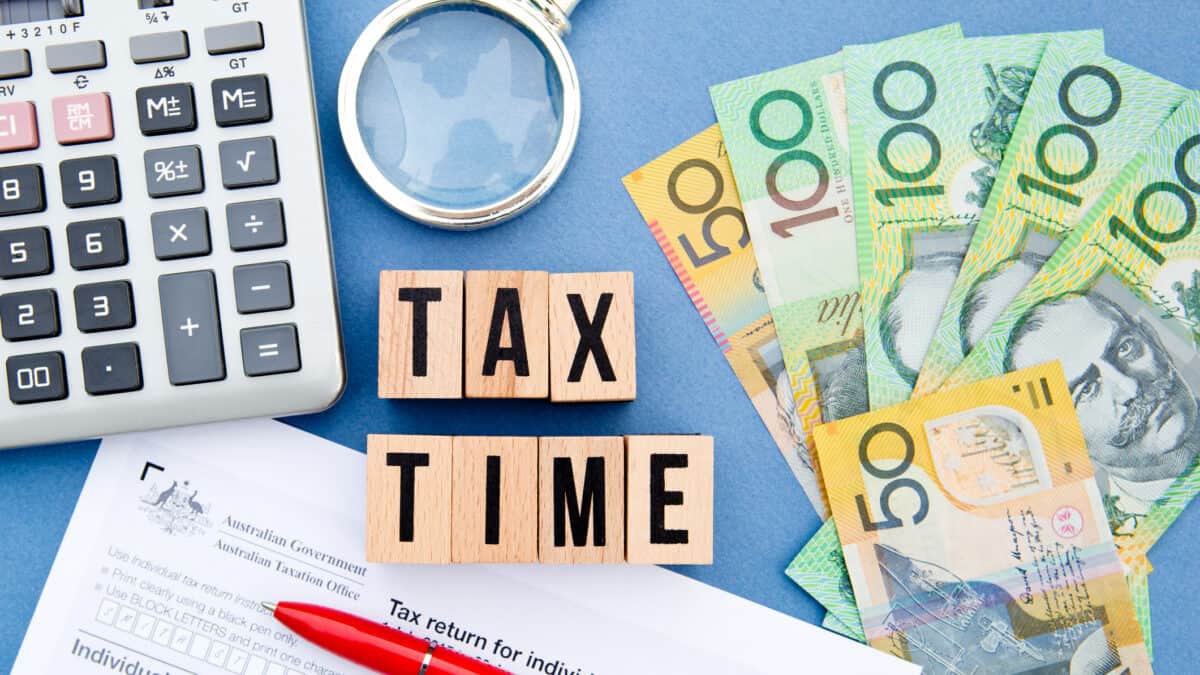
Given we’re now well into the month of June, it’s inevitable that many Australians’ attentions will be turning to their tax returns. With individuals’ income tax returns due from 1 July, many of us will be looking forward to that annual windfall that often comes alongside a lodged tax return. However, many investors who own ASX shares might not be getting as much cash back as they might be entitled to.
If you own and invest in ASX shares, it immediately opens up some tax deduction doors that are not ordinarily open to your average Aussie. Understanding these doors and how you can use them to save a few extra dollars is vitally important to building your wealth using ASX shares.
So today, let’s discuss three investing deductions that you might not even be aware of today. A caveat, though. The deductions we’ll be discussing may not apply to you or your affairs. So make sure to double-check your claims with a licensed tax professional before you claim them from the Australian Taxation Office (ATO). Otherwise, you might get a nasty surprise.
Three tax deductions to claim if you own ASX shares in FY2024
Expenses arising from your investments
The general rule when it comes to tax deductions from investments like ASX shares is that any money you spend directly in the service of your portfolio is a deductible expense. If you use a computer or mobile phone to manage your portfolio, those expenses might be at least partially deductible.
You can also usually claim financial investment advice fees as a tax deduction if they relate to your ASX shares portfolio. Additionally, if you utilise a margin loan or other gearing strategy, any interest costs you might incur are deductible if the loan is for investment purposes.
Educational expenses
Many investors like to keep abreast of the current events in the financial world to help them invest appropriately and prudently. What you might not know is that any expenses you pay to further your investing portfolio are usually deductible.
Let’s say you choose to buy financial newspapers, investment magazines or online journals to pad out your financial knowledge. Chances are these will be at least partially tax deductible too. But only if you act on them and actually own ASX shares.
The tax perks of owning ASX shares
Investing in ASX shares isn’t a free lunch when it comes to paying taxes. Income that you receive in the form of dividends or distributions from ASX shares or exchange-traded funds (ETFs) is regarded as ordinary income by the ATO. These are taxed as income accordingly.
Likewise, if you buy a share and sell it for a profit down the track, those profits are counted as capital gains and are also taxed as income. However, if you buy an ASX share and hold it for longer than one year before selling it, you might be entitled to a 50% discount on those capital gains when declaring them for income. This can make the income that one earns from shares more attractive from a tax perspective.
Additionally, you probably know that most ASX dividend shares also pay out franking credits with their dividends. As we discussed earlier this week, franking credits can considerably boost the returns you receive from investing in ASX shares.
These credits, a reflection of the corporate tax already paid by a company, can be used as a tax deduction against all other income. So make sure that your tax return reflects the level of franking you are entitled to receive this year.
Wondering where you should invest $1,000 right now?
When investing expert Scott Phillips has a stock tip, it can pay to listen. After all, the flagship Motley Fool Share Advisor newsletter he has run for over ten years has provided thousands of paying members with stock picks that have doubled, tripled or even more.*
Scott just revealed what he believes could be the ‘five best ASX stocks’ for investors to buy right now. We believe these stocks are trading at attractive prices and Scott thinks they could be great buys right now…
Motley Fool contributor Sebastian Bowen has no position in any of the stocks mentioned. The Motley Fool Australia’s parent company Motley Fool Holdings Inc. has no position in any of the stocks mentioned. The Motley Fool Australia has no position in any of the stocks mentioned. The Motley Fool has a disclosure policy. This article contains general investment advice only (under AFSL 400691). Authorised by Scott Phillips.
One daughter from his first marriage, Katerina Tikhonova, has been entrusted with a key job overseeing import substitutions as Russia reels under sanctions.
Just weeks before the anniversary of Russia's invasion of Ukraine, Putin's rumored then-girlfriend Alina Kabaeva praised the state's war correspondents, saying their work is as effective as "a Kalashnikov."
Here is what we know about the lives of Putin's secret kids and partners.
Putin had two daughters with his first wife Lyudmila Shkrebneva, a former flight attendant
When the family moved to Moscow in 1996, the girls attended a German-language school. The children were reportedly removed from school when Putin became acting president, and teachers educated them at home.
Then-acting President Vladimir Putin and his wife Lyudmila applaud during a concert after an award ceremony in Gudermes on January 1, 2000.
"Not all fathers are as loving with their children as he is," Lyudmila said in an undated quote on Putin's government website. "And he has always spoiled them, while I was the one who had to discipline them."
But as Putin gained political power, his children saw him less and less, according to one of his early biographers.
Then-Acting Russian Prime Minister Vladimir Putin speaks to the media after a meeting in the Duma, Russian parliament's lower house, in Moscow, 12 August 1999.
STR/AP POOL/AFP via Getty Images
His first official biographer, Natalya Gevorkyan, interviewed him and his family in 1999.
The family was soon isolated and surrounded by security after Putin became prime minister for the first time, she said.
His daughters told her that they admired their father and were proud of him, but it appeared they didn't get to see him much, she said.
Putin's marriage may also have been loveless. Lyudmila "was not a happy woman" and Putin wouldn't "hold" her, his biographer said.
Then-Prime Minister Vladimir Putin and his wife Lyudmila pray during an Orthodox Easter service in Moscow in 2011 in Moscow.
Sasha Mordovets/Getty Images
"I understood that [Lyudmila] was not a happy woman. She was not," the biographer Gevorkyan said, speaking of her interviews conducted in 1999.
Gevorkyan said she had the impression Putin did not love her. She recalled Lyudmila as saying: "There are women who are admired by men, I think I am not that kind of woman. He will not hold me in his hands."
Gevorkyan said Lyudmila's tone was "more with respect" to her husband.
"I had the feeling that she really loved him," she added. "And I had a feeling that she was not that much loved back. I didn't have the feeling that it was a successful marriage for her."
Putin and Lyudmila announced their divorce in 2013, although they were likely living separate lives long before that.
Putin and Lyudmila (R) walking through the State Kremlin Palace in Moscow, on June 6, 2013, the day they announced their divorce.
Mikhail Klimentyev/AFP via Getty Images
Lyudmila had become "almost invisible" in Putin's public life, according to professor of international affairs at New York's New School, Nina Khrushcheva.
Putin was rumored to be seeing Olympic gymnast Alina Kabaeva, while Luydmila was believed to have begun dating businessman and triathlete Arthur Ocheretny by around 2010.
Meanwhile, the daughters were growing up. Maria studied biology before medical school, while Katerina majored in Asian Studies in college. Both girls attended university under false identities.
As adults: Maria Vorontsova, left, in 2022, and Katerina Tikhonova, right, in 2021.
Evgenia Novozhenina/Reuters / The World Russian People's Council / Insider
There are no official current photos of the women. For Katerina, we found the slightly varying first names of "Katerina", "Katya", and "Yekaterina," and the last names "Putina," "Tikhonova," and "Shamalov."
Katerina Tikhonova (L), daughter of Russian President Vladimir Putin, dances with Ivan Klimov during the World Cup Rock'n'Roll Acrobatic Competition in Krakow, Poland, on April 12, 2014.
Maria and Faassen reportedly have a child — Putin told filmmaker Oliver Stone in 2017 that he was a grandfather. When Stone asked if he played with his grandchild, Putin replied: "Very seldom, unfortunately."
"The Putin Interviews" was a four-part series that premiered on Showtime in May 2017.
Katerina is an accomplished acrobatic dancer, tech executive, and has a post overseeing Russian import substitutions.
Katerina Tikhonova, daughter of Vladimir Putin, dancing.
Jakub Dabrowski/Reuters
She runs Innopraktika, one of the university's initiatives to foster young scientists, as well as being deputy director of a mathematical institute there.
Katerina married Russian billionaire Kirill Shamalov in 2013, though they are reportedly no longer together. Their wedding was a lavish affair at the Igora resort in St. Petersburg.
Kirill Shamalov, the former husband of Putin's daughter Katerina
Reuters/Kommersant Photo/Dmitry Dukhanin
The wedding was highly secure and included a laser show, an ice-skating display, and a mock Russian village, according to Reuters.
A 2023 investigation found that the couple, though married by a priest in an elaborate ceremony, never formalized their vows at the registry office, as required by the Russian Orthodox Church. The report suggested this was connected to the structure of the family's vast and secretive property holdings.
By 2018, the pair had split, according to Bloomberg.
Shamalov prospered during the marriage, racking up lucrative business interests. By the time he and Katerina split in 2018, the divorce papers revealed they were worth $2 billion.
Russian President Putin visits "Voronezhsintezkauchuk" plant, part of the SIBUR company, in Voronezh. Shamalov is pictured at the right of the group.
Mikhail Klimentyev/Sputnik/Kremlin via Reuters
As early as 2016, the couple were hardly corresponding, and Shamalov had seen lucrative shares in energy company Sibur returned to Putin's friends, a 2023 investigation reported.
Katerina secretly flew to Munich more than 50 times to see Zelensky between 2017 and 2019, with their daughter in tow.
Igor Zelensky on stage in 2018 in Munich, Germany.
Gisela Schober/Getty Images
The relationship was revealed by a 2022 investigation that examined Katerina's flight records, showing that she traveled with members of Putin's presidential secret service.
Nagorny — who formerly showed an interest in opposition politics — has been flying around the world with Vorontsova since at least 2016, according to a joint investigation by Russian outlets Meduza and Current Time.
They had a child together, and Nagorny became the manager of major gas company Novatek, the outlets reported.
In 2020, per the outlets, Nagorny bought a luxury Moscow apartment in the building pictured above.
There are rumors that Putin has a third daughter with ex-girlfriend and former Russian rhythmic gymnast Alina Kabaeva.
Putin greets rhythmic gymnast Alina Kabaeva during a meeting with candidates to the Russian Olympic team for the 2004 Summer Olympics, at the presidential residence in Novo-Ogaryovo, outside Moscow, on March 10, 2004.
REUTERS/Pool AS
It's unclear exactly when Putin began dating the famed gymnast, but rumors were swirling long before he and Lyudmila announced their divorce.
In a 2008 news conference in Italy, a reporter asked him about the chatter, which Putin dismissed, adding: "I always disliked people who go around with their erotic fantasies, sticking their snot-ridden noses into another person's life."
Neither the child nor the relationship with Kabaeva have been confirmed by Russia.
Putin smiles next to Russian gymnast Alina Kabaeva during a meeting with the Russian Olympic team at the Kremlin in Moscow, Russia, on November 4, 2004.
REUTERS/ITAR-TASS/PRESIDENTIAL PRESS SERVICE
After retiring from gymnastics, Kabaeva became an MP for the pro-Kremlin United Russia party until 2014.
She went on to head up the country's largest media conglomerate, the National Media Group.
Reports have also surfaced that a former cleaning lady, Svetlana Krivonogikh, had an affair with Putin and suddenly moved into one of St. Petersburg's wealthiest neighborhoods.
An aerial view of St. Petersburg's prestigious Birch Alley, where one of Putin's rumored mistresses was reported to live.
Google Earth
Independent investigations have reported that the pair had a close friendship between the late 1990s and the end of the 2010s, which resulted in a daughter.
In that time, Krivonogikh went from a former cleaning lady to the billionaire owner of one of Putin's favorite ski resorts.
Krivonogikh's daughter, who was born in 2003, is named Elizaveta Vladimirovna Rozova and goes by Luisa. Identity papers do not indicate a father, but her middle name means "daughter of Vladimir." She has not confirmed any relationship.
A Google Earth image of St Petersburg's elite Birch Alley complex.
Google Earth
The Proekt investigation remarked on Elizaveta's "phenomenal resemblance" to Putin and many connections between the president and her mother, but no relationship has been proven.
In a 2021 magazine interview, Elizaveta's face was not depicted. When asked whether she looked like Putin, she agreed, but said "there are a lot of people similar to Vladimir Vladimirovich," using an alternative, respectful name for Putin.
Despite this, Katerina made her debut on Russian state TV as a biotechnology expert in December 2018.
Katerina Tikhonova (R) on Rossiya 1 on December 7, 2018.
Rossiya 1
Her appearance did not include comments on her being related to Putin. The link was briefly made public in the course of a dance competition, but later retracted.
In June 2021, Katerina addressed a conference that's considered Russia's equivalent of Davos — but nobody called her Putin's daughter, apparently out of fear of reprisal from the Kremlin.
Katerina Tikhonova at the St. Petersburg International Economic Forum (SPIEF) on June 4, 2021.
In late 2020, Putin announced Russia had finished its COVID-19 vaccine, although it had yet to complete clinical assessments. Putin said he gave the shot to one of his daughters, but wouldn't specify which one.
Russian President Vladimir Putin chairs a meeting with members of the government via video link at the Novo-Ogaryovo state residence outside Moscow, Russia, on August 11, 2020.
In February 2022, Russia invaded Ukraine, prompting condemnation from around the world. No statement came from Katerina or Maria, but scrutiny of their families ramped up.
An image showing an activist flying a Ukrainian flag from the balcony of a villa linked to Russian President Vladimir Putin in Biarritz, France.
Russia Today
In March 2022, an activist broke into a property owned by Katerina's ex-husband Kirill Shamalov in Biarritz, France, saying he was going to use it to host Ukrainian refugees.
More than a year later, as the war dragged on, Dutch authorities seized land belonging to Maria's ex-husband Jorrit Faassen, who was under suspicion of evading sanctions.
In April 2022, the US sanctioned Maria and Katerina, saying that they had "enriched themselves at the expense of the Russian people."
Getty/Reuters
A White House statement said: "This action cuts them off from the US financial system and freezes any assets they hold in the United States."
The UK quickly followed suit, saying it was targeting Maria and Katerina's "lavish lifestyles."
The US announcement also contained more details about their work, saying that it has close ties to the Kremlin.
The main building of the Moscow State University. As of 2021, Tikhonova was deputy director of its Institute for Mathematical Research of Complex Systems
Alexander Nemenov/AFP via Getty Images
Tikhonova's work supports Russia's government and defense industry, while Vorontsova's genetics research programs are personally overseen by Putin, the White House said.
The US said it believed the women were hiding assets for Putin, which was its rationale for sanctioning them. The Kremlin suggested the move was anti-Russian.
Mikhail Svetlov/Getty Images
"We believe that many of Putin's assets are hidden with family members and that's why we're targeting them," a senior official at the Biden administration said, according to ABC News.
Dmitry Peskov, Putin's top spokesperson, said the Kremlin found the decision "difficult to understand" and framed it as part of a "rabid" Western animosity towards Russia.
In July 2022, as sanctions began to bite in Russia, Katerina was given a top post overseeing import substitutions.
Putin meeting with the head of the Russian Union of Industrialists and Entrepreneurs Alexander Shokhin in March 2022.
Sputnik/Mikhail Klimentyev/Kremlin via Reuters
Tikhonova was appointed to a position at the Russian Union of Industrialists and Entrepreneurs, known as RSPP.
Putin critics speculated that the shakeup at RSPP, a key Russian business lobby, was done to help bolster the country's lagging economy, which remains heavily dependent on foreign imports and has suffered from the bevy of international sanctions imposed due to the war in Ukraine.
State media reporting on Tikhonova's appointment didn't mention her relationship to Putin.
In the summer of 2022, the US added Kabaeva to its sanctions list, citing her "close relationship" with Putin.
Alina Kabaeva pictured in Moscow in July 2018.
Mikhail Svetlov/Getty Images
The US government had initially held off sanctioning Kabaeva on the basis that it would be too personal a provocation to Putin — a reservation that suggests the White House, at least, is in no doubt about their relationship.
But Kabaeva was finally sanctioned in August over her ties to the Russian government.
In March 2023, the Innopraktika Institute, headed up by Katerina, scolded Russian youth for not being patriotic enough online.
Katerina Tikhonova on screen at the St. Petersburg International Economic Forum in 2021
Evgenia Novozhenina/Reuters
The report, which examined young people's social media activity, likened the drop in patriotism to a hybrid special military operation waged against Russia by foreign countries — using language more associated with how Putin characterizes his own invasion of Ukraine.
Both daughters appeared at Russia's economic forum in 2024.
Katerina Tikhonova attended the St. Petersburg International Economic Forum (SPIEF) virtually.
OLGA MALTSEVA/AFP via Getty Images
At the 2024 St. Petersburg International Economic Forum, Katerina appeared virtually, commenting on the "technological sovereignty" of the nation's military, CNN reported.
The following day, Maria spoke in person on a panel about biotech innovations. Programming listed her as a member of the Russian Association for the Promotion of Science, according to CNN.
TGI Fridays closed 36 restaurants in the US on January 3.
Andrew Burton/Getty Images
TGI Fridays has struggled recently, closing dozens of restaurants earlier this year.
But the company said it's seeing new success at "travel- and tourism-focused destinations."
A TGI Fridays opened at a hotel in Holywood this week and an airport location is one of its busiest.
TGI Fridays says it is leaning into the travel industry to regain its footing with American diners.
The casual dining chain announced this week that it opened a new restaurant inside the Hilton Garden Inn in Hollywood. That might not seem revelatory on the surface, but the company called the new hotel-based restaurant "core to the brand's transformation strategy."
TGI Fridays has struggled to remain relevant with its domestic consumers in recent years. The chain suffered an 18% decline in domestic systemwide sales in 2023, The Dallas Morning News reported. And it closed 36 "underperforming" restaurants earlier this year.
The company now hopes focusing on the travel industry can turn things around.
"The new restaurant opening comes as TGI Fridays continues to see dominance across travel- and tourism-focused destinations, including airports, hotels, and casinos," the press release said.
TGI Fridays referenced the Dallas Fort Worth International Airport, where it opened a newly renovated restaurant in July last year. That location is on track to become the "highest volume sales location of any US airport restaurant," the company says.
TGI Fridays.
Bruce Bennett/Getty Images
The chief development officer at TGI Fridays said the success presents a tangible opportunity for growth.
"Whether domestic or international, leisure or business, we're seeing travelers gravitate to the familiar comfort of the beloved and iconic Fridays brand while they're on the road and away from home," Chris Devlin said in the press release.
There are almost 600 TGI Fridays restaurants across the globe.
TGI Fridays has undergone several leadership changes since May 2023, when Ray Blanchette stepped down as CEO. Brandon Coleman III took over the position that August but resigned and was replaced by Weldon Spangler in November 2023.
Screengrab of a US-supplied Bradley fighting vehicle firing at a Russian personnel carrier
Ukraine's 47th Separate Mechanized Brigade
A war video appears to show a US-supplied M2 Bradley and a Russian personnel carrier fighting at close range.
The video is believed to have been taken in the Donetsk region.
The US has provided Ukraine with over 300 Bradley vehicles since Russia's invasion began.
A new war video released by Ukraine appears to show a US-supplied M2 Bradley infantry fighting vehicle shooting at a Russian armored personnel carrier at point-blank range.
The two vehicles race toward each other at high speed on a country road and launch continuous fire. At one moment, they come within a few feet of one another, narrowly avoiding collision. Soldiers are seen falling from the Russian armored car before it swerves off the road and appears to come to a stop, smoke billowing from its rear.
A caption accompanying the video reads: "The soldiers of the 47th Separate Mechanized Brigade are holding back at least three Russian combat brigades. With huge manpower reserves, the Muscovites are quickly replenishing their heavy losses and throwing them back into battle. The fighting does not stop for a moment."
The Ukrainian military website Militarnyi reports that the Russian vehicle was a BTR-82A, built with a 30mm machine gun.
Business Insider could not independently verify where or when the video was taken.
DeepState, a Telegram analytics channel that tracks battlefield events, said the video was taken on the eastern outskirts of the village of Sokil in Ukraine's Donetsk oblast, not far from Chasiv Yar.
The channel stated that, according to the brigade's spokesperson, the Russian APC "subsequently exploded on mines laid by Ukraine's Defence Forces."
This is the second video in as many weeks in which Ukraine's 47th Mechanized Bridge has demonstrated what Bradley's Bushmaster M242 25mm automatic cannon can do in close combat.
The first, published on June 2, appeared to show a Bradley firing at two Russian personnel carriers. Russian soldiers can be seen dismounting and fleeing the vehicles.
Ein Bradley der 47. Mech. Brigade attackiert zwei russische BTR-82A zwischen Solowjowe & Sokil. Beachtenswert: Jeder russ. Schützenpanzer transportiert etwa zwölf Infanteristen. Nach wenigen Minuten sind zehn Russen tot & beide Fahrzeuge ausgeschaltet. Etwa 20 Russen überleben. pic.twitter.com/RsZq01h1JW
The US State Department has provided Ukraine with "more than 300 Bradley Infantry Fighting Vehicles" since Russia began its invasion of Ukraine.
The Bradley IFV is an armored vehicle used for transporting troops and providing fire support. It is also sometimes used for reconnaissance missions.
The Bradley is quick and highly maneuverable. It is operated by a three-person crew consisting of a driver, the commander, and a gunner and can carry up to half a dozen fully equipped soldiers.
Pentagon Press Secretary Air Force Brig. Gen. Pat Ryder previously told reporters at a briefing that the Bradley is "not a tank, but it's a tank killer."
NOX founder Molly Cantillon believes generative AI is changing who can build new products.
Molly Cantillon
Former Stanford undergrad Molly Cantillon, 20, founded NOX, a personalized AI assistant.
The platform's goal is to understand its users and proactively execute tasks.
Cantillon believes generative AI has broken down the barriers to who can disrupt the industry.
This is an as-told-to conversation with Molly Cantillon, a Stanford dropout and founder of NOX, a personalized AI assistant.
In the same way people cradled iPhones in their hands for the first time17 years ago, this generation will never forget the first time they used ChatGPT — it felt like true magic.
It shattered the Silicon Valley tech barrier by bringing together people across cultures, occupations, and income levels with renewed optimism about the future. You can't go into a coffee shop without seeing it light up someone's screen.
I saw ChatGPT as a prologue to something more profound: A sophisticated personal assistant who understood me better than I understood myself.
People crave having someone they can consult before making big decisions, someone who replies on demand, coaches them from afar, and proactively completes tasks by considering important, forgotten details. It's the kind of companion Hollywood and sci-fi have always fantasized about but hadn't been possible before the generative AI revolution.
NOX, the personal AI assistant I built, was created to fill that void.
I'm building NOX to help people like me stay sane
I initially built NOX as a hardware solution in June 2023.I envisioned it as a wrist-worn recording device that would act as a second brain by capturing and recalling every detail of my daily interactions. It would store all my memorable conversations, action items, and even the small details I had noticed about a friend.
After that summer, I returned to Stanford with a box of jailbroken watches, distributed them to my friends, and waited for their feedback.
I would get texts throughout the day that their watch was overheating or had just died. As I troubleshot, I realized that the product's true value wasn't just in gathering data about its surroundings, but its ability to execute tasks proactively on behalf of the user.
With the help of OpenAI's models and tools, I pivoted NOX into a pure software solution that does exactly that. It integrates every stream of information and stimuli a person encounters, interprets them, resurfaces the most important details, and, most importantly, takes action.
So if you need an Uber to your next appointment NOX will book a trip. When you wake up in the morning, it'll give you a rundown of the meetings you have planned for the day. You can ask NOX to push one back if you have a conflict. It'll also call people on your behalf, book appointments, text your friends with updates on your life, and set goals and help you track them. The more memories and connections NOX accumulates about someone, the more it can refine its understanding of them and provide personalized insights.
We have over 500 users on the platform, including star athletes like professional Tennis player Reilly Opelka, and a waiting list of over 10,000.
It's us against the Goliaths.
I left Stanford in December to build full-time. I raised money a week after and have since landed checks from prominent angel investors and OpenAI's startup fund. I also assembled the most brilliant hackathoners worldwide by stalking sites like Github, ProductHunt, and Devpost (shoutout to our founding engineer, Aayush Pokharel). I convinced them to live with me on air mattresses in Palo Alto.
My life has been unstable throughout the process as I juggle commitments, hundreds of emails, and constant meetings. In some sense, I'm building NOX to help people like me stay sane. It reflects my attempts to balance my obsessive drive with genuine happiness — hacking until 3 a.m. and getting up for my 4-mile run at 8 a.m.
Some might say we're a group of college dropout nobodies gunning after a crown jewel: A personalized AI assistant. It's us against the Goliaths. How could we ever disrupt an industry and outpace major corporations?
But generative AI has made it easy to create something valuable fast. The rules are being rewritten at a breakneck pace, so the advantage has shifted toward the newcomers. After years of dreaming about building something big, the playing field feels level for the first time.
We're not making grand promises about the future. We're just focused on building something insanely cool and embracing imperfections.
US President Joe Biden (R) shakes hands with Ukraine's President Volodymyr Zelenskyy (L) during a bilateral meeting at the Intercontinental Hotel in Paris on June 7, 2024.
SAUL LOEB/ Getty Images
President Joe Biden apologized to Ukrainian President Zelenskyy for Congress's delay in military aid.
Conservative Republicans' resistance caused the delay in the $61 billion aid package.
Russian forces made battlefield gains while the military aid was held up.
US President Joe Biden publicly apologized to Ukrainian President Volodymyr Zelenskyy for the prolonged congressional delay in military aid while Russian forces made significant advances on the battlefield, the Associated Press reported.
The two leaders were in Paris to attend ceremonies commemorating the 80th anniversary of the D-Day landings.
"I apologize for those weeks of not knowing what's going to happen in terms of funding," Biden told Zelenskyy.
The $61 billion military aid package that the US Congress finally passed in April had been delayed for six months, largely due to resistance from conservative Republican lawmakers.
"We're still in. Completely. Thoroughly," Biden assured his Ukrainian counterpart.
Zelenskyy said, "It's very important that in this unity, the United States of America, all American people stay with Ukraine like it was during World War II."
Before the D-Day landings anniversary, French President Emmanuel Macron also announced increased military aid to Ukraine, including providing Mirage combat aircraft and training for Ukrainian troops.
"The delay in aid was an inexcusable pause"
A Ukrainian soldier prepares 155mm artillery shells in his fighting position as Ukrainian Army conduct operation to target trenches of Russian forces through the Donetsk Oblast amid Russia and Ukraine war in Donetsk Oblast, Ukraine on August 6, 2023.
Diego Herrera Carcedo/Anadolu Agency via Getty Images
"The delay in aid was, frankly, an inexcusable pause in the ability of the Ukrainians to fend off Russian advances," said Leighton.
An American volunteer fighting in Ukraine told Business Insider's Sinéad Baker that Ukrainian forces were "crushing" in the battle of Avdiivka in eastern Ukraine until a shortage of shells meant Russian artillery could outfire them roughly 20 times over.
Meanwhile, Ukraine is currently fending off a significant Russian offensive in its eastern regions, particularly around Kharkiv and Donetsk.
Russian forces are still making progress along the eastern front, and are set to take the village of Ivanivske within days, Kyiv Independent journalist Asami Terajima told Business Insider.
Ukrainian soldiers shoot at what Ukraine said Russian Lancet drones in a still image from a video released in May 2023.
Ukraine Defense Ministry/Handout via REUTERS
Russian FPV drones injured 90% of wounded soldiers near Chasiv Yar, said a Ukrainian medic.
Drone warfare dominates the fighting around the key town, a Kyiv-based journalist said.
Russia is also using glide bombs to hammer other Ukrainian positions, the Kyiv-based reporter said.
Russian attack drones have inflicted about 90% of war injuries suffered by Ukrainian soldiers around a key town in the past six months, according to a medic stationed on the eastern front.
Kyiv Independent reporter Asami Terajima told Business Insider that she spoke to a medic called Oleksii who treats soldiers at a stabilization point near the frontline near Chasiv Yar before they are transported to hospitals.
The majority of Oleksii's patients in the past six months were injured by FPV (first-person-view) drones, Terajima said.
The strategic city of Chasiv Yar has been the target of a Russian offensive since December.
Devastation in Chasiv Yar as of April 29, 2024.
Ukraine Patrol Police via AP Photo
Russian troops have steadily advanced westward from the ruins of Bakhmut and Avdiivka, seizing a dozen small villages and nearing Chasiv Yar and a key highway to the south.
Terajima said that FPV drone warfare was a major feature of the fighting in the Donetsk Oblast, particularly in the Bakhmut area.
She said that in other parts of the eastern front, Ukrainian soldiers were being overwhelmed with glide bombs.
"The soldiers in the Avdiivka area were complaining a lot about the glide bombs that are now very intensively still being used," she told BI.
Russia stepped up its use of glide bombs in October when it launched its offensive against Avdiivka.
Powerful bombs are transformed into glide weapons by adding modified fins and guidance systems. They are launched at a distance from fighter planes and are difficult to spot on radar and shoot down.
Terajima said that Ukrainian soldiers told her during the last days before the fall of Avdiivka in February, Russian forces were dropping about 60 glide bombs a day.
"Ukrainian soldiers are barely able to visit their families, and it's really demoralizing when Russian forces intensify the use of glide bombs," Terajima said. "They're really, really scary."
However, some NATO members recently lifted the restrictions on Ukraine using their advanced weapons to strike military targets inside Russia, giving Ukraine new battlefield options in combatting the glide bombs.
"These policy changes will allow Ukrainian forces to use Western-provided systems to strike Russian firing and staging areas in Russia's border areas and airspace," conflict analysts at the Institute for the Study of War wrote.
Another Ukrainian defeat could be imminent
An armored fighting vehicle with Ukrainian troops inside fires on Russian trenches in the town of Ivanivske, to the west of Bakhmut.
Ukraine’s 5th Separate Assault Brigade/Facebook
Terajima recently reported on the difficult frontline situation for Ukraine near the Donestk village of Ivanivske in mid-May.
The settlement, strategically located between Bakhmut and Chasiv Yar, is now under severe threat, she said.
Russian forces began their assault on Ivanivske in February, and by April, they controlled the main roads. Despite fierce house-to-house fighting, Ukrainian troops are gradually being pushed out.
She said that while the Ukrainian military is determined to present the ongoing battle as under control, holding Ivanivske would be difficult.
"In Ivanivske, everything is destroyed, and there's nowhere to hide," Terajima told BI. "You can't build a trench because there's the concrete underneath that prevents you from digging further."
Lieutenant Colonel Nazar Voloshyn, a spokesperson for the Khortytsia grouping in the region, denied that Ivanivske was on the verge of falling.
Terajima told BI that Ukraine is resolved to maintain a resilient image and that her coverage detailing Ukraine's losses is therefore considered "taboo" and "provocative" because it taints that image.
"Russia's forces are sustaining heavy losses, but they are still advancing at a rate that we don't like," Terajima said.
By downplaying these advances, "we're basically turning away from the reality, not allowing the public to understand what's going on," she said.
"I think that no matter what, we need to always be honest and say it out how it is. And if we have heavy losses, then I think that has to be told."
Broadcom CEO Hock Tan was the highest-earning CEO in 2023. His compensation totaled $161.8 million, Equilar said. Tan is the only CEO in the study to receive a compensation package of nine figures.
Fair Isaac Corporation CEO William Lansing, the second-highest earner listed, made $66.3 million last year. Apple's Tim Cook came in third on the list, making $63.2 million. And Netflix's Ted Sarandos checked in at fifth with almost $50 million.
The average American worker at S&P 500 companies, meanwhile, earns an average of about $80,000, the study found. Mercifully, that is a 5.2% increase from 2022.
Eye-popping CEO pay packages have become a symbol of inequality in the United States and a target of ire for organized workers. The Hollywood writer's strike last year attacked Disney CEO Bob Iger for making more than 500 times the median salary of a Disney employee. Iger's pay package totaled $27 million, according to his 2022 contract.
CEO pay has skyrocketed over the past 40 years, Business Insider previously reported. An average CEO in 1978 made about 31 times what their average worker made. In 2020, the average CEO made 346 times what their average worker made.
But in 2023, it ticked back up. Median total compensation for S&P CEOs totaled $16.3 million last year, a 12.6% increase from the previous year, Equilar says. Stock rewards comprised about 70% of their compensation, according to the report.
An aerial drone photo taken on May 1, 2024 shows China's third aircraft carrier, the Fujian, during its maiden sea trials.
Pu Haiyang/Xinhua via Getty Images
China's newest aircraft carrier is a major capability and technological jump for its naval forces.
But China still has a lot to learn before it can operate carriers like the US, experts say.
There's plenty China can learn from US experiences, but success will come down to talent and strategy.
China's newest aircraft carrier, which just completed its maiden sea trials, appears to be a substantial improvement over its two predecessors. It's a modern flattop boasting far more capability than China's earlier takes on an older Soviet design.
The Fujian clearly symbolizes China's desire to build a blue-water navy able to project power across the Indo-Pacific region, but there is still a lot of work to be done before it can field aircraft carriers the way the US Navy can on the high seas.
"China has demonstrated an ability to field the aircraft and the aircraft carrier platforms," Guy Snodgrass, a former defense official and US naval aviator, said, adding that "what has yet to be demonstrated is all the connective tissue needed to use these platforms together, during longer-term operations at sea, outside of regional support centers, and during times of conflict."
China isn't starting this process from scratch, though, and has the potential to learn from the long history of US carrier operations to accelerate timelines andmake developing that "connective tissue" easier. Still, there's a lot to learn, and some of it can only be picked up from experience.
Technological leaps
China's third aircraft carrier, the Fujian, adorns colorful decorations during a launching ceremony at Jiangnan Shipyard.
VCG/VCG via Getty Images
The Fujian is China's third carrier overall and the only warship in its new class. It is larger than its Soviet-style predecessors, the Shandong and Liaoning, and the first to lose the ski-jump style ramp for launching aircraft, instead featuring an advanced catapult launch system akin to the one used on the US Navy's new Ford-class carriers.
Bryan Clark, a former naval officer and current defense expert at the Hudson Institute, told BI that the difference there is major, as it allows China to sortie larger, heavier, and more capable aircraft, such as fully-loaded fighters and early warning aircraft.
On the Shandong and Liaoning, for example, the ski jumps put limitations on the Chinese J-15s, reducing the amount of weapons and fuel with which the carrier-based fighters could fly.
"Now, with the catapult, China can get into heavier, more modern aircraft they're working on," Clark said. These planes include catapult-launched variants of the J-15, carrier-based early warning and control (AEW&C) aircraft like the KJ-600, and a carrier variant of the J-35 stealth fighter, the latter of which is still experimental.
Clark added that the air wing on the Fujian, believed to be approximately 60 aircraft, will also be a jump up from the air wings of the Liaoning and Shandong, which carry 24 to 32 fighter jets and 12 to 17 helicopters, respectively.
A J-15 fighter takes off from aircraft carrier Shandong during the combat readiness patrol and military exercises around Taiwan.
An Ni/Xinhua via Getty Images
The way China moved from the ski-jump style to the catapult indicatesthat it likely prioritized employing proven capabilities first before moving onto advanced Western-style ones. That approach appears to have accelerated China's ability to field new technologies and bought it time to work through any issues.
"The Fujian isn't using steam-powered catapults," Snodgrass said. "It's leaped past that technology to pursue an electromagnetic launch system" like the US Navy's USS Gerald R. Ford. The Fujian hosts three catapults on its deck, presumably giving it a higher sortie generation rate than the Liaoning and Shandong carriers, both of which could only launch one aircraft at a time.
It "reinforces the view that China continues to demonstrate an ability to field, test, refine, and develop capabilities faster than other nations," he added. China plans to build six carriers by 2035, but very few details on Fujian's successors have been revealed.
People are key
Sailors aboard USS Gerald R. Ford observe flight operations, July 31, 2020.
US Navy/MCS1 Gary A Prill
But just because China is going full steam ahead in its development of aircraft carriers doesn't mean they're catching up to the US.
Unlike the US Navy's nuclear-powered Nimitz and Ford-class aircraft carriers, the Fujian is conventionally powered, meaning it will need to refuel. As with the Liaoning and Shandong, this can affect how far the ship travels from port and make logistics operations more difficult.
And because China only has three carriers, the latest still undergoing sea trials, the fleet's likely operating, for the time being, in a different capacity than the US force of 11 carriers does. The focus is more regional and on showing the flag.
"There's definitely a huge difference between the way we operate ours and the way that they can operate theirs today," ret. Adm. Raymond Spicer, the CEO and publisher at the US Naval Institute, said. "That's not to say they're not building more and then starting to expand to have a global presence, but they are far from that."
And while the Fujian's larger air wing and catapult system allow it to launch heavier aircraft and boost overall sortie numbers, they're still not holding a candle to US capabilities. That's mostly due to size and capacity, but it also has a lot to do with a core issue the Chinese Navy faces in employing its carriers: experience.
The aircraft carrier USS Dwight D. Eisenhower sails in the Mediterranean Sea, Nov. 3, 2023.
Navy Petty Officer 3rd Class Janae Chambers
China's carrier force is young, only about 12 years old, and while it's made significant progress in that time, there's a knowledge of carrier operations that can only be gained by experience, Spicer said.
"They have a steep learning curve ahead of them," he said, adding that "if you compare what they're dealing with to what we've been dealing with, we've been doing aircraft carrier operations for decades. So we've got a whole cadre of people who are trained and have experience operating an aircraft carrier."
"I think people is the key," Spicer said.
The limited experience of even China's senior naval officers in this area makes it difficult to gain expertise and train new people.
A T-45C Goshawk training aircraft attached to Training Air Wing (TAW) 1, lands aboard the aircraft carrier USS Gerald R. Ford (CVN 78) during flight operations, Sept. 12, 2020.
US Navy photo by Mass Communication Specialist Seaman Anton Wendler
Clark said that during a 2013 visit to San Diego, California, Adm. Wu Shengli, then commander of China's Navy, was most surprised by the number of people involved in carrier operations.
"They didn't realize that we had this whole cadre of hundreds of enlisted people that did all the operation of the systems, maintenance, and oversight of the actual flight deck operations," Clark said.
A challenge China is likely facing right now is developing a sustainable model for cultivating a workforce of people with carrier knowledge and experience to match the rate at which it wants to build carriers. And that extends into the naval aviation space as well as China works to recruit and train pilots.
China also faces challenges with how to defend its carriers. Carrier strike groups are an instrumental element for not only projecting more maritime power, but also defending the carrier and its aircraft in conflict.
China has at times sailed its aircraft carriers with older Type 052D and C destroyers, new Type 055 destroyers, frigates, and replenishment ships, but the integration and interoperability that makes a strike group effective takes time to master. The US, however, routinely sails strike groups around the world, most recently committing them to the ongoing battle with the Houthis in Middle Eastern waters.
Learning "the ballet" of carrier operations
The aircraft carrier Liaoning and other Chinese navy ships during a drill in the Western Pacific Ocean on April 18, 2018.
REUTERS/Stringer
As China continues to build and field carriers, its biggest learning opportunities short of active involvement in true carrier operations, will come from looking at what the US has been doing.
"There's a lot of information publicly available about operations," Spicer said, adding that any time China can watch and learn from US carrier operations, especially when they're operating in the Pacific, they're going to.
"There's a treasure trove of information out there that they're leveraging because we've been doing it a lot longer than they have," he said. But they still need the experience of actually doing the operations themselves.
The aircraft carrier USS George Washington (CVN 73), center-right, leads the George Washington Carrier Strike Group.
US Navy photo by Mass Communication Specialist 3rd Class Ricardo R. Guzman/Released
"Carrier operations is a bit like a ballet," Snodgrass said. "There are a multitude of players, each with an assigned role, but everything needs to come together seamlessly for successful operational outcomes," be it logistics, supplies, food, fuel, ship-keeping, aviation operations, damage control, navigation, and more.
"Then, throw in the proficiency required to launch and recover large numbers of aircraft during 12-hour operational windows… during daytime and nighttime, and in inclement weather," he added. It's all challenging and only mastered through trial and error.
That said, a significant source of anxiety for US military leaders today, though, is China's strong track record of defying expectations when it comes to fielding and mastering new technologies and capabilities.