
• 4 top quality ASX dividend shares to buy in June

    Hand of a woman carrying a bag of money, representing the concept of saving money or earning dividends.

    There are a lot of ASX dividend shares to choose from on the local market.

    But which ones could be top buys this month? Let’s take a look at four that analysts are recommending:

    APA Group (ASX: APA)

    The first ASX dividend share that has been tipped as a buy is APA Group. It is an energy infrastructure business that owns and operates a $27 billion portfolio of gas, electricity, solar and wind assets.

    Macquarie is bullish on the company and has an outperform rating and $9.40 price target on its shares.

    As for dividends, the broker is forecasting dividends of 56 cents per share in FY 2024 and 57.5 cents per share in FY 2025. Based on the current APA Group share price of $8.58, this equates to 6.5% and 6.7% dividend yields, respectively.

    Aurizon Holdings Ltd (ASX: AZJ)

    Another ASX dividend share that has been given the thumbs up is Aurizon. It transports a range of commodities across its vast rail network to customers across Australia.

    Ord Minnett rates the company highly and has an accumulate rating and $4.70 price target on its shares.

    In respect to income, the broker is forecasting partially franked dividends of 18.6 cents per share in FY 2024 and then 24.4 cents per share in FY 2025. Based on the current Aurizon share price of $3.77, this will mean dividend yields of 4.9% and 6.5%, respectively.

    Coles Group Ltd (ASX: COL)

    Analysts at Morgans think that Coles could be an ASX dividend share to buy right now.

    The broker currently has an add rating and $18.70 price target on its shares.

    As well as decent upside, the broker is forecasting some attractive yields. It expects fully franked dividends of 66 cents per share in FY 2024 and then 69 cents per share in FY 2025. Based on the current Coles share price of $16.98, this implies yields of approximately 3.9% and 4%, respectively.

    Dexus Convenience Retail REIT (ASX: DXC)

    A fourth ASX dividend share that analysts are tipping as a buy is Dexus Convenience Retail REIT. It owns a portfolio of service station and convenience retail assets across Australia.

    Morgans is also positive about this one and has an add rating and $3.23 price target on its shares.

    As for dividends, the broker is forecasting dividends per share of 21 cents in both FY 2024 and FY 2025. Based on its current share price of $2.68, this implies yields of 7.8%.

    The post 4 top quality ASX dividend shares to buy in June appeared first on The Motley Fool Australia.

    Should you invest $1,000 in Apa Group right now?

    Before you buy Apa Group shares, consider this:

    Motley Fool investing expert Scott Phillips just revealed what he believes are the 5 best stocks for investors to buy right now… and Apa Group wasn’t one of them.

    The online investing service he’s run for over a decade, Motley Fool Share Advisor, has provided thousands of paying members with stock picks that have doubled, tripled or even more.*

    And right now, Scott thinks there are 5 stocks that may be better buys…

    See The 5 Stocks
    *Returns as of 5 May 2024

    More reading

    Motley Fool contributor James Mickleboro has no position in any of the stocks mentioned. The Motley Fool Australia’s parent company Motley Fool Holdings Inc. has positions in and has recommended Macquarie Group. The Motley Fool Australia has positions in and has recommended Apa Group, Coles Group, and Macquarie Group. The Motley Fool Australia has recommended Aurizon. The Motley Fool has a disclosure policy. This article contains general investment advice only (under AFSL 400691). Authorised by Scott Phillips.


  • CSL shares can ‘absolutely’ head to $500: ASX expert

    A woman researcher holds a finger up in happiness as if making the 'number one' sign with a graphic of technological data and an orb emanating from her finger while fellow researchers work in the background.

    There was a time when buying CSL Ltd (ASX: CSL) shares meant buying into a healthcare company that always seemed to be rising in value.

    To illustrate, CSL shares first hit $100 each back in 2015. By 2018, they were at $200 and by early 2020, they’d hit $300.

    But ever since the pandemic took hold in March 2020, the CSL share price has been stuck in the mud. Today, this ASX 200 healthcare stock is trading at just under $289 a share, the same price the company was asking four Junes ago.

    Put another way, since early 2020, there has only been CSl’s rather miserly 1.13% dividend yield (at today’s pricing anyway) to keep investors company as they waited in vain for some capital growth.

    Back in October last year, CSL even got back down to below $230 a share (albeit briefly). Check this all out for yourself below:

    But perhaps investors won’t have to wait too much longer to see CSL break out of its four-year funk. That’s the view of one ASX expert, anyway.

    ASX expert says $500 CSL shares are “absolutely” possible

    As reported in the Australian Financial Review (AFR) last week, Roy Hunter, portfolio manager of the SG Hiscock Medical Technology Fund, is exceptionally bullish on CSL. When asked if CSL could get to $500 a share in the next few years, Hunter responded, “Absolutely”.

    Here’s some more of what Hunter had to say on this ASX 200 healthcare giant’s shares:

    …I think it’s a fool’s errand to bet against the ongoing success of a company like CSL. Its core plasma business looks set to deliver strong growth and margin expansion over the next few years.

    However, the FY24 result will be an important determinant of whether the share price hits $500 within a three-year time frame.

    The pressure that CSL shares have been under over recent years has arguably stemmed from its previously sky-high earnings multiple, and the growth rates that ASX investors anticipate the ~$140 billion company will be able to maintain going forward.

    To illustrate, despite CSL’s share price stagnation over the past four years, the company still trades on a lofty price-to-earnings (P/E) ratio of 37.6 today.

    Hunter addressed these concerns as well:

    The market is getting somewhat impatient and questions will start to be asked about whether the company has entered a phase of structurally lower growth, in which case you will see some valuation headwinds.

    The stock needs to see valuation multiple expansion to reach this target, and it will only be rewarded by the market if you see an acceleration of growth and margin expansion.

    So, reading between the lines here, Hunter seems to be arguing that CSL shares could indeed hit $500 over the next few years. But to do so, a lot has to go right for the company.

    Let’s see what happens after CSL’s next earnings report, which is due later this winter on 13 August.

    The post CSL shares can ‘absolutely’ head to $500: ASX expert appeared first on The Motley Fool Australia.

    Should you invest $1,000 in CSL right now?

    Before you buy CSL shares, consider this:

    Motley Fool investing expert Scott Phillips just revealed what he believes are the 5 best stocks for investors to buy right now… and CSL wasn’t one of them.

    The online investing service he’s run for over a decade, Motley Fool Share Advisor, has provided thousands of paying members with stock picks that have doubled, tripled or even more.*

    And right now, Scott thinks there are 5 stocks that may be better buys…

    See The 5 Stocks
    *Returns as of 5 May 2024

    More reading

    Motley Fool contributor Sebastian Bowen has positions in CSL. The Motley Fool Australia’s parent company Motley Fool Holdings Inc. has positions in and has recommended CSL. The Motley Fool Australia has recommended CSL. The Motley Fool has a disclosure policy. This article contains general investment advice only (under AFSL 400691). Authorised by Scott Phillips.

  • Scientists finally think they know where the most dangerous part of this US earthquake zone is and it’s bad news for Washington

    Seismograph
    The Cascadia Subduction Zone just off the Pacific Coast of the US can trigger earthquakes greater than magnitude 8. For the first time, scientists have created a comprehensive map of its subsurface.

    • Marine geophysicists just published the widest survey of the Cascadia Subduction Zone to date.
    • The Cascadia Subduction Zone is a fault located off the Pacific Coast shoreline, from Northern California to British Columbia. 
    • It's can produce "giant" earthquakes, and the researchers identified the most dangerous part of it.

    Hidden off the US Western shore, beneath the Pacific Ocean, is the Cascadia Subduction Zone. This fault is capable of generating earthquakes larger than magnitude 8 that can be felt hundreds of miles away, and a recent study has pinpointed the most dangerous segment along its 700-mile-long stretch.

    The results will help scientists assess earthquake and tsunami risk for this region, including one particularly vulnerable state: Washington.

    "This has been a subduction zone that's been under-studied with the kinds of tools that we have available now," geophysicist Suzanne Carbotte, a Bruce Heezen Lamont research professor at Columbia University, told Business Insider.

    Armed with state-of-the-art technology that can probe deep beneath the ocean floor and create images, Carbotte and her team produced the first comprehensive survey of Cascadia's complex, below-ground composition. They published their work today in the peer-reviewed journal Science Advances.

    The researchers discovered that Cascadia is broken up into at least four segments, which had been suggested by previous studies but never confirmed, Carbotte said.

    The picture "before our study was a smooth surface with no obvious relationship to this segmentation," Carbotte said. "But that smooth surface was based on very, very sparse data. And in places, no data."

    This new picture provides a much more accurate view of Cascadia's complexity, and of the risk it poses to the US West Coast.

    How the Cascadia Subduction Zone causes earthquakes

    Diagram of the cascadia subduction zone
    In the Cascadia Subduction Zone, the Juan de Fuca plate is slowly subducting under North America. As these two tectonic plates move against each other, it could trigger a giant earthquake.

    Cascadia is essentially the border between two tectonic plates: the massive North American continent, and the smaller Juan de Fuca plate.

    The Juan de Fuca plate is gradually sliding (or subducting) eastward beneath the North American plate, which creates a megathrust fault: a place where tectonic plates move against each other in a dangerous way.

    The stress that's driving the Juan de Fuca plate under North America is continuous, Carbotte explained, but the plate's movement is not. Sometimes, it gets stuck.

    When locking up like this, the plates can only absorb stress for so long before they finally rupture, triggering an earthquake, she said.

    This is what scientists think happened about 300 years ago when the zone ruptured offshore and the resulting earthquake formed a massive tsunami that slammed into the coast of Japan.

    While Cascadia hasn't produced a great earthquake since 1700, it's only a matter of time.

    Scientists can't predict earthquakes but they can get a better idea of risk by understanding the fault's complex structure deep below ground.

    Carbotte and her team have moved the needle significantly on that front.

    Zeroing in on risk

    A partially collapsed building in Turkey after an earthquake
    A partially collapsed building in Gaziantep, Turkey, after a 7.8 magnitude earthquake rocked the city. The Cascadia Subduction Zone can produce even larger, more dangerous quakes.

    Carbotte and her team found lots of variability in the megathrust's structure, which likely means that the hazard varies at different locations along the fault, said Janet Watt, research geophysicist at US Geological Survey Santa Cruz who was not involved in the study.

    "It's not a one-size-fits-all answer, but it gives us an appreciation for that complexity," Watt, speaking about Carbotte's results, told BI.

    Additionally, understanding that Cascadia is broken up into segments is key to assessing earthquake hazard, Watt said. That's because this segmentation means that the megathrust could rupture in pieces, rather than all at once. This could impact the size of future earthquakes, because shorter ruptures trigger smaller quakes.

    What's more, the unique characteristics of each of these segments means each one poses a different level of risk. Another key finding from Carbotte's study is that one of Cascadia's segments is probably more likely to produce a great earthquake than the others.

    This particularly dangerous segment essentially spans the coast of Washington, running from the northern Oregon border to southern British Columbia. It's flatter and smoother than the other segments, meaning it could trigger the largest earthquakes, Carbotte told BI in an email.

    Plus, this segment likely extends further into the US than the others, which is bad news for the state of Washington. If this segment ruptured, Washington's coastal communities could face the most extreme shaking, although the quake would extend far beyond state borders, Carbotte wrote.

    Knowing that could help this state prepare for the worst-case scenario. "I think this is an example of a study that will lead to action in the future in terms of building resiliency along the coastline. And it'll be exciting to see where the science takes us," Watt said.

    Carbotte's research emerges in the context of many other studies that are currently working to bring our picture of Cascadia into sharper focus.

    "This is one particular study of a larger community effort that is going on to [understand] the system, and then communicate what that means to communities on the coastline and inland, and how we can actually turn science into action," Watt said.

    Read the original article on Business Insider
  • 3 of the best ASX blue chip shares to buy in June

    Two smiling work colleagues discuss an investment or business plan at their office.

    Having some ASX blue chip shares in your investment portfolio is always a good thing.

    But which ones could be great options for investors in June?

    Let’s look at three that brokers rate very highly right now:

    Coles Group Ltd (ASX: COL)

    Analysts at Bell Potter think that supermarket giant Coles would be a great blue chip share to buy. Particularly given recent investments to strengthen its market position. It said:

    Costs are expected to remain elevated but should moderate through FY24 and FY25 as general inflation tapers off. In the medium term, 1) higher immigration should support grocery spending, and 2) Coles is entering a period of elevated capex intensity as it reinvests to modernise its supply chain and to catch up to competitors on online and digital offerings, which should help Coles maintain its market position.

    Bell Potter has a buy rating and $19.00 price target on Coles’ shares.

    Qantas Airways Limited (ASX: QAN)

    Goldman Sachs sees Qantas as a top ASX blue chip share to buy right now. The broker believes its shares are undervalued based on its structurally stronger earnings and in comparison to global airline peers. It explains:

    QAN is trading 4% below pre-COVID market capitalization with the enterprise value still 7% lower despite a structurally improved earnings capacity. Relative to regional/ US peers (median PE of 9.1x), QAN is trading on a 29% discount at 6.4x FY25 PE. This is more than 2x below the historical 5Y average discount of 14%. We expect this gap to narrow as QAN delivers earnings that are sustainably above pre-COVID levels and demonstrates ability/ willingness to distribute capital to shareholders while renewing the fleet.

    Its analysts have a conviction buy rating and $8.05 price target on its shares.

    Washington H Soul Pattinson & Company Ltd (ASX: SOL)

    This investment house could be a great ASX blue chip share to buy according to analysts at Morgans. The broker highlights its track record of strong returns and appears to believe this can continue in the future. It said:

    SOL’s investment portfolio includes a diversified pool of assets ranging from listed equities (both large cap and emerging companies), private equity, property and structured yield. On a 20-year horizon, SOL’s annualised TSR is 12.5% vs the All Ords accumulation index of 9%. SOL has a 20-year history of increased dividend distributions, with a 20-year CAGR of c.8%. In our view, SOL’s management team continues to deliver both organic and inorganic growth over the long term. We continue to like the SOL story, particularly its track record of growing distributions.

    Morgans has an add rating and $35.60 price target on its shares.

    The post 3 of the best ASX blue chip shares to buy in June appeared first on The Motley Fool Australia.

    Should you invest $1,000 in Coles Group Limited right now?

    Before you buy Coles Group Limited shares, consider this:

    Motley Fool investing expert Scott Phillips just revealed what he believes are the 5 best stocks for investors to buy right now… and Coles Group Limited wasn’t one of them.

    The online investing service he’s run for over a decade, Motley Fool Share Advisor, has provided thousands of paying members with stock picks that have doubled, tripled or even more.*

    And right now, Scott thinks there are 5 stocks that may be better buys…

    See The 5 Stocks
    *Returns as of 5 May 2024

    More reading

    Motley Fool contributor James Mickleboro has no position in any of the stocks mentioned. The Motley Fool Australia’s parent company Motley Fool Holdings Inc. has positions in and has recommended Goldman Sachs Group and Washington H. Soul Pattinson and Company Limited. The Motley Fool Australia has positions in and has recommended Coles Group and Washington H. Soul Pattinson and Company Limited. The Motley Fool has a disclosure policy. This article contains general investment advice only (under AFSL 400691). Authorised by Scott Phillips.

  • 3 ASX stocks Warren Buffett could buy today

    Three business people stand on platforms in the desert and look out through telescopes.

    When it comes to investing, few names command as much respect and admiration as Warren Buffett.

    Known as the Oracle of Omaha, Buffett’s investment philosophy centres around value investing, seeking out companies with strong fundamentals, competitive advantages, and capable management teams.

    His phenomenal performance over 50 years speaks for itself.

    Curious about what Warren Buffett looks for when selecting companies to invest in? I’ve done the research for you and found some ASX companies that could meet his investment criteria.

    Before jumping in, though, a reminder that this is just the first step of the screening process for idea generation purposes. Please remember to do further research before investing your hard-earned money.

    What did Warren Buffett say?

    Buffett is known as a value investor, but he really doesn’t differentiate value investing from growth investing so much. For him, investing is one process where he allocates his capital to excellent companies selling at reasonable valuations.

    Buffett had this to say in his early investment letters:

    Your goal as an investor should simply be to purchase, at a rational price, a part interest in an easily-understandable business whose earnings are virtually certain to be materially higher five, ten and twenty years from now.

    In determining great businesses, he famously uses the return on capital employed (ROCE) measure. While here he meant ROCE in a true sense — meaning without undue leverage, accounting gimmickry etc — for simplicity, I will just use the reported return on equity (ROE) from the companies.

    Based on the above, I’ve used the following criteria:

    • Price-to-earnings (P/E) ratio of below 15x using FY24 earnings estimates from S&P Capital IQ
    • Reported ROE of 15% or higher
    • Simple business model that even I can understand how they make money

    Now, here’s the list of three companies that came out of this basic screening process.

    BHP Group Ltd (ASX: BHP)

    Let’s start with a major ASX company that many of us are familiar with: BHP. The mining giant makes its money from producing and selling copper, iron ore, coal and other basic resources across the globe.

    While BHP has to endure the cyclical nature of the commodities it mines, the miner is most likely to generate higher revenues and profits in a couple of decades from today.

    Based on its financials for the 12 months ending December 2023, BHP boasts an ROE of 19%. Although its ROE tends to fluctuate between single digits and north of 40% throughout the commodities cycle, on average, it generates double-digit ROE.

    The BHP share price is traded at just about 11 times based on its FY24 earnings estimates.

    Nick Scali Ltd (ASX: NCK)

    Next up is furniture maker Nick Scali selling through its Nick Scali and Plush brands.

    The company has provided high-quality lounges and other furniture to Australians over decades, and now it is ready to expand its markets to the bigger UK market by acquiring Fabb Furniture.

    Although there’s nothing too sexy about selling furniture, one of Warren Buffett’s famous investments in the past was in Nebraska Furniture Mart, founded in 1937 by a Russian immigrant, Rose Blumkin. Certainly, he doesn’t mind boring businesses.

    Nick Scali has an astonishing ROE history, hovering around 50%, and the company is trading at a forward P/E ratio of 14 times on FY24 estimates by S&P Cap IQ.

    Super Retail Group Ltd (ASX: SUL)

    Last on my list is Super Retail Group, a retailer behind popular chains like Super Cheap Auto, Macpac, Rebel and BCF.

    As my colleague Sebastian pointed out, its business tends to cope better with economic cycles than other consumer discretionary companies.

    Super Retail Group has grown its earnings per share from 70 cents in FY19 to $1.15 in FY23. Even in the challenging business environment, the company reported a solid half-year result, increasing half-year revenues by 3.2%.

    Over the last ten years, its ROE has moved between 8% and 27%. According to its half-year FY24 report, it is standing at approximately 20%.

    The Super Retail Group shares are trading at a forward P/E ratio of 13 times.

    The post 3 ASX stocks Warren Buffett could buy today appeared first on The Motley Fool Australia.

    Should you invest $1,000 in Bhp Group right now?

    Before you buy Bhp Group shares, consider this:

    Motley Fool investing expert Scott Phillips just revealed what he believes are the 5 best stocks for investors to buy right now… and Bhp Group wasn’t one of them.

    The online investing service he’s run for over a decade, Motley Fool Share Advisor, has provided thousands of paying members with stock picks that have doubled, tripled or even more.*

    And right now, Scott thinks there are 5 stocks that may be better buys…

    See The 5 Stocks
    *Returns as of 5 May 2024

    More reading

    Motley Fool contributor Kate Lee has positions in Nick Scali. The Motley Fool Australia’s parent company Motley Fool Holdings Inc. has positions in and has recommended Super Retail Group. The Motley Fool Australia has positions in and has recommended Super Retail Group. The Motley Fool Australia has recommended Nick Scali. The Motley Fool has a disclosure policy. This article contains general investment advice only (under AFSL 400691). Authorised by Scott Phillips.
  • 1 incredible ASX dividend stock to buy now and hold forever

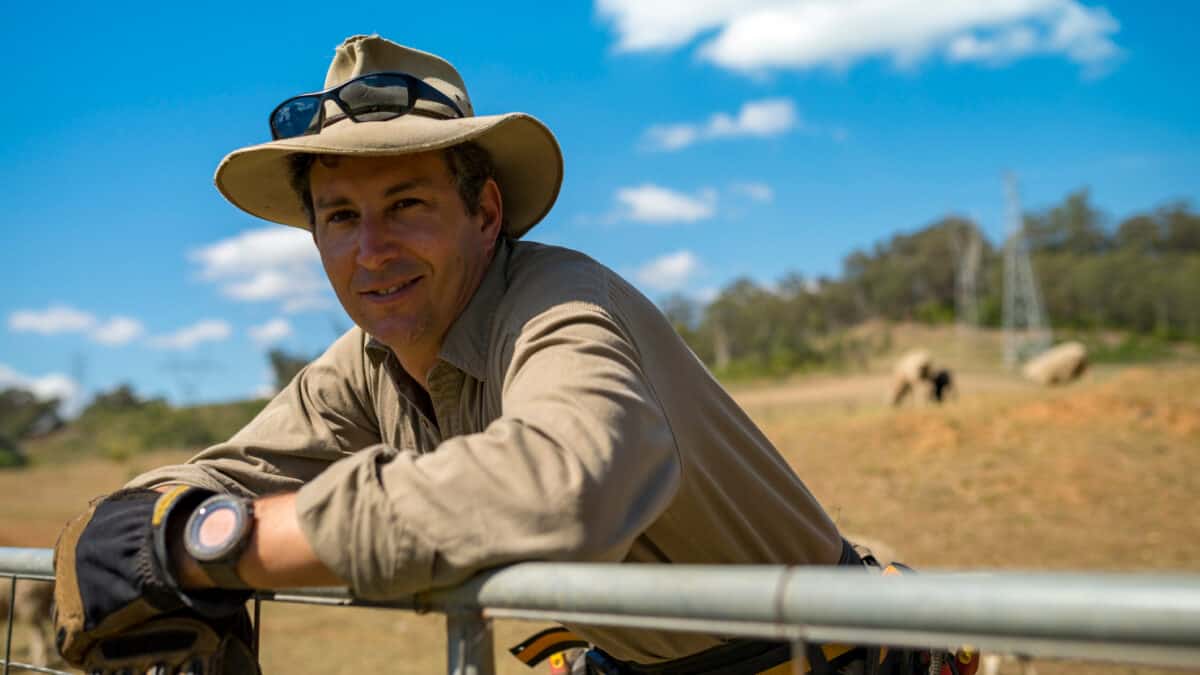
    An Australian farmer wearing a beaten-up akubra hat and work shirt leans on a fence with livestock in the background and a blue sky above.

    Rural Funds Group (ASX: RFF) is an ASX dividend stock that everyone should pay attention to, in my opinion. It’s one ASX share I have bought myself recently and plan to hold forever.

    The farmland real estate investment trust (REIT) is unique on the ASX. There are plenty of operating agriculture companies, but their profit and performance can often be quite volatile. Rural Funds can provide a higher level of stability because its underlying earnings are based on consistent rental income rather than variable commodity-linked revenue.

    Why it looks like a buy now

    Every business has an underlying balance sheet value, which can be measured with the net asset value (NAV) metric. This is a net total of the assets minus the liabilities.

    Every result, Rural Funds tells investors what its adjusted NAV is, which includes the market value of its water entitlements (rather than at cost).

    Rural Funds disclosed that its adjusted NAV on 31 December 2023 was $3.07 per unit, which was up around 5% from 30 June 2023, primarily due to the asset revaluations.

    At the current Rural Funds share price, it’s at a discount of around 33% to the December 2023 NAV. I think that’s a compelling discount.

    It’s challenging to say precisely how much the ASX dividend stocks’ farms are worth without Rural Funds going through a sales process, but another way to judge it would be to look at the distribution yield.

    The business currently pays an annual distribution of 11.73 cents per unit, which translates into a distribution yield of 5.8%. I think that’s a solid starting point for the passive income.

    Why I’d hold Rural Funds shares forever

    Farmland has been a valuable asset for many centuries, if not thousands of years. I believe it will continue to be a useful asset for a long time to come, so I’m comfortable with the idea of owning Rural Funds shares for the rest of my life.

    The business has rental growth built into its contracts, with some contracts linked to CPI inflation and others having a fixed annual increase. This can help drive rental income higher over time, offsetting the higher cost of debt and hopefully helping fund larger distributions in future years.

    Another tailwind for the business is that the Australian and global population continues climbing, which should be a helpful tailwind for food demand, which can help increase the underlying value for Rural Funds’ farms.

    Overall, I think this ASX dividend stock is a solid candidate to own for the ultra-long term.

    The post 1 incredible ASX dividend stock to buy now and hold forever appeared first on The Motley Fool Australia.

    Should you invest $1,000 in Rural Funds Group right now?

    Before you buy Rural Funds Group shares, consider this:

    Motley Fool investing expert Scott Phillips just revealed what he believes are the 5 best stocks for investors to buy right now… and Rural Funds Group wasn’t one of them.

    The online investing service he’s run for over a decade, Motley Fool Share Advisor, has provided thousands of paying members with stock picks that have doubled, tripled or even more.*

    And right now, Scott thinks there are 5 stocks that may be better buys…

    See The 5 Stocks
    *Returns as of 5 May 2024

    More reading

    Motley Fool contributor Tristan Harrison has positions in Rural Funds Group. The Motley Fool Australia’s parent company Motley Fool Holdings Inc. has no position in any of the stocks mentioned. The Motley Fool Australia has positions in and has recommended Rural Funds Group. The Motley Fool has a disclosure policy. This article contains general investment advice only (under AFSL 400691). Authorised by Scott Phillips.

  • This skinny house is so narrow that some people can touch both walls at once — and its price just fell again. See inside.

    A side by side image showing the exterior of the skinny house, with a blue-gray shingled facade, black trim, and a white roof, with an image of the narrow kitchen on the left with cabinets on one side and a counter with tall stools on the other.
    A skinny house in Washington, DC, which is six feet wide at its narrowest point, just dropped its price to around $570,000.

    • A Washington DC developer was forced to build a skinny home — six feet wide at its narrowest point.
    • Zoning laws made it hard to build any bigger on the 0.02-acre property, the listing agent said.
    • The narrow home listed for $799,900 in July 2023, but the price just dropped further to $570,265.

    A real-estate developer in Washington, DC, had a small canvas to build a modern home.

    Now there's a 10-foot-wide, one-bedroom skinny home on what used to be a driveway.

    It's for sale for $570,265 — an almost 29% price reduction from the $799,900 it was asking when it first hit the market in July 2023.

    Jennifer Young, the home's listing agent with Keller Williams Chantilly Ventures, said zoning laws changed shortly after developer Nady Samnang purchased the 0.02-acre property, so they had to either scrap the idea of building a home or tighten their floor plan.

    "It literally came down to sometimes a centimeter of getting the exact measurements right to both comply with DC zoning and build a really nice home that was functional," Young told Business Insider.

    Samnang, a contractor bought it in 2021 for $200,000, according to the Zillow listing.

    Samnang, tasked with figuring out how to build a narrow home on a driveway in between two alleys, told The Washington Post that the design went through many iterations and took nearly seven months to get approved by the city's permit office.

    "I wanted to quit so many times," he told the Post.

    The skinny house has drawn interest from people across the country.

    "It's one of the most-viewed homes on Zillow that I've ever seen in my career," Young said. "We do have quite a bit of looky-loos, but we have a lot of first-time buyers looking and investors — people that want to Airbnb it or rent it to college kids."

    Nady Samnang and his brother Dean purchased the 700-square-foot lot at the beginning of 2021 with plans to build a four-story home.
    The exterior of a skinny home in Washington, DC.
    An outside look at the skinny home.

    According to Zillow, they purchased the lot for $200,000.

    Originally, they were going to build a four-story house at double the width, but DC zoning restrictions changed shortly after he bought the land.
    The exterior of a skinny home in Washington, DC.
    The home is built on what used to be a driveway.

    "They changed zoning right after he bought it so they were kind of screwed and they either were going to scrap a deal or try to build a tiny home," Young said.

    Construction was difficult with such a narrow space and the materials had to be brought in by hand.
    The front entrance and kitchen of a skinny home.
    A view of the kitchen.

    "All the materials had to be brought in by hand versus pulling a truck up to the site because it is a very condensed area," Young said. "There's a road, but big work trucks can't come through and it's a very tight space to work in."

    Although the house is 6 feet wide at its narrowest point, it still has several amenities that you'd find in any modern home.
    The narrow outdoor patio of a skinny home.
    The outside patio.

    It even has a fenced patio big enough for an intimate seating area.

    Bringing materials in was not the only challenge. Samnang also had to get creative when finding space for basics inside.
    A powder room under the stairs of a skinny home.
    The powder room underneath the stairs.

    Samnang told the Post that the powder room under the stairs was an "extreme challenge" because of a DC code that requires toilets and sinks to be at least 15 inches apart. He had to opt for a skinny sink to fit.

    Lucky for the future buyer, the skinny home comes fully furnished.
    The living room of a skinny home.
    The living room with windows on both sides.

    No need to haul in a bed upstairs or search for a couch that fits — those items come with the home.

    "They just went pretty modern and they chose all the right finishes that are popular now," Young said. "They had to do something that made it as luxury and contemporary and high end as they could within these restrictions."

    It was first listed on Zillow for $799,900, making it $1,333 per square foot.
    A bedroom in a skinny home.
    A view of the bedroom.

    It's 45 feet long and 10 feet across at its widest point.

    The price has since dropped to as low as $570,265 in May.
    A full-bathroom in a skinny home.
    The upstairs bathroom with a washer and dryer.

    "It's definitely hard to price," Young said. "There's not one single comparable because everything around it is condos and it's not comparable to condos.

    The Zillow listing has nearly 50,000 views and over 900 saves — numbers that Young says are rare for the area.
    The front entrance and kitchen of a skinny home.
    Another look at the kitchen.

    "It's probably the most-viewed DC listing in years right now," Young said.

    Investors have taken an interest in using the house as a rental unit for students or as an Airbnb.
    Built-in seating in a skinny home
    Built-in seating in the kitchen.

    Young said it doesn't have any condo or homeowner association fees, which could be enticing for someone looking to rent it out.

    Young said that people are drawn to its spectacle but there are plenty of interested buyers as well.
    Stairs and floor-to-ceiling windows in a skinny home.
    A hallway flanked by a glass door leading to the outdoor patio.

    "It's a very popular building," she said. "I think half the people are 'looky-loos,' and half are very interested."

    Read the original article on Business Insider
  • B-52 bomber crew picks up award for pulling their plane out of life-threatening ‘catastrophic’ failures at 1,200 feet

    B-52
    B-52

    • A B-52 bomber crew received an award for fighting through "catastrophic" aircraft failures.
    • The crew faced a string of problems while flying to Barksdale Air Force Base.
    • Air Force Global Strike Command gave the bomber crew the General Curtis E. LeMay Award.

    A US Air Force B-52 bomber crew received an award for pulling off an exceptional recovery during a life-threatening emergency.

    "All the systems kicked off at once, and the aircraft went completely dark, engines flamed out, and controlling the aircraft became a battle," Capt. Matthew Walls, one of three aircrew members aboard the B-52H Stratofortress bomber at the time, described in a Thursday press release.

    As the heavy bomber's crew was navigating around severe thunderstorms on their way to Barksdale Air Force Base in Louisiana on December 13, 2022, the aircraft, Scout 94 went into an uncontrolled roll.

    Two of the plane's electrical generators were off, four of the bomber's engines gave out, and the aircraft was descending quickly while decelerating below normal approach speed.

    Walls recalled that the emergency, which happened as they were making preparations to land the plane, "was sudden and caused brief but extreme disorientation to myself and the other crew members."

    Capt. Charles Powell, 11th Bomb Squadron director of staff, Lt. Col. John Conway, Air Combat Command TRSS Detachment 13 commander, and Capt. Matthew Walls, 343 Bomb Squadron unit deployment manager, stand for their photo in front of a B-52H Stratofortress June 3, 2024 at Barksdale Air Force Base, La. They recently earned the Air Force Global Strike Command General Curtis E. LeMay award for the outstanding bomber crew category for overcoming multiple failures during a flight, but still managing to land the aircraft safely.
    Capt. Charles Powell, 11th Bomb Squadron director of staff, Lt. Col. John Conway, Air Combat Command TRSS Detachment 13 commander, and Capt. Matthew Walls, 343 Bomb Squadron unit deployment manager, stand for their photo in front of a B-52H Stratofortress June 3, 2024 at Barksdale Air Force Base, La.

    Capt. Charles Powell attempted to restart the engines and managed to bring back two of the four that had given out.

    Lt. Col. John Conway, another crew member, said "the reason Captain Powell was able to recover the aircraft safely is because he has trained to a six-engine approach many times and holds himself to a high standard when he trains."

    He added that "Capt. Powell and Capt. Walls both performed admirably and with immense poise that day."

    The bomber lost its engines on one side. Shortly after the two engines restarted, the crew was able to make an unusual turn back against the roll, declare an emergency, and achieve a safe landing with assistance from air traffic control.

    The crew's actions were significant, as they successfully recovered the unwieldy aircraft at a low altitude of just 1,200 feet while flying over a populated area in Bossier City.

    "The Scout 94 crew overcame multiple catastrophic failures to safely land the aircraft, averting potential disaster in the air and on the ground," the Air Force said.

    During the 2023 Air Force Global Strike Command Operations Awards, the B-52 crew received the Air Force Global Strike Command General Curtis E. LeMay Award in the outstanding bomber crew category.

    "I'm very proud of how we handled the situation," Walls said of the emergency that lasted only minutes but required a quick response. "It was fast and intense, and there wasn't time for discussion, just action. In my opinion, everyone fell into their role and did what was required."

    Read the original article on Business Insider
  • Top ASX shares to buy in June and hold for retirement

    A mature-aged couple high-five each other as they celebrate a financial win and early retirement

    Everyone wants a comfortable retirement — one in which you can relax with family and friends, enjoy time for hobbies and travel, and allow the money you’ve worked so hard for to keep working for you.

    But sadly, this aspirational lifestyle doesn’t just magically materialise when you hit retirement age. It needs to be planned and nurtured throughout your working life.

    One way to help secure your financial freedom and enable you to retire sooner is by investing in ASX shares. By creating a diverse portfolio of quality Australian companies, you can start building a passive income stream and allow the magic of compounding to boost your wealth over time.

    On that note, we asked our Foolish writers which ASX shares they would recommend buying in June and holding through to retirement.

    Here is what they came up with:

    6 best ASX shares for your retirement fund right now (smallest to largest)

    • Betashares Global Cybersecurity ETF (ASX: HACK), $889.88 million
    • Lifestyle Communities Ltd (ASX: LIC) $1.51 billion
    • Brickworks Limited (ASX: BKW), $4.08 billion
    • iShares S&P 500 ETF (ASX: IVV), $7.88 billion
    • Washington H Soul Pattinson & Company Ltd (ASX: SOL), $11.55 billion
    • Macquarie Group Ltd (ASX: MQG), $75.16 billion

    (Market capitalisations as of market close 7 June 2024).

    Why our Foolish writers say these ASX stocks are great long-term buys

    Betashares Global Cybersecurity ETF

    What it does: HACK is an exchange-traded fund (ETF) that currently holds 30 leading global companies focused on cybersecurity. At the time of writing, the ETF’s top four holdings are Broadcom, Cisco Systems, Crowdstrike, and Palo Alto Networks.

    By Bernd Struben: When it comes to ASX shares to buy and hold for retirement, I like the instant diversity that comes with buying the HACK ETF. Furthermore, management periodically amends the ETF’s holdings and specific weightings.

    With an eye on the long term, the demand for the services provided by the companies HACK holds in safeguarding personal, business and government data from malicious players is only likely to increase. Last week’s data breach announced by Ticketek was just the latest reminder of the ongoing cyber threats.

    I also think many of these companies are likely to benefit from the rapid advancement in artificial intelligence (AI), which in turn should boost the returns HACK shareholders will receive.

    As for those returns, as at 30 April, the HACK ETF had returned 38.6% over 12 months. The five-year returns average 15.2% annually. Management fees run at 0.67% a year.

    Motley Fool contributor Bernd Struben does not own units of the Betashares Global Cybersecurity ETF.

    Lifestyle Communities Ltd

    What it does: Lifestyle Communities develops, owns and manages affordable, independent-living, residential land-lease communities. At present, it has 32 residential land-lease communities under contract, in planning, in development, or under management.

    By James Mickleboro: I think Lifestyle Communities could be a great buy-and-hold option for a retirement portfolio this month. Particularly after a sell-off in April means that its shares are down by almost a third year to date.

    This sell-off has been driven by short-term headwinds, which are weighing on its performance. However, nothing has changed with respect to its long-term outlook. Goldman Sachs highlights that this remains very positive thanks to “structural growth in demand for land lease as the sector increases its penetration among retirees.”

    In addition, the broker notes that “industry build rates [are] below demand from an ageing population.” It feels this bodes well for Lifestyle Communities and expects settlements “to increase considerably into FY25/26E, driving earnings growth and unlocking cash flow.”

    Goldman Sachs currently has a buy rating and an $18.45 price target on Lifestyle Communities shares.

    Motley Fool contributor James Mickleboro does not own shares of Lifestyle Communities Ltd.

    Brickworks Limited

    What it does: Brickworks is a leading manufacturer of building products, including bricks, pavers, and masonry blocks, in Australia and North America. The company is also engaged in property and investment activities.

    By Kate Lee: As of December 2023, Brickworks had shareholders’ equity of $3.5 billion. Compared to its current market capitalisation of just over $4 billion, this translates to a price-to-book (P/B) ratio of 1.15 times. This is at the low end of its historical trading range of 1x to 1.6x over the last 10 years.  

    While Brickworks is a well-established building materials manufacturer, this business segment represents just about $608 million, or 17% of its shareholders’ equity. The remainder is primarily composed of two parts: investments in listed shares, most notably in Washington H Soul Pattinson & Company Ltd (ASX: SOL), valued at approximately $3 billion, and its property development ventures in collaboration with Goodman Group (ASX: GMG).

    I think these property ventures offer significant growth potential. As I recently covered, Brickworks holds prime industrial land holdings in strategic locations such as Western Sydney. Demand for industrial properties — think those logistics centres for retailers, usually located near metropolitan cities — has been soaring globally as consumer demand for online shopping continues to increase.

    The ongoing strength of rental prices, increases in land values due to limited supply, and continued land development are likely to support Brickworks’ property valuation, in my view.

    In addition, Brickworks is known for its consistent dividend payments, which are attractive to income-focused investors. It offers a fully-franked dividend yield of 2.47% at Friday’s closing share price of $26.72.

    I think now is a perfect opportunity to buy this great dividend payer and enjoy the dividend growth in the years to come until your retirement.    

    Motley Fool contributor Kate Lee owns shares of Brickworks Limited. 

    iShares S&P 500 ETF

    What it does: The iShares S&P 500 is an exchange-traded fund (ETF) that tracks the most popular index in the world — the S&P 500 Index (SP: .INX). This index represents the largest 500 companies listed on the US markets. 

    By Sebastian Bowen: When thinking about investments one can simply buy today and conceivably hold for decades without much thought, this index fund comes to mind. Endorsed by the legendary Warren Buffett himself, an S&P 500 index fund offers the best of American capitalism. 

    For one, it holds 500 of the largest companies in America, and the world for that matter, offering instant industrial, geographical, and economic diversification. 

    But the US markets arguably also house the highest calibre businesses on the planet. Apple, Netflix, Alphabet, PayPal, American Express, Coca-Cola, Amazon, McDonald’s… all of these top-tier companies can be found as an investment within the iShares S&P 500 ETF. 

    I think the United States will be the backbone of the global economy for decades to come and continue to house the highest-quality businesses in the world to boot. For these reasons, I would happily add this index fund to any retirement portfolio today. 

    Motley Fool contributor Sebastian Bowen owns shares of Apple, Netflix, Alphabet, PayPal, American Express, Coca-Cola, Amazon, and McDonald’s.

    Washington H Soul Pattinson & Company Ltd

    What it does: Soul Patts is an investment business that has been listed on the ASX since 1903. It started as a pharmacy chain and now has a diversified portfolio of assets. Chair Robert Millner is the fourth-generation leader from the same family to chair the company. 

    By Tristan Harrison: I believe an effective ASX share for retirement is one that can provide stability, long-term growth and solid dividends.

    Soul Patts has created a portfolio of defensive investments that generate resilient cash flow. Some of its biggest allocations are in the sectors of resources, telecommunications, property, agriculture, financial services, electrification, bonds/credit, and swimming schools.

    The ongoing growth of its existing assets, plus occasional new investments, is helping Soul Patts increase its own cash flow. This growing cash flow is funding a growing river of dividends from the business. Pleasingly for people in retirement, this ASX share has grown its dividend every single year since 2000, though future increases are not guaranteed.

    The company has paid a dividend every year since it was listed in 1903. That means it has delivered passive income through two world wars, two global pandemics, economic crashes (including the GFC and the Great Depression), various prime ministers, and so on.

    With a grossed-up dividend yield of around 4%, I think Soul Patts is a solid choice for income and potential capital growth over time. 

    Motley Fool contributor Tristan Harrison owns shares of Washington H Soul Pattinson & Company Ltd. 

    Macquarie Group Ltd

    What it does: Macquarie is a diversified banking giant that differentiates itself through a suite of non-banking services, including investment, asset management, commodities, and infrastructure. I believe Macquarie’s point of difference offers it a competitive advantage that will compound over time.

    By Zach Bristow: Rising market tensions, the inflation/rates axis, and a new commodities supercycle have set the new investment landscape. In my opinion, Macquarie is well-positioned to be a long-term beneficiary of these macroeconomic crosscurrents.

    Firstly, as mentioned, Macquarie’s offering is differentiated from other Aussie banks, given its exposure to capital markets, infrastructure, and commodities trading. This broad exposure to critical industries gives the bank more recession-proof earnings.

    We saw this in FY 2022/23 when many banks were operating tight net interest margins (NIMs), and Macquarie threw off $13.50 in earnings per share (EPS) on dividends of $7.50 apiece. I believe a strong competitive advantage like this is a necessity to comfortably hold an investment into retirement. 

    Secondly, while Macquarie’s operating profits were down this year – due to an exceptionally strong 2023 – the bank’s 13% return on equity (ROE) in H2 FY 2024 surpassed the industry’s five-year average of 11%. This fuelled dividends of $6.40 per share for the full year. 

    At the current price-to-earnings (P/E) ratio of 21 times, this dividend offers the investor a 3% trailing yield on a 4% earnings yield, comparable to most high-interest vehicles â€“ but also with the prospects of substantial long-term capital gains.

    In my opinion, the price/value equation is skewed in our favour when thinking about holding Macquarie shares into retirement.

    Motley Fool contributor Zach Bristow does not own shares of Macquarie Group Ltd.

    The post Top ASX shares to buy in June and hold for retirement appeared first on The Motley Fool Australia.

    Urgent Message from Motley Fool General Manager, Adam Surplice

    If you’ve ever felt “boxed in” by traditional super funds, or thought SMSFs were beyond reach, this Investment Mastery video series will open your eyes.…

    As you’ll see, I’ve discovered a unique strategy that’s completely changed my approach to superannuation… in fact, I’m personally investing $200,000 of my own retirement savings into it.

    Unlock FREE Investment Mastery video series
    *Returns 28 May 2024

    More reading

    Suzanne Frey, an executive at Alphabet, is a member of The Motley Fool’s board of directors. John Mackey, former CEO of Whole Foods Market, an Amazon subsidiary, is a member of The Motley Fool’s board of directors. American Express is an advertising partner of The Ascent, a Motley Fool company. The Motley Fool Australia’s parent company Motley Fool Holdings Inc. has positions in and has recommended Alphabet, Amazon, Apple, BetaShares Global Cybersecurity ETF, Brickworks, Cisco Systems, CrowdStrike, Goldman Sachs Group, Goodman Group, Macquarie Group, Netflix, Palo Alto Networks, PayPal, Washington H. Soul Pattinson and Company Limited, and iShares S&P 500 ETF. The Motley Fool Australia’s parent company Motley Fool Holdings Inc. has recommended Broadcom and has recommended the following options: short June 2024 $67.50 calls on PayPal. The Motley Fool Australia has positions in and has recommended BetaShares Global Cybersecurity ETF, Brickworks, Macquarie Group, and Washington H. Soul Pattinson and Company Limited. The Motley Fool Australia has recommended Alphabet, Amazon, Apple, CrowdStrike, Goodman Group, Netflix, PayPal, and iShares S&P 500 ETF. The Motley Fool has a disclosure policy. This article contains general investment advice only (under AFSL 400691). Authorised by Scott Phillips.

  • Oh, so now I can’t shoot fireworks at a Lambo from a helicopter?

    screenshot of a youtube vdieo of a helicopter shooting a car
    A YouTuber's video of a helicopter blasting a sports car with fireworks got him into hot water, as part of the evidence presented by the feds.

    • YouTuber Alex Choi faces federal charges connected to filming a fireworks video that targeted a Lamborghini from a helicopter.
    • Authorities say he was filming without a permit and illegally using fireworks on federal land. They revoked the pilot's license. 
    • But whatever happened to our freedom?! (Seriously, though: Don't do this.)

    We used to be a country that was founded on the immutable principles of freedom of life, liberty, and the pursuit of happiness.

    Now, you can't even shoot fireworks at a Lamborghini from a helicopter for a YouTube video without the nanny state getting involved!

    Federal authorities arrested YouTuber Alex Choi on Thursday on charges stemming from a Fourth of July video he posted last summer. In the video, two women shoot fireworks from a helicopter at a blue Lamborghini set to Miley Cyrus's song "Party in the USA."

    Choi, a car influencer with 1 million subscribers to his YouTube channel, typically posts videos of various stunts with sports cars, like using his Lamborghini to tow other cars or filming passenger reactions as he rapidly accelerates while driving on streets.

    The video, "Destroying a Lamborghini with Fireworks," which contained a paid promotion, has been removed from YouTube (a mirror of it exists on Instagram).

    helicopter firing at car
    A screenshot from Choi's YouTube Video.

    A criminal complaint filed by the US Attorney's office in California's Central District states that Choi violated the law during the filming of his video, "Destroying a Lamborghini with Fireworks." He faces one count of causing the placement of an explosive or incendiary device on an aircraft. He also filmed on Bureau of Land Management land without a permit or insurance and used fireworks on BLM land, according to charging documents.

    The charging papers also say the FAA investigated the video, which was filmed in the El Mirage Dry Lakebed in San Bernadino, California. The agency revoked the helicopter pilot's license in December 2023.

    The AP reported that Choi appeared in court Thursday and was released on a $50,000 bond. He'll be arraigned July 2.

    This isn't the first time a YouTuber has gotten in trouble for a stunt.

    In 2021, a YouTuber intentionally crashed a plane in California for a video and had to serve six months of jail time for the stunt. A few weeks ago, the city of Seattle fined an Instagrammer $83,621 over penalties for reckless driving of a modified car he called the "Belltown Hellcat."

    Choi did not immediately respond to a request for comment from Business Insider sent to his management agency.

    Now, sure, the stunt was wildly dangerous not just to the Lamborghini driver — recklessly setting off illegal fireworks in California comes with a risk of wildfire. (In case it's not clear we're speaking in jest, seriously: Don't do this.)

    But the spirit and creativity of this stunt? Our founding fathers would be proud.

    Read the original article on Business Insider