• James Comey says Donald Trump is ‘begging for a jail term’ with his personal attacks on Judge Merchan

    donald trump james comey
    Former FBI Director James Comey (right) believes its "unlikely" former President Donald Trump (left) will see jail time in the various criminal cases against him, but told MSNBC he's "never seen a defendant beg for it more."

    • Trump was found guilty of 34 felonies in his hush-money case and is set to be sentenced July 11.
    • James Comey told CNN that usually, a white-collar crime like this wouldn't end in a prison sentence.
    • "But this is a defendant who's begging for a jail term," Comey said.

    Usually, a white-collar offense, like the 34 felonies former President Donald Trump was convicted of in his hush-money case, wouldn't warrant a prison sentence, former FBI director James Comey told CNN in a Tuesday interview.

    "But this is a defendant who's begging for a jail term by taking a flamethrower, not just to the judge, but to the entire process and the jury," Comey said. "A judge will take that very seriously into consideration when deciding whether to deter this person and to send a message more broadly, that he needs to spend some time behind bars."

    Trump is set to be sentenced on July 11 by Judge Juan Merchan. Merchan, the judge's family, as well as witnesses in the case, were frequent targets of Trump's ire during the course of the proceedings — and it's likely Merchan will take that into consideration when sentencing the former president, Comey, speaking to CNN's Kaitlan Collins, said.

    Comey said the personal attacks, as well as Merchan's finding that Trump had acted in contempt of the court's orders on multiple occasions, "all of that will be part of the picture that the judge looks at to decide whether a message needs to be sent that involves jail."

    Representatives for Comey and the Trump campaign did not immediately respond to requests for comment from Business Insider.

    Read the original article on Business Insider
  • Can Berkshire Hathaway stock keep outpacing the S&P 500?

    Legendary share market investing expert and owner of Berkshire Hathaway Warren Buffett

    This article was originally published on Fool.com. All figures quoted in US dollars unless otherwise stated.

    Berkshire Hathaway (NYSE: BRK.A) (NYSE: BRK.B) CEO Warren Buffett is widely considered a legend on Wall Street, and for good reason. The conglomerate’s portfolio has substantially outperformed the benchmark S&P 500 since Buffett became CEO in 1965. 

    The graph below illustrates this point:

    BRK.A Total Return Level data by YCharts

    A contrarian approach to investing

    Moreover, Buffett’s investing methodology runs counter to modern portfolio theory and the efficient markets hypothesis.

    Modern portfolio theory advocates for diversification as a risk-management strategy. According to this theory, spreading investments across various assets reduces risk, thereby increasing the probability of generating positive annual returns.

    However, Buffett’s approach is anything but diversified. Berkshire Hathaway’s portfolio is concentrated, with approximately 50 stocks in its holdings at the time of this writing.

    Moreover, a select few equities such as Apple (NASDAQ: AAPL), Bank of America (NYSE: BAC), American Express (NYSE: AXP), Chevron (NYSE: CVX), Coca-Cola (NYSE: KO), and Occidental Petroleum (NYSE: OXY) account for a staggering 76.6% of the conglomerate’s stock investments.

    By contrast, most of Buffett’s money manager contemporaries have typically crafted portfolios consisting of hundreds — and sometimes thousands — of equities, in line with the main tenet of modern portfolio theory.

    Buffett and his team have also overcome the potentially disadvantageous effects stemming from the legal requirement to disclose their quarterly buys and sells. The efficient market hypothesis suggests that such disclosures should nullify Buffett’s edge by allowing other investors to mimic his portfolio.

    Surprisingly, this constraint hasn’t significantly impacted the company’s ability to deliver excess returns relative to the broader market.

    In 2024, for instance, Berkshire Hathaway’s shares have outperformed the sizzling S&P 500, and historically, the company has delivered returns in excess of the broader market by around 8 percentage points per year.

    Can Berkshire Hathaway keep beating the S&P 500?

    When considering the likelihood of Berkshire Hathaway’s stock outperforming the S&P 500, it’s essential to analyze the company’s principal stock holdings and key economic metrics, and then compare these with the benchmark index.

    The six largest stock holdings in Berkshire’s portfolio have an average forward price-to-earnings (P/E) ratio of 18.3 and anticipated earnings growth of 12.4% by 2025 (see table below).

    Stock

    Forward P/E Ratio

    Projected 2025 Earnings Growth

    Apple

    29.9

    9.7%

    Bank of America

    12.3

    9.6%

    American Express

    18.6

    14.9%

    Coca-Cola

    22.3

    6.9%

    Chevron

    12.5

    10.3%

    Occidental Petroleum

    14.5

    23.1%


    Average

    18.3

    12.4%

    Data source: Yahoo! Finance.

    In contrast, the S&P 500 index is trading at a higher forward P/E ratio of 21.1, with an expected average earnings growth rate of 14.2% for the same period, according to FactSet analysts.

    Although Berkshire Hathaway’s core stock holdings are relatively more affordable, they are projected to have a marginally lower earnings growth rate.

    Turning to Berkshire Hathaway stock itself, the company’s shares are trading at a forward P/E ratio of 18.8 and are predicted to have earnings growth of 2.4% for the following year.

    This significantly lower earnings growth rate suggests that Berkshire Hathaway’s stock may not be well positioned to outperform the S&P 500 in the short term.

    Cut from a different cloth

    Still, a deeper analysis is ultimately required to answer the original question, because Berkshire Hathaway isn’t a typical stock.

    Buffett and his team have amassed a diverse portfolio of assets, including stocks, bonds, businesses, and a substantial cash reserve. This multifaceted approach sets it apart from most other companies.

    What does this all mean in practical terms? Due to its diverse asset portfolio, Wall Street regards Berkshire Hathaway as an exceptional hedge against broad market downturns.

    Unlike the S&P 500, which lacks built-in downside protection, Berkshire Hathaway’s strategic composition provides a safety net during turbulent times.

    Uncertainty looms

    Now, let’s explore why this distinction matters. The S&P 500’s recent bull market surge owes much to the enthusiasm surrounding artificial intelligence (AI). Notably, Nvidia (NASDAQ: NVDA) — the chipmaker at the forefront of the AI revolution — holds the second-largest weight within the S&P 500. Consistently surpassing Wall Street’s earnings expectations, Nvidia has become a linchpin for the index’s performance lately.

    However, here’s the crux: If Nvidia encounters any obstacles, ripple effects could reverberate throughout the entire U.S. stock market. In contrast, Berkshire Hathaway maintains limited exposure to this AI-centric theme. Its substantial focus lies in sectors such as finance, energy, and consumer goods, shielding it to a degree from the hype surrounding AI.

    Although Apple is Berkshire Hathaway’s largest holding by a country mile, the tech giant doesn’t rely on AI to fuel sales. Instead, Apple leverages its loyal customer base to drive sales of its iconic iPhone. Berkshire Hathaway, in turn, isn’t overly reliant on AI to drive its share-price performance, counter to the broader market.

    All roads lead to Nvidia

    Berkshire Hathaway’s ability to outperform the S&P 500 in the short term hinges on Nvidia’s trajectory. Should Nvidia continue to exceed Wall Street’s estimates by a wide margin, Buffett’s conglomerate is unlikely to best the S&P 500 over the next 18 months.

    However, a more profound concern looms: The S&P 500 appears markedly overvalued based on its cyclically adjusted price-to-earnings ratio. Furthermore, its bull run appears overly reliant on a single stock.

    Perhaps most concerning is that Nvidia’s shares are trading at over 42 times forward earnings. This premium valuation may be warranted, but it also suggests that a fair amount of the chipmaker’s near-term upside is already accounted for, curtailing its power to drive the S&P 500 much higher.

    A favorable scenario for Berkshire Hathaway

    If investors balk at paying this hefty premium for Nvidia, Berkshire Hathaway should deliver superior results relative to the benchmark index over the next 18 months.

    In other words, Nvidia stock may lose momentum as investors search for more attractive growth vehicles. This dynamic that favors companies like Berkshire Hathaway — namely, ones that aren’t entirely dependent on AI to create shareholder value.

    Berkshire Hathaway, despite its unfavorable econometrics relative to the S&P 500, could thus deliver strong returns for shareholders over the remainder of 2024 and the whole of 2025 if this scenario plays out.

    That’s a testament to Buffett’s slow-and-steady approach to value creation, which has consistently beaten the broader markets over the past seven decades and counting. 

    This article was originally published on Fool.com. All figures quoted in US dollars unless otherwise stated.

    The post Can Berkshire Hathaway stock keep outpacing the S&P 500? appeared first on The Motley Fool Australia.

    Should you invest $1,000 in Berkshire Hathaway Inc. right now?

    Before you buy Berkshire Hathaway Inc. shares, consider this:

    Motley Fool investing expert Scott Phillips just revealed what he believes are the 5 best stocks for investors to buy right now… and Berkshire Hathaway Inc. wasn’t one of them.

    The online investing service he’s run for over a decade, Motley Fool Share Advisor, has provided thousands of paying members with stock picks that have doubled, tripled or even more.*

    And right now, Scott thinks there are 5 stocks that may be better buys…

    See The 5 Stocks
    *Returns as of 5 May 2024

    More reading

    George Budwell has positions in Apple. Bank of America is an advertising partner of The Ascent, a Motley Fool company. American Express is an advertising partner of The Ascent, a Motley Fool company. The Motley Fool Australia’s parent company Motley Fool Holdings Inc. has positions in and has recommended Apple, Bank of America, Berkshire Hathaway, Chevron, and Nvidia. The Motley Fool Australia’s parent company Motley Fool Holdings Inc. has recommended Occidental Petroleum. The Motley Fool Australia has recommended Apple, Berkshire Hathaway, and Nvidia. The Motley Fool has a disclosure policy. This article contains general investment advice only (under AFSL 400691). Authorised by Scott Phillips.


  • How the latest GDP data could bring ASX 200 investors interest rate relief

    A woman sits at her computer with her hand to her mouth and a contemplative smile on her face as she reads about the performance of Allkem shares on her computer

    Amid stubborn inflation and resilient labour market figures, S&P/ASX 200 Index (ASX: XJO) investors have increasingly been eyeing 2025 for the first interest rate cuts from the Reserve Bank of Australia.

    But the latest gross domestic product (GDP) data just released by the Australian Bureau of Statistics (ABS) could help steer the RBA board towards a first rate cut in 2024 instead.

    Here’s what we know.

    ASX 200 may enjoy earlier interest rate cuts

    The ABS reported that Australian GDP rose 0.1% in the March quarter and 1.1% since March 2023.

    That’s down from the 0.2% quarterly GDP boost in the December quarter. And it falls short of the consensus forecast of another 0.2% rise for the March quarter.

    The ASX 200 initially dipped following the 11:30am AEST release but has since recovered to be up 0.3% in intraday trade.

    Commenting on the results, Katherine Keenan, ABS head of national accounts, said:

    GDP growth was weak in March, with the economy experiencing its lowest through the year growth since December 2020. GDP per capita fell for the fifth consecutive quarter, falling 0.4% in March and 1.3% through the year.

    The ABS noted that net trade cut 0.9% from GDP growth over the quarter, with stronger import growth (+5.1%) than export growth (+0.7%).

    And with public and private capital investments both falling, total capital investment declined 0.9% in the March quarter.

    Keenan said:

    Private investment fell by 0.8% driven by a decline of 4.3% in non-dwelling investment. This was due to a reduction in mining investment as well as a reduction in the number of small to medium building projects under construction compared to December.

    Keenan added, “Despite the falls in public and private investment, the level of overall investment remained high and continued to exceed mining investment boom levels seen in the early 2010s.”

    Bad news could be good news

    Weak economic growth might not be good news across the board for ASX 200 shares. But it could usher in interest rate cuts sooner than markets have been pricing in.

    While no panacea, ASX 200 companies tend to perform better in lower-rate environments.

    Addressing the Senate Economics Committee on Wednesday, RBA governor Michele Bullock said (courtesy of The Australian):

    If we think we’re on the narrow path, we can stay basically, pretty much where we are not ruling anything in ruling anything out. But if it turns out, for example, that inflation starts to go up again or it’s much stickier than we think we’re not getting it down, then we won’t hesitate to move and raise interest rates again.

    In contrast, if it turns out that the economy is much weaker than expected, and that puts more downward pressure on inflation, then we’ll be looking to ease. So, they’re the Plan Bs if you like. But they’re central to the strategy.

    ASX 200 investors will know the RBA’s upcoming move on 18 June, when the central bank announces its next interest rate decision.

    While today’s GDP figures have upped the odds of a rate cut later in the year, most analysts expect the RBA to hold rates steady in June at the current 4.35%.

    Stay tuned!

    The post How the latest GDP data could bring ASX 200 investors interest rate relief appeared first on The Motley Fool Australia.

    Should you invest $1,000 in S&P/ASX 200 right now?

    Before you buy S&P/ASX 200 shares, consider this:

    Motley Fool investing expert Scott Phillips just revealed what he believes are the 5 best stocks for investors to buy right now… and S&P/ASX 200 wasn’t one of them.

    The online investing service he’s run for over a decade, Motley Fool Share Advisor, has provided thousands of paying members with stock picks that have doubled, tripled or even more.*

    And right now, Scott thinks there are 5 stocks that may be better buys…

    See The 5 Stocks
    *Returns as of 5 May 2024

    More reading

    Motley Fool contributor Bernd Struben has no position in any of the stocks mentioned. The Motley Fool Australia’s parent company Motley Fool Holdings Inc. has no position in any of the stocks mentioned. The Motley Fool Australia has no position in any of the stocks mentioned. The Motley Fool has a disclosure policy. This article contains general investment advice only (under AFSL 400691). Authorised by Scott Phillips.

  • Why Generation Development, Graincorp, Seek, and Treasury Wine shares are storming higher

    Smiling couple looking at a phone at a bargain opportunity.

    In afternoon trade, the S&P/ASX 200 Index (ASX: XJO) is on course to record a decent gain. At the time of writing, the benchmark index is up 0.3% to 7,758.7 points.

    Four ASX shares that are rising more than most today are listed below. Here’s why they are climbing:

    Generation Development Group Ltd (ASX: GDG)

    The Generation Development Group share price is up almost 7% to $2.40. This follows the completion of the institutional component of its equity raising. The life insurance company raised approximately $126 million at a 13.3% discount of $1.95 per new share. The proceeds will be used to part fund the remaining 61.9% of Lonsec Holdings that it does not already own. The remaining up-front consideration will be funded through a placement to Lonsec shareholders who have elected to receive fully paid ordinary shares in Generation Development Group in exchange for their equity in Lonsec.

    Graincorp Ltd (ASX: GNC)

    The Graincorp share price is up 3.5% to $9.18. This may have been driven by a bullish broker note out of Bell Potter this morning. Its analysts note that the ABARE June east coast crop forecast has surprised to the upside. This implies another strong cropping outcome for Graincorp in FY 2025, with the initial June forecast implying the fifth largest crop on record. Bell Potter has retained its buy rating on Graincorp’s shares with an improved price target on $9.90.

    Seek Ltd (ASX: SEK)

    The Seek share price is up 3.5% to $23.46. This morning, this job listings company announced the sale of its Latin American assets. Seek has entered into a binding agreement to sell its 98.2% interest in OCC Mexico and its 100% interest in Catho Online to Red Arbor for a cash consideration of US$85 million. In Seek’s FY 2024 financial results, the disposals of these assets are expected to result in a net loss on sale after tax of between A$15 million and A$35 million.

    Treasury Wine Estates Ltd (ASX: TWE)

    The Treasury Wine share price is up 6% to $12.10. This follows the release of an update after the market close on Tuesday. As well as speaking positively about its sizeable opportunity in North America, the wine giant reaffirmed its guidance for FY 2024. It continues to expect mid-high single digit EBITS growth for the year. Management also advised that work to assess the future operating model for the company’s global portfolio of Premium brands is continuing. An update will be provided to the market in August.

    The post Why Generation Development, Graincorp, Seek, and Treasury Wine shares are storming higher appeared first on The Motley Fool Australia.

    Should you invest $1,000 in Generation Development Group Limited right now?

    Before you buy Generation Development Group Limited shares, consider this:

    Motley Fool investing expert Scott Phillips just revealed what he believes are the 5 best stocks for investors to buy right now… and Generation Development Group Limited wasn’t one of them.

    The online investing service he’s run for over a decade, Motley Fool Share Advisor, has provided thousands of paying members with stock picks that have doubled, tripled or even more.*

    And right now, Scott thinks there are 5 stocks that may be better buys…

    See The 5 Stocks
    *Returns as of 5 May 2024

    More reading

    Motley Fool contributor James Mickleboro has positions in Seek and Treasury Wine Estates. The Motley Fool Australia’s parent company Motley Fool Holdings Inc. has no position in any of the stocks mentioned. The Motley Fool Australia has recommended Seek and Treasury Wine Estates. The Motley Fool has a disclosure policy. This article contains general investment advice only (under AFSL 400691). Authorised by Scott Phillips.

  • Now could be an opportunity to snap up overlooked ASX shares

    A man wakes up happy with a smile on his face and arms outstretched.

    This could be an excellent time to consider overlooked ASX shares that the market is underestimating. Good investing is usually about finding assets that are underpriced for their long-term potential.

    The ASX share market regularly experiences bull and bear markets, during which investors may be too optimistic or pessimistic.

    Sometimes, the most compelling investments could be the most unloved ones.

    At times like this, I like to refer back to several excellent pearls of wisdom from legendary investor Warren Buffett. Buffett’s ability to make the right investments at the right time has helped Berkshire Hathaway become one of the world’s largest companies.

    Warren Buffett’s wise advice

    In 2001, Buffett compared beaten-up stocks to hamburgers:

    To refer to a personal taste of mine, I’m going to buy hamburgers the rest of my life. When hamburgers go down in price, we sing the ‘Hallelujah Chorus’ in the Buffett household. When hamburgers go up in price, we weep. For most people, it’s the same with everything in life they will be buying — except stocks. When stocks go down and you can get more for your money, people don’t like them anymore.

    One of Buffett’s most quoted pieces of advice could be helpful to keep in mind:

    Be fearful when others are greedy, and be greedy when others are fearful.

    This could be applicable to beaten-up stocks and sectors.

    Which ASX shares are overlooked?

    Each investor may have a different opinion on what ASX shares are being undervalued.

    I think it’d be fair to judge ASX bank shares, like Commonwealth Bank of Australia (ASX: CBA), as being fully priced at close to 52-week highs. Plenty of ASX tech shares, like WiseTech Global Ltd (ASX: WTC) and REA Group Limited (ASX: REA), are also close to 52-week highs.

    In terms of people being fearful and avoiding discounted hamburgers, I’d suggest ASX retail shares could be a fruitful place to look for contrarian investing regarding overlooked ASX shares. Households are struggling amid a high cost of living, but I don’t believe the difficult retailing conditions will last forever. A recovery by 2026 could boost share prices of retailers.

    For example, the Accent Group Ltd (ASX: AX1) share price is down 18% since its 2024 peak in February and it’s down around 25% from April 2023, as shown on the chart below. The shoe retailer is responsible for various shoe brands in Australia, including The Athlete’s Foot, Skechers, Vans and Ugg. I think its earnings growth could bounce back within a couple of years, particularly if it keeps growing its store network in the medium term.

    Another example of a compelling overlooked ASX share may be homewares and furniture retailer Adairs Ltd (ASX: ADH). The Adairs share price has fallen 36% since March 2024 and has fallen 65% since June 2021. I think revenue and profit will be challenged in the short term. Still, profitability could recover noticeably by FY26 if economic conditions improve (such as the start of interest rate reductions to a more neutral level). The ASX retail share is working on upsizing some Adairs stores (making them significantly more profitable) and growing its Focus on Furniture store network.

    Other compelling, currently somewhat unpopular ASX shares to consider could be AGL Energy Ltd (ASX: AGL) and Collins Foods Ltd (ASX: CKF), which I covered here and here.

    The post Now could be an opportunity to snap up overlooked ASX shares appeared first on The Motley Fool Australia.

    Should you invest $1,000 in Adairs Limited right now?

    Before you buy Adairs Limited shares, consider this:

    Motley Fool investing expert Scott Phillips just revealed what he believes are the 5 best stocks for investors to buy right now… and Adairs Limited wasn’t one of them.

    The online investing service he’s run for over a decade, Motley Fool Share Advisor, has provided thousands of paying members with stock picks that have doubled, tripled or even more.*

    And right now, Scott thinks there are 5 stocks that may be better buys…

    See The 5 Stocks
    *Returns as of 5 May 2024

    More reading

    Motley Fool contributor Tristan Harrison has positions in Accent Group and Collins Foods. The Motley Fool Australia’s parent company Motley Fool Holdings Inc. has positions in and has recommended Adairs, Berkshire Hathaway, REA Group, and WiseTech Global. The Motley Fool Australia has positions in and has recommended Adairs and WiseTech Global. The Motley Fool Australia has recommended Accent Group, Berkshire Hathaway, Collins Foods, and REA Group. The Motley Fool has a disclosure policy. This article contains general investment advice only (under AFSL 400691). Authorised by Scott Phillips.
  • Guess which ASX healthcare stock just rocketed 20% on a ‘significant milestone’

    PharmAust Limited (ASX: PAA) shares are catching the eye with a strong gain on Wednesday.

    At the time of writing, the ASX healthcare stock is up almost 20% to 24.5 cents.

    Why is this ASX healthcare stock rocketing?

    Investors have been bidding the clinical-stage biotechnology company’s shares higher following the release of an announcement this morning.

    According to the release, the company’s Open-Label Extension (OLE) study has delivered some very promising results.

    The OLE study is investigating the long-term safety, tolerability, and efficacy of monepantel (MPL) in patients with Motor Neurone Disease (MND)/Amyotrophic Lateral Sclerosis (ALS).

    The study involves two sites in Australia, Calvary Health Care Bethlehem, led by Associate Professor Susan Mathers, and Macquarie University, led by Professor Dominic Rowe.

    MPL is a potent and safe inhibitor of the mTOR pathway. The company notes that this pathway plays a central role in the growth and proliferation of cancer cells and degenerating neurons. It regulates the cellular cleaning process, where toxic proteins are broken down into macromolecules to be reused. This autophagic process is disrupted in most neurodegenerative diseases, including ALS.

    What’s the latest?

    The ASX healthcare stock revealed that its updated data analysis conducted by Berry Consultants shows a statistically significant survival benefit for MPL compared to untreated matched-controls from the Pooled Resource Open-Access ALS Clinical Trials (PRO-ACT) database for patients with MND/ALS.

    It notes that treatment with MPL significantly reduced the risk of death by 91% when compared to PRO-ACT matched controls.

    In addition, management highlights that the updated analysis of the rate of decline in ALSFRS-R is to include the compassionate use program and continued to show that MPL reduces the rate of disease progression.

    Enrolment on to the OLE Study is now complete with 10 of the 12 patients from the Phase 1 MEND Study rolling over.

    What’s next?

    The ASX healthcare stock’s managing director, Dr Michael Thurn, believes this is a significant milestone for the company.

    He also notes that it sets the company up well ahead of the expected commencement of the Phase 2/3 STRIKE study later this year. Dr Thurn commented:

    I’m very pleased that we have completed enrolment in the OLE study as this is a significant milestone for PharmAust. The updated survival analysis conducted by Berry Consultants is extremely encouraging, as is the updated efficacy analysis that indicates MPL continued to slow the rate of disease progression in patients with MND/ALS. These results provide an exciting backdrop ahead of the anticipated commencement of the pivotal adaptive Phase 2/3 STRIKE study in H2 2024.

    The post Guess which ASX healthcare stock just rocketed 20% on a ‘significant milestone’ appeared first on The Motley Fool Australia.

    Should you invest $1,000 in Pharmaust Limited right now?

    Before you buy Pharmaust Limited shares, consider this:

    Motley Fool investing expert Scott Phillips just revealed what he believes are the 5 best stocks for investors to buy right now… and Pharmaust Limited wasn’t one of them.

    The online investing service he’s run for over a decade, Motley Fool Share Advisor, has provided thousands of paying members with stock picks that have doubled, tripled or even more.*

    And right now, Scott thinks there are 5 stocks that may be better buys…

    See The 5 Stocks
    *Returns as of 5 May 2024

    More reading

    Motley Fool contributor James Mickleboro has no position in any of the stocks mentioned. The Motley Fool Australia’s parent company Motley Fool Holdings Inc. has no position in any of the stocks mentioned. The Motley Fool Australia has no position in any of the stocks mentioned. The Motley Fool has a disclosure policy. This article contains general investment advice only (under AFSL 400691). Authorised by Scott Phillips.

  • Down 17% in 3 months, is it time to buy this ASX 200 dividend superstar?

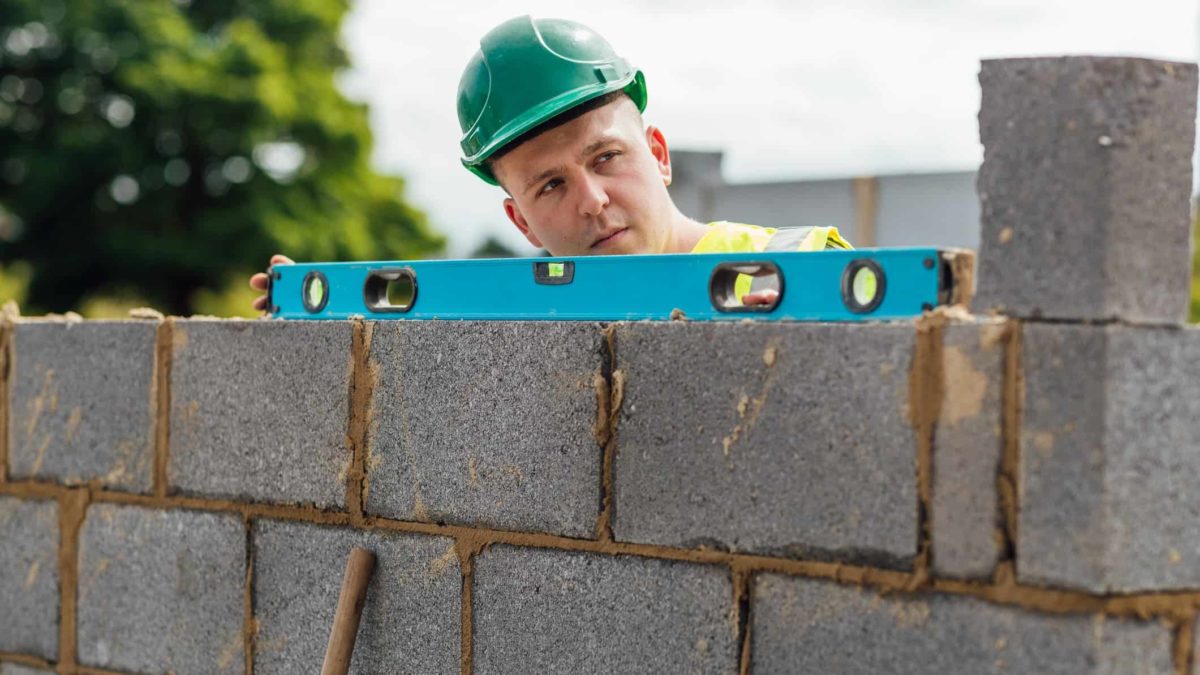
    a bricklayer peers over the top of a brick wall he is laying with a level measuring tool on top and looks critically at the work he is carrying out.

    The Brickworks Limited (ASX: BKW) share price has fallen around 17% in the last three months after reaching an all-time high of $31 on 8 March this year. 

    This decline brings its share price back to $26, the same level it was a year ago, as we can see in the chart below. In contrast, the S&P/ASX 200 Index (ASX: XJO) has surged 7.2% during the same period.

    Income-focused investors might be wondering if this is a good time to buy into this consistent dividend payer.

    Undervalued relative to its asset value 

    Bell Potter certainly thinks so, as my colleague James covers in this recent article.

    According to Bell Potter, the stock could be undervalued as it offers a discount on its net tangible asset (NTA) value, which includes a 26.1% shareholding in Washington H Soul Pattinson & Company Ltd (ASX: SOL). Bell Potter highlighted:

    We believe that an attractive look-through opportunity has recently presented in BKW, with our mark to market valuation of SOL indicating that the stock is currently trading at a 3.6% discount to pre-tax NTA.

    This compares to an average pre-tax premium to NTA of 3.9% (post the MLT merger) and represents the widest valuation gap since July ’22.

    Shortage in industrial properties continues

    Another key component of Brickworks’ NTA is its prime industrial land holdings across Australia and the United States, most notably in Western Sydney. The area is experiencing soaring demand for industrial properties as consumer demand for online shopping remains high.

    In a market update in May, the company explained:

    These structural trends, along with land supply issues, have driven up rent for prime industrial property in Wetsern Sydney by 55% in the past two years. We estimate that the current passing rent within the Industrial JV Trust [of Brickworks] of $147/m2 is now 35% below average market rent of $225/m2.

    Valuation comment 

    Following its recent drop, the Brickworks share price is trading at a price-to-book ratio (PBR) of 1.14x. 

    Over the past 10 years, shares in Brickworks have rarely traded below the company’s book value, except during the COVID-19 pandemic when the PBR dropped to 0.84x.

    The book value, different from NTA, is based on the value of its asset holdings as of 31 December 2023, without accounting for potential upside from future land development.

    Foolish takeaway

    The Brickworks share price is trading at an attractive valuation relative to its asset value, which is supported by industrial land shortages in prime locations, in my opinion.  

    This could present a buying opportunity for some dividend investors.

    The post Down 17% in 3 months, is it time to buy this ASX 200 dividend superstar? appeared first on The Motley Fool Australia.

    Should you invest $1,000 in Brickworks Limited right now?

    Before you buy Brickworks Limited shares, consider this:

    Motley Fool investing expert Scott Phillips just revealed what he believes are the 5 best stocks for investors to buy right now… and Brickworks Limited wasn’t one of them.

    The online investing service he’s run for over a decade, Motley Fool Share Advisor, has provided thousands of paying members with stock picks that have doubled, tripled or even more.*

    And right now, Scott thinks there are 5 stocks that may be better buys…

    See The 5 Stocks
    *Returns as of 5 May 2024

    More reading

    Motley Fool contributor Kate Lee has positions in Brickworks. The Motley Fool Australia’s parent company Motley Fool Holdings Inc. has positions in and has recommended Brickworks. The Motley Fool Australia has positions in and has recommended Brickworks. The Motley Fool has a disclosure policy. This article contains general investment advice only (under AFSL 400691). Authorised by Scott Phillips.

  • Are headwinds brewing for ASX 200 energy shares?

    Worker inspecting oil and gas pipeline.

    S&P/ASX 200 Index (ASX: XJO) energy shares are sinking for the second consecutive day today.

    In late morning trade the ASX 200 is up 0.2%.

    But ASX 200 energy shares aren’t helping out with the lifting. Here’s how the big three oil and gas stocks are tracking at this same time:

    • Woodside Energy Group Ltd (ASX: WDS) shares are down 0.9%
    • Santos Ltd (ASX: STO) shares are down 0.9%
    • Beach Energy Ltd (ASX: BPT) shares are down 1.8%

    Investors look to be favouring their sell buttons here following another overnight retrace in the oil price.

    Here’s what’s happening.

    Why is the oil price slipping?

    International benchmark Brent crude oil dipped another 0.1% overnight to US$77.47. That brings the weekly Brent crude oil price decline to almost 8%, with the oil price down more than 15% since 5 April, when that same barrel was fetching US$91.17.

    West Texas Intermediate crude oil also declined 0.2% overnight to US$73.12 per barrel.

    The oil price and ASX 200 energy shares continue to be pressured on the heels of this weekend’s Organization of the Petroleum Exporting Countries and its allies (OPEC+) meeting.

    While the cartel agreed to extend its existing production cuts through the coming quarter, it surprised the markets by saying production would begin to lift in October, with cuts phased out by June 2025.

    This is likely to see OPEC produce an additional half a million barrels per day by the end of 2024, with production expected to increase by 1.8 million barrels per day by next June.

    In what would prove good news for ASX 200 energy shares like Woodside, OPEC has a rather bullish outlook for global energy demand, forecasting that this demand growth will keep prices in balance amid the additional supply.

    Headwinds brewing for ASX 200 energy shares?

    Many analysts believe that OPEC’s growth forecasts are overly optimistic.

    That would mean the extra supplies coming to market could keep a lid on the oil price and the profit margins for ASX 200 energy shares.

    According to Robert Rennie, head of commodity and carbon strategy at Westpac Banking Corp (ASX: WBC), quoted by The Australian Financial Review:

    With global inventory rising, fuel inventory surging and more supply coming onstream through the fourth quarter, it’s hard not to see a push-back into the US$75 to US$80 range that contained us for much of the first quarter this year.

    Rennie is talking about Brent prices here.

    Fundstrat Global technical analyst Mark Newton has an even more bearish take, expecting the oil price to fall further from here.

    According to Newton:

    WTI crude could very well revisit last December’s lows in the high US$60’s, as a minimum downside target, and should make energy a difficult sector to overweight in the short run.

    It seems that traders viewed the lack of an output cut extension through year-end as bearish.

    While that would likely throw up some shorter-term headwinds for ASX 200 energy shares, this could provide an opportune longer-term entry point in this highly cyclical market.

    The post Are headwinds brewing for ASX 200 energy shares? appeared first on The Motley Fool Australia.

    Should you invest $1,000 in Beach Energy Limited right now?

    Before you buy Beach Energy Limited shares, consider this:

    Motley Fool investing expert Scott Phillips just revealed what he believes are the 5 best stocks for investors to buy right now… and Beach Energy Limited wasn’t one of them.

    The online investing service he’s run for over a decade, Motley Fool Share Advisor, has provided thousands of paying members with stock picks that have doubled, tripled or even more.*

    And right now, Scott thinks there are 5 stocks that may be better buys…

    See The 5 Stocks
    *Returns as of 5 May 2024

    More reading

    Motley Fool contributor Bernd Struben has no position in any of the stocks mentioned. The Motley Fool Australia’s parent company Motley Fool Holdings Inc. has no position in any of the stocks mentioned. The Motley Fool Australia has no position in any of the stocks mentioned. The Motley Fool has a disclosure policy. This article contains general investment advice only (under AFSL 400691). Authorised by Scott Phillips.

  • Is Nvidia stock going to $1,500?

    A man holds his hand under his chin as he concentrates on his laptop screen and reads about the ANZ share price

    This article was originally published on Fool.com. All figures quoted in US dollars unless otherwise stated.

    There’s no denying the impact of artificial intelligence (AI) on the tech world since early last year, and Nvidia (NASDAQ: NVDA) has been among the primary beneficiaries. The company’s graphics processing units (GPUs) supply the computational horsepower that underpins AI, pushing the stock to greater heights, resulting in a high-profile stock split.

    In a keynote address this past weekend ahead of the Computex trade show in Taiwan, CEO Jensen Huang laid out Nvidia’s game plan for the next couple of years, which made one Wall Street analyst even more bullish.

    You can’t spell gains without AI

    Bank of America analyst Vivek Arya called Nvidia a “top pick,” reiterating his buy rating on the stock and raising his price target to $1,500. That represents potential gains for investors of 37% over the coming year compared to the stock’s closing price on Friday.

    “Our company has a one-year rhythm,” Huang said. “Our basic philosophy is very simple: Build the entire data center scale, disaggregate and sell to you parts on a one-year rhythm, and push everything to technology limits.”

    The analyst noted that with this statement, Nvidia is essentially accelerating its product upgrade cycle from two years to one year. This will “continue to bolster Nvidia’s AI leadership position,” according to Arya.

    The evidence suggests the analyst is on to something. During his keynote, Huang said Nvidia planned to unveil a Blackwell Ultra processor in 2025, with its next-generation Rubin platform slated for release in 2026. The first Blackwell processors are slated for delivery beginning later this year, replacing the wildly popular Hopper generative AI chips.

    This relentless pace of innovation keeps Nvidia ahead of the competition. In its fiscal 2024 (ended Jan. 28), the company spent nearly $8.68 billion — more than 14% of its total revenue — on research and development. This has helped Nvidia maintain its sizable technological lead on its rivals, which shouldn’t be changing anytime soon.

    Nvidia stock is selling for 42 times forward earnings, a premium that’s supported its triple-digit revenue growth, making the stock a buy. 

    This article was originally published on Fool.com. All figures quoted in US dollars unless otherwise stated.

    The post Is Nvidia stock going to $1,500? appeared first on The Motley Fool Australia.

    Should you invest $1,000 in Nvidia right now?

    Before you buy Nvidia shares, consider this:

    Motley Fool investing expert Scott Phillips just revealed what he believes are the 5 best stocks for investors to buy right now… and Nvidia wasn’t one of them.

    The online investing service he’s run for over a decade, Motley Fool Share Advisor, has provided thousands of paying members with stock picks that have doubled, tripled or even more.*

    And right now, Scott thinks there are 5 stocks that may be better buys…

    See The 5 Stocks
    *Returns as of 5 May 2024

    More reading

    Danny Vena has positions in Nvidia. Bank of America is an advertising partner of The Ascent, a Motley Fool company. The Motley Fool Australia’s parent company Motley Fool Holdings Inc. has positions in and has recommended Bank of America and Nvidia. The Motley Fool Australia has recommended Nvidia. The Motley Fool has a disclosure policy. This article contains general investment advice only (under AFSL 400691). Authorised by Scott Phillips.

  • 3 boys hunting for fossils made the ultimate discovery: a young T-rex skeleton that scientists have dubbed Teen Rex

    The fossil finding family (clockwise from upper left: Sam Fisher, Emalynn Fisher, Danielle Fisher, Liam Fisher, Kaiden Madsen, and Jessin Fisher) pose with the field jacket after it was rolled into a helicopter net.
    The family who found the fossils at the North Dakota site where Teen Rex was found, posing with the field jacket that contains the fossil.

    • Three boys found a young Tyrannosaurus rex skeleton while hiking in North Dakota in 2022.
    • The discovery, dubbed Teen Rex, was made in the Hell Creek Formation of the Badlands.
    • Scientists said the find was significant as only a few juvenile T. rex fossils have ever been found.

    Three boys in North Dakota were out on a family hike when they came across something many adventurous kids only dream of finding: dinosaur bones.

    And not just any dinosaur, but a young Tyrannosaurus rex.

    The T. rex skeleton was discovered in 2022, when brothers Jessin and Liam Fisher, their dad, and their cousin Kaiden Madsen, were hiking in the Badlands near Marmarth and looking for fossils, according to a statement issued Monday by the Denver Museum of Nature & Science, which is set to display the skeleton this summer.

    The boys, who were aged 10, 9, and 7 at the time of the discovery, said in a press conference they had been going out to look for fossils for years. This time they were exploring the Hell Creek Formation, a rocky area that dates back 65.5 million years and is known for fossil formations, when they found some large bones sticking out of a rock.

    Three tooth emerging from the sandstone.
    Three tooth belonging to Teen Rex poking out of the sandstone.

    Sam Fisher, the father of Cession and Liam, took photos of the bones and contacted an old high school classmate, Tyler Lyson, the curator of paleontology at the Denver Museum of Nature & Science, to identify them.

    In the summer of 2023, the fossil finders and Lyson returned to the site to excavate the skeleton, which was located on federal lands managed by the Bureau of Land Management. About 30% of the skeleton was preserved, the museum said. The initial dig lasted 11 days, and the paleontologists plan to return this summer to look for any additional segments of the skeleton.

    The museum said the finding was significant because very few juvenile T. rex skeletons have ever been discovered.

    Illustration of what bones were found (highlighted in blue) during the excavation of Teen Rex. Museum scientists are hopeful more of the skeleton is preserved.
    Illustration of what bones were found (highlighted in blue) during the excavation of Teen Rex. Museum scientists are hopeful more of the skeleton is preserved.

    "By going outside and embracing their passions and the thrill of discovery, these boys have made an incredible dinosaur discovery that advances science and deepens our understanding of the natural world," Lyson said in a statement.

    Teen Rex, as scientists are calling the fossil, would have been 10 feet tall and 25 feet long, and weighed in at an estimated 3,500 pounds, according to the museum. By comparison, a fully grown T. rex could be 40 feet long and up to 8,000 pounds.

    The museum said the discovery of Teen Rex gives scientists an opportunity to study the growth and development of the species and how the animals matured.

    The fossil and a documentary that recounts the story are set to be temporarily displayed at the Denver Museum of Nature & Science starting June 21.

    Read the original article on Business Insider