
• Does the Vanguard US Total Market Shares Index ETF (VTS) pay a decent ASX dividend?

    Man sits smiling at a computer showing graphs

    Vanguard US Total Market Shares Index ETF (ASX: VTS) shares (units) may be best known for the substantial capital growth it has delivered to investors. However, did you know it also pays dividends?

    An exchange-traded fund (ETF) allows investors to buy a large group of businesses in a single investment. The ETF also acts as a conduit for any dividends and distributions it receives from holdings and passes to investors.

    With this particular ETF invested in more than 3,700 US-listed businesses, it receives a lot of dividends!

    Let’s examine how much dividend income the Vanguard US Total Market Shares Index ETF is paying.

    VTS ETF dividend yield

    The fund provider, Vanguard, tells investors about the fund’s key statistics every month. These include performance, the price/earnings and price-to-book ratios, the return on equity (ROE) ratio, the collective earnings growth rate of the underlying businesses, and the dividend yield.

    The ASX dividend yield of the Vanguard US Total Market Shares Index ETF is directly influenced by the dividend yield of the underlying holdings. The greater the portfolio’s weighting to a particular company, the more it influences the dividend yield.

    According to Vanguard, the VTS ETF dividend yield was 1.4% in April 2024.

    That’s not an exciting dividend yield. It’s so low because the portfolio’s biggest holdings have low yields or don’t pay dividends at all.

    For example, the biggest seven positions in the fund’s portfolio at 30 April 2024 were Microsoft, Apple, Nvidia, Alphabet, Amazon.com, Meta Platforms and Berkshire Hathaway. Company giants, but none of these stocks have a material yield. So, it’s not surprising the VTS ETF can’t provide much passive income to investors.

    It is fairly common for technology companies — which make up around a third of the fund’s allocation –to reinvest much of the profit generated back into the business for further growth rather than distributing it to shareholders.

    Can the fund generate cash flow?

    Over the past five years, the VTS ETF has delivered an average return per annum of 14.2%. Past performance shouldn’t be relied on for future performance, of course.

    With that sort of return, an investor could decide to sell around 3% or 4% of the fund’s value each year, and the remaining balance could still rise over time thanks to capital growth if the ETF’s total returns are more than 4% per annum. That means an ASX dividend yield of 3% or 4% could be achieved through sales, though any gains would be taxable (just like dividends are).

    That strategy would only work for a meaningful balance, though, such as above $10,000. Selling $40 of units, for example, would mean the brokerage costs may take up too much of the sale proceeds to be worthwhile.

    The post Does the Vanguard US Total Market Shares Index ETF (VTS) pay a decent ASX dividend? appeared first on The Motley Fool Australia.

    Should you invest $1,000 in Vanguard Us Total Market Shares Index Etf right now?

    Before you buy Vanguard Us Total Market Shares Index Etf shares, consider this:

    Motley Fool investing expert Scott Phillips just revealed what he believes are the 5 best stocks for investors to buy right now… and Vanguard Us Total Market Shares Index Etf wasn’t one of them.

    The online investing service he’s run for over a decade, Motley Fool Share Advisor, has provided thousands of paying members with stock picks that have doubled, tripled or even more.*

    And right now, Scott thinks there are 5 stocks that may be better buys…

    See The 5 Stocks
    *Returns as of 5 May 2024

    More reading

    Suzanne Frey, an executive at Alphabet, is a member of The Motley Fool’s board of directors. John Mackey, former CEO of Whole Foods Market, an Amazon subsidiary, is a member of The Motley Fool’s board of directors. Randi Zuckerberg, a former director of market development and spokeswoman for Facebook and sister to Meta Platforms CEO Mark Zuckerberg, is a member of The Motley Fool’s board of directors. Motley Fool contributor Tristan Harrison has no position in any of the stocks mentioned. The Motley Fool Australia’s parent company Motley Fool Holdings Inc. has positions in and has recommended Alphabet, Amazon, Apple, Berkshire Hathaway, Meta Platforms, Microsoft, and Nvidia. The Motley Fool Australia’s parent company Motley Fool Holdings Inc. has recommended the following options: long January 2026 $395 calls on Microsoft and short January 2026 $405 calls on Microsoft. The Motley Fool Australia has recommended Alphabet, Amazon, Apple, Berkshire Hathaway, Meta Platforms, Microsoft, and Nvidia. The Motley Fool has a disclosure policy. This article contains general investment advice only (under AFSL 400691). Authorised by Scott Phillips.

  • 3 high-flying ASX shares that could keep on climbing

    Over the last 12 months, the ASX 200 index has risen over 7%. While this is a decent return, it pales in comparison to some of the returns that have been recorded by ASX shares.

    For example, the three ASX shares listed below have absolutely smashed the market. And the good news is that there may be more to come according to analysts. Here’s what you need to know:

    Life360 Inc (ASX: 360)

    The Life360 share price is up almost 130% since this time last year. Investors have been fighting to get hold of the location technology company’s shares thanks to its explosive growth and transition to positive cash flow.

    The good news is that analysts don’t believe it is too late to climb on board. For example, Bell Potter has a buy rating and $17.75 price target on the ASX share. This implies potential upside of 15% for investors over the next 12 months.

    It highlights that the company has “the potential to leverage its large and growing user base to enter new markets and disrupt the legacy incumbents.” Bell Potter also believes that its performance during COVID highlights “the potential for continued strong growth in the base with market conditions now back to normal.”

    Telix Pharmaceuticals Ltd (ASX: TLX)

    The Telix share price has smashed the market and climbed 62% over the last 12 months.

    The catalyst for this has been a combination of exceptionally strong sales and earnings growth from the radiopharmaceuticals company and very promising trial updates.

    In respect to its financial performance, last month the company released its first quarter update and revealed a 75% increase in revenue to $175 million. Telix’s gross profit grew even quicker and was up 84% to $115.4 million.

    This went down well with analysts at UBS. The broker has put a buy rating and $19.30 price target on its shares. This implies potential upside of almost 9% for investors.

    Universal Store Holdings Ltd (ASX: UNI)

    The Universal Store share price has also risen 62% over the last 12 months. This has been driven by a solid performance so far in FY 2024 and the belief that its shares were undervalued last year.

    In respect to the former, the youth fashion retailer reported an 8.5% increase in group sales and a 16.7% jump in net profit after tax during the first half.

    Despite its strong rise, Morgans believes this ASX share can keep climbing. It has put an add rating and $6.50 price target on its shares, which implies potential upside of 30% for investors from current levels.

    The post 3 high-flying ASX shares that could keep on climbing appeared first on The Motley Fool Australia.

    Should you invest $1,000 in Life360 right now?

    Before you buy Life360 shares, consider this:

    Motley Fool investing expert Scott Phillips just revealed what he believes are the 5 best stocks for investors to buy right now… and Life360 wasn’t one of them.

    The online investing service he’s run for over a decade, Motley Fool Share Advisor, has provided thousands of paying members with stock picks that have doubled, tripled or even more.*

    And right now, Scott thinks there are 5 stocks that may be better buys…

    See The 5 Stocks
    *Returns as of 5 May 2024

    More reading

    Motley Fool contributor James Mickleboro has positions in Life360, Telix Pharmaceuticals, and Universal Store. The Motley Fool Australia’s parent company Motley Fool Holdings Inc. has positions in and has recommended Life360 and Telix Pharmaceuticals. The Motley Fool Australia has recommended Telix Pharmaceuticals. The Motley Fool has a disclosure policy. This article contains general investment advice only (under AFSL 400691). Authorised by Scott Phillips.

  • With 6%+ yields, here are 2 ASX dividend shares to consider buying now

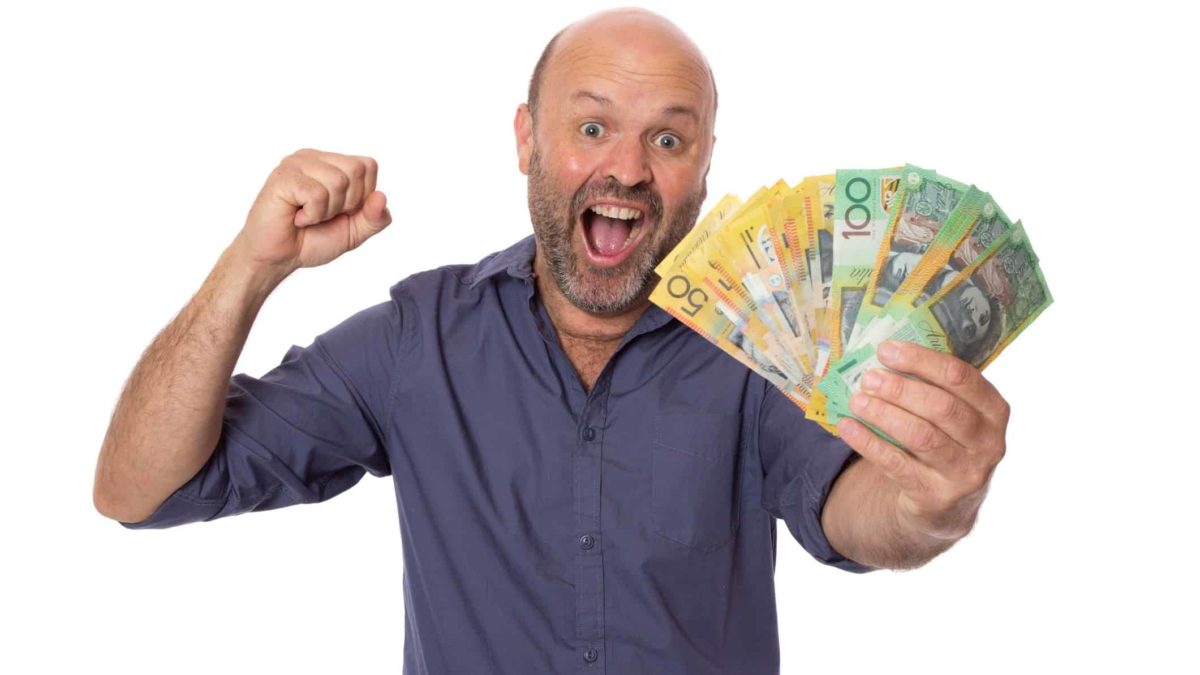
    Happy man holding Australian dollar notes, representing dividends.

    Income investors certainly are a lucky bunch. The Australian share market is filled to the brim with dividend-paying companies.

    And while the average dividend yield usually sits at around 4%, some ASX dividend shares provide much juicier yields.

    For example, the two shares listed below have been named as buys and tipped to offer yields greater than 6% this year and next. Here’s what you need to know about them:

    Accent Group Ltd (ASX: AX1)

    The first ASX dividend share that could be worth considering this month is Accent Group.

    It is a market leading digitally integrated retail and distribution business in the performance and lifestyle market sectors. Its main focus is footwear, with the company operating a large number of retail banners such as HypeDC, Platypus, Sneaker Lab, Stylerunner, and The Athlete’s Foot.

    At the last count, Accent Group had a network of over 800 stores. It also had 35 websites, 821 points of distribution, and almost 10 million contactable customers. This makes it the clear leader in the market.

    Bell Potter is a very big fan of the company and sees significant value in its shares at current levels. The broker has a buy rating and $2.50 price target on them. This implies potential upside of approximately 30% for investors over the next 12 months.

    But the returns won’t stop there. Bell Potter expects some very big dividend yields from its shares in the near term. It is forecasting fully franked dividends per share of 13 cents in FY 2024 and then 14.6 cents in FY 2025. Based on the latest Accent share price of $1.92, this represents dividend yields of 6.8% and 7.6%, respectively.

    APA Group (ASX: APA)

    Another ASX dividend share that could offer big yields for income investors in the near term is APA Group.

    It is an energy infrastructure business that owns, manages, and operates a diverse portfolio of gas, electricity, solar and wind assets. This includes 15,000 kilometres of natural gas pipelines that connect sources of supply and markets across mainland Australia, delivering half the nation’s natural gas usage.

    In addition, it owns or has interests in gas storage facilities, gas-fired power stations, and renewable energy generation. In total, the company owns or manages and operates a portfolio of assets valued at around $25 billion.

    Analysts at Macquarie are positive on the company and have an outperform rating and $9.40 price target on its shares.

    As for dividends, the broker believes the company’s long run of dividend increases can continue. It is forecasting dividends per share of 56 cents in FY 2024 and then 57.5 cents in FY 2025. Based on the current APA Group share price of $8.39, this equates to 6.7% and 6.85% dividend yields, respectively.

    The post With 6%+ yields, here are 2 ASX dividend shares to consider buying now appeared first on The Motley Fool Australia.

    Should you invest $1,000 in Apa Group right now?

    Before you buy Apa Group shares, consider this:

    Motley Fool investing expert Scott Phillips just revealed what he believes are the 5 best stocks for investors to buy right now… and Apa Group wasn’t one of them.

    The online investing service he’s run for over a decade, Motley Fool Share Advisor, has provided thousands of paying members with stock picks that have doubled, tripled or even more.*

    And right now, Scott thinks there are 5 stocks that may be better buys…

    See The 5 Stocks
    *Returns as of 5 May 2024

    More reading

    Motley Fool contributor James Mickleboro has no position in any of the stocks mentioned. The Motley Fool Australia’s parent company Motley Fool Holdings Inc. has positions in and has recommended Macquarie Group. The Motley Fool Australia has positions in and has recommended Apa Group and Macquarie Group. The Motley Fool Australia has recommended Accent Group. The Motley Fool has a disclosure policy. This article contains general investment advice only (under AFSL 400691). Authorised by Scott Phillips.

  • Bell Potter names the best ASX shares to buy in June

    A woman with strawberry blonde hair has a huge smile on her face and fist pumps the air having seen good news on her phone.

    If you’re in the market for some new ASX shares in June, then it could be worth listening to what analysts at Bell Potter are saying.

    That’s because they have just revealed their favoured picks for the month ahead. Three on its list this month are named below. Here’s what the broker is saying about them:

    Coles Group Ltd (ASX: COL)

    This supermarket giant could be an ASX share to buy this month according to the broker. It believes the company’s investment in its supply chain and online business will help strengthen its position in the market. It said:

    Costs are expected to remain elevated but should moderate through FY24 and FY25 as general inflation tapers off. In the medium term, 1) higher immigration should support grocery spending, and 2) Coles is entering a period of elevated capex intensity as it reinvests to modernise its supply chain and to catch up to competitors on online and digital offerings, which should help Coles maintain its market position.

    Bell Potter has a buy rating and $19.00 price target on Coles’ shares.

    Mineral Resources Ltd (ASX: MIN)

    If you don’t mind investing in the mining sector, then it could be worth looking at this mining and mining services company. Bell Potter likes Mineral Resources due to its diverse operations and strong growth outlook. It explains:

    Our Buy view is underpinned by MIN’s earnings diversification, strong insider ownership, clearly articulated strategies, expertise in contracting and internal growth options at Onslow as well as potential lithium expansions including into downstream. All up, MIN offers diversified exposure to steady income streams from the contracting business and market-driven commodity exposure coupled with earnings derived from both lithium and iron ore.

    The broker has a buy rating and $85.00 price target on the ASX share.

    Regal Partners Ltd (ASX: RPL)

    A final ASX share that could be a buy is investment company Regal Partners. The broker highlights its strong investment performance and believes that the market is undervaluing this. It commented:

    We continue to favour RPL, given its strong organic & inorganic growth potential, and entrepreneurial culture. In the last six months, and following the recent acquisition of PM Capital and Taurus (50%), the firm has shown an acceleration of inflows, strong investment performance (which will give rise to performance fees) and success in marketing new funds. We feel this strong performance is not reflected in the share price and see considerable upside

    Bell Potter has a buy rating and $4.02 price target on its shares. It also expects a 6%+ dividend yield.

    The post Bell Potter names the best ASX shares to buy in June appeared first on The Motley Fool Australia.

    Should you invest $1,000 in Coles Group Limited right now?

    Before you buy Coles Group Limited shares, consider this:

    Motley Fool investing expert Scott Phillips just revealed what he believes are the 5 best stocks for investors to buy right now… and Coles Group Limited wasn’t one of them.

    The online investing service he’s run for over a decade, Motley Fool Share Advisor, has provided thousands of paying members with stock picks that have doubled, tripled or even more.*

    And right now, Scott thinks there are 5 stocks that may be better buys…

    See The 5 Stocks
    *Returns as of 5 May 2024

    More reading

    Motley Fool contributor James Mickleboro has no position in any of the stocks mentioned. The Motley Fool Australia’s parent company Motley Fool Holdings Inc. has no position in any of the stocks mentioned. The Motley Fool Australia has positions in and has recommended Coles Group. The Motley Fool has a disclosure policy. This article contains general investment advice only (under AFSL 400691). Authorised by Scott Phillips.

  • Trump asks hush-money judge to lift his gag order, which would leave him free to seek vengeance against trial witnesses

    donald trump papers court
    Former US President Donald Trump speaks to the press during his trial.

    • Donald Trump's legal team asked the judge in his Manhattan trial to lift his gag order.
    • Without it, Trump is free to attack Michael Cohen, Stormy Daniels, the judge's daughter, and jurors.
    • Trump already violated the gag order 10 different times, the judge previously found.

    Donald Trump's legal team has asked for the judge who presided over his criminal hush-money trial to lift his gag order, which would give him a free hand to criticize witnesses and jurors in the trial.

    The former president has spent much of the six weeks of his criminal trial — which concluded Thursday with a thundering guilty verdict on all 34 counts — complaining about the gag.

    The order from New York Supreme Court Justice Juan Merchan forbade Trump from saying anything about possible witnesses, staff members at the Manhattan District Attorney's Office, court staff, or any of their family members, as well as jurors.

    It frustrated Trump, who sought to cast several witnesses as part of a political conspiracy. Before the trial, he used his bully pulpit to frequently antagonize Michael Cohen, the key witness in the trial and his former personal lawyer, who had his own legal problems. And aside from his lawyer's cross-examination, Trump could not respond to testimony from Stormy Daniels, the porn star who was paid to stay quiet ahead of the 2016 election about the affair she says she had with him.

    In a letter to the judge Tuesday, Trump's lead lawyer, Todd Blanche, said the basis for a gag order "no longer exists" and that Trump ought to be able to react to comments from Cohen and Daniels, as well as from President Joe Biden.

    "Now that the trial is concluded, the concerns articulated by the government and the Court do not justify continued restrictions on the First Amendment rights of President Trump — who remains the leading candidate in the 2024 presidential election — and the American people," Blanche wrote.

    A spokesperson for the Manhattan district attorney's office declined to comment on the gag-lift request.

    In near-daily comments to journalists outside the Manhattan courtroom during the trial, Trump criticized the gag order. He frequently complained he could not use "specific names" in his tirades about the proceedings and that he ought to be able to speak freely because he is a candidate in the 2024 presidential election.

    Merchan's orders approved the district attorney's request to restrict extrajudicial statements "for the duration of the trial," which technically ended with the jury verdict Thursday.

    But Trump's lawyers didn't immediately ask for the gag order to be lifted. At a press conference in Trump Tower on Friday, Trump continued to complain about the "nasty gag order" he was under.

    In an interview with The Associated Press last week, Blanche said he believed the gag had been lifted but that he wasn't sure and wanted "to be careful and understand when it no longer applies."

    During the trial, Trump violated the gag order on 10 different occasions, Merchan found. The judge held the former president in contempt of court and ordered him to pay the maximum $1,000 for each violation.

    Trump — a billionaire who uses political donor money to pay his legal fees — appeared undeterred, leading Merchan to say he would also consider jailing Trump.

    "You are the former President of the United States and possibly the next President, as well," Merchan told Trump at a May 6 hearing in the middle of the trial. "There are many reasons why incarceration is truly a last resort for me. To take that step would be disruptive to these proceedings, which I imagine you want to end as quickly as possible."

    In the weeks since, Trump had toned down his rhetoric specifically targeting Cohen and others, although he brought a steady stream of political allies to the courthouse, who made some of the same criticisms before TV cameras.

    If Merchan lifts the gag order, it would leave Trump free to more explicitly attack Cohen and other witnesses, allowing him to sharpen his baseless argument that the prosecution was politically motivated.

    It would also allow him to attack Merchan's daughter, a political consultant for Democratic politicians. Trump may also resume attacks on Matthew Colangelo, a prosecutor in the case who had previously worked in a senior position in the US Justice Department, which Trump claims is evidence that Biden orchestrated the case against him.

    Trump may also choose to target jurors with his political megaphone. Although Merchan took steps to keep their names hidden from the public, they were not sequestered, and some of Trump's supporters have reportedly sought to identify and threaten them.

    But any of Trump's public attacks and lack of remorse for the crimes he was convicted of could also find their way into a sentencing memo from prosecutors, which would allow the judge to weigh them before deciding Trump's punishment for his conviction. The public comments — and previously determined gag order violations — could lead Merchan to issue a harsher punishment.

    The sentencing hearing is scheduled for July 11.

    Read the original article on Business Insider
  • Why this AI researcher thinks there’s a 99.9% chance AI wipes us out

    OpenAI Sam Altman at Microsoft event
    OpenAI recently came out with its most human-like version of Chat-GPT.

    • AI researcher Roman Yampolskiy estimates a 99.9% chance of AI leading to human extinction.
    • He said no AI model so far has been safe, and it's unlikely that future models will be bug-free.
    • Other AI researchers have said been more moderate in estimates about AI leading to extinction.

    Podcaster Lex Fridman said in a recent episode that most AI engineers he speaks with estimate between a one and 20% chance that artificial general intelligence will eventually kill off humans.

    The prediction varies depending on how you ask. For example, a recent study conducted with 2,700 AI researchers indicated there's only a 5% chance that AI will lead to human extinction.

    But Fridman said it's important to talk to people who estimate a much higher likelihood AI could wipe us out — like AI researcher Roman Yampolskiy, who told the podcaster in an interview released Sunday that he pegs it as 99.9% within the next hundred years.

    The AI researcher teaches computer science at the University of Louisville and just came out with a book called "AI: Unexplainable, Unpredictable, Uncontrollable."

    He discussed the risks of AI for over two hours on Fridman's podcast — and his predictions were pretty bleak.

    He said the chances that AI will wipe out humanity depend on whether humans can create highly complex software with zero bugs in the next 100 years. Yampolskiy said he finds that unlikely since no AI model has been completely safe from people attempting to get the AI to do something it wasn't designed to do.

    "They already have made mistakes," Yampolskiy said. "We had accidents, they've been jailbroken. I don't think there is a single large language model today, which no one was successful at making do something developers didn't intend it to do."

    The first few versions of AI models in the last two years have raised various red flags for potential misuse or misinformation. Deepfakes have created fake pornographic images of female public figures and threatened to influence elections with AI robocalls imitating President Biden.

    Google AI Overviews, based on Google's Gemini AI model, is the latest product rollout that didn't stick the landing. The new feature on Google Search was meant to provide quick informative overviews for certain inquiries presented at the top of search results. Instead, it went viral for coming up with nonsense answers, like suggesting making pizza with glue or stating that no countries in Africa started with the letter K.

    Yampolskiy said in order to control AI, there needs to be a perpetual safety machine. Yampolskiy said even if we do a good job with the next few versions of GPT, AI will continue to improve, learn, self-modify, and interact with different players — and with existential risks, "you only get one chance."

    The CEO of ChatGPT developer OpenAI, Sam Altman, has suggested a "regulatory sandbox" where people experiment with AI and regulate it based on what "went really wrong" and what went "really right."

    Altman once warned — or maybe he was joking — back in 2015 that "AI will probably most likely lead to the end of the world, but in the meantime, there'll be great companies."

    More recently, Altman has said that what keeps him up at night is "all of the sci-fi stuff" related to AI, including the things that are "easy to imagine where things really go wrong."

    Since ChatGPT took the world by storm in November 2022, various predictions have been made about how AI could lead to humanity's downfall in regard to AI.

    But Yampolskiy also cautioned that "we cannot predict what a smarter system will do." He compared humans to squirrels in the context of AGI, or artificial general intelligence, and said AI will come up with something that we don't even know exists yet.

    According to Yampolskiy, however, there are three realms of outcomes that he predicts. One risk is that everyone will die, another is that everyone will suffer and wish they were dead, and another is that humans have completely lost their purpose.

    The last one refers to a world in which AI systems are more creative than humans and can perform all the jobs. In that reality, it's not clear what humans would do to contribute, Yampolskiy said, echoing some concerns about whether AI will start to take humans' jobs.

    Most people in the field acknowledge some level of risk with AI, but they don't think it's as likely that things will end badly. Elon Musk has predicted a 10-20% chance that AI will destroy humanity.

    Former Google CEO Eric Schmidt has said the real dangers of AI, which are cyber and biological attacks, will come in three to five years. If AI develops free will, Schmidt has a simple solution: humans can just unplug it.

    Read the original article on Business Insider
  • What is Goldman Sachs saying about Medibank shares in June?

    Woman on her laptop thinking to herself.

    Medibank Private Ltd (ASX: MPL) shares have been on form over the last six months.

    During this time, the private health insurer’s shares have risen almost 8%.

    This leaves them trading at $3.75, which is just a stone’s throw away from their 52-week high of $3.94.

    But can this run continue or have Medibank shares now peaked for the time being? Let’s take a look at what analysts at Goldman Sachs are saying about the company.

    What is Goldman Sachs saying about Medibank shares?

    Well, there’s good news and bad news for Medibank shareholders.

    The good news is that Goldman doesn’t believe you should be rushing out to sell your shares. The bad news is that it does feel that they are now fully valued.

    According to a note from late last month, the broker has reaffirmed its neutral rating and $3.70 price target. This is marginally lower than where they currently trade.

    But thanks to dividends, Goldman expects a positive but modest total return over the next 12 months.

    It is forecasting fully franked dividends of 16 cents per share in FY 2024 and 17 cents per share in FY 2025. This equates to dividend yields of 4.25% and 4.5%, respectively.

    Goldman likes Medibank due to its defensive earnings and favourable operating conditions. However, due to its current valuation, it isn’t able to recommend its shares as a buy right now.

    Instead, it prefers rival NIB Holdings Limited (ASX: NHF). It commented:

    MPL is one of the largest private health insurers in Australia. We are Neutral rated on the stock. We like MPL given: 1) it offers defensive exposure to the private health insurance sector which is experiencing favourable operating trends, 2) the claims environment (utilisation / inflation) remains manageable, 3) policyholder give backs are supporting retention, 4) strong recovery in non-resident volumes – international students, workers and visitor arrivals. However, we are Neutral reflecting: 1) MPL’s policyholder growth vs NHF, 2) Valuation, 3) Some risk related to cyber security legal cases and investigations.

    Goldman Sachs currently has a buy rating and $8.10 price target on NIB’s shares. This implies a potential return of 9.5% over the next 12 months before dividends and approximately 13.5% including them. It said:

    We currently have a preference for NHF in this space reflecting strong underlying top line growth through policyholder growth and premium rate increases, greater diversity of earnings outside of regulated resident health insurance and valuation appeal.

    The post What is Goldman Sachs saying about Medibank shares in June? appeared first on The Motley Fool Australia.

    Should you invest $1,000 in Medibank Private Limited right now?

    Before you buy Medibank Private Limited shares, consider this:

    Motley Fool investing expert Scott Phillips just revealed what he believes are the 5 best stocks for investors to buy right now… and Medibank Private Limited wasn’t one of them.

    The online investing service he’s run for over a decade, Motley Fool Share Advisor, has provided thousands of paying members with stock picks that have doubled, tripled or even more.*

    And right now, Scott thinks there are 5 stocks that may be better buys…

    See The 5 Stocks
    *Returns as of 5 May 2024

    More reading

    Motley Fool contributor James Mickleboro has no position in any of the stocks mentioned. The Motley Fool Australia’s parent company Motley Fool Holdings Inc. has positions in and has recommended Goldman Sachs Group. The Motley Fool Australia has no position in any of the stocks mentioned. The Motley Fool has a disclosure policy. This article contains general investment advice only (under AFSL 400691). Authorised by Scott Phillips.

  • Why you should sell CBA, Westpac, and Bank of Queensland shares in June

    A man in a suit smiles at the yellow piggy bank he holds in his hand.

    The banking sector has been a great place to invest over the last six months.

    During this time, a number of Australian banks have significantly outperformed, delivering big returns for investors.

    For example, Commonwealth Bank of Australia (ASX: CBA) shares are up 16% and Westpac Banking Corp (ASX: WBC) shares are up 25%.

    Regional bank Bank of Queensland Ltd (ASX: BOQ) has also been on form, rising by 9% over the six months.

    However, the team at Goldman Sachs has just reiterated its view that investors should be locking in their gains and moving out of the banking sector.

    What is Goldman saying at the banks?

    It notes that bank valuations in Australia have always been higher than their global peers. And this has been somewhat justifiable given their higher returns on equity (ROE). But the latter no longer is the case. It explains:

    In CY15A, the Australian banks earned the second highest average ROTE/ROE of global comparable banks, slightly below that of the Canadian banks. However, between 2015 and 2023, Australian bank ROTE/ROE underperformed global comparable banks by c. 50%, such that Australian banks now actually earn the lowest ROTE of global comparable banks, and among the lowest ROE.

    Unfortunately, Goldman doesn’t believe this trend will change any time soon. It adds:

    Interestingly, the underperformance on returns can largely be attributed to NIM and the exit from sources of low capital intensive non-interest income, neither of which we expect to improve over the forecast period. Furthermore, we note that balance sheet gearing has actually been a relative returns tailwind for Australian bank returns.

    ASX banks look expensive

    Despite the above, Australian investors have been prepared to buy CBA and other ASX bank shares even though they are the most expensive in the world. It adds:

    Despite this relatively poor ROTE/ROE performance, the fall in Australian bank price-to-book multiples has largely matched that of their global comparable peers, such that they collectively remain the most expensive global banks (1.9x P/BV for 11% ROE vs. global comparable banks 1.3x P/BV for 13% ROE). With all this in mind, we estimate the Australian banks, relative to global comparable peers, on a ROE vs. price-to-book multiples basis, are currently trading at the 96th percentile versus history (95th percentile ex-CBA).

    Sell Westpac, Bank of Queensland, and CBA shares

    In light of the above, it will come as no surprise to learn that Goldman has put sell ratings on CBA, Bank of Queensland, and Westpac.

    It has a sell rating and $82.61 price target on CBA’s shares, a sell rating and $24.10 price target on Westpac’s shares, and a sell rating and $5.44 price target on Bank of Queensland’s shares.

    The post Why you should sell CBA, Westpac, and Bank of Queensland shares in June appeared first on The Motley Fool Australia.

    Should you invest $1,000 in Bank Of Queensland right now?

    Before you buy Bank Of Queensland shares, consider this:

    Motley Fool investing expert Scott Phillips just revealed what he believes are the 5 best stocks for investors to buy right now… and Bank Of Queensland wasn’t one of them.

    The online investing service he’s run for over a decade, Motley Fool Share Advisor, has provided thousands of paying members with stock picks that have doubled, tripled or even more.*

    And right now, Scott thinks there are 5 stocks that may be better buys…

    See The 5 Stocks
    *Returns as of 5 May 2024

    More reading

    Motley Fool contributor James Mickleboro has positions in Westpac Banking Corporation. The Motley Fool Australia’s parent company Motley Fool Holdings Inc. has positions in and has recommended Goldman Sachs Group. The Motley Fool Australia has no position in any of the stocks mentioned. The Motley Fool has a disclosure policy. This article contains general investment advice only (under AFSL 400691). Authorised by Scott Phillips.

  • It’s all unraveling at OpenAI (again)

    Sam Altman
    OpenAI's negative news cycle continues, with concerns over safety, NDAs, and Sam Altman's conflicts of interest.

    • It's a real mess at OpenAI, as more concerns over its commitment to safety come to light.
    • The ChatGPT-maker has faced backlash over transparency issues, NDA use, and a tussle with Scarlett Johansson. 
    • Its CEO Sam Altman isn't looking too good, either, as he takes on a new job: damage control.

    OpenAI's rough week has turned into a rough month — and it's not looking like a problem that the company's golden boy CEO, Sam Altman, can easily solve.

    In the latest development of the OpenAI-is-a-disaster saga, a group of current and former OpenAI employees has gone public with concerns over the company's financial motivations and commitment to responsible AI. In a New York Times report published Tuesday, they described a culture of false promises around safety.

    "The world isn't ready, and we aren't ready," Daniel Kokotajlo, a former OpenAI researcher, wrote in an email announcing his resignation, according to the Times report. "I'm concerned we are rushing forward regardless and rationalizing our actions."

    Also on Tuesday, the whistleblowers, along with other AI insiders, published an open letter demanding change in the industry. The group calls for AI companies to commit to a culture of open criticism and to promise not to retaliate against those who come forward with concerns.

    While the letter isn't specifically addressed to OpenAI, it's a pretty clear subtweet and another damaging development for a company that has taken more than enough hits in the last couple of weeks.

    In a statement to Business Insider, an OpenAI spokesperson reiterated the company's commitment to safety, highlighting an "anonymous integrity hotline" for employees to voice their concerns and the company's safety and security committee.

    "We're proud of our track record providing the most capable and safest AI systems and believe in our scientific approach to addressing risk," they said over email. "We agree that rigorous debate is crucial given the significance of this technology and we'll continue to engage with governments, civil society and other communities around the world."

    Safety second (or third)

    A common theme of the complaints is that, at OpenAI, safety isn't first — growth and profits are.

    In 2019, the company went from a nonprofit dedicated to safe technology to a "capped profit" organization worth $86 billion. And now Altman is considering making it a regular old for-profit vehicle of capitalism.

    This put safety lower on the priority list, according to former board members and employees.

    "Based on our experience, we believe that self-governance cannot reliably withstand the pressure of profit incentives," former board members Helen Toner and Tasha McCauley wrote in an Economist op-ed last month that called for external oversight of AI companies. Toner and McCauley voted for Altman's ouster last year. (In a responding op-ed, current OpenAI board members Bret Taylor and Larry Summers defended Altman and the company's safety standards.)

    Those profit incentives have put growth front and center, some insiders say, with OpenAI racing against other artificial intelligence companies to build more advanced forms of the technology — and releasing those products before some people think they are ready for the spotlight.

    According to an interview Toner gave last week, Altman routinely lied and withheld information from the board, including that about safety proccesses. The board wasn't even aware of ChatGPT's release in November 2023 — and found out it went live on Twitter, she said. (The company did not explicitly deny this but, in a statement, said it was "disappointed that Ms. Toner continues to revisit these issues.")

    The former researcher Kokotajlo told the Times that Microsoft began testing Bing with an unreleased version of GPT, a move that OpenAI's safety board had not approved. (Microsoft denied this happened, according to The New York Times.)

    The concerns mirror those of the recently departed Jan Leike, who led the company's superalignment team with chief scientist Ilya Sutskever, another recent defector. The team, dedicated to studying the risks that AI superintelligence poses to humanity, saw a number of departures over recent months. It disbanded when its leaders left, though the company has since formed a new safety committee.

    "Over the past years, safety culture and processes have taken a backseat to shiny products," Leike wrote in a series of social media posts around his departure. "I have been disagreeing with OpenAI leadership about the company's core priorities for quite some time, until we finally reached a breaking point."

    These concerns are heightened as the company approaches artificial general intelligence — or technology capable of all human behavior. Many experts say AGI increases the likelihood of p(doom), a nerdy and depressing term for the probability of AI destroying humanity.

    To put it bluntly, as leading AI researcher Stuart Russell said to BI last month: "Even people who are developing the technology say there's a chance of human extinction. What gave them the right to play Russian roulette with everyone's children?"

    An A-list actor and NDAs

    You probably didn't have it on your 2024 bingo card that Black Widow would take on a Silicon Valley giant, but here we are.

    Over the past few weeks, the company has met some unlikely foes with concerns that go beyond safety, including Scarlett Johansson.

    Last month, the actor lawyered up and wrote a scathing statement about OpenAI after it launched a new AI model with a voice eerily similar to hers. While the company insists it did not seek to impersonate Johansson, the similarities were undeniable — particularly given the fact that Altman tweeted out "Her" around the time of the product announcement, seemingly a reference to Johansson's 2013 movie in which she plays an AI virtual assistant. (Spoiler alert: The movie isn't exactly a good look for the technology.)

    "I was shocked, angered and in disbelief that Mr. Altman would pursue a voice that sounded so eerily similar," Johansson said of the model, adding that she had turned down multiple offers from Altman to provide a voice for OpenAI.

    The company's defense was, more or less, that its leadership didn't communicate properly and handled the matter clumsily — which isn't all that comforting considering the company is dealing with some of the world's most powerful technology.

    Things worsened when a damaging report was published about the company's culture of stifling criticism with its restrictive and unusual NDAs. Former employees who left the company without signing an NDA could lose out on vested equity — worth millions for some. Such agreement was basically unheard of in the world of tech.

    "This is on me and one of the few times I've been genuinely embarrassed running openai; I did not know this was happening, and I should have," Altman responded to the claims in a tweet.

    But days later he was caught with egg on his face when a report came out that seemed to indicate Altman knew about the NDAs all along.

    As Altman learned, when it rains, it pours.

    No more white knight

    But the May rain did not bring June flowers.

    Like many tech rocketships before it, OpenAI is synonymous with its cofounder and CEO Sam Altman — who, until recently, was seen as a benevolent brainiac with a vision for a better world.

    But as the company's perception continues to sour, so does that of its leader.

    Earlier this year, the venture capital elite started to turn on Altman, and now the public may be following suit.

    The Scarlet Johansson incident left him looking incompetent, the NDA fumble left him looking a bit like a snake, and the safety concerns left him looking like an evil genius.

    Most recently, The Wall Street Journal reported Monday some questionable business dealings by Altman.

    While he isn't profiting directly from OpenAI — he owns no stake in the company, and his reported $65,000 salary is a drop in the bucket compared to his billion-dollar net worth — conflicts of interest abound. He has personal investments in several companies with which OpenAI does business, the Journal reported.

    He owns stock in Reddit, for example, which recently signed a deal with OpenAI. The first customer of nuclear-energy startup Helion, in which Altman is a major investor, was Microsoft, OpenAI's biggest partner. (Altman and OpenAI said he recused himself from these deals.)

    Faced with the deluge of detrimental media coverage, the company and its leader have tried to do some damage control: Altman announced he was signing the Giving Pledge, a promise to donate most of his wealth, and the company has reportedly sealed a major deal with Apple.

    But a few positive news hits won't be enough to clean up the mess Altman is facing. It's time for him to pick up a bucket and a mop and get to work

    Read the original article on Business Insider