• The 3rd human case of bird flu in the US has 2 new and troubling symptoms

    man dumps feed from a white bucket in front of a lineup of dairy cows behind a metal pole structure
    Dairy farmer Brent Pollard gives cows feed at his cattle farm in Rockford, Illinois.

    • The H5N1 bird flu virus has infected a third person in the US, this time with respiratory symptoms.
    • The new patient's cough and sore throat could help the virus get better at infecting humans.
    • Experts fear the US is missing critical opportunities to check the virus's DNA for new mutations.

    The H5N1 bird flu virus has once again infected a human. But this time, the unlucky patient had a cough and a sore throat, which is a new milestone for the virus's spread in the US.

    The H5N1 virus has become a pandemic among animals, raging through worldwide bird populations and now through US cattle herds.

    This latest human case, which the US Centers for Disease Control and Prevention confirmed on Thursday, is the third known human case in the US, following one in Texas and another in Michigan.

    All three people are dairy farm workers who were exposed to infected cows, according to the CDC.

    The first two cases, however, only involved eye symptoms, including conjunctivitis or pink eye. That means the infection was probably limited to their eyes. Now it has hit someone's lungs.

    The risk to the general public is still low, the CDC says, but these new symptoms suggest the virus may have entered a new phase of its flirtation with human infection.

    Lungs give the virus more opportunity to adapt to humans

    St. Jude virologist Richard Webby is a leading researcher on an H5 group of influenza viruses, which have been circulating in bird populations for about 25 years.

    Since 2021, the H5N1 virus has branched out to new frontiers of sustained spread, infecting dolphins and porpoises, migrating to the Americas, culling sea lions and seals, and now spreading through US cattle herds.

    two people in white biohazard suits with masks and goggles handle a vial on a beach next to a dead porpoise
    Scientists collect organic material from a dead porpoise on the coast of the Atlantic Ocean, during a bird flu outbreak in Sao Jose do Norte, Brazil.

    "This virus keeps on turning up surprises," Webby, who directs the World Health Organization Collaborating Centre for Studies on the Ecology of Influenza in Animals and Birds, told Business Insider. "Had you asked me, beginning of the year, what the chances are of H5 turning up in cows, I would have said exceedingly low."

    Still, he said, H5N1 is still more of a bird virus than a mammalian virus. That's mainly because of the receptors it binds to in order to enter its hosts' cells and replicate itself.

    "Avian viruses bind to one form of this receptor on the host cell. Mammalian viruses bind to a different form," Webby said.

    The mucus lining the human eye (where the first farmworker got conjunctivitis) is rich in the receptors that avian viruses grab, he said. There, the H5N1 virus can continue operating as an avian virus grabbing avian receptors, with no need to adapt to human receptors.

    But our respiratory tracts are full of both forms of this receptor the form preferred by avian viruses and the one preferred by mammalian viruses. Therefore, being in the lungs gives H5N1 more exposure to the receptors that mammalian viruses use, according to Webby.

    That gives H5N1 more opportunity to sustain a mutation that would allow it to bind to those mammalian receptors, adapting better to human bodies.

    That's the concern, but it's not clear if that has actually happened inside this patient's lungs. For such a mutation to be significant, it would then have to spread to other people as well. So far, based on all known cases, the virus has been unable to spread from one person to another.

    Sequencing the virus tests for mutations

    In a New York Times opinion piece on Sunday, virologist Rick Bright argued that the emergence of respiratory symptoms indicates "a dangerous inflection point" for the virus.

    After all, he wrote, "Coughing can spread viruses more easily than eye irritation can."

    Man coughing
    Coughing can spread respiratory infections like common cold or COVID-19.

    But for Webby, the Michigan patient's cough "doesn't change a whole lot."

    Two previous one-off human cases of H5N1 — one in Chile and one in Ecuador — featured respiratory symptoms.

    The virus didn't necessarily have to mutate to infect the Michigan farmworker's respiratory system, according to Webby. The person could have simply encountered a large amount of virus, maybe an especially ill cow.

    "That's me sort of looking at the crystal ball a little," he said, adding that it's "the most likely explanation for what we're seeing, rather than the other one, which is of course much more scary, that this virus has already changed."

    Either way, scientists won't know if any scary mutations have occurred until they can examine the virus's DNA sequence from this new case. The patient carried such small amounts of the virus, though, that it's possible the CDC won't have enough to get the sequence, Webby said.

    DNA sequences are critical. By checking the virus's genes in each new human case, no matter how mild the symptoms, scientists can identify any fresh mutations that help it adapt to humans. If H5N1 becomes a bona fide mammalian virus, they could watch its transformation in real-time.

    blue gloved hands in a white lab coat hold a large syringe and a lab tube of fluid
    A federal agricultural inspector works on a sample to test for avian influenza virus in Campinas, Brazil.

    "The very first signals we're going to get that this virus is changing are probably going to come from human infections," Webby said.

    So far, though, the government's monitoring may not be robust enough to spot those mutations early.

    Experts call for more testing so they won't miss mutations

    The FDA has detected fragments of the virus in commercial milk and beef. Though it's unlikely that food could infect you, public-health experts have told BI, caution-minded people can cook their eggs and meats all the way. Nobody should drink unpasteurized milk, aka raw milk, they say.

    Cattle look at the camera in front of a hay feeder.
    US government agencies are monitoring cattle herds for H5N1, but scientists want to see more DNA sequences.

    The real risk is to people who work directly with sick animals, especially farmworkers like the three who have been infected so far.

    Nationwide, the government is monitoring about 350 people who may have been exposed to H5N1, most of them in Michigan, CDC Deputy Director Nirav Shah told the press in a briefing on Thursday. However, only about 40 farmworkers have been tested for the virus, The New York Times reported.

    "We would like to be doing more testing," Shah said, according to STAT News.

    Bright argues that the government's weak testing regime could be allowing farmworker infections to fly under the radar.

    man with turkeys inside coop. sign outside reads 'biosecurity area - no admittance w/o owner permission
    Bill Powers with his flock of white turkeys, kept under shelter to prevent exposure to bird flu, on November 14, 2022 in Townsend, Delaware.

    However, undetected cases are not the same thing as undetected spread.

    Bright's essay rings alarm bells about unknown human-to-human transmission, but Webby finds that unlikely. Even with its current monitoring, the CDC would probably detect sustained human spread, he said.

    Rather, the problem with undetected cases is that nobody can sequence their samples. Those are windows into the virus's DNA (and possible mutations) that nobody is peeking through.

    Webby and Bright agree that scientists need more sequences of the virus, more quickly. Despite the ongoing herd spread, for example, the USDA hasn't shared a new sequence from a cow infection sample in weeks, according to Bright.

    "Bottom line is we need to have more information from exactly what this virus is doing," Webby said. "The more we can understand about it, I do believe we can properly control it, or at least control it way better than we are."


    Read the original article on Business Insider
  • Roaring Kitty could get booted from E*Trade after his social media post revealing his apparent position in GameStop caused the stock to surge

    GameStop store
    GameStop's stock surged on Monday after Keith Gill posted a screenshot that appeared to show he held a $116 million position in the retailer.

    • Keith Gill may face an E*Trade ban, sources told The Wall Street Journal.
    • Gill posted a screenshot on Sunday that appeared to show he had a $116 million position in GameStop.
    • E*Trade, owned by Morgan Stanley, is worried about potential stock manipulation, the Journal reported.

    Trader Keith Gill, also known on social media as "Roaring Kitty" or "DeepFuckingValue," could get barred from E*Trade after a screenshot he posted that appeared to show a huge stake in GameStop caused the stock price to soar.

    That's according to a Monday report in The Wall Street Journal, which cited unnamed people familiar with the situation at E*Trade, a trading platform owned by Morgan Stanley.

    The unnamed sources said the prominent meme-stock trader sparked concern about potential stock manipulation after he bought a bunch of GameStop options shortly before breaking his three-year social media silence last month.

    Prior to last month, Gill had not posted to his social media accounts since 2021. Then, on May 12, he began making cryptic posts on X. After he reemerged, GameStop surged yet again.

    Then, on Sunday night, he shared a screenshot of an E*Trade account that appeared to show he had a $116 million position in GameStop, triggering another frenzy that caused the meme stock to soar.

    The Journal also reported that the Massachusetts securities division is examining Gill's actions. The Massachusetts securities division did not immediately respond to a request for comment from BI.

    The Journal reported no decision had been made yet on whether to stop Gill from trading on the platform. People familiar with internal discussions told the outlet they are still weighing if Gill engaged in manipulation and that the platform is concerned about losing customers — and the potential reaction of Gill's fans — if he were barred.

    Morgan Stanley declined to comment when reached by Business Insider. Gill did not immediately respond to a request for comment from BI.

    Shortly after the Journal reported on his potential barring from E*Trade, Gill posted another screenshot that appeared to show he maintained his position in GameStop on Monday, even as the value of his stake seemingly jumped from $116 million to $140 million in less than a day.

    Read the original article on Business Insider
  • The ‘promised land’ jobs of stability and high paychecks for recent grads are falling apart

    'Promised Land'
    The Class of 2024 is graduating into an uncertain job market, where the best jobs are harder than ever to come by.

    • Tech, consulting, and finance jobs are harder to secure due to hiring cuts and more competition.
    • Students are stacking internships and expanding their job search — including to the government.
    • Plagued by layoffs, hiring at tech seems to have taken the biggest hit — by nearly every measure.

    Management consulting, Big Tech, and finance are the go-to industries for many college students because they pay big money and look great on a résumé.

    But those jobs at the entry level are harder to come by now, data shows and experts say. It's upending the job search for young people trying to find their footing in a fast-shifting workforce.

    According to one survey by the National Association of Colleges and Employers, 21% of companies at large said they expect to decrease hiring this academic year. In the 2023 and 2022 versions of the survey, only 6% and 3.5% of employers, respectively, said that they expected hiring to drop.

    Economists, career experts, and students who spoke to Business Insider all agree on one thing: If you're fixated on a career in one of these three industries, it's going to be a tough ride that won't get easier for future classes, especially as artificial intelligence starts to affect white-collar jobs.

    Last month, people at Wall Street banks, including Goldman Sachs and Morgan Stanley, told The New York Times that their firms are considering cutting back on fresh graduate hiring by up to two-thirds. Analysts who make it in may be offered lower salaries because their work can be assisted by AI.

    Those in tech fear a similar fate.

    Students "are scared that engineering roles will be replaced in the future," said Austin Wang, a class of 2025 computer science major at Yale University.

    Management consulting

    Known for $200,000 straight-out-of-business-school pay packages and work across industries, consulting giants like McKinsey, Boston Consulting Group, and Bain & Company have long been the dream for fresh graduates.

    Now, less client work is forcing these firms to tighten their belts.

    In March, professional services firm Accenture pushed back start dates. McKinsey went one step further and offered UK employees nine months' worth of pay and career-coaching services as an incentive to leave the firm. The tactics came after the firm said it would slash 1,400 jobs globally last year.

    The McKinsey & Company logo on a building.
    The management consulting firm is dangling career coaching services and up to nine months worth of pay.

    Industry woes are showing up in hiring numbers, too.

    Jobs posted for fresh graduates under the category "professional services" — a proxy for consulting fell over 14% from 2023 to 2024, according to data from Handshake, a job platform for college graduates.

    "Consulting has been very difficult in particular because these companies who hired interns to work for them have asked them to delay their start date," Beth Hendler-Grunt, the president of Next Great Step, a career counseling service for college graduates, told BI.

    Some consultancies pushed entry-level start dates back eight to 11 months, she said: "That is a lot to ask of somebody to wait around and hope that the job is still there."

    Given the market's pessimism, students are applying to more companies, hoping to improve their odds of success. Business students from this year's graduating class are less likely to apply to consulting roles and more likely to seek positions in customer relations, marketing, and analytics, according to a Handshake survey. Handshake polled about 2,700 undergraduate students who are graduating this year from 616 US colleges.

    Matthew Park, who just graduated from Yale after serving as the president of the university's undergraduate consulting group, said the market has changed since he applied to internships in 2022. He said those who applied with him had a much easier time landing offers than this year's cohort — but his peers, on the whole, want to stick with consulting.

    "I don't really think there's been a marked shift in student interests," Park said about the demand for these roles. "If there has been a shift, I'd say it's a shift more out of necessity than intrinsic interest."

    Tech

    Plagued by layoffs and budget cuts, hiring in tech seems to have taken the biggest hit of all three industries examined in the story.

    Tech job postings geared toward fresh graduates fell by 30% compared with last year, according to data compiled by Handshake, a job platform for college graduates. Companies are cutting workforces that swelled during zero-interest-rate, pandemic-era boom times.

    Career consultants are seeing a change in the job market.

    "We have students who come in from excellent schools and Ivy League schools with STEM experience and are still struggling to land interviews," said Hendler-Grunt, the career advisor.

    To improve their chances, some students are branching out.

    Austin Wang and Anika Nair
    Austin Wang, a computer science student at Yale, and Anika Nair, a computer science graduate at Rutgers University.

    Yale's Wang, who leads a computer science club at the university, has seen his peers apply to more jobs and more diverse roles, including engineering jobs in finance.

    "There is overall a lot more stress going around this year due to the recruitment cycles being tougher than usual," Wang said.

    Anika Nair, a computer science student who graduated from Rutgers University last month, said she expected her résumé — including cloud certification and a software engineering internship at JPMorgan — would make her search straightforward.

    "I started job searching in December of last year and continued to do so through 2024 — I sent out around 200 applications, received 20 interview invitations, and experienced numerous ghostings and rejections," she told BI. "I didn't expect it to be this hard."

    Investment banking

    The first quarter of the year has been one of mixed signals for Wall Street's mightiest investment banks — and their head counts.

    Citigroup began the year saying it would lay off as many as 20,000 employees in the next two years. Around the same time, JPMorgan said it would spend $2.8 billion in 2024, primarily on hiring. Within a month of those announcements, Deutsche Bank announced it would cut 3,500 jobs.

    While industry hiring sentiment remains mixed, job platforms are seeing a drop in finance postings. The number of early-career postings for financial services, which include more than just investment banking roles, dropped over 13% for the Class of 2024, according to Handshake. Finance-related roles made up more than one-fifth of total applications, the survey found.

    JPMorgan
    Investment banks like JPMorgan are the top prize for business graduates around the world.

    In Singapore, undergraduates are stacking investment banking internships with the ultimate prize: a full-time job. Some Singaporean students take off a semester for off-cycle internships to bolster their résumés.

    "There's so much stress seeing friends taking a whole semester off to do an internship. If you are not taking the semester off, you'll be like, 'Oh, am I doing something wrong?'" one National University of Singapore student previously told BI.

    Students are hedging their bets

    The government looks like the biggest winner of the drop in tech and professional services hiring.

    According to Handshake, about 7.4% of job applications from 2024 graduates have been submitted to government roles, compared to 5.5% last year.

    After hearing about so many layoffs and hiring freezes, some students are prioritizing working in industries that feel more stable, like government work, said Christine Cruzvergara, the chief education strategy officer at Handshake.

    Career counselors at top schools are also noticing that students are less likely to stick to a short list of companies.

    Richard Carruthers, the deputy director of careers service at Imperial College London, said more students this year have backup plans and that the process is taking longer for students who get offers.

    "We're seeing more students waiting longer for decisions about offers, across many sectors," he said. "Students with good prior experiences and strong CVs are included within this."

    Work visa restrictions

    A tougher job market means more clampdowns on work visas.

    Over the past month, KPMG, Deloitte, and HSBC rescinded offers for foreign graduates who no longer meet sponsorship requirements due to UK visa rule changes. Employers must now pay skilled workers nearly 50% more than the previous minimum threshold to be able to sponsor work visas.

    An international student at the National University of Singapore who graduated with internships at Amazon Web Services and Deloitte said she started her job hunt in August and has applied to over 400 roles. She spoke anonymously because of her ongoing job search; her identity is known to BI.

    "It's quite bad for entry-level jobs in general but even worse for international students," she said. "I've reached out for referrals to seniors, only to learn that their company has stopped sponsoring visas."

    "I saw my friends struggle to get interviews in 2023, and with the way layoffs continued, I knew it would be harder in 2024," she said.

    She has yet to receive a full-time offer.

    Do you have a career story to share? Get in touch with this reporter by email.

    Read the original article on Business Insider
  • Google leak reveals a list of past privacy mishaps, from recording children’s voices to exposing user addresses in Waze, according to new report

    Google CEO Sundar Pichai.
    Google CEO Sundar Pichai.

    • A Google leak exposed thousands of privacy incidents, according to a 404 Media report.
    • The information obtained from an anonymous tipster details incidents flagged by employees.
    • It's the second Google leak in the last week, and it highlights how the giant manages data.

    A leaked copy of an internal Google database revealed thousands of privacy-related incidents from 2013 to 2018, according to a report from 404 Media published Monday.

    The leaked information, sent to 404 Media by an anonymous tipster, reveals flagged instances where Google's privacy guardrails may have failed. Business Insider has not been able to view the leaked information.

    The incidents were reported by employees between six and nine years ago, a Google spokesperson said. All the incidents have been reviewed and resolved, meaning any private information has been deleted, a Google spokesperson told Business Insider.

    Some of the instances listed in the leaked information included a blurring mishap on YouTube that exposed the uncensored versions of images and a Waze Carpool incident that shared users' home addresses.

    In one incident, a Google speech service logged audio of an estimated 1,000 children for about an hour, the report said. Another situation involved Google's Street View saving license plates due to an algorithm that detected text in images, according to the 404 Media report citing the leaked information.

    According to Google, several flags detailed in the 404 Media report and shared with the tech giant were not incidents at all, or they involved issues from third-party platforms.

    For example, some were internal security team simulations aimed at enhancing product protections or false alarms on product bugs, according to Google. The company said others were third-party issues from a vendor Google used for employee travel and a WiFi network scam attempt at an industry conference.

    The list of incidents is the second internal leak in the last week; 2,500 documents were released on May 27, appearing to reveal secrets to how Google organizes the web. The leak sent SEO experts into a fury, with some claiming that Google hadn't always been honest about how it ranks sites.

    While the previous incident resulted in distrust from website owners and SEO experts, this leak threatens Google's reputation with everyday users. The leak also comes during a time when Google's reliability is already in question after inaccurate responses from AI Overviews forced them to scale back the feature.

    The latest leak also sheds light on how Google deals with these incidents. Few of the documented incidents were publicly reported, according to 404 Media. Rather, they entailed an employee flagging them and giving them priority rating before the relevant response team investigated them.

    Since Google prioritizes improving products, it encourages employees to file internal incident reports, and they're taken seriously, according to the company. But Google said this often results in reports labeled as high priority not matching the ratings determined by the security response team.

    Google told Business Insider it implemented hundreds of new and additional protections over the last six years to ensure user security and privacy. For example, it updated YouTube's policy around kids and data protection in 2019, limiting data collection on videos made for kids to only what is needed to support the service.

    Google said its products also regularly undergo independent verification of security, privacy, and compliance controls to achieve global standards.

    Read the original article on Business Insider
  • My ASX share portfolio has two giant weeds in it. Should I pull them out?

    boy holding a jar watching growth of a plant

    I am fortunate enough to have a few winning shares in my ASX share portfolio. It has certainly made the many years I have been investing in ASX shares worthwhile.

    But I am certainly not an infallible investor, and have found my fair share of absolute stinkers within my portfolio over the years as well.

    Whilst I have sold most of my bad investments for a subsequent loss, there are still a couple of giant weeds that remain in my ASX share portfolio, spoiling what I otherwise consider to be a good-looking garden.

    As we’ve already established, you always have to option to ‘pull’ your seeds out of the garden by selling them. Whether you should do so or not is the question.

    So today, let’s talk about two weeds in my ASX share portfolio ‘garden’ and whether or not I’m going to sell them.

    Weeding an ASX share portfolio

    First up is A2 Milk Company Ltd (ASX: A2M). I bought A2 Milk shares back in 2021 when the company was hit hard by projections that its past growth rates wouldn’t continue. At the time, I thought that the market’s reaction to this bad news was overdone. I was wrong.

    Those shares are still in my ASX share portfolio today, nursing a significant loss on my initial investment.

    I’ve come close to selling out of this position before. But I do think this company can turn things around, if slowly. A2’s February half-year earnings report showed the company had increased its revenues over the period by a decent 3.7%, leading to an even more impressive 15.6% spike in net profits.

    If this report had shown falls in revenues or profits, it probably would have been enough to have me sell out. But I’m confident things can keep improving from here, and as such, I’m not pulling out the A2 Milk weed out of my ASX share portfolio just yet. Hopefully, it can evolve into a flower over time.

    Adairs: Weed or sapling

    Secondly, we have ASX 200 homewares retailer Adairs Ltd (ASX: ADH). Adairs was another 2021 purchase (it probably wasn’t my best year). At the time, I believed this was a high-quality company, which is a view I still hold. My problem was that I paid a share price that was too high.

    Over subsequent years, Adairs suffered from the post-COVID ‘return to normal’ that many other companies have also been through.

    However, I have been watching this investment closely and have been encouraged by what I’ve seen over the past 12 months.

    February’s half-year earnings showed Adairs continuing to navigate difficulties. Revenues and profits fell compared to the previous year. But I was encouraged to see gross margins and cash flows grow, while the company’s debt fell. The resumption of dividend payments was also an encouraging sign.

    I’ll continue to hold my Adairs shares for now, as I think there’s a good chance the company will continue to recover. Hopefully, this weed will also grow into a flower over time.

    Foolish takeaway

    Pulling the weeds out of your ASX share portfolio is never a fun task. For one, you are crystalising a loss and abandoning hope that an investment can turn things around. There are also psychological factors at play – selling an investment is tantamount to confirming that you’ve made a mistake. Additionally, if your weed can pull off a recovery after you’ve sold out, you’ll feel even worse.

    But it’s my view that one of the best habits you can learn in the investing world is to act decisively on a weed if you’re investing thesis is broken. After all, a 30% loss is much better than an 80% one down the track. That’s why A2 Milk and Adairs remain in my ASX share portfolio, while WAM Global Ltd (ASX: WGB) and Zoom Video Communications, for example, got the boot long ago.

    The post My ASX share portfolio has two giant weeds in it. Should I pull them out? appeared first on The Motley Fool Australia.

    Should you invest $1,000 in The A2 Milk Company Limited right now?

    Before you buy The A2 Milk Company Limited shares, consider this:

    Motley Fool investing expert Scott Phillips just revealed what he believes are the 5 best stocks for investors to buy right now… and The A2 Milk Company Limited wasn’t one of them.

    The online investing service he’s run for over a decade, Motley Fool Share Advisor, has provided thousands of paying members with stock picks that have doubled, tripled or even more.*

    And right now, Scott thinks there are 5 stocks that may be better buys…

    See The 5 Stocks
    *Returns as of 5 May 2024

    More reading

    Motley Fool contributor Sebastian Bowen has positions in A2 Milk and Adairs. The Motley Fool Australia’s parent company Motley Fool Holdings Inc. has positions in and has recommended Adairs and Zoom Video Communications. The Motley Fool Australia has positions in and has recommended Adairs. The Motley Fool Australia has recommended A2 Milk and Zoom Video Communications. The Motley Fool has a disclosure policy. This article contains general investment advice only (under AFSL 400691). Authorised by Scott Phillips.

  • 3 ASX shares that can rise 25%+ in 12 months

    a young woman raises her hands in joyful celebration as she sits at her computer in a home environment.

    There are a lot of options for investors to choose from on the Australian share market. So many, that it can be hard to decide which ASX shares to buy above others.

    But don’t worry because analysts have done the hard work for you and picked out ones that they think offer decent returns.

    I have then gone a step further by narrowing things down to three ASX shares that analysts think have the potential to rise more than 25% from current levels.

    To put that into context, a $10,000 would turn into at least $12,500 in 12 months if analysts are accurate with their recommendations for these ASX shares.

    With that in mind, here’s what you need to know about them:

    IDP Education Ltd (ASX: IEL)

    This language testing and student placement company’s shares could have been severely oversold according to analysts at Goldman Sachs.

    Particularly given its belief that “IEL’s structural growth outlook and business quality remain unchanged” despite some temporary headwinds.

    Goldman Sachs currently has a buy rating and $25.30 price target on the ASX share. This implies potential upside of 60% for investors over the next 12 months.

    Megaport Ltd (ASX: MP1)

    Another ASX share that could offer investors major upside potential is Megaport. It is a network as a service company that offers scalable bandwidth for public and private cloud connections, metro ethernet, data centre backhaul, and internet exchange services.

    Megaport has been growing at a rapid rate in recent years thanks to the cloud computing boom. The good news is that Macquarie thinks that this strong form can continue.

    In light of this, the broker recently put an outperform rating on Megaport’s shares with a price target of $18.30. This implies potential upside of 36% for investors from current levels.

    Webjet Limited (ASX: WEB)

    Finally, the team at Morgans thinks that Webjet could be an ASX share to buy. It is an online travel booking provider and business to business (B2B) hotel technology company.

    Its analysts are feeling very positive about the company’s outlook and see it as a “high-quality growth stock.” This is due largely to its rapidly growing WebBeds B2B business and the “significant market share still up for grabs.”

    Last month, Morgans put an add rating and $11.20 price target on Webjet’s shares. Based on its current share price, this suggests that upside of over 26% is possible for investors between now and this time next year.

    The post 3 ASX shares that can rise 25%+ in 12 months appeared first on The Motley Fool Australia.

    Should you invest $1,000 in Idp Education right now?

    Before you buy Idp Education shares, consider this:

    Motley Fool investing expert Scott Phillips just revealed what he believes are the 5 best stocks for investors to buy right now… and Idp Education wasn’t one of them.

    The online investing service he’s run for over a decade, Motley Fool Share Advisor, has provided thousands of paying members with stock picks that have doubled, tripled or even more.*

    And right now, Scott thinks there are 5 stocks that may be better buys…

    See The 5 Stocks
    *Returns as of 5 May 2024

    More reading

    Motley Fool contributor James Mickleboro has no position in any of the stocks mentioned. The Motley Fool Australia’s parent company Motley Fool Holdings Inc. has positions in and has recommended Goldman Sachs Group, Idp Education, Macquarie Group, and Megaport. The Motley Fool Australia has positions in and has recommended Macquarie Group. The Motley Fool Australia has recommended Megaport. The Motley Fool has a disclosure policy. This article contains general investment advice only (under AFSL 400691). Authorised by Scott Phillips.

  • Down 6% in a week. Are Fortescue shares carrying an iron anchor?

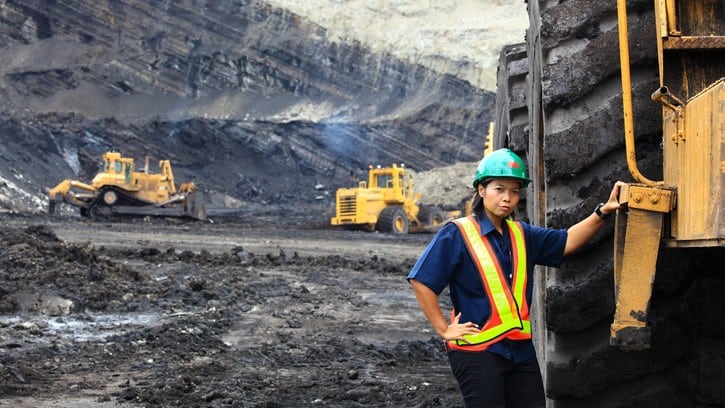
    Female miner standing next to a haul truck in a large mining operation.

    The Fortescue Ltd (ASX: FMG) share price has dropped over 6% in the past week, as shown on the chart below. Market sentiment about the ASX iron ore share is usually influenced by the commodity price, which appears to be the cause right now.

    Demand for iron ore is largely driven by China because of how much of the commodity the Asian superpower purchases. When demand in China weakens, it can lead to a decline for the iron ore price.

    The most recent data from China has not been encouraging.

    Weak Chinese demand

    According to reporting by The Australian, Singapore iron ore futures dropped 3.5% to a near six-week low of US$111.45 per tonne after China’s monthly manufacturing PMI (purchasing managers’ index) for May dropped back to a level that indicates “contraction”, suggesting a weak Chinese outlook.

    There has been a rapid decline in iron ore futures; on Thursday, the price reached a three-month high of US$123 per tonne.

    The Australian also reported that the value of new home sales in China from the 100 biggest real estate companies showed a 34% year-over-year decline in May. It was also reported that the level of iron ore inventory at China’s ports reached a two-year high.

    Chinese officials recently reiterated the country’s stance on continuing to control crude steel output in 2024, according to reporting by Mining.com. China is aiming to reduce its level of carbon dioxide emissions by 1% compared to 2023’s national total.

    China is planning to strengthen its control over steel output and capacity. Analysts from Sinosteel Futures were quoted by Mining.com, who said:

    It remains unclear whether steel output this year will be flat on year or be lowered; such details are worth monitoring further.

    Is there any positivity for the iron ore price and Fortescue shares?

    Some analysts are optimistic about where the iron ore price can go from here.

    Global bank HSBC‘s chief economist Paul Bloxham believes there could be a surge in demand that will support the iron ore price and keep it relatively high for the next 12 months, according to reporting by the ABC.

    Bloxham suggests the iron ore ice will average US$105 per tonne in 2025, which is stronger than what other analysts are forecasting. Goldman Sachs thinks it could be US$95 per tonne in 2025.

    While there is weakness in the Chinese real estate market, HSBC suggests an increase in renewable energy manufacturing in China and globally can compensate for any shortfall. The US Inflation Reduction Act funding could indirectly help boost iron ore demand. Bloxham said:

    It’s a big policy measure there that has been taken to support investing in capacity to make the energy transition.

    It’s happening in Europe, it’s happening in Japan. Australia of course has followed as well to support our energy transition.

    That’s driving a lot of the demand for the increase in the products that go into electric vehicles, solar panels, batteries, and wind farm equipment.

    Fortescue share price

    When the iron ore price falls, Fortescue receives less revenue for the same amount of production but pays the same amount for the mining costs. This hurts its net profit after tax (NPAT).

    That’s why a lower iron ore price is bad news for the Fortescue share price, which is down 15% since the start of 2024.

    The post Down 6% in a week. Are Fortescue shares carrying an iron anchor? appeared first on The Motley Fool Australia.

    Should you invest $1,000 in Fortescue Metals Group right now?

    Before you buy Fortescue Metals Group shares, consider this:

    Motley Fool investing expert Scott Phillips just revealed what he believes are the 5 best stocks for investors to buy right now… and Fortescue Metals Group wasn’t one of them.

    The online investing service he’s run for over a decade, Motley Fool Share Advisor, has provided thousands of paying members with stock picks that have doubled, tripled or even more.*

    And right now, Scott thinks there are 5 stocks that may be better buys…

    See The 5 Stocks
    *Returns as of 5 May 2024

    More reading

    Motley Fool contributor Tristan Harrison has positions in Fortescue. The Motley Fool Australia’s parent company Motley Fool Holdings Inc. has positions in and has recommended Goldman Sachs Group. The Motley Fool Australia has no position in any of the stocks mentioned. The Motley Fool has a disclosure policy. This article contains general investment advice only (under AFSL 400691). Authorised by Scott Phillips.

  • Conspiracy theory-fueled newspaper Epoch Times grew revenue 4x thanks to CFO’s crypto crime proceeds, feds say

    The Epoch Times
    The Epoch Times

    • The Epoch Times, a media company linked to China's Falun Gong movement, has grown massively.
    • It says its pro-Trump, conspiracy theory-heavy editorial content has won donations and subscriptions.
    • But federal prosecutors say its growth was fueled largely by its CFO's pandemic-era cybercrime spree.

    The Epoch Times, a US media company linked to Chinese dissidents that seemingly shot to success by embracing Donald Trump and conspiracy theories, significantly funded its growth with proceeds of cybercrime, according to federal prosecutors.

    The Justice Department said the company's CFO, Weidong "Bill" Guan, was arrested on June 2 and charged with money laundering in New York. The DOJ indictment claims that he and others "used cryptocurrency to knowingly purchase tens of millions of dollars in crime proceeds" and plowed it into the Epoch Times starting in 2020.

    The Epoch Times wasn't named in court records, and the Justice Department said the case had nothing to do with its editorial slant. The indictment only mentioned a "multinational media company headquartered in Manhattan." However, the outlet could be identified because Guan is listed online as its CFO and because the financial numbers in the complaint come close to what the Epoch Times has reported to the IRS.

    According to the indictment, most of Guan's criminal activity mentioned in the indictment took place in 2020, 2021, and 2022, but prosecutors say that up until last month, Guan helped launder "at least $67 million."

    The time period overlaps with a period of major growth for Epoch Times, whose revenue grew from $15.5 million in 2019 to more than $70 million in 2020 and over $120 million a year in 2021 and 2022, according to its nonprofit tax returns.

    According to prosecutors, Guan and the Epoch Times' offshore "Make Money Online" team, or MMO team, used cryptocurrency to buy prepaid debit cards loaded with proceeds of fraud, like unemployment insurance fraud, starting in April 2020. They used the prepaid cards and financial accounts that were opened with stolen personal information to plow millions of dollars into the Epoch Times' bank accounts, prosecutors say.

    "When banks raised questions about the funds, Guan allegedly lied repeatedly and falsely claimed that the funds came from legitimate donations to the media company," US Attorney for the Southern District of New York Damian Williams said in a press release.

    The Epoch Times didn't respond to a comment request.

    NBC News reported last year that the Epoch Times, which is linked to members of the Falun Gong group that has been repressed by China's government, grew by sending out free physical copies of its newspaper to hundreds of thousands of people and that it has focused on conservatives over age 60. The publication claims it's the fourth-largest newspaper in the US by subscriber count, but unlike other media outlets, its circulation figures aren't audited.

    Other outlets have noted the Epoch Times' willingness to play up stories about vaccine injuries and to traffic in conspiracy theories, like the idea that the Biden administration is trying to reduce food production and force Americans to eat bugs

    Read the original article on Business Insider
  • How to turn $10,000 into $100,000 with ASX shares

    A smiling woman with a handful of $100 notes, indicating strong dividend payments

    If you are wanting to grow your wealth, then the share market and ASX shares could be the way to do it.

    That’s because thanks to the power of compounding, a single investment has the potential to grow materially in value.

    But how could you turn $10,000 into $100,000 with ASX shares? Let’s take a look and see.

    Growing your wealth with ASX shares

    As I mentioned above, compounding is your best friend when it comes to investing.

    It is what happens when you generate returns on top of returns. It essentially supercharges your returns the longer you leave it.

    For example, historically, the share market has delivered an average total return of 10% per annum.

    There’s no guarantee that this will happen again in the future, but I think it is reasonable to base our assumptions on this level of return for the purpose of this exercise.

    If you were to invest $10,000 into ASX shares and generated a 10% return per annum, your investment would become $11,000 after one year and then approximately $26,000 after 10 years.

    You’re still only a quarter of the way there. So, let’s keep going and let compounding do its thing.

    If we fast forward another 10 years, your investment would have grown to just over $67,000 if it continued to compound by 10% per annum.

    You’re now getting very close to your goal. In fact, with compounding now going into overdrive, it would take just a touch over four more years for your portfolio of ASX shares to become worth $100,000.

    All in all, that’s approximately 24 years of investing to reach your goal.

    Getting there quicker

    If you can beat the market, which is no easy feat, you could get there sooner.

    For example, a $10,000 investment in ASX shares that compounds by 13% per annum would get to $100,000 in 19 years.

    But how can you beat the market? Well, one person that has beaten the market consistently since the 1960s is Warren Buffett.

    His penchant for buying high quality companies with sustainable competitive advantages and fair valuations has been one of the keys to his success.

    And the good news for Aussie investors is that the VanEck Morningstar Wide Moat ETF (ASX: MOAT) has been designed to allow investors to invest their hard-earned money into the type of shares that Buffett would buy.

    Over the last 10 years, the index the fund tracks has generated a market-beating return of 17.06% per annum. This would have turned a $10,000 investment into $48,000. Clearly it pays to follow Buffett’s investment style.

    The post How to turn $10,000 into $100,000 with ASX shares appeared first on The Motley Fool Australia.

    Should you invest $1,000 in Vaneck Investments Limited – Vaneck Vectors Morningstar Wide Moat Etf right now?

    Before you buy Vaneck Investments Limited – Vaneck Vectors Morningstar Wide Moat Etf shares, consider this:

    Motley Fool investing expert Scott Phillips just revealed what he believes are the 5 best stocks for investors to buy right now… and Vaneck Investments Limited – Vaneck Vectors Morningstar Wide Moat Etf wasn’t one of them.

    The online investing service he’s run for over a decade, Motley Fool Share Advisor, has provided thousands of paying members with stock picks that have doubled, tripled or even more.*

    And right now, Scott thinks there are 5 stocks that may be better buys…

    See The 5 Stocks
    *Returns as of 5 May 2024

    More reading

    Motley Fool contributor James Mickleboro has no position in any of the stocks mentioned. The Motley Fool Australia’s parent company Motley Fool Holdings Inc. has no position in any of the stocks mentioned. The Motley Fool Australia has recommended VanEck Morningstar Wide Moat ETF. The Motley Fool has a disclosure policy. This article contains general investment advice only (under AFSL 400691). Authorised by Scott Phillips.

  • Buy Rio Tinto and these ASX dividend stocks for 5%+ yields

    A businessman looking at his digital tablet or strategy planning in hotel conference lobby. He is happy at achieving financial goals.

    The average dividend yield on the Australian share market usually sits at around 4%.

    While this is a nice yield, income investors don’t have to settle for it. Not when there are some high quality ASX dividend stocks out there with notably better forecast yields.

    Let’s take a look at three that are expected to provide dividend yields greater than 5% this year and next:

    Rio Tinto Ltd (ASX: RIO)

    If you’re not averse to investing in the mining sector, then Rio Tinto could be worth considering.

    Goldman Sachs is feeling very positive about the mining giant and has a buy rating and $138.90 price target on its shares.

    As for dividends, the broker is forecasting fully franked dividends per share of US$4.29 (A$6.42) in FY 2024 and then US$4.55 (A$6.81) in FY 2025. Based on the latest Rio Tinto share price of $128.52, this will mean yields of approximately 5% and 5.3%, respectively.

    Telstra Group Ltd (ASX: TLS)

    Goldman Sachs also thinks that income investors should consider buying Telstra shares while they are down.

    Although the broker was quite disappointed with its recent trading update, it still sees significant value in the telco giant’s shares at current levels and is forecasting some attractive yields from its shares in the coming years.

    Goldman currently has a buy rating and $4.25 price target on the ASX dividend stock.

    As for income, its analysts are now expecting fully franked dividends of 18 cents per share in FY 2024 and then 18.5 cents per share in FY 2025. Based on the current Telstra share price of $3.47, this equates to dividend yields of 5.2% and 5.3%, respectively.

    Transurban Group (ASX: TCL)

    A third ASX dividend stock that could be a buy this month according to analysts is Transurban. It manages and develops urban toll road networks in Australia and the United States. In Australia, this includes the Cross City Tunnel, the Eastern Distributor, and Westlink M7.

    Citi is a fan of the company and currently has a buy rating and $15.50 price target on its shares.

    As well as plenty of upside, its analysts are expecting some great yields from its shares in the coming years. For example, the broker is forecasting dividends per share of 63.6 cents in FY 2024 and then 65.1 cents in FY 2025. Based on the current Transurban share price of $12.59, this will mean dividend yields of 5% and 5.2%, respectively.

    The post Buy Rio Tinto and these ASX dividend stocks for 5%+ yields appeared first on The Motley Fool Australia.

    Should you invest $1,000 in Rio Tinto Limited right now?

    Before you buy Rio Tinto Limited shares, consider this:

    Motley Fool investing expert Scott Phillips just revealed what he believes are the 5 best stocks for investors to buy right now… and Rio Tinto Limited wasn’t one of them.

    The online investing service he’s run for over a decade, Motley Fool Share Advisor, has provided thousands of paying members with stock picks that have doubled, tripled or even more.*

    And right now, Scott thinks there are 5 stocks that may be better buys…

    See The 5 Stocks
    *Returns as of 5 May 2024

    More reading

    Citigroup is an advertising partner of The Ascent, a Motley Fool company. Motley Fool contributor James Mickleboro has no position in any of the stocks mentioned. The Motley Fool Australia’s parent company Motley Fool Holdings Inc. has positions in and has recommended Goldman Sachs Group and Transurban Group. The Motley Fool Australia has positions in and has recommended Telstra Group. The Motley Fool has a disclosure policy. This article contains general investment advice only (under AFSL 400691). Authorised by Scott Phillips.