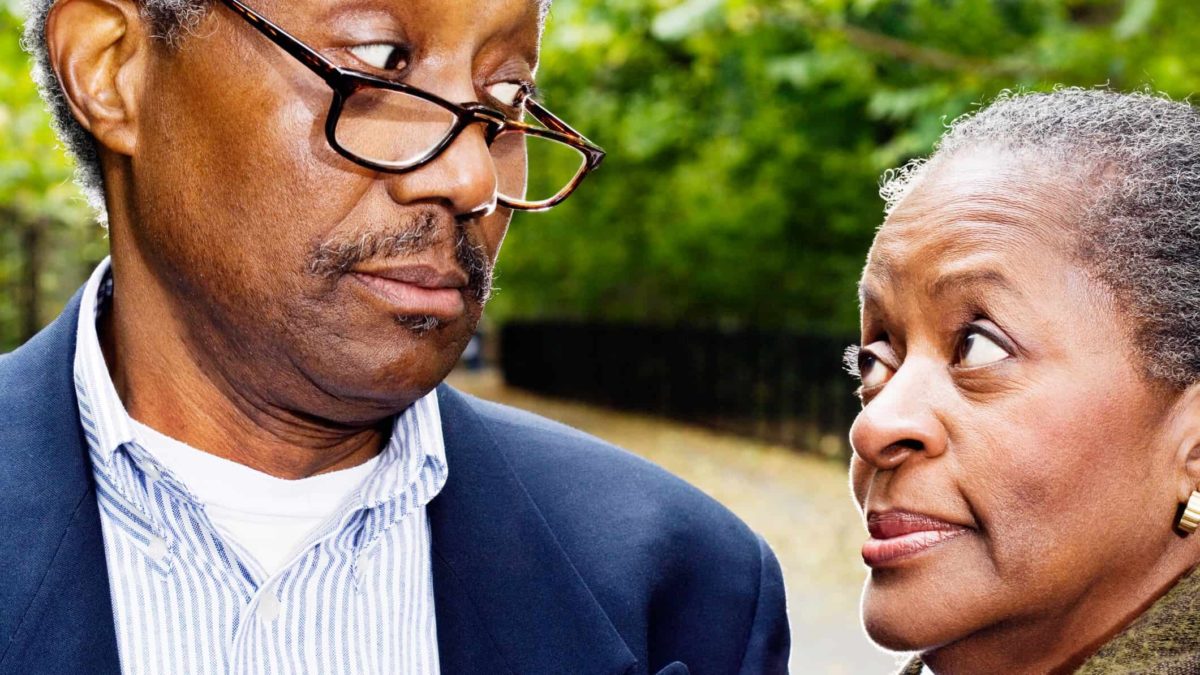
Talk show host Ellen DeGeneres is known for her goofy, friendly persona and "be kind" mantra.
Accusations by crew members and a guest on her show led to a string of bad press in 2020.
At a recent stand-up show, DeGeneres said that she's "not mean."
The talk show host Ellen DeGeneres has long been considered a beloved celebrity for her friendly and funny public demeanor. But in 2020, that all changed as complaints of inconsiderate behavior sprung up in the news.
The Dutch beauty YouTuber Nikkie de Jager, also known as NikkieTutorials, was one of the first people to call out DeGeneres, saying on a talk show in her home country that the beloved host was "cold and distant" during de Jager's appearance on "The Ellen DeGeneres Show."
In April of that year, a thread on X (formerly known as Twitter) asking for stories about DeGeneres being "one of the meanest people alive" was widely shared, garnering more than 2,000 replies from people describing uncomfortable or off-putting experiences with the host.
Crew members for "The Ellen DeGeneres Show" also spoke and said they had not received any communication from DeGeneres or show executives about their pay or working hours during the coronavirus pandemic.
With accusations of unkind or inconsiderate behavior swirling around the talk show host for years, it can be hard to keep track of all the controversy. Below, we broke down all the backlash DeGeneres has received since 2020.
Nikkie de Jager appeared on DeGeneres' show in January 2020.
The Ellen DeGeneres Show
NikkieTutorials was one of the first people to speak out in February 2020
The Dutch beauty vlogger first visited "The Ellen DeGeneres Show" in January to discuss her experience as a transgender woman after coming out earlier that month.
But de Jager said during an appearance on the Dutch talk show "De Wereld Draait Door" in February that it hadn't been a completely positive experience for her.
When van Nieuwkerk asked de Jager whether DeGeneres was "cold and distant," the beauty YouTuber agreed.
And on Thursday, another interview with de Jager came to light in which she expanded on her experience with DeGeneres and DeGeneres' show. De Jager reportedly told &C Magazine that the friendly, welcoming atmosphere portrayed to viewers wasn't the reality in the studio.
"Maybe I'm being naive, but I expected them to welcome me with confetti: Welcome to 'The Ellen DeGeneres Show'!" she said in the interview seen by Pop Crave. "But instead I got greeted by an angry intern, who was a bit overworked. I expected a Disney show, but I got a 'Teletubbies' after dark."
According to de Jager, she didn't receive the same VIP treatment as other celebrity guests on the show, despite having millions of views on her YouTube videos.
"Every guest at Ellen had a private toilet, but I didn't," she said, referring to a bathroom. "I couldn't even use the closest toilet to me because it was reserved for the Jonas brothers."
DeGeneres was called out by users on X after a thread asking for "insane" stories about her went viral.
YouTube
In April, a thread on X asking for stories about DeGeneres being 'one of the meanest people alive' received more than 2,000 replies
A comedian named Kevin T. Porter crowdsourced "insane stories you've heard about Ellen being mean" in exchange for $2 donations to the Los Angeles Regional Food Bank — and received thousands of responses on X.
While the accuracy of the stories is impossible to verify from posts alone, news outlets, including Business Insider, picked up on the thread.
One user accused DeGeneres of using her fan art as a prop, while another described her getting mad at a server with chipped nail polish who waited on the host and her wife, Portia de Rossi, at brunch.
There were also stories about DeGeneres' behavior while filming, including accusations that she wouldn't let crew members eat meat, that she fired an autistic custodian for greeting her, and that she made anyone entering her office chew gum from a bowl outside her door since she had a "sensitive nose."
DeGeneres didn't respond publicly to the accusations, and a representative for the talk show host didn't immediately respond to a request for comment from Business Insider on this story.
"One thing I've learned from being in quarantine is that people — this is like being in jail, is what this is," DeGeneres said during the segment, adding, "It's mostly because I've been wearing the same clothes for 10 days, and everyone in here is gay."
DeGeneres seemed amused by her comparison, smiling and remarking, "The jokes that I have."
After DeGeneres shared the clip on Twitter, users were quick to call out the host for her remarks about prisons, especially during a time when people in prisons were at an increased risk of contracting COVID-19. Some pointed out that those in prisons were far more likely to die from the novel coronavirus than the larger population — especially wealthy people like DeGeneres.
DeGeneres continued to film her talk show, despite being in lockdown during the pandemic.
Kevin Winter/One Voice: Somos Live!/Getty Images
In April 2020, news broke that DeGeneres' crew was 'furious' about a lack of communication over their pay during the shutdown
Variety cited two anonymous sources as saying that the long-running talk show's core stage crew — which consisted of more than 30 employees — had not received any communication about the status of their working hours or pay and that producers had not checked in about their mental and physical health.
Furthermore, the report said crew members were left in the dark about how much they would be paid, or whether they would be paid at all, for more than two weeks.
DeGeneres' show continued to air, with the host recording from her home in California, but Variety reported that only four members of the core crew were working on the show's lockdown edition, with a nonunion tech company brought on to help.
And despite a statement from Warner Bros. Television saying the crew had been paid at a consistent rate (albeit at reduced hours), crew members were still said to be upset about a lack of personal care from the show — and felt the way they had been treated was not in keeping with DeGeneres' famous "be kind" advice.
Such reports are a stark contrast with other shows.
Portia de Rossi, Ellen DeGeneres's wife, was "very pleasant," according to a bodyguard hired to protect the comedian at the 2014 Oscars.
Jordan Strauss/Invision/AP
A former bodyguard for the host said his experience with her at the 2014 Oscars was 'kind of demeaning'
Tom Majercak was hired to protect DeGeneres, her mother, and her wife, Portia de Rossi, as they attended the 86th Academy Awards, which DeGeneres hosted.
But the bodyguard told Fox News in April 2020 that his experience with DeGeneres was less than ideal.
"I'm holding their hands and walking them through individuals and large groups of people. Ellen is the one person that I've been assigned to — and I've been assigned to quite a few celebrities — that has never taken the time to say hi to me," Majercak said.
According to the bodyguard, DeGeneres' wife, de Rossi, was "very pleasant" throughout the evening and "carried on a conversation," but things "started going negatively" when de Rossi introduced him to the talk show host.
"Ellen pretty much just gave me a side glance out of her eye and didn't even say 'hello,' or 'thank you for protecting my mother, my wife and me,'" Majercak told Fox News, adding, "It was very cold and it was very sly and it was actually kind of demeaning in the way that she treats people other than those who are in her circle."
DeGeneres's reputation fell under scrutiny beginning in 2020.
Steve Granitz/WireImage
A former producer for DeGeneres' show said that the host once called Steve Jobs to complain about the font size on iPhones
Speaking to the New York Post, the producer, who wasn't named in the Post's May 2020 story, said the call to Jobs came after DeGeneres lost her glasses and couldn't read a text on her phone.
"She stopped everything and made a call. Next thing we know, we literally hear Steve Jobs pick up and say, 'Hi, Ellen' … Ellen told him the iPhone should have a bigger font," the producer said.
"That's her," the former producer continued. "It's not that she's some demon. She just lives in an incredibly privileged bubble and is out of touch with the real world."
In early July 2020, the hashtag '#RIPEllen' began trending on X — even though DeGeneres was alive and well
After speculation that DeGeneres' popular talk show was going to be canceled, some Twitter users reportedly took things further by spreading false news of DeGeneres' "death."
Producers confirmed with the Post that DeGeneres' show would not be canceled, but that didn't stop users from continuing to use the "#RIPEllen" hashtag in their posts.
An internal investigation into the workplace culture at DeGeneres' show was launched in 2020.
AP Photo/Chris Pizzello
News broke in late July 2020 that WarnerMedia, the distributor of 'The Ellen Show,' was launching an internal investigation into the show's workplace culture
The investigation came after a turbulent past few months for DeGeneres, the show, and some of its employees, who were reportedly left in the dark about pay and hours during the start of the coronavirus pandemic.
Shortly thereafter, an Australian radio host said he was instructed not to look at or talk to DeGeneres when working with her in 2013
During a segment on his radio show "4BC Breakfast" on July 28, Neil Breen said he worked as an executive producer on the Australian "Today" show.
According to Breen, DeGeneres' involvement in the episode "got watered-down" from co-hosting to doing a sit-down interview in Melbourne, where Breen and his crew had to fly ("at our own expense") to tape the segment.
Australian TV presenter Richard Wilkins was set to interview DeGeneres, but Breen said he and the rest of his team received a very specific set of rules when working with her.
"Because it's 'The Ellen Show,' they controlled everything," Breen explained. "They controlled the interview seats, the lights, how it would work, everything."
"The producers called us aside and said, 'This is how it's going to work here this morning. Ellen's going to arrive at 10:15, and she'll be sitting in this chair here. And Richard, you'll be sitting in this chair here,'" he continued.
According to Breen, DeGeneres' team told him, "Neil, no one's to talk to Ellen. You don't talk to her, you don't approach her, you don't look at her. She'll come in, she'll sit down, she'll talk to Richard, then Ellen will leave."
Breen said he found the whole thing "bizarre."
"I'm not blaming Ellen because I didn't get to talk to her. I don't know whether she's a nice person or not. I wouldn't have a clue," he said. "But I can tell you, the people who worked with her walked on eggshells the whole time."
DeGeneres addressed 'issues' at her show with a letter to staff in late July 2020
In the letter obtained by The Hollywood Reporter, DeGeneres took responsibility for the overall issues on her set.
"As we've grown exponentially, I've not been able to stay on top of everything and relied on others to do their jobs as they knew I'd want them done," DeGeneres wrote. "Clearly some didn't. That will now change, and I'm committed to ensuring this does not happen again."
The host referenced WarnerMedia's ongoing investigation and apologized at the beginning and end of the letter to anyone who was not treated with fairness and respect.
'Everybody Loves Raymond' star Brad Garrett said DeGeneres mistreating people is 'common knowledge'
"Sorry but it comes from the top @TheEllenShow. Know more than one who were treated horribly by her. Common knowledge," Garrett wrote on X on July 30.
"People love to take shots at people. They love to see people fall. How quickly so many forget," he wrote.
Braun called DeGeneres a "kind, thoughtful, courageous human being who stands for what is right" and "has helped change the views for equality." He explained that he felt compelled to speak up because he has a "firsthand" perspective of how DeGeneres "helps so many" both on and off her show.
"She isn't about what is popular she is about what is right. Sending love to Ellen today," Braun wrote.
The Sun's source described Corden as "a natural fit" for DeGeneres' job.
Former producer Hedda Muskat spoke about working on DeGeneres' talk show.
Joshua Blanchard/Patrick McMullan via Getty Images/Chris Pizzello/AP
In early August, several other ex-employees of DeGeneres came forward to share their experiences with her on-set
Former producer Hedda Muskat told The Wrap about an incident during a staff meeting where new-at-the-time executive producers Ed Glavin and Mary Connelly were introduced to the rest of the existing team.
Muskat said Glavin screamed at one member of staff in front of everybody else. "He just went off on them. His whole face turned red…We were stunned."
"I was waiting for Ellen to say something. 'Whoa, Ed, don't talk like that,'" Muskat said. "Do you know what she did? She giggled. She crossed her legs up on the chair and she said, 'Well, I guess every production needs their dog.' And from then we knew. Ed was going to be the barking dog — her dog."
"I had never seen this before. I had never been around a toxic host," she added.
And former DJ for "The Ellen Show" Tony Okungbowa shared a statement about his experience shortly thereafter.
"While I am grateful for the opportunity it afforded me, I did experience and feel the toxicity of the environment and I stand with my former colleagues in their quest to create a healthier and more inclusive workplace as the show moves forward," Okungbowa wrote on Instagram.
'The Ellen Show' had its season 18 premiere in September 2020, and DeGeneres addressed the allegations in her opening monologue
"The Ellen DeGeneres Show" returned on September 21 after a summer hiatus.
"I learned that things happened here that never should have happened. I take that very seriously," DeGeneres began. "I want to say I am so sorry to the people who were affected."
"I know that I'm in a position of privilege and power. And I realized that with that comes responsibility," she continued. "And I take responsibility for what happens at my show. This is 'The Ellen DeGeneres Show.'"
"We have had a lot of conversations over the last few weeks about the show, our workplace, and what we want for the future. We have made the necessary changes and today, we are starting a new chapter," DeGeneres said.
DeGeneres was called out by people on social media in late October 2020 for her 'superhero' nurse costume
DeGeneres shared a clip of herself in the costume on X, along with the caption, "My costume this year is inspired by the real superheroes of 2020."
While the host was seemingly referencing the important work that doctors, nurses, and other essential workers have done during the coronavirus pandemic this year, people were more focused on the reports that DeGeneres treated staff and collaborators poorly.
"Who are the real superheroes? People who treat their staff well?" one person wrote.
Dakota Johnson's appearance on "The Ellen DeGeneres Show" in 2019 went viral.
"The Ellen DeGeneres Show"/ NBC
In November 2020, people online celebrated the 1-year anniversary of Dakota Johnson calling out DeGeneres on her show
The host revealed she tested positive for COVID-19 in December 2020
DeGeneres first shared news of her diagnosis on December 10, writing on X, "Hi Everyone, I want to let you all know that I tested positive for COVID-19. Fortunately, I'm feeling fine right now."
"Anyone who has been in close contact with me has been notified, and I am following all proper CDC guidelines," DeGeneres continued, referencing advice from The Centers for Disease Control and Prevention.
Following DeGeneres' diagnosis, production was halted on her talk show until January.
DeGeneres joked about her experience with COVID-19 on an episode of her show.
The Ellen DeGeneres Show/EllenTube
She later got candid about her experience with the virus during a January 2021 episode of her show
"Obviously there are a lot of negative things going on, so I wanted to talk about something positive: my COVID test," DeGeneres joked in the opening monologue of her January 13 episode.
According to DeGeneres, she tested positive for the virus "before the holidays," but recovered.
The host revealed that she was backstage getting ready for her talk show when she received news of her positive test.
"I was in hair and makeup…and then my assistant Craig walks in and says, 'You tested positive for COVID,'" DeGeneres said.
"And then everyone around me ran away," she continued. "It's funny, people just really get scared."
Internet personality Trisha Paytas appeared on "The Ellen DeGeneres Show" in 2010.
Christopher Polk / Getty Images / TheEllenShow / YouTube
But around the same time, YouTuber Trisha Paytas said she was told not to touch DeGeneres or look her in the eye
Paytas spoke about her experience on "The Ellen DeGeneres Show" during an episode of her podcast "Frenemies," which she hosts with H3H3's Ethan Klein, calling DeGeneres "a bitch" and saying that she wasn't allowed to touch her.
Paytas appeared on "The Ellen DeGeneres Show" in 2010 when she was 22 years old to showcase her speed-reading talent during an audience talent segment.
In the clip, Paytas gushed over DeGeneres, reaching out to touch her and then pulling her hand back, saying that she shouldn't touch the host before launching into a whirlwind recitation of what appears to be DeGeneres' book, "My Point… And I Do Have One."
Paytas said that, in a pre-Instagram era, she wanted to be famous and made her way onto the show via posting on YouTube.
"My thought was, if I go on all these shows someone will discover me," she said on the podcast. "I thought Ellen was gonna discover me and I was gonna be like, a cohost of hers. That was my thought process."
Her experience on set didn't live up to her expectations, though, she said.
"When all that stuff started coming out [about Ellen], I was like, that makes sense because she was so awful. Literally, would not talk. They tell you…, 'Don't look in her eyes, don't touch her,'" Paytas said, referencing past statements from celebrities and everyday people that painted DeGeneres as mean or cold.
Celebrities like Ashton Kutcher, Katy Perry, and DeGeneres' wife Portia de Rossi spoke out in support of the host
"I haven't spoken with @TheEllenShow and can only speak from my own experience," Kutcher posted on X in early August. "She & her team have only treated me & my team w/ respect & kindness. She never pandered to celebrity which I always saw as a refreshing honesty. When things aren't right she handles it and fixes."
Kutcher was subsequently called out by fans who accused him of letting his celebrity status potentially influence his opinion.
Other stars who voiced support for DeGeneres included Katy Perry, who wrote on X that she has "only ever had positive takeaways from my time with Ellen & on the @theellenshow," and DeGeneres' wife De Rossi, who shared an uplifting message to Instagram.
The "Cruel Intentions" actor shared a picture of himself posing in front of a poster of DeGeneres to his Instagram story, with the caption, "And remember to be kind… wait."
'The Ellen DeGeneres Show' came to an end in May 2022 after 19 seasons
DeGeneres got emotional as she reflected on her journey on daytime TV and encouraged her audience to lead with compassion.
"If someone is brave enough to tell you who they are, be brave enough to support them even if you don't understand," she said. "They are showing you who they are and that's the biggest gift anybody can ever give you. By opening your heart and your mind, you are going to be that much more compassionate. Compassion is what makes the world a better place."
"If this show has made you smile, if it has lifted you up when you're in a period of some type of pain, some type of sadness, anything you are going through, then I have done my job," she added. "Because of this platform we have been able to change people's lives. This show has forever changed my life. It is the greatest experience I have ever had, beyond my wildest imagination."
The series finale, which aired on May 26, included appearances from Pink, Jennifer Aniston, and Billie Eilish.
In September 2022, singer Greyson Chance called DeGeneres 'manipulative'
Chance rose to fame as a 12-year-old, after a video of him playing Lady Gaga's "Paparazzi" on piano went viral. Shortly after, DeGeneres reached out to Chance and he went on to appear on her show.
Chance told Rolling Stone that he recalled DeGeneres assuring his mom that she'd never have to work again. The singer said that DeGeneres told him, "I'm going to protect you. I'm going to be here for you. We're going to do this together."
After his appearance on the talk show, Chance said that DeGeneres gave him $10,000 and a new piano, signed him to a record label she co-created, and got him set up with representation in Hollywood. But over time, she "became domineering and way too controlling," Chance said.
According to the singer, DeGeneres "completely abandoned" him once his career slumped and the hype died down.
"I've never met someone more manipulative, more self-centered, and more blatantly opportunistic than her," he said.
DeGeneres addressed the end of her talk show during her stand-up tour in 2024, calling it 'devastating'
"Ellen's Last Stand…Up Tour" kicked off in West Hollywood in April. According to Rolling Stone, she cracked plenty of jokes about the end of her run on daytime TV.
"I got kicked out of show business. There's no mean people in show business," DeGeneres joked during the set.
"The 'be kind' girl wasn't kind. I became this one-dimensional character who gave stuff away and danced up steps," she continued. "Do you know how hard it is to dance up steps? Would a mean person dance up steps? Had I ended my show by saying, 'Go fuck yourself,' people would've been pleasantly surprised."
Jokes aside, DeGeneres said that what happened to her was "devastating."
"I just hated the way the show ended," she said. "I love that show so much and I just hated that the last time people would see me is that way."
Reflecting on the backlash, the comedian said, "It's been such a toll on my ego and my self-esteem. There's such extremes in this business, people either love you and idolize you or they hate you, and those people somehow are louder."
At another stop on her tour in July 2024, DeGeneres alluded to plans to step away from the spotlight
DeGeneres recently hinted at fans seeing less of her in the future.
Tasos Katopodis/Getty Images for Live Nation
According to SFGate, DeGeneres jokingly said that she "got kicked out of show business for being mean."
"I used to say, 'I don't care what people say about me.' Now I realize I said that during the height of my popularity," the comedian said.
DeGeneres also pushed back against her reputation.
"I am many things, but I am not mean," she said.
When asked about the possibility of appearing on Broadway or in movies during the Q&A portion of the stand-up show, DeGeneres said, "Um, no."
"This is the last time you're going to see me. After my Netflix special, I'm done," she said, referring to a comedy special in the works with the streamer that's scheduled for release sometime this year.
Libby Torres contributed to a previous version of this article.
The Tesla Model 3's long-range RWD variant is back after a 5-year hiatus.
Courtesy of Tesla, Inc.
Tesla reintroduced the Model 3 Long Range RWD in the US with a 363-mile range for $42,490.
The car's cost drops to just under $35,000 after the $7,500 federal EV tax credit.
The relaunch follows Tesla's major Model 3 redesign amid increased EV market competition.
After five years off the market, Tesla is bringing its Model 3 Long Range Rear-Wheel Drive back to America. The car offers the longest range in the Model 3 lineup at 363 miles while being the second cheapest — starting at $42,490.
While the price is already back on even ground with EV sedan rivals like the Hyundai Ioniq 6, the cost drops even lower to just under $35,000 after the $7,500 federal EV tax credit.
Elon Musk gave an enthusiastic shout-out on X, former Twitter, to the car's announcement on Friday.
The Model 3 series previously consisted of only three options: the Rear-Wheel Drive, the Long Range All-Wheel Drive, and the Performance All-Wheel Drive.
The Long Range RWD Model 3 can accelerate from 0 to 60 mph in 4.9 seconds and, like the standard RWD and Long-Range AWD, has a top speed of 125 mph, according to Tesla.
The relaunch of this more affordable and newly refreshed model — thanks to Tesla's major Model 3 redesign earlier this year — comes as the company has faced increasing competition.
Chinese automaker BYD briefly surpassed Tesla in January as the world's top EV seller, and Tesla has been slashing prices in hopes of increasing sales.
There are signs its strategy may be working. While Tesla reported earlier this month that its Q2 sales dropped for the second consecutive quarter, the numbers weren't as bad as Wall Street had predicted — leading to a stock pop following the news.
Prince Harry accepted the Pat Tillman Award at the 2024 ESPYs.
Frank Micelotta/Getty Images
Prince Harry received the Pat Tillman Award at the 2024 ESPYs for his work on the Invictus Games.
Some — including Pat Tillman's mother, Mary Tillman — didn't approve of Harry receiving the award.
Harry honored Mary in his speech at the ESPYs, but a PR expert said he should have declined the award.
A triumphant moment for Prince Harry was shrouded in controversy.
On Thursday, athletes and celebrities gathered at the Dolby Theatre in Los Angeles for the 2024 ESPY Awards, honoring top athletes and people who give back to their community.
One of the special honoree awards is the Pat Tillman Award for Service, which recognizes "a person with a strong connection to sports who has served others in a way that echoes the legacy" of Pat Tillman.
Pat Tillman was a safety for the Arizona Cardinals who gave up his NFL career and a $3.6 million contract after September 11, 2001, to serve as an Army Ranger. He was killed by friendly fire on April 22, 2004, in Afghanistan, though the Army did not reveal how Pat died for over a month after his death, NPR reported.
ESPN and the Pat Tillman Foundation selected Prince Harry to win the award for 2024 because of his work with the Invictus Games. However, the announcement was quickly met with criticism.
Representatives for the Duke and Duchess of Sussex did not respond to a request for comment from Business Insider.
Some thought Prince Harry didn't deserve the Pat Tillman Award
The Invictus Games are a worldwide sporting competition for injured veterans. Following his two tours in Afghanistan as a pilot for the British Armed Forces, Harry became a founding patron of the Invictus Games.
The Games celebrated their 10th anniversary in May, and 23 nations are now represented at them each year.
On June 27, ESPN announced Harry would receive the Pat Tillman Award "in honor of his tireless work in making a positive impact for the veteran community through the power of sport."
Pat's mother, Mary Tillman, told the Daily Mail shortly after the announcement that she was "shocked" ESPN planned to give the award to the royal.
Prince Harry at the Invictus Games in September 2023.
Chris Jackson/Getty Images for the Invictus Games Foundation
"I am shocked as to why they would select such a controversial and divisive individual to receive the award," she told the outlet. "There are recipients that are far more fitting. There are individuals working in the veteran community that are doing tremendous things to assist veterans."
"These individuals do not have the money, resources, connections, or privilege that Prince Harry has," Mary added. "I feel that those types of individuals should be recognized."
Mary does not work for the Pat Tillman Foundation or play a role in deciding who wins the annual award. A Change.org petition urging ESPN to reconsider giving Harry the award also gained traction online, amassing over 76,000 signatures as of Friday.
Despite the controversy, ESPN and the Pat Tillman Foundation stood by their decision, as the organizations shared in a statement with Business Insider ahead of the ESPYs.
"ESPN, with the support of the Tillman Foundation, is honoring Prince Harry, Duke of Sussex, specifically for the work of the Invictus Games Foundation as it celebrates its 10th year promoting healing through the power of sport for military service members and veterans around the world," ESPN said in its statement.
"While we understand not everyone will agree with all honorees selected for any award, the Invictus Games Foundation does incredible work, and ESPN believes this is a cause worth celebrating," the statement continued.
Prince Harry honored Mary Tillman in his acceptance speech
Harry accepted the Pat Tillman Award on Thursday at the ESPYs, attending the event with his wife, Meghan Markle.
Harry focused his acceptance speech on the Invictus Games, opening by thanking Pat's family, including his widow, Marie Tillman Shenton, the chair and cofounder of the Pat Tillman Foundation.
He also spoke about Mary Tillman directly, seeming to nod to his bond with Princess Diana.
"Her advocacy for Pat's legacy is deeply personal and one that I respect," Harry said. "The bond between a mother and son is eternal and transcends even the greatest losses."
Harry said he accepted the award as "a voice on behalf of the Invictus Games Foundation and the thousands of veterans and service personnel from over 20 nations who have made the games a reality."
Evan Nierman, the CEO and founder of the global PR firm Red Banyan, told BI that although Harry's work with the Invictus Games is "commendable," and he attempted to change the narrative around the award with his speech, it would have been savvier of Harry to decline the award altogether.
"Harry deserves recognition for the work of the foundation and his advocacy on behalf of servicemen," Nierman said. "If he wanted to have really maximized the PR opportunity for himself, it would have been declining the award and saying that he was not going to accept it and then flipping it to recognize others who were deserving recipients."
"I think that would have been a very bold and smart PR move that would have perhaps won him more points with the public than accepting the award," he added.
Harry and Meghan's PR strategy might be growing stale
Nierman said that the Sussexes' attendance at the ESPYs "put Meghan and Harry right back in the hot seat as opposed to shining a light on others who could have received the award."
Harry and Meghan have frequently been accused of overshadowing others simply by existing in the public eye. Serena Williams, the host of the 2024 ESPYs and a close friend of the couple, pushed back against that line of thinking during her opening monologue for the show with a joke.
"It's well, actually only pretty often that I get to be in a room with actual royalty, and tonight is no exception," Williams said. "Prince Harry and Meghan are here. Let's give it up for them."
Meghan Markle, Prince Harry, and Serena Williams at the 2024 ESPYs.
Kevin Mazur/Getty Images for W+P
"But please, Harry and Meghan, try not to breathe too much tonight," she added. "Because this is my night, and I don't want to be overshadowed by the accusations that you guys are taking up too much oxygen, OK?"
Nierman told BI that he thinks the latest backlash against Harry makes sense given how much about their royal lives they have already revealed in their 2022 Netflix docuseries, "Harry & Meghan," and Harry's 2023 memoir, "Spare."
"I do believe that they were completely outmaneuvering the royal family in terms of their PR strategy because they were willing to go big and to be bold and to write a tell-all book and do the Netflix documentary," Neirman said.
"I don't think the public finds it that interesting anymore," he added.
Meghan Markle and Prince Harry attend the Royal Salute Polo Challenge in April 2024.
Yaroslav Sabitov/PA Images via Getty Images
A year and a half after "Spare" was published, Harry and Meghan still seem to be finding their footing in their post-royal lives.
For example, their Spotify and Netflix ventures have not gone as well as the couple might have expected. While "Harry & Meghan" was Netflix's most-watched documentary debut, the couple has yet to provide the streamer with another success. They also ended their partnership with Spotify in 2023 and reportedly did not get the full $20 million payout from the deal because they didn't make enough content.
Meghan, a former blogger, will soon return to her lifestyle roots. She recently shared a sneak peek at her new venture, American Riviera Orchard.
Meanwhile, sporting and military service continue to be touchstones for Harry through things like the Invictus Games and charity polo events, making the recent backlash all the more difficult for the prince in terms of his public persona.
Harry can get back on track
Although Harry's ESPY was criticized, he and Meghan have received positive attention for much of 2024.
And in March, Misan Harriman, a photographer who worked with Meghan and Harry, defended them when UK tabloids accused him of manipulating photos of the couple. This positioning of Harry and Meghan as reliable came at a time when Kensington Palace was being widely questioned for releasing an altered photo of Kate Middleton and her children.
Now, Harry might want to take a cue from Prince William, who has had a string of positive press moments in recent weeks, to get back on track.
From sharing a carefree photo with his kids for his birthday to attending Taylor Swift's Eras Tour, the future king has recently come off as approachable and relatable.
"William has done things that humanize him a bit in the eyes of the public," Nierman said, pointing to the Prince of Wales cheering on England in the European Championship and dancing at Swift's concert.
"It just creates or publicizes a side of William that people haven't seen much of — the softer, sillier, more approachable side," he added.
It's a notable shift, considering approachability has long been Harry's secret weapon, as royal experts previously told BI. By staying true to his old playbook, Harry might be able to turn the tides of public sentiment once again.
Katy Perry's released "Woman's World" on Thursday as the lead single for her new album, "143."
The song is a vapid attempt at female empowerment that was cowritten and coproduced by Dr. Luke.
Dr. Luke has been accused of sexual abuse, making "Woman's World" ironic in all the wrong ways.
This week, Katy Perry teased the announcement of her new album, "143," with an ominous promise: "Sleep tight, for tomorrow, the portal opens."
Listening to the album's lead single, "Woman's World," I have to assume it's a portal to the past.
"Woman's World," released on Thursday, can only be read as a desperate attempt to recapture the magic of Perry's pop domination in the 2010s — those bygone days when girlboss mentality reigned, and it was considered radical to say women could do everything men could do, and we do it in heels!
In the music video for "Woman's World," Perry's visuals are clearly meant to be tongue-in-cheek. She casts herself as a hyper-sexualized version of Rosie the Riveter, traipsing around in a star-spangled bikini before an anvil crushes her.
Later, she's revived as a sexy half-cyborg, brandishing an influencer's ring light as a Venus symbol and driving a monster truck with a bedazzled uterus hanging from its bumper.
Perry's indiscreet attempts at satire clash with the song's actual lyrics. Satire only works when it has something to say, and there isn't a shred of complexity, self-awareness, or cultural analysis in lyrics like, "She's a flower, she's a thorn / Superhuman, No. 1 / She's a sister, she's a mother."
The Venus symbol and the bedazzled uterus don't read as subversive in this context; they align perfectly with Perry's gender-essentialist imagery. The entire song exists in this way: platitudinal and pandering with no material goal, even more vapid than the initial teasers foreshadowed.
It's been four years since Perry closed her previous album, "Smile," with a near-identical sentiment: "Is it the way we keep / The whole world turning / In a pair of heels? / Yeah, that's what makes a woman."
So much has evolved since then, but apparently, not for Perry. Somehow, she still thinks that reciting a list of random adjectives and haphazardly conflating stilettos with strength is the epitome of feminism.
Perry chose Dr. Luke and his team to craft this supposed feminist anthem
Actually, one thing is different. Five people are credited as songwriters for "What Makes a Woman," but none overlap with the six writers credited for "Woman's World." It took six people to come up with rhyming "feminine divine" with "born to shine" — and as you may have heard, one of them is Dr. Luke.
Perry has worked with Dr. Luke many times before. He was instrumental in the chart-topping success of Perry's "Teenage Dream" and "Prism" eras. However, until now, Perry hadn't worked with Dr. Luke since 2014, when he was sued by Kesha for emotional and sexual abuse.
Kesha's civil complaint details a decade of life-threatening eating disorders and psychological torture at the hands of Dr. Luke, the man who discovered her as a teenager. It includes the allegation that he drugged and raped her. Dr. Luke has denied everything.
Kesha fans protested outside the New York State Supreme Court in 2016.
James Devaney/GC Images
Dr. Luke was never convicted in a court of law. His lawyers fought Kesha's civil suit on technical grounds, and it was dismissed in 2018 because the statute of limitations had expired, not because her claims were deemed meritless.
Similarly, when Dr. Luke countersued Kesha for defamation, the case never reached a jury. Instead, the parties reached an undisclosed settlement last year.
Just one year after Dr. Luke's legal battle ended, he's already been welcomed back into Perry's orbit.
So no, Perry isn't alone, but the hypocrisy at work here is stunning. To enlist an accused abuser for a song about female empowerment — a song that's literally called "Woman's World" — is ironic in a way that's almost too glaring to fathom. It might be funny if it weren't so gross.
Katy Perry's new album "143" will be released in September.
Perry made a different, very deliberate choice. She wanted Dr. Luke and all the baggage he brings; all four other songwriters on "Woman's World" are Dr. Luke collaborators or signees.
"Katy knew exactly the album she wanted to make and put together the team to make it happen," a Capitol Records source told Rolling Stone.
Perry's 'Woman's World' proves she's stuck in a sound of the past
Surely Perry knew she'd face backlash — and for what? "Woman's World" is not a good song, not by any measure. It has all the warmth and charisma of an AI chatbot, all the bomb-like subtlety of a "Saturday Night Live" parody. In fact, the heavy-handed self-ridicule in "This Is Not a Feminist Song" is more inclusive and nuanced than Perry's latest work — and that skit aired in 2016, back when Hillary Clinton thought she would be the first female president.
Slinking back to Dr. Luke to produce a song like this, so insipid and uninspired, is the mark of an artist who's not only stuck in the past but unable to see the challenges beyond her narrow periphery.
Perhaps in Perry's white, cisgender, mega-wealthy household, it really does feel like a woman's world. For the rest of us living in reality, it is very much not — and the shallow idealism of the 2010s, the very fuel of Perry's once-beloved empowerment porn ("Firework," "California Gurls," "Roar") plays as tone-deaf and patronizing today.
Whatever kind of delusional utopia Perry is trying to sell, I'm not buying it. But on the bright side, she could make good money licensing this song for a Tampax commercial.
Calls for Joe Biden to drop out of the 2024 presidential race are mounting. But can Biden be forced off the campaign trail? Here are three ways this could unfold.
US Marines honor the fallen passengers and crew of Yanky 72 during a memorial ceremony.
US Marine Corps photo by Lance Cpl. Samantha Schwoch/released
A former Air Force engineer was arrested in connection to a deadly KC-130 Hercules crash in 2017.
Court docs say James Fisher skipped a key inspection to detect C-130 propeller blade defects.
One Navy sailor and 15 Marines were killed after a worn propeller came loose, leading to the crash.
A former Air Force civilian engineer who led maintenance at Robins Air Force Base removed a crucial inspection procedure that could have identified a worn propeller blade before it caused a KC-130 Hercules crash in 2017 that killed 16 troops, federal prosecutors allege in newly released court documents.
James Michael Fisher, 67, the former lead engineer responsible for C-130 propeller maintenance at the Georgia base, was arrested July 2 by federal authorities as part of the investigation into the crash in Mississippi. He faces two charges relating to false statements and two charges relating to obstruction of justice.
Federal prosecutors alleged in an indictment that Fisher allowed technicians to stop conducting a key inspection procedure on propeller bores, causing a defective propeller blade to be placed back into service even though "intergranular cracking was not detected and remediated at Robins."
"Fisher was also one of the key decision-makers who removed the critical inspection procedure in August 2011," prosecutors allege.
A C-130 flies above Robins Air Force Base in Georgia.
US Air Force photo by Jamal D. Sutter
Federal prosecutors say the propeller blade was placed back onto the Marine Corps KC-130, call sign "Yanky 72," which was carrying 15 Marines and one Navy sailor when it suddenly crashed in a soybean field in Leflore County, Mississippi, on July 10, 2017.
The cause of the crash was determined to be a propeller blade that came loose. That "initiated the catastrophic sequence of events resulting in the midair breakup of the aircraft and its uncontrollable descent and ultimate destruction," a Marine Corps crash investigation found.
The revelation of Fisher's connection to the "Yanky 72 incident" comes on the 7th anniversary of the July 10 crash.
The crash investigation revealed "gross negligence" in the maintenance culture at Robins Air Force Base, but "Fisher and the System Program Office avoided scrutiny," federal prosecutors said. A criminal investigation was opened in 2020.
During that criminal investigation, "federal agents learned that the earlier Marine Corps investigators were misled about what maintenance procedures were in place in the late summer of 2011," adding that "in August 2011, engineers at Robins authorized the removal of a critical inspection procedure for detecting C-130 propeller blade defects," the indictment states.
A C-130 Hercules aircraft undergoes scheduled maintenance in a hangar at Robins Air Force Base.
US Air Force photo by Joseph Mather
Investigators began zeroing in on Air Force Materiel Command Form 202, a document that must be filed when maintenance personnel need to request permission to deviate from technical manuals when making repairs. Fisher had allegedly signed off on such a request to remove a certain inspection designed to examine propeller cracking in August 2011 and denied doing so.
"Fisher's statement that he would have never removed the penetrant inspections was false," the indictment claims.
"Federal agents later uncovered the Aug. 19, 2011, email in which Fisher stated that he had 'no problem' removing the penetrant inspections and also discovered the other Blanket Form 202s in 2012 and 2013 in which Fisher, as the assigned engineer, had recommended removal of penetrant inspections."
Fisher is accused of making false statements to investigators and hiding information regarding those forms from officials looking into the crash.
"Fisher attempted to obstruct the criminal investigation by intentionally withholding documents showing that he played a crucial role in removing the critical inspection procedure and providing false statements to federal agents in order to cover up his role in removing the critical inspection procedure," the indictment alleges.
Jessica Jenson, the widow of Sgt. Chad E. Jenson, reacts to seeing her husband's name on a monument honoring the 16 troops who were killed in a KC-130 crash.
US Marine Corps photo by Lance Cpl. Samantha Schwoch/released
Fisher did not return a phone call and text messages Wednesday seeking comment on the latest information in the indictment.
Court records do not say what the next step for the case will be or when Fisher is next expected in court. However, records from the time of his arrest in Florida note that the 67-year-old is currently free on a $10,000 bond and had to surrender three US passports. Fisher was living in Portugal leading up to the arrest, a Justice Department press release said.
Documents filed with the case say that Fisher faces up to 20 years in prison for concealing records, eight years for a charge of tampering with a witness, and five years for a charge of lying to investigators. All four of the charges also carry a potential fine of up to $250,000, though courts rarely impose the maximum penalty on defendants.
Waymo's self-driving taxis are kitted out with cameras and other sensors, like this Jaguar model crossing an intersection in San Francisco.
JASON HENRY/Getty Images
A 36-year-old was charged with 17 counts of vandalism on Waymo robotaxis in San Francisco.
It's not the first time Waymo's self-driving cars have been vandalized.
The incidents indicate tensions persist between some in the city and the futuristic vehicles.
Over a dozen of Waymo's self-driving cars were vandalized in San Francisco.
A string of tire slashings and charges brought against the woman who police believe is responsible highlight that tensions remain within some in the city and the futuristic driving technology.
San Francisco District Attorney Brooke Jenkins announced Thursday that 36-year-old Ronaile Joshua Burton has been charged with 17 counts of vandalism on Waymo self-driving vehicles. Waymo, which was formerly Google's self-driving car project, is now a subsidiary of the tech giant's parent company, Alphabet.
The incidents, which each allotted damages exceeding $400, took place in the city's Tenderloin between June 24 and 26, according to the DA's office. Each instance was caught on cameras installed in the vehicles, the authorities said.
Prosecutors also alleged that Burton slashed the tires of a three-car Waymo caravan. Court records indicate Burton has been assigned a public defender. Burton's attorney, Deputy Public Defender Adam Birka-White, said in a statement that she chosen to plead not guilty.
"Ms. Burton is someone in need of help and not jail, which is why our social workers are actively working to identify and secure appropriate services," Birka-White said. "The District Attorney continues to prioritize punishing poor people at the behest of corporations."
Waymo said in a statement that it is "taking steps to recover the damages sustained, and mitigate the potential for future events."
"Waymo exists to make roads safer, and with that in mind we will always prioritize the safety of our riders and community," it added.
The arrest follows other reported incidents of vandalism against Waymo's self-driving cars in the last year. In February, a Waymo robotaxi was set on fire while driving through the city's Chinatown during Lunar New Year celebrations.
Waymo Vehicle surrounded and then graffiti’d, windows were broken, and firework lit on fire inside the vehicle which ultimately caught the entire vehicle on fire. #SFFD Photos by Séraphine Hossenlopp pic.twitter.com/aOTqL3Rk8V
Although Mayor London Breed at the time had described the vandalism as "an isolated incident," Reuters reported that a passenger in a Waymo the day after the incident had fireworks shot at him.
San Francisco is one of the main test beds for self-driving tech, and incidents involving the vehicles — as well as traditional human-driven cars — are bound to come up. In addition to Waymo, Tesla tested its Full Self-Driving feature in the city earlier this year, and Amazon-owned Zoox took to the winding streets for the first time back in 2018.
Cruise, which is owned by General Motors, began operating driverless vehicles in the city in 2022 before suspending testing operations the following year following a collision with a pedestrian who was dragged beneath the vehicle. The company has begun operating again with human drivers behind the wheel, though it said its goal is to eventually resume driverless rides.
However, the vandalism incidents and high level of scrutiny around the cars' safety over the last year demonstrate the challenges the companies behind the futuristic vehicles face — even in a techie city like San Francisco.
This is because it allows investors to take advantage of the power of compounding. This is what happens when you generate returns on top of returns.
To demonstrate just how successful this investment strategy can be with ASX 200 stocks, I like to look at how much a single $20,000 investment in certain shares 10 years ago would be worth today.
Let’s now see how investments in these three shares have fared during this time:
The first ASX 200 stock that we are going to look at is Aristocrat Leisure. It is one of the world’s leading gaming technology companies.
Over the last decade, its shares have smashed the market with some very strong gains. This has been underpinned by its leadership position in the poker machine market, its expansion into digital gaming, and several acquisitions.
This has led to Aristocrat Leisure’s shares delivering its shareholders an average total return of 26.4% per annum since 2014. This would have turned a $20,000 investment in its shares 10 years ago into ~$208,000 today.
Another ASX 200 stock that has delivered market-beating returns for its shareholders is Cochlear. It is a leading designer, manufacturer, and distributor of cochlear implantable devices for the hearing-impaired.
Thanks to its industry-leading position, significant (and ongoing) investment in research and development, its global distribution network, and the ageing population tailwind, Cochlear has been able to report solid earnings and sales growth over the last decade.
This has unsurprisingly caught the eye of investors and helped drive its shares higher and higher since 2014. This has led to Cochlear’s shares providing investors with an average total return of 18.9% per annum over the period. This would have turned a $20,000 investment into almost ~$113,000 today.
A third ASX 200 stock that has turned $20,000 into more than $100,000 in 10 years is Goodman Group.
It is a global integrated industrial property company focused on building sustainable properties that are close to consumers and provide essential infrastructure for the digital economy.
This strategy has been incredibly successful and underpinned consistently strong earnings growth over the last decade. This has put a rocket under its shares and led to Goodman shares recording an average total return of 22.3% per annum since 2014. This would have seen a $20,000 investment turn into almost $150,000 over the period.
Overall, I believe this demonstrates that buying quality companies with a long term view could make you wealthy.
Should you invest $1,000 in Aristocrat Leisure Limited right now?
Before you buy Aristocrat Leisure Limited shares, consider this:
Motley Fool investing expert Scott Phillips just revealed what he believes are the 5 best stocks for investors to buy right now… and Aristocrat Leisure Limited wasn’t one of them.
The online investing service heâs run for over a decade, Motley Fool Share Advisor, has provided thousands of paying members with stock picks that have doubled, tripled or even more.*
And right now, Scott thinks there are 5 stocks that may be better buys…
Motley Fool contributor James Mickleboro has no position in any of the stocks mentioned. The Motley Fool Australia’s parent company Motley Fool Holdings Inc. has positions in and has recommended Cochlear and Goodman Group. The Motley Fool Australia has recommended Cochlear and Goodman Group. The Motley Fool has a disclosure policy. This article contains general investment advice only (under AFSL 400691). Authorised by Scott Phillips.
A change of focus for retail investors may be at hand, as Australian household ownership of ASX bank shares appears to be reducing.
As reported in the Australian Financial Review, analysis by investment outfit Jarden found that retail (household) investors sold down three major ASX bank shares in the three months to 30 June 2024.
The Commonwealth Bank of Australia (ASX: CBA), National Australia Bank Ltd (ASX: NAB) and ANZ Group Holdings Ltd (ASX: ANZ) reportedly saw retail ownership levels reach a record low.
However, Jarden noted that Westpac Banking Corp (ASX: WBC) was an exception due to its “higher frankeddividend yield and the appeal of its recent special dividend“.
Who is buying the ASX bank shares?
Jarden said in a note that overseas ownership of banks continued to rise quarter over quarter. ANZ’s offshore ownership increased to 30%, which is the highest among the big banks. CBA’s offshore ownership has reached 23.8%.
Jarden analyst Jeff Cai told the AFR:
Anecdotal industry feedback suggests the recent increase in offshore buying in CBA is more driven by index funds rather than active asset allocation away from Asia, but this is difficult to conclusively validate.
According to the AFR, market participants have reported that some Asian investors are exiting China and “seeking shelter” with ASX bank shares.
Tribeca Investment Partners portfolio manager Jun Bei Liu pointed out that Australia’s economy was performing quite strongly compared to other Asian markets:
Australia stacks up pretty well compared to its peers within the region. Our economy is not slowing down as fast and it’s holding up OK. And as a foreign investor, you’ll look at Australia and realise it’s a safe place to be and hence why you’re seeing this transition into a lot of foreign ownership.
Are the financial stocks actually opportunities?
Tribecca’s Liu thinks the banks continue to perform relatively well, so she is “neutral” on the ASX bank shares:
The next six months still look pretty OK for the banks, unless our economy is heading for a recession and a tail-risk event takes place.
They only continue to do better than expected, and I think they will continue to have capital return opportunities, whether it’s buybacks or special dividends. So combine all of that and you’re looking at reasonable returns.
However, the ASX bank share valuations are increasing in price/earnings (P/E) ratio terms, with their share prices rising faster than earnings in the last 12 months.
According to Commsec forecasts, the CBA share price is valued at 23x FY25’s estimated earnings; NAB is valued at 16x; Westpac is 15x, and ANZ is valued at 13x FY25’s estimated earnings.
When the P/E ratio keeps climbing, short-term returns could become more unlikely because the valuation becomes more unsustainable. In my opinion, the shorter-term earnings updates will need to be relatively positive to uphold these forward P/E ratios.
Should you invest $1,000 in Australia And New Zealand Banking Group right now?
Before you buy Australia And New Zealand Banking Group shares, consider this:
Motley Fool investing expert Scott Phillips just revealed what he believes are the 5 best stocks for investors to buy right now… and Australia And New Zealand Banking Group wasn’t one of them.
The online investing service heâs run for over a decade, Motley Fool Share Advisor, has provided thousands of paying members with stock picks that have doubled, tripled or even more.*
And right now, Scott thinks there are 5 stocks that may be better buys…
Motley Fool contributor Tristan Harrison has no position in any of the stocks mentioned. The Motley Fool Australia’s parent company Motley Fool Holdings Inc. has no position in any of the stocks mentioned. The Motley Fool Australia has no position in any of the stocks mentioned. The Motley Fool has a disclosure policy. This article contains general investment advice only (under AFSL 400691). Authorised by Scott Phillips.
The Xero Limited (ASX: XRO) share price materially outperformed the S&P/ASX 200 Index (ASX: XJO) during the 12 months to 30 June 2024, rising by 14.7% compared to 7.8% for the index.
Of course, a 12-month period isn’t everything. What happens in the coming years is more important than the past because of how investors factor future profit and revenue generation into their valuation models.
Xero is a fast-growing technology business that provides accounting software for business owners and accountants around the world.
The May update from Xero was promising and is the latest evidence to justify a higher Xero share price.
Earnings recap
Xero’s financial calendar runs differently from the typical financial year (1 July to 30 June) that individuals and many businesses follow.
It revealed that total subscribers rose by 11% to 4.16 million, and average revenue per user (ARPU) grew by 14% to $39.29. This helped operating revenue grow by 22% to $1.7 billion, the annualised monthly recurring revenue (AMRR) increased 26% to $1.96 billion, and the total lifetime value of subscribers grew by 16% to $15.5 billion.
Xero said it had an opportunity to double the size of its business and deliver high profit margins. In FY25, it expects its total operating expenses as a percentage of revenue to be around 73%.
Outlook for Xero shares in FY25
The broker UBS currently rates Xero shares as a buy with a price target of $156, suggesting a possible rise of around 10% in the next year.
UBS thinks Xero can continue to grow its ARPU over the medium term while waiting for subscriber momentum to reaccelerate. Subscribers in the United Kingdom are expected to accelerate in FY27.
One reason UBS thinks Xero’s ARPU will increase is that UK prices will rise between 7% and 10% in September 2024. In May, it was also announced that Australian prices were increasing by 9%.
UBS suggested the ASX tech share could increase prices much more than inflation because of the “stickiness of the Xero product”.
UBS has predicted that Xero will generate $2.02 billion in revenue and $240 million in net profit in FY25.
Should you invest $1,000 in Xero Limited right now?
Before you buy Xero Limited shares, consider this:
Motley Fool investing expert Scott Phillips just revealed what he believes are the 5 best stocks for investors to buy right now… and Xero Limited wasn’t one of them.
The online investing service heâs run for over a decade, Motley Fool Share Advisor, has provided thousands of paying members with stock picks that have doubled, tripled or even more.*
And right now, Scott thinks there are 5 stocks that may be better buys…
Motley Fool contributor Tristan Harrison has no position in any of the stocks mentioned. The Motley Fool Australia’s parent company Motley Fool Holdings Inc. has positions in and has recommended Xero. The Motley Fool Australia has positions in and has recommended Xero. The Motley Fool has a disclosure policy. This article contains general investment advice only (under AFSL 400691). Authorised by Scott Phillips.