• China wants to turn the yuan into a global currency out of fear of sanctions, not domination

    Several 100 yuan banknotes and 100 US dollar banknote seen placed on a table.
    China is playing defense more than offense in its promotion of the the Chinese yuan internationally.

    • China is pushing yuan use globally to guard against potential Western sanctions.
    • Beijing aims to reduce risks from sanctions in geopolitical tensions, like over Taiwan.
    • But China's trade partners face challenges in using more yuan.

    China is on a drive to expand the use of the yuan internationally. But Beijing's near-term intent is more about sanctions protection than currency dominance, according to a researcher.

    "China's strategies to develop an alternative financial system are defensive rather than offensive — at least for now," wrote Zoe Liu, a fellow for China Studies at the Council on Foreign Relations, on Wednesday.

    Beijing's goal now is to minimize any impact from potential sweeping sanctions from the West in "extreme geopolitical scenarios," such as a military conflict over Taiwan, which China claims as its territory, wrote Liu. Her post was published on the website of the Official Monetary and Financial Institutions Forum, a London-based think tank.

    "Expanding the use of the renminbi in trade is less challenging than increasing its status as an international reserve currency," Liu wrote.

    Countries around the world have been diversifying their assets and chipping away at the dominance of the US dollar over fears that — like Russia — they could be shut out of the greenback-based world financial system should sanctions hit.

    However, king dollar is so entrenched in the world's financial system that few really think it can be dethroned.

    The yuan faces challenges in its globalization

    While the US and China's strategic competition points to a possible race for currency supremacy, the Chinese yuan is far from ready — and even Beijing knows that.

    An often-cited hurdle to the yuan's internationalization is China's use of capital controls to maintain financial stability. This means Beijing has control over how much foreign money can move in and out of China's economy, which in turn influences the foreign currency exchange rate.

    However, capital controls are not necessarily a dealbreaker for the broader adoption of the yuan in trade, wrote Liu.

    This is because China is already a top trading partner for over 120 countries. Furthermore, Chinese authorities are willing to facilitate exports by offering currency swaps and providing trade finance, Liu added.

    However, the yuan's path to becoming an international reserve currency is fraught with obstacles because of other factors. They include the lack of risk-free yuan-denominated assets, the relatively closed nature of the Chinese financial market, and Chinese leader Xi Jinping's preference for one-man rule over the rule of law, Liu wrote.

    Businesses have reservations about using the yuan

    Recent data from China's central bank showed even Chinese businesses aren't that sold on the yuan, as they hold back on converting their foreign-exchange earnings into the Chinese currency.

    This appears to be primarily due to the yuan's current weakness. It also shows it's not so easy to displace the mighty US dollar as the world's top reserve and trading currency of choice.

    A recent global survey of 1,660 enterprises showed that there is just not enough interest in using the yuan to trade.

    Conducted in March by China's Bank of Communications and Renmin University, about three-quarters of the survey's respondents were located in East Asia. Another one-fifth of respondents were from Southeast and Central Asia.

    Half of the companies surveyed said the main stumbling block to wider use of the yuan was simply because their trading partners were not willing to use the currency.

    About 64% of all respondents cited the "complexity of policies" as the main obstacle, while more than 40% of them cited other difficulties including barriers to capital flow.


    Read the original article on Business Insider
  • The US gave sensitive plans for over 1,000 American weapons to Ukraine, says 2 officials who gave only a cryptic hint as to what they are: report

    Gunners from 43rd Separate Mechanized Brigade of the Armed Forces of Ukraine fire at a Russian position with a 155 mm self-propelled howitzer 2C22 "Bohdana", in the Kharkiv region, on April 21, 2024, amid the Russian invasion in Ukraine.
    Gunners from 43rd Separate Mechanized Brigade of the Armed Forces of Ukraine fire at a Russian position with a 155 mm self-propelled howitzer 2C22 "Bohdana", in the Kharkiv region, on April 21, 2024, amid the Russian invasion in Ukraine.

    • Two senior US officials told the NYT that Washington has sent plans for more than 1,000 weapons to Ukraine.
    • The reported transfer comes amid a push from the West to help Ukraine boost its domestic weapons production.
    • The officials declined to say which weapons plans were included, but left a clue, per the NYT.

    The US has given Ukraine manufacturing plans for more than 1,000 American weapons in hopes of helping Kyiv bolster its own arms production, two officials told The New York Times.

    The military officials told NYT's John Ismay of the transfer during a reporting visit to a new factory for Howitzer artillery shells near Dallas.

    According to the NYT, these two officials were William A. LaPlante, Undersecretary of Defense for Acquisition and Sustainment, and Douglas R. Bush, Assistant Secretary of the Army for Acquisition, Logistics, and Technology.

    They told the outlet that the US has also translated technical manuals from English to Ukrainian but declined to say which weapons were involved, per NYT.

    "What are they using the most?" Bush told Ismay.

    Drones and artillery shells have been among the most prominently used weapons in the war, but neither official was reported to have given further information on the plans.

    Their remarks came amid the opening of the $500 million Dallas plant, which is run by General Dynamics and aims to boost artillery shell production by another 30,000 155mm rounds a month.

    The US has set a goal of producing 100,000 such shells a month by end-2025, after sending more than 3 million rounds together with its allies to Ukraine. Demand there for the ammo is pressing.

    The US Army has said it would need about $3.1 billion to buy the rounds and expand production to achieve its ammunition goal. It's unlikely that all of these new rounds will be earmarked solely for Ukraine.

    Before the Dallas plant was set up, the US was reported at the end of 2023 to be making about 28,000 Howitzer shells a month. NYT reported that production this month rose to about 36,000 shells without the new factory.

    Meanwhile, Russia is estimated to be producing about 250,000 shells a month, according to NATO assessments reported by CNN in March.

    Western countries are concerned by the rate at which Moscow has been able to rapidly expand and galvanize its defense manufacturing industry, with some think-tank estimates saying the Kremlin can sustain its high casualties in manpower and equipment for years.

    Ukraine already needs more troops, and the US and Europe have been trying to shore up its military supplies.

    The European Union promised in March to deliver 1 million more artillery shells to Kyiv over the next year. But with reports that it's only manufacturing about 30% of what's needed, some experts say Ukraine could eat up Europe's current entire annual production within two months.

    Press teams for the US Army and the Pentagon did not immediately respond to requests for comment sent outside regular business hours by Business Insider.

    Read the original article on Business Insider
  • Goldman’s Beth Hammack has a new job: Cleveland Fed president

    The exterior of the Federal Reserve Building.
    Federal Reserve Bank building

    • Beth Hammack, a former Goldman Sachs executive, was just appointed Cleveland Fed president.
    • Hammack succeeds Loretta Mester, known for her hawkish stance on inflation policies.
    • She starts on August 21 and will vote in the September Fed meeting.

    Longtime Goldman Sachs executive Beth Hammack, who left in February, is heading to the Federal Reserve Bank of Cleveland as its next president.

    She will take office on August 21 and vote on monetary policy decisions starting in September, the bank said Wednesday. She'll lead 1,100 employees in her new position.

    Hammack replaces Loretta Mester, who is stepping down on June 30 after a decade as the Cleveland Fed's president. Mester is one of the US central bank's most hawkish chiefs, backing policies to combat inflation despite other risks to the economy.

    Hammack will be the bank's 12th president and the fourth woman to lead the organization. She will be responsible for all bank activities, including monetary policy, financial institution supervision, and payment services.

    Before co-heading global financing at Goldman, Hammack was the firm's global treasurer, global head of short-term macro trading, and global head of repo trading. She joined the company in 1993 as an analyst in capital markets.

    The Cleveland Fed announced a nationwide search for a new president in November. Until Hammack's start date, first vice president Mark Meder will serve as interim president.

    Hammack joins the Federal Reserve System at a time when it is heavily debating when to begin interest rate cuts. The central bank raised borrowing costs from close to zero to around 5.5% between March 2022 and July 2023 and has kept them at that level since. Earlier this month, Chair Jerome Powell warned that rates will have to stay higher for longer to help ease price pressures.

    The Cleveland Fed is part of the Federal Reserve System, which regulates monetary policy and banking institutions. It comprises 12 regional banks, which oversee regional economic interests and coordinate with the New York Fed.

    Read the original article on Business Insider
  • NATO doesn’t have enough air defenses to protect Eastern Europe from an invasion: report

    Russian Sukhoi SU-25 fighter jets releasing smoke in the colours of the Russian flag as they fly over Red Square at the Moscow Victory Day parade on May 9, 2024.
    Russian Sukhoi SU-25 fighter jets releasing smoke in the colours of the Russian flag as they fly over Red Square at the Moscow Victory Day parade on May 9, 2024.

    • NATO members have less than 5% of the air defenses needed to protect Central and Eastern Europe, per the FT.
    • A NATO official said their air defense "stockpiles have been reduced."
    • Putin hinted on Tuesday that he might attack NATO members calling for Ukrainian strikes on Russia.

    Central and Eastern European countries may find themselves vulnerable during an invasion because of NATO's weak air defenses, per a new report from the Financial Times.

    Members of the military alliance only have less than 5% of the air defense capabilities needed to protect those regions from attacks, the FT reported on Wednesday, citing people familiar with NATO's defense plans.

    When asked about the report, a NATO official told the FT that its "capability targets and defense plans are classified" but noted that its air defense "stockpiles have been reduced."

    "NATO's new defense plans also significantly increase air and missile defense requirements in quantity and readiness," the official told the outlet.

    The official added that the organization is confident its deterrence against Russia "remains strong."

    Representatives for NATO didn't immediately respond to a request for comment from BI sent outside regular business hours.

    The FT's report comes amid heightened concerns that NATO could find itself at war with Russia following the latter's invasion of Ukraine in 2022.

    In February, Estonia's foreign intelligence service said it expects a "significant increase in Russian forces near the Estonian border in the coming years."

    "The Kremlin is probably anticipating a possible conflict with NATO within the next decade," the intelligence agency said.

    On Tuesday, Russian leader Vladimir Putin hinted that Russia could retaliate against European countries that are calling for Ukraine to attack Russia directly.

    "So, these officials from NATO countries, especially the ones based in Europe, particularly in small European countries, should be fully aware of what is at stake," Putin told reporters.

    "They should keep in mind that theirs are small and densely populated countries, which is a factor to reckon with before they start talking about striking deep into the Russian territory," he said. "This unending escalation can lead to serious consequences."

    Read the original article on Business Insider
  • Directors keep buying beaten-up Sonic Healthcare shares. Should you?

    A Sonic Healthcare medical researcher wearing a white coat sits at her desk in a laboratory conducting a COVID-19 test

    The Sonic Healthcare Ltd (ASX: SHL) share price dropped to a new 52-week low today of $23.81. When directors decide to buy shares, it can be a signal for other investors to buy too. There has been yet another director investment after the company’s disappointing earnings update.

    Earlier this week, my colleague Kate O’Brien reported that directors had bought Sonic Healthcare shares.

    Earnings update recap

    Sonic Healthcare disclosed that it’s now expecting to generate earnings before interest, tax, depreciation and amortisation (EBITDA) of $1.6 billion and $8.9 billion of revenue in FY24. That compares to previous EBITDA guidance of between $1.7 billion and $1.8 billion.

    Organic revenue continued to be strong, with 6% growth for the four months to 30 April 2024, after a 6% increase in the first half of FY24.

    However, profit growth has been lower than expected, partly due to inflationary pressures on the business exacerbated by currency exchange headwinds. Profit margin improvements have been delayed, though this will “contribute to further earnings growth” in FY25. The company expects inflation pressures to ease going forward.

    After providing this update and seeing the Sonic Healthcare share price reaction, directors decided to buy.

    New director investment

    Sonic announced today that director Christine Bennett has bought 1,000 more Sonic Healthcare shares on the market at a price of $24.01 on 29 May 2024. This suggests the total investment was worth approximately $24,000.

    This brings Bennett’s total ownership of the ASX healthcare share to 5,100 Sonic Healthcare shares. That means her holding increased by around 25%, which is a sizeable increase.

    There are many reasons why a director may decide to sell their shares: a tax bill, buying a property, a divorce and so on. But, there’s typically only one reason a leadership figure buys shares on the market: they think it’s good value.

    Is the Sonic Healthcare share price a buy?

    I think it is – I bought Sonic Healthcare shares recently and it’s even cheaper now.

    There are several positives that could support the ASX healthcare share.

    First, it has made several acquisitions that can help boost revenue and profit in the future, particularly with acquisitions in Germany and Switzerland.

    Second, it has invested in businesses that can help diagnose patients, namely AI and microbiome testing

    Third, the business is still seeing positive organic revenue growth. Once cost inflation reduces, Sonic’s operating profit could continue to increase at an adequate rate to reinvigorate the market about the company.

    Sonic Healthcare is already a sizeable position in my portfolio, so I’m not planning to buy shares imminently. But if I didn’t own shares, I’d be using this time to invest.

    The post Directors keep buying beaten-up Sonic Healthcare shares. Should you? appeared first on The Motley Fool Australia.

    Should you invest $1,000 in Sonic Healthcare Limited right now?

    Before you buy Sonic Healthcare Limited shares, consider this:

    Motley Fool investing expert Scott Phillips just revealed what he believes are the 5 best stocks for investors to buy right now… and Sonic Healthcare Limited wasn’t one of them.

    The online investing service he’s run for over a decade, Motley Fool Share Advisor, has provided thousands of paying members with stock picks that have doubled, tripled or even more.*

    And right now, Scott thinks there are 5 stocks that may be better buys…

    See The 5 Stocks
    *Returns as of 5 May 2024

    More reading

    Motley Fool contributor Tristan Harrison has positions in Sonic Healthcare. The Motley Fool Australia’s parent company Motley Fool Holdings Inc. has no position in any of the stocks mentioned. The Motley Fool Australia has recommended Sonic Healthcare. The Motley Fool has a disclosure policy. This article contains general investment advice only (under AFSL 400691). Authorised by Scott Phillips.

  • 4 ASX 200 shares receiving broker upgrades

    Four young friends on a road trip smile and laugh as they sit on roof of their car.

    S&P/ASX 200 Index (ASX: XJO) shares are down 0.44% to 7,631.5 points on Thursday amid several broker upgrades within the benchmark index this week.

    Let’s take a look at four of them.

    4 ASX 200 shares attracting upgrades this week

    ASX 200 property share to outperform, says broker

    As reported in The Australian, Macquarie has raised its rating on ASX 200 property share HMC Capital Ltd (ASX: HMC) to outperform. It has placed a 12-month price target of $7.97 on HMC Capital shares.

    HMC Capital shares enjoyed a run on Monday after the company announced the completion of a $100 million capital raise. The stock rose 4.77% and was one of the top-performing shares of the day.

    The HMC Capital share price is $7.17, up 0.14% today and up 17.9% in the year to date.

    Broker ‘cautiously optimistic’ on Domino’s Pizza shares

    Citi has upgraded ASX 200 consumer discretionary share Domino’s Pizza Enterprises Ltd (ASX: DMP) from neutral to buy. The 12-month price target remains unchanged though at $44.50.

    Citi analyst Sam Teeger said (courtesy The Australian):

    We have come away from the France part of the Europe investor tour with greater understanding of why Domino’s has struggled and are cautiously optimistic that better days could be ahead in FY25.

    The company released its European strategy on Monday.

    The Domino’s Pizza share price is $37.77, up 1.68% today and down 36.3% in the year to date.

    CLSA has also upgraded Domino’s Pizza shares to a buy with a price target of $46.50.

    Price target raised 28% on ASX 200 healthcare share

    According to The Australian, Wilsons has upgraded ASX healthcare share Fisher & Paykel Healthcare Corporation Ltd (ASX: FPH) to overweight and raised its price target by 28% to $30.

    The broker was impressed by the company’s FY24 report released yesterday.

    Investors liked it too and rewarded the company with a 3.69% bump to a new 52-week peak of $27.50 per share. This made it the best-performing stock of the day.

    The Fisher & Paykel share price is $26.31, down 0.30% today and up 19.3% in the year to date.

    Broker says hold amid director buying the dip

    Jefferies has upped its rating on Eagers to hold with a 12-month share price target of $10.40.

    The Eagers Automotive Ltd (ASX: APE) share price is $10.08, down 0.30% today and down 30.5% in the year to date.

    Non-executive director Nicholas Politis has been buying the dip on the ASX 200 share. He purchased 200,000 shares on-market last Wednesday’, paying an average price of $10.47.

    The post 4 ASX 200 shares receiving broker upgrades appeared first on The Motley Fool Australia.

    Should you invest $1,000 in Eagers Automotive Ltd right now?

    Before you buy Eagers Automotive Ltd shares, consider this:

    Motley Fool investing expert Scott Phillips just revealed what he believes are the 5 best stocks for investors to buy right now… and Eagers Automotive Ltd wasn’t one of them.

    The online investing service he’s run for over a decade, Motley Fool Share Advisor, has provided thousands of paying members with stock picks that have doubled, tripled or even more.*

    And right now, Scott thinks there are 5 stocks that may be better buys…

    See The 5 Stocks
    *Returns as of 5 May 2024

    More reading

    Citigroup is an advertising partner of The Ascent, a Motley Fool company. Motley Fool contributor Bronwyn Allen has positions in Domino’s Pizza Enterprises and Macquarie Group. The Motley Fool Australia’s parent company Motley Fool Holdings Inc. has positions in and has recommended Domino’s Pizza Enterprises and Macquarie Group. The Motley Fool Australia has positions in and has recommended Macquarie Group. The Motley Fool Australia has recommended Domino’s Pizza Enterprises and Eagers Automotive Ltd. The Motley Fool has a disclosure policy. This article contains general investment advice only (under AFSL 400691). Authorised by Scott Phillips.

  • How the Yancoal share price soared 36% in a year and what to expect next

    Coal miner standing in a coal mine.

    Although sliding today alongside the wider market, the Yancoal Australia Ltd (ASX: YAL) share price has been a stellar performer over the past year.

    12 months ago you could have snapped up shares in the All Ordinaries Index (ASX: XAO) coal stock for $4.76 apiece. At the time of writing those same shares are swapping hands for $6.48, up 36.1%.

    And that doesn’t include the 69.5 cents a share in fully franked dividends the coal miner has paid out over the year.

    If we add those back in, then the Yancoal share price has gained an accumulated 50.7% in 12 months, with some potential tax benefits from those franking credits.

    Here’s what’s been driving the coal miner’s success.

    What’s been lifting the Yancoal share price?

    The Yancoal share price has smashed the benchmark returns over the past year despite significantly lower thermal and metallurgical coal prices than it received in 2022 and the first half of 2023.

    Speaking at today’s annual general meeting (AGM), Yancoal CEO David Moult noted coal prices were impacted by a slowing global economy and mild winter in the northern hemisphere. The lower demand came amid an uptick in supplies, with Aussie coal exports increasing 22% in 2023 and Indonesia’s exports rising 12%.

    Yancoal itself spent 2023 focusing on its mine recovery plans. The ASX coal stock still managed to increase output in each quarter, with fourth-quarter production marking the highest rate in three years.

    As for why investors have been bidding up the Yancoal share price, Moult said:

    For 2023, we were pleased to report $7.8 billion in revenue, $3.5 billion of operating earnings before interest, taxes, depreciation and amortisation (EBITDA), and $1.8 billion in after tax profit.

    Atop those strong metrics, Yancoal held a whopping $1.4 billion of cash as at 31 December and has increased its cash holdings since then.

    And this came after the coal miner repaid its final costly loans.

    “The board elected to prepay the last of our interest-bearing loans during the first half of 2023,” Moult said. “In total, we repaid more than US$3.0 billion of loans since late 2021. The loan prepayments saved us almost AU$300 million dollars in finance costs last year.”

    But the Yancoal share price isn’t immune to the rising costs impacting most industries and households across Australia, reporting cash operating costs of $96 per tonne.

    According to Moult:

    While we are focused on minimising our cash operating costs, inflation factors including labour, explosives, electricity and spare parts, incurred over recent years, may only partially unwind, if at all.

    That said, we have re-established our position at the low end of the operating cost curve, where we see our natural competitive advantage. Our implied operating cash margin for the year was $115 per tonne.

    Now what?

    With the Yancoal share price up 36% over the past 12 months (50% including dividends), what can investors expect next?

    Shedding some light on that, Moult said, “This year, we aim to produce at a level similar to the second half of 2023.”

    Yancoal’s 2024 guidance is for 35 million to 39 million tonnes of attributable saleable production, with a second-half weighting to the production profile.

    As for the future costs that could impact the performance of the Yancoal share price, Moult said:

    We aim to bring the cash operating costs per tonne down from the full-year 2023 level and are focused on output given the direct relationship between the volumes we produce and the per tonne cash operating costs we report.

    The miner’s cash operating costs guidance for 2024 is $89 to $97 per tonne.

    The post How the Yancoal share price soared 36% in a year and what to expect next appeared first on The Motley Fool Australia.

    Should you invest $1,000 in Yancoal Australia Ltd right now?

    Before you buy Yancoal Australia Ltd shares, consider this:

    Motley Fool investing expert Scott Phillips just revealed what he believes are the 5 best stocks for investors to buy right now… and Yancoal Australia Ltd wasn’t one of them.

    The online investing service he’s run for over a decade, Motley Fool Share Advisor, has provided thousands of paying members with stock picks that have doubled, tripled or even more.*

    And right now, Scott thinks there are 5 stocks that may be better buys…

    See The 5 Stocks
    *Returns as of 5 May 2024

    More reading

    Motley Fool contributor Bernd Struben has no position in any of the stocks mentioned. The Motley Fool Australia’s parent company Motley Fool Holdings Inc. has no position in any of the stocks mentioned. The Motley Fool Australia has no position in any of the stocks mentioned. The Motley Fool has a disclosure policy. This article contains general investment advice only (under AFSL 400691). Authorised by Scott Phillips.

  • An ex-banker was sentenced to death in China for taking $151 million in bribes even after he gave tip-offs to authorities

    Bai Tianhui is sentenced at a court in Tianjin.
    Bai Tianhui is sentenced at a court in Tianjin.

    • A court in Tianjin sentenced a former executive for a state-owned firm to death for bribery on Tuesday.
    • Bai Tianhui was found guilty of accepting bribes worth $151 million.
    • The authorities said he helped solve several other crimes but wouldn't get a lighter sentence for that.

    A former senior banker for a Chinese state-owned asset management firm has been sentenced to death for bribery, a court in Tianjin said on Tuesday.

    Bai Tianhui, an ex-general manager of China Huarong International Holdings, was found guilty of taking bribes worth $151 million from 2014 to 2018, the court wrote in an announcement.

    Authorities said Bai had abused his position as a holder of various appointments at his firm and accepted bribes involved with project acquisitions and corporate financing.

    The court said Bai took "extremely huge" bribes and that the "circumstances of the crime were extremely serious, and the social impact was extremely bad."

    It added that the disgraced former manager cooperated with authorities to help expose and solve other "major crimes."

    Despite Bai providing what the court said were "great contributions," it said the magnitude of his crimes was so great he would not receive a lighter sentence.

    Execution for corruption in China is generally rare, and those who have received such a sentence are usually deemed to have cost the country considerable resources through their crimes. Bai is the second former Huarong executive to be handed the death sentence.

    Lai Xiaomin, who was chairman of the firm, was executed in 2021 after being found guilty of graft involving about $277 million. He was also charged with bigamy and fathering two illegitimate children.

    A Tianjin court sentenced Lai to death on January 5 of that year, and he was executed by the end of the month after his appeal was rejected.

    State media didn't say if Bai intends to appeal, but it's also rare for death sentences in China to be overturned. One former vice-mayor, Zhang Zhongsheng, was given life imprisonment after appealing his death sentence for bribes involving $160 million.

    All of Bai's personal property will be confiscated, the Tianjian court said on Tuesday.

    Bai and several of his top colleagues, including Lai, were put under investigation by China's graft watchdog, the Central Commission for Discipline Inspection, in 2018.

    Four other Huarong executives are still scheduled for trial.

    Bai's execution comes amid a renewed push to stamp out corruption in China's financial system, with Hong Kong-based South China Morning Post reporting that over 30 top financial executives and state officials were arrested in 2024 alone.

    The anti-graft measures fall under the shadow of Chinese leader Xi Jinping's announced ambition for China to be a "financial superpower" and his decadelong campaign to weed out corruption in the country.

    In conjunction with the crackdown, state media regularly produces documentaries highlighting the financial crimes of those caught for corruption.

    Lai appears in one film that aired in 2020, which features footage of a secret vault in an apartment filled with cash that his friends called the "supermarket." Bai also appears in the documentary.

    Read the original article on Business Insider
  • Sam Altman is considering turning OpenAI into a regular company: report

    OpenAI CEO Sam Altman.
    OpenAI CEO Sam Altman.

    • Sam Altman is thinking about restructuring OpenAI, per The Information.
    • The OpenAI CEO is considering turning the ChatGPT maker into a regular, for-profit company. 
    • OpenAI is now run as a "capped-profit" company, where its for-profit arm is governed by a nonprofit.

    OpenAI CEO Sam Altman is thinking about restructuring the ChatGPT maker.

    The 39-year-old Stanford dropout has talked about turning OpenAI into a regular, for-profit company, The Information reported on Wednesday, citing an individual who'd spoken to Altman.

    Unlike most companies, OpenAI says it is run as a "capped-profit" company, with its for-profit arm governed by a nonprofit.

    The company announced in a March 2019 blog post that it was shedding its status as a typical nonprofit to better realize its mission of building safe artificial general intelligence (AGI) for the world.

    "We want to increase our ability to raise capital while still serving our mission, and no pre-existing legal structure we know of strikes the right balance," OpenAI wrote. "Our solution is to create OpenAI LP as a hybrid of a for-profit and nonprofit—which we are calling a 'capped-profit' company."

    Representatives for OpenAI didn't respond to The Information's request for comment.

    Altman's leadership of the Microsoft-backed AI upstart has not been without controversy. In November, Altman was briefly ousted after OpenAI's former board alleged that he was "not consistently candid in his communications" with them.

    "For years, Sam had made it really difficult for the board to actually do that job by withholding information, misrepresenting things that were happening at the company, in some cases outright lying to the board," former OpenAI board member Helen Toner said in an interview on "The TED AI Show" podcast that aired Tuesday.

    Toner said Altman was a deceptive figure who lied and hid information from the board "multiple" times. According to Toner, OpenAI's board was kept in the dark about ChatGPT's release in November 2022.

    Instead, the board only learned about the chatbot's existence, like everybody else, when news of its release began spreading on Twitter.

    Toner, who left the board shortly after Altman was reinstated as CEO, also accused him of lying about his financial interests in OpenAI.

    "Sam didn't inform the board that he owned the OpenAI Startup Fund, even though he constantly was claiming to be an independent board member with no financial interest in the company," Toner said, referencing the company's venture capital fund for AI startups.

    On March 29, OpenAI revealed in an SEC filing that Altman no longer owned or controlled the venture capital fund.

    The company said in a statement to Axios that the fund's initial ownership structure was a "temporary arrangement, and involved no personal investment or financial interest from Sam."

    "We are disappointed that Ms. Toner continues to revisit these issues," OpenAI chairman Bret Taylor said in a statement to the podcast. "Our focus remains on moving forward and pursuing OpenAI's mission to ensure AGI benefits all of humanity."

    Representatives for OpenAI didn't immediately respond to a request for comment from BI sent outside regular business hours.

    Read the original article on Business Insider
  • Newmont shares are about to trade ex-dividend. Time to buy?

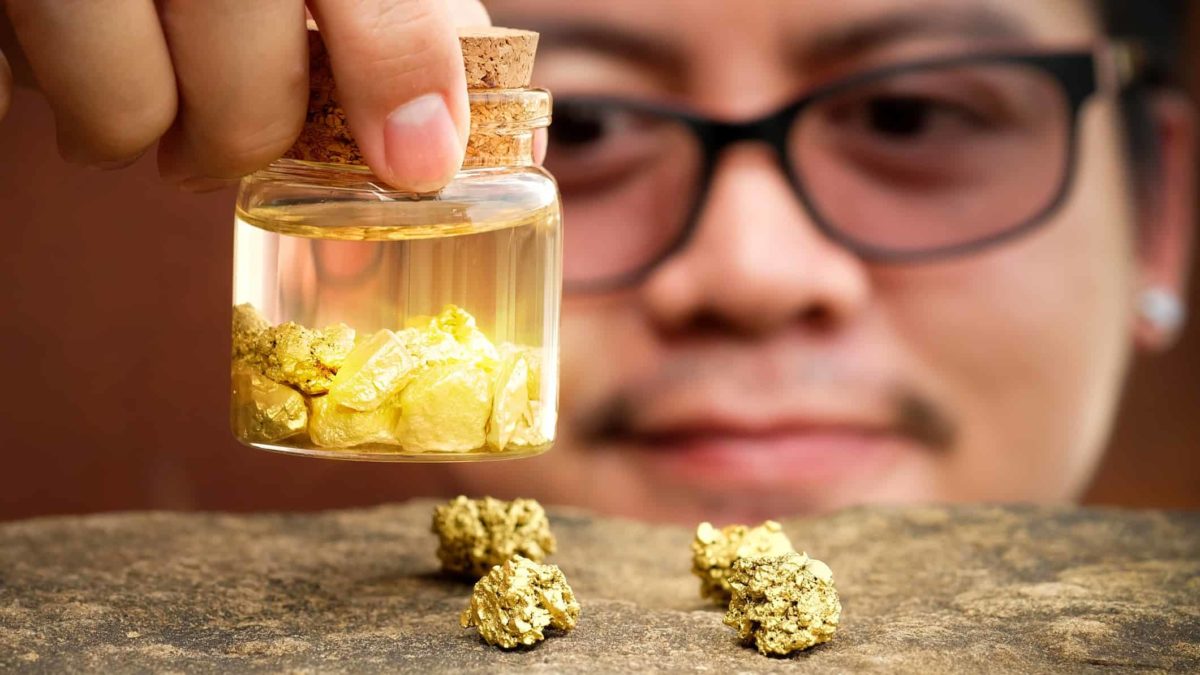
    Close-up of a smiling man holding a jar containing nuggets of gold.

    ASX gold stocks have been some of the most sought-after investments on the Australian share market in 2024. Thanks to surging gold prices, investors have been chasing gold shares like Newmont Corporation (ASX: NEM) with a vengeance this year.

    It’s not hard to see why. Since the end of February, Newmont shares have rocketed a whopping 37% or so. The story is similar with other gold miners like Gold Road Resources Ltd (ASX: GOR), Silver Lake Resources Ltd (ASX: SLR) and Northern Star Resources Ltd (ASX: NST).

    But next week, Newmont shares will be in the spotlight. That’s because this ASX gold-mining giant is set to trade ex-dividend for its latest shareholder payment on Monday, 3 June.

    Newmont’s dividend payments work a little differently from those of most other ASX gold stocks — differently from most other ASX shares, in fact.

    This is due to Newmont’s status as an ASX CDI (CHESS Depository Interest). Newmont’s ASX shares actually represent the company’s primary listing on the US markets.

    Newmont shares are about to pay out

    Thanks to Newmont’s acquisition of the former king of the ASX gold pack, Newcrest Mining, last year, ASX investors who owned Newcrest shares at the time were issued Newmont CDIs on the ASX. These CDIs aren’t real ASX shares, but represent ownership of the company’s primary stock, listed on the New York Stock Exchange as Newmont Corporation (NYSE: NEM) shares.

    Owners of Newmont’s ASX shares are still entitled to everything Newmont gives its shareholders, including dividend payments. But since Newmont is a US-based company, these dividends are a little different. For one, they no longer come with franking credits attached. They are also paid out quarterly rather than the six-month interval, which is the norm on the ASX.

    The latest of these quarterly dividends is due to hit investors’ bank accounts next month on 27 June. However, if anyone who wishes to receive this dividend who doesn’t already own Newmont stock, time is running out.

    Since the company will be trading ex-dividend for this upcoming payment on Monday next week, the last day you can buy Newmont shares with the right to receive the latest dividend attached is tomorrow, 31 May. Anyone who buys this stock from Monday onwards misses out this time.

    The company’s dividend will be worth 25 US cents per share (38 cents at current exchange rates). It will be the third dividend that Newmont’s ASX investors will enjoy since the company joined the Australian markets.

    This payment is between Newmont’s December dividend of 42.6 cents per share and March’s payment of 26.5 cents per share.

    On an annualised basis, it would give Newmont shares a dividend yield of 2.43% at current pricing.

    Time to buy?

    You might think that today is a great day to buy Newmont shares, bag this dividend, and perhaps sell out later with some free money in your pocket.

    Well, unfortunately, there’s no free lunch here. When a company trades ex-dividend, its shares usually fall by whatever the value of the dividend that has just been lost was.

    As such, you can either buy more expensive Newmont shares today with the dividend rights attached, or you can buy the cheaper shares next week that come without this dividend. You can’t have the cake and eat it too, unfortunate as that may be.

    So if you like Newmont as a business and a gold miner, by all means buy the shares today. But if you’re chasing a quick buck, just hit up the casino instead.

    The post Newmont shares are about to trade ex-dividend. Time to buy? appeared first on The Motley Fool Australia.

    Should you invest $1,000 in Newmont right now?

    Before you buy Newmont shares, consider this:

    Motley Fool investing expert Scott Phillips just revealed what he believes are the 5 best stocks for investors to buy right now… and Newmont wasn’t one of them.

    The online investing service he’s run for over a decade, Motley Fool Share Advisor, has provided thousands of paying members with stock picks that have doubled, tripled or even more.*

    And right now, Scott thinks there are 5 stocks that may be better buys…

    See The 5 Stocks
    *Returns as of 5 May 2024

    More reading

    Motley Fool contributor Sebastian Bowen has positions in Newmont. The Motley Fool Australia’s parent company Motley Fool Holdings Inc. has no position in any of the stocks mentioned. The Motley Fool Australia has no position in any of the stocks mentioned. The Motley Fool has a disclosure policy. This article contains general investment advice only (under AFSL 400691). Authorised by Scott Phillips.