• 3 ASX All Ords shares smashing new multi-year highs while the market sinks

    The All Ordinaries Index (ASX: XAO) is down 0.5% in late morning trade on Thursday, but that’s not holding back these three high-flying ASX All Ords shares.

    Shaking off any concerns over sticky inflation and extended high interest rates, investors are sending these stocks soaring to multi-year highs today.

    Which companies are we talking about?

    I’m glad you asked!

    ASX All Ords shares flying higher

    The first ASX All Ords stock hitting a new multi-year high today is Genex Power Ltd (ASX: GNX).

    The Genex share price is up 1.9% today at 27 cents a share, the highest levels since 2018. That sees the Genex share price up an impressive 50% over the past 12 months, with most of those gains delivered since the end of February.

    With no new price sensitive information from the company since it announced a funding extension on 13 May, investors may be buying the stock for exposure to its portfolio of sustainable energy assets.

    The second ASX All Ords share smashing new multi-year highs today is Clarity Pharmaceuticals Ltd (ASX: CU6).

    The Clarity Pharmaceuticals share price is up 5.1% at $4.84 a share. That sees the stock up a whopping 549% over the past 12 months. And, if the gains are maintained, it will mark a new all-time closing high.

    Investor enthusiasm was stoked again today after the clinical-stage radiopharmaceutical company announced it had entered into a supply agreement with SpectronRx for the production of diagnostic copper-64 (Cu-64).

    The agreement assures a seamless supply of CU-64 for Clarity’s products, which are currently progressing through clinical trials.

    Clarity executive chairman Alan Taylor said:

    We are very excited to bring an additional Cu-64 manufacturer to our extensive and reliable network of copper radioisotope suppliers. SpectronRx will be the first private supplier of Cu-64 to join our network in the US.

    Cu-64, with an ideal 12.7-hour half-life, is able to overcome the overwhelming supply restraints of other diagnostic isotopes, specifically Ga-68 with a half-life of ~1 hour and F-18 with a half-life of ~2 hours

    Which brings us to the third ASX All Ords share smashing multi-year highs today, Catapult Group International Ltd (ASX: CAT).

    Shares in the global sports data and analytics company are rocketing 13.6% today, currently trading for $1.76 apiece. That sees the Catapult share price up 62% over 12 months and trading at its highest levels since October 2021.

    The ASX All Ords share is surging after releasing its full FY 2024 results this morning.

    Highlights include a 20% year on year increase in revenue (in constant currency) to $152 million.

    And the Catapult’s profit margin improved by 125% from the prior year, which resulted in $7 million of free cash flow.

    The post 3 ASX All Ords shares smashing new multi-year highs while the market sinks appeared first on The Motley Fool Australia.

    Should you invest $1,000 in Catapult Group International right now?

    Before you buy Catapult Group International shares, consider this:

    Motley Fool investing expert Scott Phillips just revealed what he believes are the 5 best stocks for investors to buy right now… and Catapult Group International wasn’t one of them.

    The online investing service he’s run for over a decade, Motley Fool Share Advisor, has provided thousands of paying members with stock picks that have doubled, tripled or even more.*

    And right now, Scott thinks there are 5 stocks that may be better buys…

    See The 5 Stocks
    *Returns as of 5 May 2024

    More reading

    Motley Fool contributor Bernd Struben has no position in any of the stocks mentioned. The Motley Fool Australia’s parent company Motley Fool Holdings Inc. has positions in and has recommended Catapult Group International. The Motley Fool Australia has recommended Catapult Group International. The Motley Fool has a disclosure policy. This article contains general investment advice only (under AFSL 400691). Authorised by Scott Phillips.


  • Trump just debuted a new trial spin as the jury deliberates, claiming ‘nobody knows what the crime is’

    donald trump hallway puzzled manhattan court
    Former U.S. President Donald Trump speaks to the media as the jury ends its first day of deliberations.

    • Trump has debuted a new line of attack in his criminal trial.
    • "I DON'T EVEN KNOW WHAT THE CHARGES ARE IN THIS RIGGED CASE," he wrote on Truth Social.
    • Prosecutors charged Trump with 34 counts of falsifying business records in the first degree over a year ago.

    The jurors in former President Donald Trump's criminal trial are thinking deeply about the charges.

    After just a few hours of deliberating Wednesday, they asked the judge to read back four crucial segments of the testimony they heard.

    They honed in on sections that indicate they could be seeking to understand granular details of the plot to keep Stormy Daniels silent ahead of the 2016 presidential election about a sexual tryst she says she had with Trump.

    Trump, meanwhile, has brought a new line of attack against the proceedings: He says he doesn't know what's going on.

    "I DON'T EVEN KNOW WHAT THE CHARGES ARE IN THIS RIGGED CASE—I AM ENTITLED TO SPECIFICITY JUST LIKE ANYONE ELSE," he posted on Truth Social after jurors began deliberating. "THERE IS NO CRIME!"

    The New York district attorney's office charged Trump with 34 counts of falsifying business records in the first degree over a year ago.

    Over the course of more than a month, Trump sat through testimony from 20 witnesses and a five-hour closing argument from prosecutor Joshua Steinglass, laying out the case.

    An entire day of testimony was spent going through those 34 records — invoices, checks, and ledger entries — in detail. Trump signed nine of those checks in his own hand, with his signature mountain-range style signature.

    The judge already explained the charges

    Reading into Trump's remarks and social media posts Wednesday, his campaign seems to be attempting to create confusion about a straightforward part of the jury's job.

    The jury must reach a "guilty" or "not guilty" verdict on each of the 34 counts, one for each record.

    On its own, the crime of "falsifying business records" in New York is considered a misdemeanor crime. But each count can be transformed into a felony if a jury finds that it was carried out in an attempt to commit or conceal another crime that would itself be a felony.

    According to prosecutors, the felony law Trump attempted to violate or cover up is section 17-152 of the New York Election Law, which refers to Trump conspiring to promote himself in the 2016 presidential election "by unlawful means."

    Prosecutors offered three different possible "unlawful means" carried out by Trump in the plot to pay Stormy Daniels hush money 11 days before the 2016 presidential election:

    1. Violating federal campaign finance laws.
    2. Causing certain invoices, bank records, or tax documents to include false information.
    3. Submitting false tax documents.

    Jurors need to unanimously agree on each of the 34 document falsification counts to find Trump guilty.

    But they do not need to agree on which of the three "unlawful means" Trump took as a path to falsify each document.

    New York Supreme Court Justice Juan Merchan explained it clearly in his hourlong instructions to the jury on Wednesday morning.

    "Although you must conclude unanimously that the defendant conspired to promote or prevent the election of any person to a public office by unlawful means, you need not be unanimous as to what those unlawful means were," Merchan told the jurors.

    As Merchan gave the jury instructions, Trump's eyes appeared to be shut.

    The 77-year-old Republican presidential candidate leaned back in his chair and sat still, his hands in his lap and mouth rested in a frown.

    At one moment, he seemed to stretch his back and arms while remaining in his seat, before settling back in his padded leather chair.

    juan merchan
    Justice Juan Merchan listens during Trump's criminal trial.

    Last week, Merchan batted away an attempt from Trump's lawyer Emil Bove to require the jury to "make very specific findings" for the alleged violations of New York's election law. Trump kept his eyes closed through much of that court session, too.

    "What you're asking me to do is change the law, and I'm not going to do that," Merchan told Trump's legal team.

    As jurors began deliberating Wednesday, Trump's allies pushed a false narrative about their job.

    Sen. Marco Rubio of Florida — who is widely believed to be under consideration as a running mate to Trump — posted on X, falsely claiming that the "Judge in Trump case in NYC just told jury they don't have to unanimously agree on which crime was committed."

    It was reposted by Jason Miller, a senior advisor to Trump's campaign.

    On Truth Social, Trump posted quotes from Fox News host Jesse Watters, falsely claiming "the jury can pick whatever crime they want."

    The jurors appeared to be seeking clarity on their role. They weren't permitted to take a copy of the judge's instruction into the deliberations room with them. And before the court day wrapped on Wednesday, they asked Merchan to read it aloud to them again.

    By the end of the day, Trump appeared confused about what exactly he was supposed to be confused about.

    "The other thing, the confusion is, nobody knows what the crime is, because there is no crime," Trump told reporters in the hallway outside the courtroom before he left. "Nobody knows what the crime is. The DA didn't name the crime. They don't know what the crime is."

    Read the original article on Business Insider
  • Before MoviePass (and since), Ted Farnsworth has had a string of failed businesses. Here’s a timeline.

    Ted Farnsworth in a tuxedo
    Ted Farnsworth

    • Ted Farnsworth is the former CEO of Helios and Matheson Analytics, which previously was the parent company of MoviePass.
    • The documentary "MoviePass, MovieCrash" shows how he blew through hundreds of millions of dollars.
    • He and former MoviePass CEO Mitch Lowe are awaiting trial on charges of securities fraud.

    In the new HBO documentary "MoviePass, MovieCrash," Ted Farnsworth is the CEO of the publicly traded Helios and Matheson Analytics (HMNY) when the company takes a majority stake in the movie-theater-subscription startup MoviePass in 2017.

    Under Farnsworth's watch, MoviePass became a sensation after he and then-CEO Mitch Lowe dropped the monthly subscription fee from $30 a month to $10. It led to millions of subscribers and the company being hailed as the Netflix of movie theaters. Farnsworth and Lowe touted themselves in the press as the masterminds behind it all.

    The documentary — based on reporting by Business Insider —reveals the more complicated reality of the phenomenon, showing how MoviePass cofounders Stacy Spikes and Hamet Watt were pushed out of the company after the arrival of Farnsworth and Lowe.

    With Farnsworth and Lowe at the helm, hundreds of millions of dollars were spent to not just keep the unsustainable $10-a-month plan going, but also on lavish parties at Coachella, and starting a movie production arm best known for releasing the 2018 movie "Gotti," a biopic on notorious crime boss John Gotti starring John Travolta that received a 0% critics' score on Rotten Tomatoes.

    In 2020, both HMNY and MoviePass went bankrupt (Spikes has since relaunched MoviePass), and two years later, Farnsworth and Lowe were charged with securities fraud.

    As the documentary shows, the crash of MoviePass is just one of many failed ventures of the 61-year-old Farnsworth. Business Insider reached out to Farnsworth for comment but didn't get a response.

    Here's a rundown of many of those companies (some of which went bankrupt), what Farnsworth did after MoviePass, and why he's currently in jail.

    Note: "MoviePass, MovieCrash" is based on Business Insider's award-winning reporting on the company.

    Mid-1990s: Farnsworth ran the Psychic Discovery Network, promoted by La Toya Jackson, that received more than 50 complaints from the FTC
    La Toyla Jackson on a couch in a red coat
    La Toyla Jackson.

    Farnsworth's first major attention came when he ran the 900-number psychic network, which became famous thanks to its star promoter, La Toya Jackson.

    A 1998 bulletin from the Federal Trade Commission noted the Psychic Discovery Network as a company that received more than 50 complaints in 1997. It had a total of 60.

    2000: Auction site Farmbid.com lasts less than a year
    farm

    Farnsworth tried to use the popularity of the Psychic Network and the dot-com boom to capitalize on the multitrillion-dollar agricultural business in the early 2000s with the site Farmbid.com.

    A 2000 Wired story touted the company as a site that featured "farm auctions, links to wholesalers, a detailed weather center, and even a 'farm chat' area."

    But the farming industry wasn't that into it. According to Sunbiz, the official Florida business registry, the company folded in less than a year.

    2001: He gets into the beverage space with XStream

    Farnsworth founded the company XStream Beverage Network Inc. in 2001, touting it as "an emerging developer, marketer and distributor of new age beverages."

    He tried to buy a European energy drink called Dark Dog, but that deal never closed, according to Bloomberg.

    By 2007, he was able to buy Global Beverage, which had in its stable Rudy Beverages, founded by famed 1970s Notre Dame football player Daniel "Rudy" Ruettiger.

    In November of that year, Farnsworth resigned as chairman of XStream, and its stock dropped 99%, according to Bloomberg.

    2007: Farnsworth becomes CEO of Purple Beverage
    Ted Farnsworth standing next to Mariano Rivera
    (L-R) Ted Farnsworth and Mariano Rivera.

    Farnsworth's failure with XStream didn't stop him from trying another venture in the drink space. He became the CEO of Purple Beverage Co., touting an antioxidant-rich drink.

    The stock for Purple Bev went as high as $3.24 in April 2008, according to Bloomberg, thanks partly to Farnsworth landing celebrity spokespeople like Chaka Khan and New York Yankees Hall of Fame pitcher Mariano Rivera. But by the time he resigned a year later, the stock had plummeted by 99%.

    2012: He oversees a vitamin company that flatlines within a year and is sued by FedEx

    Farnsworth became the chairman of LTS Nutraceuticals Inc., a multilevel-marketing vitamin company. In 2011, it traded as high as $4.85. But by 2012, with Farnsworth running things, the stock fell 99%. It's unclear when he left the company because it didn't make periodic regulatory filings, according to Bloomberg.

    In 2013, FedEx sued the vitamin company, saying it was owed $26,000. According to The Miami Herald, the judge ruled in FedEx's favor.

    2016: Farnsworth’s Zone Technologies merges with HMNY to become publicly listed on the Nasdaq

    Over a decade after Farmbid, Farnsworth went back into the tech space with an app called RedZone Maps (through a company called Zone Technologies). The app flagged where crimes were being reported in a user's area.

    A year later, Zone Technologies merged with Helios and Matheson to become publicly listed on the Nasdaq. That same year, Farnsworth was named CEO of HMNY.

    2017: HMNY acquires a majority stake in MoviePass
    MoviePass

    Since its birth in 2011, MoviePass had been trying to figure out a monthly subscription price that attracted moviegoers and would make a profit. By 2017, the company was on the brink of running out of money when Farnsworth got connected with MoviePass' then-CEO, Mitch Lowe. A deal was made for HMNY to take a majority stake in MoviePass. By that summer, Farnsworth and Lowe dropped the price to $10 a month, and the rest is history. With a huge rise in subscribers for MoviePass, the HMNY stock initially soared. But by 2020, MoviePass and HMNY went bankrupt.

    At the time of bankruptcy, the company said it was under pending investigations by the Federal Trade Commission, SEC, four California district attorneys, and the New York attorney general.

    In 2021, Farnsworth and Lowe settled with the FTC and reached a $400,000 settlement with the California district attorneys.

    2021: Less than a year after MoviePass' bankruptcy, Farnsworth founds Zash Global Media and Entertainment

    After MoviePass' bankruptcy, Farnsworth quickly landed back on his feet by starting a media company called Zash in less than a year. He later merged it with the publicly traded company Vinco Ventures. He acquired a TikTok rival called Lomotif and even tried (unsuccessfully) to buy the National Enquirer.

    By the end of 2022, Vinco stock had cratered and is now worth less than one cent.

    In 2024, Business Insider reported on Farnsworth's business tactics while at Zash. They mirror how he operated at MoviePass and some other ventures over the decades: Get involved with a publicly traded company, help raise funding from his finance connections at favorable terms for them, drive up the company's stock with splashy announcements, and leave retail investors with big losses when the stock crashes.

    2022: Farnsworth is charged with securities fraud related to his time at MoviePass
    MoviePass CEO Mitch Lowe and Helios and Matheson Chief Executive Ted Farnsworth.
    (L-R) MoviePass CEO Mitch Lowe and Helios and Matheson Chief Executive Ted Farnsworth.

    In 2022, Farnsworth and Lowe were each charged with one count of securities fraud and three counts of wire fraud by the Department of Justice, which alleged the two "engaged in a scheme to defraud investors through materially false and misleading representations relating to HMNY and MoviePass's business and operations to artificially inflate the price of HMNY's stock and attract new investors."

    Both have pleaded not guilty and are awaiting trial. If convicted, each face a maximum sentence of 20 years in prison on each count.

    2024: Farnsworth is currently in jail

    Farnsworth has been in a Florida jail since August 2023.

    During Farnsworth's time out on bail, he traveled from his home in upstate New York to Miami on multiple occasions without notifying his probation officer and was involved in a domestic incident that resulted in a restraining order, which he also didn't report, according to Bloomberg.

    His bail was revoked in an August 2023 hearing. He's now in jail awaiting his court date.

    Read the original article on Business Insider
  • Google Images: History, how to search for pictures or perform a reverse image search on iPhone, Android, or desktop

    A side-by-side image shows a screenshot of a Google Images search for "jennifer lopez green dress," and a photo of Jennifer Lopez wearing the iconic green Versace dress at the 2000 Grammys.
    Google Images was invented shortly after Jennifer Lopez and her iconic green Versace dress broke the internet after the 2000 Grammy Awards.

    • Google Images lets you search for pictures and photos, and even perform reverse image searches.
    • Google Images was invented after Jennifer Lopez wore a daring green Versace dress to the Grammys.
    • You can perform image searches or reverse image searches on iPhone, Android, or desktop.

    Google is much more than just a search engine. Since its launch back in 1998, Google has built an impressive array of specialized tools to help people use, search, and navigate the internet and world around them. 

    Google Images is one of the many features the search giant offers; it's a great place to search for pictures and photos by using relevant keywords.

    You can also search Google Images using an image rather than text — this is known as a reverse image search — to find out more information about a specific photo or graphic.

    The invention of Google Images was famously precipitated by the pop star Jennifer Lopez, whose daring green Versace dress at the 2000 Grammy Awards became the most popular search query Google had seen at the time. Former Google CEO Eric Schmidt later wrote that Google had no real way of getting users the results they were searching for, which were simply pictures of JLo in the iconic dress.

    Schmidt said the invention of Google Images was a classic example of what Google cofounders Larry Page and Sergey Brin did best: innovating and iterating in response to user demand. Google performed a similar feat in 2011 when the company added reverse image search functionality.

    Here's how and why you might want to use Google Images and its reverse image search tool. 

    What is Google Images?

    A screenshot shows the Google Images search engine.
    Type any term into Google Images and the search engine will bring you to a gallery of thumbnails linked to websites.

    Google Images lets you type in a search term — it can be a person, place, event, item, or anything else you want to visualize — and brings up a gallery of images that match. Those images are all linked to websites, so you can easily go right to the source for more information.

    The main factor in determining what images populate your results page is how closely your search terms match the image filenames. 

    Here are three simple ways to access Google Images:

    1. Visit google.com and select Images in the upper-right corner.
    2. Visit images.google.com, which is a more direct way to get to Google Images.
    3. Input the search terms for your image search into the default Google search and select Images on the results page. 

    Once a search is submitted, Google finds a set of thumbnail images correlating to your keyword description.

    Google Images is also far from Google's only photo tool — Google Photos is a photo-sharing and storage service with its own search features that functions similarly to Google Drive for documents.

    Google Lens, which launched in 2017, is Google's image recognition technology that functions similarly to a reverse image search: it uses your device's camera to identify real-world objects like products or locations or even people, and gives you information about them.

    What is Google's Search by Image? 

    Google's Search by Image is a feature that uses reverse image search functionality. 

    When you do a Google reverse Image search, you place a photo or a link to a photo in the search bar instead of a text query. Google then finds websites featuring your image as well as related images.

    When to do a Google reverse image search

    It's most helpful to search with an image on Google in the following cases:

    • Find information about a photo. A Google reverse image search could bring up a website that includes a person's name or information about a product. It can also indicate whether a photo is being used for mis- or disinformation, as is often the case with deepfakes or "shallowfakes."
    • Uncover plagiarism. A reverse image search will bring up similar images. This can reveal whether an image was copied from someone else's work.
    • Find other similar images. If you want to find other photos connected to a specific image, a Google reverse search will populate related pictures.
    • Shop for a specific product. If you have an image of an article of clothing, product, or other object, Google will automatically show you images of the same or similar products with links to purchase them.

    Google reverse image search on iPhone or Android

    You can reverse image search on iPhone or Android using a photo from the internet or your camera roll. Here's how to do it.

    Using an image from your files

    This option requires that you have Google for Android or Google for iOS app installed on your device.

    1. Open the Google app on your iPhone or Android.
    2. Tap the camera icon in the search bar. The app might ask for permission to access your camera and image gallery. When it does, grant permission.
    A screenshot of the Google homepage on the iPhone app shows a camera icon emphasized by a red box and arrow.
    Tapping the camera icon will open Google Lens.

    Quick tip: If you have the Google Search widget on your Home Screen, you can tap the camera icon to start a reverse image search

    1. Either tap the shutter button in the middle section to take a picture or look for the image in your gallery in the bottom left section and then tap on the image to perform the search.
    A screenshot of the Google Lens page on the Google iPhone app shows the "Search with your camera" and photo gallery emphasized with red boxes and red arrows.
    Take a picture of the object or browse for it in your gallery.

    1. After a moment, Google will display the results of the image search.

    Using an image from the search results

    Before proceeding with this method, you'll need to download the Google Chrome mobile app to perform a reverse image search on your mobile device.

    1. Open the Google app on your iPhone or Android, or open google.com in the Chrome app.
    2. Describe the image you want to search. For example, you could type "tuxedo cat."
    3. Tap the Images tab at the top so you can only see the image search results
    A screenshot of a Google search for "tuxedo cat" shows the "Images" tab emphasized with a red box and arrow.
    Type the image you want to search for in the search bar, and select the "Images" tab.

    1. Select an image from the search results and hit the camera icon in the bottom left-hand corner.
    A screenshot of Google Image search results for "tuxedo cat" shows the Google Lens icon emphasized with a red box and arrow.
    Tap on the Google Lens icon.

    1. Then, select Search from the menu, and Google will show you images and related search terms that match your query.

    Google reverse image search on a computer

    You can do a more robust Google reverse image search on your computer by uploading a file from your computer or searching for an image on the web. Google Images works with Chrome, Firefox, and Safari browsers.

    Using an image from your files

    1. Open images.google.com in a web browser.
    1. Click the camera icon.
    1. Either drag and drop your image where it says "Drag an image here" or click on the "upload a file" link to search for the image on your computer.
    A top image shows a screenshot of Google Images with the Google Lens icon emphasized by a red box and arrow, and a bottom image shows a screenshot of Google Images' file uploader.
    Click the Google Lens icon, then upload the image you want to search.

    1. If you choose to upload the image, find it on your computer, click on it, and select Open.
    1. After the image is uploaded, you'll be taken to a page containing similar images or information about the image.

    Using an image from the internet

    1. Right click on the image you found in Google.
    2. Choose Copy image address in the pop-up.
    A screenshot from Google Images shows a dropdown menu with the option "Copy Image Address" emphasized with a red box and arrow.
    Copy the image address.

    1. Open images.google.com in a web browser.
    1. Click the camera icon.
    1. Paste the picture's URL in the text box that says Paste image link.
    A screenshot of the Google Image reverse image search page shows the "Paste image link" search bar emphasized with a red box and red arrow.
    In the "Paste image link" text box, paste the image's URL in there.

    1. Click on the Search button, and you'll be taken to a page of results related to your image.

    Quick tip: You can also do a reverse image search from Google image search results. Just right-click on an image and choose Search image with Google Lens.

    Read the original article on Business Insider
  • Catapult shines: 20% sales growth propels ASX tech stock to new 52-week high

    Man jumps for joy in front of a background of a rising stocks graphic.

    ASX tech stock Catapult Group International Ltd (ASX: CAT) captured the spotlight in early trading on Thursday following its financial results for the year ending 31 March 2024.

    At the time of writing, Catapult shares are trading 11.6% higher at $1.73 apiece after touching a 52-week high of $1.80 just after market open. Meanwhile, the S&P/ASX 200 Index (ASX: XJO) has slipped 0.6% into the red.

    Let’s delve into the key highlights from FY 2024 that have investors buying this ASX tech stock today.

    Catapult: ASX tech stock with high revenue growth

    Investors are optimistic about this ASX tech stock’s outlook following the company’s annual results. Here are some of the highlights:

    • Annualised contract value (ACV), a key indicator of future revenue, grew by 20% in constant currency year over year.
    • The company’s revenue hit a milestone of US$100 million, reflecting the strength of its software as a service (SaaS) strategy.
    • Earnings before interest, tax, depreciation and amortisation (EBITDA) of US$9.3 million, up from a loss of US$11 million last year.
    • Net loss after tax of US$16.7 million, an improvement from the $31.6 million net loss in the prior corresponding period.

    Revenue growth was driven by new customers and increased ACV per team, boosted by the ASX tech stock’s new video solutions.

    Catapult’s core SaaS metrics showed ACV retention improving to 96.5%, up 30 basis points year-on-year. Customer lifetime duration increased by 15.9% to seven years, and the number of pro team customers rose by 9.4% to 3,317 teams.

    The company also hit its free cash flow targets of US$4.6 million, a US$26 million improvement year over year. This is after paying down US$4.7 million of debt during the quarter.

    What did management say?

    Catapult CEO Will Lopes was pleased with the company’s numbers, saying:

    FY24 was a historic year for Catapult. Our SaaS strategy delivered great ACV growth, driven by new customers but also buoyed by increases in ACV per team as cross-selling accelerated with our New Video Solutions.

    This highlights the company’s ability to leverage its technology to attract and retain clients, ensuring steady revenue growth.

    Catapult’s EBITDA margin improved by 125% year-on-year, resulting in US$4.6 million of free cash flow.

    This marks a significant inflection point in the ASX tech stock’s journey towards profitability and establishing a world-class SaaS business.

    Lopes added, “FY24 was a major inflection point in our journey towards profitability and building a world-class SaaS business. We saw strong growth in our profit margin, accelerating us to improved levels on the Rule of 40.”

    The Rule of 40 is a key valuation metric for SaaS companies, indicating that the combined revenue growth rate and profit margin should exceed 40%. Catapult achieved a 43% rate.

    What’s next for this ASX tech stock?

    For FY25, management aims to maintain strong ACV growth and high retention rates. The company plans to balance growth and profitability, aligning with the Rule of 40 to ensure cost margins move towards long-term targets.

    Said Lopes: “In FY25, our objective is to deliver on our strategic priorities with a focus on profitable growth. Profitable growth is also anticipated to deliver higher free cash flow in FY25 as our business scales.”

    Catapult share price

    The Catapult share price is up around 74% in the last 12 months of trade.

    The post Catapult shines: 20% sales growth propels ASX tech stock to new 52-week high appeared first on The Motley Fool Australia.

    Should you invest $1,000 in Catapult Group International right now?

    Before you buy Catapult Group International shares, consider this:

    Motley Fool investing expert Scott Phillips just revealed what he believes are the 5 best stocks for investors to buy right now… and Catapult Group International wasn’t one of them.

    The online investing service he’s run for over a decade, Motley Fool Share Advisor, has provided thousands of paying members with stock picks that have doubled, tripled or even more.*

    And right now, Scott thinks there are 5 stocks that may be better buys…

    See The 5 Stocks
    *Returns as of 5 May 2024

    More reading

    Motley Fool contributor Zach Bristow has no position in any of the stocks mentioned. The Motley Fool Australia’s parent company Motley Fool Holdings Inc. has positions in and has recommended Catapult Group International. The Motley Fool Australia has recommended Catapult Group International. The Motley Fool has a disclosure policy. This article contains general investment advice only (under AFSL 400691). Authorised by Scott Phillips.
  • Buy the dip: Woodside share price now at ‘attractive entry point’

    Worker inspecting oil and gas pipeline.

    The Woodside Energy Group Ltd (ASX: WDS) share price has been on a downward trend now for almost a year.

    On 15 September, shares in the S&P/ASX 200 Index (ASX: XJO) oil and gas stock closed the day trading for $38.39.

    In intraday trading today, shares are down 1.2% at $27.13 apiece.

    That’s underperforming the 0.7% losses posted by the ASX 200 at this same time. Though it’s right in line with the 1.2% decline of the S&P/ASX 200 Energy Index (ASX: XEJ).

    Still, with today’s losses factored in, the Woodside share price is now down a painful 29.5% since 15 September.

    That lengthy and sharp decline is in sharp contrast to the ASX 200 energy stock’s very strong performance over the previous three years.

    How strong?

    Well, brave investors who bought Woodside stock on 20 March 2020 would have been sitting on gains of 140.0% by 15 September 2023. And that’s not including the very juicy, fully franked dividends paid out during this period.

    So, the question before us now is, are Woodside shares still a ‘falling knife’? Or is it time to wade in and buy the dip?

    Is the Woodside share price good value now?

    According to Christopher Watt, an investment advisor at Bell Potter Securities (courtesy of The Bull), the big recent fall in the Woodside share price offers an appealing opportunity.

    “The recent share price pullback in this energy giant presents an attractive entry point for investors, in our view,” Watt said.

    Bell Potter has a buy rating on the ASX 200 energy stock.

    Watt noted:

    The shares have fallen from $30.59 on April 11 to trade at $27.45 on May 23. Although first quarter 2024 production fell by 7 per cent on the fourth quarter of fiscal year 2023, the company retained full year 2024 guidance of between 185 million and 195 million barrels of oil equivalent.

    Woodside remains Australia’s premier oil and gas exposure.

    At its quarterly results, Woodside also reported its three top growth projects were progressing well.

    CEO Meg O’Neill noted:

    Significant progress was made in the period on our three major growth projects. Commissioning activities are now underway at the Sangomar project in Senegal, on track for first oil in the middle of this year.

    Atop the potential for a rebound in the share price, Woodside also remains a top ASX 200 dividend stock.

    Over the past 12 months, the company has paid out $2.16 a share in fully franked dividends.

    At the current Woodside share price, that sees the stock trading on a fully franked trailing yield of 8.0%.

    The post Buy the dip: Woodside share price now at ‘attractive entry point’ appeared first on The Motley Fool Australia.

    Should you invest $1,000 in Woodside Petroleum Ltd right now?

    Before you buy Woodside Petroleum Ltd shares, consider this:

    Motley Fool investing expert Scott Phillips just revealed what he believes are the 5 best stocks for investors to buy right now… and Woodside Petroleum Ltd wasn’t one of them.

    The online investing service he’s run for over a decade, Motley Fool Share Advisor, has provided thousands of paying members with stock picks that have doubled, tripled or even more.*

    And right now, Scott thinks there are 5 stocks that may be better buys…

    See The 5 Stocks
    *Returns as of 5 May 2024

    More reading

    Motley Fool contributor Bernd Struben has no position in any of the stocks mentioned. The Motley Fool Australia’s parent company Motley Fool Holdings Inc. has no position in any of the stocks mentioned. The Motley Fool Australia has no position in any of the stocks mentioned. The Motley Fool has a disclosure policy. This article contains general investment advice only (under AFSL 400691). Authorised by Scott Phillips.

  • 2 ASX healthcare shares to buy now for the AI revolution

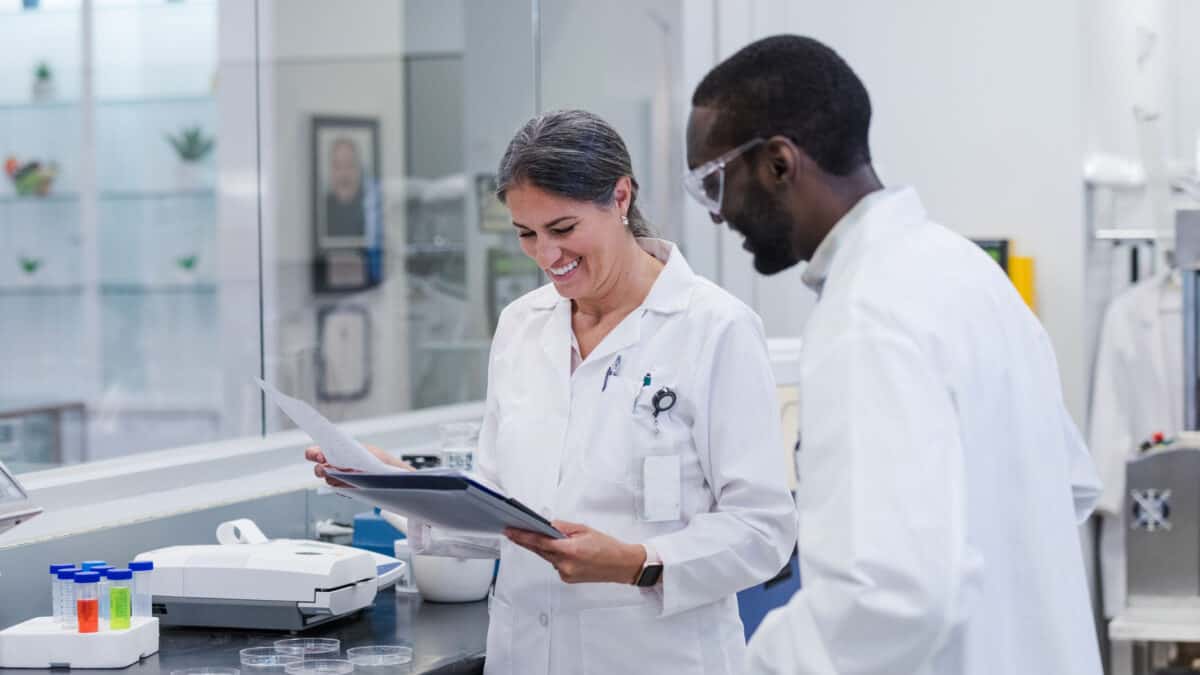
    In the lab at work, the mature adult woman and young adult man smile as they review the results of their successful experimentation.

    If you’re looking to capitalise on the artificial intelligence (AI) revolution, you might consider investing in ASX healthcare shares.

    The Australian market has rallied behind AI stocks recently, and there may be many more beneficiaries in the pipeline.

    ResMed Inc (ASX: RMD) and Integral Diagnostics Ltd (ASX: IDX) are two standout ASX healthcare shares. According to experts, both companies are set to benefit from AI advancements, making them potentially attractive healthcare options.

    ASX healthcare shares to surge

    ResMed is in the sleep disorder treatment business. Trading at $31.06 per share at the time of writing, the company shows significant growth potential due to the increasing prevalence of obstructive sleep apnoea (OSA), according to analysts at Bell Potter.

    Estimates are that more than a billion people globally suffer from OSA, with many still undiagnosed. Bell Potter projects this under-penetration provides a massive growth opportunity for ResMed.

    The broker gave ResMed a buy rating with a $36.00 price target, saying the company’s competitive edge was bolstered by the ongoing recall of competitor Philips’ respiratory devices and improved semiconductor availability.

    Bell Potter expected industry volume growth “to continue in the 6-8% range for the foreseeable future”, adding that ResMed was “well-positioned to build on its dominant share even after Philips returns to the global market”.

    The broker forecasts device sales to grow sequentially throughout 2023 and beyond, driven by the launch of ResMed’s latest CPAP device, the AirSense 11.

    AI enhances Integral Diagnostics’ potential

    Integral Diagnostics is another ASX healthcare share that I believe will benefit from AI advancements. Integral provides diagnostic imaging services such as MRIs and CTs across Australia and New Zealand.

    Boutique investment manager Firetrail identifies Integral as a key beneficiary of AI and “teleradiology”, which it says could significantly enhance the company’s productivity and earnings before interest, tax, depreciation and amortisation (EBITDA) margins.

    If you think about it, AI has the potential to revolutionise diagnostic imaging. Firetrail believes it can “identify abnormalities and draw radiologists’ attention to areas of concern, allowing for faster assessments”.

    My colleague Bronwyn explained in April that, currently, AI tools apply to only 5% of Integral’s scans. But management expects this to increase by 200–300% by the end of FY 2025.

    This boost in productivity could enable radiologists to assess up to 1,000 scans per day, compared to the current 200.

    AI’s impact on ASX healthcare shares

    AI integration in healthcare is transforming the outlook for many ASX healthcare shares. It offers potentially significant benefits for companies such as ResMed with its innovative sleep disorder treatments and Integral Diagnostics’ AI-enhanced diagnostic services.

    AI-driven tools not only enhance operational efficiency but also open new avenues for growth and profitability. And it appears the experts agree that investing in certain ASX healthcare shares can position investors to benefit as AI revolutionises the healthcare sector.

    The post 2 ASX healthcare shares to buy now for the AI revolution appeared first on The Motley Fool Australia.

    Should you invest $1,000 in Integral Diagnostics right now?

    Before you buy Integral Diagnostics shares, consider this:

    Motley Fool investing expert Scott Phillips just revealed what he believes are the 5 best stocks for investors to buy right now… and Integral Diagnostics wasn’t one of them.

    The online investing service he’s run for over a decade, Motley Fool Share Advisor, has provided thousands of paying members with stock picks that have doubled, tripled or even more.*

    And right now, Scott thinks there are 5 stocks that may be better buys…

    See The 5 Stocks
    *Returns as of 5 May 2024

    More reading

    Motley Fool contributor Zach Bristow has no position in any of the stocks mentioned. The Motley Fool Australia’s parent company Motley Fool Holdings Inc. has no position in any of the stocks mentioned. The Motley Fool Australia has recommended Integral Diagnostics. The Motley Fool has a disclosure policy. This article contains general investment advice only (under AFSL 400691). Authorised by Scott Phillips.

  • 2 under-the-radar ASX AI shares that look set to jump

    A couple hang off their car looking at the sun rising over the horizon.

    Looking to tap into the artificial intelligence (AI) revolution with some promising ASX shares? A recent report from Morgan Stanley reveals plenty of potential Aussie beneficiaries of the AI arms race.

    And with US AI visionary NVIDIA Corporation (NASDAQ: NVDA) knocking it out of the park in Q1 2024 – growing profits 628% year over year – investors are starting a feeding frenzy for ASX AI shares.

    Two surprising names that came up in Morgan Stanley’s note were Temple & Webster Group Ltd (ASX: TPW) and WiseTech Global Ltd (ASX: WTC).

    The report highlights these companies as beneficiaries of AI advancements, making them potentially intriguing investment options, in my opinion.

    Temple & Webster’s AI advantage

    Temple & Webster is an online furniture retailer. So you might wonder, how does this ASX AI share benefit from AI?

    Morgan Stanley says the company leverages AI technology to understand its customers better.

    “We think TPW understands a lot more about their customers and potential customers compared to store operators”, the broker said in the Australian Financial Review.

    It added that AI would disrupt “most areas” of the company, including customer care, operations, product development, tech, and back-office functions.

    Unlike brick-and-mortar retailers, Temple & Webster could use AI to enhance customer experience and operational efficiency.

    ‘Offline retailers’ face high costs with store staff and leases, limiting their ability to leverage AI. How does AI bring your lease down, for example?

    In contrast, Temple & Webster’s online focus gives it a competitive edge, Morgan Stanley says.

    WiseTech’s AI-driven growth

    WiseTech is a logistics platform investing heavily in AI investment. This ASX AI share utilises machine learning, big data, and automation extensively.

    Morgan Stanley estimates that WiseTech has invested around $1 billion in software research and development over the past five years.

    The research note also identifies WiseTech as a key player in the AI revolution within the logistics sector. For instance, AI will likely help WiseTech enhance its core international freight forwarding market.

    “Harnessing AI will be key given the many complexities in the freight forwarding industry”, Morgan Stanley said.

    It also expands this footprint into secondary markets, such as warehousing, compliance, and customs.

    The broker expects AI to “assist with [WiseTech’s] sales, support and customer success automation and analytics…improve developer productivity and result in more rapid product iteration at the same level of headcount”.

    AI a future theme for ASX shares

    AI is transforming industries by improving efficiency and opening new growth avenues.

    Companies like Temple & Webster and WiseTech are two promising, under-the-radar ASX AI shares well-positioned to benefit from AI advancements. With AI driving growth and efficiency, these companies could deliver strong returns, in my opinion.

    In the last 12 months, the Temple & Webster share price is up 108%, while WiseTech shares are trading 30% higher in that time.

    The post 2 under-the-radar ASX AI shares that look set to jump appeared first on The Motley Fool Australia.

    Should you invest $1,000 in Temple & Webster Group Ltd right now?

    Before you buy Temple & Webster Group Ltd shares, consider this:

    Motley Fool investing expert Scott Phillips just revealed what he believes are the 5 best stocks for investors to buy right now… and Temple & Webster Group Ltd wasn’t one of them.

    The online investing service he’s run for over a decade, Motley Fool Share Advisor, has provided thousands of paying members with stock picks that have doubled, tripled or even more.*

    And right now, Scott thinks there are 5 stocks that may be better buys…

    See The 5 Stocks
    *Returns as of 5 May 2024

    More reading

    Motley Fool contributor Zach Bristow has no position in any of the stocks mentioned. The Motley Fool Australia’s parent company Motley Fool Holdings Inc. has positions in and has recommended Nvidia, Temple & Webster Group, and WiseTech Global. The Motley Fool Australia has positions in and has recommended WiseTech Global. The Motley Fool Australia has recommended Nvidia and Temple & Webster Group. The Motley Fool has a disclosure policy. This article contains general investment advice only (under AFSL 400691). Authorised by Scott Phillips.

  • BHP share price tumbles as $74 billion deal evaporates

    A woman holds up her hand in a stop gesture with a suspicious look on her face as a man sitting across from her at a cafe table offers her flowers.

    The BHP Group Ltd (ASX: BHP) share price is sliding today.

    Shares in the S&P/ASX 200 Index (ASX: XJO) mining giant closed yesterday trading for $45.08. In morning trade on Thursday, shares are changing hands for $44.50 apiece, down 1.3%.

    For some context, the ASX 200 is down 0.8% at this same time.

    The BHP share price is slipping as ASX investors digest the news that BHP’s $74 billion takeover offer for global miner Anglo American (LSE: AAL) will not proceed.

    At least, not anytime soon.

    BHP share price slides on rejected takeover extension

    As the Motley Fool reported last night, BHP’s three consecutively better bids for Anglo American (the first lobbed on 26 April) were not enough to convince the miner’s board that the offer presented better value for shareholders than they could deliver themselves.

    A decision that looks to be pressuring the BHP share price today.

    Last night, with just hours to go before the takeover deadline stipulated under British regulations was reached, BHP CEO Mike Henry still sounded confident that a deal, which would have seen BHP become the world’s biggest copper miner, might yet be reached.

    Having received a one-week extension to the takeover deadline last week following its third acquisition bid, BHP requested another extension on the discussions yesterday.

    The miner stated:

    BHP believes that the proposed measures it has put forward provide substantial risk protection for Anglo American shareholders and supplement the significant value uplift that Anglo American shareholders will receive from the potential combination. BHP believes a further extension of the deadline is required to allow for further engagement on its proposal.

    Anglo’s board was having none of it, however. Anglo replied:

    In aggregate, BHP has not addressed the board’s fundamental concerns relating to the disproportionate execution risk associated with the proposed structure and the value that would ultimately be delivered to Anglo American’s shareholders.

    The board unanimously decided not to extend the deadline, which came at 5pm London time.

    Mike Henry responds

    Commenting on the end of the takeover negotiations that’s seeing the BHP share price underperforming today, CEO Mike Henry said in no uncertain terms, “BHP will not be making a firm offer for Anglo American.”

    Henry continued:

    BHP is committed to its capital allocation framework and maintains a disciplined approach to mergers and acquisitions.

    While we believed that our proposal for Anglo American was a compelling opportunity to effectively grow the pie of value for both sets of shareholders, we were unable to reach agreement with Anglo American on our specific views in respect of South African regulatory risk and cost and, despite seeking to engage constructively and numerous requests, we were not able to access from Anglo American key information required to formulate measures to address the excess risk they perceive.

    We remain of the view that our proposal was the most effective structure to deliver value for Anglo American shareholders, and we are confident that, working together with Anglo American, we could have obtained all required regulatory approvals, including in South Africa.

    Now what?

    Anglo American appears determined to go its own way. Though it’s always possible other suitors could come knocking.

    Under British regulations, BHP cannot make another offer for at least six months, unless a competing offer comes in from another company.

    With today’s intraday losses factored in, the BHP share price remains up 3% over 12 months.

    The post BHP share price tumbles as $74 billion deal evaporates appeared first on The Motley Fool Australia.

    Should you invest $1,000 in Bhp Group right now?

    Before you buy Bhp Group shares, consider this:

    Motley Fool investing expert Scott Phillips just revealed what he believes are the 5 best stocks for investors to buy right now… and Bhp Group wasn’t one of them.

    The online investing service he’s run for over a decade, Motley Fool Share Advisor, has provided thousands of paying members with stock picks that have doubled, tripled or even more.*

    And right now, Scott thinks there are 5 stocks that may be better buys…

    See The 5 Stocks
    *Returns as of 5 May 2024

    More reading

    Motley Fool contributor Bernd Struben has no position in any of the stocks mentioned. The Motley Fool Australia’s parent company Motley Fool Holdings Inc. has no position in any of the stocks mentioned. The Motley Fool Australia has no position in any of the stocks mentioned. The Motley Fool has a disclosure policy. This article contains general investment advice only (under AFSL 400691). Authorised by Scott Phillips.

  • An ex-California official quietly stole over $1.5 million of water in a heist that lasted decades, but mysteries remain

    Farm
    A former California official pleaded guilty to conspiring to steal between $1.5 million and $3.5 million worth of water from the federal government.

    • An ex-California official pleaded guilty to conspiring to steal water from the federal government.
    • Dennis Falaschi's plea represents only a fraction of the original $25 million believed by prosecutors to be stolen.
    • The plea raises more questions about who was responsible and benefited from the decades-long heist.

    A former California official pleaded guilty to conspiring to steal more than $1.5 million of water, but the decadeslong water heist case still has more questions than answers.

    Dennis Falaschi served as the general manager of the Panoche Water District in Fresno and Merced Counties, located in central California, from around 1986 to 2017. The public water district bought water from the federal government and collected drainage water from farms, both of which it then legally sold to farmers in the area, according to a statement issued by the US attorney's office for the Eastern District of California on Tuesday.

    But after Falaschi discovered some of the federally owned water was leaking from an old pipe into a separate canal, the pipe was modified so it could be open and closed, allowing water to be taken "on demand," prosecutors said.

    The US attorney said Falaschi was responsible for stealing somewhere between $1.5 million and $3.5 million worth of water. Prosecutors also said that between 2011 and 2016 Falaschi was paid for water that he had sourced legally, but he did not report the income on his tax returns.

    In a plea agreement filed Thursday, Falaschi pleaded guilty to one count of conspiring to take federally owned water and one count of filing a false tax return.

    A lawyer for Falaschi did not respond to a request for comment from Business Insider. His sentencing is set for September.

    While the plea provides some answers, many questions remain in the case that farmers in the San Joaquin Valley have been watching for years.

    When Falaschi was indicted in 2022, prosecutors painted him as the mastermind of a plot that lasted from around 1992 to 2015 in which more than $25,000,000 worth of water was stolen from the federal government, or more than 130,000 acre-feet of water.

    The indictment said proceeds from the theft, which should've gone to the federal government, instead when to Falaschi and eight co-conspirators in the form of "exorbitant salaries, fringe benefits, and personal expense reimbursements."

    The Los Angeles Times, which published a deep-dive into the alleged heist in April, reported that while some farmers were angry with Falaschi, others described him as the "Robin Hood of irrigation," ensuring they could get the water they needed.

    Falaschi's plea agreement claims he's responsible for stealing only a fraction of the original $25 million prosecutors accused him of taking in the original indictment. The plea agreement also said Falaschi was one of several people involved in the misconduct and that he was unaware of the full extent of the misconduct.

    Of the water Falaschi took, the plea agreement said almost all of it was taken to "blend down and reuse drainage water, which helped protect farmland and improve water quality in the San Joaquin River."

    "The improved water quality contributed to the San Joaquin River being removed from the list of impaired waters under California's Clean Water Act," the plea agreement said, adding, "There was no evidence that Mr. Falaschi directly benefitted from the misconduct."

    The Times reported the plea raises even more questions about who was stealing the water, who was making money off of it, and why it took the federal government so long to notice.

    The mystery surrounding the case continues as water use in the state coms under increasing scrutiny, with droughts and water shortages forcing California officials to reconsider how water is used and allotted.

    Read the original article on Business Insider