
• Why Appen, Mayne Pharma, Playside, and PYC shares are storming higher

    Two happy excited friends in euphoria mood after winning in a bet with a smartphone in hand.

    It has been a tough finish to the week for the S&P/ASX 200 Index (ASX: XJO). In afternoon trade, the benchmark index is down 1.2% to 7,719 points.

    Four ASX shares that are not letting that hold them back are listed below. Here’s why they are rising today:

    Appen Ltd (ASX: APX)

    The Appen share price is up over 3% to 61 cents. This follows the release of a trading update at the artificial intelligence (AI) data services provider’s annual general meeting. Management advised: “Revenue stabilisation has continued through the first four months of the year when we account for the loss of Google revenue. We are seeing positive signals on LLM related growth in 2024, including from our Global customers.”

    Mayne Pharma Group Ltd (ASX: MYX)

    The Mayne Pharma share price is up 2% to $5.51. This has been driven by the release of an update on the pharmaceutical company’s share buyback. According to the release, Mayne Pharma has extended its buyback program until 29 November. It has also lifted the total buyback to up to 15% of its shares outstanding from up to 10% previously.

    Playside Studios Ltd (ASX: PLY)

    The Playside Studios share price is up 4% to 90.5 cents. This morning, this game developer revealed that it is developing a multiplayer strategy game based on the Game of Thrones series. This new premium title will be available on PC and recreates the iconic characters and immersive world of Westeros in a real-time strategy. The game is officially licensed by Warner Bros. Interactive Entertainment on behalf of HBO. This release relates to a multi-game deal announced late last year.

    PYC Therapeutics Ltd (ASX: PYC)

    The PYC Therapeutics share price is up over 1.5% to 12.2 cents. This has been driven by news that this clinical-stage biotechnology company has received Orphan Drug Designation (ODD) from the US Food and Drug Administration (FDA) for drug candidate PYC-001. This drug candidate is for the treatment of OPA1-associated vision loss. The company notes that ODD is given to drug candidates designed to treat rare diseases. The benefits of an ODD include tax credits for qualified clinical trials, exemptions from some regulatory fees and the potential for seven years of market exclusivity post approval. Autosomal Dominant Optic Atrophy (ADOA) is a progressive and irreversible blinding eye disease. It affects approximately 1 in every 35,000 people representing a market size of ~$2 billion per annum.

    The post Why Appen, Mayne Pharma, Playside, and PYC shares are storming higher appeared first on The Motley Fool Australia.

    Should you invest $1,000 in Appen Limited right now?

    Before you buy Appen Limited shares, consider this:

    Motley Fool investing expert Scott Phillips just revealed what he believes are the 5 best stocks for investors to buy right now… and Appen Limited wasn’t one of them.

    The online investing service he’s run for over a decade, Motley Fool Share Advisor, has provided thousands of paying members with stock picks that have doubled, tripled or even more.*

    And right now, Scott thinks there are 5 stocks that may be better buys…

    See The 5 Stocks
    *Returns as of 5 May 2024

    More reading

    Suzanne Frey, an executive at Alphabet, is a member of The Motley Fool’s board of directors. Motley Fool contributor James Mickleboro has no position in any of the stocks mentioned. The Motley Fool Australia’s parent company Motley Fool Holdings Inc. has positions in and has recommended Alphabet, Appen, and Warner Bros. Discovery. The Motley Fool Australia has recommended Alphabet. The Motley Fool has a disclosure policy. This article contains general investment advice only (under AFSL 400691). Authorised by Scott Phillips.


  • Why did Goldman Sachs just downgrade Wesfarmers shares?

    Man on a laptop thinking.

    Wesfarmers Ltd (ASX: WES) shares are 3.6% lower on Friday at $63.92 apiece in early afternoon trading.

    There is no news out of the conglomerate today, so the stock is likely just moving with the market.

    At the time of writing, the S&P/ASX 200 Consumer Discretionary Index (ASX: XDJ) is the weakest of the 11 market sectors, down 2.19%.

    Wesfarmers is the largest ASX discretionary stock by market capitalisation.

    The benchmark S&P/ASX 200 Index (ASX: XJO) is also 1.14% lower today.

    What’s been happening with the Wesfarmers share price?

    Wesfarmers shares have had a great run over the past 12 months, clocking an impressive 28.6% growth. This compares to a 13.3% lift for the consumer discretionary index.

    In the year to date, Wesfarmers shares have moved 10.9% higher while the index has lifted 4%.

    On 8 May, Wesfarmers shares hit an all-time high price of $71.11.

    So why is top broker Goldman Sachs downgrading this clear sector outperformer?

    Why did this top broker just downgrade Wesfarmers shares?

    Goldman Sachs recently released a new report on ASX retail shares, with analysts Lisa Deng and James Leigh re-jigging their stock picks in the sector.

    There are 6 ASX retail shares they rate as a buy and 3 retail shares they recommend selling.

    However, one that sits in the middle with a neutral rating is Wesfarmers shares. This represents a downgrade for the high-flying stock as it was previously rated a buy.

    Buy thesis on Wesfarmers shares has ‘played out’

    Goldman did not change its 12-month share price target on Wesfarmers in its recent review. Nor did it change its earnings expectations.

    It still likes the stock but explains that its buy thesis has now simply “played out”.

    Goldman put Wesfarmers on its buy list on 25 January and further increased its target price ahead of the company’s Strategy Day on 9 April.

    This was all premised on Bunnings’ better-than-expected performance, the expectation that Bunnings and Kmart would generate high free cash flow for investment into Wesfarmers’ high growth and high-returning businesses in lithium and health, and some upside valuation potential for its health business.

    Deng and Leigh said:

    … our Buy thesis of resilient Retail (Bunning and Kmart) businesses generating ~A$2.0-A$2.5B free cashflow to invest behind growth opportunities (Digital and Health) is now fully factored in.

    Post the 1H23 results and 2023 Strategy day, the above thesis has largely played out …

    Our EBIT/EPS is now not differentiated vs Factset consensus in FY24 though remains ~5% above Consensus in FY25/26e, largely due to Bunnings margin expansion.

    The analysts also commented that they have a more favourable view of consumer staples shares over consumer discretionary shares at the moment.

    Deng and Leigh said they “see better value in staples where valuation and earnings expectations are less demanding”.

    They think consumers are “clearly increasingly value-focused” amid anticipated delays in interest rate cuts, with Goldman recently changing its predicted timing for the first cut from August to November.

    The March retail figures from the Australian Bureau of Statistics (ABS) showed the weakest annual rise in retail spending on record outside the pandemic and the introduction of the GST.

    Not much room left for more share price growth

    Goldman has a 12-month price target of $68.80 on Wesfarmers shares.

    So, there’s not much upside available for investors who buy the stock at today’s price — just 7.6%.

    The post Why did Goldman Sachs just downgrade Wesfarmers shares? appeared first on The Motley Fool Australia.

    Should you invest $1,000 in Wesfarmers Limited right now?

    Before you buy Wesfarmers Limited shares, consider this:

    Motley Fool investing expert Scott Phillips just revealed what he believes are the 5 best stocks for investors to buy right now… and Wesfarmers Limited wasn’t one of them.

    The online investing service he’s run for over a decade, Motley Fool Share Advisor, has provided thousands of paying members with stock picks that have doubled, tripled or even more.*

    And right now, Scott thinks there are 5 stocks that may be better buys…

    See The 5 Stocks
    *Returns as of 5 May 2024

    More reading

    Motley Fool contributor Bronwyn Allen has no position in any of the stocks mentioned. The Motley Fool Australia’s parent company Motley Fool Holdings Inc. has positions in and has recommended Goldman Sachs Group and Wesfarmers. The Motley Fool Australia has positions in and has recommended Wesfarmers. The Motley Fool has a disclosure policy. This article contains general investment advice only (under AFSL 400691). Authorised by Scott Phillips.
  • Only 1 in 4 Americans think you need a college degree to get a high-paying job: report

    Rear view of young student wearing graduation gown with graduation cap in her commencement day.
    "Only one-in-four U.S. adults say it's extremely or very important to have a four-year college degree in order to get a well-paying job in today's economy," the Pew Research Center said in a report on Thursday.

    • Most Americans don't think that going to college is worth it these days.
    • Only 1 in 4 adults think you need a degree to get a high-paying job, per the Pew Research Center.
    • The US think tank said it surveyed over 5,000 US adults from November to December 2023. 

    A majority of Americans don't think earning a college degree is a pre-requisite for snagging a high-paying job, according to a Pew Research Center report released on Thursday.

    "Only one-in-four US adults say it's extremely or very important to have a four-year college degree in order to get a well-paying job in today's economy," the center wrote in its report, citing a survey it conducted with 5,203 US adults from November to December 2023.

    Nearly half of the survey's respondents said having a four-year college degree is less important in getting a high-paying job today than it was 20 years ago.

    The US think tank's findings come as an increasing number of American youths are beginning to lose interest in higher education.

    Last year, BI and market research firm YouGov surveyed more than 1,800 Americans across five generations.

    According to the results, 46% of Gen Z respondents said they didn't think college was worth the cost. Only 39% of those surveyed said they felt it was important for them to advance their education.

    The lukewarm reception to higher education should not surprise many, considering how expensive college tuition has gotten.

    The burgeoning debts racked up by college graduates have prompted government intervention. Since taking office, President Joe Biden has approved multiple rounds of debt relief to borrowers.

    "After the 70-year period in which policymakers and social commentators and community leaders all saying from the hymnal that you've gotta go to college to make it in America, that headline, that kind of postulate, has been overthrown," Harvard Business School professor Joseph Fuller told BI's Ayelet Sheffey in December.

    Read the original article on Business Insider
  • China wants its nepo-baby and get-rich-quick influencers gone

    A woman takes a selfie on a yacht.
    A woman takes a selfie on a yacht.

    • China's social media is cracking down on influencers trying to get famous by showing off wealth.
    • Some of its biggest platforms said they've removed thousands of posts of luxury flaunting.
    • All of the companies announced bans on the same day, indicating an industry-wide push for reform.

    Wealth-flexing for clout is now officially bad behavior in China.

    China's biggest social media platforms launched a synchronized crackdown on parading wealth last week, removing thousands of posts and punishing dozens of influencers for promoting "bad values."

    It's one of the Chinese internet's most pointed campaigns against "money worship" and flaunting luxury, which Beijing's central government has been ordering companies to regulate.

    The platforms that announced disciplinary measures on May 15 included Weibo, Xiaohongshu, and Douyin — China's loose versions of Twitter, Instagram, and TikTok.

    Weibo, which has close to 600 million active users, posted the most extensive list of bannable behavior, including:

    • Displaying luxury cars or expensive houses as a gimmick to market products or build one's reputation.
    • Uploading pictures of large amounts of cash or people tossing banknotes.
    • Showing luxury services or goods to exaggerate how one can earn "millions in a month," achieve financial independence or start a lucrative business from scratch.
    • Hyping up a "second-generation household," a term that typically describes people who enjoy wealth because their parents are rich.
    • Filming minors using luxury goods to "attract traffic and hype."
    • Stoking discontent among poorer audiences and emphasizing class discrimination, listed by Weibo as "exaggerating and hyping the struggle of the lower classes to survive."

    All three platforms have banned posts and accounts for "money worship" before, but their announcements made in tandem suggest an industry-wide push to clamp down on extravagant wealth.

    Xu Qiuying, an editor for the state-owned paper Beijing News, wrote in a commentary that several influencers caught by the ban had been targeted for using displays of wealth as a marketing ploy.

    "If the rich simply share their real lives, and their wealth comes from legitimate sources, and they just show off their wealth to satisfy their personal vanity, there is nothing wrong with that," Xu wrote.

    Xu claimed that the barred influencers grew their fame by "showing off their wealth" and, in turn, became rich by selling products on livestreams.

    "The 'rich' showed off their wealth to get rich," Xu wrote.

    The account bans came as China's Central Cyberspace Affairs Commission announced a two-month campaign in April to "rectify the unscrupulous traffic-seeking on personal media."

    Authorities said they were concerned by a surge in accounts creating fake personas or misrepresenting their lives to boost their numbers.

    That included people who were "showing off wealth, deliberately showing a luxurious life built on money, thereby attracting fans and diverting traffic," the commission said.

    All of this ties back to a precedent set by China's leader, Xi Jinping, to promote "common prosperity," or the ideal of providing wealth more equally to all Chinese citizens.

    Xi's campaign initially focused on lifting China's vast rural population out of extreme poverty, benchmarked by a minimum salary determined by Beijing. The venture was generally well-received in a China that had turned jaded from widespread corruption and a growing class divide.

    More recently, common prosperity has evolved into a crackdown on "excessive wealth," with the central government stepping up regulations on private industry giants and wealthy families.

    Beijing seems to have toned down its rhetoric of common prosperity as its economy struggled in the post-COVID era. Still, state media continues to laud the idea as one of the country's foundations.

    The campaign may have a long road ahead. In September, the income gap in 2022 between China's richest and poorest urban households was the country's widest since records began in 1985.

    The average household income of the richest 20% in urban areas was 6.3 times that of the poorest 20%, per official data.

    Read the original article on Business Insider
  • Why AIC Mines, Fletcher Building, Nufarm, and Wesfarmers shares are dropping

    A man sits in despair at his computer with his hands either side of his head, staring into the screen with a pained and anguished look on his face, in a home office setting.

    In afternoon trade, the S&P/ASX 200 Index (ASX: XJO) is on course to end the week deep in the red. The benchmark index is currently down 1.1% to 7,726.6 points.

    Four ASX shares that are falling more than most today are listed below. Here’s why they are dropping:

    AIC Mines Ltd (ASX: A1M)

    The AIC Mines share price is down over 9% to 53.5 cents. This has been driven by the completion of the copper miner’s institutional placement this morning. AIC Mines revealed that it has received firm commitments for $57.2 million from institutional and sophisticated investors for a placement of 110 million new shares at an issue price of $0.52 per new share. Management advised that the proceeds will be applied primarily to the advancement of the Jericho link drive. AIC Mines’ shares are up 90% since the start of March.

    Fletcher Building Ltd (ASX: FBU)

    The Fletcher Building share price is down 4% to $2.83. This building materials company’s shares jumped on Thursday amid rumours that it could be a takeover target of US-based global investment firm Platinum Equity. However, with no offer being made public today, it seems that some investors have decided to take a bit of profit off the table. Fletcher Building’s shares are down almost 40% since this time last year.

    Nufarm Ltd (ASX: NUF)

    The Nufarm share price is down a further 2% to $4.63. Investors have been selling this agricultural chemicals company’s shares since the release of its half year results this week. Nufarm’s profits fell well short of expectations during the half. One broker that wasn’t overly impressed with its performance was Bell Potter. In response to the result, the broker retained its hold rating and slashed its price target to $5.10 from $6.35. The broker commented: “We see FY24e as an abnormally difficult year.”

    Wesfarmers Ltd (ASX: WES)

    The Wesfarmers share price is down almost 4% to $63.88. This appears to have been driven by the release of a bearish broker note out of Morgan Stanley. According to the note, the broker has downgraded the Bunnings owners’ shares to an underweight rating with a $56.20 price target. The broker believes that Wesfarmers’ shares are expensive compared to peers and sees limited scope for an earnings upgrade to justify the premium. In light of this, it believes that Wesfarmers’ shares could be dragged lower in the near future. Morgan Stanley’s price target implies potential downside of 12% from current levels.

    The post Why AIC Mines, Fletcher Building, Nufarm, and Wesfarmers shares are dropping appeared first on The Motley Fool Australia.

    Should you invest $1,000 in Aic Mines Limited right now?

    Before you buy Aic Mines Limited shares, consider this:

    Motley Fool investing expert Scott Phillips just revealed what he believes are the 5 best stocks for investors to buy right now… and Aic Mines Limited wasn’t one of them.

    The online investing service he’s run for over a decade, Motley Fool Share Advisor, has provided thousands of paying members with stock picks that have doubled, tripled or even more.*

    And right now, Scott thinks there are 5 stocks that may be better buys…

    See The 5 Stocks
    *Returns as of 5 May 2024

    More reading

    Motley Fool contributor James Mickleboro has no position in any of the stocks mentioned. The Motley Fool Australia’s parent company Motley Fool Holdings Inc. has positions in and has recommended Wesfarmers. The Motley Fool Australia has positions in and has recommended Wesfarmers. The Motley Fool has a disclosure policy. This article contains general investment advice only (under AFSL 400691). Authorised by Scott Phillips.
  • Why ASX 200 investors shouldn’t expect interest rate cuts until 2025

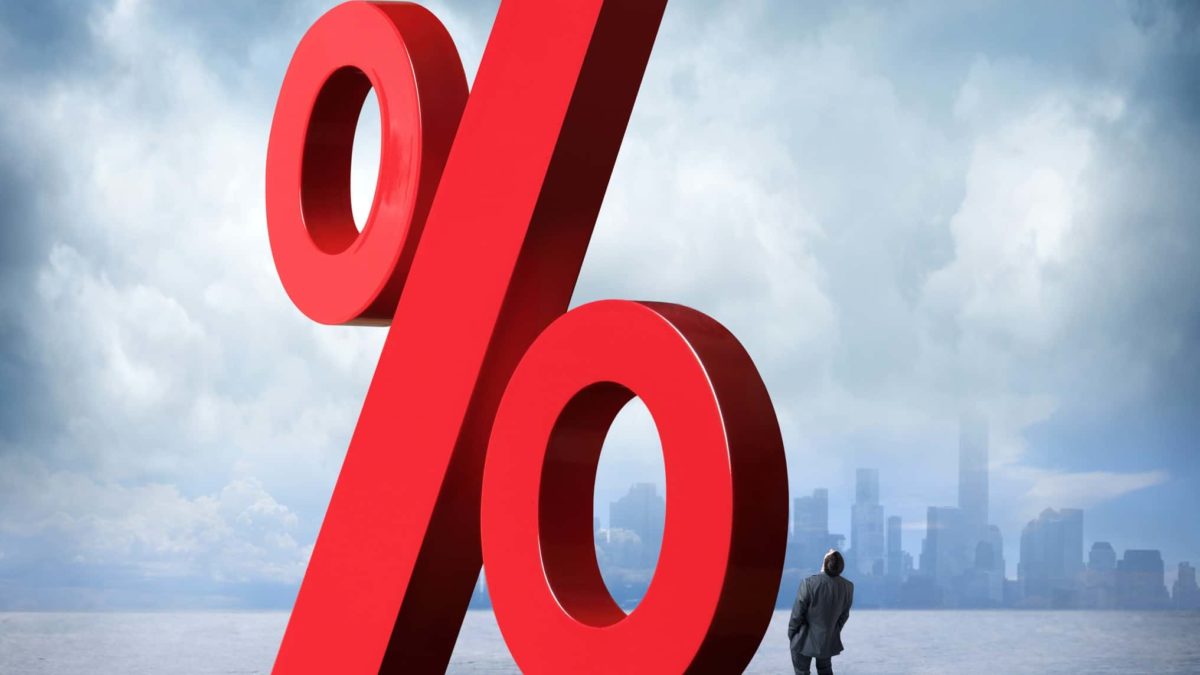
    red percentage sign with man looking up which represents high interest rates

    S&P/ASX 200 Index (ASX: XJO) investors who’ve been holding their breath for interest rate cuts in 2024 may wish to exhale.

    Patience, it seems, is the name of the game for any pending rate cuts from either the Reserve Bank of Australia or the US Federal Reserve.

    Which isn’t all bad news.

    You see, a good part of the entrenched inflation issues that are pushing out the likely timing of interest rate cuts stems from the strength of the Aussie and the US economies. And that strength is being reinforced by the rapid rise of artificial intelligence.

    The latest Purchasing Managers’ Index (PMI) data out of the US again tells me that ASX 200 companies and investors are unlikely to see any central bank easing until 2025.

    Yesterday’s data (overnight Aussie time) revealed that business activity in the world’s number one economy increased in May at the fastest rate in two years. US labour market figures also recently came in stronger than expectations.

    Commenting on the ongoing strength of the US economy, National Australia Bank Ltd (ASX: NAB) said (quoted by The Australian Financial Review):

    US yields rose, the USD was higher and US equities fell. Stronger PMI data out of the US was the proximate driver, and while those did come in much stronger than expected, the context of upside surprises in US economic data having been rare for the last month or so may have supported the size of the market reaction.

    The market reaction NAB is referring to includes the 0.7% overnight decline on the S&P 500 Index (SP: .INX). And those headwinds see the ASX 200 down 1.1% in afternoon trade today.

    ASX 200 shares can boom amid high rates

    It’s worth recalling that in 2023, a year which saw the RBA and the Fed hiking interest rates aggressively, the ASX 200 gained 9.3%. If we add in the dividends many companies paid, then the accumulated gain in 2023 was around 13.9%.

    As for the S&P 500, it soared 24.2% in 2023 and is up another 10.4% so far in 2024. And according to JPMorgan Chase & Co, the S&P 500 is likely to continue breaking record highs this year, fuelled by the AI boom.

    “With the AI-theme still delivering and the macro hypothesis intact, we are likely to continue to make new all-time highs,” the broker said (quoted by Bloomberg).

    With that in mind, here’s what the experts are saying about the prospects for rate cuts in 2024.

    Odds of 2024 interest rate cuts fading

    Goldman Sachs CEO David Solomon has essentially written off any chance that ASX 200 investors might see the Fed cut rates this year.

    According to Solomon (courtesy of the AFR)

    I still don’t see the data that’s compelling to see we’re going to cut rates here…

    If you’re talking to CEOs that are running businesses that really deal with what I’ll call the middle of the American economy, those businesses have been starting to see change in consumer behaviours.

    Inflation is not just nominal. It’s cumulative, and so everything is more expensive. You’re starting to see the consumer, the average American, feel this.

    Indeed, the minutes from the 1 May Federal Open Market Committee reinforce my belief that ASX 200 investors shouldn’t expect a rate cut until 2025.

    Those minutes revealed members noted “that it would take longer than previously anticipated for them to gain greater confidence that inflation was moving sustainably toward 2%” amid “disappointing” inflation prints this year.

    Commenting on the Fed minutes, FHN Financial’s Chris Low said (quoted by Bloomberg), “The minutes are a reminder that while the Fed does not see another rate hike as likely, and certainly does not see it as a base-case, it will not rule out hikes if inflation does not behave.”

    With that said, ASX 200 investors could still see a Fed rate cut in September.

    “Fed members have indicated they want to see more progress on inflation. Fortunately, the US economy still looks robust enough to take an extended rate pause. We continue to look for the first Fed rate cut in September,” Strategas Securities’ Don Rissmiller said.

    The post Why ASX 200 investors shouldn’t expect interest rate cuts until 2025 appeared first on The Motley Fool Australia.

    Should you invest $1,000 in S&P/ASX 200 right now?

    Before you buy S&P/ASX 200 shares, consider this:

    Motley Fool investing expert Scott Phillips just revealed what he believes are the 5 best stocks for investors to buy right now… and S&P/ASX 200 wasn’t one of them.

    The online investing service he’s run for over a decade, Motley Fool Share Advisor, has provided thousands of paying members with stock picks that have doubled, tripled or even more.*

    And right now, Scott thinks there are 5 stocks that may be better buys…

    See The 5 Stocks
    *Returns as of 5 May 2024

    More reading

    Motley Fool contributor Bernd Struben has no position in any of the stocks mentioned. The Motley Fool Australia’s parent company Motley Fool Holdings Inc. has no position in any of the stocks mentioned. The Motley Fool Australia has no position in any of the stocks mentioned. The Motley Fool has a disclosure policy. This article contains general investment advice only (under AFSL 400691). Authorised by Scott Phillips.

  • Tesla needs China to survive, but it doesn’t want suppliers to make everything there in case of supply chain snarls: report

    A Tesla showroom and service center in Amsterdam.
    A Tesla showroom and service center in Amsterdam.

    • Tesla doesn't want its suppliers to make all of their stuff in China and Taiwan, per Nikkei Asia.
    • Supply chain executives said Tesla wanted to avoid disruptions caused by geopolitical uncertainties.
    • Tesla CEO Elon Musk said he didn't ask President Joe Biden to impose tariffs on Chinese EVs.

    Tesla has asked its suppliers to start making their parts outside China and Taiwan, Nikkei Asia reported on Thursday.

    The EV giant is looking to diversify its supply chain for non-China markets, the outlet reported, citing six supply chain executives familiar with the matter. The company hopes its request can be fulfilled by its suppliers by as early as next year, the outlet reported.

    The executives said Tesla wanted to avoid potential supply chain disruptions due to geopolitical uncertainties in the Greater China region.

    Tesla isn't the only American automaker looking to expand its supply chains.

    "We serve several American automobile makers, and Tesla is the most aggressive in terms of trying to avoid the risks surrounding China and Taiwan," an electronics supplier executive told Nikkei Asia, adding that such a move would be more challenging and expensive.

    According to the outlet, General Motors and Ford have raised similar questions to their suppliers, though they did not make an explicit request like Tesla.

    Representatives for Tesla, General Motors, and Ford didn't immediately respond to requests for comment from BI sent outside regular business hours.

    Tesla's supply chain maneuvers may seem peculiar considering how friendly its CEO, Elon Musk, has been with the Chinese authorities.

    The mercurial billionaire made a surprise trip to China last month, where he met Premier Li Qiang, the country's second-highest-ranking politician.

    The trip proved fruitful for Musk, as Chinese officials gave their in-principle approval for Tesla to roll out its Full Self-Driving (FSD) technology in the country, per Bloomberg.

    On May 7, the state-owned newspaper China Daily reported that officials had also given their partial support to Musk's proposal to implement Tesla's FSD technology in China's taxi services.

    And Tesla's Chinese connections don't just end there.

    Last month, Musk revealed in an X post that he'd picked the robotaxi's projected August 8 launch date partly because "8/8 is a lucky number in China."

    That said, the Tesla chief hasn't been oblivious to the risks of doing business in China.

    During an earnings call in January, Musk raised the alarm about the threat posed by Chinese automakers like BYD and Li Auto.

    "The Chinese car companies are the most competitive car companies in the world," Musk told investors. "If there are no trade barriers established, they will pretty much demolish most other car companies in the world."

    On May 14, the Biden administration said it planned to implement a 100% tariff on Chinese EVs.

    "The increase in the tariff rate on electric vehicles will protect these investments and jobs from unfairly priced Chinese imports," the White House said in its statement.

    Musk, however, appeared to walk back his remarks in January. On Thursday, Musk said Tesla didn't ask for tariffs to be imposed.

    "Tesla competes quite well in the market in China with no tariffs and no deferential support. In general, I'm in favor of no tariffs," Musk said in an interview at the VivaTech conference in Paris.

    Musk's shifting rhetoric on China underscores the challenges companies face when navigating the geopolitical headwinds of US-China tensions.

    For instance, chip giant Nvidia has been working hard to develop specialized offerings for the Chinese market in order to comply with prevailing US export restrictions.

    But even that may be for naught since Chinese officials have asked domestic tech giants like Alibaba and Baidu to buy locally-made AI chips instead, per The Information.

    "China is a very important market for the technology industry," Nvidia CEO Jensen Huang told the Financial Times in May 2023. "If we are deprived of the Chinese market, we don't have a contingency for that. There is no other China, there is only one China."

    Read the original article on Business Insider
  • It’s the summer of $5 meals: Burger King creates a value meal to rival McDonald’s deal

    Burger King cardboard crowns.
    Burger King cardboard crowns.

    • Burger King is launching a $5 meal deal before McDonald's similar promotion.
    • The Burger King deal includes a sandwich, nuggets, fries, and a drink and will run for several months.
    • Fast-food chains are introducing value meals amid inflation and high menu prices.

    Burger King is launching its own $5 meal just two weeks after reports of McDonald's introducing a similar deal.

    Burger King plans to launch the set, which will include a sandwich, chicken nuggets, fries and a drink, before McDonald's, according to a document seen by Bloomberg. The promotion will also run for longer than one month, unlike McDonald's.

    "Regardless of their plans, we are moving full speed ahead with our own plans to launch our own $5 value meal before they do — and run it for several months," Burger King US and Canada president Tom Curtis wrote in a memo seen by Bloomberg.

    McDonald's plans to start offering the deal for about a month beginning June 25 at its US restaurants, The Wall Street Journal reported last week. It's unclear exactly when Burger King will launch its promotion.

    Burger King did not immediately respond to a request for comment from Business Insider.

    Earlier this week, Wendy's also announced its version of a value meal — a $3 set consisting of a breakfast sandwich and a small batch of seasoned potatoes.

    The price wars come as fast-food chains look to attract customers who are tightening their belts amid inflationary pressures.

    Fast-food prices have stayed high since chains increased their menu prices during the pandemic in response to soaring food and labor costs. In April, fast-food executives told investors in a series of earnings calls that people are cutting back on visits to quick-service restaurants.

    Last month, Joshua Kobza, the CEO of Burger King parent Restaurant Brands International, told analysts that diners had become "a bit more sensitive to price."

    "Our priority is to continue enhancing our value proposition through our quality food and beverages at attractive price points," Kobza said.

    However, some price-sensitive customers have not been pacified.

    While the McDonald's $5 meal gives customers about $18 worth of food, based on current prices in some urban areas, people on social media have called the promotion "skimpy" and are upset that it will only last one month.

    Read the original article on Business Insider
  • How to use Google Flights: Find cheap flight options, search multiple airlines at once, and track flight prices

    Two shadowy hands hold a smartphone displaying the Google Flights logo.
    Google Flights searches for flights and compares prices across dozens of airlines, finding you the cheapest flights available.

    • Google Flights allow you to search many airlines at once to better build your itinerary.
    • Google Flights helps travelers find the cheapest available price for airfares.
    • Over 300 airlines, online travel agencies, and aggregators are partnered with Google Flights.

    Google Flights is Google's very own flight-searching and booking tool. Launched in 2011, the service allows travelers to more easily find the cheapest route between destinations within any given parameters and enables easy price-tracking.

    You can often find cheaper flights on Google Flights than by searching on your own because the software searches and compares across dozens of airlines much faster than an individual can look them up individually and plan an itinerary.

    You don't have to actually book through Google Flights to make use of the software, either. You can choose to book directly with an airline after using Google Flights to find the cheapest flight.

    But booking through Google Flights can often add convenience to your travel plans and is integrated with a number of other Google products and services — for instance, you can use Google's Gemini AI to make travel plans with Google Flights.

    Google Assistant can also bring up the Google Flights dashboard and show you flight prices. And if you book a flight using your Gmail account, your details will automatically get added to your Google Calendar.

    As a frequent traveler between the US and Canada, I've used Google Flights to save hundreds of dollars flying back and forth across the border. Results may vary, of course, but here's how you can try it for yourself:

    How to use Google Flights and find cheap flights on Google

    Finding cheap flights is one of the core purposes of Google Flights. If your travel dates are flexible, you can use the date grid to choose dates with the lowest available price.

    1. Select your departure and return dates by clicking on their respective date tiles in the calendar.
    Screenshot of the Google Flights date picker showing a calendar with prices superimposed.
    Pick your departure and return dates.

    1. Click Done and then Search.
    A screenshot of the Search function on Google Flights lists a round trip from Los Angeles to New York between June 4 and June 13.
    Clicking Search will display flights within your parameters.

    Quick tip: Though roundtrip plans are the most common, you can also book one-way tickets by clicking on Round trip and selecting One-way instead.

    Once you've found a flight that you want, click on it and select your return flight. Unlike some airlines that only show you one-way costs, the price listed for both flights is the roundtrip cost. You will then be shown a summary of what you selected and be prompted to select what type of fare you want. Click Continue, and you'll be taken to the airline's website to complete the transaction.

    If you scroll down a bit, you'll notice the price trends chart indicating whether the price is below average, average, or higher than usual.

    How to change currency in Google Flights

    Once you have search results visible, you can change your country and currency if necessary.

    1. Once you have search results, scroll down to the bottom of the page.
    2. Click on the Currency button and select your currency option from the dropdown list.
    A screenshot of Google Flights' currency and location selection options, located at the bottom of the page.
    Select your currency.

    Quick tip: Currency types are sorted in alphabetical order, meaning that US dollars are near the bottom of the list.

    How to track flights on Google Flights

    Once you've searched for a flight that you are interested in and have results displayed, you can track prices either for that specific date range or any date by enabling their respective notifications.

    A screenshot shows Google Flights' search parameters with the "Track prices" options emphasized with a red box and red arrow.
    Tracking prices can help you buy at the best time.

    What airlines are not on Google Flights?

    Though Google partners with over 300 airlines, online travel agencies, and aggregators, Google Flights doesn't track every single airline. Notably, Southwest Airlines in the US isn't tracked, nor are some major Asian airlines like China Eastern, Air China, and Philippine Airlines. 

    For other airlines, such as EVA Air and Interjet, only some of their flights are listed on Google Flights.

    Quick tip: It's worth noting that not every airline Google Flights consults will appear in every search. In other words, you won't find Air Canada listed flying routine routes between LAX and JFK, but you might find a flight from YVR to LAX serviced by WestJet or Air Canada.

    What to know about Google Flights' carbon emissions calculator 

    Google has drawn criticism from climate experts, who have said Google Flights downplays the impact flights have on climate change. 

    In 2021, Google CEO Sundar Pichai announced that Google Flights would show associated carbon emissions per seat for each flight so fliers can choose the lowest-carbon options if they wish.

    But the following year, scientists noted that Google Flights' carbon flight calculator had been adjusted and now only accounted for the direct CO2 emissions from a flight, excluding all other global-warming effects from flying.

    Google has since launched an independent advisory committee to improve its Travel Impact Model, which powers the per-passenger CO2 emissions data on Google Flights.

    Read the original article on Business Insider
  • ASX 200 coal stocks sink amid ‘very negative message’ from Queensland government

    coal miner in a mine

    S&P/ASX 200 Index (ASX: XJO) coal stocks are in the red today.

    New Hope Corp Ltd (ASX: NHC) shares closed yesterday trading for $5.01. During the Friday lunch shares are swapping hands for $4.94 apiece, down 1.5%.

    It’s a similar picture with Whitehaven Coal Ltd (ASX: WHC). The Whitehaven share price closed yesterday at $7.80 and is down 1.9% at the time of writing to $7.66 a share.

    The ASX 200 is also under pressure today, down 1.0% on the back of strong US economic data that could push Federal Reserve interest rate cuts out to 2025.

    But ASX coal shares are facing an additional headwind.

    ASX 200 coal stocks eyeing perpetual tax hike

    Queensland’s super tax on coal profits came into effect in July 2022. The tax regime mandates that ASX 200 coal stocks (and smaller coal miners, for that matter) pay an additional tax on all the coal they sell for more than AU$175 a tonne.

    With coal prices soaring over that period, this has already delivered billions of dollars to the state’s coffers.

    But it’s drawn the ire of international companies, investors, Aussie coal miners, and even nations like Japan that likened the tax to an unexpected sovereign risk.

    Despite a big retrace in coal prices from the 2022 all-time highs of more than US$437 (AU$662) per tonne, Whitehaven achieved an average coal price of AU$219 for the March quarter.

    And ASX 200 coal stock New Hope achieved an average realised sales price of AU$180 per tonne, in line with the prior quarter.

    Now, the Queensland Labor government is getting set to enshrine the super coal tax into law ahead of the state elections.

    Yesterday, Deputy Premier Cameron Dick introduced a bill that will require legislative amendments to change or axe the coal tax.

    According to Dick (quoted by The Canberra Times):

    There would be no quiet Friday afternoon regulatory changes under any future Queensland government. Any reduction to the coal royalties will be subject to the scrutiny of the people of Queensland through their parliament, as it should be.

    As you’d expect, this comes as unwelcome news to ASX 200 coal stocks and industry groups who warn it could impact future investment.

    Queensland Resources Council CEO Janette Hewson warned:

    The legislation announced by the Government sends a very negative message to the international investment community. Once again, we have seen the Queensland Government make a significant change affecting the resources sector without any notification to, or consultation with, the industry.

    But Dick insists that investor confidence in Queensland coal is at historic highs, citing BHP Group Ltd (ASX: BHP)’s takeover ambitions of Anglo American (LSE: AAL), which atop its copper assets owns a number of coal mines in Queensland.

    According to Dick:

    That confidence has seen BHP reverse a two-decade policy to now seek new growth in Queensland through the prized mines of Anglo American that they want to purchase.

    We’re seeing significant investment and that’s resulting in record jobs… the highest number of jobs ever in the Queensland coal industry, about 44,000 as of December last year.

    Royalties from ASX 200 coal stocks and other coal miners in Queensland are forecast to deliver a whopping $9.4 billion to the state over five years.

    The post ASX 200 coal stocks sink amid ‘very negative message’ from Queensland government appeared first on The Motley Fool Australia.

    Should you invest $1,000 in Bhp Group right now?

    Before you buy Bhp Group shares, consider this:

    Motley Fool investing expert Scott Phillips just revealed what he believes are the 5 best stocks for investors to buy right now… and Bhp Group wasn’t one of them.

    The online investing service he’s run for over a decade, Motley Fool Share Advisor, has provided thousands of paying members with stock picks that have doubled, tripled or even more.*

    And right now, Scott thinks there are 5 stocks that may be better buys…

    See The 5 Stocks
    *Returns as of 5 May 2024

    More reading

    Motley Fool contributor Bernd Struben has no position in any of the stocks mentioned. The Motley Fool Australia’s parent company Motley Fool Holdings Inc. has no position in any of the stocks mentioned. The Motley Fool Australia has no position in any of the stocks mentioned. The Motley Fool has a disclosure policy. This article contains general investment advice only (under AFSL 400691). Authorised by Scott Phillips.