• How to use Google Slides, Google’s free slideshow presentation maker

    A smartphone displays the Google Slides logo in front of a blurry Google logo in the background.
    • Google Slides is Google's slideshow presentation program that allows real time collaboration.
    • Google Slides is part of the Google Workspace suite, which also includes Google Docs and Gmail.
    • Google Slides differs from Microsoft PowerPoint in its simplicity and collaboration options.

    Google Slides is a presentation program that's part of Google Workspace, a group of productivity apps that also includes Gmail, Google Sheets, Goole Docs, Google Meet, and more. Workspace has more than 3 billion users worldwide. 

    With Google Slides, users can create, present, and collaborate via online presentations from various devices. You can present during Google Meet calls directly from Slides and embed charts from Google Sheets. You can also add YouTube videos to Slides presentations. 

    Google recently announced plans to add artificial intelligence features like its Gemini AI tool to its Workspace programs, which include Slides. Users will be able to use Gemini to create images or written content for slides, or even reference other files in their Drives or emails in their Gmail accounts.

    What is Google Slides? 

    Google Slides is a cloud-based presentation program that's part of the Google Workspace. Google Slides can be used to create and deliver presentations online. 

    Several different themes are available in Slides for designing presentations. Users can customize Slides presentations in a variety of colors and styles. You can add photos, videos from YouTube, charts from Google Sheets, and information from many other sources. Different members of a team can contribute and collaborate on the presentation in real time. 

    There's no specific limit on how many slides you can add to your Google Slides presentation, but there is a 100 MB file size limit.

    How to download Google Slides 

    To access Google Slides, visit slides.google.com

    You can also open Slides while Gmail or Google Chrome is open by clicking on the Google Apps icon in the upper-right corner (shown as three rows of dots) and selecting Slides. 

    A screenshot of Google's homepage shows a red arrow pointing to the icon for Google Slides.
    You can access Google Slides right from Google's homepage, or download it onto your Apple or Android device.

    Another option is to download the Google Slides app for your Apple or Android device. Search for Google Slides in the Apple App Store or Google Play Store.

    What templates are available? 

    Dozens of Google Slides templates are available, depending on your needs. For instance, there are general presentation templates, photography portfolios, pitch decks, case studies, science fair projects, and more. 

    To browse the templates available, open Google Slides. Then, click Template Gallery in the upper-right corner. Scroll through the options, choose the one that meets your needs, and start creating a presentation. 

    A screenshot of Google Slides shows a red arrow pointing to the "Template gallery" button.
    Access a variety of presentation formats from the template gallery in Google Slides.

    What's the difference between Google Slides and PowerPoint? 

    Both Google Slides and PowerPoint are presentation programs. Google Slides is a program within Google Workspace, and PowerPoint is a Microsoft program. PowerPoint is an offline program, while Slides is online which allows for real time collaboration.

    The programs share many features that allow for presentation creation and delivery, but PowerPoint may offer more advanced design features. 

    You can convert Google Slides into PowerPoint presentations, and vice versa. From the top menu in Slides, click File, Download, and choose Microsoft PowerPoint. 

    How to learn to use Google Slides 

    Through Google Workspace, you can access several quick-start guides, cheat sheets, and troubleshooting resources to help you learn to use Google Slides. There are also many YouTube videos with tutorials for using Slides.


    Read the original article on Business Insider
  • Why did the Sayona Mining share price just leap 5%?

    A woman is very excited about something she's just seen on her computer, clenching her fists and smiling broadly.

    The Sayona Mining Ltd (ASX: SYA) share price is charging higher today.

    Shares in the S&P/ASX 300 Index (ASX: XKO) lithium stock closed yesterday at 4.2 cents. In late morning trade on Thursday, shares are swapping hands for 4.4 cents apiece, up 4.8%.

    For some context, the ASX 300 is down 1.0% at this same time.

    Here’s what’s spurring investor interest today.

    What’s boosting the ASX lithium share?

    The Sayona Mining share price is smashing the benchmark today after the miner reported it has kicked off reverse circulation (RC) drilling at its Tabba Tabba Lithium Project, located in Western Australia.

    Sayona is exploring a region where air core drilling previously identified high-potential pegmatite systems. RC drilling will enable the miner to drill significantly deeper.

    The initial campaign comprises more than 2,000 metres of RC drilling across 14 holes. Sayona plans to conduct additional drilling throughout 2024 as it gains more geological information across the prospective area.

    On the funding front, Sayona Mining could be getting a boost after the lithium miner reported it had secured a $180,000 co-funding grant from the WA Government’s Exploration Incentive Scheme (EIS).

    Sayona said the government grant will help finance innovative exploration drilling in the search for flat lying spodumene pegmatite systems within the Tabba Tabba lease.

    According to the ASX lithium stock:

    Flat lying pegmatite systems often have limited surface expression and require a systematic exploration approach to best focus drilling into the most prospective target areas.

    Sayona is advancing this process, being guided by gravity data, mapping, rock and soil sampling and drill information.

    What did management say?

    Commenting on the drill campaign sending the Sayona Mining share price sharply higher today, CEO James Brown said:

    We are excited to have commenced RC drilling over the highly prospective Tabba Tabba lease which has known lithium mineralisation in close proximity and along strike.

    Previous soil sampling and air core drilling identified areas of anomalous geochemistry that have been confirmed to also contain gravity features of significance. We now intend to test these targets with RC and possibly diamond drilling as supported by results.

    We are highly committed to our wholly owned Western Australian lithium assets and intend to continue an active exploration program over the 2024 field season.

    Sayona Mining share price snapshot

    While today’s gains will be most welcomed by shareholders, the Sayona Mining share price is still down a precipitous 80% from this time last year.

    The post Why did the Sayona Mining share price just leap 5%? appeared first on The Motley Fool Australia.

    Should you invest $1,000 in Sayona Mining Limited right now?

    Before you buy Sayona Mining Limited shares, consider this:

    Motley Fool investing expert Scott Phillips just revealed what he believes are the 5 best stocks for investors to buy right now… and Sayona Mining Limited wasn’t one of them.

    The online investing service he’s run for over a decade, Motley Fool Share Advisor, has provided thousands of paying members with stock picks that have doubled, tripled or even more.*

    And right now, Scott thinks there are 5 stocks that may be better buys…

    See The 5 Stocks
    *Returns as of 5 May 2024

    More reading

    Motley Fool contributor Bernd Struben has no position in any of the stocks mentioned. The Motley Fool Australia’s parent company Motley Fool Holdings Inc. has no position in any of the stocks mentioned. The Motley Fool Australia has no position in any of the stocks mentioned. The Motley Fool has a disclosure policy. This article contains general investment advice only (under AFSL 400691). Authorised by Scott Phillips.

  • Deal or no deal? Why the BHP share price is crumbling today

    two business men sit across from each other at a negotiating table. with a large window in the background.

    The BHP Group Ltd (ASX: BHP) share price is taking a tumble today.

    Shares in the S&P/ASX 200 Index (ASX: XJO) mining giant closed yesterday trading for $46.24. In morning trade on Thursday, shares are swapping hands for $44.96, down 2.8%.

    For some context, the ASX 200 is down 0.9% at this time.

    BHP’s underperformance today comes following the latest developments in its ongoing multi-billion takeover efforts of Anglo American (LSE: AAL).

    What’s happening with the Anglo American takeover?

    The BHP share price is under selling pressure after the ASX 200 miner reported that it had lobbed a third improved takeover offer for Anglo American. And that this offer, too, was swiftly rejected by Anglo’s board.

    BHP announced its first takeover bid back on 26 April.

    The big Aussie miner is mostly interested in Anglo copper assets. Should BHP succeed in its acquisition, it will become the world’s top copper producer. BHP has indicated it will likely divest some of Anglo’s assets, like its South African platinum and iron ore projects.

    The first takeover offer was rejected as undervaluing Anglo’s assets and growth prospects and being too complex. The BHP share price initially fell on that news as well.

    On 14 May BHP reported a sweetened offer valued at around $64 billion. This was also quickly waved off by Anglo’s board.

    This third, and likely final, offer is valued at $59.64 per Anglo American share, a hefty premium to Anglo American’s recent share price. The new offer equates to around $74 billion.

    “BHP’s revised proposal will offer immediate value for Anglo American shareholders and allow them to benefit from the long-term value generation of the combined group,” BHP CEO Mike Henry said.

    But Anglo American chairman Stuart Chambers is not convinced. “The board is confident in Anglo American’s standalone future prospects,” he said.

    But that doesn’t mean a deal is off the table.

    If Henry’s goal was to get negotiations rolling in earnest, it looks like he may have scored.

    According to Chambers:

    The board is willing to continue to engage with BHP and its advisers on this topic and has therefore requested a one-week extension to the PUSU deadline which has been consented to by the panel.

    The one-week extension moves the new takeover deadline to 29 May.

    “BHP looks forward to engaging with the board of Anglo American to explore this unique and compelling opportunity to bring together two highly complementary, world class businesses,” Henry said.

    Commenting on the developments pressuring the BHP share price today, James Whiteside, metals and mining corporate research director at Wood Mackenzie said (quoted by Bloomberg), “The companies believe that they’re getting closer. Anglo has probably signposted what needs to happen to get it over the line.”

    BHP share price snapshot

    The BHP share price is up 3% over the past 12 months.

    The post Deal or no deal? Why the BHP share price is crumbling today appeared first on The Motley Fool Australia.

    Should you invest $1,000 in Bhp Group right now?

    Before you buy Bhp Group shares, consider this:

    Motley Fool investing expert Scott Phillips just revealed what he believes are the 5 best stocks for investors to buy right now… and Bhp Group wasn’t one of them.

    The online investing service he’s run for over a decade, Motley Fool Share Advisor, has provided thousands of paying members with stock picks that have doubled, tripled or even more.*

    And right now, Scott thinks there are 5 stocks that may be better buys…

    See The 5 Stocks
    *Returns as of 5 May 2024

    More reading

    Motley Fool contributor Bernd Struben has no position in any of the stocks mentioned. The Motley Fool Australia’s parent company Motley Fool Holdings Inc. has no position in any of the stocks mentioned. The Motley Fool Australia has no position in any of the stocks mentioned. The Motley Fool has a disclosure policy. This article contains general investment advice only (under AFSL 400691). Authorised by Scott Phillips.

  • Xero share price leaps 8% on staggering earnings upheaval

    A man in his 30s holds his laptop and operates it with his other hand as he has a look of pleasant surprise on his face as though he is learning something new or finding hidden value in something on the screen.

    The Xero Ltd (ASX: XRO) share price is moving with gusto this morning after releasing its full-year results for FY24.

    An hour into trade, the cloud-based accounting software company shares are up 7.6% to $133.49. The move starkly contrasts the 1.02% slump in the S&P/ASX 200 Index (ASX: XJO) after the US Federal Reserve revealed it had contemplated more interest rate rises.

    So, what about Xero’s results enable its share price to perform while the rest of the market is struggling?

    Profitable growth sparks Xero share price

    Xero shareholders are celebrating this morning amid the company’s latest result. Here’s a look at the key numbers driving today’s excitement:

    • Operating revenue up 22% year-on-year to NZ$1.71 billion
    • Subscribers grew by 419,000 to 4.16 million
    • Average revenue per user (ARPU) up 14% to NZ$39.29
    • Gross margin up from 87.3% to 88.2%
    • Net profit after tax (NPAT) swinging to NZ$174.6 million from NZ$113.5 million loss

    Xero’s ability to balance revenue growth and profitability in FY24 is significant after years of lacking the latter. Importantly, the company has now achieved the Rule of 40 — a metric that implies a software company’s revenue growth and free cash flow margin should be 40% or more for a healthy business.

    The company noted that it focused on balancing subscriber additions with ARPU during FY24. This might explain the 11% reduction in net subscriber additions compared to FY23. However, the positive is that Xero’s gross margin is improving while it manages its cost to serve customers.

    Furthermore, Xero implemented price changes during FY24, boosting ARPU. Despite increasing prices, the 0.99% monthly churn rate is a positive indicator of product stickiness.

    What did management say?

    Xero CEO Sukhinder Singh Cassidy touted the full-year result, stating:

    This result shows we’re doing what we said we’d do. We’ve delivered a strong and profitable FY24 result and Rule of 40 outcome, demonstrating our commitment to balancing growth and profitability.

    We have a clear and focused strategy to win on purpose, and Xero is positioned well as we move into FY25.

    Australia and New Zealand continue to be strong markets for the accounting platform. Xero achieved 22% revenue growth across the two countries, growing its subscriber count in the region to 2.4 million.

    Meanwhile, revenue in its international markets (the United Kingdom, North America, and the Rest of the World) rose 24% to NZ$734.9 million. The company has 1.8 million subscribers in these expanding markets.

    The road ahead

    No light was shed on future earnings or revenue estimates for FY25. However, Xero expects total operating expenses as a percentage of revenue to be approximately 73% in the next financial year.

    Product design and development costs are also forecast to be a larger portion of revenue.

    Xero share price in review

    The Xero share price is up 20% over the past 12 months. However, it was a considerably different story towards the end of last year.

    Shares in the software company fell as low as roughly $70 apiece. Yet, positive sentiment has since returned to the technology sector.

    The post Xero share price leaps 8% on staggering earnings upheaval appeared first on The Motley Fool Australia.

    Should you invest $1,000 in Xero Limited right now?

    Before you buy Xero Limited shares, consider this:

    Motley Fool investing expert Scott Phillips just revealed what he believes are the 5 best stocks for investors to buy right now… and Xero Limited wasn’t one of them.

    The online investing service he’s run for over a decade, Motley Fool Share Advisor, has provided thousands of paying members with stock picks that have doubled, tripled or even more.*

    And right now, Scott thinks there are 5 stocks that may be better buys…

    See The 5 Stocks
    *Returns as of 5 May 2024

    More reading

    Motley Fool contributor Mitchell Lawler has no position in any of the stocks mentioned. The Motley Fool Australia’s parent company Motley Fool Holdings Inc. has positions in and has recommended Xero. The Motley Fool Australia has positions in and has recommended Xero. The Motley Fool has a disclosure policy. This article contains general investment advice only (under AFSL 400691). Authorised by Scott Phillips.

  • Origin share price outpacing the ASX 200 on Eraring lifeline extension

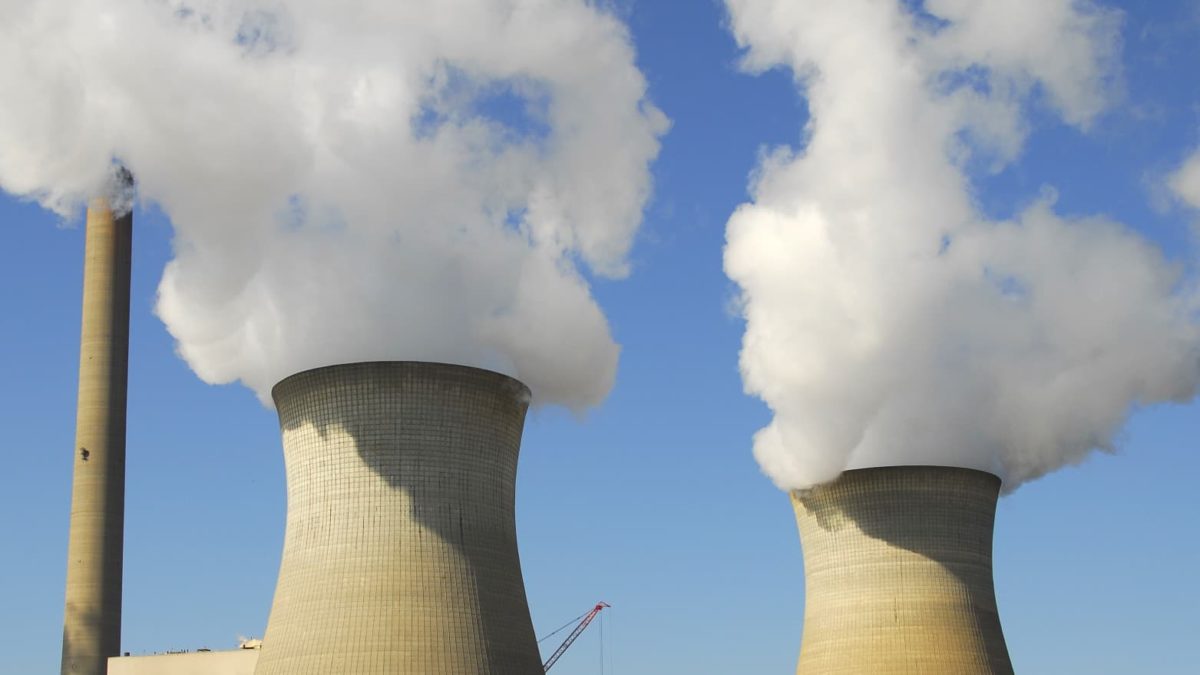
    Coal-fired power station generic.

    The Origin Energy Ltd (ASX: ORG) share price is marching higher today.

    Shares in the S&P/ASX 200 Index (ASX: XJO) energy provider closed yesterday trading for $10.16. In morning trade on Thursday, shares are changing hands for $10.23 apiece, up 0.7%.

    For some context, the ASX 200 is down 0.9% at this same time.

    This outperformance comes after Origin announced that the Eraring Power Station will keep producing electricity for much longer than previously targeted.

    What’s happening with Eraring?

    The Origin share price is in the green after the ASX 200 utility reported it has agreed to delay the retirement of Eraring by two years.

    The agreement with the New South Wales government is intended to support the security of the state’s electricity supply through the ongoing energy transition.

    The freshly inked Generator Engagement Project Agreement (GEPA) will see Eraring remain operational until at least 19 August 2027.

    Eraring commenced full scale power generation in 1984. Origin had previously targeted closing the 2,880 MW black coal plant as early as August 2025, subject to market conditions.

    The Origin share price could be getting some support with the company reporting New South Wales could offer compensation to help cover operating costs. Origin could recover a portion of any Eraring operating losses over the extension period, capped at $225 million a year.

    If Eraring turns a profit rather than running at a loss, Origin will pay the NSW government 20% of that profit, capped at $40 million a year.

    The coal-fired power plant could potentially remain in operation through to April 2029, the final closure date.

    Commenting on the extended operations, Origin CEO Frank Calabria said:

    We believe this agreement strikes the right balance, with an extension to operations enabling Eraring to continue supporting security of electricity supply in New South Wales through the energy transition, while making compensation available to Origin in the event economic conditions for the plant are challenging…

    Importantly, today we can give our Eraring employees, our suppliers and the local community greater certainty around the future of the plant as we transition towards its retirement.

    With a nod to the potential environmental impact, Calabria added, “Origin does not shy away from the need to exit coal generation as soon as there is sufficient renewable energy, firming and transmission capacity available.”

    The ASX 200 utility has committed to constructing a large-scale battery at Eraring. The first phase of the project consists of a 460 MW two-hour battery located next to the power station. The battery is planned to begin operating in late 2025.

    Origin share price snapshot

    With today’s intraday moves factored in, the Origin share price is up 24% in 12 months.

    The post Origin share price outpacing the ASX 200 on Eraring lifeline extension appeared first on The Motley Fool Australia.

    Should you invest $1,000 in Origin Energy Limited right now?

    Before you buy Origin Energy Limited shares, consider this:

    Motley Fool investing expert Scott Phillips just revealed what he believes are the 5 best stocks for investors to buy right now… and Origin Energy Limited wasn’t one of them.

    The online investing service he’s run for over a decade, Motley Fool Share Advisor, has provided thousands of paying members with stock picks that have doubled, tripled or even more.*

    And right now, Scott thinks there are 5 stocks that may be better buys…

    See The 5 Stocks
    *Returns as of 5 May 2024

    More reading

    Motley Fool contributor Bernd Struben has no position in any of the stocks mentioned. The Motley Fool Australia’s parent company Motley Fool Holdings Inc. has no position in any of the stocks mentioned. The Motley Fool Australia has no position in any of the stocks mentioned. The Motley Fool has a disclosure policy. This article contains general investment advice only (under AFSL 400691). Authorised by Scott Phillips.

  • Nvidia’s Jensen Huang gave us all the details on when its new big-ticket AI chip will hit the market

    Jensen Huang presents at Nvidia's GTC conference in 2024
    Jensen Huang presents at Nvidia's GTC conference in 2024

    • Nvidia CEO Jensen Huang said the company's newest AI chip will start shipping next quarter.
    • The Blackwell chip is twice as fast Nvidia's current Hopper chip. 
    • Huang made the announcement during a Wednesday earnings call.

    Nvidia's new era of computing is already well underway.

    In a gangbusters earnings call on Wednesday, Nvidia CEO Jensen Huang laid out an accelerated timeline for the deployment of Blackwell, the company's newest AI chip that is twice as fast as Nvidia's current iteration and boasts five times the AI performance.

    Huang unveiled the Blackwell chip earlier this year in March, but the company has been working on its production for some time now, he said this week.

    During the question-and-answer portion of the quarterly call, Huang said production shipments of Blackwell will start in the second quarter and ramp up in Q3. According to Huang, customers should have data centers up and running by the fourth quarter.

    "We will see a lot of Blackwell revenue this year," Huang said during the call.

    The company's hot streak doesn't appear to be slowing anytime soon. Nvidia stock surged to record highs on Wednesday afternoon following first-quarter earnings results, which saw the chip maker report a 262% surge in year-over-year revenues.

    "We are poised for our next wave of growth," Huang said, citing the Blackwell platform.

    But even as Huang offered a bullish perspective on Blackwell, excitement for the coming chip doesn't seem to be killing demand for Nvidia's current hardware.

    "We see increasing demand of Hopper through this quarter," Huang said, adding that he expects demand to outstrip supply for "some time" as Nvidia transitions to Blackwell.

    Blackwell systems have been designed to be "backwards compatible" with Hoppers for an easy transition from one to the other, Huang said Wednesday.

    The next-generation graphics processor will cost between $30,000 and $40,000 per unit, Huang said back in March. 

    But even as Nvidia courts unparalleled success, possible challenges loom ahead, as competitors work tirelessly to develop rival chips, Business Insider reported ahead of Wednesday's call.

    Read the original article on Business Insider
  • Are Fortescue shares a dividend trap?

    a man in a business shirt and tie takes a wide leap over a large steel trap with jagged teeth that is place directly underneath him.

    Fortescue Ltd (ASX: FMG) shares are often seen as a passive income option due to the large dividend yield. Could the ASX mining share continue its large payouts or is it a dividend trap?

    The idea of a dividend trap is that a stock seems to offer a good yield based on the last dividend payments, but the upcoming dividends are likely to be much smaller – the historical yield is a mirage.

    Let’s first look at what the miner is actually distributing to shareholders.

    How big is the Fortescue dividend yield right now?

    Despite the Fortescue share price being up by 33% in the past year, as seen on the chart below, the trailing yield is still very high.

    The last two dividend payments from the ASX mining share amount to $2.08 per share, which equates to a grossed-up dividend yield of 10.9%.

    Fortescue’s latest dividend, the HY24 payment of $1.08 per share, was the biggest six-month payment since 2022 and 44% higher than the HY23 payout.

    Could Fortescue shares be a dividend trap?

    The ASX mining share’s profit is highly dependent on the strength of the iron ore price. Mining costs don’t typically change much in the shorter term, so any extra revenue for its production can largely translate into extra net profit.

    Fortescue has a dividend payout ratio policy to pay out between 50% to 80% of underlying net profit after tax (NPAT), so higher profit should also translate into a bigger dividend.

    However, the reverse can happen when the iron ore price falls – it largely cuts into net profit, and the dividend suffers too. The Fortescue annual payout decreased in FY22 and FY23 partly because of a lower iron ore price.

    With the iron price currently sitting around US$117 per tonne, analysts have forecast that Fortescue’s annual dividend per share will increase in FY24 compared to FY23.

    The estimate on Commsec suggests the FY23 annual payout could be $1.94 per share, which would be a rise of 10.7% year over year. However, the FY24 final payment may be lower than the FY23 final payment, leading to the FY24 grossed-up dividend yield being projected to be 10.1%.

    However, analysts don’t think the iron ore price will stay this high for long, which could lead to Fortescue’s profit falling in FY25 and FY26, causing the Fortescue annual dividend payout to drop to $1.47 per share in FY25 and $1.09 per share in FY26.

    Those projections would mean Fortescue shares could have a grossed-up dividend yield of 7.7% in FY25 and 5.7% in FY26. If those projections come true, it would suggest Fortescue shares are a bit of a dividend trap because the future yield could be materially lower than what it pays in FY24.

    However, the iron ore price has been very difficult to predict because of the uncertainty of Chinese demand. It’s possible that the iron ore price could be materially stronger or weaker than analysts expect. Over the last three years, we’ve seen the extremes – the iron ore price has been above US$210 per tonne and below US$90 per tonne.

    Would I invest today?

    I own Fortescue shares, but I’m not looking to invest right now, as the share price is not far off its all-time high. I prefer to invest when the market is fearful about iron ore miners. But, I’m planning to be a long-term shareholder because of the green energy efforts of the business.

    The post Are Fortescue shares a dividend trap? appeared first on The Motley Fool Australia.

    Should you invest $1,000 in Fortescue Metals Group right now?

    Before you buy Fortescue Metals Group shares, consider this:

    Motley Fool investing expert Scott Phillips just revealed what he believes are the 5 best stocks for investors to buy right now… and Fortescue Metals Group wasn’t one of them.

    The online investing service he’s run for over a decade, Motley Fool Share Advisor, has provided thousands of paying members with stock picks that have doubled, tripled or even more.*

    And right now, Scott thinks there are 5 stocks that may be better buys…

    See The 5 Stocks
    *Returns as of 5 May 2024

    More reading

    Motley Fool contributor Tristan Harrison has positions in Fortescue. The Motley Fool Australia’s parent company Motley Fool Holdings Inc. has no position in any of the stocks mentioned. The Motley Fool Australia has no position in any of the stocks mentioned. The Motley Fool has a disclosure policy. This article contains general investment advice only (under AFSL 400691). Authorised by Scott Phillips.

  • Nvidia announces a 10-for-1 stock split. Here’s what investors need to know.

    Two company executives split a piece of paer down the middle, indicating a company demerger

    This article was originally published on Fool.com. All figures quoted in US dollars unless otherwise stated.

    Recent developments in the field of artificial intelligence (AI) have captured the public imagination over the past year or so. One of the byproducts of this trend has been the surging stock prices of companies at the forefront of this paradigm shift in technology. Nowhere is this more apparent than with chipmaker Nvidia (NASDAQ: NVDA), whose graphics processing units (GPUs) have become the gold standard for AI.

    The company’s consistent execution and unrivaled business performance have fueled its meteoric ascent. Nvidia stock has gained 540% since early last year, driven by triple-digit revenue and profit growth resulting from surging demand for AI. Yet that’s just the beginning. Since Nvidia’s IPO in early 1999, the stock has soared from a split-adjusted price of $0.25 to more than $939, representing eye-popping gains of 375,500%.

    On Wednesday, in conjunction with the release of the company’s quarterly results, Nvidia announced plans to split its stock for the first time since July 2020. The stock has gained more than 800% in the nearly four years since, which is likely the catalyst for the split. This revelation is sparking a fresh wave of interest in an already well-followed stock. Let’s review the mechanics of a stock split and what it means for investors.

    The stock-split details

    Nvidia announced that its board of directors had approved a 10-for-1 forward stock split. This will result from an amendment to the company’s Restated Certificate of Incorporation, which Nvidia says “will result in a proportionate increase of the number of shares of authorized common stock.”

    As a result of this split, shareholders of record as of June 6, 2024, will receive nine additional shares of stock for each share they own after the market close on Friday, June 7. The stock is expected to begin trading on a split-adjusted basis on June 10.

    Nvidia investors won’t need to take any steps in order to receive the additional shares of stock. Brokerage firms and investment banks handle the particulars, with the adjustments being handled behind the scenes. The stock-split shares will simply appear in investor accounts with no further action necessary. The timing can vary from brokerage to brokerage, so investors shouldn’t worry if the newly issued shares aren’t there immediately on June 7, as it can take hours, or in some cases days, for the additional shares to make an appearance.

    Adding numbers can provide context regarding how the stock-split process plays out. For each share of Nvidia stock a shareholder owns — it’s currently trading for roughly $950 per share (as of this writing) — post-split, investors will hold 10 shares worth $95 each.

    Is a stock split a good thing?

    As the above example shows, the total value of ownership won’t change based on the split alone; it’s merely a different way of viewing the whole. Put another way, if you buy a pizza, it doesn’t matter if you cut it into eight slices or 16 slices — the total amount of pizza remains the same. By the same token, Nvidia stockholders will simply have a greater number of lower-priced shares.

    There are those who believe that investor psychology will ultimately play a part, with excitement about the upcoming stock split driving up the share price. It’s also been suggested that the lower share price can increase demand for those shares among retail investors. Indeed, management notes in the announcement that the purpose of the split is to “make stock ownership more accessible to employees and investors.” While that’s frequently the case, that kind of temporary euphoria historically subsides, leaving investors to focus on what matters — the company’s operational and financial performance — which will ultimately drive the stock price higher or lower.

    Is Nvidia stock a buy?

    While the stock split alone isn’t reason enough to buy Nvidia, there are plenty of reasons the semiconductor specialist is a buy. Investors need to look no further than the company’s financial report for evidence to support that contention.

    In its fiscal 2025 first quarter (ended April 28), Nvidia reported revenue that soared 262% year over year to a record $26 billion, marking an 18% quarter-over-quarter increase. This drove adjusted earnings per share (EPS) up 461% to $6.12.

    For context, analysts’ consensus estimates were calling for revenue of $24.65 billion and EPS of $5.59, so Nvidia sailed past expectations with ease.

    If there was any doubt, robust demand for generative AI fueled record data center revenue of $22.6 billion, up 427% year over year and representing 87% of Nvidia’s total sales.

    Another important announcement for shareholders is that Nvidia increased its quarterly dividend by 150%, from $0.04 to $0.10 per share, or $0.01 on a post-split basis. The first increased dividend payment will be made on June 28. Even at the new, higher level, the yield will still be paltry, amounting to just four-tenths of 1%.

    It’s still very early in the AI revolution, which is even more reason to be optimistic. The worldwide AI market clocked in at $2.4 trillion in 2023 and is expected to rise to $30.1 trillion — a compound annual growth rate of 32% — by 2032, according to Expert Market Research. As the gold standard for GPUs used in AI, Nvidia is well-positioned for future success.

    Investors shouldn’t buy shares for the pending stock split. However, Nvidia’s long track record of consistently strong operating and financial results — and blistering stock price gains — show why it continues to be such a winning investment.

    Some investors will balk at Nvidia’s valuation, but you get what you pay for. Despite four consecutive quarters of triple-digit revenue and EPS growth, Nvidia stock is selling for 37 times forward earnings. That’s a small price to pay for such robust growth.

    That’s why Nvidia stock is a buy.

    This article was originally published on Fool.com. All figures quoted in US dollars unless otherwise stated.

    The post Nvidia announces a 10-for-1 stock split. Here’s what investors need to know. appeared first on The Motley Fool Australia.

    Wondering where you should invest $1,000 right now?

    When investing expert Scott Phillips has a stock tip, it can pay to listen. After all, the flagship Motley Fool Share Advisor newsletter he has run for over ten years has provided thousands of paying members with stock picks that have doubled, tripled or even more.*

    Scott just revealed what he believes could be the ‘five best ASX stocks’ for investors to buy right now. We believe these stocks are trading at attractive prices and Scott thinks they could be great buys right now…

    See The 5 Stocks
    *Returns as of 5 May 2024

    More reading

    Danny Vena has positions in Nvidia. The Motley Fool Australia’s parent company Motley Fool Holdings Inc. has positions in and has recommended Nvidia. The Motley Fool Australia has recommended Nvidia. The Motley Fool has a disclosure policy. This article contains general investment advice only (under AFSL 400691). Authorised by Scott Phillips.

  • Why ‘quiet quit’ when you can ‘quiet vacation’? Millennials are taking time off without telling their bosses. Gen Z has a different tactic.

    Women on porch with computer
    Millennials are more likely than other generations to take time off without telling their bosses, a new poll found.

    • Millennials are "quiet vacationing" or taking time off without informing their employers.
    • A Harris Poll found that 38% of millennials have taken secret time off, more than Gen Zers and Gen Xers.
    • Many workers face pressure to be always available, which may be blurring lines between work and PTO.

    Quiet quitting — coasting along at your job without actually leaving it or giving up your salary — became all the rage in the early years of the remote work era, but some workers have found another way to take a break from their jobs.

    Rather than coast along indefinitely, some employees are opting to take time off without formally taking any paid time off, let alone informing their bosses.

    It's called "quiet vacationing," and millennials, in particular, seem to love it.

    Nearly four out of 10 millennials said they've taken time off work without actually informing their employer, according to a new survey of 1,170 employed Americans conducted by The Harris Poll. That's compared to 24% of Gen Zers and Gen Xers who reported doing the same. The survey was conducted online between April 26 and 28.

    Millennials were also more likely to say they have taken actions to make it appear like they are working when they really aren't: 38% of millennials said they've moved their mouse just to keep their status on messaging apps active compared to 30% of Gen Zers.

    They even want to look like they're working when they're supposed to be off the clock, with 37% of millennials saying they've purposefully scheduled a message to send outside their usual hours to make it look like they're working overtime. Only 27% of Gen Zers said they've done the same.

    "There's a giant workaround culture at play," Libby Rodney, The Harris Poll's chief strategy officer, told CNBC, adding, "It's not exactly quiet quitting, but more like quiet vacationing."

    Millennials may be quiet vacationing more than other groups due to generational differences. Rodney told CNBC that Gen Z is more vocal about criticizing employers that don't have a good work-life balance, while millennials are more likely to find a quiet workaround "behind the scenes."

    The Harris Poll also found that 78% of American workers reported not using all their PTO days, with nearly as many saying they wish they were able to take all of their available days off.

    About a third of respondents said the biggest barriers to them taking more PTO was pressure to always be available and meet work demands, as well as a heavy workload.

    More than half of employees said they had taken work-related calls while on vacation, while 86% said they'd check an email from their boss while on PTO, suggesting that work time and personal time may be bleeding into each other in both directions.

    Have you taken time off without telling your employer? Have a news tip or story to share? Contact this reporter at kvlamis@businessinsider.com or through secure-messaging app Signal at 708-476-8802.

    Read the original article on Business Insider
  • Another OpenAI employee announced she quit over safety concerns hours before two exec resigned

    Sam Altman and the OpenAI logo
    • Another OpenAI employee quit over safety concerns after two high-profile resignations.
    • Gretchen Kruger announced her resignation on X, echoing the concerns of Ilya Sutskever and Jan Leike.
    • Kruger said tech firms can "disempower those seeking to hold them accountable" by sowing division. 

    OpenAI faces more turmoil as another employee announces she quit over safety concerns.

    It comes after the resignations of high-profile executives Ilya Sutskever and Jan Leike, who ran its now-dissolved safety research team Superalignments.

    Gretchen Kruger announced in a thread on X on Wednesday that she quit the ChatGPT maker on May 14 and that it "was not an easy decision to make."

    Kruger wrote, "I resigned a few hours before hearing the news about @ilyasut and @janleike, and I made my decision independently. I share their concerns. I also have additional and overlapping concerns."

    She added that more needs to be done to improve "decision-making processes; accountability; transparency; documentation; policy enforcement; the care with which we use our own technology; and mitigations for impacts on inequality, rights, and the environment."

    The former policy research worker said that people and communities share these worries and "influence how aspects of the future can be charted, and by whom" and that they shouldn't be "misread as narrow, speculative, or disconnected."

    https://platform.twitter.com/widgets.js

    In another post, she wrote, "One of the ways tech companies in general can disempower those seeking to hold them accountable is to sow division among those raising concerns or challenging their power. I care deeply about preventing this."

    Last week, chief scientist and cofounder Ilya Sutskever announced his resignation, followed by executive Jan Leike. The pair co-led its Superalignment team, which was tasked with building safeguards to prevent artificial general intelligence from going rogue.

    Leike accused OpenAI of putting "shiny products" ahead of safety
    and claimed that the Superalignment team was "struggling for compute" resources and that "it was getting harder and harder to get this crucial research done."

    The exits this and last week followed those of two other safety researchers, Daniel Kokotajlo and William Saunders, who quit in recent months over similar reasons. Kokotajlo said he left after "losing confidence that it [OpenAI] would behave responsibly around the time of AGI."

    OpenAI didn't immediately respond to a request for comment from Business Insider.

    Read the original article on Business Insider