• With $1,000 to invest, should I buy ASX growth stocks or income shares?

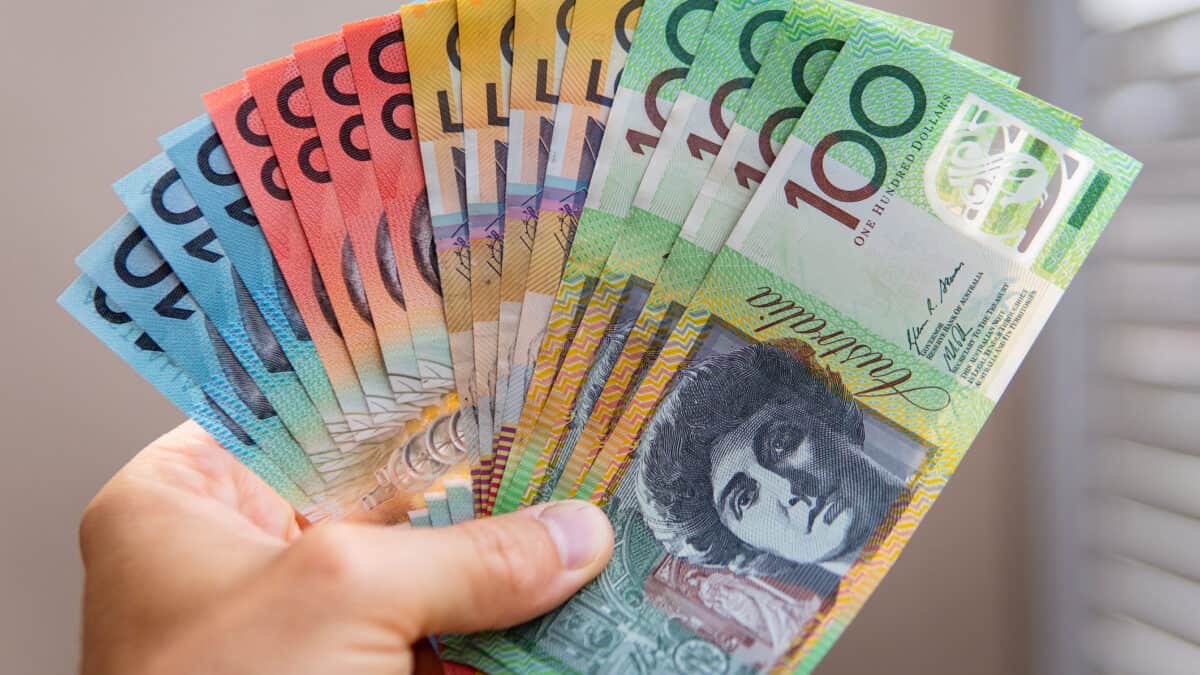
    Person holding Australian dollar notes, symbolising dividends.

    There’s an age-old question about whether it’s best to invest in ASX growth stocks or ASX income shares. I’m going to consider the question from the perspective of investing $1,000.

    Saving up $1,000 to invest is an achievement amid this high cost of living. What’s going to be the best place to invest it?

    If you’re going to need the money within a year or two, it may be best to save it in a high interest savings account. The interest rate return of around 5% at the moment (from a good account) is solid. There’s a chance the share market may experience volatility at the exact time you need the cash.

    ASX income shares

    ASX shares that pay dividends are appealing. Receiving passive income cash flow year after year for no effort is a compelling investment.

    The great thing about businesses is that they’re capable of both paying dividends and re-investing some profit for long-term growth.

    Companies like Wesfarmers Ltd (ASX: WES) and Sonic Healthcare Ltd (ASX: SHL) have shown a skill of paying a decent dividend yield while steadily growing over time.

    Other investors may be interested in higher-yielding stocks that can pay a large income. However, I’d only want to invest in businesses where the dividend can grow over time rather than focusing on a temporarily high yield that could be cut substantially.

    If a business had a 7% dividend yield, an investor could get $70 of annual dividend income with a $1,000 investment.

    Some of my favourite high-yield ASX income shares at the moment are Telstra Group Ltd (ASX: TLS), Metcash Ltd (ASX: MTS) and Medibank Private Ltd (ASX: MPL).

    Is this the right choice with $1,000? I’m not sure receiving $50 or even $100 of annual income will change someone’s finances dramatically each year. If there are more $1,000-sized investments to come, or we’re talking about investing $10,000 plus, then investing in ASX income shares could be the right choice.

    An investment like Washington H. Soul Pattinson and Co. Ltd (ASX: SOL) could make a lot of sense with $1,000 (or more) because it offers a diversified portfolio, can provide a decent grossed-up dividend yield upfront (around 4%) and has a long track record of delivering capital growth and dividend growth.

    ASX growth stocks

    Over the long term, I believe capital growth can beat the returns offered by (typically) slower-growing ASX income shares.

    My colleagues and I at the Motley Fool regularly write about which ASX growth shares could be attractive investments.

    If a $1,000 investment grows by 10% per annum, it will double in value (to more than $2,000) in less than eight years. If it keeps growing at 10% per annum, it could be worth $6,700 in 20 years. After 40 years, it might be worth around $45,000.

    I don’t know which ASX growth stocks will still be doing well in 40 years, so it might be a good idea to invest in global exchange-traded funds (ETFs) that invest in strong businesses that could deliver good capital growth.

    Some of my favourite global ETFs for potential capital growth are Vanguard MSCI Index International Shares ETF (ASX: VGS), VanEck MSCI International Quality ETF (ASX: QUAL), BetaShares Global Sustainability Leaders ETF (ASX: ETHI) and VanEck Morningstar Wide Moat ETF (ASX: MOAT).

    In my opinion, the right choice for $1,000 would be either one of the ASX ETFs I mentioned or Washington H. Soul Pattinson shares if decent dividend income is a factor.

    The post With $1,000 to invest, should I buy ASX growth stocks or income shares? appeared first on The Motley Fool Australia.

    Should you invest $1,000 in Betashares Global Sustainability Leaders Etf right now?

    Before you buy Betashares Global Sustainability Leaders Etf shares, consider this:

    Motley Fool investing expert Scott Phillips just revealed what he believes are the 5 best stocks for investors to buy right now… and Betashares Global Sustainability Leaders Etf wasn’t one of them.

    The online investing service he’s run for over a decade, Motley Fool Share Advisor, has provided thousands of paying members with stock picks that have doubled, tripled or even more.*

    And right now, Scott thinks there are 5 stocks that may be better buys…

    See The 5 Stocks
    *Returns as of 5 May 2024

    More reading

    Motley Fool contributor Tristan Harrison has positions in Metcash, Sonic Healthcare, and Washington H. Soul Pattinson and Company Limited. The Motley Fool Australia’s parent company Motley Fool Holdings Inc. has positions in and has recommended Washington H. Soul Pattinson and Company Limited and Wesfarmers. The Motley Fool Australia has positions in and has recommended Telstra Group, Washington H. Soul Pattinson and Company Limited, and Wesfarmers. The Motley Fool Australia has recommended Metcash, Sonic Healthcare, VanEck Morningstar Wide Moat ETF, and Vanguard Msci Index International Shares ETF. The Motley Fool has a disclosure policy. This article contains general investment advice only (under AFSL 400691). Authorised by Scott Phillips.


  • One of the wealthiest members of Congress spent over $60 million just to lose Maryland’s messy Democratic Senate primary

    David Trone and Angela Alsbrooks look ahead during their respective campaign appearances
    Rep. David Trone has tried to argue that his vast fortune makes him better suited to represent Maryland in the US Senate over Prince George's County Executive Angela Alsbrooks.

    • Angela Alsobrooks is projected to be the winner of Maryland's Democratic Senate primary.
    • Alsobrooks will now face former Republican Gov. Larry Hogan in the general election.
    • Democrats can't afford to lose Maryland as they look to hang on to their narrow Senate majority.

    Rep. David Trone, one of the wealthiest members of Congress, spent over $60 million of his own fortune to try to win a Democratic Senate primary. The Associated Press called the election for his competitor.

    With nearly 40% of all votes in, Prince George's County Executive Angela Alsobrooks is projected to have defeated Trone in Maryland's Democratic US Senate primary, according to Decision Desk HQ. Alsobrooks will now face former Gov. Larry Hogan, who easily won the Republican primary, in the November general election.

    Hogan is a major GOP recruit whose candidacy has turned the Maryland contest into one of the closest-watched races ahead of November.

    Trone, a three-term House Democrat, made millions before entering politics by co-founding Total Wine & More, the nation's largest private wine retailer. In a striking pitch to voters, he argued that his vast wealth was an asset to the Democratic Party and Senate Majority Leader Chuck Schumer. Schumer can't afford to lose the Senate seat if he wants to keep the party's slim majority in the chamber. Trone's point was that if the party has to spend money defending Maryland, it will have less available in other close races.

    "We're going to continue to spend whatever it takes to win," Trone told reporters last week, according to CNN. "That will give them a lot more flexibility to spend money elsewhere. And I'm sure that will appeal to the leader Schumer."

    When Alsobrooks jumped into the Senate race, she touted her work as a domestic violence prosecutor and her experience leading the state's second-most populous jurisdiction in making the case for her candidacy. As county executive, she has been immersed in the nuts and bolts of local government and focused heavily on public safety, an issue that Republicans have sought to hammer Democrats on in recent cycles.

    And Alsobrooks — who was endorsed by Maryland Democratic heavy hitters including Gov. Wes Moore, Sen. Chris Van Hollen, and veteran Rep. Steny Hoyer — had long made it clear that she felt Trone's financial edge would not define the campaign in the eyes of voters.

    "I think Marylanders are really savvy," Alsobrooks told Washington-area CBS affiliate WUSA9 in a March interview. "And they recognize that you should not be able to buy a Senate seat."

    The race between the two Democrats became heated in the closing days. Since Trone and Alsobrooks agreed on most policy areas, the contest became a proxy battle over identity and the party's future. Alsobrooks leaned into her history-making candidacy, an appeal underlined by the reality that the Senate could soon again be without a Black woman. Despite having a 10-member congressional delegation, Maryland doesn't currently have a woman representing the state in either chamber.

    Alsobrooks' allies also tried to blunt Trone's massive financial advantage by pointing out that Trone's firm donated to Republicans who have supported restricting access to abortion. Trone, who supports abortion rights, responded by pointing out that he left Total Wine's parent company in 2015 and has received a 100% rating from the abortion-rights advocacy organization Reproductive Freedom for All (formerly NARAL Pro-Choice Americas).

    Trone was forced to reel in one of his campaign's sharpest attacks.

    According to The Washington Post, Trone edited a surrogate's comment on a recent ad that suggested that Alsobrooks would need "training wheels" in the Senate.

    Democrats currently control the Senate by a narrow 51-49 margin, and with West Virginia Sen. Joe Manchin's retirement at the end of his term, Republicans are virtually guaranteed to pick up his seat.

    Republicans see Montana and Ohio as their top Democratic Senate targets this year, while also looking to compete in Arizona, Michigan, Nevada, Pennsylvania, and Wisconsin.

    But Hogan's candidacy in Maryland — in one of the bluest states in the country — is giving them hope where they would otherwise not have a top-tier candidate.

    Read the original article on Business Insider
  • Guess which ASX gold stock just rocketed 92% on this ‘outstanding’ new discovery

    rising gold share price represented by a green arrow on piles of gold block

    A little-known ASX gold stock is shooting the lights out on Wednesday after reporting on some very promising exploration results.

    Shares in the junior explorer entered a trading halt on Monday morning pending today’s announcement. Shares closed Friday trading for 12 cents apiece and leapt to 23 cents apiece in earlier trade, up a whopping 91.7%.

    After some likely profit-taking, shares are swapping hands for 21.5 cents apiece at the time of writing, up 79.2%.

    For some context, the All Ordinaries Index (ASX: XAO) is up 0.5% at this same time.

    Any guesses?

    If you said Australian Gold and Copper Ltd (ASX: AGC), give yourself a virtual gold star.

    Here’s why investors are bidding up the ASX gold stock today.

    What did the ASX gold stock report?

    The Australian Gold and Copper share price is going ballistic after the company reported on some “outstanding gold and silver” intersections at its Achilles project, located in New South Wales.

    The ASX gold stock has now completed its follow-up drilling campaign at Achilles. This saw nine reverse circulation (RC) holes drilled at the project, for 1,461 metres.

    AGC reported that the latest drill program covered more than half a kilometre of strike and has extended mineralisation at Achilles beyond the discovery holes it recently reported.

    Having received expedited laboratory analyses from the first holes, the miner looks to be stoking ASX investor enthusiasm today by revealing those results extended and significantly upgraded high-grade gold-silver-base metal mineralisation down dip and along strike.

    The top intersections include 5 metres at 16.9 grams of gold per tonne and 1,473 grams of silver per tonne, as well as 15.0% lead + zinc.

    AGC cited maximum grades of 45.0g/t gold, more than 3,000g/t silver, and 38.8% lead + zinc.

    Commenting on the strong drill results sending the ASX gold stock soaring today, AGC managing director Glen Diemar said, “Achilles is producing some exceptional grades in the drill bit.”

    Diemar continued:

    The first six holes have produced grades including combined lead and zinc to 38%, gold to 45g/t and silver above 3,000g/t. This silver result is so high grade the laboratory is sending the sample to Canada for further analysis, which is a rare occurrence.

    We are extremely happy with how Achilles is taking shape. With drilling now spread across more than half a kilometre of strike we are excited to see how big this can get.

    The company said that following on these strong results, it has also expedited assays for the six holes still pending. Those results are expected in the coming weeks.

    “I look forward to the results of the next six holes and can already see that Achilles has a prominent future within the Cobar Basin,” Diemar said.

    The ASX gold stock’s exploration team is currently designing and permitting the next phase of exploration at Achilles.

    The post Guess which ASX gold stock just rocketed 92% on this ‘outstanding’ new discovery appeared first on The Motley Fool Australia.

    Should you invest $1,000 in Australian Gold And Copper right now?

    Before you buy Australian Gold And Copper shares, consider this:

    Motley Fool investing expert Scott Phillips just revealed what he believes are the 5 best stocks for investors to buy right now… and Australian Gold And Copper wasn’t one of them.

    The online investing service he’s run for over a decade, Motley Fool Share Advisor, has provided thousands of paying members with stock picks that have doubled, tripled or even more.*

    And right now, Scott thinks there are 5 stocks that may be better buys…

    See The 5 Stocks
    *Returns as of 5 May 2024

    More reading

    Motley Fool contributor Bernd Struben has no position in any of the stocks mentioned. The Motley Fool Australia’s parent company Motley Fool Holdings Inc. has no position in any of the stocks mentioned. The Motley Fool Australia has no position in any of the stocks mentioned. The Motley Fool has a disclosure policy. This article contains general investment advice only (under AFSL 400691). Authorised by Scott Phillips.

  • Here is the dividend forecast to 2026 for AMP shares

    Woman and man calculating a dividend yield.

    AMP Ltd (ASX: AMP) shares are becoming a viable option for passive income again because it’s seemingly paying every six months. It didn’t pay a dividend in 2021 or 2022.

    However, while AMP’s dividend is recovering, the AMP share price is still far below where it was before COVID-19 – just look at the chart below, it has halved in five years.

    In FY22, it paid an annual dividend per share of 2.5 cents, which was increased to 4.5 cents per share in FY23.

    Quarterly performance

    The broker UBS has issued an updated forecast about where it sees the AMP dividend going in the next few years after seeing the quarterly update for the three months to March 2024.

    In that update, AMP said the bank’s total loan book dropped to $23.5 billion, down from $24.4 billion in the 2023 fourth quarter. Bank total deposits grew to $21.4 billion, up from $21.3 billion in the fourth quarter of 2023.

    AMP’s platform net cash flow was $201 million, up 32% from the first quarter of 2023 (of $152 million). Platform assets under management (AUM) increased to $74.3 billion, up from $71.1 billion at the end of the 2023 fourth quarter.

    The AMP ‘superannuation and investments’ AUM rose to $54.1 billion, up from $51.9 billion in the fourth quarter of 2023. Net cash flow reduced to $371 million, down from $610 million in the first quarter of 2023.

    In summary, many of the important numbers are heading in the right direction. Let’s examine what this may mean for the dividend.

    FY24

    UBS is expecting the AMP net profit after tax (NPAT) to improve by roughly 10% to $220 million, which would translate into earnings per share (EPS) of approximately 8 cents.

    This improvement in profit could allow AMP to deliver a dividend per share of 5 cents. That would translate into a dividend yield of 4.5%, excluding any franking credits.

    FY25

    UBS is expecting another profit increase in FY25, with net profit rising by 15% to $253 million, which would equate to EPS of approximately 10 cents.

    The broker is expecting a large hike of the AMP dividend per share to 7 cents per share in FY25, which translates into a dividend yield of 6.4% at the current AMP share price, excluding any franking credits.

    FY26

    UBS suggests the 2026 financial year will see flat performance compared to FY25.

    FY26 net profit could be $255 million, up just $2 million. The broker is expecting EPS of 10 cents again and a dividend per share of 7 cents.

    If that happens, the current AMP share price has an FY26 dividend yield of 6.4% and a forward price/earnings (P/E) ratio of 11.

    Is the AMP share price a buy?

    At the time UBS wrote the note in April, it reiterated a sell rating on AMP shares with a price target of 98 cents, implying a possible fall of around 10% in the next year. UBS wrote:

    On our refreshed forecasts, the stock is trading at 11.6x PE (based on UBSe FY25, inclusive of cost reduction targets), which we do not consider cheap relative to peers and considering the weak earnings outlook. Whilst NTA of $1.31/sh may appear to offer value, we think a material discount is fair given weak sustainable RONTA c.5%.

    In other words, AMP is only making a return on net tangible assets (NTA) of around 5%, which the broker thinks is weak, making the NTA of $1.31 per share not as appealing as it looks.

    The post Here is the dividend forecast to 2026 for AMP shares appeared first on The Motley Fool Australia.

    Should you invest $1,000 in Amp Limited right now?

    Before you buy Amp Limited shares, consider this:

    Motley Fool investing expert Scott Phillips just revealed what he believes are the 5 best stocks for investors to buy right now… and Amp Limited wasn’t one of them.

    The online investing service he’s run for over a decade, Motley Fool Share Advisor, has provided thousands of paying members with stock picks that have doubled, tripled or even more.*

    And right now, Scott thinks there are 5 stocks that may be better buys…

    See The 5 Stocks
    *Returns as of 5 May 2024

    More reading

    Motley Fool contributor Tristan Harrison has no position in any of the stocks mentioned. The Motley Fool Australia’s parent company Motley Fool Holdings Inc. has no position in any of the stocks mentioned. The Motley Fool Australia has no position in any of the stocks mentioned. The Motley Fool has a disclosure policy. This article contains general investment advice only (under AFSL 400691). Authorised by Scott Phillips.

  • Buying BHP shares? Here’s what’s happening with the Anglo American takeover

    People sitting in rows in a meeting with one person holding their hand up as if to ask a question.

    Buying BHP Group Ltd (ASX: BHP) shares?

    Then you’ve probably been following along with the ongoing saga surrounding the S&P/ASX 200 Index (ASX: XJO) mining giant’s takeover bid for Anglo American (LSE: AAL).

    BHP shares leapt into global headlines on 26 April after the company lobbed a roughly $60 billion offer to acquire Anglo American.

    The ASX 200 miner’s main focus here is Anglo’s copper assets. Copper prices have been soaring and are widely expected to remain elevated over the longer term amid the world’s push towards electrification.

    If BHP’s takeover succeeds, the Aussie miner will take the mantle of the world’s biggest copper producer.

    As you’re likely aware, Anglo American’s board rejected BHP’s initial offer as significantly undervaluing its assets and growth potential. The board also believes the offer is too complicated and poses risks for Anglo shareholders.

    Yesterday we learned that BHP had come back with an improved takeover offer valued at around $64 billion. An offer that Anglo American’s board again rejected.

    Commenting on the developments yesterday, CEO Mike Henry said:

    BHP put forward a revised proposal to the Anglo American board that we strongly believe would be a win-win for BHP and Anglo American shareholders. We are disappointed that this second proposal has been rejected.

    BHP shares closed down 0.2% yesterday.

    Will BHP shares ever encompass Anglo American’s assets?

    How Anglo American shareholders will respond to the latest BHP takeover offer remains to be seen.

    In the latest developments, Anglo American announced it would divest its platinum and diamond businesses and sell its Queensland-based coal mines.

    Some analysts have flagged this as a move to potentially thwart BHP’s acquisition, as Anglo’s coking coal assets in Queensland would mesh well with BHP’s operations in the state.

    If BHP shares were to encompass Anglo American’s assets, the ASX 200 miner would also look to divest a number of the company’s assets. Those include Anglo’s platinum and iron ore projects in South Africa, and likely its nickel assets as well.

    Anglo-American shareholders are now faced with a decision of whether to back Anglo CEO Duncan Wanblad and his vision for the company’s future or BHP’s Henry.

    Addressing Anglo American’s turnaround plan Wanblad said (quoted by Bloomberg), “We don’t need BHP to deliver this strategy, we absolutely do not need them at all. We can deliver this.”

    Henry had a different take.

    “Shareholders must decide which plan creates the greatest value, soonest. Which team has the better track record of execution,” he said.

    BHP shares are up 2.6% in morning trade today.

    Stay tuned!

    The post Buying BHP shares? Here’s what’s happening with the Anglo American takeover appeared first on The Motley Fool Australia.

    Should you invest $1,000 in Bhp Group right now?

    Before you buy Bhp Group shares, consider this:

    Motley Fool investing expert Scott Phillips just revealed what he believes are the 5 best stocks for investors to buy right now… and Bhp Group wasn’t one of them.

    The online investing service he’s run for over a decade, Motley Fool Share Advisor, has provided thousands of paying members with stock picks that have doubled, tripled or even more.*

    And right now, Scott thinks there are 5 stocks that may be better buys…

    See The 5 Stocks
    *Returns as of 5 May 2024

    More reading

    Motley Fool contributor Bernd Struben has no position in any of the stocks mentioned. The Motley Fool Australia’s parent company Motley Fool Holdings Inc. has no position in any of the stocks mentioned. The Motley Fool Australia has no position in any of the stocks mentioned. The Motley Fool has a disclosure policy. This article contains general investment advice only (under AFSL 400691). Authorised by Scott Phillips.

  • Is the CBA share price heading back to $100?

    A man looking at his laptop and thinking.

    The Commonwealth Bank of Australia (ASX: CBA) share price may be materially overvalued according to one leading broker.

    As the chart below shows, CBA shares have risen by 17% in the past six months. However, UBS thinks the rise is unwarranted.

    The ASX bank share recently reported its FY24 third-quarter result, which UBS provided commentary on to reach its conclusion on where the CBA share price could end up in a year.

    Weakening profit

    CBA reported cash net profit after tax (NPAT) of $2.4 billion for the FY24 third-quarter, which was down 2% quarter over quarter and down 6% year over year.

    UBS noted the net interest income (NII) was largely flat, with a decline of 0.4% with volume growth offset by lower margins from ongoing competitive pressure in deposits and customers switching to higher-yielding deposits.

    Non-net interest income was down 6% quarter over quarter, driven by lower markets and dividend income. Operating expenditure increased by around 3% in the quarter, reflecting higher amortisation and staff costs.

    The loan impairment charge was $191 million, representing 8 basis points (0.08%) of its lending portfolio, though arrears are increasing.

    UBS is expecting further increases in arrears because of continued pressure on real household disposable income.

    But, on the positive side, UBS said the CBA FY24 funding position remains “sound” with around $20 billion of new long-term wholesale funding issued in the 2024 financial year to date.

    Around $750 million of the previously announced $1 billion on-market share buyback is remaining.

    Is the CBA share price headed to $100?

    UBS notes that defending the profitability of its existing loan book remains a “key imperative for management.” The bank is using its “proprietary distribution channels to defend and drive volume growth in mortgages,” which has seen CBA grow its loan book at 0.7x the system. In other words, it’s slightly losing market share.

    The broker suggests that the FY24 fourth quarter could be softer on the revenue side, though the bank is showing “good cost discipline and management.”

    UBS points out that CBA shares are trading at around 2.5x FY25’s estimated book value, which is elevated for the banking sector.

    The broker’s price target for the CBA share price is $105, which implies a possible fall of around 10% from where it is today.

    At the current valuation, the CBA share price is trading at 21x FY25’s estimated earnings, which is far higher than the price/earnings (P/E) ratio of other major ASX bank shares.

    The post Is the CBA share price heading back to $100? appeared first on The Motley Fool Australia.

    Should you invest $1,000 in Commonwealth Bank Of Australia right now?

    Before you buy Commonwealth Bank Of Australia shares, consider this:

    Motley Fool investing expert Scott Phillips just revealed what he believes are the 5 best stocks for investors to buy right now… and Commonwealth Bank Of Australia wasn’t one of them.

    The online investing service he’s run for over a decade, Motley Fool Share Advisor, has provided thousands of paying members with stock picks that have doubled, tripled or even more.*

    And right now, Scott thinks there are 5 stocks that may be better buys…

    See The 5 Stocks
    *Returns as of 5 May 2024

    More reading

    Motley Fool contributor Tristan Harrison has no position in any of the stocks mentioned. The Motley Fool Australia’s parent company Motley Fool Holdings Inc. has no position in any of the stocks mentioned. The Motley Fool Australia has no position in any of the stocks mentioned. The Motley Fool has a disclosure policy. This article contains general investment advice only (under AFSL 400691). Authorised by Scott Phillips.

  • Red Lobster could file for bankruptcy this month following the closure of 50+ stores: WSJ

    A Red Lobster restaurant in Times Square in New York.
    A Red Lobster restaurant in Times Square in New York.

    • Red Lobster could file for Chapter 11 bankruptcy protection next week, per The Wall Street Journal.
    • The restaurant chain, burdened with hundreds of millions in debt, recently shut down 52 stores.
    • Red Lobster blamed some of its financial struggles on an all-you-can-eat shrimp promotion.

    Restaurant chain Red Lobster could file for bankruptcy protection as early as next week, The Wall Street Journal reported on Tuesday.

    People familiar with the matter told the Journal that the company, overwhelmed with hundreds of millions in debt, plans to file a Chapter 11 bankruptcy petition in Orlando before Memorial Day.

    Bloomberg previously reported in April that the restaurant company was considering filing for Chapter 11 bankruptcy protection.

    The bankruptcy news comes after Red Lobster, which has around 650 locations, shut down over 50 locations across the US, restaurant liquidator TAGeX Brands confirmed to Business Insider on Monday.

    States that will see Red Lobster closures include California, Colorado, Florida, New York, and Texas.

    Over the past few years, financial troubles have beset the popular seafood chain.

    Leasing costs, less foot traffic during COVID-19 lockdowns, and a failed all-you-can-eat shrimp promotion are some of the reasons Red Lobster and outside observers have attributed to the company's downfall.

    These financial troubles resulted in Thai Union Group, which had assumed majority ownership of Red Lobster in 2020, pulling out its investments. On a February earnings call, Thai Union Chief Executive Thiraphong Chansiri said, "We're going to exit. We are not going to inject any more money into Red Lobster."

    "The combination of the Covid-19 pandemic, sustained industry headwinds, higher interest rates, and rising material and labor costs have impacted Red Lobster, resulting in prolonged negative financial contributions to Thai Union and its shareholders," Chansiri previously said.

    Red Lobster and Thai Union Group did not immediately respond to a request for comment from BI.

    Read the original article on Business Insider
  • $8,000 in savings? Here’s how I’d aim to turn that into $1,151 in monthly passive income

    A woman in a hammock on her laptop and drinking a smoothie

    There are a number of ways I could aim to turn a spare $8,000 into a $1,151 monthly passive income stream.

    But I believe my best path to success here is by investing that money into ASX dividend shares.

    Now, I’ll need to be realistic here.

    An $1,151 monthly passive income equates to $13,812 a year. A very tidy sum!

    But, barring an investing miracle, I won’t achieve this goal overnight with an $8,000 investment today.

    With that said, here’s how I’d aim to build that passive income stream to $1,151 a month over time.

    Tapping ASX dividend stocks for passive income

    With $8,000 I could invest in four or maybe even eight ASX dividend stocks without brokerage fees taking too big of a bite.

    In this case, I’d aim for companies paying franked dividends. That should enable me to keep more of my passive income at tax time.

    I’d also invest in a range of stocks operating across various sectors and ideally geographic locations. This kind of diversity will help lower the overall risk to my ASX income portfolio if any one company or sector hits a tough patch.

    Of course, this will require a good bit of research on my time.

    Instead, I could get instant diversity and a juicy yield from a single investment.

    Namely, the BetaShares Australian Dividend Harvester Fund (ASX: HVST).

    I can buy and sell shares in the ASX exchange traded fund (ETF) just like I would any other ASX dividend stock. Though I’ll need to bear in mind the annual 0.72% management fees.

    HVST holds anywhere from 40 to 60 blue-chip ASX dividend shares at any given time, providing more diversity than I could get with just eight stocks.

    The ETF’s top ten holdings include BHP Group Ltd (ASX: BHP), Commonwealth Bank of Australia (ASX: CBA), CSL Ltd (ASX: CSL) and National Australia Bank Ltd (ASX: NAB).

    All of these S&P/ASX 200 Index (ASX: XJO) companies pay fully franked dividends. And they all have long track records of making reliable passive income payouts.

    Atop NAB, CSL, BHP and CBA, HVST also holds a range of ASX 200 stocks in the consumer discretionary, energy and industrial sectors, among others.

    As for that passive income, the ETF makes monthly payments, which can be handy.

    As at 30 April, the fund’s 12-month dividend yield was 6.5% a share, franked at 78.7%. That brings its grossed-up dividend yield to 8.7% a share.

    Adding in those dividends, the BetaShares Australian Dividend Harvester Fund has delivered 15.7% in gross returns after fees over six months and 10.3% over a year.

    I don’t think the past six-month performance is sustainable over the long-term. But with history as my guide along with the high-quality ASX dividend shares held by the ETF, I believe 10% a year is realistic.

    So, how long will it take me to garner my $1,151 a month, or $13,812 a year in passive income from my $8,000 investment today?

    To the maths!

    As mentioned up top, I’m going to need some patience before I can start drawing down my investment portfolio and enjoying that passive income stream.

    But that’s okay.

    Investing is a long game.

    Working with the grossed-up yield of 8.7%, I’ll need $158,699 before I can start drawing down $1,151 a month in passive income without impacting that capital.

    By reinvesting HVST’s dividends over time and making use of the magic of compounding, I’ll have achieved may passive income goal in 30 years.

    The post $8,000 in savings? Here’s how I’d aim to turn that into $1,151 in monthly passive income appeared first on The Motley Fool Australia.

    Should you invest $1,000 in Bhp Group right now?

    Before you buy Bhp Group shares, consider this:

    Motley Fool investing expert Scott Phillips just revealed what he believes are the 5 best stocks for investors to buy right now… and Bhp Group wasn’t one of them.

    The online investing service he’s run for over a decade, Motley Fool Share Advisor, has provided thousands of paying members with stock picks that have doubled, tripled or even more.*

    And right now, Scott thinks there are 5 stocks that may be better buys…

    See The 5 Stocks
    *Returns as of 5 May 2024

    More reading

    Motley Fool contributor Bernd Struben has no position in any of the stocks mentioned. The Motley Fool Australia’s parent company Motley Fool Holdings Inc. has positions in and has recommended CSL. The Motley Fool Australia has recommended CSL. The Motley Fool has a disclosure policy. This article contains general investment advice only (under AFSL 400691). Authorised by Scott Phillips.

  • Will the ‘resurgence in demand’ for shopping centres boost ASX REITs?

    Three woman pulling faces.

    Three of the biggest ASX 200 real estate investment trusts (REITs) are shopping centre specialists.

    The No 2. ASX REIT by market capitalisation is Scentre Group (ASX: SCG), which owns 42 Westfield malls in Australia and New Zealand. Scentre shares closed at $3.12 yesterday, up 9.86% over the past year.

    The No. 3 ASX REIT is Stockland shopping centre owner, Stockland Corporation Ltd (ASX: SGP). Stockland is one of the largest retail property owners, developers and managers in Australia. It owns Stockland malls in many metro suburban and regional locations and also operates in the residential and logistics sectors.

    Stockland shares closed at $4.54 yesterday, up 0.44% over the past 12 months.

    The fourth-largest ASX REIT is Vicinity Centres (ASX: VCX). It owns 57 retail assets including Chadstone in Melbourne, the Queen Victoria Building and Chatswood Chase in Sydney, and QueensPlaza in Brisbane.

    Shares in Australia’s second-largest listed retail property manager closed at $1.91 apiece yesterday and are down 6.83% over the past 12 months.

    CBRE tips rising rents and demand for retail spaces

    CBRE, a global leader in commercial real estate services and investment, says there is a “resurgence in demand” for Australian shopping centres currently underway.

    Despite the growth in e-commerce, CBRE forecasts that shopping centre investment volumes will grow by about 50% from $4.2 billion in 2023 to an estimated $6.3 billion in 2025.

    CBRE Pacific Head of Retail Capital Markets, Simon Rooney, said Asian investors and European Pension Funds are interested in investing in Australian shopping centres because, “Australia offers a rapidly growing population, with rising incomes, which is unique in an OECD context.”   

    CBRE says Australian shopping centres are a “lucrative investment” due to resilient retail spending, a tight supply of land to build new centres, and low vacancy rates due to demand for space from retailers.

    This would likely lead to higher rents and capital growth.

    Retail spending in 2023 totalled almost $425 billion, 60% higher than a decade ago, said CBRE.

    Despite high inflation, retail turnover increased by 0.8% over the 12 months to December 2023, according to the Australian Bureau of Statistics.

    CBRE says the “triple boost” of strong population growth, low unemployment, and meaningful wage growth would drive retail spending to a forecast $500 billion per annum by the end of this decade.

    There is also a supply squeeze for shopping centre space, which could lead to rising shop rents.

    CBRE estimates there will be 0.78 million square metres of future shopping centre supply available from 2024 to 2028. It says this is less than half the historical average, and vacancy rates within centres are low.

    In a recent report, CBRE said:

    We see scope for rents to continue to grow as vacancy tightens and shopping centres continue to generate foot traffic.

    Australian shopping centre vacancy is currently sub 5% and we anticipate further vacancy rate compression as city centre performance improves.

    CBRE noted that the types of retailers wanting shop space are changing from specialty stores to mini-major retailers. Examples of mini-major tenants include Chemist Warehouse, Cotton-On, JB Hi-Fi owned by JB Hi-Fi Ltd (ASX: JBH), and Rebel Sport owned by Super Retail Group Ltd (ASX: SUL).

    ASX REITs see improved re-leasing spreads

    CBRE says retail occupancy costs in regional and sub-regional shopping centres have declined over the past three to five years due to reduced rents and higher retail sales growth.

    CBRE said:

    We view this as a favourable outcome, providing scope for rents to re-grow over time.

    Between 2017 and 2023, retail REITs witnessed an enhancement in re-leasing spreads after facing significant declines associated with the disruptions caused by the COVID-19 pandemic.

    In the February earnings season, ASX REITs Vicinity Centres and Scentre reported increased earnings.

    Vicinity Centres reported a statutory net profit after tax (NPAT) of $223.5 million for 1H FY24. That was up 27% from H1 FY23, with increased occupancy to 99.1%.

    Scentre reported a 16.7% lift in profit after tax to $1,069 million for full-year FY23, with occupancy of 99.2%. Scentre completed 3,273 leasing deals that included 307 new brands.

    Average specialty rents increased 7.5% and new lease spreads improved to +3.1%. The ASX REIT collected $2,723 million of gross rent during the year, up $131 million compared to 2022.

    Scentre Group CEO Elliott Rusanow said:

    Customer visitation to our 42 Westfield destinations for the year was 512 million, up 32 million or 6.7% on 2022. This was underpinned by our activation program which included new strategic partnerships with leading brands Disney, Live Nation and Netball Australia.

    As a result, our business partners achieved $28.4 billion in sales, an increase of $1.7 billion or
    6.4% compared to 2022 and representing a record across our Westfield platform.

    How shopping centres are changing

    Sheree Griff, CBRE Pacific’s Head of Retail Property Management and Leasing, said customers were increasingly using online stores for research before attending physical stores to ‘try before they buy’.

    She said:

    E-commerce is not a threat to shopping centre investment; more importantly it is the other way around.

    Retailers find the e-commerce engagement for their products is higher when they have a physical store in a shopping centre.

    Consumers research products online then enter the store well-educated and knowing what they are looking for.  

    The in-store experience is about validating the product and ensuring it’s at the quality, sizing, and colour that the consumer expects.

    Shopping centres are changing their look and feel and trying to create leisure and recreation experiences alongside shopping.

    Griff said:

    Retailers are now creating in-store experiences to attract the consumer to stay longer and purchase more. Engagement shopping could be cooking schools, a basketball court within a sports store, or premium customer service where the consumer feels special.

    Brokers say buy ASX REITs

    Barrenjoey raised its rating on Vicinity Centres shares to overweight a fortnight ago. It has a 12-month share price target of $2.20 on the ASX REIT, implying a potential 15% upside.

    Citi has a buy rating on Stockland shares with a 12-month price target of $5.20, implying a potential 14.5% upside.

    The consensus rating on Scentre shares among analysts on the CBA platform is a moderate buy.

    The post Will the ‘resurgence in demand’ for shopping centres boost ASX REITs? appeared first on The Motley Fool Australia.

    Should you invest $1,000 in Jb Hi-fi Limited right now?

    Before you buy Jb Hi-fi Limited shares, consider this:

    Motley Fool investing expert Scott Phillips just revealed what he believes are the 5 best stocks for investors to buy right now… and Jb Hi-fi Limited wasn’t one of them.

    The online investing service he’s run for over a decade, Motley Fool Share Advisor, has provided thousands of paying members with stock picks that have doubled, tripled or even more.*

    And right now, Scott thinks there are 5 stocks that may be better buys…

    See The 5 Stocks
    *Returns as of 5 May 2024

    More reading

    Motley Fool contributor Bronwyn Allen has no position in any of the stocks mentioned. The Motley Fool Australia’s parent company Motley Fool Holdings Inc. has no position in any of the stocks mentioned. The Motley Fool Australia has positions in and has recommended Super Retail Group. The Motley Fool Australia has recommended Jb Hi-Fi. The Motley Fool has a disclosure policy. This article contains general investment advice only (under AFSL 400691). Authorised by Scott Phillips.

  • OpenAI cofounder Ilya Sutskever is leaving the company 6 months after the failed Sam Altman ouster

    Ilya Sutskever
    • OpenAI cofounder Ilya Sutskever is leaving the company, he said on X on Tuesday.
    • The chief scientist played a key role in the November ouster of CEO Sam Altman, reports said.
    • Sutskever said in his Tuesday announcement that he is confident OpenAI will build "safe" technology. 

    OpenAI cofounder and chief scientist Ilya Sutskever is stepping away from the company after almost a decade, he said in a Tuesday post on X, formerly known as Twitter.

    Sutskever said he is "confident" that the company will continue to build technology that is "both safe and beneficial."

    https://platform.twitter.com/widgets.js

    Sutskever's role at the company has been in doubt for the last six months after reports indicated he played a key role in the shocking and ultimately failed board ouster of OpenAI CEO and cofounder Sam Altman in November.

    Two people familiar with the company told Business Insider in December that Sutskever had essentially been shut out of OpenAI in the aftermath of the attempt to remove Altman as CEO.

    Sutskever said he is "excited" about his next steps, which he said he would share more details about "in due time."

    Neither OpenAI nor Sutskever immediately responded to a request for comment from BI.

    In his own post on X, Altman said, "Ilya and OpenAI are going to part ways. This is very sad to me; Ilya is easily one of the greatest minds of our generation, a guiding light of our field, and a dear friend. His brilliance and vision are well known; his warmth and compassion are less well known but no less important."

    This story is breaking. Please check back for updates.

    Read the original article on Business Insider