• A Harvard processed foods expert shares 3 simple food swaps you can make for a healthier brain and gut

    a board of chicken nuggets and french fries with ketchup
    New research suggests that it's not just the ingredients in processed food but how they're prepared that can make them unhealthy. Simple, healthy swaps can reduce health risks.

    • A researcher who studies processed foods said the work prompted him to make his own diet healthier. 
    • He cut back on certain foods after finding a link to health risks.
    • Instead, he aims for whole foods, high fiber snacks, and meals with recognizable ingredients. 

    Once, chicken nuggets were a convenient, popular dinner option for Dr. W. Taylor Kimberly and his family.

    But after studying ultra-processed foods in more detail, and seeing how they affect the brain, he's switched to grilled chicken instead.

    Kimberly, a professor of neurology at Harvard Medical School and a neurologist at Massachusetts General Hospital, is the senior author of a new study linking ultra-processed foods to health risks like dementia and stroke.

    "Since we began this study, I've paid more attention to what I eat," he told Business Insider. "But I'll be honest, there are many I enjoy, and I haven't eliminated them all."

    While it's not news that ultra-processed foods are linked to poor health, the latest study helps us understand not just which foods might be healthy or unhealthy but how to make small, healthy changes without cutting them out entirely.

    "Ultra-processed foods are such a big part of our diet. They're convenient and easy. There hasn't been as much work on thinking about not just the type of food but also how it's processed," he said.

    The findings, published June 11 in the journal Neurology, are a step closer to helping scientists understand why processed food might be bad for our health. The study was observational, which means it can't directly tell us if processed food caused the health risks.

    But it does offer hints at simple ways to make healthier choices, according to Kimberly, who offered tips on picking more nutritious snacks and how much processed food you should aim to cut back on.

    Swapping out as little as two servings of processed food a week can help

    When Kimberly and his team embarked on their study, their goal was to come up with some actionable advice for people. Is it possible to slightly reduce processed foods — without eliminating them entirely — and meaningfully improve your health?

    Their research suggested you can.

    Their study found that a 10% increase in processed food consumption was linked to a higher risk of cognitive impairment.

    That's the equivalent of about two meals per week. The research team based their analysis on that amount because it felt like a realistic amount for people to reduce, and an easy goal to remember.

    "The answer we came up with is that we move the needle, and we can take a lot of optimism from that," Kimberly said.

    "Diet is really hard to change. There are many reasons we eat what we eat, such as time, convenience, and budget. All of these things impact the dietary choices we make," he said.

    Choose whole foods high-fiber options like nuts and seeds

    Years of research tell us that processed foods are harmful in part because they're often lacking in fiber and protein, as well as vitamins and minerals. They also introduce unhealthy ingredients into your diet, such as added oil, sugar, salt, and preservatives.

    That means you can't offset the consequences of a junk food diet by popping some multivitamins or gulping a green juice afterward.

    "If you're not eating a healthy meal, you're also eating an unhealthy meal, so the evidence suggests you can't just add a supplement. It's both sides that are important when thinking about brain health," Kimberly said.

    The good news is that replacing highly processed foods with healthier alternatives can give you double the benefits because you're adding nutrients and cutting out potentially harmful additives at the same time.

    For example, swapping French fries for baked sweet potatoes helps to reduce salt and oil in your diet but also brings in more vitamins and minerals.

    Kimberly's research has inspired him to snack on nuts or carrots instead of cookies or crackers — cutting his sugar intake and quickly increasing the amount of fiber in his diet.

    "We're not just feeding ourselves when we eat. We're feeding a really complicated ecosystem in the gut that helps metabolize what we eat," Kimberly said.

    Aim for ingredients you recognize

    You don't have to give up processed foods completely to improve your health. When you're reaching for something cheap and convenient, it can help to choose healthier processed food options that have recognizable ingredients, according to Kimberly.

    "If you look at it and think, that could be made in my kitchen, that's a good indicator," he said.

    In the long run, it can be more helpful to make a few small swaps you can stick to than trying (and failing) to swear off processed foods forever.

    "In a perfect world, we would all eat unprocessed foods, but that's not reality," Kimberly said. "It's not a sprint. Short, big changes aren't the goal. Even modest changes, if they're sustainable, can matter."
    Read the original article on Business Insider
  • ‘Bridgerton’ fans are praising the disability representation in season 3, including an ‘autistic-coded’ character

    Hannah Dodd as Francesca Bridgerton on season three of "Bridgerton."
    Hannah Dodd as Francesca Bridgerton on season three of "Bridgerton."

    • Fans are praising "Bridgerton" for including a character who is deaf and another who uses a wheelchair. 
    • Some think that Francesca Bridgerton and her love interest, John Stirling, are "autistic-coded."
    • Francesca and John are depicted as introverted, shy, and musically inclined.

    Warning: Spoilers ahead for "Bridgerton" season three.

    Season three of "Bridgerton" is all about Penelope Featherington (Nicola Coughlan) and Colin Bridgerton's (Luke Newton) friends-to-lovers romance, but another member of the titular family is standing out among fans.

    Francesa Bridgerton, played by Hannah Dodd, has much more screen time this season as she makes her debut in society and joins the marriage market.

    Since season three, part one was released on Thursday, fans of the Regency-era drama have gravitated toward the character, with many saying that she seems "autistic-coded."

    Here's how season three handles characters with disabilities, why fans have interpreted Francesca as autistic, and what Dodd and showrunner Jess Brownell have said about her characterization.

    Fans are lauding season 3 for its representation of people with disabilities

    Zak Ford-Williams as Lord Remington on season three of "Bridgerton."
    Zak Ford-Williams as Lord Remington on season three of "Bridgerton."

    During the season three premiere, Dolores Stowell (Kitty Devlin) is one of the young women who makes her debut in society and is presented to Queen Charlotte (Golda Rosheuvel). After bowing to the unimpressed queen and walking away, Dolores uses British Sign Language to tell her mom, Lady Stowell (Sophie Woolley, who is deaf), that she thinks the royal hates her. In response, her mom signs back, "Impossible. You were perfect."

    Another character with a disability appears when Penelope tries to talk to potential suitors at a ball in episode two after receiving lessons in charm from Colin.

    One of the men she speaks with is Lord Remington (Zak Ford-Williams), who uses a wheelchair. Penelope and Lord Remington immediately get along after he admits that he enjoys gossip and is a big fan of Lady Whistledown — completely unaware that he's talking to the gossip columnist herself. Lord Remington is seen again during episode three, at the hot-air balloon presentation.

    Both characters resonated with fans on X (formerly known as Twitter) and people praised the show for not marginalizing them.

    https://platform.twitter.com/widgets.js

    https://platform.twitter.com/widgets.js

    https://platform.twitter.com/widgets.js

    https://platform.twitter.com/widgets.js

    https://platform.twitter.com/widgets.js

    https://platform.twitter.com/widgets.js

    Some people also think that Francesa shares similar qualities as autistic and neurodivergent people

    Hannah Dodd as Francesca Bridgerton and Ruth Gemmell as Lady Violet Bridgerton on season three of "Bridgerton."
    Hannah Dodd as Francesca Bridgerton and Ruth Gemmell as Lady Violet Bridgerton on season three of "Bridgerton."

    Francesa, the sixth-born Bridgerton, is far more introverted and introspective than her siblings. She's less interested in entertaining potential suitors and would much rather play the pianoforte or read a book.

    Her passion for music and shy demeanor attract the attention of Lord John Stirling, the Earl of Kilmartin, who has a similarly reserved disposition.

    In their encounters, Francesca and John enjoy each other's company without exchanging many words, much to the bewilderment of her family.

    Then during episode four, they have a slightly awkward conversation in town, in which Francesca criticizes a nearby violinist's performance because she feels the pace of the song is "too fickle" to be enjoyable. John seems impressed by her but runs off and later apologizes to Francesca at the queen's ball. He explains that he's not much of a talker, but he believes in the power of a gesture and gives her sheet music that has been rearranged exactly as she imagined it.

    After watching season three, part one, fans on X and Reddit said that Francesca and John both appear to have signs of autism.

    "Can we just talk about the disability representation in #BridgertonS3 for a minute? Not only is there a deaf actress using BSL to communicate on-screen, there's also an eligible suitor in a wheelchair. Not to mention the fact that Fran & John are autistic coded AF," one fan wrote.

    https://platform.twitter.com/widgets.js

    https://platform.twitter.com/widgets.js

    https://platform.twitter.com/widgets.js

    https://platform.twitter.com/widgets.js

    https://platform.twitter.com/widgets.js

    "I really enjoy her character in part 1 and I find myself relating to many of her mannerisms. Which leads me to the question if anyone else thought that she has the television 'traits' of autism. I don't mind it for representation, but just wondering if I'm reading too deep into her mannerisms," one Reddit user wrote.

    While not everyone thought Francesca was necessarily autistic, some just appreciated her as a relatable introvert.

    "I found her very relatable. I don't know if I'm on the spectrum, but there are a few traits that overlap for me. She seems very much like an introverted person who hates loud noises and too much sensory stimulation," said one person in response.

    Francesca isn't explicitly stated as being on the autism spectrum in Julia Quinn's 'Bridgerton' novels or on the TV series

    Hannah Dodd as Francesca Bridgerton on season three, episode two of "Bridgerton."
    Hannah Dodd as Francesca Bridgerton on season three, episode two of "Bridgerton."

    Many people, especially women and gender-nonconforming people, are misdiagnosed or don't find out they're autistic until their 30s or later. Some of the more subtle signs, according to a psychologist, include feeling misunderstood by others in social situations, having difficulty maintaining conversations, and getting overstimulated.

    It's unclear if Francesca is intended to be autistic. (Business Insider reached out to Netflix representatives for "Bridgerton" regarding how the character has been received by some fans, but did not receive an immediate response.)

    But showrunner Jess Brownell has said that Francesa is different from her family in that she "doesn't always say what she's feeling like the rest of the Bridgertons."

    "So we were always looking for little ways to clue people in on the fact that there's a lot more going on than meets the eye," Brownell told Netflix's editorial site, Tudum. "She has a very rich internal world." 

    Dodd shared similar comments about Francesca's disposition in the production notes for season three.

    "She is slightly more shy but, as with a lot of introverts, she's grown up around these people, so she is quite comfortable and knows her place within the family," the actor said of the difference between Francesca and her siblings. "I've tried to play her so there's a difference when she's going out into society and meeting new people, and how that makes her go into her shell a bit."

    "She's still quieter than her other siblings, but she is comfortable with them, she knows them, they know her, and she slots in," Dodd added. "She still has this kind of sarcastic humor that they all have, and a banter. But she's more observant."

    Quinn and 'Bridgerton' showrunner Jess Brownell reacted to fans calling Francesca 'autistic-coded'

    Hannah Dodd as Francesca Bridgerton and Claudia Jessie as Eloise Bridgerton in the season three finale of "Bridgerton."
    Hannah Dodd as Francesca Bridgerton and Claudia Jessie as Eloise Bridgerton in the season three finale of "Bridgerton."

    Upon the release of season three, part two, Quinn weighed in. "I didn't specifically write Francesca to be neurodivergent, but nor did I write her to simply be shy," Quinn wrote on her Facebook page. "I've always seen her as someone who loves her big, boisterous family but often needs space. They're simply sometimes… too much."

    She said seeing autistic fans' reactions to Francesca "brings me — and everyone involved with the show — tremendous joy." "With every season, more and more people are able to see themselves in Bridgerton, and this is truly a beautiful thing."

    Meanwhile, Brownell told the Los Angeles Times that the writing team didn't intend for Francesca to be neurodivergent.

    "I thought that the conversation around neurodivergence was really interesting and it was actually something we talked about in the room, but we didn't necessarily set out to write a neurodivergent character with Francesca," she said. "As we were adapting her from the book, many of us thought maybe she is neurodivergent because she does share certain characteristics, and it's just been beautiful to see people relating to that."

    Read the original article on Business Insider
  • Everything to know about season 4 of ‘Bridgerton’ — including whose love story is up next

    The Bridgerton family (L-R): Gregory Bridgerton (Will Tilston), Anthony Bridgerton (Jonathan Bailey), Hyacinth Bridgerton (Florence Hunt), Lady Violet Bridgerton (Ruth Gemmell),  Kate Sharma (Simone Ashley), Francesca Bridgerton (Hannah Dodd), Colin Bridgerton (Luke Newton), Eloise Bridgerton (Claudia Jessie) and Benedict Bridgerton (Luke Thompson).
    The Bridgerton family.

    • Season four of "Bridgerton" is in the works, and will likely arrive in 2026.
    • The next season will likely focus on Benedict Bridgerton's (Luke Thompson) love story. 
    • Luke Newton and Nicola Coughlan will reprise their roles as Colin and Penelope.

    Warning: Major spoilers ahead for season three of "Bridgerton."

    "Bridgerton" fans have been patiently waiting, and Benedict Bridgerton's season is finally coming.

    Season three of the Netflix series, centered on Colin Bridgerton (Luke Newton) and Penelope Featherington's (Nicola Coughlan) relationship, concluded with the release of part two on Thursday.

    In giving Polin a happy ending, "Bridgerton" also heavily teased that Benedict, the second-eldest sibling, will get the main character treatment next season.

    Here's everything we know about season four, so far.

    Benedict's love story will probably be the focus of season 4

    Luke Thompson as Benedict Bridgerton on season three, episode one of "Bridgerton."
    Luke Thompson as Benedict Bridgerton on season three, episode one of "Bridgerton."

    An official announcement about the season four lead hasn't been made yet, but all the signs point to Benedict (Luke Thompson).

    On the season finale, as Eloise Bridgerton (Claudia Jessie) prepares to head off to Scotland with Francesca Bridgerton (Hannah Dodd), John Stirling (Victor Alli), and Michaela Stirling (Masali Baduza), she tells Benedict that she'll only be gone until next year.

    "Do you think Mama would ever let me miss her Masquerade Ball?" she says.

    Benedict, still not ready to settle down, replies: "I will be there, hiding out behind a mask, avoiding eligible ladies like the plague."

    That not-so-subtle moment was a nod to Benedict's novel "An Offer From a Gentleman," which is part of Julia Quinn's "Bridgerton" book series.

    In the third, "Cinderella"-inspired book, Benedict meets a woman named Sophie Beckett at a masquerade ball. Unbeknownst to him, Sophie is a servant to a rude stepmother named Araminta Gunningworth. By the end of the book, they express their love for each other and get married.

    Brownell told Deadline that Benedict will continue "exploring his fluidity," but played coy about when he might meet his future wife.

    "As far as Sophie, I can't say quite yet when she's popping up, but will be announcing more soon," she said.

    Luke Newton and Nicola Coughlan will reprise their roles as Colin and Penelope Bridgerton in season 4

    colin bridgerton and penelope featherington standing together at a ball, each holding goblets in their hands and wearing formal clothing
    Luke Newton and Nicola Coughlan on season three of "Bridgerton."

    Coughlan told TheWrap that she and Newton will return on season four, but they "don't know anything about it." Meanwhile, showrunner Jess Brownell told the publication that she'd like the pair to continue on the show beyond season four.

    "We will definitely hope to bring them back in future seasons because I think there's more story there," she said.

    Brownell elaborated in an interview with Entertainment Weekly, saying that Polin will shift to being part of the larger ensemble.

    "I do think that there is a bit more to tell story-wise with Whistledown," she said. "Whistledown has been the narrative glue of every season. Now that Penelope's out publicly as Whistledown, I want to see more of what that's like. So, we will continue with them next season for sure."

    Newton similarly told Teen Vogue that he's committed to being on the show indefinitely.

    "I feel very invested in the show… like I said before, I just love the people," he said. "I love my job. I love my role in the show, so I can't see myself going anywhere. I just want to finish the stories off. I would say there's still stuff to get sorted in season four, so yeah, that's why I'm there."

    Kanthony may also return

    Simone Ashley as Kate and Jonathan Bailey as Anthony on season three, episode seven of "Bridgerton."
    Simone Ashley as Kate and Jonathan Bailey as Anthony on season three, episode seven of "Bridgerton."

    Kanthony fans have been wondering how long Kate (Simone Ashley) and Anthony Bridgerton (Jonathan Bailey) will stay on the show after leading season two.

    Previous season leads have largely stepped away after their story arc was done, but Anthony and Kate are the new heads of the Bridgerton household, which means they have to stick around.

    In season three, Anthony and Kate show up in four episodes, often disappearing on trips around the world. The show writers likely did this to explain the characters' disappearance so Ashley and Bailey could film other projects.

    In season three, episode seven, Anthony and Kate leave for a trip to India so Kate can visit her home and give birth to their first child. Though this looks like a convenient way to write the couple off the show, that may not be the case.

    Ashley told reporter Josh Rom during a "Bridgerton" season three screening premiere on Wednesday that she will return for season four.

    "Kate Sharma is here to stay," Ashley said.

    It might be more tricky to bring back Bailey since he was just cast as the lead in the next "Jurassic World" movie. However, Bailey has not yet said he's leaving "Bridgerton."

    Brownell, for her part, said that she hopes to see more of Kanthony on the show.

    "We love them so much, and they're both so incredibly talented and we want to support their ability to do other projects, while still leaving the door open for them to return when and if they're able," she told Entertainment Weekly. "So the India send-off is a plot device in certain ways that allows us to leave the door open."

    This isn't the last we've seen of Cressida Cowper

    Jessica Madsen as Cressida Cowper in season three, episode seven of "Bridgerton."
    Jessica Madsen as Cressida Cowper in season three, episode seven of "Bridgerton."

    Season three of "Bridgerton" gives more insight into Cressida's (Jessica Madsen) difficult home life and the lengths she'll go to in order to get out of her situation.

    During the season, she attempts to take credit for Lady Whistledown so she can receive the reward money and avoid marrying an older man, but the plan backfires. Then, when she learns that Penelope is Lady Whistledown, she attempts to blackmail her with the intention of using the money to escape town and avoid being sent off to live with her aunt in Wales.

    But Cressida is outsmarted and is last seen being sent away in a carriage to live with her relative after tarnishing the Cowper family's reputation.

    In separate interviews with The Hollywood Reporter, Entertainment Weekly, and The Los Angeles Times, Brownell said that Cressida's story isn't over yet.

    "It felt a little early in this season for her to get a happily ever after just because we've watched two seasons of her being a real bully to Penelope. She has a little bit more growth to do, but I do want to give her a happy ending eventually," she told EW.

    "We want to see more from Jessica Madsen," Brownell told THR. "So we wanted to leave her story a little bit more open-ended so that we can craft an ending for her in future seasons."

    'Bridgerton' season 4 won't come out until 2026

    Martins Imhangbe as Will Mondrich and Luke Thompson as Benedict Bridgerton on season three, episode two of "Bridgerton."
    Martins Imhangbe as Will Mondrich and Luke Thompson as Benedict Bridgerton on season three, episode two of "Bridgerton."

    On Wednesday, "Bridgerton" showrunner Jess Brownell told The Hollywood Reporter that fans must wait two years for the next season.

    "We are working to try and put the seasons out more quickly, but they do take eight months to film and then they have to be edited, and then they have to be dubbed into every language," Brownell said. "And the writing takes a very long time as well, so we're kind of on a two-year pace, we're trying to speed up but somewhere in that range."

    Brownell added that the writers are nearly done with the season four scripts.

    "I feel like it's some of my best work and my writers room's best work," Brownell said. "We've just really gelled our collaboration, and we're firing on all cylinders, so I can't wait for fans to see what we have."

    In a season three finale post-mortem interview with Business Insider, Lady Danbury actor Adjoa Andoh said that filming for the new season is set to begin "sometime in the autumn."

    Brownell confirmed this in an interview with the LA Times and said that they're filming in the fall partly for storytelling purposes but also out of practicality.

    "It's still going to be just as lush and colorful, but just more in those warm fall colors instead of the pastels," she said. "There will still be some pastels, so it won't look like a totally different show."

    This means that season four is likely to premiere at some point in 2026, but there's no confirmed release date yet.

    All episodes of season three of "Bridgerton" are now streaming on Netflix.

    Read the original article on Business Insider
  • The B in ‘Bridgerton’ actually stands for bisexual

    Luke Thompson as Benedict Bridgerton on season three, episode seven of "Bridgerton."
    Luke Thompson as Benedict Bridgerton on season three, episode seven of "Bridgerton."

    • "Bridgerton" season three finally confirmed a long-held theory about a character's sexuality. 
    • The finale revealed more than one seemingly bisexual character. 
    • "Bridgerton" has been building to this moment since season one. 

    Warning: Major spoilers ahead for season three of "Bridgerton."

    Dearest readers, rejoice: Benedict Bridgerton is finally bisexual.

    Until season three, none of the Bridgerton siblings were officially queer. The show had featured a few queer characters — an artist in season one, Queen Charlotte's footman Brimsley in her spinoff series — but never one of the show's eventual leads. And for those keeping score at home, Benedict isn't the only apparently bisexual character on the show now: his sister Francesca likely is, too, based on that major book change in the finale.

    Benedict's bisexuality isn't coming from the void. The show has long been building a queer storyline for him, and this is the moment that's finally coalesced.

    "Benedict's fluidity is something we've been talking about from Season 1, which is why I think viewers have picked up on it," showrunner Jess Brownell told the Los Angeles Times. "We wanted to do that storyline justice, and it felt like season three was a good place to do that to make sense of some of the threads we've seen with him before."

    paul suarez and benedict bridgerton speak outside on a terrace, casually smoking and facing each other as they lean again st a marble railing
    Lucas Aurelio and Luke Thompson as Paul Suarez and Benedict Bridgerton in season three of "Bridgerton."

    'Bridgerton' has been hinting at Benedict's queerness for a while

    Before season three, Benedict Bridgerton had yet to kiss another man. But in season one, he encountered the possibility for seemingly the first time through his friendship with the artist Henry Granville. Granville strikes up a friendship with Benedict, inviting him along to art parties. At one of them, Benedict walks in on Granville having sex with another man.

    When Benedict later confronts him about it and inquires about his marriage to a woman, Granville tells him that it's a necessary arrangement. His marriage allows his wife to pursue a life of her own while providing him with the cover to pursue his lover, Lord Wetherby, in secret.

    "We live under constant threat of danger, Bridgerton. I risk my life every day for love," Granville tells Benedict. "You have no idea what it is like to be in a room with someone you cannot live without and yet still feel as though you are oceans apart."

    Unlike his siblings, Benedict hasn't pursued many serious relationships on the show, even though we haven't yet hit his season as a romantic lead. And he's not ready to do so yet! Especially after opening up a new avenue of sexual exploration.

    'Bridgerton' confirms that Benedict is bisexual through a threesome

    In season three, Benedict's relationship with the widow Lady Tilley Arnold culminates in an invitation to join her and her friend Paul Suarez for dinner. Benedict and Paul flirt a bit on the terrace before Benedict encounters Tilley and Paul kissing. Paul then invites Benedict upstairs, causing him to panic and leave the house in a rush.

    But fear not: After a conversation with Eloise at Colin and Penelope's wedding breakfast, Benedict decides to return to Lady Tilley's home. When Tilley and Paul return, he takes them up on their offer by kissing them both.

    It might seem a little cliché or stereotypical to cement Benedict's bisexuality through a threesome. But the decision doesn't feel particularly wanton within the context of the show.

    For one, Benedict is hardly the first Bridgerton brother to have a threesome on the show (this isn't even his first!). Furthermore, this man has clearly had some unfulfilled desires and curiosities that have been building since season one. We'll even pardon him for his corny remark in bed about loving a "party of three."

    benedict bridgerton stands behind lady tilley arnold in her bedroom, taking off his jacket as he leans into her. she's looking back towards him and smiling, wearing a nightrobe or thin dress
    Luke Thompson and Hannah New as Benedict Bridgerton and Lady Tilley Arnold in season three of "Bridgerton."

    Ultimately, Benedict isn't ready to settle down when Lady Tilley confesses that she's developed romantic feelings for him. Their encounter with Paul, as well as their own casual sexual relationship, has made him realize how much he enjoys being "free."

    It remains to be seen how "Bridgerton" will handle Benedict's story, though the writers appear to have set him up to be the romantic lead in season four. In the books, he falls in love with a woman named Sophie at his mother's masquerade ball, though he doesn't learn her identity that night. Eventually, they marry, but it doesn't seem likely that "Bridgerton" will allow his queerness to fall entirely into the background.

    Regardless of what the future holds, let's celebrate this moment — a very bisexual "Bridgerton" season finale that, through both Benedict and Francesca, has set the show to foreground a queer romance in the future.

    Read the original article on Business Insider
  • Buying Coles shares? Here are key metrics you’ll want to know

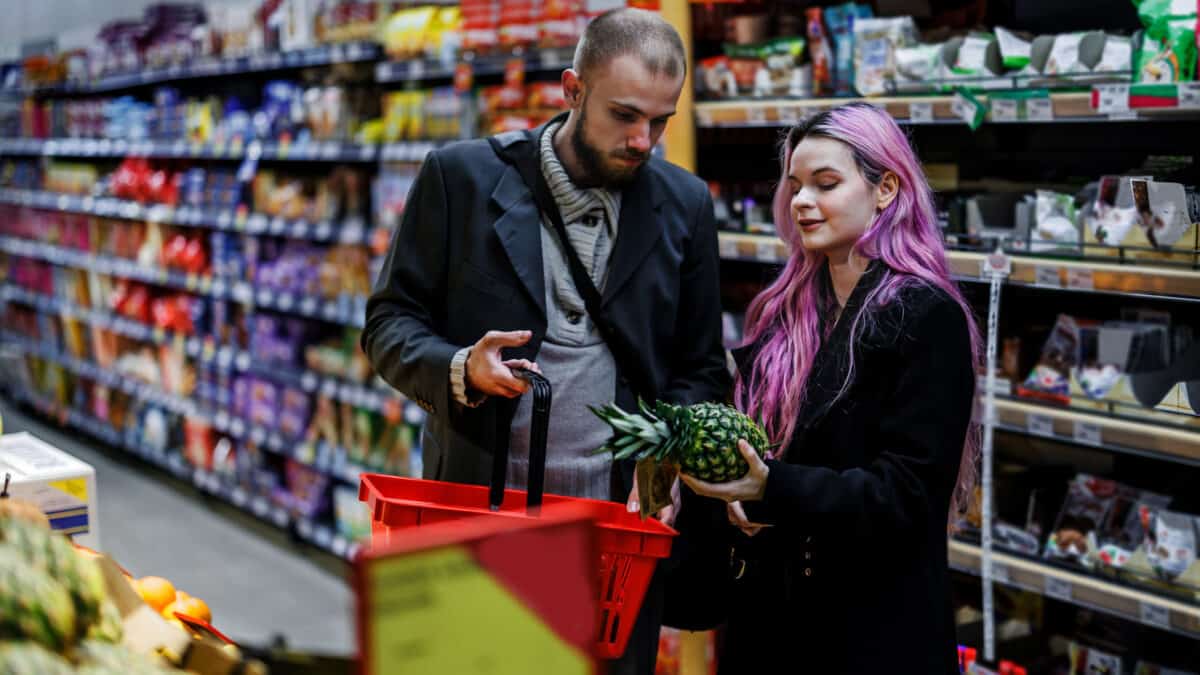
    A photo of a young couple who are purchasing fruits and vegetables at a market shop.

    In the competitive world of retail, strategic financial management is key to maintaining a strong market position.

    Coles Group Ltd (ASX: COL), one of Australia’s leading supermarket chains, has navigated this landscape with operational strategies and financial manoeuvres.

    However, in today’s financial landscape, characterised by rising interest rates, the importance of thorough balance sheet analysis has never been greater. Investors are increasingly focusing on the debt levels of companies to assess their financial health and long-term viability. This is because high interest rates can significantly impact a company’s cost of borrowing, cash flow, and overall financial stability.

    With this background, I delve into Coles’ financial health, examine its debt profile, and explore the potential implications in this article.

    Debt-to-equity ratio

    The debt-to-equity ratio is a way to see how much a company is borrowing compared to how much it owns. Think of it like this:

    • Debt is money the company has borrowed and needs to pay back.
    • Equity is money that the company’s owners have put into the business.

    The debt-to-equity ratio compares these two amounts. It shows how much debt the company has for every dollar of equity.

    As at 31 December 2023, Coles has a total debt of $9.4 billion, including lease liabilities of $7.7 billion. Adjusting for its cash and short-term investment balance of $1.1 billion, its net debt reduces to $8.3 billion. The retailer managed to reduce its net debt levels gradually over time, from $9.4 billion in June 2020 to $7.7 billion in December 2023.

    Net debt excluding lease liabilities was $1.2 billion, up $133 million from June 2023 due to increased capital expenditures.

    During this period, Coles’ equity has risen from $2.6 billion to $3.5 billion, indicating its debt-to-equity ratios have improved from 3.6x to 2.4x. In other words, Coles has $2.4 of debt for every $1 of equity.

    This is higher than what I would like to see from a retailer, but it is optimistic that this ratio is improving. This is also slightly better than its rival Woolworths Group Ltd (ASX: WOW) at 2.8x based on its December 2023 financials.

    Is Coles making sufficient profits to cover interest payments?

    Another important metric to measure a company’s financial health is the interest coverage ratio. It is a measure of how easily a company can pay the interest on its debts using its operating income.

    For the last 12 months to December 2023, Coles generated an operating income of $1.7 billion. In fact, its operating profits have stayed consistently between $1.6 billion and $1.8 billion over the last four years.

    From the operating profits, Coles spent $397 million on net financing costs during the same period. This expense has reduced from $431 million in FY20 as its improved debt levels offset the impact of interest rate increases.

    These two figures give us an interest coverage ratio of 4.4x, indicating its current income is sufficient to cover interest expenses.

    On the cash flow side, which can be different from the income statement, Coles makes an operating cash flow of $2.7 billion a year, which has been consistently moving between $2.7 billion and $2.8 billion since FY21. This is sufficient to cover its increased needs for capital expenditure (capex) of $1.7 billion and lease obligations of approximately $900 million a year.

    Foolish takeaway

    In this article, we reviewed a few important metrics to assess the financial health of Coles’ balance sheet.

    While its debt-to-equity ratio appears to be high, the company generates sufficient income to cover debt servicing expenses for now, in my opinion.

    The post Buying Coles shares? Here are key metrics you’ll want to know appeared first on The Motley Fool Australia.

    Should you invest $1,000 in Coles Group Limited right now?

    Before you buy Coles Group Limited shares, consider this:

    Motley Fool investing expert Scott Phillips just revealed what he believes are the 5 best stocks for investors to buy right now… and Coles Group Limited wasn’t one of them.

    The online investing service he’s run for over a decade, Motley Fool Share Advisor, has provided thousands of paying members with stock picks that have doubled, tripled or even more.*

    And right now, Scott thinks there are 5 stocks that may be better buys…

    See The 5 Stocks
    *Returns as of 5 May 2024

    More reading

    Motley Fool contributor Kate Lee has no position in any of the stocks mentioned. The Motley Fool Australia’s parent company Motley Fool Holdings Inc. has no position in any of the stocks mentioned. The Motley Fool Australia has positions in and has recommended Coles Group. The Motley Fool has a disclosure policy. This article contains general investment advice only (under AFSL 400691). Authorised by Scott Phillips.

  • Jeff Bezos has a vision to colonize space with a trillion people. We asked experts to put it to the test.

    Amazon CEO Jeff Bezos
    Jeff Bezos dreams of a future where a trillion humans live inside gigantic space stations floating throughout the solar system.

    • Jeff Bezos dreams of a trillion people living throughout the solar system on gigantic space stations.
    • This is how humanity can thrive without robbing planet Earth of precious resources, in the process, according to Bezos.
    • Business Insider asked experts about how realistic Bezos' plan is. Here's what they said.

    When it comes to space exploration, Jeff Bezos dreams big.

    "I would love to see a trillion humans living in the solar system. If we had a trillion humans, we would have, at any given time, 1,000 Mozarts and 1,000 Einsteins," he told podcaster Lex Fridman in a 2023 interview.

    To realize this dream, Bezos envisions a future beyond his lifetime where humans live on giant space colonies floating through our solar system, not on planets like Mars. "The planetary surfaces are just way too small," to fit everyone, Bezos told Fridman.

    According to Bezos, leaving Earth would enable the human race to grow and thrive without destroying our home planet.

    Business Insider asked four different kinds of experts — from architects to astrobiologists — for their take on Bezos' plan. Here's what they said.

    Jeff Bezos's space colonies would look like cylinders

    blue moon lunar lander BlueOrigin_Colony One
    An artist's concept of an O'Neill space colony, which could theoretically emulate Earth-like living conditions in space.

    In Bezos' futuristic fantasy, we're all kicking back in space stations that look similar to a concept called O'Neill cylinders, named for physicist Gerard K. O'Neill, who first proposed them in the 1970s.

    "The vision of Gerard K. O'Neill is inspiring, but it's absolutely humongous," said Anthony Longman, an independent architect who put together a concept for space habitats designed to house roughly 8,000 people.

    That's notably larger than the International Space Station, which typically has seven astronauts on board at any given time.

    But a space habitat with 8,000 humans is nothing compared to O'Neill colonies that could house several million people and would be about 500 square miles, or as big as San Antonio, TX, inside.

    On the outside, these space colonies would measure 20 miles long, four miles wide, and rotate to generate artificial gravity for the humans onboard.

    O'Neill thought that we could establish natural ecosystems, bodies of water, and even weather systems inside. From there, we could build farms, transit systems, and bustling cities.

    blue moon lunar lander BlueOrigin_Colony Four
    O'Neill space colonies would be large enough to host entire cities, 10,000-foot-tall mountains, and millions of people.

    "I'm not saying they won't be built, but I think it will probably be some hundreds of years before we're able to build anything at that scale," Longman said of the O'Neill colonies.

    Bezos isn't suggesting that people will be living in O'Neill space colonies by the end of the century. Even so, that long-term vision is clearly shaping the present-day goals of Blue Origin, and the commercial space race at large.

    Both Blue Origin and its biggest competitor in the commercial space industry, Elon Musk's SpaceX, are developing technologies that Bezos and Musk hope could, one day, shepherd people to new lives outside of Earth.

    "I won't live long enough to see the fruits of this, but the fruits of this come from building a road to space, getting the infrastructure," Bezos told Fridman.

    Challenges of keeping humans happy and healthy in space

    blue moon lunar lander BlueOrigin_Colony Two
    Ensuring that humans have everything they need to survive and thrive in space would take a feat of science, engineering, and technology, experts say.

    There are many issues to address before we can live on giant space stations and colonize the solar system. But to keep it simple, let's start with the basics: food and reproduction.

    Researchers have grown a few crops on the International Space Station, including tomatoes and lettuce. Although these veggies are grown in different conditions, they appear to be just as nutritious as ones grown on Earth, research shows.

    However, to achieve the scale of agricultural production necessary for an O'Neill colony, "we need to develop these very safe, closed-loop, self-sustainable agricultural systems," said Rebeca Gonçalves, an astrobiologist formerly at the European Space Agency whose research focuses on how we might grow crops off-world, like on Mars.

    plants in space
    Lettuce growing on board the International Space Station is a fresh treat for astronauts who typically eat prepackaged food.

    As for human reproduction in space, Adam Watkins, associate professor of reproductive biology at the University of Nottingham, said we have a long way to go.

    "Giving birth in space — you just don't even want to contemplate the logistics and the difficulties that might be associated with that, let alone if there are any complications associated with it," he said.

    As far as we know, no one has ever had sex in space. And we've certainly never sent a pregnant person to space. The health risks are too high, Watkins said.

    Those risks stand in the way of research that could reveal how space radiation affects a developing fetus. So, scientists aren't sure what the impact would be.

    To eliminate those risks, space colonies would need healthcare systems that are just as equipped to handle reproduction as Earth's are, Watkins said.

    "It's one thing getting people into space, we can do that. That's fairly straightforward." Watkins said, adding that the hard part is "building those entire infrastructure communities where you've got those kinds of support structures in place, fully functioning, tried and tested, I think is a very long way off."

    Escaping Earth's problems may be a 'dangerous illusion'

    "Earthrise" from the moon, taken in 1968.
    "Earthrise" from the moon, taken in 1968.

    Our industrialized presence on the planet is driving climate change, resource scarcity, and a biodiversity crisis. Leaving Earth is a way for humanity to continue on its current path and preserve Earth in the process, according to Bezos.

    "We want to use a lot of energy. We want to use a lot of energy per capita. We've gotten amazing things. We don't want to go backward," he told Fridman.

    But Martin Rees, the United Kingdom's Astronomer Royal who advises the monarchy on astronomical matters, doesn't think that leaving Earth behind is the best option, he told Business Insider.

    Using space as an "escape for the problems we may cause with our own planet," is a "dangerous illusion," he said. "We should look after our own planet. It's the best we've got."

    Saving Earth would be far easier than building Bezos' space colonies, he told BI.

    Even if we never make it to space colonies, the work of researchers studying extraterrestrial colonization could benefit us here on Earth. For example, Gonçalves' research on Martian agriculture could help improve crop resiliency in degraded, sandy soils on our planet, she said.

    "I don't think these O'Neill-type space colonies are going to be nearly as attractive to spend your life on as it is to be living on Earth with its wonderful variety," Rees said.

    Read the original article on Business Insider
  • Trump says Taylor Swift shouldn’t endorse Biden because he ‘doesn’t know how to get off a stage’

    Swift Trump
    Former President Donald Trump questioned how Taylor Swift could support President Joe Biden.

    • Donald Trump questioned why Taylor Swift would support President Joe Biden.
    • The former president made his comments during what was billed as a policy discussion with House Republicans.
    • Swift endorsed Biden in 2020. She hasn't made an endorsement in the 2024 race.

    Former President Donald Trump is starting to get a reputation for commenting on Taylor Swift.

    On Thursday, Trump joined House Republicans for what was billed as a policy discussion to plan for the GOP's agenda if the former president wins in November. The gathering repeatedly went off the rails, according to multiple reports. One of the digressions was Trump's lingering resentment of Swift's support for Biden.

    "Why would she endorse this dope," Trump said, CNN reported. "He doesn't know how to get off a stage."

    https://platform.twitter.com/widgets.js

    Swift endorsed Biden in 2020. She has yet to endorse any candidates in the 2024 cycle. The pop star previously avoided commenting on politics but became increasingly vocal, starting with Republican Sen. Marsha Blackburn of Tennessee's successful candidacy in 2018. Swift's desire to weigh in on the race is detailed in her "Miss Americana" documentary.

    Trump, according to Politico, also noted that while in office he signed a law geared toward helping songwriters. Trump was likely referring to the Music Modernization Act, a 2018 bipartisan law that changed royalties and licensing in light of the streaming era. Artists had pushed to update music copyrights for years.

    This is far from the first time Trump has commented on the world's biggest pop star. According to the forthcoming book about Trump's time as a reality TV star, the former president repeatedly gushed that Swift is "beautiful."

    "I think she's beautiful — very beautiful! I find her very beautiful. I think she's liberal," Trump told author Ramin Setoodeh, according to an early excerpt from "Apprentice in Wonderland: How Donald Trump and Mark Burnett Took America Through the Looking Glass.

    Trump couldn't be accused of being a Swiftie, though. Setoodeh noted that he had to explain that Swift was no longer focused on country music after the former president questioned how a country star could be liberal.

    "She probably doesn't like Trump. I hear she's very talented," Trump said. "I think she's very beautiful, actually — unusually beautiful!"

    Tree Paine, Swift's longtime publicist, did not immediately respond to Insider's request for comment.

    Read the original article on Business Insider
  • A millennial architect and his fiancée turned a triangular car-repair shop into a tiny dream home — take a look

    Architect Richard Brown inside his home (right) and a full view of the triangular house from above (left).
    Architect Richard Brown has been living in a 430-square-foot triangular home for nearly two years.

    • Richard Brown converted a tiny, triangular car-repair shop into a home for himself and his fiancée.
    • The building is 430 square feet, with pointy edges and sharp corners that posed design challenges.
    • But Brown said it's the perfect size and is now set up to be their dream work-from-home space. 

    Academics spend thousands of pages theorizing why most homes are rectangular. Is it that the tools early humans used were bad at carving out curves? Is it influenced by our understanding of math, space, and gravity?

    Whatever the reason, most modern homes are — but, as with most things, there are always outliers.

    Case in point: a triangle-shaped former car-repair shop in London that architect Richard Brown and his fiancée bought for over £200,000, or around $250,000. They then converted the 430-square-foot space into a livable home via a $127,000 renovation, creative thinking, and a lot of elbow grease.

    The triangular home is in the heart of West Hampstead, a northwest London neighborhood where the average house costs roughly £1 million, or around $1.3 million.

    Brown, 37, lives with his fiancée Katrina, who asked that her last name not be used for privacy reasons, in the aptly named Triangle House. The property was recently shortlisted for the 2024 Don't Move, Improve! architectural competition recognizing London's most innovative home redesigns.

    Take a look inside, and learn how the car-repair shop went from grittily industrial to a light, plant-filled home for two.

    The 430-square-foot triangular property wasn't much to look at until Brown came along.
    A bird's-eye view of the Triangle House prior to renovation.
    The space was formerly used as a car repair shop.

    Before they bought the property in 2019, Brown told Business Insider that it was set up as a car mechanic, equipped to service two vehicles.

    At the time, Brown said, Katrina was looking to buy a property after inheriting some money.

    "You'd normally go and find a flat quite far out of London and get it without a mortgage," Brown said.

    However, Katrina, who is a music teacher, thought otherwise when they happened across the 430-square-foot building in West Hampstead.

    The car-repair shop cost over $250,000, but Brown said he and Katrina were instantly taken with it.
    An interior shot of a car garage in London.
    The car-repair shop needed a good amount of work to create the home Brown and his fiancée now live in.

    Brown said West Hampstead is a "valuable area" in London, but it wasn't the neighborhood that swayed them to buy the property.

    "The weird thing is, we weren't that attracted to the area as much as we were to specifically this little project in this little corner," Brown said.

    The couple wanted to renovate the space so that they both could work from home.
    An interior shot of a home shows a desk with two lamps in front of a window looking out onto green bamboo.
    The house is designed to blur the boundaries between a living and a working space.

    Brown is an architect who focuses on public, commercial, and private buildings, and Katrina is a musician who also runs a course that teaches music instructors how to better impart skills to their students.

    Brown loves music and describes himself as an "amateur musician."

    The couple wanted their home to be "clean" and "empty enough" for them to focus on their passions and professions, he said.

    While the house is "tiny," Brown said it's the perfect size for him and Katrina to live and work in.

    Brown also wasn't fazed at the prospect of living in a converted auto-body shop — his last home was a brick shed.
    Richard Brown standing in his triangle-shaped home.
    Brown is used to unique living spaces, having previously lived in warehouses in Hackney, another part of London.

    After moving to East London in the early 2010s, Brown became fascinated with industrial spaces, particularly warehouses, that people were using as living and work spaces.

    "I got really interested in affordability and interested in the way in which people were converting warehouses for creative uses," he said. The experience shaped his architectural style, which he said focuses on using simple, sustainable materials and techniques.

    Prior to the Triangle House, Brown had firsthand experience living and working in an unconventional space. His last home, for example, was a brick shed that he shared with six other people.

    It was a pretty "bare construction," Brown added, but he loved it.

    It took Brown a year to turn the tiny triangular building into his and Katrina's dream home.
    Richard Brown's fiancé Katrina sitting in their triangle-shaped home.
    Brown said he and Katrina drew up a contract when they decided to renovate the car-repair shop.

    Because Katrina bought the property with her inheritance money and Brown was the architect behind the renovation, they decided to draw up a formal contract on paper in case things went, as Brown said, "awry."

    "It was really her money and everything on the line," he added. "It was definitely a client-architect relationship because the project could have obviously defeated us, and we'd still have to deliver."

    Brown also carried out most of the renovations to keep costs down. In total, he said the project cost less than £100,000, or around $128,000.

    "It was under £100,000, mainly because, as a laborer, I wasn't paid," he joked.

    The renovation included putting in a new roof with a skylight and carving out an open-air courtyard.
    A photograph of a triangle-shaped house in London surrounded by a red brick wall.
    A skylight and courtyard allow light to pour into the home.

    Brown and Katrina were willing to move into the car-repair shop in its unrenovated state.

    "We actually just thought we could just come in here and put some windows in and pretty much just occupy it," he said.

    But to get a mortgage on the property as a residential space, he added, they had to make several changes for it to be deemed "properly habitable."

    "That was when we realized, 'Wow, we have to do a lot more work than we thought,'" he recalled. Upgrades included revising the internal layout of the car-repair shop and installing new drainage, windows, and roof.

    To let more light into the home, Brown designed roof skylights over the bathroom and main living space.

    The two doors that rolled up to allow cars to drive into the shop also got makeovers. One became an entrance to the courtyard and the home. The other got transformed into a large bay window facing the street that is also covered in plants.

    One of the biggest challenges was figuring out what to do with the former repair shop's pointy corners.
    A couch, plants, and a bookshelf in a triangle-shaped house.
    Brown's favorite spot in the Triangle House is a corner where he and Katrina take naps and watch TV.

    Designing a home with pointy corners — one of which is at a 40-degree acute angle — is tough, Brown said.

    In fact, he added, he and Katrina went through around 10 design concepts before landing on one in which they planned "something interesting" for each corner of the house.

    One corner holds their small courtyard, full of lush green plants; another houses the only bathroom. The third one, which is also the tightest corner of the property, has an upholstered daybed.

    Brown and Katrina have nicknamed it the "cozy corner."

    "We snuggle up in there, the two of us with the laptop watching Netflix all the time," he said. "It's the place to go at the end of the day and just fall asleep."

    Brown designed a bed that slides into the bedroom wall, creating more floor space.
    the bedroom and bathroom within a triangle-shaped house.
    The couple's bed can be rolled away into the wall of the bedroom.

    Although the couple initially considered designing the house as a studio, Brown said they ultimately decided to create a separate bedroom and bathroom.

    But he had to get creative to maximize each space.

    They dug down to lower the floor in the bedroom, which was "easy enough to do," he added. "And we were like, 'How do we use that extra space? How do we create storage?'"

    The answer, he said, was a slide-away bed. Unlike a Murphy bed, which usually flips into a cabinet, Brown designed the bed to slide underneath an empty cubbyhole beneath the floor of the adjacent room — the bathroom — whenever it isn't being used.

    A motorized system — to simply push a button and send the bed away into the wall — would have been great but costly, Brown added. So instead, he attached wheels to the frame. The couple just has to give it a quick push when they want more floor space in the bedroom.

    "It's never going to go wrong," he said.

    The couple has turned an industrial space into a home suited to both their work and personal lives.
    A bird's-eye view of a triangle-shaped house.
    Converting the car-repair shop cost Brown and his fiancée less than $130,000.

    Brown said his and Katrina's home exemplifies the ethos of most of his architectural projects, which blur the boundaries between living and working spaces.

    Their triangular abode has homey and cozy features, but when needed, it can also be quite a "formal space," he added.

    "When you take away the dining table, fold everything away, and clean it up," he said, it transforms into a triangular space that feels "industrial."

    And even though it's small, Brown said there's plenty of room for the couple to host guests.

    "Two weeks ago, we had seven people over rehearsing for a musical performance for someone's wedding — seven people with instruments in a space that's only 40 square meters," he said. "It worked quite well."

    Read the original article on Business Insider
  • Tim Cook explains why Steve Jobs pulling the first MacBook Air out of an envelope was ‘a huge moment’ for Apple

    Steve Jobs MacBook Air
    Steve Jobs introduced the MacBook Air in 2008.

    • Steve Jobs famously debuted the MacBook Air in 2008 by pulling it out of a manila envelope.
    • Tim Cook said the move "established a characteristic about that device that lives today."
    • The 13-inch MacBook Air is the best-selling laptop in the world today, according to Apple.

    Tim Cook reflected on one of Apple's most iconic product launches ever in a recent interview.

    Steve Jobs famously introduced the world to the MacBook Air in 2008 with a flourish, when he pulled the laptop out of a manila envelope to demonstrate how thin and portable it was.

    Apple CEO Cook talked about the moment's significance in an interview with tech YouTuber Marques Brownlee, also known as MKBHD.

    "That moment of taking it out of the folder established a characteristic about that device that lives today," Cook said. "The first one, it wasn't about how many people buy it, it was about establishing the foundation."

    "It was a huge moment for the company," Cook added.

    [youtube https://www.youtube.com/watch?v=kvfrVrh76Mk?si=EHGdiDrL4zLqpMud&w=560&h=315]

    "It's the world's thinnest notebook," Jobs said while announcing the product in 2008. "It's so thin it even fits inside one of these envelopes that we've all seen floating around the office," he added as he reached for the envelope and opened it to reveal the company's next big thing.

    So thin was the laptop that one former Newsweek reporter at the time, Steven Levy, reported losing his device precisely for that reason.

    "Levy isn't sure exactly what happened to his review machine, but strongly suspects that it was so thin that it got mixed up with a pile of magazines, which either he or his wife threw out," Wired wrote at the time.

    Today, the MacBook Air is one of the world's most popular laptops.

    Apple has said the 13-inch MacBook Air is the best-selling laptop in the world, and the 15-inch model is the world's bestselling 15-inch laptop.

    The company in March announced a new MacBook Air with Apple's proprietary M3 processing chip.

    The 13-inch model of the new MacBook Air measures 0.44 inches wide, while the 15-inch model is 0.45 inches wide, according to Apple. The original MacBook Air from 2008 measured 0.16 inches at its thinnest and 0.76 inches at its thickest.

    The company's latest iPad Pro, introduced in May, is actually the thinnest Apple product ever though, with the 11-inch model measuring 5.3 mm, and the 13-inch model coming in at 5.1 mm.

    The iPad Pro is the thinnest Apple product to date.
    The 2024 iPad Pro is the thinnest Apple product to date.

    Cook also touched on other topics in his interview with Brownlee.

    Asked about his legacy, Cook said he doesn't pay it much attention and that "legacy is something that is defined by other people."

    Cook also spoke about the company's recently unveiled AI, called Apple Intelligence, saying it could mean people actually spend less time on their phones because it could help them complete time-consuming tasks faster.

    Read the original article on Business Insider
  • A consumer-packaged goods giant is harnessing AI to produce more toothpaste and dog food in less time

    Colgate-Palmolive is using AI-powered technology in its factories' manufacturing lines.
    With AI-powered technology, Colgate-Palmolive can optimize quality control in its factories' manufacturing lines.

    • Colgate-Palmolive uses sensors and robotics to speed up quality checks with less human intervention.
    • These tools allow the company to optimize manufacturing at its 49 plants.
    • This article is part of "The Future of Supply-Chain Management," a series on companies' manufacturing and distribution strategies.
    .insider-raw-embed + p { display: none; }
    // The Future of Supply-Chain Management
    const seriesTitle = “The Future of Supply-Chain Management”;
    // Presented by
    const text = “Presented by”;
    // 6622991a49058e669357d0de
    const sponsorLogoID = “6622991a49058e669357d0de”;
    // USPS logo
    const altText = “USPS logo”;
    //https://www.businessinsider.com/category/the-future-of-supply-chain-management
    const hubOrCatURL = “https://www.businessinsider.com/category/the-future-of-supply-chain-management”;

    document.documentElement.classList.add(“gi-sponsor-module”);

    if (
    document.querySelector(“.gi-sponsor-module”) &&
    document.querySelector(“article section:first-of-type”) &&
    !document.querySelector(“.full-bleed-hero”) &&
    !document.querySelector(“.enhanced-story-byline”)
    ) {
    document.querySelector(“.summary-list”).insertAdjacentHTML(
    “beforebegin”,
    `

    `
    );
    }
    if (
    document.querySelector(“.gi-sponsor-module”) &&
    document.querySelector(“.full-bleed-hero”) &&
    document.querySelector(“.enhanced-story-byline”)
    ) {
    document.querySelector(“.enhanced-story-byline”).insertAdjacentHTML(
    “beforeend”,
    `

    `
    );
    }
    if (
    document.querySelector(“.gi-sponsor-module”) &&
    document.querySelector(“.post-meta”)
    ) {
    document.querySelector(
    “.post-meta”
    ).innerHTML = `
    ${seriesTitle}
    `;
    }

    Colgate-Palmolive produces more than 15,000 tubes of toothpaste a minute.

    To ensure the manufacturing line was running properly, an employee would perform quality checks every 30 minutes to make sure that the Colgate toothpaste tube was aligned properly, its seal was sturdy, its artwork was printed properly, and the box's case matched the tube.

    But with new technology investments, sensors, and other digital tools, the company can now conduct quality checks continuously. Similarly, the consumer products giant is rolling out analytical testing for Hill's pet food, using robotics to ensure the quality of the food matches the desired formulation.

    With less human intervention, "people can really focus on the operation of the lines," Luciano Sieber, Colgate-Palmolive's chief supply-chain officer, told Business Insider.

    How COVID changed supply chains for consumer-products giants

    Colgate-Palmolive produces Irish Spring soap, Speed Stick deodorant, and Ajax cleaning supplies at 49 plants, and those products are stocked at close to 200 warehouses globally. Colgate-branded products are found in almost 60% of households worldwide.

    Like other consumer-packaged goods giants, Colgate-Palmolive's supply chain was built on a fairly steady business model. Large volumes of goods are made at its plants, then shipped to warehouses that distribute them to large retailers.

    However, the supply chain is more complex now because consumer shopping patterns have changed. COVID led to a spike in demand at e-commerce stores that sell household goods, even those that were still available at physical stores. Food and personal-care products saw the greatest revenue growth in transitioning to online channels, according to the Commerce Department's International Trade Administration.

    That migration of spending has stuck, even after the pandemic waned, putting greater pressure on consumer brands to ensure their supply chains are as efficient as possible. CPG brands aren't just shipping to large accounts like Walmart and Target. Food and household goods are now coming from a lot more locations to reach shoppers.

    Automation and AI allow for more efficient manufacturing

    Automating Colgate-Palmolive's manufacturing lines helps smooth out location-related variables, the company said.

    In Europe, where product formulas can vary by region, a plant might have hundreds of combinations of packs and formulas, and there are thousands of vendor partners for Colgate's toothpaste, tubes, and containers.

    With artificial intelligence, the plants can use algorithms to optimize the manufacturing plan for all the different toothpastes the company produces.

    "It supports our growth, but also it minimizes the amount of capital expenditure we need to invest in more capacity because we can optimize what we already have," Sieber said.

    Emma Rolfe, Colgate-Palmolive's senior vice president of global supply, demand, and e-commerce, said that leveraging AI helps the company more effectively adjust for changes to the workflow when a new formula is added or capacity requirements change when demand increases locally.

    "That is something that today takes many hours, and you get many different answers depending on who you are," Rolfe said. "AI can help in a more standardized way."

    New AI tools help track and trace goods

    Colgate-Palmolive is piloting digital AI tools, including track-and-trace technology, that can give retailers automatic updates to their product orders, including any delays that might occur during shipping.

    Sales representatives can use a phone to scan a shelf in a store, leverage AI to look for gaps, and determine which items need to be restocked to meet the demand of that store's customer base.

    Last year, the company opened a new Hill's pet-food factory in Kansas, a 365,000-square-foot facility that's Colgate-Palmolive's first "smart" factory, which relies on AI and automation and fewer people. It's allowed the company to shorten its production cycle, create flexibility to innovate new pet-food products, and decrease energy and water use compared to other plants, a press release from the company said.

    "Every single operation, like quality testing, has been automated and that enables for a much more efficient factory," Sieber said.

    As is often the case with AI and automation, new factories like the one in Kansas raise questions about their impact on jobs. But Sieber stresses that humans will always participate in manufacturing.

    "What we find in our most advanced sites is technologies alone, they don't solve everything," Sieber said. Upskilling Colgate-Palmolive's workforce, he said, moves people "away from doing manual work to really using the power of critical thinking and conceptual thinking to improve process performance."

    Read the original article on Business Insider