• Where should I invest in ASX shares when the stock market is at an all-time high?

    Woman looking at a phone with stock market bars in the background.Woman looking at a phone with stock market bars in the background.

    Various stock markets are close to all-time highs. The S&P/ASX 200 Index (ASX: XJO) is close to its recent all-time high, with many ASX shares at a higher valuation.

    The global share market has also been reaching all-time highs. Just look below at the unit price of the exchange-traded fund (ETF) Vanguard MSCI Index International Shares ETF (ASX: VGS).

    Finding opportunities can be trickier when asset prices are high. Buying things at appealing prices can usually give us a better margin of safety. But what are we supposed to do when there’s less margin of safety?

    In my mind, there are three ways to go.

    Look for the pockets of opportunity

    The entire ASX stock market doesn’t move in unison – if the ASX 200 goes up 1%, it doesn’t mean every single business has gone up 1% – some will have increased by 2% or 3% and a few may have gone down. We can still find opportunities among the expensive valuations. There are always some companies that are being underpriced, in my opinion.

    I think the recent strength of the ASX 200 has been driven by the ASX bank share sector, including Commonwealth Bank of Australia (ASX: CBA), Westpac Banking Corp (ASX: WBC), ANZ Group Holdings Ltd (ASX: ANZ) and National Australia Bank Ltd (ASX: NAB).

    Plenty of businesses with good growth prospects aren’t at all-time highs. I’ve been looking at companies like Johns Lyng Group Ltd (ASX: JLG), Metcash Ltd (ASX: MTS), Close The Loop Ltd (ASX: CLG), Accent Group Ltd (ASX: AX1) and Brickworks Limited (ASX: BKW).

    I’m not going to call ASX iron ore shares great opportunities at this stage, though their share prices have fallen amid a decline in the iron ore price. If/when the iron ore price goes below US$100 per tonne on a sustained basis, that could be a more appealing time to invest in names like Rio Tinto Ltd (ASX: RIO) and BHP Group Ltd (ASX: BHP).

    Exchange-traded funds (ETFs)

    If we can’t decide on a particular business to invest in, it could still be a good option to invest in the share market as a whole and hold the ETF for the long term.

    The VGS ETF has hit numerous all-time highs over the past decade – it would have been a mistake never to invest just because it had reached an all-time high in 2017. Of course, there has been volatility along the way, but rising profits have helped push share prices higher over time.

    I’m not saying the global share market is great value today, but I believe the long-term is still promising.

    I’d be willing to invest in the VGS ETF, as well as other ASX-listed ETFs that I think have appealing capital growth potential such as VanEck Morningstar Wide Moat ETF (ASX: MOAT) and Betashares Global Cybersecurity ETF (ASX: HACK).

    Be patient

    The last four years have shown that volatility for the (ASX) stock market is usually never too far away. We don’t need to rush investing, we can be patient and wait until we find something we like.

    Earnings can grow, and/or there could be a fall in share prices in the future.

    Warren Buffett, one of the world’s greatest investors, has said some wise things about this:

    The stock market is a device to transfer money from the impatient to the patient.

    Buffett also once made a comparison between baseball and investing, making the point that you don’t need to swing at every pitch. He said:

    The trick in investing is just to sit there and watch pitch after pitch go by and wait for the one right in your sweet spot. And if people are yelling, ‘Swing, you bum!,’ ignore them.

    Being patient wouldn’t be a bad thing at all with ASX shares.

    The post Where should I invest in ASX shares when the stock market is at an all-time high? appeared first on The Motley Fool Australia.

    Wondering where you should invest $1,000 right now?

    When investing expert Scott Phillips has a stock tip, it can pay to listen. After all, the flagship Motley Fool Share Advisor newsletter he has run for over ten years has provided thousands of paying members with stock picks that have doubled, tripled or even more.*

    Scott just revealed what he believes could be the ‘five best ASX stocks’ for investors to buy right now. We believe these stocks are trading at attractive prices and Scott thinks they could be great buys right now…

    See The 5 Stocks
    *Returns as of 1 February 2024

    (function() {
    function setButtonColorDefaults(param, property, defaultValue) {
    if( !param || !param.includes(‘#’)) {
    var button = document.getElementsByClassName(“pitch-snippet”)[0].getElementsByClassName(“pitch-button”)[0];
    button.style[property] = defaultValue;
    }
    }

    setButtonColorDefaults(“#0095C8”, ‘background’, ‘#5FA85D’);
    setButtonColorDefaults(“#0095C8”, ‘border-color’, ‘#43A24A’);
    setButtonColorDefaults(“#fff”, ‘color’, ‘#fff’);
    })()

    More reading

    Motley Fool contributor Tristan Harrison has positions in Accent Group, Brickworks, Close The Loop, Johns Lyng Group, and Metcash. The Motley Fool Australia’s parent company Motley Fool Holdings Inc. has positions in and has recommended BetaShares Global Cybersecurity ETF, Brickworks, Close The Loop, and Johns Lyng Group. The Motley Fool Australia has positions in and has recommended BetaShares Global Cybersecurity ETF and Brickworks. The Motley Fool Australia has recommended Accent Group, Close The Loop, Johns Lyng Group, Metcash, VanEck Morningstar Wide Moat ETF, and Vanguard Msci Index International Shares ETF. The Motley Fool has a disclosure policy. This article contains general investment advice only (under AFSL 400691). Authorised by Scott Phillips.

    from The Motley Fool Australia https://ift.tt/5KzXjf4

  • Guess which high-flying ASX All Ords stock is crashing 19% today

    a man weraing a suit sits nervously at his laptop computer biting into his clenched hand with nerves, and perhaps fear.

    a man weraing a suit sits nervously at his laptop computer biting into his clenched hand with nerves, and perhaps fear.

    Electro Optic Systems Holdings Ltd (ASX: EOS) shares have returned from a trading halt and crashed deep into the red.

    In morning trade, the high-flying ASX All Ords stock is down 19% to $1.69.

    Though, the defence and space systems technology company’s shares remain up approximately 275% on a 12-month basis despite today’s weakness.

    Why is this ASX All Ords stock crashing?

    The catalyst for this weakness has been the completion of the company’s fully underwritten placement.

    According to the release, Electro Optic Systems has successfully completed a $35 million fully underwritten placement of approximately 20,588,235 new shares to eligible institutional investors at a price of $1.70 per new share.

    This represents an 18.3% discount to where the ASX All Ords stock was trading prior to its halt.

    It will now push ahead with its share purchase plan which aims to raise a further $5 million at the same price as its institutional placement. Though, given today’s decline, it remains to be seen how appealing this will be to shareholders.

    Why is it raising funds?

    Electro Optic Systems advised that it is raising the funds to support future sales growth in key global markets. This is through the investment in long lead time critical supplies, specifically RWS cannons, investment in other long lead time equipment components, and security deposits for bank guarantees.

    The ASX All Ords stock’s managing director and CEO, Dr Andreas Schwer, was pleased with the placement. He said:

    The Placement attracted healthy demand. We are grateful for the ongoing support from our existing institutional shareholders and pleased to welcome a number of new international and local institutional investors to the register. We are delighted to have secured the funding required to support our ongoing growth.

    The post Guess which high-flying ASX All Ords stock is crashing 19% today appeared first on The Motley Fool Australia.

    Wondering where you should invest $1,000 right now?

    When investing expert Scott Phillips has a stock tip, it can pay to listen. After all, the flagship Motley Fool Share Advisor newsletter he has run for over ten years has provided thousands of paying members with stock picks that have doubled, tripled or even more.*

    Scott just revealed what he believes could be the ‘five best ASX stocks’ for investors to buy right now. We believe these stocks are trading at attractive prices and Scott thinks they could be great buys right now…

    See The 5 Stocks
    *Returns as of 1 February 2024

    (function() {
    function setButtonColorDefaults(param, property, defaultValue) {
    if( !param || !param.includes(‘#’)) {
    var button = document.getElementsByClassName(“pitch-snippet”)[0].getElementsByClassName(“pitch-button”)[0];
    button.style[property] = defaultValue;
    }
    }

    setButtonColorDefaults(“#0095C8”, ‘background’, ‘#5FA85D’);
    setButtonColorDefaults(“#0095C8”, ‘border-color’, ‘#43A24A’);
    setButtonColorDefaults(“#fff”, ‘color’, ‘#fff’);
    })()

    More reading

    Motley Fool contributor James Mickleboro has no position in any of the stocks mentioned. The Motley Fool Australia’s parent company Motley Fool Holdings Inc. has positions in and has recommended Electro Optic Systems. The Motley Fool Australia has no position in any of the stocks mentioned. The Motley Fool has a disclosure policy. This article contains general investment advice only (under AFSL 400691). Authorised by Scott Phillips.

    from The Motley Fool Australia https://ift.tt/dmSyf1I

  • Pilbara Minerals shares fall despite downstream deal with Ganfeng Lithium

    Image of young successful engineer, with blueprints, notepad and digital tablet, observing the project implementation on construction site and in mine.

    Image of young successful engineer, with blueprints, notepad and digital tablet, observing the project implementation on construction site and in mine.

    Pilbara Minerals Ltd (ASX: PLS) shares are starting the week in the red.

    In morning trade, the lithium miner’s shares are down 1.5% to $3.85.

    Why are Pilbara Minerals shares falling?

    Investors have been seling the company’s shares today after broad weakness in the lithium industry offset the release of an update on its downstream plans.

    According to the release, Pilbara Minerals and Ganfeng Lithium have executed a binding term sheet to complete a joint feasibility study for a potential 32,000 tonnes per annum (tpa) downstream conversion facility to produce lithium chemicals.

    Ganfeng Lithium is one of the world’s leading lithium chemical converters.

    The feasibility study will also assess production of a potential intermediate lithium chemicals product in Australia to reduce transportation volumes and carbon footprint.

    The study is expected to be completed in the March quarter of 2025 with an option to progress to a final investment decision and formation of a joint venture soon after.

    The release also explains that an agreement has been made on a range of principles which the parties intend to give effect to if the joint venture proceeds. This includes 50:50 ownership, offtake of 300,000 tpa of spodumene concentrate supplied by Pilbara Minerals, and willingness to explore Inflation Reduction Act (IRA) benefits through a project equity sell-down.

    Location

    Part of the study will be focused on assessing the location for the lithium chemical plant.

    While Australia is an option, management advised that it will explore greater geographical diversification in the battery chemicals supply chain.

    It notes that preliminary engagement with several countries has indicated strong interest in establishing lithium chemical production with potential economic, taxation, and funding incentives on offer, together with access to land and offers of assistance with permitting and approvals.

    ‘Delighted’

    Pilbara Minerals’ managing director and CEO, Dale Henderson, was delighted with the news. He said:

    We are delighted to have selected our long-standing customer, Ganfeng, to join us in taking the next step towards a major downstream facility for lithium battery chemicals production. This incremental move supports our strategic aim to capture greater value through the supply chain and realise the benefits of supply chain integration.

    Ganfeng is a leader and major supplier of lithium chemicals globally. Over the course of its 24-year history, Ganfeng has grown extensive global supply chain relationships with many of the major operators in this emerging battery materials industry. Ganfeng has also distinguished itself for its strong R&D capability and operating performance, especially for producing low cost and high-quality lithium chemicals. These attributes, in combination with our strong alignment to maximise shareholder returns, provide a great match to extend our established relationship together.

    Pilbara Minerals shares remain up 12% over the last 12 months.

    The post Pilbara Minerals shares fall despite downstream deal with Ganfeng Lithium appeared first on The Motley Fool Australia.

    Wondering where you should invest $1,000 right now?

    When investing expert Scott Phillips has a stock tip, it can pay to listen. After all, the flagship Motley Fool Share Advisor newsletter he has run for over ten years has provided thousands of paying members with stock picks that have doubled, tripled or even more.*

    Scott just revealed what he believes could be the ‘five best ASX stocks’ for investors to buy right now. We believe these stocks are trading at attractive prices and Scott thinks they could be great buys right now…

    See The 5 Stocks
    *Returns as of 1 February 2024

    (function() {
    function setButtonColorDefaults(param, property, defaultValue) {
    if( !param || !param.includes(‘#’)) {
    var button = document.getElementsByClassName(“pitch-snippet”)[0].getElementsByClassName(“pitch-button”)[0];
    button.style[property] = defaultValue;
    }
    }

    setButtonColorDefaults(“#0095C8”, ‘background’, ‘#5FA85D’);
    setButtonColorDefaults(“#0095C8”, ‘border-color’, ‘#43A24A’);
    setButtonColorDefaults(“#fff”, ‘color’, ‘#fff’);
    })()

    More reading

    Motley Fool contributor James Mickleboro has no position in any of the stocks mentioned. The Motley Fool Australia’s parent company Motley Fool Holdings Inc. has no position in any of the stocks mentioned. The Motley Fool Australia has no position in any of the stocks mentioned. The Motley Fool has a disclosure policy. This article contains general investment advice only (under AFSL 400691). Authorised by Scott Phillips.

    from The Motley Fool Australia https://ift.tt/xwPHMYr

  • Buy Coles and this ASX 300 dividend share

    Middle age caucasian man smiling confident drinking coffee at home.

    Middle age caucasian man smiling confident drinking coffee at home.

    If you’re searching for some income options for your portfolio, then it could be worth checking out the two ASX 300 dividend shares listed below.

    Here’s what analysts are saying about these buy-rated shares:

    Centuria Industrial REIT (ASX: CIP)

    The first ASX 300 dividend share that could be a buy according to analysts is Centuria Industrial.

    It is Australia’s largest domestic pure play industrial property company with a portfolio of 88 high-quality, fit-for-purpose industrial assets. Management notes that approximately 66% of portfolio income is derived from tenants directly linked to the production, packaging and distribution of consumer staples, pharmaceuticals and telecommunications.

    In response to last month’s half-year results, analysts at UBS retained their buy rating and $3.71 price target on its shares.

    As for income, the broker is expecting Centuria Industrial to pay dividends per share of 16 cents in both FY 2024 and in FY 2025. Based on the current Centuria Industrial share price of $3.54, this represents yields of 4.5% in both years.

    Coles Group Ltd (ASX: COL)

    Another ASX 300 dividend share for income investors to look at is supermarket giant Coles.

    Bell Potter is has become a big fan of the company following earnings season. So much so, it has just added the supermarket operator to its preferred list. These are Australian equities that it believes offer attractive risk-adjusted returns over the long term.

    It made the move thanks to a stronger than expected half-year profit and its belief that “management has multiple levers to profit improvement.”

    The broker is now forecasting fully franked dividends of 64 cents per share in FY 2024 and 70 cents per share in FY 2025. Based on the current Coles share price of $16.49, this will mean yields of 3.9% and 4.25%, respectively.

    Bell Potter has a buy rating and $19.00 price target on its shares.

    The post Buy Coles and this ASX 300 dividend share appeared first on The Motley Fool Australia.

    Wondering where you should invest $1,000 right now?

    When investing expert Scott Phillips has a stock tip, it can pay to listen. After all, the flagship Motley Fool Share Advisor newsletter he has run for over ten years has provided thousands of paying members with stock picks that have doubled, tripled or even more.*

    Scott just revealed what he believes could be the ‘five best ASX stocks’ for investors to buy right now. We believe these stocks are trading at attractive prices and Scott thinks they could be great buys right now…

    See The 5 Stocks
    *Returns as of 1 February 2024

    (function() {
    function setButtonColorDefaults(param, property, defaultValue) {
    if( !param || !param.includes(‘#’)) {
    var button = document.getElementsByClassName(“pitch-snippet”)[0].getElementsByClassName(“pitch-button”)[0];
    button.style[property] = defaultValue;
    }
    }

    setButtonColorDefaults(“#0095C8”, ‘background’, ‘#5FA85D’);
    setButtonColorDefaults(“#0095C8”, ‘border-color’, ‘#43A24A’);
    setButtonColorDefaults(“#fff”, ‘color’, ‘#fff’);
    })()

    More reading

    Motley Fool contributor James Mickleboro has no position in any of the stocks mentioned. The Motley Fool Australia’s parent company Motley Fool Holdings Inc. has no position in any of the stocks mentioned. The Motley Fool Australia has positions in and has recommended Coles Group. The Motley Fool has a disclosure policy. This article contains general investment advice only (under AFSL 400691). Authorised by Scott Phillips.

    from The Motley Fool Australia https://ift.tt/cBHjGy2

  • The pros and cons of buying the iShares S&P 500 ETF (IVV) right now

    A young man wearing glasses writes down his stock picks in his living room.A young man wearing glasses writes down his stock picks in his living room.

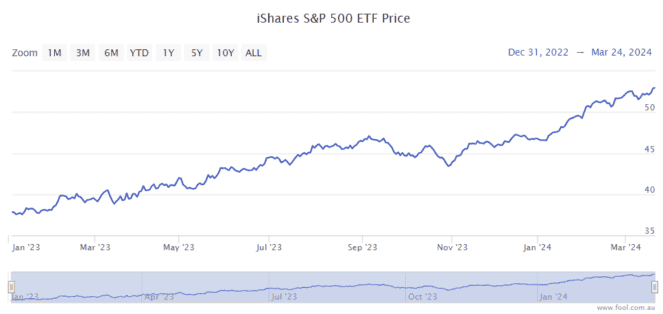
    The iShares S&P 500 ETF (ASX: IVV) has done fabulously well for investors in the past 12 months, up around 34%. The S&P/ASX 200 Index (ASX: XJO) has only risen by around 11% in the same time.

    I would say it’s unlikely that the IVV ETF will increase by another 34% over the next year.

    After such a strong rise, it’s important to ask the question of whether it’s a good time to buy. I’m going to look at the pros and cons of potentially purchasing right now.

    Negatives of buying today

    No business is a buy at any price, nor are the 500 largest US businesses a buy at any price.

    Investing in assets is obviously better at lower prices rather than higher prices. We don’t know when prices will move up or down, but volatility does regularly occur. Buying near all-time highs is not an ideal purchase price.

    It’s possible that a better price could be just around the corner, and we can earn a solid rate of interest income in the meantime.

    Interest rates are very high compared to the last several years, which is meant to drag down on asset prices. Inflation is rising again in the US and this may mean that interest rates have to stay higher for longer than some investors are expecting. Today’s valuations may have gotten ahead of themselves.

    There is also the looming US election that could have an impact on US valuations, depending on what happens.

    Positives of buying the IVV ETF today

    I think one of the most effective investment strategies for regular Aussies is to invest regularly in quality exchange-traded funds (ETFs). This can be called dollar cost averaging. Sometimes it means investing during a bear market at good prices and sometimes it means investing at higher prices.

    Long-term growth over time has meant anyone who bought a decade ago, five years ago or a year ago has seen good capital growth. Capital growth is definitely not certain, particularly over shorter periods of time, but there are positive trends to help.

    Businesses keep offering new and improved services, the population keeps rising, and the inflationary environment is helping (advantaged) companies increase prices. Bigger profits is one of the most helpful things to support higher share prices over time.

    In a decade from now, I think the IVV ETF unit price could be substantially higher than where it is today.

    Foolish takeaway

    If I were regularly investing in the iShares S&P 500 ETF, I’d be willing to invest right now and hold for the long-term.

    However, if I had a one-off $5,000 to invest, I’d be willing to wait for a lower price sometime this year. I still think there are a number of good value ASX shares closer to home.

    The post The pros and cons of buying the iShares S&P 500 ETF (IVV) right now appeared first on The Motley Fool Australia.

    Wondering where you should invest $1,000 right now?

    When investing expert Scott Phillips has a stock tip, it can pay to listen. After all, the flagship Motley Fool Share Advisor newsletter he has run for over ten years has provided thousands of paying members with stock picks that have doubled, tripled or even more.*

    Scott just revealed what he believes could be the ‘five best ASX stocks’ for investors to buy right now. We believe these stocks are trading at attractive prices and Scott thinks they could be great buys right now…

    See The 5 Stocks
    *Returns as of 1 February 2024

    (function() {
    function setButtonColorDefaults(param, property, defaultValue) {
    if( !param || !param.includes(‘#’)) {
    var button = document.getElementsByClassName(“pitch-snippet”)[0].getElementsByClassName(“pitch-button”)[0];
    button.style[property] = defaultValue;
    }
    }

    setButtonColorDefaults(“#0095C8”, ‘background’, ‘#5FA85D’);
    setButtonColorDefaults(“#0095C8”, ‘border-color’, ‘#43A24A’);
    setButtonColorDefaults(“#fff”, ‘color’, ‘#fff’);
    })()

    More reading

    Motley Fool contributor Tristan Harrison has no position in any of the stocks mentioned. The Motley Fool Australia’s parent company Motley Fool Holdings Inc. has positions in and has recommended iShares S&P 500 ETF. The Motley Fool Australia has recommended iShares S&P 500 ETF. The Motley Fool has a disclosure policy. This article contains general investment advice only (under AFSL 400691). Authorised by Scott Phillips.

    from The Motley Fool Australia https://ift.tt/Fdp7PLb

  • Better buy: CBA or Westpac stock?

    Two people comparing and analysing material.Two people comparing and analysing material.

    Commonwealth Bank of Australia (ASX: CBA) stock and Westpac Banking Corp (ASX: WBC) stock have both provided investors with pleasing dividend income over the years. But which ASX bank share is a better buy?

    According to the ASX, CBA’s market capitalisation is $198 billion, while Westpac’s market capitalisation is $93 billion.

    If I were looking to make an investment choice between the two, there are two key areas I’d look at to help me decide.

    Dividend yield

    Shareholder returns are largely made up of two elements – share price movements and dividend payments.

    If I’m going to be a long-term investor, the dividends are going to provide me with ‘real’ returns each year, so that’s going to be a focus.

    While huge dividend yields can come with pitfalls, the banks have generally provided stable payments (aside from the COVID-19 period).

    According to the (independent) projections on Commsec, owners of CBA stock are expected to get an annual dividend per share of $4.55 in FY24 and $4.61 in FY26. This means the grossed-up dividend yield could be 5.5% in FY24 and 5.6% in FY26.

    The Commsec estimates also suggest that owners of Westpac stock could receive an annual dividend per share of $1.44 in FY24 and $1.46 in FY26. That would imply a grossed-up dividend yield of 7.8% in FY24 and 7.9% in FY26.

    On this measure, Westpac is predicted to offer a much better dividend yield.

    Growth relative to valuation

    Ideally, we want to buy businesses at a good price/earnings (P/E) ratio for how quickly they are growing. This can be measured with the PEG ratio.

    For example, being able to buy a business that has a P/E ratio of 20 that is regularly growing profit at around 20% per annum is an appealing long-term investment. That would have a PEG ratio of 1.

    Sometimes a PEG ratio of 1 (or less) is rare to find, particularly when the ASX share market is close to all-time highs. But still, we’re looking for businesses with lower PEG ratios than expensive ones.

    I don’t know what the next results are going to show in terms of profit-making, so we’re going to have to use analysts’ best guesses for CBA stock and Westpac stock.

    Profit may be challenged in the next year or two with banks facing a lot of competition, creating headwinds for the net interest margin (NIM). There’s also the possibility of rising arrears if households struggle.

    The Commsec earnings projection suggests Westpac’s earnings per share (EPS) could drop to $1.86 in FY24 and then grow by 2.2% to FY26. That would put the Westpac stock price at 14 times FY24’s estimated earnings and under 14 times FY26’s estimated earnings.

    CBA is expected to see EPS fall to $5.77 in FY24, drop further in FY25 and then recover to $5.77 again in FY26. That would put the CBA stock price at 20 times FY26’s estimated earnings.

    Foolish takeaway

    Not only is CBA stock on a significantly higher projected P/E ratio, but Westpac’s profit growth is expected to be better than CBA too.

    CBA is a very high-quality bank, but on these numbers, Westpac seems more appealing at the current valuation.

    The post Better buy: CBA or Westpac stock? appeared first on The Motley Fool Australia.

    Wondering where you should invest $1,000 right now?

    When investing expert Scott Phillips has a stock tip, it can pay to listen. After all, the flagship Motley Fool Share Advisor newsletter he has run for over ten years has provided thousands of paying members with stock picks that have doubled, tripled or even more.*

    Scott just revealed what he believes could be the ‘five best ASX stocks’ for investors to buy right now. We believe these stocks are trading at attractive prices and Scott thinks they could be great buys right now…

    See The 5 Stocks
    *Returns as of 1 February 2024

    (function() {
    function setButtonColorDefaults(param, property, defaultValue) {
    if( !param || !param.includes(‘#’)) {
    var button = document.getElementsByClassName(“pitch-snippet”)[0].getElementsByClassName(“pitch-button”)[0];
    button.style[property] = defaultValue;
    }
    }

    setButtonColorDefaults(“#0095C8”, ‘background’, ‘#5FA85D’);
    setButtonColorDefaults(“#0095C8”, ‘border-color’, ‘#43A24A’);
    setButtonColorDefaults(“#fff”, ‘color’, ‘#fff’);
    })()

    More reading

    Motley Fool contributor Tristan Harrison has no position in any of the stocks mentioned. The Motley Fool Australia’s parent company Motley Fool Holdings Inc. has no position in any of the stocks mentioned. The Motley Fool Australia has no position in any of the stocks mentioned. The Motley Fool has a disclosure policy. This article contains general investment advice only (under AFSL 400691). Authorised by Scott Phillips.

    from The Motley Fool Australia https://ift.tt/63IQeXN

  • These are the 10 most shorted ASX shares

    A bored woman looking at her computer, it's bad news.

    A bored woman looking at her computer, it's bad news.

    At the start of each week, I like to look at ASIC’s short position report to find out which shares are being targeted by short sellers.

    This is because I believe it is well worth keeping a close eye on short interest levels as high levels can sometimes be a sign that something isn’t quite right with a company.

    With that in mind, here are the 10 most shorted shares on the ASX this week according to ASIC:

    • Pilbara Minerals Ltd (ASX: PLS) remains the most shorted ASX shares despite its short interest easing again to 20.2%. It seems that short sellers aren’t expecting lithium prices to rebound any time soon.
    • Syrah Resources Ltd (ASX: SYR) has short interest of 17.1%, which is up strongly week on week. Short sellers have been increasing their positions since the graphite producer raised funds yet again earlier this month. They may believe that this points to tough trading conditions being here to stay for a while yet.
    • IDP Education Ltd (ASX: IEL) has 12.8% of its shares held short, which is up strongly week on week again. This language testing and student placement company has been targeted due to regulatory changes to student visas.
    • Flight Centre Travel Group Ltd (ASX: FLT) has seen its short interest rise to 10.9%. Short sellers continue to load up on the travel agent’s shares. They appear to believe that Flight Centre will have a tough second half to FY 2024.
    • Liontown Resources Ltd (ASX: LTR) has seen its short interest jump to 9.8%. Short sellers have been increasing their positions despite the lithium developer announcing debt funding for the Kathleen Valley Lithium Project.
    • Genesis Minerals Ltd (ASX: GMD) has seen its short interest ease again to 8.1%. It seems that short sellers have been closing positions in this gold miner after the precious metal hit a record high.
    • Core Lithium Ltd (ASX: CXO) has short interest of 8%, which is down week on week. Short sellers may have been buying back shares and locking in gains after this lithium miner’s shares crashed deep into the red following its half-year results.
    • Deep Yellow Limited (ASX: DYL) has seen its short interest tumble to 7.5%. Short sellers appear to be closing their position in a hurry amid optimism over rising uranium prices.
    • Australian Clinical Labs Ltd (ASX: ACL) has short interest of 7.5%, which is down week on week. This pathology company has been having a rough time recently due to tough trading conditions.
    • Sayona Mining Ltd (ASX: SYA) has returned to the top ten with short interest of 7.2%. Falling lithium prices have weighed heavily on this lithium miner’s shares and finances. Short sellers don’t appear to believe things will improve in a hurry.

    The post These are the 10 most shorted ASX shares appeared first on The Motley Fool Australia.

    Wondering where you should invest $1,000 right now?

    When investing expert Scott Phillips has a stock tip, it can pay to listen. After all, the flagship Motley Fool Share Advisor newsletter he has run for over ten years has provided thousands of paying members with stock picks that have doubled, tripled or even more.*

    Scott just revealed what he believes could be the ‘five best ASX stocks’ for investors to buy right now. We believe these stocks are trading at attractive prices and Scott thinks they could be great buys right now…

    See The 5 Stocks
    *Returns as of 1 February 2024

    (function() {
    function setButtonColorDefaults(param, property, defaultValue) {
    if( !param || !param.includes(‘#’)) {
    var button = document.getElementsByClassName(“pitch-snippet”)[0].getElementsByClassName(“pitch-button”)[0];
    button.style[property] = defaultValue;
    }
    }

    setButtonColorDefaults(“#0095C8”, ‘background’, ‘#5FA85D’);
    setButtonColorDefaults(“#0095C8”, ‘border-color’, ‘#43A24A’);
    setButtonColorDefaults(“#fff”, ‘color’, ‘#fff’);
    })()

    More reading

    Motley Fool contributor James Mickleboro has no position in any of the stocks mentioned. The Motley Fool Australia’s parent company Motley Fool Holdings Inc. has positions in and has recommended Idp Education. The Motley Fool Australia has recommended Flight Centre Travel Group and Idp Education. The Motley Fool has a disclosure policy. This article contains general investment advice only (under AFSL 400691). Authorised by Scott Phillips.

    from The Motley Fool Australia https://ift.tt/5WBpmDA

  • How much would I have now if I’d invested $10,000 in the BetaShares Nasdaq 100 ETF (NDQ) a year ago?

    A graphic illustration with the words NASDAQ atop a US city and currency

    A graphic illustration with the words NASDAQ atop a US city and currency

    The BetaShares NASDAQ 100 ETF (ASX: NDQ) is one of the most popular exchange traded funds (ETFs) in Australia.

    It isn’t hard to see why.

    As its name implies, this ETF gives investors access to the 100 largest companies on Wall Street’s famous NASDAQ index. Though, one thing the name does not give away is that the fund excludes financial shares.

    And with the NASDAQ the place to be for technology companies when they list on Wall Street, it will come as no surprise to learn that tech stocks make up a significant portion of its holdings.

    At present, 50.7% of its sector allocation is information technology. The next largest allocations are communication services (15.6%), consumer discretionary (15.6%), and consumer staples (6.6%).

    Among its largest holdings are many of the world’s biggest and brightest companies. This includes Microsoft, Nvidia, Apple, Amazon, Meta Platforms, Tesla, Alphabet (Google), Costco, and Starbucks.

    There’s certainly no denying the quality that you will be buying with this ETF. These companies are the crème de la crème of financial markets. But has this translated into good returns for investors over the past 12 months?

    Let’s take a look and see what a $10,000 investment in the BetaShares NASDAQ 100 ETF (NDQ) a year ago would be worth today.

    $10,000 invested in the BetaShares NASDAQ 100 ETF (NDQ) in 2023

    They say the cream always rises to the top and that has definitely been the case over the last 12 months.

    At this point in 2023, I could have picked up this ETF for $29.84 per unit.

    This means that for an investment of $9,996.4, I could have snapped up 335 units.

    The BetaShares NASDAQ 100 ETF (NDQ) is currently changing hands for $42.60, which is almost 43% higher than where it traded a year earlier.

    This means that those 335 units now have a market value of $14,271, which represents a return on investment of close to $4,300 from a $10,000 investment.

    Overall, I think it is fair to say that this ETF has delivered for its shareholders. Long may it continue!

    The post How much would I have now if I’d invested $10,000 in the BetaShares Nasdaq 100 ETF (NDQ) a year ago? appeared first on The Motley Fool Australia.

    Wondering where you should invest $1,000 right now?

    When investing expert Scott Phillips has a stock tip, it can pay to listen. After all, the flagship Motley Fool Share Advisor newsletter he has run for over ten years has provided thousands of paying members with stock picks that have doubled, tripled or even more.*

    Scott just revealed what he believes could be the ‘five best ASX stocks’ for investors to buy right now. We believe these stocks are trading at attractive prices and Scott thinks they could be great buys right now…

    See The 5 Stocks
    *Returns as of 1 February 2024

    (function() {
    function setButtonColorDefaults(param, property, defaultValue) {
    if( !param || !param.includes(‘#’)) {
    var button = document.getElementsByClassName(“pitch-snippet”)[0].getElementsByClassName(“pitch-button”)[0];
    button.style[property] = defaultValue;
    }
    }

    setButtonColorDefaults(“#0095C8”, ‘background’, ‘#5FA85D’);
    setButtonColorDefaults(“#0095C8”, ‘border-color’, ‘#43A24A’);
    setButtonColorDefaults(“#fff”, ‘color’, ‘#fff’);
    })()

    More reading

    John Mackey, former CEO of Whole Foods Market, an Amazon subsidiary, is a member of The Motley Fool’s board of directors. Randi Zuckerberg, a former director of market development and spokeswoman for Facebook and sister to Meta Platforms CEO Mark Zuckerberg, is a member of The Motley Fool’s board of directors. Suzanne Frey, an executive at Alphabet, is a member of The Motley Fool’s board of directors. Motley Fool contributor James Mickleboro has positions in BetaShares Nasdaq 100 ETF. The Motley Fool Australia’s parent company Motley Fool Holdings Inc. has positions in and has recommended Alphabet, Amazon, Apple, BetaShares Nasdaq 100 ETF, Costco Wholesale, Meta Platforms, Microsoft, Nvidia, Starbucks, and Tesla. The Motley Fool Australia’s parent company Motley Fool Holdings Inc. has recommended the following options: long January 2026 $395 calls on Microsoft and short January 2026 $405 calls on Microsoft. The Motley Fool Australia has positions in and has recommended BetaShares Nasdaq 100 ETF. The Motley Fool Australia has recommended Alphabet, Amazon, Apple, Meta Platforms, Nvidia, and Starbucks. The Motley Fool has a disclosure policy. This article contains general investment advice only (under AFSL 400691). Authorised by Scott Phillips.

    from The Motley Fool Australia https://ift.tt/8fKLSWp

  • What is the current lithium price?

    A female miner wearing a high vis vest and hard hard smiles and holds a clipboard while inspecting a mine site with a colleague.

    A female miner wearing a high vis vest and hard hard smiles and holds a clipboard while inspecting a mine site with a colleague.

    A lot of Australian investors have money in the many ASX lithium shares that trade on the local bourse.

    Among the most popular options are the likes of Core Lithium Ltd (ASX: CXO), Liontown Resources Ltd (ASX: LTR), and Pilbara Minerals Ltd (ASX: PLS).

    In addition, Rio Tinto Ltd (ASX: RIO) is pushing forward with its lithium ambitions and recently revealed that it expects its Rincon lithium plant in Argentina to commence production by the end of 2024.

    But unlike oil, gold, copper, and iron ore prices, finding out what the lithium price is can be difficult for investors.

    And given how much of impact it has on the performance of ASX lithium shares, this puts them at a disadvantage.

    So, let’s take a look and see what is going with the lithium price right now.

    The latest lithium price

    According to a note out of Goldman Sachs, there was a bit of movement in spot lithium prices in China last week.

    At the end of last week, lithium carbonate was fetching a price of US$13,786 per tonne. This is down slightly from US$13,808 per tonne a week earlier.

    And if you’re wondering how this compares to recent times. The 2022 average lithium carbonate price was US$63,232 per tonne and the 2023 average was US$32,694 per tonne.

    Moving on to lithium hydroxide. It is currently commanding US$9,616 per tonne. This is down a touch from US$9,656 per tonne the week before.

    This compares to the 2022 average of US$59,190 per tonne and the 2023 average of US$32,452 per tonne.

    Finally, the latest spodumene 6% price is US$1,210 per tonne, which is actually up week on week from US$1,120 per tonne.

    But much like the other lithium types, this remains down materially from the 2022 average of US$4,368 per tonne and the 2023 average of US$3,712 per tonne.

    The post What is the current lithium price? appeared first on The Motley Fool Australia.

    Wondering where you should invest $1,000 right now?

    When investing expert Scott Phillips has a stock tip, it can pay to listen. After all, the flagship Motley Fool Share Advisor newsletter he has run for over ten years has provided thousands of paying members with stock picks that have doubled, tripled or even more.*

    Scott just revealed what he believes could be the ‘five best ASX stocks’ for investors to buy right now. We believe these stocks are trading at attractive prices and Scott thinks they could be great buys right now…

    See The 5 Stocks
    *Returns as of 1 February 2024

    (function() {
    function setButtonColorDefaults(param, property, defaultValue) {
    if( !param || !param.includes(‘#’)) {
    var button = document.getElementsByClassName(“pitch-snippet”)[0].getElementsByClassName(“pitch-button”)[0];
    button.style[property] = defaultValue;
    }
    }

    setButtonColorDefaults(“#0095C8”, ‘background’, ‘#5FA85D’);
    setButtonColorDefaults(“#0095C8”, ‘border-color’, ‘#43A24A’);
    setButtonColorDefaults(“#fff”, ‘color’, ‘#fff’);
    })()

    More reading

    Motley Fool contributor James Mickleboro has no position in any of the stocks mentioned. The Motley Fool Australia’s parent company Motley Fool Holdings Inc. has positions in and has recommended Goldman Sachs Group. The Motley Fool Australia has no position in any of the stocks mentioned. The Motley Fool has a disclosure policy. This article contains general investment advice only (under AFSL 400691). Authorised by Scott Phillips.

    from The Motley Fool Australia https://ift.tt/AVrfTt5

  • 4 ASX growth shares I think will benefit from interest rate cuts in 2024

    A man leans forward over his phone in his hands with a satisfied smirk on his face although he has just learned something pleasing or received some satisfying news.A man leans forward over his phone in his hands with a satisfied smirk on his face although he has just learned something pleasing or received some satisfying news.

    Oh my God, how much are we all looking forward to some interest rate relief?

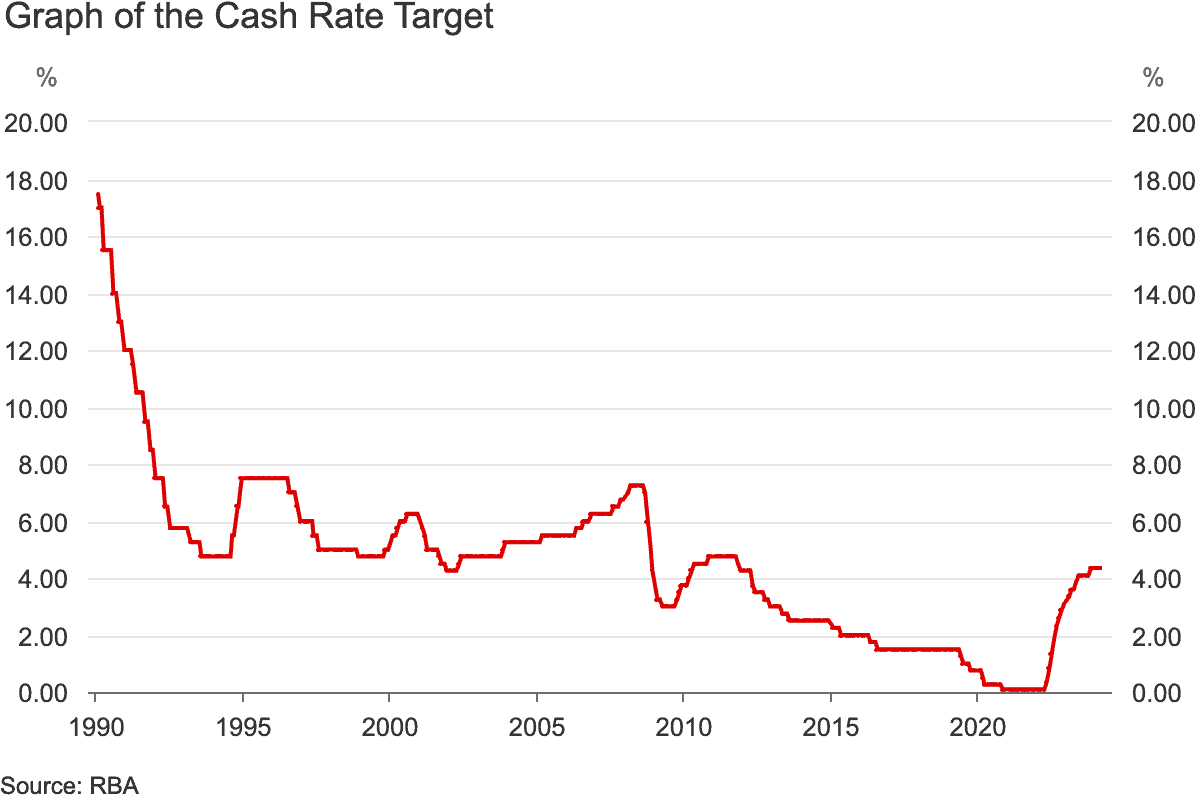
    COVID-19 disrupted our lives in many ways that may never be repeated again, and 12 rate rises in 13 months was one of the consequences.

    It was 13 hikes in 18 months, if you include the last increase in November.

    The Reserve Bank had no choice, as inflation was out of control after the pandemic fattened up people’s savings and disrupted supply chains.

    But now that part of the cycle seems to be nearing the end, mortgage holders, businesses and stock investors alike are pumped for the next interest rate movement to be downward.

    And whenever that happens, I reckon these four ASX growth shares will cash in:

    Institutional investors could be jumping onto this ASX growth stock

    The fortunes of the mining industry is closely tied to how well the economy is doing. 

    That’s because the demand for raw materials heads up as consumers spend more, then that pushes up commodity prices and the valuations of miners.

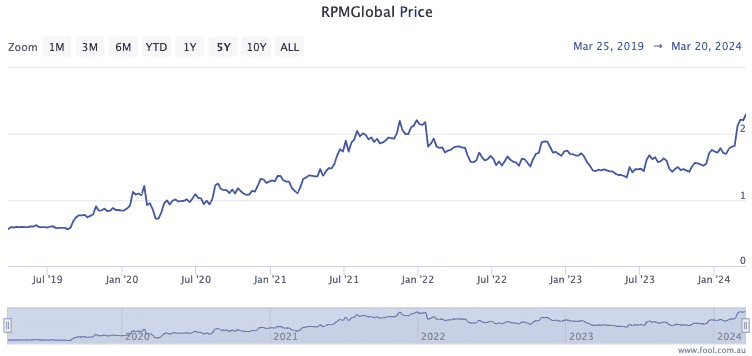
    An excellent way to gain exposure to that upside is RPMGlobal Holdings Ltd (ASX: RUL), which provides technology and related services to mining businesses.

    The tech stock is the Forager Australian Shares Fund’s largest holding, with the team pleased with how reporting season went.

    “Revenue was up 21% and earnings before interest and tax more than tripled, thanks to a relatively fixed cost base,” it stated in a report to clients.

    “We expect revenue to continue growing for a long while yet and profit to keep growing faster.”

    A bonus up the sleeve is that the small cap is now approaching critical mass.

    “The company now has a $500 million market capitalisation and trading volumes in its shares have increased markedly over the past month, making it potentially appealing to a wider range of institutional investors.”

    The prototypical ASX growth stock

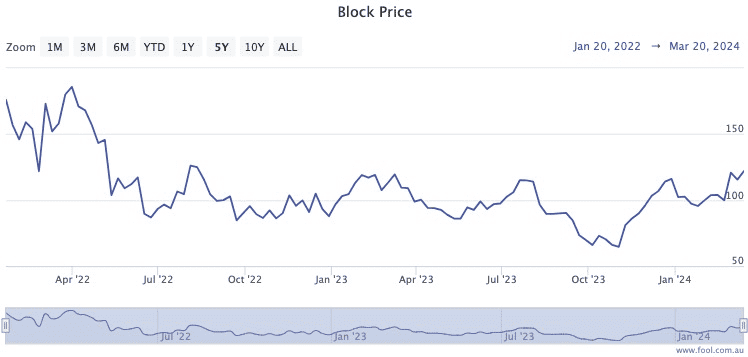
    Fintech Block Inc CDI (ASX: SQ2) is very much a stereotype of a stock that is heavily dependent on interest rates for its outlook.

    It’s a high-growth US tech company, it services the rate-sensitive industry of consumer finance, and it has investments in cryptocurrency, especially Bitcoin (CRYPTO: BTC).

    Not only will it enjoy a huge boost when interest rates come down, it will benefit from being a more efficient business after its efforts to cut costs over the past couple of years.

    And Jay-Z owns Block Inc shares. How can you go wrong?

    Three of five analysts currently surveyed on CMC Invest rate this ASX growth stock as a strong buy.

    Another Yankee on the ASX looking good

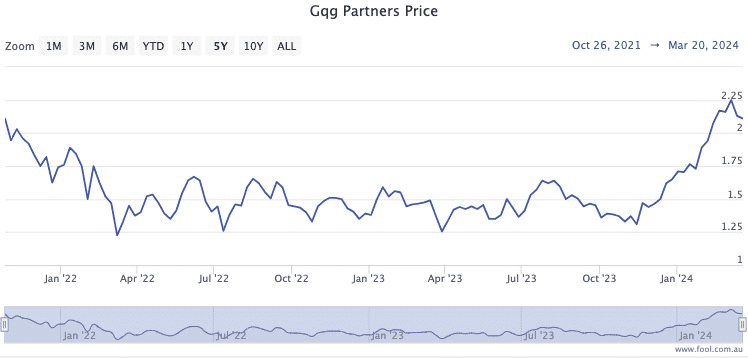
    GQG Partners Inc (ASX: GQG) is an American investment outfit that manages active stock portfolios.

    So it’s no surprise that these ASX growth shares move up and down roughly corresponding to the fortunes of the general share market.

    Therefore, when interest rates are brought down it could be in for a surge push upwards.

    ECP is one of many investment houses that are bullish on the outlook for GQG Partners shares.

    “GQG’s business continues to perform to expectations, with consistent positive monthly net flows from higher fee channels and strong fund performance across all products on a rolling three-year time-frame,” ECP analysts said in a recent memo to clients.

    “This consistent alpha generation gives us confidence GQG can continue to sustain flows as it moves toward utilising its significant fund capacity.”

    Incredibly, the GQG share price has rocketed more than 52% over the past six months.

    Cheaper than its peers

    I mentioned earlier that commodity prices are correlated to the health of the economy.

    Even among minerals, this is the most true of iron ore.

    It is a basic raw material needed for construction, which is one of the primary industries that rise or sink with consumer demand.

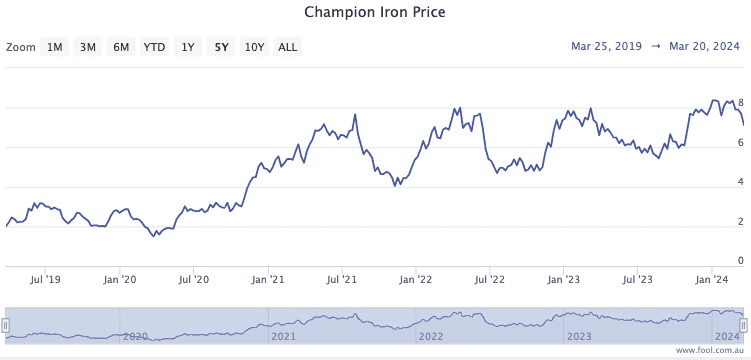
    And among iron ore miners, Champion Iron Ltd (ASX: CIA) is looking bullish.

    CMC Invest currently shows six out of seven analysts rating the stock as a buy.

    “We remain bullish regarding the outlook for iron ore in 2024,” said Fairmont Equities managing director Michael Gable a few weeks ago.

    “This Canadian based producer is trading on valuations which compare favourably to its peers.”

    The post 4 ASX growth shares I think will benefit from interest rate cuts in 2024 appeared first on The Motley Fool Australia.

    Wondering where you should invest $1,000 right now?

    When investing expert Scott Phillips has a stock tip, it can pay to listen. After all, the flagship Motley Fool Share Advisor newsletter he has run for over ten years has provided thousands of paying members with stock picks that have doubled, tripled or even more.*

    Scott just revealed what he believes could be the ‘five best ASX stocks’ for investors to buy right now. We believe these stocks are trading at attractive prices and Scott thinks they could be great buys right now…

    See The 5 Stocks
    *Returns as of 1 February 2024

    (function() {
    function setButtonColorDefaults(param, property, defaultValue) {
    if( !param || !param.includes(‘#’)) {
    var button = document.getElementsByClassName(“pitch-snippet”)[0].getElementsByClassName(“pitch-button”)[0];
    button.style[property] = defaultValue;
    }
    }

    setButtonColorDefaults(“#0095C8”, ‘background’, ‘#5FA85D’);
    setButtonColorDefaults(“#0095C8”, ‘border-color’, ‘#43A24A’);
    setButtonColorDefaults(“#fff”, ‘color’, ‘#fff’);
    })()

    More reading

    Motley Fool contributor Tony Yoo has positions in Bitcoin and Block. The Motley Fool Australia’s parent company Motley Fool Holdings Inc. has positions in and has recommended Bitcoin, Block, and RPMGlobal. The Motley Fool Australia has positions in and has recommended Bitcoin and Block. The Motley Fool Australia has recommended RPMGlobal. The Motley Fool has a disclosure policy. This article contains general investment advice only (under AFSL 400691). Authorised by Scott Phillips.

    from The Motley Fool Australia https://ift.tt/ZAfKIE4