• Educating workplaces about AI will lead to better outcomes, say business leaders

    Human AI interaction event Matt Baker and Dr. Mozziyar Etemadi
    Matt Baker, the senior vice president of AI enablement at Dell Technologies and Dr. Mozziyar Etemadi, the medical director of advanced technologies at Northwestern Medicine discussed the future of workplace AI during BI's event "Human-AI Collaboration: The Key to Workplace Efficiency and Innovation."

    • AI tools have become increasingly popular in the workplace, but adoption can feel daunting.
    • Three business leaders told Business Insider education is the key to unlocking AI's possibilities.
    • The discussion was part of BI's event "Human-AI Collaboration: The Key to Workplace Efficiency and Innovation," presented by Dell Technologies and held on April 23.
    • Click here to learn more.

    Artificial intelligence is virtually everywhere now. Companies are recognizing that they need to adopt the technology in their businesses, but given all the possibilities it offers, it's hard to know where to start.

    During Business Insider's virtual event "Human-AI Collaboration: The Key to Workplace Efficiency and Innovation," presented by Dell Technologies, a panel of business leaders and innovation experts advised workplaces on how to integrate AI into their systems.

    One of the biggest hurdles to adopting AI is demystifying the technology and shifting its narrative to being a learnable tool. "This is well within your reach," said Matt Baker, the senior vice president of AI enablement at Dell Technologies. "And that big ecosystem is something that is approachable today."

    Baker described AI's "embarrassment of riches." The market has exploded with new AI systems in the past year that tackle many different processes from task management to generative writing with competence. But with almost limitless applications, refining the use cases of AI will be the key to guiding its future in the workplace.

    "We are so early in this phase of this really tremendous new technology that it's important to keep an open mind and also to just see what works and what doesn't work," said Dr. Mozziyar Etemadi, the medical director of advanced technologies at Northwestern Medicine. "The last thing we want is for this to create just another big vendor lock-in piece of software that everyone has to use and nobody likes using."

    Baker and Etemadi were joined by Peter Miscovich, the global consulting practice lead, future of work for JLL. Miscovich said the biggest hurdle in AI adoption is figuring out exactly how to use the tech. "The need for training and change management and education could not be greater. I think I use generative AI every day, and it's taken me a year to become comfortable with that intervention and interface," he said.

    At Dell, Baker's team has made education a core aspect of their AI adoption. "We have an entire educational pillar of what we're doing to ensure that we move our team members through that process so that they understand the technology," he said. "It's going to lead to better outcomes for them and ultimately and more importantly, better outcomes for our customers."

    The panel also warned against a timid approach to AI. Demystifying the technology requires fully embracing AI's capabilities. For Dr. Mozziyar, that comes down to the design of the AI itself. "People should design the AI to kind of interact as close as you would interact with a person in a similar role," he said.

    Baker added that building new systems around AI, rather than plugging AI into existing workflows, is crucial: "If it's a garbage process to begin with, you get a garbage outcome."

    There should be intentionality behind these systems as well, Baker continued. "There's a framework for thinking through how you develop your own approach to that so that it's tailored to your company, your business, your organization," he said.

    "We're very strong believers in use-case diagnostics," said Miscovich of his team's approach to configuring better ways to use AI. He explained that they first evaluate "how current processes are organized" before figuring out how generative AI can help make those processes "much more efficient and much more effective."

    JLL recently launched multiple AI initiatives, including an HVAC energy-optimization platform to help reduce energy and service costs, and JLL GPT, a generative AI project built for the commercial-real-estate industry.

    For Dr. Mozziyar, AI's greatest potential in the medical field is its ability to assess patients' conditions. His team is currently using AI tools that can analyze texts of patient appointments to find issues to follow up on. They're also using an in-house AI assistant that helps radiologists catch critical issues.

    "We want the interaction with AI, or the use of AI, to paradoxically remove the barriers between, in our case physician and the computer," said Dr. Mozziyar. "Ideally it's just you and the patient."

    But as the AI landscape accelerates and more companies begin adoption, Baker said that those who get on board now will reap the greatest rewards. "Run your own race, understand how it best applies, but understand it is a race," he said. "So get started."


    Read the original article on Business Insider
  • Trump lawyer blasts ‘The Apprentice’ biopic in legal warning letter, calling it foreign election interference

    the apprentice trump movie
    Jeremy Strong as Roy Cohn and Sebastian Stan as Donald Trump in "The Apprentice."

    • Trump threatened legal action over "The Apprentice" biopic that played at the Cannes Film Festival.
    • It depicts Trump's rise in New York under the tutelage of Roy Cohn.
    • Even if a lawsuit isn't successful, the threat can make it difficult for the movie to be released.

    In the 1970s, the lawyer Roy Cohn taught Donald Trump a simple playbook for political fights: attack, counterattack, and never apologize.

    Trump is employing that strategy on "The Apprentice," an independently produced biopic about him that premiered this week at the Cannes Film Festival.

    In a cease-and-desist letter, one of Trump's attorneys threatened to sue over the movie's release, calling it "direct foreign interference in America's elections."

    "If you do not immediately cease and desist all distribution and marketing of this libelous farce, we will be forced to pursue all appropriate legal remedies," lawyer David Warrington wrote in the letter, obtained Friday by Business Insider.

    The movie depicts the rise of Trump as a New York real estate mogul in the 1970s and 1980s. Trump is played by Sebastian Stan, who is best known for his role in Marvel movies as an American soldier brainwashed by Russians.

    In the biopic, he rises as a New York power broker under the tutelage of Cohn (played by "Succession" actor Jeremy Strong), a colorful and controversial figure in American politics who made his name in the 1950s as a Senate lawyer rooting out Communist Party members with US Sen. Joseph McCarthy.

    According to critics who have seen it, the biopic depicts Trump undergoing liposuction, receiving surgery for hair loss, living with erectile dysfunction, and rejecting his brother, who suffered from alcohol addiction. It also shows Trump raping his first wife, Ivana.

    "The Apprentice," produced by Dublin-based production company Tailored Films, is still seeking deals with distribution companies that would put it in American theaters and on streaming services. Although a lawsuit against the filmmakers may not be successful, the threat of litigation may chill those negotiations.

    The threat of a lawsuit may also work in the other direction, creating a Streisand Effect that draws more eyes to a movie that may have been otherwise relegated to the arthouse film market.

    Warrington works for Dhillon Law, a firm that has represented Trump in several other cases — it collected nearly $900,000 from Trump's donor-funded PACs last year — and has brought defamation lawsuits against journalists in the past.

    The cease-and-desist letter is addressed to director Ali Abbasi and screenwriter Gabriel Sherman, who directed Business Insider to a statement attributed to the movie's producers.

    "The film is a fair and balanced portrait of the former president," the producers. "We want everyone to see it and then decide."

    At a Cannes Film Festival press conference this week, Abbasi said the movie was really about "the way the system is built and the way the power runs through the system," according to the Los Angeles Times, and seemed unconcerned about a potential lawsuit.

    "Everybody talks about him suing a lot of people," he said. "They don't talk about his success rate, though."

    In a statement issued earlier this week, Strong compared Trump's attacks on journalism to rhetoric from Joseph Stalin and Mao Zedong — comparisons Warrington called "unhinged."

    Warrington also criticized Sherman, a Vanity Fair reporter, for making what he said were "racist, Marxist, and otherwise disparaging statements" about Trump in the past.

    "The Apprentice" was partly funded by foreigners, according to Warrington's letter. The letter warns that the movie's release in the United States would amount to "foreign interference in our elections."

    "The Movie, released six months before the November 2024 election, is directed at influencing the 2024 election by falsely defaming President Trump," he wrote.

    Steven Cheung, a spokesperson for Trump's 2024 presidential campaign, said the independently produced movie "doesn't even deserve a place in the straight-to-DVD section of a bargain bin at a soon-to-be-closed discount movie store" and "is election interference by Hollywood elites, who know that President Trump will retake the White House and beat their candidate of choice because nothing they have done has worked."

    "We sent a cease and desist letter to address the blatantly false assertions from these pretend filmmakers," he said in a statement. "This garbage is pure fiction which sensationalizes lies that have been long debunked.

    Read the original article on Business Insider
  • Taylor Swift’s posture-correcting bra costs $185. A posture historian shares why she’s skeptical of ‘one-size-fits-all’ solutions.

    taylor swift eras tour
    Taylor Swift performs in France.

    • While rehearsing for the Eras tour, Taylor Swift wore the $185 posture-correcting Forme Power Bra.
    • The bra is designed to "immediately improve upper body alignment" and fix your posture.
    • Beth Linker, author of "Slouch: Posture Panic in Modern America," is skeptical of such products.

    It appears that even global pop stars may have a hard time standing up straight.

    In Taylor Swift's profile for TIME's 2023 Person of the Year, photos revealed that she wore the Forme Power Bra while rehearsing for the Eras Tour last year. This is a sports bra designed by an orthopedic surgeon to help improve body alignment.

    It comes with a hefty price tag but, at least, for Business Insider's senior editor Conz Preti, it's worth it. "I love this bra so much," Preti said after wearing it for nine months to help prevent her shoulders from hunching forward too much when playing tennis.

    Woman posing for selfie
    The author, after a workout, wearing the Forme bra.

    For $185, wearers should feel their upper body alignment "immediately improve" as the bra "activates and supports key muscle groups, helping guide the body into proper alignment naturally, without any discomfort," according to Forme's website.

    This bra isn't the only posture-fixing product on the market. In fact, there's an entire industry built around posture-enhancing devices and fitness programs, totaling $1.25 billion spent annually worldwide, Beth Linker reported in her new book "Slouch: Posture Panic in Modern America."

    If you find that one of these products works for you, then go ahead and use it, Linker said. But otherwise, she advised against shopping for a quick solution because you risk wasting money and injuring yourself while using a product that may not be right for you.

    Linker is an author, medical historian, and former physical therapist. In "Slouch," she takes readers on a journey through the history of our societal obsession with good posture. From her point of view, trying to fix posture with pricey, one-step products isn't the best approach.

    "The kind of bra that Taylor is wearing is incredibly expensive," Linker told BI. Companies can get away with marking up products like this by promising that they'll fix posture, she said, but she's not convinced they'll work for everyone. Forme didn't respond to Business Insider's request for comment.

    Why she's skeptical

    bad posture
    Posture-fixing products may not work for everyone, and could even cause injury if they aren't properly suited to the user.

    Linker considers posture-fixing products like Taylor Swift's bra to be "one-size-fits-all solutions." They're designed to work for everybody, and that's where Linker takes issue.

    These products don't account for the unique, individual physiological characteristics, lifestyle choices, and injuries that could be contributing to a person's "bad" posture.

    A quick Google search for "posture-fixing products" yields countless results, ranging in price from a few bucks to a few hundred dollars. For example, you can buy a $16 harness-like posture corrector that uses compression to align the spine, kind of like Swift's bra. Or, you can opt for a bigger purchase, like this $349 "posture pump" that inflates when you lie down on it to align, decompress, and lubricate the spine, according to posturepump.com.

    Before purchasing one of these products, Linker recommended asking yourself whether your posture really needs fixing in the first place.

    The idea that slouching is bad for your health and well-being isn't grounded in science, but rather decades of "cultural shaming," which Linker outlines in her book. She explains the history and stigma against "bad" posture in the US.

    "What I show in the book is that there have been a few studies that indicate that there isn't solid scientific evidence to show that a person who slouches more is more likely to have back pain," she said.

    However, if you are experiencing pain or discomfort and think improving your spinal alignment will help, here are some things you can do.

    The right way to care for your spine

    Senior businessman doing a yoga exercise in office - stock photo
    Getting up and moving throughout the work day is a good way to keep back pain at bay, Linker said.

    Linker recommended consulting a doctor, physical therapist, or body-work professional before beginning to work on your posture. That way, they can expertly assess your unique needs and help you achieve your specific goals safely.

    "Each person's back pain is individualistic," she said.

    Incorporating movement into your daily routine is also a great way to reduce back pain and create better spinal alignment, Linker said, especially for those who sit for long hours during the work week. It's important to get up from your desk, walk around, stretch, and make sure you're not sitting in the same position for too long.

    For example, she always keeps a standing desk handy not because standing is necessarily "better" than sitting, but because it gives her the option of changing positions throughout the day.

    She also suggests practicing yoga or pilates. These types of exercise stretch and strengthen the muscles throughout the entire body, and can foster healthy alignment.

    The bottom line: be skeptical of one-size-fits-all products that promise to "fix" your posture, Linker said. Instead, seek professional advice, move your body, and don't obsess over achieving perfect posture.

    Read the original article on Business Insider
  • Buy and hold these ASX ETFs for 10 years

    ETF with different images around it on top of a tablet.

    I think that buy and hold investing is one of the best ways to grow your wealth.

    This is because the longer you are able to leave your money in the market, the longer it has to compound.

    Compounding is what happens when you earn interest on top of interest or returns on top of returns.

    It explains why a 10% annual return turns $10,000 into $11,000 after one year and then almost $70,000 in 20 years.

    The only problem is that not everybody is confident enough to pick stocks to invest in for the long term. But don’t worry because exchange-traded funds (ETFs) are here to make life easy for investors.

    They remove the need to pick individual stocks and allow investors to buy large groups of them with a single click of a button.

    But which ASX ETFs could be good buy and hold options for investors? Let’s take a quick look at three:

    BetaShares NASDAQ 100 ETF (ASX: NDQ)

    The BetaShares NASDAQ 100 ETF could be a great buy and hold investment option for investors.

    It provides investors with exposure to many of the best companies in the world. These are the 100 largest (non-financial) stocks on Wall Street’s famous NASDAQ index.

    This is where you will find tech giant such as Amazon, Apple, Microsoft, Nvidia, and Tesla, as well as well-known non-tech companies including coffee chain behemoth Starbucks, energy drink seller Monster Beverage, yoga retailer Lululemon, and drinks giant PepsiCo.

    Collectively, these 100 companies have very bright long term outlook. It is for this reason that it could make the ETF a great place to invest over the next decade and even beyond.

    VanEck Vectors Morningstar Wide Moat ETF (ASX: MOAT)

    The VanEck Vectors Morningstar Wide Moat ETF could be another ASX ETF to buy and hold.

    In fact, it could be the epitome of what investors should look for when making long term investments.

    That’s because this ETF aims to invest in the style of Warren Buffett, who is the unofficial king of buy and hold investing. He has smashed the market over multiple decades thanks to his focus on buying high quality companies with sustainable competitive advantages and fair valuations.

    These are the types of companies that you will find in the VanEck Vectors Morningstar Wide Moat ETF.

    Vanguard All-World ex-U.S. Shares Index ETF (ASX: VEU)

    Finally, another buy and hold option could be the Vanguard All-World ex-U.S. Shares Index ETF.

    This ASX ETF offers investors easy access to a massive ~3,500 companies listed in developed and emerging markets across the globe (but excluding the United States).

    Among the ASX ETF’s holdings you will find quality companies such as HSBC Holdings, LVMH Moet Hennessy Louis Vuitton, Samsung, and Taiwan Semiconductor.

    The post Buy and hold these ASX ETFs for 10 years appeared first on The Motley Fool Australia.

    Should you invest $1,000 in Vaneck Investments Limited – Vaneck Vectors Morningstar Wide Moat Etf right now?

    Before you buy Vaneck Investments Limited – Vaneck Vectors Morningstar Wide Moat Etf shares, consider this:

    Motley Fool investing expert Scott Phillips just revealed what he believes are the 5 best stocks for investors to buy right now… and Vaneck Investments Limited – Vaneck Vectors Morningstar Wide Moat Etf wasn’t one of them.

    The online investing service he’s run for over a decade, Motley Fool Share Advisor, has provided thousands of paying members with stock picks that have doubled, tripled or even more.*

    And right now, Scott thinks there are 5 stocks that may be better buys…

    See The 5 Stocks
    *Returns as of 5 May 2024

    More reading

    HSBC Holdings is an advertising partner of The Ascent, a Motley Fool company. John Mackey, former CEO of Whole Foods Market, an Amazon subsidiary, is a member of The Motley Fool’s board of directors. Motley Fool contributor James Mickleboro has positions in BetaShares Nasdaq 100 ETF. The Motley Fool Australia’s parent company Motley Fool Holdings Inc. has positions in and has recommended Amazon, Apple, BetaShares Nasdaq 100 ETF, Lululemon Athletica, Microsoft, Monster Beverage, Nvidia, Starbucks, Taiwan Semiconductor Manufacturing, and Tesla. The Motley Fool Australia’s parent company Motley Fool Holdings Inc. has recommended HSBC Holdings and has recommended the following options: long January 2026 $395 calls on Microsoft and short January 2026 $405 calls on Microsoft. The Motley Fool Australia has positions in and has recommended BetaShares Nasdaq 100 ETF. The Motley Fool Australia has recommended Amazon, Apple, Microsoft, Nvidia, Starbucks, and VanEck Morningstar Wide Moat ETF. The Motley Fool has a disclosure policy. This article contains general investment advice only (under AFSL 400691). Authorised by Scott Phillips.

  • Could the Xero share price leap a further 35% as profits begin to flow?

    A happy elderly couple enjoy a cuppa outdoors as the woman looks through binoculars.

    The Xero Limited (ASX: XRO) share price has climbed 7% since the release of its FY24 result, but one expert thinks the ASX tech share‘s rally has much further to go.

    Xero’s 2024 financial year report covered the 12 months ending 31 March 2024 and included several positives. Let’s recap some of the main metrics and then look at how high one leading broker thinks the Xero share price can go from here.

    FY24 earnings recap

    Xero reported a 22% jump in operating revenue to NZ$1.7 billion, which drove adjusted earnings before interest, tax, depreciation and amortisation (EBITDA) higher by 75% to NZ$526.5 million. Strong profit growth is a helpful tailwind for the Xero share price.

    The company also saw a boost in some of its profit margins, including Xero’s gross profit margin, which increased to 88.2%, up from 87.3%. The free cash flow margin lifted to 20%, up from 7.3%.

    Impressively, Xero’s financials saw an annual revenue increase of NZ$314 million, with the business adding NZ$240 million of free cash flow, NZ$198 million of operating profit and NZ$288 million of net profit after tax (NPAT).

    The extra revenue generated excellent incremental profit, which is a promising sign of how profit might grow in the coming years as the company continues to scale.

    However, Xero did note it was likely to exhaust its accumulated New Zealand tax losses during the “strategic period” of FY25 to FY27, which suggests its NPAT growth may be somewhat slower once it has utilised the NZ$193 million losses balance as of 31 March 2024.

    The company’s subscriber-related metrics remain strong. Its subscriber retention rate remained above 99%, which is exceptionally high. Total subscribers increased 11% in FY24 to 4.16 million, and the average revenue per user (ARPU) rose 14% to NZ$39.29.

    Bullish price target on the Xero share price

    Goldman Sachs has reiterated its view on Xero as a conviction buy and lifted its price target to $164.00, as covered by my colleague James Mickleboro.

    The analysts at Macquarie are also bullish about the prospects for the Xero share price. Macquarie increased its price target on the ASX tech share by 17% to $180.70, according to reporting by The Australian. That implies the Xero share price could rise by around 35% in the next year.

    Considering the long-term average return of the ASX share market is around 10%, the forecast rise for Xero shares could see the company substantially outperform the market if Macquarie proves to be right.

    Xero share price snapshot

    The Xero share price has increased around 17% since the start of 2024, as shown in the chart below. In contrast, the S&P/ASX 200 Index (ASX: XJO) is only 1.3% higher in 2024 to date.

    The post Could the Xero share price leap a further 35% as profits begin to flow? appeared first on The Motley Fool Australia.

    Should you invest $1,000 in Xero Limited right now?

    Before you buy Xero Limited shares, consider this:

    Motley Fool investing expert Scott Phillips just revealed what he believes are the 5 best stocks for investors to buy right now… and Xero Limited wasn’t one of them.

    The online investing service he’s run for over a decade, Motley Fool Share Advisor, has provided thousands of paying members with stock picks that have doubled, tripled or even more.*

    And right now, Scott thinks there are 5 stocks that may be better buys…

    See The 5 Stocks
    *Returns as of 5 May 2024

    More reading

    Motley Fool contributor Tristan Harrison has no position in any of the stocks mentioned. The Motley Fool Australia’s parent company Motley Fool Holdings Inc. has positions in and has recommended Xero. The Motley Fool Australia has positions in and has recommended Xero. The Motley Fool has a disclosure policy. This article contains general investment advice only (under AFSL 400691). Authorised by Scott Phillips.

  • Jury in trial of tech CEO Fahim Saleh’s killer hears grisly 911 call: ‘His head is not there anymore!’

    Fahim Saleh, center, is shown with surveillance stills and images of the type of Taser and electric saw that prosecutors say were used in his murder and dismemberment.
    Fahim Saleh, center, is shown with surveillance stills and photos of the kind of Taser and electric saw that prosecutors say were used in his murder and dismemberment.

    • An ex-personal assistant accused in the Gokada CEO's 2020 murder is on trial in NYC.
    • Tyrese Haspil was in the throes of  "extreme emotional disturbance," his lawyer told jurors Friday.
    • Jurors then heard the 911 call of a cousin who discovered Fahim Saleh's remains in his apartment.

    A Manhattan jury on Friday heard the harrowing 911 call of a woman who discovered the dismembered body of her cousin, Gokada ride-share CEO Fahim Saleh.

    "Oh my God. Oh my God," the woman cries in the 911 call, after finding Saleh's torso facing up in a pool of blood on his living room floor.

    "Is he breathing?" the operator asks, to which the woman sobs, "No! His head is missing, his arms are missing, and his legs are missing!"

    Saleh, a Bangladeshi-American, was an admired international entrepreneur who had made millions through Gokada, his Nigeria-based motorbike ride-share and delivery service.

    Manhattan prosecutors say the tech entrepreneur was murdered and sawed into pieces in July, 2020 by Tyrese Haspil, his embezzling former personal assistant, who acted after weeks of planning.

    Security footage — undisputed by the defense — shows Haspil shocking his victim from behind with a Taser as the elevator doors open into Saleh's seventh-floor condominium.

    "There was quite a struggle," prosecutor Linda Ford told jurors of Saleh's death by multiple stab wounds.

    Tyrese Haspil, accused of the 2020 Manhattan murder-dismemberment of tech CEO Fahim Saleh.
    Tyrese Haspil, accused of the 2020 Manhattan murder-dismemberment of tech CEO Fahim Saleh, with lawyer Sam Roberts, right.

    The defense concedes that Haspil, 25, stole from and then killed and dismembered his ex-boss.

    But Haspil suffered an extreme emotional disturbance during the weeks it took to plan, execute, and try to cover up the killing, defense lawyer Sam Roberts told jurors in opening statements Friday.

    That "disturbance" lay latent after Haspil's traumatic childhood — and was then triggered by the thought of losing his girlfriend, Marine Chavaux, who was soon to return to her native France, Roberts said.

    Realizing that his $400,000 embezzlement had been discovered, but desperate to lavish more gifts on Chavaux in time for her 22nd birthday, a "disturbed" Haspil believed his only options were "suicide or homicide," Roberts told jurors.

    Selling this defense may prove a tall order. Prosecutors say Haspil had purchased his Taser a full month before the murder and spent the three days after the murder methodically dismembering his victim and shopping with his victim's credit card at luxury retail stores.

    Also on Friday, jurors saw photos of a shopping bag from Christian Louboutin that police recovered from the $18,000-a-month Airbnb where Haspil was arrested.

    If the jury believes Haspil's defense, he'd be guilty of manslaughter instead of murder, and would face as little as five years in prison.

    The 911 tape

    "Miss? Miss? Who's the ambulance for?" the 911 operator asks Saleh's cousin in the recording played Friday.

    Prosecutors have referred to the cousin only as "Person 1" in court papers. Business Insider is withholding her name for privacy.

    "Fahim Saleh!" she answers between gasps.

    "For who?" the operator asks, unable to understand her.

    "Fahim Saleh!" the cousin shouts again. "Oh my God. Oh my God."

    "Miss, OK, take a deep breath," the operator can be heard telling her.

    "His body!" the cousin sobs. "His body is dismembered!"

    Fahim Saleh
    Fahim Saleh embraces a friend

    This is the point where the operator, apparently having trouble understanding, asks if the patient is breathing, and the cousin tells her that Saleh's head, arms, and legs are missing.

    "They like — I can't — they like, they cut it off," the cousin sobs.

    "Who cut it off?" asked the operator, who has meanwhile dispatched first responders to the scene.

    "I don't know!" the cousin gasps. "I just came to check in on him."

    "It's just you there, right?" the operator asks.

    "I left because honestly it looked — there's just like black garbage bags everywhere," the cousin answers.

    Prosecutors told jurors that these bags held Saleh's head and limbs.

    "There was an electric saw next to his body," the cousin then tells the operator.

    A crime scene photo showing tech CEO Fahim Saleh under attack by his killer just inside the victim's Manhattan condominium.
    A crime scene photo showing tech CEO Fahim Saleh under attack by his killer just inside the victim's Manhattan condominium.

    "OK, they're already on their way," the operator says. "OK? Just stay on the line with me. OK? Just try to take deep breaths," she says, before adding — apparently still confused — "So he's passed away though, correct?"

    "His head is not there anymore!" the cousin exclaims, breaking into fresh sobs.

    "His head is cut off?" asks the now shocked-sounding operator. "Yes," the cousin tells her. "His head is not here."

    "They're coming. They're coming," the 911 operator consoles the cousin. "Do you want to wait outside?"

    "I can wait inside the lobby," the cousin answers. "Honestly, what if they come back and take his body?"

    Extreme-emotional-disturbance defenses are usually reserved for sudden acts of violence, though there are exceptions.

    In 2014, wealthy Manhattan socialite Gigi Jordan was found guilty of first-degree manslaughter, not murder, after poisoning her eight-year-old autistic son. Her lawyers argued she acted under extreme emotional distress as she planned and executed the boy's death.

    The prosecution case against Haspil continues next week.

    Read the original article on Business Insider
  • Boeing says its spacecraft is leaking, but it’s still safe to launch US astronauts next week

    two astronauts in blue spacesuits inside a spaceship holding papers looking at a dashboard
    NASA astronauts Butch Wilmore and Suni Williams conduct suited operations in the Boeing Starliner simulator at NASA's Johnson Space Center.

    • NASA and Boeing are proceeding with a space launch after discovering a helium leak.
    • Starliner's maiden voyage will carry two US astronauts.
    • Boeing VP Mark Nappi said the design vulnerability was "not a safety of flight issue."

    NASA and Boeing said a helium leak in its Starliner spacecraft is "stable" and won't prevent two astronauts from launching into space next week in a mission more than a decade in the making.

    NASA and Boeing execs said the cause of a leak in Starliner's propulsion system had been identified in a press conference on Friday, and it was safe to fly.

    A previous launch attempt was scrubbed on May 6 hours before takeoff due to a separate issue — after which the "small" leak was discovered on a flange on one of Starliner's thrusters, NASA program manager Steve Stich said during the press conference.

    Days after it was discovered, "we proved to ourselves that the leak was stable," added Boeing VP Mark Nappi.

    He said the design vulnerability was "very remote" and "not a safety of flight issue."

    "We can handle up to four more leaks," Stich said, "and we can handle this particular leak if that leak rate were to grow even up to 100 times."

    Now, Boeing's Starliner is set to take NASA astronauts Butch Wilmore and Suni Williams to the International Space Station (ISS) on June 1 and then back after a one-week stay.

    There are backup launch opportunities on June 2, June 5, and June 6.

    Boeing is playing catch-up with SpaceX, whose Dragon spacecraft has been transporting astronauts to and from the ISS since 2020. Starliner's maiden voyage comes amid ongoing scrutiny of Boeing's safety culture around its separate passenger plane division.

    The Starliner previously encountered issues on uncrewed test flights in 2019 and 2021.

    A Boeing spokesperson referred Business Insider to Friday's press conference. NASA did not immediately respond to a request for comment from BI

    Read the original article on Business Insider
  • Why Google is (probably) stuck giving out AI answers that may or may not be right

    A glitching Google search bar
    Google has debuted its "AI Overview" feature — and it's not going perfectly.

    • Google is giving users bad, AI-generated answers. Again.
    • In February, when this happened before, Google shelved the faulty AI product behind the results.
    • But this time feels different — Google has basically committed to this idea as the future of the company.

    Step 1: Google rolls out a new, AI-powered search product.

    Step 2: Users quickly find the product's flaws, and point them out with social media posts, which become news stories.

    Step 3: Google admits that its new, AI-powered search product is fundamentally flawed, and puts it on ice.

    Yup, we've seen this drill before. Back in February, Google was shamed into shelving an image-generating feature for its AI chatbot.

    Now we are two steps into the same process: Google is widely rolling out its "AI Overview" feature, which replaces its usual answer to search queries — a list of links to sites where you might find the actual answer you want — with an AI-generated answer that tries to summarize the content on those sites. And people are finding examples of Google generating answers that are wrong, and sometimes comically bad.

    Which is why colleague Katie Notopoulos constructed, and then ate, a pizza made with glue. (Bless you, Katie! This is truly heroic stuff, and I hope you spend your hazard pay wisely. (We do get hazard pay, right?))

    So here's the two trillion-dollar question: Is Google going to have to backtrack on this one, too?

    No, says Google, which argues that the dumb answers it has been generating are few and far between. And that most people don't know or care about search answers that tell people how many rocks to eat. Or that you should stare into the sun for 5 to 15 minutes — unless you have darker skin, in which case you can go for twice as long.

    A Google answer to a question about staring into the sun.
    Google AI gives a curious answer when asked about staring into the sun.

    And Google also notes that it is quickly swatting down Bad Answers as they crop up. Particularly ones where someone smart enough to use a phone but stupid enough to follow those answers could harm themselves.

    Here's the formal version of that answer, via Google comms person Lara Levin:

    "The vast majority of AI Overviews provide high quality information, with links to dig deeper on the web. Many of the examples we've seen have been uncommon queries, and we've also seen examples that were doctored or that we couldn't reproduce. We conducted extensive testing before launching this new experience, and as with other features we've launched in Search, we appreciate the feedback. We're taking swift action where appropriate under our content policies, and using these examples to develop broader improvements to our systems, some of which have already started to roll out."

    OK.

    But like I've said. We've seen a version of this story before. What happens if people keep finding Bad Answers on Google, and Google can't whac-a-mole them fast enough? And, crucially — what if regular people, people who don't spend time reading or talking about tech news, start to hear about Google's Bad And Potentially Dangerous Answers?

    Because that would be a really, really big problem. Google does a lot of different things, but the reason it's worth more than $2 trillion is still because of its two core products — search, and the ads that it generates alongside search results. And if people — normal people — lose confidence in Google as a search/answer machine …

    Well, that would be a real problem.

    Privately, Googlers are doubling down on the notion that these Bad Answers really are fringe problems. And that, unlike its "woke Google" problem from a few months ago — where there really was a problem with the model Google was using to create images — they say that's not the case here. Google never gets things 100% correct (they say even more quietly) because, in the end, it's still just relying on what people publish on the internet. It's just that some people are paying a lot more attention right now because there's a new thing to pay attention to.

    I'm willing to believe that answer: I've been seeing Google's AI answers in my search results for about a month, and they're generally fine.

    But not every time.

    And the thing that's very different between the old Google results and the new ones is the responsibility and authority Google is shouldering. In the past, Google was telling you somebody else could answer your question. Now Google is answering your question.

    It's the difference between me handing you a map and me giving you directions that will send your car barreling over a cliff.

    You could argue, as my 15-year-old son does (we are weird people so we talk about this stuff at home) that Google shouldn't be replacing its perfectly fine olde-timey search results with AI-generated answers. If people wanted AI-generated answers, they'd go to ChatGPT, right?

    But of course, people going to ChatGPT is what Google is worried about. Which is why it's making this major pivot — to disrupt itself before ChatGPT or other AI engines do.

    You can argue that it's moving too fast, or too sloppily, or whatever. But it's hard to imagine Google walking this one back now.

    Read the original article on Business Insider
  • Buy Rio Tinto and these excellent ASX dividend shares

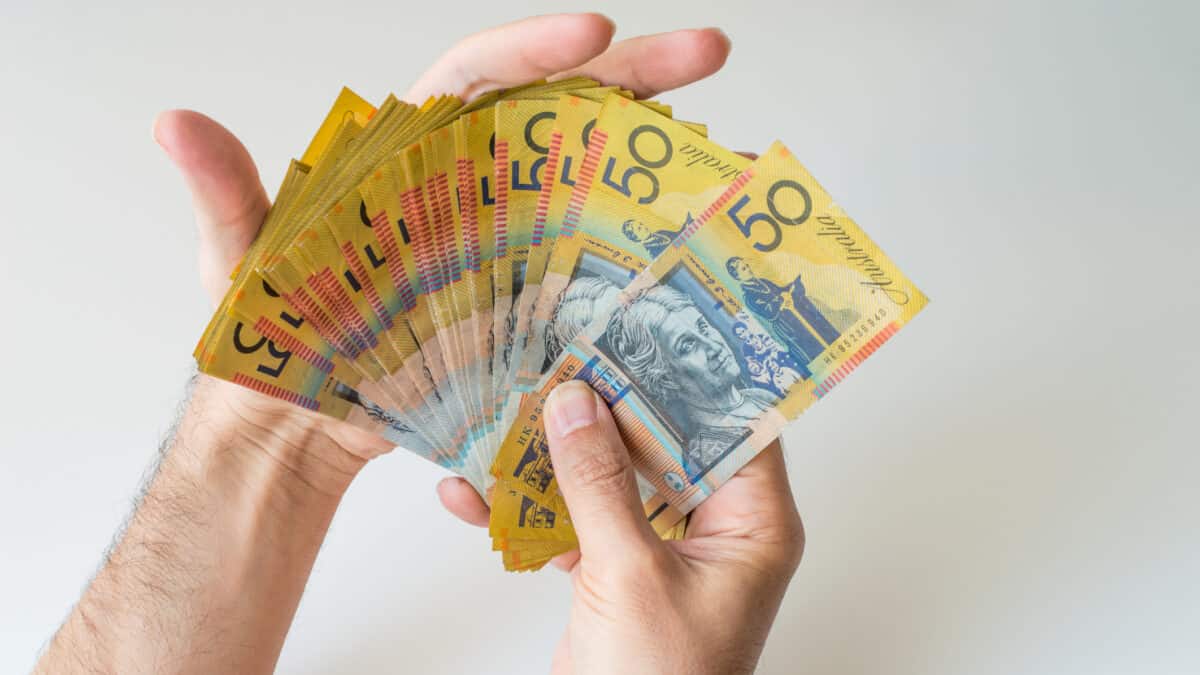
    Man holding fifty Australian Dollar banknote in his hands, symbolising dividends, symbolising dividends.

    If you are trying to decide which ASX dividend shares to add to your income portfolio, then it could be worth looking at three listed below that Goldman Sachs is bullish on.

    Here’s what you need to know about these income options:

    IPH Ltd (ASX: IPH)

    The first ASX dividend share for income investors to look at is IPH. Goldman is a big fan of the intellectual property solutions company and believes it is “well-placed to deliver consistent and defensive earnings with modest overall organic growth.”

    The broker expects this to underpin fully franked dividends of 34 cents per share in FY 2024 and 37 cents per share in FY 2025. Based on the current IPH share price of $6.16, this represents yields of 5.5% and 6%, respectively.

    Goldman currently has a buy rating and $8.70 price target on IPH’s shares.

    Rio Tinto Ltd (ASX: RIO)

    Another ASX dividend share that Goldman Sachs is positive on is Rio Tinto.

    It is one of the largest miners in the world and the owner of a portfolio of operations across a number of commodities. This includes the Gudai-Darri iron ore mine and the ISAL aluminium smelter.

    Goldman Sachs like the company due to its belief that “Rio is a FCF and production growth story.”

    The broker expects this to support the payment of fully franked dividends per share of US$4.29 (A$6.49) in FY 2024 and then US$4.55 (A$6.88) in FY 2025. Based on the latest Rio Tinto share price of $132.50, this will mean yields of approximately 4.9% and 5.2%, respectively.

    Goldman has a buy rating and $138.90 price target on its shares.

    Suncorp Group Ltd (ASX: SUN)

    A third ASX dividend share that has been given the thumbs up by analysts at Goldman Sachs is Suncorp.

    It is one of Australia’s largest insurance companies, operating countless brands including AAMI, Apia, Bingle, GIO, Shannons, and Vero.

    In addition, the company has Suncorp Bank. However, these banking operations are in the process of being sold to big four bank ANZ Group Holdings Ltd (ASX: ANZ) for $4.9 billion. Once complete, Suncorp will be a pure-play insurance provider. It may also return some of the proceeds to shareholders via a special dividend or share buyback.

    For now, though, Goldman expects Suncorp to pay fully franked dividends per share of 78 cents in FY 2024 and 83 cents in FY 2025. Based on the current Suncorp share price of $16.00, this will mean dividend yields of 4.9% and 5.2%, respectively.

    The broker has a buy rating and $17.54 price target on Suncorp’s shares.

    The post Buy Rio Tinto and these excellent ASX dividend shares appeared first on The Motley Fool Australia.

    Should you invest $1,000 in Iph right now?

    Before you buy Iph shares, consider this:

    Motley Fool investing expert Scott Phillips just revealed what he believes are the 5 best stocks for investors to buy right now… and Iph wasn’t one of them.

    The online investing service he’s run for over a decade, Motley Fool Share Advisor, has provided thousands of paying members with stock picks that have doubled, tripled or even more.*

    And right now, Scott thinks there are 5 stocks that may be better buys…

    See The 5 Stocks
    *Returns as of 5 May 2024

    More reading

    Motley Fool contributor James Mickleboro has no position in any of the stocks mentioned. The Motley Fool Australia’s parent company Motley Fool Holdings Inc. has positions in and has recommended Goldman Sachs Group. The Motley Fool Australia has recommended IPH. The Motley Fool has a disclosure policy. This article contains general investment advice only (under AFSL 400691). Authorised by Scott Phillips.

  • What are brokers saying about BHP shares following the miner’s quarterly results?

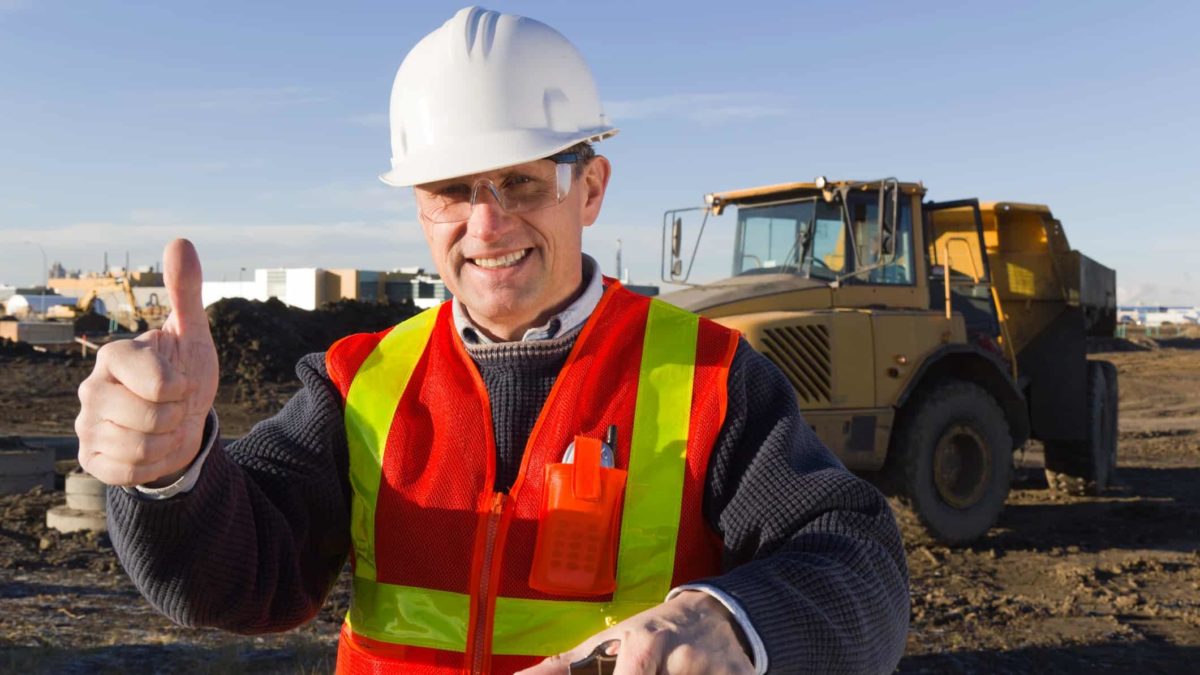
    a man in a high visibility vest and hard hat holds a thumbs up at a mine site with heavy equipment in the background.

    BHP Group Ltd (ASX: BHP) shares have garnered significant attention following the miner’s recent quarterly results.

    With a share price of $44.75 in late Friday trading, investors are no doubt keen to know if BHP shares present a good buying opportunity. Let’s dive into what the brokers are saying about the mining giant.

    Are BHP shares good value?

    According to broker Goldman Sachs, BHP shares are currently trading at an attractive level. The investment bank has a buy rating with a $49/share price target on the company over the next 12 months, a potential upside of 9.5%. For a $10,000 investment, this could mean growth to around $10,950 if the forecast proves accurate.

    Then, there’s the miner’s dividend potential.

    BHP is renowned for its generous dividends. With a trailing dividend yield currently at 5.08%, it remains a strong choice for income-focused investors.

    According to my colleague James last month, consensus estimates are for BHP to pay fully franked dividends of $2.30 per share in FY 2024. This translates to a dividend yield of around 5.1%, adding $510 in dividends to a $10,000 investment over the next 12 months.

    What are analysts saying?

    Goldman Sachs notes that BHP is trading at approximately 6x its next 12-month projected EBITDA, slightly above the 5.5x multiple of rival mining giant Rio Tinto Ltd (ASX: RIO).

    In my opinion, this premium is supported by BHP’s strong operating margins and presence, particularly in the Pilbara iron ore region. According to the OECD, the Pilbara region contributed 3.4% of Australia’s gross domestic product (GDP) in 2021.

    BHP also announced last year its plans to invest $4 billion in the Pilbara region to develop c.550MW of wind, solar and battery storage to reduce operating costs.

    Goldman also justified the premium by highlighting BHP’s potential for growing copper production in Chile and South Australia.

    Despite some concerns about limited upside following recent gains, brokers still see value in BHP shares. In April, Morgans placed an add rating with a $48.30 price target, implying a potential upside of 7.9%.

    Similarly, Citi rates BHP as a buy with a $48.00 price target, suggesting a total return of more than 10% when including dividends.

    Goldman Sachs maintains its buy rating with a $49.00 price target, as mentioned earlier.

    Passive income from BHP shares

    BHP shares are a popular choice for passive income investors. Let’s run the numbers. Assuming you purchase 100 shares at $44.75, you would invest $4,475 of your hard-earned capital.

    Goldman Sachs forecasts fully franked dividends of US$1.45 (A$2.20) per share for FY 2024, resulting in A$220 in passive income. For FY 2025, the expected dividends of US$1.26 (A$1.97) per share would yield A$197. Over the next few years, dividends are projected to slightly decrease but still provide solid returns, as per Goldman’s estimates:

    • FY 2026: US$1.22 (A$1.85) per share, yielding A$185
    • FY 2027: US$1.12 (A$1.70) per share, yielding A$170
    • FY 2028: US$1.07 (A$1.62) per share, yielding A$162

    Note: All AUD figures are quoted at the exchange rate of $1 AUD = $0.66 USD at the time of writing.

    Foolish takeaway

    BHP’s recent quarterly results have prompted positive feedback from brokers, highlighting its attractive valuation, strong dividend yield, and growth potential in copper production.

    With a current share price of $44.75 and a trailing dividend yield of 5.08%, BHP shares may be an opportunity for both growth and passive income investors. The mining giant certainly appears to have the backing of our top brokers.

    The post What are brokers saying about BHP shares following the miner’s quarterly results? appeared first on The Motley Fool Australia.

    Should you invest $1,000 in Bhp Group right now?

    Before you buy Bhp Group shares, consider this:

    Motley Fool investing expert Scott Phillips just revealed what he believes are the 5 best stocks for investors to buy right now… and Bhp Group wasn’t one of them.

    The online investing service he’s run for over a decade, Motley Fool Share Advisor, has provided thousands of paying members with stock picks that have doubled, tripled or even more.*

    And right now, Scott thinks there are 5 stocks that may be better buys…

    See The 5 Stocks
    *Returns as of 5 May 2024

    More reading

    Motley Fool contributor Zach Bristow has no position in any of the stocks mentioned. The Motley Fool Australia’s parent company Motley Fool Holdings Inc. has no position in any of the stocks mentioned. The Motley Fool Australia has no position in any of the stocks mentioned. The Motley Fool has a disclosure policy. This article contains general investment advice only (under AFSL 400691). Authorised by Scott Phillips.