
• Inside the nearly 8-year-long feud between Elon Musk and Mark Zuckerberg that has threatened to become physical

    Elon Musk Mark Zuckerberg
    Elon Musk and Mark Zuckerberg have threatened to take their feud to the next level and face each other in a cage match.

    • There's no love lost between Elon Musk and Mark Zuckerberg. 
    • The CEOs have been feuding since 2016, when a SpaceX explosion destroyed a Facebook satellite.
    • Here's a history of their feud.

    For nearly eight years, two of tech's biggest names — Elon Musk and Mark Zuckerberg — have been caught up in a feud, clashing over topics like artificial intelligence and rockets.

    The two men have been griping about each other behind closed doors for years, according to The Wall Street Journal. But the tech moguls haven't exactly kept their rivalry a secret from the public, either.

    When a rocket from Musk's SpaceX exploded and destroyed a satellite from Zuckerberg's Facebook in 2016, Zuckerberg issued a heated statement, saying he was "deeply disappointed" about SpaceX's failure. And when Facebook became embroiled in the Cambridge Analytica scandal, Musk publicly deleted his companies' Facebook pages, tweeting that the company gave him "the willies."

    In June 2023, the two men threatened to make their fight physical and face each other in a cage match.

    The two billionaires are among the richest people on the planet, placing them in an elite circle, even by Silicon Valley standards. Even though both work in artificial intelligence and social media, and their companies have partnered in the past, it seems there's no love lost between Musk and Zuckerberg.

    Here's where their feud began and everything that's happened since.

    The Musk-Zuckerberg feud dates back to at least 2016, when a SpaceX rocket explosion destroyed a Facebook satellite.
    SpaceX explosion
    An explosion on the launch site of a SpaceX Falcon 9 rocket in 2016.

    In September 2016, SpaceX was testing its Falcon 9 rocket at a launch site in Cape Canaveral, Florida. Shortly after 9 a.m. the rocket exploded, destroying Facebook's AMOS-6 satellite, which was supposed to ride the rocket into space.

    The satellite was part of Facebook's Internet.org project to deliver internet connectivity to the developing world, and it would have been Facebook's first satellite in orbit.

    Zuckerberg seemed openly frustrated that the launch failed, writing on Facebook that he was "deeply disappointed to hear that SpaceX's launch failure destroyed our satellite that would have provided connectivity to so many entrepreneurs and everyone else across the continent."

    Two years later, Musk addressed the failed launch in a post on Twitter to the reporter Kerry Flynn.

    "Yeah, my fault for being an idiot," Musk said. "We did give them a free launch to make up for it, and I think they had some insurance."

    In 2017, Zuckerberg criticized Musk's attitude toward artificial intelligence, which seemed to get a rise out of Musk.
    Mark Zuckerberg
    Mark Zuckerberg said he doesn't understand people who try to make up doomsday scenarios about AI.

    During a Facebook Live broadcast, a viewer asked Zuckerberg for his thoughts on Musk's anxieties around AI.

    "I have pretty strong opinions on this," Zuckerberg said. "With AI especially, I'm really optimistic, and I think that people who are naysayers and try to drum up these doomsday scenarios … I don't understand it. It's really negative, and in some ways, I actually think it's pretty irresponsible."

    Musk, who has repeatedly called for regulation and caution when it comes to new AI technology, shot back on Twitter.

    "I've talked to Mark about this," he said in response to a tweet about Zuckerberg's comments. "His understanding of the subject is limited."

    In 2018, following Facebook's Cambridge Analytica scandal, Musk made a public show of deleting SpaceX and Tesla's Facebook pages.
    Elon Musk
    Musk deleted SpaceX and Tesla's Facebook accounts in 2018.

    After the WhatsApp cofounder Brian Acton tweeted, "It is time. #deletefacebook," Musk responded, "What's Facebook?"

    A fan responded to Musk's tweet asking whether he'd delete the SpaceX Facebook page, to which Musk responded, "I didn't realize there was one. Will do."

    After another fan pointed out that Tesla had a Facebook page too, Musk tweeted that it "looks lame anyway."

    Soon after, both the SpaceX and Tesla pages disappeared from Facebook. Musk said it wasn't a "political statement" and that he just found Facebook unsettling.


    Musk continued his campaign against Facebook in early 2020.
    facebook mark zuckerberg
    Elon Musk urged people to delete Facebook.


    In response to a tweet from the actor Sacha Baron Cohen, which called for more regulation of Facebook, Musk urged people once again to delete the app.


    Following the riot at the US Capitol in 2021, Musk used Twitter to share memes linking the riots to Facebook.
    Elon Musk
    Musk criticized Facebook's data-sharing practices.

    On the evening of the rampage in Washington, Musk tweeted, "This is called the domino effect," along with an image of dominoes, with the first one labeled "a website to rate women on campus," a reference to Facebook's inception at Harvard University. The last domino referenced the rioters.

    Musk also criticized Facebook's data-sharing practices, tweeting another meme about Facebook that mentioned the company "spying" on users following the announcement by Facebook-owned WhatsApp that it would start forcing users to share their personal data with the platform.

    Musk tweeted that people should "use Signal," an encrypted messaging app. His tweet was retweeted by Twitter CEO Jack Dorsey, another tech executive who has sparred with Zuckerberg.

    Last year, Musk criticized Zuckerberg's ironclad control of Meta.
    A side-by-side composite image of Mark Zuckerberg and Elon Musk.
    Musk compared Zuckerberg's control of Meta to a monarchy.

    The Tesla CEO compared Zuckerberg's control of Meta to a monarchy during an interview at the TED conference in Vancouver, British Columbia. (Facebook's parent company changed its name to Meta in October 2021.)

    The interviewer, Chris Anderson, asked Musk whether his status as the richest man and one of Twitter's top influencers could pose a conflict of interest if he bought the platform. Musk used the opportunity to take a swipe at his rival.  

    "As for media sort of ownership, I mean, you've got Mark Zuckerberg owning Facebook and Instagram and WhatsApp, and with a share ownership structure that will have Mark Zuckerberg the 14th still controlling those entities," Musk said. 

    He went on to say that he "won't have that at Twitter."

    Tensions appeared to get even higher between the two CEOs after Musk bought Twitter.
    Illustration of Elon Musk and the Twitter logo
    Elon Musk took over Twitter on October 27, 2022 and renamed it "X."

    In December, Meta first brainstormed ideas for a Twitter competitor in order to capitalize on  Musk's chaotic Twitter takeover, according to a report from The New York Times. The company confirmed to Platformer in March that it's working on its own text-based social network, codenamed "Project 92."

    Earlier this month, Meta's chief product officer, Chris Cox, appeared to mock Musk and Twitter by saying in an all-hands meeting that it the site will be "a platform that is sanely run."

    Musk hasn't taken kindly to the news that Zuckerberg is creating an X competitor.
    Facebook Chairman and CEO Mark Zuckerberg testifies at a House Financial Services Committee hearing in Washington, U.S., October 23, 2019, wearing a suit and looking serious with facebook logo in background.
    Musk taunted Zuckerberg on X.

    The billionaire taunted Zuckerberg on X, formerly Twitter, about his rival text-based social media platform.

    "I'm sure Earth can't wait to be exclusively under Zuck's thumb with no other options," Musk posted in June.

    Later writing: "Zuck my" with a tongue emoji.


    Zuckerberg offered some rare praise for Musk and his plans for X in June 2023.
    Mark Zuckerberg, founder and CEO of Facebook/Meta, is seen in attendance during the UFC Fight Night event at UFC APEX on October 01, 2022 in Las Vegas, Nevada.
    Zuckerberg praised Musk's push to make X leaner in a podcast interview.

    On an episode of "The Lex Fridman Podcast," the Meta CEO praised Musk's "push early on to make Twitter a lot leaner."

    "I think that those were generally good changes," Zuckerberg said on the podcast.

    When the Tesla CEO took over X, he more than halved the company's workforce. Zuckerberg has taken similar cost cutting measures at Meta, initiating a series of layoffs and dubbing 2023 the "year of efficiency."


    The two men have reportedly been grumbling about each other in private for years.
    Elon Musk's mother, Maye Musk, says her son should "fight with words only."
    Zuckerberg reportedly wanted the recognition Musk received for years.

    People who have heard each man's private comments about the feud told The Wall Street Journal in a report published last June that Zuckerberg had long yearned for the public recognition Musk has received over the years as a tech pioneer and that Musk has fretted over Zuckerberg's early success with Facebook.

    The two men appeared to agree to settle some of their differences in a cage match last June.
    Mark Zuckerberg participates in jiu-jitsu tournaments and Bill Gates has played tennis against Jeff Bezos.
    Mark Zuckerberg participated in a jiu-jitsu tournament.

    Last June, Musk said he'd be "up for a cage match" with Zuckerberg. 

    The X owner brought up the idea after X users cautioned him to be careful dissing Zuckerberg since he knows jiu-jitsu.

    It's unclear whether Musk was joking about the offer to fight the Meta CEO in a cage match. He said via X, "If this is real, I will do it," but later appeared to poke fun at his own fighting skills.

    Zuckerberg appears to be taking the idea of a match seriously. After Musk first posted on X that he would be  "up for a cage fight," the Meta CEO posted a screenshot of the post on Instagram with the words "Send me location," and a Meta spokesperson later told The Verge that Zuckerberg is not joking about the offer.

    Only time will tell if the two CEOs will duke it out in person.

    Some people have already begun placing odds on the fight. Business Insider's Hasan Chowdhury reported that Musk's chances of beating Zuckerberg are slim. 39-year-old Zuckerberg has been trained in MMA fighting and even won some medals at a jiu-jitsu competition in May 2023.

    Zuckerberg said he was ready to fight since the day Musk challenged him.
    Mark Zuckerberg (left) and Elon Musk (right)
    Zuckerberg said you'll hear it from him if Musk agrees on a date.

    Zuckerberg said in a Threads post in August 2023 that he was "ready to fight since the day Elon challenged" him. 

    "If he ever agrees on an actual date, you'll hear it from me," Zuckerberg said in the post. "Until then, please assume anything he says has not been agreed on."

    Musk posted on X two days later that "Zuck is a chicken."

    "He can't eat at chic fil a because that would be cannibalism," he wrote in a separate post on the same day.


    A day after Zuckerberg's 40th birthday, Musk revived the cage-match proposal in a post on X.
    Elon Musk.
    Musk made another attempt at fighting Zuckerberg.

    Musk's gift to Zuckerberg for his 40th birthday was a challenge to fight him, once again.

    "If only Zuckerberg were as tough (sigh). I've offered to fight him any place, any time, any rules, but all I hear is crickets," Musk said in an X post on May 15.

    Musk's post was in response to a satirical news story about a face-off between President Joe Biden and former President Donald Trump.

    Read the original article on Business Insider
  • 5 stellar ASX growth shares to buy for strong returns

    Two happy excited friends in euphoria mood after winning in a bet with a smartphone in hand.

    If you’re a fan of ASX growth shares, then you will be pleased to know that analysts are predicting strong returns from the five listed below.

    Here’s what you need to know about these top shares:

    Lovisa Holdings Ltd (ASX: LOV)

    The first ASX growth share to look at is Lovisa. It is a fashion jewellery retailer that is growing at a rapid rate thanks to its global expansion.

    Bell Potter is very positive on this expansion. In fact, it believes Lovisa can grow its network by 10% per annum between FY 2023 and FY 2034. This is expected to underpin strong earnings growth over the next decade.

    The broker has a buy rating and $36.00 price target on Lovisa’s shares. This implies potential upside of 13% for investors.

    NextDC Ltd (ASX: NXT)

    Another ASX growth share that has been given the thumbs up by analysts is NextDC.

    It is one of Asia’s most innovative data centre-as-a-service providers. It is building the infrastructure platform for the digital economy, delivering the critical power, security and connectivity for global cloud computing providers.

    Morgan Stanley is very positive on the company’s outlook thanks to its belief that the data centre market will grow materially over the remainder of the decade.

    The broker currently has an overweight rating and $20.00 price target on its shares. This suggests upside of 13.5% is possible over the next 12 months.

    TechnologyOne Ltd (ASX: TNE)

    Over at Goldman Sachs, its analysts think that enterprise software provider TechnologyOne could be ASX growth share to buy right now.

    It likes the company due to its attractive valuation and positive growth outlook. The latter is being underpinned by its market leadership, defensive end markets, and mission-critical systems.

    Goldman has a buy rating and $18.10 price target on Technology One’s shares. This implies 14% upside from current levels.

    Webjet Limited (ASX: WEB)

    A fourth ASX growth share for investors to consider buying is online travel booking company Webjet.

    Analysts at Morgans are bullish on the company. This is due partly to its key WebBeds B2B business and the “significant market share still up for grabs.” The broker believes this leaves the company well-positioned for the future.

    Morgans has an add rating and price target of $10.33 on Webjet’s shares. This suggests potential upside of 24% for investors.

    Xero Ltd (ASX: XRO)

    A final ASX growth share for investors to look at is Xero.

    It is a cloud accounting platform provider with an estimated global market opportunity of 100 million small to medium sized businesses.

    It is thanks partly to this huge market opportunity that Goldman Sachs is very bullish on Xero’s outlook and is tipping it as a buy. The broker has a buy rating and $156.00 price target on its shares. This implies potential upside of 29% from current levels.

    The post 5 stellar ASX growth shares to buy for strong returns appeared first on The Motley Fool Australia.

    Should you invest $1,000 in Lovisa Holdings Limited right now?

    Before you buy Lovisa Holdings Limited shares, consider this:

    Motley Fool investing expert Scott Phillips just revealed what he believes are the 5 best stocks for investors to buy right now… and Lovisa Holdings Limited wasn’t one of them.

    The online investing service he’s run for over a decade, Motley Fool Share Advisor, has provided thousands of paying members with stock picks that have doubled, tripled or even more.*

    And right now, Scott thinks there are 5 stocks that may be better buys…

    See The 5 Stocks
    *Returns as of 5 May 2024

    More reading

    Motley Fool contributor James Mickleboro has positions in Lovisa, Nextdc, Technology One, and Xero. The Motley Fool Australia’s parent company Motley Fool Holdings Inc. has positions in and has recommended Goldman Sachs Group, Lovisa, Technology One, and Xero. The Motley Fool Australia has positions in and has recommended Xero. The Motley Fool Australia has recommended Lovisa and Technology One. The Motley Fool has a disclosure policy. This article contains general investment advice only (under AFSL 400691). Authorised by Scott Phillips.

  • Investors and economists are getting worried about more bank failures as interest rates stay high

    banking failure
    • Fears of a potential banking crisis are on the rise as interest rates stay elevated.
    • Interest rates are now at their highest levels since 2001 as the Fed keeps an eye on inflation.
    • Markets have already seen 1 regional bank fail this year, according to FDIC data.

    Fears of more trouble in the banking sector are on the rise as investors and economists worry that high interest are causing trouble for regional lenders. 

    With interest rates at their highest levels since 2001, higher borrowing costs have put pressure on banks' balance sheets as borrowers struggle to pay debts or avoid the credit market altogether. According to Moody's Analytics chief economist Mark Zandi, the longer interest rates stay high, the more the Fed risks damaging the economy. 

    "Those rates are corrosive on the economy. They wear the economy down, and at some point, something could break,"  the economist told Yahoo Finance in a recent interview, pointing to the series of bank failures that rocked markets in early 2023. "That's the kind of thing I'm worried about in the context of persistently high interest rates."

    High rates have started to impact credit conditions. Bank-financed loans and leases have stagnated over the last year, rising by $226 billion through 2023. That's a snail's pace compared to the prior year when banks tacked on $1.19 trillion in loans and leases. 

    Commercial bank loans in late payment rose sharply over the fourth quarter, with the delinquency rate rising to 1.4%, Fed data shows.

    Economists are particularly worried about the commercial real estate industry, with nearly a trillion of debt in the sector set to mature by the end of this year. Those loans will likely have to be refinanced at higher rates, which could spark a wave of defaults and stress bank balance sheets. 

    Real estate investor Barry Sternlicht said he foresees one bank failure a week if the Fed doesn't lower interest rates soon. 

    "The 1.9 trillion of real estate loans, that's a fragile animal right now," Sternlicht said in a recent interview. 

    The US has only seen one bank fail so far this year, according to FDIC data. Regulators took over the Philadelphia-based Republic First Bank in April, before selling most of the deposits and assets to regional lender Fulton Bank. 

    "You have dozens of small regional banks in America that are exposed to real estate, are writing off loans, and the higher for longer phenomenon is having a direct impact on this second tier of the banking sector in America," Daniel Pinto, CEO of Stanhope Capital said in an interview with Bloomberg this week. "The Fed will very much be aware that if they keep rates at this high level, they may have another banking crisis on their hands."

    Read the original article on Business Insider
  • Ukraine launched what may be the biggest drone attack on Russia since the war started

    Amid Russian advances, Ukraine launched its biggest drone attack on Russia since the war started. Russia intercepted over 100 drones on May 17.

    Read the original article on Business Insider
  • Here’s when Westpac says the RBA will cut interest rates

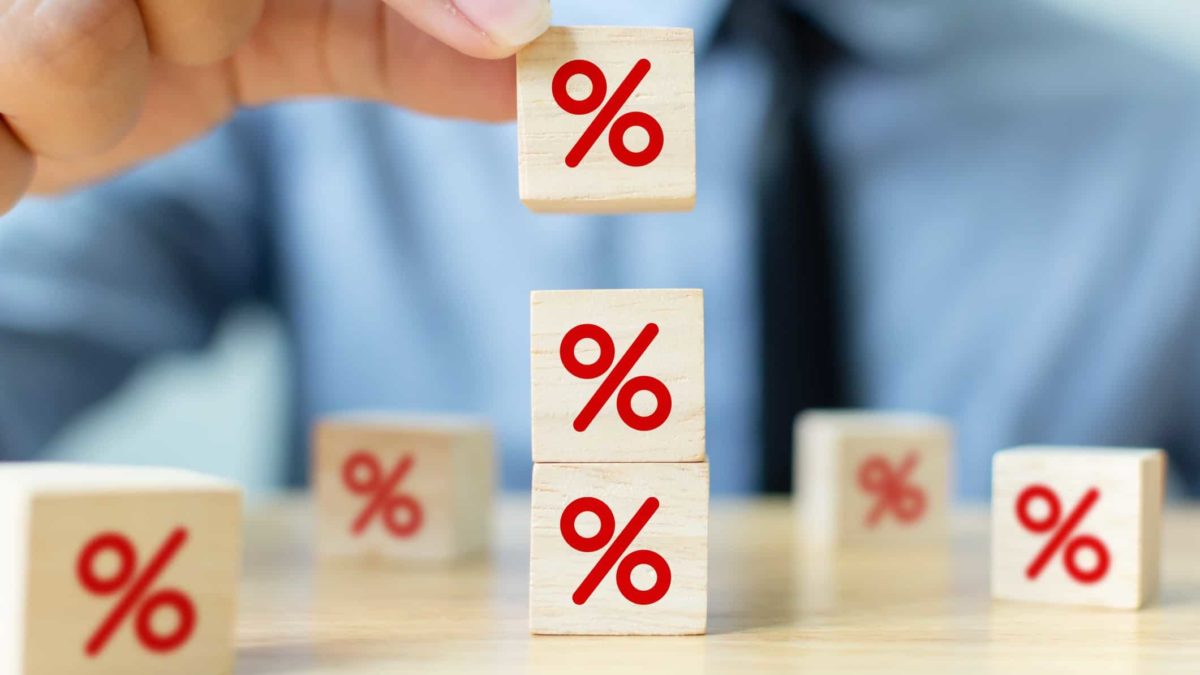
    Red percentage sign on blocks on top of each other, symbolising interest rates.

    There has been a lot of speculation recently that interest rates may need to go higher before they go lower in an effort to tame inflation.

    This would of course be very bad news for borrowers, which are already being squeezed by higher interest rates.

    The good news, though, is that Westpac Banking Corp (ASX: WBC) continues to believe that the next move by the Reserve Bank of Australia (RBA) will be to take rates lower.

    And the even better news that the first rate cut could be coming later this year and that there could be plenty more on the way.

    What is Westpac saying about interest rates?

    According to the Westpac Weekly economic report, the bank’s chief economist, Luci Ellis, hasn’t seen anything to say that inflation will be heading in the wrong direction again. She said:

    Households in Australia are collectively doing it tough. Their cash flows are being squeezed by the high cost of living, high level of interest rates and a rising tax take. Consumption per capita has fallen more than 2½% since the RBA started raising rates. Australia stands out from its peers on this front.

    At the same time, inflation is too high and the labour market is tight, though not quite as tight as late last year. The labour force data for April confirmed this gradual easing, helping to cut through the noise of the first three months of the year. And the Wage Price Index release, also this week, shows that wages growth is starting to roll over from its recent peak, as was widely expected. To be fair, these are lagging indicators. But there is nothing in these data – or more leading indicators – pointing to even higher inflation pressures down the track.

    When will rates go lower?

    As things stand, Westpac is forecasting the RBA to make its first interest rate cut in December. This will see a 25 basis points cut to 4.1% (from 4.35% today).

    After which, Westpac’s economics team believes the central bank will then move swiftly with its cuts.

    By March 2025, another 25 basis points cut to 3.85% is forecast and then by June rates are expected to fall to 3.6%.

    But that’s not where it ends. Westpac is tipping the RBA to then take interest rates to 3.35% by September 2025 and then finally 3.1% by December 2025.

    In summary:

    • Today: 4.35%
    • December 2024: 4.1%
    • March 2025: 3.85%
    • June 2025: 3.6%
    • September 2025: 3.35%
    • December 2025: 3.1%

    Overall, it seems that some relief could be on the way for borrowers in the not so distant future according to Westpac.

    The post Here’s when Westpac says the RBA will cut interest rates appeared first on The Motley Fool Australia.

    Should you invest $1,000 in Westpac Banking Corporation right now?

    Before you buy Westpac Banking Corporation shares, consider this:

    Motley Fool investing expert Scott Phillips just revealed what he believes are the 5 best stocks for investors to buy right now… and Westpac Banking Corporation wasn’t one of them.

    The online investing service he’s run for over a decade, Motley Fool Share Advisor, has provided thousands of paying members with stock picks that have doubled, tripled or even more.*

    And right now, Scott thinks there are 5 stocks that may be better buys…

    See The 5 Stocks
    *Returns as of 5 May 2024

    More reading

    Motley Fool contributor James Mickleboro has positions in Westpac Banking Corporation. The Motley Fool Australia’s parent company Motley Fool Holdings Inc. has no position in any of the stocks mentioned. The Motley Fool Australia has no position in any of the stocks mentioned. The Motley Fool has a disclosure policy. This article contains general investment advice only (under AFSL 400691). Authorised by Scott Phillips.

  • With its 8% yield, I think this undervalued ASX 200 stock is an opportunity not to miss

    a man's hand places a white egg into a basket of similar white eggs.

    The S&P/ASX 200 Index (ASX: XJO) stock Inghams Group Ltd (ASX: ING) looks like a good buy because of its dividend income and the value it offers.

    Inghams claims to be the largest integrated poultry producer in Australia and New Zealand. Its products are sold through various businesses, including fast food, food service distributors and wholesalers, and supermarkets.

    The company also has strong market positions across the Australian turkey, Australian stockfeed and New Zealand dairy feed industries.

    Why the ASX 200 stock looks cheap

    Inghams is recovering from the impacts of inflation, which significantly affected costs during that period a couple of years ago.

    The company is now getting back to good profitability – the FY24 first-half result saw group core poultry volume grow 2.2% to 240.8kt, revenue rose 8.7% to $1.64 billion, the underlying earnings before interest, tax, depreciation and amortisation (EBITDA) rose 19.9% to $252.1 million, and the underlying net profit after tax (NPAT) jumped 134.2% to $62.3 million.

    Inghams is expecting some benefit from lower key feed costs in FY25, which could help profit rise again.

    The ASX 200 stock is also investing in automation which it expects, over time, will “provide cost savings, higher yield and throughput outcomes, and improved product quality.” It’s also expected the automation investments will support increased production of value-add products and new customer opportunities.

    On top of that, Inghams’ new distribution in Hazelmere, WA, has started operations. It also opened new distribution centres in August 2022 and April 2023 in Victoria and South Australia, respectively. These new facilities can help the company’s efficiencies.

    The forecast on Commsec suggests Inghams could make earnings per share (EPS) of 33.4 cents in FY25 and 36.8 cents in FY26, putting it on a forward earnings multiple of under 12x for FY25 and under 11x for FY26.  

    While we don’t know precisely what the earnings are going to be, things look positive for Inghams shares and the trajectory of profit.

    Big dividend yield

    With the ASX 200 stock’s low price/earnings (P/E) ratio, it’s projected to have a solid dividend yield, just like before COVID-19.

    Commsec’s forecast suggests Inghams might go with a dividend payout ratio of around 66%. This could lead to a grossed-up dividend yield of 8.3% in FY25 and 8.9% in FY26.

    The prospect of rising profit, a growing dividend, and a big yield look like a compelling combination that could power tasty returns over the next two or three years.  

    The post With its 8% yield, I think this undervalued ASX 200 stock is an opportunity not to miss appeared first on The Motley Fool Australia.

    Should you invest $1,000 in Inghams Group Limited right now?

    Before you buy Inghams Group Limited shares, consider this:

    Motley Fool investing expert Scott Phillips just revealed what he believes are the 5 best stocks for investors to buy right now… and Inghams Group Limited wasn’t one of them.

    The online investing service he’s run for over a decade, Motley Fool Share Advisor, has provided thousands of paying members with stock picks that have doubled, tripled or even more.*

    And right now, Scott thinks there are 5 stocks that may be better buys…

    See The 5 Stocks
    *Returns as of 5 May 2024

    More reading

    Motley Fool contributor Tristan Harrison has no position in any of the stocks mentioned. The Motley Fool Australia’s parent company Motley Fool Holdings Inc. has no position in any of the stocks mentioned. The Motley Fool Australia has no position in any of the stocks mentioned. The Motley Fool has a disclosure policy. This article contains general investment advice only (under AFSL 400691). Authorised by Scott Phillips.

  • These ‘threads of God’ make up the rarest pasta in the world

    Su filindeu, or "threads of God," is the rarest pasta in the world. For a century, it was made by a single family in the Sardinian city of Nuoro for religious celebrations. Today, there are fewer than 10 people there who know the secret to making the pasta as thin as a strand of hair. Secrecy nearly led to the dish’s disappearance, but now, the pasta is finding new customers abroad. We went to Italy to see how the process of making su filindeu is still standing.

    Read the original article on Business Insider
  • Top ASX dividend shares to buy in May 2024

    Smiling young parents with their daughter dream of success.

    Tuesday’s federal budget included around $5.4 billion worth of initiatives to help Australians cope with the surging cost of living.

    While this is welcome news for many, others are concerned the Government’s increased spending will create additional inflationary pressure.

    If this proves the case, we could find ourselves waiting even longer for any much-anticipated interest rate cuts from the RBA, notwithstanding the latest jobs data indicating unemployment is rising faster than expected.

    As such, even with the additional help provided in this week’s budget, we may have to get used to paying higher prices on everyday essentials for longer.

    For most of us, having access to a passive income stream generated by ASX dividend shares would be very handy right now and help further ease those cost-of-living pressures.

    So we asked our Foolish writers which ASX dividend shares they think offer the very best buying for income investors in May.

    Here is what the team came up with:

    6 best ASX dividend shares for May 2024 (smallest to largest)

    • Harvey Norman Holdings Limited (ASX: HVN), $5.38 billion
    • Sonic Healthcare Ltd (ASX: SHL) $12.79 billion
    • Coles Group Ltd (ASX: COL), $21.83 billion
    • Woolworths Group Ltd (ASX: WOW), $38.66 billion
    • Telstra Group Ltd (ASX: TLS), $42.40 billion
    • Fortescue Ltd (ASX: FMG), $82.95 billion

    (Market capitalisations as of market close 17 May 2024).

    Why our Foolish writers love these ASX passive income stocks

    Harvey Norman Holdings Limited

    What it does: Most Australians have probably made a mad dash to a Harvey Norman store at some point for a new appliance, computer, furniture item, or other consumer product – a charging adapter, in my recent case. Boasting more than 300 stores across eight countries, Harvey Norman is a retailing staple.

    By Mitchell Lawler: According to billionaire investor Bill Ackman, “The best businesses in the world are capital-light franchises which own the right to collect royalties on a compounding base of assets”. 

    Admittedly, Harvey Norman isn’t exactly a ‘capital-light’ business, though it is highly profitable thanks to its franchise model. I’ve said it before – Harvey Norman is akin to McDonald’s Corp: Buying the land, leasing it out, and charging a franchise fee. 

    Personally, I think Harvey Norman shares are undervalued. Especially after the government decided to throw $300 into the pocket of basically every Australian household via the latest federal budget. A business like Harvey Norman might see a boost from those who didn’t need the financial relief.

    This ASX dividend payer currently trades on a trailing dividend yield of 5.09%.

    Motley Fool contributor Mitchell Lawler does not own shares of Harvey Norman Holdings Limited.

    Sonic Healthcare Ltd

    What it does: Sonic Healthcare is a global pathology business with operations in Australia, the United States, Germany, Switzerland, the United Kingdom, Belgium, and New Zealand.

    By Tristan Harrison: Down 25% since this time last year, the Sonic Healthcare share price is much cheaper now than a year ago. I think this makes it great value right now for ASX income investors.

    The ASX 200 healthcare stock now trades on a trailing dividend yield of around 3.6%, excluding franking credits.

    Sonic Healthcare has grown its dividend every year since 2013 and almost every year for the past three decades. The company’s board of directors has a stated “progressive dividend policy”, making it an appealing pick for resilient passive income.

    I believe the ASX healthcare company can grow earnings thanks to a number of different tailwinds.

    A growing and ageing population can translate into more demand for Sonic’s services. It’s also investing in businesses that bring new technology to the pathology table, such as AI and microbiome testing.

    Sonic Healthcare continues to make acquisitions, which boosts its scale and allows it to achieve increased synergies. It recently announced the acquisition of Dr Risch Group, which generated around AU$156 million of revenue in Switzerland in 2023.

    Motley Fool contributor Tristan Harrison owns shares of Sonic Healthcare Ltd.

    Coles Group Ltd

    What it does: Coles is one of the big two supermarket operators in Australia with more than 840 stores across the country. The company also operates more than 950 liquor stores through brands, including First Choice and Liquorland.

    By James Mickleboro: I think Coles would be a great ASX dividend share to buy in May, particularly given its shares are now trading closer to their 52-week low than their 52-week high. 

    I believe this recent share price weakness means Coles shares are great value now, especially for a company with a market leadership position, a positive growth outlook, defensive earnings, and an attractive dividend yield.

    Speaking of the latter, the team at Morgans is forecasting fully franked dividends of 66 cents per share in FY 2024 and then 69 cents per share in FY 2025. Based on the current Coles share price of $16.20, this equates to yields of 4.1% and 4.25%, respectively.

    Morgans also sees plenty of upside for Coles shares with its add rating and $18.95 price target. The broker highlights that “the ongoing scrutiny on the supermarkets has affected short-term sentiment in the sector, which we believe creates a good buying opportunity in COL.”

    Motley Fool contributor James Mickleboro does not own shares of Coles Group Ltd.

    Woolworths Group Ltd

    What it does: Woolworths operates Australia’s largest supermarket network and also has a presence in New Zealand.

    By Bronwyn Allen: When negative market sentiment temporarily drives down the share price of a blue chip stock, the dividend yield may be temporarily enhanced.

    Woolworths shares were down 15.6% year-to-date to $31.65 at Friday’s close. Top broker Goldman Sachs is tipping dividends of $1.08 in FY24 and $1.14 in FY25. That means dividend yields of 3.4% and 3.6%, respectively.

    When you add the 100% franking, those yields move up to around 5% and 5.3%. That’s about what you’d get if you left your cash in a savings account. There’s no prospect of capital growth in cash investing, but there is with Woolworths shares.

    Goldman has a 12-month price target of $39.40 on the ASX 200 consumer staples stock, implying a potential 24.5% upside. The broker assesses the current Woolworths share price as “a value entry level for a high-quality and defensive stock”.

    Motley Fool contributor Bronwyn Allen does not own shares of Woolworths Group Ltd.

    Telstra Group Ltd

    What it does: Telstra is a stock that needs little introduction. It is the largest telecommunications provider in Australia and the market leader in mobile telephony and fixed-line broadband services.

    By Sebastian Bowen: When looking at the major ASX 200 blue chip shares right now, I think Telstra qualifies as the most oversold of the bunch. Investors have sent this telco down by around 16% since June last year. This pessimism seems to stem from Telstra’s decision not to sell off its valuable infrastructure assets. 

    However, I think this was the right decision for the telco and, as such, reckon this share price slump is a considerable buying opportunity. Retaining some of its most valuable assets in-house is not a bad thing for Telstra’s long-term future. It should bode well for Telstra’s dividends and bolster their reliability.

    Speaking of dividends, Tesltra’s share price falls have resulted in this company’s dividend yield rising to over 4.7% at recent pricing. Given that dividend yield typically comes with full franking credits attached too, I think Telstra shares are well and truly oversold this May. 

    Motley Fool contributor Sebastian Bowen owns shares of Telstra Group Ltd.

    Fortescue Ltd

    What it does: Fortescue was established in 2003 and is based in Western Australia. The company counts among the world’s biggest iron ore miners and has been leading the competition to become an integrated green technology, energy, and metals company.

    By Bernd Struben: Not only has Fortescue delivered outsized passive income over the past year, the company’s share price has also soared by 33%.

    For its half-year results, the miner reported a 21% year-on-year increase in revenue to US$9.5 billion. And net profit after tax (NPAT) increased by 41% to US$3.3 billion.

    As for that income, the ASX 200 miner has paid out $2.08 per share in fully franked dividends over the past 12 months. At the recent Fortescue share price of $26.94, that equates to a fully franked trailing yield of 7.7%.

    And I think the outlook remains strong. Despite iron ore shipments slipping in the past quarter, management reaffirmed the company’s full-year shipments and cost guidance.

    Fortescue also stands to benefit from the $6.7 billion in tax incentives for green hydrogen production contained in the new federal budget. With its investments in green hydrogen, green ammonia, and green iron, Fortescue leads its peers in this field.

    Motley Fool contributor Bernd Struben does not own shares of Fortescue Ltd.

    The post Top ASX dividend shares to buy in May 2024 appeared first on The Motley Fool Australia.

    Should you invest $1,000 in Coles Group Limited right now?

    Before you buy Coles Group Limited shares, consider this:

    Motley Fool investing expert Scott Phillips just revealed what he believes are the 5 best stocks for investors to buy right now… and Coles Group Limited wasn’t one of them.

    The online investing service he’s run for over a decade, Motley Fool Share Advisor, has provided thousands of paying members with stock picks that have doubled, tripled or even more.*

    And right now, Scott thinks there are 5 stocks that may be better buys…

    See The 5 Stocks
    *Returns as of 5 May 2024

    More reading

    The Motley Fool Australia’s parent company Motley Fool Holdings Inc. has positions in and has recommended Goldman Sachs Group. The Motley Fool Australia has positions in and has recommended Coles Group, Harvey Norman, and Telstra Group. The Motley Fool Australia has recommended Sonic Healthcare. The Motley Fool has a disclosure policy. This article contains general investment advice only (under AFSL 400691). Authorised by Scott Phillips.

  • Ex-OpenAI exec calls out Sam Altman for choosing ‘shiny products’ over AI safety

    Sam Altman
    OpenAI CEO Sam Altman

    • A top OpenAI executive researching safety quit on Tuesday.
    • Jan Leike said he reached a "breaking point."
    • Adding that Sam Altman's company was prioritizing "shiny products" over safety.

    A former top safety executive at OpenAI is laying it all out.

    On Tuesday night, Jan Leike, a leader on the artificial intelligence company's superalignment group, announced he was quitting with a blunt post on X: "I resigned."

    Now, three days later, Leike shared more about his exit — and said OpenAI isn't taking safety seriously enough.

    "Over the past years, safety culture and processes have taken a backseat to shiny products," Leike wrote in a lengthy thread on X on Friday.

    In his posts, Leike said he joined OpenAI because he thought it would be the best place in the world to research how to "steer and control" artificial general intelligence (AGI), the kind of AI that can think faster than a human.

    "However, I have been disagreeing with OpenAI leadership about the company's core priorities for quite some time, until we finally reached a breaking point," Leike wrote.

    The former OpenAI exec said the company should be keeping most of its attention on issues of "security, monitoring, preparedness, safety, adversarial robustness, (super)alignment, confidentiality, societal impact, and related topics."

    But Leike said his team — which was working on how to align AI systems with what's best for humanity — was "sailing against the wind" at OpenAI.

    "We are long overdue in getting incredibly serious about the implications of AGI," he wrote, adding that, "OpenAI must become a safety-first AGI company."

    Leike capped off his thread with a note to OpenAI employees, encouraging them to shift the company's safety culture.

    "I am counting on you. The world is counting on you," he said.

    Resignations at OpenAI

    Both Leike and Ilya Sutskever, the other superalignment team leader, left OpenAI on Tuesday within hours of each other.

    In a statement on X, Altman praised Sutskever as "easily one of the greatest minds of our generation, a guiding light of our field, and a dear friend."

    "OpenAI would not be what it is without him," Altman wrote. "Although he has something personally meaningful he is going to go work on, I am forever grateful for what he did here and committed to finishing the mission we started together."

    Altman didn't comment on Leike's resignation.

    On Friday, Wired reported that OpenAI had disbanded the pair's AI risk team. Researchers who were investigating the dangers of AI going rogue will now be absorbed into other parts of the company, according to Wired.

    OpenAI didn't respond to requests for comment from Business Insider.

    The AI company — which recently debuted a new large language model GPT-4o — has been rocked by high-profile shakeups in the last few weeks.

    In addition to Leike and Sutskever's departure, Diane Yoon, vice president of people, and Chris Clark, the head of nonprofit and strategic initiatives, have left, according to The Information. And last week, BI reported that two other researchers working on safety quit the company.

    One of those researchers later wrote that he had lost confidence that OpenAI would "behave responsibly around the time of AGI."

    Read the original article on Business Insider
  • OpenAI just dissolved its team dedicated to managing AI risks, like the possibility of it ‘going rogue’

    Sam Altman next to Ilya Sutskever
    Ilya Sutskever played a key role in ousting Sam Altman last year, and recently announced he was leaving the company.

    • OpenAI's Superalignment team was formed in July 2023 to mitigate AI risks, like "rogue" behavior.
    • OpenAI has reportedly disbanded its Superalignment team after its co-leaders resigned.
    • One of the former leaders critiqued OpenAI's focus on "shiny" products over safety in a post on X.

    In the same week that OpenAI launched GPT-4o, its most human-like AI yet, the company dissolved its Superalignment team, Wired first reported.

    OpenAI created its Superalignment team in July 2023, co-led by Ilya Sutskever and Jan Leike. The team was dedicated to mitigating AI risks, such as the possibility of it "going rogue."

    The team reportedly disbanded days after its leaders, Ilya Sutskever and Jan Leike, announced their resignations earlier this week. Sutskever said in his post that he felt "confident that OpenAI will build AGI that is both safe and beneficial" under the current leadership.

    He also added that he was "excited for what comes next," which he described as a "project that is very personally meaningful" to him. The former OpenAI executive hasn't elaborated on it but said he will share details in time.

    Sutskever, a cofounder and former chief scientist at OpenAI, made headlines when he announced his departure. The executive played a role in the ousting of CEO Sam Altman in November. Despite later expressing regret for contributing to Altman's removal, Sutskever's future at OpenAI had been in question since Altman's reinstatement.

    Following Sutskever's announcement, Leike posted on X, formerly Twitter, that he was also leaving OpenAI. The former executive published a series of posts on Friday explaining his departure, which he said came after disagreements about the company's core priorities for "quite some time."

    Leike said his team has been "sailing against the wind" and struggling to get compute for its research. The mission of the Superalignment team involved using 20% of OpenAI's computing power over the next four years to "build a roughly human-level automated alignment researcher," according to OpenAI's announcement of the team last July.

    Leike added "OpenAI must become a safety-first AGI company." He said building generative AI is "an inherently dangerous endeavor" and OpenAI was more concerned with releasing "shiny products" than safety.

    https://platform.twitter.com/widgets.js

    Jan Leike did not respond to a request for comment.

    The Superalignment team's objective was to "solve the core technical challenges of superintelligence alignment in four years," a goal that the company admitted was "incredibly ambitious." They also added they weren't guaranteed to succeed.

    Some of the risks the team worked on included "misuse, economic disruption, disinformation, bias and discrimination, addiction, and overreliance." The company said in its post that the new team's work was in addition to existing work at OpenAI aimed at improving the safety of current models, like ChatGPT.

    Some of the team's remaining teammembers have been rolled into other OpenAI teams, Wired reported.

    OpenAI didn't respond to a request for comment.


    Read the original article on Business Insider