• Not all ETFs are the same… and that’s a problem

    Cubes placed on a Notebook with the letters "ETF" which stands for "Exchange traded funds".

    Cubes placed on a Notebook with the letters "ETF" which stands for "Exchange traded funds".

    There was a story in today’s Australian newspaper that highlights the seismic shift happening on global and local stock markets right now.

    The headline, a little dramatic in the way of these things, was nevertheless still illustrative: ‘Bloodbath for managed funds as ETFs continue to boom’.

    The article begins:

    “Australian managed funds haemorrhaged a record net $31bn in 2023 and the wound is likely to deepen as the $177bn exchange-traded fund industry is poised to triple in size this decade, continuing to lure investor cash.”

    The shifts, in percentage terms, aren’t as shocking as the language might suggest – apparently outflows from managed funds of around 4%, and growth in ETFs clocks in at 3.4%.

    Still, that’s a sizeable difference which, if it continues, will change the shape of money management.

    Now, as an unabashed fan of ETFs (despite my job as a stock picker), you’d assume I think that’s a great thing.

    And… I do.

    But with a very large asterisk.

    It is the way of things that those with the incentive and preparedness to take advantage of circumstances will do so. Which is precisely what some people have done with ETFs. To our potential detriment. Let me explain.

    See, once upon a time, there was no easy way to invest in the whole market with a single trade. And then Jack Bogle came onto the scene.

    He set up a company, Vanguard, that would create the world’s first ‘index fund’, which did exactly what it said – invested in a stock market index.

    Costs came down (and down, and down). And index funds earned their place as wonderful ways to get the market return (less a tiny fee). It was – and still is – a fantastic option for many investors.

    It was still a little clunky, though – you had to send a cheque (later, a direct deposit) to the fund manager, who would invest it for you. Then, when you wanted your money back, he (it was almost always a bloke back then) would send you the money.

    Later, another breakthrough: You could invest in these index funds by buying and selling them on a stock market through your broker – just the way you could buy normal shares.

    They were funds, bought and sold on an exchange. Or, as we now know them, exchange-traded funds, or ETFs.

    So far so good. Over time, the phrase ‘index funds’ was replaced by ETFs.

    And ‘index funds are wonderful’ became ‘ETFs are wonderful’.

    Which, in hindsight, was our collective mistake (or someone else’s marketing opportunity, depending on who’s telling the story).

    Because, soon after, fund managers decided to create other ETFs. Nothing wrong with that, in theory. If a fund is listed on an exchange, it’s an ETF, just like those index funds.

    Except that we could no longer accurately say ‘ETFs are wonderful’ in the same way.

    The problem? Investors had already internalised that phrase.

    So when these new ETFs were released, they carried some of Jack Bogle’s bright halo with them.

    The super-low-cost Vanguard ASX 300 ETF and the triple-leveraged Gold ETF were both ETFs.

    And ETFs are great… right?

    Not any more. At least, not all of them.

    So when I read ‘ETFs are gaining popularity’ I, like most people, instinctively think ‘that’s great… people are swapping high(er) cost managed funds for low cost passive index funds’.

    But that’s not necessarily the case. All we know from that data is that people are preferring to invest in stuff listed on an exchange, rather than sending money directly to their fund manager.

    I want to believe most people are piling into wonderfully vanilla, super-low-cost, index tracking ETFs.

    But too many are probably either being sucked in by the ‘ETFs are great’ mantra, or are mistakenly thinking ‘hey, ETFs are diversified, so if I buy a buy-now-pay-later ETF (for example) it’s not risky’.

    I have nothing against active investing. It’s what I do. Or against using ETFs as a way to buy a bundle of companies in a single trade.

    But I do have a problem with the (either accidental or deliberate) conflating of these two very different products under the one label.

    If I was either the corporate regulator, ASIC or the stock market manager, ASX, I’d get the product manufacturers (yes, that’s what they’re called, and yes, that should tell you everything) to use different acronyms: either ETIF (exchange-traded index-fund) or ETMF (exchange-traded managed fund).

    Do I think they will? No, unfortunately.

    But that’s how I think you and I should think about these products – at least that’d remind us of exactly what we’re getting, when we invest (and the fees that come with each option!).

    Because we all should be a little more like Jack Bogle.

    Fool on!

    The post Not all ETFs are the same… and that’s a problem appeared first on The Motley Fool Australia.

    Wondering where you should invest $1,000 right now?

    When investing expert Scott Phillips has a stock tip, it can pay to listen. After all, the flagship Motley Fool Share Advisor newsletter he has run for over ten years has provided thousands of paying members with stock picks that have doubled, tripled or even more.*

    Scott just revealed what he believes could be the ‘five best ASX stocks’ for investors to buy right now. These stocks are trading at near dirt-cheap prices and Scott thinks they could be great buys right now…

    See The 5 Stocks
    *Returns as of 10 November 2023

    (function() {
    function setButtonColorDefaults(param, property, defaultValue) {
    if( !param || !param.includes(‘#’)) {
    var button = document.getElementsByClassName(“pitch-snippet”)[0].getElementsByClassName(“pitch-button”)[0];
    button.style[property] = defaultValue;
    }
    }

    setButtonColorDefaults(“#0095C8”, ‘background’, ‘#5FA85D’);
    setButtonColorDefaults(“#0095C8”, ‘border-color’, ‘#43A24A’);
    setButtonColorDefaults(“#fff”, ‘color’, ‘#fff’);
    })()

    More reading

    Motley Fool contributor Scott Phillips has positions in Vanguard Australian Shares Index ETF. The Motley Fool Australia’s parent company Motley Fool Holdings Inc. has no position in any of the stocks mentioned. The Motley Fool Australia has no position in any of the stocks mentioned. The Motley Fool has a disclosure policy. This article contains general investment advice only (under AFSL 400691). Authorised by Scott Phillips.

    from The Motley Fool Australia https://ift.tt/YZeb37c

  • Leading brokers name 3 ASX shares to buy today

    A woman is excited as she reads the latest rumour on her phone.

    A woman is excited as she reads the latest rumour on her phone.

    With so many shares to choose from on the ASX, it can be difficult to decide which ones to buy. The good news is that brokers across the country are doing a lot of the hard work for you.

    Three top ASX shares that leading brokers have named as buys this week are listed below. Here’s why they are bullish on them:

    AGL Energy Limited (ASX: AGL)

    According to a note out of UBS, its analysts have retained their buy rating on this energy giant’s shares with a trimmed price target of $11.25. This follows the release of a first half result that was well ahead of the broker’s expectations. UBS sees scope for further earnings outperformance in the coming years if its generation availability can be maintained. The AGL share price is trading at $8.72 on Monday.

    News Corp (ASX: NWS)

    Another note out of UBS reveals that its analysts have retained their buy rating on this media company’s shares with an improved price target of $50.40. The broker was pleased with the company’s performance during the December quarter and expects more of the same in the future thanks to its digital business. So, with its shares trading on lower than average multiples, it feels that now is a good time to invest. The News Corp share price is fetching $41.81 this afternoon.

    Pro Medicus Limited (ASX: PME)

    Analysts at Macquarie have initiated coverage on this health imaging technology company’s shares with an outperform rating and $120.00 price target. The broker has been looking at the company’s prospects in the US market. It believes Pro Medicus could grow its market share from 7% today to 15% in 2030 and 25% in FY 2035. This follows customer feedback that highlights that its Visage 7 software is faster and more efficient than the competition, The Pro Medicus share price is trading at $108.89 on Monday.

    The post Leading brokers name 3 ASX shares to buy today appeared first on The Motley Fool Australia.

    Wondering where you should invest $1,000 right now?

    When investing expert Scott Phillips has a stock tip, it can pay to listen. After all, the flagship Motley Fool Share Advisor newsletter he has run for over ten years has provided thousands of paying members with stock picks that have doubled, tripled or even more.*

    Scott just revealed what he believes could be the ‘five best ASX stocks’ for investors to buy right now. These stocks are trading at near dirt-cheap prices and Scott thinks they could be great buys right now…

    See The 5 Stocks
    *Returns as of 10 November 2023

    (function() {
    function setButtonColorDefaults(param, property, defaultValue) {
    if( !param || !param.includes(‘#’)) {
    var button = document.getElementsByClassName(“pitch-snippet”)[0].getElementsByClassName(“pitch-button”)[0];
    button.style[property] = defaultValue;
    }
    }

    setButtonColorDefaults(“#0095C8”, ‘background’, ‘#5FA85D’);
    setButtonColorDefaults(“#0095C8”, ‘border-color’, ‘#43A24A’);
    setButtonColorDefaults(“#fff”, ‘color’, ‘#fff’);
    })()

    More reading

    Motley Fool contributor James Mickleboro has no position in any of the stocks mentioned. The Motley Fool Australia’s parent company Motley Fool Holdings Inc. has positions in and has recommended Macquarie Group and Pro Medicus. The Motley Fool Australia has positions in and has recommended Macquarie Group. The Motley Fool Australia has recommended Pro Medicus. The Motley Fool has a disclosure policy. This article contains general investment advice only (under AFSL 400691). Authorised by Scott Phillips.

    from The Motley Fool Australia https://ift.tt/LnzeoKd

  • Everything you need to know about the reduced JB Hi-Fi dividend

    Male hands holding Australian dollar banknotes, symbolising dividends.

    Male hands holding Australian dollar banknotes, symbolising dividends.

    One of the biggest ASX 200 names that was scheduled to report its latest earnings this Monday is JB Hi-Fi Ltd (ASX: JBH). Well, JB did report its latest earnings covering the six months to 31 December this morning. And it made for some interesting reading, particularly regarding the latest JB Hi-Fi dividend.

    As we went through for JB Hi-Fi this morning, it was a positively received report from the electronics and home appliances retailer.

    The company reported that its total sales for the period declined by 2.3% to $51.6 billion. Earnings before interest and tax (EBIT) and net profits after tax (NPAT) were both down 20%. That was to $386.7 million and $264.3 million respectively.

    However, as my Fool colleague posited this morning, these numbers were still well ahead of expectations. This probably explains why the JB Hi-Fi share price has popped a robust 5.66% so far today to $59.75 a share.

    But let’s get back to the JB Hi-Fi dividend.

    JB Hi-Fi reveals 20% dividend cut

    So this morning, JB announced that its interim dividend for 2023 would come to a fully franked $1.58 per share.

    That’s a bit of a step back for investors. Last year, JB’s interim dividend was worth $1.97 per share, so today’s announced payout represents a 20% cut from that same dividend in 2023.

    However, it’s still a lot higher than JB’s last final dividend from September 2023. That was worth $1.15 per share (keep in mind, JB does normally pay a larger interim dividend).

    The ex-dividend date for this upcoming interim dividend has been set for 22 February later this month. So if you want to see the cash from this latest dividend arrive in your bank account, you’ll need to own JB shares before that date.

    8 March will then be payment day for investors.

    JB Hi-Fi is not currently running a dividend reinvestment plan (DRP). As such, investors will have no choice but to accept the cash payment.

    At the current share price of $59.75 (at the time of writing), JB Hi-Fi shares offer a trailing dividend yield of 5.22%. With today’s announcement, the company now has a forward dividend yield of 4.57%.

    The post Everything you need to know about the reduced JB Hi-Fi dividend appeared first on The Motley Fool Australia.

    Wondering where you should invest $1,000 right now?

    When investing expert Scott Phillips has a stock tip, it can pay to listen. After all, the flagship Motley Fool Share Advisor newsletter he has run for over ten years has provided thousands of paying members with stock picks that have doubled, tripled or even more.*

    Scott just revealed what he believes could be the ‘five best ASX stocks’ for investors to buy right now. These stocks are trading at near dirt-cheap prices and Scott thinks they could be great buys right now…

    See The 5 Stocks
    *Returns as of 10 November 2023

    (function() {
    function setButtonColorDefaults(param, property, defaultValue) {
    if( !param || !param.includes(‘#’)) {
    var button = document.getElementsByClassName(“pitch-snippet”)[0].getElementsByClassName(“pitch-button”)[0];
    button.style[property] = defaultValue;
    }
    }

    setButtonColorDefaults(“#0095C8”, ‘background’, ‘#5FA85D’);
    setButtonColorDefaults(“#0095C8”, ‘border-color’, ‘#43A24A’);
    setButtonColorDefaults(“#fff”, ‘color’, ‘#fff’);
    })()

    More reading

    Motley Fool contributor Sebastian Bowen has no position in any of the stocks mentioned. The Motley Fool Australia’s parent company Motley Fool Holdings Inc. has no position in any of the stocks mentioned. The Motley Fool Australia has recommended Jb Hi-Fi. The Motley Fool has a disclosure policy. This article contains general investment advice only (under AFSL 400691). Authorised by Scott Phillips.

    from The Motley Fool Australia https://ift.tt/kz3Mq0Q

  • ANZ share price hits 52-week high following Q1 update

    Man drawing an upward line on a bar graph symbolising a rising share price.

    Man drawing an upward line on a bar graph symbolising a rising share price.

    The ANZ Group Holdings Ltd (ASX: ANZ) share price is having a positive start to the week.

    In morning trade, the banking giant’s shares are up over 1% to $28.03.

    Why is the ANZ share price rising?

    Investors have been bidding the ANZ share price higher today in response to the release of the bank’s quarterly update.

    While the update provides only limited financial information, it does give the market a good idea of how the bank is performing in FY 2024.

    According to the release, first quarter group revenue was in line with the first half FY 2023 quarterly average of $5.26 billion. This reflects broadly flat Non-Markets revenue, assisted by growth in average interest earning assets.

    Management also advised that its Institutional Division’s Markets business had a good start to the year with revenues a little better than the first half FY 2023 quarterly average of $575 million.

    Costs, lending, and debts

    Another positive was commentary around its expenses, which remain under control. Management said:

    ANZ has demonstrated a proven ability over many years to manage our expenses well and while facing into ongoing inflationary pressures, we continue to execute on productivity initiatives to partially offset these headwinds.

    In respect to lending, its growth remains robust across its Australia Retail and Commercial franchises. Management highlights that its investment in home loan processing capability and capacity and improved broker experience is providing ongoing benefits.

    Furthermore, ANZ is continuing to grow its Australian Home Loan book profitably by continuing to offer reliable turnaround times, and competitive but not market leading pricing. Pleasingly, lending growth was substantially self-funded across both Divisions by deposits.

    Finally, the bank’s total provision charge was $53 million, comprising a $27 million individual provision charge and a $26 million collective provision charge. Australian Housing 90+ days past due is 70 basis points, which remains well below pre-Covid levels.

    What are analysts saying?

    Goldman Sachs has run the rule over the update and was pleased with what it saw. This may explain why the ANZ share price is lifting today. It said:

    ANZ released its 1Q24 and Pillar 3 disclosure for the quarter ended 31-Dec-23. ANZ’s 1Q24 Group revenue was in line with the 1H23 quarterly average (1H23QA of A$5.26 bn) with Non-Markets revenue broadly in line (1H23QA A$4.69 bn). 1Q24 BDDs (A$53 mn charge) were better than what was implied by prior 1H24 forecasts, and we note that while asset quality has continued to normalize, across various metrics it remains remain better than pre-Covid levels. 1Q24 CET1 ratio of 13.06% was broadly in line with what was implied by our prior forecasts.

    The post ANZ share price hits 52-week high following Q1 update appeared first on The Motley Fool Australia.

    Wondering where you should invest $1,000 right now?

    When investing expert Scott Phillips has a stock tip, it can pay to listen. After all, the flagship Motley Fool Share Advisor newsletter he has run for over ten years has provided thousands of paying members with stock picks that have doubled, tripled or even more.*

    Scott just revealed what he believes could be the ‘five best ASX stocks’ for investors to buy right now. These stocks are trading at near dirt-cheap prices and Scott thinks they could be great buys right now…

    See The 5 Stocks
    *Returns as of 10 November 2023

    (function() {
    function setButtonColorDefaults(param, property, defaultValue) {
    if( !param || !param.includes(‘#’)) {
    var button = document.getElementsByClassName(“pitch-snippet”)[0].getElementsByClassName(“pitch-button”)[0];
    button.style[property] = defaultValue;
    }
    }

    setButtonColorDefaults(“#0095C8”, ‘background’, ‘#5FA85D’);
    setButtonColorDefaults(“#0095C8”, ‘border-color’, ‘#43A24A’);
    setButtonColorDefaults(“#fff”, ‘color’, ‘#fff’);
    })()

    More reading

    Motley Fool contributor James Mickleboro has no position in any of the stocks mentioned. The Motley Fool Australia’s parent company Motley Fool Holdings Inc. has positions in and has recommended Goldman Sachs Group. The Motley Fool Australia has no position in any of the stocks mentioned. The Motley Fool has a disclosure policy. This article contains general investment advice only (under AFSL 400691). Authorised by Scott Phillips.

    from The Motley Fool Australia https://ift.tt/4aJGb7X

  • How big cost-cutting is hoisting the Appen share price 10% today

    A hip young man with a beard and manbun sits thoughtfully at his laptop computer in a darkened room, staring at the screen with his chin resting on his hand in thought.A hip young man with a beard and manbun sits thoughtfully at his laptop computer in a darkened room, staring at the screen with his chin resting on his hand in thought.

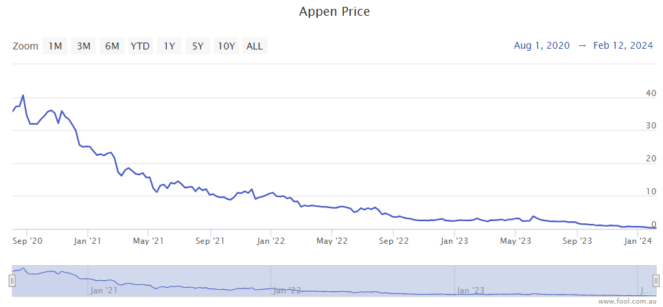
    The Appen Ltd (ASX: APX) share price has increased 10% after the business revealed plans to cut millions of dollars of costs after a recent major contract loss.

    Cost cuts to mitigate the loss of Google

    A few weeks ago, Appen told the market that Google, part of Alphabet, was terminating its global inbound services contract with Appen, resulting in the end of all projects with Appen by 19 March 2023. In FY23, Appen’s revenue from Google was $82.8 million at a gross profit margin of 26%.

    Appen revealed it’s going to implement measures to achieve $13.5 million of annualised cost savings. The ASX tech share is still focused on returning to profit and managing costs. The costs it’s planning to cut are direct and indirect costs relating to the Google projects.

    The company is expecting to complete 80% of the cost initiatives by March 2024, with the rest to be completed by June 2024. An improved bottom line is helpful for Appen shares.

    Most of the costs identified to be cut are direct costs, but some indirect costs have also been found which will lead to the eventual closure of the Toronto and Bellvue offices in North America.

    Appen is expecting FY25 to be the first full-year benefit of these cost savings to be realised.

    However, these savings will come with one-off implementation costs, which are currently estimated at between $1.5 million to $2.5 million. Appen plans to report these as a non-recurring expense and excluded from its underlying earnings before interest, tax, depreciation and amortisation (EBITDA) for FY24.

    This adds to Appen’s recent cost-cutting

    These cost cuts announced today are on top of the total annualised cost savings of $60 million from initiatives completed over FY23. That cost-cutting allowed Appen to achieve its cash EBITDA profitability objective in December 2023.

    Will it be able to achieve FY24 cash EBITDA profitability? Appen said it will “largely depend” on revenue growth from non-global customers, with the timing of that remaining “uncertain”.

    Appen share price snapshot

    While today is positive for the ASX tech share, Appen shares are still down by around 50% in 2024 to date. It’s down 99% since August 2020.  

    It is expecting to report FY23 revenue of $273 million and an underlying EBITDA loss of $20.4 million for FY23.

    The post How big cost-cutting is hoisting the Appen share price 10% today appeared first on The Motley Fool Australia.

    Wondering where you should invest $1,000 right now?

    When investing expert Scott Phillips has a stock tip, it can pay to listen. After all, the flagship Motley Fool Share Advisor newsletter he has run for over ten years has provided thousands of paying members with stock picks that have doubled, tripled or even more.*

    Scott just revealed what he believes could be the ‘five best ASX stocks’ for investors to buy right now. These stocks are trading at near dirt-cheap prices and Scott thinks they could be great buys right now…

    See The 5 Stocks
    *Returns as of 10 November 2023

    (function() {
    function setButtonColorDefaults(param, property, defaultValue) {
    if( !param || !param.includes(‘#’)) {
    var button = document.getElementsByClassName(“pitch-snippet”)[0].getElementsByClassName(“pitch-button”)[0];
    button.style[property] = defaultValue;
    }
    }

    setButtonColorDefaults(“#0095C8”, ‘background’, ‘#5FA85D’);
    setButtonColorDefaults(“#0095C8”, ‘border-color’, ‘#43A24A’);
    setButtonColorDefaults(“#fff”, ‘color’, ‘#fff’);
    })()

    More reading

    Suzanne Frey, an executive at Alphabet, is a member of The Motley Fool’s board of directors. Motley Fool contributor Tristan Harrison has no position in any of the stocks mentioned. The Motley Fool Australia’s parent company Motley Fool Holdings Inc. has positions in and has recommended Alphabet and Appen. The Motley Fool Australia has recommended Alphabet. The Motley Fool has a disclosure policy. This article contains general investment advice only (under AFSL 400691). Authorised by Scott Phillips.

    from The Motley Fool Australia https://ift.tt/NFHP1vp

  • I’d buy these two resilient ASX dividend shares for big income

    Two healthcare workers, a male doctor in the background with a woman in scrubs in the foreground,, smile towards the camera against a plain backdrop.Two healthcare workers, a male doctor in the background with a woman in scrubs in the foreground,, smile towards the camera against a plain backdrop.

    ASX dividend shares can pay an appealing dividend yield. However, larger yields can be more risky if they’re in danger of being cut. How about some stocks that pay high income and they come from resilient sectors?

    ASX mining shares can see commodity prices, profits, and dividends bounce around largely due to external factors. BHP Group Ltd (ASX: BHP) is a good example of that.

    Retail shares can also see performance ups and downs, particularly in volatile economic times. So I wouldn’t count on them for reliable income every single year either.

    But healthcare is a great sector for consistency. People don’t choose when to get sick or injured, as shown in the latest GDP numbers. Households and governments usually place a high importance on healthcare spending. Plus, the healthcare sector also has tailwinds, such as an ageing population and a growing population.

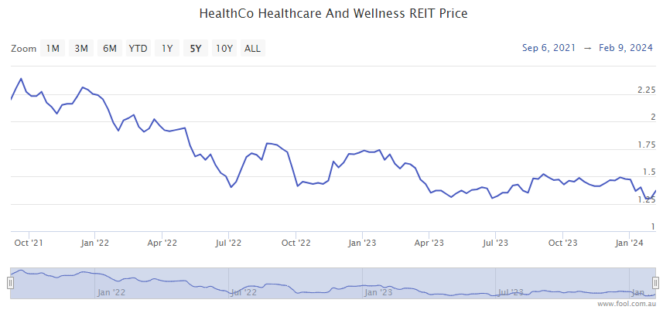
    Healthco Healthcare and Wellness REIT (ASX: HCW)

    This real estate investment trust (REIT) owns a portfolio of properties across hospitals, aged care and so on.

    It targets “stable income characteristics including long leases, contracted rental escalations (including fixed and CPI escalations), sustainable rents and strong tenant covenants.

    The business has an occupancy rate of 99% and a weighted average lease expiry (WALE) of around 12 years, which locks in a lot of rental income.

    This ASX dividend share pays a distribution every quarter, so it’s delivering pleasing, regular income.

    It expects to pay a distribution of 8 cents per security in FY24, which translates into a forward distribution yield of 5.8%. According to the Commsec projection, it could be paying a distribution per unit of 9 cents by FY26, which would be a yield of 6.6%.  

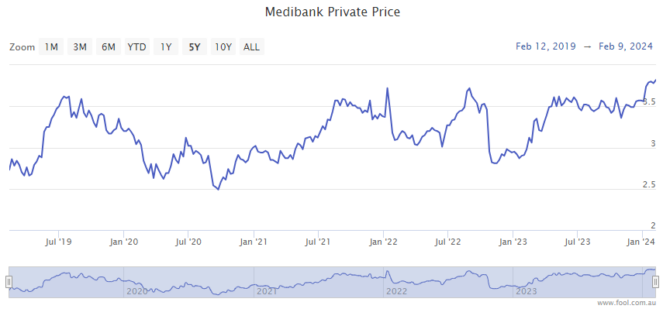
    Medibank Private Ltd (ASX: MPL)

    Medibank is the largest private health insurer in Australia. A lot of people appear to place a high value on having private health insurance.

    It ended FY23 with more than 4 million customers and grew by 11,000 policyholders in that year. In the first four months of FY24, it added another 5,200 policyholders.

    Medibank is seeing good growth in its non-resident business, which saw 40% policy unit growth in FY23.

    The ASX dividend share is also looking to grow earnings with bolt-on acquisitions.

    For example, it recently increased its investment in Myhealth Medical Group, which increased its shareholding from 49% to 90% for around $50.8 million. This move recognised the “critical role GPs play in prevention, early detection and ongoing care and support in the community, including people living with complex and chronic conditions”. It was emphasised that GPs will continue to retain full clinical autonomy and lead the clinical teams.

    For the 12 months to June 2023, Myhealth made earnings before interest and tax (EBIT) of $16 million and net profit after tax (NPAT) of $6.1 million.

    According to Commsec, the business is projected to pay an annual dividend per share of 16 cents, which would be a grossed-up dividend yield of 6%. By FY26, it could be paying a grossed-up dividend yield of 6.3%, according to the forecast on Commsec.

    The post I’d buy these two resilient ASX dividend shares for big income appeared first on The Motley Fool Australia.

    Wondering where you should invest $1,000 right now?

    When investing expert Scott Phillips has a stock tip, it can pay to listen. After all, the flagship Motley Fool Share Advisor newsletter he has run for over ten years has provided thousands of paying members with stock picks that have doubled, tripled or even more.*

    Scott just revealed what he believes could be the ‘five best ASX stocks’ for investors to buy right now. These stocks are trading at near dirt-cheap prices and Scott thinks they could be great buys right now…

    See The 5 Stocks
    *Returns as of 10 November 2023

    (function() {
    function setButtonColorDefaults(param, property, defaultValue) {
    if( !param || !param.includes(‘#’)) {
    var button = document.getElementsByClassName(“pitch-snippet”)[0].getElementsByClassName(“pitch-button”)[0];
    button.style[property] = defaultValue;
    }
    }

    setButtonColorDefaults(“#0095C8”, ‘background’, ‘#5FA85D’);
    setButtonColorDefaults(“#0095C8”, ‘border-color’, ‘#43A24A’);
    setButtonColorDefaults(“#fff”, ‘color’, ‘#fff’);
    })()

    More reading

    Motley Fool contributor Tristan Harrison has no position in any of the stocks mentioned. The Motley Fool Australia’s parent company Motley Fool Holdings Inc. has no position in any of the stocks mentioned. The Motley Fool Australia has no position in any of the stocks mentioned. The Motley Fool has a disclosure policy. This article contains general investment advice only (under AFSL 400691). Authorised by Scott Phillips.

    from The Motley Fool Australia https://ift.tt/8kGaO5y

  • 2 excellent ASX ETFs I’d buy for retirement

    a mature aged couple dance together in their kitchen while they are preparing food in a joyful scene as the Breville share price rises on the back of a 25% profit surgea mature aged couple dance together in their kitchen while they are preparing food in a joyful scene as the Breville share price rises on the back of a 25% profit surge

    We’d all like to live a comfortable life in retirement, and we may need our assets to last a number of decades. I’m going to tell you why I think a couple of leading ASX-listed exchange-traded funds (ETFs) could be the right choice for retirees.

    I’d guess plenty of retirees have money invested in property, ASX bank shares and even a small number of high-risk, high-return mining and energy shares. There are a lot of other businesses that could deliver better returns and give diversification.

    I’m not suggesting people need to become full-time fund managers. Instead, ASX ETFs – which give us exposure to a group of companies in a single investment – could be the answer. Plenty of them are invested in international businesses too, giving exposure away from Australia.

    Imagine having ETF investments worth $100,000. If they go up 10% over a year, the end result would be $110,000. Selling $5,000 would equate to a yield of 5% on the starting balance, and the investor would be left with $105,000. Of course, with the share market, we might see an 18% rise in one year and a 10% fall the next year – we can’t know what’s going to happen in the next 12 months.

    The lower the ‘yield‘ we take, the more sustainable it is likely to be when the bad years are included over a longer time period. If an ETF goes up 15% in one year, I would not bet on it rising another 15% in the next year. That’s why I’d look at something like 4% to up to perhaps 6% as the target withdrawal yield.

    Here are two ASX ETFs that I think would work well in retirement.

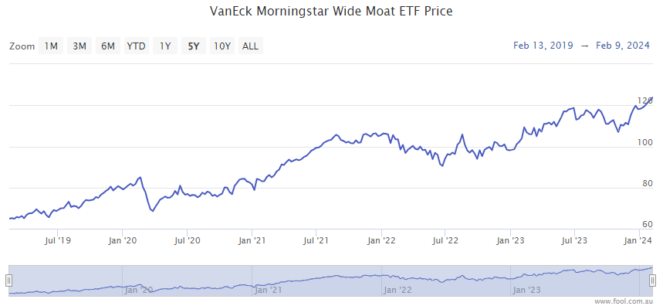
    Vaneck Morningstar Wide Moat ETF (ASX: MOAT)

    This fund invests in (US-listed) businesses that have very strong competitive advantages, or economic moats, which give them the ability to outperform their peers. There are a number of different moats, including brand power, patents, licences, cost advantages, network effects, switching costs (for customers) and more.

    The MOAT ETF specifically looks for companies that Morningstar analysts think have economic moats that will endure for 10 to 20 years.

    Once it establishes a watchlist of these advantaged companies, the ASX ETF will invest only if a company is trading at a valuation cheaper than what the analysts think is a fair price.

    Since this fund’s inception in June 2015, it has returned an average of 15.5% per annum.

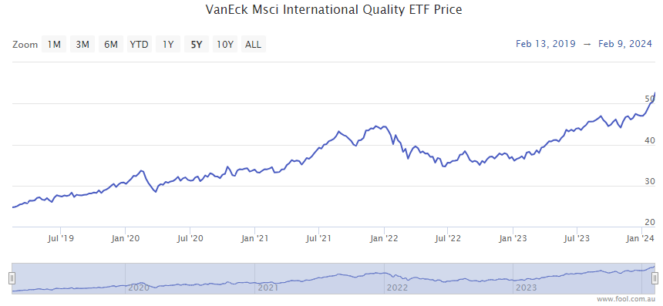
    VanEck MSCI International Quality ETF (ASX: QUAL)

    This fund is invested in 300 companies from across the globe. To qualify for this portfolio, companies have to rank well on three things – earnings stability, a high return on equity (ROE), and low financial leverage.

    In other words, it suggests they make high profits for how much shareholder money is retained in the business, they don’t typically see large, negative earnings shocks, and they have strong balance sheets.

    When you put these factors together, the ASX ETF is typically going to invest in companies that do very well over time.

    At the moment, the biggest positions are names like Nvidia, Microsoft, Meta Platforms and Apple.

    300 businesses in a single investment is a lot of diversification, but it hasn’t dampened the returns. Since its inception in October 2014, the QUAL ETF has returned an average of 16.7% per annum.

    Foolish takeaway

    Share markets have performed strongly over the last 14 months – this recovery has shown why it’s a good idea to invest when there’s fear around.

    I wouldn’t expect the next 12 months to show huge returns, but I think both of these ASX ETFs are capable of producing very good returns over the next three to five years and the longer term.

    The post 2 excellent ASX ETFs I’d buy for retirement appeared first on The Motley Fool Australia.

    Wondering where you should invest $1,000 right now?

    When investing expert Scott Phillips has a stock tip, it can pay to listen. After all, the flagship Motley Fool Share Advisor newsletter he has run for over ten years has provided thousands of paying members with stock picks that have doubled, tripled or even more.*

    Scott just revealed what he believes could be the ‘five best ASX stocks’ for investors to buy right now. These stocks are trading at near dirt-cheap prices and Scott thinks they could be great buys right now…

    See The 5 Stocks
    *Returns as of 10 November 2023

    (function() {
    function setButtonColorDefaults(param, property, defaultValue) {
    if( !param || !param.includes(‘#’)) {
    var button = document.getElementsByClassName(“pitch-snippet”)[0].getElementsByClassName(“pitch-button”)[0];
    button.style[property] = defaultValue;
    }
    }

    setButtonColorDefaults(“#0095C8”, ‘background’, ‘#5FA85D’);
    setButtonColorDefaults(“#0095C8”, ‘border-color’, ‘#43A24A’);
    setButtonColorDefaults(“#fff”, ‘color’, ‘#fff’);
    })()

    More reading

    Randi Zuckerberg, a former director of market development and spokeswoman for Facebook and sister to Meta Platforms CEO Mark Zuckerberg, is a member of The Motley Fool’s board of directors. Motley Fool contributor Tristan Harrison has no position in any of the stocks mentioned. The Motley Fool Australia’s parent company Motley Fool Holdings Inc. has positions in and has recommended Apple, Meta Platforms, Microsoft, and Nvidia. The Motley Fool Australia has recommended Apple, Meta Platforms, Nvidia, and VanEck Morningstar Wide Moat ETF. The Motley Fool has a disclosure policy. This article contains general investment advice only (under AFSL 400691). Authorised by Scott Phillips.

    from The Motley Fool Australia https://ift.tt/gr8v16T

  • Guess which ASX 300 stock is rocketing 17% after record half

    A man wearing glasses and a white t-shirt pumps his fists in the air looking excited and happy about the rising OBX share price

    A man wearing glasses and a white t-shirt pumps his fists in the air looking excited and happy about the rising OBX share price

    Audinate Group Ltd (ASX: AD8) shares are catching the eye on Monday morning.

    At the time of writing, the ASX 300 stock is up a sizeable 17% to a record high of $18.75.

    This follows the release of the media networking solutions provider’s half-year results.

    ASX 300 stock delivers record result

    • Revenue up 47.7% to US$30.4 million (A$46.6 million)
    • EBITDA up 137% to A$10.1 million
    • Net profit after tax of A$4.7 million (compared to loss of A$0.4 million)
    • Operating cash flow up 18% to A$11.8 million
    • Cash and equivalents balance of A$111.7 million

    What happened during the half?

    For the six months ended 31 December, Audinate reported a 47.7% increase in revenue to a record of US$30.4 million.

    A key driver of this growth was revenue from Chips, Cards and Modules (CCM), which grew 45.6% to US$22.7 million.

    Among the highlights were its Brooklyn modules and Ultimo chips, which grew revenue by 50% and over 200%, respectively. The latter was boosted by easing supply constraints, which allowed the ASX 300 stock to satisfy a backlog of pent-up demand. Management expects Ultimo revenue growth to revert to a lower rate in the second half.

    Also performing positively was its Software business, which reported revenue growth of 56.2% to US$7.3 million. The products primarily responsible were IP Core (up ˜100%), Dante Embedded Platform (up ˜75%), and retail software sales (up ˜60%).

    Audinate’s gross margin percentage increased to 71.8% from 71.2% in the previous corresponding period, held back by the fulfilment of pent-up Ultimo demand. Further improvements in margin are expected in the second half due to cost reduction initiatives and favourable product mix shift.

    EBITDA more than doubled during the half and came in at a record of A$10.1 million. This was driven by strong sales growth and an improving EBITDA margin despite an increase in its headcount from 186 to 204.

    The company also invested in new products during the half. Management highlights that it achieved significant new product milestones with its Dante Connect product. In addition, momentum has continued to build with its video solutions business, with 50 manufacturers now licensing its offerings (up from 30 a year ago).

    Management commentary

    Audinate’s co-founder and CEO, Aidan Williams, commented:

    Our first half results have again been excellent as the business was able to fully satisfy the demand for Dante products free from recent constraints. It was an outstanding result to achieve our aim of a cumulative ecosystem of >30,000 video products ahead of schedule, and I look forward to further successes over the remainder of FY24.

    Outlook

    While no guidance was given for the full year, management remains cautiously optimistic on its outlook. It said:

    The Company continues to be watchful of potential softening global economic conditions over the rest of FY24. Improving supply chain conditions and shorter lead times for our customers result in a reduced sales order backlog, complicating management of any softening in economic conditions. The Company continues to explore several M&A opportunities, buoyed by a stronger balance sheet from the capital raise.

    This ASX 300 stock is now up over 130% since this time last year.

    The post Guess which ASX 300 stock is rocketing 17% after record half appeared first on The Motley Fool Australia.

    Wondering where you should invest $1,000 right now?

    When investing expert Scott Phillips has a stock tip, it can pay to listen. After all, the flagship Motley Fool Share Advisor newsletter he has run for over ten years has provided thousands of paying members with stock picks that have doubled, tripled or even more.*

    Scott just revealed what he believes could be the ‘five best ASX stocks’ for investors to buy right now. These stocks are trading at near dirt-cheap prices and Scott thinks they could be great buys right now…

    See The 5 Stocks
    *Returns as of 10 November 2023

    (function() {
    function setButtonColorDefaults(param, property, defaultValue) {
    if( !param || !param.includes(‘#’)) {
    var button = document.getElementsByClassName(“pitch-snippet”)[0].getElementsByClassName(“pitch-button”)[0];
    button.style[property] = defaultValue;
    }
    }

    setButtonColorDefaults(“#0095C8”, ‘background’, ‘#5FA85D’);
    setButtonColorDefaults(“#0095C8”, ‘border-color’, ‘#43A24A’);
    setButtonColorDefaults(“#fff”, ‘color’, ‘#fff’);
    })()

    More reading

    Motley Fool contributor James Mickleboro has no position in any of the stocks mentioned. The Motley Fool Australia’s parent company Motley Fool Holdings Inc. has positions in and has recommended Audinate Group. The Motley Fool Australia has positions in and has recommended Audinate Group. The Motley Fool has a disclosure policy. This article contains general investment advice only (under AFSL 400691). Authorised by Scott Phillips.

    from The Motley Fool Australia https://ift.tt/qmB9LZ1

  • 2 ASX 200 shares I’d buy for my child and hold ’til the 2030s

    Young girl starting investing by putting a coin ion a piggybank while surrounded by her parents.Young girl starting investing by putting a coin ion a piggybank while surrounded by her parents.

    I love the idea of investing in S&P/ASX 200 Index (ASX: XJO) shares for my child. Buying shares with young children in mind is a long-term focus as it’s still many years until they become adults. That leaves plenty of time for compounding to do its wonderful thing.

    Investing in the right exchange-traded fund (ETF) can come with pleasing capital growth. But I think some particular individual names have a lot more growth potential.

    Lovisa Holdings Ltd (ASX: LOV)

    Lovisa is an affordable jewellery retailer with over 100 stores in Australia and more than 800 stores globally.

    The business makes a good profit from its typical store, and it doesn’t cost much to open a new store because of how low-cost the products are to produce.

    Therefore, the company’s store rollout program is key to its long-growth outlook. In FY23 it added 172 net stores.

    The ASX 200 share has only just entered a number of markets including Canada, Mexico, Spain, Hong Kong, Taiwan, China and Vietnam. When you look at the potential of those new markets, the US and other existing markets, they add up to a huge addressable market for Lovisa.

    If the business can keep adding more than 100 extra stores to its network each year, I think its overall sales and net profit after tax (NPAT) can keep scaling. In ten years, I think Lovisa could become a much bigger business.

    The broker UBS estimates Lovisa could generate earnings per share (EPS) of $1.52 in FY28, which suggests it could be valued at 16 times FY28’s estimated earnings.

    Johns Lyng Group Ltd (ASX: JLG)

    Johns Lyng is an ASX 200 share that specialises in restoring buildings and contents after insured events, including fire, storms, flooding and so on.

    The business is expanding in a number of different ways, which I think will help it deliver impressive profit growth and, hopefully, share price growth.

    This ASX 200 share can grow its core business geographically – it’s already working on growing in countries beyond Australia – at this stage, it’s in the US and it recently entered New Zealand. The company has indicated more geographic growth could occur.

    It’s working hard on expanding its catastrophic response services, which saw revenue growth of more than 100%. This is a natural fit with its core work.

    I’m also excited by the synergies that John Lyng is creating by expanding into other areas where it can bring its expertise and cross-sell. It’s making acquisitions in the body corporate/strata management space. Another growth area it has recently expanded into includes smoke alarms, fire, gas, and electrical testing and compliance.

    If all of these divisions can keep growing for a number of years, Johns Lyng can become a much bigger business and make much more profit in the coming years.

    The post 2 ASX 200 shares I’d buy for my child and hold ’til the 2030s appeared first on The Motley Fool Australia.

    Wondering where you should invest $1,000 right now?

    When investing expert Scott Phillips has a stock tip, it can pay to listen. After all, the flagship Motley Fool Share Advisor newsletter he has run for over ten years has provided thousands of paying members with stock picks that have doubled, tripled or even more.*

    Scott just revealed what he believes could be the ‘five best ASX stocks’ for investors to buy right now. These stocks are trading at near dirt-cheap prices and Scott thinks they could be great buys right now…

    See The 5 Stocks
    *Returns as of 10 November 2023

    (function() {
    function setButtonColorDefaults(param, property, defaultValue) {
    if( !param || !param.includes(‘#’)) {
    var button = document.getElementsByClassName(“pitch-snippet”)[0].getElementsByClassName(“pitch-button”)[0];
    button.style[property] = defaultValue;
    }
    }

    setButtonColorDefaults(“#0095C8”, ‘background’, ‘#5FA85D’);
    setButtonColorDefaults(“#0095C8”, ‘border-color’, ‘#43A24A’);
    setButtonColorDefaults(“#fff”, ‘color’, ‘#fff’);
    })()

    More reading

    Motley Fool contributor Tristan Harrison has positions in Johns Lyng Group and Lovisa. The Motley Fool Australia’s parent company Motley Fool Holdings Inc. has positions in and has recommended Johns Lyng Group and Lovisa. The Motley Fool Australia has recommended Johns Lyng Group and Lovisa. The Motley Fool has a disclosure policy. This article contains general investment advice only (under AFSL 400691). Authorised by Scott Phillips.

    from The Motley Fool Australia https://ift.tt/yQmHhUI

  • 3 ASX shares this fund manager thinks are compelling buys right now

    a man with a wide, eager smile on his face holds up three fingers.a man with a wide, eager smile on his face holds up three fingers.

    The fund manager L1 has told investors about three ASX shares that it owns which it thinks are exciting.

    Often, investors like to look at technology businesses as ones that can outperform. But, there are other sectors that can also help our portfolios beat the market. Without a crystal ball, we can’t know for sure which stocks are going to do great. But, L1 thinks the below names are compelling ideas.

    Newmont Corporation CDI (ASX: NEM)

    L1 noted that Newmont shares had fallen recently because of expectations that the ASX gold share‘s 2024 production volumes dropped due to a number of operational downgrades across the portfolio.

    The most recent downgrade was with the Telfer and Brucejack mines being temporarily suspended due to environmental and operating safety issues.

    That’s not exactly a positive picture, is it?

    L1 expects much of this near-term operating weakness will be “transitory and supportive of Newmont’s strategy to focus on execution at its large, low-cost and high free cash flow generative assets, while divesting smaller operations to simplify the portfolio.”

    After the acquisition of Newcrest, Newmont is the largest gold producer in the world. L1 points out the ASX gold share has an extensive portfolio of tier one mines with several development-ready growth assets that can support production growth in the next few years.

    As an added bonus, the ASX mining share has “strong exposure” to copper, with annual copper production of around 150kt.

    Nexgen Energy (Canada) CDI (ASX: NXG)

    Nexgen is a Canadian uranium miner which is benefiting from a strengthening price.

    According to L1, the uranium price recently reached a 15-year high as medium-term demand tailwinds indicated the possibility of “material, potential supply deficits by the end of this decade.”

    The fund manager noted this sentiment was further amplified because the world’s largest uranium producer called Kazatomprom (which supplies a fifth of global supply) revealed a downgrade to its 2024 production expectations. L1 says this shows the “fragility of current supply”.

    NextGen is working on plans to develop the world’s largest uranium deposit, called Arrow, which is located in Saskatchewan in Canada.

    L1 then said it “would be a major, new, strategic Western source to address the anticipated market deficit. At the current uranium spot prices, Arrow, once developed, has the potential to generate more than C$2 billion of cash flow per annum.”

    Resmed CDI (ASX: RMD)

    Resmed has certainly been one of the ASX shares that have received a lot of investor attention over the last several months. Incredibly, Resmed shares are up around 4% over the past six months, despite the uncertainty surrounding the ASX healthcare share.

    This company is a large manufacturer of continuous positive airway pressure (CPAP) machines and masks to treat sleep apnea.

    The fund manager noted that the company recently reported its FY24 second quarter that included a gross profit margin which saw improvement that was better than expected. This update reportedly “allayed fears over the impact of GLP-1 weight loss drugs.”

    L1 decided to buy shares in September 2023 after talking with more than 20 sleep physicians and distributors. The fund manager decided that weight loss drugs are “manageable” and the stock was “oversold”.

    The investment team attended the JP Morgan conference in San Francisco, where Resmed presented its own analysis of the GLP-1 sleep impact, which confirmed L1’s views.

    While the Resmed share price has climbed, it is/was trading at a discount of more than 20% to the ASX share’s historic average forward price/earnings (P/E) ratio.

    The post 3 ASX shares this fund manager thinks are compelling buys right now appeared first on The Motley Fool Australia.

    Wondering where you should invest $1,000 right now?

    When investing expert Scott Phillips has a stock tip, it can pay to listen. After all, the flagship Motley Fool Share Advisor newsletter he has run for over ten years has provided thousands of paying members with stock picks that have doubled, tripled or even more.*

    Scott just revealed what he believes could be the ‘five best ASX stocks’ for investors to buy right now. These stocks are trading at near dirt-cheap prices and Scott thinks they could be great buys right now…

    See The 5 Stocks
    *Returns as of 10 November 2023

    (function() {
    function setButtonColorDefaults(param, property, defaultValue) {
    if( !param || !param.includes(‘#’)) {
    var button = document.getElementsByClassName(“pitch-snippet”)[0].getElementsByClassName(“pitch-button”)[0];
    button.style[property] = defaultValue;
    }
    }

    setButtonColorDefaults(“#0095C8”, ‘background’, ‘#5FA85D’);
    setButtonColorDefaults(“#0095C8”, ‘border-color’, ‘#43A24A’);
    setButtonColorDefaults(“#fff”, ‘color’, ‘#fff’);
    })()

    More reading

    Motley Fool contributor Tristan Harrison has no position in any of the stocks mentioned. The Motley Fool Australia’s parent company Motley Fool Holdings Inc. has positions in and has recommended ResMed. The Motley Fool Australia has positions in and has recommended ResMed. The Motley Fool has a disclosure policy. This article contains general investment advice only (under AFSL 400691). Authorised by Scott Phillips.

    from The Motley Fool Australia https://ift.tt/YIOksVq