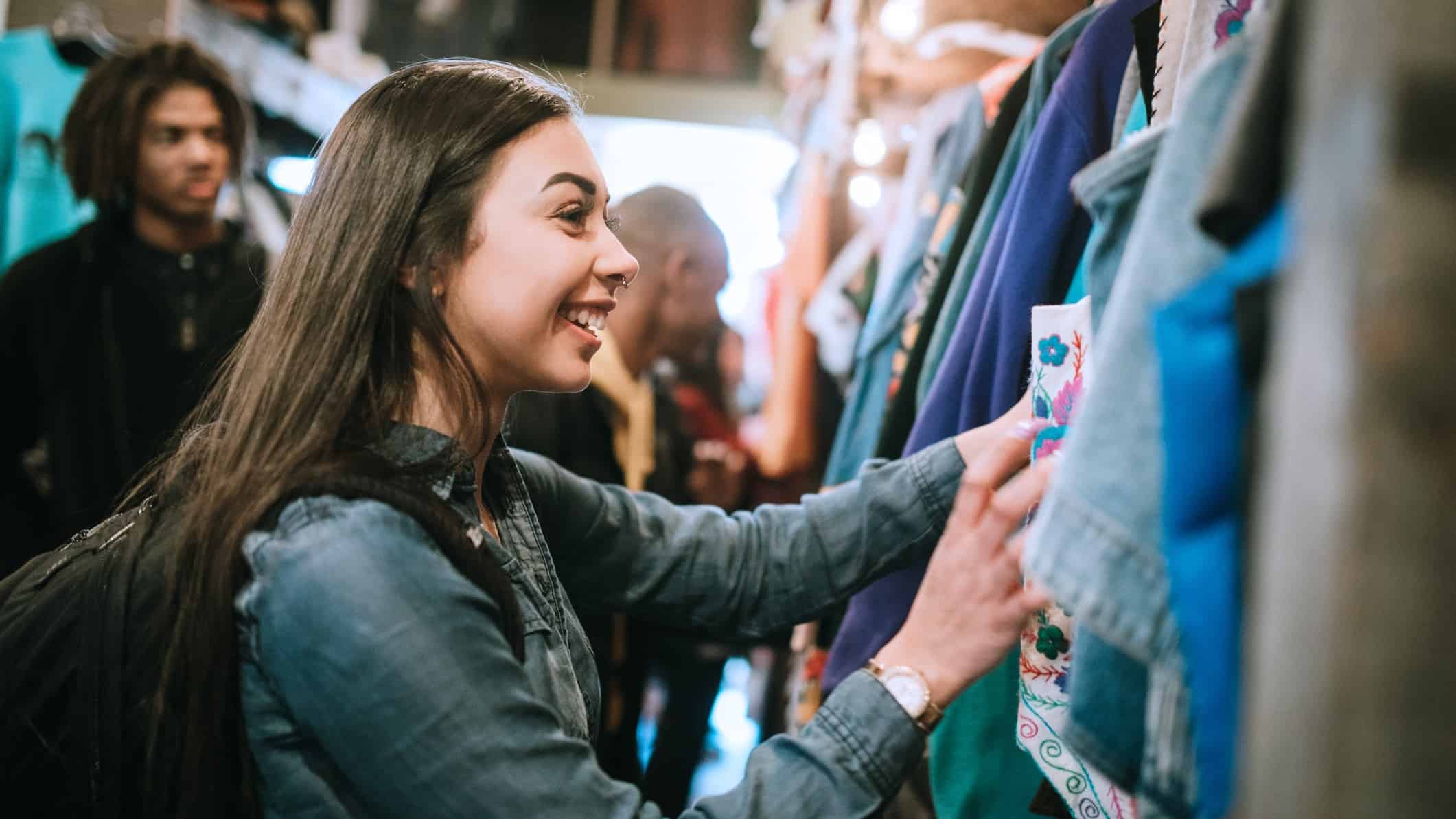
After living in Alaska for most of my life, I moved to Las Vegas before heading to Sacramento.
I was surprised by the ways my lifestyle changed and my mental health improved.
Now, I can walk much more often, and I've had an easier time getting to know neighbors.
I never planned to spend my life in Alaska.
My parents met there during college, made it their home, and I was born and raised in Anchorage. Despite a deep desire to move, circumstances kept me in my home state for many more years than I ever anticipated.
Fast forward to 2020. After spending nearly half my life in Alaska, my husband and I decided it was time to try living in the continental US.
We researched our options and settled on Las Vegas, where we spent almost five years before moving again to Sacramento in February.
I've always traveled, but living in California changed my lifestyle in ways I never anticipated.
Winters used to be rough on my mental health
Living in a place where it's cold and dark for several months at a time can take a toll on even the toughest person. During Alaska winters, I'd go to work in the dark and come home in the dark.
Summers bring almost 24 hours of daylight, but that doesn't necessarily mean sunshine, as Alaskan summers can also be quite rainy. The light made sleep extremely difficult, too.
Growing up, this just felt normal. As I got older, though, I'd start to feel exhausted knowing we'd likely have snow on the ground from October through mid-May.
I often found myself experiencing a deep sense of gloom during the winter months that I couldn't seem to shake.
Shortly after we left Alaska, I noticed my mood had significantly improved. I had more energy, was sleeping better, and spent regular time outside.
California has much more sunshine year-round. I learned that I really needed vitamin D, and moving to a sunnier place gave my mental and physical health a huge boost.
Walking has become a much bigger part of my life
caption
Jody Ellis
Generally speaking, Alaskan towns don't offer a lot of walkability. Add in icy walkways piled with snow, and a winter walk can feel downright treacherous.
Our new home in California, though, offers several restaurants and cafés within easy walking or biking distance.
Strolling through nearby neighborhoods to get a coffee has become a favorite weekend activity that helps me feel connected to my new city.
I can shop for farm-fresh produce and even garden
caption
Jody Ellis
A quick caveat: Alaska does have farmers' markets. They're seasonal, though, and those seasons are often short.
Sacramento, on the other hand, has regular weekend markets with a rotating supply of produce that never fails to impress. I love being able to purchase fresh fruits and vegetables, which can be harder to come by up north.
I've also started gardening more — something Alaska's short seasons made challenging — and enjoying year-round flowers in my yard, as well as seasonal goodies from my vegetable garden.
We take real road trips to different cities and states
I've found that there's pretty much no such thing as a weekend road trip out of Alaska. The state is vast, with some remote areas only accessible by plane.
You can, of course, drive to other towns within the state, or head out to camp at the many gorgeous lakes and rivers, but exiting the state itself requires crossing the border into Canada and driving at least another few days.
Living in Sacramento means we can drive to the ocean or mountains in less than two hours, or arrive in Napa for wine tastings in about an hour.
A day's drive can take us to Southern California, Nevada, or Oregon, with plenty of options in between.
I know my neighbors and enjoy a sense of community
Like the bears that live there, Alaskans tend to hibernate in winter, which can lead to less interaction with friends and neighbors.
Sacramento has been the complete opposite. Now, I'm in a close-knit city with tons of street art, galleries, and locally owned shops.
My creative soul gets fed on the daily here, and I actually know — and like — my neighbors. Nearly everyone we meet is welcoming and kind, and the sense of belonging I have here has been the biggest change of all.
Alaska will always be home, and I cherish the years I spent there and everything it taught me. Still, moving away ended up being one of the best decisions I've ever made, and I don't regret making California my new forever home.
The author, shown here on Mount Titlis in Switzerland, has visited 20 countries with her family.
Courtesy of Varisha Tariq
My dad prioritized travel over possessions, leading our family to visit 20 countries together.
He prioritized family trips to places rich in culture and history.
These shared travel experiences strengthened our family bonds and inspired lifelong gratitude.
When I was 10, I remember preparing for the most exciting adventure of my life — so far. My family and I were going on a cruise from Mumbai to Lakshadweep Island. I could hardly stand the anticipation.
My father, in those days, was still an up-and-coming businessman, and paying for our travels didn't come easy. But he always made sure to prioritize travel. To me, it seemed that we took the nicest flights, stayed in beautiful hotels, and had the best time on the cruise and on the trip.
From the moment we got home from one vacation, I waited patiently for news of our next family trip. My family made a point of traveling somewhere new every year, often visitingplaces that were rich in history, culture, or biodiversity. Memorable destinations included Singapore's fabulous bird sanctuary, Sri Lanka's pristine beaches, and going on a Kenyan safari.
I always came back from our travels feeling so enriched. The world, after every trip, seemed so much bigger, but also so much closer to us.
The author (far right) on a trip to Lakshadweep Island with her family when she was 10.
Courtesy of Varisha Tariq
Of course, traveling with family can be stressful
Were the trips always pleasant? Of course not. Sometimes we fought because we didn't always agree on the proposed itinerary. Sometimes we struggled because of lost cameras, bags being stolen, someone getting sick, or getting bad news from back home. We also have been incompatible on trips, our differences of opinion getting the better of us.
The author's parents pose for a romantic picture in front of the Eiffel Tower during a family trip.
Courtesy of Varisha Tariq
But looking back, those aren't the memories I hold dearest. Instead, I remember the time my family sat together at a park in Switzerland or when my dad jokingly got down on one knee in front of my mother while we were near the Eiffel Tower. I feel so much joy whenever I look at our travel photos.
We still travel together, even though my siblings and I are grown
At family gatherings, we often tell stories about our travels. We'll recall the almost missed train of Geneva, the Primark-obsessed shoppers of London, the Bailey's farm of Ireland and its delicious cheesecake, or my weeping face after I realised our camera had been stolen in Malaysia. Or, most recently, the taxi driver who scammed us in Dubai. Dubai was our 20th International trip together, a significant milestone.
The author admits that she and her family don't always get along during their travels, but says they mostly remember the good times.
Courtesy of Varisha Tariq
Last year, I decided to take my sister on a European trip, ending with us attening a Taylor Swift concert in Amsterdam. We are the first women in our family to travel internationally independently. I remember that day, gelato in our hands, sitting on a park bench somewhere in Central Florence, we just started weeping. In that moment, we felt grateful for the life our parents provided for us, one filled with many adventures and memories, which gave us the confidence to go on our own adventure.
When we returned home, we thanked our father. In a typical dad fashion, he didn't show any emotion to us, nodding his head. I'm pretty sure his eyes shimmered with unshed tears, though.
I'm grateful for the trips my father made happen
My father instilled a love for travel in all of us, especially me, inspiring my career as a travel writer and dreams to one day begin taking my own family on similar trips.
More than that, he broadened our horizons to an impossible level. Travel is one such experience that puts to the test all your familial bonds, but for us, they have also been stories that have become highlights of our lives, and I have so much gratitude for knowing this.
Illustration by Samuel Boivin/NurPhoto via Getty Images
TikTok Shop said it crossed $500 million in US sales over the four-day Black Friday Cyber Monday sprint.
The company onboarded more household-name brands like Disney and Samsung for this holiday season.
TikTok Shop remains a small piece of a much bigger US e-commerce market led by Amazon.
The holiday season is high stakes for TikTok Shop, which is trying to cement itself as a meaningful player in a crowded US e-commerce market.
This year, the shopping platform crossed half a billion dollars in US sales over the four-day holiday period between Black Friday and Cyber Monday, a company spokesperson said. TikTok measures sales by adding up spend via gross merchandise volume, or GMV.
That figure is a relatively small piece of the broader e-commerce pie, which is dominated by Amazon. Overall, US e-commerce spend between Thanksgiving and Cyber Monday was $44.2 billion, according to an Adobe analysis of direct online commerce transactions.
TikTok Shop is a relatively new player in US e-commerce, having officially launched in the country in September 2023 after a testing period.
Last year, the platform pulled in around $100 million in single-day US sales on Black Friday. While TikTok has historically relied on small and midsize businesses to drive sales, this year it featured a new crop of holiday listings from household name brands, including Ralph Lauren, Samsung US, and the Disney Store.
"A lot of more established major brands and sellers have felt more comfortable investing in TikTok, not just in advertising, but in its shopping and commerce features, which have also become more mature," said Sky Canaves, a principal analyst at EMARKETER, Business Insider's sister company.
One TikTok Shop staffer told Business Insider that the $500 million Black Friday week result seemed like a win.
"Not bad for official year two," they said.
Whether TikTok's owner, ByteDance, will be happy with the performance is another question. Even as the company announced its nine-figure Black Friday earnings last year, internally, leadership was disappointed with the US team's results, Business Insider reported earlier this year.
EMARKETER estimates that TikTok Shop will cross $15.8 billion in US sales this year. For context, EMARKETER estimates that Amazon's US sales will reach about $500 billion.
Social commerce, as a category, has seen healthy growth this year.
Live-shopping app Whatnot said it drew in $75 million in sales on Black Friday this year, triple what it pulled in for 2024. And Cyber Monday purchases driven by social media were up 56.5% from a year ago, according to Adobe.
EMARKETER expects social-commerce spending to cross $100 billion for the first time in 2026, driven in part by affiliate links from content creators who drive spending on traditional e-commerce platforms like Amazon.
When my family of seven runs into unexpected costs, we start no-spend weeks.
During those weeks, we limit spending, use everything in the pantry, and look for free activities.
I found that no-spend weeks help us stay connected and intentional.
When my partner and I just finished a massive laundry room remodel that stretched our budget a bit, the worst happened. The contractor was putting the finishing touches on the floorboard. He pulled up a piece of wood and found black mold near the fridge from a leak, and kept finding more and more, down through the floorboards to the basement.
We didn't know that our home remodel "part two" had just commenced, costing us thousands.
This scenario and others are just part of daily life in a family of 7: a pediatric dermatology bill, emergency baseball gear, and bodywork repair when a teen threw a rock at my van.
When life happens, we pull out our go-to strategy, which we've gamified for our kids — the no-spend week challenge.
How it works
When our budget gets tight, the whole family takes a step back from spending for a certain amount of time. It can last a week or just a few days. Sometimes, we refer to it as "holding the line" — the line being the credit card balance.
It works best with a clear goal and an end in sight, such as a few days from the end of a credit card cycle, when we are happy with how much we've spent.
Of course, we spend what we really need to — like food — but no extras.
Who knows how much longer our five little kids will still think this is fun, but for now, it's a lifesaving strategy when a fridge leak or a medical bill threatens our financial peace.
We start making easy cuts to our budget
My favorite afternoon splurge is a stop at the best coffee store in town, which is not a chain and thus has some higher prices to stay afloat. This is the first weekly splurge to go, or at least to move to next week.
The author's kids love playing outside, which saves her money.
Courtesy of Alexandra Frost
Amazon is always a source of serious spending in our house — from detergents to underwear, toilet paper, and paper towels to staplers. Many things in our home that fall into the pretty essential category have come from Amazon. Yet, anytime I go on the app, it seems to quickly add up to $75.
But during no-spend days or weeks, I try to avoid Prime completely and just include true essentials with our weekly grocery order instead. Nobody really needed that new Apple watch band or extra pair of leggings anyway.
We focus on intentionality
If you look in my fridge right now, there are three cauliflower heads. That's not because we love cauliflower that much; it's because I often order the same things on repeat for our weekly grocery bill, whether we really need them or not. But during no-spend weeks, I pare down the groceries to things we truly need.
I also take better stock of the pantry and cabinet to see what we truly need. The side effect of this is that we are finally able to get to the bottom of the pasta box in the pantry or use up the least favorite kind of chips the kids haven't eaten.
I also find myself getting more creative during no-spend days. We wrapped a birthday present with a funny Christmas gift bag because, well, who cares. We made smoothies with fruit that's going bad instead of buying some. There's something immensely gratifying about using up things you already have.
The kids even jumped in, trying to think of creative ways to do things for free those weeks. They recently loved running up the huge hill by the park and watching the sunset. All of it was free.
No-spend weeks help us save money and bring us closer
I make sure my family is never deprived during no-spend periods. If someone needs an emergency pair of shoes, I'll find myself saying, "Sure, let's talk about it next week after I get paid a bit more." And then, we do, and they are one step closer to adults who can handle delayed gratification.
In limiting our spending, we are all working together to make our lives more comfortable in the long run. It isn't always easy, but we always make it out the other side.
No-spend days and weeks unexpectedly show us what's really important and what we really do need — connection and intention.
Ruchir Sharma says AI's explosive surge looks like a bubble that may burst in 2026.
Jonathan Raa/NurPhoto via Getty Images
Economist Ruchir Sharma says AI exhibits the signs of a bubble.
Big Tech's AI spending is soaring fast, mirroring the dot-com overbuild before the 2000 crash.
Sharma warns that higher interest rates could burst this bubble.
The AI frenzy that's driving markets and corporate spending may be heading for a hard landing in 2026.
In an interview with Norges Bank Investment Management CEO Nicolai Tangen, renowned economist Ruchir Sharma said that the AI surge now checks every box on his four-part bubble checklist. And a single trigger could bring it all crashing down in 2026 — higher interest rates.
Higher rates reduce the availability of cheap capital that's been fueling AI investment and put downward pressure on growth-stock valuations.
Sharma's 'four O's' playbook
To diagnose bubbles, Sharma uses what he calls the four O's. He said the AI boom is flashing red on all four: overinvestment, overvaluation, over-ownership, and over-leverage.
Sharma said that AI and tech spending in the US has surged at a rate that is comparable to past bubbles, such as the dot-com era. Valuations of major AI players are also approaching bubble territory when judged by long-term earnings and free cash flow.
At the same time, Americans are holding a record share of their wealth in equities, and most of those trades are AI-related, he said.
And after years of running cash-rich balance sheets, Big Tech is now issuing massive amounts of debt to fund the AI arms race.
Over the last few months, Meta, Amazon, and Microsoft have become "the biggest issuers of debt," Sharma said — a classic late-cycle bubble sign.
Sharma estimated that roughly 60% of US economic growth this year has been driven by AI, both through companies pouring money into new infrastructure and through the stock-market wealth effect lifting spending among high-income consumers.
But the underlying economy looks much weaker without it, he said — and that's exactly why Sharma thinks the AI trade has become so dangerously crowded.
"Outside of AI, there's a lot of weakness in the US economy," he said.
"This big bet on AI better work out for America — because if it doesn't work out, then I think there's a lot of trouble for this country ahead," he added.
Why 2026 could be the breaking point
Sharma doesn't pretend he can call the exact top. But he said one thing bursts every bubble, and that is interest rates going up.
He identified three conditions that are already building. First, inflation remains "sticky," and far from the Fed's 2% target, he said. Second, the Fed has missed its target for five consecutive years and may soon face pressure to halt its interest rate cuts. Thirdly, AI-driven investment has sustained strong growth, which could push inflation higher again.
"At the slightest sign that interest rates are going to go up, I think that's your sign that, 'Okay — this is done now,'" Sharma said.
That's because higher rates make borrowing costlier and slash the valuations of high-growth companies — the exact conditions that tend to burst bubbles.
He said he expects that moment to likely arrive in 2026 — a view shared by other veteran investors, but on different timelines.
Greg Jensen, co-chief investment officer at Bridgewater Associates, said on Tangen's podcast last week that "the bubble is ahead of us" without giving a timeline, while Mel Williams, cofounder and partner at TrueBridge Capital Partners, warned of "a lot of carnage" over the next 10 years.
A 'good bubble' — but still a bubble
Sharma said the AI boom could be a "good bubble" that could ultimately boost productivity — like past tech manias that overshot but left valuable infrastructure in their wake. But that doesn't mean investors won't get hurt.
Still, one area he thinks could shine after the correction is quality stocks — companies with high returns on equity, strong balance sheets, and consistent earnings.
That category has badly underperformed the market during the AI frenzy, creating what he called "the single best investment idea" heading into 2026.
A flight from Rome to London tried and failed three times to land in high winds.
It diverted to Cologne, Germany, before going back to Rome.
The plane finally touched down at London Luton Airport 10 hours later than planned.
Passengers flying to London were delayed by 10 hours after high winds saw their plane diverted to Germany before returning to its origin, then eventually reaching the UK.
Wizz Air Flight 6003 took off from Rome on Monday evening, scheduled to fly for about two hours to London Luton Airport.
However, the Airbus A321neo was unable to touch down on its first attempt. At the time, wind gusts were up to 31 knots, or about 35 miles per hour.
Data from Flightradar24 shows the plane circled over nearby Stevenage before descending for a second aborted landing attempt. A third attempt at landing was also unsuccessful.
The pilots then turned the plane away from London, flying over the Netherlands before diverting to Cologne, Germany.
An airline spokesperson told Business Insider the flight diverted "due to high winds at Luton."
The Airbus A321neo landed there at 11:19 p.m. local time — over three and a half hours after leaving Italy.
However, that wasn't the end of the journey.
"The flight then returned to Rome, before departing on December 2 for London Luton later that morning," the Wizz spokesperson said.
Flight-tracking data shows the plane took off from Cologne around 1 a.m. local time and headed back to the Italian capital.
It departed Rome again at 5:43 a.m. before finally landing at London Luton Airport shortly before 7 a.m. local time — 10 hours later than initially scheduled.
The Wizz spokesperson said passengers were given meal vouchers for the airport and offered rebooking options if they preferred.
"We apologise for the inconvenience this may have caused some passengers," they added. "The safety of our passengers, crew, and aircraft is our utmost priority."
This isn't the first time that high winds have caused unusually long diversions. They're more common with European budget airlines that have bases across the continent, where it's easier for them to reroute passengers.
During a storm in 2024, a Ryanair flight from Manchester, England, to Dublin diverted to Paris — nearly 500 miles away. That turned what was supposed to be a 45-minute trip into one lasting some nine hours. During the same storm, another Ryanair flight, from Ireland to Scotland, diverted to Cologne.
XAI employee Parsa Tajik wrote that the 36-hour work stint left him "dead" but "super energized."
Nikolas Kokovlis/NurPhoto via Getty Images
XAI employee Parsa Tajik recently posted that he worked about 36 hours with no sleep. His colleagues celebrated the effort.
"Work life balance is great, in-fact we recommend it to all our competitors," one xAI employee responded.
Elon Musk's companies, such as xAI and Tesla, are known for their long hours and "hardcore" work cultures.
A 36-hour work sprint at xAI? Cue the applause from colleagues.
Elon Musk's companies have long been known for their intensive work cultures. During Tesla's production ramps, some employees slept in their cars or, in Musk's case, on the factory floor. When Musk took over Twitter, he said to embrace an "extremely hardcore" schedule or be laid off.
At xAI, one employee recently said that they worked for a day and a half straight, sparking responses from their colleagues — and Musk himself.
"Last night I left the @xAI office after ~36 hours of working with no sleep," xAI employee Parsa Tajik wrote alongside an image of himself inside his Tesla Cybertruck. "Although I was dead, I was also super energized. Incredibly grateful to be a part of this team. Happy Thanksgiving!"
Tajik's comments are full of fellow xAI employees voicing their support.
"And got 192 hours' worth of work done," one wrote. "Bro is a unicorn among unicorns."
"Incredibly grateful to be working with and learning from you," another wrote.
"Work life balance is great, in-fact we recommend it to all our competitors," Jaiswal wrote. "Don't be angry with this post. You're free to disagree & let us cook."
XAI has had a busy autumn. Musk's AI company had mass layoffs and significant leadership changes. At a September all-hands meeting, a company leader told workers that the company had no further planned layoffs — before xAI cut more than 100 jobs.
The company has also moved quite quickly, possibly a product of its intense work culture. XAI released Grok-1 in November 2023 after four months of development. Though the company was founded just over three months after ChatGPT's launch, xAI has already grown to a July valuation of $113 billion, per PitchBook.
Musk's businesses have a history of late nights. The CEO has famously said he slept on the factory floor during theTesla's Model 3 "production hell." Twitter's former director of product management, Esther Crawford, posted a photo of herself sleeping on the floor after Musk's takeover. (The photo was staged, according to the book "Character Limit," and Crawford called it "cheeky.")
Tajik's post, which now has over 11,000 likes, also drew concern from some online users who wondered if he drove home while sleep deprived.
"This is like bragging that you drove home drunk," wrote Jason Ginsberg, Cursor's head of product engineering. "Being awake for 36 hours is equivalent to a BAC of 0.16%. The legal limit is 0.08%."
In a reply three days later, Tajik wrote that he apologized to "nobody," and that his Tesla FSD carpool with two other engineers took him safely home.
"I've been working long hours for many years," Tajik wrote. "This is how I got to @xAI from practically being homeless in 2020. Exceptional results require exceptional effort. Now is not the time to slow down."
A growing number of older homeowners are subject to the capital gains tax on home sales.
Some baby boomers say they're holding onto their homes so their kids can inherit them tax-free.
This article is part of "The Great Transfer," a series that highlights the mechanics of wealth transfer and the human priorities behind them.
Duane Flemming and his wife, Chris Currie, would like to downsize.
The retired couple has spent 41 years in their four-bedroom house in a suburban community 30 miles east of San Francisco. The two-story home has gotten too big for them, and the stairs are more difficult to navigate these days. Plus, they'd like to avoid expensive renovations and upkeep. But Flemming, an 81-year-old retired veterinarian, is worried about the hefty tax they'd have to pay on their home sale profits.
"We don't use three-quarters of the rooms we've got," he said. "We don't need it, and we would love to be able to get rid of it in an easy fashion, without having all of those huge expenses that are going to cost us down the line."
Since 1997, home sellers have faced a federal capital gains tax on home sales with profits over $500,000 for married couples and $250,000 for single filers. The tax can be as high as 20% of the profits over the threshold, and is determined by income. That doesn't include potential state taxes.
Flemming estimates that his house has appreciated about $800,000 over the last four decades, and that he'd have to pay between $30,000 and $60,000 in capital gains taxes on his home sale. He worries that the remaining cash won't be enough to buy a new home and pay for rising long-term care costs on a fixed income.
"When you don't know what the future holds, and you've got a limited ability to increase your income, you start to be a little bit more cautious," Flemming said.
Duane Flemming, 81, says the capital gains tax on home sales has discouraged him from selling his home and downsizing.
Photo Courtesy of Duane Flemming
The share of home sales subject to the capital gains tax has more than doubled in the past few years, in large part because home values have soared. About 34% of US homeowners could exceed the $250,000 cap for single filers if they were to sell, and 10% could exceed the $500,000 threshold, the National Association of Realtors found in a 2025 report. That's up from 1.3% of US sellers in 2003 and 3% in 2019, the property data firm CoreLogic found.
If the capital gains tax had been adjusted for inflation when it was implemented, the $250,000 cutoff for individual home sellers in 1997 dollars would be about twice as high — $496,000 — in 2024 dollars.
If Flemming and Currie hold onto their home until they die, their two adult children will be able to inherit it with what's called a stepped-up tax basis, meaning they'd only have to pay capital gains taxes on the amount the home appreciates after they inherit it, erasing the tax burden on the increased value over their parents' lives. Federal estate taxes would only apply if their children inherit at least $28 million in assets — far more than the value of their parents' home.
These tax policies are incentivizing some older homeowners to hang onto their homes for the rest of their lives, making it harder for younger families to buy larger homes.
The growing burden of the capital gains tax, particularly on empty nesters, has long created a so-called "lock-in effect," discouraging older homeowners from moving into homes that better suit their needs. As more people have been affected, it's caused a "gumming up of the market," said Jim Parrott, a nonresident fellow at the Urban Institute who served as a housing policy advisor in the Obama White House.
The real-estate company Redfin reported that as of 2022, empty-nest boomers owned twice as many homes with three or more bedrooms as millennials with kids owned. This "giant mismatch," as Parrott called it, between the homes people are living in and where they'd like to live, is having ripple effects across the housing market, particularly in the most in-demand and expensive places. "The knock-on effects for what's a completely reasonable decision for empty nesters is utterly unreasonable in its macro impact on the housing market," he said.
The pros and cons of reform
There's some bipartisan support in Washington for reforming the capital gains tax for real-estate sales. President Donald Trump has even said his administration is looking into eliminating it entirely.
Rep. Jimmy Panetta, a California Democrat whose district includes several pricey coastal regions, has introduced legislation to double the tax exclusion to $500,000 for individuals and $1 million for joint-filing couples and index it to inflation.
Because the tax disproportionately impacts wealthier people, offering relief could be regressive. But some liberals support reforming it in a targeted way to relieve some of the lock-in effect. Parrott has proposed a more modest reform: doubling the exemption for the tax and indexing it to inflation for sellers who are 65 and older or who've owned their homes for at least a decade.
Other tax policy experts don't think another tax break for affluent Americans is strategic or would move the needle on housing affordability.
Tax relief would mean less revenue for the federal government at a time when the US debt is soaring, and wealthy households are already benefiting from a slew of tax breaks pushed through under Trump. "From a national debt perspective, this seems like the worst possible time to deliver a big capital gains tax cut," said Daniel Hemel, a professor of tax law at New York University.
Hemel also isn't convinced that reforming the tax would do much to loosen up the market and cool home prices. The tax causes a delay in sales, but eventually homeowners die and their kids put the houses on the market, he said.
"You get a delay in the time of sale, but people don't live forever," Hemel said. "We're seeing some houses on the market now that wouldn't have been on the market now, but for capital gains taxes. And then there are also some houses that would have been on the market now that aren't on the market now because of capital gains taxes."
Of course, one way to avoid the tax while simultaneously downsizing is to move out and rent the place.
Patrick G., a 74-year-old retiree based in Colorado, is considering doing just that. His wife died in 2023, and those who lose a spouse are eligible for the $500,000 tax exemption for just two years following their death. Patrick said he's more likely to rent out his four-bedroom home so that his kids can inherit it with the stepped-up basis.
"If it becomes inevitable that the home in Colorado is no longer feasible, then most certainly, I would probably turn it over to a property manager and let it become either an income stream or an appreciating asset for my kids when I pass," said Patrick, who requested partial anonymity to discuss his personal financial situation.
Collin Goodall, an artist who lives in Rumson, New Jersey, is in a similar position. His wife recently died, and he's deciding whether or not to sell the house he's owned and lived in for the last three decades. If Zillow's estimate is accurate, the home is worth about $1.2 million more than he bought it for. He's considering moving and renting his home, or just renting out a room while he lives there.
"I would not like to make a decision about downsizing, driven by, am I going to save a bunch in taxes. That shouldn't be what I'm thinking about," he said.
Parrott conceded that reforming the capital gains tax is far from a silver bullet for housing affordability. It's a "modest solution that will have a modest impact," he said. But he noted that fixing the housing supply shortage requires "a heterogeneous set of solutions" to a bunch of different problems.
/* .insider-raw-embed + p { display: none; } */
// The Great Transfer
const seriesTitle = “The Great Transfer”;
// Presented by
const text = “Presented by”;
// 68dc0f771c1f80efbec49b06
const sponsorLogoID = “68dc0f771c1f80efbec49b06”;
// Edward Jones 2
const altText = “Edward Jones 2”;
//https://www.businessinsider.com/category/the-great-transfer
const hubOrCatURL = “https://www.businessinsider.com/category/the-great-transfer”;
I'm always excited to see how Las Vegas finds new ways to dazzle and delight me in December.
Jill Schildhouse
I go to Las Vegas often, and love visiting in the weeks between Thanksgiving and Christmas.
The city goes all-out with holiday decorations, especially MGM's Bellagio, which has epic displays.
It also has unique seasonal activities, like ice skating on a rooftop rink below fake-snow showers.
The desert seems like an unlikely place to visit for some of the best holiday displays in the country, but the Las Vegas Strip is full of surprises.
I've been on dozens of trips to Vegas, but one of my favorite times to visit is still the period between Thanksgiving and Christmas.
There's something extra special about exploring a city fully decked out in holiday cheer while daytime temperatures are still pleasantly high.
Here's why visiting Vegas during the holidays is a tradition that brings me joy each year.
Las Vegas has some of the most incredible holiday decor and displays that I've seen
MGM's Bellagio usually has some of my favorite holiday displays.
Jill Schildhouse
Sin City glitters year-round, but it puts its best foot forward during the holiday season with lights, trees, garlands, and more.
My favorite property this time of year is MGM's Bellagio, which typically hosts the most spectacular holiday displays.
Last year, the resort's botanical gardens ran a themed exhibit called "'Twas," and visiting felt like exploring a poem that's been brought to life.
I was mesmerized by the towering 45-foot tree dressed with over 35,000 mini LED lights and 8,700 ornaments and crowned with a glistening Swarovski star.
MGM's Bellagio has themed displays during the holiday season.
Jill Schildhouse
My other favorite vignettes here included a miniature train, a gilded sleigh pulled by reindeer made of botanical elements, Drum Major Dolly (the Bellagio Bear) covered in 7,500 preserved red and black roses, and a carousel of giant horses.
Last year, I found another beautiful spot while having brunch at Veranda at the Four Seasons Hotel Las Vegas (housed within Mandalay Bay).
The decorated spiral staircase I found while crunching at Four Seasons Hotel Las Vegas blew me away.
Jill Schildhouse
I was obsessed with the space's wintry colors and dreamy grand staircase, and I hope to visit it again soon.
The city has unique festive activities
The Cosmopolitan of Las Vegas has been creating an epic rooftop ice rink for years.
Jill Schildhouse
I never miss the ice rink at The Cosmopolitan of Las Vegas.
The rooftop Boulevard Pool undergoes a magical transformation into the ultimate winter wonderland featuring a 4,200-square-foot ice rink with amazing views of the Strip.
I enjoy watching classic holiday films on the 65-foot marquee, toasting s'mores over a fire pit, sipping festive cocktails at The Chalet (a reimagined mountaintop village), and watching the enchanting faux-snow showers held every half hour most evenings.
I love grabbing a cocktail at The Chalet.
Jill Schildhouse
If you're traveling with little ones, stop by Mandalay Bay for the Santa in the Shipwreck at Shark Reef Aquarium.
With each paid admission, children 12 and under receive a complimentary photograph with Santa Claus. He's known to put on scuba gear and plunge into the exhibit, too.
I also love getting spa treatments in Vegas, and ones with added holiday flair really get me in the spirit of the season.
Some highlights include the peppermint body polish at Voie Spa & Salon at Paris Las Vegas, and the wintery massage at The Spa at Flamingo Las Vegas that uses notes of cinnamon, pine, and clove.
Vegas also has tons of places for holiday shopping
The Forum Shops at Caesars are often festively decorated for the holidays.
I found no shortage of holiday cheer at The Forum Shops at Caesars, where over 150 retail stores featured Black Friday sales against a backdrop of seasonally decorated statues and columns.
The Miracle Mile Shops at Planet Hollywood also have over 150 shops offering sales all month long.
When I visit Vegas around the holidays, I even pack an extra tote bag, so I have room to fly my new purchases home.
This story was originally published on December 8, 2024, and most recently updated on December 2, 2025.
We like to shop at Trader Joe's for delicious ingredients to make quick, easy meals.
Robert Rice
My wife and I are nurses who drive about 35 miles at least once a month to shop at Trader Joe's.
We love to buy ingredients that help us make quick, easy meals, like pesto chicken and Italian orzo.
We also like to make Greek-style gyros using Trader Joe's beef and lamb gyro slices and pita.
As busy nurses, my wife and I know that finding time to cook can be difficult. So, we like to look for easy-to-make meals that are both quick and delicious to feed our family of eight.
Although most of our children are picky and would usually prefer chicken nuggets or plain pasta, we're more adventurous with our palates.
Despite the roughly 35-mile drive, one of our favorite places to shop for groceries is Trader Joe's. We love that the store has foods inspired by global cuisines, made accessible for busy people like us who don't always have the time to make much from scratch.
Here are four of our favorite meals to prepare, featuring ingredients from Trader Joe's.
Trader Joe's gyro slices, pita bread, and tzatziki are a winning combination
We've found that gyros are very easy to make with Trader Joe's beef and lamb gyro slices.
Robert Rice
Trader Joe's precooked beef and lamb gyro slices take less than a minute to heat on a griddle or in a frying pan.
We like to take a few slices of the meat and layer them on a piece of pita bread with spinach, tomato, and onion. I prefer the original pita bread, and my wife likes the whole-wheat kind.
Then, we top off the gyros with Trader Joe's tzatziki, which also makes an excellent dip for crunchy pita chips.
One of our favorite lunches includes Trader Joe's rice, carne-asada burritos, and roasted corn
We like to prep this meal the night before and reheat it for lunch.
Robert Rice
For an easy lunch we can prep the night before, we each add a Trader Joe's carne-asada burrito and some rice from Trader Joe's Cuban-style citrus-garlic bowl to a microwavable glass container.
Then, we add roasted corn. It pairs well with the spicy carne asada — the roasted poblano chiles give it a slick kick — and the sweetness of the rice.
The best part of this meal is that all three items can be prepared using only a microwave oven.
We love pairing Trader Joe's pesto chicken with Italian orzo and grape tomatoes
Trader Joe's pesto chicken breasts are boneless and skinless.
Robert Rice
For a taste of Italy, we enjoy preparing Trader Joe's pesto chicken and Italian orzo with Lipman grape tomatoes.
We season the tomatoes with olive oil, salt, pepper, and garlic powder, then place them in the center of a baking dish surrounded by the pesto chicken, and let it cook for 25 minutes at 400degrees Fahrenheit.
Next, we add the orzo and two cups of chicken broth. After about 10 to 12 minutes, the orzo should be tender, and all the broth should be absorbed.
To finish, we top the dish with freshly grated Parmesan and pair it with crusty Italian bread and olive oil.
Trader Joe's beef bulgogi and Japchae help us make Korean barbecue at home
Trader Joe's vegetable spring rolls include kale, edamame, mushrooms, and shredded tofu.
Robert Rice
Our oldest son loves Korean barbecue, and Trader Joe's beef bulgogi lets us have a delicious taste of it at home.
First, we heat the bulgogi in the microwave and add it to a wok. Then, we defrost two packages of Trader Joe's Japchaein the microwave and add them to the wok as well.
The light, thin glass noodles absorb all the flavor of the bulgogi broth after simmering for a few minutes.
Trader Joe's vegetable spring rolls also make an excellent appetizer for this meal. To prepare, we defrost them in the microwave, then briefly pan-fry them in a light oil until they're crispy on the outside.