• Is China about to reignite ASX 200 coal shares?

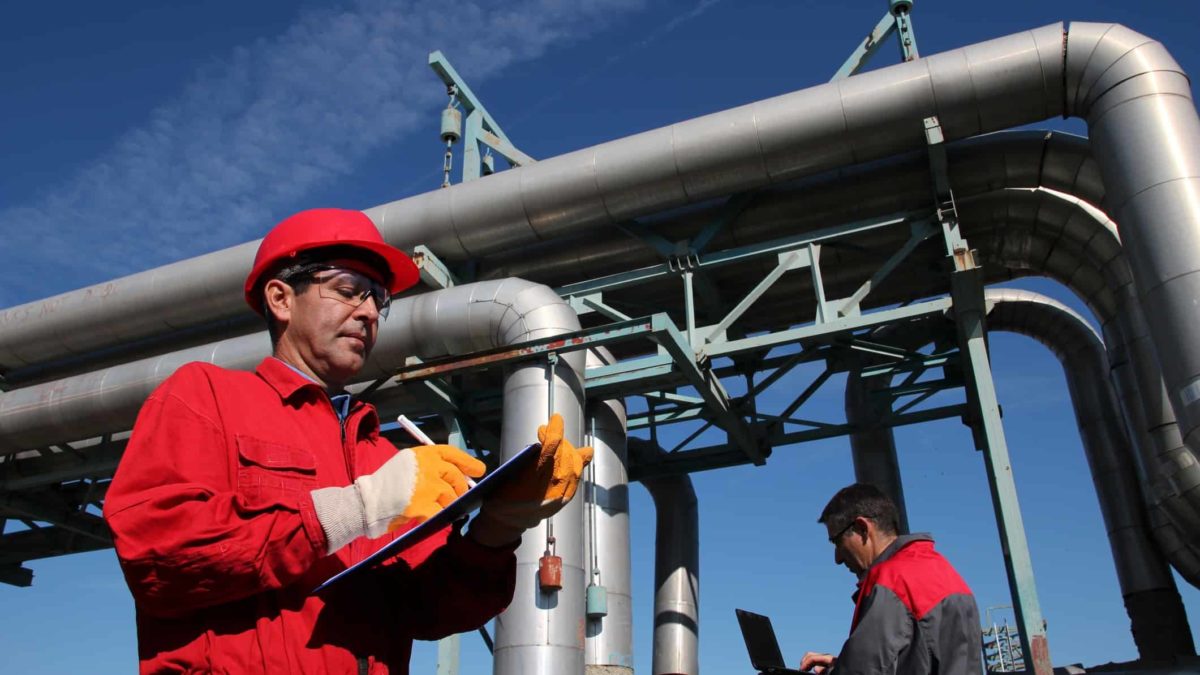
    Happy coal miner.Happy coal miner.

    S&P/ASX 200 Index (ASX: XJO) coal shares are off to a solid start in 2023.

    Having all more than doubled their share prices last year, Whitehaven Coal Ltd (ASX: WHC), New Hope Corporation Limited (ASX: NHC), and Yancoal Australia Ltd (ASX: YAL) are all in the green in this first week of trading in the new year.

    This comes in the wake of a smashing year for the big coal stocks in 2022.

    ASX 200 coal shares enjoyed some gale force tailwinds as the price of thermal coal – used to generate electricity – soared to record levels.

    Demand for high-quality Aussie coal lifted across the world, with the notable exception of China, following Russia’s invasion of Ukraine and the resultant global sanctions on Russian energy exports.

    China’s ban on Aussie coal imports entered its second year in 2022. The unofficial ban was put in place, in part, as a response to Australia’s support of an inquiry into the origins of the COVID virus.

    But now, early rumours suggest, that China’s Aussie coal ban could be lifted as soon as 1 April. Which would certainly be welcome news to the ASX 200 coal shares.

    All eyes on China’s National Development and Reform Commission

    The Australian and Chinese governments have been making some progress in mending their frayed relations.

    In a sign the improved sentiment may be paying off, Bloomberg reports China’s National Development and Reform Commission this week discussed reopening the door to some Aussie coal imports.

    People familiar with the matter, who wished to remain anonymous, indicated that China Baowu Steel Group Corp, China Datang Corp, China Huaneng Group Co and China Energy Investment Corp could be allowed to make new purchases in 2023.

    Imports, much of which would likely be sourced from the big ASX 200 coal shares, could restart by 1 April.

    The immediate impact is unlikely to be huge, in part because the big coal miners can’t simply turn a tap to ramp up production. That takes many months or years even.

    But Ray Attrill, head of currency strategy at National Australia Bank Ltd (ASX: NAB) in Sydney, noted that if China reopens its ports to Australian coal imports, it could send prices higher.

    There will be an overall “impact on sentiment from evidence of improving relations with China,” he said.

    ASX 200 coal shares have been on fire

    As mentioned above and you can see in the charts below, ASX 200 coal shares have been strong outperformers over the past 12 months.

    And the big miners could be in for some additional tailwinds in 2023 if China indeed lifts its import ban on Aussie coal.

    The post Is China about to reignite ASX 200 coal shares? appeared first on The Motley Fool Australia.

    Wondering where you should invest $1,000 right now?

    When investing expert Scott Phillips has a stock tip, it can pay to listen. After all, the flagship Motley Fool Share Advisor newsletter he has run for over ten years has provided thousands of paying members with stock picks that have doubled, tripled or even more.*

    Scott just revealed what he believes could be the ‘five best ASX stocks’ for investors to buy right now. These stocks are trading at near dirt-cheap prices and Scott thinks they could be great buys right now…

    See The 5 Stocks
    *Returns as of December 1 2022

    (function() {
    function setButtonColorDefaults(param, property, defaultValue) {
    if( !param || !param.includes(‘#’)) {
    var button = document.getElementsByClassName(“pitch-snippet”)[0].getElementsByClassName(“pitch-button”)[0];
    button.style[property] = defaultValue;
    }
    }

    setButtonColorDefaults(“#43B02A”, ‘background’, ‘#5FA85D’);
    setButtonColorDefaults(“#43B02A”, ‘border-color’, ‘#43A24A’);
    setButtonColorDefaults(“#fff”, ‘color’, ‘#fff’);
    })()

    More reading

    Motley Fool contributor Bernd Struben has no position in any of the stocks mentioned. The Motley Fool Australia’s parent company Motley Fool Holdings Inc. has no position in any of the stocks mentioned. The Motley Fool Australia has no position in any of the stocks mentioned. The Motley Fool has a disclosure policy. This article contains general investment advice only (under AFSL 400691). Authorised by Scott Phillips.

    from The Motley Fool Australia https://ift.tt/wd4F9uq

  • The Webjet share price recovered 20% in 2022. Is this just the beginning?

    A little boy in flying goggles and wings rides high on his mum's back with blue skies above.

    A little boy in flying goggles and wings rides high on his mum's back with blue skies above.

    The Webjet Limited (ASX: WEB) share price returned to form and was a market beater in 2022.

    As you can see below, during the 12 months, the online travel agent’s shares rose a sizeable 19.5%.

    This compares favourably to the ASX 200 index, which declined 5.5% during the same period.

    What drove the Webjet share price higher?

    Investors were buying Webjet shares last year after its recovery from the pandemic gathered pace.

    For example, in FY 2022 Webjet reported a 261% increase in total transaction value (TTV) to $1,638 million and a 258% jump in revenue to $138 million.

    And while Webjet still posted an underlying loss of $38.4 million for the 12 months, management revealed that the company was profitable during the second half and delivered positive cash flow. In light of this result, a return to profit was now expected in FY 2023.

    The good news is that Webjet is on course to achieve this. In November, the company released its half year results for FY 2023 and revealed an underlying half year profit after tax of $32 million.

    The even better news was that the company was on track to exceed pre-pandemic profitability in FY 2023, with second half EBITDA expected to exceed pre-pandemic levels by at least $10 million.

    Investors responded positively to what Managing Director John Guscic described as a “spectacular turnaround” for the company, which led to the Webjet share price shooting higher on the day.

    Will its shares continue to rise in 2023?

    Webjet shares may have smashed the market last year, but a number of brokers still believe they can keep rising.

    For example, Goldman Sachs has a conviction buy rating and $6.90 price target on the company’s shares. This implies potential upside of 10% for Webjet shares over the next 12 months.

    The team at Morgans is also bullish and has an add rating and $7.20 price target.

    Based on the current Webjet share price of $6.27, this suggests potential upside of 15% for investors this year. Morgans commented:

    In our view, WEB hasn’t wasted a crisis and will come out of COVID with a materially lower cost base, consolidated systems and a large business in the US. With plenty of market share still to win, we maintain an Add rating on WEB.

    The post The Webjet share price recovered 20% in 2022. Is this just the beginning? appeared first on The Motley Fool Australia.

    FREE Investing Guide for Beginners

    Despite what some people may say – we believe investing in shares doesn’t have to be overwhelming or complicated…

    For over a decade, we’ve been helping everyday Aussies get started on their journey.

    And to help even more people cut through some of the confusion “experts’” seem to want to perpetuate – we’ve created a brand-new “how to” guide.

    Yes, Claim my FREE copy!
    *Returns as of November 7 2022

    (function() {
    function setButtonColorDefaults(param, property, defaultValue) {
    if( !param || !param.includes(‘#’)) {
    var button = document.getElementsByClassName(“pitch-snippet”)[0].getElementsByClassName(“pitch-button”)[0];
    button.style[property] = defaultValue;
    }
    }

    setButtonColorDefaults(“#0095C8”, ‘background’, ‘#5FA85D’);
    setButtonColorDefaults(“#0095C8”, ‘border-color’, ‘#43A24A’);
    setButtonColorDefaults(“#fff”, ‘color’, ‘#fff’);
    })()

    More reading

    Motley Fool contributor James Mickleboro has no position in any of the stocks mentioned. The Motley Fool Australia’s parent company Motley Fool Holdings Inc. has no position in any of the stocks mentioned. The Motley Fool Australia has no position in any of the stocks mentioned. The Motley Fool has a disclosure policy. This article contains general investment advice only (under AFSL 400691). Authorised by Scott Phillips.

    from The Motley Fool Australia https://ift.tt/3PfRM4X

  • Will the Bitcoin price rise 1,400% in 2023?

    A woman holds a bitcoin token in her hand as she smiles at the camera in the background.

    A woman holds a bitcoin token in her hand as she smiles at the camera in the background.

    It certainly was a difficult year for the Bitcoin (CRYPTO: BTC) price in 2022.

    As we covered here, rising interest rates, tech selloff, and numerous industry scandals and collapses led to the world’s largest cryptocurrency losing approximately 65% of its value.

    Will things be better for the Bitcoin price in 2023?

    While forecasting the Bitcoin price seems like an impossible task, that hasn’t stopped a number of analysts from giving it a shot.

    Unsurprisingly, these analysts have vastly different expectations for the cryptocurrency.

    For example, according to CNBC, Bitcoin bull Tim Draper from Draper Fisher Jurvetson believes the cryptocurrency could climb almost 1,400% to US$250,000 in 2023.

    In fact, Draper suspects that the Bitcoin price could rise to this level by the middle of the year. Though, it is worth noting that he made the same prediction for 2022, which clearly didn’t eventuate.

    Draper expects female investors to be the key driver of this gain. He told CNBC:

    My assumption is that since women control 80% of retail spending, and only 1 in 7 bitcoin wallets are currently held by women that the dam is about to break.

    Bitcoin bears

    The team at Standard Chartered isn’t buying into this. It has suggested that the Bitcoin price could tumble by over two-thirds to US$5,000 in 2023.

    It warned that rising bond yields and a plunge in technology stocks could lead to an acceleration of the Bitcoin selloff and cause further bankruptcies and collapses in the crypto world.

    This view is shared with Mark Mobius from Mobius Capital Partners. He warned that higher interest rates will reduce the appeal of Bitcoin and is expecting the cryptocurrency to fall by a third to US$10,000 in 2023. Mobius told CNBC:

    With higher interest rates, the attraction of holding or buying Bitcoin or other cryptocurrencies becomes less attractive since just holding the coin does not pay interest.

    Time will tell which analysts make the right call.

    The post Will the Bitcoin price rise 1,400% in 2023? appeared first on The Motley Fool Australia.

    FREE Beginners Investing Guide

    Despite what some people may say – we believe investing in shares doesn’t have to be overwhelming or complicated…

    For over a decade, we’ve been helping everyday Aussies get started on their journey.

    And to help even more people cut through some of the confusion “experts’” seem to want to perpetuate – we’ve created a brand-new “how to” guide.

    Yes, Claim my FREE copy!
    *Returns as of November 7 2022

    (function() {
    function setButtonColorDefaults(param, property, defaultValue) {
    if( !param || !param.includes(‘#’)) {
    var button = document.getElementsByClassName(“pitch-snippet”)[0].getElementsByClassName(“pitch-button”)[0];
    button.style[property] = defaultValue;
    }
    }

    setButtonColorDefaults(“#0095C8”, ‘background’, ‘#5FA85D’);
    setButtonColorDefaults(“#0095C8”, ‘border-color’, ‘#43A24A’);
    setButtonColorDefaults(“#fff”, ‘color’, ‘#fff’);
    })()

    More reading

    Motley Fool contributor James Mickleboro has no position in any of the stocks mentioned. The Motley Fool Australia’s parent company Motley Fool Holdings Inc. has positions in and has recommended Bitcoin. The Motley Fool Australia has no position in any of the stocks mentioned. The Motley Fool has a disclosure policy. This article contains general investment advice only (under AFSL 400691). Authorised by Scott Phillips.

    from The Motley Fool Australia https://ift.tt/PvW4D2O

  • My plan to turn $5 a day into a passive income in 2023

    Woman relaxing and using her Apple deviceWoman relaxing and using her Apple device

    The new year has dawned and with it has come new opportunities. What better time is there to revisit your investing goals? There are thousands of reasons to invest, but the major intensive is to build passive income.

    Perhaps kicking back over the holiday period reminded you how much you enjoy living life and relaxing without having to worry about pay slips, meetings, or emails.

    Fortunately, I have a $5 a day plan to build a secondary income in 2023. Here’s how I might aim to put my money to work this year.

    How I’d aim to turn $5 a day into a passive income this year

    $5 a day might not sound like much. Indeed, it probably won’t get you a strong latte in most Aussie cities.

    However, such a small amount can add up over the weeks, months, and years to come. Particularly when we consider compounding.

    $5 a day adds up to around $152 a month, or $1,825 a year.

    Over 10 years, investing my daily pocket change could see me boasting an $18,250 portfolio – enough to provide $861.40 of annual dividend income, considering the SPDR S&P/ASX 200 (ASX: STW)’s current 4.72% dividend yield. ­The SPDR ASX 200 Fund is an exchange-traded fund (ETF) tracking the S&P/ASX 200 Index (ASX: XJO).

    However, 2022’s downturn has likely left some ASX 200 shares trading for bargain prices and, thereby, boasting decent dividend yields.

    Thus, I might aim to build a portfolio boasting an average dividend yield of around 7% this year and compound my payouts into the future.

    Taking advantage of 2022’s downturn

    But first, I’d pick a diverse handful of stocks I believe offer reliable dividends, advantages over their peers, and future earnings potential.

    The latter is important as dividends are derived from a company’s earnings. Therefore, I’ll be keeping my eye out for consistent cash flows and a strong balance sheet.

    Some stocks that might be on my radar include Super Retail Group Ltd (ASX: SUL), Rio Tinto Limited (ASX: RIO), Incitec Pivot Ltd (ASX: IPL), and JB Hi-Fi Limited (ASX: JBH).

    The four ASX 200 shares currently offer an average dividend yield of around 7.3%.

    At such levels, the figurative $1,825 portfolio I could boast at the end of this year after investing $5 a day could offer $133.20 of passive income.

    But if I compounded my dividends…

    However, I wouldn’t take those dividends as cash. Instead, I would reinvest them into my passive income portfolio, thereby compounding my dividends.

    Assuming I can continue to receive a 7.3% yield and my shares’ value doesn’t move, my portfolio could be worth $25,571 in 10 years thanks to the power of compounding. At that point, it would be capable of paying out $1,866 of dividend income each year.

    Looking further into the future, in 20 years’ time my portfolio could be worth $77,292 – which could pay out $5,642 annually at a 7.3% dividend yield.

    That’s certainly worth $5 a day, in my opinion.

    The post My plan to turn $5 a day into a passive income in 2023 appeared first on The Motley Fool Australia.

    Looking to buy dividend shares to help fight inflation?

    If you’re looking to buy dividend shares to help fight inflation then you’ll need to get your hands on this… Our FREE report revealing 3 stocks not only boasting inflation-fighting dividends…

    They also have strong potential for massive long-term returns…

    See the 3 stocks
    *Returns as of December 1 2022

    (function() {
    function setButtonColorDefaults(param, property, defaultValue) {
    if( !param || !param.includes(‘#’)) {
    var button = document.getElementsByClassName(“pitch-snippet”)[0].getElementsByClassName(“pitch-button”)[0];
    button.style[property] = defaultValue;
    }
    }

    setButtonColorDefaults(“#0095C8”, ‘background’, ‘#5FA85D’);
    setButtonColorDefaults(“#0095C8”, ‘border-color’, ‘#43A24A’);
    setButtonColorDefaults(“#fff”, ‘color’, ‘#fff’);
    })()

    More reading

    Motley Fool contributor Brooke Cooper has no position in any of the stocks mentioned. The Motley Fool Australia’s parent company Motley Fool Holdings Inc. has positions in and has recommended Super Retail Group. The Motley Fool Australia has positions in and has recommended Super Retail Group. The Motley Fool Australia has recommended Jb Hi-Fi. The Motley Fool has a disclosure policy. This article contains general investment advice only (under AFSL 400691). Authorised by Scott Phillips.

    from The Motley Fool Australia https://ift.tt/tz05No8

  • How I can buy ASX shares like Warren Buffett in 2023

    warren buffett

    warren buffett

    If you’re new to investing in ASX shares, then following Warren Buffett’s investment philosophy could be a great way to start your journey.

    After all, the Oracle of Omaha has generated staggering returns over multiple decades.

    For example, in his most recent annual letter, Buffett revealed that Berkshire Hathaway’s market value per share has increased by an average of 20.1% per annum from 1965 to 2021. This means that Berkshire Hathaway has returned 3,641,613% over the 56 years, which would have turned a single one dollar investment into over $3.5 million.

    But can I invest like Warren Buffett?

    Warren Buffett’s investment philosophy is centred on finding undervalued companies with strong competitive advantages and holding onto them for the long term. He looks for companies with steady and predictable earnings, strong balance sheets, and management teams that align with the interests of shareholders.

    In addition, the legendary investors is known for being patient and disciplined in his approach to investing. Buffett is willing to wait for the right opportunities and is not swayed by market fluctuations like we’re experiencing today or short-term trends.

    He famously quipped:

    I don’t look to jump over 7-foot bars: I look around for 1-foot bars that I can step over.

    Buffett also considers intangible factors when making investments. He looks for companies with strong brands and a track record of ethical behaviour. The Oracle of Omaha has a long-term horizon and believes that investing in companies with strong values and a commitment to their stakeholders will ultimately lead to better financial returns.

    Overall, Warren Buffett’s investment style can be summarised as a combination of value investing, long-term thinking, and a focus on companies with strong fundamentals and good management.

    Now could be the time to put this into practice with ASX shares.

    The post How I can buy ASX shares like Warren Buffett in 2023 appeared first on The Motley Fool Australia.

    Despite what the ‘experts’ may say…

    You may have heard some ‘experts’ tell you stock picking is best left to the ‘big boys’. That everyday investors should stay away if we know what’s good for us.

    However, for anyone who loves the idea of proving these ‘experts’ dead wrong, then you may want to check this out… In fact…

    I think 5 years from now, you’ll probably wish you’d grabbed these stocks.

    Get all the details here.

    See The 5 Stocks
    *Returns as of December 1 2022

    (function() {
    function setButtonColorDefaults(param, property, defaultValue) {
    if( !param || !param.includes(‘#’)) {
    var button = document.getElementsByClassName(“pitch-snippet”)[0].getElementsByClassName(“pitch-button”)[0];
    button.style[property] = defaultValue;
    }
    }

    setButtonColorDefaults(“#0095C8”, ‘background’, ‘#5FA85D’);
    setButtonColorDefaults(“#0095C8”, ‘border-color’, ‘#43A24A’);
    setButtonColorDefaults(“#fff”, ‘color’, ‘#fff’);
    })()

    More reading

    Motley Fool contributor James Mickleboro has no position in any of the stocks mentioned. The Motley Fool Australia’s parent company Motley Fool Holdings Inc. has positions in and has recommended Berkshire Hathaway. The Motley Fool Australia’s parent company Motley Fool Holdings Inc. has recommended the following options: long January 2023 $200 calls on Berkshire Hathaway, short January 2023 $200 puts on Berkshire Hathaway, and short January 2023 $265 calls on Berkshire Hathaway. The Motley Fool Australia has recommended Berkshire Hathaway. The Motley Fool has a disclosure policy. This article contains general investment advice only (under AFSL 400691). Authorised by Scott Phillips.

    from The Motley Fool Australia https://ift.tt/VNWypJu

  • Fortescue share price bulls vs bears: Which will prevail in 2023?

    Investor holds a bull and a bear in each hand.

    Investor holds a bull and a bear in each hand.

    The Fortescue Metals Group Limited (ASX: FMG) share price went up and down like a rollercoaster last year. Will the bulls or the bears win in 2023?

    Resource prices are notoriously difficult to predict, which makes it hard to guess how the share prices of ASX mining shares will perform.

    At the moment, Fortescue’s earnings are highly linked to the iron ore price.

    Mining costs don’t typically change much in the shorter term, so when the iron ore price increases it mostly adds to the company’s net profit after tax (NPAT), aside from paying more to the government.

    But, the opposite can be said when the iron ore price goes down, which largely wipes off the company’s net profit.

    Therefore, the direction of the iron ore price from here could have a big impact on things.

    Which way will things go this year for the Fortescue share price?

    Adrian Prendergast, senior mining and energy analyst from Morgans, suggests that while a Chinese growth recovery can be a positive for the demand for steel and iron, the ASX share market has already moved to price in the recovery before it has unfolded.

    While he said it’s encouraging that the iron ore price is staying above US$100 per tonne, the Morgans rating is reduce on Fortescue as it trades to a premium to the price target – that’s where the broker thinks the Fortescue share price will be in 12 months.

    But, the broker Citi has suggested that the iron ore price could rise to as high as US$150 per tonne by June, according to reporting by the Australian Financial Review. The suggestion is that the relaxation of COVID restrictions is expected to mean higher industrial output by China and that iron ore could do well if “China rolls out meaningful in the next three [to] six months”. The AFR reported that Citi wrote:

    Policymakers appear determined to support debt-trapped property developers. This reduces the downside risk for iron ore.

    The Fortescue share price has climbed more than 20% over the past six months, with the iron ore price at around US$118 per tonne, according to Commsec.

    According to Commsec, the broker Goldman Sachs has a sell rating on the iron ore ASX share, with a target price of just $13.80.

    Of the 18 analyst calls that Commsec is currently covering, 12 of them are sells and six are holds. So, predominately negative.

    Foolish takeaway

    While I believe in the long-term future of Fortescue shares, particularly the green energy plans of Fortescue Future Industries (FFI), I think that the Fortescue share price can only climb considerably higher from here (with the Fortescue share price being $21) if the iron ore price keeps going up.

    I’m personally waiting for the share price to drop below $17 before considering buying more shares for a good margin of safety. It’s already a sizeable part of my portfolio.

    The post Fortescue share price bulls vs bears: Which will prevail in 2023? appeared first on The Motley Fool Australia.

    Wondering where you should invest $1,000 right now?

    When investing expert Scott Phillips has a stock tip, it can pay to listen. After all, the flagship Motley Fool Share Advisor newsletter he has run for over ten years has provided thousands of paying members with stock picks that have doubled, tripled or even more.*

    Scott just revealed what he believes could be the ‘five best ASX stocks’ for investors to buy right now. These stocks are trading at near dirt-cheap prices and Scott thinks they could be great buys right now…

    See The 5 Stocks
    *Returns as of December 1 2022

    (function() {
    function setButtonColorDefaults(param, property, defaultValue) {
    if( !param || !param.includes(‘#’)) {
    var button = document.getElementsByClassName(“pitch-snippet”)[0].getElementsByClassName(“pitch-button”)[0];
    button.style[property] = defaultValue;
    }
    }

    setButtonColorDefaults(“#43B02A”, ‘background’, ‘#5FA85D’);
    setButtonColorDefaults(“#43B02A”, ‘border-color’, ‘#43A24A’);
    setButtonColorDefaults(“#fff”, ‘color’, ‘#fff’);
    })()

    More reading

    Citigroup is an advertising partner of The Ascent, a Motley Fool company. Motley Fool contributor Tristan Harrison has positions in Fortescue Metals Group. The Motley Fool Australia’s parent company Motley Fool Holdings Inc. has positions in and has recommended Goldman Sachs Group. The Motley Fool Australia has no position in any of the stocks mentioned. The Motley Fool has a disclosure policy. This article contains general investment advice only (under AFSL 400691). Authorised by Scott Phillips.

    from The Motley Fool Australia https://ift.tt/UAL21hO

  • Buy these cheap ASX dividend shares: Goldman Sachs

    A couple sits in their lounge room with a large piggy bank on the coffee table. They smile while the male partner feeds some money into the slot while the female partner looks on with an iPad style device in her hands as though they are budgeting.

    A couple sits in their lounge room with a large piggy bank on the coffee table. They smile while the male partner feeds some money into the slot while the female partner looks on with an iPad style device in her hands as though they are budgeting.

    If you’re looking for some cheap dividend shares, then you may want to check out the two shares listed below that Goldman Sachs rates as buys.

    Here’s why the broker thinks income investors should be buying their shares:

    Adairs Ltd (ASX: ADH)

    Goldman Sachs believes this leading furniture and homewares retailer is a dividend share to buy right now. 

    This is based on its belief that the company’s core business is more resilient than the market realises. In light of this, the broker feels that its shares have been oversold and are trading at an unjustified discount to other retail shares.

    And while this share price weakness has been disappointing, it has made the potential dividend yields on offer significantly more attractive.

    For example, Goldman Sachs is forecasting fully franked dividends per share of 17 cents in FY 2023 and 20 cents in FY 2024. Based on the latest Adairs share price of $2.40, this will mean yields of 7.1% and 8.3%, respectively.

    Goldman currently has a buy rating and $2.65 price target on its shares.

    Universal Store Holdings Ltd (ASX: UNI)

    .getElementsByClassName(“pitch-button”)[0];
    button.style[property] = defaultValue;
    }
    }

    setButtonColorDefaults(“#0095C8”, ‘background’, ‘#5FA85D’);
    setButtonColorDefaults(“#0095C8”, ‘border-color’, ‘#43A24A’);
    setButtonColorDefaults(“#fff”, ‘color’, ‘#fff’);
    })()

    More reading

    Motley Fool contributor James Mickleboro has no position in any of the stocks mentioned. The Motley Fool Australia’s parent company Motley Fool Holdings Inc. has positions in and has recommended Adairs. The Motley Fool Australia has positions in and has recommended Adairs. The Motley Fool has a disclosure policy. This article contains general investment advice only (under AFSL 400691). Authorised by Scott Phillips.

    from The Motley Fool Australia https://ift.tt/atKGR3l

  • The Vanguard Australian Shares Index ETF (VAS) sank 9% in 2022. What’s the outlook for 2023?

    A man sits nervously at his computer with his mouth resting against his hands clasped in front of him as he stares at the screen of his computer on a home desk.

    A man sits nervously at his computer with his mouth resting against his hands clasped in front of him as he stares at the screen of his computer on a home desk.

    The Vanguard Australian Shares Index ETF (ASX: VAS) didn’t have its best year in 2022. But can the exchange-traded fund (ETF) stage a turnaround in 2023?

    In terms of the unit price, the Vanguard Australian Shares Index ETF declined by 8.5% last year, though the income distributions did offset some of that pain.

    Investors should keep in mind that the return of an ETF like this is almost entirely decided by the performance of the underlying holdings in its portfolio, minus the cost of the annual management fee (which is 0.10% for this ETF).

    This particular ETF tracks the S&P/ASX 300 Index (ASX: XJO) which represents 300 of the biggest businesses on the ASX.

    What happened in 2022?

    Rising interest rates and elevated inflation seemed to impact investor confidence and share prices quite significantly over the past year. Indeed, the Reserve Bank of Australia raised interest rates from 0.1% to 3.1%.

    While some names saw positive returns, like BHP Group Ltd (ASX: BHP) and National Australia Bank Ltd (ASX: NAB), there were plenty of others that took a sizeable hit. Names like Wesfarmers Ltd (ASX: WES), Macquarie Group Ltd (ASX: MQG), Goodman Group (ASX: GMG), and Aristocrat Leisure Limited (ASX: ALL) all fell by around 20% or more over the year.

    Legendary investor Warren Buffett once said about interest rates:

    The value of every business, the value of a farm, the value of an apartment house, the value of any economic asset, is 100% sensitive to interest rates because all you are doing in investing is transferring some money to somebody now in exchange for what you expect the stream of money to be, to come in over a period of time, and the higher interest rates are the less that present value is going to be. So every business by its nature…its intrinsic valuation is 100% sensitive to interest rates.

    Not only are valuations being hit but earnings of some economy-linked sectors may be impacted such as ASX retail shares, construction businesses, and so on.

    How could the Vanguard Australian Shares Index ETF perform?

    It’s impossible to know how things are going to go. But, however things pan out, the ETF’s return is likely to be heavily influenced by ASX bank shares and mining shares. At the end of November 2022, financial shares made up 28.3% of the Vanguard Australian Shares Index portfolio, with materials making up another 24.2%, for a combined total of 52.5%.

    ASX banks could see stronger lending profitability on the back of a higher central bank interest rate as they pass on rate hikes to borrowers faster than to savers. Certainly, reporting higher profits could mean improving investor confidence. However, there is also a danger that as time goes on, arrears could increase if some borrowers can’t handle the higher interest payments.

    As well, resource price movements are very hard to predict. On the one hand, there’s a risk that a possible global recession could lower demand for commodities. However, the reopening of the Chinese economy after COVID lockdowns may mean stronger demand from the Asian superpower.

    I do believe that when interest rate increases are paused, this could lead to a boost in investor confidence once people see that there won’t be any further pressure on investor valuations.

    If I had to guess, I think the Vanguard Australian Shares Index ETF unit price will go up this year as inflation calms and interest rate worries somewhat reduce. Economic conditions may worsen during the year, but share prices sometimes move ahead of the economic numbers showing the pain (or strength).

    The post The Vanguard Australian Shares Index ETF (VAS) sank 9% in 2022. What’s the outlook for 2023? appeared first on The Motley Fool Australia.

    Our Top ETF Picks – Got $1,000 to Invest?

    Discover the time-tested tactics savvy investors use to build their portfolios. Where we reveal our favourite ETFs for potential long term wealth creation.

    Click here to get all the details
    *Returns as of December 1 2022

    (function() {
    function setButtonColorDefaults(param, property, defaultValue) {
    if( !param || !param.includes(‘#’)) {
    var button = document.getElementsByClassName(“pitch-snippet”)[0].getElementsByClassName(“pitch-button”)[0];
    button.style[property] = defaultValue;
    }
    }

    setButtonColorDefaults(“#0095C8”, ‘background’, ‘#5FA85D’);
    setButtonColorDefaults(“#0095C8”, ‘border-color’, ‘#43A24A’);
    setButtonColorDefaults(“#fff”, ‘color’, ‘#fff’);
    })()

    More reading

    Motley Fool contributor Tristan Harrison has no position in any of the stocks mentioned. The Motley Fool Australia’s parent company Motley Fool Holdings Inc. has no position in any of the stocks mentioned. The Motley Fool Australia has positions in and has recommended Wesfarmers. The Motley Fool Australia has recommended Macquarie Group. The Motley Fool has a disclosure policy. This article contains general investment advice only (under AFSL 400691). Authorised by Scott Phillips.

    from The Motley Fool Australia https://ift.tt/V7N3Jus

  • My best ASX 200 dividend shares for 2023

    Smiling man holding Australian dollar notes, symbolising dividends.

    Smiling man holding Australian dollar notes, symbolising dividends.

    The ASX share market is full of names that pay dividends to investors. But, there aren’t many S&P/ASX 200 Index (ASX: XJO) dividend shares that I’d bet on to keep paying solid dividends for the next five years. After all, dividends are not guaranteed payments.

    Why dividend investing can work well

    But, plenty of businesses can keep paying dividends during leaner times because they are still making a profit. A 10% reduction of profit for Telstra Group Ltd (ASX: TLS) would still mean it’s making a large amount of money that it can pay to shareholders.

    Share prices tend to go through volatility. It’s possible for the share market to hit a bump every so often like it did in 2020 and 2022.

    Over the longer term though, businesses can reinvest some of the profits that it makes back into the business to grow profit in the future. With the rest of the profit, it can pay dividends to shareholders.

    It’s this combination of dividends and long-term profit growth that can lead to pleasing dividend income payments as well as capital growth over time.

    I’m going to cover three of my favourite ASX 200 dividend shares in this article.

    There are plenty of smaller ASX dividend shares that offer larger dividend yields, but I think there is a higher chance of a dividend cut from names like Adairs Ltd (ASX: ADH) and Best & Less Group Holdings Ltd (ASX: BST) than the blue chip ASX shares I’m about to outline.

    Washington H. Soul Pattinson and Co. Ltd (ASX: SOL)

    In terms of dividend payment longevity, I think Soul Pattinson has the best record on the ASX.

    It has been listed on the ASX since 1903, and it has paid a dividend every year since then. The ASX 200 dividend share has also grown its ordinary dividend every year since 2000, which is the longest dividend streak of consecutive annual growth.

    This business operates as an investment house. Its investments are spread across a range of industries including both ASX shares and private businesses. For example, it owns a lot of shares of TPG Telecom Ltd (ASX: TPG), Tuas Ltd (ASX: TUA), Brickworks Limited (ASX: BKW), New Hope Corporation Limited (ASX: NHC), Pengana Capital Group Ltd (ASX: PCG), Macquarie Group Ltd (ASX: MQG), BHP Group Ltd (ASX: BHP) and Commonwealth Bank of Australia (ASX: CBA).

    In terms of unlisted businesses, it’s involved in sectors like agriculture, electrical parts, swimming schools and luxury retirement living.

    According to Commsec, it could pay a grossed-up dividend yield of 4% in FY23.

    Sonic Healthcare Limited (ASX: SHL)

    The Sonic Healthcare share price is close to its 52-week low, which has had the impact of boosting the prospective dividend yield for new investors.

    For investors that haven’t heard of this ASX healthcare share before, its core service is providing pathology services in a number of western countries including Australia, the UK, Germany and the US.

    Its non-COVID testing revenue has continued to steadily grow, which I think can help grow its underlying profit over the long term. The company has a progressive dividend policy, meaning that it wants to grow its payment to shareholders.

    The business has processed millions of COVID tests over the past three years, which gave it a temporary earnings boost. It was generating millions of dollars in revenue each month from COVID tests, as of October, though this seems to be steadily winding down. The company has used the cash flow boost to make acquisitions, locking in an increased scale.

    The ASX 200 dividend share is investing in an AI partnership that could help improve pathology in the future.

    According to Commsec, the Sonic Healthcare grossed-up dividend yield for FY23 could be 4.7%.

    Wesfarmers Ltd (ASX: WES)

    Wesfarmers is the parent business of a number of leading Aussie retailers like Bunnings, Kmart, Officeworks and Priceline.

    The company wants to grow dividends for shareholders over time alongside earnings and cash flow. FY22 saw the business grow its total dividend per share by 1.1%.

    Even if retail does suffer a bit in 2023, I think its earnings are resilient. Customers may be more motivated to shop at stores like Bunnings and Kmart because they are among the national leaders in providing good value products. At least, that’s what management would say.

    I like that the business is open to expanding its business portfolio by making acquisitions, such as the Priceline business. Another example is the lithium project Mt Holland, in which Wesfarmers is a partner.

    According to Commsec, Wesfarmers could pay a grossed-up dividend yield of 5.6% in FY23.

    The post My best ASX 200 dividend shares for 2023 appeared first on The Motley Fool Australia.

    Where should you invest $1,000 right now? 3 dividend stocks to help beat inflation

    This FREE report reveals 3 stocks not only boasting sustainable dividends but that also have strong potential for massive long term returns…

    Learn more about our Top 3 Dividend Stocks report
    *Returns as of December 1 2022

    (function() {
    function setButtonColorDefaults(param, property, defaultValue) {
    if( !param || !param.includes(‘#’)) {
    var button = document.getElementsByClassName(“pitch-snippet”)[0].getElementsByClassName(“pitch-button”)[0];
    button.style[property] = defaultValue;
    }
    }

    setButtonColorDefaults(“#0095C8”, ‘background’, ‘#5FA85D’);
    setButtonColorDefaults(“#0095C8”, ‘border-color’, ‘#43A24A’);
    setButtonColorDefaults(“#fff”, ‘color’, ‘#fff’);
    })()

    More reading

    Motley Fool contributor Tristan Harrison has positions in Brickworks and Washington H. Soul Pattinson and Company Limited. The Motley Fool Australia’s parent company Motley Fool Holdings Inc. has positions in and has recommended Adairs, Brickworks, and Washington H. Soul Pattinson and Company Limited. The Motley Fool Australia has positions in and has recommended Adairs, Brickworks, Telstra Group, Washington H. Soul Pattinson and Company Limited, and Wesfarmers. The Motley Fool Australia has recommended Macquarie Group, Sonic Healthcare, and Tpg Telecom. The Motley Fool has a disclosure policy. This article contains general investment advice only (under AFSL 400691). Authorised by Scott Phillips.

    from The Motley Fool Australia https://ift.tt/drOuh2j

  • What caused such wild swings in the Core Lithium share price in 2022?

    asx share price swing represented by old lady on swingasx share price swing represented by old lady on swing

    The Core Lithium Ltd (ASX: CXO) share price gained an impressive 72.9% in 2022.

    But the ASX lithium stock certainly didn’t deliver those gains smoothly.

    The Core Lithium share price ranged from lows of 60 cents in January to highs of $1.88 in November. The miner closed the year trading for $1.02 per share.

    And as you can see in the chart below, there was plenty of volatility in the company’s march higher over the course of the year.

    So, why were investors faced with such wild swings in 2022?

    Why all the volatility?

    Throughout the year gone by, the Core Lithium share price alternately rocketed higher or was pushed lower largely based on investor expectations of lithium prices.

    The lightweight, conductive metal is a critical element in most electric vehicle and home storage batteries. The global EV market, in particular, expanded rapidly in 2022 and is expected to continue on a strong growth trajectory over the coming years.

    With lithium supplies in 2022 initially falling below demand, the price more than doubled last year and is up more than 10-fold since early 2021.

    That drove investor exuberance for most lithium stocks, driving up the Core Lithium share price.

    Investors are also enthusiastic about the miner’s Finniss Lithium Project, located in the Northern Territory. Finniss is scheduled to commence production this year.

    However, not everyone believes that the sky-high lithium prices have been warranted. Indeed, prices have retraced by more than 3% since the mid-November peak.

    As for the Core Lithium share price, it fell 45% from its 14 November highs by 30 December.

    While the longer-term outlook for lithium demand remains strong, analysts, including those from Goldman Sachs, believe the medium term could see increased supply hitting the market just as some of the demand comes off.

    Goldman’s commodity experts are among those who forecast that lithium prices will come off the boil in the second half of 2023.

    Part of the recent concerns stems from China, the world’s biggest manufacturer of EVs. Alongside the government’s plans to eliminate subsidies for new EV sales, rocketing COVID cases could throw up some major headwinds for the Chinese economy.

    As in 2022, bearish forecasts on lithium prices are likely to send the Core Lithium price lower this year while bullish news could see the miner again charging higher.

    How has the Core Lithium share price performed longer-term?

    Volatility or not, you’re unlikely to hear any long-term investors complaining up their holdings.

    Over the past five years, the Core Lithium share price has rocketed 1,030%. Boom!

    The post What caused such wild swings in the Core Lithium share price in 2022? appeared first on The Motley Fool Australia.

    Wondering where you should invest $1,000 right now?

    When investing expert Scott Phillips has a stock tip, it can pay to listen. After all, the flagship Motley Fool Share Advisor newsletter he has run for over ten years has provided thousands of paying members with stock picks that have doubled, tripled or even more.*

    Scott just revealed what he believes could be the ‘five best ASX stocks’ for investors to buy right now. These stocks are trading at near dirt-cheap prices and Scott thinks they could be great buys right now…

    See The 5 Stocks
    *Returns as of December 1 2022

    (function() {
    function setButtonColorDefaults(param, property, defaultValue) {
    if( !param || !param.includes(‘#’)) {
    var button = document.getElementsByClassName(“pitch-snippet”)[0].getElementsByClassName(“pitch-button”)[0];
    button.style[property] = defaultValue;
    }
    }

    setButtonColorDefaults(“#43B02A”, ‘background’, ‘#5FA85D’);
    setButtonColorDefaults(“#43B02A”, ‘border-color’, ‘#43A24A’);
    setButtonColorDefaults(“#fff”, ‘color’, ‘#fff’);
    })()

    More reading

    Motley Fool contributor Bernd Struben has no position in any of the stocks mentioned. The Motley Fool Australia’s parent company Motley Fool Holdings Inc. has no position in any of the stocks mentioned. The Motley Fool Australia has no position in any of the stocks mentioned. The Motley Fool has a disclosure policy. This article contains general investment advice only (under AFSL 400691). Authorised by Scott Phillips.

    from The Motley Fool Australia https://ift.tt/0QmsAWG