• Why is the Woodside share price bouncing around today?

    A man in business suit wearing old fashioned pilot's leather headgear, goggles and scarf bounces on a pogo stick in a dry, arid environment with nothing else around except distant hills in the background.A man in business suit wearing old fashioned pilot's leather headgear, goggles and scarf bounces on a pogo stick in a dry, arid environment with nothing else around except distant hills in the background.

    It’s turning out to be another positive day for the S&P/ASX 200 Index (ASX: XJO) so far this Tuesday. But the Woodside Energy Group Ltd (ASX: WDS) share price is looking a lot more volatile.

    At the time of writing, the ASX 200 has gained a healthy 0.56%, putting the index back over 6,800 points.

    Woodside shares initially opened strongly this morning, rising just after open to $35.93 a share. But things quickly took a turn for the worse, with the company dropping to $35.38 soon after.

    As it presently stands, Woodside Energy is still in the red, nursing a 0.22% loss at $35.53 a share.

    So what could be going on here? Let’s check out what’s new with Woodside.

    Woodside share price rises amid new carbon capture partnership

    Well, there haven’t been any new ASX announcements from this ASX oil share today. However, the company did put out a media release yesterday that could be influencing sentiment.

    This announcement gazetted a new strategic collaboration. Woodside declared that it has signed an agreement with the US-based carbon capture and storage company LanzaTech NZ Inc. Here’s what the company had to say:

    Under the Strategic Framework Agreement Woodside will, in collaboration with LanzaTech and subject to a positive final investment decision, design, construct, own, maintain and operate pilot facilities relating to LanzaTech’s technologies.

    The Strategic Framework Agreement also allows Woodside and LanzaTech to explore opportunities for the potential commercial scaleup of LanzaTech’s technology, which seeks to convert greenhouse gas emissions into new products.

    Additionally, Woodside also announced that it would be investing US$50 million into the publicly listed AMCI Acquisition Corp. AMCI is expected to merge with LanzaTech, facilitating LanzaTech’s entrance onto the public markets.

    Although these moves were announced yesterday, they could well be influencing the Woodside share price today.

    But, as always, we can’t rule out that the moves of the oil price itself are also at play here. As an ASX energy share, the Woodside share price is easily influenced by how oil is being priced by the markets.

    As my Fool colleague James covered this morning, oil had a weak session overnight on the US markets. Both WTI and Brent crude fell. WTI was down 0.3% to US$84.76 a barrel, while Brent dropped 0.1% to US$93.47. This could be why we are seeing some weakness in the Woodside share price this Tuesday.

    But investors can’t be too upset. Woodside shares remain up a very pleasing 57% in 2022 thus far, and up 47% over the past 12 months.

    At the current Woodside share price, this ASX 200 oil share has a market capitalisation of $67.5 billion, with a dividend yield of 8.61%.

    The post Why is the Woodside share price bouncing around today? appeared first on The Motley Fool Australia.

    Wondering where you should invest $1,000 right now?

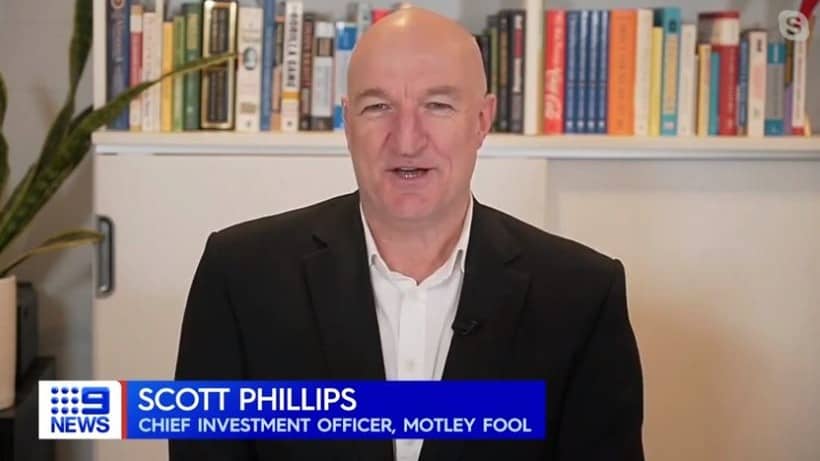
    When investing expert Scott Phillips has a stock tip, it can pay to listen. After all, the flagship Motley Fool Share Advisor newsletter he has run for over ten years has provided thousands of paying members with stock picks that have doubled, tripled or even more.* Scott just revealed what he believes could be the “five best ASX stocks” for investors to buy right now. These stocks are trading at near dirt-cheap prices and Scott thinks they could be great buys right now

    See The 5 Stocks
    *Returns as of September 1 2022

    (function() {
    function setButtonColorDefaults(param, property, defaultValue) {
    if( !param || !param.includes(‘#’)) {
    var button = document.getElementsByClassName(“pitch-snippet”)[0].getElementsByClassName(“pitch-button”)[0];
    button.style[property] = defaultValue;
    }
    }

    setButtonColorDefaults(“#0095C8”, ‘background’, ‘#5FA85D’);
    setButtonColorDefaults(“#0095C8”, ‘border-color’, ‘#43A24A’);
    setButtonColorDefaults(“#fff”, ‘color’, ‘#fff’);
    })()

    More reading

    Motley Fool contributor Sebastian Bowen has no position in any of the stocks mentioned. The Motley Fool Australia’s parent company Motley Fool Holdings Inc. has no position in any of the stocks mentioned. The Motley Fool Australia has no position in any of the stocks mentioned. The Motley Fool has a disclosure policy. This article contains general investment advice only (under AFSL 400691). Authorised by Scott Phillips.

    from The Motley Fool Australia https://ift.tt/Hsl2VKU

  • Why ‘other stocks appeal more’ than Fortescue shares: expert

    A young woman sits at her desk in deep contemplation with her hand to her chin while seriously considering information she is reading on her laptopA young woman sits at her desk in deep contemplation with her hand to her chin while seriously considering information she is reading on her laptop

    Shares of Fortescue Metals Group Limited (ASX: FMG) are tracking lower from the open today and trade less than 2% in the red at $16.54.

    In what’s been a profitable year for commodity baskets, the second half of CY2022 hasn’t been so rosy. Most raw materials have consolidated gains.

    Iron ore, the key ingredient in steel making, has been perhaps the key exemplar of this trend. It has pushed south of record highs and now trades back at pre-pandemic highs.

    With the price of iron ore approaching 52-week lows early in the week, this has put pressure on Fortescue shares. It currently rests at US$92.50 per tonne.

    What does this mean for Fortescue shares?

    Since the company is one of the largest iron ore producers in the world, it is therefore a price taker on the material, meaning that its share price fluctuates with volatility in the commodity markets.

    It comes as no surprise therefore to see that investors have sold off Fortescue in unison with the descent in the iron ore price, as seen on the chart below.

    TradingView Chart

    With the sell-off, shares have retreated towards their October 2021 levels. But this has also sweetened valuation multiples relative to peers.

    Fortescue now trades on a price-to-earnings ratio (P/E) of 5.32 times and a price-to-book (P/B) ratio of just 1.9 times.

    These are slightly behind the GICS Metals & Mining Industry’s median of P/E of 10.8 times and P/B of 2.01 times respectively, per Refinitiv data.

    The discount might be warranted according to some, however. Jabin Hallihan of investment bank Morgans believes that Fortescue is a sell, in The Bull’s 18 Share Tips for 24 October.

    “[Foretescue’s] capital expenditure guidance to decarbonise its iron ore business by 2030 is $US6.2 billion,” Hallihan notes.

    “Our estimate was $US5.5 billion, highlighting the inflation risk. Our 12-month price target is $15. There’s much to play out in decarbonising the business,” he added.

    “Other stocks appeal more.”

    Morgans joins 8 other brokers as a sell recommendation for Fortescue shares, with the remaining 9 split to hold, per Refinitiv Eikon data.

    The consensus price target from this is $15.71 apiece, behind the current market value.

    Meantime, Fortescue shares are down 14% this year to date.

    The post Why ‘other stocks appeal more’ than Fortescue shares: expert appeared first on The Motley Fool Australia.

    Wondering where you should invest $1,000 right now?

    When investing expert Scott Phillips has a stock tip, it can pay to listen. After all, the flagship Motley Fool Share Advisor newsletter he has run for over ten years has provided thousands of paying members with stock picks that have doubled, tripled or even more.* Scott just revealed what he believes could be the “five best ASX stocks” for investors to buy right now. These stocks are trading at near dirt-cheap prices and Scott thinks they could be great buys right now

    See The 5 Stocks
    *Returns as of September 1 2022

    (function() {
    function setButtonColorDefaults(param, property, defaultValue) {
    if( !param || !param.includes(‘#’)) {
    var button = document.getElementsByClassName(“pitch-snippet”)[0].getElementsByClassName(“pitch-button”)[0];
    button.style[property] = defaultValue;
    }
    }

    setButtonColorDefaults(“#0095C8”, ‘background’, ‘#5FA85D’);
    setButtonColorDefaults(“#0095C8”, ‘border-color’, ‘#43A24A’);
    setButtonColorDefaults(“#fff”, ‘color’, ‘#fff’);
    })()

    More reading

    Motley Fool contributor Zach Bristow has no position in any of the stocks mentioned. The Motley Fool Australia’s parent company Motley Fool Holdings Inc. has no position in any of the stocks mentioned. The Motley Fool Australia has no position in any of the stocks mentioned. The Motley Fool has a disclosure policy. This article contains general investment advice only (under AFSL 400691). Authorised by Scott Phillips.

    from The Motley Fool Australia https://ift.tt/KzB2xGH

  • Even as one strategist predicts a 30% crash, others think the bottom of this bear market may already be in and shares might rally for Christmas

    JB Hi-Fi share price upgrade A cool older dude with a long grey beard holds a hi-fi stereo on his shoulder.JB Hi-Fi share price upgrade A cool older dude with a long grey beard holds a hi-fi stereo on his shoulder.

    1) The prospect of a Fed pivot again drove US shares higher overnight Monday, sending the Dow Jones Industrial Average Index (DJX: .DJI) and S&P 500 Index (SP: .INX) to their highest closes in more than a month.

    The S&P/ASX 200 Index (ASX: XJO) index has followed suit, gaining 40 points or 0.60% in early Tuesday trade. The benchmark local index is now only down 8.4% over the past 12 months, putting US markets to shame.

    You can thank your ASX coal, energy, and lithium stocks, if you are skilful and luckily enough to own them.

    2) This global stock market rally (ex-China stocks) is coming on top of Wall Street last week notching up its best week since June as US bond yields fell from multi-year highs.

    Much of this bullishness has been driven by a report in The Wall Street Journal which said the US Federal Reserve is likely to use its November meeting to debate “whether and how to signal plans to approve a smaller interest rate increase in December”.

    The prospect of a Fed Pivot – even as it is set to raise interest rates by another 75 basis points in early November – has finally given the bulls something to cheer about in this god-awful year for stock market investors.

    It’s anyone’s guess as to whether this rally will stick. 

    It didn’t – even when I thought it might – when the S&P 500 index jumped 17% from its June 2022 low only to crash all the way back down again by September 2022. 

    Although I’m not calling September the bottom of the market – because that would just be guessing – I am continuing to buy stocks, because I think many of them are just plain cheap. 

    3) That doesn’t mean they can’t go lower.

    In the “batten down the hatches” corner, we have David Rosenberg on MarketWatch saying the S&P 500 crashes 30% lower from here, with US home prices also declining by 30%, and the US economy sinking into a recession.

    Cheery soul, right?

    All is not lost (yet), though, for stock market investors, with Rosenberg saying that since markets are cyclical, a new bull market for stocks, bonds and other risk assets should begin in 2024.

    Only 15 more months of pain to go…

    4) In the “believe” camp, we have the Chanticleer column in the AFR titled Is it time to believe in a Santa sharemarket rally? Excerpt: 

    After a torrid year marked by rising interest rates, savage asset price falls and bruising volatility, consensus is building around a year-end Santa rally for share markets.

    The logic of such a rally is pretty simple. Investor sentiment is low, positioning is light (that is, investors are underweight equities in a way not seen since the global financial crisis) and the bad news has largely been priced in, including a 0.75 percentage point rate increase from the US Federal Reserve in November and a mild recession.

    So any bit of good news – particularly hints that the Fed may be about to slow the pace of rate rises, or company earnings holding up – should give stocks a nice nudge.

    5) In the “not entirely sold on the Fed Pivot” corner, we have Lisa Erickson at US Bank Wealth Management, quoted on Bloomberg as saying…

    “We are still agnostic as to whether the Fed really is going to pivot or be at the peak of its hawkish cycle. If you look at the underlying data, inflation remains sticky, particularly in services ex-housing, which can often be more persistent. So given the Fed’s dependence on the data, we’re not clear exactly again, when the Fed may truly begin to slow down.”

    6) And in the “have faith, buy stocks now” corner, we have a bunch of fund managers who are licking their lips at a) the cheap prices on offer for selected stocks and b) the prospect of higher markets ahead, especially given the positive three, five and 10-year return profiles coming out of past bear markets.

    In its most recent monthly update, the SGH Emerging Companies Fund said…

    … we believe that once there are clear signals of the end of rate hikes, it will be bullish for both stocks and bonds. Consequently, we still expect equity markets to be significantly higher next year. Note share markets discount the future and will bottom before the economy. 

    For emerging companies, after the large share market decline, we continue to see plenty of opportunities at cheaper valuations and deals at more favourable pricing.

    7) “Earnings risk” might soon become the new buzzword for the near-term direction of equity markets, and in particular, for individual stocks.

    This week sees a host of large-cap stocks reporting earnings, including Apple, Microsoft, Alphabet and Amazon.

    Here on the ASX in Australia, as AGM season approaches, we’re already seeing quarterly updates, with the usual smattering of winners and sinners.

    One of today’s winners is Mader Group Ltd (ASX: MAD), the global leader in the provision of specialist technical services across multiple industries.

    The company reported that FY23 has started strongly, delivering a 48% jump in first-quarter revenue, with its nascent North American business growing in momentum. 

    Favourable Q1 results and client demand across multiple sectors have provided Mader with the confidence to upgrade FY23 financial guidance.

    Such language is usually music to the ears of investors. On this occasion, in early Tuesday trade, the Mader share price is largely flat, perhaps a nod to its already lofty valuation, at around 20 times forecast earnings before interest, tax, depreciation, and amortisation (EBITDA).

    Still, quality doesn’t come cheap.

    “Our goal is to find outstanding businesses at sensible prices, not a mediocre business at a bargain price.” – Warren Buffett

    The post Even as one strategist predicts a 30% crash, others think the bottom of this bear market may already be in and shares might rally for Christmas appeared first on The Motley Fool Australia.

    Wondering where you should invest $1,000 right now?

    When investing expert Scott Phillips has a stock tip, it can pay to listen. After all, the flagship Motley Fool Share Advisor newsletter he has run for over ten years has provided thousands of paying members with stock picks that have doubled, tripled or even more.* Scott just revealed what he believes could be the “five best ASX stocks” for investors to buy right now. These stocks are trading at near dirt-cheap prices and Scott thinks they could be great buys right now

    See The 5 Stocks
    *Returns as of September 1 2022

    (function() {
    function setButtonColorDefaults(param, property, defaultValue) {
    if( !param || !param.includes(‘#’)) {
    var button = document.getElementsByClassName(“pitch-snippet”)[0].getElementsByClassName(“pitch-button”)[0];
    button.style[property] = defaultValue;
    }
    }

    setButtonColorDefaults(“#0095C8”, ‘background’, ‘#5FA85D’);
    setButtonColorDefaults(“#0095C8”, ‘border-color’, ‘#43A24A’);
    setButtonColorDefaults(“#fff”, ‘color’, ‘#fff’);
    })()

    More reading

    Suzanne Frey, an executive at Alphabet, is a member of The Motley Fool’s board of directors. John Mackey, CEO of Whole Foods Market, an Amazon subsidiary, is a member of The Motley Fool’s board of directors. Motley Fool contributor Bruce Jackson has positions in Alphabet (A shares), Alphabet (C shares), and Amazon. The Motley Fool Australia’s parent company Motley Fool Holdings Inc. has positions in and has recommended Alphabet (A shares), Alphabet (C shares), Amazon, Apple, and Microsoft. The Motley Fool Australia’s parent company Motley Fool Holdings Inc. has recommended the following options: long March 2023 $120 calls on Apple and short March 2023 $130 calls on Apple. The Motley Fool Australia has recommended Alphabet (A shares), Alphabet (C shares), Amazon, and Apple. The Motley Fool has a disclosure policy. This article contains general investment advice only (under AFSL 400691). Authorised by Scott Phillips.

    from The Motley Fool Australia https://ift.tt/t9rPmZS

  • Want thousands in monthly retirement income? Focus on these investments

    This article was originally published on Fool.com. All figures quoted in US dollars unless otherwise stated.

    A group of older people wearing super hero capes hold their fists in the air, about to take off.

    This article was originally published on Fool.com. All figures quoted in US dollars unless otherwise stated.

    The two primary ways to make money from stocks are selling them for more than you paid and dividends. The first one is straightforward, but the role dividends can play in an investor’s total returns is often underrated. Dividends, paid out quarterly from a company’s profits, are a way for companies to reward shareholders for simply holding onto their shares.

    A well-rounded portfolio shouldn’t only have dividend stocks, but it should have its fair share. When done correctly, dividends can provide thousands in monthly retirement income. Let me show you how.

    Spread out some of the risks

    There are exchange-traded funds (ETFs) that pay out dividends simply as a byproduct of some of the companies within it paying dividends. And then, there are ETFs that focus specifically on dividend-paying stocks that have to meet specific qualifications. If you’re looking to invest in dividend stocks, focusing on dividend-paying ETFs can help you accomplish multiple things at once: dividends, diversification, and less risk.

    Let’s take a look at the ProShares S&P 500 Dividend Aristocrats ETF (NYSEMKT: NOBL) as an example. To be eligible, a company must be in the S&P 500 and be a Dividend Aristocrat, which is a company that has increased its yearly dividend for at least 25 consecutive years. What’s better is that most of the companies within the fund have done so for at least 40 years.

    The fund contains 65 companies spanning all major sectors, and the top 10 holdings only make up 17.66% of the fund (for perspective, the top 10 holdings in the S&P 500 make up just over 27%).

    Let time do the heavy lifting

    You have to accumulate a sizable stake in dividend stocks to get to the point where you’re receiving thousands in monthly dividend income. For most investors who don’t have large lump sums to invest at once, this means taking advantage of compound earnings. In investing, compound earnings occur when the money you make from investments starts to make money on itself.

    Since its inception, the ProShares S&P 500 Dividend Aristocrats ETF has returned just over 10% annually. By no means do past results guarantee future performance, but if we assume this continues over the long term, here’s roughly how much an investor could have in 25 years at different monthly investment amounts:

    Monthly InvestmentAverage Annual ReturnsAmount in 25 Years
    $1,00010%$1.18 million
    $1,50010%$1.77 million
    $2,00010%$2.36 million

    Data source: Author calculations.

    With time and consistency, accumulating a significant stake in dividend stocks is attainable. A great way to keep yourself consistent is by using dollar-cost averaging. With dollar-cost averaging, you put yourself on an investing schedule and stick to it regardless of stock prices at the time. It keeps you consistent and helps prevent you from trying to time the market, which is virtually impossible to do consistently long-term.

    It pays to be patient

    Dividends, in general, can be lucrative, but they can really be powerful when you reinvest your dividends. Many brokers, and companies, allow you to automatically reinvest the dividends you’re paid back into the stock that paid it out. Doing so adds to the effects of compound earnings and can drastically add to your returns.

    Let’s assume a dividend-paying stock returns, on average, 7% annually with a 2% dividend yield over 25 years. Here’s how the values would differ if you reinvested the dividends over that span versus taking them as cash:

    Monthly InvestmentValue After 25 Years When Taking Dividends as CashValue After 25 Years When Reinvesting Dividends
    $1,000$758,988$1.01 million
    $1,500$1.13 million$1.52 million
    $2,000$1.51 million$2.03 million

    Data source: Author calculations. (Assumes average annual 7% price appreciation and 2% dividend yield.)

    Yes, you would’ve made money from the cash dividends you received over those 25 years, but it wouldn’t be comparable to the hundreds of thousands more your investment would’ve grown by reinvesting your dividends. It’s usually in your best interest to reinvest your dividends until you reach retirement and then begin accepting them as cash when the extra income will likely be more valuable.

    At the above totals, a 2% dividend yield would pay roughly $20,200, $30,400, and $40,600 annually, respectively.

    You’ll be glad you took the steps

    Retirement is expensive, and unfortunately for many people, that means Social Security by itself won’t do the trick. There’s no one-amount-fits-all regarding how much you’ll need in retirement, but one thing’s for sure: To make sure you’re as financially comfortable as possible, you’ll need to utilize all resources.

    Dividends likely won’t be the bulk of your retirement income, but they can play an important role — use them to your advantage.

    This article was originally published on Fool.com. All figures quoted in US dollars unless otherwise stated.

    The post Want thousands in monthly retirement income? Focus on these investments appeared first on The Motley Fool Australia.

    Wondering where you should invest $1,000 right now?

    When investing expert Scott Phillips has a stock tip, it can pay to listen. After all, the flagship Motley Fool Share Advisor newsletter he has run for over ten years has provided thousands of paying members with stock picks that have doubled, tripled or even more.* Scott just revealed what he believes could be the “five best ASX stocks” for investors to buy right now. These stocks are trading at near dirt-cheap prices and Scott thinks they could be great buys right now

    See The 5 Stocks *Returns as of September 1 2022

    (function() { function setButtonColorDefaults(param, property, defaultValue) { if( !param || !param.includes(‘#’)) { var button = document.getElementsByClassName(“pitch-snippet”)[0].getElementsByClassName(“pitch-button”)[0]; button.style[property] = defaultValue; } } setButtonColorDefaults(“#0095C8”, ‘background’, ‘#5FA85D’); setButtonColorDefaults(“#0095C8”, ‘border-color’, ‘#43A24A’); setButtonColorDefaults(“#fff”, ‘color’, ‘#fff’); })()

    More reading

    Stefon Walters has no position in any of the stocks mentioned. The Motley Fool Australia’s parent company Motley Fool Holdings Inc. has positions in and has recommended ProShares S&P 500 Aristocrats ETF. The Motley Fool Australia has no position in any of the stocks mentioned. The Motley Fool has a disclosure policy. This article contains general investment advice only (under AFSL 400691). Authorised by Scott Phillips.

    This article was originally published on Fool.com. All figures quoted in US dollars unless otherwise stated.


    from The Motley Fool Australia https://ift.tt/8yLp9Ca
  • Set for life: 5 ASX dividend shares I’d invest in if I ever had a million-dollar windfall

    A woman looks excited as she fans out a wad of Aussie $100 notes.

    A woman looks excited as she fans out a wad of Aussie $100 notes.

    Receiving $1 million would be an incredible windfall. Not only would I instantly become a millionaire, but I think I’d be able to invest it in ASX dividend shares so that I could live off the investment income for the rest of my life.

    Some businesses have built a strong track record of paying dividends to investors. I’d utilise some of these to protect and grow my pot of gold.

    I’d want to choose a mixture of defensive ASX shares and growth shares. I’m still quite young, relatively speaking, so I don’t need to choose high-yielding picks for every choice.

    With that in mind, these are five of the ASX dividend share names I’d go for:

    Rural Funds Group (ASX: RFF)

    Rural Funds is a real estate investment trust (REIT) that owns farmland. I’ll point out that farmland has been a useful asset for (at least) hundreds of years. I think that will continue for the rest of my lifetime – we all need food after all.

    It owns a diversified portfolio across a number of farming categories including cattle, vineyards, almonds, macadamias, and cropping (sugar and cotton).

    The business has an objective of growing its distribution by 4% each year. This offers solid income growth in my opinion.

    It’s expecting to pay a total distribution of 12.2 cents per unit in FY23, which translates into a forward distribution yield of 5%.

    Washington H. Soul Pattinson and Co. Ltd (ASX: SOL)

    This ASX dividend share holds the record for the longest run of consecutive annual dividend growth, going back to 2000.

    It owns a portfolio of investments in businesses and assets across a range of assets like telecommunications, building products, agriculture, resources, financial services, swimming schools, and many other industrial businesses.

    The business pays out a majority of its cash flow as dividends each year but retains some of the money to reinvest in more opportunities.

    It currently has a grossed-up dividend yield of 3.75%, excluding the special dividend.

    Charter Hall Long WALE REIT (ASX: CLW)

    This is another REIT, but its main focus is owning quality properties with a long lease expiry. Its weighted average lease expiry, or WALE, was 12 years at the last disclosure.

    It’s invested in various things like telecommunication exchanges leased to Telstra Corporation Ltd (ASX: TLS), Bunnings Warehouse properties leased to Wesfarmers Ltd (ASX: WES), and BP petrol stations.

    The rental income is growing, particularly the contracts linked to CPI inflation.  These have a 6.3% weighted average forecast increase in FY23.

    It’s expecting to pay a distribution of 28 cents per unit in FY23, translating into a forward yield of almost 7%.

    VanEck Morningstar Australian Moat Income ETF (ASX: DVDY)

    This is an exchange-traded fund (ETF) that looks to invest in the 25 highest-yielding ASX dividend shares that meet Morningstar’s required criteria, which combines a company’s economic moat and its ‘distance to default’ measures.

    An economic moat refers to a company’s competitive advantages. In other words, they are good at what they do and are expected to be resilient against competitors trying to displace them.

    Its portfolio can change, but at the moment its biggest three holdings are IPH Ltd (ASX: IPH), Ansell Limited (ASX: ANN), and National Australia Bank Ltd (ASX: NAB).

    The ETF passes the dividends it receives to investors.

    Bailador Technology Investments Ltd (ASX: BTI)

    My final pick is Bailador which invests in unlisted technology businesses that have good growth potential with global addressable markets. It’s looking for tech businesses at the ‘expansion stage’, where they have already been running for two to six years and are generating revenue internationally.

    I think the businesses that Bailador invests in have very promising futures.

    Some of its investments from years ago have gone on to list on the ASX. It still owns stakes in Straker Translations Ltd (ASX: STG) and Siteminder Ltd (ASX: SDR).

    The business has a dividend policy of paying 4% of its pre-tax net tangible assets per annum, paid semi-annually. In other words, it will pay a 2% dividend yield on its NTA every six months.

    At 30 September 2022, the pre-tax NTA was $1.75. That implies the dividend would be 7 cents per share and the forward grossed-up dividend yield would be 7.7% if the NTA didn’t change.

    The post Set for life: 5 ASX dividend shares I’d invest in if I ever had a million-dollar windfall appeared first on The Motley Fool Australia.

    Wondering where you should invest $1,000 right now?

    When investing expert Scott Phillips has a stock tip, it can pay to listen. After all, the flagship Motley Fool Share Advisor newsletter he has run for over ten years has provided thousands of paying members with stock picks that have doubled, tripled or even more.* Scott just revealed what he believes could be the “five best ASX stocks” for investors to buy right now. These stocks are trading at near dirt-cheap prices and Scott thinks they could be great buys right now

    See The 5 Stocks
    *Returns as of September 1 2022

    (function() {
    function setButtonColorDefaults(param, property, defaultValue) {
    if( !param || !param.includes(‘#’)) {
    var button = document.getElementsByClassName(“pitch-snippet”)[0].getElementsByClassName(“pitch-button”)[0];
    button.style[property] = defaultValue;
    }
    }

    setButtonColorDefaults(“#0095C8”, ‘background’, ‘#5FA85D’);
    setButtonColorDefaults(“#0095C8”, ‘border-color’, ‘#43A24A’);
    setButtonColorDefaults(“#fff”, ‘color’, ‘#fff’);
    })()

    More reading

    Motley Fool contributor Tristan Harrison has positions in Bailador Technology Investments Limited, RURALFUNDS STAPLED, and Washington H. Soul Pattinson and Company Limited. The Motley Fool Australia’s parent company Motley Fool Holdings Inc. has positions in and has recommended Bailador Technology Investments Limited, SiteMinder Limited, and Washington H. Soul Pattinson and Company Limited. The Motley Fool Australia’s parent company Motley Fool Holdings Inc. has recommended IPH Ltd. The Motley Fool Australia has positions in and has recommended RURALFUNDS STAPLED, Telstra Corporation Limited, Washington H. Soul Pattinson and Company Limited, and Wesfarmers Limited. The Motley Fool Australia has recommended Ansell Ltd., Bailador Technology Investments Limited, IPH Ltd, and Straker Translations. The Motley Fool has a disclosure policy. This article contains general investment advice only (under AFSL 400691). Authorised by Scott Phillips.

    from The Motley Fool Australia https://ift.tt/6b7GEJF

  • BHP share price dips following rough night on Wall Street

    a man in high visibility shirt and hard hat with full beard looks downcast with eyes lowered as though he is disappointed or sad.

    a man in high visibility shirt and hard hat with full beard looks downcast with eyes lowered as though he is disappointed or sad.

    The BHP Group Ltd (ASX: BHP) share price is out of form on Tuesday.

    In morning trade, the mining giant’s shares are down 0.4% to $38.90.

    This compares unfavourably to the ASX 200 index, which is up 0.5% this morning.

    Why is the BHP share price underperforming?

    The BHP share price has come under pressure today following broad weakness in the materials sector.

    This follows a poor night of trade for materials stocks, such as BHP’s NYSE listed shares, on Wall Street on Monday. This was driven by a pullback in the price of a range of commodities, including iron ore, amid concerns over the global demand outlook.

    Here’s how other materials shares are performing on the ASX 200 today:

    • The Fortescue Metals Group Limited (ASX: FMG) share price is down 1.5%
    • The OZ Minerals Limited (ASX: OZL) share price is down 1.5%
    • The Rio Tinto Limited (ASX: RIO) share price is down 0.6%
    • The South32 Ltd (ASX: S32) share price is down 3%

    Is this a buying opportunity?

    Based on what brokers are saying, this could be a buying opportunity for investors.

    For example, Morgans has an add rating and $47.00 price target on its shares and Goldman Sachs has a buy rating and $42.50 price target on them.

    Based on the current BHP share price, this implies potential upside of 21% and 9%, respectively, over the next 12 months.

    In addition, sweetening the deal further, both brokers are forecasting big dividend yields in the coming years.

    The post BHP share price dips following rough night on Wall Street appeared first on The Motley Fool Australia.

    Wondering where you should invest $1,000 right now?

    When investing expert Scott Phillips has a stock tip, it can pay to listen. After all, the flagship Motley Fool Share Advisor newsletter he has run for over ten years has provided thousands of paying members with stock picks that have doubled, tripled or even more.* Scott just revealed what he believes could be the “five best ASX stocks” for investors to buy right now. These stocks are trading at near dirt-cheap prices and Scott thinks they could be great buys right now

    See The 5 Stocks
    *Returns as of September 1 2022

    (function() {
    function setButtonColorDefaults(param, property, defaultValue) {
    if( !param || !param.includes(‘#’)) {
    var button = document.getElementsByClassName(“pitch-snippet”)[0].getElementsByClassName(“pitch-button”)[0];
    button.style[property] = defaultValue;
    }
    }

    setButtonColorDefaults(“#0095C8”, ‘background’, ‘#5FA85D’);
    setButtonColorDefaults(“#0095C8”, ‘border-color’, ‘#43A24A’);
    setButtonColorDefaults(“#fff”, ‘color’, ‘#fff’);
    })()

    More reading

    Motley Fool contributor James Mickleboro has no position in any of the stocks mentioned. The Motley Fool Australia’s parent company Motley Fool Holdings Inc. has no position in any of the stocks mentioned. The Motley Fool Australia has no position in any of the stocks mentioned. The Motley Fool has a disclosure policy. This article contains general investment advice only (under AFSL 400691). Authorised by Scott Phillips.

    from The Motley Fool Australia https://ift.tt/GMZBrvT

  • Pilbara Minerals share price hits record high following Q1 update

    A young male ASX investor raises his clenched fists in excitement because of rising ASX share prices today

    A young male ASX investor raises his clenched fists in excitement because of rising ASX share prices today

    The Pilbara Minerals Ltd (ASX: PLS) share price has continued its strong run on Tuesday.

    In morning trade, the lithium miner’s shares rose 5% to a new record high of $5.66.

    Investors have been bidding the Pilbara Minerals share price higher today in response to the release of the company’s quarterly update.

    Pilbara Minerals share price higher on quarterly update

    For the three months ended 30 September, Pilbara Minerals reported a 16% quarter on quarter increase in spodumene concentrate production to 147,105 dry metric tonnes (dmt).

    Management advised that this strong production performance reflects the company’s operating strategy and represents an annualised production rate of 588,000 dmt of spodumene concentrate.

    It also highlights that it decided to lower the grade of its spodumene to optimise the product yield, allowing the company to maximise sales volumes and take advantage of current market pricing conditions. The average grade of product sold during the quarter was ~5.3%, down from 5.4% three months earlier.

    This strong production allowed the company to ship 138,249 dmt of spodumene concentrate, which was up 4.4% on the previous quarter.

    These shipments were undertaken at an average realised sales price of US$4,266/dmt SC5.3 basis (CIF China). This equates to a reference price of US$4,813/dmt on an SC6.01 basis (CIF China) when adjusted pro-rata for lithia content.

    In addition, the company achieved strong pricing from three Battery Material Exchange (BMX) sale auctions during the quarter, with one auction commanding a price of US$7,708/dmt on an SC6.0 equivalent basis (CIF China).

    Cost inflation doesn’t stop strong cash generation

    Pilbara Minerals’ costs remained higher during the quarter due to “to elevated strip ratios to support a substantial investment in mining activities, the impact of labour shortages in the WA mining sector (including the impact of COVID-19), supply chain disruptions and general inflationary cost pressures.”

    Positively, though, its Pilgangoora Project costs eased slightly quarter on quarter to US$434/dmt (US$462/dmt in the June quarter). This is at the lower end of its guidance range.

    And while no details were provided in relation to its earnings, the company revealed a huge increase in its cash balance. At the end of the quarter, the company’s cash balance stood at $1.375 billion. This is up by $783.7 million over the three months.

    And this doesn’t even include $132.2 million of irrevocable letters of credit for shipments that were completed before the end of the quarter. If you include this, its cash balance was $1.508 billion.

    No wonder investors have been scrambling to buy its shares this year!

    The post Pilbara Minerals share price hits record high following Q1 update appeared first on The Motley Fool Australia.

    Wondering where you should invest $1,000 right now?

    When investing expert Scott Phillips has a stock tip, it can pay to listen. After all, the flagship Motley Fool Share Advisor newsletter he has run for over ten years has provided thousands of paying members with stock picks that have doubled, tripled or even more.* Scott just revealed what he believes could be the “five best ASX stocks” for investors to buy right now. These stocks are trading at near dirt-cheap prices and Scott thinks they could be great buys right now

    See The 5 Stocks
    *Returns as of September 1 2022

    (function() {
    function setButtonColorDefaults(param, property, defaultValue) {
    if( !param || !param.includes(‘#’)) {
    var button = document.getElementsByClassName(“pitch-snippet”)[0].getElementsByClassName(“pitch-button”)[0];
    button.style[property] = defaultValue;
    }
    }

    setButtonColorDefaults(“#43B02A”, ‘background’, ‘#5FA85D’);
    setButtonColorDefaults(“#43B02A”, ‘border-color’, ‘#43A24A’);
    setButtonColorDefaults(“#fff”, ‘color’, ‘#fff’);
    })()

    More reading

    Motley Fool contributor James Mickleboro has no position in any of the stocks mentioned. The Motley Fool Australia’s parent company Motley Fool Holdings Inc. has no position in any of the stocks mentioned. The Motley Fool Australia has no position in any of the stocks mentioned. The Motley Fool has a disclosure policy. This article contains general investment advice only (under AFSL 400691). Authorised by Scott Phillips.

    from The Motley Fool Australia https://ift.tt/nKc7tJ0

  • Why is the A2 Milk share price falling today?

    A female sharemarket analyst with red hair and wearing glasses looks at her computer screen watching share price movements.

    A female sharemarket analyst with red hair and wearing glasses looks at her computer screen watching share price movements.

    The A2 Milk Company Ltd (ASX: A2M) share price is falling on Tuesday.

    In morning trade, the infant formula company’s shares are down 1% to $5.37.

    What’s going on with the A2 Milk share price today?

    The A2 Milk share price is falling today after the company announced the exit of a senior executive.

    According to the release, Shareef Khan has resigned from his position of chief operations officer and will be finishing up in his role at the end of December.

    The release notes that Khan has been in discussions with the company for some time about his desire to spend more time with his family and explore other pursuits.

    A2 Milk’s managing director and CEO, David Bortolussi, commented:

    Shareef joined the Company in 2012 primarily to develop our supply chain operations with Synlait Milk to support the growth of our infant formula business. Shareef has navigated the Operations function through some extraordinary times and has played an important role in a2MC’s growth. I would like to personally thank Shareef for his passion and commitment to a2MC over many years, and we wish him all the best in his future endeavours.

    Organisational changes

    A2 Milk will now be introducing a new chief supply chain officer role to lead its end-to-end supply chain in all categories and markets.

    It notes that the role will bring together its operations and manufacturing teams under a combined leadership role to transform its supply chain as a key aspect of its refreshed growth strategy.

    The chief supply chain officer role will be a member of the Executive Leadership Team (ELT) reporting directly to the CEO. In light of this change, Bernard May, who will report to the new chief supply chain officer, will step down from the ELT. However, May will continue as the CEO of the Mataura Valley Milk (MVM) business.

    The company has not yet appointed a chief supply chain officer but expects to do so in the coming weeks.

    The post Why is the A2 Milk share price falling today? appeared first on The Motley Fool Australia.

    Wondering where you should invest $1,000 right now?

    When investing expert Scott Phillips has a stock tip, it can pay to listen. After all, the flagship Motley Fool Share Advisor newsletter he has run for over ten years has provided thousands of paying members with stock picks that have doubled, tripled or even more.* Scott just revealed what he believes could be the “five best ASX stocks” for investors to buy right now. These stocks are trading at near dirt-cheap prices and Scott thinks they could be great buys right now

    See The 5 Stocks
    *Returns as of September 1 2022

    (function() {
    function setButtonColorDefaults(param, property, defaultValue) {
    if( !param || !param.includes(‘#’)) {
    var button = document.getElementsByClassName(“pitch-snippet”)[0].getElementsByClassName(“pitch-button”)[0];
    button.style[property] = defaultValue;
    }
    }

    setButtonColorDefaults(“#0095C8”, ‘background’, ‘#5FA85D’);
    setButtonColorDefaults(“#0095C8”, ‘border-color’, ‘#43A24A’);
    setButtonColorDefaults(“#fff”, ‘color’, ‘#fff’);
    })()

    More reading

    Motley Fool contributor James Mickleboro has no position in any of the stocks mentioned. The Motley Fool Australia’s parent company Motley Fool Holdings Inc. has no position in any of the stocks mentioned. The Motley Fool Australia has recommended A2 Milk. The Motley Fool has a disclosure policy. This article contains general investment advice only (under AFSL 400691). Authorised by Scott Phillips.

    from The Motley Fool Australia https://ift.tt/jV239Tt

  • This ASX 200 lithium share turned a $15,000 investment into $1.4 million

    Excited male and female hipsters rejoice in good news received on their mobile phones.Excited male and female hipsters rejoice in good news received on their mobile phones.

    It’s likely no surprise that S&P/ASX 200 Index (ASX: XJO) materials share-turned-lithium favourite Mineral Resources Limited (ASX: MIN) has been on a good run lately.

    The stock has surged 77% over the last 12 months and a whopping 320% over the last five years. As of Monday’s close, the Mineral Resources share price was $76.08.

    But its recent gains have nothing on those the mining share has posted over its listed life.

    Here’s what $15,000 invested in Mineral Resources shares at the time of the company’s ASX float would have returned by 2022.

    The ASX 200 lithium share that turned $15,000 into $1.4m

    Long before the establishment of Mineral Resources’ lithium leg – which could be spun out in the future – the mining giant listed on the ASX, offering new shares for just 90 cents under its initial public offering (IPO).

    That’s right, a $15,000 investment in the company’s 2006 IPO would see a shareholder boasting a parcel of 16,666 shares in the ASX 200 lithium icon.

    Today, that parcel would be worth a jaw-dropping $1.27 million – representing a mammoth 8,353% gain. And that’s before considering the company’s dividends.

    Mineral Resources has been handing out a portion of its profits in the form of dividends since November 2006.

    Back then, it handed shareholders just 1.2 cents per share. For comparison, the stock’s latest dividend was worth $1 per share.

    Over the years, Mineral Resources has paid out a total of $9.562 per share of fully franked dividends.

    That means an investor who held 16,666 Mineral Resources shares since 2006 would have received around $159,360.29 in dividends over that time.

    And that’s before considering potential benefits brought by franking credits or compounding from participating in the company’s dividend reinvestment plan – active since 2011.

    All in all, an initial $15,000 investment at the ASX 200 lithium share’s IPO would have returned a total of $1.43 million as of Monday’s close. That’s certainly nothing to scoff at!

    The post This ASX 200 lithium share turned a $15,000 investment into $1.4 million appeared first on The Motley Fool Australia.

    Wondering where you should invest $1,000 right now?

    When investing expert Scott Phillips has a stock tip, it can pay to listen. After all, the flagship Motley Fool Share Advisor newsletter he has run for over ten years has provided thousands of paying members with stock picks that have doubled, tripled or even more.* Scott just revealed what he believes could be the “five best ASX stocks” for investors to buy right now. These stocks are trading at near dirt-cheap prices and Scott thinks they could be great buys right now

    See The 5 Stocks
    *Returns as of September 1 2022

    (function() {
    function setButtonColorDefaults(param, property, defaultValue) {
    if( !param || !param.includes(‘#’)) {
    var button = document.getElementsByClassName(“pitch-snippet”)[0].getElementsByClassName(“pitch-button”)[0];
    button.style[property] = defaultValue;
    }
    }

    setButtonColorDefaults(“#0095C8”, ‘background’, ‘#5FA85D’);
    setButtonColorDefaults(“#0095C8”, ‘border-color’, ‘#43A24A’);
    setButtonColorDefaults(“#fff”, ‘color’, ‘#fff’);
    })()

    More reading

    Motley Fool contributor Brooke Cooper has no position in any of the stocks mentioned. The Motley Fool Australia’s parent company Motley Fool Holdings Inc. has no position in any of the stocks mentioned. The Motley Fool Australia has no position in any of the stocks mentioned. The Motley Fool has a disclosure policy. This article contains general investment advice only (under AFSL 400691). Authorised by Scott Phillips.

    from The Motley Fool Australia https://ift.tt/yYr8fqE

  • No savings at 35? I’d buy cheap ASX shares to try and retire rich

    A group of young people lined up on a wall are happy looking at their laptops and devices as they invest in the latest trendy stock.

    A group of young people lined up on a wall are happy looking at their laptops and devices as they invest in the latest trendy stock.The ASX share market is offering investors, of all ages, plenty of opportunities to buy businesses. If someone is reading this aged 35 but with no investments, I don’t think that’s worth worrying about.

    A number of ASX shares are a lot cheaper right now than they have been over most of the last two and a half years. Certainly, inflation and higher interest rates have hurt business valuations. But I think it’s a great time to start investing because it’s better to buy an investment when the sticker price is lower.

    Compounding can really help grow wealth

    Long-term compounding can make a big difference to an investor’s portfolio over time.

    At 35, investors still have three decades before reaching retirement age. I’ll show how that can play out when investors put money to work for a long time, using the Moneysmart compound calculator.

    Historically, the share market has returned an average of around 10% per annum. That’s just an average, sometimes it’s a big rise in a year; other times it can fall.

    If a 35-year-old can invest $500 a month and earn 10% per year then they’d have $987,000 after three decades.

    Investing $1,000 a month would turn into $1.97 million.

    Which ASX shares are cheap?

    Investors don’t need to go for the cheapest ASX shares or the ones that fall hard. We just need to find investments that have compelling plans and are growing over time.

    I think the following three businesses look like solid contenders for at least the rest of this decade.

    Nick Scali Limited (ASX: NCK)

    Nick Scali may be best known as a business that sells furniture, but I think it has a number of attributes that are attractive.

    For starters, it’s currently run by managing director Anthony Scali. I think he’s a talented operator and he’s very aligned with regular shareholders because he owns millions of Nick Scali shares.

    The ASX share recently bought the business Plush, which adds to its scale. Not only does it create compelling synergies, but the combined business has a strong store rollout plan with an eye on growing online sales as well.

    Nick Scali typically pays investors a sizeable dividend. The Nick Scali share price has dropped almost 40% in 2022. According to estimates on CMC Markets, it could pay a grossed-up dividend yield of 9.7% in FY24 and 10.8% in FY23 (the current financial year).

    Wesfarmers Ltd (ASX: WES)

    Wesfarmers is the parent company behind many iconic Australian businesses such as Bunnings, Kmart, and Officeworks. Other businesses in its portfolio of names include Priceline, Target, Catch, and Clear Skincare Clinics.

    Despite having this quality collection of names, the Wesfarmers share price has dropped around 25% since the start of the year. I think this is a good time to get some exposure to this ASX share.

    I like how the management can, and do, alter the names in the portfolio so that it’s more future-focused. For example, it has recently started a healthcare division. I think this has an attractive future because of the ageing demographics of Australia. Plus, it’s working on a lithium mining project which could diversify and grow the company’s earnings.

    Brickworks Limited (ASX: BKW)

    I also think that the Brickworks share price is looking cheap at the moment.

    While it has only declined 12% in 2022 at the time of writing, I think the underlying assets look undervalued.

    It owns a large chunk of Washington H. Soul Pattinson and Co. Ltd (ASX: SOL) shares, which is an investment business that is growing its portfolio of investments and steadily increasing its dividend to Brickworks (and other shareholders).

    Brickworks is the biggest brickmaker in Australia, which includes the business Austral Bricks. It also gives exposure to other building products through names like Austral Masonry and Bristle Roofing.

    After making some acquisitions a few years ago, it’s also the largest brickmaker in the northeast of the US, which is a promising, large market for the company.

    Finally, Brickworks has a joint venture with Goodman Group (ASX: GMG). The two businesses are building a growing portfolio of industrial properties within a property trust. Completing the buildings is growing the underlying value of Brickworks, generating profits, and also leading to stronger rental income.

    I think the Brickworks share price looks attractively cheaper than the combined value of all of the above assets I mentioned. At 31 July 2022, the inferred asset backing was over $33 per share, according to Brickworks.

    At the time of writing, Brickworks shares are going for $21.80 apiece.

    The post No savings at 35? I’d buy cheap ASX shares to try and retire rich appeared first on The Motley Fool Australia.

    Wondering where you should invest $1,000 right now?

    When investing expert Scott Phillips has a stock tip, it can pay to listen. After all, the flagship Motley Fool Share Advisor newsletter he has run for over ten years has provided thousands of paying members with stock picks that have doubled, tripled or even more.* Scott just revealed what he believes could be the “five best ASX stocks” for investors to buy right now. These stocks are trading at near dirt-cheap prices and Scott thinks they could be great buys right now

    See The 5 Stocks
    *Returns as of September 1 2022

    (function() {
    function setButtonColorDefaults(param, property, defaultValue) {
    if( !param || !param.includes(‘#’)) {
    var button = document.getElementsByClassName(“pitch-snippet”)[0].getElementsByClassName(“pitch-button”)[0];
    button.style[property] = defaultValue;
    }
    }

    setButtonColorDefaults(“#43B02A”, ‘background’, ‘#5FA85D’);
    setButtonColorDefaults(“#43B02A”, ‘border-color’, ‘#43A24A’);
    setButtonColorDefaults(“#fff”, ‘color’, ‘#fff’);
    })()

    More reading

    Motley Fool contributor Tristan Harrison has positions in Brickworks and Washington H. Soul Pattinson and Company Limited. The Motley Fool Australia’s parent company Motley Fool Holdings Inc. has positions in and has recommended Brickworks and Washington H. Soul Pattinson and Company Limited. The Motley Fool Australia has positions in and has recommended Brickworks, Washington H. Soul Pattinson and Company Limited, and Wesfarmers Limited. The Motley Fool has a disclosure policy. This article contains general investment advice only (under AFSL 400691). Authorised by Scott Phillips.

    from The Motley Fool Australia https://ift.tt/JBpSMAb