
• How is your super actually invested?

    Man and woman discussing retirement and superannuation.

    Life, as they say, is what happens when you’re making other plans.

    Which is why, a couple of weeks ago, I wrote about choosing the right Super fund, and told you I’d be back soon with the second part of that story. But…

    ‘Soon’, as it turns out, isn’t as soon as I wanted it to be, but at least we finally made it back.

    Last time, I ran through both ‘pooled’ Super funds (Retail and Industry Funds) and SMSFs, with some thoughts as to when each might be worth considering, based on the financial circumstances and interests of the member.

    And, as I said last time, choosing the Super fund is like choosing a house to buy. The next step is choosing the furniture.

    Where am I going with that clumsy metaphor? Well, the Fund gives you the structure. The next step is to choose how the money inside the fund will be invested.

    Choice can, of course, be wonderful, but it can also be incredibly difficult and make life much more complex.

    There are scores of choices right across the Superannuation spectrum, but we can break them down to only a few major categories, and that’s what I’m going to help you work through today.

    Now, when you join a Superannuation fund, if you don’t make a choice, you’ll be put into the fund’s MySuper option. That’s generally what they call a ‘balanced’ option which has a mix of Australian shares, international shares, property, bonds, cash – pretty much the plain vanilla, don’t-scare-the-horses, option.

    No surprises, lower volatility, and a pretty good, if not great, potential return.

    Then there are other pre-mixed options, the most common of which will be ‘conservative’ or something similar, and ‘growth’ or ‘aggressive’.

    The idea is that a so-called conservative investment option won’t be anywhere near as volatile, and will probably be in positive territory most of the time, but also probably won’t give you the best long-term return.

    High growth or aggressive, on the other hand, will likely be far more volatile, at least compared to the conservative option. The thing is, by being concentrated in growth assets like Australian and international shares, for example, you also should expect a much better return over the long term.

    Essentially, the options that are provided give you a trade-off – even if you don’t realise it – between the size of your long-term return and the degree to which any individual month or year varies significantly from the average; and even how frequently your overall Superannuation balance goes down.

    So there are two parts to choosing the right option within Superannuation: the first is the sort of return you’re aiming for, and the second is your ability to sleep at night.

    In fact, they probably should be considered the other way around.

    The thing about investing is that unless you can stay the course, you’re probably not going to get the best returns. That means some people should probably make a more conservative choice so they can sleep at night… and not sell in a panic next time the market swoons. The trade off? You probably end up with lower overall returns.

    Conversely, the best long-term returns are probably going to come from taking a little more perceived risk: embracing a little more volatility. But doing so by investing in assets – usually shares – that are going to give you a superior long-term performance.

    At this point, I want to remind you about life expectancy.

    No, I’m not going to get macabre, in fact, exactly the opposite.

    Too many people, when they think about Superannuation, think about retirement day. Maybe you’re 25 or 40 or 55, and you’re counting the years between now and when you stop working, and you think about your Superannuation balance in the same context: “I will get my Super when I retire” is often the perspective most people bring to their investing.

    The thing is, if you’re 40 today, there’s every chance, according to the actuaries, that you’ll be retired for longer than you have left to work. In other words, retirement is not the end of your Superannuation journey.

    In fact, it may not even be halfway between now and when you finally shuffle off this mortal coil, and your Superannuation has to last you for that whole time.

    Don’t get me wrong, this is not a suggestion that you don’t spend money in retirement.

    You absolutely should. You’ve worked hard and saved hard for what you want to get out of that retirement.

    Instead, my reminder is that if you are to maintain your Super for years after you retire, you need to think about that as a growth period as well as a drawdown period. You want compounding to be working for you so you can generate the income you need, to let you live a comfortable retirement life.

    Now there’s no single answer and no silver bullet. Everybody’s temperament, risk tolerance, circumstances, Superannuation balance, and life expectancy will be different and largely unknowable, at least in advance.

    But the framework I’m suggesting hopefully puts you on the right path: that is, think about how many years you have between now and when you’re likely to take your last breath. Again, not to be macabre, but exactly the opposite: to maximise your ability to enjoy your life to its fullest between now and then.

    Let’s go back to temperament first. If you are someone who simply can’t stomach volatility, you probably shouldn’t be investing your Superannuation in growth options. Now let’s be clear, you’re giving up some potential return in doing so, but at least you’re not going to get scared and sell everything at exactly the wrong time: when the market has an occasional unfortunate, but real, dip from time to time.

    I’m not doing you any favours by trying to encourage you to get a better return if you can’t actually follow through.

    But let’s say you can. Let’s say you can maybe even comfortably put up with it. What should you do?

    Well, I’m not allowed to give you personal advice, but in general, if you’ve got 40, 50, 60 years left of life – not of work, of life – then I reckon most people should be thinking about investing in growth options within their Superannuation to maximise the returns over that long term.

    Yes, the returns in any given year might be more volatile, but overall, I fully expect – there are no guarantees, but I fully expect – you will do well… and much better if you take a little bit more risk and invest in assets whose value grows over time.

    Here’s how to think about it: few people are going to retire, access their Super, sell everything, and go on the pension on the same day. If you are, then knowing how much you’ve got at 65 or 67 is really important.

    But if you’re going to slowly draw down your Super over your retirement years – and remember that could be 20, 30, or 40 years–then your investment horizon is far, far longer than you may realise or have really internalised.

    If you’re 40 and likely to live to 100, you have 60 years of investing ahead of you – probably three times as much to come as you have had so far.

    In that case, isn’t your investment horizon much longer than otherwise might seem at first blush?

    Now, in retirement you might still prioritise having some income from that portfolio or changing at some point how much of your money is invested in growth assets.

    But given that timeframe, I hope it might also make you rethink how you’re structuring your investment choices, over both your working life and your retirement years.

    So, depending on your temperament, growth probably should be the default for almost everybody, unless you need to draw down the capital – not just income, but the capital itself – from your Super upon retirement.

    I should say here, by the way, that the usual disclaimer applies, both ethically and legally: past performance is no guarantee, and I can’t promise what the future will look like either. All I can tell you is that my Super remains in growth assets, and before my wife converted her Superannuation to our SMSF, her Industry Superannuation was invested under a growth strategy.

    Are we good so far? Excellent. Stick with me… we’re almost there.

    Now that I have you thinking about growth, I’m going to add one more option, and then we’ll wrap this up.

    You don’t have to accept any or all of the pre-mixed options inside Superannuation.

    The problem with the funds management industry in general, including Superannuation, is that there are plenty of snouts in this particular trough. It’s not even necessarily people doing the wrong thing, they just are all extracting their fees for the work that they’re doing, and you’re paying the bill.

    So yes, if you don’t want to choose, or don’t know how to choose, how your Super is invested, these pre-mixed options are good choices. However, you can generally get a very good, and very likely better, outcome by making a few simple choices yourself.

    Rather than accepting a relatively high-fee growth option, for example, most Superannuation providers will allow you to select specific Exchange Traded Funds (ETFs). So, for example, rather than choosing the ‘growth’ option inside your Superannuation, you could choose to invest your Super in an Australian shares ETF, a US shares ETF, and/or a global shares ETF.

    Again, you have to decide what’s right for you, but you’ll find the fees are almost certainly far lower in that circumstance than accepting one of the pre-mixed options – because those pre-mixed choices are usually invested with other fund managers who take their clip of the ticket. By self-selecting low-fee ETFs, you still pay an investment fee, but it’s incredibly tiny. You’re not paying for a fund manager to make those decisions on your behalf.

    Now, if a fund manager can beat the market, they might be worth the fees you will pay. But in a pre-mixed option, are you likely to beat the market? If not – or if you don’t know – you may find that self-selecting some very low-fee ETFs is a much better way to go.

    So let’s bring this to a close.

    If you want to have an SMSF and choose your own stocks or indeed assets outside the share market, go for it. If you’re built for that and think you can do it successfully, an SMSF can be a great tool.

    If not, here’s what I reckon probably presents the best long-term return for people who have the ability to stay the course:

    If I wasn’t going to pick stocks, I would have my Superannuation in a large, low-cost, not-for-profit Superannuation fund, either an Industry fund or another not-for-profit Super fund.

    And if my money was in that not-for-profit fund and I wanted a pre-mixed option, I would choose growth.

    If I was comfortable to not go with a pre-mixed option – because I wanted to maximise my chance of the best return while keeping my fees low – I would direct my Super fund to invest my Super in a few low-cost, broad-based index ETFs: Australian, US and Global shares.

    And that’s as simple and as hard as it needs to be.

    Keep your fees low, choose short-term volatility as the price of (likely) higher long-term returns, add regularly, and invest right through your working life and keep investing through your retirement.

    For many people, perhaps most, that probably means choosing plain vanilla index ETFs inside not-for-profit Superannuation funds.

    Phew, this was long. So was the last one. And believe it or not, both were as simple and as short as I could make them without only giving you part of the story.

    Remember, it’s not a prescription. I hope what I’ve given you instead is a way to think about making sure your Super is in the best fund and invested in the options that make most sense to you based on your circumstances, including your tolerance and comfort with volatility. And I hope I’ve encouraged you to be a lifetime investor, not just a working-life one.

    After all, that’s what good investing is.

    Fool on!

    The post How is your super actually invested? appeared first on The Motley Fool Australia.

    Wondering where you should invest $1,000 right now?

    When investing expert Scott Phillips has a stock tip, it can pay to listen. After all, the flagship Motley Fool Share Advisor newsletter he has run for over ten years has provided thousands of paying members with stock picks that have doubled, tripled or even more.*

    Scott just revealed what he believes could be the ‘five best ASX stocks’ for investors to buy right now. We believe these stocks are trading at attractive prices and Scott thinks they could be great buys right now…

    * Returns as of 1 Jan 2026

    .custom-cta-button p {
    margin-bottom: 0 !important;
    }

    More reading

    Motley Fool contributor Scott Phillips has no position in any of the stocks mentioned. The Motley Fool Australia’s parent company Motley Fool Holdings Inc. has no position in any of the stocks mentioned. The Motley Fool Australia has no position in any of the stocks mentioned. The Motley Fool has a disclosure policy. This article contains general investment advice only (under AFSL 400691). Authorised by Scott Phillips.


  • Why are ASX 200 tech shares diving 13% this week?

    Two children sit amid a tangle of wires at a desk looking sad and despondent.

    Ugh — it’s been another shocker for ASX 200 tech shares this week.

    The S&P/ASX 200 Information Technology Index (ASX: XIJ) is currently 13.07% down over the past five days of trading.

    And that’s no anomaly.

    The new year has basically been a bin fire for ASX 200 tech stocks so far.

    Check out this year-to-date (YTD) performance for the 11 ASX 200 market sectors.

    S&P/ASX 200 market sector YTD performance
    Energy (ASX: XEJ) 7.1%
    Materials (ASX: XMJ) 5.2%
    Consumer Staples (ASX: XSJ) 2.4%
    Healthcare (ASX: XHJ) 0.3%
    Financials (ASX: XFJ) 0.1%
    Consumer Discretionary (ASX: XDJ) (1.9%)
    Industrials (ASX: XNJ) (2.6%)
    Utilities (ASX: XUJ) (3.2%)
    Communications (ASX: XTJ) (5.7%)
    A-REIT (ASX: XPJ) (5.8%)
    Information Technology (ASX: XIJ) (20.5%)

    Oh, the pain for those of us invested in tech stocks!

    Meantime, the benchmark S&P/ASX 200 Index (ASX: XJO) has increased by 0.2% YTD.

    So, why are ASX 200 tech shares in the trash?

    Let’s review.

    Why are ASX 200 tech shares in the trash?

    Tech company valuations have been a concern for a while, particularly in the US, following another strong year for the sector in 2025.

    A small group of large US-listed companies, including the Mag Seven, has driven extraordinary gains for the US market for a few years.

    Now, investors are worried about the incredible volume of money that these companies are ploughing into artificial intelligence (AI), and whether the pay-off will be worth it.

    In its Global Market Outlook for 2026, State Street Investment says:

    … the US remains the epicenter of the AI trade with Magnificent 7 share price gains fueled by AI spending expectations.

    Capital spending by this cohort is expected to grow to about $520 billion in 2026, or over 30% year-on-year.

    This week, the Nasdaq Composite Index (NASDAQ: .IXIC) fell to its lowest point since November after Google parent company, Alphabet Inc, said it may spend as much as $US185 billion in capex this year.

    Bank of America forecasts that overall AI capex will quadruple to $1.2 trillion by 2030.

    Investors are also worried that AI itself will end up being a competitor to tech companies, especially software-as-a-service (SaaS) firms, if it can deliver similar services in the future.

    Everything that happens in the US tech sector affects ASX 200 tech shares, as our market tends to follow the US every day.

    In terms of local factors dragging ASX 200 tech shares down, an interest rate hike in Australia this week did no favours for the sector.

    Additionally, some of the big players in ASX technology have come under share price pressure due to valuation concerns this year.

    There have also been governance issues with the sector’s largest company, WiseTech Global Ltd (ASX: WTC).

    On top of all that, mining shares have become the hottest trade in town, and this has diverted investors’ attention away from tech.

    Impact on ASX 200 tech shares

    Here is a sample of ASX 200 tech shares and how they are travelling in the YTD.

    The WiseTech share price is $46.76, down 6.3% today and down 32% YTD.

    The Xero Ltd (ASX: XRO) share price is $79.65, down 3% on Friday and down 29% YTD.

    TechnologyOne Ltd (ASX: TNE) shares are $21.89 apiece, down 4.9% today and down 21% YTD.

    Nextdc Ltd (ASX: NXT) shares are $12.43, down 6% today and down 0.9% YTD.

    Megaport Ltd (ASX: MP1) shares are $9.97, down 8.8% today and down 19% YTD.

    The post Why are ASX 200 tech shares diving 13% this week? appeared first on The Motley Fool Australia.

    Should you invest $1,000 in WiseTech Global right now?

    Before you buy WiseTech Global shares, consider this:

    Motley Fool investing expert Scott Phillips just revealed what he believes are the 5 best stocks for investors to buy right now… and WiseTech Global wasn’t one of them.

    The online investing service he’s run for over a decade, Motley Fool Share Advisor, has provided thousands of paying members with stock picks that have doubled, tripled or even more.*

    And right now, Scott thinks there are 5 stocks that may be better buys…

    * Returns as of 1 Jan 2026

    .custom-cta-button p {
    margin-bottom: 0 !important;
    }

    More reading

    Bank of America is an advertising partner of Motley Fool Money. Motley Fool contributor Bronwyn Allen has no position in any of the stocks mentioned. The Motley Fool Australia’s parent company Motley Fool Holdings Inc. has positions in and has recommended Alphabet, Megaport, Technology One, WiseTech Global, and Xero. The Motley Fool Australia has positions in and has recommended WiseTech Global and Xero. The Motley Fool Australia has recommended Alphabet and Technology One. The Motley Fool has a disclosure policy. This article contains general investment advice only (under AFSL 400691). Authorised by Scott Phillips.

  • Sell alert! Why this expert is calling time on Westpac shares

    Red sell button on an Apple keyboard.

    Westpac Banking Corp (ASX: WBC) shares are sinking today.

    Shares in the S&P/ASX 200 Index (ASX: XJO) bank stock closed yesterday trading for $39.91. During the Friday lunch hour, shares are changing hands for $39.56 apiece, down 0.9%.

    It’s not just Westpac under pressure today. The ASX 200 is down a sharp 1.9% at this same time following the overnight sell-off in US stock markets.

    Despite today’s slide, Westpac shares remain up 16.4% over the past 12 months, smashing the 2.4% one-year gains delivered by the benchmark index.

    Atop those capital gains, Westpac also paid out two fully franked dividends over this period, totalling $1.53 a share. The ASX 200 bank stock currently trades on a fully franked trailing dividend yield of 3.9%.

    Looking to the months ahead, however, Morgans’ Damien Nguyen sees headwinds building for the bank (courtesy of The Bull).

    Time to sell Westpac shares?

    “Weaker consumer sentiment in an uncertain policy environment cloud the earnings outlook,” said Nguyen, who has a sell recommendation on Westpac shares.

    “Recent economic commentary highlights creeping pessimism among Australian consumers,” he noted. “Uncertainty around interest rate expectations creates a challenging setting for major banks to profitably grow credit.”

    According to Nguyen:

    Westpac’s long-term projections show acceptable returns. However, in our view, near term momentum appears constrained by operational adjustments, margin pressure and a more cautious economic tone.

    Mguyen concluded, “Given limited earnings catalysts on the horizon, we see better opportunities elsewhere.”

    What’s been happening with the ASX 200 bank stock?

    Westpac reported its full year FY 2025 results (covering the 12 months to 30 September) on 3 November.

    Westpac shares closed up 2.8% on the day, with the bank reporting a 3% year-on-year lift in its net interest income to $19.5 billion. The bank’s total loans were up 6% from FY 2024 to $851.9 billion, with customer deposits increasing by 7% to $723 billion.

    But with operating expenses also up 9% to $11.9 billion, Westpac’s full year net profit after tax (NPAT) declined by 1% year-on-year to $6.99 billion.

    “This has been a solid year at Westpac, and I’m pleased with the result we are delivering today,” Westpac CEO Anthony Miller said following the results release.

    Miller added:

    With a very strong balance sheet and momentum in our target segments, the opportunity to deliver more for our customers, people and shareholders is exciting…

    We’ve managed margins in a competitive environment, and our capital position is strong, providing us with plenty of flexibility as we execute our strategy.

    The post Sell alert! Why this expert is calling time on Westpac shares appeared first on The Motley Fool Australia.

    Should you invest $1,000 in Westpac Banking Corporation right now?

    Before you buy Westpac Banking Corporation shares, consider this:

    Motley Fool investing expert Scott Phillips just revealed what he believes are the 5 best stocks for investors to buy right now… and Westpac Banking Corporation wasn’t one of them.

    The online investing service he’s run for over a decade, Motley Fool Share Advisor, has provided thousands of paying members with stock picks that have doubled, tripled or even more.*

    And right now, Scott thinks there are 5 stocks that may be better buys…

    * Returns as of 1 Jan 2026

    .custom-cta-button p {
    margin-bottom: 0 !important;
    }

    More reading

    Motley Fool contributor Bernd Struben has no position in any of the stocks mentioned. The Motley Fool Australia’s parent company Motley Fool Holdings Inc. has no position in any of the stocks mentioned. The Motley Fool Australia has no position in any of the stocks mentioned. The Motley Fool has a disclosure policy. This article contains general investment advice only (under AFSL 400691). Authorised by Scott Phillips.

  • Why EOS, Lotus Resources, REA, and Web Travel shares are dropping today

    A woman with a sad face looks to be receiving bad news on her phone as she holds it in her hands and looks down at it.

    The S&P/ASX 200 Index (ASX: XJO) is having a difficult finish to the week. In afternoon trade, the benchmark index is down 1.9% to 8,721.8 points.

    Four ASX shares that are falling more than most today are listed below. Here’s why they are dropping:

    Electro Optic Systems Holdings Ltd (ASX: EOS)

    The EOS share price was down 16% to $6.03 before being placed in a trading halt. This has been driven by a short seller report from Grizzly Research. The short seller has concerns over a Korean contract announcement. It said: “We find the statements that EOS made in the investor call dedicated to the new Korean contract announcements aggressively misleading, and sometimes bordering on outright lies.” It also has doubts over a recent acquisition, adding: “Our research in the acquisition of MARSS by EOS in January 2026 uncovers a multitude of issues. We believe management has lied about past revenues and is misrepresenting the economic opportunity of this acquisition.”

    Lotus Resources Ltd (ASX: LOT)

    The Lotus Resources share price is down 27% to $2.11. This morning, this uranium producer announced the completion of a $76 million institutional placement. These funds are being raised at $2.15 per new share, which represents a 25% discount to its last close price. The proceeds will be used to support the execution and completion of the acid plant and grid connection projects, which will optimise operating costs.

    REA Group Ltd (ASX: REA)

    The REA Group share price is down 9% to $165.58. Investors have been selling the property listings company’s shares after its half-year result fell a touch short of expectations. REA posted a 5% increase in revenue to $916 million and a 9% lift in net profit after tax to $341 million. This was driven by a 14% increase in yield, partially offset by a 6% decline in national listings.

    Web Travel Group Ltd (ASX: WEB)

    The Web Travel share price is down 29% to $2.98. This follows news that the Special Delegation of the Balearic Islands of the Spanish Tax Agency has commenced an audit of Web Travel’s Spanish subsidiary. It notes that the audit is reviewing the direct taxes paid and owed between April 2021 to March 2024, as well as indirect taxes for the period between January 2022 to December 2025. Whether this warrants such a sharp decline, time will tell.

    The post Why EOS, Lotus Resources, REA, and Web Travel shares are dropping today appeared first on The Motley Fool Australia.

    Should you invest $1,000 in Electro Optic Systems Holdings Limited right now?

    Before you buy Electro Optic Systems Holdings Limited shares, consider this:

    Motley Fool investing expert Scott Phillips just revealed what he believes are the 5 best stocks for investors to buy right now… and Electro Optic Systems Holdings Limited wasn’t one of them.

    The online investing service he’s run for over a decade, Motley Fool Share Advisor, has provided thousands of paying members with stock picks that have doubled, tripled or even more.*

    And right now, Scott thinks there are 5 stocks that may be better buys…

    * Returns as of 1 Jan 2026

    .custom-cta-button p {
    margin-bottom: 0 !important;
    }

    More reading

  • The lithium price could increase by how much!

    A white EV car and an electric vehicle pump with green highlighted swirls representing ASX lithium shares

    UBS has increased its lithium price outlook by 74% as a result of an “extensive review” of global electric vehicle and energy storage demand, it said in a research note released this week.

    The analyst team at UBS noted that prices of lithium have been strong, rallying 65% since their last update, but they said there would be continued strong demand from the electric vehicle sector, with EVs close to reaching so-called “triple parity”.

    This meant that EVs were becoming competitive across cost, range, and charging time when compared with traditional internal combustion engines.

    The UBS team said it expects lithium demand to increase 14% in 2026 and 16% in 2027.

    They said further:

    We continue to be positive long-term and see demand volumes 2x by 2030 to 3.4Mt (vs 1.7Mt in 2025e). We see the market growing at a 13% CAGR through to 2035.

    UBS is expecting EV sales to reaccelerate over the medium term, and it expects global EV penetration of 58% by 2035.

    With regard to battery energy storage systems (BESS), UBS said new policy moves in China led it to upgrade its 2035 outlook by 30% to 53%.

    Supply not meeting demand

    On the supply side, UBS said primary supply grew at 18% in 2025, or closer to 23% once recycling was factored in, which was short of demand growth of 29%.

    UBS added:

    This resulted in a market deficit and inventory drawdown through the year. For 2026, we assess risk-weighted supply as likely to grow by about 14% (excluding recycling). By country, China, Australia, Argentina and Zimbabwe lead the pack for growth in risk weighted supply from 2025 to 2027.

    On the price front, UBS has upgraded its price outlook by 74%.

    The broker said:

    We are wary of the difficulties of picking a suitable price level when spot prices have historically been more than eight times higher than long-term incentive prices and with converter margins historically poor in providing guard rails around reasonable feedstock pricing. However, from a qualitative perspective, we note that our current price forecasts remain well within historical range and note i) for EVs, automakers have previously been able to adapt with modest impacts on overall demand, and ii) for BESS, that material costs are less significant (vs. module/battery costs).

    UBS now has a forecast spodumene price of US$3,131 per tonne, up from its previous price target of US$1,800.

    The forecast will be good news for Australian companies such as IGO Ltd (ASX: IGO), Mineral Resources Ltd (ASX: MIN), and Core Lithium Ltd (ASX: CXO), with the latter looking to bring its Finniss operations in the Northern Territory back online if lithium prices are high enough.

    The post The lithium price could increase by how much! appeared first on The Motley Fool Australia.

    Should you invest $1,000 in IGO Ltd right now?

    Before you buy IGO Ltd shares, consider this:

    Motley Fool investing expert Scott Phillips just revealed what he believes are the 5 best stocks for investors to buy right now… and IGO Ltd wasn’t one of them.

    The online investing service he’s run for over a decade, Motley Fool Share Advisor, has provided thousands of paying members with stock picks that have doubled, tripled or even more.*

    And right now, Scott thinks there are 5 stocks that may be better buys…

    * Returns as of 1 Jan 2026

    .custom-cta-button p {
    margin-bottom: 0 !important;
    }

    More reading

    Motley Fool contributor Cameron England has no position in any of the stocks mentioned. The Motley Fool Australia’s parent company Motley Fool Holdings Inc. has no position in any of the stocks mentioned. The Motley Fool Australia has no position in any of the stocks mentioned. The Motley Fool has a disclosure policy. This article contains general investment advice only (under AFSL 400691). Authorised by Scott Phillips.

  • Westpac vs CBA shares, which is the better buy?

    A woman wearing a yellow shirt smiles as she checks her phone.

    For investors who don’t already have meaningful exposure to Australian banks, choosing where to start can feel surprisingly difficult. On paper, the major banks all look similar. They operate in the same market, face the same regulators, and are exposed to the same economic cycles.

    But when I look at them through a long-term lens, the differences matter more than the similarities.

    If I had to choose between Westpac Banking Corp (ASX: WBC) and Commonwealth Bank of Australia (ASX: CBA) today, I would side with CBA, even though it trades at a premium valuation.

    What Westpac offers investors

    Westpac has done a lot of hard work over the past few years to stabilise its business. Cost control has improved, balance sheet metrics are sound, and capital levels remain strong. From an income perspective, it continues to offer an attractive dividend yield, which will appeal to investors focused primarily on income.

    However, when I step back, Westpac still feels like a turnaround story rather than a compounding one. Revenue growth has been modest, return on equity lags CBA, and the business has struggled to consistently execute at the same level as the sector leader.

    That doesn’t make Westpac a bad investment. I just think it makes it less compelling for someone looking to build a core position in the banking sector.

    Why CBA stands apart

    CBA is in a different category.

    It consistently generates the highest returns on equity among the major banks, benefits from a dominant retail banking franchise, and leads the sector in digital capability. Its app engagement, customer data, and technology platform create efficiencies that competitors still struggle to match.

    What really stands out to me is execution. CBA has shown time and again that it can grow earnings through the cycle, manage credit risk conservatively, and invest in technology without losing focus on profitability.

    Yes, CBA shares trade at a premium multiple. But that premium reflects real advantages, not hype. Investors are paying for predictability, scale, and a business that keeps widening the gap between itself and the rest of the sector.

    Valuation versus quality

    The biggest objection to buying CBA shares is always the same. It looks expensive.

    I understand that concern. But in my experience, avoiding high-quality businesses purely because they trade on higher multiples often leads to missed opportunities. CBA has earned its valuation by delivering superior outcomes for shareholders over long periods, not just in favourable conditions.

    For investors with little or no bank exposure, I would rather start with the best operator in the sector than try to squeeze extra yield or short-term value out of a weaker franchise.

    Paying up for quality is not always comfortable, but it is often rewarding.

    Foolish Takeaway

    Westpac is a solid bank and may suit investors chasing yield or betting on a turnaround. But if I’m choosing one bank to anchor a portfolio that currently lacks exposure to the sector, I would pick Commonwealth Bank of Australia.

    The valuation is higher, but so is the quality.

    For me, owning the best business in the sector and letting it compound over time is a far more comfortable strategy than settling for second best and hoping the gap closes.

    The post Westpac vs CBA shares, which is the better buy? appeared first on The Motley Fool Australia.

    Should you invest $1,000 in Commonwealth Bank of Australia right now?

    Before you buy Commonwealth Bank of Australia shares, consider this:

    Motley Fool investing expert Scott Phillips just revealed what he believes are the 5 best stocks for investors to buy right now… and Commonwealth Bank of Australia wasn’t one of them.

    The online investing service he’s run for over a decade, Motley Fool Share Advisor, has provided thousands of paying members with stock picks that have doubled, tripled or even more.*

    And right now, Scott thinks there are 5 stocks that may be better buys…

    * Returns as of 1 Jan 2026

    .custom-cta-button p {
    margin-bottom: 0 !important;
    }

    More reading

    Motley Fool contributor Grace Alvino has positions in Commonwealth Bank Of Australia. The Motley Fool Australia’s parent company Motley Fool Holdings Inc. has no position in any of the stocks mentioned. The Motley Fool Australia has no position in any of the stocks mentioned. The Motley Fool has a disclosure policy. This article contains general investment advice only (under AFSL 400691). Authorised by Scott Phillips.

  • The Bitcoin price has now halved since October. What’s going on?

    A man lays his head down on his arms at his desk in front of an array of computer screens and a laptop computer.

    The Bitcoin (CRYPTO: BTC) price is under heavy selling pressure again today.

    And volatility is spiking to levels that certainly aren’t for the faint-hearted.

    Over the past 24 hours, the world’s first and biggest crypto by market valuation has traded at highs of US$73,162 before crashing to a low of US$60,074. That’s a 17.9% price fall within a single day, according to data from CoinMarketCap.

    And this for an asset with a market cap of US$1.23 trillion.

    In late morning trade on Friday, the Bitcoin price has clawed its way back to US$61,352, leaving it down 13.8% since this time yesterday.

    That sees the virtual token down a painful 51.4% since notching a record high of US$126,198 on 7 October.

    And investors won’t have found any safety in Ethereum (CRYPTO: ETH) of late either.

    The world’s second-largest crypto has tumbled 13% over the past 24 hours, currently trading at US$1,856. That’s up from US$1,749 just a few hours ago.

    But the Ethereum price has a long way to go before recouping the 63.6% losses it suffered since hitting its own record highs of US$4,954 on 25 August.

    So, where are crypto markets getting hammered?

    What’s pressuring the Bitcoin price?

    Commenting on the world’s top crypto sinking to one-year plus lows, Emir Ibrahim, analyst at Zerocap, said, “The move lower in Bitcoin overnight reflects a violent leverage unwind rather than a deterioration in fundamentals.”

    He added:

    Thin order books combined with elevated positioning saw forced liquidations cascade through the market, briefly pushing BTC into the low US$63,000 mark, as the market worked through a multi-billion-dollar reset in leverage.

    Ibrahim noted that the selling pressure isn’t just impacting the Bitcoin price.

    “This event was not isolated to crypto,” he said.

    Indeed, the Nasdaq Composite Index (NASDAQ: .IXIC) closed down 1.6% overnight. The tech-heavy index is now down 4.5% since Monday’s close.

    According to Ibrahim:

    Risk assets sold off in tandem, with a tech-led drawdown in equities and sharp reversals in commodities pointing to a broader ‘dash for cash’ environment.

    In crypto specifically, derivatives markets moved rapidly into short-gamma territory, with volatility bid aggressively and downside skew widening as late long positioning capitulated.

    Joel Kruger, markets strategist at LMAX Group, said the tumbling Bitcoin price is pulling down investor sentiment in the broader crypto space.

    “Price action across crypto has been undeniably heavy over the past 24 hours, with Bitcoin acting as the primary drag on broader sentiment,” he said (quoted by The Australian Financial Review).

    “That said, many of the hallmarks of capitulation are now in place: daily technicals are deeply oversold, the fear and greed index has slipped to extreme lows,” Kruger added.

    The post The Bitcoin price has now halved since October. What’s going on? appeared first on The Motley Fool Australia.

    Should you invest $1,000 in Big Tom Coin right now?

    Before you buy Big Tom Coin shares, consider this:

    Motley Fool investing expert Scott Phillips just revealed what he believes are the 5 best stocks for investors to buy right now… and Big Tom Coin wasn’t one of them.

    The online investing service he’s run for over a decade, Motley Fool Share Advisor, has provided thousands of paying members with stock picks that have doubled, tripled or even more.*

    And right now, Scott thinks there are 5 stocks that may be better buys…

    * Returns as of 1 Jan 2026

    .custom-cta-button p {
    margin-bottom: 0 !important;
    }

    More reading

    Motley Fool contributor Bernd Struben has no position in any of the stocks mentioned. The Motley Fool Australia’s parent company Motley Fool Holdings Inc. has positions in and has recommended Bitcoin and Ethereum. The Motley Fool Australia has positions in and has recommended Bitcoin and Ethereum. The Motley Fool has a disclosure policy. This article contains general investment advice only (under AFSL 400691). Authorised by Scott Phillips.

  • Why Brambles, HMC Capital, ResMed, and Rio Tinto shares are rising today

    A businessman looking at his digital tablet or strategy planning in hotel conference lobby. He is happy at achieving financial goals.

    In afternoon trade, the S&P/ASX 200 Index (ASX: XJO) is on course to record a big decline. At the time of writing, the benchmark index is down 1.7% to 8,739 points.

    Four ASX shares that have managed to avoid the selloff today are listed below. Here’s why they are rising:

    Brambles Ltd (ASX: BXB)

    The Brambles share price is up almost 2% to $23.13. This is despite there being no news out of the supply chain solutions company on Friday. However, it is possible that some investors see Brambles as a defensive option and a way to avoid the broad market weakness today. Its shares are now up approximately 18% since this time last year.

    HMC Capital Ltd (ASX: HMC)

    The HMC Capital share price is up 2% to $4.13. Investors have been buying this investment company’s shares after it announced a new strategic partnership which will see KKR-managed funds invest up to $603 million into HMC’s Energy Transition Platform. Management notes that the investment will introduce KKR as a strategic partner alongside HMC in the platform’s existing 652MW operational assets and its significant 5.7GW BESS and wind development pipeline. HMC Capital’s managing director and CEO, David Di Pilla, said: “We are delighted to be working with an experienced global investor of KKR’s calibre. KKR’s investment validates the quality of the Platform we have built and sets the foundation for HMC to play a major role in Australia’s transition to net zero carbon by 2050. KKR’s capital will enable the Platform to materially grow operating capacity, cash flow and progress the strategically valuable development pipeline.”

    ResMed Inc. (ASX: RMD)

    The ResMed share price is up 2.5% to $38.42. This follows a decent night of trade for the sleep disorder-focused medical device company’s NYSE-listed shares on Thursday. One leading broker that would be supportive of this buying is Morgans. Earlier this week, it upgraded ResMed’s shares to a buy rating with a $47.73 price target. This implies potential upside of over 20%.

    Rio Tinto Ltd (ASX: RIO)

    The Rio Tinto share price is up 0.3% to $157.55. Investors have been buying the mining giant’s shares after it abandoned its plans to merge with Glencore (LSE: GLEN).  The miner stated: “Rio Tinto is no longer considering a possible merger or other business combination with Glencore plc, as Rio Tinto has determined that it could not reach an agreement that would deliver value to its shareholders.” In response, Glencore said: “The key terms of the potential offer were Rio Tinto retaining both the Chairman and Chief Executive Officer roles and delivering a proforma ownership of the combined company which, in our view, significantly undervalued Glencore’s underlying relative value contribution to the combined group, even before consideration of a suitable acquisition control premium.”

    The post Why Brambles, HMC Capital, ResMed, and Rio Tinto shares are rising today appeared first on The Motley Fool Australia.

    Should you invest $1,000 in Brambles Limited right now?

    Before you buy Brambles Limited shares, consider this:

    Motley Fool investing expert Scott Phillips just revealed what he believes are the 5 best stocks for investors to buy right now… and Brambles Limited wasn’t one of them.

    The online investing service he’s run for over a decade, Motley Fool Share Advisor, has provided thousands of paying members with stock picks that have doubled, tripled or even more.*

    And right now, Scott thinks there are 5 stocks that may be better buys…

    * Returns as of 1 Jan 2026

    .custom-cta-button p {
    margin-bottom: 0 !important;
    }

    More reading

    Motley Fool contributor James Mickleboro has positions in ResMed. The Motley Fool Australia’s parent company Motley Fool Holdings Inc. has positions in and has recommended HMC Capital and ResMed. The Motley Fool Australia has positions in and has recommended ResMed. The Motley Fool Australia has recommended HMC Capital. The Motley Fool has a disclosure policy. This article contains general investment advice only (under AFSL 400691). Authorised by Scott Phillips.
  • Capstone Copper shares in a slump despite good news out of Chile

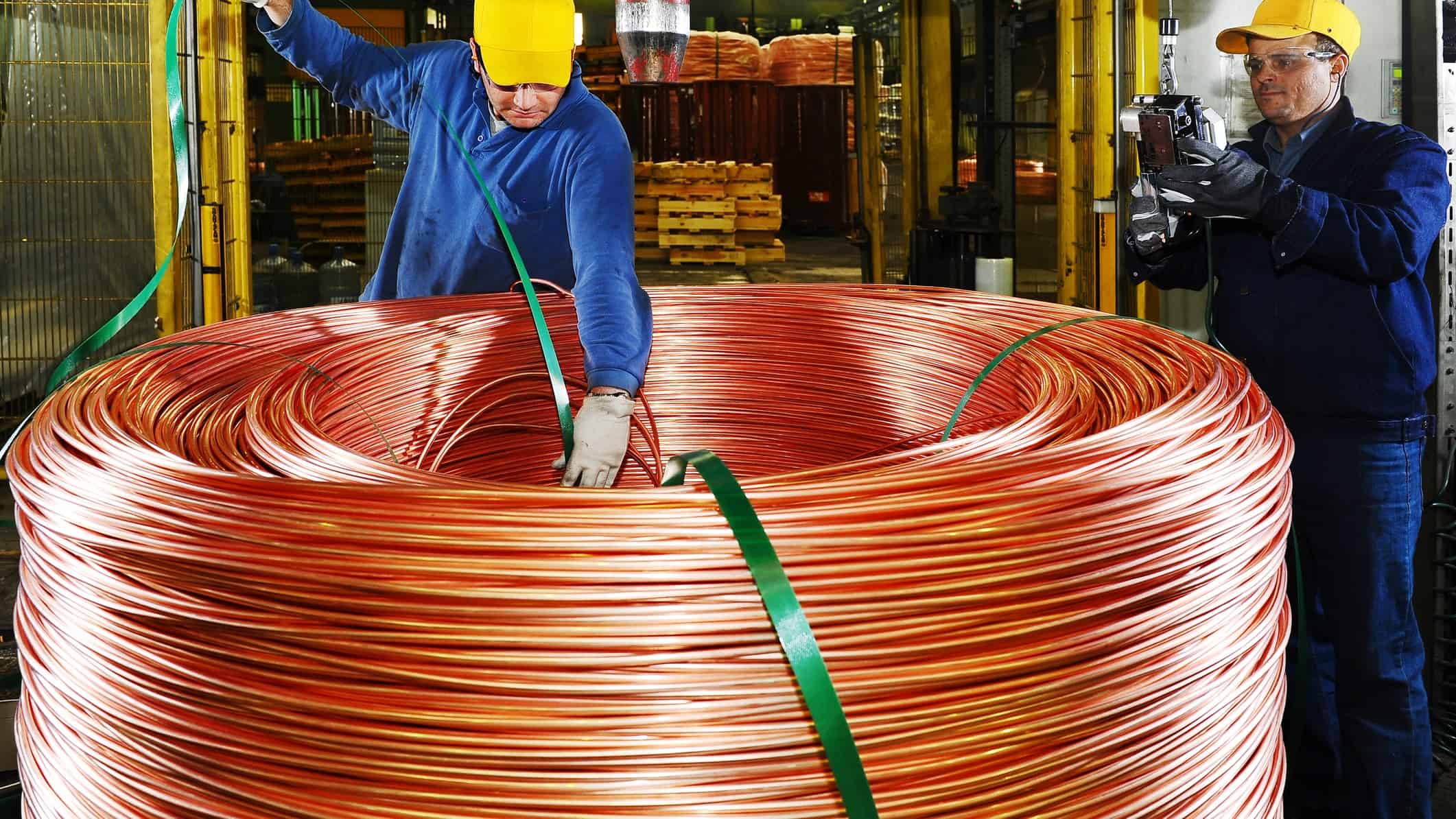
    Two workers working with a large copper coil in a factory.

    Shares in Capstone Copper Corp (ASX: CSC) were sharply lower on Friday morning despite good news out of its Mantoverde mine in Chile, where a strike has come to an end.

    The company said last month that the strike, involving members of Union #2, which started on January 2, had halted some production processes.

    At the time, in late January, the company confirmed that striking workers were blocking access to the desalination plant, which had a knock-on effect on other operations.

    As the company said at the time:

    During the evening of January 18, individuals entered the desalination plant facilities, located 40 kilometres from the Mantoverde mine, while workers were inside performing regular duties. Subsequently, interference with the desalination plant’s electrical system resulted in the interruption of water supply to Mantoverde. Striking union members are preventing access and the restart of facility operations at the desalination plant. At Mantoverde, on-site water reserves continue to be used for essential services. Sulphide operations are temporarily halted while oxide operations are expected to continue until tomorrow, at which point they will be temporarily halted unless water supply is restored.  

    New agreement inked

    Capstone said on Friday morning that the strike had now come to an end, with a new three-year collective bargaining agreement struck with the union.

    The company added:

    Following an agreement with Union #2, Mantoverde has now successfully negotiated new three-year collective bargaining agreements with all four unions and will continue its focus on safe and responsible mining which brings great benefits to the workforce and surrounding communities. Capstone’s priority is to safely and efficiently return to full operations at Mantoverde, which operated at approximately 55% of normal production levels during the strike.

    Capstone owns 70% of the Mantoverde operations, with Mitsubishi Materials Corporation owning the rest.

    The company has said in previous press releases that Union #2 represents about 22% of the total workforce at Mantoverde.

    Capstone shares were 4.5% lower at $15.32 on Friday morning, most likely reflecting weakness in the copper price overnight rather than the impact of the end of the strike.

    Other major miners were also weaker on Friday, with BHP Group Ltd (ASX: BHP) down 2.6% at $49.03 and South32 Ltd (ASX: S32) down 4% at $4.41.

    Rio Tinto Ltd (ASX: RIO) shares were 0.1% lower at $156.91, while junior copper producer Hillgrove Resources Ltd (ASX: HGO) was trading 7.7% lower at 4.8 cents.

    Capstone was valued at $15.1 billion at the close of trade on Thursday.

    The post Capstone Copper shares in a slump despite good news out of Chile appeared first on The Motley Fool Australia.

    Should you invest $1,000 in Capstone Copper right now?

    Before you buy Capstone Copper shares, consider this:

    Motley Fool investing expert Scott Phillips just revealed what he believes are the 5 best stocks for investors to buy right now… and Capstone Copper wasn’t one of them.

    The online investing service he’s run for over a decade, Motley Fool Share Advisor, has provided thousands of paying members with stock picks that have doubled, tripled or even more.*

    And right now, Scott thinks there are 5 stocks that may be better buys…

    * Returns as of 1 Jan 2026

    .custom-cta-button p {
    margin-bottom: 0 !important;
    }

    More reading

    Motley Fool contributor Cameron England has no position in any of the stocks mentioned. The Motley Fool Australia’s parent company Motley Fool Holdings Inc. has no position in any of the stocks mentioned. The Motley Fool Australia has recommended BHP Group. The Motley Fool has a disclosure policy. This article contains general investment advice only (under AFSL 400691). Authorised by Scott Phillips.

  • Up more than 100% in a year, this gold stock could double again one broker says

    a woman wearing a sparkly strapless dress leans on a neat stack of six gold bars as she smiles and looks to the side as though she is very happy and protective of her stash. She also has gold fingernails and gold glitter pieces affixed to her cheeks.

    Shareholders in Santana Minerals Ltd (ASX: SMI) are sitting on some solid gains for the past 12 months, but some news announced just this week has given the analyst team at Shaw and Partners confidence that the company’s shares can keep charging higher.

    Santana’s flagship asset is the Bendigo-Ophir gold project in the Otago region of New Zealand, for which the company released a prefeasibility study last year.

    Key milestone ticked off

    The company said in a statement to the ASX this week that it had reached a key milestone in the Fast-Track Approvals Act (FTA) process for the project, which had set a timeline for the government to assess it.

    As the company said:

    The Panel Convener has used her discretion under the FTA and confirmed a 140 working-day statutory timeframe for determination of the Bendigo-Ophir Gold Project, with a decision due by 29 October 2026. In setting this timeframe, the Convener emphasised a process designed to be efficient, proportionate and outcome-focused, enabling the Expert Panel to regulate its own procedures in a practical manner that supports a fair, well-tested and timely decision and avoid unnecessary procedural formality. The approach allows the participants to use expert conferencing to efficiently resolve issues, and narrow points of contention.

    Santana Chief Executive Damian Spring said the company now had a firm timeline “for what we believe will mark the commencement of development for a project of national and regional significance”.

    He added:

    While the timeframe is longer than we had hoped, we appreciate the additional diligence to support the consenting of this nationally significant project. The appointment of an experienced Panel and confirmation of a clear statutory timetable provides important process certainty.

    Shares looking cheap

    Shaw and Partners said in a note to clients that it was a welcome development for the project.

    They said regarding the project:

    Santana is one of a handful of companies globally to boast a +2Moz at +2g/t predominantly open pit resource. The recent land acquisition has materially derisked the project positioning the company in our opinion as ‘shovel ready’. We maintain our positive view on gold with Santana being one of our preferred developer exposures, reiterate a buy recommendation.

    Shaw recently raised its price target for the company’s shares from $1.63 to $2.15, representing a 121.6% return if achieved.

    The shares have more than doubled over the past 12 months, from lows of 39.7 cents to 97 cents on Friday.

    The company was valued at $849.3 million at the close of trade on Thursday.

    The post Up more than 100% in a year, this gold stock could double again one broker says appeared first on The Motley Fool Australia.

    Should you invest $1,000 in Santana Minerals Limited right now?

    Before you buy Santana Minerals Limited shares, consider this:

    Motley Fool investing expert Scott Phillips just revealed what he believes are the 5 best stocks for investors to buy right now… and Santana Minerals Limited wasn’t one of them.

    The online investing service he’s run for over a decade, Motley Fool Share Advisor, has provided thousands of paying members with stock picks that have doubled, tripled or even more.*

    And right now, Scott thinks there are 5 stocks that may be better buys…

    * Returns as of 1 Jan 2026

    .custom-cta-button p {
    margin-bottom: 0 !important;
    }

    More reading

    Motley Fool contributor Cameron England has no position in any of the stocks mentioned. The Motley Fool Australia’s parent company Motley Fool Holdings Inc. has no position in any of the stocks mentioned. The Motley Fool Australia has no position in any of the stocks mentioned. The Motley Fool has a disclosure policy. This article contains general investment advice only (under AFSL 400691). Authorised by Scott Phillips.