• Why has the Core Lithium share price just been halted?

    The Core Lithium Ltd (ASX: CXO) share price won’t be going anywhere for the moment.

    This comes as the company requested that its shares be placed in a trading halt.

    At the time of writing, the lithium developer’s shares are frozen at $1.105 apiece. It’s worth noting that Core Lithium shares have lost more than 20% in value over the past week.

    Why is the Core Lithium share price halted?

    According to its latest release, Core Lithium is launching a fully underwritten $100 million institutional placement.

    This comprises 97.1 million new fully paid ordinary shares that will be created at a price of $1.03 per share. The offer represents a 6.8% discount to the last close price on 29 September.

    Core Lithium noted the recent exploration success and favourable lithium pricing market, in which it intends to “pursue new and aggressive exploration programs”.

    The company is seeking to expand its ore reserves and mineral resources through its drilling campaign at the Finniss Lithium Project in the Northern Territory.

    Core Lithium advised it is on schedule to deliver the first lithium concentrate production in the first half of 2023.

    What will the funds be used for?

    The monies raised from the capital raise will be used to fund a number of initiatives that include the following:

    • Accelerated resource definition, extensional and exploration drilling;
    • Advancing development of the proposed BP33 underground mine;
    • Introducing a night shift to facilitate an accelerated commissioning of the Finniss concentrator;
    • Enhancing project management and corporate development capabilities; and
    • Working capital.

    Core Lithium CEO Gareth Manderson commented:

    The Placement enables Core to pursue several new growth initiatives. We will be well-funded for a larger exploration campaign on our prospective landholding.

    Recent exploration success at BP33, Core’s proposed second lithium mine, supports the deployment of growth capital and project development, enabling Core to capitalise on the current strength in lithium prices.

    About the Core Lithium share price

    Despite tumbling this month, the Core Lithium share price has posted a gain of almost 90% in 2022.

    In contrast, the S&P/ASX 200 Materials Index (ASX: XMJ) is up down 8% year-to-date.

    Based on valuation grounds, Core Lithium has a market capitalisation of approximately $1.92 million with roughly 1.74 billion shares outstanding.

    The post Why has the Core Lithium share price just been halted? appeared first on The Motley Fool Australia.

    .

    More reading

    Motley Fool contributor Aaron Teboneras has no position in any of the stocks mentioned. The Motley Fool Australia’s parent company Motley Fool Holdings Inc. has no position in any of the stocks mentioned. The Motley Fool Australia has no position in any of the stocks mentioned. The Motley Fool has a disclosure policy. This article contains general investment advice only (under AFSL 400691). Authorised by Scott Phillips.

    from The Motley Fool Australia https://ift.tt/1xH75CI

  • Rio Tinto share price smashes ASX 200 amid lithium production news

    Young boy in business suit punches the air as he finishes ahead of another boy in a box car race.Young boy in business suit punches the air as he finishes ahead of another boy in a box car race.

    The Rio Tinto Limited (ASX: RIO) share price is currently up by around 3.5%. That represents quite a bit of outperformance considering the S&P/ASX 200 Index (ASX: XJO) is down 0.5%.

    It’s not the only resources company that is doing well today. The BHP Group Ltd (ASX: BHP) share price is up 1.9% as well.

    But it may not just be typical market movements that Rio Tinto investors are responding to.

    The business also announced a promising update regarding its lithium plans.

    Spodumene concentration production started

    Rio Tinto announced yesterday that it has started producing spodumene concentrate, which is an important mineral used in the production of lithium for batteries. This is being done at a demonstration plant in its Rio Tinto iron and titanium (RTIT) Quebec operations at its metallurgical complex in Canada.

    The plan for the plant is that it will demonstrate, at an industrial scale, a new spodumene concentration process that provides lithium oxide grades and recoveries “well above the industry average”. It “offers the environmental benefit of not using chemical products and generating only dry, inert residues”.

    RTIT managing director Stéphane Leblanc said:

    Rio Tinto is exploring new, sustainable ways to extract battery materials for the energy transition. We are seeing strong interest in the market for a North American supply of spodumene concentrate to support production of lithium batteries.

    Our demonstration plant will allow us to further validate the innovative spodumene concentration process developed at our Critical Minerals and Technology Centre as we consider moving to commercial-scale production.

    Rio Tinto says it’s committed to the battery materials sector and lithium’s role in a low carbon future.

    The ASX mining share is focused on the Rincon lithium project, a large undeveloped lithium brine project located in Argentina. Rio Tinto describes this as a “long life, scaleable project” that “has the potential to have one of the lowest carbon footprints in the industry”.

    Energy Resources of Australia independent valuation report

    The ASX mining share made another announcement yesterday, acknowledging the independent valuation report released by Energy Resources of Australia (ERA) on 26 September 2022, to determine a valuation of the company as it aims to address material cost and schedule overruns on the Ranger rehabilitation project in Australia’s Northern Territory.

    Rio Tinto’s position is that the terms of any ERA funding solution should reflect “fair value” regarding the material cost overruns and interim funding requirements, that funds raised will be dedicated strictly to rehabilitation and not any future development, and the Traditional Owners, the Mirarr People’s consistently publicly stated opposition to developing the Jabiluka uranium deposit.

    The mining company stated that, in its view, “the independent valuation report prepared by Grant Thornton and adopted by the independent board committee to help set the price for a future entitlement offer, fails to appropriately recognise the long-standing opposition of the Mirarr People to further uranium mining on their country. Rio Tinto understands that this causes distress for the Mirarr elders and community.”

    Rio Tinto has offered to subscribe for its full pro-rata entitlement at an offer price that “fully reflects Rio Tinto’s view of fair value”. This offer to ERA is still open.

    The ASX 200 mining share said that it’s committed to “ensuring the rehabilitation is completed to a standard that will establish an environment similar to the adjacent Kakadu National Park”.

    Rio Tinto share price snapshot

    While Rio Tinto shares are up today, they are down by 21% over the last six months. They are also down 6% year to date and by a similar amount over the past 12 months.

    The post Rio Tinto share price smashes ASX 200 amid lithium production news appeared first on The Motley Fool Australia.

    .

    More reading

    Motley Fool contributor Tristan Harrison has no position in any of the stocks mentioned. The Motley Fool Australia’s parent company Motley Fool Holdings Inc. has no position in any of the stocks mentioned. The Motley Fool Australia has no position in any of the stocks mentioned. The Motley Fool has a disclosure policy. This article contains general investment advice only (under AFSL 400691). Authorised by Scott Phillips.

    from The Motley Fool Australia https://ift.tt/ZIjr49L

  • Why US Fintech stocks crashed today

    This article was originally published on Fool.com. All figures quoted in US dollars unless otherwise stated.

    Sad investor watching the financial stock market crash on his laptop computer.

    This article was originally published on Fool.com. All figures quoted in US dollars unless otherwise stated.

    What happened

    Shares of fintech stocks Upstart (NASDAQ: UPST), Affirm (NASDAQ: AFRM), and SoFi (NASDAQ: SOFI) were in crash mode today, with each down between 8% and 9% as of 2:27 p.m. ET.   

    Lately, these beaten-down fintech stocks have been among the most volatile to both the upside and the downside, and their movements are largely based on macroeconomic news.

    Today happened to be a big down day in the market following yesterday’s big rally, as interest rate and recession fears, along with perhaps some end-of-quarter liquidations by hedge funds, likely played a role in their synchronous decline.

    So what

    Stocks have been in free fall in September, especially technology growth stocks following a recent spike in long-term Treasury bond yields, and fintech stocks appear to be caught up in the selling.   

    Young, high-growth fintech stocks appear to be seen as a risk-on trade by investors, and investors are fleeing risk today amid so much global uncertainty. Today, U.S. jobless claims came in lower than expected, reflecting the very tight job market and potentially fueling “sticky” inflation. That could spur the Federal Reserve to continue hiking interest rates at a rapid pace.

    If inflation and interest rates continue their rapid rise, higher interest rates may actually help some mature, profitable banks with low funding costs, but smaller, unprofitable fintechs will likely see their value diminish, since their profitability is still well into the future.

    On the other hand, there is also another danger that central banks “overdo it” in their fight against inflation, pushing rates higher until we have a broad recession. That could lead to joblessness and higher charge-offs for loans. Investors will likely also take a skeptical stance with these three stocks, as they don’t have as long a history of underwriting as large, older banks. This is especially true for Upstart, which claims its AI models are a new and better way to underwrite loans than traditional FICO scores.

    Fintech stocks also have the problem of funding their loans when rates rise. Large, national banks such as Bank of America (NYSE: BAC), for instance, can charge very low deposit rates due to their size, national scale, and recognizable brand. That allows them to generate lots of leverage in net interest income as rates rise, as they can charge higher interest rates without having to raise deposit rates as much. 

    That’s not the case with fintechs. For instance, Upstart had to resort to using its balance sheet this year to fund some of its loans. That was a departure from its initial business model of selling all loans to third-party banks and credit unions, as loan buyers balked when interest rates rose rapidly.

    For its funding, Affirm relies on warehouse facilities, securitizations, and other forward-flow commitments. These are generally higher-rate options than bank deposits.

    Yet even SoFi, which acquired a bank charter earlier this year that gave it access to deposits, has had to raise its deposit rate APY up to 2% as of August, up from 1.5% as recently as June, in order to attract depositors.

    Basically, the smaller you are and the earlier you are in your corporate life as a financial company, the higher your funding costs will be relative to large institutions. That tends to put these companies further out on the risk curve, which opens them up to charge-offs.

    Now what

    With these stocks down so much from their highs, between 82% and 95%, they could have substantial upside if the economy avoids a recession and interest rates moderate. However, there is significant uncertainty on those fronts, with most economists skeptical the Fed can engineer a “soft landing.”

    Thus, these former highfliers remain high-risk, high-upside bets that a recession will either be avoided or that it will be shallow and mild. They remain appropriate only for investors comfortable making volatile, high-upside bets that could also yield very big losses.     

    This article was originally published on Fool.com. All figures quoted in US dollars unless otherwise stated.

    The post Why US Fintech stocks crashed today appeared first on The Motley Fool Australia.

    .

    More reading

    Billy Duberstein has positions in Bank of America. Bank of America is an advertising partner of The Ascent, a Motley Fool company. The Motley Fool Australia’s parent company Motley Fool Holdings Inc. has positions in and has recommended Affirm Holdings, Inc. and Upstart Holdings, Inc. The Motley Fool Australia has recommended Upstart Holdings, Inc. The Motley Fool has a disclosure policy. This article contains general investment advice only (under AFSL 400691). Authorised by Scott Phillips.

    This article was originally published on Fool.com. All figures quoted in US dollars unless otherwise stated.

    from The Motley Fool Australia https://ift.tt/nozc5Bl

  • Why has the Appen share price just dropped to a new 5-year low?

    A close up picture taken from the side of a man with his head face down on his laptop computer keyboard as though he is in great despair over a mistake or error he has made or bad news he has received.

    A close up picture taken from the side of a man with his head face down on his laptop computer keyboard as though he is in great despair over a mistake or error he has made or bad news he has received.

    It has been another disappointing day for the Appen Ltd (ASX: APX) share price on Friday.

    In morning trade, the artificial intelligence data services company’s shares are down 5% to $3.09.

    This means the Appen share price is now trading at a new five-year low.

    Why is the Appen share price at a five-year low?

    Investors have been selling down the Appen share price on Friday amid significant weakness in the tech sector.

    This follows a very poor night of trade on Wall Street for tech stocks. This led to the tech-focused NASDAQ index falling a sizeable 2.85% overnight, with Apple leading the way with a decline of almost 5%.

    In morning trade in Australia, the S&P/ASX All Technology Index is down 2.6%.

    What else?

    In addition, on Thursday, Facebook’s parent Meta warned that the “macroeconomy remains tough and volatile” and it would aim to cut costs accordingly.

    This may have sparked fears that demand from Meta, one of Appen’s biggest customers, could soften in the near term.

    And if other tech giants, such as Google, are also feeling the heat from the tough economic environment, demand for artificial intelligence data services from them could also lessen and put Appen at risk of falling short of its guidance for FY 2022.

    While Appen hasn’t provided any real guidance, it has advised that it expects the second half to bring higher revenue. Some investors may be doubting that this will happen now based the Appen share price decline today.

    Time will tell if that is the case.

    The post Why has the Appen share price just dropped to a new 5-year low? appeared first on The Motley Fool Australia.

    .

    More reading

    Motley Fool contributor James Mickleboro has no position in any of the stocks mentioned. The Motley Fool Australia’s parent company Motley Fool Holdings Inc. has positions in and has recommended Appen Ltd. The Motley Fool Australia has no position in any of the stocks mentioned. The Motley Fool has a disclosure policy. This article contains general investment advice only (under AFSL 400691). Authorised by Scott Phillips.

    from The Motley Fool Australia https://ift.tt/zIJ3VD1

  • If I’d invested $1,000 in Pilbara Minerals shares at the start of 2022, here’s what I’d have now

    Young boy wearing suit and glasses counts his money using a calculator.Young boy wearing suit and glasses counts his money using a calculator.

    ASX lithium shares have been on a rollercoaster this year, and the turbulence may have taken a toll on Pilbara Minerals Ltd (ASX: PLS) investors.

    At one point, the S&P/ASX 200 Index (ASX: XJO) lithium favourite had tumbled more than 40% year to date. Fortunately it’s turned things around, rocketing to a record high of $5.08 last week.

    But are Pilbara Minerals shares a good investment?

    To the victor go the spoils

    Assuming I’d invested $1,000 in Pilbara Minerals stock on the first trading day of 2022, I probably would have bought 284 shares for $3.52 apiece.

    And that would have marked a good short-term investment. My initial $1,000 holding would have been worth $1,312 at yesterday’s close, having returned 31.25% in that time. Not too shabby, if I say so myself.

    But it wouldn’t have been a worry-free buy. The Pilbara Minerals share price closed at $2.04 in mid-June.

    Meaning, at its lowest point, my holding’s value would have been a disappointing $579.  

    And while I’d love to factor in dividends to the equation, I unfortunately cannot. Though, one top broker previously tipped the company to pay its maiden dividend this financial year.

    So, with my wishful investment having shot up in value over the last 10 months – despite plenty of volatility – is the stock worth snapping up right now?

    Is it too late to buy Pilbara Minerals shares?

    The ASX 200 lithium stock recently surpassed a major milestone, posting its first profit. The company brought in $1.2 billion of revenue and posted a $561.8 million after-tax profit over the 12 months ended 30 June.

    It also boasts a decent cash position and expects to up its production in coming years amid surging demand for lithium.

    However, the future of the Pilbara Minerals share price will likely be contingent on a single outside factor – lithium prices.

    Of course, expected demand levels will likely drive up the price of the ‘white gold’, thereby boosting Pilbara Minerals’ bottom line.

    Analysts at Wilsons are among many expecting big things from the commodity’s value as demand outstrips supply in coming years, as my Fool colleague Tony reports.

    Meanwhile, Macquarie expects Pilbara Minerals shares will surge to $5.60, slapping the stock with a buy rating, The Motley Fool Australia’s James reports.

    All in all, I think the future still looks bright for the ASX 200 lithium favourite. If I somehow found myself back at the start of 2022, I know where I’d be putting – and keeping – my cash.

    The post If I’d invested $1,000 in Pilbara Minerals shares at the start of 2022, here’s what I’d have now appeared first on The Motley Fool Australia.

    .

    More reading

    Motley Fool contributor Brooke Cooper has no position in any of the stocks mentioned. The Motley Fool Australia’s parent company Motley Fool Holdings Inc. has no position in any of the stocks mentioned. The Motley Fool Australia has recommended Macquarie Group Limited. The Motley Fool has a disclosure policy. This article contains general investment advice only (under AFSL 400691). Authorised by Scott Phillips.

    from The Motley Fool Australia https://ift.tt/NgeBEcL

  • Own Evolution Mining shares? Get ready to dig into your dividends

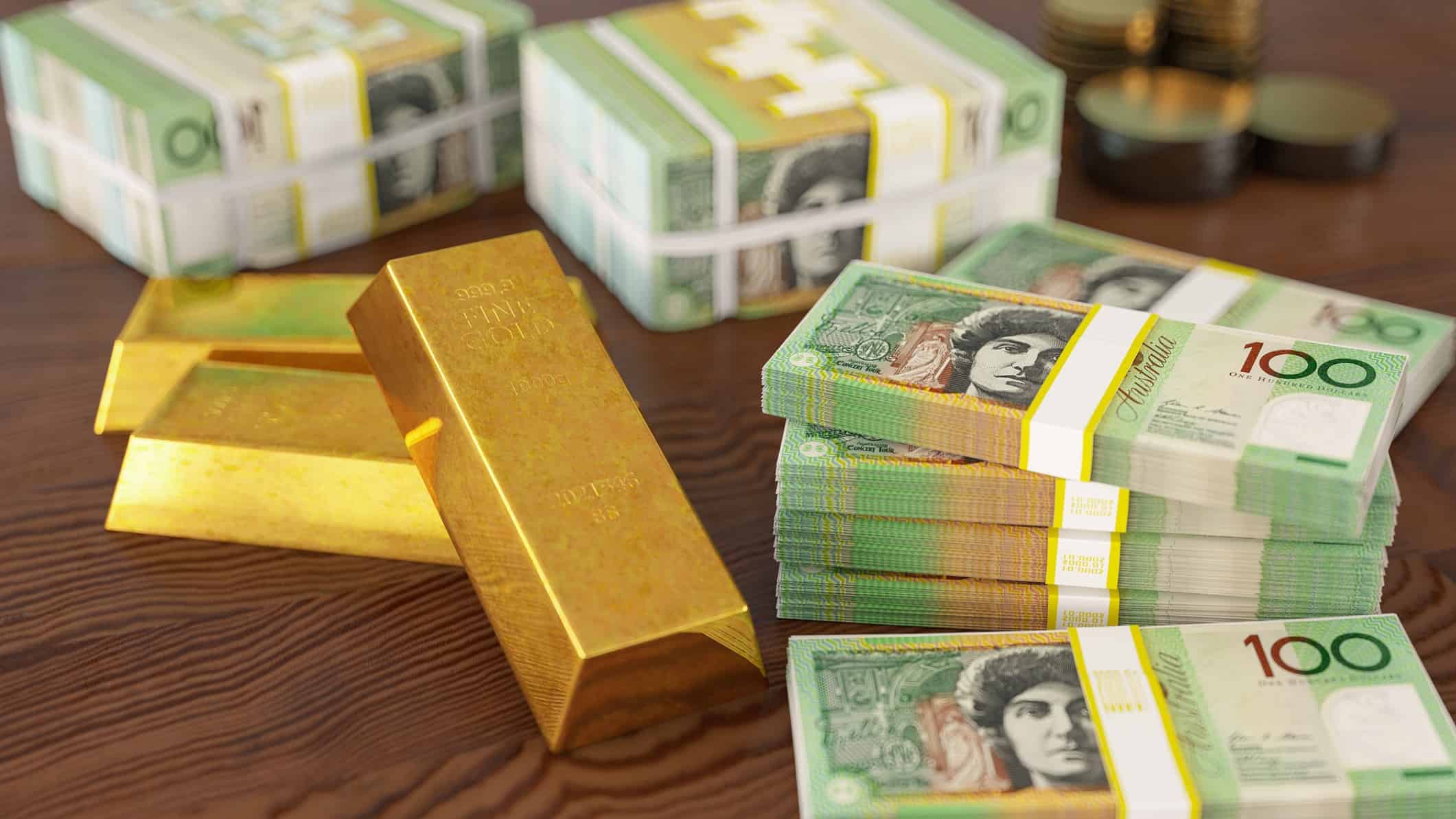
    Gold bars and Australian dollar notes.Gold bars and Australian dollar notes.

    The Evolution Mining Ltd (ASX: EVNdividend will be landing into shareholder accounts today.

    This comes at an opportune time as investors would have seen their wealth fall significantly in the past couple of months.

    At the time of writing, Evolution shares are fetching for $2.01 per share, up 1.26%.

    When factoring the last 2 months, the gold miner’s shares are down almost 25%.

    What’s happened to Evolution shares?

    With gold prices falling to multi-year lows, this has caused a negative sentiment on the Evolution share price.

    Just last week, the yellow metal reached a low of around US$1,630 before climbing back to US$1,663 at the time of writing.

    Evidently, selling gold at a lower price puts a squeeze on the company’s revenue margins.

    This is being driven by the global economic slowdown as well as the US Federal Reserve aggressively ramping up interest rates to combat inflation.

    What about the Evolution dividend?

    After the company reported its full-year result, the board declared a fully-franked final dividend of 3 cents apiece.

    This brings the full-year dividend to 6 cents per share, down 50% year on year.

    And is the 19th consecutive dividend paid to shareholders for a total of $1,053 million since 2013.

    Evolution has a current dividend yield of 2.98%.

    Evolution share price snapshot

    It has been a rollercoaster ride for Evolution investors, with its shares reaching a multi-year low of $1.805 on Tuesday.

    The company’s share price is down more than 50% in 2022.

    Evolution commands a market capitalisation of approximately $3.64 billion and has over 1.83 billion shares on its registry.

    The post Own Evolution Mining shares? Get ready to dig into your dividends appeared first on The Motley Fool Australia.

    .

    More reading

    Motley Fool contributor Aaron Teboneras has no position in any of the stocks mentioned. The Motley Fool Australia’s parent company Motley Fool Holdings Inc. has no position in any of the stocks mentioned. The Motley Fool Australia has no position in any of the stocks mentioned. The Motley Fool has a disclosure policy. This article contains general investment advice only (under AFSL 400691). Authorised by Scott Phillips.

    from The Motley Fool Australia https://ift.tt/aeWmTti

  • Why buying Bitcoin might be the best investment right now: broker

    Two investors look at a graphic showing a bitcoin in the centreTwo investors look at a graphic showing a bitcoin in the centre

    Bitcoin (CRYPTO: BTC) hasn’t been the best of investments this calendar year.

    At all.

    Since 1 January, the price of the world’s top crypto has tumbled a painful 59%. That compares to a 32% loss posted by the tech-heavy NASDAQ.

    The rout has been driven by fast-rising interest rates across the world to combat soaring inflation. And it’s hit almost every crypto, not just BTC. In fact, only three of the top 100 tokens by market cap – stablecoins aside – are in the green year-to-date.

    But as far as Bitcoin is concerned, the token just might be the best investment on the market right now.

    Is Bitcoin set for massive outperformance?

    According to a report by JPMorgan (sourced from The Crypto Basic), Bitcoin is forecast to be the highest projected excess return asset class.

    The data (which lists Refinitiv Eikon, Bloomberg Finance and JP Morgan as sources), indicates that Bitcoin has a projected excess return rate of 38.1%.

    That beats out the number two asset class, private equity, which has a projected excess return rate of 21%, and number three global equities, with a projected excess return rate of 21%.

    In case you’re wondering, the projected excess return rate is a forecast estimate of how much the various asset classes are expected to beat the returns that the market has already priced in.

    The report also lists the historic volatility of the different asset classes.

    Not surprisingly, Bitcoin has by far the highest volatility rating among them. Meaning investors should be prepared for some big price swings, whether the token is trending higher or lower.

    Just don’t tell the CEO

    While the JPMorgan analysis may be bullish on Bitcoin, and the firm itself has embraced blockchain technology, CEO Jamie Dimon still isn’t a fan.

    Speaking at a US congressional hearing this week, Dimon said (courtesy of Bloomberg), “I’m a major sceptic on crypto tokens, which you call currency, like Bitcoin. They are decentralized Ponzi schemes.”

    Ponzi scheme? Top medium-term investment? Both?

    Time will tell.

    The post Why buying Bitcoin might be the best investment right now: broker appeared first on The Motley Fool Australia.

    .

    More reading

    JPMorgan Chase is an advertising partner of The Ascent, a Motley Fool company. Motley Fool contributor Bernd Struben has no position in any of the stocks mentioned. The Motley Fool Australia’s parent company Motley Fool Holdings Inc. has positions in and has recommended Bitcoin and JPMorgan Chase. The Motley Fool Australia has positions in and has recommended Bitcoin. The Motley Fool has a disclosure policy. This article contains general investment advice only (under AFSL 400691). Authorised by Scott Phillips.

    from The Motley Fool Australia https://ift.tt/v6HdKh4

  • The US stock market just hit new 2-year lows. But it’s not all bad news

    Broker holding red flag in front of bearBroker holding red flag in front of bear

    The US stock market is likely to suffer its worst September since 2008 but there may be light at the end of the tunnel.

    The S&P 500 Index (SP: .INX) tumbled 2.1% last night to its lowest level since November 2020 and it’s lost nearly 9% this month. The Nasdaq Composite Index (NASDAQ: .IXIC) fared worse last night with a 2.8% retreat to a fresh low this year.

    Why the US stock market is falling

    It’s a case of good news being bad news. Resilient jobs data in the US is reinforcing the view that the US Federal Reserve will need to keep lifting interest rates aggressively to fight inflation.

    The negative sentiment is spilling over to our market. The futures market is predicting a 0.3% drop in the S&P/ASX 200 Index (ASX: XJO) this morning.

    Signs of hope for a turnaround

    But there might be a little relief around the corner for embattled investors. US stock futures are trending up following Thursday’s sharp sell-off on Wall Street.

    The S&P 500 futures are up 0.3% and the Dow Jones Industrial Average Index (DJX: .DJI) futures are pointing to a 0.2% gain, reported CNBC. The NASDAQ-100 Index (NASDAQ: NDX) futures are also indicating a 0.1% gain for the tech heavy index.

    Could the worst be over for the US stock market?

    It might be too early to pop the champaign, but investors have another reason to celebrate. This month is just about over and September has a notorious reputation of being the worst month for the US stock market.

    In fact, history has shown that US equities have fallen almost every September over the past several years.

    Given the ASX 200’s correlation to the US share market, September isn’t a great month for us either. Our top 200 share index is nursing a loss of around 6% for the month.

    When bad news could be good

    But there are two other reasons to be hopeful. The flood of doom and gloom headlines about shares and the economy may signal that the bottom could be closer than you’d think.

    The overwhelming sense of pessimism tends to overtake everything just before the bear market turns. I am not suggesting we are there yet, but this is how bad news can turn good.

    Will Xmas save US and Australian shares?

    The other thing worth remembering is the end of year Santa Rally. This is another seasonal trend that occurs as dependably as the September sell-down.

    If next month’s US inflation data shows signs that price pressures are easing, this might just be enough to convince bargain hunters to jump back into the US stock market.

    There is no doubt that ASX investors will also be basking in the afterglow should US sentiment turn positive.

    It’s a big “if”, but most share investors are by their nature a “glass half full” kind of crowd, aren’t we?

    The post The US stock market just hit new 2-year lows. But it’s not all bad news appeared first on The Motley Fool Australia.

    .

    More reading

    Motley Fool contributor Brendon Lau has no position in any of the stocks mentioned. The Motley Fool Australia’s parent company Motley Fool Holdings Inc. has no position in any of the stocks mentioned. The Motley Fool Australia has no position in any of the stocks mentioned. The Motley Fool has a disclosure policy. This article contains general investment advice only (under AFSL 400691). Authorised by Scott Phillips.

    from The Motley Fool Australia https://ift.tt/xAqUuF4

  • Here’s what one billionaire thinks about crypto right now

    This article was originally published on Fool.com. All figures quoted in US dollars unless otherwise stated.

    man standing and looking at an inclining road with the word cryptocurrency written on it and a question mark at the top of the road

    This article was originally published on Fool.com. All figures quoted in US dollars unless otherwise stated.

    In early September, Coinbase Global‘s (NASDAQ: COIN) CEO, Brian Armstrong, appeared on CNBC to discuss his company’s management of the crypto winter, his thoughts about particular cryptocurrencies, and where he thinks the market is headed in the coming months. 

    Armstrong has been at the helm of Coinbase since he founded the company in 2012. Since then, the cryptocurrency market has gone through numerous boom-and-bust cycles. When Armstrong started his business, Bitcoin (CRYPTO: BTC) traded for less than $15. Today, it is hovering around $20,000, and Armstrong’s net worth is believed to be around $2 billion. 

    A challenging time, but there is reason for hope

    Just because Armstrong is the CEO of one of the most popular cryptocurrency exchanges doesn’t mean he knows exactly what will happen next in the crypto market.

    But he has been around since just about the beginning of cryptocurrencies and has managed to keep his company afloat regardless of economic conditions. So when he shares his thoughts on the market today, people inevitably listen. 

    In the CNBC interview, Armstrong was asked about the current crypto environment and what it could look like once it returns to healthier levels. Most notable were his comments on a transition from primarily retail investing in crypto to larger institutions now joining in.

    Armstrong believes that one particular sector will drive the next wave of crypto adoption: big tech. He cited the agreement between Coinbase and the world’s largest asset manager, BlackRock (NYSE: BLK).

    In the agreement, the latter’s investing software will integrate directly with Coinbase so BlackRock clients can purchase Bitcoin seamlessly.

    Armstrong thinks that more and more companies will follow this business model in the future. Since these large companies typically have more money on hand than retail investors, he is optimistic that this influx of capital entering the crypto market could send it to heights we have yet to see. 

    But until then, Armstrong’s company faces an uphill battle as investors shy away from risky assets like cryptocurrencies due to poor macroeconomic conditions.

    Coinbase primarily generates profits from the transaction fees it charges for trades. With less trade volume, Coinbase’s profits are taking a severe hit. 

    He was asked about when he sees the current crypto winter ending. He said that this one is a little different from other crypto winters in the past since it “happens to coincide with the broader macro environment coming down.” He was mainly referring to rising inflation and climbing interest rates. 

    Armstrong hopes that the macro environment improves in the next 12 to 18 months, allowing crypto to have a “nice recovery”.

    The main takeaway

    Investors shouldn’t hang on to every word that comes out of the mouths of billionaires, but they should consider these statements when making decisions because they may contain valuable insights.

    Armstrong does have more experience in the crypto industry than just about anyone else, and his knowledge can be helpful in gaining more perspective on the sector’s current position. 

    Armstrong believes that there are cycles when it comes to crypto, similar to the stock market. The incredible growth that the sector experienced from 2020 to 2021 was not sustainable, and it was inevitable that some sort of correction would follow.

    Suppose Armstrong is correct, and the market is in for a lackluster performance over the next year and a half. In that case, that means now could be the time for investors to take advantage of incredibly discounted prices in preparation for a return to a healthier market. 

    This article was originally published on Fool.com. All figures quoted in US dollars unless otherwise stated.

    The post Here’s what one billionaire thinks about crypto right now appeared first on The Motley Fool Australia.

    .

    More reading

    RJ Fulton has positions in Bitcoin. The Motley Fool Australia’s parent company Motley Fool Holdings Inc. has positions in and has recommended Bitcoin and Coinbase Global, Inc. The Motley Fool Australia has positions in and has recommended Bitcoin. The Motley Fool has a disclosure policy. This article contains general investment advice only (under AFSL 400691). Authorised by Scott Phillips.

    This article was originally published on Fool.com. All figures quoted in US dollars unless otherwise stated.


    from The Motley Fool Australia https://ift.tt/6j90Hbs
  • Everything you need to know about the latest Premier Investments monster dividend

    A laughing woman wearing a bright yellow suit, black glasses and a black hat spins dollar bills out of her hands signifying the big dividends paid by BHP

    A laughing woman wearing a bright yellow suit, black glasses and a black hat spins dollar bills out of her hands signifying the big dividends paid by BHP

    The Premier Investments Limited (ASX: PMV) share price was a very strong performer on Thursday.

    The retail conglomerate’s shares rocketed higher after investors responded positively to the release of a better than expected full year result.

    What happened in FY 2022?

    For the 12 months ended 30 July, Premier reported a 5.2% increase in global sales to $1,497.5 million. This was despite the company losing 42,675 trading days from COVID-related store closures.

    Goldman Sachs was impressed with its performance. It commented:

    PMV reported strong FY22 results with Sales +3.8% YoY (+6% vs GSe, +4% vs Factset Consensus) and normalized NPAT +7.4% YoY (29% vs GSe, 9% vs Factset Consensus). The beat was largely driven by stronger than expected sales across all key segments, with Peter Alexander (+10% vs GSe), Smiggles (+7% vs GSe) and Apparel Brands (+3% vs GSe), while expenses were largely in-line with GSe.

    Also getting investors excited was the Premier Investments dividend for FY 2022.

    The Premier Investments dividend

    In light of its strong performance, the Premier Investments board declared a fully franked final dividend of 54 cents per share and a fully franked special dividend of 25 cents per share.

    This took its full year dividend to $1.25 per share, which was up a massive 56.3% year over year.

    Based on the current Premier Investments share price of $23.25, this represents a very generous 5.4% dividend yield.

    To qualify for the final and special dividends, investors will need to snap up shares before they trade ex-dividend. But unlike most companies that pay their dividends within a month to six weeks of their results, this won’t be happening any time soon.

    For reasons unknown, Premier Investments’ shares won’t be trading ex-dividend until 10 January 2023. The company will then pay these dividends to shareholders in just under four months from today on 25 January 2023.

    The post Everything you need to know about the latest Premier Investments monster dividend appeared first on The Motley Fool Australia.

    .

    More reading

    Motley Fool contributor James Mickleboro has no position in any of the stocks mentioned. The Motley Fool Australia’s parent company Motley Fool Holdings Inc. has no position in any of the stocks mentioned. The Motley Fool Australia has recommended Premier Investments Limited. The Motley Fool has a disclosure policy. This article contains general investment advice only (under AFSL 400691). Authorised by Scott Phillips.

    from The Motley Fool Australia https://ift.tt/WZQNenb