
• These were the worst-performing ASX 200 shares in January

    A man holds his head in his hands after seeing bad news on his laptop screen.

    The S&P/ASX 200 Index (ASX: XJO) was on form in January and pushed higher. The benchmark index rose 1.8% over the month.

    Not all ASX 200 shares climbed with the market. For example, the shares listed below all fell heavily during the month. Let’s find out why they were the worst performers on the ASX 200 in January:

    Zip Co Ltd (ASX: ZIP)

    The Zip share price was the worst performer on the index with a decline of 19%. This was despite there being no news out of the buy now pay later (BNPL) provider. Not even a bullish broker note out of Citi was able to stop the rot. Its analysts put a buy rating and $4.30 price target on its shares. The broker notes that app downloads hit record highs in the US during December, which bodes well for its transaction growth in the massive market. There was even positive news for the BNPL industry, with Donald Trump suggesting that he would put caps on credit card interest rates. This could lead to tighter lending from credit card providers, pushing people into BNPL services.

    Life360 Inc. (ASX: 360)

    The Life360 share price wasn’t far behind with a decline of 18% in January. This appears to have been driven by a broad tech selloff which dragged down the location technology company’s shares despite a very strong quarterly update which smashed expectations. For the same reasons, the shares of cloud accounting platform provider Xero Ltd (ASX: XRO) also dropped 18% during the month.

    ARB Corporation Ltd (ASX: ARB)

    The ARB share price was sold off and dropped 18% during the month. Investors were hitting the sell button after the 4×4 automotive parts company released a trading update. ARB revealed that unaudited sales revenue for the first half was $358 million, which was down 1% on the prior corresponding period. Things were worse for its earnings because of margin pressures. ARB expects to report underlying profit before tax of approximately $58 million for the half. This represents a 16.3% decline compared with the prior year.

    Pro Medicus Ltd (ASX: PME)

    The Pro Medicus share price was out of form and dropped 16.5%. This health imaging technology company’s shares appear to have been caught up in the tech selloff. Not even a bullish broker note out of Macquarie could prevent this decline. Its analysts upgraded Pro Medicus’ shares to an outperform rating with a $291.30 price target.

    The post These were the worst-performing ASX 200 shares in January appeared first on The Motley Fool Australia.

    Should you invest $1,000 in Life360 right now?

    Before you buy Life360 shares, consider this:

    Motley Fool investing expert Scott Phillips just revealed what he believes are the 5 best stocks for investors to buy right now… and Life360 wasn’t one of them.

    The online investing service he’s run for over a decade, Motley Fool Share Advisor, has provided thousands of paying members with stock picks that have doubled, tripled or even more.*

    And right now, Scott thinks there are 5 stocks that may be better buys…

    * Returns as of 1 Jan 2026

    .custom-cta-button p {
    margin-bottom: 0 !important;
    }

    More reading

    Citigroup is an advertising partner of Motley Fool Money. Motley Fool contributor James Mickleboro has positions in Life360, Pro Medicus, and Xero. The Motley Fool Australia’s parent company Motley Fool Holdings Inc. has positions in and has recommended ARB Corporation, Life360, Macquarie Group, and Xero. The Motley Fool Australia’s parent company Motley Fool Holdings Inc. has recommended Pro Medicus. The Motley Fool Australia has positions in and has recommended Life360, Macquarie Group, and Xero. The Motley Fool Australia has recommended ARB Corporation and Pro Medicus. The Motley Fool has a disclosure policy. This article contains general investment advice only (under AFSL 400691). Authorised by Scott Phillips.

  • 2 ASX ETFs I’d buy amid the AI sell-off

    The letters ETF with a man pointing at it.

    There are a few ASX-listed exchange-traded funds (ETFs) that look like particularly good buys right now, in my view.

    Changes in share prices (and currency exchange rates) can quickly make an investment look cheaper.

    This week, we’ve seen a decline of around 10% in just one day for both ServiceNow and Microsoft. These businesses are still the same companies that they were at the start of the week, yet the market has decided their future prospects are now worth significantly less.

    In the last few months, we’ve seen the share prices of a number of tech-related businesses decline. ASX ETFs that are exposed to this sector could be smart buys at the current level after recent falls, so let’s get into those ideas.

    Global X Fang+ ETF (ASX: FANG)

    This fund is one of the clearest ways to invest in the large US tech stocks. It owns 10 names in the portfolio and aims to ensure they are equal-weighted at around 10% each.

    The 10 businesses it owns include Alphabet, Nvidia, Amazon, Meta Platforms, Broadcom, Microsoft, CrowdStrike, Apple, Netflix, and Palantir.

    These are some of the world’s strongest businesses with leading positions in one, or more, product/service.

    When I think of which businesses are going to directly or indirectly be involved in changes to how we live life, the above names would be some of the most likely players. This portfolio represents areas such as AI, cloud computing, cybersecurity, online video, chips, smartphones, social media, and so on.

    At 28 January 2026, the ASX ETF could point to an average return per year of more than 20% over the prior five years. However, it’s also true to say that the FANG ETF unit price has declined by 17% since the end of October 2025. That’s a big decline.

    It’s not common for some of the strongest global businesses to drop by more than 10%, so the buy-the-dip opportunity could be too good to miss.

    I don’t know which stock(s) will end up winning the AI race, but I think the FANG ETF is a particularly attractive way to invest in this theme.

    Betashares Nasdaq 100 ETF (ASX: NDQ)

    If investors are looking for broader exposure to the US tech sector than just 10 names, then this could be the right way to do it. Instead of 10 positions, the NDQ ETF has 100 holdings.

    These businesses are the 100 largest non-financial companies on the NASDAQ, including the biggest US tech companies I mentioned with the FANG ETF. Other holdings in the portfolio include Walmart, Costco, Intuitive Surgical, Shopify, Applovin, and many more.

    I like the diversification that the NDQ ETF provides for investors because of the variety of sectors it’s invested in. In terms of returns, over the past five years, it has returned an average of 18%. This was a very powerful level of return, but came with more diversification.

    Since the end of October 2025, the NDQ ETF unit price has dropped more than 7%, making it noticeably better value today. This could be a good time to invest while the underlying businesses continue to post rising earnings.

    The post 2 ASX ETFs I’d buy amid the AI sell-off appeared first on The Motley Fool Australia.

    Should you invest $1,000 in BetaShares NASDAQ 100 ETF right now?

    Before you buy BetaShares NASDAQ 100 ETF shares, consider this:

    Motley Fool investing expert Scott Phillips just revealed what he believes are the 5 best stocks for investors to buy right now… and BetaShares NASDAQ 100 ETF wasn’t one of them.

    The online investing service he’s run for over a decade, Motley Fool Share Advisor, has provided thousands of paying members with stock picks that have doubled, tripled or even more.*

    And right now, Scott thinks there are 5 stocks that may be better buys…

    * Returns as of 1 Jan 2026

    .custom-cta-button p {
    margin-bottom: 0 !important;
    }

    More reading

    Motley Fool contributor Tristan Harrison has no position in any of the stocks mentioned. The Motley Fool Australia’s parent company Motley Fool Holdings Inc. has positions in and has recommended Alphabet, Amazon, Apple, BetaShares Nasdaq 100 ETF, Costco Wholesale, CrowdStrike, Intuitive Surgical, Meta Platforms, Microsoft, Netflix, Nvidia, Palantir Technologies, ServiceNow, and Shopify. The Motley Fool Australia’s parent company Motley Fool Holdings Inc. has recommended Broadcom. The Motley Fool Australia has positions in and has recommended BetaShares Nasdaq 100 ETF. The Motley Fool Australia has recommended Alphabet, Amazon, Apple, CrowdStrike, Meta Platforms, Microsoft, Netflix, Nvidia, ServiceNow, and Shopify. The Motley Fool has a disclosure policy. This article contains general investment advice only (under AFSL 400691). Authorised by Scott Phillips.

  • Meet the ASX ETF up 119% in a year

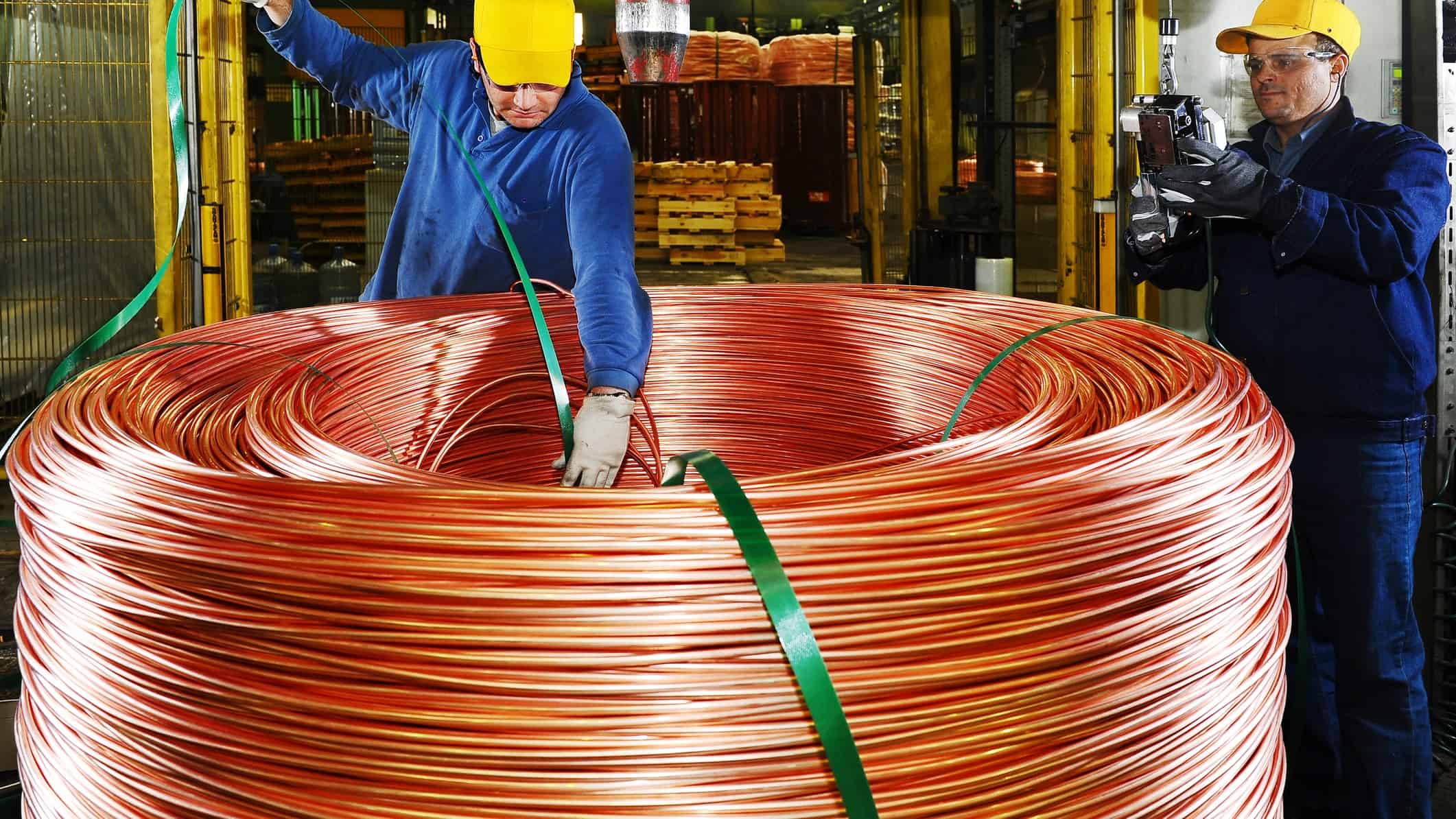
    Two workers working with a large copper coil in a factory.

    It might come as a surprise for many ASX investors to learn that there is an exchange-traded fund (ETF) on the Australian stock market that has more than doubled in value over the past 12 months.

    It’s obviously not an ASX index fund. The Vanguard Australian Shares Index ETF (ASX: VAS), has fared decently, of course. But its respectable 10.67% return over the 12 months to 31 December doesn’t quite cut the mustard in this instance.

    No, the ASX ETF that has delivered that breathtaking 119% return is none other than the Global X Copper Miners ETF (ASX: WIRE).

    Yes, this time last year, WIRE units were asking just $12.46 each. As of Friday’s close, those same units will set an investor back $26.29, up more than 111% in 12 months. Add in the dividend distributions that this ETF has paid out over this period, and we get to a 12-month performance figure of 118.77%.

    As its name suggests, the Global X Copper Miners ETF is a fund that holds a basket of global stocks all involved in the extraction and processing of copper ore.

    This is a truly global ETF. At present, 36.8% of WIRE’s portfolio is domiciled in Canada. The United States and Australia make up another 10.45% and 10.3% respectively, while Hong Kong, Japan, Poland and Sweden also contribute meaningfully.

    Some of this ASX ETF’s top holdings include KGHM, Lundin Mining Corp, Boliden AB, and Sumimoto Metal Mining Co. Our own BHP Group Ltd (ASX: BHP) is also a holding.

    Is it too late to buy this ASX ETF?

    Copper is one of the most important industrial metals in the global economy, forming the backbone of almost every electronic product you can think of. Demand has been increasing in recent years, thanks to the heavy copper needs of future-facing technologies such as electric vehicles, solar panels and data centres.

    Whilst it might be tempting to look at the copper price trajectory and conclude that this ASX ETF is a long-term winner, investors would take note that commodity prices are notoriously volatile, and the share prices of their miners even more so. This ETF has been around since 2022, and hasn’t really experienced a sharp share market correction or crash. As such, its 37.55% average return per annum since inception should be taken with a grain of salt.

    Saying all of that, we can’t deny that this ETF has been an unbridled winner. It may be suitable for investors who are convinced that copper’s best days are ahead of us. But I would still class this ASX ETF as a high-risk, high-reward play.

    The Global X Copper Miners ETF charges a management fee of 0.65% per annum.

    The post Meet the ASX ETF up 119% in a year appeared first on The Motley Fool Australia.

    Should you invest $1,000 in Global X Copper Miners ETF right now?

    Before you buy Global X Copper Miners ETF shares, consider this:

    Motley Fool investing expert Scott Phillips just revealed what he believes are the 5 best stocks for investors to buy right now… and Global X Copper Miners ETF wasn’t one of them.

    The online investing service he’s run for over a decade, Motley Fool Share Advisor, has provided thousands of paying members with stock picks that have doubled, tripled or even more.*

    And right now, Scott thinks there are 5 stocks that may be better buys…

    * Returns as of 1 Jan 2026

    .custom-cta-button p {
    margin-bottom: 0 !important;
    }

    More reading

    Motley Fool contributor Sebastian Bowen has no position in any of the stocks mentioned. The Motley Fool Australia’s parent company Motley Fool Holdings Inc. has no position in any of the stocks mentioned. The Motley Fool Australia has recommended BHP Group. The Motley Fool has a disclosure policy. This article contains general investment advice only (under AFSL 400691). Authorised by Scott Phillips.

  • These 2 ASX shares are set to soar in 2026 and beyond

    A man clenches his fists in excitement as gold coins fall from the sky.

    The Australian share market has delivered an average return in the region of 10% per annum over the long term.

    While this is a great return, Bell Potter thinks these ASX shares could rise materially more in 2026. Here’s what it is recommending to clients:

    Telix Pharmaceuticals Ltd (ASX: TLX)

    Bell Potter remains bullish on radiopharmaceuticals company Telix and believes it could be an ASX share to snap up in 2026. Especially given how it believes the US FDA will approve its Zircaix product this year. It commented:

    We are confident regarding the approval in CY 2026 of Zircaix following resubmission of the Biological License Application (BLA). The FDA rejected the original BLA due to CMC (chemistry manufacturing & control) matters at Telix’s manufacturing partner. There were no matters related to safety or efficacy. We expect the market for Zircaix once approved will be in excess of US$500m.

    The product has been included in guidelines for disease management in the US and Europe and continues to be available in the US under the expanded access program. Elsewhere, sales of Iluccix/ Gozellix in the PSMA franchise continue to grow and were recently boosted by the refresh on the pass through pricing.

    The broker currently has a buy rating and $23.00 price target on its shares. Based on its current share price of $10.55, this implies potential upside greater than 100%.

    Pro Medicus Ltd (ASX: PME)

    Another ASX share that could soar in 2026 is health imaging technology company Pro Medicus.

    The broker believes that the company is well-placed to benefit from a structural shift to the cloud in the radiology industry. Especially given its sustainable competitive advantage over peers. It said:

    Pro Medicus is among the highest quality companies on the ASX. CY25 was yet another banner year with 10 major contract announcements, totalling minimum revenues of $445m. We expect EPS growth of 36% in FY26 followed by 30% in FY27. The company continues to announce new contract wins on a regular basis as the drivers of interest in its product offering remain firmly in place. The entire radiology industry is headed to cloud-based (off premises) archiving.

    Put simply, the Visage 7 viewer, Workflow and Archive are the fastest and most advanced tools for the retrieval and viewing of large radiology files. The platform is immensely scalable and relatively easily installed, providing it with a sustainable competitive advantage over the likes of peers Intelerad, Sectra, Philips and GE Healthcare. The company is conservatively managed and well owned by large institutional investors while the two founders continue to have a controlling stake.

    Bell Potter has a buy rating and $320.00 price target on its shares. Based on its current share price of $184.12, this suggests that upside of almost 75% is possible in 2026.

    The post These 2 ASX shares are set to soar in 2026 and beyond appeared first on The Motley Fool Australia.

    Should you invest $1,000 in Pro Medicus right now?

    Before you buy Pro Medicus shares, consider this:

    Motley Fool investing expert Scott Phillips just revealed what he believes are the 5 best stocks for investors to buy right now… and Pro Medicus wasn’t one of them.

    The online investing service he’s run for over a decade, Motley Fool Share Advisor, has provided thousands of paying members with stock picks that have doubled, tripled or even more.*

    And right now, Scott thinks there are 5 stocks that may be better buys…

    * Returns as of 1 Jan 2026

    .custom-cta-button p {
    margin-bottom: 0 !important;
    }

    More reading

    Motley Fool contributor James Mickleboro has positions in Pro Medicus. The Motley Fool Australia’s parent company Motley Fool Holdings Inc. has positions in and has recommended Telix Pharmaceuticals. The Motley Fool Australia’s parent company Motley Fool Holdings Inc. has recommended Pro Medicus. The Motley Fool Australia has recommended Pro Medicus and Telix Pharmaceuticals. The Motley Fool has a disclosure policy. This article contains general investment advice only (under AFSL 400691). Authorised by Scott Phillips.

  • Why these brokers are very bullish on the WiseTech share price

    Red buy button on an apple keyboard with a finger on it representing asx tech shares to buy today

    The WiseTech Global Ltd (ASX: WTC) share price has dropped around 50% in the last six months. Multiple experts think the business is undervalued and that it could produce great returns.

    WiseTech provides software called CargoWise that the global trade and logistics industry relies on to carry out its operations. Its customers include over 17,000 logistics companies across 193 countries, including 47 of the top 50 global third-party logistics providers and 24 of the 25 largest global freight forwarders.

    According to a CommSec collation of expert opinions on the ASX tech share, there are 13 buy ratings on the business.

    UBS is one of the brokers that rates the company as a buy at the current WiseTech Global share price. Let’s look at why.

    Strong outlook for returns

    The broker recently pointed out in a note that some ASX tech shares have suffered from market concerns around broader displacement.

    UBS is positive around software’s defensive moat against AI, continued strength in pricing power, and the sector’s ability to monetise agentic AI investments, “all of which could drive a meaningful re-rate through the course of the year”, in the expert’s view.

    The broker believes valuations in the sector look attractive relative to the average over the last five years, including the WiseTech Global share price. It thinks WiseTech’s double-digit growth profile remains intact, with attractive total addressable market (TAM) potential.

    UBS thinks software-as-a-service (SaaS) businesses like WiseTech could be beneficiaries rather than victims of AI, driving average revenue per user (ARPU). The broker’s research suggests that customers are willing to pay for AI.

    The analysts suggest that WiseTech is moving a lot of customers onto its new commercial model, where customers will be able to access four new AI capabilities.

    There is further upside, according to UBS, if large freight forwarders move earlier than expected to the commercial model and customers are willing to pass on CargoWise software costs to the end customer.

    UBS expects WiseTech’s growth to be driven by price rises and product uptake. The broker expects the new commercial model to drive around 5% price rises going forward.

    The broker thinks WiseTech’s CargoWise revenue could grow at a compound annual growth rate (CAGR) of around 25% between FY26 and FY29, thanks to the commercial model move, the launch of container transport optimisation (CTO) rollout, and general continued penetration of freight forward customers.

    WiseTech Global share price target

    A price target indicates where analysts expect the share price to be in 12 months from the time of the investment call.

    UBS has a price target of $115 for WiseTech Global shares, implying a potential rise of approximately 90% from current levels.

    That implies a great return if the broker is right about the company.

    The post Why these brokers are very bullish on the WiseTech share price appeared first on The Motley Fool Australia.

    Should you invest $1,000 in WiseTech Global right now?

    Before you buy WiseTech Global shares, consider this:

    Motley Fool investing expert Scott Phillips just revealed what he believes are the 5 best stocks for investors to buy right now… and WiseTech Global wasn’t one of them.

    The online investing service he’s run for over a decade, Motley Fool Share Advisor, has provided thousands of paying members with stock picks that have doubled, tripled or even more.*

    And right now, Scott thinks there are 5 stocks that may be better buys…

    * Returns as of 1 Jan 2026

    .custom-cta-button p {
    margin-bottom: 0 !important;
    }

    More reading

    Motley Fool contributor Tristan Harrison has no position in any of the stocks mentioned. The Motley Fool Australia’s parent company Motley Fool Holdings Inc. has positions in and has recommended WiseTech Global. The Motley Fool Australia has positions in and has recommended WiseTech Global. The Motley Fool has a disclosure policy. This article contains general investment advice only (under AFSL 400691). Authorised by Scott Phillips.

  • In a hot market, the undervalued Australian shares to buy now

    Concept image of a man in a suit with his chest on fire.

    With the S&P/ASX 200 Index (ASX: XJO) trading around 8,863.1 points, just shy of its record high, it’s easy to assume that most opportunities have already passed us by. When markets run hot like this, value can feel scarce and new ideas harder to come by.

    But broad index levels often hide what’s really going on underneath the surface. Even in strong markets, individual Australian shares can fall out of favour for company-specific or sector-specific reasons, creating pockets of opportunity for investors willing to look past the headlines.

    Right now, I think that’s the case with a handful of Australian shares that have all touched 52-week lows this week, despite operating businesses that still have meaningful long-term potential.

    Aristocrat Leisure Ltd (ASX: ALL)

    Aristocrat Leisure is a good example of how sentiment can swing faster than fundamentals.

    The share price weakness reflects concerns about slowing growth in parts of its business, particularly in digital, alongside a more cautious outlook from the market. But stepping back, Aristocrat still holds a dominant position in regulated gaming markets, especially in North America, where its land-based gaming operations continue to generate strong cash flows.

    What I find compelling is that this is not a structurally broken business. Management has acknowledged near-term softness, but the long-term drivers remain intact, including content leadership, recurring revenue from installed machines, and disciplined capital allocation. In a market near record highs, a high-quality global operator like this trading at a 52-week low stands out to me.

    CAR Group Ltd (ASX: CAR)

    CAR Group is an Australian share where the market appears to be extrapolating short-term concerns too far into the future.

    CAR’s platforms dominate online automotive listings across multiple geographies, and its business model is highly scalable with strong margins. The recent share price weakness has been driven by concerns around AI disruption, tech valuations, and cyclical softness in vehicle markets.

    However, CAR has navigated these cycles before. Its platforms remain mission-critical for dealers, and pricing power tends to reassert itself as conditions normalise. Importantly, the company continues to invest in data, digital tools, and international expansion, which supports long-term earnings growth.

    Seeing a business of this quality hit a 52-week low while the broader market is near its peak is exactly the sort of disconnect I like to pay attention to.

    Temple & Webster Group Ltd (ASX: TPW)

    Online furniture seller Temple & Webster Group has arguably been hit hardest by sentiment.

    The housing slowdown, cost-of-living pressures, and weaker discretionary spending have all weighed on the outlook for furniture retailers. That has pushed Temple & Webster’s shares to a 52-week low, despite the company continuing to grow revenue and gain market share online.

    What makes this interesting to me is the longer-term shift toward online furniture retailing, which is still underpenetrated in Australia. Temple & Webster’s asset-light model, strong brand recognition, and growing customer base position it well for an eventual recovery in housing activity and consumer confidence.

    This is clearly a higher-risk name than the others and its shares are still not conventionally cheap, but I believe it offers significant upside if conditions improve.

    Foolish takeaway

    When markets are strong, it often pays to look where others aren’t. Aristocrat Leisure, CAR Group, and Temple & Webster have all been pushed to 52-week lows at a time when the ASX 200 is hovering near record levels.

    That doesn’t mean they are risk-free. But it does suggest that a lot of pessimism is already reflected in their share prices. For investors willing to think beyond the next quarter, I believe these undervalued Australian shares are worth a closer look, even in a hot market.

    The post In a hot market, the undervalued Australian shares to buy now appeared first on The Motley Fool Australia.

    Should you invest $1,000 in Aristocrat Leisure Limited right now?

    Before you buy Aristocrat Leisure Limited shares, consider this:

    Motley Fool investing expert Scott Phillips just revealed what he believes are the 5 best stocks for investors to buy right now… and Aristocrat Leisure Limited wasn’t one of them.

    The online investing service he’s run for over a decade, Motley Fool Share Advisor, has provided thousands of paying members with stock picks that have doubled, tripled or even more.*

    And right now, Scott thinks there are 5 stocks that may be better buys…

    * Returns as of 1 Jan 2026

    .custom-cta-button p {
    margin-bottom: 0 !important;
    }

    More reading

    Motley Fool contributor Grace Alvino has no position in any of the stocks mentioned. The Motley Fool Australia’s parent company Motley Fool Holdings Inc. has positions in and has recommended Temple & Webster Group. The Motley Fool Australia has recommended CAR Group Ltd and Temple & Webster Group. The Motley Fool has a disclosure policy. This article contains general investment advice only (under AFSL 400691). Authorised by Scott Phillips.

  • Aussie income stocks: A once-in-a-decade chance to get richer?

    Beautiful holiday photo showing two deck chairs close-up with people sitting in them enjoying the bright blue ocean and island view while sipping champagne and enjoying the good life thanks to Pilbara Minerals share price gains in recent times

    It doesn’t feel like a classic buying opportunity for income investors.

    The ASX is hovering near record highs, headlines are generally positive, and on the surface it looks like most of the easy money has already been made. Historically, those conditions haven’t been great for finding value in ASX dividend-paying shares.

    But dig a little deeper and a very different story emerges.

    Across the market, a number of established Aussie income stocks are trading much closer to their lows than their highs. In many cases, this has less to do with permanent damage and more to do with temporary pressure on earnings and dividends. For patient investors, that combination can be powerful.

    What’s happening?

    Over the past couple of years, higher interest rates and cost-of-living pressures have had a major impact on the economy.

    Some consumer-facing businesses have seen softer demand. In response, dividend expectations have been trimmed, growth has slowed, and share prices have been marked down accordingly.

    This has pushed parts of the income universe into an uncomfortable spot.

    Short-term pain

    Income investing is not just about the next dividend check. It is about earning power over a full cycle.

    Businesses like Accent Group Ltd (ASX: AX1) and Premier Investments Ltd (ASX: PMV) are good examples. Both operate in discretionary retail, which is one of the first areas to feel pressure when households tighten their belts. That pressure flows through to earnings and, ultimately, dividends.

    But retail cycles are rarely permanent. When consumer confidence improves, these businesses can see earnings recover quickly. Importantly, dividends often rebound faster than share prices, because the income stream resets to reflect improved trading conditions.

    For investors willing to look past the next year, buying during the trough of a cycle can significantly lift long-term income returns.

    What else?

    Some weakness can be cyclical.

    Companies such as IPH Ltd (ASX: IPH) and CAR Group Limited (ASX: CAR) are facing cyclical headwinds in their respective markets.

    Yet both businesses remain highly cash generative. Their current challenges appear cyclical rather than structural. When conditions normalise, their capacity to pay and grow dividends could improve meaningfully.

    Foolish takeaway

    This does not feel like an obvious income opportunity, but it could be.

    When dividends are growing smoothly and sentiment is positive, income shares tend to be fully priced. When payouts are under pressure and confidence is low, valuations can become far more interesting.

    For investors with patience, today’s environment could represent a rare chance to load up on quality Aussie income shares while expectations are subdued. If trading conditions improve over the next few years, the combination of recovering dividends and rising share prices could prove very rewarding.

    The post Aussie income stocks: A once-in-a-decade chance to get richer? appeared first on The Motley Fool Australia.

    Should you invest $1,000 in Accent Group Limited right now?

    Before you buy Accent Group Limited shares, consider this:

    Motley Fool investing expert Scott Phillips just revealed what he believes are the 5 best stocks for investors to buy right now… and Accent Group Limited wasn’t one of them.

    The online investing service he’s run for over a decade, Motley Fool Share Advisor, has provided thousands of paying members with stock picks that have doubled, tripled or even more.*

    And right now, Scott thinks there are 5 stocks that may be better buys…

    * Returns as of 1 Jan 2026

    .custom-cta-button p {
    margin-bottom: 0 !important;
    }

    More reading

    Motley Fool contributor James Mickleboro has positions in Accent Group. The Motley Fool Australia’s parent company Motley Fool Holdings Inc. has no position in any of the stocks mentioned. The Motley Fool Australia has recommended Accent Group, CAR Group Ltd, IPH Ltd , and Premier Investments. The Motley Fool has a disclosure policy. This article contains general investment advice only (under AFSL 400691). Authorised by Scott Phillips.

  • Zimplats quarterly earnings: production up, costs down, projects on track

    A man in a hard hat and high visibility vest speaks on his mobile phone in front of a digging machine with a heavy dump truck vehicle also visible in the background.

    Yesterday afternoon, Zimplats Holdings Ltd (ASX: ZIM) announced a strong quarterly report, highlighting a 22% jump in 6E metal in final product and a 6% reduction in cash operating costs per ounce compared to the prior quarter.

    What did Zimplats report?

    • Ore mined rose 5% quarter-on-quarter and 15% year-on-year to 2,124,000 tonnes.
    • Ore milled increased by 3% from the previous quarter and 12% on the prior comparable period.
    • 6E metal in final product jumped 22% quarter-on-quarter to 174,229 ounces, up 35% year-on-year.
    • Operating cash cost per 6E ounce fell 6% from the previous quarter to US$1,009, but was 8% higher year-on-year.
    • Total operating cash costs increased by 4% to US$170 million compared to the prior quarter.
    • Two lost-time injuries were recorded during the quarter.

    What else do investors need to know?

    The improvement in mined and milled volumes was supported by better underground equipment reliability and higher open pit output. 6E head grade was steady compared to the last quarter, but fell 3% from a year ago due to changes in ore sources.

    Major capital projects are progressing well, including the Mupani mine development, which is on track for full-scale production by FY2029, and the smelter expansion where cumulative spending has reached US$466 million. Zimplats also advanced its solar generation project, aiming for 80MW capacity by mid-2027.

    What’s next for Zimplats?

    Looking ahead, Zimplats plans to maintain its focus on safety improvements and operational efficiency. Continued investment in growth projects, like the Mupani mine and expanded renewable energy, positions the company well for long-term production growth and cost management.

    Management has also highlighted strong progress on expanding its tailings storage and base metal refining capabilities, supporting future operational stability. Investors may want to watch for updated guidance and further project milestones in the coming quarters.

    Zimplats share price snapshot

    Over the past 12 months, Zimplats shares have risen 91%, outperforming the S&P/ASX 200 Index (ASX: XJO) which has risen 4% over the same period.

    View Original Announcement

    The post Zimplats quarterly earnings: production up, costs down, projects on track appeared first on The Motley Fool Australia.

    Should you invest $1,000 in Zimplats right now?

    Before you buy Zimplats shares, consider this:

    Motley Fool investing expert Scott Phillips just revealed what he believes are the 5 best stocks for investors to buy right now… and Zimplats wasn’t one of them.

    The online investing service he’s run for over a decade, Motley Fool Share Advisor, has provided thousands of paying members with stock picks that have doubled, tripled or even more.*

    And right now, Scott thinks there are 5 stocks that may be better buys…

    * Returns as of 1 Jan 2026

    .custom-cta-button p {
    margin-bottom: 0 !important;
    }

    More reading

    Motley Fool contributor Laura Stewart has no position in any of the stocks mentioned. The Motley Fool Australia’s parent company Motley Fool Holdings Inc. has no position in any of the stocks mentioned. The Motley Fool Australia has no position in any of the stocks mentioned. The Motley Fool has a disclosure policy. This article contains general investment advice only (under AFSL 400691). Authorised by Scott Phillips. This article was prepared with the assistance of Large Language Model (LLM) tools for the initial summary of the company announcement. Any content assisted by AI is subject to our robust human-in-the-loop quality control framework, involving thorough review, substantial editing, and fact-checking by our experienced writers and editors holding appropriate credentials. The Motley Fool Australia stands behind the work of our editorial team and takes ultimate responsibility for the content published by The Motley Fool Australia.

  • 3 ASX ETFs that delivered 43% to 73% last year

    Ecstatic woman looking at her phone outside with her fist pumped.

    Easy access to international shares and commodities are key reasons why Aussie investors love ASX exchange-traded funds (ETFs).

    On top of that, they provide great diversification in just one trade, and there is plenty of choice, with 423 of them on the market today.

    In 2025, Aussies sank a net $53 billion into ASX ETFs, which represents a 75% increase on 2024.

    Investors understand that ETFs tend to be slower-moving that individual shares, given they reflect the collective performance of a basket of stocks.

    But 40% to 70% returns in a single year are highly impressive.

    Let’s explore three ASX ETFs that delivered this remarkable range of returns last year.

    Global X Gold Bullion ETF (ASX: GXLD)

    Last year, Global X Gold Bullion ETF returned 73.8% to investors amid another stupendously good year for the yellow metal.

    The gold price rose by 65% in 2025 — its best year for growth since 1979 — and that was on top of a 27% gain in 2024.

    Reflecting this run, GXLD has delivered an impressive three-year average return of 28.14%, but a weaker (though still very solid!) five-year average of 16.21%.

    In 2026, the gold price has gone even crazier. It’s already up 24% in the year to date, and we’re still in January.

    The gold price has exceeded all previous forecasts for 2026, rising close to US$5,600 per ounce during the week.

    Gold has a variety of tailwinds, including a structural shift by central banks to diversify away from the USD, ongoing geopolitical tensions, expectations of lower interest rates in the US, and uncertainty over the medium- to long-term impact of US tariffs rolled out last year.

    GXLD offers investors a simple and cost-effective way to invest in physical gold.

    The ETF tracks the price of gold bullion in Australian dollars, before fees and expenses.

    The management fee is 0.15% and there is $617 million worth of assets under management.

    As physical gold is a non-yielding investment, the GXLD does not pay dividends.

    Betashares Global Banks Currency Hedged ETF (ASX: BNKS)

    Last year, Betashares Global Banks Currency Hedged ETF returned 46.54% to investors.

    The goal of this ETF is to allow Aussie investors to diversify outside of our Big Four, led by Commonwealth Bank of Australia (ASX: CBA).

    The BNKS ETF invests in the world’s largest banks outside of Australia, including JP Morgan, Bank of America, and HSBC.

    This ASX ETF tracks the Nasdaq Global ex-Australia Banks Hedged AUD Index.

    Hedging is a useful tool at the moment given the weakening USD against the AUD.

    The main geographical skews are United States 28%, Canada 15%, Britain 11%, and Japan 9%.

    This ETF has got some long-term game. It’s three-year average return is 29.31% and the five-year average is 20.27%.

    BNKS has $157 million in net assets and the management fee is 0.57%.

    Global X Semiconductor ETF (ASX: SEMI)

    In 2025, Global X Semiconductor ETF returned 43.7% to investors.

    This ASX ETF tracks the Solactive Global Semiconductor 30 Index. As the name suggests, there are just 30 stocks involved here.

    The three-year average return is 48.53%, reflecting surging demand for semiconductors and microchips to power artificial intelligence and advanced technology systems in recent years.

    As my colleague Aaron explains, semiconductors control electricity – sometimes they let electricity flow, sometimes they block it.

    This makes them essential components in modern electronics.

    Semiconductors are used to make microchips, which power iPhones, cars, medical devices, and plenty of other things.

    Aaron describes them as the “brains and nerves” of electronic devices.

    As you’d expect, the world’s biggest semiconductor manufacturer, Taiwan Semiconductor Manufacturing Company, and semiconductor designer Nvidia Corp, are two of the biggest holdings in this ETF’s portfolio.

    This ASX ETF has $559 million in funds under management and the fee is 0.45%.

    The post 3 ASX ETFs that delivered 43% to 73% last year appeared first on The Motley Fool Australia.

    Should you invest $1,000 in Global X Gold Bullion Etf right now?

    Before you buy Global X Gold Bullion Etf shares, consider this:

    Motley Fool investing expert Scott Phillips just revealed what he believes are the 5 best stocks for investors to buy right now… and Global X Gold Bullion Etf wasn’t one of them.

    The online investing service he’s run for over a decade, Motley Fool Share Advisor, has provided thousands of paying members with stock picks that have doubled, tripled or even more.*

    And right now, Scott thinks there are 5 stocks that may be better buys…

    * Returns as of 1 Jan 2026

    .custom-cta-button p {
    margin-bottom: 0 !important;
    }

    More reading

    Bank of America is an advertising partner of Motley Fool Money. HSBC Holdings is an advertising partner of Motley Fool Money. JPMorgan Chase is an advertising partner of Motley Fool Money. Motley Fool contributor Bronwyn Allen has no position in any of the stocks mentioned. The Motley Fool Australia’s parent company Motley Fool Holdings Inc. has positions in and has recommended JPMorgan Chase, Nvidia, and Taiwan Semiconductor Manufacturing. The Motley Fool Australia’s parent company Motley Fool Holdings Inc. has recommended HSBC Holdings. The Motley Fool Australia has recommended Nvidia. The Motley Fool has a disclosure policy. This article contains general investment advice only (under AFSL 400691). Authorised by Scott Phillips.

  • Deterra Royalties posts higher Q2 revenue as MAC iron ore shines

    Three miners stand together at a mine site studying documents with equipment in the background

    Yesterday afternoon, Deterra Royalties Ltd (ASX: DRR) reported December quarter revenue growth, with MAC iron ore royalties up 15% and strong progress at its lithium portfolio.

    What did Deterra Royalties report?

    • Total portfolio revenue: $62.9 million for the December quarter, up 16% on the previous quarter
    • Mining Area C (MAC) royalties: $62 million, up 15% quarter-on-quarter on record sales volumes
    • Other royalties: $0.9 million, a rise from $0.3 million in the prior quarter
    • First US$435 million draw down received for Thacker Pass lithium project
    • No interim dividend declared in this update
    • Jason Neal appointed as interim Managing Director and CEO

    What else do investors need to know?

    The company’s flagship MAC asset delivered record iron ore sales this quarter, with production rising 10% and prices improving by 6% to an average of $143 a tonne. This underpinned the solid revenue growth for Deterra, which receives a revenue royalty from BHP’s Mining Area C operations.

    On the lithium front, the Thacker Pass project in Nevada reached a significant milestone with the first US$435 million drawdown from a US Department of Energy loan, helping accelerate construction. The project remains on track for first lithium carbonate production by the end of 2027.

    Outside these two core assets, Deterra has early-stage royalty interests in several North American battery metals projects. Highlights include Anson Resources’ Paradox Lithium Project, where offtake and partnership developments continue to progress.

    What did Deterra Royalties management say?

    Interim Managing Director and CEO Jason Neal said:

    The quarter showcased the strong, consistent cashflow from our foundation asset, MAC, underpinned by record quarterly sales, as well as a strong pricing environment.

    Throughout the quarter, the Thacker Pass Lithium Project continued to advance toward first production and cashflow on our royalty. Project development is tracking well against the late CY27 target of first lithium carbonate production. The US$435 million First Draw of the DOE Loan, and the equity positions taken by the DOE in LAC and the JV, provide pathways for the JV operators to accelerate the production timeline and reinforces the US government’s support of Thacker Pass as a project of strategic importance.

    With our strong balance sheet, we will continue to drive value from our core MAC and Thacker Pass royalties and earlier stage royalty assets, while also diligently pursuing opportunities for royalty investments and financing through the strict lens of shareholder value creation.

    What’s next for Deterra Royalties?

    Looking ahead, Deterra will continue to benefit from the stable cash flows generated by its MAC iron ore royalty and the ongoing development of the Thacker Pass lithium project. With construction at Thacker Pass progressing and first lithium production targeted for late 2027, Deterra is well positioned to participate in the global energy transition.

    Management says Deterra will also focus on actively seeking new royalty investment opportunities to diversify and grow its earnings base, always with a clear focus on shareholder value.

    Deterra Royalties share price snapshot

    Over the past 12 months, Deterra Royalties shares hav risen 4%, which is in line with the S&P/ASX 200 Index (ASX: XJO).

    View Original Announcement

    The post Deterra Royalties posts higher Q2 revenue as MAC iron ore shines appeared first on The Motley Fool Australia.

    Should you invest $1,000 in Deterra Royalties Limited right now?

    Before you buy Deterra Royalties Limited shares, consider this:

    Motley Fool investing expert Scott Phillips just revealed what he believes are the 5 best stocks for investors to buy right now… and Deterra Royalties Limited wasn’t one of them.

    The online investing service he’s run for over a decade, Motley Fool Share Advisor, has provided thousands of paying members with stock picks that have doubled, tripled or even more.*

    And right now, Scott thinks there are 5 stocks that may be better buys…

    * Returns as of 1 Jan 2026

    .custom-cta-button p {
    margin-bottom: 0 !important;
    }

    More reading

    Motley Fool contributor Laura Stewart has no position in any of the stocks mentioned. The Motley Fool Australia’s parent company Motley Fool Holdings Inc. has no position in any of the stocks mentioned. The Motley Fool Australia has no position in any of the stocks mentioned. The Motley Fool has a disclosure policy. This article contains general investment advice only (under AFSL 400691). Authorised by Scott Phillips. This article was prepared with the assistance of Large Language Model (LLM) tools for the initial summary of the company announcement. Any content assisted by AI is subject to our robust human-in-the-loop quality control framework, involving thorough review, substantial editing, and fact-checking by our experienced writers and editors holding appropriate credentials. The Motley Fool Australia stands behind the work of our editorial team and takes ultimate responsibility for the content published by The Motley Fool Australia.