• Why Amazon stock stumbled today

    This article was originally published on Fool.com. All figures quoted in US dollars unless otherwise stated.

    A businessman slips and spills his coffee.

    This article was originally published on Fool.com. All figures quoted in US dollars unless otherwise stated.

    What happened

    Monster retailer Amazon (NASDAQ: AMZN) doesn’t often lose, so shareholders get discouraged when the company doesn’t come in first in a contest. That was the situation on Tuesday, when a rival’s bid was selected for a big healthcare asset that was in play. As a result, Amazon’s share price closed the day over 1% lower, a steeper fall than that of the S&P 500 index.

    So what

    Amazon was vying for healthcare services company Signify Health, but the nod ended up going to CVS Health, whose bid was worth roughly $8 billion. Other companies participating in the effort to acquire Signify were UnitedHealth Group and Option Care Health.

    Among that crowd, Amazon was a bit of an outlier. UnitedHealth and Option Care are pure-play healthcare companies. Amazon, which has always aimed to be a retailer of any product or service imaginable, is still considered by many to be more of a giant online shopping outlet than a provider of healthcare services.

    In Signify’s press release announcing its selection of CVS, CEO Kyle Armbrester said that “we determined that CVS Health is the ideal partner, given its focus on expanding access to health services and helping consumers navigate to the best sites of care.”

    While Amazon has indisputably made strides in its medical business efforts — witness its $3.9 billion deal for primary care provider 1Life Healthcare earlier this year — it still isn’t readily identified with that sector. It wouldn’t be surprising if this made the company a dark horse candidate, at best, in the Signify bidding.

    Now what

    Amazon isn’t known for setbacks and management probably isn’t too fond of them, so we can expect the company to make fresh bids for other healthcare businesses that come into play. But other entities with deep pockets will also be looking to buy, so Signify might not be the last of its defeats in the sector.

    This article was originally published on Fool.com. All figures quoted in US dollars unless otherwise stated.

    The post Why Amazon stock stumbled today appeared first on The Motley Fool Australia.

    Wondering where you should invest $1,000 right now?

    When investing expert Scott Phillips has a stock tip, it can pay to listen. After all, the flagship Motley Fool Share Advisor newsletter he has run for over ten years has provided thousands of paying members with stock picks that have doubled, tripled or even more.* Scott just revealed what he believes could be the “five best ASX stocks” for investors to buy right now. These stocks are trading at near dirt-cheap prices and Scott thinks they could be great buys right now

    See The 5 Stocks *Returns as of August 4 2022

    (function() { function setButtonColorDefaults(param, property, defaultValue) { if( !param || !param.includes(‘#’)) { var button = document.getElementsByClassName(“pitch-snippet”)[0].getElementsByClassName(“pitch-button”)[0]; button.style[property] = defaultValue; } } setButtonColorDefaults(“#0095C8”, ‘background’, ‘#5FA85D’); setButtonColorDefaults(“#0095C8”, ‘border-color’, ‘#43A24A’); setButtonColorDefaults(“#fff”, ‘color’, ‘#fff’); })()

    More reading

    John Mackey, CEO of Whole Foods Market, an Amazon subsidiary, is a member of The Motley Fool’s board of directors. Eric Volkman has no position in any of the stocks mentioned. The Motley Fool Australia’s parent company Motley Fool Holdings Inc. has positions in and has recommended Amazon. The Motley Fool Australia has recommended Amazon. The Motley Fool has a disclosure policy. This article contains general investment advice only (under AFSL 400691). Authorised by Scott Phillips.

    This article was originally published on Fool.com. All figures quoted in US dollars unless otherwise stated.


    from The Motley Fool Australia https://ift.tt/esMjlqu
  • ‘Sweet spot’: Citi names 2 ASX 200 shares that are ‘inexpensive’ right now

    A mature woman holds a plate of cake and licks her thumb.A mature woman holds a plate of cake and licks her thumb.

    Investors looking for S&P/ASX 200 Index (ASX: XJO) shares operating in a “sweet spot” may want to run their slide rules over the health insurance sector.

    That’s according to Nigel Pittaway, managing director, insurance and diversified financials research at Citigroup.

    While many companies are coming under pressure with soaring inflation, Pittaway says Aussie insurers are managing the consumer price rises well.

    Two ASX 200 shares that are inexpensive right now

    As The Australian reports, QBE Insurance Group Ltd (ASX: QBE) is Pittaway’s favoured pick.

    He said that while the insurance giant will likely only see a gradual improvement in its performance, the company has made good progress in improving its top line and margins.

    Analysing the ASX 200 share, Pittaway said:

    While we are slightly wary about its US expansion plans, it seems to be taking a sensible approach, and we recognise the CEO’s previous experience in this market. On our estimates, the stock continues to look inexpensive especially on FY23E [financial year 2023 estimated] earnings and FY24E earnings.

    Health insurers broadly “continue to be in a sweet spot with seemingly not much likely to derail this near term,” he said.

    Another ASX 200 share Pittaway singled out is Medibank Private Ltd (ASX: MPL). He said Medibank looks to be a stronger play than some of its competitors due to its better capital position and the likely relative trajectory of private health insurance margins.

    How have QBE and Medibank been tracking?

    Both ASX 200 shares are also sought out for their dividend payouts.

    QBE pays a current trailing dividend yield of 2.4%, fully franked. And Medibank pays a 3.6% fully-franked trailing yield.

    Both insurers have also bucked the wider selling trend this year.

    The QBE share price is up 1.85% in 2022 so far. While Medibank shares have gained 3.8% since the opening bell of the trading year. That compares to a 10% year-to-date loss posted by the ASX 200.

    The post ‘Sweet spot’: Citi names 2 ASX 200 shares that are ‘inexpensive’ right now appeared first on The Motley Fool Australia.

    Wondering where you should invest $1,000 right now?

    When investing expert Scott Phillips has a stock tip, it can pay to listen. After all, the flagship Motley Fool Share Advisor newsletter he has run for over ten years has provided thousands of paying members with stock picks that have doubled, tripled or even more.* Scott just revealed what he believes could be the “five best ASX stocks” for investors to buy right now. These stocks are trading at near dirt-cheap prices and Scott thinks they could be great buys right now

    See The 5 Stocks
    *Returns as of August 4 2022

    (function() {
    function setButtonColorDefaults(param, property, defaultValue) {
    if( !param || !param.includes(‘#’)) {
    var button = document.getElementsByClassName(“pitch-snippet”)[0].getElementsByClassName(“pitch-button”)[0];
    button.style[property] = defaultValue;
    }
    }

    setButtonColorDefaults(“#43B02A”, ‘background’, ‘#5FA85D’);
    setButtonColorDefaults(“#43B02A”, ‘border-color’, ‘#43A24A’);
    setButtonColorDefaults(“#fff”, ‘color’, ‘#fff’);
    })()

    More reading

    Motley Fool contributor Bernd Struben has no position in any of the stocks mentioned. The Motley Fool Australia’s parent company Motley Fool Holdings Inc. has no position in any of the stocks mentioned. The Motley Fool Australia has no position in any of the stocks mentioned. The Motley Fool has a disclosure policy. This article contains general investment advice only (under AFSL 400691). Authorised by Scott Phillips.

    from The Motley Fool Australia https://ift.tt/gmrE3fe

  • Are ‘cracks starting to show’ for ASX 200 retail shares?

    a woman produces her phone and shows it to the attendant at a shop counter as they appear to be in friendly conversation in a fashion boutique with clothes and accessories.

    a woman produces her phone and shows it to the attendant at a shop counter as they appear to be in friendly conversation in a fashion boutique with clothes and accessories.

    S&P/ASX 200 Index (ASX: XJO) retail shares are in focus as households get to grips with inflation and higher interest rates.

    There has been much volatility on the ASX in 2022.

    Certainly, a number of ASX retail shares are trading considerably lower year to date:

    The Wesfarmers Ltd (ASX: WES) share price is down 23%.

    The Harvey Norman Holdings Limited (ASX: HVN) share price is down 17%.

    The JB Hi-Fi Limited (ASX: JBH) share price is down 19%.

    The Premier Investments Limited (ASX: PMV) share price is down 30%.

    The Super Retail Group Ltd (ASX: SUL) share price is down by 24%.

    What is happening in the retail sector?

    Reporting by The Australian has revealed households are now spending more on services than goods.   

    A report by Deloitte Access Economics says that this is a “turning point” and it’s being driven by faster price growth. This means that product prices are driving sales growth, rather than volume growth. Historically, volume growth has been more important.

    It’s tricky for ASX 200 retail shares because not only are they charging customers more for products when those customers are facing pressures in their budgets, but the retailers are dealing with higher rent and wage costs.

    The Australian quoted Deloitte Access Economics partner and principal report author David Rumbens:

    But cracks are starting to show as the economy faces a number of challenges.

    Domestically, there has been broad based price growth, especially in retail, fuelled by global supply chain disruptions and supply shortages. There are also higher interest rates to deal with and service capacity constraints in some areas of the economy.

    Retail prices increased 4.8% through the year to the June quarter, with the largest price rises seen in food and household goods – the categories where consumers are reining in their spending.

    Indeed on a quarterly basis the turning point for overall retail price growth to exceed sales volume growth has already been reached. This occurred in both the March and June quarters of 2022.

    What next for ASX 200 retail shares?

    Rumbens said that retail price growth is expected to be 5.9% for the year to December 2022, while volume growth is only expected to be 3%.

    The strong employment situation in Australia is essentially a double-edged sword, according to Rumbens. Almost everyone who wants a job has a job, which has been good for retail spending. But, at the same time, it means that retailers are finding it hard to get staff.

    Since May 2019, retail job vacancies have reportedly doubled. But, with lower margins, retailers reportedly aren’t able to afford large wage rises.

    Will the staffing situation be resolved soon? Rumbens doesn’t think so:

    Importantly, the industry is missing a key component of its workforce, being migrants and especially international students.

    Even with this being a key focus of the federal government’s jobs and skills summit last week, it’s unclear if, and when, international students will return to their pre-pandemic levels.

    The higher share of casual and part time workers in the retail workforce is likely also weighing on the industry’s ability to retain workers.

    With fewer entitlements binding these workers to retail jobs and high transferability of skills between retail jobs, workers are more likely to shift between employment.

    The Reserve Bank of Australia (RBA) is determined to bring down inflation and lower economic activity with higher interest rates, so it’ll be interesting to see what happens next with retail product prices and ASX 200 retail shares.

    The post Are ‘cracks starting to show’ for ASX 200 retail shares? appeared first on The Motley Fool Australia.

    Wondering where you should invest $1,000 right now?

    When investing expert Scott Phillips has a stock tip, it can pay to listen. After all, the flagship Motley Fool Share Advisor newsletter he has run for over ten years has provided thousands of paying members with stock picks that have doubled, tripled or even more.* Scott just revealed what he believes could be the “five best ASX stocks” for investors to buy right now. These stocks are trading at near dirt-cheap prices and Scott thinks they could be great buys right now

    See The 5 Stocks
    *Returns as of August 4 2022

    (function() {
    function setButtonColorDefaults(param, property, defaultValue) {
    if( !param || !param.includes(‘#’)) {
    var button = document.getElementsByClassName(“pitch-snippet”)[0].getElementsByClassName(“pitch-button”)[0];
    button.style[property] = defaultValue;
    }
    }

    setButtonColorDefaults(“#43B02A”, ‘background’, ‘#5FA85D’);
    setButtonColorDefaults(“#43B02A”, ‘border-color’, ‘#43A24A’);
    setButtonColorDefaults(“#fff”, ‘color’, ‘#fff’);
    })()

    More reading

    Motley Fool contributor Tristan Harrison has no position in any of the stocks mentioned. The Motley Fool Australia’s parent company Motley Fool Holdings Inc. has positions in and has recommended Harvey Norman Holdings Ltd. and Super Retail Group Limited. The Motley Fool Australia has positions in and has recommended Harvey Norman Holdings Ltd., Super Retail Group Limited, and Wesfarmers Limited. The Motley Fool Australia has recommended JB Hi-Fi Limited and Premier Investments Limited. The Motley Fool has a disclosure policy. This article contains general investment advice only (under AFSL 400691). Authorised by Scott Phillips.

    from The Motley Fool Australia https://ift.tt/5jMf9ip

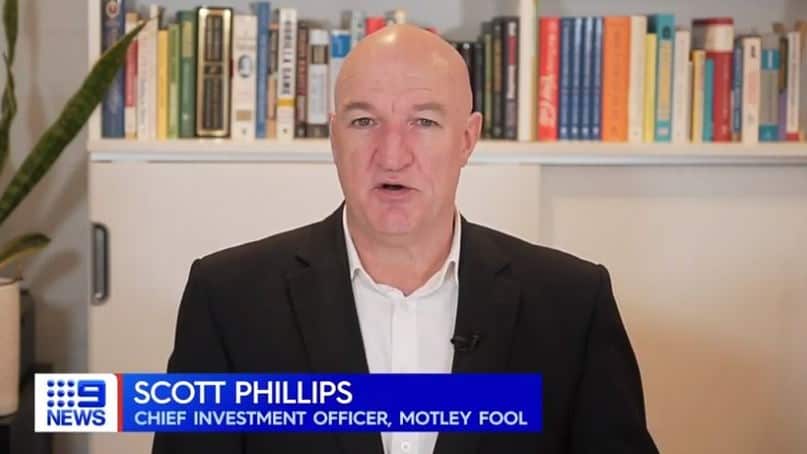
  • Rates go up, and CBA beefs up its business cred. Scott Phillips on Nine’s Late News

    Motley Fool Chief Investment Officer Scott Phillips on nine newsMotley Fool Chief Investment Officer Scott Phillips on nine news

    Motley Fool Australia Chief Investment Officer Scott Phillips joined Michael Thomson for Nine’s Late News on Tuesday night to discuss the Reserve Bank’s 0.5% rate hike, plus a new business banker on the Commonwealth Bank of Australia (ASX: CBA) board and the outlook for markets.

    [youtube https://www.youtube.com/watch?v=joS0hOTMgv0?feature=oembed&w=500&h=281]

    The post Rates go up, and CBA beefs up its business cred. Scott Phillips on Nine’s Late News appeared first on The Motley Fool Australia.

    Should you invest $1,000 in Commonwealth Bank Of Australia right now?

    Before you consider Commonwealth Bank Of Australia, you’ll want to hear this.

    Motley Fool Investing expert Scott Phillips just revealed what he believes are the 5 best stocks for investors to buy right now… and Commonwealth Bank Of Australia wasn’t one of them.

    The online investing service he’s run for over a decade, Motley Fool Share Advisor, has provided thousands of paying members with stock picks that have doubled, tripled or even more.* And right now, Scott thinks there are 5 stocks that are better buys.

    See The 5 Stocks
    *Returns as of August 4 2022

    (function() {
    function setButtonColorDefaults(param, property, defaultValue) {
    if( !param || !param.includes(‘#’)) {
    var button = document.getElementsByClassName(“pitch-snippet”)[0].getElementsByClassName(“pitch-button”)[0];
    button.style[property] = defaultValue;
    }
    }

    setButtonColorDefaults(“#0095C8”, ‘background’, ‘#5FA85D’);
    setButtonColorDefaults(“#0095C8”, ‘border-color’, ‘#43A24A’);
    setButtonColorDefaults(“#fff”, ‘color’, ‘#fff’);
    })()

    More reading

    Motley Fool contributor Scott Phillips has no position in any of the stocks mentioned. The Motley Fool Australia’s parent company Motley Fool Holdings Inc. has no position in any of the stocks mentioned. The Motley Fool Australia has recommended Westpac Banking Corporation. The Motley Fool has a disclosure policy. This article contains general investment advice only (under AFSL 400691). Authorised by Scott Phillips.

    from The Motley Fool Australia https://ift.tt/FLqVwhz

  • How I’d invest for retirement using just 3 ASX ETFs

    Retired couple reclining on couch with eyes closed

    Retired couple reclining on couch with eyes closed

    What investors do with their money in retirement could be just as important as how they build up wealth to get there. Exchange-traded funds (ETFs) on the ASX could be a way for investors to do things simply.

    ETFs enable investors to buy into a portfolio of shares or assets with just one trade.

    It would certainly be possible for investors to buy into a broad ETF which just follows an index like BetaShares Australia 200 ETF (ASX: A200) and Vanguard Australian Shares Index ETF (ASX: VAS).

    But, I think there are some specialised ETFs that can provide more focused investments for retiree investors. A mixture of dividends and growth could be attractive.

    VanEck Morningstar Australian Moat Income ETF (ASX: DVDY)

    This fund is about creating a diversified portfolio of dividend-paying quality ASX-listed companies, chosen by Morningstar. It intends to capture the performance of the 25 highest dividend-paying ASX-listed shares, excluding real estate investment trusts (REITs), that meet Morningstar’s required criteria. This combines a share’s ‘economic moat’ and ‘distance to default’ qualities.

    An economic moat refers to a company’s ability to maintain its competitive advantages and defend its long-term profitability, such as intangible assets (like brand recognition and patents) or cost advantages.

    The distance to default measure is used to predict the likelihood of bankruptcy which, the fund says, has “also proven an effective predictor of dividend cuts”.

    I think a portfolio of quality ASX dividend-paying shares can be a solid ETF choice for a retirement portfolio.

    Some of the names in the portfolio include Ansell Limited (ASX: ANN), IPH Ltd (ASX: IPH), AUB Group Ltd (ASX: AUB), National Australia Bank Ltd (ASX: NAB), Iress Ltd (ASX: IRE), and Wesfarmers Ltd (ASX: WES).

    Over the year to 31 July 2022, the income part of the return was 5.65%.

    Vanguard Global Infrastructure Index ETF (ASX: VBLD)

    Another area that could fit well into a retirement portfolio is infrastructure.

    Infrastructure can be a good investment because of its typically consistent, and perhaps growing, earnings and distributions.

    One of the advantages of this portfolio from Vanguard is that it’s globally based. While just over two-thirds of the ETF is invested in the US, there are multiple other countries that have a weighting of more than 0.5% — Canada (14.6%), Japan (3.6%), UK (3.2%), Spain (2.2%), Australia (2.1%), Hong Kong (1.9%), Italy (1.6%), and France (0.7%).

    In terms of sector allocation, at 31 July 2022, ‘conventional electricity’ made up 34% of the ETF, ‘railroads’ were 19.6% of the portfolio, ‘pipelines’ were 14% of the portfolio, ‘multi-utilities’ were 10.7% of the portfolio, and infrastructure REITs were 9.7% of the portfolio. Other smaller sectors include transportation services, water, telecommunication services, and telecommunications equipment.

    According to Vanguard, the equity yield is 2.9%. That’s not a bad starting yield.

    VanEck Morningstar Wide Moat ETF (ASX: MOAT)

    The first ETF I wrote about was focused on dividends from Australian businesses.

    However, the VanEck Morningstar Wide Moat ETF is invested in a portfolio of US shares that are viewed as strong, long-term businesses with wide economic moats.

    The Morningstar investment team only choose shares that are seen as good value compared to how much they think the business is actually worth.

    For a company to earn the status of having a wide economic moat, according to Morningstar, excess normalised profit must, with near certainty, be positive a decade from now. On top of that, excess normalised profit must, more likely than not, be positive 20 years from now. In other words, chosen investments could be solid picks for at least 20 years. But, the portfolio may move on from those holdings, depending on factors like valuation changes.

    While this ETF isn’t likely to pay much of a dividend, the total returns have been good in my opinion. The VanEck Morningstar Wide Moat ETF has made an average return per annum of 15.1% since June 2015. But, of course, past performance is no guarantee of future performance.

    The post How I’d invest for retirement using just 3 ASX ETFs appeared first on The Motley Fool Australia.

    Wondering where you should invest $1,000 right now?

    When investing expert Scott Phillips has a stock tip, it can pay to listen. After all, the flagship Motley Fool Share Advisor newsletter he has run for over ten years has provided thousands of paying members with stock picks that have doubled, tripled or even more.* Scott just revealed what he believes could be the “five best ASX stocks” for investors to buy right now. These stocks are trading at near dirt-cheap prices and Scott thinks they could be great buys right now

    See The 5 Stocks
    *Returns as of August 4 2022

    (function() {
    function setButtonColorDefaults(param, property, defaultValue) {
    if( !param || !param.includes(‘#’)) {
    var button = document.getElementsByClassName(“pitch-snippet”)[0].getElementsByClassName(“pitch-button”)[0];
    button.style[property] = defaultValue;
    }
    }

    setButtonColorDefaults(“#0095C8”, ‘background’, ‘#5FA85D’);
    setButtonColorDefaults(“#0095C8”, ‘border-color’, ‘#43A24A’);
    setButtonColorDefaults(“#fff”, ‘color’, ‘#fff’);
    })()

    More reading

    Motley Fool contributor Tristan Harrison has no position in any of the stocks mentioned. The Motley Fool Australia’s parent company Motley Fool Holdings Inc. has recommended IPH Ltd. The Motley Fool Australia has positions in and has recommended Wesfarmers Limited. The Motley Fool Australia has recommended Ansell Ltd., Austbrokers Holdings Limited, IPH Ltd, and VanEck Vectors Morningstar Wide Moat ETF. The Motley Fool has a disclosure policy. This article contains general investment advice only (under AFSL 400691). Authorised by Scott Phillips.

    from The Motley Fool Australia https://ift.tt/muNJSKU

  • Why has the Paladin Energy share price rocketed 20% in a month?

    A boy is about to rocket from a copper-coloured field of hay into the sky.A boy is about to rocket from a copper-coloured field of hay into the sky.

    The Paladin Energy Ltd (ASX: PDN) share price has outperformed its benchmarks over the past month.

    In opening trade on Wednesday, the Paladin share price is dropping 0.56% to 89.5 cents. Although it secured a substantial 7.78% gain in yesterday’s session.

    That helped take the Paladin Energy share price gain to more than 20% in one month.

    In broad market moves, the S&P/ASX 200 Energy Index (ASX: XEJ) has spiked 13% in the past month as well.

    What’s up with the Paladin share price?

    Given the recent calamity in global energy markets, uranium shares have caught a bid as various nations are now looking inward at domestic energy production.

    Uranium itself has curled up from recent lows and is now back above its May 2022 levels at US$52/Lbs. This in itself is around some of the highest prices in the past 10 years.

    As seen below, this has been a net positive for Paladin, whose share price tracks the price of uranium with striking similarity. Price returns for each are plotted for a year.

    TradingView Chart

    Chief to the volatility in uranium has been the looming energy crisis emerging in various nations, Europe in particular. Note that uranium is key in the production of nuclear energy.

    “[T]he uncertainty of energy supplies worldwide drove governments to double down in alternative energy sources,” in early September, Trading Economics says.

    “[M]ajor [nuclear] producer France stated it will restart all of their nuclear reactors by the winter to offset Europe’s energy crunch, after corrosion issues and drying rivers that were vital for reactor cooling led to the suspension of various power plants,” it added.

    With further uncertainty of energy storage supplies heading into winter, it makes sense that alternative sources such as uranium will remain in hot contention for the time being.

    What that means for the Paladin share price we can only find out.

    Meanwhile, four out of five brokers rate Paladin a buy right now, according to Refinitiv Eikon data. The consensus price target is $1.09.

    In the past 12 months, the Paladin share price has clipped a 7% gain.

    The post Why has the Paladin Energy share price rocketed 20% in a month? appeared first on The Motley Fool Australia.

    Wondering where you should invest $1,000 right now?

    When investing expert Scott Phillips has a stock tip, it can pay to listen. After all, the flagship Motley Fool Share Advisor newsletter he has run for over ten years has provided thousands of paying members with stock picks that have doubled, tripled or even more.* Scott just revealed what he believes could be the “five best ASX stocks” for investors to buy right now. These stocks are trading at near dirt-cheap prices and Scott thinks they could be great buys right now

    See The 5 Stocks
    *Returns as of August 4 2022

    (function() {
    function setButtonColorDefaults(param, property, defaultValue) {
    if( !param || !param.includes(‘#’)) {
    var button = document.getElementsByClassName(“pitch-snippet”)[0].getElementsByClassName(“pitch-button”)[0];
    button.style[property] = defaultValue;
    }
    }

    setButtonColorDefaults(“#0095C8”, ‘background’, ‘#5FA85D’);
    setButtonColorDefaults(“#0095C8”, ‘border-color’, ‘#43A24A’);
    setButtonColorDefaults(“#fff”, ‘color’, ‘#fff’);
    })()

    More reading

    Motley Fool contributor Zach Bristow has no position in any of the stocks mentioned. The Motley Fool Australia’s parent company Motley Fool Holdings Inc. has no position in any of the stocks mentioned. The Motley Fool Australia has no position in any of the stocks mentioned. The Motley Fool has a disclosure policy. This article contains general investment advice only (under AFSL 400691). Authorised by Scott Phillips.

    from The Motley Fool Australia https://ift.tt/QOefZjw

  • Morgans names 3 more of the best ASX shares to buy in September

    a man in a green and gold Australian athletic kit roars ecstatically with a wide open mouth while his hands are clenched and raised as a shower of gold confetti falls in the sky around him.

    a man in a green and gold Australian athletic kit roars ecstatically with a wide open mouth while his hands are clenched and raised as a shower of gold confetti falls in the sky around him.The team at Morgans has been busy again picking out its best ASX share ideas for the month of September.

    These are the shares that the broker thinks offer the highest risk-adjusted returns over a 12-month timeframe and are supported by a higher-than-average level of confidence.

    The first three shares we looked at can be found here. Read on for the next three:

    GQG Partners Inc (ASX: GQG)

    The first ASX share that Morgans is tipping as a buy is fund manager GQG Partners. Its analysts believe that recent weakness in the GQG share price has left it trading at a very attractive level. The broker commented:

    GQG’s strong relative investment outperformance through the current market weakness should solidify the near-term flows outflow. GQG has diversified earnings (by strategy and clients); solid performance track-record; and ongoing growth prospects. In our view, the current ~10x PE (versus a sector medium-term average of ~16x) is attractive.

    Morgans has an add rating and $2.02 price target on the company’s shares.

    Nextdc Ltd (ASX: NXT)

    Another ASX share that the broker rates highly right now is data centre operator NextDC. It is a fan of the company due to its exposure to structural tailwinds that are driving very strong demand for its data centres. It is expecting this to underpin stellar earnings growth in the coming years. The broker said:

    Structural demand for cloud and colocation remains incredibly strong. NXT’s new S3 and M3 data centres go live shortly and this should result in significant new customer wins over the next six months (including CSP options being exercised). Sales should drive the share price higher. NXT looks comfortably on-track to generate over $300m of EBITDA in the next three to five years.

    Morgans has an add rating and $13.30 price target on NextDC’s shares.

    ResMed Inc (ASX: RMD)

    A final ASX share that Morgans thinks investors should be buying is sleep treatment company ResMed. The broker is a fan of the company due to its positive long term growth outlook, which is being underpinned by its digital platform. It said:

    While we expect the next few quarters to be volatile as COVID-related demand for ventilators continues to slow and core sleep apnoea volumes gradually lift, nothing changes our medium/longer term view that the company remains well-placed as it builds a unique, patient-centric, connected-care digital platform that addresses the main pinch points across the healthcare value chain.

    Morgans has an add rating and $37.08 price target on ResMed’s shares.

    The post Morgans names 3 more of the best ASX shares to buy in September appeared first on The Motley Fool Australia.

    Wondering where you should invest $1,000 right now?

    When investing expert Scott Phillips has a stock tip, it can pay to listen. After all, the flagship Motley Fool Share Advisor newsletter he has run for over ten years has provided thousands of paying members with stock picks that have doubled, tripled or even more.* Scott just revealed what he believes could be the “five best ASX stocks” for investors to buy right now. These stocks are trading at near dirt-cheap prices and Scott thinks they could be great buys right now

    See The 5 Stocks
    *Returns as of August 4 2022

    (function() {
    function setButtonColorDefaults(param, property, defaultValue) {
    if( !param || !param.includes(‘#’)) {
    var button = document.getElementsByClassName(“pitch-snippet”)[0].getElementsByClassName(“pitch-button”)[0];
    button.style[property] = defaultValue;
    }
    }

    setButtonColorDefaults(“#0095C8”, ‘background’, ‘#5FA85D’);
    setButtonColorDefaults(“#0095C8”, ‘border-color’, ‘#43A24A’);
    setButtonColorDefaults(“#fff”, ‘color’, ‘#fff’);
    })()

    More reading

    Motley Fool contributor James Mickleboro has positions in NEXTDC Limited. The Motley Fool Australia’s parent company Motley Fool Holdings Inc. has positions in and has recommended ResMed Inc. The Motley Fool Australia’s parent company Motley Fool Holdings Inc. has recommended ResMed. The Motley Fool Australia has positions in and has recommended ResMed Inc. The Motley Fool has a disclosure policy. This article contains general investment advice only (under AFSL 400691). Authorised by Scott Phillips.

    from The Motley Fool Australia https://ift.tt/UtGZ4EJ

  • Own BHP shares? Here’s how much the ASX 200 giant added to the Aussie economy in FY22

    A fit woman stands on a hill facing the water at dawn with open arms embracing the futureA fit woman stands on a hill facing the water at dawn with open arms embracing the future

    The financial year 2022 (FY22) was a good year for those invested in BHP Group Ltd (ASX: BHP) shares.

    The S&P/ASX 200 Index (ASX: XJO) materials monolith delivered record free cash flow and offered investors $4.63 per share of dividends for the 12 months ended 30 June 2022.

    But it wasn’t just the company’s shareholders that benefited from the company’s strong performance.

    It added tens of billions of dollars to the Australian economy in FY22.

    Let’s take a closer look at the economic value the ‘Big Australian’ brought to the nation last fiscal year.

    BHP contributes $79.3b to the Aussie economy

    The BHP share price outperformed the ASX 200 last financial year, falling just 3.9% over the period compared to the index’s 10% tumble. Factoring in the company’s dividends, investors boasted a $2.94 per share return over the 12 months ended June.

    But the resources giant brought a far bigger benefit to the broader economy – one to the tune of $79.3 billion.

    That’s right, between taxes, wages, social investments, and other payments, the company contributed $79.3 billion to the Australian economy in FY22. Let’s break that down.

    BHP paid $18.5 billion of taxes, royalties, and other payments to governments last fiscal year at an adjusted effective tax rate of 42.7%, including royalties.

    According to BHP’s latest Economic Contribution Report, that makes it one of the nation’s largest corporate taxpayers.

    The company expects to account for around 10% of all Australian company tax paid last financial year. Meanwhile, BHP-operated projects appear to have contributed 9% and 13% of all revenue, excluding grants, in Queensland and Western Australia, respectively.

    It also spent $16.5 billion with suppliers and paid out $4.6 billion in employee wages in financial year 2022. BHP has nearly 50,000 employees and contractors in Australia.

    Another $106 million was put into the company’s social investments.

    Finally, it counted the $39.6 billion worth of dividends offered to shareholders and investors as another economic benefit.

    Its latest annual economic contribution adds to the company’s impressive decade-long tally. BHP has paid around $90.1 billion in taxes, royalties, and other payments to Australian governments over the last 10 years.

    BHP share price snapshot

    FY22 saw a strong performance from the BHP share price, but its fortunes have since changed.

    The iron ore giant’s stock has fallen 12% since the start of 2022. It’s also currently 11% lower than it was this time last year.

    For comparison, the ASX 200 has dumped 10% year to date and 9% over the last 12 months.

    The post Own BHP shares? Here’s how much the ASX 200 giant added to the Aussie economy in FY22 appeared first on The Motley Fool Australia.

    Wondering where you should invest $1,000 right now?

    When investing expert Scott Phillips has a stock tip, it can pay to listen. After all, the flagship Motley Fool Share Advisor newsletter he has run for over ten years has provided thousands of paying members with stock picks that have doubled, tripled or even more.* Scott just revealed what he believes could be the “five best ASX stocks” for investors to buy right now. These stocks are trading at near dirt-cheap prices and Scott thinks they could be great buys right now

    See The 5 Stocks
    *Returns as of August 4 2022

    (function() {
    function setButtonColorDefaults(param, property, defaultValue) {
    if( !param || !param.includes(‘#’)) {
    var button = document.getElementsByClassName(“pitch-snippet”)[0].getElementsByClassName(“pitch-button”)[0];
    button.style[property] = defaultValue;
    }
    }

    setButtonColorDefaults(“#43B02A”, ‘background’, ‘#5FA85D’);
    setButtonColorDefaults(“#43B02A”, ‘border-color’, ‘#43A24A’);
    setButtonColorDefaults(“#fff”, ‘color’, ‘#fff’);
    })()

    More reading

    Motley Fool contributor Brooke Cooper has no position in any of the stocks mentioned. The Motley Fool Australia’s parent company Motley Fool Holdings Inc. has no position in any of the stocks mentioned. The Motley Fool Australia has no position in any of the stocks mentioned. The Motley Fool has a disclosure policy. This article contains general investment advice only (under AFSL 400691). Authorised by Scott Phillips.

    from The Motley Fool Australia https://ift.tt/kOpuEb2

  • Why is the Medibank share price slipping on Wednesday?

    a doctor in a white coat sits at her computer with finger on mouth thinking about something in her office with medical equipment in the background.a doctor in a white coat sits at her computer with finger on mouth thinking about something in her office with medical equipment in the background.

    Shares in Medibank Private Ltd (ASX: MPL) are on the back foot today.

    This comes despite the private health insurer not releasing any announcements to the ASX.

    At the time of writing, Medibank shares are swapping hands at $3.57, down 1.65%.

    Let’s take a look at what’s impacting the company’s shares on Wednesday.

    Medibank shares final dividend

    Investors are offloading Medibank shares after locking in the company’s upcoming final dividend.

    Today is the ex-dividend date so those who had Medibank shares in their portfolio before market open will be eligible for the latest dividend.

    This means that if you own Medibank shares, you’ll collect a dividend payment of 7.3 cents per share on 29 September.

    The dividend is also fully franked.

    At this point in time, there is no dividend reinvestment plan (DRP) that is being offered.

    Medibank’s capital management objective is to maintain a strong financial risk profile and capacity to meet financial commitments.

    The full-year dividend represents an 84.8% payout ratio of underlying net profit after tax (NPAT), normalising for investment market returns. This is at the top end of the group’s dividend target payout ratio range of between 75% and 85% of underlying NPAT.

    Medibank share price recap

    The Medibank share price has delivered an 8% return to shareholders in 2022.

    When compared against the S&P/ASX 200 Financials (ASX: XFJ), the index is down 6% over the same period.

    Medibank shares reached an all-time high of $3.79 on 30 August before retracing over the last few days. It appears profit takers took the opportunity to swoop in and lock in their gains.

    Based on today’s price, Medibank commands a market capitalisation of approximately $10 billion and has a dividend yield of 3.58%.

    The post Why is the Medibank share price slipping on Wednesday? appeared first on The Motley Fool Australia.

    Wondering where you should invest $1,000 right now?

    When investing expert Scott Phillips has a stock tip, it can pay to listen. After all, the flagship Motley Fool Share Advisor newsletter he has run for over ten years has provided thousands of paying members with stock picks that have doubled, tripled or even more.* Scott just revealed what he believes could be the “five best ASX stocks” for investors to buy right now. These stocks are trading at near dirt-cheap prices and Scott thinks they could be great buys right now

    See The 5 Stocks
    *Returns as of August 4 2022

    (function() {
    function setButtonColorDefaults(param, property, defaultValue) {
    if( !param || !param.includes(‘#’)) {
    var button = document.getElementsByClassName(“pitch-snippet”)[0].getElementsByClassName(“pitch-button”)[0];
    button.style[property] = defaultValue;
    }
    }

    setButtonColorDefaults(“#43B02A”, ‘background’, ‘#5FA85D’);
    setButtonColorDefaults(“#43B02A”, ‘border-color’, ‘#43A24A’);
    setButtonColorDefaults(“#fff”, ‘color’, ‘#fff’);
    })()

    More reading

    Motley Fool contributor Aaron Teboneras has no position in any of the stocks mentioned. The Motley Fool Australia’s parent company Motley Fool Holdings Inc. has no position in any of the stocks mentioned. The Motley Fool Australia has no position in any of the stocks mentioned. The Motley Fool has a disclosure policy. This article contains general investment advice only (under AFSL 400691). Authorised by Scott Phillips.

    from The Motley Fool Australia https://ift.tt/3uJ54t8

  • Down 19% since April, is the ANZ share price in the buy zone?

    A male investor wearing a white shirt and blue suit jacket sits at his desk looking at his laptop with his hands to his chin, waiting in anticipation.A male investor wearing a white shirt and blue suit jacket sits at his desk looking at his laptop with his hands to his chin, waiting in anticipation.

    The Australia and New Zealand Banking Group Ltd (ASX: ANZ) share price has struggled over the past few months.

    The ASX banking share closed at $22.59 on Tuesday, having clipped another small loss in yesterday’s session.

    This year to date, ANZ is down more than 17%, having slipped from previous highs of $27.69 on 20 April.

    Are ANZ shares a buy?

    Despite its recent troubles on the chart, the ANZ share price has still caught the attention of various brokers recommending stocks to their clients.

    The analyst team at Citi recently updated its view on the bank, rating the share a buy with a $29 price target.

    Chief to the broker’s call is ANZ’s move to purchase the banking business of Suncorp Group Ltd (ASX: SUN) – a move that it feels will be accretive to the bank’s earnings.

    Aside from that, it forecasts dividend growth of 5–7% over the coming two-year period respectively. That’s something to think about.

    Meanwhile, Macquarie also revised its rating on ANZ upward today as well, pushing its stance on the share to outperform.

    The two brokers join four others in rating ANZ a buy, while another eight recommend holding and one advises investors to sell the bank’s shares, according to Refinitiv Eikon data.

    The consensus price target from this list is $25.43, suggesting a small amount of upside potential should the group be correct.

    Meanwhile, ASX financials continue to look volatile, and are down nearly 3.5% on the month as a collective, with the S&P/ASX 200 Financials index (ASX: XFJ) down by that much.

    The macroeconomic risks of rising interest rates and a weaker economic outlook pose a direct threat to interest income received from the underwriting of credit.

    And with the Reserve Bank (RBA) committed to its tightening policy of raising policy rates to reign in the cost of living, be sure that shares like ANZ will remain in the limelight.

    The ANZ share price is down 19% over the past 12 months.

    The post Down 19% since April, is the ANZ share price in the buy zone? appeared first on The Motley Fool Australia.

    Wondering where you should invest $1,000 right now?

    When investing expert Scott Phillips has a stock tip, it can pay to listen. After all, the flagship Motley Fool Share Advisor newsletter he has run for over ten years has provided thousands of paying members with stock picks that have doubled, tripled or even more.* Scott just revealed what he believes could be the “five best ASX stocks” for investors to buy right now. These stocks are trading at near dirt-cheap prices and Scott thinks they could be great buys right now

    See The 5 Stocks
    *Returns as of August 4 2022

    (function() {
    function setButtonColorDefaults(param, property, defaultValue) {
    if( !param || !param.includes(‘#’)) {
    var button = document.getElementsByClassName(“pitch-snippet”)[0].getElementsByClassName(“pitch-button”)[0];
    button.style[property] = defaultValue;
    }
    }

    setButtonColorDefaults(“#43B02A”, ‘background’, ‘#5FA85D’);
    setButtonColorDefaults(“#43B02A”, ‘border-color’, ‘#43A24A’);
    setButtonColorDefaults(“#fff”, ‘color’, ‘#fff’);
    })()

    More reading

    Motley Fool contributor Zach Bristow has no position in any of the stocks mentioned. The Motley Fool Australia’s parent company Motley Fool Holdings Inc. has no position in any of the stocks mentioned. The Motley Fool Australia has no position in any of the stocks mentioned. The Motley Fool has a disclosure policy. This article contains general investment advice only (under AFSL 400691). Authorised by Scott Phillips.

    from The Motley Fool Australia https://ift.tt/7GnSL69