• How rising inflation can benefit ASX office REITs: fund manager

    Suncorp share price Businessman cheering and smiling on smartphoneSuncorp share price Businessman cheering and smiling on smartphone

    Ask a Fund Manager

    The Motley Fool chats with fund managers so that you can get an insight into how the professionals think. In part two of this edition, we’re joined by Grant Nichols, fund manager of the $2.4 billion Centuria Office REIT (ASX: COF), Australia’s largest listed pure-play office real estate investment trust (REIT). Today, Nichols explains two tailwinds the office market could receive from rising inflation.

    The Motley Fool: In the first part of our interview, you mentioned that uncertainty around future interest rate hikes is the biggest issue among ASX REIT investors. Have rocketing inflation and fast-rising interest rates impacted the office market dynamics already?

    Grant Nichols: The direct market, not so much. Though obviously, the COF unit prices have been impacted by the outlook for interest rates.

    In terms of the recent transactions that we’re seeing in the direct market, they’re still quite strong. It really hasn’t translated yet. I think you may see moderation in the amount of commercial property sales from this point for the next six to 12 months, until we get that consensus on interest rate levels I mentioned earlier.

    Inflation potentially may generate some change to office markets on two fronts.

    First, real estate is a very good inflation hedge. At the moment, there’s concern about rising interest rates. But potentially, investors haven’t seen that parallel to real estate offering protection from inflation. If we do get sustained inflation, that should translate to higher rents. And I think that’s where the market has not completely made this connection.

    The other potential benefit from rising inflation on office markets is that it will probably wind back supply. At the moment we’re seeing a pretty dramatic increase in construction costs and interest rates. That will make future developments more difficult.

    So, the economic rents that will be required to make new product will be much higher than they have been in the past. So, you probably will see a moderation in supply, which will be good for existing landlords.

    MF: How do you see that playing out over the next 12 to 24 months?

    GN: Like everyone else, we’re trying to gauge what the outlook is, and we look at the other economic outlooks as much as we possibly can. We’ve got our own internal Treasury team who do a lot of research on interest rates.

    For FY23, we have put out a forecast of what we perceive will be our floating rate interest rate. And we have made that pretty conservative.

    We’ve adopted a 3% average interest rate for FY23. Now we adopted a conservative rate, because we don’t want to see rates increase above that and to not be able to meet our forecasts. We’re hoping that interest rates may not get to that level, but we certainly have that level of protection implied.

    MF: Are you adjusting your REIT’s investment and leasing strategies in the office markets with higher inflation and interest rates in mind?

    GN: That’s a good question, particularly in regards to inflation.

    As I mentioned previously, we haven’t seen a material change in the direct market in terms of levels or investors. But for tenants, we’re already starting to see a change in their behaviours.

    If you think about construction costs, it not only impacts the supply of new buildings. There’s also an impact on tenant fit-outs. For a tenant to move in the market, if they’re going to undertake a new fit-out, it’s becoming materially more expensive than it was previously.

    There are probably two impacts here.

    Firstly, tenants don’t have to move. They’re probably going higher with renewals in the medium term to avoid having to undertake fit-outs. And we’re seeing tenants willing to pay a higher rent to get a better quality accommodation.

    Secondly, if they are going to move, they’re probably going to look for space that already has an existing fit-out in place. Or at least a partially built fit-out. Because the most expensive component of a fit-out is joinery. So, if you just need to get furniture, you’ve got an advantage in terms of reducing that cost.

    The benefits to COF, as an existing landlord with existing built office buildings, is we’re highly occupied. So that opportunity for renewal, I think, is going to be enhanced.

    Also, if we do have vacant space, we generally do have fit-outs that we can revive, refurbish and repurpose, which is giving us a leasing advantage over other spaces that don’t have fit-outs in place. That’s really a key driver for tenants in the market who are considering moving. If they can reduce that fit-out cost, they will take it.

    That’s something we’re doing across our portfolio, trying to re-use and re-adapt fit-outs where we can.

    MF: ASX REITs are often sought out for their income certainty, with COF paying a trailing, unfranked dividend yield of 9.9%. But rising interest rates have seen share prices retrace. What are your thoughts?

    GN: The uncertainty with interest rates is creating some volatility at the moment. The more important aspect is where neutral rates will end up.

    From the economists we’re talking to and forecasts we’re seeing, including those from the RBA, there’s some indication that the neutral interest rate over the medium term will be between 1.5% and 2.5%. I think commercial property, generally, is going to be a really attractive proposition going forward.

    If the interest rate does moderate between that 1.5% to 2.5% rate, I think the current softness in equity markets relating to REITs is completely overshooting the valuation in capital value.

    A lot of REITs in the market are trading at a discount to NTA [net tangible assets]. So, if that’s where rates do moderate, I don’t think it will have the impact on valuation that the equity markets are currently pricing.

    ***

    Tune in tomorrow for part three of our interview, where Centuria’s Grant Nichols discusses the threats and opportunities ahead for Australia’s commercial office sector. If you missed part one, you can find that here.

    (You can find out more about the Centuria Office REIT (ASX: COF) here.)

    The post How rising inflation can benefit ASX office REITs: fund manager appeared first on The Motley Fool Australia.

    Should you invest $1,000 in Centuria Office Reit right now?

    Before you consider Centuria Office Reit, you’ll want to hear this.

    Motley Fool Investing expert Scott Phillips just revealed what he believes are the 5 best stocks for investors to buy right now… and Centuria Office Reit wasn’t one of them.

    The online investing service he’s run for over a decade, Motley Fool Share Advisor, has provided thousands of paying members with stock picks that have doubled, tripled or even more.* And right now, Scott thinks there are 5 stocks that are better buys.

    See The 5 Stocks
    *Returns as of August 4 2022

    (function() {
    function setButtonColorDefaults(param, property, defaultValue) {
    if( !param || !param.includes(‘#’)) {
    var button = document.getElementsByClassName(“pitch-snippet”)[0].getElementsByClassName(“pitch-button”)[0];
    button.style[property] = defaultValue;
    }
    }

    setButtonColorDefaults(“#43B02A”, ‘background’, ‘#5FA85D’);
    setButtonColorDefaults(“#43B02A”, ‘border-color’, ‘#43A24A’);
    setButtonColorDefaults(“#fff”, ‘color’, ‘#fff’);
    })()

    More reading

    Motley Fool contributor Bernd Struben has no position in any of the stocks mentioned. The Motley Fool Australia’s parent company Motley Fool Holdings Inc. has no position in any of the stocks mentioned. The Motley Fool Australia has no position in any of the stocks mentioned. The Motley Fool has a disclosure policy. This article contains general investment advice only (under AFSL 400691). Authorised by Scott Phillips.

    from The Motley Fool Australia https://ift.tt/JY5v3pA

  • 5 things to watch on the ASX 200 on Wednesday

    Business woman watching stocks and trends while thinking

    Business woman watching stocks and trends while thinking

    On Tuesday, the S&P/ASX 200 Index (ASX: XJO) was on form again and charged higher. The benchmark index rose 0.6% to 7,105.4 points.

    Will the market be able to build on this on Wednesday? Here are five things to watch:

    ASX 200 expected to rise

    The Australian share market looks set to continue its winning streak on Wednesday following a decent night of trade in the United States. According to the latest SPI futures, the ASX 200 is expected to open the day 11 points or 0.15% higher this morning. On Wall Street, the Dow Jones rose 0.7% and the S&P 500 climbed 0.2%, but the Nasdaq dropped 0.2%.

    Oil prices fall again

    Energy producers such as Beach Energy Ltd (ASX: BPT) and Woodside Energy Group Ltd (ASX: WDS) could have a tough day after oil prices pulled back again overnight. According to Bloomberg, the WTI crude oil price is down 3.5% to US$86.51 a barrel and the Brent crude oil price has fallen 3.2% to US$92.08 a barrel. This was driven by the release of economic data that raised concerns about a potential global recession. In addition, the market is waiting to see if a deal will be reached to allow more Iranian oil exports.

    CSL FY 2022 results

    All eyes will be on the CSL Limited (ASX: CSL) share price this morning when the biotherapeutics giant releases its full year results. According to a note out of Goldman Sachs, its analysts are forecasting revenue of US$10,903 million, EBIT of US$3,094 million, and a constant currency net profit after tax of US$2,295 million.

    Gold price lower

    Gold miners Evolution Mining Ltd (ASX: EVN) and Northern Star Resources Ltd (ASX: NST) could have a poor day after the gold price traded lower overnight. According to CNBC, the spot gold price is down 0.4% to US$1,790.40 an ounce. A firmer US dollar weighed on the precious metal.

    Santos first half results

    The Santos Ltd (ASX: STO) share price will be one to watch on Wednesday when the energy producer releases its first half results. According to a note out of Citi, its analysts are expecting a bumper profit. The broker is forecasting a net profit after tax of US$1,333 million, which will be a massive increase from US$354 million a year earlier. This is being driven by sky high oil prices and the Oil Search merger.

    The post 5 things to watch on the ASX 200 on Wednesday appeared first on The Motley Fool Australia.

    Wondering where you should invest $1,000 right now?

    When investing expert Scott Phillips has a stock tip, it can pay to listen. After all, the flagship Motley Fool Share Advisor newsletter he has run for over ten years has provided thousands of paying members with stock picks that have doubled, tripled or even more.* Scott just revealed what he believes could be the “five best ASX stocks” for investors to buy right now. These stocks are trading at near dirt-cheap prices and Scott thinks they could be great buys right now

    See The 5 Stocks
    *Returns as of August 4 2022

    (function() {
    function setButtonColorDefaults(param, property, defaultValue) {
    if( !param || !param.includes(‘#’)) {
    var button = document.getElementsByClassName(“pitch-snippet”)[0].getElementsByClassName(“pitch-button”)[0];
    button.style[property] = defaultValue;
    }
    }

    setButtonColorDefaults(“#0095C8”, ‘background’, ‘#5FA85D’);
    setButtonColorDefaults(“#0095C8”, ‘border-color’, ‘#43A24A’);
    setButtonColorDefaults(“#fff”, ‘color’, ‘#fff’);
    })()

    More reading

    Motley Fool contributor James Mickleboro has no position in any of the stocks mentioned. The Motley Fool Australia’s parent company Motley Fool Holdings Inc. has positions in and has recommended CSL Ltd. The Motley Fool Australia has no position in any of the stocks mentioned. The Motley Fool has a disclosure policy. This article contains general investment advice only (under AFSL 400691). Authorised by Scott Phillips.

    from The Motley Fool Australia https://ift.tt/sHhctKz

  • ‘Green premium’: What could it mean for the Vulcan Energy share price?

    Envirosuite investor holds a tech device while sitting on a ledge looking out to trees through a windowEnvirosuite investor holds a tech device while sitting on a ledge looking out to trees through a window

    The Vulcan Energy Resources Ltd (ASX: VUL) share price has taken a battering, shedding almost 16% year to date.

    But there could be new hope on the horizon for the zero-carbon lithium producer. The company says it’s developing products that may sell at a ‘green premium’ in the future.

    Vulcan Energy describes the phenomenon as the market paying more for commodities produced in a low-emission environment.

    The company has outlined how its products fit into the green premium paradigm. It said its zero-carbon lithium products are currently being used to slash emissions in the production of electric vehicles and lithium-ion batteries.

    Vulcan Energy has embraced comments in a sustainability report published by FitchSolutions on Monday. The report states that “zero-carbon lithium products will sell at a premium compared with [lithium from] hard rock mine output”.

    FitchSolutions lithium sustainability report

    The report found Western nations are willing to pay more for zero-carbon lithium due to the rising urgency of implementing environmental and social governance (ESG) policies to fight climate change. It forecast this will force companies to fight for a limited supply of low-carbon materials which, in turn, will lead them to trade at premium prices.

    Vulcan Energy estimates traditional lithium production methods from hard rock mines will produce approximately 1.05 billion tonnes of CO2, or 3% of the world’s estimated annual CO2 emissions, to meet the demand for electric vehicles.

    Due to governmental pressures, lithium exploration companies will be forced to adopt more carbon-neutral extraction techniques in the future, the report said. It asserted Western governments are set to favour direct lithium extraction (DLE) technology as the preferred production method due to its smaller carbon footprint.

    DLE, which extracts lithium from geothermal waters, has also led to exploration in areas outside conventional hard rock mining sites, the report said. It cited the Californian Energy Commission’s estimate that geothermal areas surrounding the Salton Sea in California could support 40% of the world’s lithium demand.

    However, the report concludes by noting the green premium of lithium could be short-lived over the long run if exploration activities find enough of it that can be extracted via DLE techniques.

    Vulcan Energy share price snapshot

    Certainly, a green premium would be welcome news for the Vulcan Energy share price. It’s down almost 32% in the past 12 months.

    That’s well below the S&P/ASX 200 Index (ASX: XJO) which has lost around 6.3% over the same period.

    At the current share price, Vulcan Energy has a market capitalisation of $1.3 billion.

    The post ‘Green premium’: What could it mean for the Vulcan Energy share price? appeared first on The Motley Fool Australia.

    Wondering where you should invest $1,000 right now?

    When investing expert Scott Phillips has a stock tip, it can pay to listen. After all, the flagship Motley Fool Share Advisor newsletter he has run for over ten years has provided thousands of paying members with stock picks that have doubled, tripled or even more.* Scott just revealed what he believes could be the “five best ASX stocks” for investors to buy right now. These stocks are trading at near dirt-cheap prices and Scott thinks they could be great buys right now

    See The 5 Stocks
    *Returns as of August 4 2022

    (function() {
    function setButtonColorDefaults(param, property, defaultValue) {
    if( !param || !param.includes(‘#’)) {
    var button = document.getElementsByClassName(“pitch-snippet”)[0].getElementsByClassName(“pitch-button”)[0];
    button.style[property] = defaultValue;
    }
    }

    setButtonColorDefaults(“#43B02A”, ‘background’, ‘#5FA85D’);
    setButtonColorDefaults(“#43B02A”, ‘border-color’, ‘#43A24A’);
    setButtonColorDefaults(“#fff”, ‘color’, ‘#fff’);
    })()

    More reading

    Motley Fool contributor Matthew Farley has no position in any of the stocks mentioned. The Motley Fool Australia’s parent company Motley Fool Holdings Inc. has no position in any of the stocks mentioned. The Motley Fool Australia has no position in any of the stocks mentioned. The Motley Fool has a disclosure policy. This article contains general investment advice only (under AFSL 400691). Authorised by Scott Phillips.

    from The Motley Fool Australia https://ift.tt/2xugi41

  • The Appen share price is down 20% in a month. Is it going lower?

    A woman looks in anticipation at her laptop, watching eagerly.

    A woman looks in anticipation at her laptop, watching eagerly.

    The market may have been pushing higher again on Tuesday, but the same cannot be said for the Appen Ltd (ASX: APX) share price.

    The artificial intelligence data services company’s shares continued their slide with a decline of almost 1% to $4.66.

    This latest decline means the Appen share price is now down 20% since this time last month.

    Has the Appen share price bottomed?

    Unfortunately, one leading broker still believes the Appen share price can fall from current levels.

    According to a note out of Bell Potter, just a week after downgrading the company’s shares to a hold rating, last week the broker went a step further by downgrading its shares to a sell rating with a $4.25 price target.

    This price target implies potential downside of 9% for investors over the next 12 months.

    What did the broker say?

    Bell Potter was disappointed with Appen’s performance during the first half of FY 2022.

    And while its analysts continue to forecast a huge rebound in the second half and solid growth in FY 2023 and FY 2024, the broker acknowledges that these forecasts are uncertain.

    It commented:

    There is no change in our forecasts for Appen which we only updated last week after the company provided an updated on the 1H2022 result and 2022 outlook. We continue to forecast underlying EBITDA of US$40.0m in 2022 which implies an H2 result of US$31.5m after Appen said the H1 result would be US$8.5m.

    We note, however, there is no guidance for 2H2022 and 2022 and very little visibility on what the H2 result will be after the company said “the conversion of forward orders to sales is less certain this year compared to prior years”. We also continue to forecast underlying EBITDA of US$60.8m in 2023 and US$69.0m in 2024 but, again, there is very little visibility on what the results will be in these years. Our forecasts in 2023 and 2024 do assume a rebound in digital advertising and customer spend but the timing and extent of this turnaround is uncertain.

    The post The Appen share price is down 20% in a month. Is it going lower? appeared first on The Motley Fool Australia.

    Should you invest $1,000 in Appen Ltd right now?

    Before you consider Appen Ltd, you’ll want to hear this.

    Motley Fool Investing expert Scott Phillips just revealed what he believes are the 5 best stocks for investors to buy right now… and Appen Ltd wasn’t one of them.

    The online investing service he’s run for over a decade, Motley Fool Share Advisor, has provided thousands of paying members with stock picks that have doubled, tripled or even more.* And right now, Scott thinks there are 5 stocks that are better buys.

    See The 5 Stocks
    *Returns as of August 4 2022

    (function() {
    function setButtonColorDefaults(param, property, defaultValue) {
    if( !param || !param.includes(‘#’)) {
    var button = document.getElementsByClassName(“pitch-snippet”)[0].getElementsByClassName(“pitch-button”)[0];
    button.style[property] = defaultValue;
    }
    }

    setButtonColorDefaults(“#43B02A”, ‘background’, ‘#5FA85D’);
    setButtonColorDefaults(“#43B02A”, ‘border-color’, ‘#43A24A’);
    setButtonColorDefaults(“#fff”, ‘color’, ‘#fff’);
    })()

    More reading

    Motley Fool contributor James Mickleboro has no position in any of the stocks mentioned. The Motley Fool Australia’s parent company Motley Fool Holdings Inc. has positions in and has recommended Appen Ltd. The Motley Fool Australia has no position in any of the stocks mentioned. The Motley Fool has a disclosure policy. This article contains general investment advice only (under AFSL 400691). Authorised by Scott Phillips.

    from The Motley Fool Australia https://ift.tt/Qk37KVg

  • Will Pilbara Minerals shares pay a dividend in 2022?

    woman shrugging

    woman shrugging

    Earlier today, BHP Group Ltd (ASX: BHP) released its full year results and declared another huge dividend. This is being underpinned by the record free cash flow the mining giant generated during the last 12 months.

    In light of this, investors may be wondering if the free cash flow that Pilbara Minerals Ltd (ASX: PLS) is generating thanks to sky high lithium prices will be sufficient for it to pay a dividend along with BHP in FY 2022.

    Will there be a Pilbara Minerals dividend in FY 2022?

    Unfortunately, after scouring a range of broker notes, I’ve not found a single analyst tipping a Pilbara Minerals dividend in FY 2022.

    Though, that doesn’t necessarily mean that one isn’t coming. Analysts are often wrong with their estimates. For example, the market was not expecting Telstra Corporation Ltd (ASX: TLS) to increase its dividend last week but it did. And guessing a maiden dividend is perhaps even harder.

    So when will there be one?

    According to a recent note out of Credit Suisse, its analysts are expecting the dividend payments to commence in FY 2023. And it certainly could be worth the wait if the broker is on the money with its forecasts.

    The note reveals that Credit Suisse is forecasting a 29 cents per share dividend that financial year. Based on the current Pilbara Minerals share price of $3.17, this will mean a yield of 9.1% for investors.

    In FY 2024, the broker is expecting the lithium miner’s dividend to ease a touch. Its analysts are forecasting a 21 cents per share dividend for that financial year. This will be a dividend yield of 6.6% for investors.

    All in all, based on the above, Pilbara Minerals could soon be considered a dividend share. And a high yielding one at that!

    The post Will Pilbara Minerals shares pay a dividend in 2022? appeared first on The Motley Fool Australia.

    Wondering where you should invest $1,000 right now?

    When investing expert Scott Phillips has a stock tip, it can pay to listen. After all, the flagship Motley Fool Share Advisor newsletter he has run for over ten years has provided thousands of paying members with stock picks that have doubled, tripled or even more.* Scott just revealed what he believes could be the “five best ASX stocks” for investors to buy right now. These stocks are trading at near dirt-cheap prices and Scott thinks they could be great buys right now

    See The 5 Stocks
    *Returns as of August 4 2022

    (function() {
    function setButtonColorDefaults(param, property, defaultValue) {
    if( !param || !param.includes(‘#’)) {
    var button = document.getElementsByClassName(“pitch-snippet”)[0].getElementsByClassName(“pitch-button”)[0];
    button.style[property] = defaultValue;
    }
    }

    setButtonColorDefaults(“#0095C8”, ‘background’, ‘#5FA85D’);
    setButtonColorDefaults(“#0095C8”, ‘border-color’, ‘#43A24A’);
    setButtonColorDefaults(“#fff”, ‘color’, ‘#fff’);
    })()

    More reading

    Motley Fool contributor James Mickleboro has no position in any of the stocks mentioned. The Motley Fool Australia’s parent company Motley Fool Holdings Inc. has no position in any of the stocks mentioned. The Motley Fool Australia has no position in any of the stocks mentioned. The Motley Fool has a disclosure policy. This article contains general investment advice only (under AFSL 400691). Authorised by Scott Phillips.

    from The Motley Fool Australia https://ift.tt/4aiSB6W

  • Can the Macquarie share price get back over $200 this year?

    A mature age woman with a groovy short haircut and glasses, sits at her computer, pen in hand thinking about information she is seeing on the screen.

    A mature age woman with a groovy short haircut and glasses, sits at her computer, pen in hand thinking about information she is seeing on the screen.

    The Macquarie Group Ltd (ASX: MQG) share price has risen by 14.4% since 17 June 2022. That compares to a rise of almost 10% in the S&P/ASX 200 Index (ASX: XJO).

    Macquarie is a global investment bank, generating income and profit from across the world.

    The Macquarie share price has still fallen by 13.5% over 2022 to date, indicating it may not be impervious to the effects of strong inflation and rising interest rates.

    Macquarie shares hit a 2022 low in mid-June but they have been steadily rising since. That low came as investors were getting used to central banks, such as the Reserve Bank of Australia (RBA), ramping up interest rates at a rapid rate.

    But, with the Macquarie share price rising over the past couple of months, is there still an opportunity for it to hit $200 in 2022?

    Brokers are mostly optimistic on the Macquarie share price

    Experts have had their chance to review Macquarie’s FY23 first quarter update.

    The investment bank said that it experienced “favourable trading conditions” with the FY23 first quarter operating group contribution “up” year over year, though conditions did “soften” during the quarter.

    Broker Morgan Stanley said it thinks that the first quarter, which was expected to be down, demonstrated enough that FY23 will meet or beat forecasts for this financial year. Morgan Stanley has a price target of $218, which implies a rise of almost 20%. The rating is ‘overweight’.

    The broker Ord Minnett has a price target of $202 on the investment bank, with a potential rise of around 10%. It also said the first quarter was stronger than expected. Ord Minnett’s rating is ‘buy’.

    Meantime, UBS has a price target on Macquarie of $200. It also thought the first quarter was better than expected. Its rating is ‘neutral’.

    However, while Citi is also ‘neutral’ on the investment bank, the price target is just $172. That implies a possible drop of 6%. It’s concerned about interest rates going up.

    A price target is where the broker thinks the share price will be in 12 months. These price targets were given in July, but it’s certainly possible that the Macquarie share price could hit these numbers before the end of 2022.

    What next?

    Macquarie is expecting to report its FY23 half-year result on 28 October 2022.

    Referring to the outlook, Macquarie said in its FY23 first quarter update that it will “continue to maintain a cautious stance, with a conservative approach to capital, funding, and liquidity that positions us well to respond to the current environment”.

    It also said:

    Macquarie remains well-positioned to deliver superior performance in the medium-term. This is due to our deep expertise in major markets, strength in business and geographic diversity and ability to adapt the portfolio mix to changing market conditions, an ongoing program to identify cost-saving initiatives and efficiency, a strong and conversative balance sheet and a proven risk management framework and culture.

    Macquarie share price snapshot

    Over the last month, Macquarie shares have gone up more than 5%.

    The post Can the Macquarie share price get back over $200 this year? appeared first on The Motley Fool Australia.

    Wondering where you should invest $1,000 right now?

    When investing expert Scott Phillips has a stock tip, it can pay to listen. After all, the flagship Motley Fool Share Advisor newsletter he has run for over ten years has provided thousands of paying members with stock picks that have doubled, tripled or even more.* Scott just revealed what he believes could be the “five best ASX stocks” for investors to buy right now. These stocks are trading at near dirt-cheap prices and Scott thinks they could be great buys right now

    See The 5 Stocks
    *Returns as of August 4 2022

    (function() {
    function setButtonColorDefaults(param, property, defaultValue) {
    if( !param || !param.includes(‘#’)) {
    var button = document.getElementsByClassName(“pitch-snippet”)[0].getElementsByClassName(“pitch-button”)[0];
    button.style[property] = defaultValue;
    }
    }

    setButtonColorDefaults(“#0095C8”, ‘background’, ‘#5FA85D’);
    setButtonColorDefaults(“#0095C8”, ‘border-color’, ‘#43A24A’);
    setButtonColorDefaults(“#fff”, ‘color’, ‘#fff’);
    })()

    More reading

    Motley Fool contributor Tristan Harrison has no position in any of the stocks mentioned. The Motley Fool Australia’s parent company Motley Fool Holdings Inc. has no position in any of the stocks mentioned. The Motley Fool Australia has recommended Macquarie Group Limited. The Motley Fool has a disclosure policy. This article contains general investment advice only (under AFSL 400691). Authorised by Scott Phillips.

    from The Motley Fool Australia https://ift.tt/NoGD1Cg

  • Why is the Sayona Mining share price so volatile?

    Scared looking people on a rollercoaster ride representing the volatile Mineral Resources share price in 2022Scared looking people on a rollercoaster ride representing the volatile Mineral Resources share price in 2022

    The Sayona Mining Ltd (ASX: SYA) share price closed 1.79% lower on Tuesday at 27.5 cents.

    That remains midway between its 12-month low of 11 cents per share that it hit in late February and the high of 39 cents per share it reached in mid-April.

    Following that April high, the Sayona Mining share price proceeded to drop to 12 cents per share in late June before recovering to its current price.

    It’s safe to say Sayona Mining shares have been on a rollercoaster ride this year. So what’s going on with this ASX lithium stock?

    What’s been happening lately?

    Of course, much of the share price movement is likely influenced by the price of lithium. Additionally, a prediction by Goldman Sachs at the start of June that demand for lithium would fall in the future sparked a sell-off in lithium shares that continued for much of the month.

    However, Sayona’s strong recovery towards the end of the month could be attributed to a couple of discoveries. On 23 June, Sayona announced the discovery of lithium targets at the Mt Edon project in Western Australia.

    On 27 June, the company revealed multiple new spodumene pegmatites had been identified at its Moblan Lithium Project in Quebec, Canada. The Sayona share price jumped 12% on the news.

    The following day Sayona shares soared by another 25% on the back of plans to restart the company’s North American Lithium (NAL) operation.

    The NAL restart meant Sayona Mining could resume the production of spodumene concentrate in the first quarter of FY23. This allows Sayona Mining to become the first North American local supplier of lithium concentrates.

    In late July, Sayona Mining released an update for the quarter ended June 2022, which was met with optimism. However, Sayona remains unprofitable, as my Foolish colleague Zach Bristow pointed out.

    More recently, Sayona Mining agreed with existing shareholder, Acuity Capital, to increase the size of its At-the-Market Subscription Agreement (ATM).

    Originally, the ATM provided Sayona Mining with up to $50 million of standby equity capital with an expiry date of 31 July 2023. This has been revised to a limit of $200 million and an extended expiry date of 31 July 2025.

    Subsequent to this extension, Sayona Mining has agreed to issue an additional 155 million shares at nil consideration to increase Acuity Capital’s total security holding to 250 million shares.

    While this bolsters the financial base for Sayona Mining, it also means dilution of existing shareholders.

    Sayona Mining share price snapshot

    Year to date, the Sayona Mining share price has risen by almost 100%. It is also up 96% over the past month.

    That is in stark contrast to the S&P/ASX 200 Index (ASX: XJO), which is down 6% year to date and up 6% over the past month.

    Sayona Mining has a market capitalisation of $2.3 billion based on its current share price.

    The post Why is the Sayona Mining share price so volatile? appeared first on The Motley Fool Australia.

    Should you invest $1,000 in Sayona Mining Ltd right now?

    Before you consider Sayona Mining Ltd, you’ll want to hear this.

    Motley Fool Investing expert Scott Phillips just revealed what he believes are the 5 best stocks for investors to buy right now… and Sayona Mining Ltd wasn’t one of them.

    The online investing service he’s run for over a decade, Motley Fool Share Advisor, has provided thousands of paying members with stock picks that have doubled, tripled or even more.* And right now, Scott thinks there are 5 stocks that are better buys.

    See The 5 Stocks
    *Returns as of August 4 2022

    (function() {
    function setButtonColorDefaults(param, property, defaultValue) {
    if( !param || !param.includes(‘#’)) {
    var button = document.getElementsByClassName(“pitch-snippet”)[0].getElementsByClassName(“pitch-button”)[0];
    button.style[property] = defaultValue;
    }
    }

    setButtonColorDefaults(“#43B02A”, ‘background’, ‘#5FA85D’);
    setButtonColorDefaults(“#43B02A”, ‘border-color’, ‘#43A24A’);
    setButtonColorDefaults(“#fff”, ‘color’, ‘#fff’);
    })()

    More reading

    The Motley Fool Australia’s parent company Motley Fool Holdings Inc. has no position in any of the stocks mentioned. The Motley Fool Australia has no position in any of the stocks mentioned. The Motley Fool has a disclosure policy. This article contains general investment advice only (under AFSL 400691). Authorised by Scott Phillips. Motley Fool contributor Raymond Jang has no position in any of the stocks mentioned.

    from The Motley Fool Australia https://ift.tt/okeLjNb

  • Will Lynas shares pay a dividend in 2022?

    A woman sits at her computer with her hand to her mouth and a contemplative smile on her face as she reads about the performance of Allkem shares on her computer

    A woman sits at her computer with her hand to her mouth and a contemplative smile on her face as she reads about the performance of Allkem shares on her computer

    Lynas Rare Earths Ltd (ASX: LYC) shares are known for many things. For one, Lynas is by far the largest pureplay rare earths company on the ASX, with a market capitalisation of close to $9 billion.

    The strategic importance of the company has led to renewed interest in Lynas and its future-facing rare earths operations over the past few years.

    Back in March, we covered how Lynas could stand to benefit from the efforts of both the United States and Australian governments to shore up supply chains of critical minerals like rare earths.

    But Lynas is also famous for its stellar share price run in recent months and years. Back in early 2020, you could buy one Lynas share for just $1.20. Today, the company has closed at $9.95 a share after hitting an all-time record high of $11.59 back in April.

    Lynas shares: where are the dividends?

    But one thing Lynas is not known for is its dividends. Unlike many ASX 200 shares, Lynas has never paid a dividend. Back in February, we looked at why this is the case. It’s not from a lack of profits for one. That’s the usual primary suspect for a lack of dividends on the ASX.

    As we covered back then, Lynas brought in $235.3 million in earnings before interest taxes, depreciation and amortisation (EBITDA) over the 2021 financial year. That works out to be around 18.08 cents in earnings per share (EPS). 

    Now Lynas is a company that is still investing heavily in future growth. Despite the positive earnings of FY21, Lynas still went to investors for a $425 million capital raising. It earmarked these funds for its Kalgoorlie Rare Earths Processing plant, as well as upgrades for its Lynas Malaysia plant.

    Because Lynas is investing so heavily in its future capabilities, its management has probably come to the conclusion that paying out a dividend (which nets no returns for a company) is not a wise use of capital at this time.

    Now perhaps the picture will change when Lynas reports its FY22 numbers on Friday next week (26 August). If Lynas reporters even higher earnings for FY22, it’s possible (although perhaps unlikely) that a dividend could be declared. But we shall have to wait and see.

    The post Will Lynas shares pay a dividend in 2022? appeared first on The Motley Fool Australia.

    Should you invest $1,000 in Lynas Rare Earths Ltd right now?

    Before you consider Lynas Rare Earths Ltd, you’ll want to hear this.

    Motley Fool Investing expert Scott Phillips just revealed what he believes are the 5 best stocks for investors to buy right now… and Lynas Rare Earths Ltd wasn’t one of them.

    The online investing service he’s run for over a decade, Motley Fool Share Advisor, has provided thousands of paying members with stock picks that have doubled, tripled or even more.* And right now, Scott thinks there are 5 stocks that are better buys.

    See The 5 Stocks
    *Returns as of August 4 2022

    (function() {
    function setButtonColorDefaults(param, property, defaultValue) {
    if( !param || !param.includes(‘#’)) {
    var button = document.getElementsByClassName(“pitch-snippet”)[0].getElementsByClassName(“pitch-button”)[0];
    button.style[property] = defaultValue;
    }
    }

    setButtonColorDefaults(“#43B02A”, ‘background’, ‘#5FA85D’);
    setButtonColorDefaults(“#43B02A”, ‘border-color’, ‘#43A24A’);
    setButtonColorDefaults(“#fff”, ‘color’, ‘#fff’);
    })()

    More reading

    Motley Fool contributor Sebastian Bowen has no position in any of the stocks mentioned. The Motley Fool Australia’s parent company Motley Fool Holdings Inc. has no position in any of the stocks mentioned. The Motley Fool Australia has no position in any of the stocks mentioned. The Motley Fool has a disclosure policy. This article contains general investment advice only (under AFSL 400691). Authorised by Scott Phillips.

    from The Motley Fool Australia https://ift.tt/xUo4qAG

  • Here are the top 10 ASX 200 shares today

    Two couples having fun racing electric dodgem cars around a trackTwo couples having fun racing electric dodgem cars around a track

    S&P/ASX 200 Index (ASX: XJO) shares pushed through another day of big earnings news as the index lifted for a third consecutive day. It closed Tuesday’s session 0.58% higher at 7,105.4 points, marking a new nine-week high.

    The S&P/ASX 200 Materials Index (ASX: XMJ) led the way today, gaining 1.7%. Its top-performing constituent was BHP Group Ltd (ASX: BHP) after the iron ore giant posted a US$21.3 billion underlying attributable profit and a US$1.75 final dividend.

    The sector’s strong performance was made more impressive by the struggling iron ore price. Iron ore futures slipped 2.8% overnight to reach US$106.79 a tonne. Meanwhile, some base metal prices fell as much as 4.5% and gold futures slumped 1% to US$1,798.1 an ounce.

    The S&P/ASX 200 Consumer Staples Index (ASX: XSJ) and the S&P/ASX 200 Health Care Index (ASX: XHJ) also outperformed, each gaining 1%.

    It wasn’t all sunshine on the market today, however. The S&P/ASX 200 Energy Index (ASX: XEJ) slumped 1%. The Beach Energy Ltd (ASX: BPT) share price struggled for a second consecutive day to close down 3.95%. This is seemingly spurred by the company’s full-year results released yesterday.

    All in all, nine of the ASX 200’s 11 sectors lifted on Tuesday. But which ASX share was the index’s top performer? Keep reading to find out.

    Top 10 ASX 200 shares countdown

    Tuesday’s best-performing ASX 200 share was Life360 Inc (ASX: 360). The tech company released its first-half results this morning, revealing its revenue had more than doubled year over year. Find out more about what Life360 has been up to here.

    Today’s biggest gains were made by these ASX shares:

    ASX-listed company Share price Price change
    Life360 Inc (ASX: 360) $5.80 5.45%
    Pointsbet Holdings Ltd (ASX: PBH) $3.90 5.41%
    Event Hospitality and Entertainment Ltd (ASX: EVT) $15.35 5.07%
    BHP Group Ltd (ASX: BHP) $40.51 4.09%
    Altium Ltd (ASX: ALU) $31.73 3.66%
    Amcor CDI (ASX: AMC) $18.45 2.79%
    NIB Holdings Limited (ASX: NHF) $7.12 2.45%
    Aurizon Holdings Ltd (ASX: AZJ) $3.99 2.31%
    Endeavour Group Ltd (ASX: EDV) $8.16 2.26%
    Clinuvel Pharmaceuticals Limited (ASX: CUV) $20.05 1.98%

    Our top 10 ASX 200 shares countdown is a recurring end-of-day summary to let you know which companies were making big moves on the day. Check in at Fool.com.au after the weekday market closes to see which stocks make the countdown.

    The post Here are the top 10 ASX 200 shares today appeared first on The Motley Fool Australia.

    Wondering where you should invest $1,000 right now?

    When investing expert Scott Phillips has a stock tip, it can pay to listen. After all, the flagship Motley Fool Share Advisor newsletter he has run for over ten years has provided thousands of paying members with stock picks that have doubled, tripled or even more.* Scott just revealed what he believes could be the “five best ASX stocks” for investors to buy right now. These stocks are trading at near dirt-cheap prices and Scott thinks they could be great buys right now

    See The 5 Stocks
    *Returns as of August 4 2022

    (function() {
    function setButtonColorDefaults(param, property, defaultValue) {
    if( !param || !param.includes(‘#’)) {
    var button = document.getElementsByClassName(“pitch-snippet”)[0].getElementsByClassName(“pitch-button”)[0];
    button.style[property] = defaultValue;
    }
    }

    setButtonColorDefaults(“#0095C8”, ‘background’, ‘#5FA85D’);
    setButtonColorDefaults(“#0095C8”, ‘border-color’, ‘#43A24A’);
    setButtonColorDefaults(“#fff”, ‘color’, ‘#fff’);
    })()

    More reading

    Motley Fool contributor Brooke Cooper has no position in any of the stocks mentioned. The Motley Fool Australia’s parent company Motley Fool Holdings Inc. has positions in and has recommended Altium, Life360, Inc., and Pointsbet Holdings Ltd. The Motley Fool Australia has positions in and has recommended Amcor Limited. The Motley Fool Australia has recommended Aurizon Holdings Limited, NIB Holdings Limited, and Pointsbet Holdings Ltd. The Motley Fool has a disclosure policy. This article contains general investment advice only (under AFSL 400691). Authorised by Scott Phillips.

    from The Motley Fool Australia https://ift.tt/IezjZLl

  • Here’s why the iShares S&P 500 ETF (IVV) has climbed 7% in a month

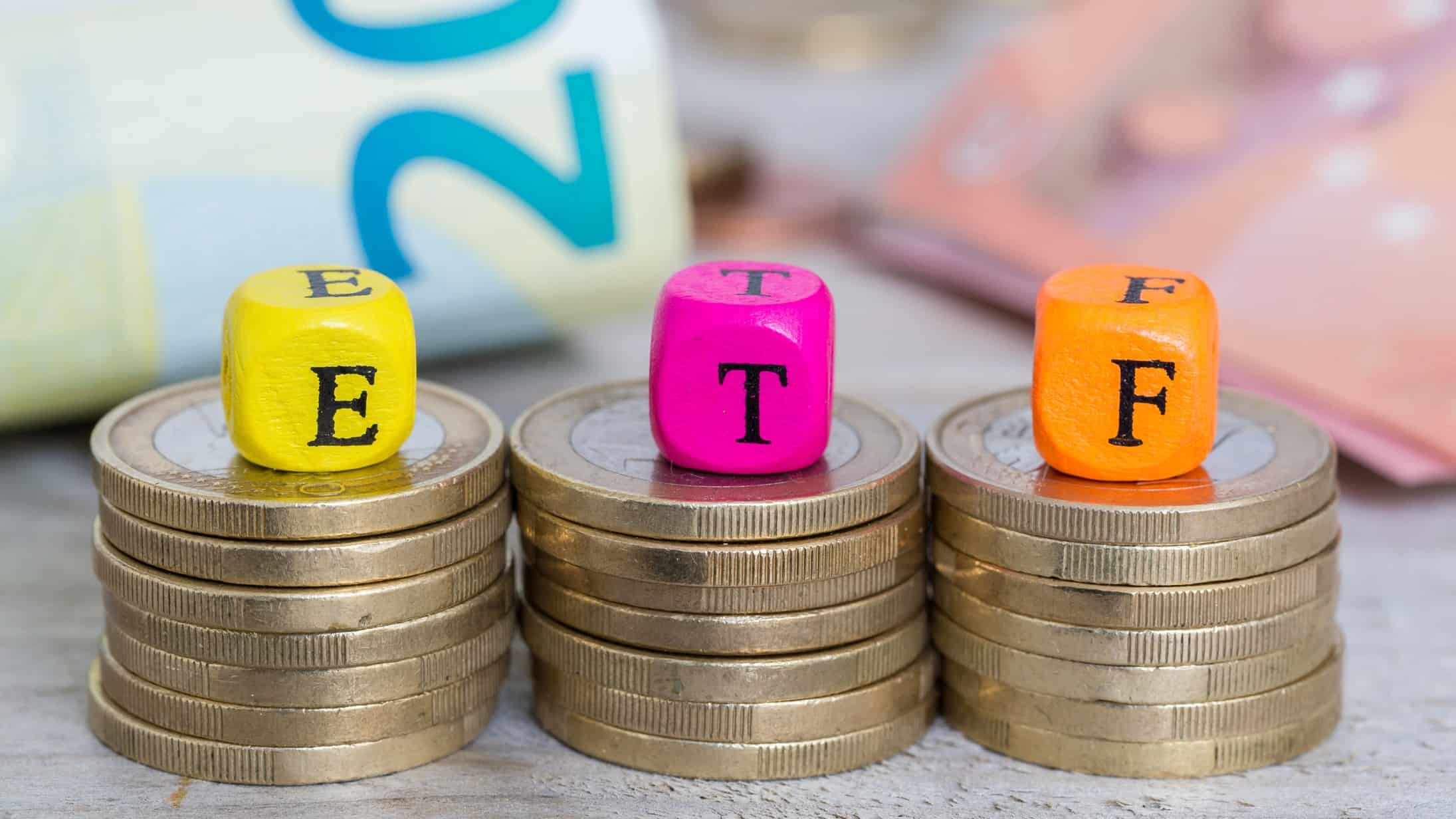
    ETF written on cubes sitting on piles of coins.

    ETF written on cubes sitting on piles of coins.The iShares S&P 500 ETF (ASX: IVV) has been a solid performer for investors over the last month, it has risen by 7%. That’s a stronger performance than the 6.2% return for the S&P/ASX 200 Index (ASX: XJO).

    As some investors may be aware, the performance of an exchange-traded fund (ETF) is dictated by the underlying holdings.

    If, collectively, the value of the businesses that an ETF owns go up, then this benefits the ETF’s value.

    The same can happen going downwards as well. When the group of shares that the ETF owns go down in value, then this would hurt the value of the ETF.

    The S&P 500 represents a portfolio of around 500 businesses.

    What shares are in the iShares S&P 500 ETF?

    These are some of the biggest holdings in the S&P 500 ETF on 12 August 2022:

    Apple (7.3%)

    Microsoft (6%)

    Alphabet (3.9%)

    Amazon (3.5%)

    Tesla (2.1%)

    Berkshire Hathaway (1.5%)

    UnitedHealth (1.4%)

    Nvidia (1.3%)

    Johnson & Johnson (1.2%)

    Of course, there are hundreds of other names like Costco, Disney and McDonalds.

    How did those names perform?

    Let’s have a look at how some of the biggest positions have performed over the past month, as these are the ones that would have the biggest influence on the overall iShares S&P 500 ETF performance.

    Over the last month, Apple shares are up 17.75%, Microsoft shares are up 15.4%, Alphabet shares are up 12%, Amazon shares are up 25.9% and Tesla shares are up 28.6%.

    These numbers indicate that the biggest shares actually performed much better than the overall S&P 500 index – it was other index constituents that didn’t do as well. For example, over the past month, the Johnson & Johnson share price is down 4.7%.

    Why are the technology shares rising?

    To truly know the answer to that question, you’d need to ask the buyers and sellers of those shares of the past month why they transacted at the price they did. This could explain what has happened to the iShares S&P 500 ETF.

    There has been a lot of volatility in 2022. Investors have been trying to get to grips with inflation and rising interest rates. Central banks are increasing interest rates to try to bring inflation under control.

    Warren Buffett once said this about interest rates:

    The value of every business, the value of a farm, the value of an apartment house, the value of any economic asset, is 100% sensitive to interest rates because all you are doing in investing is transferring some money to somebody now in exchange for what you expect the stream of money to be, to come in over a period of time, and the higher interest rates are the less that present value is going to be. So every business by its nature…its intrinsic valuation is 100% sensitive to interest rates.

    But, some iShares S&P 500 ETF investors may be thinking that interest rates may not need to go as high as previously expected. Monthly inflation in the US may have peaked after the latest figure was lower than the previous month. But, the next question is not ‘how high’ inflation goes, but ‘how long’ elevated inflation remains. Time will tell.

    The post Here’s why the iShares S&P 500 ETF (IVV) has climbed 7% in a month appeared first on The Motley Fool Australia.

    Wondering where you should invest $1,000 right now?

    When investing expert Scott Phillips has a stock tip, it can pay to listen. After all, the flagship Motley Fool Share Advisor newsletter he has run for over ten years has provided thousands of paying members with stock picks that have doubled, tripled or even more.* Scott just revealed what he believes could be the “five best ASX stocks” for investors to buy right now. These stocks are trading at near dirt-cheap prices and Scott thinks they could be great buys right now

    See The 5 Stocks
    *Returns as of August 4 2022

    (function() {
    function setButtonColorDefaults(param, property, defaultValue) {
    if( !param || !param.includes(‘#’)) {
    var button = document.getElementsByClassName(“pitch-snippet”)[0].getElementsByClassName(“pitch-button”)[0];
    button.style[property] = defaultValue;
    }
    }

    setButtonColorDefaults(“#43B02A”, ‘background’, ‘#5FA85D’);
    setButtonColorDefaults(“#43B02A”, ‘border-color’, ‘#43A24A’);
    setButtonColorDefaults(“#fff”, ‘color’, ‘#fff’);
    })()

    More reading

    John Mackey, CEO of Whole Foods Market, an Amazon subsidiary, is a member of The Motley Fool’s board of directors. Suzanne Frey, an executive at Alphabet, is a member of The Motley Fool’s board of directors. Motley Fool contributor Tristan Harrison has no position in any of the stocks mentioned. The Motley Fool Australia’s parent company Motley Fool Holdings Inc. has positions in and has recommended Alphabet (A shares), Alphabet (C shares), Amazon, Apple, Berkshire Hathaway (B shares), Costco Wholesale, Microsoft, Nvidia, Tesla, and Walt Disney. The Motley Fool Australia’s parent company Motley Fool Holdings Inc. has recommended Johnson & Johnson and UnitedHealth Group and has recommended the following options: long January 2023 $200 calls on Berkshire Hathaway (B shares), long January 2024 $145 calls on Walt Disney, long March 2023 $120 calls on Apple, short January 2023 $200 puts on Berkshire Hathaway (B shares), short January 2023 $265 calls on Berkshire Hathaway (B shares), short January 2024 $155 calls on Walt Disney, and short March 2023 $130 calls on Apple. The Motley Fool Australia has recommended Alphabet (A shares), Alphabet (C shares), Amazon, Apple, Berkshire Hathaway (B shares), Nvidia, Walt Disney, and iShares Trust – iShares Core S&P 500 ETF. The Motley Fool has a disclosure policy. This article contains general investment advice only (under AFSL 400691). Authorised by Scott Phillips.

    from The Motley Fool Australia https://ift.tt/UHhzY38