• Buy Telstra and these ASX dividend stocks this week

    Man holding different Australian dollar notes.

    If you are on the lookout for new income portfolio additions, then read on.

    That’s because listed below are four ASX dividend stocks that analysts believe could be quality picks for investors this month. Here’s what they are expecting from them:

    Aurizon Holdings Ltd (ASX: AZJ)

    Over at Ord Minnett, its analysts think that Aurizon could be an ASX dividend stock to buy.

    It is a rail freight operator that transports a range of commodities, including mining, agricultural, industrial and retail products across a network spanning thousands of kilometres.

    Ord Minnett expects this network to support partially franked dividends of 18.6 cents per share in FY 2024 and then 24.4 cents per share in FY 2025. Based on the current Aurizon share price of $3.66, this will mean dividend yields of 5.1% and 6.7%, respectively.

    Ord Minnett has an accumulate rating and $4.70 price target on its shares.

    Inghams Group Ltd (ASX: ING)

    Analysts at Morgans think that Inghams could be an ASX dividend stock to buy. It is Australia’s leading poultry producer and supplier.

    It likes the company due to its leadership position and attractive valuation. It also expects some great yields from its shares in the near term. Morgans is forecasting fully franked dividends of 22 cents per share in FY 2024 and FY 2025. Based on the current Inghams share price of $3.62, this will mean dividend yields of 6.1%.

    Morgans has an add rating and $4.25 price target on its shares.

    Telstra Group Ltd (ASX: TLS)

    The team at Goldman Sachs thinks this telco giant could be a top ASX dividend stock to buy right now.

    Especially after the company increased its mobile plans. The broker believes its mobile business will underpin low risk earnings and dividend growth in the coming years.

    In respect to the latter, Goldman is forecasting fully franked dividends of 18 cents per share in FY 2024 and then 19 cents per share in FY 2025. Based on the current Telstra share price of $3.83, this equates to yields of 4.7% and 5%, respectively.

    Goldman has a buy rating and $4.30 price target on Telstra’s shares.

    Transurban Group (ASX: TCL)

    Finally, analysts at Citi think that Transurban could be an ASX dividend stock to buy.

    It builds and operates toll roads in Australia and North America. Among its portfolio are CityLink in Melbourne and the Eastern Distributor in Sydney.

    Thanks partly to its positive exposure to inflation, the broker is expecting Transurban to be in a position to pay dividends per share of 63.6 cents in FY 2024 and then 65.1 cents in FY 2025. Based on the current Transurban share price of $12.94, this will mean yields of 4.9% and 5%, respectively.

    Citi has a buy rating and $15.50 price target on its shares.

    The post Buy Telstra and these ASX dividend stocks this week appeared first on The Motley Fool Australia.

    Should you invest $1,000 in Aurizon Holdings Limited right now?

    Before you buy Aurizon Holdings Limited shares, consider this:

    Motley Fool investing expert Scott Phillips just revealed what he believes are the 5 best stocks for investors to buy right now… and Aurizon Holdings Limited wasn’t one of them.

    The online investing service he’s run for over a decade, Motley Fool Share Advisor, has provided thousands of paying members with stock picks that have doubled, tripled or even more.*

    And right now, Scott thinks there are 5 stocks that may be better buys…

    See The 5 Stocks
    *Returns as of 10 July 2024

    More reading

    Citigroup is an advertising partner of The Ascent, a Motley Fool company. Motley Fool contributor James Mickleboro has no position in any of the stocks mentioned. The Motley Fool Australia’s parent company Motley Fool Holdings Inc. has positions in and has recommended Goldman Sachs Group and Transurban Group. The Motley Fool Australia has positions in and has recommended Telstra Group. The Motley Fool Australia has recommended Aurizon. The Motley Fool has a disclosure policy. This article contains general investment advice only (under AFSL 400691). Authorised by Scott Phillips.


  • Should you buy Rio Tinto shares after the miner’s update?

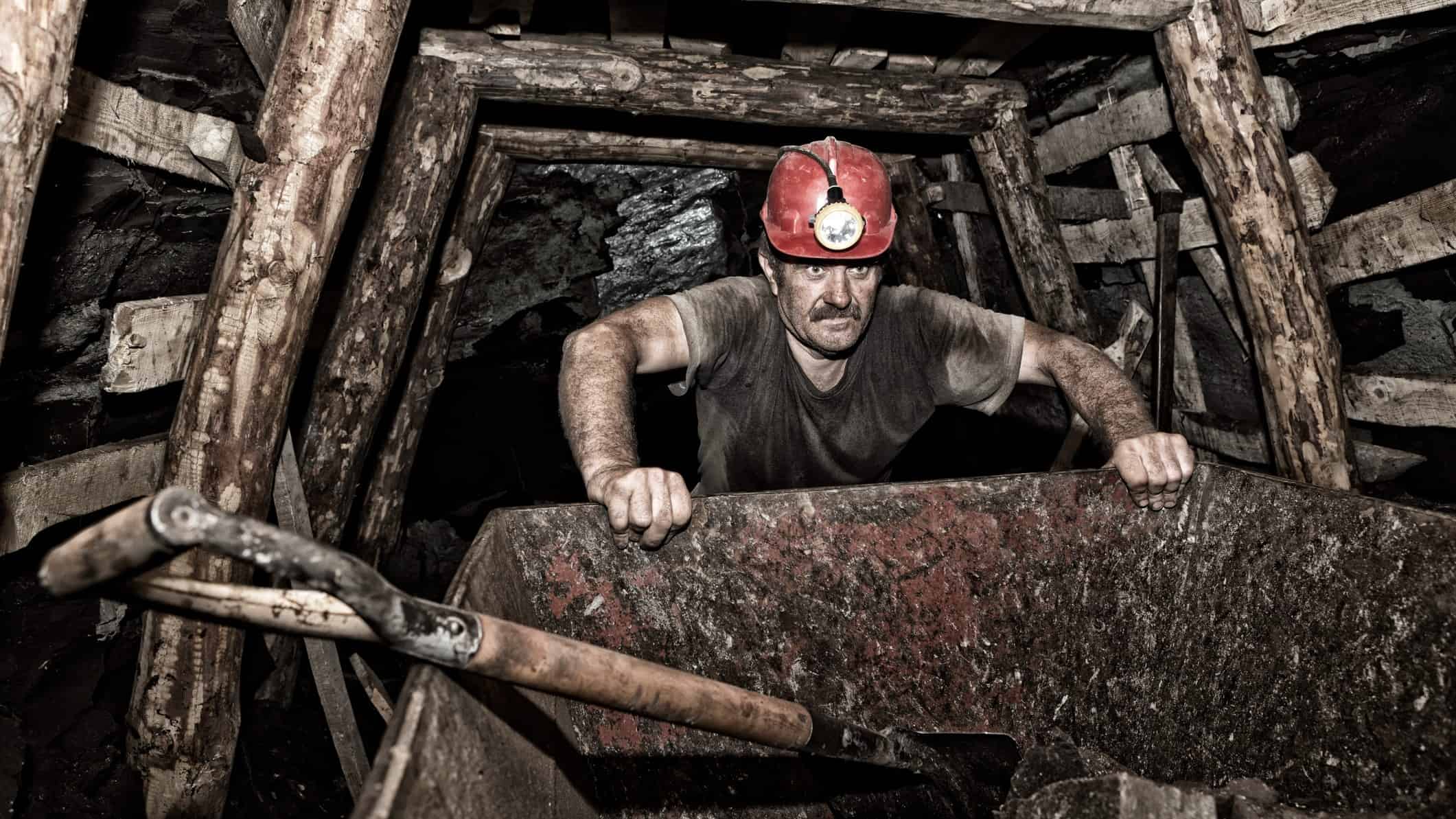
    Miner looking at his notes.

    Rio Tinto Ltd (ASX: RIO) shares were out of form on Tuesday. The mining giant’s shares tumbled 2.5% to $116.81.

    Investors were hitting the sell button in response to a second quarter update which fell short of the market’s expectations.

    Has this created a buying opportunity for investors? Let’s see what analysts at Goldman Sachs are saying about the miner.

    What is the broker saying?

    Goldman highlights that Rio Tinto’s update was a touch on the mixed side with positives and negatives. It commented:

    RIO reported Pilbara iron ore shipments of 80.3Mt, ahead of GSe (+2%) but in line with consensus. IOC production missed by c.15% (2.2Mt) on lower mining rates and maintenance; regional wildfires are likely to impact 3Q volumes. Pilbara 1H’24 realised price of US$105.8/t was lower than GSe at US$106.5/t. Pilbara cash cost guidance is unchanged at US$21.75-23.5/t (GSe US$23.3/t) with June H costs expected to be above the top end due to lower 1H volumes.

    The good news is that the broker still believes that Rio Tinto can achieve its guidance for the full year. It adds:

    For RIO to hit the midpoint of Pilbara shipments guidance of 323-338Mt (GSe 331Mt), a 2H run-rate of 345Mtpa is required, which we believe is achievable.

    Are Rio Tinto shares a buy?

    In response to the update, Goldman has reaffirmed its buy rating with a trimmed price target of $136.10. Based on its current share price of $116.81, this implies potential upside of 16.5% for Rio Tinto’s shares over the next 12 months.

    In addition, the broker is expecting dividend yields of approximately 5.5% in both FY 2024 and FY 2025, which boosts the total potential 12-month return to approximately 22%.

    Goldman continues to believe that its shares are good value compared to peers. It said:

    Compelling relative valuation: trading at c. ~0.8x NAV (A$144.0/sh) vs. peers (BHP ~0.9x NAV and FMG ~1.3x NAV) and c. ~5.5x NTM EBITDA at GSe base case, below the historical average of ~6-7x. 2.

    It also highlights its attractive free cash flow (FCF) and dividend yield. The broker adds:

    FCF/dividend yield in 2024E (c. 6%/6% yield) & 2025E (c. 7%/6% yield) driven by our bullish view on aluminium and copper in 2H24 (~30% of group EBITDA in 2024 increasing to 45-50% by 2026) and constructive view on iron ore.

    And finally, Goldman likes Rio Tinto due to its production growth potential. It explains:

    RIO is a FCF and production growth story in our view, with forecast Cu Eq production growth of ~4-7% in 2025 & 2026 driven by the ramp-up of the Oyu Tolgoi UG copper mine & a recovery at Escondida and Bingham, higher Pilbara Fe shipments with the ramp-up of new mines, and a rebound in aluminium production + the acquisition of Matalco.

    The post Should you buy Rio Tinto shares after the miner’s update? appeared first on The Motley Fool Australia.

    Should you invest $1,000 in Rio Tinto Limited right now?

    Before you buy Rio Tinto Limited shares, consider this:

    Motley Fool investing expert Scott Phillips just revealed what he believes are the 5 best stocks for investors to buy right now… and Rio Tinto Limited wasn’t one of them.

    The online investing service he’s run for over a decade, Motley Fool Share Advisor, has provided thousands of paying members with stock picks that have doubled, tripled or even more.*

    And right now, Scott thinks there are 5 stocks that may be better buys…

    See The 5 Stocks
    *Returns as of 10 July 2024

    More reading

    Motley Fool contributor James Mickleboro has no position in any of the stocks mentioned. The Motley Fool Australia’s parent company Motley Fool Holdings Inc. has positions in and has recommended Goldman Sachs Group. The Motley Fool Australia has no position in any of the stocks mentioned. The Motley Fool has a disclosure policy. This article contains general investment advice only (under AFSL 400691). Authorised by Scott Phillips.

  • What’s next for Droneshield stock after Tuesday’s 22% drop

    woman holding man's hand as he falls representing ups and downs of ASX investing

    Yesterday’s ASX session was a fairly muted one for investors. Tuesday saw the All Ordinaries (ASX: XAO) Index lose 0.23% of its value to finish at 8,243.3 points. But it was a far more dramatic day for DroneShield Ltd (ASX: DRO) stock.

    Droneshield shares started the day by printing yet another new record high of $2.72 a share. But that was in the first minutes of trading, and it was all downhill from there. By mid-afternoon, the company had seemingly inexplicably lost more than 30% of its value. Droneshield even got down to $1.79 a share at one point.

    The stock was suspended from trading for a couple of hours but returned to trading about an hour before the closing bell. When said bell rang, the company closed at $2.02 a share, down a horrid 22.31% for the day.

    As we covered at the time, it was initially hard to see what was going on with Droneshield stock. There wasn’t any news or announcements from the company we could point to.

    So it was speculated this was just a severe case of everyone trying to take their money off the table at once.

    After all, this was a stock that was up by more than 615% year to date at one point yesterday. The company was also up almost 80% over just the preceding month.

    But now that the dust has settled somewhat, we have a clearer picture of what went on during Tuesday’s trading session.

    What on earth happened to DroneShield stock on Tuesday?

    Naturally, after yesterday’s unexpected stock price plunge, Droneshield was sent a ‘please explain’ share price query by the ASX after its shares were temporarily halted from trading.

    When asked to give its best explanation for what went on yesterday afternoon, Droneshield pointed the finger at an article that was released, discussing its shares. This article, the company asserted, included the following:

    • Share price performance over the recent period;

    • Comparison of DRO’s market cap to several large companies across different industries in the Australian market;

    • Statements by two fund managers on their opinion of DRO’s valuation being overheated;

    • Statements from two stock analysts on their outlook for DRO;

    • Brief summary of DRO’s business;

    • Reference to DRO being a popularly traded stock on several broker platforms; and

    • A historical sale of DRO’s shares held by one of DRO’s Directors’, Jethro Marks.

    The company also told investors that “There is no new information or change of circumstance around the business”. It also affirmed it was complying with all ASX listing rules.

    What’s next?

    Given the rather unusual and unexpected nature of yesterday’s events, we’ll only know how investors will react when the market opens today. It’s arguably possible that we’ll see a big rise upward for Droneshield stock. But then again, it’s equally possible that there will be another sell-off, or not much movement at all.

    It is worth noting that Droneshield shares were still being heavily sold when they returned to trading yesterday afternoon after the company had made its case. But it’s unclear how investors will react today after everyone has had a breather. We’ll soon find out.

    The post What’s next for Droneshield stock after Tuesday’s 22% drop appeared first on The Motley Fool Australia.

    Should you invest $1,000 in Droneshield Limited right now?

    Before you buy Droneshield Limited shares, consider this:

    Motley Fool investing expert Scott Phillips just revealed what he believes are the 5 best stocks for investors to buy right now… and Droneshield Limited wasn’t one of them.

    The online investing service he’s run for over a decade, Motley Fool Share Advisor, has provided thousands of paying members with stock picks that have doubled, tripled or even more.*

    And right now, Scott thinks there are 5 stocks that may be better buys…

    See The 5 Stocks
    *Returns as of 10 July 2024

    More reading

    Motley Fool contributor Sebastian Bowen has no position in any of the stocks mentioned. The Motley Fool Australia’s parent company Motley Fool Holdings Inc. has positions in and has recommended DroneShield. The Motley Fool Australia has no position in any of the stocks mentioned. The Motley Fool has a disclosure policy. This article contains general investment advice only (under AFSL 400691). Authorised by Scott Phillips.

  • 2 ASX tech stocks to buy now: Broker

    Happy man and woman looking at the share price on a tablet.

    If you’re looking for some tech sector exposure, then you may want to check out these two stocks in this article.

    That’s because analysts at Bell Potter have just named them as ASX tech stocks to buy. Here’s what the broker is saying about them:

    Hub24 Ltd (ASX: HUB)

    The first ASX tech stock that Bell Potter is bullish on is Hub24. It is an investment platform provider with $84.4 billion of funds under administration (FUA).

    Bell Potter has been impressed with the company’s growth in FY 2024 and believes it is well-positioned to continue this positive trend in the coming years. In light of this, it feels its shares are undervalued at current levels. It said:

    We reiterate our Buy recommendation. HUB looks cheap relative to other high growth specialist platforms and the outlook for principal net flows should underpin incremental earnings growth. Our preference is predicated on a large exposure to superannuation assets. Delivering on complex integrations is another tick in our view.

    Bell Potter has a buy rating and $53.20 price target on its shares. This implies potential upside of 14% for investors from current levels.

    Integrated Research Limited (ASX: IRI)

    Another ASX tech stock that could be a buy according to Bell Potter is experience management solutions provider Integrated Research.

    It designs, develops, implements, and sells solutions that optimise business-critical systems. This provides insights, monitoring, and support to keep payment hubs, unified communications ecosystems, and contact centres running as they should.

    Bell Potter was pleased with the company’s performance during the second half and notes that management now expects to hit the upper end of its guidance range for revenue and earnings. This has ultimately boosted the broker’s confidence in the tech stock’s outlook and underpinned an increase in its valuation. It said:

    We have updated each valuation used in the determination of our price target for the forecast changes and also rolled forward the DCF by a year. We have also increased the multiples we apply in the PE ratio and EV/EBITDA valuations from 9.5x and 7.25x to 10.5x and 7.75x and also reduced the WACC we apply in the DCF from 10.2% to 9.7% due to the strong FY24 result and relatively positive outlook.

    Bell Potter has put a buy rating and $1.05 price target on the company’s shares. Based on its current share price of 90 cents, this suggests that upside of 17% is possible over the next 12 months.

    The post 2 ASX tech stocks to buy now: Broker appeared first on The Motley Fool Australia.

    Should you invest $1,000 in Hub24 Limited right now?

    Before you buy Hub24 Limited shares, consider this:

    Motley Fool investing expert Scott Phillips just revealed what he believes are the 5 best stocks for investors to buy right now… and Hub24 Limited wasn’t one of them.

    The online investing service he’s run for over a decade, Motley Fool Share Advisor, has provided thousands of paying members with stock picks that have doubled, tripled or even more.*

    And right now, Scott thinks there are 5 stocks that may be better buys…

    See The 5 Stocks
    *Returns as of 10 July 2024

    More reading

    Motley Fool contributor James Mickleboro has no position in any of the stocks mentioned. The Motley Fool Australia’s parent company Motley Fool Holdings Inc. has positions in and has recommended Hub24. The Motley Fool Australia has recommended Hub24. The Motley Fool has a disclosure policy. This article contains general investment advice only (under AFSL 400691). Authorised by Scott Phillips.

  • Donald Trump still won’t tweet — even after all Elon Musk has done. It’s kind of funny to watch.

    Donald Trump hasn't posted on Elon Musk's X.
    Donald Trump hasn't posted on Elon Musk's X.

    • Elon Musk has endorsed Donald Trump, and he's reportedly giving $45 million a month toward a win.
    • But Trump hasn't really posted on Musk's X since 2021. He has an exclusive deal with his own Truth Social.
    • Gotta admit … LOL.

    Donald Trump hasn't really tweeted since 2021 — even though Elon Musk unlocked his account and has now reportedly pledged $45 million a month toward getting him elected.

    It's kind of funny if you think about it: the richest man in the world, super thirsty for a former president to post — please, just post anything! — on the troubled Twitter, err X. But Trump is so far refusing.

    Of course, there's a reason Trump hasn't tweeted since 2021, save for a picture of his mugshot and a link to his website last August. It's because of his deal with Truth Social, the platform owned by his Trump Media & Technology Group — Ticker symbol DJT. (He has a 60% share.)

    That deal says any of his posts have to be exclusive to Truth Social for six hours before they can be posted elsewhere. Sure, he could post the same thing to X hours after he posts to Truth, but he just hasn't.

    Elon Musk has been good to Donald Trump

    This is even after Musk said he "fully" endorsed Trump after the past weekend's heinous shooting. And after Musk reportedly has pledged about $45 million a month to a new Trump-focused super political action committee.

    The endorsement and donation aren't even the first big things Musk has done for Trump: Soon after taking over Twitter, one of the first things he did was reinstate Trump's Twitter account, which previous owners banned after the January 6 insurrection. Musk took a poll of users and announced, "The people have spoken," when bringing back the former president.

    https://platform.twitter.com/widgets.js

    Certainly, Musk would love to have Trump once again posting on X. Trump, when he tweeted, was a juggernaut of attention (for better or worse — I make no claims here that Trump's tweets were "good"). Having Trump tweeting again would be a boon for X. His tweets would attract media hype and bring users to the service.

    And X CEO Linda Yaccarino loves nothing more than to hype up how exciting X is and how engaged its audience is. It's hard to imagine she wouldn't be excited to have the most notable tweeter going hard again.

    And yet … Trump still won't tweet.

    https://platform.twitter.com/widgets.js

    Trump hasn't posted to Instagram or Facebook, either, even though Meta — which had also banned Trump's accounts after January 6, reinstated them in 2023. But that might make Meta perfectly happy, since it's less hassle for them to deal with possible content moderation issues.

    But here's why Trump might also be reticent to post — anywhere aside from Truth Social: Trump's deal with the company is highly lucrative. Trump Media & Technology went public via SPAC back in May. The stock has been volatile, but it's up more than 178% over the past year and its market cap is over $7 billion — and Trump owns over 60%, making his stake around $4 billion.

    Trump probably really wants to tweet

    It's hard to imagine Trump not feeling the need to tweet. And it is even harder to imagine Trump playing by the rules and following a contract.

    But indeed — for $4 billion, he's apparently willing to play by the rules.

    For Musk, that's gotta sting.

    To be sure, Musk's endorsement and donation toward his reelection efforts obviously aren't an attempt to get Trump to tweet. Musk has other significant business interests where he'd prefer Trump as president: Tesla in China, government contracts for SpaceX, etc. He also probably just simply believes in Trump's message. I've asked for comment from PR people for both men.

    But you gotta admit: It is pretty funny that Musk is really doing everything he can to appear to suck up to Trump, and Trump isn't doing the one thing that might make Musk very happy: tweeting.

    Read the original article on Business Insider
  • Own Pilbara Minerals shares? Here’s what to expect from next week’s Q4 update

    A man in trendy clothing sits on a bench in a shopping mall looking at his phone with interest and a surprised look on his face.

    Pilbara Minerals Ltd (ASX: PLS) shares will be on watch next week.

    That’s because the lithium giant is scheduled to release its highly anticipated quarterly update on 24 July.

    Ahead of the release of the update, let’s take a look at what the market is expecting from the miner when it hands down its report card.

    What should you expect?

    According to a note out of Goldman Sachs, its analysts are expecting Pilbara Minerals to report stronger than expected spodumene production for the three months ended 30 June.

    It is forecasting production of 194,000dmt, which is up 10.2% quarter on quarter and 19% on the prior corresponding period.

    Whereas the consensus estimate is for a smaller increase in production to 184,000dmt for the fourth quarter.

    What about sales?

    Goldman is expecting Pilbara Minerals’ spodumene sales to also come in ahead of expectations. It is forecasting sales of 209,000dmt, compared to the consensus estimate of 190,000dmt.

    However, the broker believes this will be achieved with a realised spodumene price of US$923 per tonne. This is short of the consensus estimate of US$961 per tonne. It is also down 71.7% from US$3,256 per tonne a year earlier.

    Still profitable

    Despite the collapse in lithium prices, Goldman expects Pilbara Minerals’ operations to remain profitable. The broker has pencilled in unit cash costs (including freight and royalties) of US$489 per tonne. This will be down from US$519 per tonne in the previous quarter.

    At the end of the quarter, the broker expects this to leave Pilbara Minerals with a cash balance of US$1,299 million.

    Should you buy Pilbara Minerals shares?

    Despite its relatively positive view on the company’s operations, Goldman Sachs isn’t recommending Pilbara Minerals shares as a buy.

    It currently has a sell rating and $2.60 price target on its shares. Based on its current share price of $3.00, this implies potential downside of approximately 14% for investors over the next 12 months.

    It recently commented:

    We see near-term FCF continuing to decline on lithium prices and increasing growth spend (c. -10% FCF yield in FY24E, and c.0% in FY25-27E). Overall, we see PLS spending ~A$0.85bn on P1400, taking total capex spend from FY24E to FY28E on current and P1400 expansions to ~A$3bn, ~A$0.9bn ahead of consensus which already prices further expansion. Furthermore, we see PLS’ net cash declining to ~A$0.8-0.9bn (though still a relatively strong position vs. some peers and defensive into a declining lithium price), where with the stock trading at ~1.2x NAV (peer average ~1.05x), or pricing ~US$1,300/t spodumene (including a nominal value of A$1.1bn for growth) vs. peers at ~US$1,210/t (lithium pure-plays ~US$1,110/t; GSe US$1,150/t LT real), we see PLS as relatively expensive on fundamentals.

    The post Own Pilbara Minerals shares? Here’s what to expect from next week’s Q4 update appeared first on The Motley Fool Australia.

    Should you invest $1,000 in Pilbara Minerals Limited right now?

    Before you buy Pilbara Minerals Limited shares, consider this:

    Motley Fool investing expert Scott Phillips just revealed what he believes are the 5 best stocks for investors to buy right now… and Pilbara Minerals Limited wasn’t one of them.

    The online investing service he’s run for over a decade, Motley Fool Share Advisor, has provided thousands of paying members with stock picks that have doubled, tripled or even more.*

    And right now, Scott thinks there are 5 stocks that may be better buys…

    See The 5 Stocks
    *Returns as of 10 July 2024

    More reading

    Motley Fool contributor James Mickleboro has no position in any of the stocks mentioned. The Motley Fool Australia’s parent company Motley Fool Holdings Inc. has positions in and has recommended Goldman Sachs Group. The Motley Fool Australia has no position in any of the stocks mentioned. The Motley Fool has a disclosure policy. This article contains general investment advice only (under AFSL 400691). Authorised by Scott Phillips.

  • The US Air Force is redesigning its next-gen stealth fighter in an effort to reduce its roughly $300 million price tag

    A US Air Force F-22 Raptor flies above two Polish F-16 jets against a lush and green background.
    Two Polish F-16s fly near a US Air Force F-22 Raptor, which was expected to be replaced by the service's next-generation fighter.

    • The Air Force is redesigning its new stealth fighter as it struggles to fund its high-cost programs.
    • The sixth-gen fighter's redesign aims to better integrate it with AI-piloted aircraft and cut costs.
    • The new fighter jet may feature a less complex engine to lower its roughly $300 million price tag.

    America's new stealth fighter, being developed under the name Next Generation Air Dominance (or NGAD), is not being canceled but will be redesigned to bring costs down and better integrate the new aircraft with its AI-enabled drone wingmen that are also in development.

    After a decade of development, the future of what many have called the world's first 6th-generation fighter was suddenly called into question in recent weeks as the Air Force struggles to fund a laundry list of high-dollar modernization programs, including a new stealth bomber in the B-21 Raider, and a new nuclear intercontinental ballistic missile in the LGM-35A Sentinel program.

    However, Air Force Secretary Frank Kendall has told Defense News that the effort to field a new stealth fighter is not dead but will see changes — including the possibility of using a less complex engine than the new adaptive cycle powerplants that have been in development for this new fighter.

    "The family of systems concept of Next Generation Air Dominance is alive and well," Kendall told Defense News. "I can tell you that we are looking at the NGAD platform design concept to see if it's the right concept or not. We're looking at whether we can do something that's less expensive and do some trade-offs there."

    US Air Force Sec. Frank Kendall, Space Command Cmdr. James Dickinson, and Space Command Chief of Space Operations Gen. Chance Saltzman testify during a congressional hearing.
    US Air Force Sec. Frank Kendall covers his mouth with his hand while testifying during a congressional hearing.

    This news is sure to cause some concern within America's airpower apparatus. This new fighter, after all, is arguably only in development today because of the seemingly short-sighted decision to cancel production of the F-22 Raptor.

    As a cost-saving measure amid the Global War on Terror, America's current top-tier air superiority fighter saw its production run slashed from 750 fighters to just 186. This doomed the Raptor to a short service life, with ever-increasing operating costs and no way to replace airframes as they age out of service or are lost in combat.

    Despite being the oldest stealth fighter in service today, the F-22 Raptor is still arguably the healthiest and most dominant in air-to-air combat, thanks in no small part to its advanced Pratt & Whitney F119 afterburning turbofan engines that are so powerful they can produce more thrust without their afterburners than the F-15 Eagle can with its afterburners at full tilt. They also offer significant thermal and radar signature reduction for improved stealth and thrust vector control (or the ability to orient the outflow of thrust independent of the airframe) for improved aerobatic maneuverability.

    This advanced engine also serves as the basis for the F-35's F135 turbofan, which is the most powerful turbofan engine ever affixed to a fighter to date. Yet, over the past year, both China and Russia have begun production on their own seemingly comparable fifth-generation engines, eroding the technological advantage the already endangered F-22 enjoys.

    F-22 performs aerial maneuvers during an open house event
    US Air Force Maj. Paul Lopez performs aerial maneuvers during an open house event on Malmstrom Air Force Base.

    GE and Pratt & Whitney have been hard at work for years developing new engines for America's new fighter as a part of the Next-Generation Adaptive Propulsion (NGAP), with both of the competing designs promising to offer a significant leap in both fuel economy and power production. And although testing has been promising with these engines (particularly for GE's XA100), it seems this may be one of the areas the Air Force believes it can reduce costs.

    "The last numbers I saw on NGAP [Next Generation Adaptive Propulsion] were pretty high," retired General Clint Hinote, who was previously in charge of the Air Force Futures organization, told Defense News. "I do think that's a factor. I don't know if that's the only factor or the factor that's really contributing to this decision. But it is true that the NGAP program, the development of an adaptive engine for the NGAD, was very costly."

    To be certain, NGAD has always promised to be a very expensive aircraft, with Secretary Kendall himself saying that it will likely ring in at around $300 million per aircraft — roughly three times the F-35's cost. Although, as Sandboxx News has covered in the past, when adjusted for inflation, this isn't very far off from the price tags of previous top-tier fighters, including the F-22 and F-14, and is less than half the per-unit price of the forthcoming B-21 Raider stealth bomber.

    "Ideally, I'd like to get it down to less than an F-35, or at least in the ballpark of an F-35. F-35s, as you know, are not cheap airplanes," Kendall said.

    READ MORE FROM SANDBOXX NEWS

    Read the original article on Business Insider
  • North Korea accused of executing dozens of teens for watching South Korean dramas

    North Korean leader Kim Jong Un speaks at a press conference
    Kim Jong Un's government has been known to place severe restrictions on its citizens

    • A South Korean outlet said that North Korea executed dozens of teens for watching South Korean dramas.
    • It said the shows were reportedly stored on USBs that were floated over the border by defectors.
    • North Korea has been accused of using harsh penalties for those caught watching South Korean media.

    In North Korea, watching your favorite Korean dramas could end in tragedy.

    According to a report by South Korean broadcaster Chosun TV, around 30 middle schoolers were publicly shot last week for watching South Korean dramas.

    The shows were reportedly stored on USBs that were floated over the border by North Korean defectors, it said.

    Business Insider was unable to independently verify the report.

    South Korean officials did not comment directly on the report, but according to Korea JoongAng Daily, one unnamed South Korean Unification Ministry official told reporters that "it is widely known that North Korean authorities strictly control and harshly punish residents based on the three so-called 'evil' laws."

    One of these is North Korea's Reactionary Ideology and Culture Rejection Act, which forbids individuals from disseminating media that originates in South Korea, the US, or Japan.

    It is unclear whether those restrictions apply to foreigners visiting the country, like the Russian schoolchildren preparing to attend summer camps in the country.

    Greg Scarlatoiu, the executive director of the Committee for Human Rights in North Korea, told BI that "under the circumstances created by the intensified crackdown on information from the outside world, initially conducted under the pretext of COVID, these reports are definitely plausible."

    This is not the first instance of North Koreans reportedly being killed for their association with content from their southern neighbor.

    According to a 2022 UN Secretary-General report, a man in Kangwon Province was killed by a public firing squad after his neighborhood watch unit saw him selling digital content from South Korea.

    A 2024 report on North Korean Human Rights, released by South Korea's Ministry of Unification, claimed that phones in North Korea are regularly checked for "South Korean-style language" and that wearing white wedding dresses is punished for being "reactionary".

    A video was released earlier this year showing two teenagers being sentenced to 12 years of hard labor for watching a K-pop video.

    Despite eyewitness accounts compiled by Amnesty International, the North Korean government has denied that public executions take place in the country.

    According to North Korean authorities, the last execution took place in 1992.

    North Korea is still technically at war with its southern counterpart, with their conflict in the 1950s ending in a truce rather than a peace treaty.

    A defector told the Korea Herald that in 2020, North Korean parents were forced to sign a pledge stating they would ensure their children do not watch "impure video content" at home.

    Recently, experts have speculated that North Korean military personnel could be sent to aid Russian efforts in Ukraine, following closer ties between North Korean leader Kim Jong Un and Russia's President Vladimir Putin.

    Representatives from North Korea didn't immediately reply to requests for comment.

    Correction: July 16, 2024 — An earlier version of this story stated that more than one news outlet had reported the initial claim, rather than a single broadcaster.

    Read the original article on Business Insider
  • How billionaires swayed Trump to choose JD Vance as his vice president pick

    Ohio Sen. JD Vance once called Donald Trump "America's Hitler." Now, he's the GOP candidate for vice president. Here's how he did it.

    Read the original article on Business Insider
  • Buy these ASX dividend shares with 5% to 7% yields

    Man holding a calculator with Australian dollar notes, symbolising dividends.

    Looking to boost your income portfolio with some good dividend yields? If you are, then check out the buy-rated ASX dividend shares listed below.

    They have been named as buys and tipped to provide income investors with yields of X to Y. Here’s what you need to know about them:

    Healthco Healthcare and Wellness REIT (ASX: HCW)

    The first ASX dividend share that could be a buy is HealthCo Healthcare & Wellness REIT.

    It is a real estate investment trust with a mandate to invest in hospitals, aged care, childcare, government, life sciences and research, and primary care and wellness property assets.

    Bell Potter is a big fan and highlights its “significant scope for growth with an estimated $218 billion addressable market where an ageing and growing population should underpin long-term sector demand.”

    In the near term, the broker is forecasting dividends per share of 8 cents in FY 2024 and then 8.3 cents in FY 2025. Based on the current Healthco Healthcare and Wellness REIT unit price of $1.15, this will mean dividend yields of 7% and 7.2%, respectively.

    Bell Potter currently has a buy rating and $1.50 price target on its shares.

    IPH Ltd (ASX: IPH)

    Another ASX dividend share that could be a buy this week is IPH. It is an intellectual property solutions company with operations across the world.

    Analysts at Goldman Sachs are tipping its shares as a buy. The broker believes IPH is “well-placed to deliver consistent and defensive earnings with modest overall organic growth.”

    It expects this to underpin fully franked dividends per share of 34 cents in FY 2024 and then 37 cents in FY 2025. Based on the current IPH share price of $6.15, this represents yields of 5.5% and 6%, respectively.

    Goldman currently has a buy rating and $8.70 price target on IPH’s shares.

    Universal Store Holdings Ltd (ASX: UNI)

    A third ASX dividend share that could be a great pick for income investors is Universal Store. It is a youth fashion retailer that operates the Universal Store, Thrills, and Perfect Stranger store brands.

    Morgans thinks it would be a top option for investors. It likes the retailer due to its belief that its “growth opportunities are in place” and that “customers continue to respond well to the Universal Store banner.”

    In respect to dividends, the broker is forecasting fully franked dividends per share of 26 cents in FY 2024 and then 29 cents in FY 2025. Based on its current share price of $5.19, this will mean yields of 5% and 5.6%, respectively.

    The broker currently has an add rating and $6.50 price target on its shares.

    The post Buy these ASX dividend shares with 5% to 7% yields appeared first on The Motley Fool Australia.

    Should you invest $1,000 in Healthco Healthcare And Wellness Reit right now?

    Before you buy Healthco Healthcare And Wellness Reit shares, consider this:

    Motley Fool investing expert Scott Phillips just revealed what he believes are the 5 best stocks for investors to buy right now… and Healthco Healthcare And Wellness Reit wasn’t one of them.

    The online investing service he’s run for over a decade, Motley Fool Share Advisor, has provided thousands of paying members with stock picks that have doubled, tripled or even more.*

    And right now, Scott thinks there are 5 stocks that may be better buys…

    See The 5 Stocks
    *Returns as of 10 July 2024

    More reading

    Motley Fool contributor James Mickleboro has positions in Universal Store. The Motley Fool Australia’s parent company Motley Fool Holdings Inc. has positions in and has recommended Goldman Sachs Group. The Motley Fool Australia has recommended IPH. The Motley Fool has a disclosure policy. This article contains general investment advice only (under AFSL 400691). Authorised by Scott Phillips.