• Why Bitcoin, Ethereum, and XRP are struggling today

    This article was originally published on Fool.com. All figures quoted in US dollars unless otherwise stated.

    a close up of a woman's face looks skywards as she is showered in a sea of graphic symbols of gold and silver coins bearing the bitcoin logo.

    This article was originally published on Fool.com. All figures quoted in US dollars unless otherwise stated.

    What happened

    It’s been a rather bumpy ride in the world of large-cap cryptocurrencies of late. Today, this volatility has continued, with Bitcoin (CRYPTO: BTC)Ethereum (CRYPTO: ETH), and XRP (CRYPTO: XRP) each seeing declines as of late-morning trading.

    At 11:45 a.m. ET, these top tokens had sunk 1.3%, 2.1%, and 5.1% respectively over the past 24 hours. 

    A number of macro factors appear to be weighing on these top tokens, including volatility in Asian markets as well as concerns around rising interest rates and a stronger U.S. dollar. 

    For Bitcoin, these concerns have overshadowed some near-term catalysts investors are focused on. The Central African Republic has passed a bill to regulate crypto, adopting Bitcoin and other cryptocurrencies with a focus on inclusive growth. While this news isn’t necessarily as bullish as El Salvador’s move to declare Bitcoin legal tender, investors are taking note. 

    Similarly, Ethereum’s move toward an eventual “merge” that would take it from proof-of-work validation to proof-of-stake validation continues to provide both bullish anticipation and anxiety for some investors. That’s because Ethereum’s merge has been delayed, again, signaling any sort of bullish catalyst for investors may be further out. 

    XRP has now given up most of its gains from its late-January dip, as investors appear to be cautious with respect to the upcoming verdict on the SEC v. Ripple case that’s nearing a close.

    So what

    Each of these top tokens has its own idiosyncratic catalysts and headwinds investors ought to consider. That said, the price action in today’s crypto market has really been mostly to the downside, with the exception of certain meme tokens (thanks to Elon Musk).

    Like equity investors, those in the crypto market appear to be pricing in continued headwinds from lower liquidity in the market stemming from rising interest rates and quantitative tightening. Expectations that growth assets may underperform, whether true or not, are overshadowing any bullish catalysts for these top tokens once again today.

    Now what

    It’s unclear whether the highly discussed crypto winter many were talking about at the beginning of the year is truly over. Right now, it’s clear that an unfavorable monetary policy environment is likely to continue to affect the valuations of riskier assets for some time. Being among the riskiest of all asset classes, cryptocurrencies may be ill-positioned for growth in such an environment.

    That said, there are many reasons long-term growth investors may remain bullish on cryptocurrencies. The technologies underpinning these tokens do provide tangible catalysts for investors to get excited about. Accordingly, it’s now a question of how the market will price this growth potential. Today, it appears most investors are negative on the near-to-medium-term outlook for this sector.

    This article was originally published on Fool.com. All figures quoted in US dollars unless otherwise stated.

    The post Why Bitcoin, Ethereum, and XRP are struggling today appeared first on The Motley Fool Australia.

    Wondering where you should invest $1,000 right now?

    When investing expert Scott Phillips has a stock tip, it can pay to listen. After all, the flagship Motley Fool Share Advisor newsletter he has run for over ten years has provided thousands of paying members with stock picks that have doubled, tripled or even more.*

    Scott just revealed what he believes could be the five best ASX stocks for investors to buy right now. These stocks are trading at near dirt-cheap prices and Scott thinks they could be great buys right now.

    *Returns as of January 12th 2022

    More reading

    Chris MacDonald owns Ethereum. The Motley Fool Australia’s parent company Motley Fool Holdings Inc. owns and has recommended Bitcoin and Ethereum. The Motley Fool Australia owns and has recommended Bitcoin and Ethereum. The Motley Fool has a disclosure policy. This article contains general investment advice only (under AFSL 400691). Authorised by Bruce Jackson.

    This article was originally published on Fool.com. All figures quoted in US dollars unless otherwise stated.

    from The Motley Fool Australia https://ift.tt/5GwaV1d

  • Why Dogecoin is rising today

    This article was originally published on Fool.com. All figures quoted in US dollars unless otherwise stated.

    dog using a laptop

    This article was originally published on Fool.com. All figures quoted in US dollars unless otherwise stated.

    What happened

    As of 11:30 a.m. ET Monday, the price of Dogecoin (CRYPTO: DOGE) had risen by roughly 5% over the prior 24 hours as Tesla founder and noted Dogecoin bull Elon Musk pressed ahead in his efforts to purchase social media giant Twitter.

    So what

    Over the last few weeks, after repeated ideological attacks on the methods by which Twitter deals with free speech issues, Musk launched what it would eventually become clear was a takeover bid. First, he purchased a more than 9% stake in Twitter. At that point, it looked like Musk might join Twitter’s board, but he would eventually decline its invitation to do so.

    Musk then made a bid to buy Twitter for $43 billion in cash, valuing it at $54.20 per share. In response, Twitter’s board adopted a “poison pill” measure to thwart any hostile takeover attempt. Now, however, media reports are saying the company could reach an agreement with him, and Musk looks to have lined up the necessary financing.

    Dogecoin is expected to benefit if Musk takes over Twitter because it is one of three cryptocurrencies Musk holds in large quantities, and it’s one that he has consistently promoted on social media and elsewhere. Many observers seem to think he would integrate Dogecoin on the platform somehow, which would broaden its exposure and use, and therefore, in all likelihood, its price.

    Now what

    Considering that Dogecoin started as a joke and doesn’t have any unique real-world use cases or technical advantages over the thousands of other cryptocurrencies in circulation today, I’ve never thought of it as a good long-term investment.

    There may be potential for it to become useful if Musk winds up in a position where he can push for Dogecoin network upgrades and integrate the crypto into the Twitter ecosystem, but I would really need to see evidence of that happening first before I’d consider buying Dogecoin tokens.

    This article was originally published on Fool.com. All figures quoted in US dollars unless otherwise stated.

    The post Why Dogecoin is rising today appeared first on The Motley Fool Australia.

    Should you invest $1,000 in Dogecoin right now?

    Before you consider Dogecoin, you’ll want to hear this.

    Motley Fool Investing expert Scott Phillips just revealed what he believes are the 5 best stocks for investors to buy right now… and Dogecoin wasn’t one of them.

    The online investing service he’s run for over a decade, Motley Fool Share Advisor, has provided thousands of paying members with stock picks that have doubled, tripled or even more.* And right now, Scott thinks there are 5 stocks that are better buys.

    *Returns as of January 13th 2022

    More reading

    Bram Berkowitz has no position in any of the stocks mentioned. The Motley Fool Australia’s parent company Motley Fool Holdings Inc. owns and has recommended Tesla and Twitter. The Motley Fool Australia has no position in any of the stocks mentioned. The Motley Fool has a disclosure policy. This article contains general investment advice only (under AFSL 400691). Authorised by Bruce Jackson.

    This article was originally published on Fool.com. All figures quoted in US dollars unless otherwise stated.

    from The Motley Fool Australia https://ift.tt/GhpdNQV

  • How is the Woolworths share price managing to defy today’s sell-off?

    Woman thinking in a supermarket.

    Woman thinking in a supermarket.

    It’s been a rather dreadful start to the trading week for ASX shares so far this Tuesday. At the time of writing, the S&P/ASX 200 Index (ASX: XJO) is down by 1.93% at around 7,330 points after the ASX 200 plunged by as much as 2.4% earlier this morning. But at least one ASX 200 blue-chip share has managed to defy this selloff. That would be the Woolworths Group Ltd (ASX: WOW) share price.

    Woolworths shares are more or less defying the savage market selloff we’ve seen so far today. The company’s share price is still down at the time of writing, but by far less, currently trading down 0.4% at $39.16. Earlier, Woolworths was actually in the green too. 

    That makes Woolies one of the only blue-chip ASX 200 shares to not see its value substantially sold off today. At the present time, all four of the big four ASX banks are well in the red. As are BHP Group Ltd (ASX: BHP), CSL Limited (ASX: CSL) and Telstra Corporation Ltd (ASX: TLS). In BHP’s case, the iron ore miner has lost around 5.2%.

    So what is saving Woolworths from the worst of today’s selling pressure?

    Why is the Woolworths share price defying today’s ASX 200 selling?

    Well, it doesn’t appear to be anything the company has done specifically. There have been no major news or announcements out today from Woolworths itself. However, we get a clue if we look at Woolworths’ major peers. The Coles Group Ltd (ASX: COL) share price is also outperforming the broader ASX 200 today. Coles shares are currently down by 0.2% at $18.79 each after breaking into positive territory at one point as well. 

    IGA operator Metcash Limited (ASX: MTS) is itself in the green. Metcash shares are currently up by 0.4% at $4.79 a share. Endeavour Group Ltd (ASX: EDV), which used to be part of Woolworths, is doing very nicely, up 1.16% at $7.83.

    Indeed, Woolworths’ ASX 200 Consumer Staples sector is leading the ASX so far today. All ASX 200 sectors are currently in the red. But the S&P/ASX 200 Consumer Staples Index (ASX: XSJ) is currently the best performing one, with its 0.33% loss thus far today. 

    So perhaps we are seeing what can often happen in a market selloff; investors looking for safety. For better or worse, consumer staples shares like Woolies are often sought out during fearful markets for their perceived safety. Since consumer staples shares by definition produce and sell life’s ‘needs’ like food, drinks and household essentials, many investors believe they are ‘safer’ investments during a downturn. Thus, shares like Woolworths often outperform the broader market during savage selloffs, like the one we are seeing today. That would explain why the entire consumer staples sector is performing well today too.

    At the current Woolworths share price, this ASX 200 blue-chip has a market capitalisation of $47.73 billion, with a dividend yield of 2.4%. 

    The post How is the Woolworths share price managing to defy today’s sell-off? appeared first on The Motley Fool Australia.

    Should you invest $1,000 in Woolworths right now?

    Before you consider Woolworths, you’ll want to hear this.

    Motley Fool Investing expert Scott Phillips just revealed what he believes are the 5 best stocks for investors to buy right now… and Woolworths wasn’t one of them.

    The online investing service he’s run for over a decade, Motley Fool Share Advisor, has provided thousands of paying members with stock picks that have doubled, tripled or even more.* And right now, Scott thinks there are 5 stocks that are better buys.

    *Returns as of January 13th 2022

    More reading

    Motley Fool contributor Sebastian Bowen owns Telstra Corporation Limited. The Motley Fool Australia’s parent company Motley Fool Holdings Inc. owns and has recommended CSL Ltd. The Motley Fool Australia owns and has recommended COLESGROUP DEF SET and Telstra Corporation Limited. The Motley Fool has a disclosure policy. This article contains general investment advice only (under AFSL 400691). Authorised by Bruce Jackson.

    from The Motley Fool Australia https://ift.tt/lXWMBkY

  • ASX 200 stocks dive 2.4% in worst trading day since Ukraine crisis hit

    Man with his hand on his face looking at a falling share price chart on a tablet.

    Man with his hand on his face looking at a falling share price chart on a tablet.

    The S&P/ASX 200 Index (ASX: XJO) isn’t off to the best of post-holiday starts.

    At all.

    ASX 200 stocks are down 2.4% in morning trade, having shed 2.3% within the first minutes of the opening bell. At the time of writing, the benchmark index is clawing back some ground, now 1.88% lower.

    That’s the worst performance for ASX 200 stocks since 21 January, when Russian forces crossed into Ukraine and unleashed war on the European continent.

    Energy and resource companies are among the worst performers today, as witnessed by the 5.1% loss on the S&P/ASX 200 Energy Index (ASX: XEJ) and the 5.4% loss posted by the S&P/ASX 200 Resource Index (ASX: XJR) at this same time.

    So, why are investors hitting the sell button today?

    Why ASX 200 stocks are under pressure

    ASX 200 stocks have faced a multitude of headwinds in 2022.

    First, there was rising global inflation and the spectre of numerous interest rate hikes ahead.

    Then there was Russia’s horrendous invasion of neighbouring Ukraine.

    Now COVID-19 is back in the playbooks.

    While Australia has joined most of the rest of the world in reopening its domestic and international borders and learning to live with the coronavirus, China remains intent on its COVID-zero policies. And this determination is seeing Shanghai, a city with more residents than all of Australia, forced into extended lockdowns.

    Now signs are emerging that China, the world’s number two economy, is facing some serious setbacks in its growth ambitions. And that’s having a big impact on commodity and energy prices.

    Brent crude, for example, is currently trading for just under US$103 per barrel. That’s down 9% since this time last week when that same barrel was fetching just over US$113 per barrel.

    Even more crucially for the Aussie economy and some of the top ASX 200 stocks by market cap, iron ore is taking a hit.

    The industrial metal is down some 10% to $US135.75 per tonne.

    As the Australian Financial Review reports, China’s lockdowns have seen Nomura cut its Q2 forecast for China’s GDP growth to 1.8% from 3.4%.

    According to Nomura’s chief economist Ting Lu:

    Without the ending in sight, Chinese households and private sector corporates may reduce their investment in their homes and capital goods. With other countries shifting to full reopening, China’s export growth is set to slow even without lockdowns.

    Best and worst performers

    There aren’t a whole lot of top performers among ASX 200 stocks to look at today.

    In fact, only three of the 200 are posting gains in excess of 1.0%.

    Of those, Unibail-Rodamco-Westfield (ASX: URW) leads the pack, up 2.9% at the time of writing.

    As for the worst performers, that unwanted honour goes to EML Payments Ltd (ASX: EML), down 35%. Investors are selling shares after the financial services company cut its earnings guidance for FY22 in an ASX update this morning.

    And with iron ore tanking, you won’t be surprised to find the likes of BHP Group Ltd (ASX: BHP) among the bottom ten performers of ASX 200 stocks as well. The BHP share price is down 5.3% today.

    Deriving an even greater share of its revenue from iron ore, the Fortescue Metals Group Ltd (ASX: FMG) is falling even harder, down 6.46% at the time of writing to $19.85 per share.

    As long-term investors in ASX 200 stocks, we know that down days – like what we’re witnessing today – happen. We also know that, historically, they’ll fade away as investors look to capture good value from the markets.

    The post ASX 200 stocks dive 2.4% in worst trading day since Ukraine crisis hit appeared first on The Motley Fool Australia.

    Wondering where you should invest $1,000 right now?

    When investing expert Scott Phillips has a stock tip, it can pay to listen. After all, the flagship Motley Fool Share Advisor newsletter he has run for over ten years has provided thousands of paying members with stock picks that have doubled, tripled or even more.*

    Scott just revealed what he believes could be the five best ASX stocks for investors to buy right now. These stocks are trading at near dirt-cheap prices and Scott thinks they could be great buys right now.

    *Returns as of January 12th 2022

    More reading

    The Motley Fool Australia’s parent company Motley Fool Holdings Inc. owns and has recommended EML Payments. The Motley Fool Australia owns and has recommended EML Payments. The Motley Fool has a disclosure policy. This article contains general investment advice only (under AFSL 400691). Authorised by Bruce Jackson.

    from The Motley Fool Australia https://ift.tt/GS9s4a3

  • Woodside share price plunges 6% following up-and-down quarter

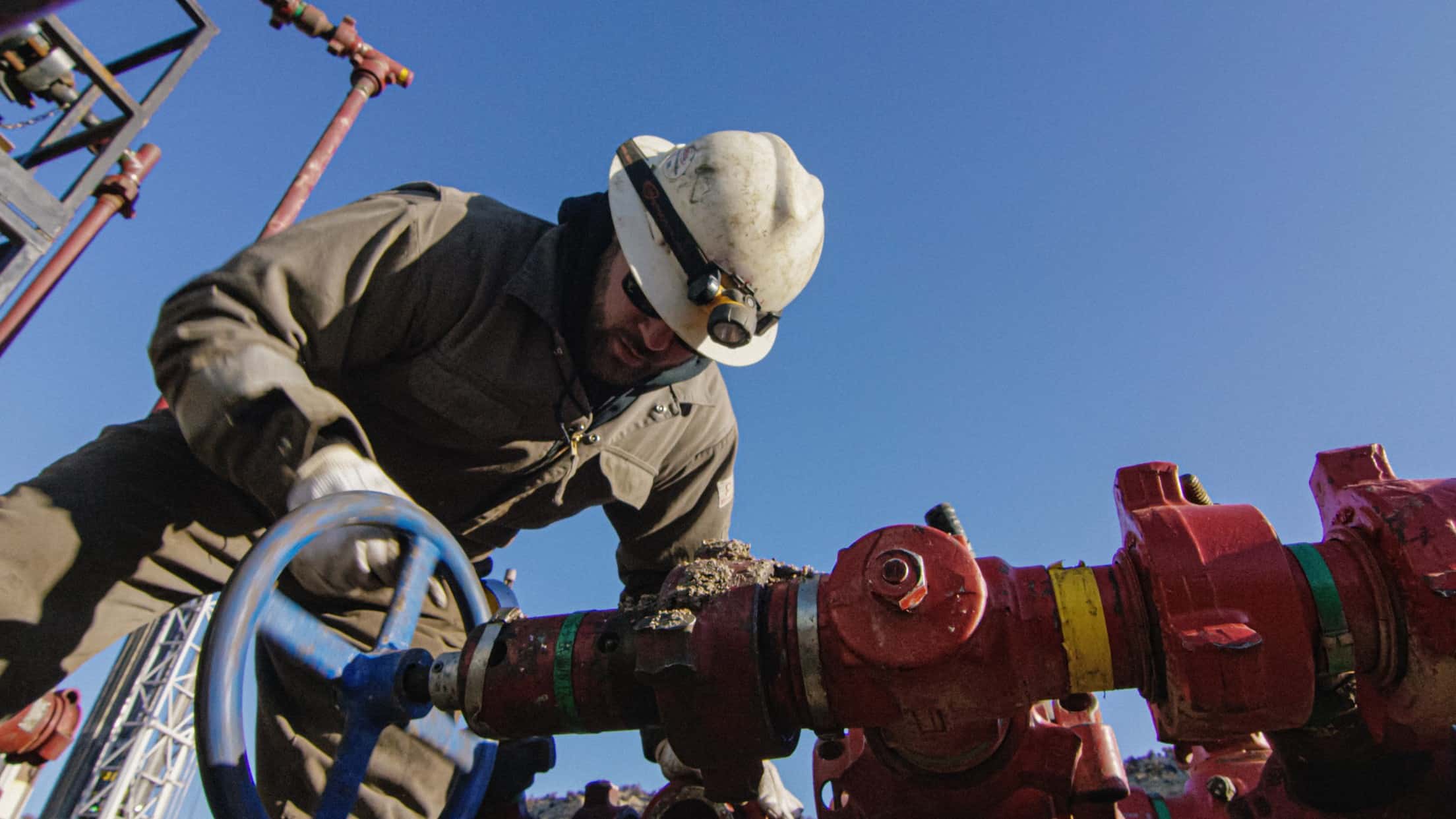
    gas and oil worker on pipeline equipmentgas and oil worker on pipeline equipment

    The Woodside Petroleum Limited (ASX: WPL) share price is tumbling on Tuesday following the release of the company’s latest quarterly report.

    Woodside’s revenue and production slipped last quarter while its average realised sales price increased.

    At the time of writing, the Woodside share price is $30.43, 5.11% lower than its previous close. In early trade, it fell as low as $30 a share.

    Let’s take a look at how the oil and gas company performed over the three months ended 31 March 2022.

    Woodside share price plummets on quarterly update

    • Total revenue of US$2,395 million for the quarter
    • Produced 22.3 million barrels of oil equivalent
    • Sales volumes of 25.5 million barrels of oil equivalent
    • Average realised oil price of US$93 a barrel

    Woodside’s revenue for the period was 17% lower than that of the December quarter. Though, it was more than double that of the prior comparable period.

    The company noted the drop in revenue was due to lower trading activity.

    Additionally, its production slowed by 1% compared to that of the previous quarter following maintenance and weather events.

    Woodside’s average realised oil price increased 3% on that of the previous quarter and 111% on that of the first quarter of 2021.

    What else happened in the quarter?

    The last quarter was a busy period for the oil and gas producer.

    It saw the global market for oil and gas further tighten in the face of Russia’s invasion of Ukraine, according to Woodside CEO Meg O’Neill.

    The company spent time last quarter working towards its merger with the BHP Group Ltd (ASX: BHP) petroleum business. Information on the merger was released to the market in early April.

    Woodside also completed the sale of a 49% interest in the Pluto Train 2 joint venture and commenced processing Pluto gas at the Karratha Gas Plant.

    The company’s Scarborough Field Development plan has now received approvals and work is continuing at the Sangomar Field Development.

    Finally, Woodside agreed on the long-term charter hire of three new LNG carriers.

    The Woodside share price gained 46% last quarter.

    What did management say?

    Commenting on the company’s quarterly performance and outlook, O’Neill said:

    The implications of Russia’s invasion of Ukraine have reverberated globally, exacerbating already tight energy markets, particularly for LNG. This has resulted in unprecedented volatility and price spikes to levels not seen since the early part of last decade …

    We expect in the second quarter to see the continued benefit of stronger pricing, reflecting the oil price lag in many of our LNG contracts.

    Woodside share price snapshot

    Today’s dip hasn’t been enough to send the Woodside share price into the long-term red.

    The company’s stock is currently trading around 34% higher than it was this time last year.

    The post Woodside share price plunges 6% following up-and-down quarter appeared first on The Motley Fool Australia.

    Should you invest $1,000 in Woodside right now?

    Before you consider Woodside, you’ll want to hear this.

    Motley Fool Investing expert Scott Phillips just revealed what he believes are the 5 best stocks for investors to buy right now… and Woodside wasn’t one of them.

    The online investing service he’s run for over a decade, Motley Fool Share Advisor, has provided thousands of paying members with stock picks that have doubled, tripled or even more.* And right now, Scott thinks there are 5 stocks that are better buys.

    *Returns as of January 13th 2022

    More reading

    Motley Fool contributor Brooke Cooper has no position in any of the stocks mentioned. The Motley Fool Australia’s parent company Motley Fool Holdings Inc. has no position in any of the stocks mentioned. The Motley Fool Australia has no position in any of the stocks mentioned. The Motley Fool has a disclosure policy. This article contains general investment advice only (under AFSL 400691). Authorised by Bruce Jackson.

    from The Motley Fool Australia https://ift.tt/6hkK0Aw

  • The Fortescue share price is falling 6% on Tuesday. Here’s why

    asx iron ore share price crash represented by meteor speeding through spaceasx iron ore share price crash represented by meteor speeding through space

    The Fortescue Metals Group Limited (ASX: FMG) share price is coming under selling pressure today. This is despite the iron ore mining outfit not releasing any price sensitive announcements to the ASX.

    At the time of writing, Fortescue shares are fetching for $19.81, down 6.64%.

    In comparison, the S&P/ASX 200 Index (ASX: XJO) is sitting at 7,298.3 points, down 2.34%.

    Below, we take a look at what’s dragging the miner’s shares along with the benchmark index.

    Spot price of iron ore plummets

    After spending the last couple of months hovering around the US$150 barrier, the iron ore spot price has dramatically fallen.

    Courtesy of Trading Economics, the steel making ingredient is trading at US$136.50 per metric tonne as of last night. This represents a fall of almost 9% compared to Friday’s closing price.

    The sharp decrease will have an impact on Fortescue’s bottom line, however, profits are still expected to be churned out. The company reported industry leading C1 costs of US$15.28 per wet metric tonne for H1 FY22. C1 costs refer to the ‘direct’ production costs incurred in mining and processing the iron ore.

    China lockdown fears

    Weighing down the market price for iron ore, and effectively Fortescue’s shares, has been China’s worsening COVID-19 situation.

    The highly-transmissible Omicron variant has recently taken hold of Beijing, which is expected to lead to government restrictions.

    This comes as China’s most populous city, Shanghai has been under severe lockdowns since the start of the month. Residents have been confined to their homes, and often protesting their frustration with the government’s strict zero-COVID policy.

    The city has experienced major food shortages and delivery delays due to road closures and fewer delivery drivers.

    Yesterday, China reported 3,266 symptomatic cases and 20,454 asymptomatic cases of COVID-19. The majority of these were recorded in Shanghai with 19,455 cases, and Beijing registered 19 cases, including 14 symptomatic.

    It’s worth noting that with the economic conditions rife, the construction sector could potentially fall further. This would evitability have a profound impact on the demand for iron ore leading to a strong price drop.

    Fortescue share price snapshot

    Regardless of Fortescue shares being lower today, its shares have gained 10% since the start of 2022.

    However, when looking further back, the company’s share price is down by 6% over the last 12 months.

    Based on valuation metrics, Fortescue presides a market capitalisation of approximately $65.34 billion.

    The post The Fortescue share price is falling 6% on Tuesday. Here’s why appeared first on The Motley Fool Australia.

    Should you invest $1,000 in Fortescue right now?

    Before you consider Fortescue, you’ll want to hear this.

    Motley Fool Investing expert Scott Phillips just revealed what he believes are the 5 best stocks for investors to buy right now… and Fortescue wasn’t one of them.

    The online investing service he’s run for over a decade, Motley Fool Share Advisor, has provided thousands of paying members with stock picks that have doubled, tripled or even more.* And right now, Scott thinks there are 5 stocks that are better buys.

    *Returns as of January 13th 2022

    More reading

    Motley Fool contributor Aaron Teboneras has no position in any of the stocks mentioned. The Motley Fool Australia’s parent company Motley Fool Holdings Inc. has no position in any of the stocks mentioned. The Motley Fool Australia has no position in any of the stocks mentioned. The Motley Fool has a disclosure policy. This article contains general investment advice only (under AFSL 400691). Authorised by Bruce Jackson.

    from The Motley Fool Australia https://ift.tt/i7XbpHM

  • EML share price crashes 35% amid guidance cuts

    a man with a moustache sits at his computer with his hands over his eyes making a gap between his fingers so he can peek through to his computer screen.a man with a moustache sits at his computer with his hands over his eyes making a gap between his fingers so he can peek through to his computer screen.

    The EML Payments Ltd (ASX: EML) share price is in the red today amid the company releasing a third-quarter trading update.

    At the time of writing, shares in the payment solutions company are trading at $1.76 each, a 35.06% fall.

    Let’s take a look at what this payments technology company reported today.

    EML share price slides following quarterly update

    The company’s third-quarter FY2022 results included:

    • Underlying earnings before interest, tax depreciation and amortisation (EBITDA) dropped 14% on prior corresponding period (PCP) to $13.6 million
    • Underlying net profit after tax amortisation (NPATA) fell 22% on PCP to $13.6 million
    • Gross debt volume surged 408% on PCP to $23.9 billion
    • Underlying overheads surged 50% on PCP to $28.6 million
    • EBITDA guidance for FY22 cut by 8% to $52-$55 million
    • Revenue jumped 21% on PCP to $59.8 million

    What else happened during the quarter?

    Underpinning this result was the operating performance of the company’s European prepaid business which EML payments described as “significantly behind”. This business has been impacted by remediation activities.

    However, EML said the Australian and North American businesses are trading in line with expectations.

    Underlying overheads increased on the back of headcount investment, more IT expenditure, and the acquisition of Sentenial.

    EML is expecting more challenges in the fourth quarter, leading to “a reduction in the guidance range”. Commenting on this fall, EML said:

    Deterioration in current FX forecast rates from the prevailing rates in mid February are driving approximately $1.5m of the guidance reduction.

    Overheads spend in H2 towards higher end of expectations.

    What’s next for EML?

    EML is expecting operational initiatives to drive the Europe business recovery in FY2023. This includes four operational improvement projects in Europe that were pushed back from H2 FY2022.

    Subject to regulatory approval, EML is planning to invest in EUR bonds. The company is also undertaking a project to find efficiency opportunities globally and combat the cost pressure of inflation.

    EML share price snapshot

    The EML share price has fallen 67% in the past 12 months, while it has slid 44% in the year to date.

    By comparison, S&P/ASX 200 Index (ASX: XJO) has returned nearly 4% in the past year.

    EML has a market capitalisation of about $674 million based on the current share price.

    The post EML share price crashes 35% amid guidance cuts appeared first on The Motley Fool Australia.

    Should you invest $1,000 in EML Payments right now?

    Before you consider EML Payments , you’ll want to hear this.

    Motley Fool Investing expert Scott Phillips just revealed what he believes are the 5 best stocks for investors to buy right now… and EML Payments wasn’t one of them.

    The online investing service he’s run for over a decade, Motley Fool Share Advisor, has provided thousands of paying members with stock picks that have doubled, tripled or even more.* And right now, Scott thinks there are 5 stocks that are better buys.

    *Returns as of January 13th 2022

    More reading

    The Motley Fool Australia’s parent company Motley Fool Holdings Inc. owns and has recommended EML Payments. The Motley Fool Australia owns and has recommended EML Payments. The Motley Fool has a disclosure policy. This article contains general investment advice only (under AFSL 400691). Authorised by Bruce Jackson.

    from The Motley Fool Australia https://ift.tt/blVNwK5

  • Beach Energy share price slips despite bumper quarter

    A miner in visibility gear and hard hat looks seriously at an iPad device in a field where oil mining equipment is visible in the background.A miner in visibility gear and hard hat looks seriously at an iPad device in a field where oil mining equipment is visible in the background.

    Shares in Beach Energy Ltd (ASX: BPT) have tumbled from the open on Tuesday following the release of its third quarter results and FY22 expenditure guidance update.

    The Beach Energy share price closed out the previous trading week at $1.65 before slipping to a near-two week low of $1.60 early in the session today.

    TradingView Chart

    Revenue up 15%, expense guidance lowered

    Beach Energy printed Q3 sales revenue of $458 million, a 15% gain on the prior quarter. Production tightened by 3% to 5.2 MMboe whilst sales volume(s) reduced by 5%, offset by surging oil and gas markets.

    In fact, the gain was mainly due to higher realised oil and gas prices, Beach says. It reported a realised oil price of $176.5 per barrel and a realised gas/ethane price of $8.4/GJ, up 51% and 10% respectively.

    In the meantime, Western Flank oil is expected to report a 35% oil decline in FY22 “due to refined reservoir management strategies”.

    Aside from that, growth initiatives such as the Thylacine West 1 and Waitsia Stage 2 Perth Basin development each progressed in drilling programs during the quarter.

    Drilling at Thylacine is expected to be finalised in Q4 FY22, alongside an LNG supply and purchase agreement with BP, the company says.

    Meanwhile, Beach also adjusted its capital expenditure (CAPEX) guidance down to $900 million–$1 billion, down from a previous $900 million–$1.1 billion.

    It puts this down to “deferral of spend to FY23”. So the company hasn’t actually reduced its expenditure, just deferred it to a later date.

    “The reduction is mainly due to revised timing of work programs with deferral of some spend to FY23.
    Major capital programs remain on budget and on schedule,” Beach commented on the adjustment.

    Speaking on the results, Beach Energy’s acting CEO, Morné Engelbrecht said:

    The third quarter was highlighted by the achievement of major milestones as we continued to deliver
    meaningful progress against our growth strategy. Quarterly production remained broadly stable despite weather challenges in the Cooper Basin and maintenance downtime in the Bass Basin.

    Pleasingly, Western Flank oil production is performing better than. our beginning-of-year expectations, with a large inventory of workover activity and development well connections supporting the current production levels.

    In the Otway Basin, Beach is now well placed to service higher customer nominations as seasonal gas demand increases during winter months. Connection of the Geographe wells has enabled the Otway Gas Plant to deliver average daily gas supply of 152 TJ per day since quarter-end.

    In the last 12 months, Beach Energy’s share price has begun its recovery but is still down more than 4% in that time. This year to date however it has surged more than 27% amid a commodity market boom.

    The post Beach Energy share price slips despite bumper quarter appeared first on The Motley Fool Australia.

    Should you invest $1,000 in Beach Energy right now?

    Before you consider Beach Energy, you’ll want to hear this.

    Motley Fool Investing expert Scott Phillips just revealed what he believes are the 5 best stocks for investors to buy right now… and Beach Energy wasn’t one of them.

    The online investing service he’s run for over a decade, Motley Fool Share Advisor, has provided thousands of paying members with stock picks that have doubled, tripled or even more.* And right now, Scott thinks there are 5 stocks that are better buys.

    *Returns as of January 13th 2022

    More reading

    Motley Fool contributor Zach Bristow has no position in any of the stocks mentioned. The Motley Fool Australia’s parent company Motley Fool Holdings Inc. has no position in any of the stocks mentioned. The Motley Fool Australia has no position in any of the stocks mentioned. The Motley Fool has a disclosure policy. This article contains general investment advice only (under AFSL 400691). Authorised by Bruce Jackson.

    from The Motley Fool Australia https://ift.tt/qNTfpP6

  • The Hazer share price gained 40% last year but its tumbling in 2022. What’s going wrong?

    a woman wearing green and sitting in a green room with a green coffee cup puts her hand to her forehead in dismay while looking at papers sitting at her computer.a woman wearing green and sitting in a green room with a green coffee cup puts her hand to her forehead in dismay while looking at papers sitting at her computer.

    The new year is proving to be a tough slog for the Hazer Group Ltd (ASX: HZR) share price.

    The technology company that’s creating low-emissions hydrogen and graphite production processes saw its stock surge 41.98% in 2021. It ended last year trading at $1.15.

    Sadly, 2022 hasn’t been so kind to Hazer’s shares. They’ve tumbled 20.96% year to date.

    At the time of writing, the Hazer share price is trading at 90.5 cents.  

    So, what’s been dragging on the hydrogen-focused ASX share this year? Let’s take a look.

    What’s going wrong for the Hazer share price?

    The Hazer share price has been struggling amid a barrage of news and reports that large investors are hesitant to invest in hydrogen.

    Defects in parts for the company’s commercial demonstration project and sliding revenues have weighed on the stock in 2022. Meanwhile, it was boosted by the announcement of a new Canadian hydrogen production facility.

    However, some of the market’s big players are wary of hydrogen despite its apparent popularity.

    Australian National University energy economist, Paul Burke, believes that Australia’s potential to become a major green energy exporter is vast, reports the Financial Times (FT). But more funds are needed to realise the sector’s potential.

    Additionally, Burkes notes that the federal government “could be doing more” to support the nation’s green energy potential.

    The government has invested in hydrogen projects – including ‘blue’ hydrogen projects, which create carbon emissions.

    In fact, the federal government promised hundreds of millions for hydrogen production in its latest budget.

    But that probably won’t be enough.

    Hydrogen is one of the newest forms of low-emissions energy and it’s reportedly lacking capital from super funds and investment houses.

    While initiatives like an emissions trading scheme or a carbon tax could do more to force investment in low-emissions energy sources, Burke told the FT, a lack of capital could be dragging on sentiment for Australia’s hydrogen sector.

    And that could be weighing on the Hazer share price in 2022. Though, the company’s stock isn’t alone in the red.

    The share prices of hydrogen-focused companies, Pure Hydrogen Corporation (ASX: PH2), Province Resources Ltd (ASX: PRL), and Sparc Technologies Ltd (ASX: SPN) have respectively slumped 23%, 35% and 51% year to date.

    The post The Hazer share price gained 40% last year but its tumbling in 2022. What’s going wrong? appeared first on The Motley Fool Australia.

    Should you invest $1,000 in Hazer right now?

    Before you consider Hazer, you’ll want to hear this.

    Motley Fool Investing expert Scott Phillips just revealed what he believes are the 5 best stocks for investors to buy right now… and Hazer wasn’t one of them.

    The online investing service he’s run for over a decade, Motley Fool Share Advisor, has provided thousands of paying members with stock picks that have doubled, tripled or even more.* And right now, Scott thinks there are 5 stocks that are better buys.

    *Returns as of January 13th 2022

    More reading

    Motley Fool contributor Brooke Cooper has no position in any of the stocks mentioned. The Motley Fool Australia’s parent company Motley Fool Holdings Inc. has no position in any of the stocks mentioned. The Motley Fool Australia has no position in any of the stocks mentioned. The Motley Fool has a disclosure policy. This article contains general investment advice only (under AFSL 400691). Authorised by Bruce Jackson.

    from The Motley Fool Australia https://ift.tt/fSn6aG5

  • Why has the Graincorp share price already rallied 17% in April?

    a wheat farmer stands with his arms crossed in a paddock of wheat ready for harvest with his header harvesting equipment operating in the background.a wheat farmer stands with his arms crossed in a paddock of wheat ready for harvest with his header harvesting equipment operating in the background.

    The Graincorp Ltd (ASX: GNC) share price has surged higher in recent weeks to now trade around its 52-week highs.

    Graincorp shares have rallied 15% in the last month and are now up more than 20% for the year. That also marks an impressive 92% return over the last 12 months.

    During the same time, we’ve witnessed a number of geopolitical events rocking global food indices and contributing to inflation in global food prices.

    How has this impacted the Graincorp share price?

    Global grain markets have been ratcheting up in 2022 amid a wave of macro-catalysts. Wheat futures recently touched US$1252/Bu [bushel] in March as tensions escalated in Europe. Prices have since levelled off and are now trading around US$1083/Bu.

    Both levels are 25-year highs for the commodity.

    According to Trading Economics:

    Prices remain more than 30% higher than before the Russian invasion amid interrupted exports from the Black Sea.

    The FAO [Food and Agriculture Organization] expects Ukrainian wheat production to significantly fall in 2022, with at least 20% of winter plantations not being harvested due to direct destruction, constrained access, or lack of recourses to harvest the crop.

    Graincorp’s operating lines all stem back to grains. From its annual report in 2021, the company noted “the key commodities and products handled and traded by [the agribusiness] segment include wheat, coarse grains (including barley, sorghum and corn), oilseeds, pulses and organics”.

    Graincorp is also somewhat a price taker on these commodity price gains. This is because its earnings and cost profile directly reflect market conditions.

    The company affirmed this earlier in April when it revised its FY22 guidance upward due to “significant ongoing global demand for Australian grain and oilseeds”, alongside favourable planting conditions.

    CEO Rob Spurway said:

    As we outlined at our AGM in February, we are seeing high global demand for Australian grain and oilseeds and strong supply chain margins for grain exports.

    This has been driven by two consecutive bumper crops in east coast Australia (ECA), coupled with supply shortages in the northern hemisphere.

    The conflict in Ukraine and resulting trade disruptions in the Black Sea region have created uncertainty in global grain markets, with buyers looking for alternate sources of supply. This has further increased both the demand for Australian grain and oilseeds and export supply chain margin.

    In fact, we can see the correlation between the price jump in wheat and the Graincorp share price on the chart below.

    TradingView Chart

    Graincorp says it now projects a range for FY22 underlying earnings before interest, tax, depreciation and amortisation (EBITDA) of $590-670 million. That’s up from $480-540 million previously.

    It also expects FY22 underlying net profit after tax (NPAT) of $310-370 million. That’s also well up from previous forecasts of $235-280 million.

    The post Why has the Graincorp share price already rallied 17% in April? appeared first on The Motley Fool Australia.

    Should you invest $1,000 in Graincorp right now?

    Before you consider Graincorp, you’ll want to hear this.

    Motley Fool Investing expert Scott Phillips just revealed what he believes are the 5 best stocks for investors to buy right now… and Graincorp wasn’t one of them.

    The online investing service he’s run for over a decade, Motley Fool Share Advisor, has provided thousands of paying members with stock picks that have doubled, tripled or even more.* And right now, Scott thinks there are 5 stocks that are better buys.

    *Returns as of January 13th 2022

    More reading

    Motley Fool contributor Zach Bristow has no position in any of the stocks mentioned. The Motley Fool Australia’s parent company Motley Fool Holdings Inc. has no position in any of the stocks mentioned. The Motley Fool Australia has no position in any of the stocks mentioned. The Motley Fool has a disclosure policy. This article contains general investment advice only (under AFSL 400691). Authorised by Bruce Jackson.

    from The Motley Fool Australia https://ift.tt/mjzTWiO