• Despite its recent rally, the Northern Star (ASX:NST) share price is still trading 30% lower than in 2020

    A woman in a business suit sits at her desk with gold bars in each hand while she kisses one bar with her eyes closed. Her desk has another three gold bars stacked in front of her. symbolising the rising Northern Star share priceA woman in a business suit sits at her desk with gold bars in each hand while she kisses one bar with her eyes closed. Her desk has another three gold bars stacked in front of her. symbolising the rising Northern Star share priceA woman in a business suit sits at her desk with gold bars in each hand while she kisses one bar with her eyes closed. Her desk has another three gold bars stacked in front of her. symbolising the rising Northern Star share price

    The Northern Star Resources Ltd (ASX: NST) share price has surged this year, but is still down compared to 2020 levels.

    Lately, the acceleration in the price of gold has boosted investor sentiment, causing a buy in the gold miner’s shares.

    Since the beginning of 2022, the Northern Star share price has gained around 15%, making the stock one of the best performers across the sector. By comparison, the share price of fellow gold miner Newcrest Mining Ltd (ASX: NCM) increased by 9% across the same timeframe.

    At the time of writing, Northern Star shares are swapping hands for $10.87, up 0.7%.

    What’s happened to the Northern Star share price?

    A common theme with gold mining companies, the Northern Star share price has been bought up following the improvement in gold prices.

    Traditionally, ASX investors flock to the yellow metal as a safe-haven asset when there is uncertainty in the market.

    While the world is slowly moving past COVID-19, geopolitical tensions between Russia and Ukraine have sparked a gold rush.

    In the past month, the price of gold soared above the US$2,000 barrier, but has since fallen a touch under. Currently, gold is fetching US$1,994.45 an ounce.

    At the start of the year, the precious metal was fetching US$1,829.05. This represents an increase of 9.17% in less than three months.

    As such, the Northern Star share price has risen from $9.41 at the beginning of the year.

    When looking at 2020, the price of gold spiked to more than US$2,072.90 on 7 August 2020. Northern Stars shares closed at $15.89 on the day.

    However, you may be wondering why the company’s share price is nowhere near the level it was in 2020, given the price of gold is almost the same.

    This is because of other macroenvironmental factors, such as the United States Federal Reserve’s intent to lift interest rates this year. The government body noted that inflation accelerated to 6.9%, the highest rate in nearly four decades.

    Following along, the Reserve Bank of Australia signalled its next move is also up. Two rate hikes are tipped for 2022.

    Rising interest rates drag down the price of precious metals and it appears investor sentiment is mixed for the moment.

    What do the brokers think?

    A number of brokers believe that the Northern Star share price is currently a bargain.

    Last month, Macquarie slashed its outlook on Northern Star shares by 6.7% to $14 per share. Based on the current share price, this implies a potential upside of 29% for investors.

    While the broker reduced its assessment on Northern Star, it still sees value in the gold miner.

    On the other hand, UBS lowered its outlook on the company’s shares by 3.6% to $10.80. Its analysts believe that they are fully valued for the moment.

    The post Despite its recent rally, the Northern Star (ASX:NST) share price is still trading 30% lower than in 2020 appeared first on The Motley Fool Australia.

    Should you invest $1,000 in Northern Star right now?

    Before you consider Northern Star, you’ll want to hear this.

    Motley Fool Investing expert Scott Phillips just revealed what he believes are the 5 best stocks for investors to buy right now… and Northern Star wasn’t one of them.

    The online investing service he’s run for over a decade, Motley Fool Share Advisor, has provided thousands of paying members with stock picks that have doubled, tripled or even more.* And right now, Scott thinks there are 5 stocks that are better buys.

    *Returns as of January 13th 2022

    More reading

    Motley Fool contributor Aaron Teboneras owns Northern Star Resources Limited. The Motley Fool Australia’s parent company Motley Fool Holdings Inc. has no position in any of the stocks mentioned. The Motley Fool Australia has recommended Macquarie Group Limited. The Motley Fool has a disclosure policy. This article contains general investment advice only (under AFSL 400691). Authorised by Bruce Jackson.

    from The Motley Fool Australia https://ift.tt/Up0CMqO
  • Amazon makes its case to join the Dow

    This article was originally published on Fool.com. All figures quoted in US dollars unless otherwise stated.

    Amazon boxes stacked up on a front doorstep

    This article was originally published on Fool.com. All figures quoted in US dollars unless otherwise stated.

    The stock market continued to suffer declines on Thursday, and as we’ve seen many times in the recent past, the Nasdaq Composite (NASDAQINDEX: ^IXIC) proved to be more volatile than most other stock market indexes. As of noon ET today, the Nasdaq was down 247 points, or nearly 1.9%, to stay just over the 13,000 mark. That’s not quite 20% below its all-time high, but it hardly indicates for certain that the bear market is over.

    Gaining ground today, though, was Amazon (NASDAQ: AMZN). The e-commerce giant represents a big part of the Nasdaq, and its latest announcement suggests that the company might be making its move to persuade the index managers at S&P Dow Jones Indices to admit Amazon as one of the 30 stocks in the Dow Jones Industrial Average.

    Time to split?

    Shares of Amazon had risen more than 5% on Thursday by midday. The company made a couple of moves that should arguably not have a huge impact on the stock. In reality, though, investors saw the announcement as a positive sign.

    Amazon’s first strategic move was to authorize a 20-for-1 stock split. That will require an amendment to its certificate of incorporation, which in turn will require shareholder approval at the company’s May 25 annual shareholder meeting.

    If approved, investors can expect Amazon stock to start reflecting its split-adjusted price starting on June 6. Shareholders should get credited with the 19 extra shares for each share they currently own on or around June 3. 

    The other thing Amazon put into place was a massive $10 billion stock repurchase program. The authorization from the Amazon board allows for purchases through open-market transactions or with entities in private negotiations.

    One thing that investors should remember, though, is that just because a company authorizes a buyback doesn’t mean that it will necessarily happen. Indeed, Amazon said that the new $10 billion program will replace an existing $5 billion program from 2016, and it had only repurchased $2.12 billion in stock in that six-year span.

    Could Amazon join Alphabet in the Dow?

    The news is interesting because it follows a 20-for-1 split announcement from fellow tech giant Alphabet (NASDAQ: GOOGL) (NASDAQ: GOOG) just over a month ago. Like Amazon, Alphabet had long had an extremely high price above $2,000 per share, and the announced split would take its per-share price down to the $130 to $150 range.

    Stock splits have no impact on the intrinsic value of the company, as each new share will have a price of roughly a 20th of its old price. But a lower stock price would allow S&P Dow Jones Indices to consider inviting Amazon to join the Dow Jones Industrials. The price-weighted index counts on its constituent stocks having similar share prices in order to avoid disproportionate influence from a small set of stocks.

    To make room for Amazon, the Dow would need to expel one of its current components. With relatively low prices, Intel (NASDAQ: INTC) and Cisco Systems (NASDAQ: CSCO) would be potential candidates in the tech arena.

    Alternatively, given the fact that Amazon straddles the internet-retail and the communications-infrastructure industries, replacing companies like Verizon Communications (NYSE: VZ) or Walgreens Boots Alliance (NASDAQ: WBA) might be potential options as well.

    When large companies like Amazon and Alphabet aren’t part of the Dow, it makes the venerable market benchmark seem out of touch. These stock splits could change that, and it’ll be interesting to see if S&P Dow Jones Indices gets the hint. 

    This article was originally published on Fool.com. All figures quoted in US dollars unless otherwise stated.

    The post Amazon makes its case to join the Dow appeared first on The Motley Fool Australia.

    Should you invest $1,000 in Amazon right now?

    Before you consider Amazon, you’ll want to hear this.

    Motley Fool Investing expert Scott Phillips just revealed what he believes are the 5 best stocks for investors to buy right now… and Amazon wasn’t one of them.

    The online investing service he’s run for over a decade, Motley Fool Share Advisor, has provided thousands of paying members with stock picks that have doubled, tripled or even more.* And right now, Scott thinks there are 5 stocks that are better buys.

    *Returns as of January 13th 2022

    More reading

    Dan Caplinger owns Alphabet (A shares), Alphabet (C shares), and Amazon. John Mackey, CEO of Whole Foods Market, an Amazon subsidiary, is a member of The Motley Fool’s board of directors. Suzanne Frey, an executive at Alphabet, is a member of The Motley Fool’s board of directors. The Motley Fool Australia’s parent company Motley Fool Holdings Inc. owns and has recommended Alphabet (A shares), Amazon, Cisco Systems, and Intel. The Motley Fool Australia’s parent company Motley Fool Holdings Inc. has recommended Alphabet (C shares) and Verizon Communications and has recommended the following options: long January 2023 $57.50 calls on Intel and short January 2023 $57.50 puts on Intel. The Motley Fool Australia has recommended Alphabet (A shares), Alphabet (C shares), and Amazon. The Motley Fool has a disclosure policy. This article contains general investment advice only (under AFSL 400691). Authorised by Bruce Jackson.

    This article was originally published on Fool.com. All figures quoted in US dollars unless otherwise stated.

    from The Motley Fool Australia https://ift.tt/1a6Nmz9

  • Guess which 3 ASX 200 shares are among the top 10 dividend payers in the world

    Miner holding cash which represents dividends.Miner holding cash which represents dividends.Miner holding cash which represents dividends.

    The S&P/ASX 200 Index (ASX: XJO) has slipped into the red, down 0.89% at the time of writing after managing to post gains of some 0.4% in the morning.

    ASX 200 shares have struggled this year, faced with the prospect of rising interest rates and soaring geopolitical tensions.

    And as investors mull the potential that the big post-pandemic sell-off growth years may be behind us, the focus on dividends is making a comeback.

    But did you know that 3 ASX 200 shares count among the top 10 dividend-paying stocks in the world, according to data sourced from Janus Henderson?.

    Even better for investors, their dividends are fully franked, decreasing (or potentially negating) investors’ tax burdens on the payouts.

    To be clear, we’re talking about total dividend payouts by the company in dollar terms. This doesn’t, as you’ll see below, equate to dividend yields.

    So, without further ado…

    ASX 200 shares in the top-10 global dividend category

    Leading the charge as the world’s top dividend payer in 2021 is iron ore giant BHP Group Ltd (ASX: BHP).

    At the current share price, BHP pays a dividend yield of 9.9%, fully franked.

    Our next ASX 200 share, and the No. 3 dividend payer in the world in 2021, is Rio Tinto Limited (ASX: RIO).

    Rio also paid out some special cash dividends during the year. At the current share price, Rio Tinto pays a trailing dividend yield of 7.5%, fully franked.

    And the 10th  biggest dividend payer on Earth in 2021 is fellow ASX 200 share and iron ore miner, Fortescue Metals Group Limited (ASX: FMG).

    With Fortescue’s share price the only one among these three to have declined in 2022, its trailing dividend yield currently stands at 15.8%, also fully franked.

    Highlighting the strength of the global mining industry in 2021, Janus Henderson noted:

    Record payments from the miners meanwhile reflected the strength of their profits. The mining sector distributed US$96.6 billion over the year, almost double the previous record set in 2019 and ten times more than during the slump in 2015-16. However, as a highly cyclical sector their distributions will return to more normal levels when the commodity cycle turns.

    It’s worth taking note of the cyclicality of the sector.

    It’s also worth noting that the yields mentioned above are trailing yields. There is no guarantee yields will match these in 2022.

    How have these 3 miners been performing?

    Atop its juicy, world-beating dividends, the BHP share price is up almost 13% in 2022.

    Rio Tinto’s share price has gained 13% over that same time, while Fortescue’s shares have slipped 7% year-to-date.

    By comparison, all the ASX 200 shares taken together are down around 7% this year.

    The post Guess which 3 ASX 200 shares are among the top 10 dividend payers in the world appeared first on The Motley Fool Australia.

    Should you invest $1,000 in BHP right now?

    Before you consider BHP, you’ll want to hear this.

    Motley Fool Investing expert Scott Phillips just revealed what he believes are the 5 best stocks for investors to buy right now… and BHP wasn’t one of them.

    The online investing service he’s run for over a decade, Motley Fool Share Advisor, has provided thousands of paying members with stock picks that have doubled, tripled or even more.* And right now, Scott thinks there are 5 stocks that are better buys.

    *Returns as of January 13th 2022

    More reading

    The Motley Fool Australia’s parent company Motley Fool Holdings Inc. has no position in any of the stocks mentioned. The Motley Fool Australia has no position in any of the stocks mentioned. The Motley Fool has a disclosure policy. This article contains general investment advice only (under AFSL 400691). Authorised by Bruce Jackson.

    from The Motley Fool Australia https://ift.tt/BHYJbX4

  • Why is everyone talking about ASX cobalt shares this week?

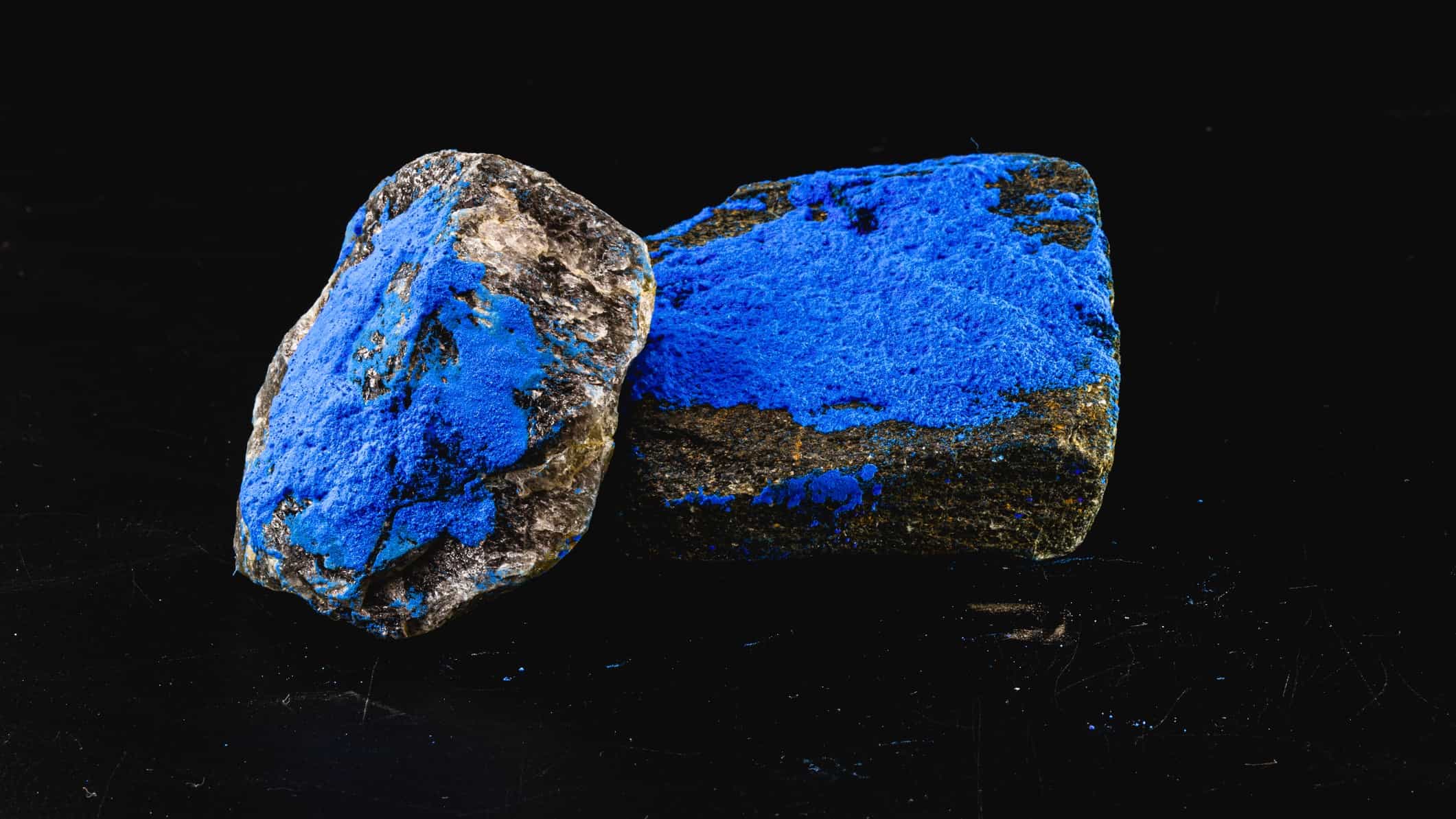
    Picture of cobalt.Picture of cobalt.Picture of cobalt.

    Cobalt is another hot commodity charging towards new record highs this week. As the price of the metallic chemical element has strengthened, so too have the share prices of ASX-listed cobalt shares.

    While it may not have the same notoriety as lithium, cobalt has become a staple of lithium-ion battery chemistries. Its application helps ensure the cathodes in batteries do not overheat, extending the economical life of a typical electric vehicle (EV) battery.

    Let’s take a look at what is playing out in the cobalt world.

    Tailwinds aplenty for commodity

    Unlike some of the other commodities experiencing runaway prices, the surge in the price of cobalt has been playing out over a longer timespan.

    Projections — such as those from McKinsey — suggest that one in four vehicles on the road will be electric by 2030. These expectations have fed into higher cobalt prices as manufacturers look to shore up future supply.

    https://platform.twitter.com/widgets.js

    According to Trading Economics, the cobalt price is hovering around US$82,000 per tonne. This represents an increase of approximately 56% compared to a year ago. Such a substantial increase has also boosted ASX cobalt shares.

    The commodity’s price has been steadily climbing during the past year. However, it appeared to plateau just above US$70,000 per tonne between late December to mid-February.

    Although, Russia’s invasion of Ukraine and subsequent sanctions might be behind the latest uptick.

    According to information published by the US Geological Survey, Russia was the second-largest producer of cobalt in 2021 with 7,600 tonnes.

    In total, Russia’s cobalt supply made up around 4.5% of the world’s production. Though, this is dwarfed by the ~70% contributed by Congo.

    What about cobalt shares on the ASX?

    Cobalt Blue Holdings Ltd (ASX: COB) is one ASX-listed cobalt explorer that has shuffled into the spotlight recently. The company was granted “major project status” by the Federal government last week as Australia looks to play a key role in the supply of the booming commodity.

    Furthermore, Cobalt Blue’s Broken Hill Cobalt Project plans to produce 16,700 tonnes per year. Based on our previously referenced figures, this would slot Australia in at number two of global cobalt producers.

    Another ASX cobalt share riding the price rise is Jervois Global Ltd (ASX: JRV). The billion-dollar cobalt company has enjoyed a 28% jump in its share price since the new year ticked over.

    The post Why is everyone talking about ASX cobalt shares this week? appeared first on The Motley Fool Australia.

    Wondering where you should invest $1,000 right now?

    When investing expert Scott Phillips has a stock tip, it can pay to listen. After all, the flagship Motley Fool Share Advisor newsletter he has run for over ten years has provided thousands of paying members with stock picks that have doubled, tripled or even more.*

    Scott just revealed what he believes could be the five best ASX stocks for investors to buy right now. These stocks are trading at near dirt-cheap prices and Scott thinks they could be great buys right now.

    *Returns as of January 12th 2022

    More reading

    Motley Fool contributor Mitchell Lawler has no position in any of the stocks mentioned. The Motley Fool Australia’s parent company Motley Fool Holdings Inc. has no position in any of the stocks mentioned. The Motley Fool Australia has no position in any of the stocks mentioned. The Motley Fool has a disclosure policy. This article contains general investment advice only (under AFSL 400691). Authorised by Bruce Jackson.

    from The Motley Fool Australia https://ift.tt/ZHvqDhX

  • The ANZ (ASX:ANZ) share price has toppled 16% in 15 years. Have the dividends been worth the pain?

    A woman dressed in red and standing in front of a red background peers thoughtfully at a piggy bank in her hand.

    A woman dressed in red and standing in front of a red background peers thoughtfully at a piggy bank in her hand.A woman dressed in red and standing in front of a red background peers thoughtfully at a piggy bank in her hand.

    The Australia and New Zealand Banking Group Ltd (ASX: ANZ) share price hasn’t exactly amassed a reputation as a strong performer on the ASX boards recently. Despite the prestige it commands as a core member of the ASX 200 big four banks, ANZ shares remain down 7.4% in 2022, and 8.11% over the past 12 months, going off current pricing. The bank is also down close to 18% over the past 5 years.

    But that’s not where this ASX bank’s woes end. ANZ’s last share price peak was way back in 2015. Almost exactly 7 years ago, ANZ shares topped $36 – a level they have never really even gotten close to since.

    But what might be even more surprising for investors is to learn that the ANZ share price, as it stands today, remains down more than 16% from where it was back in October 2007. Yes, between then and now, ANZ shares have lost roughly 16%. Not exactly what investors who bought in back then might have hoped for.

    What exactly has the ANZ share price given back?

    But as we all know, investors usually buy ASX bank shares for the dividends. Any capital growth is just a bonus for many long-term bank shareholders. And ANZ has indeed paid out what have usually been large and fully franked dividends every year since 2007. So have these dividends been worth the capital losses that ANZ investors have had to put up with over the past 15 years?

    So back in mid-October 2007, ANZ was going for approximately $30.93 a share at our reference point. If an investor bought $10,000 worth of ANZ shares back then, they would have received 323 shares, with a few dollars in change left over.

    Today, those 132 shares would be worth roughly $8,385 on current pricing.

    But let’s factor in those dividends.

    But… the dividends!

    So since October 2007, fully franked, including the two payments last year. If an investor held those 323 shares all the way through, they would have received a total of $6,744.24 in dividend income.

    Add that to our remaining principal of $8,385 and we get a total shareholder return of $15,129.24. That’s a return of 51.44% over those almost-15 years. That works out to be an approximate return of… 2.9% per annum. At least it’s in positive territory.

    Now all of those dividends, bar one, have come fully franked. We haven’t factored that in for simplification reasons, but you can probably add a percentage point or two to account for that franking.

    Even so, there have certainly been more than a few ASX shares that have bested that return over the time period in question. Perhaps even an ANZ term deposit. Without even factoring in dividend returns, the Commonwealth Bank of Australia (ASX: CBA) share price has given investors a capital return of around 66% over the same period, for example.

    No doubt ANZ’s investors will be hoping that the next 15 years are a little more fruitful than the past 15 have been.

    At the current ANZ share price, this ASX 200 bank offers a dividend yield of 5.48%

    The post The ANZ (ASX:ANZ) share price has toppled 16% in 15 years. Have the dividends been worth the pain? appeared first on The Motley Fool Australia.

    Should you invest $1,000 in ANZ right now?

    Before you consider ANZ, you’ll want to hear this.

    Motley Fool Investing expert Scott Phillips just revealed what he believes are the 5 best stocks for investors to buy right now… and ANZ wasn’t one of them.

    The online investing service he’s run for over a decade, Motley Fool Share Advisor, has provided thousands of paying members with stock picks that have doubled, tripled or even more.* And right now, Scott thinks there are 5 stocks that are better buys.

    *Returns as of January 13th 2022

    More reading

    Motley Fool contributor Sebastian Bowen has no position in any of the stocks mentioned. The Motley Fool Australia’s parent company Motley Fool Holdings Inc. has no position in any of the stocks mentioned. The Motley Fool Australia has no position in any of the stocks mentioned. The Motley Fool has a disclosure policy. This article contains general investment advice only (under AFSL 400691). Authorised by Bruce Jackson.

    from The Motley Fool Australia https://ift.tt/fzELxlC

  • Here’s why the Carnarvon (ASX:CVN) share price is popping 8% today

    Happy woman miner with her thumb up signalling Wyloo's commitment to back IGO's takeover of Western Areas nickelHappy woman miner with her thumb up signalling Wyloo's commitment to back IGO's takeover of Western Areas nickelHappy woman miner with her thumb up signalling Wyloo's commitment to back IGO's takeover of Western Areas nickel

    The Carnarvon Energy Ltd (ASX: CVN) share price is racing higher today after the company released an operations update.

    At the time of writing, the energy producer’s shares are up 7.72% to 30.7 cents.

    This means that since hitting a 52-week low of 21.3 cents on 24 February, Carnarvon Energy shares have gained 44%.

    Let’s take a closer look at what the company announced before market open.

    How is Carnarvon Energy tracking along?

    The Carnarvon share price is taking off today. This comes after the oil and gas exploration company provided an update on the Pavo-1 well in the WA-438-P exploration permit.

    Located around 160 kilometres north-east of Port Hedland in Western Australia, the offshore well is currently being drilled for hydrocarbons.

    Santos Ltd (ASX: STO) holds a 70% stake in Pavo-1, while Carnarvon Energy retains the remaining 30%.

    Carnarvon Energy advised the Pavo-1 well had drilled to around 3,282 metres measured depth (MD) before suspending operations.

    Management made the decision to temporarily halt drilling due to cyclone activity in the area.

    The company said drilling within the Caley to Crespin reservoirs indicated “porous and permeable reservoir intervals with similarity to the Dorado reservoir”. The latter is one of the largest offshore oil discoveries on the North West Shelf, a region of Western Australia.

    Pavo-1 well will be drilled into the northern accumulation and is targeting a resource of 82 million barrels of liquid hydrocarbons.

    So far, elevated gas readings and increased resistivity were observed between 2,944 metres MD and 3,001 metres MD. The company says this indicates the presence of hydrocarbons.

    Carnarvon Energy stated the rig has now returned to full manning levels and is preparing to recommence drilling and logging operations.

    About the Carnarvon share price

    The Carnarvon share price dropped almost 40% from mid-January until 24 February before rebounding strongly.

    When comparing against this time last year, the company’s shares have gained roughly 14%.

    Carnarvon Energy has a market capitalisation of around $477.44 million, and approximately 1.57 billion shares registered on its books.

    The post Here’s why the Carnarvon (ASX:CVN) share price is popping 8% today appeared first on The Motley Fool Australia.

    Should you invest $1,000 in Carnarvon Energy right now?

    Before you consider Carnarvon Energy, you’ll want to hear this.

    Motley Fool Investing expert Scott Phillips just revealed what he believes are the 5 best stocks for investors to buy right now… and Carnarvon Energy wasn’t one of them.

    The online investing service he’s run for over a decade, Motley Fool Share Advisor, has provided thousands of paying members with stock picks that have doubled, tripled or even more.* And right now, Scott thinks there are 5 stocks that are better buys.

    *Returns as of January 13th 2022

    More reading

    Motley Fool contributor Aaron Teboneras has no position in any of the stocks mentioned. The Motley Fool Australia’s parent company Motley Fool Holdings Inc. has no position in any of the stocks mentioned. The Motley Fool Australia has no position in any of the stocks mentioned. The Motley Fool has a disclosure policy. This article contains general investment advice only (under AFSL 400691). Authorised by Bruce Jackson.

    from The Motley Fool Australia https://ift.tt/7nusX42

  • Brokers name 3 ASX shares to buy today

    ASX 200 shares to buy A clockface with the word 'Time to Buy'

    ASX 200 shares to buy A clockface with the word 'Time to Buy'ASX 200 shares to buy A clockface with the word 'Time to Buy'

    It has been another busy week for Australia’s top brokers. This has led to the release of a large number of broker notes.

    Three broker buy ratings that you might want to know more about are summarised below. Here’s why brokers think these ASX shares are in the buy zone:

    Australia and New Zealand Banking GrpLtd (ASX: ANZ)

    According to a note out of Macquarie, its analysts have retained their outperform rating and $29.50 price target on this banking giant’s shares. The broker has been looking at the sector and believes that ANZ is one of the best-placed banks to experience margin benefits this year. In light of this, it holds firm with its positive view on the company’s shares. The ANZ share price is trading at $25.82 on Friday.

    Baby Bunting Group Ltd (ASX: BBN)

    A note out of Morgans reveals that its analysts have retained their add rating and $6.00 price target on this baby product retailer’s shares. Morgans has been looking at the retail sector and named Baby Bunting as one of its top three picks. It was impressed with Baby Bunting’s performance during the first half and appears confident on the future. Morgans highlights that it likes the retailer due to its preference for shares that are able to deliver growth independent of the likely waning of consumer sentiment and spending. The Baby Bunting share price is fetching $4.61 today.

    Megaport Ltd (ASX: MP1)

    Analysts at Citi have retained their buy rating and $20.20 price target on this network-as-a-service company’s shares. According to the note, the broker isn’t concerned by news that data centre operator Digital Realty is launching its own networking platform. Citi highlights the new platform is expected to be open, which implies Megaport could still be a service provider. Furthermore, it believes Megaport’s global network and cloud on-ramps outside of Digital Realty’s physical locations are still valuable to a customer. As a result, it only sees a low probability of existing customers churning. The Megaport share price is trading at $13.18 on Friday.

    The post Brokers name 3 ASX shares to buy today appeared first on The Motley Fool Australia.

    Wondering where you should invest $1,000 right now?

    When investing expert Scott Phillips has a stock tip, it can pay to listen. After all, the flagship Motley Fool Share Advisor newsletter he has run for over ten years has provided thousands of paying members with stock picks that have doubled, tripled or even more.*

    Scott just revealed what he believes could be the five best ASX stocks for investors to buy right now. These stocks are trading at near dirt-cheap prices and Scott thinks they could be great buys right now.

    *Returns as of January 12th 2022

    More reading

    Motley Fool contributor James Mickleboro has no position in any of the stocks mentioned. The Motley Fool Australia’s parent company Motley Fool Holdings Inc. owns and has recommended MEGAPORT FPO. The Motley Fool Australia has recommended Baby Bunting and MEGAPORT FPO. The Motley Fool has a disclosure policy. This article contains general investment advice only (under AFSL 400691). Authorised by Bruce Jackson.

    from The Motley Fool Australia https://ift.tt/V0rBRA1

  • Up 414% in a year, why is the Core Lithium (ASX:CXO) share price leaping 11% today?

    A businessman jumps outdoors in sky between two rocks.A businessman jumps outdoors in sky between two rocks.A businessman jumps outdoors in sky between two rocks.

    The Core Lithium Ltd (ASX: CXO) share price is surging today, up 11.3% at the time of writing.

    Shares in the ASX lithium explorer closed yesterday at 97 cents and are currently trading for $1.08.

    The Core Lithium share price gains come despite the broader All Ordinaries Index (ASX: XAO) dipping into the red, currently down 0.6% so far today.

    Core Lithium released its results for the half year ending 31 December (1H FY22) just before market close yesterday. Below we look at some of the highlights from that report.

    What results did the ASX lithium explorer report?

    The Core Lithium share price is charging higher despite a period of mounting losses over the half year.

    That’s likely because Core is transitioning from an explorer to a lithium producer. To that end, during the half year it transitioned to “larger premises to cater for a growing workforce and corporate demands on the business”.

    With expenses up, the company reported a consolidated net loss of $3.28 million, up from a net loss of $915,000 in the prior corresponding half year.

    Core Lithium’s basic earnings per share came in at a loss of 0.22 cents per share (cps), compared to a loss of 0.9 cps in 1H FY21.

    There was no dividend paid for the half year, in line with the prior corresponding period.

    The company ended the half with a strong balance sheet, holding cash and cash equivalents of $157 million as at 31 December. That was up from $38 million on 30 June. Core attributed this to receiving $143 million (net of fees) from its capital raisings in August.

    What’s next?

    The Core Lithium share price has been a strong performer, with investors eyeing the pending completion of its Finniss Lithium Project, located near Darwin Port in the Northern Territory.

    According to the company, this will be “one of Australia’s most capital efficient and lowest cost hard rock spodumene lithium projects”.

    Lithium is a key element in most batteries needed to power the fast-growing EV market, and prices remain at historic highs.

    The Core Lithium share price could be getting a boost as the company reiterated its plans to produce its first lithium concentrate late in 2022:

    Core’s entry to market as a lithium producer is well timed to capitalise on the growing demand for high-quality spodumene concentrate…

    Finniss is now fully funded and fully permitted, approximately 80% of Stage 1 for the first four years is now under binding offtake agreements, construction at Finniss has commenced and the company is on track for production of first lithium concentrate in Q4 of 2022.

    Core Lithium share price snapshot

    The Core Lithium share price has surged 414% since this time last year, leaving the 6% one-year gains posted by the All Ords truly in the dust.

    Core Lithium shares have continued to outperform this year, up 71% since the opening bell on 4 January.

    The post Up 414% in a year, why is the Core Lithium (ASX:CXO) share price leaping 11% today? appeared first on The Motley Fool Australia.

    Should you invest $1,000 in Core Lithium right now?

    Before you consider Core Lithium, you’ll want to hear this.

    Motley Fool Investing expert Scott Phillips just revealed what he believes are the 5 best stocks for investors to buy right now… and Core Lithium wasn’t one of them.

    The online investing service he’s run for over a decade, Motley Fool Share Advisor, has provided thousands of paying members with stock picks that have doubled, tripled or even more.* And right now, Scott thinks there are 5 stocks that are better buys.

    *Returns as of January 13th 2022

    More reading

    The Motley Fool Australia’s parent company Motley Fool Holdings Inc. has no position in any of the stocks mentioned. The Motley Fool Australia has no position in any of the stocks mentioned. The Motley Fool has a disclosure policy. This article contains general investment advice only (under AFSL 400691). Authorised by Bruce Jackson.

    from The Motley Fool Australia https://ift.tt/rlb1wvm

  • Why Core Lithium, Nickel Mines, SG Fleet, and Whitehaven Coal are pushing higher

    Green arrow with green stock prices symbolising a rising share price.Green arrow with green stock prices symbolising a rising share price.

    Green arrow with green stock prices symbolising a rising share price.In afternoon trade, the S&P/ASX 200 Index (ASX: XJO) is on course to end the week deep in the red. At the time of writing, the benchmark index is down 0.6% to 7,089.1 points.

    Four ASX shares that are not letting that hold them back are listed below. Here’s why they are pushing higher:

    Core Lithium Ltd (ASX: CXO)

    The Core Lithium share price has jumped 10% to $1.07. A number of lithium shares are among the best performers on the ASX today. This could potentially be due to comments out of EV maker Rivian. Overnight, it spoke about the difficulties in sourcing raw materials and revealed that it will be following Tesla’s lead by switching to lithium iron phosphate (LFP) chemistry for its standard-level vehicles.

    Nickel Mines Ltd (ASX: NIC)

    The Nickel Mines share price is up 2.5% to $1.25. This morning the nickel producer revealed that it has cancelled its share purchase plan at the last minute after its shares sank well below the impending issue price of $1.37. This could mean that some shareholders that were taking part in the share purchase plan have been buying shares on-market today instead.

    SG Fleet Group Ltd (ASX: SGF)

    The SG Fleet share price is up 3% to $2.48. This morning the team at Morgan Stanley retained its overweight rating and $3.40 price target on the company’s shares. It believes recent share price weakness has created a buying opportunity for investors. Especially given its impressive performance during the first half.

    Whitehaven Coal Ltd (ASX: WHC)

    The Whitehaven Coal share price is up 3% to $4.07. Yesterday Whitehaven Coal was named as one of three coal miners that Goldman Sachs rates as buys at present. Although the broker expects coal prices to pullback meaningfully from current levels, it has still made a notable upgrade to its price forecasts for the year. Goldman has a buy rating and $4.70 price target on its shares.

    The post Why Core Lithium, Nickel Mines, SG Fleet, and Whitehaven Coal are pushing higher appeared first on The Motley Fool Australia.

    Wondering where you should invest $1,000 right now?

    When investing expert Scott Phillips has a stock tip, it can pay to listen. After all, the flagship Motley Fool Share Advisor newsletter he has run for over ten years has provided thousands of paying members with stock picks that have doubled, tripled or even more.*

    Scott just revealed what he believes could be the five best ASX stocks for investors to buy right now. These stocks are trading at near dirt-cheap prices and Scott thinks they could be great buys right now.

    *Returns as of January 12th 2022

    More reading

    Motley Fool contributor James Mickleboro has no position in any of the stocks mentioned. The Motley Fool Australia’s parent company Motley Fool Holdings Inc. has no position in any of the stocks mentioned. The Motley Fool Australia has no position in any of the stocks mentioned. The Motley Fool has a disclosure policy. This article contains general investment advice only (under AFSL 400691). Authorised by Bruce Jackson.

    from The Motley Fool Australia https://ift.tt/cwWatgR

  • Shiba Inu vs. Dogecoin: Which pupcoin’s more bite than bark? 

    This article was originally published on Fool.com. All figures quoted in US dollars unless otherwise stated.

    two cute shiba inu puppies are in a basket with one playfulling biting at the side of the other's face.

    This article was originally published on Fool.com. All figures quoted in US dollars unless otherwise stated.

    Dogecoin (CRYPTO: DOGE) and Shiba Inu (CRYPTO: SHIB) were two of the best performing altcoins in 2021. But aside from having canine-derived names, the two coins are very different – and investors hoping to gain from them need to look at the value they offer beyond their price tags.

    Dogecoin: Like Bitcoin, but different

    Like Bitcoin (CRYPTO: BTC), DOGE is a decentralized currency, meaning that no central banking authority controls it. A network of miners earn tokens for “solving” blocks, racing to be the first to complete the tricky mathematical calculations that ensure the block’s accuracy. After the other computers on the network verify the solution, the block is added to the blockchain – a process known as proof of work. 

    However, Bitcoin and Dogecoin have several differences, starting with scarcity. Simply put, there is an infinite supply of Dogecoin, making it an inflationary currency; the more Dogecoins get minted, the less each existing coin is worth. By contrast, the total supply of Bitcoin is capped at 21 million tokens, of which approximately 19 million have already been mined. Bitcoin advocates argue that this scarcity will make Bitcoin a store of value. 

    The second difference lies in the decentralization that gives crypto its security. Bitcoin has over 14,000 viewable nodes distributed across 97 countries. This makes it virtually impossible for unsavory actors to seize more than half the network and get rich planting false trades in the blockchain. Dogecoin has less than 1,400 nodes as of this writing; according to figures from April 2021, just 98 people held nearly two-thirds of the coins’ total supply. This makes DOGE far more susceptible to wild price fluctuations. 

    Crypto enthusiasts will say that these criticisms miss the point. The Dogecoin community has plans to make Dogecoin a widely used peer-to-peer payment system. That’s a more straightforward but more challenging way to garner mass adoption. Over 2,000 companies, including Lowe’s and Ulta Beauty, now accept Dogecoin as payment. This doesn’t mean you’ll be able to use Dogecoin to buy your groceries anytime soon, but it’s enough of an incentive to keep the retail traders that make up the vast majority of the Dogecoin community interested. 

    And the Dogecoin Foundation is collaborating with Ethereum co-founder Vitalik Buterin to create a unique staking mechanism as Dogecoin moves to a proof-of-stake (PoS) protocol. This approach, which uses far less energy and computing power to verify transactions, would remove some of the inflationary concerns around Dogecoin, while still allowing it to be a viable medium of exchange. 

    Shiba Inu wants it all

    Shiba Inu, by contrast, is already based on the Ethereum network. Ethereum uses blockchain technology to enable smart contracts and decentralized applications (dApps) that are not subject to downtime, fraud, control, or interference from a third party. 

    SHIB has only been in existence for a year, but its passionate community, the SHIB army, is helping drive adoption of the altcoin. That enthusiasm undoubtedly benefited many early adopters of Shiba Inu. However, it raises a fair question: How far can a passionate community take an altcoin? 

    Thus far, Shiba Inu doesn’t actually do much in the real world, particularly for a coin that has a $13 billion market cap as of this writing. However, the SHIB network is working on numerous projects such as ShibaSwap, which lets buyers trade SHIB for other cryptocurrencies.

    And because the coin is based on the Ethereum network, Shiba Inu is also making inroads in the realm of DeFi projects, as well as the growing non-fungible token (NFT) market. The coin is also likely to benefit from Shiberse, which is a play on the nascent metaverse and the expected launch of level 2 blockchain Shibarium, an upgrade to the existing SHIB blockchain that will, in theory, allow the network to process transactions faster.

    Atop all this, Shiba Inu is also trying to be a way to buy things, similar to Dogecoin. In fact, many of the same companies that accept DOGE as payment also take SHIB. 

    As Shiba Inu continued to reach record highs in 2021, the SHIB army used these examples and more as “proof” of the coin’s future utility. These projects could indeed promote Shiba Inu to a broader audience. However, the recent sell-off in Shiba Inu suggests that the currency will have to match those high expectations with concrete action. 

    Will either coin make the cut?

    If the “crypto winter” continues, neither coin may survive. Neither has enough utility compared to Bitcoin and/or Ethereum. As a crypto skeptic, I won’t be investing in either of the pupcoins. And you should be advised that any investment in cryptocurrency is likely to remain volatile and is only for risk-tolerant investors. 

    But if these coins do avoid a crash, Shiba Inu’s optionality may give it at least slightly better odds of long-term survival. Just like a company that has multiple avenues for generating revenue, SHIB has many more opportunities to prove useful in the real world, which will, in theory, make the coin more valuable. DOGE has had a nice run for a coin that literally started as a joke, but it still looks like a one-trick pony. 

    This article was originally published on Fool.com. All figures quoted in US dollars unless otherwise stated.

    The post Shiba Inu vs. Dogecoin: Which pupcoin’s more bite than bark?  appeared first on The Motley Fool Australia.

    Wondering where you should invest $1,000 right now?

    When investing expert Scott Phillips has a stock tip, it can pay to listen. After all, the flagship Motley Fool Share Advisor newsletter he has run for over ten years has provided thousands of paying members with stock picks that have doubled, tripled or even more.*

    Scott just revealed what he believes could be the five best ASX stocks for investors to buy right now. These stocks are trading at near dirt-cheap prices and Scott thinks they could be great buys right now.

    *Returns as of January 12th 2022

    More reading

    Fool contributor Chris Markoch holds no financial position in any investments mentioned above. The Motley Fool Australia’s parent company Motley Fool Holdings Inc. owns and has recommended Ulta Beauty, Bitcoin and Ethereum. The Motley Fool Australia’s parent company Motley Fool Holdings Inc. recommends Lowe’s. The Motley Fool Australia owns and has recommended Bitcoin and Ethereum. The Motley Fool has a disclosure policy. This article contains general investment advice only (under AFSL 400691). Authorised by Bruce Jackson. 

    This article was originally published on Fool.com. All figures quoted in US dollars unless otherwise stated.

    from The Motley Fool Australia https://ift.tt/H9Wq2KY