• Nuix (ASX:NXL) share price: this fund manager still sees a ‘big opportunity’

    ASX value buy share price

    It has been a rocky road since Nuix Ltd (ASX: NXL) commenced its journey on the ASX… and not the chocolatey, delicious kind. After listing in December last year, the Nuix share price has suffered a dramatic 70% fall.

    At the time of writing, shares in the intelligence software provider are up 0.80% to $2.52.

    Despite the devastating share price destruction, one asset manager is excited by the embattled company’s future potential.

    Lower Nuix share price increases expected return

    While other fund managers have been jumping ship, ECP Asset Management is delving deeper. Dr Manny Pohl, who originally founded Hyperion Asset Management, is now Chairman and Chief Investment Officer of ECP.

    According to a notice on 9 July 2021, ECP has become a substantial shareholder in Nuix. The asset manager is now the third-largest shareholder with $37.5 million worth of skin in the game.

    In an interview with The Sydney Morning Herald, ECP Director Jared Pohl revealed the rationale behind the continued strong conviction.

    While the issues ventilated in the press are not ideal, and the company needs to work through those issues systematically, nothing yet suggests that our thesis is broken.

    Adding to this, Mr Pohl explained that the focus of ECP is ensuring the outlook for the core business remains intact. The importance rests on Nuix demonstrating an ability to deliver on expectations moving forward.

    All else being equal, as the share price has declined, our expected return has increased and so we believe that we are able to buy the company now at a much more attractive price than we were able to when it listed.

    Furthermore, the fund manager drew similarities between Nuix and ASX tech darling, Altium Limited (ASX: ALU). Specifically, Pohl described the difficulty for both in shifting from module-based subscription revenue to consumption-based contracts.

    Shareholder activity

    There has been a huge amount of buy and sell activity from major shareholders and insiders of Nuix shares in the past 3 months. Interestingly, the buy-side has outweighed the sell-side. Nearly 110 million Nuix shares were purchased, while just over 86 million were sold.

    Despite this, the Nuix share price has continued to slip ~51% between 16 April 2021 and today. At the time of writing, the company’s market capitalisation is $793.3 million.

    The post Nuix (ASX:NXL) share price: this fund manager still sees a ‘big opportunity’ appeared first on The Motley Fool Australia.

    Should you invest $1,000 in Nuix right now?

    Before you consider Nuix, you’ll want to hear this.

    Motley Fool Investing expert Scott Phillips just revealed what he believes are the 5 best stocks for investors to buy right now… and Nuix wasn’t one of them.

    The online investing service he’s run for nearly a decade, Motley Fool Share Advisor, has provided thousands of paying members with stock picks that have doubled, tripled or even more.* And right now, Scott thinks there are 5 stocks that are better buys.

    *Returns as of May 24th 2021

    More reading

    Motley Fool contributor Mitchell Lawler has no position in any of the stocks mentioned. The Motley Fool Australia’s parent company Motley Fool Holdings Inc. owns shares of and has recommended Altium. The Motley Fool Australia’s parent company Motley Fool Holdings Inc. has recommended Nuix Pty Ltd. The Motley Fool Australia owns shares of and has recommended Altium. The Motley Fool has a disclosure policy. This article contains general investment advice only (under AFSL 400691). Authorised by Bruce Jackson.

    from The Motley Fool Australia https://ift.tt/3hIzSZv

  • The dark side of the WFH revolution

    Investor looking dismayed at computer screen with falling asx share price

    I wrote on Tuesday about why, as an investor, I’d bet on companies that allow flexible working, including working from home.

    Today, though, I wanted to share some thoughts about what the trend might mean for us as employees. And, by extension, investors.

    And, while I’m generally an optimistic, upbeat bloke, this one comes as a warning.

    See many of the world’s best and largest businesses are allowing staff to work from home, which is good for the companies and good for their staff.

    Some have literally said ‘you’ll never be forced to come to the office again’ while others like our own Atlassian have said they imagine staff getting together maybe four times a year, not to work, but to build connections that are harder to forge online.

    Those are all to the good.

    And, as a result, companies are retooling, literally and metaphorically, to make ‘virtual first’ their modus operandi.

    Again, that’s to the good.

    Making sure that wherever you are, you have equal access and opportunity to be noticed, rewarded, offered new roles and work collaboratively, is going to be the sign of a great twenty-first century business. And, in general, those companies will get the best people, because great people will gravitate to the best cultures and the best (virtual) workplaces.

    But here’s where our story takes a slightly darker turn, at least for some of us.

    In the euphemism-rich world of management-speak, some companies are making ‘salary adjustments’ for those who move to ‘more affordable communities’.

    Or, in plain English, they’re going to try to make you take a pay cut if you don’t live near head office.

    The rationale, of course, makes sense at first blush: if you don’t have to pay for expensive housing (and other costs), then you don’t need to be paid as much.

    But when you look a second time, that’s errant nonsense. When was the last time a company voluntarily offered you more because they were worried about your ability to pay the rent?

    You reckon companies pay more to buy widgets from a CBD manufacturer rather than a rural one just because the former has higher costs?

    No, me either.

    They pay a market rate for the product, and they pay the market rate for their employees, too.

    And every manager is — explicitly or implicitly — hiring someone based on the return on investment they offer. If a highly paid software engineer produces more value than she costs, she’s hired.

    Of course most companies would pay less — for both widgets and employees — if they could, but if an employee is worth hiring on a ‘big city’ wage, then there’s no justification to cut it if they go bush, just as there’s no justification to pay someone more if they voluntarily moved from the regions to the city.

    Of course, that doesn’t mean companies won’t try it on!

    That’s only the opening skirmish, though. And, in all likelihood, only a sideshow to the main game.

    Let’s do a thought experiment.

    Before 2020, the vast majority of businesses were set up just the way businesses had been for the past two centuries.

    Everyone worked in close proximity to each other, usually in a single head office (with some state or regional offices, as required). Recruitment was done locally, originally with an ad in the paper, and then online, but still with a specified ‘location’.

    Which made sense. Offices were full of paper. Meetings were held in person. Customers and suppliers were often located in close proximity. Email was — is — a thing, but most of the conversations were in person.

    And if you happened to be the only one or two people dialling into a meeting in which the other 10 were in a single room… well, you know how useful that was. The lines were dodgy, the microphones and speakers sounded like Edison’s prototypes, and trying to work out what was being said, to whom, in between the on-location jokes and whispers was a Herculean task.

    Now, let’s fast forward.

    Shopify Inc (NYSE: SHOP), the webstore software business (I own shares, for the record) has now gone completely the other way. Even if you’re in the same office, you are told to dial into your Zoom Video Communications Inc (NASDAQ: ZM) meeting from your own PC — ‘one person in every square’ — to make sure the meetings are both equitable and productive.

    Slack Technologies Inc (NYSE: WORK), Teams and other messaging apps are a primary means of group communication.

    Collaboration, across cities, countries, timezones and continents, is becoming the norm.

    In many cases, it no longer matters how close or far apart you are. Distance is becoming all-but irrelevant for many, many professions and companies.

    So where’s the downside?

    Well, let’s play this out.

    Let’s say that a Melbourne-based creative agency goes full-digital. Its staff love it. Customers and suppliers get used to it. It becomes the way things are done.

    Then, the company needs a new copywriter.

    Instead of putting an ad in The Age, or on Seek, using ‘Location: Melbourne’, it decides to simply look for the best person… anywhere.

    Maybe they hire a gun advertising exec from New York or London. That’s a job lost to the locals.

    But play it out a little further.

    Instead of offering a $100,000 salary — the going rate in Melbourne — the company decides there might be equally capable people in Auckland, Hanoi, Beijing or Buenos Aires.

    So they put out a global ad, offering $50,000 for the job — well in excess of the going rate in some of those cities — and fill the role.

    Now, maybe you’re thinking a South American native might not know the cultural nuance well enough to write ad copy for Australia. Or that employment law here or there might put a spanner in the works.

    You might even be right — I deliberately used an example that had those wrinkles.

    But you only need one person — say an Aussie ex-pat that went to Vietnam with a partner — to solve the cultural challenge. And you can bet the workplace laws will change quickly to keep pace with the reality.

    It is, I hope you’ll see, the next phase of a phenomenon that’s been playing out for years — the standard of living in the developed world has increased significantly thanks to the offshoring that’s pushed prices down (or at the very least, limited their rise) here at home:

    The computer that’s halved in price while doubling in capacity.

    The $4 no-brand t-shirts in K-Mart that have supplanted the $40 Billabong ones.

    The car that costs the same today as it did in 1998, despite being safer, handling better, having a list of standard inclusions that weren’t even options back then, and a fuel economy that doubles the range of a single tank of juice.

    Yes, that’s technology, in part. But it’s also labour costs.

    The same labour costs that have impacted blue-collar jobs for the past 30 years, and might now start to press in on white-collar ones.

    I’m not saying it’s welcome. And, frankly, as an investor, my industry is in the gun as much as any. I’m just saying that, in time, we’ll see multinational workforces even in local-only businesses.

    When a job can only be done in Melbourne, you’re recruiting from a small pool of qualified, experienced professionals, and in a market where your competitors have already set the going rate of pay.

    But when it can be done anywhere? That’s when wage arbitrage comes into play. And high-wage economies like Australia potentially have the most to lose…

    Now, I take no joy in making that case. And the impact for investors is far from clear.

    In general, though, the future is likely to continue to benefit the owners of capital (shareholders among them), and it’ll be important to continue to think global — both in terms of the companies you own, but also the potential competitors.

    Culture will matter. So will a company’s brand — both for employees and customers. Innovation will continue to win. And a focus on costs, particularly if competitors lower theirs through offshoring, will be important.

    And, dare I say it, if you’re in an industry that’s likely to be impacted, consider this a clarion call to save more and invest more — becoming financially independent is the best way I know to wrest back control of your financial future, and protect yourself from changes that may be outside all of our control.

    Fool on!

    The post The dark side of the WFH revolution appeared first on The Motley Fool Australia.

    Wondering where you should invest $1,000 right now?

    When investing expert Scott Phillips has a stock tip, it can pay to listen. After all, the flagship Motley Fool Share Advisor newsletter he has run for more than eight years has provided thousands of paying members with stock picks that have doubled, tripled or even more.*

    Scott just revealed what he believes could be the five best ASX stocks for investors to buy right now. These stocks are trading at near dirt-cheap prices and Scott thinks they could be great buys right now.

    *Returns as of May 24th 2021

    More reading

    Motley Fool contributor Scott Phillips owns shares of Shopify. The Motley Fool Australia’s parent company Motley Fool Holdings Inc. owns shares of and has recommended Shopify, Slack Technologies, and Zoom Video Communications. The Motley Fool Australia’s parent company Motley Fool Holdings Inc. has recommended the following options: long January 2023 $1,140 calls on Shopify and short January 2023 $1,160 calls on Shopify. The Motley Fool Australia has recommended Slack Technologies and Zoom Video Communications. The Motley Fool has a disclosure policy. This article contains general investment advice only (under AFSL 400691). Authorised by Bruce Jackson.

    from The Motley Fool Australia https://ift.tt/3epV2JR

  • This fund manager is considering selling down its Zip (ASX:Z1P) shares. Here’s why

    man hitting digital screen saying buy now pay later

    Things have taken a sharp u-turn for Zip Co Ltd (ASX: Z1P) shares this week, after a 20% rally earlier this month.

    Wednesday was a sea of red for buy now, pay later (BNPL) shares after news broke that Apple might be working on a new BNPL product.

    On the same day, PayPal revealed its BNPL service will not charge consumers a late payment fee.

    Ever since, Zip shares have been on a rollercoaster ride, tumbling 16.3% in the last three sessions to $6.88.

    As such, Shaw and Partners portfolio manager and Market Matters (MM) author James Gerrish is considering reducing exposure to Zip shares.

    BNPL shares yet to stage a rebound

    BNPL shares have struggled to rebound following Wednesday’s news.

    “News that the current main US player Affirm (AFRM US) has now fallen more than 12% over the last two days, with a lack of bounce overnight, is a poor sign for the Australian players this morning”, said Gerrish.

    As such, Zip shares tumbled 10.95% on Wednesday to $7.32 before losing another 5.60% to $6.91 on Thursday.

    While selling has receded on Friday, the Zip share price is still down 0.58% to $6.87 at the time of writing.

    What’s next for Zip shares?

    Zip has been quiet on the announcement front, despite expectations it would report its quarterly update this week.

    In response to Zip’s upcoming results, Gerrish: “When it does happen, it should be a strong one in MM’s view but this could easily be overshadowed by the Apple news over the coming weeks/months.

    “Simply it feels likely that the short-term sentiment towards the stock which we still rate as the best value in the sector is going to keep a lid on gains through the $8-9 region, making the risk/reward relatively average for now.”

    Any positive takeaways?

    Perhaps one positive takeaway from two tech behemoths entering the BNPL scene is that “it confirms to us that this will be a legitimate sector for years to come”, according to Gerrish.

    Despite more legitimacy for BNPL as a business model and sector, he also commented that “margins are likely to be significantly squeezed as new players go in search of customers before they focus on retention”.

    The post This fund manager is considering selling down its Zip (ASX:Z1P) shares. Here’s why appeared first on The Motley Fool Australia.

    Should you invest $1,000 in Zip right now?

    Before you consider Zip, you’ll want to hear this.

    Motley Fool Investing expert Scott Phillips just revealed what he believes are the 5 best stocks for investors to buy right now… and Zip wasn’t one of them.

    The online investing service he’s run for nearly a decade, Motley Fool Share Advisor, has provided thousands of paying members with stock picks that have doubled, tripled or even more.* And right now, Scott thinks there are 5 stocks that are better buys.

    *Returns as of May 24th 2021

    More reading

    Motley Fool contributor Kerry Sun has no position in any of the stocks mentioned. The Motley Fool Australia’s parent company Motley Fool Holdings Inc. owns shares of and has recommended Affirm Holdings, Inc. and ZIPCOLTD FPO. The Motley Fool Australia has no position in any of the stocks mentioned. The Motley Fool has a disclosure policy. This article contains general investment advice only (under AFSL 400691). Authorised by Bruce Jackson.

    from The Motley Fool Australia https://ift.tt/3enYWTQ

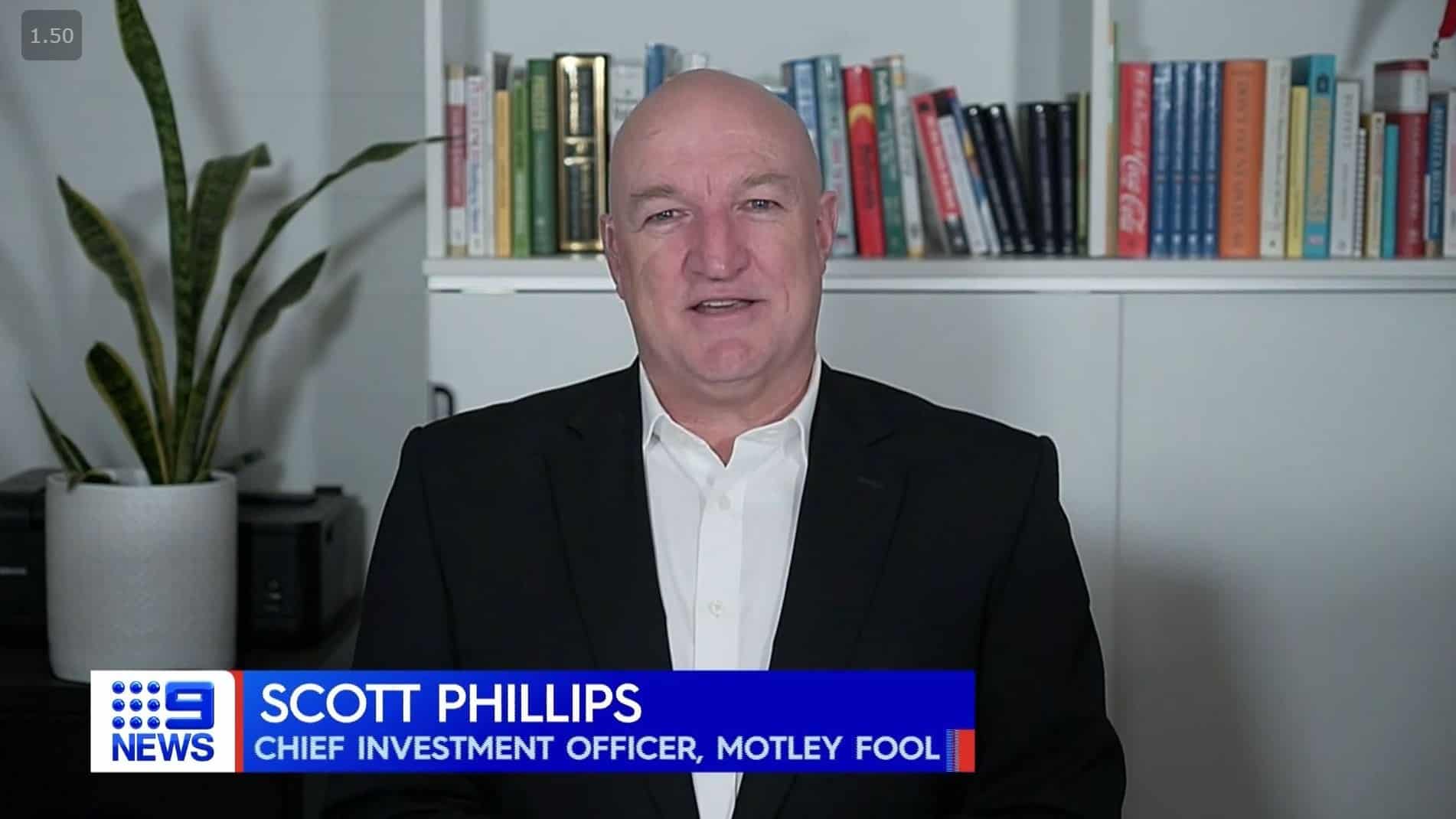
  • A jump in the ARB (ASX:ARB) share price, but no joy for the Woodside (ASX: WPL) share price. Scott Phillips on Nine’s Late News

    Scott Phillips on Nine Late News Thursday 15 July 2021.

    Motley Fool Australia Chief Investment Officer Scott Phillips joined Nine’s Late News on Thursday night to discuss the jump in the ARB (ASX: ARB) share price on the back of strong revenue growth, plus a rise in revenue that didn’t help the Woodside (ASX: WPL) share price, Seven (ASX: SGH) taking control of Boral (ASX: BLD), and strong — if slower — growth in China.

    The post A jump in the ARB (ASX:ARB) share price, but no joy for the Woodside (ASX: WPL) share price. Scott Phillips on Nine’s Late News appeared first on The Motley Fool Australia.

    Wondering where you should invest $1,000 right now?

    When investing expert Scott Phillips has a stock tip, it can pay to listen. After all, the flagship Motley Fool Share Advisor newsletter he has run for more than eight years has provided thousands of paying members with stock picks that have doubled, tripled or even more.*

    Scott just revealed what he believes could be the five best ASX stocks for investors to buy right now. These stocks are trading at near dirt-cheap prices and Scott thinks they could be great buys right now.

    *Returns as of May 24th 2021

    More reading

    Motley Fool contributor Scott Phillips owns shares of ARB Corporation Limited. The Motley Fool Australia’s parent company Motley Fool Holdings Inc. has no position in any of the stocks mentioned. The Motley Fool Australia has recommended ARB Corporation Limited. The Motley Fool has a disclosure policy. This article contains general investment advice only (under AFSL 400691). Authorised by Bruce Jackson.

    from The Motley Fool Australia https://ift.tt/3z1Ixfn

  • Evolution (ASX:EVN) share price slides 5% despite revealing major growth plans

    downward red arrow with business man sliding down it signifying falling asx share price

    The Evolution Mining Ltd (ASX: EVN) share price has tumbled lower this morning, down 4.85% to $4.710.

    The weakness in the Evolution share price follows major updates from the company including investments into growth initiatives, production results and an updated 3 year outlook.

    Here’s what you need to know.

    What’s driving the Evolution share price lower?

    FY21 operating results

    FY21 production came in at 681,000 ounces at an all-in sustaining cost (AISC) of A$1,215 per ounce.

    Production figures were within the company’s original guidance of 670,000 to 730,000 ounces and 2% below the bottom end of its revised guidance of 695,000 to 710,000 ounces announced on April 2021.

    AISC beat the company’s original guidance of A$1,240 to A$1,300 per ounce and is in line with the revised guidance of A$1,190 to A$1,220 per ounce.

    Cowal underground approval

    According to Evolution’s half-year results, the company experienced a 74% year-on-year increase in mineral resources and a 49% increase in ore reserves thanks to its prospective Red Lake and Cowal projects.

    On Friday, Evolution is pleased to advise that the Board has approved the accelerated development of the Cowal underground mine.

    To bring the project to commercial production, $380 million will be invested during FY22 and FY23, alongside an additional $240 million for infrastructure and $140 million for initial mine development costs.

    The company is targeting production to ramp up to 350,000 ounces per annum over the next three years.

    Red Lake growth update

    In Evolution’s March quarter update, Red Lake production came in at 35,810 ounces.

    According to today’s announcement, the company plans to lift gold production at Red lake to 350,000 ounces per annum by FY26.

    Evolution advised that the “Stage One” transformation to produce 200,000 ounces per annum at an AISC of less than US$1,000 per ounce is on track.

    Three-year outlook

    Evolution updated its three-year outlook as a result of Cowal and Red Lake growth prospects.

    The company said that production is “planned to increase by at least 30% to over 900,000 ounces during the three-year period to FY24”.

    From an AISC perspective, it said that costs are “expected to remain relatively stable over the three-year period as the growth strategy continues to focus on producing high margin ounces.”

    Evolution share price snapshot

    The Evolution share price has slipped 6.5% year-to-date despite the company’s plans to drive growth over the medium to long term.

    Its underperformance is likely in part due to lower gold prices this year, falling from US$1,898 to US$1,830 at the time of writing.

    The post Evolution (ASX:EVN) share price slides 5% despite revealing major growth plans appeared first on The Motley Fool Australia.

    Should you invest $1,000 in Evolution Mining right now?

    Before you consider Evolution Mining, you’ll want to hear this.

    Motley Fool Investing expert Scott Phillips just revealed what he believes are the 5 best stocks for investors to buy right now… and Evolution Mining wasn’t one of them.

    The online investing service he’s run for nearly a decade, Motley Fool Share Advisor, has provided thousands of paying members with stock picks that have doubled, tripled or even more.* And right now, Scott thinks there are 5 stocks that are better buys.

    *Returns as of May 24th 2021

    More reading

    Motley Fool contributor Kerry Sun has no position in any of the stocks mentioned. The Motley Fool Australia’s parent company Motley Fool Holdings Inc. has no position in any of the stocks mentioned. The Motley Fool Australia has no position in any of the stocks mentioned. The Motley Fool has a disclosure policy. This article contains general investment advice only (under AFSL 400691). Authorised by Bruce Jackson.

    from The Motley Fool Australia https://ift.tt/3rdwZTA

  • Why the Life360 (ASX:360) share price hit a record and could go higher

    boy in celebration pose with pointed fingers raised high

    The Life360 Inc (ASX: 360) share price defied weakness in the tech sector to rise to a record high this morning.

    The family-focused app maker’s shares rose 4% to $8.15.

    When the Life360 share price reached that level, it meant it was up almost 110% since the start of the year.

    Why is the Life360 share price rising?

    Investors have been buying the company’s shares this morning following the release of a bullish broker note out of Bell Potter.

    According to the note, the broker has retained its buy rating and lifted its price target on the company’s shares by 19% to $9.25.

    Based on the latest Life360 share price, this implies potential upside of 13.5% over the next 12 months.

    What did Bell Potter say?

    Bell Potter notes that San Francisco-based Nextdoor is due to merge with a special purpose acquisition company (SPAC) called Khosla Ventures Acquisition Company II.

    This deal values Nextdoor at US$4.3 billion, which represents an enterprise value to revenue multiple of 20 times based on forecast 2021 revenues of US$178 million.

    It feels this is relevant to Life360 because Nextdoor is a good company to compare it against. This is due to Nextdoor being a social media platform with a very similar number of active users (~28 million).

    However, it also highlights that while Nextdoor generates more revenue (forecast: US$178 million vs US$105 million), it is expected to make a greater loss (EBITDA forecast: -US$50 million vs -US$15 million).

    As result, it feels that although Life360 is a year or two behind Nextdoor in scale, it is a better quality business. Particularly given that Life360’s subscription revenue is stickier and more recurring than Nextdoor’s advertising revenue.

    Valuation

    In light of the above, the broker has lifted the multiples that it feels the Life360 share price deserves to trade on.

    Bell Potter commented: “While there is no change in our forecasts we have updated each valuation we use in the determination of our price target for market movements and time creep. On the back of the Nextdoor deal we have also switched from a 10% discount to 10% premium in our EV/Revenue valuation and lowered the WACC in our DCF from 9.5% to 9.0%. The net result is a 19% increase in our PT to $9.25 which is >15% premium to the share price so we maintain our BUY recommendation. We note, however, this PT still only equates to a forward EV/Revenue multiple of c.10x.”

    The post Why the Life360 (ASX:360) share price hit a record and could go higher appeared first on The Motley Fool Australia.

    Should you invest $1,000 in Life360 right now?

    Before you consider Life360, you’ll want to hear this.

    Motley Fool Investing expert Scott Phillips just revealed what he believes are the 5 best stocks for investors to buy right now… and Life360 wasn’t one of them.

    The online investing service he’s run for nearly a decade, Motley Fool Share Advisor, has provided thousands of paying members with stock picks that have doubled, tripled or even more.* And right now, Scott thinks there are 5 stocks that are better buys.

    *Returns as of May 24th 2021

    More reading

    Motley Fool contributor James Mickleboro has no position in any of the stocks mentioned. The Motley Fool Australia’s parent company Motley Fool Holdings Inc. owns shares of and has recommended Life360, Inc. The Motley Fool Australia has no position in any of the stocks mentioned. The Motley Fool has a disclosure policy. This article contains general investment advice only (under AFSL 400691). Authorised by Bruce Jackson.

    from The Motley Fool Australia https://ift.tt/3ekCURG

  • Why Telstra (ASX:TLS) shares could be a buy before reporting season

    group of friends taking selfies from low down

    Telecommunications giant Telstra Corporation Ltd (ASX: TLS) has disappointed long-term investors in recent years, but shown a glimmer of hope in 2021. Telstra shares have plunged more than 34% in the past 5 years, even after a 25.6% gain this year.

    The Wilson Asset Management team certainly thinks the revival this year is justified and is the start of a massive turnaround.

    In a memo to clients, portfolio managers Matthew Haupt, Catriona Burns and Oscar Oberg revealed the WAM Leaders Ltd (ASX: WLE) fund is currently holding Telstra stocks.

    “We believe the telecommunications sector is at the start of a growth phase, following years of headwinds, including narrow NBN pricing margins,” their memo read.

    “The mobile market is now in repair, with Telstra the first of its competitors to lift its prices last year, with competitors Optus and Vodafone [TPG Telecom Ltd (ASX: TPG)] following this year.”

    The rising prices are a positive indicator the telecommunications market is “behaving rationally”, according to the Wilson trio, and would improve margins for everyone.

    “We expect this to materialise in average revenue per user (ARPU) growth in the coming years.”

    Watch out for a spike in Telstra shares this results season

    The Wilson portfolio managers also loved the $2.8 billion reaped from Telstra’s sale of its mobile towers. This was a price “significantly higher” than the market expected.

    “(This) provides further upside for Telstra’s remaining infrastructure assets should they be sold,” the memo read.

    “The company will also benefit from international borders reopening, with its overseas roaming services operating at very accretive margins.”

    The results season next month could see Telstra shares move, according to the fund managers.

    “We see a number of catalysts that we expect to re-rate the share price further, including the company’s results in the August reporting season followed by a refresh of the nearly concluded T22 transformation strategy, which included aggressive cost-saving measures.”

    Plus, don’t forget the icing on top.

    “Telstra also has a meaningful dividend yield, which we believe will form a large proportion of returns this year relative to previous years.”

    The WAM Leaders share price is up almost 15% for this year, and now trades a premium to net tangible assets at $1.58. The listed investment company’s portfolio was up 37% in the 2021 financial year.

    The post Why Telstra (ASX:TLS) shares could be a buy before reporting season appeared first on The Motley Fool Australia.

    Should you invest $1,000 in Telstra right now?

    Before you consider Telstra, you’ll want to hear this.

    Motley Fool Investing expert Scott Phillips just revealed what he believes are the 5 best stocks for investors to buy right now… and Telstra wasn’t one of them.

    The online investing service he’s run for nearly a decade, Motley Fool Share Advisor, has provided thousands of paying members with stock picks that have doubled, tripled or even more.* And right now, Scott thinks there are 5 stocks that are better buys.

    *Returns as of May 24th 2021

    More reading

    Motley Fool contributor Tony Yoo has no position in any of the stocks mentioned. The Motley Fool Australia’s parent company Motley Fool Holdings Inc. has no position in any of the stocks mentioned. The Motley Fool Australia owns shares of and has recommended Telstra Corporation Limited. The Motley Fool has a disclosure policy. This article contains general investment advice only (under AFSL 400691). Authorised by Bruce Jackson.

    from The Motley Fool Australia https://ift.tt/3hKlYX3

  • Why Tesla slipped Thursday

    This article was originally published on Fool.com. All figures quoted in US dollars unless otherwise stated.

    tesla

    This article was originally published on Fool.com. All figures quoted in US dollars unless otherwise stated.

    What happened

    Tesla (NASDAQ: TSLA) CEO Elon Musk is famous — or notorious, depending on your point of view — for his pronouncements. The electric vehicle (EV) maker’s stock price can gyrate up or down depending on what Musk expresses on a particular day.

    Sure enough, the boss’ comment about an upcoming product made for lively trading Thursday with the shares, the price of which ended the day marginally lower.

    So what

    The subject was the futuristic Cybertruck, Tesla’s version of a pickup. In an exchange on Twitter, Musk wrote the following:

    “To be frank, there is always some chance that Cybertruck will flop, because it is so unlike anything else. I don’t care. I love it so much even if others don’t.”

    Musk was only repeating the “F” word. His tweet was a reaction to a story published Thursday on niche website The Truth About Cars with the incendiary headline “Opinion: Tesla’s Cybertruck Will Be Company’s First Flop.”

    In the story, writer Tim Healey took aim at the EV’s looks, and opined that rival pickups — including the high-profile Ford (NYSE: F) F-150 Lightning — will likely be “more usable as trucks.”

    Now what

    CEOs aren’t supposed to admit that their products could be duds. But Musk has a high profile and a following largely because he isn’t a CEO in the traditional mold. While some people undoubtedly turned bearish on his pronouncement about the Cybertruck, plenty of investors clearly still believe in the company’s mission — and in the actions of its colorful leader.

    This article was originally published on Fool.com. All figures quoted in US dollars unless otherwise stated.

    The post Why Tesla slipped Thursday appeared first on The Motley Fool Australia.

    Should you invest $1,000 in Tesla right now?

    Before you consider Tesla, you’ll want to hear this.

    Motley Fool Investing expert Scott Phillips just revealed what he believes are the 5 best stocks for investors to buy right now… and Tesla wasn’t one of them.

    The online investing service he’s run for nearly a decade, Motley Fool Share Advisor, has provided thousands of paying members with stock picks that have doubled, tripled or even more.* And right now, Scott thinks there are 5 stocks that are better buys.

    *Returns as of May 24th 2021

    More reading

    Eric Volkman has no position in any of the stocks mentioned. The Motley Fool Australia’s parent company Motley Fool Holdings Inc. owns shares of and has recommended Tesla and Twitter. The Motley Fool Australia has no position in any of the stocks mentioned. The Motley Fool has a disclosure policy. This article contains general investment advice only (under AFSL 400691). Authorised by Bruce Jackson.

    This article was originally published on Fool.com. All figures quoted in US dollars unless otherwise stated.

    from The Motley Fool Australia https://ift.tt/3B7IDnM

  • Why the Buddy Technologies (ASX:BUD) share price is crashing 46% lower today

    A man stands in front of a chart with an arrow going down and slaps his forehead in frustration.

    The Buddy Technologies Ltd (ASX: BUD) share price has returned from an almost three-month suspension on Friday and crashed lower.

    In morning trade, the smart device company’s shares are down a massive 46% to 2.3 cents.

    Why is the Buddy Technologies share price crashing lower?

    Investors have been selling down the Buddy Technologies share price on Friday after it announced an equity raising, debt restructure, and trading update. And as you might have guessed from the share price reaction, it wasn’t pretty.

    According to the release, the company has successfully completed a bookbuild and received firm commitments for a placement to institutional, professional and sophisticated investors to raise $6.5 million before costs. These funds are to be raised at 2.5 cents per new share, representing a huge 41.9% discount to its last close price.

    The company will also undertake a pro rata non-renounceable entitlement offer to existing shareholders to raise an additional $10 million before costs. Buddy Technologies is aiming to raise these funds at the same price. Though, with the Buddy Technologies share price trading below the offer price at 2.3 cents, it may not have too many takers. Particularly given its abject performance this year and uncertain outlook.

    Debt restructure

    The company has also entered into formal binding arrangements with Eastfield to settle all amounts owing in respect to a line of credit facility and historical accounts payables which totalled ~US$5.6 million. This will be through the payment of US$2.75 million to Eastfield and debt forgiveness of US$3 million.

    In addition, Buddy Technologies has restructured its existing US$10 million term debt facility with PFG. This includes through the issue of almost 24 million shares at an issue price of 2.5 cents per share, further diluting shareholders. Buddy has also agreed to make a pre-payment of US$2.5 million of amounts owing to PFG under the PFG Loan Facility, which will reduce the company’s monthly principal payments.

    Operational update

    Buddy Technologies continues to struggle due to the semiconductor shortage. However, one positive is that Nanchang Innotech Homesmart has commenced production of LIFX Switches, with the first smart lights to be manufactured in September 2021 in time to contribute to 2021 holiday season supply.

    It also notes that it has been receiving approximately weekly shipments of inventory to warehouses in respect to manufacturing orders placed at end of 2020/early 2021. Given the parts shortages, it expects the last of this inventory to be delivered by the end of August 2021.

    The post Why the Buddy Technologies (ASX:BUD) share price is crashing 46% lower today appeared first on The Motley Fool Australia.

    Should you invest $1,000 in Buddy right now?

    Before you consider Buddy, you’ll want to hear this.

    Motley Fool Investing expert Scott Phillips just revealed what he believes are the 5 best stocks for investors to buy right now… and Buddy wasn’t one of them.

    The online investing service he’s run for nearly a decade, Motley Fool Share Advisor, has provided thousands of paying members with stock picks that have doubled, tripled or even more.* And right now, Scott thinks there are 5 stocks that are better buys.

    *Returns as of May 24th 2021

    More reading

    Motley Fool contributor James Mickleboro has no position in any of the stocks mentioned. The Motley Fool Australia’s parent company Motley Fool Holdings Inc. has no position in any of the stocks mentioned. The Motley Fool Australia has no position in any of the stocks mentioned. The Motley Fool has a disclosure policy. This article contains general investment advice only (under AFSL 400691). Authorised by Bruce Jackson.

    from The Motley Fool Australia https://ift.tt/3icV2OB

  • Wesfarmers (ASX:WES) share price rising amid competition concerns

    customer loyalty graphic

    The Wesfarmers Ltd (ASX: WES) share price is gaining in morning trade. This comes despite potential loyalty program competition concerns in relation to its proposed merger with the owner of Priceline Pharmacy.

    At the time of writing, the Wesfarmers’ share price is sitting at $58.99. — up 0.65% on yesterday’s close.

    Loyalty is rare, and that might be a problem

    Loyalty programs are incredibly valuable businesses. These programs make customers feel recognised and reward them for being loyal to a specific company. At the same time, they provide rich data for targeted advertising, increasing the likelihood of customer conversion and higher sales.

    With that in mind, it would be understandable for the Australian Competition & Consumer Commission (ACCC) to be wary of Wesfarmers’ proposed amalgamation with Australian Pharmaceutical Industries Ltd (ASX: API). As a result, the Wesfarmers’ share price is front of mind for investors today.

    According to The Australian Financial Review, Wesfarmers’ dealmakers, lawyers, and bankers have poured a lot of time into a convincing argument for why the merger should be allowed to proceed.

    The possible roadblock takes form in Wesfarmers’ 50% interest in flybuys. The sizeable loyalty program boasts 6.8 million active households. Meanwhile, API’s Sister Club has more than 7 million members – making it one of the largest health and beauty retail loyalty programs in Australia.

    As a result, the ACCC will likely consider whether the merger of the two would give Wesfarmers an unfair advantage.

    Reportedly, Wesfarmers is expected to argue it would keep the two programs separate. That would mean Flybuys sticks to Coles, Kmart, Target et al, while Sister Club would remain in place for Priceline.

    Wesfarmers share price recap

    It has been a cracking year for the Wesfarmers’ share price. So far in 2021, shares in the diversified company have gained 13.8%. Pleasingly for shareholders, this is a 4% outperformance of the S&P/ASX 200 Index (ASX: XJO) before dividends.

    More recently, the company’s shares have wobbled following the API bid. Shareholders hold a concern that the bid is too low, potentially inviting rival bids to enter the fray.

    The post Wesfarmers (ASX:WES) share price rising amid competition concerns appeared first on The Motley Fool Australia.

    Should you invest $1,000 in Wesfarmers right now?

    Before you consider Wesfarmers, you’ll want to hear this.

    Motley Fool Investing expert Scott Phillips just revealed what he believes are the 5 best stocks for investors to buy right now… and Wesfarmers wasn’t one of them.

    The online investing service he’s run for nearly a decade, Motley Fool Share Advisor, has provided thousands of paying members with stock picks that have doubled, tripled or even more.* And right now, Scott thinks there are 5 stocks that are better buys.

    *Returns as of May 24th 2021

    More reading

    Motley Fool contributor Mitchell Lawler has no position in any of the stocks mentioned. The Motley Fool Australia’s parent company Motley Fool Holdings Inc. has no position in any of the stocks mentioned. The Motley Fool Australia owns shares of and has recommended Wesfarmers Limited. The Motley Fool has a disclosure policy. This article contains general investment advice only (under AFSL 400691). Authorised by Bruce Jackson.

    from The Motley Fool Australia https://ift.tt/36FEnOc