
• ASX 300 stock tumbles despite strong first half profit growth and guidance upgrade

    A young man stands facing the camera and scratching his head with the other hand held upwards wondering if he should buy Whitehaven Coal shares

    Collins Foods Ltd (ASX: CKF) shares are on the slide on Tuesday morning.

    In morning trade, the ASX 300 stock is down almost 4% to $11.14.

    This follows the release of the quick service restaurant operator’s half year results.

    ASX 300 stock tumbles on results day

    For the six months ended 12 October, Collins Foods reported a 6.6% increase in revenue to a record $750.3 million. This was driven by growth in Australia and Europe, which reflects an enhanced focus on operational execution and new product launches despite persistent cost of living pressures.

    KFC Australia revenue was up 5% to $563.8 million, with same store sales growing 2.3%. Whereas KFC Europe revenue was up 14.6% to $162.9 million, with same store sales growth of 1.4%.

    This offset a 3.9% decline in Taco Bell revenue to $23.6 million. Management advised that discussions with Taco Bell International to transition the business to new ownership are ongoing.

    Growing at a quicker rate was the ASX 300 stock’s earnings. Management advised that its underlying EBITDA was up 11% over the prior corresponding period to $113.9 million. This reflects total and same store sales (SSS) growth and productivity gains.

    KFC Australia underlying EBITDA was up 9.4% to $111.8 million and KFC Europe underlying EBITDA was up 19.6% to $20.4 million. Taco Bell posted a small EBITDA loss for the half.

    On the bottom line, the company’s underlying net profit after tax was up 29.5% to $30.8 million.

    This allowed the ASX 300 stock’s board to declare a fully franked interim dividend of 13 cents per share, which is up 18.2% on the prior corresponding period.

    Management commentary

    Commenting on the company’s performance, Collins Foods’ managing director and CEO, Xavier Simonet, said:

    In HY26, we executed on our operational priorities by driving profitable same store sales growth and network expansion in Australia and Europe. Our teams delivered strong performance against key priorities in an environment where consumers are still grappling with cost of living challenges. The KFC brand strengthened, underpinned by improvements in brand health, compelling marketing campaigns, product innovation, and investments in everyday value initiatives.

    Our business again generated very strong cash flows, which, combined with disciplined capital deployment, ensures we remain in a very strong financial position with the flexibility and capacity to invest in future growth. This was supported by the successful refinancing of Group debt facilities in September.

    Outlook

    The ASX 300 stock has started the second half in a positive fashion.

    Management advised that sales growth in the first seven weeks of the second half continued positively, with KFC total sales up 5.3% in Australia, 5.6% in the Netherlands, and 7.8% in Germany. Same store sales growth for the same period was 3.6% in Australia, (0.5)% in the Netherlands, and 2.3% in Germany.

    In light of this strong performance, management has upgraded its guidance for FY 2026. It now expects “mid to high-teens” profit growth, which is up from “low to mid-teens” growth previously.

    Mr Simonet said:

    Our HY26 performance was encouraging. In H2 FY26, we will again be laser focused on driving operational performance, sales and margins. We are investing in growth, through network expansion and brand modernisation in Australia, elevating the customer experience to support brand health, which is key to lifting sales. In Europe, we will balance near-term optimisation in the Netherlands with creating long-term opportunity in Germany, through profitable network development.

    We are excited about the potential of this key strategic opportunity and have made progress on execution. Finally, the cash-generative nature of our business and our strong balance sheet provide us with plenty of capacity to fund organic and inorganic future growth opportunities.

    The post ASX 300 stock tumbles despite strong first half profit growth and guidance upgrade appeared first on The Motley Fool Australia.

    Should you invest $1,000 in Collins Foods Limited right now?

    Before you buy Collins Foods Limited shares, consider this:

    Motley Fool investing expert Scott Phillips just revealed what he believes are the 5 best stocks for investors to buy right now… and Collins Foods Limited wasn’t one of them.

    The online investing service he’s run for over a decade, Motley Fool Share Advisor, has provided thousands of paying members with stock picks that have doubled, tripled or even more.*

    And right now, Scott thinks there are 5 stocks that may be better buys…

    * Returns as of 18 November 2025

    .custom-cta-button p {
    margin-bottom: 0 !important;
    }

    More reading

    Motley Fool contributor James Mickleboro has positions in Collins Foods. The Motley Fool Australia’s parent company Motley Fool Holdings Inc. has no position in any of the stocks mentioned. The Motley Fool Australia has recommended Collins Foods. The Motley Fool has a disclosure policy. This article contains general investment advice only (under AFSL 400691). Authorised by Scott Phillips.

  • Up 162% in 2025, why is this ASX All Ords silver share leaping higher again today?

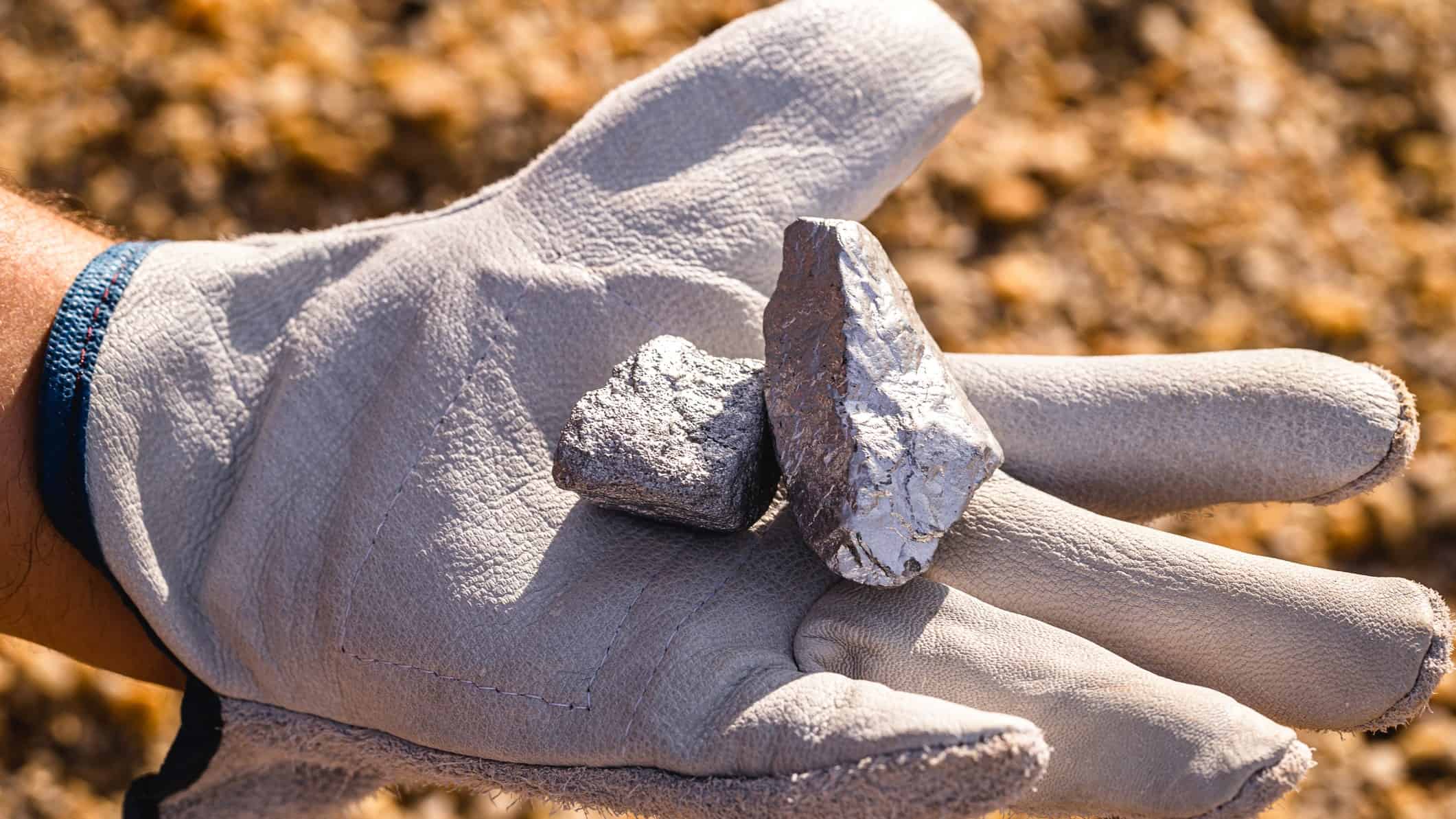
    a gloved hand holds lumps of silver against a background of dirt as if at a mine site.

    The All Ordinaries Index (ASX: XAO) has gained 5% so far in 2025, but this ASX All Ords silver share has left those gains wanting.

    The fast-rising miner in question is Andean Silver Ltd (ASX: ASL).

    In morning trade on Tuesday, Andean Silver shares are changing hands for $2.20 apiece, up 2.3%.

    This sees the ASX All Ords silver share up 161.9% in 2025.

    And investors who bought the stock two years ago (when the company was still called Mitre Mining) will be sitting on eye-watering gains of 746% today.

    Andean Silver has been benefiting from both its own successes at its Cerro Bayo silver-gold project in southern Chile as well as the soaring gold and silver price.

    The silver price has doubled since 1 January this year, currently trading for US$57.96 per ounce.

    Now, here’s what’s grabbing ASX investor interest today.

    ASX All Ords silver share lifts off on high-grade results

    The Andean Silver share price is marching higher again today after the miner announced it has discovered more extensive vein systems with high-grade gold and silver mineralisation at Cerro Bayo epithermal silver-gold project.

    The ASX All Ords silver share said the latest rock chip sampling results revealed more than two kilometres of exposed mineralised veins with grades of more than 10,000 grams of silver per tonne and 125g/t gold.

    And there’s a lot of promising area left to explore.

    According to the release, a 750-metre corridor between the Taitao and Cristal prospects is still unmapped and untested by drilling.

    And the silver miner noted that the corridor continues for 1.3 kilometres under shallow cover between the Droughtmaster and Guanaco mines, adding that geophysical anomalies indicate the potential for further prospective concealed and untested zones.

    What did management say?

    Commenting on the sample results boosting the ASX All Ords silver share today, Andean CEO Tim Laneyrie said, “These results again demonstrate that there is scope to grow the Cerro Bayo resources beyond current levels.”

    He said the upside “isn’t just based on favourable geology or geophysics, it is underpinned by well-mineralised veins over extensive lengths with very high-grade silver and gold”.

    Looking ahead, Laneyrie added:

    We have a long pipeline of these well-advanced prospects for exploration which have been identified by sampling and a thorough re-evaluation of the geological data at Cerro Bayo.

    Our focus is on continuing to grow the resource, with a fleet of drill rigs on site, as we head into 2026. We will also ramp up drilling while advancing the mine study phase in the new year as part of a multi-pronged strategy to drive shareholder value.

    The post Up 162% in 2025, why is this ASX All Ords silver share leaping higher again today? appeared first on The Motley Fool Australia.

    Should you invest $1,000 in Andean Silver Ltd right now?

    Before you buy Andean Silver Ltd shares, consider this:

    Motley Fool investing expert Scott Phillips just revealed what he believes are the 5 best stocks for investors to buy right now… and Andean Silver Ltd wasn’t one of them.

    The online investing service he’s run for over a decade, Motley Fool Share Advisor, has provided thousands of paying members with stock picks that have doubled, tripled or even more.*

    And right now, Scott thinks there are 5 stocks that may be better buys…

    * Returns as of 18 November 2025

    .custom-cta-button p {
    margin-bottom: 0 !important;
    }

    More reading

    Motley Fool contributor Bernd Struben has no position in any of the stocks mentioned. The Motley Fool Australia’s parent company Motley Fool Holdings Inc. has no position in any of the stocks mentioned. The Motley Fool Australia has no position in any of the stocks mentioned. The Motley Fool has a disclosure policy. This article contains general investment advice only (under AFSL 400691). Authorised by Scott Phillips. 

  • No REAL ID? That’ll cost you $45 under a new TSA rule

    TSA agent holding a real ID.
    The TSA wants to charge flyers who don't have acceptable ID $18 to use biometric kiosks to verify their identity.

    • The TSA announced a $45 fee for travelers without acceptable ID at airport security checkpoints.
    • The alternative identity verification system, TSA Confirm.ID is set to be implemented on February 1.
    • It's unclear how TSA Confirm.ID will work, but it's intended as an option for flyers without a REAL ID.

    The Transportation Security Administration has taken a page from the budget airline playbook.

    The agency said Monday it is implementing a new alternative identity verification system, TSA Confirm.ID, that would charge travelers $45 at security checkpoints if they show up without a REAL ID or another acceptable government-issued ID, such as a passport or permanent resident card.

    The new fee option is set to begin on February 1. The TSA said the fee would cover a 10-day travel period. Details about how the fee and identity verification would work were not yet available. The TSA did not immediately respond to a request for comment.

    "TSA urges all travelers who do not have a REAL ID to pay the fee online before traveling," according to a press release about TSA Confirm.ID and the new fee. "For passengers who arrive at the airport without paying the fee, information about how to pay for the TSA Confirm.ID option will be available at marked locations at or near the checkpoint in most airports. Travelers who undergo TSA Confirm.ID processing at an airport should expect delays."

    The TSA had previously proposed an $18 fee that would cover the costs for a biometric kiosk system designed to verify a traveler's identity more quickly than the current manual process.

    Under that proposal, the TSA said the new technology would be less time and resource-intensive than the current process when a flyer lacks these IDs, which involves providing personal information or answering detailed questions to match flyers to government databases.

    "This notice serves as a next step in the process in REAL ID compliance, which was signed into law more than 20 years ago," a TSA spokesperson previously told Business Insider about the $18 fee proposal.

    Congress passed the REAL ID Act of 2005 in response to the 9/11 attacks, but it just rolled out in 2025.

    In May, the TSA began requiring travelers to present a REAL ID or another government-approved identification to pass through airport security checkpoints.

    The TSA says 94% of flyers already use REAL ID or another acceptable form of identification.

    The agency is encouraging travelers who do not have a REAL ID to schedule an appointment with their local DMV to update their ID as soon as possible. A REAL ID card shows a star inside a circle in the upper right corner.

    Read the original article on Business Insider
  • Macquarie predicts 40% upside for this building products supplier

    Three builders analyse their blueprints on site representing the growth in the Johns Lyng share price

    The James Hardie Industries Plc (ASX: JHX) share price has been on the slide for much of the past year, but according to the team at Macquarie, that’s creating a significant buying opportunity.

    The company’s shares reached their 12-month high of $57.20 around this time last year, with the catalyst for the share price decline being the company’s announcement in mid-March that it intended to acquire US decking manufacturer Azek for US$8.75 billion.

    The shares fell from levels around $50 at the time and never recovered, and dipped again on the announcement of the company’s second-quarter results in August.

    Shareholders not happy

    The company also received a thumping protest vote against its remuneration report at the annual general meeting in late October, with 66.3% of the votes cast going against the report.

    The board said in a statement at the time, “we recognise that we have more work to do on our promise to shareholders”.

    The board went on to say:

    James Hardies has reached an important period in its history as we execute on our strategic growth plans and realise the tremendous potential of our combination with Azek. With our comprehensive portfolio of exterior brands and a powerful manufacturing and support network, we are poised to drive long-term growth and success in the dynamic building products industry.

    James Hardie said its second-quarter results reflected the strong performance of its deck, rail, and accessories segment, “and our continued progress towards realising substantial cost and revenue synergies from the Azek integration”.

    At the time of purchase, James Hardie estimated the combined companies would generate at least US$350 million in additional EBITDA from synergies once the two companies were fully integrated.

    Shares looking cheap

    The team at Macquarie have just run the ruler over James Hardie, and has come to the conclusion that at current levels, the shares represent good buying.

    The Macquarie analysts said the positioning in the decking market through the purchase of Azek appears to be solid.

    They went on to say:

    The decking market has been in focus. We think AZEK enjoys superior channel positioning compared to peers, which will make a difference in the medium to long term in maintaining solid economics. The integration process appears to be going well, with Jame Hardie making progress in the two-step and one-step channels alike.

    The Macquarie analysts said while market conditions overall were tough, “an evolving AZEK integration story, a bottoming of markets and valuation are in support of our thesis”.

    Macquarie has a 12-month price target of $41.70 on James Hardie shares, which would represent a total shareholder return of 40.2% if achieved.

    James Hardie shares closed Monday’s trading session at $29.90, valuing the company at $17.3 billion.

    The post Macquarie predicts 40% upside for this building products supplier appeared first on The Motley Fool Australia.

    Should you invest $1,000 in James Hardie Industries plc right now?

    Before you buy James Hardie Industries plc shares, consider this:

    Motley Fool investing expert Scott Phillips just revealed what he believes are the 5 best stocks for investors to buy right now… and James Hardie Industries plc wasn’t one of them.

    The online investing service he’s run for over a decade, Motley Fool Share Advisor, has provided thousands of paying members with stock picks that have doubled, tripled or even more.*

    And right now, Scott thinks there are 5 stocks that may be better buys…

    * Returns as of 18 November 2025

    .custom-cta-button p {
    margin-bottom: 0 !important;
    }

    More reading

    Motley Fool contributor Cameron England has no position in any of the stocks mentioned. The Motley Fool Australia’s parent company Motley Fool Holdings Inc. has no position in any of the stocks mentioned. The Motley Fool Australia has no position in any of the stocks mentioned. The Motley Fool has a disclosure policy. This article contains general investment advice only (under AFSL 400691). Authorised by Scott Phillips.

  • Are Qantas shares really a turnaround story? Here’s what the numbers say

    A woman stands on a runway with her arms outstretched in excitement with a plane in the air having taken off.

    After several years of turbulence, the Qantas Airways Ltd (ASX: QAN) share price is once again attracting attention. Not for cancelled flights or customer frustration, but because the underlying business may finally be regaining altitude.

    The past few years have been rough. 

    The airline faced penalties tied to “ghost flights”, compensation orders over ground-handling outsourcing, cybersecurity issues affecting more than 5 million customers, and ongoing scrutiny over an ageing fleet and service standards. Those setbacks hurt its reputation, its balance sheet, and investor sentiment.

    Now the question is whether Qantas is in the early stages of a genuine turnaround.

    A stronger financial base is emerging

    Qantas reported a 28% lift in statutory net profit to $1.6 billion for the last financial year, supported by robust travel demand and improved operational performance. The airline carried four million more customers over the year across Qantas and Jetstar, while its loyalty division continued to grow engagement and earnings.

    Cash flow also strengthened, and the group continued to invest heavily in a multi-year fleet renewal program, with more than 200 aircraft now on firm order across the business.

    Fleet renewal matters more than most people realise. Modern aircraft have lower fuel burn, fewer maintenance surprises, and better operational reliability. Qantas has already begun introducing newer planes into service, and early results from the updated fleet have been positive, according to management commentary.

    Operational momentum is improving

    Jetstar continues to be a bright spot. As value-focused travellers tilt towards shorter-haul trips, Jetstar has benefited from ongoing demand, helping lift group performance even as pockets of global travel remain uneven.

    Qantas is also preparing for Project Sunrise flights, enabling non-stop Sydney and Melbourne routes direct to London and New York. Direct long-haul capacity is a significant competitive differentiator that could support yield and loyalty earnings over time.

    Strategy beyond aviation

    Recent announcements suggest Qantas is widening its economic footprint.

    It is building a major new innovation centre in Adelaide, expected to bring hundreds of jobs, support advanced product design, and enhance customer experience initiatives for the group. The centre forms part of the broader multi-year investment into improving ground and cabin service standards.

    Separately, Qantas has partnered with Airwallex to launch a high-yield treasury product for business customers, expanding the value proposition of the Qantas Business Money platform. This aligns with the company’s lucrative loyalty ecosystem, which has long been one of its most resilient profit engines.

    A turnaround is possible — but it requires execution

    At roughly 9 times earnings and a dividend yield near the mid-4% range, Qantas trades at a valuation that already prices in some risks. For long-term investors, this can create an interesting setup: if the airline grows earnings consistently while sentiment improves, the combination of profit growth and potential multiple expansion can be powerful.

    Still, the road back to “national icon” status is not short or simple. Cost pressures remain a risk, global travel cycles can shift quickly, and competitive dynamics must be monitored closely. 

    Qantas must deliver sustained operational improvements, rebuild trust with customers, and maintain discipline through its capital investment cycle.

    Foolish Takeaway

    There are early signs that Qantas may finally be on a more stable ascent. Profits are improving, fleet renewal is underway, customer-facing investments are accelerating, and the loyalty and Jetstar divisions continue to contribute strongly. Valuation support gives the airline some breathing room.

    Whether this becomes a full turnaround story depends on what Qantas does next. If management executes well, the next chapter could look very different from the last.

    The post Are Qantas shares really a turnaround story? Here’s what the numbers say appeared first on The Motley Fool Australia.

    Should you invest $1,000 in Qantas Airways Limited right now?

    Before you buy Qantas Airways Limited shares, consider this:

    Motley Fool investing expert Scott Phillips just revealed what he believes are the 5 best stocks for investors to buy right now… and Qantas Airways Limited wasn’t one of them.

    The online investing service he’s run for over a decade, Motley Fool Share Advisor, has provided thousands of paying members with stock picks that have doubled, tripled or even more.*

    And right now, Scott thinks there are 5 stocks that may be better buys…

    * Returns as of 18 November 2025

    .custom-cta-button p {
    margin-bottom: 0 !important;
    }

    More reading

    Motley Fool contributor Leigh Gant has no position in any of the stocks mentioned. The Motley Fool Australia’s parent company Motley Fool Holdings Inc. has no position in any of the stocks mentioned. The Motley Fool Australia has no position in any of the stocks mentioned. The Motley Fool has a disclosure policy. This article contains general investment advice only (under AFSL 400691). Authorised by Scott Phillips.

  • Macquarie tips 70% upside for this quality ASX 200 stock

    Excited couple celebrating success while looking at smartphone.

    If you are on the hunt for some big returns, then it could be worth listening to what Macquarie Group Ltd (ASX: MQG) is saying.

    That’s because the broker has just named one quality ASX 200 stock as a buy with potential to deliver huge returns over the next 12 months.

    Which ASX 200 stock?

    The stock that Macquarie is recommending to clients is online furniture and homewares retailer Temple & Webster Group Ltd (ASX: TPW).

    Its shares have fallen approximately 25% since this time last month, which the broker feels has created a buying opportunity for investors.

    Macquarie has blamed consumer weakness on Temple & Webster’s slowing growth in the first half of FY 2026. And with rate cuts now expected to boost spending, it feels that peak weakness could have passed. It said:

    We think consumer weakness was the primary drag on TPW’s Revenue Growth (which slowed to +14% over the past 14 weeks, from +28% in the first 8 weeks of 1H26), given similar slowdowns were seen in other retail trading updates (e.g., ADH), and weakness in furniture spend in our High Frequency Consumer Data (HFCD) over 3Q25 (-2% YoY).

    However, we think the two-month lagged positive impact of the Aug-25 rate-cut (to consumer cash flow) may emerge to support demand over the peak Christmas trading period. Indeed, HFCD improved to +5% YoY growth over Oct-25, and Google Search interest for TPW is showing increasing strength YoY into Nov-25. Whilst the peak of retail weakness (Sep-25) may have passed, we encourage investors to look through volatility to longer-term market share growth tailwinds supporting TPW’s top-line.

    Big potential returns

    According to the note, the broker has retained its outperform rating on the ASX 200 stock with a reduced price target of $24.15.

    Based on its current share price of $14.39, this implies potential upside of almost 70% for investors over the next 12 months.

    Commenting on its recommendation, Macquarie said:

    We maintain Outperform. TPW’s market share will benefit from tailwinds around increasing AOVs, Trade & Home Improvement market penetration and overall online retail uptake. We encourage investors to look through short-term fluctuations in consumer sentiment to a positive outlook.

    Valuation: -23% TP reduction to $24.15 (from $31.30), but maintain Outperform after significant share price fall (-32%), with our TP still implying significant shareholder upside (TSR: +74.6%). Catalysts: Rate-cuts, improved revenue growth & greater operating leverage, Macquarie High Frequency consumer data, Wayfair results.

    The post Macquarie tips 70% upside for this quality ASX 200 stock appeared first on The Motley Fool Australia.

    Should you invest $1,000 in Macquarie Group Limited right now?

    Before you buy Macquarie Group Limited shares, consider this:

    Motley Fool investing expert Scott Phillips just revealed what he believes are the 5 best stocks for investors to buy right now… and Macquarie Group Limited wasn’t one of them.

    The online investing service he’s run for over a decade, Motley Fool Share Advisor, has provided thousands of paying members with stock picks that have doubled, tripled or even more.*

    And right now, Scott thinks there are 5 stocks that may be better buys…

    * Returns as of 18 November 2025

    .custom-cta-button p {
    margin-bottom: 0 !important;
    }

    More reading

    Motley Fool contributor James Mickleboro has positions in Temple & Webster Group. The Motley Fool Australia’s parent company Motley Fool Holdings Inc. has positions in and has recommended Macquarie Group and Temple & Webster Group. The Motley Fool Australia has positions in and has recommended Macquarie Group. The Motley Fool Australia has recommended Temple & Webster Group. The Motley Fool has a disclosure policy. This article contains general investment advice only (under AFSL 400691). Authorised by Scott Phillips.

  • CSL is a great company, but I think this ASX stock is a better investment

    Broker checking out the share price oh his smartphone and laptop.

    CSL Ltd (ASX: CSL) shares have been one of the global success stories of the last 20 years, with the ASX-listed healthcare company expanding its international presence. But it’s not the first ASX stock I’d want to invest in today for my portfolio.

    CSL’s expected growth has decreased in recent times due to headwinds in the US healthcare system and slower growth in other areas of its business.

    I’m not sure how much profit growth CSL will be able to achieve in the next few years – I’m much more bullish about the ASX stock Temple & Webster Group Ltd (ASX: TPW).

    Strong growth outlook

    The online retailer of homewares, furniture, and home improvement products has delivered a lot of growth over the last few years, and there are good prospects for future growth.

    While its recent trading update wasn’t strong enough for the market, the ASX stock has registered further sales progress in FY26. In the period of 1 July 2025 to 20 November 2025, total sales were up 18% year over year – most businesses would be happy with that, but it represented slower growth than a few months ago.

    The business is gaining market share every year, and further adoption of online shopping by Australian consumers could help push sales even higher. The company had a 1.8% overall market share in FY23 and now has a market share of 2.7%.

    Temple & Webster notes that Australia’s furniture and homewares market only has an online penetration of 20%, compared to 29% in the UK and 35% in the US market. It has just started shipping products to New Zealand, which opens up another growth avenue for the business.

    I’m particularly excited to see what the business can achieve with its home improvement segment, which continues to grow rapidly. In FY26 to date, home improvement revenue rose by 40% year over year.

    The ASX stock is aiming for at least $1 billion of annual sales by FY28 at the latest.

    Expecting higher profit margins

    I believe the company’s profit margins can continue to rise in the coming years, thanks to a combination of factors as it grows larger and more technologically advanced. Increasing profitability should help boost its underlying value.

    Fixed costs as a percentage of revenue declined to 10.6% in FY25, down from 11.3% in FY24. Savings are primarily being driven by moderation in headcount growth, improved productivity through AI, and tech tools.

    Around 80% of customer before and after-sales support interactions are now partially or fully handled by AI and technology.

    But it’s not just a cost-saving exercise; it’s also doing things to help customers. For example, the company is also experimenting with personalised website experiences.

    In terms of a near-term goal, while the business aims for an operating profit (EBITDA) margin of between 3% and 5% in FY26, I believe it can steadily rise higher in subsequent years. Time will tell how high the ASX stock’s EBITDA margin can eventually climb.

    Much better valuation

    As the chart below shows, the Temple & Webster share price remains materially below its pre-AGM trading update level.

    But, management is still confident about the long-term; the company’s revenue continues to rise (including home improvement growth), it’s expanding shipping to New Zealand, and margins could continue rising.

    I think the ASX stock looks much more appealing than CSL after its fall, and I’m looking to buy Temple & Webster stock if it remains as low as it is now.

    The post CSL is a great company, but I think this ASX stock is a better investment appeared first on The Motley Fool Australia.

    Should you invest $1,000 in Temple & Webster Group Ltd right now?

    Before you buy Temple & Webster Group Ltd shares, consider this:

    Motley Fool investing expert Scott Phillips just revealed what he believes are the 5 best stocks for investors to buy right now… and Temple & Webster Group Ltd wasn’t one of them.

    The online investing service he’s run for over a decade, Motley Fool Share Advisor, has provided thousands of paying members with stock picks that have doubled, tripled or even more.*

    And right now, Scott thinks there are 5 stocks that may be better buys…

    * Returns as of 18 November 2025

    .custom-cta-button p {
    margin-bottom: 0 !important;
    }

    More reading

    Motley Fool contributor Tristan Harrison has positions in Temple & Webster Group. The Motley Fool Australia’s parent company Motley Fool Holdings Inc. has positions in and has recommended CSL and Temple & Webster Group. The Motley Fool Australia has recommended CSL and Temple & Webster Group. The Motley Fool has a disclosure policy. This article contains general investment advice only (under AFSL 400691). Authorised by Scott Phillips.

  • Why does the CBA share price keep falling? – Expert

    A man thinks very carefully about his money and investments.

    After losing ground again yesterday, the Commonwealth Bank of Australia (ASX: CBA) share price is now down almost 14% in the last month. 

    CBA shares closed yesterday at $151.64. 

    It is now down more than 20% from its 12-month high of more than $191 per share back in June. 

    Despite this fall, CBA is the most expensive bank in the world. It still represents almost 10% of the S&P/ASX 200 Index (ASX: XJO). 

    Because of its dominant market share, it impacts shareholders who have direct exposure and those who don’t necessarily own individual shares in the bank. 

    For example, many ASX ETFs are heavily weighted towards CBA shares. 

    Arian Neiron, CEO & Managing Director – Asia Pacific, VanEck, has provided fresh analysis on why this disproportionate impact can negatively impact portfolio performance. 

    Why has the CBA share price fallen?

    According to the report, there are a few key reasons why Australia’s biggest bank has been heavily sold off in the last month. 

    These factors include: 

    • Its price-to-earnings (P/E) is too high
    • Earnings per share growth is anaemic
    • It is only yielding around 2%
    • Its margins are under pressure

    Neiron said the concentration risk for many Australian equity portfolios has existed for some time. 

    This kind of sector bias makes sense if you are bullish on the sector, but given the well-noted pressures on banks remain, with margins under pressure, an economic outlook not conducive to growth and defaults potentially rising given that rates are now not expected to fall again until well into 2026 (if again at all), an approach to Australian equities with less concentration approach to Australian equities may be prudent.

    This isn’t just exclusive to CBA shares either. 

    According to VanEck, Australian banks are the most expensive globally in the developed world on a 12-month forward price-to-earnings and price-to-book basis. 

    Banks make up over 20% of the ASX 200 benchmark index.

    If valuations moved to be in line with global valuations, it could disproportionately impact many Australian portfolios. 

    The report said it’s not just the sky-high valuations that are causing alarm for analysts.

    Another headwind that Australia’s banks must navigate is the economic outlook.

    Slowing credit growth, sluggish productivity, and the potential that the next rate move will be higher could increase the potential for arrears, also putting pressure on lenders.

    At what point does it become a value?

    It’s impossible to predict where CBA shares might bottom out. But many investors will be tempted to buy low (relatively) on Australia’s biggest bank. 

    Last month, Macquarie put a price target of $106 on CBA shares, and Morgans has a price target of $96.07. 

    From yesterday’s closing price of $151.64, this indicates a further fall of 30% to 36%. 

    With further headwinds in sight and a still inflated share price, it seems CBA shares may have further falls ahead. 

    The post Why does the CBA share price keep falling? – Expert appeared first on The Motley Fool Australia.

    Should you invest $1,000 in Commonwealth Bank of Australia right now?

    Before you buy Commonwealth Bank of Australia shares, consider this:

    Motley Fool investing expert Scott Phillips just revealed what he believes are the 5 best stocks for investors to buy right now… and Commonwealth Bank of Australia wasn’t one of them.

    The online investing service he’s run for over a decade, Motley Fool Share Advisor, has provided thousands of paying members with stock picks that have doubled, tripled or even more.*

    And right now, Scott thinks there are 5 stocks that may be better buys…

    * Returns as of 18 November 2025

    .custom-cta-button p {
    margin-bottom: 0 !important;
    }

    More reading

    Motley Fool contributor Aaron Bell has no position in any of the stocks mentioned. The Motley Fool Australia’s parent company Motley Fool Holdings Inc. has positions in and has recommended Macquarie Group. The Motley Fool Australia has positions in and has recommended Macquarie Group. The Motley Fool has a disclosure policy. This article contains general investment advice only (under AFSL 400691). Authorised by Scott Phillips.

  • 2 ASX stocks I’m very bullish about for the next decade

    Rising green bar graph with an arrow and a world map, symbolising a rising share price.

    The best time horizon for investing in ASX stocks is the long term, given the power of compounding.

    The two investments I’ll tell you about are impressive players at what they do, and their outlook for growth looks promising.

    While earnings growth is not certain, I believe the two ASX stocks listed below are likely to experience pleasing progress in the years ahead.

    Betashares Global Cybersecurity ETF (ASX: HACK)

    One of the most undeniable tailwinds of the world is the increasing digital nature of activities in our lives, whether that’s online banking, e-commerce, communication, working, connecting with government services (including taxation forms), learning, and so on.

    All of those activities require a safe internet connection with protection against cybercriminals.

    The HACK ETF gives investors the ability to invest in the global cybersecurity sector, with exposure to both global leaders and emerging players.

    There are a number of recognisable businesses in the portfolio, including Broadcom, CrowdStrike, Cisco Systems, Infosys, Palo Alto Networks, Leidos, and Fortinet.

    I’m expecting the underlying earnings of these businesses to continue rising for the foreseeable future as governments, businesses, and households strive for full protection from cybercriminals.

    The more the world is connected to the internet, the more integral the companies in this ASX ETF become.

    According to BetaShares, the HACK ETF has returned an average of 18.6% per year since its inception in August 2016. Past performance is not a guarantee of future returns, of course, but I think the future bodes well.

    L1 Group Ltd (ASX: L1G)

    L1 is a funds management business which recently became noticeably bigger (and a listed ASX stock) after acquiring the fund manager Platinum.

    Many of the company’s key investment strategies have performed strongly compared to their benchmarks over the years, which helps drive funds under management (FUM) higher and encourages clients to allocate more FUM to L1.

    L1 Capital has delivered average organic FUM growth of 30% per annum, without using its balance sheet. Funds management is a capital-light sector. I’m expecting the company’s FUM to continue rising, though not necessarily at 30% per year. However, it is expanding its distribution into North America, Europe, the Middle East, and Africa regions.

    On the cost side of things, the business is looking to deliver cost reductions of between $30 million to $35 million within 18 months of the merger between L1 Group and Platinum. This could help improve the profit margins of the business.

    The ASX stock has also highlighted that there are opportunities to put capital into very compelling, value-adding ideas, though it will be “selective in pursuing opportunities”.

    At the time of writing, the L1 Group share price is valued at 20.1x FY27’s estimated earnings. While it’s not cheap, I think there is plenty of growth potential ahead.

    The post 2 ASX stocks I’m very bullish about for the next decade appeared first on The Motley Fool Australia.

    Should you invest $1,000 in BetaShares Global Cybersecurity ETF right now?

    Before you buy BetaShares Global Cybersecurity ETF shares, consider this:

    Motley Fool investing expert Scott Phillips just revealed what he believes are the 5 best stocks for investors to buy right now… and BetaShares Global Cybersecurity ETF wasn’t one of them.

    The online investing service he’s run for over a decade, Motley Fool Share Advisor, has provided thousands of paying members with stock picks that have doubled, tripled or even more.*

    And right now, Scott thinks there are 5 stocks that may be better buys…

    * Returns as of 18 November 2025

    .custom-cta-button p {
    margin-bottom: 0 !important;
    }

    More reading

    Motley Fool contributor Tristan Harrison has no position in any of the stocks mentioned. The Motley Fool Australia’s parent company Motley Fool Holdings Inc. has positions in and has recommended BetaShares Global Cybersecurity ETF, Cisco Systems, CrowdStrike, and Fortinet. The Motley Fool Australia’s parent company Motley Fool Holdings Inc. has recommended Broadcom and Palo Alto Networks. The Motley Fool Australia has recommended CrowdStrike. The Motley Fool has a disclosure policy. This article contains general investment advice only (under AFSL 400691). Authorised by Scott Phillips.

  • Apple’s AI chief is leaving and being replaced by a former Microsoft exec

    John Giannandrea

    John Giannandrea, senior vice president for Machine Learning and AI Strategy at Apple, is stepping down from his role, the company announced Monday.

    Amar Subramanya, an AI researcher who most recently served as a corporate vice president of AI at Microsoft, is now Apple's vice president of AI, the company said. Prior to his time at Microsoft, Subramanya was at Google.

    Giannandrea will serve as an advisor before retiring in the spring.

    This story is breaking. Check back for updates.

    Read the original article on Business Insider