• Microsoft CEO says empathy is a workplace superpower in the age of AI: ‘IQ without EQ, it’s just a waste’

    Microsoft CEO Satya Nadella
    Nadella said leaders can't rely on IQ alone.

    • Microsoft CEO Satya Nadella said that empathy is increasingly important as AI automates more tasks.
    • Nadella said on a podcast that workplace collaboration is also becoming more crucial.
    • Microsoft has recently reshuffled its leadership in an effort to better compete in the AI race.

    As AI gets smarter, Microsoft CEO Satya Nadella says that humans can't rely on their brains alone to succeed at work.

    In a recent conversation with Axel Springer CEO Mathias Döpfner, Nadella said he agrees that emotional intelligence, or EQ, is becoming increasingly important at work as AI handles more technical tasks. Axel Springer is Business Insider's parent company.

    "IQ has a place, but it's not the only thing that's needed in the world," Nadella said on an episode of Döpfner's "MD Meets" podcast that aired November 29. "I've always felt, at least leaders, if you just have IQ without EQ, it's just a waste of IQ."

    Nadella added that social intelligence is also key, and has previously said that empathy is an important business skill, not just a soft skill.

    Döpfner also asked whether the importance of empathy is part of why Microsoft is calling more people back to the office, starting early next year. Nadella said that, in the age of AI, it's even more important to recognize the role of human collaboration, and that the workplace is "the best collaboration tool." He added, however, that he doesn't want to be "dogmatic" about RTO mandates.

    Nadella has recently reshuffled Microsoft's leadership team in part to better compete in the AI race, according to documents reviewed by Business Insider. He also tapped Rolf Harms, who helped Microsoft on its journey to cloud-computing success, to serve as an advisor on AI economics, according to a memo Nadella sent in November. With its new superintelligence team, Microsoft is pursuing artificial general intelligence, or technology capable of outperforming humans on a range of complex tasks.

    Microsoft has laid off thousands of people this year, as the company has increased its scrutiny of employees' performance. A spokesperson previously told Business Insider that most of the cuts weren't based on performance, but instead aimed to streamline operations.

    Many workplaces are starting to value soft skills as they delegate more technical responsibilities to AI. Executives and workplace transformation experts previously told Business Insider that problem-solving, emotional intelligence, and creativity are especially important.
    Read the original article on Business Insider
  • Where to invest $10,000 in ASX shares in December

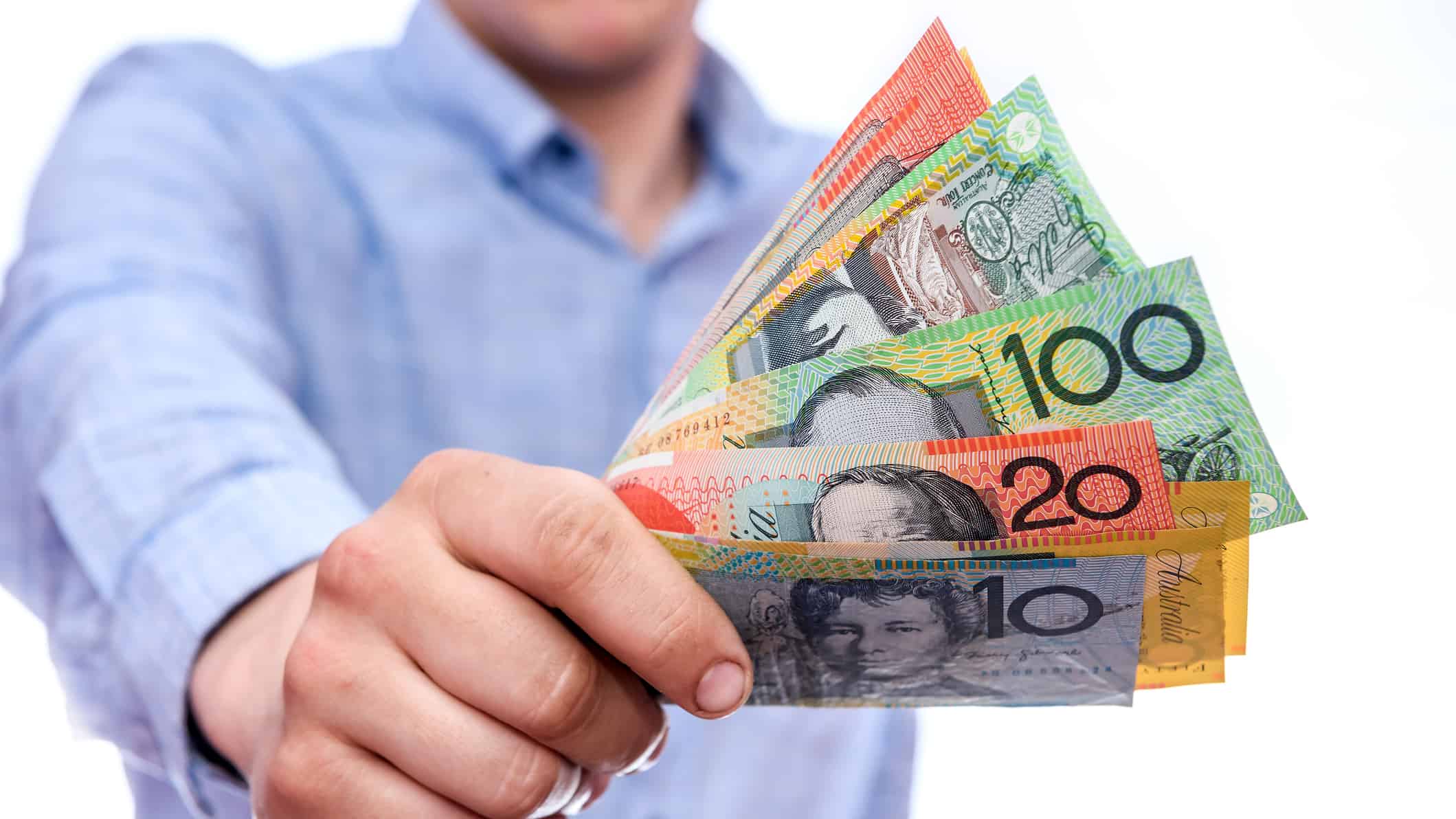
    Man holding out Australian dollar notes, symbolising dividends.

    With December now underway and markets still rattled by pockets of volatility, many investors are wondering where to put fresh capital to work before the end of the year.

    The good news is that there are several high-quality ASX shares that look like compelling opportunities right now.

    If you are investing $10,000 this month, the three shares below could be worth considering.

    Goodman Group (ASX: GMG)

    Goodman Group has been one of the quiet stars of the ASX 200, and December offers an attractive entry point for long-term investors. The company is a global leader in logistics, warehousing, and industrial property, with blue-chip customers including Amazon (NASDAQ: AMZN), FedEx (NYSE: FDX), and Tesla (NASDAQ: TSLA).

    What could make Goodman so attractive heading into 2026 is its rapidly expanding data centre pipeline. As AI models and cloud services drive an explosion in global computing demand, Goodman is positioning itself as a critical landlord for hyperscalers around the world. These developments have the potential to become a major profit driver over the next decade.

    The team at UBS recently put a buy rating and $36.41 price target on its shares.

    Macquarie Group Ltd (ASX: MQG)

    Another ASX share that could be a top buy is Macquarie. It has been going through a softer period but its diversified model, spanning asset management, banking, commodities, and infrastructure, leaves it well-placed for growth over the long term.

    Especially given that when conditions improve, Macquarie usually rebounds harder and faster than peers. Its green energy, infrastructure, and private markets businesses are positioned for a major upswing as rates normalise and capital begins flowing more freely again.

    At current levels, the long-term risk–reward looks very attractive for a business with a world-class management team and decades of wealth-creation history.

    Ord Minnett has a buy rating and $255.00 price target on its shares.

    TechnologyOne Ltd (ASX: TNE)

    TechnologyOne has had a rare pullback recently, falling meaningfully from its highs despite continuing its strong form.

    The company continues to deliver double-digit recurring revenue growth and exceptional customer retention across government, education, and enterprise clients.

    Very few ASX tech names offer this blend of stability, profitability, and long-term growth. With the broader tech sector under pressure, some high-quality names have been unfairly dragged lower and TechnologyOne is one of them. For patient investors, this kind of weakness often proves to be a golden opportunity.

    Morgan Stanley has an overweight rating and $36.50 price target on its shares.

    The post Where to invest $10,000 in ASX shares in December appeared first on The Motley Fool Australia.

    Should you invest $1,000 in Goodman Group right now?

    Before you buy Goodman Group shares, consider this:

    Motley Fool investing expert Scott Phillips just revealed what he believes are the 5 best stocks for investors to buy right now… and Goodman Group wasn’t one of them.

    The online investing service he’s run for over a decade, Motley Fool Share Advisor, has provided thousands of paying members with stock picks that have doubled, tripled or even more.*

    And right now, Scott thinks there are 5 stocks that may be better buys…

    * Returns as of 18 November 2025

    .custom-cta-button p {
    margin-bottom: 0 !important;
    }

    More reading

    Motley Fool contributor James Mickleboro has positions in Goodman Group and Technology One. The Motley Fool Australia’s parent company Motley Fool Holdings Inc. has positions in and has recommended Amazon, Goodman Group, Macquarie Group, Technology One, and Tesla. The Motley Fool Australia’s parent company Motley Fool Holdings Inc. has recommended FedEx. The Motley Fool Australia has positions in and has recommended Macquarie Group. The Motley Fool Australia has recommended Amazon, Goodman Group, and Technology One. The Motley Fool has a disclosure policy. This article contains general investment advice only (under AFSL 400691). Authorised by Scott Phillips.

  • Satya Nadella says he spends his weekends studying startups as Microsoft’s size has become a ‘massive disadvantage’

    Microsoft CEO Satya Nadella at LlamaCon 2025, an AI developer conference, in Menlo Park, California, on April 29, 2025.
    Satya Nadella says he studies startups to relearn the speed and agility Microsoft lost as it grew.

    • Satya Nadella says Microsoft's size slows AI development, pushing him to study how startups build.
    • He told Mathias Döpfner that leaders must unlearn past success and adopt a "learn-it-all" mindset.
    • Most AI projects are bound to fail without new mindsets, tools, skills, and shared data, he added.

    Microsoft CEO Satya Nadella is in study hall mode.

    Speaking with Mathias Döpfner, CEO of Axel Springer — Business Insider's parent company — Nadella said he's spending his weekends studying how startups build products. The reason, he said, is simple: Microsoft's vast size has become "a massive disadvantage" in the race to build AI at startup speed.

    "This entire weekend, I spent all the time trying to get myself to understand how new companies are building products," Nadella said in an interview on the "MD MEETS" podcast, hosted by Döpfner and that aired on Saturday.

    At young companies, he said, everyone involved in product development — from scientists to engineers to infrastructure teams — is "all sitting in one little table." It means they're able to make decisions on product, science, and infrastructure, and iterate instantly.

    At Microsoft, he has "three divisional heads who manage those three things."

    Nadella's comments come as many major tech companies — from Meta to Google to Amazon — are aggressively trimming middle layers of management in the name of speed.

    It reflects a broader shift in Silicon Valley, where thick hierarchies are increasingly viewed as impediments to swift product decisions and AI experimentation.

    Unlearning success to stay relevant

    Nadella told Döpfner that thriving in the AI era requires unlearning habits that once made companies successful.

    Big organizations and their leaders need to abandon the "know-it-all" mindset and adopt a "learn-it-all" approach, he said.

    "The most important skill set for long-term relevance is — how do you be a learn-it-all and not a know-it-all," Nadella said.

    The challenge, he added, is that "you have to unlearn the things that made you successful to learn something new."

    Internally, Nadella has already been pushing this cultural shift.

    A leaked organizational chart reviewed by Business Insider showed how he has reorganized executives and has 16 direct reports — a lineup of handpicked lieutenants tasked with breaking down silos and accelerating the company's AI shift.

    The 4 things you need to fix first

    Nadella said the majority of corporate AI projects collapse because companies approach AI like a traditional IT upgrade — a mistake he believes "is going to fail by definition."

    To make AI work, he said, organizations must be prepared to do four key things: rethink their workflows from the ground up, adopt modern AI tools, train employees to use them, and make sure company data isn't stuck in old legacy systems.

    Only companies that rebuild these foundations, Nadella said, will see meaningful gains from AI — and only leaders willing to unlearn old habits will be able to pull it off.

    Read the original article on Business Insider
  • I toured the White House to see Melania Trump’s Christmas decorations. The East Wing is no more, but the display was still dazzling.

    Inside the White House.
    Inside the White House.

    • Melania Trump unveiled the White House Christmas decorations on Monday.
    • The theme of the decorations was "Home Is Where The Heart Is."
    • The layout of the decor differed from past years since the East Wing was demolished in October.

    It's beginning to look a lot like Christmas at 1600 Pennsylvania Avenue.

    On Monday, first lady Melania Trump unveiled the 2025 White House Christmas decorations — her first holiday season of President Donald Trump's second non-consecutive term and the first White House Christmas decorations since the demolition of the East Wing in October.

    The East Entrance and East Colonnade, which featured prominently in Melania Trump's past White House Christmas decorations with displays of dramatically lit branches and deep-red trees, are no longer part of the route. They were demolished along with the rest of the East Wing.

    The White House Menorah, which the Biden administration added to the White House Christmas decorations in 2022, was also absent from the display.

    Melania Trump centered the White House Christmas decorations around the theme "Home Is Where The Heart Is," featuring nods to the 250th anniversary of the Declaration of Independence, her Be Best initiative, and military families.

    I visited the White House for an early look at this year's holiday display. Take a look.

    I entered the White House through the North Portico stairs.
    The North Portico Stairs at the White House.
    The North Portico Stairs at the White House.

    In previous years, White House tours began at the East Entrance.

    On my way in, I saw Melania Trump's Christmas wreaths with red bows in the White House windows.
    Wreaths in the windows of the White House.
    Wreaths in the windows of the White House.

    The wreaths also appear on this year's official White House Christmas card.

    The East Room featured a tribute to the 250th anniversary of the signing of the Declaration of Independence.
    The East Room of the White House.
    The East Room of the White House.

    The East Room decor, which included patriotic nods, was a collaboration with America250, the national organization in charge of planning events for America's semiquincentennial next year.

    The East Room's Christmas trees glittered with red, white, and blue decorations.
    Red, white, and blue Christmas tree decorations in the East Room.
    Red, white, and blue Christmas tree decorations in the East Room.

    Red, white, and blue striped ribbons were accompanied by oak leaves, a traditional symbol of strength.

    Golden eagles were also displayed in the East Room.
    Golden eagle ornaments in the East Room.
    Golden eagle ornaments in the East Room.

    The Christmas trees were topped with gold eagle ornaments, which also appeared on the East Room's mirrors.

    The Green Room displayed portraits of President Donald Trump and President George Washington made of puzzle pieces.
    The Green Room of the White House.
    The Green Room of the White House.

    Each portrait contained 6,000 pieces.

    Dedicated to the theme of playfulness, the Green Room contained childhood toys in every corner.
    Toy-themed Christmas decorations in the Green Room.
    Toy-themed Christmas decorations in the Green Room.

    Miniature Christmas trees made of dominoes were built on a side table.

    The Official White House Christmas tree served as the centerpiece of the Blue Oval Room.
    The Official White House Christmas Tree in the Blue Room.
    The Official White House Christmas Tree in the Blue Room.

    This year's Official White House Christmas tree is an 18-foot concolor fir from Sidney, Michigan.

    The tree was decorated with ornaments depicting the official bird and flower of every US state and territory, as well as gold stars honoring the Gold Star families of fallen US soldiers.
    Ornaments on the Official White House Christmas Tree.
    Ornaments on the Official White House Christmas Tree.

    The ornaments were created using AI and 3D printed.

    The Red Room was filled with butterflies, a youthful nod to the first lady's Fostering the Future program supporting children in foster care.
    The Red Room of the White House.
    The Red Room of the White House.

    The Red Room decor included a total of 10,000 butterflies.

    Its Christmas tree was decorated with Be Best ornaments and Fostering the Future ribbons.
    Ornaments and butterflies on a Christmas tree in the Blue Room.
    Ornaments and butterflies on a Christmas tree in the Red Room.

    Fostering the Future is part of Melania Trump's Be Best initiative focused on children's wellness.

    The State Dining Room featured a gingerbread White House complete with a miniature South Portico.
    A model of the White House made of gingerbread.
    A model of the White House made of gingerbread in the State Dining Room.

    The intricate White House model is made of 120 pounds of gingerbread, 100 pounds of pastillage dough, over 10 pounds of chocolate, and 5 pounds of royal icing.

    In the Grand Foyer, the US Marine Band played holiday classics such as "Rudolph the Red-Nosed Reindeer."
    The US Marine Band at the White House.
    The US Marine Band at the White House.

    I also recognized "Do You Want to Build a Snowman?" from Disney's "Frozen."

    A portion of the White House Creche was displayed in the Grand Foyer while the rest undergoes restoration work.
    A portion of the White House Creche.
    A portion of the White House Creche in the Grand Foyer.

    The White House Creche, a Nativity scene dating back to the 18th century, was first displayed at the White House in 1961 and appeared on President John F. Kennedy's 1963 Christmas card.

    The Cross Hall glowed with ceiling projections and additional Christmas trees.
    The Cross Hall of the White House.
    The Cross Hall of the White House.

    Piles of boxes in red gift wrap were assembled at the base of the trees, and scented candles filled the air with a warm, spiced aroma.

    I got a close-up look at the painting depicting Donald Trump's raised fist after he survived an assassination attempt in Butler, Pennsylvania.
    A painting of President Donald Trump in the Cross Hall.
    A painting of President Donald Trump in the Cross Hall.

    Painted by artist Marc Lipp, the piece hangs where President Barack Obama's official White House portrait was displayed during the Biden administration.

    In total, the White House Christmas decorations feature 51 Christmas trees, over 2,000 strands of lights, and 25,000 feet of ribbon.
    The State Dining Room of the White House.
    The State Dining Room of the White House.

    The White House reopens for public tours on December 2 — the first tours offered since the demolition of the East Wing. To schedule a tour, members of Congress submit tour requests on behalf of their constituents.

    The display was dazzling, but I wish I could have seen the East Wing in its former glory.
    Inside the White House.
    Inside the White House.

    Before its demolition, the East Wing was once a focal point of the White House's Christmas decorations and the first stop on tours. The East Colonnade's long hallway in particular lent itself to immersive, and occasionally divisive, displays.

    There's less space to decorate at the White House until Donald Trump's 90,000-square-foot ballroom is complete, but I still loved seeing the Executive Mansion all decked out for the holidays.

    Read the original article on Business Insider
  • I upgraded to United’s Premium Plus on a long flight. Most perks were useless to me, but I’d happily do it again.

    Author Jamie Davis Smith smiling on plane
    I enjoyed flying in United's Premium Plus for a long-haul flight across time zones, even though I couldn't use a lot of the upgrade's perks.

    • I upgraded my family's flights to United Premium Plus, the class between economy and business.
    • Most of the perks, like two free checked bags and priority boarding, weren't useful to me.
    • But the seats felt so luxurious and comfy that they helped us feel well-rested after a long flight.

    I love to travel and usually prefer to spend less on flights so that I can stretch my budget and take as many trips as possible.

    That usually means looking longingly at more comfortable seats in the front of the plane while I make do with standard economy in the back.

    However, my family and I recently tried United's Premium Plus, an offering between economy and business class, on a long flight.

    Although I'm still not planning on regularly splurging on upgrades, I now understand why some passengers spend hundreds (or thousands) of dollars for comfier seats.

    I found a deal on premium seats that felt too good to pass up

    Seoul seatback entertainment screen in United Premium Plus
    My family flew from DC to Seoul with United.

    When planning my family's July trip to South Korea, I was pleasantly surprised to find some great flight prices.

    I could get my family from Washington, DC, to San Francisco and then onward to Seoul for only 55,000 miles, or about $550 a person. I'd expected to pay at least twice as much.

    Even better, I found a mixed fare that would allow us to fly in United's Premium Plus for the longer leg of our trip from San Fransico to Seoul for only 10,000 additional points each, which is roughly equivalent to $100.

    This felt like a steal considering upgrading from economy to premium for some of these flights cost over $500.

    Typically, I'd save my points and go for the cheapest ticket. However, our flight from San Francisco to Seoul was nearly 13 hours.

    After factoring in the flight from DC to San Francisco, a layover, and time spent getting to and from the airport, I realized that we would've been traveling for close to 24 hours by the time we arrived at our hotel in Seoul.

    Given the great deal I'd found, I decided to splurge on the upgraded seats to increase the chances that my family could get quality rest on the plane.

    I hoped this would help us adjust to the significant time difference — 14 hours between DC and Seoul — and recover from a grueling travel day more easily.

    Most of my ticket's perks weren't useful to me, but Premium Plus still felt so luxurious

    Plaid blanket, headphones, pillow on United Premium Plus seat
    I was impressed by how large and comfy United's Premium Plus seats felt.

    The main draw of premium was the bigger, comfier seats, but my upgraded ticket also came with other perks.

    I gained access to priority boarding, but this didn't provide additional value to me because I already receive this benefit as a United credit-card holder.

    In premium, we got two free checked bags each. However, we travel light and didn't use this perk, either. One benefit I might've used was complimentary access to United Club lounges, but my ticket didn't come with it.

    However, as soon as I boarded my flight to Seoul, I didn't care that my premium seats didn't come with any other perks that I found useful.

    My seat was fantastic, and that alone made the upgrade worthwhile.

    A cozy blanket and pillow from Saks Fifth Avenue and a nice amenity kit were waiting for me when I sat down. My seat felt very spacious and had a deep recline — 6 inches, compared to 3 in economy — plus a footrest.

    View of person's shoes, bag stuffed in pocket in seat in front of them on United Premium Plus seat
    I had plenty of room to stretch my legs.

    I was able to stretch my legs plenty, given that the seat pitch was 38 inches, about 7 inches bigger than economy.

    Though my seat did not lie flat, which is usually a feature reserved for business and first class, I found that having ample legroom and a wider seat made a huge difference in comfort.

    I also appreciated getting a larger seatback screen and higher-quality headphones than I'm used to in economy.

    Food on glass plates on tray table on plane in United Premium PLus flight
    My in-flight meals in United Premium Plus were nicely plated.

    The meals on my flight were also very tasty and were served in ceramic dishes with metal flatware. It was also nice to have a real glass and cloth napkins instead of disposable ones.

    Getting off the plane, I felt pampered and refreshed

    Kid sitting in United Premium plus seat with headphones on
    I would consider booking United Premium Plus again for long-haul flights that cross time zones.

    Just as I had hoped, my children and I arrived in Seoul feeling refreshed and relaxed after our exceedingly long journey.

    When I wanted to sleep, I dozed off easily, with my legs outstretched and enough room on both sides to not have to worry about bothering my neighbor. My children also rested well.

    I really think my family and I adjusted to our new time zone much more quickly than we would've if we'd flown in cramped basic-economy seats.

    I still plan on being frugal when it comes to spending my hard-earned dollars and airline miles. However, now I know firsthand just how much comfortable seats can help with beating jet lag.

    Upgrades are definitely worth the splurge for longer flights that cross several time zones, and I'd consider flying premium again in the future.

    Read the original article on Business Insider
  • A 13-hour Delta Air Lines flight from China to Detroit diverted to Japan after a mechanical issue

    A Delta Air Lines Airbus A350 approaches Los Angeles International Airport for a landing from Tokyo on October 17, 2025 in Los Angeles, California
    A Delta Air Lines Airbus A350.

    • A Delta Air Lines flight from China to Detroit diverted to Japan.
    • It touched down in Tokyo-Haneda about two hours after taking off.
    • Local media reported that it had hydraulic issues.

    A Delta Air Lines flight from China to the US had to divert to Japan due to mechanical issues.

    Friday's Flight 388 took off from Shanghai at 5:46 p.m. and was supposed to land in Detroit some 13 hours later.

    However, less than two hours into the journey, the Airbus A350 began descending off the coast of Japan as it changed course for Tokyo.

    It touched down at Tokyo Haneda Airport around two hours after taking off.

    An airline spokesperson told Business Insider the crew "followed procedures to divert to Tokyo-Haneda after reporting a mechanical issue."

    Japanese officials told local media that the plane had suffered from hydraulic issues, which could impact key components like the landing gear.

    "The aircraft landed safely, and we apologize to our customers for the delay in their travel plans," the Delta spokesperson said. "Nothing is more important than the safety of our customers and crew."

    It's unclear how much of a delay passengers faced as they appeared to be rerouted via alternative flights.

    Data from Flightradar24 shows that the A350, registered as N512DN, remained in Tokyo for another 26 hours.

    It was repositioned to Seattle, one of Delta's hubs, before continuing on to Detroit.

    On Saturday, the plane flew its first regularly scheduled commercial flight since the incident, heading to Seoul.

    Flight 388 wasn't the only long-haul Delta flight that diverted last week.

    An Airbus A330 flying from Paris to Minneapolis on Wednesday made a U-turn less than 20 minutes after taking off.

    Read the original article on Business Insider
  • A founder who built a business reselling handbags shares her top 3 tips for investing in luxury

    Sarah Davis
    Sarah Davis founded Fashionphile more than 25 years ago as an eBay account selling bags out of her home.

    • As the secondhand luxury market continues to grow, shoppers are increasingly buying with resale in mind.
    • When it comes to handbags, certain styles, designers, and colors tend to hold their value more than others.
    • Fashionphile founder Sarah Davis broke down what to look for when buying and selling luxury bags.

    The first handbag Sarah Davis ever sold was a Louis Vuitton red Epi bucket bag. As a law student looking to make money, she'd bought it at a DC thrift store in 1999 for $250 and flipped it on eBay. She used the proceeds to buy two more and do the same.

    While she ditched eBay and outsourced procurement, she's essentially doing the same thing 25 years later as the founder of Fashionphile, a secondhand luxury platform. Over the past 25 years, the company said it has sold 2 million accessories — including several Louis Vuitton red Epi bucket bags.

    The company expects to sell more than $500 million worth of products this year and is profitable, it said.

    Fashionphile's rise has coincided with a surge in the luxury resale market.

    The secondhand fashion and luxury market is expected to grow two to three times as fast as the firsthand luxury market over the next two years and reach $317 billion globally by 2027, according to a November report from McKinsey.

    Affordability and accessibility are driving the growth.

    "There was a day that there were two real, in my opinion, entry points to luxury," Davis said: Coach and counterfeits. "Now they don't have to do either. They can come straight to us."

    As secondhand becomes second nature, consumers are shopping with resale in mind.

    Luxury watches, jewelry, and bags — all of which Fashionphile sells — are popular investment pieces, the McKinsey report said. They tend to hold their value and can sell for more on the secondhand market than they do on the primary one.

    Davis buys into the model. One of her favorite bags is a mini Chanel flap bag that she's had for more than a decade. She bought it used, of course, and plans to resell it soon, only because her new phone can't fit.

    "I could sell it for thousands more, even in the shape it's in," Davis said.

    As the ultimate handbag reseller, Davis shared three tips for shopping and selling handbags on the secondhand luxury market.

    Birkins at Fashionphile HQ
    Traditional styles from top brands — Hermès, Louis Vuitton, and Chanel — hold their value year after year.

    1. Classics are classics for a reason.

    If you're looking for resale value, stick to signature styles.

    Fashionphile's No. 1 selling bag this year is the Louis Vuitton Speedy. The Chanel Double Flap and Hermès Evelyne are also hits.

    "We sell, every day, dozens of the classics," Davis said. "They get on the site; they move very quickly."

    These bags are never on sale, and their prices increase every year. That means if you wait it out long enough — and treat your bag well enough — there will be a payday.

    "You take that Louis Vuitton bag, keep it for a few years, you will be able to sell it for more than you bought it for," she said. "It's kind of like buying a house; you sell that, get more money, build your way up to your Birkin."

    2. Black and brown can equal green.

    Like classic styles, classic colors hold their value the best.

    "Black is always a go," Davis said.

    Brown — ranging from taupe to caramel to chocolate — is Fashionphile's second most popular color.

    Unlike other colors, which can trend in and out, these neutral tones are timeless, which means you can resell an item in one of these hues next year or in 10 years.

    3. Don't be afraid to dig.

    Getting the best deal, whether or not you're planning to resell, takes work, Davis said.

    "There are so many bargains to be had — 70%, 80% off retail — if you're willing to do the search," she said.

    Fashionphile has tens of thousands of items available at any given moment. Most users, she said, won't go through them all, focusing instead on new arrivals or the most popular styles.

    Some of the best deals are on items that are a slight variation of the classic. A navy Chanel bag will sell for less than a black one, for example, and a more obscure shape Louis Vuitton will sell for less than a Speedy.

    "There are some funky little styles, and you take a little bit of color, you're going to get an incredible deal," she said.

    Read the original article on Business Insider
  • Ad giant Omnicom says its mega-merger with IPG will lead to 4,000 job cuts

    omnicom ipg
    Omnicom's $9 billion acquisition of IPG was completed last week.

    • Omnicom's $9 billion merger with Interpublic Group will result in about 4,000 job cuts.
    • The merger creates the world's largest advertising agency group with $25 billion in revenue.
    • Omnicom will retire legacy brands and restructure into new divisions to streamline operations.

    Advertising agency giant Omnicom's $9 billion merger with fellow ad firm Interpublic Group officially got over the line last week. Now come the "synergies."

    Omnicom CEO John Wren said in media interviews on Monday that the total number of acquisition-related layoffs is expected to reach 4,000, with the majority of jobs to go by the end of December. A spokesperson confirmed the figure.

    The layoff accounts for about 3% of the company's combined head count of 128,200 as of the end of 2024, based on their regulatory filings.

    Since the deal was first announced late last year, IPG has already shed 3,200 roles, while Omnicom has had about 3,000 job cuts. Omnicom last year set out a "$750 million cost synergy target" related to the merger.

    The new Omnicom is now the largest advertising agency group in the world, with combined annual revenues exceeding $25 billion. By merging, Omnicom-IPG can reduce operating costs by consolidating systems. The new company can also leverage its collective client ad spending from the world's biggest brands to negotiate better deals with media owners and tech platforms.

    "Together, we will be the go-to company that shapes how brands grow, people connect, and culture evolves," Omnicom chairman and CEO John Wren said in a statement.

    Madison and Wall, an advisory and consulting firm, wrote in a research note on Monday that Omnicom's success in managing both people and clients through the transition would determine whether a significant number of advertising contracts are put up for review.

    The consolidation of the two companies will result in the retirement of storied creative agency brands DDB, FCB, and MullenLowe, the company said Monday. The newly formed Omnicom Advertising division will operate three creative agency networks: BBDO, TBWA, and McCann.

    Omnicom announced its new company structure on Monday, which will consist of these main divisions:

    • Omnicom Media — with agencies including Hearts & Science, Initiative, Mediahub, OMD, PHD, UM, and Acxiom.
    • Omnicom Public Relations — including FleishmanHillard, Golin, Ketchum, Porter Novelli, and Weber Shandwick.
    • Omnicom Production — including Content Solutions, Production Management, and Studios.
    • Omni and Flywheel Commerce Network — including Omni and Flywheel.
    • Omnicom Advertising — BBDO, McCann, TBWA, and the US Advertising Collective.
    • Diversified Agency Services — comprising health marketing companies Healthcare Professional & Consumer, Medical Communications, Patient Engagement, and Managed Markets; branding agencies Interbrand, Siegel+Gale, Sterling Brands, and Wolff Olins; and Precision Marketing, including Credera, Critical Mass, and RAPP.
    Read the original article on Business Insider
  • I tried the biggest burgers at 5 fast-food chains and ranked them from worst to best

    in n out 4x4
    The biggest burgers from McDonald's, Wendy's, Burger King, In-N-Out, and Shake Shack were all different in flavor profiles and price points.

    • I tried the biggest burgers at McDonald's, Wendy's, Burger King, In-N-Out, and Shake Shack.
    • I thought Shake Shack's burger was a little overwhelming.
    • Burger King's Triple Whopper impressed me with its flame-grilled patties and fresh toppings.

    When it comes to fast food's biggest burgers, the prices are often stacked just as high as the patties.

    Hikes in fast-food prices and "shrinkflation" — a phenomenon in which people say menu items get smaller while either remaining the same price or costing more — are deterring customers, and chains have released meal deals aimed at luring them back.

    As some chains see sales decline, brands are thinking beyond limited-time promotions and more about how they can deliver the best value for customers.

    To determine which chain offered the best value on its larger-ticket items, I compared six of the largest burgers sold at fast-food chains.

    I tested burgers from McDonald's, Wendy's, Burger King, In-N-Out, and Shake Shack to see how they stacked up in terms of taste and overall value.

    Here's how the biggest burgers at five fast-food chains ranked, from worst to best.

    Shake Shack's double cheeseburger, my least favorite, was particularly large.
    shake shack double cheeseburger in paper wrapping on blue background
    Shake Shack double cheeseburger.

    It cost me $13.89, not including tax, making it the most expensive burger I tried.

    I chose pickles, onions, and Shack sauce as my toppings.

    The burger patties were perfectly crispy on the outside and covered in gooey melted cheese.
    shake shack double cheeseburger in paper wrapping on blue background
    Shake Shack double cheeseburger.

    The pickles were large and crunchy, and the amount of other toppings was generous. The chain's signature Shack sauce also added a lot of flavor, and the cheese was perfectly melted.

    However, the burger was almost too heavy to pick up.

    I know I purposefully ordered the largest burger on the menu, but the Shake Shack burger was a little overwhelming.
    bitten into shake shack double cheeseburger in paper wrapping on blue background
    Shake Shack double cheeseburger.

    This burger was massive. I saw it as a hindrance rather than an asset, and I struggled to get through more than a few bites.

    The burger patties were much thicker than quite a few of the other burgers I tried, and the toppings definitely enhanced the flavor. However, for me, it was simply too big, to the point where it tasted like a giant meat-and-cheese grease bomb. 

    My second-to-least favorite burger was a classic: a McDonald's Big Mac.
    mcdonalds big mac

    I was conflicted over whether the biggest burger at McDonald's was the Big Mac — which felt like the largest thanks to the extra bun — or the Double Quarter-Pounder, which is the burger with the most meat.

    I decided to try both to appease both sets of McDonald's fans who argue for one over the other.

    A Big Mac cost $7.99 at my local McDonald's, excluding tax.

    There was a generous layer of pickles, lettuce, and sauce on the sandwich.
    mcdonalds big mac

    The sandwich wasn't overwhelming, and I also liked the tangy, creamy Big Mac sauce.

    However, I thought the added bun made the sandwich taste too much like bread, and the other flavors were slightly lost.

    The sandwich was a good size and very filling, but I wasn't crazy about the flavor profile.
    mcdonalds big mac

    I simply wanted more flavor happening. Between the extra bun and the generous serving of Big Mac sauce, that was all I could taste.

    Tomato, cheese, or simply other condiments might have taken the sandwich to the next level.

    The 4×4 is the largest burger available at In-N-Out.
    in n out 4x4

    The burger, which is on In-N-Out's "not-so-secret" menu, is also referred to as the "Quad Quad" or simply "Quad," and comes with four beef patties, four cheese slices, lettuce, tomato, spread, and the option to add onions.

    It cost $10.99, excluding tax and fees.

    The giant burger was difficult to hold in one hand, let alone bite into.
    in n out 4x4

    The burger was far too large for me to eat in one sitting, though the flavor made me want to. 

    The burger was delicious in every way, from the juicy beef patties to the layers of cheese and fresh lettuce and tomato.
    in n out 4x4

    However, I thought the additional burger patties ended up detracting from the burger's overall ranking instead of enhancing it. The burger was overwhelmingly heavy, with the tomato and lettuce failing to offset the excessive amount of meat and cheese.

    The buns couldn't contain the juicy beef patties, and they started disintegrating as I ate the burger. Truthfully, I wouldn't order this again. Although it was tasty, the amount of meat was just too much for me.

    I also tried the McDonald's Double Quarter Pounder with cheese. I preferred it over the Big Mac.
    mcdonalds double quarter pounder burger

    Looking at the burger in the box, I immediately noticed that it had more meat than the Big Mac. The meat was clearly the star of the show, with the other toppings barely visible beneath the patties and bun.

    The burger cost me $10.49, excluding tax.

    The Double Quarter-Pounder with cheese comes with a whopping half-pound of meat, pickles, onions, ketchup, and mustard.
    mcdonalds double quarter pounder burger

    I found this burger to be pretty flavorful, especially thanks to the condiments and large slices of crunchy pickles.

    However, I wasn't crazy about the bun — while I normally love a sesame-seed bun, I found this one to be pretty bland, airy, and artificial-tasting.

    I would order this burger again.
    mcdonalds double quarter pounder burger

    Despite having a lot of meat, the burger didn't feel too overwhelming to eat.

    I thought it was a filling yet completely manageable sandwich, especially compared to the gigantic burgers from Shake Shack and In-N-Out.

    The second-best burger I tried was Wendy's Dave's Triple.
    wendys daves triple

    The Dave's Triple burger cost $11.49, excluding tax.

    Wendy's Dave's Triple burger comes with nearly a pound of beef, American cheese, crisp lettuce, tomato, pickle, ketchup, mayo, and onion.
    wendys daves triple

    The sandwich was difficult to pick up, but all of the ingredients appeared to be well-balanced.

    There was a large serving of tomatoes, pickles, and cheese, so it didn't look like the beef patties would be overpowered. 

    This burger was so flavorful. The cheese was perfectly melted, and the patties were super juicy.
    wendys daves triple

    While I couldn't finish the entire thing, I definitely thought the flavors were there and it was a good value for the price.

    If I were to change one thing, it would be to remove the mayonnaise. It ended up mixing with the juice from the tomatoes in an unappetizing way, creating a tomato-mayo sauce that I thought brought the other flavors down.

    The best burger I tried was the Triple Whopper with cheese from Burger King.
    burger king triple whopper

    Similar to the Dave's Triple, the Triple Whopper also comes with three quarter-pound beef patties, although the ones at Burger King are flame-grilled.

    The burger cost me $10.99, excluding tax, making it the second-most expensive burger I tried.

    Unlike the other burgers, the Triple Whopper only comes with one slice of cheese.
    burger king triple whopper

    However, I felt that this allowed the other flavors to really come through, and it led to a less gut-filling, more appetizing eating experience.

    The lettuce, tomatoes, and onions tasted fresh and added a delicious crunch to the burger.

    I also liked the beef patties on this burger the most out of the ones I tried.
    burger king triple whopper

    The burger patties had a smoky, savory flavor that made the sandwich taste fresh off the grill. I also thought the patties' shape, which were larger in circumference but flatter than some of the other burgers, made the sandwich easier to eat. 

    Overall, I really enjoyed this burger and would definitely order it again, if I have the appetite.

    While I'm not sure I'm happy to pay more than $10 for any fast-food burger, it was a very generous serving and the most flavorful out of the bunch, without being overwhelmingly huge.

    Read the original article on Business Insider
  • Nvidia just made a $2 billion investment in Synopsys, adding to its thick web of AI deals

    Jensen Huang speaks during an event
    Nvidia CEO Jensen Huang

    • Nvidia said it had purchased $2 billion of Synopsys common stock as part of a wider partnership.
    • The companies said they are partnering to accelerate AI for design and engineering.
    • Nvidia continues to weave an intricate web of AI-related deals.

    Nvidia has made a $2 billion investment in semiconductor design firm Synopsys, adding to the chipmaker's large web of AI-related investments.

    Nvidia said on Monday that it had purchased $2 billion of Synopsys common stock as part of a partnership to accelerate the development of AI for design and engineering applications.

    "Our partnership with Synopsys harnesses the power of NVIDIA accelerated computing and AI to reimagine engineering and design — empowering engineers to invent the extraordinary products that will shape our future," Nvidia CEO Jensen Huang said in a release.

    Nvidia has long been a prolific investor in other companies, but it has ramped up its spending in recent months, with xAI, ElevenLabs, and Nscale among the chipmaker's portfolio companies.

    In September, Nvidia said it plans to invest up to $100 billion in OpenAI to support the build-out of AI data centers. Earlier that month, Nvidia also made a $5 billion bet on Intel.

    The expanding web of investments, which has included some circular financing, has raised bubble concerns among market watchers.

    Read the original article on Business Insider