• Experts want Big Tech to stop the spread of COVID-19 misinformation

    A woman kicks a giant COVID-19 molecule, indicating positive share price movement for biotech companies

    The Peter Doherty Institute for Infection and Immunity in Melbourne, along with a number of other healthcare organisations, are urging the Federal Government to push through new laws that will help combat COVID-19 misinformation ahead of the roll out of vaccines in Australia.

    According to an open letter from Reset Australia and signed by the Doherty Institute, there are calls for new laws that will require social media giants like Facebook and Google to maintain a “live” list of the most viral COVID-19 material.

    By doing so, healthcare organisations believe they will be better placed to identify and respond to the misinformation.

    The letter comments: “A ‘Live List’ of the most popular Covid-related material being shared on social media can and should be generated – and updated in real time – by the major Big Tech platforms. Such a live list would help Australian medical experts identify and understand misinformation and to create community engagement responses.”

    “As things stand, we are playing catch up with a misinformation machine that is two steps ahead of us. Australia’s Parliament should mandate transparency from the Big Tech platforms in the interest of public health and safety, and equip us with the data we need.”

    “Supercharged conspiracy theories.”

    Reset and the Docherty Institute hope to be able to put an end to conspiracy theories which are being supercharged on social media.

    One example of those conspiracy theories is that 5G internet is spreading COVID-19. This gathered so much attention online that Telstra Corporation Ltd (ASX: TLS) had to respond to it with facts.

    Reset Australia’s Executive Director, commented: “Rampant misinformation on social media is hampering Australia’s COVID-19 efforts and may deter widespread take up of the future vaccine. Social media has supercharged conspiracy theories and misinformation, pushing some people into echo chambers where false information is all they see.”

    Kim Sampson from the Immunisation Coalition echoed this sentiment, noting that the extent of the problem is hidden from view, which hampers public education efforts.

    Sampson explained: “Campaigns that educate and inform the public are a key part of this mission but the level of misinformation out there creates a huge barrier. Understanding who is being targeted and what kind of lies they’re being fed would help us relieve community concerns and fears.”

    Catherine Hughes, from the Immunisation Foundation of Australia, added: “Vaccine misinformation costs lives. I’ve spoken with heartbroken parents who chose not to vaccinate their children after being scared by online misinformation, only to have their children die or suffer serious consequences from a vaccine-preventable disease.”

    “This misinformation flourishes on social media, where fear translates quickly into clicks and shares. It is vital COVID misinformation is able to be tracked, and not hidden, so experts have a chance at countering some of the most dangerous myths being perpetuated.”

    Biotech giant CSL Limited (ASX: CSL) is currently manufacturing the AstraZeneca-Oxford University COVID-19 vaccine. It is expected to be rolled out, pending approval, in the coming months. Reset Australia will no doubt be hoping laws are changed before then.

    Where to invest $1,000 right now

    When investing expert Scott Phillips has a stock tip, it can pay to listen. After all, the flagship Motley Fool Share Advisor newsletter he has run for more than eight years has provided thousands of paying members with stock picks that have doubled, tripled or even more.*

    Scott just revealed what he believes are the five best ASX stocks for investors to buy right now. These stocks are trading at dirt-cheap prices and Scott thinks they are great buys right now.

    *Returns as of June 30th

    More reading

    Suzanne Frey, an executive at Alphabet, is a member of The Motley Fool’s board of directors. Randi Zuckerberg, a former director of market development and spokeswoman for Facebook and sister to its CEO, Mark Zuckerberg, is a member of The Motley Fool’s board of directors. James Mickleboro has no position in any of the stocks mentioned. The Motley Fool Australia’s parent company Motley Fool Holdings Inc. owns shares of and recommends Alphabet (C shares) and Facebook. The Motley Fool Australia’s parent company Motley Fool Holdings Inc. owns shares of CSL Ltd. The Motley Fool Australia owns shares of and has recommended Telstra Limited. The Motley Fool Australia has recommended Alphabet (C shares) and Facebook. The Motley Fool has a disclosure policy. This article contains general investment advice only (under AFSL 400691). Authorised by Bruce Jackson.

    The post Experts want Big Tech to stop the spread of COVID-19 misinformation appeared first on The Motley Fool Australia.

    from The Motley Fool Australia https://ift.tt/3sY7lCQ

  • 3 reasons Aussies should love the ASX share market

    ASX shares represented by gold letters spelling ASX sitting atop a line graph

    Since our national day is just around the corner, I think this represents a good opportunity to discuss the merits of our national share market. The ASX is often disparaged and negatively contrasted with other share markets, like those in the United States.

    Some of this criticism is justified. For instance, we don’t have the kinds of ‘world-changing’ companies the US does. Think of Amazon.com Inc (NASDAQ: AMZN), for example.

    But that doesn’t mean we shouldn’t appreciate what we have, all the same. Especially this week. The ASX has a few unique features which make it special. Here are three of them:

    3 reasons Aussies should be grateful for the ASX

    A relatively good ESG scorecard

    Ethical investing has certainly grown in importance for many ASX investors over the past few years. Luckily, in my view, the ASX is one of the better global sharemarkets on this count.

    Yes, we do have a large concentration of mining and energy companies, which I know many ESG investors wouldn’t be too impressed with. One of our largest (and oldest) companies, BHP Group Ltd (ASX: BHP), has large operations in coal and oil extraction. But arguably these types of sectors are where our ESG sins end.

    Take the US markets, on the other hand. They have miners and drillers to be sure (some of the largest in the world in fact). But they also have several tobacco companies like Philip Morris International Inc, as well as weapons manufacturer Lockheed Martin Corporation.

    The British share market also boasts British American Tobacco, as well as global alcohol giant Diageo as large constituents. The ASX does not host these kinds of companies, ‘sin stocks’ if you will. That’s something to be grateful for in my view.

    The ASX has a transparent regulatory structure

    The ASX is well-known for having some of the most stringent rules and transparency regulations in the world. Insider trading is illegal and policed, and companies can be fined (or de-listed) for misleading investors.

    This gives our share market a solid reputation around the world as a safe and prosperous place to invest. I also enjoy the fact that dual-class listings are not permitted in Australia, ensuring a democratic system of one-share, one-vote that doesn’t exist on other markets like those in the US.

    On another issue, a few years ago, Australia banned the Chinese company Huawei from operating telecommunications infrastructure here. Other countries like Britain, the US and Canada have made similar moves. And over in the US, there are ongoing discussions regarding the merits of investing in Chinese companies.

    Reporting from the Australian Financial Review (AFR) earlier this month also discussed how Chinese tech giants like Tencent Holdings and Alibaba Group Holding Ltd have been accused of assisting the Chinese government with covert espionage. Whether or not this is true, the fact it is being discussed at all is significant. That’s not something ASX companies are routinely accused of doing, which is something we should be grateful for.

    Franking

    Last, but certainly not least, is our unique system of dividend imputation, also called franking. When a company pays a shareholder a fully franked dividend in Australia, the dividend comes with a receipt of the corporate tax the company has already paid (the franking credit). The shareholder can then use that to offset their own income for tax purposes (or claim a cash refund if they don’t earn taxable income).

    No other sharemarket offers that kind of benefit to dividend investors, at least not on the scale we do. Over in the US for instance, dividends are effectively taxed twice given that shareholders don’t get a refund on the corporate tax their company pays. So next time you get a fully franked dividend, be grateful you live in Australia!

    These Dividend Stocks Could Be Your Next Cash Kings (FREE REPORT)

    Motley Fool Australia’s Dividend experts recently released a brand-new FREE report revealing 3 dividend stocks with JUICY franked dividends that could keep paying you meaty dividends for years to come.

    Our team of investors think these 3 dividend stocks should be a ‘must consider’ for any savvy dividend investor. But more importantly, could potentially make Australian investors a heap of passive income.

    Don’t miss out! Simply click the link below to grab your free copy and discover these 3 high conviction stocks now.

    Returns As of 6th October 2020

    More reading

    John Mackey, CEO of Whole Foods Market, an Amazon subsidiary, is a member of The Motley Fool’s board of directors. Sebastian Bowen owns shares of Philip Morris International. The Motley Fool Australia’s parent company Motley Fool Holdings Inc. owns shares of and recommends Alibaba Group Holding Ltd. and Amazon. The Motley Fool Australia’s parent company Motley Fool Holdings Inc. recommends Diageo and recommends the following options: long January 2022 $1920 calls on Amazon and short January 2022 $1940 calls on Amazon. The Motley Fool Australia has recommended Amazon. The Motley Fool has a disclosure policy. This article contains general investment advice only (under AFSL 400691). Authorised by Bruce Jackson.

    The post 3 reasons Aussies should love the ASX share market appeared first on The Motley Fool Australia.

    from The Motley Fool Australia https://ift.tt/39f6UfM

  • These ASX 200 shares are on fire in 2021

    A young woman smiling and looking happy, indicating a positive share price movement on the ASX market

    While the S&P/ASX 200 Index (ASX: XJO) has been on form in 2021 and is charging higher, a number of shares are performing even better.

    Here’s why these ASX 200 shares have been rocketing higher this year:

    Afterpay Ltd (ASX: APT)

    The Afterpay share price has stormed 21.6% since the start of the year. There have been a number of catalysts for this impressive form. One of those was a broker note out of Morgan Stanley, which revealed that its analysts had retained their overweight rating and lifted the price target on the payments company’s shares to $136.00. It made the move after looking at app downloads. The broker believes these have been very strong in the key US and UK markets. So much so, it is expecting Afterpay to report 13.6 million active customers for the first half of FY 2021. This will be a 37.4% increase from 9.9 million active customers at the end of FY 2020. Also giving its shares a lift was the highly successful IPO of rival Affirm in the US.

    Pro Medicus Limited (ASX: PME)

    The Pro Medicus share price has started 2021 very strongly and is up 20.4% year to date. Investors have been fighting to get hold of the health imaging software company’s shares after it announced another major new contract win. Pro Medicus revealed that it has signed a seven-year contract worth $40 million with Salt Lake City based Intermountain Healthcare. According to the release, the deal will see its Visage 7 Viewer and Visage 7 Open Archive products implemented across all of Intermountain’s radiology and subspecialty imaging departments. This was the company’s fifth major contract win in the space of just six months.

    Zip Co Ltd (ASX: Z1P)

    The Zip share price has been on fire and is up 40.3% since the start of 2021. The catalyst for this was the release of the buy now pay later provider’s second quarter update. For the three months ended 31 December, Zip delivered a 103% increase in transaction volume to a record $1.6 billion. A key driver of this growth was Zip’s US-based QuadPay business, which recorded a 217% increase in transaction volume to $673.1 million. QuadPay also reported a 180% lift in customer numbers to 3.2 million and a 655% jump in merchants to 8,400.

    This Tiny ASX Stock Could Be the Next Afterpay

    One little-known Australian IPO has doubled in value since January, and renowned Australian Moonshot stock picker Anirban Mahanti sees a potential millionaire-maker in waiting…

    Because ‘Doc’ Mahanti believes this fast-growing company has all the hallmarks of genuine Moonshot potential, forget ‘buy now pay later’, this stock could be the next hot stock on the ASX.

    Doc and his team have published a detailed report on this tiny ASX stock. Find out how you can access what could be the NEXT Afterpay today!

    Returns as of 6th October 2020

    More reading

    James Mickleboro has no position in any of the stocks mentioned. The Motley Fool Australia’s parent company Motley Fool Holdings Inc. owns shares of and recommends Pro Medicus Ltd. The Motley Fool Australia’s parent company Motley Fool Holdings Inc. owns shares of ZIPCOLTD FPO. The Motley Fool Australia owns shares of AFTERPAY T FPO. The Motley Fool Australia has recommended Pro Medicus Ltd. The Motley Fool has a disclosure policy. This article contains general investment advice only (under AFSL 400691). Authorised by Bruce Jackson.

    The post These ASX 200 shares are on fire in 2021 appeared first on The Motley Fool Australia.

    from The Motley Fool Australia https://ift.tt/3qM0H0w

  • COVID continues to thrash Australia’s tourism industry

    tourism affected by covid represented by hand holding face mask at beach

    Last week I wrote about how everyone was cheering over the latest jobs data. The December 2020 jobless rate slid slightly lower, hitting 6.6% compared to November 2020’s rate of 6.8%.

    Furthermore, The Australian Financial Review (AFR) reported Thursday that, nationwide, “More than 90% of jobs lost in the COVID-19 crisis have been regained at a pace faster than economists expected…”

    Things like the improving jobs numbers and record breaking iron ore prices are positive economic indicators for Australia. However, as the country continues to march through the pandemic, many parts of the tourism industry are still getting annihilated.

    The COVID hit copped by the Aussie tourism industry

    Tourism Research Australia’s State of the Industry 2018-2019 report (released in March 2020) shed some light on the significance of the tourism industry in Australia. It noted that, during the time period covered in the report, domestic travellers spent over $100 billion for the first time. International visitors to Australia dished out $44.6 billion.

    Regarding COVID, the report noted that, “The coronavirus creates ongoing risks to international tourism,” and “With travel restrictions now imposed, the breadth of the event is yet to be seen.”

    AFR also reported last week that, according to modelling carried out by the Tourism & Transport Forum, up to one in five businesses that contribute to Australia’s previously thriving tourism industry could go bust in 2021. AFR further highlighted that Australia’s national tourism workforce is presently 55% of it’s pre-coronavirus size and that the “worst case scenario” could see this number to drop as low as 35% by September.

    What’s being done?

    Even as COVID restrictions continue to ease and holiday makers return to popular tourist spots throughout Australia, this is of little help to local economies if many businesses remain closed due to a lack of staff. 

    In an effort to help support their struggling hospitality industries, many Australian communities are relying on innovative measures. For example, as reported by the Clarence Valley Independent, Clarence Valley Council in Northern New South Wales plans on offering affordable accommodation for local hospitality staff to attract desperately needed workers to the area. 

    The council has advised it has just been granted a 2-year extension to continue using the Yamba Business Park for low-cost, temporary accommodation. The facility, once used to house Pacific Motorway construction workers, will now house hospitality workers for the next two years. The idea is that affordable housing will attract the staff needed by local shops for them to remain open.

    This action, initiated via a Ministerial Order, is being brought forward as a number of restaurants and cafes struggle with insufficient staffing availability. Some eateries are currently attempting to deal with this problem by restricting their daily opening hours. Others are closing for entire days because they are unable to find staff to work.

    Foolish takeaway

    Whilst we are now seeing some positive economic indicators and many sectors are enjoying post-COVID recoveries, the Australian tourism industry is still continuing to experience significant hardship. Rather than waiting for COVID to miraculously subside, some communities (such as Clarence Valley) are taking their own actions locally to help keep their hospitality businesses afloat. 

    Where to invest $1,000 right now

    When investing expert Scott Phillips has a stock tip, it can pay to listen. After all, the flagship Motley Fool Share Advisor newsletter he has run for more than eight years has provided thousands of paying members with stock picks that have doubled, tripled or even more.*

    Scott just revealed what he believes are the five best ASX stocks for investors to buy right now. These stocks are trading at dirt-cheap prices and Scott thinks they are great buys right now.

    *Returns as of June 30th

    More reading

    Motley Fool contributor Gretchen Kennedy has no position in any of the stocks mentioned. The Motley Fool Australia has no position in any of the stocks mentioned. The Motley Fool has a disclosure policy. This article contains general investment advice only (under AFSL 400691). Authorised by Bruce Jackson.

    The post COVID continues to thrash Australia’s tourism industry appeared first on The Motley Fool Australia.

    from The Motley Fool Australia https://ift.tt/39fnZ9a

  • Will the blue sweep boost Tesla? Don’t count on it

    This article was originally published on Fool.com. All figures quoted in US dollars unless otherwise stated.

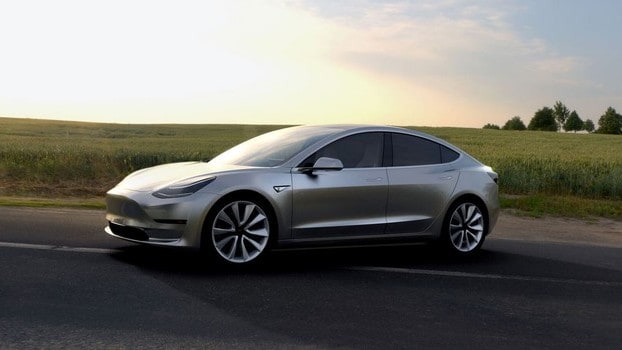
    tesla stock represented by tesla electric car driving along country road

    This article was originally published on Fool.com. All figures quoted in US dollars unless otherwise stated.

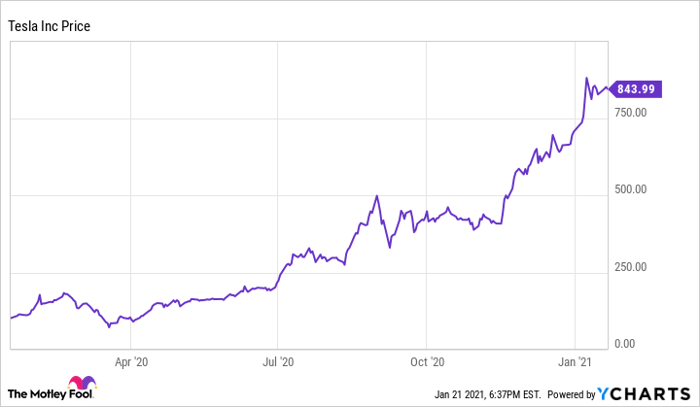
    Tesla Inc (NASDAQ: TSLA) stock has rallied wildly over the past year, gaining more than 700%. Solid growth in vehicle deliveries and margin expansion have both contributed to the stock’s surge. Tesla’s inclusion in the S&P 500 Index (SP: .INX) index also helped.

    Still, these factors can’t fully explain Tesla’s incredible rise. Tesla stock has doubled just since the middle of November, even though it hasn’t reported earnings. It has risen 20% in the first three weeks of 2021, adding about $150 billion to its fully diluted market capitalisation.

    TSLA Chart

    Tesla stock performance data by YCharts.

    Investor optimism about a “blue sweep” — Democratic control of the presidency, the Senate, and the House of Representatives — seems to have provided extra juice to Tesla’s rally in recent months. Many investors and pundits expect stronger government support for the electric vehicle industry with Democrats in control. However, the blue sweep could hurt Tesla just as easily as it could help the EV pioneer. Let’s take a look.

    Democrats take control

    President Joe Biden officially took office at noon EST last Wednesday. Newly elected Vice President Kamala Harris swore in new Democratic senators Jon Ossoff, Alex Padilla, and Raphael Warnock later the same day. That officially gave Democrats control of the presidency and the Senate, in addition to the House of Representatives, where they’ve had a majority since 2019.

    Democrats tend to support aggressive efforts to combat climate change, including measures to boost EV sales. Most notably, the 2009 American Recovery and Reinvestment Act created a tax credit worth up to $7,500 for buyers of EVs and plug-in hybrids.

    Those credits begin to phase out once an automaker sells 200,000 qualifying EVs or plug-in hybrids in the US. Tesla and General Motors both hit that milestone a couple of years ago, and the credits have phased out entirely for their vehicles. No other automaker has reached the 200,000-unit mark yet, and none are likely to get there until 2022 and beyond. Some investors hope that the government will restore Tesla’s eligibility for EV tax credits or help it in other ways now that the Democrats control the presidency and both houses of Congress.

    Assessing EV industry stimulus plans

    At first glance, these hopes don’t seem outlandish. During his campaign and during the transition period, President Biden expressed support for removing the sales cap for the EV tax credit program. Furthermore, most experts agree that tax credits accelerate EV adoption.

    However, the Democrats hold razor-thin margins in both the House and the Senate. Biden will need to win the support of moderates to pass legislation. Expanding eligibility for the plug-in EV credit will only benefit Tesla and GM right now. That could make the measure controversial, particularly because Tesla is doing just fine without the credits.

    Biden has spent more energy promoting a plan to install 500,000 public EV chargers by 2030. The goal is to support EV adoption by making fast chargers as ubiquitous as gas stations. That proposal stands a much greater chance of being implemented. Senator Joe Manchin of West Virginia — a key swing vote — has expressed firm support for infrastructure spending. Moreover, installing all of those chargers could create hundreds of thousands of jobs spread all across the country.

    Whereas lifting the cap on the EV tax credit would boost demand for Teslas, a big investment in public charging infrastructure will mainly help its competitors. After all, Tesla drivers already have ample access to fast charging for road trips thanks to the company’s Supercharger network. There are fewer fast-charging options for buyers of other automakers’ EVs. Thus, Biden’s charging station plan could level the playing field by fixing one significant problem for buyers of non-Tesla EVs.

    What it all means

    Tesla’s popularity is growing for many reasons. Customers like its vehicles’ styling, performance, and in-car technology, as well as the brand’s overall image. The Supercharger network certainly represents a competitive advantage today, but losing that advantage won’t cause Tesla’s growth to stop.

    That said, if the Biden Administration removes charging worries as a barrier to the purchase of non-Tesla EVs, it will help other brands sell significantly more EVs. Over time, that could make those brands seem like legitimate competitors to Tesla in the EV market.

    If Tesla stock were still trading at its early 2020 valuation, this wouldn’t be a big deal. But with a fully diluted market cap approaching $1 trillion, Tesla is pricing in a level of market share that would be unprecedented. The more help other automakers get in transitioning to EVs, the lower the likelihood of Tesla capturing a 20%-plus share of the global auto market over the next 10 to 15 years (as Elon Musk hopes). That makes the blue sweep potentially bad news for Tesla.

    This article was originally published on Fool.com. All figures quoted in US dollars unless otherwise stated.

    Where to invest $1,000 right now

    When investing expert Scott Phillips has a stock tip, it can pay to listen. After all, the flagship Motley Fool Share Advisor newsletter he has run for more than eight years has provided thousands of paying members with stock picks that have doubled, tripled or even more.*

    Scott just revealed what he believes are the five best ASX stocks for investors to buy right now. These stocks are trading at dirt-cheap prices and Scott thinks they are great buys right now.

    *Returns as of June 30th

    More reading

    Adam Levine-Weinberg owns shares of General Motors. The Motley Fool Australia’s parent company Motley Fool Holdings Inc. owns shares of and recommends Tesla. The Motley Fool Australia has no position in any of the stocks mentioned. The Motley Fool has a disclosure policy. This article contains general investment advice only (under AFSL 400691). Authorised by Bruce Jackson.

    The post Will the blue sweep boost Tesla? Don’t count on it appeared first on The Motley Fool Australia.

    This article was originally published on Fool.com. All figures quoted in US dollars unless otherwise stated.

    from The Motley Fool Australia https://ift.tt/3cct9oy

  • 2 ASX 200 shares to buy for dividends

    long term growth shares, plants in pots growing over time

    There are some S&P/ASX 200 Index (ASX: XJO) shares that have dividend yields that are much higher than bank savings interest rates.

    The Reserve Bank of Australia (RBA) official interest rate is now just 0.25%.

    Here are two ASX 200 dividend shares that may be worth considering for income:

    Brickworks Limited (ASX: BKW)

    Brickworks is one of the largest building products businesses on the ASX. According to the ASX, it has a market capitalisation of $2.75 billion.

    The business manufactures and sells a variety of products in Australia. It offers clay bricks and pavers, masonry and stone, roofing, specialised building systems, precast and cement.

    These products are sold through various brands like Austral Bricks and Bristle Roofing.

    Brickworks also has a sizeable presence in the US after making the acquisitions, including Glen Gery. Brickworks is actually the market leader in the north east of the US.

    Across the business it has 2,500 staff, 45 manufacturing plants, 54 design studies, displays and masonry supply centres, 17 brands and more than 2,000 products.

    The company is currently seeing a recovery in the Australian building products market after a difficult 2020. In a trading update it said that it has made a strong start to FY21, with first quarter earnings well ahead of the prior corresponding period. However, the US segment is still suffering from COVID-19 impacts.

    The ASX 200 dividend share is currently investing to build its competitive position in key markets. It’s constructing a $75 million Austral Masonry plant in Sydney, which is on track for completion in 2021. At Horsley Park, it has demolished the old brick kiln and associated equipment at plant 2, paving the way for the construction of a new $125 million face brick plant. Brickworks said this was the most advanced brick plant ever build when complete.

    Brickworks’ other segments assist paying the dividend. It owns a large amount of Washington H. Soul Pattinson and Co. Ltd (ASX: SOL) shares, which pays a growing dividend up to Brickworks. Soul Patts has a diversified portfolio of assets which pays good cashflow.

    The company also owns a 50% share of an industrial property trust with Goodman Group (ASX: GMG) which continues to generate higher rental profit and that gets paid to Brickworks. The property trust is currently building two high-tech warehouses for Amazon and Coles Group Ltd (ASX: COL).

    Brickworks has hasn’t cut its dividend for over forty years and at the current Brickworks share price it has a grossed-up dividend yield of 4.5%.

    Tassal Group Limited (ASX: TGR)

    Tassal is one of the largest fish businesses in Australia. It has large salmon and prawn operations.

    Despite the effects of COVID-19, in FY20 it was able to grow revenue by 0.3%, operating earnings before interest and tax (EBIT) by 12.7% and operating net profit after tax (NPAT) grew by 13.3%.

    It was this result that allowed the business to maintain the half-year dividend at 9 cents per share whilst the total dividend was maintained at 18 cents per share.

    The ASX 200 dividend share made a prawn farm acquisition, 1,300 hectare property called Billy Creek, it’s a neighbouring property to the company’s existing Proserpine prawn farm. The combination of the two properties provides an opportunity for an additional 350 hectares of ponds, supporting a total of around 800 hectares of ponds across the wider precinct.

    At the current Tassal share price it has a partially franked dividend yield of 5.3%.

    Where to invest $1,000 right now

    When investing expert Scott Phillips has a stock tip, it can pay to listen. After all, the flagship Motley Fool Share Advisor newsletter he has run for more than eight years has provided thousands of paying members with stock picks that have doubled, tripled or even more.*

    Scott just revealed what he believes are the five best ASX stocks for investors to buy right now. These stocks are trading at dirt-cheap prices and Scott thinks they are great buys right now.

    *Returns as of June 30th

    More reading

    Motley Fool contributor Tristan Harrison owns shares of Washington H. Soul Pattinson and Company Limited. The Motley Fool Australia owns shares of and has recommended Brickworks and Washington H. Soul Pattinson and Company Limited. The Motley Fool Australia owns shares of COLESGROUP DEF SET. The Motley Fool has a disclosure policy. This article contains general investment advice only (under AFSL 400691). Authorised by Bruce Jackson.

    The post 2 ASX 200 shares to buy for dividends appeared first on The Motley Fool Australia.

    from The Motley Fool Australia https://ift.tt/2Mp29aw

  • 2 fantastic ASX dividend shares with attractive yields

    man carrying large dollar sign on his back representing high P/E ratio or dividend

    If you’re planning to add a dividend share or two to your portfolio in the near future, then you may want to check out the ones listed below.

    Here’s why these ASX dividend shares come highly rated right now:

    Accent Group Ltd (ASX: AX1)

    Accent is an ASX dividend share that has recently caught the eye. The leading leisure footwear-focused retailer has just released a trading update which revealed that it has been performing very strongly in FY 2021.

    After an impressive start to the year, the company followed this up with a very strong holiday period. For the two months to 27 December, the company’s total sales were up 12.3% and its like-for-like sales grew 7.4%. This underpinned like-for-like sales growth of 12.3% for the first half.

    One broker that was impressed was Citi. In response to the update, it put a buy rating and $2.60 price target on its shares.

    The broker is also forecasting an 11 cents per share dividend from Accent in FY 2021. Based on the current Accent share price, this represents a fully franked 4.5% dividend yield.

    Australia and New Zealand Banking GrpLtd (ASX: ANZ)

    Another ASX dividend share to look at this week is ANZ Bank. Although its shares have rallied strongly over the last few months, analysts at Morgans don’t believe it is too late to invest. Especially given the improving outlook for the banks and the generous dividends on offer with its shares.

    Morgans recently reiterated its add rating and lifted its price target on the bank’s shares to $26.00. Its analysts are forecasting a $1.27 per share dividend in FY 2021, followed by a $1.50 per share dividend in FY 2022.

    Based on the latest ANZ share price, this will mean 5.15% and 6.1% dividend yields, respectively, for income investors over the next two years.

    Where to invest $1,000 right now

    When investing expert Scott Phillips has a stock tip, it can pay to listen. After all, the flagship Motley Fool Share Advisor newsletter he has run for more than eight years has provided thousands of paying members with stock picks that have doubled, tripled or even more.*

    Scott just revealed what he believes are the five best ASX stocks for investors to buy right now. These stocks are trading at dirt-cheap prices and Scott thinks they are great buys right now.

    *Returns as of June 30th

    More reading

    Motley Fool contributor James Mickleboro has no position in any of the stocks mentioned. The Motley Fool Australia has recommended Accent Group. The Motley Fool has a disclosure policy. This article contains general investment advice only (under AFSL 400691). Authorised by Bruce Jackson.

    The post 2 fantastic ASX dividend shares with attractive yields appeared first on The Motley Fool Australia.

    from The Motley Fool Australia https://ift.tt/3phSxN7

  • Will Joe Biden’s election help an Australia-China reset?

    Two flags - one from China, the other Australian - sit together on a desk

    One of the most dominant economic issues Australia faced last year (outside of the coronavirus pandemic, of course) was the significant deterioration in Sino-Australian relations.

    As one of our biggest export markets, China’s economic relationship is an important one. We all remember the narrative of how Chinese demand for our commodities ‘saved’ us from the ravages of the global financial crisis more than a decade ago. Indeed, it’s likely that this relationship was instrumental in keeping Australia from plunging into an official recession when almost every other country in the world did.

    But, a decade later, how things have changed.

    Sino-Australian relations are arguably at their lowest point in a generation. When the Australian government called for a formal enquiry into the origins of the coronavirus last year, China’s reaction was one of hostility.

    The country quickly ramped up economic relations, which evolved into effectively banning imports of barley, wine and other valuable exports. Recent developments, including the ‘list of 14 demands’ and the infamous tweet of a fabricated photo of an Australian soldier performing war crimes, have not helped a potential thaw.

    And some ASX companies have the scars to prove it. Treasury Wine Estates Ltd (ASX: TWE) saw its share price crater more than 41% in 2020, almost solely due to Chinese trade barriers on its wines.

    It’s arguable that if things continue down this path, it could further damage the Australian economy (and ASX shares as a result). China remains one of our largest trading partners, after all. And the legendary Chinese demand for Australian coal and iron ore continues… for now at least.

    Is the US part of the problem?

    Part of the problem could be the interwoven relationships between Australia, China and the United States. It’s no secret that under the now-previous Trump administration, there was open hostility toward China.

    Indeed, former President Trump made ‘China rips us off’ one of his central economic platforms in the 2016 election campaign.

    This was followed up by the infamous ‘trade wars’, where both countries levied massive tariffs on imports of goods. This was (very) partially resolved at the end of 2019 with the ‘Phase One’ deal. But with the outbreak of the pandemic, all bets were off as Trump decried the ‘China virus’.

    According to a report in the Australian Financial Review (AFR), this did nothing to help Australia. China views Australia as an unequivocal backer and ally of the United States, and so perhaps, in their eyes, whatever America is complicit in, Australia is too. The report calls this “feed[ing] more Chinese suspicions about the West ganging up on it”. A report from the ABC last year goes further. It quotes Chinese state media as calling Australia a “giant kangaroo which acts as the dog of the United States”.

    But, the Trump administration is no more. China delivered a final goodbye by imposing sanctions on the former secretary of state Mike Pompeo on his first day out of office. No guesses as to how China’s feeling on that note.

    So will the new Biden administration help Australia turn a page on its own frosty relationship with China? Perhaps help mend the broken fences in the two countries trade relations? Help Treasury shareholders sleep well at night?

    Will the great Australia-China wall fall?

    According to a report from the BBC, the new president looks set to engage a more multilateral approach to China, rather than a Trump-style “unabashedly isolationist one”.

    However, it’s worth noting that a ‘tough on China’ policy has a lot of bipartisan support in the US. We could see a gradual thawing, but the BBC report suggests that this will deliver incremental improvements at best for the relationship.

    That might not deliver Australia too much goodwill from China, at least for a while. The AFR report also quotes Dennis Richardson, former Department of Foreign Affairs and Trade secretary, who recently stated: “Australia will probably be in China’s ‘dog house’ for at least two more years”.

    That doesn’t sound like it will lead to a good night’s sleep for Treasury shareholders anytime soon.

    Where to invest $1,000 right now

    When investing expert Scott Phillips has a stock tip, it can pay to listen. After all, the flagship Motley Fool Share Advisor newsletter he has run for more than eight years has provided thousands of paying members with stock picks that have doubled, tripled or even more.*

    Scott just revealed what he believes are the five best ASX stocks for investors to buy right now. These stocks are trading at dirt-cheap prices and Scott thinks they are great buys right now.

    *Returns as of June 30th

    More reading

    Motley Fool contributor Sebastian Bowen has no position in any of the stocks mentioned. The Motley Fool Australia owns shares of and has recommended Treasury Wine Estates Limited. The Motley Fool has a disclosure policy. This article contains general investment advice only (under AFSL 400691). Authorised by Bruce Jackson.

    The post Will Joe Biden’s election help an Australia-China reset? appeared first on The Motley Fool Australia.

    from The Motley Fool Australia https://ift.tt/39f3RnO

  • Wellness and finance: An interview with Dr Deepak Chopra

    This article was originally published on Fool.com. All figures quoted in US dollars unless otherwise stated.

    A hand bathed in sunlight holds a glowing ball represnting the world and wellbeing

    This article was originally published on Fool.com. All figures quoted in US dollars unless otherwise stated.

    Dr Deepak Chopra is known throughout the world as one of the top experts on wellness, so it might come as a surprise that he has decided to partner with a financial services firm, Personal Capital. However, wellness and finance have more in common than you might think.

    Two of our Fool.com contributors, Matt Frankel, CFP, and Jason Hall recently had the opportunity to speak with Dr Chopra on The Wrap. Here’s the entire 8 JanuaryFool Live interview – you don’t want to miss this. 

    [youtube https://www.youtube.com/watch?v=2yJXhuf5LBY?feature=oembed]

    Matt Frankel: You’re obviously a very well-known expert on wellness. But I was surprised to hear you were partnering with Personal Capital on a financial matter. Because a lot of people don’t normally make the connection between finance and overall wellness. Would you care to expand what led you to partner with Personal Capital and the connection that you see?

    Dr Deepak Chopra: There are many reasons. One is that I have always believed in abundance as a natural experience of life, abundance in all its forms, which means health, relationships. My definition of success is only one thing, joy. If you don’t have joy, you don’t have success. It doesn’t matter how much money you have.

    I started my career in this country with nothing, zero. When I came to this country I didn’t have a dollar. I got seduced by a culture where you’re able to buy things that you didn’t need with the money that you hadn’t earned to impress people that you didn’t like. I realised [laughs] that money was the core source of all stress in the world. I also realised that money is a human construct, just like latitude and longitude, Greenwich Meridian Time, Wall Street.

    We made it up. How do we negotiate our relationship with abundance is why I joined this effort to show people that money is very important. But it’s how you spend the money, how you earn the money, [laughs] and is it bringing joy to you. If it’s not, then it’s useless.

    Jason Hall: The Motley Fool’s mission I think is appropriate to share with you, Dr Chopra. It’s to help people be smarter, happier, and richer. There’s an obvious connotation for a company that makes a living selling people subscriptions to pick stocks.

    But I can tell you it has a deeper meaning for most of us here. I would love to hear your thoughts on talking about finances and wellness and that tension between using finances as a source of abundance versus the things that you were talking about, and how it can be a source of pain and problem. I would like to hear your thoughts about the idea of wealth and richness, and what those terms really mean to you.

    Chopra: I’ve been on the scientific advisory board of the Gallup organisation where we look at well-being in all its different aspects, in all its different buckets. One of the buckets of well-being is financial well-being.

    The other buckets of well-being include career well-being, meaning and purpose in your job well-being, social well-being, friends, family, professional well-being, physical well-being, community well-being, and ultimately, emotional and spiritual well-being, which are the most important anyway.

    But in that context, if you look at the data on financial well-being, you find that people who are financially secure are the ones who are actually not only making wise decisions in how they save money, earn money, and spend money, but they are also enjoying their money. People who are financially secure, first of all, they have safety. They feel safe. They have insurance, they have disability, they have retirement, they have vacation benefits, and all that. That’s number one. They have different mechanisms in their financial management where they don’t have money as a source of stress, number one.

    Number two, financially secure people spend more on experience than on products. Because it’s been realised that you can buy this iPhone 9, and then after six months iPhone 10, and after seven months iPhone 11, and the only difference is the camera. [laughs] I’m sure a lot of you don’t even know the difference. People who are wise and secure about money don’t spend that much money on products or redundancy. They spend money on experiences, on a vacation, on going out for a night with your family and friends, entertainment, on courses, on seminars, on education, on their children, on their grandchildren, on philanthropy. This gives people much more financial security and also enjoyment from their money. They like to spend money.

    They also save money, but they don’t hoard it. I know a lot people, for example, who are hoarders. They just hoard, hoard, hoard, hoard. That becomes a source of anxiety, a lot of people who confuse net-worth with self-worth. Depending on the stock market in the evening is everything that is about life, whether they have sex in the evening or whether they go to a restaurant [laughs] or whether they smile or whether they scream at their spouse, all depends on what happened in the stock market. Self-worth and net-worth is totally confused. There’s also research that shows that money is an important part of our, what we call happiness experience, but not the most important part.

    If you look at what people call happiness formulas, that 50 percent of your happiness comes from your attitude to life. Do you see the world as a problem or as opportunity? Now, that has about to do with how you trade in the stock market. Are you seeing problems? Are you seeing opportunities? That’s a very big difference between successful investors and unsuccessful investors. People who are happy have a set point that looks for opportunities instead of problems. The second component is the money itself. If you win the lottery, you’ll be ecstatic. You’ll be very happy. But after six months, you’ll return to your set point, and after a year, you may be actually unhappier because now you’re all concerned about taxes and [laughs] all the things that go with money being your identity. Money adds about 12-15 percent of your total happiness experience.

    The third part of the happiness quotient, formula, equation is what we call daily personal choices, sum up of personal pleasure: sex, food, entertainment, alcohol, shopping. Do they make you happy? Yes, but only transiently. If you went on a shopping spree, you’ll be excited today. Tomorrow you may be regretting. Three days later you may be depressed. But if you find meaning and purpose in your life, if you have the ability to make other people happy, and if you’re generous in how you spend money, generosity of spirit, that makes you very happy. That puts money in context, about 15 percent of your daily happiness experience.

    Hall: Matt.

    Frankel: I want to get back to what you were saying about how people confuse their net-worth and self-worth. One thing that people struggle with a lot, especially on our shows, that we’ve heard from listeners, is failures when it comes to money. How do you get past failures? For example, if I make a bad investment, which pretty much everyone that’s listening has done at one point or another. If I spend money foolishly, not the Motley Fool foolishly, but the bad way, how do you get past that and move forward? How would you advise people to deal with financial failure and move forward in a positive way?

    Chopra: I think any failure can be reframed as a learning experience so you don’t repeat the same [laughs] mistakes. But you don’t say I’m never going to make a mistake again, because if you don’t make mistakes and you don’t take risks, you’re never going to have an adventure, and life should be an adventure. Otherwise, life becomes an algorithm. I think human existence is based on enjoyment. Enjoy. Take risks, make mistakes. Don’t make the same mistakes over and over again, that’s being a fool. Otherwise, reframe failure as a learning lesson.

    Hall: Dr Chopra, can you share some practices that people can use in their daily lives maybe to help find balance or maintain a healthy attitude or maybe reframe those things that can be viewed as struggles?

    Chopra: In my daily practice, I have four intentions every day that I start my day with. The first is a joyful, energetic body. If I haven’t a joyful, energetic body, I’m good for nothing. The second is loving, compassionate heart. If I don’t have that, I’m disconnected from the world. The third is a reflective, alert mind. If I don’t have that, I make stupid decisions. The fourth is likeness of being. If I don’t have unprovoked joy, then I don’t have any connection with my spirit. Those are my four intentions every day.

    Now I also know, as a physician, that 95 percent of chronic illness is actually related to inflammation, anxiety, depression, and things like that. I have seven pillars of practice as well-being. Depressed, go to sleep.

    Number 1, stress management. Number 2, exercise. Number 3, healthy relationships. Number 4, being very mindful of my nutrition as a basis for a good healthy body. Number 5 and number 6, connected to nature. Number 7, self-awareness.

    In that context, I also bring in what I call simple laws of managing financial security, and that is, if you’re not an expert, get an expert to deal with it. Then make sure that you have enough savings for a crisis. By in large, ever since I became an intern resident from those days, didn’t matter. My salary at one point in 1970 was $202 a month. But I still saved 10 percent of the money because [laughs] my mother said that’s what you do, when I was a kid. I never stopped doing that, but it was just $202 a month [inaudible] many times more than that. It’s always been there, and it’s been a habit. I don’t manage money myself, I get professionals to do it.

    Hall: One of the things you mentioned there from very beginning talking about when you came to the United States essentially flat broke. You have been both fortunate and through a product of an immense amount of work and effort that you’ve put in, you’ve had tremendous financial success. But a lot of our viewers don’t know a lot about your background and history. I think it would be really interesting if you could share, and there’s things you shared in the books you’ve written, but if you could share with our audience maybe one or two things that happened financially early in your time in the US that elucidate how mistakes happen and maybe they seem like just big boneheaded things, but then you move forward and eventually they become irrelevant.

    Chopra: Yes, when I finished medical school, there was no way to get out of India easily. You had to pass exams, you had to go to Sri Lanka to get an exam done. Foreign exchange regulations didn’t allow you to leave India with more than $8. I had an uncle in England who lent me $100, so now I had 108. I thought in India [laughs] that’s a very auspicious number. A hundred and eight is almost the holy number. A hundred and eight mantras on the bead and all that, 108, everything is 108.

    So I thought I should do something auspicious. I went to the Moulin Rouge in Paris and spent it all in one night, [laughs] champagne and all of that. When I arrived in the United States, I had no money. I landed in JFK. Those days we didn’t have cellphones or anything, I made a collect call to the hospital, which no longer exists. It was a run down, what do you call it? Community hospital in Plainville, New Jersey, with a lot of violence and very rundown place, run by the mob. I didn’t know that before I arrived there, I said, “I don’t have any money, can you pick me up?” I call the hospital, they were so desperate they sent me a helicopter. [laughs] So my first experience of the United States is lifting off a helicopter, JFK.

    I thought this must be Disney (NYSE: DIS) World or if it isn’t Disney World, [laughs] I guess Disney World is even better. Fifteen minutes later, I was in this little place called Plainville, New Jersey. Went to the emergency room, got totally involved there, after 24 hours, totally exhausted. Went to Main Street, stood outside the television store, because I’d never seen television in my life. When I came to this country, there was no TV in India. This was a colour TV, and I was fascinated and the salesperson came out, he said, “You like that?” I said, “Yeah.” He said, “Why didn’t you buy it?” I said, “I have no money.” He said, “What do you do?” I said, “I’m training to be a doctor.” He said, “At the hospital?” I said, “Yes.” He said, “Oh, come on in doc, all you have to do is sign this yellow piece of paper, and you can have the TV set.”

    I walked out with the TV set, not realising there were 10 TV sets in my dorm. [laughs] I’d signed off months salary [laughs] over this TV set. But it didn’t bother me. Next day I worked again 24 hours in the emergency room. Then I went to an automobile place. It was a Volkswagen dealership. I asked of the manager, I said, “Do you have that yellow piece of paper that I can sign because I’m a doctor and I want to drive that car over there?” I drove out, and $50 down-payment, I drove in a Volkswagen Middle out of the agency. I thought this is heaven, you don’t have to spend any money. You can spend any amount of money even though you haven’t earned it.

    Then I got into this rat race of stress, which is basically the cause of illness in our society. Ninety five percent of illness is directly or indirectly related to stress. Money is a huge stress in people’s lives other than health of course, and personal relationships. But they’re all entangled. You need money to have a comfortable life. You need a comfortable life to have healthy relationships. It’s all entangled with the rest of your life.

    Hall: From a few of your interviews that I’ve viewed online before, I know that your personal mindfulness practice, your meditation, you spend several hours a day on those personal things, and a lot of people just don’t have the time between work and family and managing those responsibilities. I’m just curious if you could offer some ideas or tips. I know you have a process called STOP that’s not directly related to that, but we want to hear about STOP. But also I really want to hear about some ideas you have for people to develop practices that they can make part of their daily habit and routine to help them achieve some of these emotional well-being mechanisms that are so important. They’re so tied to so many parts of our life.

    Chopra: Well, the simpler practice like stop is, STOP is anytime you’re stressed, you STOP. It’s an acronym, S stands for stop. T stands for take three deep breaths and smile from your head to your toes. O, observe what’s happening around you and inside your body, and P, now proceed with awareness, compassion and joy. That’s the STOP formula.

    The second is before you make any choice, you can ask yourself a question, “Is this going to bring joy?” If the answer is yes, go for it. If the answer is no, don’t do it. [laughs] All it needs is a little self reflection. That’s all it needs. A little pause, press the pause button, ask a question, and make sure the response, whether it’s a sensation, an image, a feeling, a thought, an emotion it doesn’t matter. Every question you’ll get a response. All you have to do is ask yourself the question, [laughs] but quieten your mind a little bit. Now, having said that, you say a lot of people have made a lot of money this like the other, but in my tradition also, in the different stages of your life, different things are important.

    So for the first 25 years of your life, education is the most important thing. Period. Second 25 years of life, success in the way the world defines success. Progressive realisation of worthy goals, and climbing up the ladder of payment fortune, if that’s what you want. That’s the second phase of life, and you pay attention to that. Which doesn’t mean you don’t pay attention to the other aspects of life, but that becomes more important. The third phase of life, which is the third 25 years, so I’m 74 chronologically, although biologically I think I’m 35.

    But as you get to 75, [laughs] between 50-75, that phase of life, you pay attention to giving back, to philanthropy and helping others get successful. Then the fourth 25 years of life, ideally speaking, you should live for about 100 years and die in peaceful meditation by choice not because you have a sickness, the fourth 25 years of life, which is what I’m entering right now in the next phase, is you explore reality beyond all these human constructs of money and old age, and infirmity and death. You explore what the heck is going on? Why is there existence? Why, [laughs] why do we exist?

    Frankel: We know you’re an incredibly prolific author, you’ve had over 90 books published, including a number of best sellers. First of all, I know there are at least a few people listening who have not read any of your books. If they wanted to learn more about what you are all about, your practices, what’s the one that you would recommend that they start with? That’s my first question. Go ahead

    Chopra: The book that anyone can start with is called The Seven Spiritual Laws of Success. It’s a very small book. It’s my most popular book. It sold 30, 40 million copies ever. Anybody can relate to it, whether they are a teenager or an old person.

    Frankel: The other thing I am curious about, are there authors and books that you read? Who’s influenced you? What’s a book you’ve read recently?

    Chopra: Well, I’m reading actually a book right now, it’s on my desk. It’s by Frank Wilczek, who was a Nobel laureate, winner of the Nobel prize in physics. It’s called Fundamentals: Ten Keys to Reality. That’s the kind of book I enjoy reading. I’m reading this book. What is Science? I read a lot of books on spirituality and science and see where the two come together. My favorite authors are people like Jay [inaudible] . Then I have some romantic old novelists like [inaudible] and [inaudible] and many others.

    Hall: That’s great. I think being broadly read is a valuable trait, no matter what’s your discipline is professionally or whatever you are trying to accomplish in life. I really appreciate that, Dr Chopra. We normally try to do Q&A. We didn’t really open up our Q&A because we weren’t sure how much time we would have, and we wanted to focus on hearing from you. But I do have a few things in our Slido chat that we use that I wanted to share with you. The first one is from one of our viewers who identifies as Oni, and Oni says that, “Deepak was instrumental in helping me through my wife’s terminal illness.” I wanted to share that with you. Thrive has one here. Actually, before I read that one, I want to ask you again, Avery Pemberton Smith is asking, “If you could, could you go through the 12 pillars once again?” Then we can put those in our chat for people to grab.

    Chopra: Seven pillars.

    Hall: Pardon me, seven pillars.

    Chopra: Deep rest, as in sleep, good sleep, number 1. Number two, managing stress and stress could be managed through meditation, mindfulness, music, poetry, entertainment, comedy, massage, so many things that we don’t take time to do. Whenever I used to be stressed as an intern, I would watch Candid Camera to manage stress. Third is exercise, but to add that, I add mind-body coordination, with breathing techniques and yoga. That’s third, because mind-body coordination combined with exercise is much more effective. So let’s say exercise. The fourth is emotions and emotional resiliency, but particularly paying attention to compassion, empathy, love, kindness, joy, and equanimity, fourth. Number 4 is nutrition. A diet that has maximum diversity of plant-based foods. That is organic and is not toxic, and actually decreased inflammation of the microbiome, which is the genetic population in your body, which is mostly bacteria. That would be nutrition, that would be five.

    Six would be biological rhythms. The biological rhythm that we’re most familiar with is circadian rhythm. When people have jetlag, for example, that’s disruptive, but we have many biological rhythms, including seasonal rhythms, we have attentional rhythms, lunar rhythms. You can get yourself grounded and restore biological rhythms anytime you have interaction with nature, even walking barefoot on the ground, or on the beach, or on the grass will restore your biological rhythm. It’s called grounding. The seventh is self-exploration or self-awareness, which is asking yourself, basically, who am I? What do I want? What’s my purpose? What am I grateful for? What is life all about?

    Hall: Thank you for that. I have two, if you have another couple of minutes, we’re coming up on the half-hour mark. Thank you. The first one, Thrive asking, I think this is just really relevant to our audience. Thrive is saying, “I have followed your work for many years and participate in your meditations. During my daily contemplative practices, I have struggled with adding thoughts about money to that time, so I focus on intentions and what I will do with resources. What’s a better way of approaching this?”

    Chopra: Redefine your idea of success. Success is the progressive realisation of worthy goals. What are you passionate about? What’s your PHD? PHD stands for passion, hunger, and drive. What is your passion? What is your hunger? What drives you? Then go do it and you’ll make all the money you want. Find out what your unique strengths are, find out who is in need of them, and then go serve that strength for the betterment of the world.

    Frankel: Right. A final one and then we will let you go. Let me see. Lynn asks, just to reiterate what you were saying before, “Money is 12 percent, daily choices are 15 percent. What are the other ingredients again?”

    Chopra: Money? No. The first is 50 percent, which is your attitude, is, are you looking at life as a problem or life as an opportunity? Everything that happens, 50 percent is attitude. Twelve to 15 percent is money. The third is the choices you make. That’s another 40 percent. Personal choices, which give you some joy. But then the other choice is called fulfillment, which is making other people happy by giving them attention, affection, appreciation, and acceptance. Finding meaning and purpose in your own life. That’s actually the totality of experience.

    Hall: I love thinking about it that way. I really do. There’s the quote that, “You can’t control what happens to you, but you can control your attitude and how you respond.”

    Chopra: Yeah. By the way, the key to life is how to respond in the present moment to what is happening. That’s it. The meaning of life is a conscious response to what is happening now, that’s it.

    Hall: Thank you so much, Dr Chopra. Do you have any last words to share with us? I think that’s a good way to end, unless you have having anything else you’d like to close with.

    Chopra: My last words would be, if you come to my grave, and there won’t be a grave because I don’t have any bones. I will be a bunch of ashes. But what you should see and feel is only one thing, take it easy.

    This article was originally published on Fool.com. All figures quoted in US dollars unless otherwise stated.

    Where to invest $1,000 right now

    When investing expert Scott Phillips has a stock tip, it can pay to listen. After all, the flagship Motley Fool Share Advisor newsletter he has run for more than eight years has provided thousands of paying members with stock picks that have doubled, tripled or even more.*

    Scott just revealed what he believes are the five best ASX stocks for investors to buy right now. These stocks are trading at dirt-cheap prices and Scott thinks they are great buys right now.

    *Returns as of June 30th

    More reading

    Jason Hall owns shares of Walt Disney. Matthew Frankel, CFP owns shares of Walt Disney. The Motley Fool Australia’s parent company Motley Fool Holdings Inc. owns shares of and recommends Walt Disney. The Motley Fool Australia has recommended Walt Disney. The Motley Fool has a disclosure policy. This article contains general investment advice only (under AFSL 400691). Authorised by Bruce Jackson.

    The post Wellness and finance: An interview with Dr Deepak Chopra appeared first on The Motley Fool Australia.

    This article was originally published on Fool.com. All figures quoted in US dollars unless otherwise stated.

    from The Motley Fool Australia https://ift.tt/2KLa69k

  • These 2 Nasdaq Giants Are at All-Time Record Highs — and They’re Not Slowing Down

    This article was originally published on Fool.com. All figures quoted in US dollars unless otherwise stated.

    Pointing to an upward trend in data on screen.

    This article was originally published on Fool.com. All figures quoted in US dollars unless otherwise stated.

    Investors have gotten used to the idea that the stocks that make up the Nasdaq Composite (NASDAQINDEX: ^IXIC) seem almost destined to outpace the broader stock market. Indeed, that was again the case on Monday, as the Nasdaq was up about 0.3% at 2:15 p.m. EST even as other market benchmarks were flat to lower on the day.

    Two Nasdaq stocks in particular have been doing exceptionally well lately, and on Monday, they both proceeded to hit new all-time record highs. Apple (NASDAQ: AAPL) and Tesla (NASDAQ: TSLA) have a lot going for them, and even after their recent success, the two companies both have promising futures ahead of them that could potentially bring even more stock-price gains for investors.

    The sky’s the limit for Apple

    Shares of Apple rose more than 2% on Monday afternoon, bringing the iPhone maker’s market capitalization to nearly $2.4 trillion. Yet if Wall Street analysts have their way, the rise to unprecedented heights could have a lot further to climb.

    Analysts at Wedbush offered an extremely optimistic outlook on Apple on Monday. The analyst sees the mobile device giant’s stock price climbing to $175 per share. That would be another 20% to 25% higher from current levels. But that could be just the beginning, as Wedbush’s stretch forecast expressed the possibility that the share price could head up to $225 if trends continue higher throughout 2021.

    The key in Wedbush’s view is the iPhone 12. Stock analysts and customers alike have been waiting for the latest iPhone to hit the market, because it’s the first to take advantage of the features made possible by the ongoing rollout of 5G wireless technology. Looking at the suppliers that provide Apple with key components that go into iPhone production, Wedbush thinks that sales for the holiday quarter could well be far better than it had previously expected.

    You won’t have to wait long for confirmation, because Apple reports earnings later this week. If it gives good news, the stock could make significant progress toward that $225 per share mark in short order.

    Green light for Tesla

    Elsewhere, Tesla kept up its recent move higher as well, with some pointing to analyst moves to justify the latest push. Yet as with so many things involving Tesla, Wall Street seems to have been left behind and is still struggling to catch up.

    Analysts at Baird repeated an outperform rating on the electric vehicle maker’s stock on Monday. However, even though the new price target of $728 per share was $240 higher than its previous prediction, it was more than $100 below where the stock started the day — and even further below where shares traded after a 3% rise Monday afternoon.

    Tesla has put the days of worrying about capital availability behind it, and it’s moving ahead at full speed with massive building projects to boost production capacity. The resulting acceleration in growth will be important to demonstrate that Tesla deserves the high valuation that shareholders have put on it.

    Baird was also willing to get more speculative, considering at least the possibility that Tesla could eventually bring other Musk-led companies like SpaceX and The Boring Company under the same corporate umbrella.

    Tesla also reports earnings on Wednesday, and shareholders are hoping for the best. Although we already know key production and delivery numbers, Tesla could head still higher if it can establish a continuing trend toward greater profitability.

    This article was originally published on Fool.com. All figures quoted in US dollars unless otherwise stated.

    Where to invest $1,000 right now

    When investing expert Scott Phillips has a stock tip, it can pay to listen. After all, the flagship Motley Fool Share Advisor newsletter he has run for more than eight years has provided thousands of paying members with stock picks that have doubled, tripled or even more.*

    Scott just revealed what he believes are the five best ASX stocks for investors to buy right now. These stocks are trading at dirt-cheap prices and Scott thinks they are great buys right now.

    *Returns as of June 30th

    More reading

    Dan Caplinger owns shares of Apple. The Motley Fool Australia’s parent company Motley Fool Holdings Inc. owns shares of and recommends Apple and Tesla. The Motley Fool Australia has recommended Apple. The Motley Fool has a disclosure policy. This article contains general investment advice only (under AFSL 400691). Authorised by Bruce Jackson.

    The post These 2 Nasdaq Giants Are at All-Time Record Highs — and They’re Not Slowing Down appeared first on The Motley Fool Australia.

    This article was originally published on Fool.com. All figures quoted in US dollars unless otherwise stated.

    from The Motley Fool Australia https://ift.tt/3a2m3A3