• The Telix (ASX:TLX) share price is wobbling today

    A doctor looks unsure, indicating share price uncertainty for ASX medical companies

    The Telix Pharmaceuticals Ltd (ASX: TLX) share price has the wobbles today after the company shared news of a successful trial.  

    The biopharmaceutical company announced that its kidney cancer imaging product’s Japanese clinical study met all objectives for its first phase.

    The Telix share price plummeted from its opening price of $3.96 to an intraday low of $3.87, before gaining – and losing – ground through the morning trade. At the time of writing, Telix shares are down 0.51%, trading at $3.89.

    Let’s take a closer look at the news driving the Telix share price today.

    Successful study

    Today, Telix shared news that its clinical study, Zirconium Dosing and Comparison in Japan (ZIRDAC-JP), has proven successful. The study met its objectives of positively measuring the safety, tolerability, required radiation dosage, and movement within the body of its TLX250-CDx.

    TLX250-CDx is an imaging radiopharmaceutical for the imaging of clear cell renal cell carcinoma (ccRCC), the most aggressive form of kidney cancer. ccRCC makes up 70% to 85% of all kidney cancers. According to Telix, TLX250-CDx targets a cell-surface antigen called Carbonic Anhydrase IX.

    The company states that many patients are diagnosed with a renal mass, and TLX250-CDx is able to determine whether they are cancerous in a non-invasive inspection.

    Phase 1 of the study was completed at Yokohama City University Hospital. There, six patients with an unspecified renal mass underwent dosing with TLX250-CDx, followed by positron emission tomography imaging.

    All 6 patients completed the study with no adverse events. The whole-body and organ-specific radiation dosage needed for TLX250-CDx showed no difference between Japanese and Caucasian patients.

    Commentary from management

    Telix chief medical officer Dr Colin Hayward said the company was encouraged by the study’s results:

    We now plan to consult with the Japanese regulator to confirm the design of the next stage of development for TLX250-CDx, with the objective of bridging to Telix’s international Phase III ZIRCON study, currently enrolling patients at 36 sites globally.

    Telix pharmaceuticals share price snapshot 

    If investors embrace today’s news, the Telix share price may break into the ASX 2021 green.

    Currrently, the Telix share price is down 2.9% year to date, although it’s up a whopping 238% over the last 12 months.

    The company has a market capitalisation of around $1 billion, with approximately 281 million shares outstanding.

    Where to invest $1,000 right now

    When investing expert Scott Phillips has a stock tip, it can pay to listen. After all, the flagship Motley Fool Share Advisor newsletter he has run for more than eight years has provided thousands of paying members with stock picks that have doubled, tripled or even more.*

    Scott just revealed what he believes are the five best ASX stocks for investors to buy right now. These stocks are trading at dirt-cheap prices and Scott thinks they are great buys right now.

    *Returns as of February 15th 2021

    More reading

    Motley Fool contributor Brooke Cooper has no position in any of the stocks mentioned.

    The Motley Fool Australia has no position in any of the stocks mentioned. The Motley Fool has a disclosure policy. This article contains general investment advice only (under AFSL 400691). Authorised by Bruce Jackson.

    The post The Telix (ASX:TLX) share price is wobbling today appeared first on The Motley Fool Australia.

    from The Motley Fool Australia https://ift.tt/3xeeHEo

  • Fortescue share price falls as Twiggy calls fossil fuels ‘most dangerous industry in the world’

    energy asx share price flat represented by worker in hi vis gear shrugging

    The Fortescue Metals Group Ltd (ASX: FMG) share price is falling today after its chair, Andrew ‘Twiggy’ Forrest, lambasted the fossil fuels industry in an interview with ABC program, 7:30

    At the time of writing, the Fortescue share price is down 3.19% to $20.91 per share. 

    Fortescue is one of the world’s biggest polluters. According to the report, emitting two million tonnes of carbon per year. It’s a giant Australian iron ore production and exploration company, with assets located in the Pilbara region of Western Australia.

    It’s the fourth largest iron ore producer in the world. Coming in behind BHP Group Ltd (ASX: BHP), Rio Tinto Ltd (ASX: RIO), and Vale. However, unlike its competitors, Fortescue is aiming to be carbon neutral by 2030. 

    Twiggy’s view on fossil fuels

    Australia’s largest iron-ore producer, BHP, is aiming for carbon neutrality by 2050. Moreover, the Australian government is aiming to “preferably” be carbon neutral by 2050.

    Forrest is hoping his company’s comparatively radical shift towards net-zero emissions can attract investors and good publicity. In addition, Forrest is aiming to future-proof Fortescue for the long term.

    “Fortescue has decided to step up and take that first-mover risk. I believe it’s going to work, and we’ll keep on persevering until it does work,” he told 7.30.

    “The fossil fuel industry is perhaps our most dangerous industry in the world right now. It’ll be economics which forces them to change, but they won’t go down without a serious fight.”

    Fortescue won’t be including the emissions from its off-shore iron-ore processing in its 2030 target. However, Forrest is hoping by pioneering Australian companies’ switch towards green hydrogen production, he can spearhead a technological change.

    “What I need to do is not a Pyrrhic victory, or virtue signalling, like saying, I’m going to try and stop my customers from using coal. I can’t stop them using coal,” he continued.

    “What I’m now working on is a replacement for coal, and that’s green hydrogen.”

    Australia’s ‘green hydrogen future’

    Hydrogen is currently relatively expensive and carbon-intensive to produce compared to lithium batteries, however many scientists believe it has the potential to replace lithium batteries in the future.

    Fortescue is currently in talks with the Jordanian government over investing in hydrogen production facilities in the Middle East, but he says Australia could potentially become the world’s largest producer of renewable energy source.

    “Then we could well be that Middle East of energy. We need to grasp that opportunity,” he said.

    “With a little bit of vision, a little bit of drive and a little bit of risk, could we create a massive new industry which creates the steel which the world needs, which is zero carbon steel?” 

    “That’s our future.”

    Fortescue share price snapshot

    While the Fortescue share price is the only one of Australia’s big three iron-ore producers to fall overall in 2021, it’s still up more than 90% over the past 12 months.

    The Fortescue share price has more than doubled, from just over $10 in May 2020 to its current price today.

    Where to invest $1,000 right now

    When investing expert Scott Phillips has a stock tip, it can pay to listen. After all, the flagship Motley Fool Share Advisor newsletter he has run for more than eight years has provided thousands of paying members with stock picks that have doubled, tripled or even more.*

    Scott just revealed what he believes are the five best ASX stocks for investors to buy right now. These stocks are trading at dirt-cheap prices and Scott thinks they are great buys right now.

    *Returns as of February 15th 2021

    More reading

    Motley Fool contributor Lucas Radbourne-Pugh has no position in any of the stocks mentioned. The Motley Fool Australia has no position in any of the stocks mentioned. The Motley Fool has a disclosure policy. This article contains general investment advice only (under AFSL 400691). Authorised by Bruce Jackson.

    The post Fortescue share price falls as Twiggy calls fossil fuels ‘most dangerous industry in the world’ appeared first on The Motley Fool Australia.

    from The Motley Fool Australia https://ift.tt/32ybG3W

  • Why the Walkabout (ASX:WKT) share price is dropping 12%

    Mining ASX share price on watch represented by miner making screen with hands

    Walkabout Resources Ltd (ASX: WKT) shares are tanking 12% in midday trade after the company announced some changes to its senior management team. After opening today’s session at 37.5 cents, the Walkabout share price is currently trading at an intra-day low of 33 cents.

    Let’s take a closer look at the company’s latest news.

    Board and management changes

    Walkabout Resources shares are on the slide today after the company announced it will be making changes to its board and senior management positions. According to its release, the proposed management restructuring will position the company for the next phase of its growth.  

    Walkabout advised that Mr Mike Elliot has been elected as non-executive chair of the board after serving as a non-executive director. The company also announced that Mr Andrew Cunningham has been appointed as chief executive of Walkabout.

    Mr Allan Mulligan will be stepping down from the board and will assume the new role of chief operating officer. As a result of Mr Mulligan’s exit, Walkabout will be looking to appoint two additional non-executive directors once suitable candidates are shortlisted.

    Walkabout highlighted that the recently acquired debt funding for its Lindi Jumbo graphite project in Tanzania prompted the management restructure.  

    More on the Walkabout share price

    Walkabout is an aspiring graphite developer with its flagship Lindi Jumbo Graphite project located in south-east Tanzania. The company holds 100% of the mining licence for the project and aims to take advantage of forecast market demand for graphite products.

    The Walkabout share price has surged by more than 80% over the past 2 weeks. The ballistic price action was fuelled by the company’s announcement it had secured a US$20 million finance facility for its Lindi Jumbo project.  

    Funding was facilitated by Tanzania’s CRDB Bank and represents a major milestone for the company. Walkabout estimates that capital expenditure for the project is around $US32 million, with the secured debt facility meeting more than 60% of the cost.

    According to Walkabout, repayment terms include an 8% per annum interest rate with repayments to be made in quarterly instalments over 42 months following a 12-month grace period.

    Where to invest $1,000 right now

    When investing expert Scott Phillips has a stock tip, it can pay to listen. After all, the flagship Motley Fool Share Advisor newsletter he has run for more than eight years has provided thousands of paying members with stock picks that have doubled, tripled or even more.*

    Scott just revealed what he believes are the five best ASX stocks for investors to buy right now. These stocks are trading at dirt-cheap prices and Scott thinks they are great buys right now.

    *Returns as of February 15th 2021

    More reading

    Motley Fool contributor Nikhil Gangaram has no position in any of the stocks mentioned. The Motley Fool Australia has no position in any of the stocks mentioned. The Motley Fool has a disclosure policy. This article contains general investment advice only (under AFSL 400691). Authorised by Bruce Jackson.

    The post Why the Walkabout (ASX:WKT) share price is dropping 12% appeared first on The Motley Fool Australia.

    from The Motley Fool Australia https://ift.tt/3gsj3BO

  • A red-hot reason why NVIDIA’s blockbuster growth is here to stay

    This article was originally published on Fool.com. All figures quoted in US dollars unless otherwise stated.

    unique digital and cyber camera emitting red light

    This article was originally published on Fool.com. All figures quoted in US dollars unless otherwise stated.

    NVIDIA‘s (NASDAQ: NVDA) gaming business has been on fire in recent quarters, and it looks like the segment’s terrific growth is here to stay for the long run. At least that was the indication according to insights from the company’s recent Investor Day presentation.

    The graphics specialist is coming off an outstanding year, with revenue jumping 53% in fiscal 2021 to $16.7 billion and diluted earnings rising 73% year over year to $10 per share. And NVIDIA’s guidance for the ongoing quarter indicates that things are about to get even better for the chipmaker. The company originally expected revenue to spike 72% year over year to $5.3 billion in Q1, but it recently said that actual revenue is tracking above that outlook.

    NVIDIA investors may want to get used to such eye-popping jumps, as the company’s main growth driver — gaming — is at the beginning of a multi-year growth curve. Let’s see why.

    NVIDIA’s biggest business is on a red hot growth streak

    The gaming business is NVIDIA’s biggest source of revenue. It produced 50% of the company’s total revenue last quarter, and it recorded 67% year-over-year growth, driven by huge demand for the RTX 30-series cards. It is also worth noting that NVIDIA closed the fiscal year with record gaming revenue of $7.76 billion, a 41% annual increase that outpaced the segment’s five-year compound annual growth rate (CAGR) of 21%.

    NVIDIA CFO Colette Kress remarked on the last earnings conference call: “Demand is incredible for our new GeForce RTX 30 Series products based on the NVIDIA Ampere GPU architecture.” She also added that the RTX 30 series cards have been “hard to keep in stock and we exited Q4 with channel inventories even lower than when we started.”

    In fact, NVIDIA expects demand to exceed supply for “much of this year,” even though the company says it will have enough stock to support sequential growth for future quarters. It is not surprising to see why such a scenario is unfolding.

    NVIDIA estimates that 85% of its installed base of consumer graphics cards needs to be upgraded to the RTX series. That’s because the company’s RTX 30-series cards, based on the Ampere architecture, deliver a huge jump in performance over the older GTX-series cards and Turing-based RTX-series cards. The RTX 30 cards also offer ray-tracing capabilities — a feature that’s becoming an integral part of games nowadays.

    NVIDIA says that a mid-range card like the RTX 3060 can deliver more than thrice the performance of a card like the GTX 1660 Super when ray-tracing is turned on. It is worth noting that the RTX 3060 has been launched at a suggested price of $329, compared to the $229 launch price of the GTX 1660 Super. As such, consumers are getting a 3X performance increase for a 40% bump in price.

    The favorable price-to-performance ratio of the RTX 30 cards explains why these cards are in huge demand. For instance, NVIDIA launched the RTX 3080 at $699. The card is twice as fast as its predecessor — the RTX 2080 — which had a retail price of $799 at launch. The value proposition offered by the new cards is encouraging NVIDIA consumers, who are willing to pay more money for the bigger performance increase, to upgrade at a faster pace.

    Faster upgrades, improved pricing power mean consistent gaming growth

    NVIDIA says that its Ampere GPU (graphics processing unit) architecture is ramping up at twice the pace of its predecessors, the Turing and Pascal cards. This is also evident from the fact that the Ampere cards now enjoy two times the share of the preceding Turing cards on popular gaming platform Steam, which boasts 120 million monthly active users. That’s impressive considering that the Ampere-based RTX 30 graphics cards were just unveiled in September 2020.

    What’s more, the attractive price-to-performance ratio of the Ampere cards is encouraging consumers to pay more money for a much-improved performance compared to the earlier generation cards. NVIDIA says that the Ampere cards are commanding an average selling price of $360 in the initial months after their launch. That’s a 20% increase over Turing’s average selling price of $300 for the first six months after launch, thanks in part to improved sales of higher-priced cards.

    With a huge proportion of NVIDIA’s installed base having yet to upgrade to the new cards, investors can expect the chipmaker to enjoy a combination of higher volumes and improved pricing for a long time to come. This should help the gaming business record consistently high growth levels, boost NVIDIA’s overall revenue and earnings, and help it remain a top growth stock for a long time to come.

    This article was originally published on Fool.com. All figures quoted in US dollars unless otherwise stated.

    Where to invest $1,000 right now

    When investing expert Scott Phillips has a stock tip, it can pay to listen. After all, the flagship Motley Fool Share Advisor newsletter he has run for more than eight years has provided thousands of paying members with stock picks that have doubled, tripled or even more.*

    Scott just revealed what he believes are the five best ASX stocks for investors to buy right now. These stocks are trading at dirt-cheap prices and Scott thinks they are great buys right now.

    *Returns as of February 15th 2021

    More reading

    Harsh Chauhan has no position in any of the stocks mentioned. The Motley Fool Australia’s parent company Motley Fool Holdings Inc. owns shares of and recommends NVIDIA. The Motley Fool Australia has recommended NVIDIA. The Motley Fool has a disclosure policy. This article contains general investment advice only (under AFSL 400691). Authorised by Bruce Jackson.

    The post A red-hot reason why NVIDIA’s blockbuster growth is here to stay appeared first on The Motley Fool Australia.

    This article was originally published on Fool.com. All figures quoted in US dollars unless otherwise stated.

    from The Motley Fool Australia https://ift.tt/2RPYqFE

  • Here’s why the Helloworld (ASX:HLO) share price is tumbling today

    A stockmarket chart on a red background with an arrow going down, indicating falling share price

    The Helloworld Travel Ltd (ASX: HLO) share price is in negative territory today following the release of a trading update. During mid-morning trade, the travel booking company’s shares are fetching for $2.03, down 1.9%.

    Q3 FY21 Trading update

    Helloworld shares are backtracking today as investors digest the company’s latest financial results.

    For the quarter ending 31 March 2021, Helloworld reported an ongoing recovery of its key operational metrics.

    Total Transaction Value (TTV) stood at $261.5 million. This reflected an increase on the two previous quarters, but still a long way off from Q3 FY20 – down 79.6%. Helloworld stated that January and February lockdowns impacted TTV performance. Notably, the month of March recorded the highest TTV for the financial year, at $112.5 million.

    Revenue for the March quarter totalled $15 million. This is similar to what was achieved in Q1 and Q2 of FY21, $13.1 million and $16.5 million, respectively. Compared to the corresponding period, however, revenue declined 75.8%.

    Underlying earnings before interest, tax, depreciation and amortisation (EBITDA) also came at a loss of $4.4 million for Q3 FY21. This is in line with Helloworld’s previous forecasts announced to shareholders earlier in the year. Year-to-date EBITDA is currently running at a loss of $10.9 million.

    The company declared a healthy cash balance of $125.9 million, with total free cash of $75 million. External borrowings totalled $81 million with available headroom on its debt facilities of $30.2 million.

    Outlook

    With the easing of restrictions and state borders open in Australia, Helloworld is expecting TTV to continue to improve. In addition, the opening of the trans-Tasman bubble could provide a boost in retail, corporate, ticketing and wholesale business divisions.

    Provided there are no significant COVID-19 impacts, Helloworld is projecting to reach annualised TTV of $1 billion in 2021. Underlying EBITA is expected to incur a loss of around $14 million to $16 million for FY21.

    About the Helloworld share price

    Over the last 12 months, the Helloworld share price has gone on a rollercoaster ride. The company’s shares are up over 50% from this time last year, but down almost 20% year-to-date.

    On valuation metrics, Helloworld has a market capitalisation of roughly $314 million, with 155 million shares on issue.

    Where to invest $1,000 right now

    When investing expert Scott Phillips has a stock tip, it can pay to listen. After all, the flagship Motley Fool Share Advisor newsletter he has run for more than eight years has provided thousands of paying members with stock picks that have doubled, tripled or even more.*

    Scott just revealed what he believes are the five best ASX stocks for investors to buy right now. These stocks are trading at dirt-cheap prices and Scott thinks they are great buys right now.

    *Returns as of February 15th 2021

    More reading

    Aaron Teboneras has no position in any of the stocks mentioned. The Motley Fool Australia’s parent company Motley Fool Holdings Inc. owns shares of Helloworld Limited. The Motley Fool Australia has recommended Helloworld Limited. The Motley Fool has a disclosure policy. This article contains general investment advice only (under AFSL 400691). Authorised by Bruce Jackson.

    The post Here’s why the Helloworld (ASX:HLO) share price is tumbling today appeared first on The Motley Fool Australia.

    from The Motley Fool Australia https://ift.tt/2QhFqze

  • Why the Atlas Arteria (ASX:ALX) share price is dropping today

    A single car on a normally busy highway exchange, indicating a falling share price in ASX road toll and car companies

    The Atlas Arteria Group (ASX: ALX) share price is down today after the toll road company shared its quarterly traffic and revenue update. The company has built and now operates toll roads in Germany, France and the US.

    The Atlas Arteria share price is currently trading at $5.92, down from yesterday’s closing price of $5.97.

    Let’s take a closer look at today’s news from Atlas Arteria.

    Lockdowns = traffic down = revenue down

    The company’s report for the quarter ending 31 March 2021 showed a decrease in the number of cars using the company’s toll roads.

    On average, the number of cars using Atlas Arteria’s tollways decreased by 12.4% this quarter compared to the first quarter of last year.

    Atlas Arteria advised this was because of ongoing COVID-19 related lockdowns in Europe and the United States during the quarter. It claimed that, while COVID-19 lockdowns impacted the prior corresponding period, it was for only 1 month during an otherwise strong quarterly performance.

    Performance in France

    Atlas Arteria essentially has a stake of around 31% in both the APRR tollway and the ADELAC tollway through different investments.

    While the APRR tollway experienced a 12.8% drop in the number of vehicles using it, its revenue wasn’t so hard hit. Due to an increase in the number of heavy vehicles using the tollway, Atlas Arteria’s income from APRR was only 6% less than the first quarter of last year. It brought in around EU€515.5 million this quarter.

    The ADELAC wasn’t so fortunate. Border restrictions meant the freeway’s bread and butter – commuters from Switzerland were unable to cross into France. The number of travellers using the freeway dropped by 25.3%, while its revenue dropped 25.7%. Income for the quarter was around EU€8.9 million.

    Germany

    Atlas Arteria owns the Warnow Tunnel in Germany. Germany spent the entire quarter in a strict lockdown. As a result, the number of travellers using the Warnow Tunnel was the lowest it’s been since the pandemic began.

    18.7% fewer vehicles passed through the Warnow Tunnel compared to the first quarter of last year, which was minimally impacted by COVID-19 restrictions. Compared to the previous corresponding quarter, Atlas Arteria’s income from the tunnel was also down by 17.2%, raking in around EU€2.4 million.

    The United States

    In the US, Atlas Arteria owns the Dulles Greenway in Virginia. According to the company’s release, Virginian’s preference to work from home, government-imposed lockdowns and heavy snowfall all added to a decrease in vehicles using the freeway.

    Traffic on the Dulles Freeway was the hardest hit out of all the company’s tollways. It was down 36.4% compared to the previous corresponding quarter and 46.5% lower than the first quarter of 2019. Revenue from the freeway was also down by 37% this quarter. It only brought in around US$11 million in the first quarter of 2021. That’s compared to around US$20 million in that of 2019.

    Atlas Arteria share price snapshot

    The Atlas Arteria share price is having a bad run on the ASX lately.

    Currently, the Atlas Arteria share price is down 8% year to date, although it’s up by 7% over the last 12 months.

    The company has a market capitalisation of around $5.7 billion, with approximately 959 million shares outstanding.

    Where to invest $1,000 right now

    When investing expert Scott Phillips has a stock tip, it can pay to listen. After all, the flagship Motley Fool Share Advisor newsletter he has run for more than eight years has provided thousands of paying members with stock picks that have doubled, tripled or even more.*

    Scott just revealed what he believes are the five best ASX stocks for investors to buy right now. These stocks are trading at dirt-cheap prices and Scott thinks they are great buys right now.

    *Returns as of February 15th 2021

    More reading

    Motley Fool contributor Brooke Cooper has no position in any of the stocks mentioned.

    The Motley Fool Australia has no position in any of the stocks mentioned. The Motley Fool has a disclosure policy. This article contains general investment advice only (under AFSL 400691). Authorised by Bruce Jackson.

    The post Why the Atlas Arteria (ASX:ALX) share price is dropping today appeared first on The Motley Fool Australia.

    from The Motley Fool Australia https://ift.tt/3sywWkp

  • Brokers weigh in on the Afterpay (ASX:APT) share price

    mixed opinions on asx share price represented by two hands, one with thumb up and the other with thumb down.

    The Afterpay Ltd (ASX: APT) share price finished flat on Monday despite posting another set of strong quarterly results. At the time of writing, the Afterpay share price is trading at $122.52, down 2.16%. 

    The company recorded classic triple-digit growth with group March quarterly sales up 104% on the prior corresponding period. The leading buy now pay later’s (BNPL) active customers increased 75% to 14.6 million, up from 8.4 million a year ago. Key highlights for the quarter include its first sales from Europe and a potential US listing

    Here are the updates from big brokers after digesting Afterpay’s results. 

    Credit Suisse remains bullish on the Afterpay share price

    Underlying sales came in slightly ahead of Credit Suisse’s expectations. However, seemingly strong customer growth figures came in slightly weaker than what the broker was expecting.

    The broker lowered its estimates for underlying sales by 2% for FY21 and 1% for FY22 to FY25. The lower sales forecasts translate to a larger loss forecast in FY21 and a slightly lower profit for the other years. 

    Despite lower forecasts, the broker retained its outperform rating with a $145 target price. 

    Morgans retained its hold rating 

    Lower sales growth forecasts appear to be a consistent theme in broker updates for Afterpay.

    Morgans lowered the company’s FY21 earnings per share forecasts by 7% and FY22 by 8% on lower sales growth assumptions.

    As a result, the broker lowered its target price from $125.3 to $121 with a hold rating. 

    UBS is permanently bearish on Afterpay 

    UBS began coverage of the Afterpay share price back in mid-October 2019, and its been sell rated ever since. 

    Today’s UBS note comes as no surprise with the broker retaining its sell rating with a $36 target price. 

    The broker observes that Afterpay’s update was mixed against its expectations and has followed the trend in lowering forecast sales. 

    Foolish Takeaway

    The Afterpay share price has opened 2% lower to $122.20 on Wednesday following a sharp selloff in US markets overnight. Brokers are in a tug of war with views that Afterpay shares will go higher, flat, and lower. 

    While target prices may vary, there appears to be a consistent theme of lower forecast sales. This ultimately reminds me of Macquarie’s in-depth report on how the Afterpay share price will perform in the short to medium term. 

    Where to invest $1,000 right now

    When investing expert Scott Phillips has a stock tip, it can pay to listen. After all, the flagship Motley Fool Share Advisor newsletter he has run for more than eight years has provided thousands of paying members with stock picks that have doubled, tripled or even more.*

    Scott just revealed what he believes are the five best ASX stocks for investors to buy right now. These stocks are trading at dirt-cheap prices and Scott thinks they are great buys right now.

    *Returns as of February 15th 2021

    More reading

    Motley Fool contributor Kerry Sun has no position in any of the stocks mentioned. The Motley Fool Australia has no position in any of the stocks mentioned. The Motley Fool has a disclosure policy. This article contains general investment advice only (under AFSL 400691). Authorised by Bruce Jackson.

    The post Brokers weigh in on the Afterpay (ASX:APT) share price appeared first on The Motley Fool Australia.

    from The Motley Fool Australia https://ift.tt/2QENV7q

  • Vulcan Energy (ASX:VUL) share price slumps amid asset spin-off

    energy asx share price flat represented by worker in hi vis gear shrugging

    Vulcan Energy Resources Ltd (ASX: VUL) shares are in the red today after the company announced a planned spin-off and initial public offering (IPO) of its non-core, Scandinavian assets. At the time of writing, the Vulcan share price is slumping 2.01% to $7.30. For context, the All Ordinaries Index (ASX: XAO) is sliding 0.8% in morning trade.

    Let’s take a closer look at what the lithium producer announced.

    What’s impacting the Vulcan share price? 

    The Vulcan share price is losing ground today after the company advised it has decided to spin-off and IPO its non-core, Scandinavian battery metals projects (non-lithium). This will create a new, zero-carbon copper, nickel and cobalt company named Kuniko Limited. 

    According to the company, by separating its non-lithium assets, the ‘new’ Vulcan can fully focus on the development of its flagship Zero Carbon Lithium project in Germany. 

    Kuniko will retain Vulcan’s signature zero-carbon theme throughout exploration, development and production. It will focus on zero-carbon projects, hydroelectric power, and the development of mineral processing flowsheets for production using zero fossil fuels.

    Kuniko currently retains a 262 sq km portfolio that consists of five key nickel, cobalt and copper exploration projects in Norway. The company highlights its proximity to the faster-growing battery market as a key advantage. This includes key electric vehicle players such as Tesla‘s Brandenburg facility. 

    These three commodities have benefitted from higher prices in recent months driven by strong industrial demand in China and the electric vehicle sector. This has resulted in a surge in the value of Vulcan shares over the past year.

    Nickel prices have staged a multi-year rally that began in March last year. The commodity is experiencing growing demand for use in lithium-ion batteries alongside its use in stainless steel and other alloys. 

    Cobalt has experienced a similar boom-to-bust cycle as lithium. The metal surged from around US$30,000/tonne in late 2016 to over US$90,000/tonne by early 2018 before falling back down to around US$30,000/tonne by July 2019. Cobalt prices have since bounced back near US$50,000/tonne due to robust demand in rechargeable batteries and energy storage. 

    Copper has taken off to a decade high of around US$9,400/tonne thanks to China’s significant investment in infrastructure and President Biden’s multi-trillion dollar infrastructure plan. 

    How will this impact Vulcan shareholders? 

    According to the company, Vulcan shareholders will “benefit from a 1 for 4 priority offer to raise funds at 20 cents per share in Kuniko”. Existing shareholders will also receive “priority rights to apply for additional shares above their entitlement”. 

    Following the spin-off and IPO, Vulcan intends to retain ownership of around 27% of Kuniko. Vulcan advised it intends to maintain the stake due to the synergies the two companies share across their focus on zero-carbon battery metals and the targeting of European markets. 

    Foolish takeaway

    The Vulcan share price has rallied by a whopping 3,370% over the past 12 months. Vulcan shares are also up by around 160% year to date. The company has a current market capitalisation of around $800 million.

    Where to invest $1,000 right now

    When investing expert Scott Phillips has a stock tip, it can pay to listen. After all, the flagship Motley Fool Share Advisor newsletter he has run for more than eight years has provided thousands of paying members with stock picks that have doubled, tripled or even more.*

    Scott just revealed what he believes are the five best ASX stocks for investors to buy right now. These stocks are trading at dirt-cheap prices and Scott thinks they are great buys right now.

    *Returns as of February 15th 2021

    More reading

    Kerry Sun has no position in any of the stocks mentioned. The Motley Fool Australia’s parent company Motley Fool Holdings Inc. owns shares of and recommends Tesla. The Motley Fool Australia has no position in any of the stocks mentioned. The Motley Fool has a disclosure policy. This article contains general investment advice only (under AFSL 400691). Authorised by Bruce Jackson.

    The post Vulcan Energy (ASX:VUL) share price slumps amid asset spin-off appeared first on The Motley Fool Australia.

    from The Motley Fool Australia https://ift.tt/2QLDhf1

  • BHP (ASX:BHP) share price drops despite 10-year iron ore highs

    A worried miner looks at his phone in front of a massive drilling, indicating a share price drop for ASX mining companies

    The BHP Group Ltd (ASX: BHP) share price is falling this morning after the global resource giant released its third-quarter update.

    At the time of writing, the BHP share price is trading 1.63% lower to $46.68.

    Why is the BHP share price falling lower?

    Investors have been selling the miner’s share this morning after the company posted its quarterly activities report for the period ended 31 March 2021.

    According to the announcement, BHP achieved record production at Western Australia Iron Ore (WAIO). Additionally, the company accomplished record average concentrator throughput at its Escondida copper mine.

    Following the quarter’s performance, production guidance for FY21 remains unchanged for petroleum and iron ore. However, guidance for the company’s copper production has increased to between 1,535 kt to 1,660 kt. This reflects the strong performance from Escondida.

    On the metallurgical coal front, BHP has reduced its guidance to between 39 Mt and 41 Mt due to poor weather conditions. The lower expected coal volumes have also increased expected unit costs for Queensland Coal to US$74 and US$78 per tonne.

    Iron ore prices hit a 10-year high

    The BHP share price appears unfazed by the continued iron ore price momentum. The steelmaking commodity hit 10-year highs in the past 24 hours, as demand continues to outstrip supply.

    Brazilian iron ore producer Vale fell short of expected production numbers last night, aiding in further upwards movement. The iron ore spot price lifted to US$189.61, setting the field for a potential US$200 per tonne price if the momentum continues.

    BHP’s iron ore production for the last quarter came in at 66 Mt, which has also fallen short of the 67.2 Mt projected by Macquarie. The company’s production was impacted by various obstacles during the quarter, including weather and equipment maintenance.

    Outlook for BHP

    The company continues to invest in further projects. At the end of March 2021, BHP counted 4 major projects under development across petroleum, iron ore, and potash. These projects combined carry a combined budget of US$8.5 billion over the project’s life. All of the projects remain on track.

    The US$3.06 billion South Flank iron ore project is on track to begin production by the middle of the year.

    Meanwhile, BHP has been making an effort to find ways of reducing its greenhouse gas emissions. In February, the company committed US$15 million over a 5-year partnership with Japanese steel producer JFE to investigate potential options.

    In addition, the company committed a further US$15 million over 3 years with China’s HBIS Group Co to explore GHG emissions reduction technology.

    Despite the gain in iron ore prices, the BHP share price is not alone in today’s selloff. Rio Tinto Limited (ASX: RIO), Mineral Resources Limited (ASX: MIN), and Fortescue Metals Group Limited (ASX: FMG) are all trading lower. Consequently, the S&P/ASX 200 Index (ASX: XJO) is feeling the pressure, sliding 0.93% at the time of writing.

    Where to invest $1,000 right now

    When investing expert Scott Phillips has a stock tip, it can pay to listen. After all, the flagship Motley Fool Share Advisor newsletter he has run for more than eight years has provided thousands of paying members with stock picks that have doubled, tripled or even more.*

    Scott just revealed what he believes are the five best ASX stocks for investors to buy right now. These stocks are trading at dirt-cheap prices and Scott thinks they are great buys right now.

    *Returns as of February 15th 2021

    More reading

    Motley Fool contributor Mitchell Lawler has no position in any of the stocks mentioned. The Motley Fool Australia has no position in any of the stocks mentioned. The Motley Fool has a disclosure policy. This article contains general investment advice only (under AFSL 400691). Authorised by Bruce Jackson.

    The post BHP (ASX:BHP) share price drops despite 10-year iron ore highs appeared first on The Motley Fool Australia.

    from The Motley Fool Australia https://ift.tt/3anRtlu

  • 2 ASX dividend shares to buy with yields above 4%

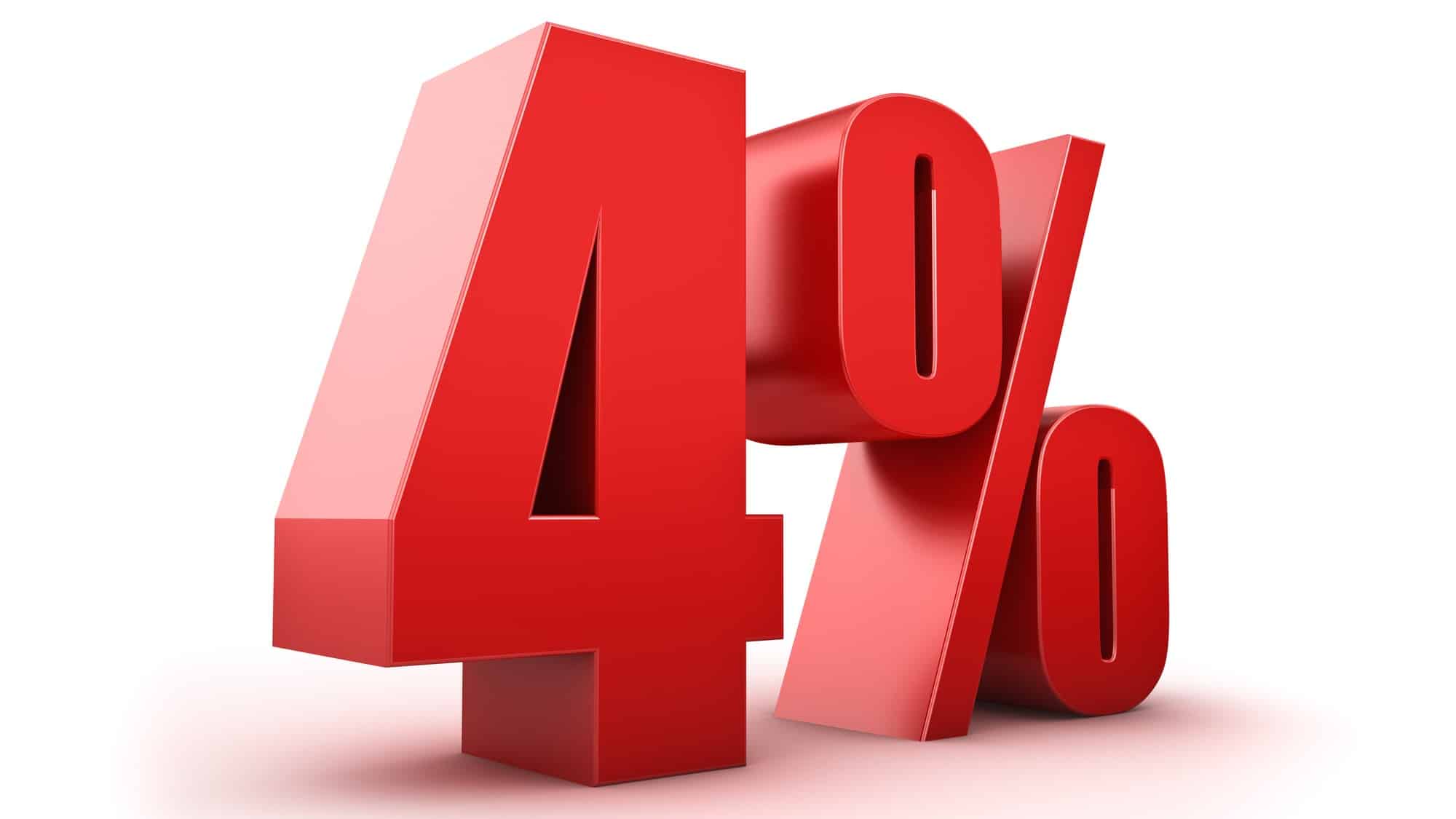
    large block letters depicting four percent representing high yield asx dividend shares

    There are some quality ASX dividend shares out there that have solid dividend yields.

    Interest rates are very low at the moment, making it difficult to make any interest from having cash in the bank. The Reserve Bank of Australia (RBA) doesn’t expect to increase the official rate for at least a couple of years yet.

    People that are focused on income can get a higher level of dividends from these two investments:

    Centuria Industrial REIT (ASX: CIP)

    This real estate investment trust (REIT) is Australia’s largest domestic pure play industrial REIT. It’s in the S&P/ASX 200 Index (ASX: XJO).

    It’s currently rated as a buy by the broker Ord Minnett. The broker has a price target of $3.90 on the business.

    The ASX dividend share has a portfolio of high-quality industrial properties that are located in city locations across Australia and it’s underpinned by a quality and diverse tenant base. The REIT has managed to achieve both capital growth and good income.

    Centuria Industrial REIT recently completed external valuations of 56 of 61 of its investment properties – that’s 93% of the portfolio by value. It now has 72 properties.

    On a like for like basis, the portfolio valuation increased by $192 million, or 8.1% from prior book values. The total portfolio weighted average capitalisation changed by 46 basis points from 5.42% to 4.96%. Centuria Industrial REIT’s net tangible assets (NTA) increased from $2.99 to $3.32 per unit.

    The portfolio value increased partly because of leasing success. It has an occupancy rate of 97.7%, with a weighted average lease expiry (WALE) of 9.8 years.

    The biggest recent valuation change was that the Telstra Corporation Ltd (ASX: TLS) data centre in Clayton, VIC, it increased in value by $28.3 million.

    In FY21, it’s expecting to pay a distribution of 17 cents per unit, which is a yield of 4.8% at the current Centuria Industrial REIT share price.

    Brickworks Limited (ASX: BKW)

    Brickworks is an ASX dividend share with one of the longest records. It has maintained or grown its dividend every year for over four decades.

    The business has a large array of building product divisions across Australia and North America. This includes brickmakers, masonry, roofing, precast and other specialised building systems.

    But there are two other assets that fund the Brickworks dividend each year.

    It owns around 40% of the investment conglomerate Washington H. Soul Pattinson and Co. Ltd (ASX: SOL). Soul Patts owns a diversified portfolio of investments that provide defensive and reliable cashflow each year. Some investments include TPG Telecom Ltd (ASX: TPW), Brickworks itself, Milton Corporation Limited (ASX: MLT) and Bki Investment Co Ltd (ASX: BKI).

    Soul Patts itself is an ASX dividend share with an impressive dividend record. It has increased the dividend every year for the last two decades.

    The other part of Brickworks’ dividend funding is its 50% stake in a quality industrial property trust alongside Goodman Group (ASX: GMG). The partners are steadily building large warehouses on land that used to be owned by Brickworks.

    Two of the biggest projects are warehouses for Coles Group Ltd (ASX: COL) and Amazon. Once these are completed over the next year or two, it should lead to a large increase of both the property portfolio value and rental cashflow.

    At the Brickworks share price, it has a grossed-up dividend yield of 4.2%.

    These Dividend Stocks Could Be Your Next Cash Kings (FREE REPORT)

    Motley Fool Australia’s Dividend experts recently released a brand-new FREE report revealing 3 dividend stocks with JUICY franked dividends that could keep paying you meaty dividends for years to come.

    Our team of investors think these 3 dividend stocks should be a ‘must consider’ for any savvy dividend investor. But more importantly, could potentially make Australian investors a heap of passive income.

    Don’t miss out! Simply click the link below to grab your free copy and discover these 3 high conviction stocks now.

    Returns As of 15th February 2021

    More reading

    Motley Fool contributor Tristan Harrison owns shares of Washington H. Soul Pattinson and Company Limited. The Motley Fool Australia owns shares of and has recommended Brickworks, Telstra Limited, and Washington H. Soul Pattinson and Company Limited. The Motley Fool Australia owns shares of COLESGROUP DEF SET. The Motley Fool has a disclosure policy. This article contains general investment advice only (under AFSL 400691). Authorised by Bruce Jackson.

    The post 2 ASX dividend shares to buy with yields above 4% appeared first on The Motley Fool Australia.

    from The Motley Fool Australia https://ift.tt/2P56h0U