• Billie Eilish gets annoyed when her brother puts his dirty shoes near her face. An expert says there are pros and cons to working with siblings.

    Finneas O'Connell and Billie Eilish posing with their Oscar awards
    Finneas O'Connell and Billie Eilish have won many awards — including Best Original Song for "What Was I Made For?" at the 2024 Academy Awards.

    • Finneas O'Connell and Billie Eilish talked about the challenges of working with a sibling on "Hot Ones Versus."
    • Eilish described her brother's habit of putting his feet up while they worked on "Hit Me Hard and Soft."
    • An executive coach shares the pros and cons of working with family.

    Like most siblings, brother-sister duo Billie Eilish and Finneas O'Connell have had their fair share of tiffs. But something that has struck a nerve more than once for Eilish has been O'Connell's feet.

    On Tuesday's "Hot Ones Versus" episode by First We Feast, the siblings had to choose between answering personal questions or eating spicy wings.

    When Eilish asked what their biggest argument was while working on her album, "Hit Me Hard and Soft," O'Connell said, "I put my feet up on the desk a lot."

    "He's a lot of times barefoot. He's a lot of times in very filthy shoes," Eilish said.

    "This is the situation," she said, pushing the plate of wings away and plonking her feet on the table — snug in a pair of black Etnies shoes. "My face is like, right there," she said, pointing to the space beside her feet as O'Connell laughed.

    The conversation took a more serious turn when O'Connell talked about an argument they'd had regarding honesty.

    "To give you credit, I was very much like high and mighty about like, 'You're not being honest or authentic enough,' and you were coming up with such beautiful melodies and cool cadences," he said. "I learned a lot from being too egocentric in that process."

    Released in May, "Hit Me Hard and Soft" is Eilish and O'Connell's third studio album together.

    The siblings' partnership started in 2015 after O'Connell wrote "Ocean Eyes." The song was recorded when Eilish was 13, and she shot to stardom after uploading it to SoundCloud.

    O'Connell, who also produces his music under the name FINNEAS, has shared about the success of his musical partnership with his sister.

    "In the alternate reality where I wasn't involved at all, and I'd been like, just, sweating my way through, trying to have a music career for years? And then my sibling had one, and I wasn't involved at all? I think I'd be very tortured by it," Finneas told The Washington Post in 2020. "But the fact that we've had one in tandem makes a lot of sense."

    How to mix family and business

    Mixing family and business can be tricky, but Eilish and O'Connell aren't the only ones who have made it work.

    Siblings Patrick and John Collison found success working together in the business world. After dropping out of college, they launched the payments company Stripe in 2010. The brothers are now both billionaires.

    When asked what it was like working with family in an Ask Me Anything session by Stripe, Patrick said: "We spend most of our daily lives working and building things, creating, and why not do that with the people you're closest to? It's awesome."

    Huda Katten, the founder and CEO of Huda Beauty, launched the cosmetics brand in Dubai in 2013 with the help of her sisters, Mona and Alya. Since then, Mona has branched out to create a fragrance arm, Kayali.

    In an interview with Vogue Arabia in January, Huda reflected on their sibling partnership: "We're not in competition but as a family, we give each other feedback, because we want the others to succeed."

    Marlo Lyons, a career and executive coach, told Business Insider about some of the benefits of working with family. "Siblings often have a deep level of trust built from years of growing up together. They know each other's strengths, weaknesses, and quirks," she said.

    She also said that difficulties can arise from working closely with one another, such as inefficient decision-making or overstepping boundaries.

    Her advice? "Recognize that you may be siblings, but that doesn't mean you know everything about each other. Be curious about behaviors or communication that doesn't make sense to you," Lyons said.

    A representative for Eilish did not immediately respond to a request for comment sent outside regular business hours.

    Read the original article on Business Insider
  • Here’s why A2 Milk shares soared in FY24. Will it happen again?

    dairy asx share price represented by grandfather and grandson both drinking glasses of milk

    A2 Milk Company Ltd (ASX: A2M) shares ended up having a stellar finish to the year in FY24.

    In total, shares in the specialty milk company rose 38%, starting the year at $4.89 and closing the period at $6.77 apiece.

    Most of this was achieved in the second half, as seen in the chart below.

    Leading into the New Year, the stock was trading at $4.26 before exploding to 52-week highs of $7.33 on 28 May.

    With A2 Milk shares up more than 2.5% in the past week, the question is, will FY25 be a similar affair?

    Drivers of A2 Milk shares

    There was a buying thrust in A2 Milk shares after the company’s H1 FY24 earnings report in February. In it, A2 Milk reported a 3.7% increase in revenue to NZ$812.1 million.

    This growth was underscored by A2 Milk’s continued expansion in its China and Other Asia markets, with sales up 16.5% in those regions.

    Sales of infant milk formula (IMF) in China were up 10.4% alone. Meanwhile, its Australia and New Zealand business saw a 24.1% decrease compared to H1 FY23.

    Net profit after tax (NPAT) was also up 15.6% year over year and management forecasts “low to mid-single-digit” revenue growth for FY24, according to my colleague James.

    In May it voted in favour of a $130 million loan to Synlait Milk Ltd (ASX: SM1), in which it holds a nearly 20% stake.

    According to my colleague Bernd, the loan, provided by Bright Dairy, aims to support Synlait’s recapitalisation plan. Bright owns around 40% of Synlait Milk.

    What are brokers saying for FY25?

    Brokers have a mixed yet generally optimistic outlook on A2 Milk shares.

    In an April note, Bell Potter rated the company a hold with a $5.70 price target on its stock. It said that while the company’s transition has been executed well, its shares could be fully valued.

    Despite its recent Growth in China, Bell Potter is weary, saying imports are “at historically low levels and has been since Jun 2023”.

    On the other hand, Ord Minnett rated A2 Milk a buy in a February note. It has a $7.40 price target for the share, implying a 7.5% potential upside from the current price.

    Analysts at Citi are also bullish on the stock and reaffirmed the firm’s buy rating in June. It values the company at $7.85 per share.

    Meanwhile, consensus rate A2 Milk shares a hold according to CommSec. The split is three buys, five holds and one sell.

    Foolish takeout

    As we walk through FY25, A2 Milk shares continue to push higher. They are up more than 1.5% since trading began in the new financial year, and up 36% in the past twelve months. As always, remember to conduct your own due diligence.

    The post Here’s why A2 Milk shares soared in FY24. Will it happen again? appeared first on The Motley Fool Australia.

    Wondering where you should invest $1,000 right now?

    When investing expert Scott Phillips has a stock tip, it can pay to listen. After all, the flagship Motley Fool Share Advisor newsletter he has run for over ten years has provided thousands of paying members with stock picks that have doubled, tripled or even more.*

    Scott just revealed what he believes could be the ‘five best ASX stocks’ for investors to buy right now. We believe these stocks are trading at attractive prices and Scott thinks they could be great buys right now…

    See The 5 Stocks
    *Returns as of 10 July 2024

    More reading

    Citigroup is an advertising partner of The Ascent, a Motley Fool company. Motley Fool contributor Zach Bristow has no position in any of the stocks mentioned. The Motley Fool Australia’s parent company Motley Fool Holdings Inc. has no position in any of the stocks mentioned. The Motley Fool Australia has recommended A2 Milk. The Motley Fool has a disclosure policy. This article contains general investment advice only (under AFSL 400691). Authorised by Scott Phillips.

  • Why is this ASX healthcare stock rocketing 25% on Friday?

    Immutep Ltd (ASX: IMM) shares are ending the week with a bang.

    In morning trade, the ASX healthcare stock is up 25% to 37 cents.

    Why is this ASX healthcare stock rocketing?

    This clinical-stage biotechnology company’s shares are taking off this morning after it announced positive results from Cohort B of the TACTI-003 Phase IIb trial.

    This trial is evaluating eftilagimod alfa (efti) in combination with Merck & Co’s anti-PD-1 therapy Keytruda (pembrolizumab) as a first-line treatment of recurrent or metastatic head and neck squamous cell carcinoma patients (1L HNSCC) with negative PD-L1 expression.

    The release notes that the updated efficacy and safety data was presented by Dr. Robert Metcalf from the Christie NHS Foundation Trust during an oral presentation at the ESMO Virtual Plenary session on Thursday.

    Dr Metcalf revealed that the investigational immuno-oncology (IO) combination utilising efti and Keytruda achieved an objective response rate (ORR) of 35.5% (11 of 31 evaluable patients). He also reported a disease control rate (DCR) of 58.1%, according to RECIST 1.1, in 1L HNSCC patients whose tumours do not express PD-L1 (Combined Positive Score [CPS] <1).

    Is this good?

    The above may read like gobbledygook if you’re not familiar with clinical trials. But in summary, these are very positive and promising results.

    In fact, the company notes that these results are “among the highest recorded for a chemotherapy-free approach in negative PD-L1 patients and compare favourably to a historical control of 5.4% ORR and 32.4% DCR from anti-PD-1 monotherapy.”

    Commenting on the trial results, Dr Metcalf said:

    The high response rate from this novel immunotherapy combination is well above other treatment approaches without chemotherapy. It matches historical response rates from chemotherapy-based treatments but without the associated toxicities. This is really significant for patients with head and neck squamous cell carcinomas who have a CPS less than one and for whom chemotherapy is the current first line treatment.

    Achieving complete responses in this group bodes well for this immunotherapy combination’s future potential, especially given the positive trend in response durability. The clinically meaningful response rate and high unmet medical need warrant further investigation of eftilagimod plus pembrolizumab in this patient population.

    In light of this data and the high unmet medical need, Immutep advised that it will discuss the path forward with regulatory agencies. And as Efti has previously received FDA Fast Track designation in 1L HNSCC regardless of PD-L1 expression, these are promising times for the company. Though, there is still a long road ahead.

    The post Why is this ASX healthcare stock rocketing 25% on Friday? appeared first on The Motley Fool Australia.

    Wondering where you should invest $1,000 right now?

    When investing expert Scott Phillips has a stock tip, it can pay to listen. After all, the flagship Motley Fool Share Advisor newsletter he has run for over ten years has provided thousands of paying members with stock picks that have doubled, tripled or even more.*

    Scott just revealed what he believes could be the ‘five best ASX stocks’ for investors to buy right now. We believe these stocks are trading at attractive prices and Scott thinks they could be great buys right now…

    See The 5 Stocks
    *Returns as of 10 July 2024

    More reading

    Motley Fool contributor James Mickleboro has no position in any of the stocks mentioned. The Motley Fool Australia’s parent company Motley Fool Holdings Inc. has no position in any of the stocks mentioned. The Motley Fool Australia has no position in any of the stocks mentioned. The Motley Fool has a disclosure policy. This article contains general investment advice only (under AFSL 400691). Authorised by Scott Phillips.

  • BHP shares tumble on nickel bombshell

    BHP Group Ltd (ASX: BHP) shares are under pressure on Friday morning.

    At the time of writing, the mining giant’s shares are down over 1% to $43.09.

    Why are BHP shares falling?

    Investors have been selling the Big Australian’s shares this morning after it dropped a major bombshell announcement.

    According to the release, BHP will temporarily suspend its Nickel West operations and West Musgrave project (Western Australia Nickel) from October.

    This won’t be a short term suspension. BHP advised that it intends to review the decision to temporarily suspend Western Australia Nickel by February 2027. That’s up to two and a half years away.

    Management has blamed the suspension on weak nickel prices and expectations for prices to remain at low levels for the foreseeable future due to “oversupply in the global nickel market.”

    It highlights that “forward consensus nickel prices over the next half of the decade have fallen sharply reflecting strong growth of alternative low-cost nickel supply.”

    What will this cost?

    BHP advised that during the temporary suspension, it will continue to support its workforce and local communities. It plans to invest approximately US$300 million (A$450 million) per annum following completion of a transition period to support a potential re-start of Western Australia Nickel.

    Among the assets that are being suspended are the Kwinana nickel refinery, Kalgoorlie nickel smelter, and Mt Keith and Leinster operations, as well as the development of the West Musgrave project.

    BHP’s Australian President, Geraldine Slattery, commented:

    Since BHP announced a review of Western Australia Nickel in February, we have explored options to stem losses in the short-term and identify a viable path forward for the business. Like others in the Australian nickel sector, we have not been able to overcome the substantial economic challenges driven by a global oversupply of nickel. We have made the difficult but necessary decision to temporarily suspend the Nickel West operation and West Musgrave project.

    We will continue to invest approximately AU$450 million (US$300 million) per annum in the Western Australia Nickel facilities to enable a potential re-start. Western Australia remains an important investment destination for BHP globally, with investment in the State expected to be greater than AU$12 billion over the next five years and we will continue to work with all of our Western Australian partners to advance the economic prosperity of the State.

    BHP shares are down almost 15% since the start of the year.

    The post BHP shares tumble on nickel bombshell appeared first on The Motley Fool Australia.

    Wondering where you should invest $1,000 right now?

    When investing expert Scott Phillips has a stock tip, it can pay to listen. After all, the flagship Motley Fool Share Advisor newsletter he has run for over ten years has provided thousands of paying members with stock picks that have doubled, tripled or even more.*

    Scott just revealed what he believes could be the ‘five best ASX stocks’ for investors to buy right now. We believe these stocks are trading at attractive prices and Scott thinks they could be great buys right now…

    See The 5 Stocks
    *Returns as of 10 July 2024

    More reading

    Motley Fool contributor James Mickleboro has no position in any of the stocks mentioned. The Motley Fool Australia’s parent company Motley Fool Holdings Inc. has no position in any of the stocks mentioned. The Motley Fool Australia has no position in any of the stocks mentioned. The Motley Fool has a disclosure policy. This article contains general investment advice only (under AFSL 400691). Authorised by Scott Phillips.

  • Wesfarmers vs Woolworths: Which are the best ASX shares to buy today?

    Wesfarmers Ltd (ASX: WES) and Woolworths Group Ltd (ASX: WOW) shares are popular options for blue chip investors.

    Both are high quality businesses with a collection of recognisable brands.

    Wesfarmers is the name behind Bunnings, Kmart, Target, Officeworks, Priceline, Silk Laser Clinics, and WesCEF, to name just a few.

    Whereas Woolworths Group operates businesses such as the eponymous Woolworths supermarket brand, Big W, Petstock, and PFD Food Services.

    Given how their businesses overlap in many ways, having just one of them in a portfolio makes sense. But which one should you buy right now? Let’s see which one Goldman Sachs rates as the buy.

    Wesfarmers or Woolworths shares?

    According to recent notes, Goldman Sachs thinks that Woolworths shares are the standout pick of the two.

    It currently has a conviction buy rating on its shares with a price target of $40.20. This implies potential upside of 17% for investors over the next 12 months.

    The broker believes that share price weakness over the past year has created a compelling buying opportunity in a high quality company with defensive earnings. It commented:

    WOW is the largest supermarket chain in Australia with an additional presence in NZ, as well as selling general merchandise retail via Big W. We are Buy rated on the stock as we believe the business has among the highest consumer stickiness and loyalty among peers, and hence has strong ability to drive market share gains via its omni-channel advantage, as well as its ability to pass through any cost inflation to protect its margins, beyond market expectations. The stock is trading below its historical average (since 2018), and we see this as a value entry level for a high-quality and defensive stock.

    Goldman isn’t feeling as positive about Wesfarmers’ shares. It currently has a neutral rating and $68.80 price target on its shares. This suggests that upside of just 2.2% is possible from current levels.

    While the broker is a fan of the company, and particularly the Bunnings business, it just doesn’t see enough value in its shares at current levels. It explains:

    Wesfarmers is a conglomerate that operates across a range of industries with ~65% of EBIT coming from Bunnings, a household hardware chain. We expect Bunnings to be more resilient vs. other household related retailers, with buoyant median house price expectations signaling higher property transactions/alts & adds to come. Additionally, we also expect a resilient Bunnings to generate ~A$2.0B of free cash flow each year to FY26 to further fund two new growth platforms with 1) Health, including further scaling into high growth and high margin non-invasive aesthetics business; and 2) Lithium, with high quality, low cost and access to capital a notable advantage. That said, WES in our view is now fairly priced to reflect these growth prospects. We are Neutral rated on the stock.

    So, as far as Goldman Sachs is concerned, Woolworths shares are the way to go for blue chip investors.

    The post Wesfarmers vs Woolworths: Which are the best ASX shares to buy today? appeared first on The Motley Fool Australia.

    Wondering where you should invest $1,000 right now?

    When investing expert Scott Phillips has a stock tip, it can pay to listen. After all, the flagship Motley Fool Share Advisor newsletter he has run for over ten years has provided thousands of paying members with stock picks that have doubled, tripled or even more.*

    Scott just revealed what he believes could be the ‘five best ASX stocks’ for investors to buy right now. We believe these stocks are trading at attractive prices and Scott thinks they could be great buys right now…

    See The 5 Stocks
    *Returns as of 10 July 2024

    More reading

    Motley Fool contributor James Mickleboro has no position in any of the stocks mentioned. The Motley Fool Australia’s parent company Motley Fool Holdings Inc. has positions in and has recommended Goldman Sachs Group and Wesfarmers. The Motley Fool Australia has positions in and has recommended Wesfarmers. The Motley Fool has a disclosure policy. This article contains general investment advice only (under AFSL 400691). Authorised by Scott Phillips.

  • Why did Goldman Sachs just upgrade Core Lithium shares?

    After crashing deep into the red over the past 12 months, Core Lithium Ltd (ASX: CXO) shares could now be close to their bottom.

    That’s the view of analysts at Goldman Sachs, which have just taken their sell rating off the lithium miner’s shares.

    What is Goldman Sachs saying about Core Lithium shares?

    Goldman has been tipping Core Lithium as a sell for some time. And with its shares losing 90% of their value since this time last year, it certainly would have paid to listen to the broker.

    And while its analysts are becoming a little more upbeat on the lithium miner, this shouldn’t necessarily be interpreted as a signal to buy.

    According to a note from earlier this week, the broker has upgraded Core Lithium’s shares to a neutral rating with an 8 cents price target.

    This price target is still a sizeable 20% below where its shares currently trade because of some solid gains this week in response to a couple of promising updates.

    Why did the broker upgrade its shares?

    Goldman believes that the company’s restart risk is now priced in and highlights its strong cash balance. It said:

    While we still expect developers to underperform ramped up producers into the declining lithium price environment, we upgrade CXO to Neutral on valuation, with ongoing production restart risk now more priced in at 1.1x NAV (peers 0.8-1.0x NAV) or pricing ~US$1,170/t LT spodumene, and ~40% of CXO’s market cap now in cash on hand (with no debt) potentially partially mitigating exposure to falling lithium prices.

    Since we added CXO to the Sell list on 20 Nov 2023, the CXO share price has fallen ~76%, underperforming ASX lithium peers and spodumene/ carbonate/ hydroxide prices down 15-30% over the same period, with the ASX 200 up +11%. We update our valuation methodology to 100% NAV (from 75% NAV, 25% EV/EBITDA multiple), with a return to production and cashflow unlikely in the near-term, in our view, and lower our PT to A$0.08/sh.

    The broker also highlights that there is reason to be optimistic from Core Lithium’s exploration activities. Though, it concedes that any real benefits from this are unlikely to be realised in the immediate term. It adds:

    Though further exploration is underway, and while potential resource expansion could be promising (including revisiting the gold, uranium and base metal exploration projects), with resource extension likely at depth/from new areas, we see limited near-term upside (particularly as new projects likely require additional funding), where further meaningful exploration is now also likely longer dated on falling lithium prices, particularly with a near-term restart of the operation now unlikely in the near-term.

    In light of the above, Goldman thinks investors should keep their powder dry for the time being.

    The post Why did Goldman Sachs just upgrade Core Lithium shares? appeared first on The Motley Fool Australia.

    Wondering where you should invest $1,000 right now?

    When investing expert Scott Phillips has a stock tip, it can pay to listen. After all, the flagship Motley Fool Share Advisor newsletter he has run for over ten years has provided thousands of paying members with stock picks that have doubled, tripled or even more.*

    Scott just revealed what he believes could be the ‘five best ASX stocks’ for investors to buy right now. We believe these stocks are trading at attractive prices and Scott thinks they could be great buys right now…

    See The 5 Stocks
    *Returns as of 10 July 2024

    More reading

    Motley Fool contributor James Mickleboro has no position in any of the stocks mentioned. The Motley Fool Australia’s parent company Motley Fool Holdings Inc. has positions in and has recommended Goldman Sachs Group. The Motley Fool Australia has no position in any of the stocks mentioned. The Motley Fool has a disclosure policy. This article contains general investment advice only (under AFSL 400691). Authorised by Scott Phillips.

  • I’m a mom of 3 in Israel. Every time my daughter walks into the room, I turn off the news.

    A collage of a hand covering a TV with an Israeli flag in the background.
    Deborah Danan is raising her three kids in a mixed city in Israel. She makes sure the news is switched off when they come into the room.

    • Deborah Danan and her husband are working parents, raising their three kids in Israel.
    • They live in a mixed city where Jews, Muslims, and Christians live together. 
    • She's been surprised by her 8-year-old's capacity for both compassion and comprehension of what was happening.

    I've learned surprising truths about my children since the horror of the October 7 terror attack on Israel and the ensuing war in Gaza.

    I live with my husband and three kids in a mixed city in Israel, where Jews, Muslims, and Christians live together. I moved here over a decade ago from Jerusalem.

    Jerusalem, while officially considered a mixed city, largely consists of religiously homogeneous neighborhoods, making apartment blocks with Jews, Muslims, and Christians living together — like mine — far less common.

    I love the diversity in my city. I love that my children attend Christmas parades and are aware of the fact that as I write this essay on a June afternoon, our neighbors are celebrating the Muslim holiday of Eid al Adha. But like everything else in this neck of the woods, living side by side can sometimes be fraught with complexities.

    When news started emerging of what took place on October 7, I did everything in my power to protect my three children, especially my eldest, a highly sensitive 8-year-old with a string of acronyms after her name that point to her various diagnoses. I made sure that in any room she entered, the news was switched off — no small feat in a country where news consumption is basically a national pastime. I would stifle any conversation about the situation by family members that was within her earshot.

    I was terrified of scarring her for life

    I only let her know that hostages had been taken into Gaza after half of them — including almost all of the children among them — were released, more than 50 days into the war.

    But then came the day when she was home alone in our apartment during a rocket siren. It was inevitable, really. Rockets were raining down on our city on a daily basis, and my work as a journalist meant that I was often out of the house.

    My husband also found himself working around the clock when his boutique hotel, like many others across the country, was converted overnight into semi-permanent housing for some of the 300,000 internal refugees fleeing Israel's northern and southern borders, which were under attack.

    On that day, I called my daughter as soon as the Code Red app on my phone bleeped, alerting me to an incoming projectile. She told me that she was trying to close the iron blast door of the safe room but that it was too heavy for her. She said it matter-of-factly. I tried to mask the rising panic in my voice as I told her to try again, harder this time.

    It was useless, so I told her to go into the stairwell of our building, where there were no windows and less risk of falling shrapnel. Buildings erected in Israel since the 1990s have built-in safe rooms to avoid bombs and air strikes. For many Israelis living in older apartments, without safe rooms, this is the standard refuge from rocket fire.

    My Arab Muslim neighbor saw her on the way to the stairwell. She took her hand and guided her to her own safe room, where she looked after her until I returned. To my relief — and surprise — my daughter was completely unfazed by the whole episode.

    Daughter and mom holding hands and sitting on a boat.
    The author has been surprised by her daughter's level of compassion and comprehension.

    Adjusting to the new normal

    Now, nearly 9 months after the October 7 attacks, we've settled into a routine. Schools in most of the country are operating, people are going out, life is continuing — but the reminders that life is anything but normal are everywhere, puncturing the facade: from posters of hostages on every tree to the almost daily news of the deaths of loved ones to the imminent threat of a new war on a different front.

    But while even the most inconsequential event is cloaked in pain, I'm fully aware that my day-to-day as a mother is peachy compared to mothers in Gaza.

    In the midst of it all, I find myself still torn between a duty to let my children know what's happening around them — to allow them to grow thick-skinned, to build resiliency, and hopefully, to seek solutions — and the instinctual urge to shelter them, not just from rocket fire but from things I think children should never have to know.

    The night of the rocket fire, my daughter and I lay in bed. I spoke to her about our Arab friends and neighbors and what it means for them to be straddling a precarious duality in which they are scared about their own well-being, as Israeli citizens under fire, as well as that of their people — sometimes even family members — under bombardment in Gaza.

    I asked her to imagine that right now in Gaza, there was probably a girl of her age who may be scared for her life. And that maybe that girl has a cousin who lives right here, in our neighborhood.

    My daughter's capacity for both compassion for their plight and comprehension of what was happening right now, right here, to us, astonished me and continues to astonish me.

    Read the original article on Business Insider
  • Behind the scenes of billionaire Indian weddings: Hired ‘shadows,’ phone bans, and a circus master to lead the chaos

    Indian wedding decor and bride and groom hug
    Indian wedding planners said this week's Ambani wedding is already setting trends.

    • Radhika Merchant and Anant Ambani are slated to get married on Friday in Mumbai.
    • Four Indian event planners shared what it's like to plan a big celebrity wedding.
    • The Ambani wedding is already setting trends for couples planning their own nuptials.

    The wedding of the year is upon us.

    After rounds of opulent pre-wedding festivities, Radhika Merchant and Anant Ambani, the youngest son of Asia's richest man, are slated to get married on Friday in Mumbai.

    Their guests, who have so far included Bollywood actors, Indian cricketers, and international business leaders, will also attend events on Saturday and a reception on Sunday.

    During a pre-wedding event in March, Ambani said his mom worked 18 hours a day for the four months leading up to the parties.

    "All this is created by my mother and no one else, and my mother has gone all out for the last four months," Ambani said, per a video of the speech uploaded in March.

    Planning such an event takes a village, according to four wedding planners who spoke to Business Insider about what goes into organizing a multi-day Indian celebrity wedding.

    The biggest cost is the venue

    The planners BI spoke to said a typical multi-day wedding that they plan costs between five to 10 crore Indian Rupees, or about $1.2 million.

    Crore is an Indian term for 10 million; 1 crore rupees is around $120,000.

    Whether it's a big-ticket wedding like the Ambani's or the wedding of an upper-middle-class family, the breakdown of major costs in an Indian wedding look about the same, one event planner told BI.

    About 40% to 50% of the budget goes to the venue, which includes catering and rooms for the guests, said Nishita Aggarwal, the founder of The Event Designer, a Mumbai-based wedding planning company.

    Next, 25% to 30% of costs go toward decorations, which include elaborate backdrops, tents, and floor-to-ceiling floral arrangements.

    pink backdrop at Indian wedding
    Decorations involve intricate or themed backdrops for each ceremony.

    About 10% is spent on entertainment. The Ambanis have hired Rihanna, Justin Bieber, Katy Perry, The Backstreet Boys, and Pitbull for pre-wedding functions in recent months.

    Other families spend a lot on artists including singers and celebrity DJs, said Purvi Modgil, a destination wedding planner based in Mumbai.

    "If you plan to call three or four of them in different core functions, that can also add up to a good cost," she said.

    The remaining 10% usually goes into wedding gifts and logistics for the family and guests.

    "Now, when it comes to a high-net-worth wedding or a celebrity wedding, everything becomes 10 times or hundred times" of that cost, Aggarwal said. "There is no bar on the budget."

    Planners' cost estimates of the Ambani wedding varied widely, from tens of millions of dollars to hundreds of millions of dollars.

    Anant's older sister Isha Ambani got married in 2018 in a similarly lavish wedding, including a Beyoncé performance. While media outlets speculated about a $100 million price tag, a spokesperson for the Ambani-owned company, Reliance, said that it cost less than $15 million, per a Forbes article at the time.

    A spokesperson for the family did not respond to a request for comment about the costs for Anant Ambani's wedding.

    The pre-wedding events have grabbed headlines for months. With so many celebrities and business leaders angling for an invitation, the nuptials are also a business networking event, Aggarwal said.

    Each main family member is assigned a 'shadow'

    Many couples don't want to host their weddings at venues where other high-profile families have already held nuptials, Aggarwal said.

    "They want everything to be exclusive," she said. "The decor has to be something else that no one else has ever thought of. It is almost like a big movie set."

    For a big celebrity wedding, planners divide their staff into teams and hire hundreds of additional people leading up to and on the day of the ceremony.

    With chefs, waiters, light and audio teams, and decorators, about 500 people often work the event, Modgil said.

    The planners also assign butlers to each main family member. These staffers, called "shadows," hold their phones and gifts and ensure they stay hydrated and have everything they need.

    "There are over 70 suppliers and vendors who we work with for each wedding," said Darshan Shroff, a Mumbai-based wedding planner. "I like to describe wedding planners in India as circus masters."

    Privacy and security are top concerns

    Many celebrity or influencer couples are particular about how their wedding is portrayed on the news and on social media.

    Planners have strict instructions that restrict posts from vendors about outfits, decor, or flowers before a set date. Most big weddings also collect the phones of their guests for privacy, and couples have teams that work with the media.

    "You can't have too many people hanging out taking their pictures. It makes them very uncomfortable," Modgil said about celebrity guests and couples.

    Top security firms and even local authorities may sketch out safety plans.

    "The minute there are some kind of celebrities, whether it's politicians or Bollywood, security becomes very important," Modgil said. "We've had separate people escorting them and even taking them back because sometimes they even get mobbed."

    The families and their guests are not always easy to please.

    Aggarwal said she has planned weddings where celebrity attendees call to confirm what type of hotel suite they will be staying in and what kind of car is coming to pick them up. Everything must match their lifestyle standard.

    Setting a blueprint for other weddings

    The Ambani wedding is already influencing how other Indians are envisioning and planning their own nuptials.

    The planners told BI that brides are asking them for the same designers that Radhika Merchant wore in her pre-wedding events, like the custom lehengas designed by Abu Jani Sandeep Khosla and Tarun Tahiliani.

    Radhika Merchant wore a Swarovski crystal lehenga designed by Abu Jani and Sandeep Khosla
    Radhika Merchant wore a Swarovski crystal lehenga designed by Abu Jani and Sandeep Khosla.

    Planners expect the main wedding to leave an even bigger mark.

    "Given the immense influence celebrities have, their weddings often become blueprints for future celebrations worldwide," said Bharat Jagasia, a Delhi-based wedding planner.

    "For the Ambani wedding, I am particularly excited to see how they differentiate the main event from their pre-wedding functions," he said.

    The festivities are slated to kick off Friday at the Jio World Convention Centre, which is owned by the Ambani family. It can accommodate over 16,000 guests.

    Read the original article on Business Insider
  • I’d buy Fortescue shares today to generate $2,000 of monthly passive income

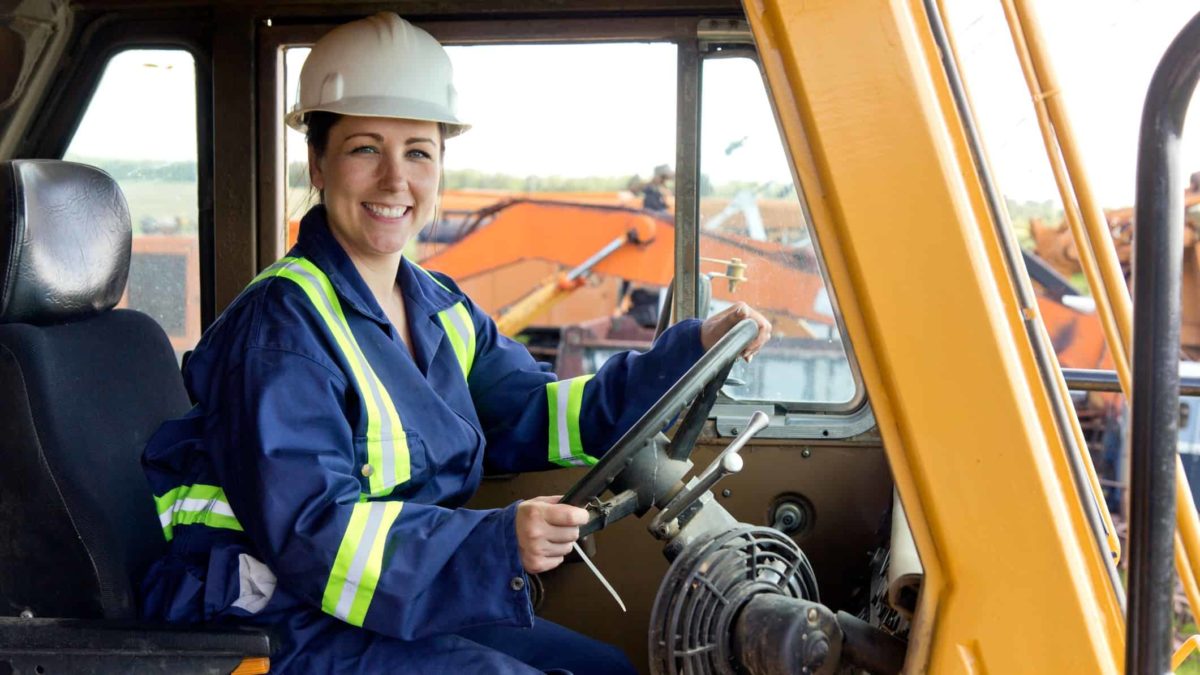
    A female employee in a hard hat and overalls with high visibility stripes sits at the wheel of a large mining vehicle with mining equipment in the background.

    If I were buying one ASX stock for passive income today, I’d be eyeing Fortescue Metals Group Ltd (ASX: FMG) shares.

    The S&P/ASX 200 Index (ASX: XJO) mining stock had a strong run yesterday, with shares closing the day up 1.90% at $22 apiece.

    Still, that leaves Fortescue shares down 25% since the opening bell sounded on 2 January.

    Now, there’s no guarantee that shares won’t sell down further. But with Fortescue counting among the lowest-cost iron ore producers in the world, with additional possible benefits from its green hydrogen ambitions, I see this year’s sizeable retrace as presenting a potentially opportune entry point.

    Particularly with long-term passive income in mind.

    We’ll get to that in just a tick.

    But first…

    Spread those eggs around!

    ‘Don’t put all your eggs in one basket’ may be a trite expression. But whether you’re investing for capital gains, passive income, or both, it’s an expression to keep at the forefront of your mind.

    While we look specifically at the potential of investing in Fortescue shares below, a proper income portfolio should contain a diversified basket of stocks operating in different sectors and ideally across various locations. There’s no magic number, but 10 is a good ballpark figure.

    Also, remember that the yields you generally see quoted are trailing yields. Future yields may be higher or lower, depending on a range of company-specific and macroeconomic factors.

    With that said…

    Tapping Fortescue shares for $2,000 a month in passive income

    $2,000 a month in passive income, or $24,000 a year, could make a big difference to most Aussies’ retirement plans. Mine included!

    So, how many Fortescue shares do I need to buy?

    Turning to the past 12 months, Fortescue paid a final fully franked dividend of $1.00 a share on 28 September.

    The interim dividend of $1.08 a share will have landed in eligible investors’ bank accounts on 27 March.

    That dividend was up 44% from the interim dividend paid out the previous year. This big boost was driven by some strong half-year results, which included a 21% year on year increase in revenue to US$9.5 billion. And net profit after tax (NPAT) of US$3.3 billion for the six-month period was up 41% year on year.

    All up then, Fortescue paid out $2.08 a share in passive income over the past year.

    At yesterday’s closing price of $22, the ASX 200 miner trades on a juicy, fully franked trailing yield of 9.45%.

    And to garner my $2,000 in monthly passive income, I’d need to buy 11,539 shares today.

    Now that’s a big investment to make all in one go.

    But that’s okay.

    Investing is a long game.

    I can also purchase smaller amounts of Fortescue shares on a monthly basis, and I expect to achieve my passive income goal in due time.

    The post I’d buy Fortescue shares today to generate $2,000 of monthly passive income appeared first on The Motley Fool Australia.

    Should you invest $1,000 in Fortescue Metals Group right now?

    Before you buy Fortescue Metals Group shares, consider this:

    Motley Fool investing expert Scott Phillips just revealed what he believes are the 5 best stocks for investors to buy right now… and Fortescue Metals Group wasn’t one of them.

    The online investing service he’s run for over a decade, Motley Fool Share Advisor, has provided thousands of paying members with stock picks that have doubled, tripled or even more.*

    And right now, Scott thinks there are 5 stocks that may be better buys…

    See The 5 Stocks
    *Returns as of 10 July 2024

    More reading

    Motley Fool contributor Bernd Struben has no position in any of the stocks mentioned. The Motley Fool Australia’s parent company Motley Fool Holdings Inc. has no position in any of the stocks mentioned. The Motley Fool Australia has no position in any of the stocks mentioned. The Motley Fool has a disclosure policy. This article contains general investment advice only (under AFSL 400691). Authorised by Scott Phillips.

  • 1 ASX 200 coal stock to buy and 1 to hold

    a man with a hard hat and high visibility vest stands with a clipboard and pen in front of a large pile of rock at a mining site.

    Are you looking for exposure to the coal industry for your portfolio? If you are, then Bell Potter has you covered.

    This morning, the broker has named one ASX 200 coal stock to buy and one to hold.

    Let’s take a look at these stocks in detail now:

    Coronado Global Resources Inc (ASX: CRN)

    The ASX 200 coal stock to buy according to Bell Potter is Coronado Global Resources.

    It is expecting the coal miner to report a strong quarterly update later this month. It commented:

    Curragh’s operational performance should have strengthened materially in Q2 2024, the first full quarter post substantial pre-strip investment over the past 24 months. We forecast Curragh mining costs of ~US$100/t (Q1 US$127/t) and saleable production of 2.8Mt (Q1 2.5Mt). At Buchanan, higher hoisting rates will provide an additional group production uplift. However, CRN’s operational enhancements will be offset by a 21% qoq fall in the average quarterly HCC benchmark price.

    In light of the above and its positive outlook of metallurgical coal, the broker has retained its buy rating and lifted its price target to $1.85 (from $1.60). Based on its current share price of $1.40, this implies potential upside of 32% for investors.

    And while dividends are likely to be small this year, the broker expects a mammoth 10% dividend yield in FY 2025. It concludes:

    Throughout 2024, CRN should realise improved production volumes and subsequent cost benefits following the self-funded investment across its Australian and US operations. We expect CRN to generate improved free cash flow and shareholder returns going forward. Our buy recommendation is underpinned by a supply constrained met coal environment, supporting long term prices. We see the potential for CRN to participate in industry consolidation.

    Whitehaven Coal Ltd (ASX: WHC)

    Bell Potter isn’t feeling as positive about ASX 200 coal stock Whitehaven Coal due to its current valuation.

    This morning, it has retained its hold rating but lifted its price target to $8.90 (from $7.70). This suggests that upside of just 2.7% is possible from current levels.

    In addition, a 2% dividend yield is expected in FY 2024 and then a 3% yield is forecast for FY 2025. It commented:

    WHC has diversified its commodity exposure and risk profile, through its ownership of large Queensland met coal assets. We hold a positive long term met coal outlook, driven by constrained supply and robust steel demand. While the company’s free cash profile out to FY27 is restricted by significant acquisition-related cash outlays, we expect it to maintain a dividend payout of 20-50% of NPAT from its NSW operations. We retain our Hold recommendation in line with our recommendation structure.

    The post 1 ASX 200 coal stock to buy and 1 to hold appeared first on The Motley Fool Australia.

    Should you invest $1,000 in Coronado Global Resources Inc. right now?

    Before you buy Coronado Global Resources Inc. shares, consider this:

    Motley Fool investing expert Scott Phillips just revealed what he believes are the 5 best stocks for investors to buy right now… and Coronado Global Resources Inc. wasn’t one of them.

    The online investing service he’s run for over a decade, Motley Fool Share Advisor, has provided thousands of paying members with stock picks that have doubled, tripled or even more.*

    And right now, Scott thinks there are 5 stocks that may be better buys…

    See The 5 Stocks
    *Returns as of 10 July 2024

    More reading

    Motley Fool contributor James Mickleboro has no position in any of the stocks mentioned. The Motley Fool Australia’s parent company Motley Fool Holdings Inc. has no position in any of the stocks mentioned. The Motley Fool Australia has no position in any of the stocks mentioned. The Motley Fool has a disclosure policy. This article contains general investment advice only (under AFSL 400691). Authorised by Scott Phillips.