• I’m a mom of 3 in Israel. Every time my daughter walks into the room, I turn off the news.

    A collage of a hand covering a TV with an Israeli flag in the background.
    Deborah Danan is raising her three kids in a mixed city in Israel. She makes sure the news is switched off when they come into the room.

    • Deborah Danan and her husband are working parents, raising their three kids in Israel.
    • They live in a mixed city where Jews, Muslims, and Christians live together. 
    • She's been surprised by her 8-year-old's capacity for both compassion and comprehension of what was happening.

    I've learned surprising truths about my children since the horror of the October 7 terror attack on Israel and the ensuing war in Gaza.

    I live with my husband and three kids in a mixed city in Israel, where Jews, Muslims, and Christians live together. I moved here over a decade ago from Jerusalem.

    Jerusalem, while officially considered a mixed city, largely consists of religiously homogeneous neighborhoods, making apartment blocks with Jews, Muslims, and Christians living together — like mine — far less common.

    I love the diversity in my city. I love that my children attend Christmas parades and are aware of the fact that as I write this essay on a June afternoon, our neighbors are celebrating the Muslim holiday of Eid al Adha. But like everything else in this neck of the woods, living side by side can sometimes be fraught with complexities.

    When news started emerging of what took place on October 7, I did everything in my power to protect my three children, especially my eldest, a highly sensitive 8-year-old with a string of acronyms after her name that point to her various diagnoses. I made sure that in any room she entered, the news was switched off — no small feat in a country where news consumption is basically a national pastime. I would stifle any conversation about the situation by family members that was within her earshot.

    I was terrified of scarring her for life

    I only let her know that hostages had been taken into Gaza after half of them — including almost all of the children among them — were released, more than 50 days into the war.

    But then came the day when she was home alone in our apartment during a rocket siren. It was inevitable, really. Rockets were raining down on our city on a daily basis, and my work as a journalist meant that I was often out of the house.

    My husband also found himself working around the clock when his boutique hotel, like many others across the country, was converted overnight into semi-permanent housing for some of the 300,000 internal refugees fleeing Israel's northern and southern borders, which were under attack.

    On that day, I called my daughter as soon as the Code Red app on my phone bleeped, alerting me to an incoming projectile. She told me that she was trying to close the iron blast door of the safe room but that it was too heavy for her. She said it matter-of-factly. I tried to mask the rising panic in my voice as I told her to try again, harder this time.

    It was useless, so I told her to go into the stairwell of our building, where there were no windows and less risk of falling shrapnel. Buildings erected in Israel since the 1990s have built-in safe rooms to avoid bombs and air strikes. For many Israelis living in older apartments, without safe rooms, this is the standard refuge from rocket fire.

    My Arab Muslim neighbor saw her on the way to the stairwell. She took her hand and guided her to her own safe room, where she looked after her until I returned. To my relief — and surprise — my daughter was completely unfazed by the whole episode.

    Daughter and mom holding hands and sitting on a boat.
    The author has been surprised by her daughter's level of compassion and comprehension.

    Adjusting to the new normal

    Now, nearly 9 months after the October 7 attacks, we've settled into a routine. Schools in most of the country are operating, people are going out, life is continuing — but the reminders that life is anything but normal are everywhere, puncturing the facade: from posters of hostages on every tree to the almost daily news of the deaths of loved ones to the imminent threat of a new war on a different front.

    But while even the most inconsequential event is cloaked in pain, I'm fully aware that my day-to-day as a mother is peachy compared to mothers in Gaza.

    In the midst of it all, I find myself still torn between a duty to let my children know what's happening around them — to allow them to grow thick-skinned, to build resiliency, and hopefully, to seek solutions — and the instinctual urge to shelter them, not just from rocket fire but from things I think children should never have to know.

    The night of the rocket fire, my daughter and I lay in bed. I spoke to her about our Arab friends and neighbors and what it means for them to be straddling a precarious duality in which they are scared about their own well-being, as Israeli citizens under fire, as well as that of their people — sometimes even family members — under bombardment in Gaza.

    I asked her to imagine that right now in Gaza, there was probably a girl of her age who may be scared for her life. And that maybe that girl has a cousin who lives right here, in our neighborhood.

    My daughter's capacity for both compassion for their plight and comprehension of what was happening right now, right here, to us, astonished me and continues to astonish me.

    Read the original article on Business Insider
  • Behind the scenes of billionaire Indian weddings: Hired ‘shadows,’ phone bans, and a circus master to lead the chaos

    Indian wedding decor and bride and groom hug
    Indian wedding planners said this week's Ambani wedding is already setting trends.

    • Radhika Merchant and Anant Ambani are slated to get married on Friday in Mumbai.
    • Four Indian event planners shared what it's like to plan a big celebrity wedding.
    • The Ambani wedding is already setting trends for couples planning their own nuptials.

    The wedding of the year is upon us.

    After rounds of opulent pre-wedding festivities, Radhika Merchant and Anant Ambani, the youngest son of Asia's richest man, are slated to get married on Friday in Mumbai.

    Their guests, who have so far included Bollywood actors, Indian cricketers, and international business leaders, will also attend events on Saturday and a reception on Sunday.

    During a pre-wedding event in March, Ambani said his mom worked 18 hours a day for the four months leading up to the parties.

    "All this is created by my mother and no one else, and my mother has gone all out for the last four months," Ambani said, per a video of the speech uploaded in March.

    Planning such an event takes a village, according to four wedding planners who spoke to Business Insider about what goes into organizing a multi-day Indian celebrity wedding.

    The biggest cost is the venue

    The planners BI spoke to said a typical multi-day wedding that they plan costs between five to 10 crore Indian Rupees, or about $1.2 million.

    Crore is an Indian term for 10 million; 1 crore rupees is around $120,000.

    Whether it's a big-ticket wedding like the Ambani's or the wedding of an upper-middle-class family, the breakdown of major costs in an Indian wedding look about the same, one event planner told BI.

    About 40% to 50% of the budget goes to the venue, which includes catering and rooms for the guests, said Nishita Aggarwal, the founder of The Event Designer, a Mumbai-based wedding planning company.

    Next, 25% to 30% of costs go toward decorations, which include elaborate backdrops, tents, and floor-to-ceiling floral arrangements.

    pink backdrop at Indian wedding
    Decorations involve intricate or themed backdrops for each ceremony.

    About 10% is spent on entertainment. The Ambanis have hired Rihanna, Justin Bieber, Katy Perry, The Backstreet Boys, and Pitbull for pre-wedding functions in recent months.

    Other families spend a lot on artists including singers and celebrity DJs, said Purvi Modgil, a destination wedding planner based in Mumbai.

    "If you plan to call three or four of them in different core functions, that can also add up to a good cost," she said.

    The remaining 10% usually goes into wedding gifts and logistics for the family and guests.

    "Now, when it comes to a high-net-worth wedding or a celebrity wedding, everything becomes 10 times or hundred times" of that cost, Aggarwal said. "There is no bar on the budget."

    Planners' cost estimates of the Ambani wedding varied widely, from tens of millions of dollars to hundreds of millions of dollars.

    Anant's older sister Isha Ambani got married in 2018 in a similarly lavish wedding, including a Beyoncé performance. While media outlets speculated about a $100 million price tag, a spokesperson for the Ambani-owned company, Reliance, said that it cost less than $15 million, per a Forbes article at the time.

    A spokesperson for the family did not respond to a request for comment about the costs for Anant Ambani's wedding.

    The pre-wedding events have grabbed headlines for months. With so many celebrities and business leaders angling for an invitation, the nuptials are also a business networking event, Aggarwal said.

    Each main family member is assigned a 'shadow'

    Many couples don't want to host their weddings at venues where other high-profile families have already held nuptials, Aggarwal said.

    "They want everything to be exclusive," she said. "The decor has to be something else that no one else has ever thought of. It is almost like a big movie set."

    For a big celebrity wedding, planners divide their staff into teams and hire hundreds of additional people leading up to and on the day of the ceremony.

    With chefs, waiters, light and audio teams, and decorators, about 500 people often work the event, Modgil said.

    The planners also assign butlers to each main family member. These staffers, called "shadows," hold their phones and gifts and ensure they stay hydrated and have everything they need.

    "There are over 70 suppliers and vendors who we work with for each wedding," said Darshan Shroff, a Mumbai-based wedding planner. "I like to describe wedding planners in India as circus masters."

    Privacy and security are top concerns

    Many celebrity or influencer couples are particular about how their wedding is portrayed on the news and on social media.

    Planners have strict instructions that restrict posts from vendors about outfits, decor, or flowers before a set date. Most big weddings also collect the phones of their guests for privacy, and couples have teams that work with the media.

    "You can't have too many people hanging out taking their pictures. It makes them very uncomfortable," Modgil said about celebrity guests and couples.

    Top security firms and even local authorities may sketch out safety plans.

    "The minute there are some kind of celebrities, whether it's politicians or Bollywood, security becomes very important," Modgil said. "We've had separate people escorting them and even taking them back because sometimes they even get mobbed."

    The families and their guests are not always easy to please.

    Aggarwal said she has planned weddings where celebrity attendees call to confirm what type of hotel suite they will be staying in and what kind of car is coming to pick them up. Everything must match their lifestyle standard.

    Setting a blueprint for other weddings

    The Ambani wedding is already influencing how other Indians are envisioning and planning their own nuptials.

    The planners told BI that brides are asking them for the same designers that Radhika Merchant wore in her pre-wedding events, like the custom lehengas designed by Abu Jani Sandeep Khosla and Tarun Tahiliani.

    Radhika Merchant wore a Swarovski crystal lehenga designed by Abu Jani and Sandeep Khosla
    Radhika Merchant wore a Swarovski crystal lehenga designed by Abu Jani and Sandeep Khosla.

    Planners expect the main wedding to leave an even bigger mark.

    "Given the immense influence celebrities have, their weddings often become blueprints for future celebrations worldwide," said Bharat Jagasia, a Delhi-based wedding planner.

    "For the Ambani wedding, I am particularly excited to see how they differentiate the main event from their pre-wedding functions," he said.

    The festivities are slated to kick off Friday at the Jio World Convention Centre, which is owned by the Ambani family. It can accommodate over 16,000 guests.

    Read the original article on Business Insider
  • I’d buy Fortescue shares today to generate $2,000 of monthly passive income

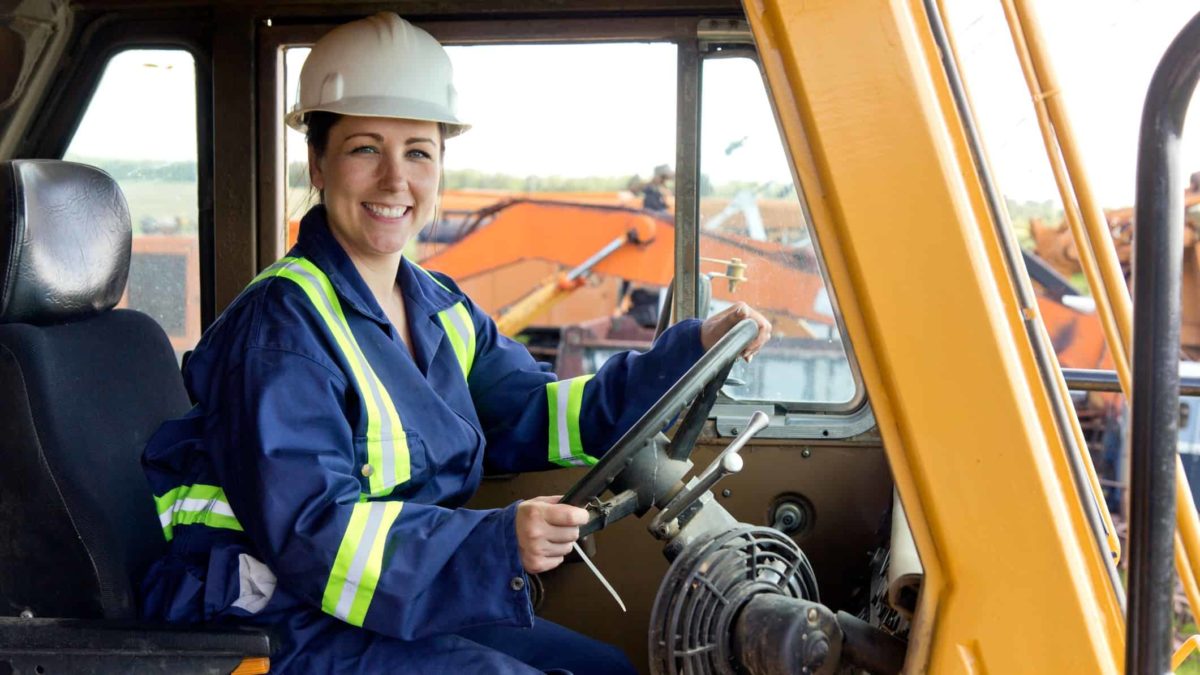
    A female employee in a hard hat and overalls with high visibility stripes sits at the wheel of a large mining vehicle with mining equipment in the background.

    If I were buying one ASX stock for passive income today, I’d be eyeing Fortescue Metals Group Ltd (ASX: FMG) shares.

    The S&P/ASX 200 Index (ASX: XJO) mining stock had a strong run yesterday, with shares closing the day up 1.90% at $22 apiece.

    Still, that leaves Fortescue shares down 25% since the opening bell sounded on 2 January.

    Now, there’s no guarantee that shares won’t sell down further. But with Fortescue counting among the lowest-cost iron ore producers in the world, with additional possible benefits from its green hydrogen ambitions, I see this year’s sizeable retrace as presenting a potentially opportune entry point.

    Particularly with long-term passive income in mind.

    We’ll get to that in just a tick.

    But first…

    Spread those eggs around!

    ‘Don’t put all your eggs in one basket’ may be a trite expression. But whether you’re investing for capital gains, passive income, or both, it’s an expression to keep at the forefront of your mind.

    While we look specifically at the potential of investing in Fortescue shares below, a proper income portfolio should contain a diversified basket of stocks operating in different sectors and ideally across various locations. There’s no magic number, but 10 is a good ballpark figure.

    Also, remember that the yields you generally see quoted are trailing yields. Future yields may be higher or lower, depending on a range of company-specific and macroeconomic factors.

    With that said…

    Tapping Fortescue shares for $2,000 a month in passive income

    $2,000 a month in passive income, or $24,000 a year, could make a big difference to most Aussies’ retirement plans. Mine included!

    So, how many Fortescue shares do I need to buy?

    Turning to the past 12 months, Fortescue paid a final fully franked dividend of $1.00 a share on 28 September.

    The interim dividend of $1.08 a share will have landed in eligible investors’ bank accounts on 27 March.

    That dividend was up 44% from the interim dividend paid out the previous year. This big boost was driven by some strong half-year results, which included a 21% year on year increase in revenue to US$9.5 billion. And net profit after tax (NPAT) of US$3.3 billion for the six-month period was up 41% year on year.

    All up then, Fortescue paid out $2.08 a share in passive income over the past year.

    At yesterday’s closing price of $22, the ASX 200 miner trades on a juicy, fully franked trailing yield of 9.45%.

    And to garner my $2,000 in monthly passive income, I’d need to buy 11,539 shares today.

    Now that’s a big investment to make all in one go.

    But that’s okay.

    Investing is a long game.

    I can also purchase smaller amounts of Fortescue shares on a monthly basis, and I expect to achieve my passive income goal in due time.

    The post I’d buy Fortescue shares today to generate $2,000 of monthly passive income appeared first on The Motley Fool Australia.

    Should you invest $1,000 in Fortescue Metals Group right now?

    Before you buy Fortescue Metals Group shares, consider this:

    Motley Fool investing expert Scott Phillips just revealed what he believes are the 5 best stocks for investors to buy right now… and Fortescue Metals Group wasn’t one of them.

    The online investing service he’s run for over a decade, Motley Fool Share Advisor, has provided thousands of paying members with stock picks that have doubled, tripled or even more.*

    And right now, Scott thinks there are 5 stocks that may be better buys…

    See The 5 Stocks
    *Returns as of 10 July 2024

    More reading

    Motley Fool contributor Bernd Struben has no position in any of the stocks mentioned. The Motley Fool Australia’s parent company Motley Fool Holdings Inc. has no position in any of the stocks mentioned. The Motley Fool Australia has no position in any of the stocks mentioned. The Motley Fool has a disclosure policy. This article contains general investment advice only (under AFSL 400691). Authorised by Scott Phillips.

  • 1 ASX 200 coal stock to buy and 1 to hold

    a man with a hard hat and high visibility vest stands with a clipboard and pen in front of a large pile of rock at a mining site.

    Are you looking for exposure to the coal industry for your portfolio? If you are, then Bell Potter has you covered.

    This morning, the broker has named one ASX 200 coal stock to buy and one to hold.

    Let’s take a look at these stocks in detail now:

    Coronado Global Resources Inc (ASX: CRN)

    The ASX 200 coal stock to buy according to Bell Potter is Coronado Global Resources.

    It is expecting the coal miner to report a strong quarterly update later this month. It commented:

    Curragh’s operational performance should have strengthened materially in Q2 2024, the first full quarter post substantial pre-strip investment over the past 24 months. We forecast Curragh mining costs of ~US$100/t (Q1 US$127/t) and saleable production of 2.8Mt (Q1 2.5Mt). At Buchanan, higher hoisting rates will provide an additional group production uplift. However, CRN’s operational enhancements will be offset by a 21% qoq fall in the average quarterly HCC benchmark price.

    In light of the above and its positive outlook of metallurgical coal, the broker has retained its buy rating and lifted its price target to $1.85 (from $1.60). Based on its current share price of $1.40, this implies potential upside of 32% for investors.

    And while dividends are likely to be small this year, the broker expects a mammoth 10% dividend yield in FY 2025. It concludes:

    Throughout 2024, CRN should realise improved production volumes and subsequent cost benefits following the self-funded investment across its Australian and US operations. We expect CRN to generate improved free cash flow and shareholder returns going forward. Our buy recommendation is underpinned by a supply constrained met coal environment, supporting long term prices. We see the potential for CRN to participate in industry consolidation.

    Whitehaven Coal Ltd (ASX: WHC)

    Bell Potter isn’t feeling as positive about ASX 200 coal stock Whitehaven Coal due to its current valuation.

    This morning, it has retained its hold rating but lifted its price target to $8.90 (from $7.70). This suggests that upside of just 2.7% is possible from current levels.

    In addition, a 2% dividend yield is expected in FY 2024 and then a 3% yield is forecast for FY 2025. It commented:

    WHC has diversified its commodity exposure and risk profile, through its ownership of large Queensland met coal assets. We hold a positive long term met coal outlook, driven by constrained supply and robust steel demand. While the company’s free cash profile out to FY27 is restricted by significant acquisition-related cash outlays, we expect it to maintain a dividend payout of 20-50% of NPAT from its NSW operations. We retain our Hold recommendation in line with our recommendation structure.

    The post 1 ASX 200 coal stock to buy and 1 to hold appeared first on The Motley Fool Australia.

    Should you invest $1,000 in Coronado Global Resources Inc. right now?

    Before you buy Coronado Global Resources Inc. shares, consider this:

    Motley Fool investing expert Scott Phillips just revealed what he believes are the 5 best stocks for investors to buy right now… and Coronado Global Resources Inc. wasn’t one of them.

    The online investing service he’s run for over a decade, Motley Fool Share Advisor, has provided thousands of paying members with stock picks that have doubled, tripled or even more.*

    And right now, Scott thinks there are 5 stocks that may be better buys…

    See The 5 Stocks
    *Returns as of 10 July 2024

    More reading

    Motley Fool contributor James Mickleboro has no position in any of the stocks mentioned. The Motley Fool Australia’s parent company Motley Fool Holdings Inc. has no position in any of the stocks mentioned. The Motley Fool Australia has no position in any of the stocks mentioned. The Motley Fool has a disclosure policy. This article contains general investment advice only (under AFSL 400691). Authorised by Scott Phillips.

  • Buy Coles and these ASX 200 dividend stocks in July

    Happy couple enjoying ice cream in retirement.

    If you’re building an income portfolio, then it could be worth looking at the ASX 200 dividend stocks named below.

    Here’s why they could be good options for income investors this month:

    Cedar Woods Properties Limited (ASX: CWP)

    Morgans thinks this property company could be a good ASX 200 dividend stock to buy.

    The broker highlights that “CWP is a volume business and the demand for lots looks to be improving, with margins to invariably follow.”

    It expects this to support the payment of dividends per share of 18 cents in FY 2024 and then 20 cents in FY 2025. Based on the current Cedar Woods Properties share price of $4.80, this equates to dividend yields of 3.75% and 4.15%, respectively.

    Morgans has an add rating and $5.60 price target on its shares.

    Coles Group Ltd (ASX: COL)

    Another ASX 200 dividend stock that has been named as a buy is Coles. It is one of the big two supermarket operators with over 800 stores across Australia. In addition, the company has a liquor network comprising almost 1,000 stores across several brands and joint ownership of the Flybuys loyalty program.

    Morgans is also feeling positive about Coles and sees it as a great option for income investors. This is due partly to its cost reduction plans and stronger than expected sales growth.

    As for dividends, the broker is forecasting fully franked dividends of 66 cents per share in FY 2024 and 69 cents per share in FY 2025. Based on the current Coles share price of $17.35, this will mean dividend yields of 3.8% and 4%, respectively.

    Morgans has an add rating and $18.95 price target on its shares.

    Telstra Group Ltd (ASX: TLS)

    Goldman Sachs is feeling even more positive about this telco giant after an update this week and sees it as an ASX 200 dividend stock to buy.

    It notes that Telstra’s price increase update “highlight: (1) mobile market rationality remains (particularly when combined with the recent Optus increase); (2) TLS mobile earnings growth remains strong, driven by subscribers and ARPU.”

    The broker believes this will now underpin fully franked dividends of 18 cents per share in FY 2024 and then 19 cents per share in FY 2025. Based on the current Telstra share price of $3.82, this equates to yields of 4.7% and 5%, respectively.

    Goldman has a buy rating and $4.30 price target on Telstra’s shares.

    The post Buy Coles and these ASX 200 dividend stocks in July appeared first on The Motley Fool Australia.

    Should you invest $1,000 in Coles Group Limited right now?

    Before you buy Coles Group Limited shares, consider this:

    Motley Fool investing expert Scott Phillips just revealed what he believes are the 5 best stocks for investors to buy right now… and Coles Group Limited wasn’t one of them.

    The online investing service he’s run for over a decade, Motley Fool Share Advisor, has provided thousands of paying members with stock picks that have doubled, tripled or even more.*

    And right now, Scott thinks there are 5 stocks that may be better buys…

    See The 5 Stocks
    *Returns as of 10 July 2024

    More reading

    Motley Fool contributor James Mickleboro has no position in any of the stocks mentioned. The Motley Fool Australia’s parent company Motley Fool Holdings Inc. has positions in and has recommended Goldman Sachs Group. The Motley Fool Australia has positions in and has recommended Coles Group and Telstra Group. The Motley Fool has a disclosure policy. This article contains general investment advice only (under AFSL 400691). Authorised by Scott Phillips.

  • Buy this ASX tech stock for a 20%+ return: Goldman Sachs

    A businessman looking at his digital tablet or strategy planning in hotel conference lobby. He is happy at achieving financial goals.

    There could be some big returns on offer in the tech sector still according to analysts at Goldman Sachs.

    One such example is ASX tech stock CAR Group Limited (ASX: CAR).

    What is the broker saying about this ASX tech stock?

    According to a note out of the investment bank this morning, its analysts believe the auto listings company is well-placed for strong growth over the coming years despite some foreign exchange and Trader Interactive (TI) headwinds. It commented:

    We revisit the near-term earnings outlook for CAR ahead of FY24 results, noting recent investor queries around: (1) US and AU dealer health; (2) FX; and (3) potential M&A. Overall, we remain confident that despite spot FX and TI dealer headwinds, CAR is well-placed to continue delivering ‘good’ earnings growth (i.e. > 10% EBITDA) & remains our preferred classified into earnings.

    Goldman also highlights that the ASX tech stock’s Australian business is performing strongly despite a challenging ad-market. It said:

    AU trends remain robust, particularly in used, with volumes (> 95% of total) remaining solid (Ex 4-7); pricing power continues (i.e. 5-6% price increase in private, we expect 4-5% dealer increase in Sept, as used dealer margins remain strong & CAR didn’t increase materially through covid), while media revenues are supported by healthy new car volumes despite the challenging ad-market. With elevated CAR domestic opex growth in 1H24 (13.4%), there is also scope to slow investment and maintain double digit EBITDA growth.

    Big returns

    In light of the above, the broker has reaffirmed its buy rating on the ASX tech stock with an improved price target of $41.40. Based on its current share price of $34.76, this implies potential upside of 19.1% for investors over the next 12 months.

    In addition, Goldman Sachs is forecasting partially franked dividend yields of 2.1% in FY 2024 and 2.3% in FY 2025. This brings the total potential 12-month return beyond 21%, which is more than double the historical return of the share market.

    Goldman then concludes by summarising its buy thesis. It said:

    Carsales is the largest Auto classified domestically, in addition to having strong international operations in Korea, US (Non-auto) and LATAM. We are Buy rated on CAR as we are increasingly confident in the company’s earnings momentum (both locally & globally) – forecasting +11% EPS CAGR across FY24-27E. Downside risks include: (1) Global macro trends; (2) dealer relationships; (3) FX exposure.

    The post Buy this ASX tech stock for a 20%+ return: Goldman Sachs appeared first on The Motley Fool Australia.

    Should you invest $1,000 in Carsales.com right now?

    Before you buy Carsales.com shares, consider this:

    Motley Fool investing expert Scott Phillips just revealed what he believes are the 5 best stocks for investors to buy right now… and Carsales.com wasn’t one of them.

    The online investing service he’s run for over a decade, Motley Fool Share Advisor, has provided thousands of paying members with stock picks that have doubled, tripled or even more.*

    And right now, Scott thinks there are 5 stocks that may be better buys…

    See The 5 Stocks
    *Returns as of 10 July 2024

    More reading

    Motley Fool contributor James Mickleboro has no position in any of the stocks mentioned. The Motley Fool Australia’s parent company Motley Fool Holdings Inc. has positions in and has recommended Goldman Sachs Group. The Motley Fool Australia has recommended Car Group. The Motley Fool has a disclosure policy. This article contains general investment advice only (under AFSL 400691). Authorised by Scott Phillips.

  • Why did ASX retail shares rise 19% in FY24 amid a cost of living crisis?

    A young man sitting at an outside table uses a card to pay for his online shopping.

    ASX retail shares had a pretty decent year in FY24, with the S&P/ASX 200 Consumer Discretionary Index (ASX: XDJ) rising 19.29% over the 12 months.

    Does that strike you as strange? In the middle of a cost-of-living crisis?

    Consumers have been cutting back big-time on their discretionary spending for many months now, yet ASX retail shares went up in FY24 at more than twice the pace of the benchmark index.

    The S&P/ASX 200 Index (ASX: XJO) rose by 7.83% in FY24, or 12.1% if you include dividends.

    So, why did this happen?

    Why did ASX retail shares rise during a cost-of-living crisis?

    David Rumbens, a partner at Deloitte Access Economics, has an answer for us.

    In a blog, Rumbens explained why discretionary stocks defied sticky inflation and high interest rates in FY24 to rise by more than 19%.

    Rumbens said:  

    Consumer discretionary stocks defied expectations by posting a 19% increase despite the economy experiencing per-capita recession.

    This unexpected strength largely came from the first nine months of the financial year where consumer savings were being run down.

    Ah-ha! Housing savings.

    Household savings reached a historical peak during the COVID years. The household saving ratio, which means the percentage of income saved, hit an all-time high of 24% in the June 2020 quarter, according to data from the Australian Bureau of Statistics (ABS).

    This happened for three reasons.

    Firstly, we weren’t spending much during lockdowns.

    Secondly, many Australians received generous government stimulus payments, such as a beefed-up JobSeeker payment and the JobKeeper payment.

    Thirdly, emergency low interest rates during the pandemic meant many households with mortgages saved money and left it in their offset accounts.

    A saving grace for the economy

    This major increase in household savings has turned out to be a massive saving grace for our economy.

    This is because what followed COVID was initially unexpected.

    As the world reopened and inflation started rising, many economists and central banks predicted the inflation spike would be “transitory” and not too big a deal.

    But it turned out to be a big deal.

    Inflation hit a peak of 7.8% in Australia in the December 2022 quarter as the cost of living skyrocketed.

    Between May 2022 and November 2023, the Reserve Bank of Australia (RBA) raised interest rates 13 times.

    So, those pandemic savings are certainly coming in handy for struggling households today. Not only are they enabling people to continue spending at the shops, they’re also protecting home values, too.

    You see, despite home loan repayments increasing by 30% to 60% since May 2022, home loan arrears are still very low, according to the RBA. That means not too many people are being forced to sell, and that protects the market by keeping supply in check.

    In its latest Financial Stability Review, the RBA noted that pandemic savings were a key factor enabling borrowers to keep up with their repayments.

    The RBA said:

    Households are coping well due to a strong labour market, which is allowing them to increase their hours or get a second job if necessary.

    They are also drawing on large savings buffers, partly created by pandemic stimulus and lower spending during lockdowns, and have reduced their discretionary spending as necessary.

    The bank noted that about half of all borrowers had enough savings to pay their loans and cover the cost of essential living expenses for at least six months.

    Another factor supporting ASX retail shares in FY24 was the ongoing spending among baby boomers.

    CommBank research shows the baby boomers are still spending pretty freely at the shops, despite the cost of goods and services, like travel, going up.

    The boomers are one of the biggest population cohorts in Australia’s history, so the fact this group is still spending is helpful for retailers in a cost-of-living crisis.

    Best 3 ASX retail shares of FY24

    Here are the best ASX 200 retail shares of FY24 based on share price growth, according to data from S & P Global Market Intelligence.

    Lovisa Holdings Ltd (ASX: LOV)

    Budget jewellery retailer Lovisa led the consumer discretionary stocks in FY24 with a 70.3% share price gain. The Lovisa share price closed the session on Thursday at $32.34, down just 0.03%.

    Premier Investments Limited (ASX: PMV)

    The second top-performing ASX 200 retail share in terms of share price growth was Premier Investments, up 53.8% over the 12 months. The Premier Investments share price closed at $29.89 yesterday, up 0.88%.

    JB Hi-Fi Ltd (ASX: JBH)

    The JB Hi-Fi share price gained 39.9% over FY24. The ASX retail share closed at $65.25 yesterday, up 1.34%.

    The post Why did ASX retail shares rise 19% in FY24 amid a cost of living crisis? appeared first on The Motley Fool Australia.

    Should you invest $1,000 in Jb Hi-fi Limited right now?

    Before you buy Jb Hi-fi Limited shares, consider this:

    Motley Fool investing expert Scott Phillips just revealed what he believes are the 5 best stocks for investors to buy right now… and Jb Hi-fi Limited wasn’t one of them.

    The online investing service he’s run for over a decade, Motley Fool Share Advisor, has provided thousands of paying members with stock picks that have doubled, tripled or even more.*

    And right now, Scott thinks there are 5 stocks that may be better buys…

    See The 5 Stocks
    *Returns as of 10 July 2024

    More reading

    Motley Fool contributor Bronwyn Allen has no position in any of the stocks mentioned. The Motley Fool Australia’s parent company Motley Fool Holdings Inc. has positions in and has recommended Lovisa. The Motley Fool Australia has recommended Jb Hi-Fi, Lovisa, and Premier Investments. The Motley Fool has a disclosure policy. This article contains general investment advice only (under AFSL 400691). Authorised by Scott Phillips.

  • Biden refers to Kamala Harris as ‘Vice President Trump’ shortly after calling Zelenskyy ‘Putin’

    President Joe Biden at the NATO Summit in Washington, DC on Thursday.
    President Joe Biden at the NATO Summit in Washington, DC on Thursday.

    • President Joe Biden delivered his first press conference of 2024 amid questions about his future.
    • In response to a question about VP Harris, he referred to her as "Vice President Trump."
    • It was the first major gaffe he made at the press conference.

    At a press conference after the conclusion of this week's NATO summit, President Joe Biden referred to Vice President Kamala Harris as "Vice President Trump."

    "Look, I wouldn't have picked Vice President Trump to be vice president if I didn't think she was not qualified to be vice president," said Biden.

    It was his first major gaffe of the press conference, which remains ongoing.

    https://platform.twitter.com/widgets.js

    Earlier this evening, Biden referred to Ukrainian President Volodymyr Zelenskyy as "President Putin" before quickly correcting himself.

    https://platform.twitter.com/widgets.js

    This is a developing story. Please check back for updates.

    Read the original article on Business Insider
  • My partner and I divorced after 19 years together. It wasn’t the end of the world.

    a person sitting on the floor surrounded by moving boxes
    The author, not pictured, is starting over after their divorce.

    • I was with my partner for 19 years when we suddenly got divorced.
    • I am now working on rebuilding my life as a 40-year-old, independent person.
    • I am starting to find my identity and leaning on friends for support. 

    Nobody gets married planning to get divorced, and yet about half of all marriages end that way. This year I've learned even queer marriages aren't special or immune from this fate. Much to my great surprise, love doesn't always "win."

    I spent over 19 years with my now ex-partner, believing that what we had was forever. However, this year, a few months before turning 40, I learned the life we had was no longer what my partner wanted. They had a new life and wanted a divorce.

    In the aftermath, I was left figuring out who I was without them and how to rebuild my life as a newly middle-aged queer person.

    My childhood prepared me for this

    This month, the therapist I started seeing during the divorce "graduated" me out of therapy. It has been nearly six months since my ex-partner walked out. Her assessment is that I am thriving, solid, and confident with a plan for moving forward. She expressed amazement at my growth, noting that most people don't bounce back quickly from the shock of their families falling apart.

    I credit my experience as a homeless teenager with helping me bounce back so quickly. When you lose your home, world, and family as a kid, on some level, you'll always be prepared to lose it again.

    I spent years knowing my worst fear was my partner leaving. In our relationship, I did everything I could imagine to please my ex and prevent being abandoned. However, once they left and I realized the worst thing had happened, I was terrified, but I also felt a profound freedom.

    Starting over and rebuilding is a thing that I know how to do. I've done it before and knew I could and would do it again.

    I'm starting to rebuild my life

    Once I wrapped my mind around the immediate crisis of being abandoned, I realized the first thing I had to do was figure out who I was, and who I wanted to be now.

    In my case, spending practically all of my adult life (age 20-39) with a partner made it hard to know who I am as an individual. Divorce changes you. I will never be the person I was before that day in January when I came home and learned my marriage was over. To cope, initially, I immersed myself in my work, which, as a writer/small business owner, is never-ending.

    I got rid of all the clothes my ex-partner had wanted me to wear. I dyed and then more recently cut off my hair. My life was mine to architect, and I wanted to look as different on the outside as I felt on the inside. I committed to my creative projects. I reconnected with friends and creative collaborators around the world. I started going out to social and community events. I reinvested my time and presence in the subcultures and interests that were mine before I met my now ex-partner.

    Essentially, I started investing in getting to know myself again. As part of this journey, I've found that being in a community, being surrounded by people who have the same passions as I do, makes me feel less alone and more excited about the future than I've felt in years.

    I'm leaning on my chosen family for support

    I'll never forget the night after my ex-partner left when I got a call from one of my now closest friends. "Let me be part of your inner circle?" he asked.

    In that moment all the lessons I learned as a homeless youth flashed through my brain. I could white-knuckle myself through this alone, trusting nobody, or I could remember that not everyone was trying to hurt me and create a new family built on trust, love, and shared experiences. Queer chosen family has always been important to my sense of self, but that has been especially true this year.

    As I have navigated my divorce I have loved deeply, and I have let people love me. I have let people emotionally show up for me and trusted them not to hurt me. Contrary to my deepest fears, I wasn't isolated, and there were people ready and excited to build a new family with me. These are friends who were there on my worst days. People who got in their car in an ice storm to get to me the day my ex-partner left stayed up all night on the phone with me, listening as I tried to make sense of what happened.

    I never wanted my relationship to end in divorce, and I never imagined it would. However, now that it has, I've learned that isn't the end of the world.

    Being alone is scary, but much to my surprise, even though I'm starting over at 40, I feel much less alone than ever before. I'm surrounding myself with people who love me for who I am. I'm also learning that I like the new life I'm building — maybe even better than the one I lost.

    Read the original article on Business Insider
  • Ukraine’s navy is harassing Russian forces with 16 new armored assault boats built by Sweden

    Two CB90 fast assault crafts sail near snowy mountains during military exercises.
    Deployed by naval forces around the globe, the Swedish-built CB90 fast assault boats have supported various missions and operations.

    • Ukraine's navy has acquired at least 16 Swedish-made patrol boats this year to counter Russia.
    • The CB90 assault craft can deploy on various missions, from troop delivery to mine reconnaissance.
    • They are also configurable — able to act as an armored raider or floating command center as needed.

    Ukraine's navy added three Swedish-made patrol boats to its fleet earlier this month as it continues to hammer Russian naval forces in the Black Sea.

    The recent CB90 delivery comes after Sweden announced its massive $682 million military aid package to Ukraine in February, which included 10 CB90 vessels and 20 other riverine boats. The Netherlands similarly provided three more CB90s to Ukraine a month later, for a total of at least 16.

    Turning the tide in the Black Sea
    Swedish Marines prepare a CB90-class fast assault craft for mooring.
    Swedish Marines also operate the CB90-class fast assault craft.

    Steel Front, a military assistance initiative run by Ukrainian billionaire Rinat Akhmetov, sent Ukraine the new CB90-class fast assault crafts, which are already in operation in waters near Crimea.

    Following a six-month effort by Steel Front and Ukrainian steel giant Metinvest, the three vessels and crew training for Ukrainian forces cost more than $4.1 million.

    "There is no doubt the Black Sea is an important front," Oleksandr Vodoviz, an executive at Metinvest, said in a statement, "and our aim is that these powerful boats will make a significant difference to Ukraine's ability to defend itself."

    In total, Sweden has provided at least 13 CB90s to Ukraine's navy. The Netherlands donated nearly two dozen inflatable and armored boats, including three CB90s, to Ukraine in March. The Finnish Ministry of Defense also delivered a number of landing crafts to Ukraine. It wasn't immediately clear what type of vessels were sent, but Finnish media speculated them to operate similarly to the Swedish CB-90.

    Inside the CB90
    Swedish and US Marines drape a cover over the frame of a Swedish CB90 to conceal it.
    Swedish and US Marines drape a cover over the frame of a Swedish CB90 to conceal it.

    Dockstavarvet, a shipyard owned by Swedish defense manufacturer Saab, originally developed the CB90 for the Swedish Navy.

    The 52-foot-long patrol boat is propelled by twin diesel engines that allow it to travel at speeds of up to 40 knots — or 46 miles per hour — with a range of more than 240 nautical miles.

    Two partially ducted water jets make the lightweight CB90 highly maneuverable. It can make sharp turns and come to a complete stop in about 130 feet.

    Armed to the teeth
    US Marines disembark a CB90 during military exercises.
    US Marines disembark a CB90 during military exercises.

    The combat boat is equipped with a gun mount atop its wheelhouse, which can mount a .50-caliber machine gun, 40mm grenade launcher, or remote-controlled weapons.

    In addition to its top-mounted guns, the CB90 can deploy Hellfire anti-ship missiles, 2.8-ton sea mines, and depth charges.

    A versatile vessel
    US Marines conduct CB90-class fast assault craft drills during exercises in Harstad, Norway.
    A CB90 approaches a rocky shore during exercises in Harstad, Norway.

    Designed to patrol and defend coastal waters, the shallow-draught CB90 can be deployed in both open waters and rocky shores for missions like ferrying troops, mine reconnaissance, or landing troops for amphibious raids.

    From gunboat to command post
    US Marines approach the shore as they prepare to disembark during military exercises.
    US Marines approach the shore as they prepare to disembark during military exercises.

    The vessel's aft is also configurable; it can accommodate a range of gear, from remote-controlled weaponry to additional radar and communications equipment.

    Armed and armored
    A Swedish CB90-class fast assault craft transits near another CB90 in the distance.
    The CB90's ballistic protection safeguards the crew and equipment.

    Whether operating as a combat-ready gunboat or a floating command post, the CB90 has a durable hull made of lightweight polyethylene lining and safety glass, offering ballistic protection to shield its personnel and vital components during hostile operations.

    "With its armament and ballistic protection, the CB90 can deliver its troops in the face of enemy fire with a degree of survivability for both the craft and embarked troops," Pete Pagano, a retired US Navy officer, wrote in an article for the US Naval Institute's Proceedings magazine.

    While the armed and armored CB90 can survive the potentially high-risk delivery, Pagano wrote that the Swedish-built vessel alone "could provide limited supporting firepower for the embarked troops during the vulnerable approach to and landing on the beach," calling for support from other landing craft to bring in heavy equipment.

    Transport for troops and cargo
    A Norwegian Coastal Ranger Commando carries a simulated casualty to a CB90-class fast assault craft during medical evacuation drills.
    A Norwegian Coastal Ranger Commando carries a simulated casualty to a CB90 during medical evacuation drills.

    The boat is typically operated by a crew of two officers and one engineer, with two operator seats and a middle jump seat in an aircraft-style cockpit.

    The CB90's midsection has a compartment that can carry 21 combat-ready Marines and up to 4.5 tons of cargo, making it an efficient method to deploy troops or extract casualties.

    Deployed by naval forces around the globe
    A Marine is seen standing aboard a CB90 as it transits near buildings in Stockholm.
    A Marine is seen standing aboard a CB90 as it transits near buildings in Stockholm.

    Since being commissioned in 1991, more than 200 CB90 boats have been operated by naval forces worldwide. The US Navy even contracted US-based boat manufacturer SAFE Boats International to build CB90s as riverine command boats.

    The combat boat's design and capabilities have also been modified over the years. Dockstavarvet optimized the boat's design in its next-generation variant, the CB90 HSM, altering the engine position to make it quieter and more efficient.

    The CB90 HSM features a new combat management system and surveillance sensors, making it "a whole new breed, ready to take on the coasts of Sweden," according to a press release.

    Supporting Ukraine's riverine flotilla
    A CB90 sails down a shallow river.
    A CB90 sails down a shallow river.

    While the new combat boats are operating near Crimea, CB90 boats supplied by Ukrainian allies have bolstered the country's riverine units, which have been hammered by Russian forces.

    Explosive-laden Russian drones and artillery have decimated Ukrainian boat crews defending the Dnipro River in southern Ukraine.

    Last October, a Russian ace drone pilot, identified by the call sign "Moisey," struck nearly 400 Ukrainian marines and three dozen vessels.

    "We were sitting in the water at night, and we were shelled by everything," a Ukrainian marine named Maksym, who was stationed at the river's east bank, told The New York Times in December. "My comrades were dying in front of my eyes."

    Maksym added that Russian aircraft continued to pummel the left bank with glide bombs as the Ukrainian platoon tried to evacuate.

    "The left bank was like purgatory," he said. "You are not dead yet, but you don't feel alive."

    The Swedish CB90s, among additional donated boats from other allied nations, have been integral to Ukraine's efforts to fend off Russian forces in the region.

    Read the original article on Business Insider