
• Barron’s Picks And Pans: AutoNation, Overstock.com, SPACs And More

    Barron's Picks And Pans: AutoNation, Overstock.com, SPACs And More* This weekend's Barron's cover story examines special purpose acquisition companies, the new hot thing on Wall Street. * Other featured articles look at how to play rising gold prices or China's comeback, and how not to get burned by thematic ETFs. * Also, the prospects for car dealer stocks, the breakup of big tech, office REITs and more.Cover story "SPACs Are the New Hot Thing on Wall Street. What You Need to Know" by Nicholas Jasinski explains that blank-check companies give investors an opportunity to ride along with dealmakers looking to bring new businesses public, such as Nikola Corporation (NASDAQ: NKLA) and Virgin Galactic Holdings Inc (NYSE: SPCE).Andrew Bary's "Gold Prices Are on the Rise. Here Are the Ways to Play It" makes a case that there could be more room for gold and gold-mining stocks to advance. See if Barron's thinks Barrick Gold Corp (NYSE: GOLD) is worth a look.In "Park These 3 Car Dealer Stocks in Your Portfolio," Daren Fonda shows why car-buyers have gravitated toward online platforms, but for investors, the better deals are still at the lot. Why investors should consider AutoNation, Inc. (NYSE: AN) and others.What the United States can learn from China's revival, according to "How to Invest in China's Consumer Comeback" by Reshma Kapadia. Travel is out, but e-commerce, such as JD.Com Inc (NYSE: JD), is among the areas that are thriving.In Bill Alpert's "2 Picks and 4 Pans From a Savvy Pro," the founder of an independent research firm shares his thoughts on what to expect from the likes of Overstock.com Inc (NASDAQ: OSTK) and Zillow Group Inc (NASDAQ: ZG).See also: TikTok Is On The Clock As Trump Threatens Ban, Microsoft Mulls Acquisition"Congress' Grilling of Tech Titans Didn't Rattle Their Shares. Here's Why" by Max A. Cherney takes a look at how likely breakups of Amazon.com, Inc. (NASDAQ: AMZN) and other tech giants are after last week's testimony by their chiefs.Niche exchange-traded funds, such as First Trust Cloud Computing ETF (NYSE: SKYY), invest in targeted areas. That's a huge benefit–until it's not. So says Evie Liu's "Thematic ETFs Invest In the Hottest Trends. How Not To Get Burned."In "Because Working From Home Is Hot, You'll Need to Do Your Homework on Office REITs," Lawrence C. Strauss suggests that investors can still find potential winners among these real estate investment trusts. Is Cousins Properties Inc (NYSE: CUZ) one of them?Also in this week's Barron's: * Whether investors are too wary as earnings come in strong * How big tech CEOs got the last word * Robo advisors pass their first stress test * What to watch instead of gross domestic product * Why bitcoin is rising againAt the time of this writing, the author had no position in the mentioned equities.Keep up with all the latest breaking news and trading ideas by following Benzinga on Twitter.See more from Benzinga * Benzinga's Bulls And Bears Of The Week: Apple, Boeing, Facebook And More * Notable Insider Buys: Guess, FedEx And More * Barron's Picks And Pans: Crispr, McDonald's, Nikola And More(C) 2020 Benzinga.com. Benzinga does not provide investment advice. All rights reserved.

    from Yahoo Finance https://ift.tt/2BTw4mi

  • Why I’d buy cheap shares despite the threat of another stock market crash

    businessman sitting at desk with head in hands in front of computer screens with falling financial charts, asx recession

    A second market crash may or may not occur following the recent rebound in equity prices. As such, investors may wish to purchase cheap shares today while they offer good value for money in many cases, ahead of a likely long-term stock market recovery.

    Of course, keeping some cash on hand in case more attractive buying opportunities come along could be a sound move. However, with many sectors appearing to offer wide margins of safety, investors may wish to invest a large proportion of their portfolio while their prices are temporarily low.

    Predicting another market crash

    Trying to predict when a market crash will occur is almost impossible. For example, at the present time the stock market faces numerous risks that could realistically weigh on the world economy’s prospects. However, at the same time it could be argued that many of those risks are already factored into share prices. Therefore, they may not necessarily cause a severe decline in stock prices should they come to fruition.

    Investors may wish to take advantage of low prices while they are on offer. The past performance of the stock market suggests that its downturns do not last in perpetuity, and can quickly give way to sustained bull markets that offer high returns. This may mean that focusing your capital on stocks, rather than other assets, could be a shrewd move. It may not necessarily lead to high returns in the short run, but could produce relatively high capital growth in the coming years.

    Cheap shares

    While some sectors have rebounded following the recent market crash, other industries continue to be exceptionally unpopular among investors. For example, energy, leisure and retail stocks are trading significantly below their long-term averages in many cases. This suggests that they may offer wide margins of safety, and that investors are adopting a cautious stance regarding their prospects.

    This could present a buying opportunity for long-term investors. Although there are clear risks ahead that could cause their stock prices to trade lower for a time, over the coming years a recovery from their current price levels seems likely.

    Relative appeal

    As mentioned, holding some cash in case of a market crash could be a sound move. However, holding too much of your capital in assets that offer low returns, such as bonds and cash, could be detrimental to your long-term financial prospects. Low interest rates and the potential for reduced spending power may mean that shares offer significantly greater return prospects – especially since they have wide margins of safety in many cases.

    Therefore, despite the threat of another market decline, now could be the right time to buy a diverse range of cheap shares to maximise your potential to take part in a likely stock market recovery.

    5 stocks under $5

    We hear it over and over from investors, “I wish I had bought Altium or Afterpay when they were first recommended by The Motley Fool. I’d be sitting on a gold mine!” And it’s true.

    And while Altium and Afterpay have had a good run, we think these 5 other stocks are screaming buys. And you can buy them now for less than $5 a share!

    *Extreme Opportunities returns as of June 5th 2020

    More reading

    Motley Fool contributor Peter Stephens has no position in any of the stocks mentioned. The Motley Fool Australia has no position in any of the stocks mentioned. We Fools may not all hold the same opinions, but we all believe that considering a diverse range of insights makes us better investors. The Motley Fool has a disclosure policy. This article contains general investment advice only (under AFSL 400691). Authorised by Scott Phillips.

    The post Why I’d buy cheap shares despite the threat of another stock market crash appeared first on Motley Fool Australia.

    from Motley Fool Australia https://ift.tt/39NMjO9

  • Pinduoduo Finds Support

    Pinduoduo Finds SupportPinduoduo rallied sharply with other China stocks Friday.

    from Yahoo Finance https://ift.tt/3gldm5L

  • Benzinga’s Bulls And Bears Of The Week: Apple, Boeing, Facebook And More

    Benzinga's Bulls And Bears Of The Week: Apple, Boeing, Facebook And More* Benzinga has examined the prospects for many investor favorite stocks over the past week. * This week's bullish calls included tech giants and a top biotech. * An aerospace giant and the electric vehicle leader were among the week's bearish calls.This past week was a busy one, leaving investors much to ponder as the month of July concluded. After congressional testimony from big tech chiefs, followed by big tech earnings, and after a mixed view from the Federal Reserve, corporate surprises and shakeups and a historically bad gross domestic product report, the Nasdaq and the S&P 500 managed to end the week with small gains, while the Dow Jones industrials pulled back fractionally.Benzinga continues to examine the prospects for many of the stocks most popular with investors. Here are some of this past week's most bullish and bearish posts that are worth another look.BullsShanthi Rexaline's "Apple's Path To Trillion Is Set As Wall Street Lauds Resilience, Ecosystem Engagement" reveals which analyst made Apple Inc. (NASDAQ: AAPL) a top pick and which underestimated the iPhone maker.In "Analysts Bullish On Google Following Mixed Quarter, With Ads Trending In The Right Direction," Wayne Duggan suggests mixed results didn't turn analysts bearish on Alphabet Inc. (NASDAQ: GOOGL).The second-quarter print pleased Facebook, Inc. (NASDAQ: FB) analysts and investors, according to Jayson Derrick's "The Street's Reaction To Facebook's Q2: Bulls Turn More Bullish.""Morgan Stanley Double Upgrades Biogen, Says Alzheimer's Opportunity Ahead" by Priya Nigam outlines why Biogen Inc (NASDAQ: BIIB) investors should not focus on the short-term headwinds.For additional bullish calls, also have a look at "The Auto Industry Is Recovering 'Faster Than Expected,' Analyst Says" and "Unusually Large Newmont Option Trades Suggest Gold Prices Could Be Headed Even Higher."BearsWall Street analysts have raised concerns regarding the meteoric valuation at Tesla Inc (NASDAQ: TSLA). So says "Why Tesla's 'Mindboggling' Valuation Is Difficult To Sustain Even Under Most Bullish Scenario" by Shanthi Rexaline.In Priya Nigam's "Boeing Analyst: Crisis Of Confidence In Plane Manufacturer 'Justified'," see why Boeing Co (NYSE: BA) analysts are unconvinced about its guidance for the rest of 2020 and beyond."Starbucks Analysts Stick To Sidelines After Q3 Print, Break Down COVID-19 Impact On Coffee Chain" by Jayson Derrick discusses why Starbucks Corporation (NASDAQ: SBUX) analysts are taking a wait and see approach.Sanju Swamy's "Expedia Faces Slow Journey Back As COVID-19 Hammers Travel: Needham" points out why it could take three to five years for Expedia Group, Inc. (NASDAQ: EXPE) to recover.Be sure to check out "TikTok Is On The Clock As Trump Threatens Ban, Microsoft Mulls Acquisition" and "What Mark Cuban Says Could Be The Greatest Threat To America's Tech, Military Future" for additional bearish calls.At the time of this writing, the author had no position in the mentioned equities.Keep up with all the latest breaking news and trading ideas by following Benzinga on Twitter.See more from Benzinga * Benzinga's Bulls And Bears Of The Week: Apple, Coca-Cola, Twitter And More * Barron's Picks And Pans: Chipotle, Lululemon, Zoom Video And More * Bulls And Bears Of The Week: Apple, Facebook, Tesla And More(C) 2020 Benzinga.com. Benzinga does not provide investment advice. All rights reserved.

    from Yahoo Finance https://ift.tt/2BUHshO

  • Europe Is Building the Next Tesla. Who Knew?

    Europe Is Building the Next Tesla. Who Knew?(Bloomberg Opinion) — When Nikola Corp. started trading on Nasdaq in June, the Phoenix-based clean transportation company raced quickly to a valuation of almost $30 billion.Its market worth has since fallen to a more reasonable $10.5 billion, but that’s still pretty spicy for a business yet to generate any revenue. Its most promising products are its heavy trucks, powered by electric batteries or hydrogen fuel cells.The rise of Nikola (whose name, cheekily, is another evocation of electrical engineer Nikola Tesla) will have reinforced a view among European auto industry executives that the U.S. stock market operates by different rules. While Tesla Inc. is only modestly profitable, it’s valued at about $275 billion, more than Europe’s five largest carmakers combined.At least Europe has a stake in the latest heavily hyped project. Founded by Trevor Milton, a 38-year-old American college dropout, Nikola is relying heavily on expertise from the old continent. Robert Bosch Gmbh, a German automotive supplier, has helped develop the U.S. company’s electric powertrain, and the first Nikola trucks will be built in a German factory belonging to Italy’s Iveco, a truck maker backed by the billionaire Agnelli family. Bosch and Iveco each own more than 6% of Nikola. CNH Industrial NV, Iveco’s parent, just recorded a $1.5 billion fair value gain on that investment.(1) The biggest question is whether a start-up dependent on so much external help should have a whizzy valuation like Tesla, which builds much of its technology itself. And if Europe has this expertise, why hasn’t it produced its own rival to Elon Musk’s carmaker?Maybe it’s a lack of chutzpah. Nikola’s name isn’t the only reason it’s often compared with Tesla. Milton’s hyperactive Twitter presence makes Musk look tame by comparison. Both men’s ambitions extend beyond selling zero-emission vehicles to producing and storing clean energy. While Nikola is focused on heavy-duty trucks, it has touted a variety of consumer products including a pickup called the Badger. These are catnip for retail investors, as the excitement over Musk’s Cybertruck demonstrates.While Tesla and Nikola are both working on electric heavy trucks, they differ in at least two important respects. The first is hydrogen: Musk is dismissive, while Milton thinks hydrogen is the perfect fuel for long truck journeys. The second is their attitude toward building stuff in-house. True, in its early days Tesla worked with Lotus to help make the Roadster, and Daimler AG helped develop the Model S saloon. Tesla partners with Panasonic to produce battery cells. But Musk is famous for trying to build his own technology, from electric powertrains and automated-driving software to car seats.Nikola developed its own software, infotainment and battery management-system, as well as vehicle aerodynamics, according to Cowen analyst Jeffrey Osborne. It has outsourced or used hired help to do much of the other stuff. More than 200 Bosch employees were involved in building important parts of Nikola’s trucks, including the electric motor for the axle, the vehicle-control unit, the battery and the hydrogen fuel cell. The result is a mix of intellectual property owned either separately or jointly by Nikola and its suppliers. There’s no doubt, however, who has the deeper expertise. So far Nikola has been awarded 11 U.S. patents, about 1% of the total Bosch is awarded in a typical year. “Bosch gets paid to help us get to industry standards on products,” Milton told me.Getting partners to provide the technological building blocks has some advantages. Nikola has only 300 employees and yet its first trucks should start rolling off the production line soon. Working with partners cuts the risk of the manufacturing delays and quality problems that plagued Tesla.It’s an efficient use of capital too. Nikola’s research and development expenses were just $68 million last year. Tesla spent $1.3 billion. After going public, Nikola has about $900 million of cash, although that won’t go far in the automotive business. For the North American market, Nikola plans to handle its own manufacturing, with technical assistance from Iveco. Nikola broke ground this week on a $600 million factory in Arizona.Whether or not you believe the extensive involvement of outside partners should have a bearing on its lofty valuation, there are other things that could upset Nikola’s plans. Building a refueling network is a central part of its business model, but this won’t come cheap at $17 million for each hydrogen station. The company is also entering a competitive field populated by more experienced and better capitalized rivals. Daimler’s Mercedes-Benz failed to follow through on its early experiments with electric cars and let Tesla roar past. It probably won’t make the same mistake with trucks.Daimler is the world’s largest truck maker and it plans to start production of its electric eActros and eCascadia models next year. The German giant has also formed a joint venture with Sweden’s Volvo AB to develop hydrogen fuel cell systems for heavy vehicles. That venture is valued by the companies at just 1.2 billion euros ($1.4 billion), putting the Nikola valuation into perspective.    Even if its share price looks overblown, Nikola’s improbable rise shows there’s investor demand for clean transportation companies that don’t still have one foot planted in the combustion-engine past. European manufacturers have the technical chops but they must find better ways to capitalize on investor excitement through new business models or spinoffs. Otherwise someone else will.(1) This was measured on June 30 when Nikola's stock was much higherThis column does not necessarily reflect the opinion of the editorial board or Bloomberg LP and its owners.Chris Bryant is a Bloomberg Opinion columnist covering industrial companies. He previously worked for the Financial Times.For more articles like this, please visit us at bloomberg.com/opinionSubscribe now to stay ahead with the most trusted business news source.©2020 Bloomberg L.P.

    from Yahoo Finance https://ift.tt/3gj5iml
  • Undocumented Workers, Shut Out From U.S. Aid, Run Out of Options

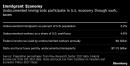
    Undocumented Workers, Shut Out From U.S. Aid, Run Out of Options(Bloomberg) — Undocumented workers in the U.S. are running out of options to help them survive the coronavirus pandemic.Largely left out of federal relief programs, undocumented families have relied on money from philanthropic organizations and local governments to help buy food and to pay their bills. But now some of those funds are drying up, exacerbating the public health crisis and further threatening an economic recovery that’s become shakier with the recent surge in virus infections and a renewed wave of layoffs.Programs backed by municipalities with support from community-based organizations in Minneapolis; Austin, Texas; Chicago; and Montgomery County, Maryland, are being halted or almost out of money. The programs, which have provided funds to help immigrants pay rent and other expenses, have not been able to keep up with such high demand.In California, a statewide effort to give $1,000 per family stopped taking applications in June. Nonprofits face funding challenges themselves, with some donors potentially becoming more tightfisted as the pandemic lasts longer than many expected.Undocumented immigrants in the U.S. often pay taxes but don’t have access to unemployment insurance or benefits like the stimulus checks the government has provided to many Americans. The $2 trillion stimulus that Congress passed earlier this year denied aid to 15.4 million people in mixed-status families, including 9.9 million unauthorized immigrants, 3.7 million children and 1.7 million spouses who are U.S. citizens or green card holders, according to the Migration Policy Institute.As Congress debates another round of financial support for Americans, House Democrats have proposed legislation that would give immigrants stimulus checks, but Senate Republicans — who have offered a $1 trillion virus relief package — oppose such aid.Margarita, an immigrant from Mexico and single mother of three, was laid off in March from her job working at a warehouse in New Jersey that ships Italian products. She said she struggled to pay rent and feed her children, ages 20, 15 and 4. She returned to her job in June but has continued to work with advocacy groups calling on lawmakers to extend relief to undocumented immigrants. She declined to provide her full name due to her citizenship status.“I’ve been out to marches and rallies, and banged pots and pans when we couldn’t go outside,” said Margarita, 39, who is a member of Make the Road New Jersey, a community group for immigrants. “No one should be left behind.”The mounting financial pressure on this group can impede efforts to contain the virus because they feel compelled to go to work when they are sick, according to Jill Campbell, director of the immigration and citizenship program at BakerRipley, a community development organization in Houston.“We have clients that call us and say, ‘I am terrified, terrified to go into work because I know that my coworkers have Covid right now but I have no other options,’” said Campbell, adding that because many immigrants live in multigenerational households they have a higher risk of spreading the virus to elderly family members.“They’re really choosing between their own health and their family’s health — and being able to pay the rent,” she said.Aiding immigrants throughout the pandemic is critical for the U.S. economic recovery because it means more people are working and spending money, said Cris Ramón, senior policy analyst at the Bipartisan Policy Center in Washington. About 4.6% of U.S. workers are undocumented immigrants, according to Pew Research Center.Running out of fundsAustin’s program to help these immigrants has run out of funding and no longer accepting applications after previously providing $1.4 million in financial assistance. St. Paul, Minnesota, and Chicago have also stopped taking applications to their programs.Houston’s $15 million rental assistance program ran out of money within two hours of starting to take applications in early May. Harris County, which includes the city, passed additional funding for its program this week as demand for relief persists.Some organizations, including one in South Dakota and another in New Jersey, are still taking applications and raising money to support undocumented workers. But for those immigrants who do receive funds, it’s likely a one-time payment that doesn’t compare to unemployment benefits most Americans receive, said Muzaffar Chishti, senior fellow at the Migration Policy Institute.Putting food on the table has been especially difficult during the pandemic, even for undocumented immigrants who are employed. Demand has increased 40% since March at Manna Food Center, a food bank in Montgomery County that serves immigrants, according to Chief Executive Officer Jackie DeCarlo. The area’s emergency assistance program, which provided one-time payments of up to $1,450 to residents ineligible for federal aid, exhausted its funds in June.Rocio, an immigrant from Jalisco, Mexico, was laid off from her job at a Sacramento, California, buffet restaurant in March. She and her husband support three children, as well as her 80-year-old father in Mexico. Rocio has turned to a community center for help with food and has delayed paying rent. She also declined to provide her full name because she fears legal repercussions.“In three months our life changed,” said Rocio, 50. “Covid has brought an end to many years and many dreams.”For more articles like this, please visit us at bloomberg.comSubscribe now to stay ahead with the most trusted business news source.©2020 Bloomberg L.P.

    from Yahoo Finance https://ift.tt/2BUxb5e

  • Why this firm sees a path to $2 trillion for Amazon

    Why this firm sees a path to $2 trillion for AmazonOn Friday, Deutsche Bank analysts led by Lloyd Walmsley raised their price target on shares of Amazon from $3,333 to $4,000, just one day after the e-commerce giant reported a blowout second quarter, which would the value it at $2 trillion. The firm said “it’s tough to see anything this quarter that was not positive”, although it did cite key risks to its call including higher competition and regulation. The Final Round panel discusses the bullish call.

    from Yahoo Finance https://ift.tt/33cUm5P

  • Carter Worth Weighs In On Gold And Silver

    from Yahoo Finance https://ift.tt/30h6IIn

  • Ethereum Classic Suffers Reorganization That Mimics 51% Attack Amid Miner Complications

    Ethereum Classic Suffers Reorganization That Mimics 51% Attack Amid Miner ComplicationsDevelopers advise exchanges to pause ETC deposits and withdrawals.

    from Yahoo Finance https://ift.tt/2PhSrVC