• Facebook Soars 6% After-Hours On Strong Beat, Ad Resilience

    Facebook Soars 6% After-Hours On Strong Beat, Ad ResilienceShares in social media giant Facebook (FB) soared 6.5% in Thursday’s after-hours trading after the company reported better-than-hoped earning results for the second quarter.Specifically, Q2 GAAP EPS of $1.80 beat Street estimates by $0.40 while revenue of $18.69B also topped Street expectations by $1.33B, and was up 10.7% from the same period last year. Ad revenue was also up 10% at $18.32B (vs. consensus of $16.95B)- and Facebook expects a similar strong rate of growth for the third quarter.Meanwhile daily active users (DAU) surged to 1.79B vs. the consensus of 1.75B- and similarly monthly active users (MAU) of 2.70B easily beat the consensus of 2.63B. That’s with average revenue per user (ARPU) at $7.05, again higher than the expected forecast of $6.63.Also of note, operating income spiked 29% to $5.96B (31.9% margin), with net income almost doubling to $5.18B thanks to a significantly lower effective tax rate.Looking forward, FB trimmed its 2020 Opex outlook by $1B at the high end to $52–55B but said its 2020 Capex would be around $16B ($14–16B prior).Following the report, analysts rushed to reiterate their buy calls on the stock. SunTrust Robinson analyst Youssef Squali has now ramped up his price target from $245 to $285 writing: “We remain bullish on FB and raise our PT to $285 on the back of stronger than expected 2Q20 results, positive commentary, growth stabilization in July, elevated user engagement, and a resilient ad ecosystem.”The analyst calls Facebook’s valuation ‘compelling’ and adds “FB’s auction-based, objective-driven ad platform with the depth and breadth provided by 9M SME advertisers proved its value in 2Q20 in the face of a global pandemic and an ad boycott.”Meanwhile RBC Capital’s Mark Mahaney took his price target all the way from $271 to $320, explaining that Facebook is one of the most resilient internet advertisers out there. “We raise our PT to $320, based on 22x ’22E GAAP EPS of $14.51 and 12x ’22E EBITDA of $69B. Our 3-yr outlook for 20–30% bottom-line growth supports these multiples” the analyst told investors on July 30.Overall, FB scores a bullish Strong Buy Street consensus with 26 recent buy ratings vs just 3 hold ratings. Meanwhile the average analyst price target stands at $265 (13% upside potential). Shares are up 14% year-to-date. (See Facebook stock analysis on TipRanks).Related News: PayPal Rises 4% In Extended Trading On 2Q Earnings Beat 3M Disappoints With 2Q Earnings, RBC Capital Sticks To Hold Shopify Soars 10% On Earnings Beat More recent articles from Smarter Analyst: * Alphabet Up 8% After-Hours Despite First-Ever Revenue Decline * Apple Up 6% After-Hours On Blowout Quarter; Strong iPhone Demand * Amazon Rises 5% As ‘King Of E-Commerce Shines Amidst The Pandemic’ * Exxon Is Said To Prepare Spending, Job Cuts To Save Dividend; Shares Drop

    from Yahoo Finance https://ift.tt/3fgdW3B

  • Investor Optimism Abounds Merck & Co., Inc. (NYSE:MRK) But Growth Is Lacking

    Investor Optimism Abounds Merck & Co., Inc. (NYSE:MRK) But Growth Is LackingWith a price-to-earnings (or "P/E") ratio of 19.9x Merck & Co., Inc. (NYSE:MRK) may be sending bearish signals at the…

    from Yahoo Finance https://ift.tt/2XcWuqD

  • A Look At Pinterest’s (NYSE:PINS) Share Price Returns

    A Look At Pinterest's (NYSE:PINS) Share Price ReturnsPinterest, Inc. (NYSE:PINS) shareholders should be happy to see the share price up 28% in the last quarter. But that…

    from Yahoo Finance https://ift.tt/3hSjB1j

  • Alphabet Up 8% After-Hours Despite First-Ever Revenue Decline

    Alphabet Up 8% After-Hours Despite First-Ever Revenue DeclineShares in Alphabet (GOOGL) rose 7.6% in Thursday’s after-hours trading, despite the company posting its first-ever revenue decline.Nonetheless, earnings beat consensus estimates with Q2 GAAP EPS of $10.13 beating by $1.94. Meanwhile revenue of $38.29B dropped -1.7% year-over-year, but still beat Street estimates by $950M.“In the second quarter our total revenues were $38.3B, driven by gradual improvement in our ads business and strong growth in Google Cloud and Other Revenues,” commented Ruth Porat, CFO of Alphabet and Google. “We continue to navigate through a difficult global economic environment.”Search Revenue declined 10% Y/Y (vs 9% year-over-year growth in Q1), while YouTube Ads Revenue grew 6% year-over-year in Q2 vs 33% in Q1. However, Search Revenue recovered to flat year-over-year at the end of June, with signs of continued modest recovery in July.As for Google Cloud, it delivered $3B in revenue, up 43% year-over-year vs 52% in Q1, with the deceleration partially reflecting the G-Suite price increase last April. Meanwhile TAC (traffic acquisition cost) came in at $6.69B just higher than consensus of $6.67B alongside operating margin of 17% (vs. 15.7% consensus) and Capex of $5.39B (vs $5.42B consensus).Alphabet had ~$13.5B of its prior buyback authorization remaining at the end of 1Q20 and repurchased $6.9B of shares though 2Q quarter. However, the Board has now approved an additional $28B implying it now has a $34.6B authorization available to support the stock if headwinds arise.Following the report, RBC Capital analyst Mark Mahaney reiterated his buy rating while ramping up the price target from $1,500 to $1,700.“Despite a slightly elongated recovery curve, we continue to see GOOGL (along with AMZN and FB) as among the most resilient ’Net Advertisers” he commented. “Fundamentals are slowly but surely improving, and aggressive share repo continues. We model 8% Gross Revenue growth in Q3 with growth rate close to normalized by Q4 at 15%” the analyst concluded.Similarly, Youssef Squali reiterated his buy rating while boosting his price target from $1,805 to $1,850. “Google continues to be an attractive story at a compelling valuation in our view, despite posting its first ever revenue decline, as trends exiting 2Q and into 3Q suggest an improving demand environment” the analyst explained.While macro uncertainty remains, the pandemic has proven to be a major accelerant to several digitization trends, which Google stands to benefit from long-term, Squali concludes.Overall, Alphabet scores a bullish Strong Buy Street consensus with a $1,668 average analyst price target (8% upside potential). Shares in GOOGL are up 15% year-to-date. (See Alphabet stock analysis on TipRanks).Related News: Facebook Soars 6% After-Hours On Strong Beat, Ad Resilience Amazon Rises 5% As ‘King Of E-Commerce Shines Amidst The Pandemic’ Shopify Soars 10% On Earnings Beat More recent articles from Smarter Analyst: * Eli Lilly Drops 5% On Weak 2Q Sales; Analyst Says Hold * Flex Jumps 5% In Extended Trading On Earnings Beat, Upbeat Guidance * Apple Up 6% After-Hours On Blowout Quarter; Strong iPhone Demand * Amazon Rises 5% As ‘King Of E-Commerce Shines Amidst The Pandemic’

    from Yahoo Finance https://ift.tt/3gfiFUA

  • Bill Gates: Dr. Fauci ‘rolls with the punches’ amid criticism

    Bill Gates: Dr. Fauci 'rolls with the punches' amid criticismMicrosoft Co-Founder Bill Gates joins ‘Influencers with Andy Serwer’ to discuss the Trump administration’s handling of the COVID-19 pandemic.

    from Yahoo Finance https://ift.tt/33ewT4u

  • People Fear They’ve Got Too Much Cash in Their Bank Accounts

    People Fear They’ve Got Too Much Cash in Their Bank Accounts(Bloomberg) — The savers are getting restless.Running out of guaranteed ways to get meaningful returns, some people are increasingly being tempted to raid their interest-earning cash savings to load up on assets such as bitcoin, gold and stocks. The comfortable, if small, returns of high-yield savings accounts are looking less palatable as volatile assets take off.For a while, Brian Harrington, 28, had been satisfied with a high-yield savings account at Ally Bank, earning a risk-free 2%. Now, the marketing consultant in Anaheim, California, is planning to convert his remaining $15,000 in savings into bitcoin. He thinks the future is one of long-term economic stagnation and low rates.“I’m not rooting for Doomsday,” he said. “But you have to keep searching for yields.”The last few months have, in some respects, been a boon for account balances. Nationwide lockdowns enacted to slow the spread of Covid-19 have cut consumer spending, and stimulus checks arrived for millions of Americans. The personal savings rate rose to a record 32.2% in April. Mint, a financial planning platform, told Bloomberg that its customers deposited 16% more into their accounts between March and June compared with the same period last year.There’s one problem: Now isn’t a great time to hold onto money.It had become standard advice in personal-finance subreddits and Facebook groups to keep extra cash in high-yield savings accounts, but the rates on those have fallen steadily for the past year. Popular brands such as Ally and Marcus — the consumer arm of Goldman Sachs Group Inc. — offered rates in July of 1% and 1.05%, respectively; both were over 2% a little over a year ago, when the U.S. Federal Reserve cut rates for the first time since the 2008 financial crisis.“Some banks will drag their feet a bit to stand out from the crowd, but they’re all working their way down,” said Greg McBride, chief financial analyst at Bankrate.com, explaining the drop in returns across the board.There’s no guarantee that yields for these accounts will rebound any time soon.“The interest rates the Fed sets is a huge component, but it’s also related to the health of the overall economy,” said Anand Talwar, deposits and consumer strategy executive for Ally.Other traditionally safe vehicles have taken a hit as well. The average rate for five-year certificate of deposits is 0.47%, down from 1.88% the same period last year, according to Federal Deposit Insurance Corp. data.Bitcoin is up about 55% in 2020, while gold has risen 29%, smashing the record price set in 2011, as investors flock to the precious metal as a hedge against inflation. Stocks, meanwhile, have surged since bottoming out at the start of the coronavirus outbreak in the U.S.: From March 23 to July 1, the S&P 500 rallied 40%, its best 100-day performance since 1933, according to Bespoke Investment Group.The once-in-a-century rally has given Americans confidence about the market in the long run. A survey by Bankrate found that 28% of Americans said the stock market was their top choice for long-term investments, up from 20% last year. Only 18% of respondents chose cash investments such as savings accounts or CDs, the lowest level recorded in eight years.The results represent a remarkable shift toward risk, McBride said, noting that in previous surveys stocks came in a “distant third” to real estate and cash savings.For Meyer Denney, a software engineer from Seattle, saving to buy a new house within the next five years means striking a delicate balance between certainty and upside.The 35-year-old has most of his money parked in a high-yield savings account, for now. He’s looking at funds that invest in consumer staples, or corporate bonds that don’t carry the same volatility as typical stocks or index funds.“I’m worried that in three years we see our dream house — but [then] the market tanks 10 or 15%,” Denney said. “So I’m trying to err on the safer side.”Even in normal conditions, financial advisers recommend having a cash reserve of several months of expenses. In the middle of an economic downturn and a pandemic, that need for a cushion only increases.“Given the precarious state of the economy and heightened risk of incurring out-of-pocket medical expenses, it’s still important to have emergency funds in checking or savings accounts,” said Heidi Shierholz, senior economist at the think tank Economic Policy Institute.Edward Usuomon, 18, has no regrets about moving his money out of the bank. The Detroit native began working as a tutor last September; after a few months of saving he realized there were ways to make better returns that rates his Michigan First Credit Union account offered, which he recalls as being less than 0.5%.“I first started trying out stocks for fun,” he said. “Eventually I thought, ‘Why do I have all of this money just sitting in my account?’”So around the beginning of April he began withdrawing money from his savings account, a few hundred dollars at a time, to buy cryptocurrency, and shares of Tesla Inc. and Apple Inc. Usuomon now estimates he dedicates 25% of his salary to buying the higher-risk assets.“I don’t have too much to worry about now besides my apartment and my car,” he said. “I’m trying to get into investments early so I can hopefully get rich.”For more articles like this, please visit us at bloomberg.comSubscribe now to stay ahead with the most trusted business news source.©2020 Bloomberg L.P.

    from Yahoo Finance https://ift.tt/2Do39a6

  • How Bill Gates would treat COVID-19 if he were President of the United States

    How Bill Gates would treat COVID-19 if he were President of the United StatesMicrosoft Co-Founder Bill Gates joins ‘Influencers with Andy Serwer’ to discuss the U.S. federal government’s pandemic response and how it can improve.

    from Yahoo Finance https://ift.tt/39HjSkQ

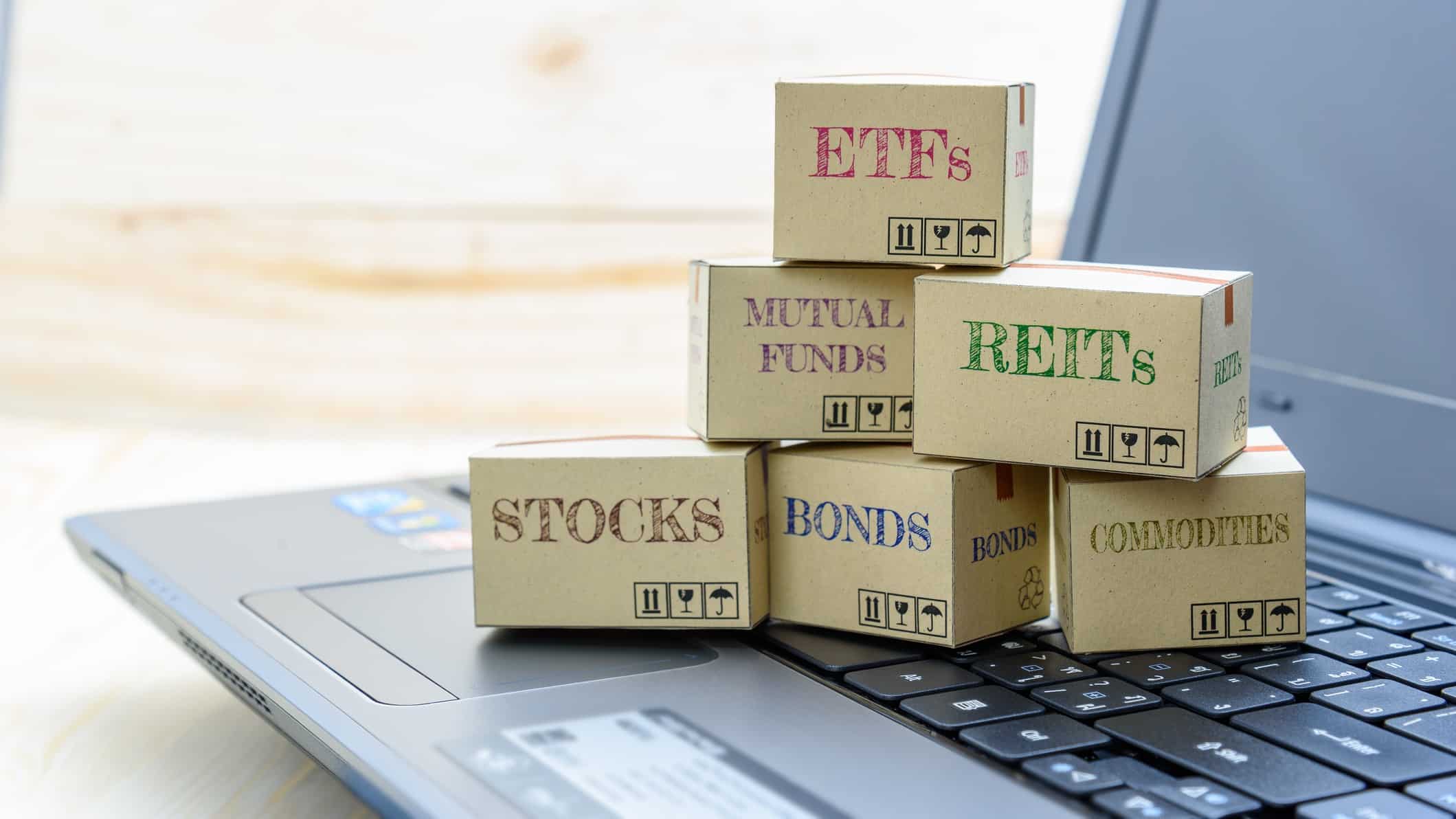
  • Forget gold and Bitcoin. I’d buy cheap stocks after the market crash to make a million

    graphic of digits one million dollars with character relaxing on top of it

    The stock market crash has provided numerous opportunities for investors to purchase cheap stocks. Despite this, some investors may feel that other assets such as gold and Bitcoin offer superior growth prospects. After all, they have risen sharply in price of late, and may have outperformed some stocks over recent months.

    However, the track record of the stock market suggests that it offers long-term recovery potential. As such, and with gold and Bitcoin having their own risks, equities could prove to be a better means of making a million than other assets.

    Cheap stocks: a buying opportunity

    The stock market’s track record suggests that buying cheap stocks can be an effective means of making a million. It has always experienced periods of boom and bust, with neither of them lasting forever. Therefore, investors who can buy undervalued businesses during downturns can be among the biggest beneficiaries during the likely recovery.

    At the present time, the continued risk of a second market crash means that many shares are trading on low valuations. In some cases, they are not wholly merited due to the financial strength and competitive advantage of businesses in sectors that have long-term growth potential. As such, there appear to be opportunities for investors to purchase bargain shares even after the stock market’s recent rebound from its decline in February/March.

    Clearly, some cheap stocks are unlikely to survive the challenging outlook faced by the world economy. As such, it is imperative for investors to try and purchase the best quality companies they can find, and to diversify across numerous industries and regions. This may reduce your overall risks, and help to provide sustained growth for your portfolio.

    Bitcoin and gold: an attractive risk/reward opportunity?

    Of course, some investors may seek to avoid cheap stocks in favour of other assets such as Bitcoin and gold. While their prices may have risen sharply, they appear to offer less attractive risk/reward investing opportunities than a portfolio of equities.

    For example, gold’s appeal could deteriorate in the coming years as investor sentiment gradually improves. Furthermore, it currently trades close to a record high, which may indicate that there is limited scope for a price rise over the coming years.

    Similarly, Bitcoin may not be an attractive investment opportunity. Its limited size and ongoing regulatory risks could mean that its price level is overly generous. And, with the virtual currency lacking fundamentals, challenges in valuing it may mean that buying cheap stocks is a far more logical step for long-term investors.

    Therefore, while further difficulties may be ahead for stock market investors, low price levels and the recovery potential of equities mean that now could be the right time to buy a diverse range of companies to make a million.

    5 stocks under $5

    We hear it over and over from investors, “I wish I had bought Altium or Afterpay when they were first recommended by The Motley Fool. I’d be sitting on a gold mine!” And it’s true.

    And while Altium and Afterpay have had a good run, we think these 5 other stocks are screaming buys. And you can buy them now for less than $5 a share!

    *Extreme Opportunities returns as of June 5th 2020

    More reading

    Motley Fool contributor Peter Stephens has no position in any of the stocks mentioned. The Motley Fool Australia has no position in any of the stocks mentioned. We Fools may not all hold the same opinions, but we all believe that considering a diverse range of insights makes us better investors. The Motley Fool has a disclosure policy. This article contains general investment advice only (under AFSL 400691). Authorised by Scott Phillips.

    The post Forget gold and Bitcoin. I’d buy cheap stocks after the market crash to make a million appeared first on Motley Fool Australia.

    from Motley Fool Australia https://ift.tt/3giA2DP

  • Nokia shares jump after cull of low-margin business sees earnings beat

    Nokia shares jump after cull of low-margin business sees earnings beatFinnish telecom network equipment maker Nokia reported an unexpected rise in second-quarter underlying profit on Friday as it took on less low-margin business particularly in China, sending its shares up 13% in early trade. Cutting less-profitable service business and not winning 5G radio deals in the cut-throat Chinese market helped Nokia, where new Chief Executive Pekka Lundmark takes over this weekend, upgrade its earnings outlook for 2020. “We do not mind trading poor revenue which doesn’t have high quality margin for better revenue,” outgoing chief executive Rajeev Suri told Reuters.

    from Yahoo Finance https://ift.tt/2EsJjuX