• Here’s what the iron ore price will be this time next year: Westpac

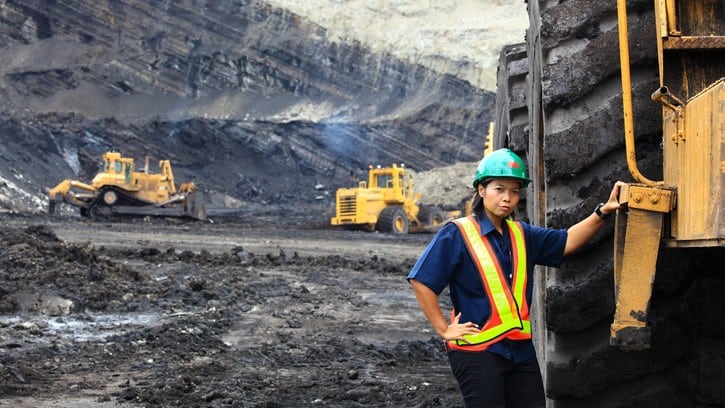
    Female miner standing next to a haul truck in a large mining operation.

    The iron ore price fell 1.55% in overnight trading to close the session at US$111.31 per tonne.

    This is weighing on iron ore shares today, with many underperforming the S&P/ASX 200 Index (ASX: XJO).

    The ASX 200 is up 0.78% at the time of writing.

    The BHP Group Ltd (ASX: BHP) share price is up 0.53% to $43.71.

    Mineral Resources Ltd (ASX: MIN) shares are only just in the green, up 0.053% to $56.36 apiece.

    The Fortescue Ltd (ASX: FMG) share price is down 0.23% to $21.77.

    Champion Iron Ltd (ASX: CIA) shares are 0.31% lower at $6.45.

    The Rio Tinto Ltd (ASX: RIO) share price is an outlier, up 0.87% at $120.94.

    What’s happening with the iron ore price this week?

    Analysts at Trading Economics say a four-day rally last week inspired some profit-taking.

    Secondly, investors are continuing to assess the outlook for demand in China.

    China is the world’s biggest consumer of iron ore.

    The country imports 76% of the iron ore dug out of the ground worldwide every year. Therefore, the rate of demand there has a very significant influence on the iron ore price.

    Australia is one of the world’s biggest producers of iron ore. China’s custom was worth $115.6 billion in export earnings to us in 2023, according to the Department of Resources.

    That’s why we tend to see a pullback in ASX iron ore shares when the commodity price falls or we hear negative news out of China.

    According to Trading Economics analysis of last night’s fall in the iron ore price:

    Data also pointed to rising iron ore inventories on Chinese ports, signaling weaker demand from steel mills for metal production. Markets now look ahead to the Third Plenum later in July where top Chinese officials are expected to tackle plans on “comprehensively deepening reform and advancing Chinese modernization,” with investors looking for further policy support for the property sector.

    Will the iron ore price rise or fall from here?

    Westpac Banking Corp (ASX: WBC) has released its latest forecasts for various commodities.

    Westpac Senior Economist Justin Smirk expects the 62% spot iron ore price to fall from here.

    He tips the iron ore price will dip to an average of US$102 per tonne in the September quarter and US$90 per tonne in the December quarter.

    He sees a further decline to between US$85 per tonne and US$87 per tonne from the March 2025 quarter to the March 2026 quarter.

    This time next year, Smirk thinks the iron ore price will be averaging US$85 per tonne.

    The Australian Government also forecasts the commodity’s value to fall. Its latest official forecast points to a fall in the 62% spot price to a nominal average of US$96 per tonne in 2024.

    It predicts a further decline to a nominal average of US$84 per tonne in 2025 and US$77 per tonne in 2026.

    This will contribute to reduced iron ore export earnings from $138 billion in 2023–24 to $114 billion in 2024–25 and $102 billion in 2025–26.

    What will this do to ASX mining share prices?

    The iron ore price has a direct impact on the earnings of ASX 200 miners.

    Miners are price takers, so their earnings are subject to global commodity values. Production volumes also have an impact, of course.

    Usually, when the commodity price is rising or falling, ASX mining share prices follow suit.

    The post Here’s what the iron ore price will be this time next year: Westpac appeared first on The Motley Fool Australia.

    Should you invest $1,000 in Bhp Group right now?

    Before you buy Bhp Group shares, consider this:

    Motley Fool investing expert Scott Phillips just revealed what he believes are the 5 best stocks for investors to buy right now… and Bhp Group wasn’t one of them.

    The online investing service he’s run for over a decade, Motley Fool Share Advisor, has provided thousands of paying members with stock picks that have doubled, tripled or even more.*

    And right now, Scott thinks there are 5 stocks that may be better buys…

    See The 5 Stocks
    *Returns as of 24 June 2024

    More reading

    Motley Fool contributor Bronwyn Allen has positions in BHP Group and Commonwealth Bank Of Australia. The Motley Fool Australia’s parent company Motley Fool Holdings Inc. has no position in any of the stocks mentioned. The Motley Fool Australia has no position in any of the stocks mentioned. The Motley Fool has a disclosure policy. This article contains general investment advice only (under AFSL 400691). Authorised by Scott Phillips.


  • There’s a reason AI firms can barely conceal their contempt for the creative industry

    OpenAI's Sora product.
    Columbia University marketing professor Olivier Toubia told BI that AI companies and creatives are locked in a zero-sum game as they battle for the same audiences.

    • AI companies have been upfront with their goal to disrupt the creative industry. 
    • But they have barely been able to hide their contempt for the artists they are trying to displace.
    • A Columbia professor told BI the rivalry stems from both groups "competing for the same pot of revenue."

    AI companies may be hard at work disrupting the creative industry, but some firms can barely hide their disdain for the artists their product might hurt.

    Last month, OpenAI's CTO Mira Murati raised eyebrows when she appeared to brush aside the seismic impact that AI could have on the job market for creatives.

    "Some creative jobs maybe will go away, but maybe they shouldn't have been there in the first place," Murati said at an event at her alma mater, Dartmouth College, on June 8. "You know, if the content that comes out of it is not very high quality."

    In fact, Murati isn't the only tech executive who has ruffled the feathers of creatives recently.

    Artists and designers were left fuming after Adobe's update to its Terms of Use suggested that the company could use creator content to train its AI models. In June, Adobe uploaded a blog post informing its users that its AI models weren't trained on customer content.

    Columbia University marketing professor Olivier Toubia told BI that tech executives' cavalier attitudes could stem from callousness rather than carelessness.

    "This might just be insensitivity or snobbism," Toubia said. "Perhaps, some tech executives do not have much respect for creative jobs that rely on 'softer' skills as they live in a world where someone's value is determined largely by their technical skills."

    But the friction we are now seeing between AI companies and artists certainly goes beyond culture clashes, says Toubia. In fact, the two groups could be locked in an existential struggle as they battle for the same audiences.

    "Unless AI leads to an increase in how much creative and non-creative content we consume, the pie seems to be pretty fixed, and therefore, we are in a zero-sum game," Toubia said.

    "Given this, any money that would go to tech firms for the production of creative content will probably be at the expense of more traditional creative producers," he continued. "AI companies and creatives are competing for the same pot of revenue."

    Tech companies certainly aren't slowing down their efforts to broaden their share of the creative pie.

    Video giant YouTube has entered licensing negotiations with major record labels, such as Sony and Universal, to obtain training material for its AI song generators.

    Toubia told BI that such developments could have mixed consequences for artists hoping to make a living from their work.

    "On the positive side, if you are a creator with a stable job, you could become much more productive thanks to AI and produce more content," Toubia said. "But if you are a creator looking for a job, there may not be as many jobs available."

    "I think AI companies will want to make money," the marketing professor said. "I'm not sure they care about the creative industry or would be motivated to take steps to protect it."

    Representatives for Murati at OpenAI did not immediately respond to a request for comment from Business Insider sent outside regular working hours.

    Read the original article on Business Insider
  • Yep, people still haven’t forgiven Ted Cruz for Cancún

    Sen. Ted Cruz of Texas at a press conference on Capitol Hill on October 31, 2023.
    Sen. Ted Cruz of Texas.

    • Some people are still mad at Ted Cruz for leaving Texas high and dry during deadly storms in 2021.
    • Cruz's post on Hurricane Beryl had people reminding him about how he vacationed in Cancún in 2021.
    • "You'll probably avoid it on your flight to Cancun right," said an X user.

    Some people still haven't forgiven Sen. Ted Cruz for flying to Cancún while Texas weathered deadly winter storms in 2021.

    As Hurricane Beryl slammed Texas as a category one hurricane on Monday and knocked out power for nearly three million homes and businesses, Cruz reposted an X post from "MattressMack."

    The post showed Gallery Furniture owner James McIngvale, also known as "MattressMack," talking about how the furniture retailer would support Texans during this hurricane as it did during Hurricane Harvey in 2017.

    https://platform.twitter.com/widgets.js

    "Mack is an American hero," Cruz wrote in his repost.

    He added: "Stay safe & avoid high water as the hurricane makes landfall."

    But people were not so easy to forgive — or forget. Cruz's post was flooded with comments reminding him of how he went on a vacation to Cancún, Mexico, while winter storms in 2021 took the lives of nearly 250 Texans.

    Cruz took his family to the five-star Ritz-Carlton resort in Cancún but cut his trip short after receiving immense backlash for leaving Texas during a crisis.

    https://platform.twitter.com/widgets.js

    One X user, calling him "Cancun Cruz," wrote that, unlike Cruz, "Mack actually stays and helps people."

    "Got your flight booked to Cancun for Monday?" the user added.

    https://platform.twitter.com/widgets.js

    Another X user quipped: "Instead of storm warnings, Texas sends out a text whenever Ted goes to the airport."

    Cruz did express some regret for his trip to Cancún back in 2021 after Texans gathered outside his home to protest.

    "It was obviously a mistake, and in hindsight, I wouldn't have done it," Cruz said to reporters outside his house in the aftermath of the storms, which left millions without clean drinking water, power, and heat.

    However, a year later, he joked about the trip as another winter storm approached Texas.

    Writing about inflation, he joked that ticket prices to Cancún were "up 32%" in an X post in February 2022. The joke didn't land well at the time, either, if the comments on that post are anything to go by.

    Representatives for Cruz didn't immediately respond to requests for comment from Business Insider sent outside regular business hours.

    Read the original article on Business Insider
  • China is freaking out after discovering the ‘open secret’ that its cooking oil was ferried for years in chemical tanks that weren’t cleaned

    A worker is working at a tank truck production workshop in Fuyang city, East China's Anhui province, April 28, 2024.
    A worker is working at a tank truck production workshop in Fuyang city, East China's Anhui province, April 28, 2024.

    • China was hit by another major food scandal, this time involving cooking oil in chemical tanks.
    • State media found that tank trucks were delivering chemicals and edible oil interchangeably without cleaning.
    • The revelation ignited an explosion of backlash from the Chinese public this week and calls for investigations.

    A new cooking oil scandal has erupted in China, about a decade after the country's infamous crackdown on restaurants reusing gutter oil and sewage grease.

    The furor follows a bombshell investigation published on July 2 by state media outlet Beijing News, which found multiple cases of tank trucks transporting edible cooking oil immediately after delivering chemicals used for coal-to-liquid processing.

    The report's author, Han Futao, found that none of the tank interiors were cleaned between loads.

    Han described one case in which a tank truck in Hebei province delivered chemicals in Qinhuangdao before rushing to Sanhe days later to be filled with soy oil.

    Several truck drivers told Beijing News the practice was a widespread cost-saving measure used by firms with thousands of trucks — an "open secret" in the industry, as Han wrote.

    In some seasons, the truckers said, drivers would transport industrial wastewater before delivering edible oils.

    These chemicals aren't classified as flammable or hazardous, or Chinese law would mandate that they be transported in special tanks.

    But the report has since ignited outrage on China's social media platforms, which have become inundated with viral topics discussing the scandal.

    National regulations have been a key target for public anger. They recommend that oil companies only use tank trucks dedicated to edible substances, but the guideline is only encouraged and isn't mandatory.

    "Shouldn't a kerosene can be a kerosene can and a cooking oil can be a cooking oil can? Even if they are cleaned, they are not necessarily that clean," said one top comment on Weibo, China's version of X.

    The backlash ballooned even further when people began reposting regulatory warnings from 2013 about the practice in Hunan province, indicating its use for more than a decade.

    2005 local news report describing the mixing of edible oils with "hazardous chemicals" during transport went viral, too.

    "They've been caught before, but the problem persists. Is the punishment harsh enough?" one blogger wrote.

    "19 years ago, the media reported that the tanks were mixed with food. Why hasn't it been solved yet?" wrote another.

    Days after Beijing News' report, state media jumped in with scathing commentary.

    "If this is an 'open secret in the industry,' where does it put the public's health and life safety? Where does it put the dignity and justice of the law?" wrote People's Daily columnist Zhang Jingshan on Monday evening.

    Sinograin, a state body that oversees China's grain and oil stocks, published a statement on Saturday saying it had launched an investigation into the "mixed-use of tank trucks."

    But the statement has been followed by calls online for a wider investigation involving higher authorities.

    "Checking your own unit is like covering your ears while stealing a bell," wrote one blogger demanding an explanation. "This needs the attention of the relevant departments. Food is a major issue of people's livelihoods and shouldn't be underestimated!"

    Food safety in China has already been sensitive for years, in the wake of multiple scandals involving gutter oil and deadly chemicals in baby milk powder.

    The repeated controversies have contributed to growing distrust in cities toward commercially sold foods in supermarkets and grocery stores, sparking a campaign by the central government to promote food safety in the country.

    Read the original article on Business Insider
  • Why did ASIC take a look when Qantas shares fell last year?

    Man sitting in a plane looking through a window and working on a laptop.

    Qantas Airways Ltd (ASX: QAN) shares encountered turbulence in FY24, “flying backwards” on the chart as my colleague Bernd put it.

    At the time of writing, shares in the iconic flying kangaroo are swapping hands 0.082% higher at $6.11 apiece.

    Reports have surfaced that The Australian Securities and Investments Commission (ASIC) recently raised questions about certain price movements in Qantas shares last year.

    This came around the time Qantas was under investigation by the Australian Competition and Consumer Commission (ACCC), according to The Australian Financial Review.

    Here’s a closer look.

    ASIC queries Qantas’ knowledge

    As a reminder, the ACCC began proceedings against Qantas in August 2023.

    It alleged Qantas sold tickets for flights that had already been cancelled during the COVID-19 pandemic. This resulted in Qantas paying a $120 million settlement.

    But from 24 July to 20 October last year, as news of the probe surfaced, Qantas shares plunged from highs of $6.69 to lows of $4.77, respectively.

    ASIC reportedly wrote to its fellow corporate watchdog at the ACCC shortly after Qantas shares fell.

    It was asking about the timeline of the ACCC’s investigation into the airline.

    It aimed to determine if Qantas directors or executives knew about the investigation before it happened or before the significant drop in the company’s share price tied to these events.

    The regulator also inquired about the board-approved share sales of its former CEO, Alan Joyce.

    Joyce reportedly sold $17 million of his Qantas shares in June last year – equivalent to more than 90% of his stake – shortly before the ACCC made its proceedings against the airline public.

    What’s next for Qantas shares?

    Despite ASIC’s requests for information, there is no indication it will follow up with an investigation, or that Joyce and the company’s board acted on insider information.

    The news is also a media report and not a market-sensitive update, so it’s unsurprising that Qantas shares did not react. However, the same couldn’t be said for the last financial year.

    In FY24, the Qantas share price dropped nearly 6%, closing at $5.85 on the last trading day of the financial year.

    This decline occurred despite strong financial results for FY23, which saw a 118% year on year increase in revenue to $19.8 billion and a pre-tax profit of $2.5 billion.

    Despite this, Qantas shares have rebounded in FY25 and are up 13% this year to date.

    The airline’s February H1 FY24 results showed revenue of $11.1 billion and a solid underlying profit before tax of $1.3 billion.

    It also authorised another $400 million share buyback.

    Goldman Sachs rates Qantas as a buy, with a price target of $8.05. This indicates a potential upside of nearly 32% from the current price.

    Meanwhile, consensus rates it a buy, according to CommSec.

    The post Why did ASIC take a look when Qantas shares fell last year? appeared first on The Motley Fool Australia.

    Should you invest $1,000 in Qantas Airways Limited right now?

    Before you buy Qantas Airways Limited shares, consider this:

    Motley Fool investing expert Scott Phillips just revealed what he believes are the 5 best stocks for investors to buy right now… and Qantas Airways Limited wasn’t one of them.

    The online investing service he’s run for over a decade, Motley Fool Share Advisor, has provided thousands of paying members with stock picks that have doubled, tripled or even more.*

    And right now, Scott thinks there are 5 stocks that may be better buys…

    See The 5 Stocks
    *Returns as of 24 June 2024

    More reading

    Motley Fool contributor Zach Bristow has no position in any of the stocks mentioned. The Motley Fool Australia’s parent company Motley Fool Holdings Inc. has positions in and has recommended Goldman Sachs Group. The Motley Fool Australia has no position in any of the stocks mentioned. The Motley Fool has a disclosure policy. This article contains general investment advice only (under AFSL 400691). Authorised by Scott Phillips.

  • How much cash do you need to quit work and live off ASX dividend income?

    Almost all of us would love the ability to quit work and rely on the passive income from ASX dividend shares to live. We might not want to stop working altogether. But merely having the option to work or not to work, safe in the knowledge that our dividends can cover all of our living expenses, is one that most Australians would relish.

    But dreaming is the easy part. Plotting a viable pathway to financial independence is a little harder.

    Hopefully, we can clear some of the fog from this path today with a look at how much cash you might need to quit work and live off of your dividend income for the rest of your days.

    Well, there are quite a few variables we have to go through.

    For one, we have to ask ourselves how much income we need to live off in order to give up our day jobs.

    Some people might want to live lavish lifestyles after they stop working. These folks might want to travel the world and see the sights or host regular parties and gatherings for their friends and family.

    Others might want to move to the country, buy a couple of chickens, plant a vegetable garden, and enjoy a simpler existence.

    You’ll also need to consider other factors like whether you rent or, if you don’t, whether your mortgage is paid off.

    Step one is working out how much money you will (not might) spend.

    How much cash do you need to retire and live off ASX dividend income?

    Step two involves assessing how much cash you have available to invest in a portfolio of income-producing ASX dividend shares.

    Chances are you won’t want to (indeed, you shouldn’t) keep all of your net wealth tied up in shares, even if they are producing income for you. Keeping some of your wealth in cash for an emergency or rainy-day fund is important.

    If you crash your car or have an expected medical bill in the depths of a stock market crash, you might be forced to sell your shares at the worst time possible. So make sure you take this into account as well.

    But let’s get down to some numbers.

    Here in Australia, our shares are well-known for their high dividend output. However, the level of cash you’ll need to invest will still vary from stock to stock. For instance, if you wish to bag $50,000 in annual dividend income from ANZ Group Ltd (ASX: ANZ) shares, you’ll need to invest approximately $825,000.

    But to see that level of income from WiseTech Global Ltd (ASX: WTC) stock, you’ll have to invest more than $31 million.

    Crunching the numbers on an early retirement

    For simplicity’s sake, we’ll assume our would-be retiree buys a portfolio of generous ASX dividend payers that yields a collective 4%.

    Some famous ASX dividend payers, like ANZ, Transurban Group (ASX: TCL) and Telstra Group Ltd (ASX: TLS), currently pay more than 4%. And some, like Woolworths Group Ltd (ASX: WOW) and Commonwealth Bank of Australia (ASX: CBA), pay less right now. But for an average, 4% arguably makes sense.

    Harking back to our two lifestyles above, we’ll assume the person wanting to retire and maintain a lavish lifestyle would want $150,000 in annual income from their ASX dividend shares.

    We’ll also assume that our more modestly inclined would-be retiree would be content with an annual salary of $75,000.

    If one wishes to bag $150,000 in annual dividend income at a yield of 4%, they would need to aim for an ASX share portfolio worth $3.75 million.

    For that $75,000 annual income, the figure one should aim for is $1.875 million.

    Fortunately, dividends tend to rise over time, so we hopefully won’t have to worry about this annual income keeping up with inflation.

    But this exercise just goes to show that building enough wealth to fund an early retirement is no easy feat, even if you are aiming for a modest early retirement. But with enough time and discipline, it is more than possible for most of us.

    The post How much cash do you need to quit work and live off ASX dividend income? appeared first on The Motley Fool Australia.

    Should you invest $1,000 in Australia And New Zealand Banking Group right now?

    Before you buy Australia And New Zealand Banking Group shares, consider this:

    Motley Fool investing expert Scott Phillips just revealed what he believes are the 5 best stocks for investors to buy right now… and Australia And New Zealand Banking Group wasn’t one of them.

    The online investing service he’s run for over a decade, Motley Fool Share Advisor, has provided thousands of paying members with stock picks that have doubled, tripled or even more.*

    And right now, Scott thinks there are 5 stocks that may be better buys…

    See The 5 Stocks
    *Returns as of 24 June 2024

    More reading

    Motley Fool contributor Sebastian Bowen has positions in Telstra Group. The Motley Fool Australia’s parent company Motley Fool Holdings Inc. has positions in and has recommended Transurban Group and WiseTech Global. The Motley Fool Australia has positions in and has recommended Telstra Group and WiseTech Global. The Motley Fool has a disclosure policy. This article contains general investment advice only (under AFSL 400691). Authorised by Scott Phillips.

  • Broker says this speculative ASX stock could rise over 200%

    Investors that have a high tolerance for risk, may want to check out the speculative ASX stock in this article.

    That’s because one leading broker believes this risky investment could triple in value from current levels.

    Which speculative ASX stock could triple in value?

    The stock in question is Meteoric Resources NL (ASX: MEI).

    At present, its shares are being anything but meteoric. In afternoon trade, they are down 16% to 13 cents.

    This means that the rare earths developer’s shares are now down a sizeable 28% since the end of last week. This has been driven by the release of the scoping study results for the Caldeira ion-adsorption clay rare earth project in Brazil.

    While this is disappointing, analysts at Bell Potter think it could have created a buying opportunity for investors that are willing to take the risk.

    Commenting on the scoping study, the broker said:

    MEI have released the results of its scoping study (SS) on the Caldeira ion-adsorption clay rare earth project in Minas Gerais. The SS outlined a post-tax NPV8% of US$699m with Capex of US$297m (excluding $104m contingency) and operating costs of US$7/kg TREO on a basket price of US$45/kg (US$20/kg at spot) less payability discounts of ~30% provides an achieved price of US$31 (spot US$14/kg). On this basis, The Caldeira project makes a ~50% operating margin at spot before accounting for royalties (4.75% Togni Family & 2% Government) and transport costs. We have updated our model to incorporate the new information and provided some first-pass commentary.

    And while its capital costs are higher than Bell Potter was expecting, this hasn’t been enough to put off its analysts. In response to the update, it has retained its speculative buy rating on the ASX stock with a reduced price target of 40 cents (from 50 cents). This implies potential upside of 207% from current levels. The broker concludes:

    The results confirm the Caldeira project is of superior quality, with the ability to operate through all stages of the pricing cycle. Critical path items for the business now shift towards the permitting phase, with three distinct licences needed and an EIA prior to production commencement. Our valuation is reduced to $0.40/sh (previously $0.50/sh) in this note on the inclusion of higher capital costs and associated equity financing, and adjustments to our pricing formulas. At current levels MEI remains an attractive business and we retain our Spec Buy recommendation.

    The post Broker says this speculative ASX stock could rise over 200% appeared first on The Motley Fool Australia.

    Should you invest $1,000 in Meteoric Resources Nl right now?

    Before you buy Meteoric Resources Nl shares, consider this:

    Motley Fool investing expert Scott Phillips just revealed what he believes are the 5 best stocks for investors to buy right now… and Meteoric Resources Nl wasn’t one of them.

    The online investing service he’s run for over a decade, Motley Fool Share Advisor, has provided thousands of paying members with stock picks that have doubled, tripled or even more.*

    And right now, Scott thinks there are 5 stocks that may be better buys…

    See The 5 Stocks
    *Returns as of 24 June 2024

    More reading

    Motley Fool contributor James Mickleboro has no position in any of the stocks mentioned. The Motley Fool Australia’s parent company Motley Fool Holdings Inc. has no position in any of the stocks mentioned. The Motley Fool Australia has no position in any of the stocks mentioned. The Motley Fool has a disclosure policy. This article contains general investment advice only (under AFSL 400691). Authorised by Scott Phillips.

  • Here’s how profitable owning the Vanguard US Total Market Shares Index ETF was in FY24

    Australian notes and coins symbolising dividends.

    The Vanguard US Total Market Shares Index ETF (ASX: VTS) gives Aussie investors exposure to more than 3,700 United States stocks, including the Magnificent Seven and many small caps and micro caps.

    And that was handy exposure in a year when US shares outperformed ASX shares by about 3:1.

    The S&P 500 Index rose by 22.7%, and the tech-heavy NASDAQ Composite Index lifted 28.61% in FY24.

    Here at home, the S&P/ASX 200 Index (ASX: XJO) rose by 7.83%.

    So, how profitable was it to own the Vanguard US Total Market Shares Index ETF in FY24?

    How profitable was ASX VTS for Aussie investors in FY24?

    The ASX VTS exchange-traded fund (ETF) began FY24 at $329.34 per unit.

    The ASX ETF reached a 52-week high of $408 per unit on the final trading day of FY24.

    It closed out the financial year at $406.76 per unit. That’s a 23.51% uplift.

    With ETFs, we need to take into account the fees we pay for their management. The ASX VTS has a management expense ratio (MER) of 0.03%, making it one of the 10 cheapest ASX ETFs on the market.

    Back to our returns for FY24.

    Let’s say you put $10,000 into the ASX VTS on 1 July 2023 at a price of $329.34 per unit.

    That would have given you 30 units in ASX VTS.

    The 23.51% uplift in value means your holdings are now worth $12,322.60.

    But wait, there’s more!

    What about dividends?

    First of all, ETFs call dividends ‘distributions’, so let’s get the language right first.

    In FY24, the ASX VTS paid four distributions to Aussie investors:

    • On 24 July 2023, it paid $1.2077
    • On 20 October 2023, it paid $1.2609
    • On 24 January 2024, it paid $1.5212
    • On 24 April 2024, it paid $1.4079.

    Altogether, ASX VTS owners received $5.3977 per unit in distributions during FY24.

    If you held 30 units, then you received a total of $161.931.

    If we add that to our capital earnings of $2,322.60, we get a total return of $2,484.53 for FY24.

    In percentage terms, that’s a return of just under 24.85% on your original $10,000 buy on 1 July 2023.

    More about the ASX VTS

    The ASX VTS seeks to track the performance of the CRSP US Total Market Index (NASDAQ: CRSPTM1) before fees.

    And yes, before you ask, that index does include the Magnificent Seven stocks we are all obsessed with! They are Microsoft, Apple, Nvidia, Alphabet, Amazon, Meta Platforms, and Tesla shares.

    Other appealing US stocks are also in the mix. They include Warren Buffett’s Berkshire Hathaway and diabetes and obesity GLP-1 drug maker Eli Lilly And Co.

    The post Here’s how profitable owning the Vanguard US Total Market Shares Index ETF was in FY24 appeared first on The Motley Fool Australia.

    Should you invest $1,000 in Vanguard Us Total Market Shares Index Etf right now?

    Before you buy Vanguard Us Total Market Shares Index Etf shares, consider this:

    Motley Fool investing expert Scott Phillips just revealed what he believes are the 5 best stocks for investors to buy right now… and Vanguard Us Total Market Shares Index Etf wasn’t one of them.

    The online investing service he’s run for over a decade, Motley Fool Share Advisor, has provided thousands of paying members with stock picks that have doubled, tripled or even more.*

    And right now, Scott thinks there are 5 stocks that may be better buys…

    See The 5 Stocks
    *Returns as of 24 June 2024

    More reading

    John Mackey, former CEO of Whole Foods Market, an Amazon subsidiary, is a member of The Motley Fool’s board of directors. Suzanne Frey, an executive at Alphabet, is a member of The Motley Fool’s board of directors. Randi Zuckerberg, a former director of market development and spokeswoman for Facebook and sister to Meta Platforms CEO Mark Zuckerberg, is a member of The Motley Fool’s board of directors. Motley Fool contributor Bronwyn Allen has positions in Vanguard Us Total Market Shares Index ETF. The Motley Fool Australia’s parent company Motley Fool Holdings Inc. has positions in and has recommended Alphabet, Amazon, Apple, Berkshire Hathaway, Meta Platforms, Microsoft, Nvidia, and Tesla. The Motley Fool Australia’s parent company Motley Fool Holdings Inc. has recommended the following options: long January 2026 $395 calls on Microsoft and short January 2026 $405 calls on Microsoft. The Motley Fool Australia has recommended Alphabet, Amazon, Apple, Berkshire Hathaway, Meta Platforms, Microsoft, and Nvidia. The Motley Fool has a disclosure policy. This article contains general investment advice only (under AFSL 400691). Authorised by Scott Phillips.

  • Goldman Sachs says these ASX gold stocks are buys

    If you want to some exposure to the gold sector, then read on!

    That’s because analysts at Goldman Sachs have picked out a number of ASX gold stocks that it currently rates as buys. Here are four:

    Bellevue Gold Ltd (ASX: BGL)

    The broker is a fan of Bellevue Gold and sees it as an ASX gold stock to buy. It has a buy rating and $2.20 price target on its shares. This suggests that its shares could rise 13.5% from current levels. It commented: “We note the recently proposed paste plant may add upside to consensus capex expectations (GSe ~A$50mn), though this supports increased underground resource recovery, where the commenced study for expansion to ~1.5Mtpa/250kozpa is expected 1HFY25.”

    De Grey Mining Limited (ASX: DEG)

    This morning, Goldman has a retained its buy rating on this gold developer’s shares with a trimmed price target of $1.35. This implies potential upside of 16% for investors over the next 12 months. It was pleased with the company’s receipt funding update, noting that it is “expected to fully fund the development cost of the Hemi Gold Project.”

    Evolution Mining Ltd (ASX: EVN)

    Another ASX gold stock that Goldman is positive on is Evolution Mining. This morning, it has reiterated its buy rating and $4.15 price target on its shares. This suggests that upside of 12% is possible from current levels. Ahead of the release of its quarterly update, the broker said: “Following the production update in mid-June, we expect FY24 production to be in-line with implied guidance of ~723koz. With reduced uncertainty over the medium-term, particularly following Northparkes/Cowal site visits, our expectations for ~750koz/75kt of gold/copper production appear consistent with market expectations.”

    Gold Road Resources Ltd (ASX: GOR)

    A fourth ASX gold stock that could be a buy according to Goldman Sachs is Gold Road Resources. It has retained its buy rating with an improved price target of $2.10. This implies potential upside of 18% for investors. While Goldman suspects that Gold Road could underperform expectations due to wet weather, it remains very positive. It said: “We expect QoQ production to be largely flat in the Jun-24 quarter (below consensus) on recovery from rain impacts (recovery through April limiting production despite a return to target mining/milling rates from May and the Great Central Road reopened for consumables delivery). GOR expect a strong second half, where we see more medium-term opportunities from Yamarna (100% owned) and toll treating through the JV.”

    The post Goldman Sachs says these ASX gold stocks are buys appeared first on The Motley Fool Australia.

    Should you invest $1,000 in Bellevue Gold Limited right now?

    Before you buy Bellevue Gold Limited shares, consider this:

    Motley Fool investing expert Scott Phillips just revealed what he believes are the 5 best stocks for investors to buy right now… and Bellevue Gold Limited wasn’t one of them.

    The online investing service he’s run for over a decade, Motley Fool Share Advisor, has provided thousands of paying members with stock picks that have doubled, tripled or even more.*

    And right now, Scott thinks there are 5 stocks that may be better buys…

    See The 5 Stocks
    *Returns as of 24 June 2024

    More reading

    Motley Fool contributor James Mickleboro has no position in any of the stocks mentioned. The Motley Fool Australia’s parent company Motley Fool Holdings Inc. has positions in and has recommended Goldman Sachs Group. The Motley Fool Australia has no position in any of the stocks mentioned. The Motley Fool has a disclosure policy. This article contains general investment advice only (under AFSL 400691). Authorised by Scott Phillips.

  • This $21.7 million ranch for sale in Montana once served as a hideout for a Soviet pilot who defected in a MiG-25. Take a look.

    Green hills with mountains
    Rocking Chair Ranch is located in Philipsburg, Montana.

    • Rocking Chair Ranch in Montana was listed for sale at $21.7 million.
    • The ranch once housed Viktor Belenko, a former Soviet Union fighter pilot who defected to the West.
    • Belenko defected with a MiG-25 and revealed Soviet military secrets before living in Montana.

    A working Montana ranch that recently hit the market for $21.7 million has a unique history, once serving as a hiding place for a Soviet Union pilot who defected to the West.

    Rocking Chair Ranch, located in Philipsburg, Montana, in the western part of the state, spans more than 7,230 acres and includes a cattle operation, meadows, forest, rangelands, agricultural fields, and a semi-private trout fishery.

    Green fields, mountains in background, buildings in foreground
    The ranch has been in the same family for over seven decades.

    The property, which has a historic five-bedroom home and other buildings, has been in the same family for over 70 years. The Vietor family even unknowingly housed Viktor Belenko, a former Soviet Union fighter pilot.

    In 1976, Belenko defected and flew to Hokkaido, Japan, in a MiG-25, a new, powerful Soviet aircraft that was feared by the West. Belenko had been serving in the Soviet Union's Air Defense Forces but "felt he was being treated like an expendable cog in a creaking war machine," The New York Times wrote after his death last year.

    Cows on the ranch
    There is an active cattle operation on the ranch.

    "I have been longing for freedom in the United States," Belenko said, according to Japanese police. "Life in the Soviet Union has not changed from that existing in the days of Czarist Russia, where there had been no freedom."

    After months of planning, Belenko finally defected during a training exercise over the Sea of Japan and was quickly handed over to the US, along with the coveted MiG-25. US officials studied and deconstructed the aircraft before sending the components back to the Soviet Union.

    Home on the ranch
    Buildings on the property include a five-bedroom home.

    The MiG-25 turned out not to be as powerful as the West feared, though Belenko also shared important information about the morale among Soviet soldiers that resembles some of the reporting about Russia's armed forces today: poor living conditions, scarce food, and harsh punishments.

    Belenko was praised in the US and received asylum. He spent a couple years in Washington, DC, and eventually ended up at Rocking Chair Ranch, though with an undercover identity assigned by the CIA, Mansion Global reported. The CIA agent who escorted him from Japan to the US knew the Vietor family.

    Horses on the ranch
    Rocking Chair Ranch spans meadows, forests, and rangelands.

    "As a gift, the CIA asked him where he wanted to live, and he said somewhere in the western part of the country on a ranch," Willy Vietor, patriarch of the Victor family, told Mansion Global. "The CIA agent who knew my parents came up with us."

    Belenko went by Viktor Schmidt when he got to Montana, and was pretending to be a former trade representative from Russia.

    Green fields with creek
    The property is located an hour and 15 minutes from Missoula.

    Vietor told Mansion Global Belenko was put to work on the ranch and first lived in a guest bedroom of the main house.

    "After he had been with us about a year, we connected the dots and realized he was one of the most valuable defectors the US had ever had," Vietor said.

    Fields with irrigation
    The ranch has irrigated fields.

    He also told the outlet that Belenko would occasionally take trips to the East Coast and when asked why he was going, the former pilot would reply, "spooky stuff."

    Vietor told Mansion Global Belenko left the ranch in 1983 but that he stayed in touch with their family.

    Person fly fishing
    There is a semi-private trout fishery on the ranch.

    Belenko received US citizenship in 1980 by an act of Congress and lived in several small towns throughout the midwest and worked as an aerospace consultant, according to the Times. He died in September 2023 at a senior living facility in Illinois at age 76.

    Rocking Chair Ranch, located an hour and 15 minutes from Missoula, is next door to The Ranch at Rock Creek, a luxury dude ranch that's considered one of the most expensive hotels in the US.

    Wild deer on ranch
    Wildlife frequently pass through the ranch property.

    Read the original article on Business Insider