• America’s plague of tyrannical homeowners

    Nosy neighbor with binoculars peeking over shrubs, shocked at neighbor's 'NO HOA' sign
    Widespread HOA governance reinforces segregation, inflates housing costs, and makes everyone's life worse.

    Someone picturing their local government might imagine a Norman Rockwell-esque portrait of a small-town mayor and a collection of other humble public servants. Or they might see a corrupt political machine governed by men in smoke-filled rooms. But no matter the form these local institutions take in one's mind, in most cases, people take "local government" to mean a public entity — whether it actually serves the public or not.

    But not all local governments are public entities. Millions of Americans live in neighborhoods with their own forms of local representation, taxation, and public service provision. These private quasi-governments are called homeowner associations, or HOAs.

    An HOA-governed residential area may comprise just a few homes, or it may be a sprawling empire of thousands of households. Either way, anyone who buys property in HOA territory becomes a member of the association, with all the rights and responsibilities that implies. The benefits of HOA membership may include access to shared goods like trash collection, well-paved private roads, and landscaped common areas. Members may pay dues or be subject to strict regulations that limit their property rights. Even if the costs outweigh the benefits, HOA members tend to be stuck with them — unless they move away.

    Nowhere are these miniature states more prevalent than in Florida. While California has the most HOAs of any state (50,000), Florida has far more HOA residents as a percentage of its population. A little over a third of Californians reside in an HOA-governed community; close to 45% of Floridians live under one of the state's estimated 49,420 HOAs.

    A new state law, signed by Gov. Ron DeSantis last month, is a long-overdue effort to protect individual property owners from the most power-mad of these quasi-governments. The law limits the extent to which HOAs can regulate and penalize decisions by individual households; as The Guardian put it, the law is about "curbing the Karens." HOAs will no longer be able to set draconian rules about parking, leaving garbage cans at the curb, or growing a vegetable garden, and the rules they do set will have to be more transparent. In addition, HOA board members will receive mandatory training.

    The bill's introduction was likely prompted by a prominent embezzlement case involving the board of one Florida HOA, but owners have long been frustrated with HOA rules.

    The law's provisions are sensible reforms that more parts of the US should adopt. But they do little more than smooth out the rough edges in the HOA model, when the larger problem is the model itself. Widespread HOA governance reinforces segregation, inflates housing costs, and depletes the commons.

    If we want to rein in these private governments, end the housing crisis, and finish the job of racial integration, it will take more than some modest adjustments to HOA governance. We may need to break the system of privatized governance entirely.


    HOAs sprang from the suburban boom of the late 1950s — the first association on record was formed in 1959 in Rossmoor, California. The model spread rapidly. By 1970 there were 10,000 HOAs nationwide. By 2023 there were some 365,000, with more than 75 million Americans residing within their territory.

    To understand why the HOA-ification of America is so pernicious, we must first understand what made HOAs so appealing in the first place. In his book "Crack-Up Capitalism," the historian Quinn Slobodian writes that gated communities — which are invariably managed by HOAs — represent a form of "soft secession," an effort to create "alternative political arrangements at a small scale."

    More than a few prominent market fundamentalists have been drawn to the notion of a private-sector substitute for local government

    This form of "soft secession" has proved appealing to some prominent libertarian intellectuals. You might find it counterintuitive that minimal-government types would embrace a type of government that allows busybodies to regulate the color of their next-door neighbors' homes. But as Slobodian shows, more than a few prominent market fundamentalists have been drawn to the notion of a private-sector substitute for local government.

    Consider one of the characters in Slobodian's book: Gordon Tullock, an economist and public-choice theorist who spent much of his career at George Mason University. Tullock devoted an entire chapter of his book "The New Federalist" to describing the HOA of Arizona's Sunshine Mountain Ridge, a community of 250 houses he then called home. In Tullock's telling, in exchange for an annual fee and residents' adherence to community rules, the HOA paid for road maintenance, private fire protection, landscaping, trash collection, and private security to supplement the protection offered by the Pima County sheriff. The association also provided its residents with "the usual privileges of a citizen in any free state," Tullock wrote.

    A Sunshine Mountain Ridge resident "can complain to the board, either by going to the regular meetings of the citizens of this little community or circulating petitions, run for office, or organize other people to run for office as a sort of party," Tullock wrote.

    Tullock praised the resulting quality of life: Sunshine Mountain Ridge, he wrote, is beautiful, provides high-quality services to its residents, and wields outsize political power in the county government. He also celebrated the neighborhood's homogeneity: "It seems that people, on the whole, like living with other people who are similar to them."

    If Sunshine Mountain Ridge was mostly home to people like Tullock, that was "emphatically not true" of surrounding areas "where almost 1/3 of the population is Mexican," he wrote. Given that part of the HOA model's appeal is its success in maintaining residential segregation, it's not entirely surprising that the HOA boom took off in the years following the fall of Jim Crow.

    That explosive growth was driven at least in part by market demand for the sort of exclusivity Tullock lauded. A 2019 study by the economists Wyatt Clarke and Matthew Freedman found that HOA home prices were, on average, higher than non-HOA home prices in the surrounding area — and that this "HOA premium" was strongly correlated with the size of an area's Black population as of 1960. The more Black residents a region had in the last decade of legalized, explicit racial segregation, the larger the gap between non-HOA home prices and HOA home prices. One can surmise that HOAs in these areas tend to be more exclusive in part because they were designed to exclude. Readers will not be shocked to learn that Clarke and Freedman also found that HOA residents were more likely to be white or Asian than non-HOA residents.


    The "secession of the successful" into HOAs, as the former US labor secretary Robert Reich once put it, has consequences for everyone else. The legal scholar Sheryll Cashin has argued that HOAs erode the social contract and encourage residents to think of themselves as property owners first and citizens second.

    "As more and more citizens separate themselves into homogeneous private communities, their ties to the larger polity will become attenuated and they will increasingly resist governmental efforts to address problems that they do not perceive as 'theirs'," Cashin wrote in 2001.

    For example, as Cashin noted, HOA members may be particularly hostile to public taxation, especially local property taxes. After all, they already pay HOA dues that fund private infrastructure in their communities; why pay again to subsidize public infrastructure outside the neighborhood? (Cashin observed that several states, including New Jersey and Texas, had laws allowing HOA residents to subtract the cost of privately provided infrastructure from their taxes.)

    By acting as a bulwark against new housing supply, NIMBY HOAs contribute to the housing crisis and make inequality worse.

    Similarly, HOAs can and do use their political influence and land-use bylaws to prevent the construction of multifamily and low-cost housing in the territories they govern and the periphery. America needs millions of homes to meet demand and ease the upward pressure on housing costs, but many HOAs have rules to prevent building even small additions, such as accessory dwelling units — much less large developments like apartments. It's difficult to estimate just how much homebuilding HOAs have thwarted in supply-constrained areas. But one thing is certain: By acting as a bulwark against new housing supply, NIMBY HOAs contribute to the housing crisis and make inequality worse.

    Even for the HOA members, the supposed upsides of these associations can become a burden. Many Americans who live in HOAs face steep fines for trivial infractions, and some have even faced eviction for seemingly minor violations of neighborhood codes. For instance, a couple in Texas was sued in 2022 by their HOA for $250,000 — for the crime of feeding ducks near their home. These are the kinds of abuses that Florida's new law is intended to halt.

    But Florida's reforms will do little to address the structural problems with the HOA model. Little wonder, since Florida's far-right state government is an indirect beneficiary of those harms; the state's evolution into an HOA republic has likely been a factor in its transformation from a swing state into a laboratory for reaction.

    The growth of these little private governments has helped entrench segregation along racial and class lines, fueled the atomization of American public life, and worsened the material quality of life for millions of Americans. That's a far more pressing issue than HOA standards around lawn care.


    Ned Resnikoff is the policy director of California YIMBY and co-leader of the Metropolitan Abundance Project.

    Read the original article on Business Insider
  • I balance working hard to reach my financial goals and spending time with my son. I never want him to feel neglected.

    Father working on laptop while holding toddler. Laptop and coffee cup are in foreground.
    Chris Boutté (not pictured) has had to balance working hard and spending time with his son.

    • I want to provide a better life for my son than I had while growing up.
    • Over time, I've started making a higher salary, but still have side hustles to supplement my income.
    • It's taken time to find the right work-life balance to make money and still spend time with him.

    I didn't grow up with much. My dad single-handedly raised me, and we were lower-middle class. I always wished we had the same things my friends had. Many of my friends lived in houses and got cars when they were 16. Meanwhile, we would get eviction warnings on the door of our apartment, and we definitely couldn't afford a second car.

    Now, I have my own son, and I want to provide a much better life for him here in Las Vegas. But to reach my financial goals and give both of us better lives, I've had to sacrifice some quality time with him. He's 15, and I've been playing this delicate balancing act for years now.

    A strong work ethic isn't always enough

    After getting sober in 2012, I had a rough financial start due to ruining my credit and racking up debt over nearly a decade of substance abuse. Before getting sober, I worked some jobs that paid really well, but they were detrimental to my mental health due to the high-stress environment.

    My mental health is a top priority in my sobriety, so I chose not to return to those industries. This meant starting fresh and finding entry-level positions based on my skill sets.

    With this new lease on life, I realized I could do better for myself and my son. I set goals for fixing my finances so that I would actually have savings and a retirement fund. I hoped to eventually buy a house and make sure my son had a college fund. Most of all, I wanted to ensure I made enough money so we never had to experience financial distress again.

    I've always had a strong work ethic, which I definitely got from my parents. The problem is that our effort at work doesn't always translate to what we're paid, and I made about $30,000 a year until 2015. I knew that wasn't nearly enough to reach my financial goals.

    I knew that in order to even get close to reaching these goals, I had to start doing some side hustles. This involved putting in many hours outside my full-time job, and I still didn't get much closer to what I was looking to accomplish for quite a while.

    It takes a lot to be financially stable these days

    I'm not the only one struggling with financial goals of building up retirement and savings accounts or buying a house. Many of my fellow millennials see and feel how much things have changed over the years.

    Between 1960 and 2017, the median price of a house rose 121%, while the median household income rose only 29%. As recently as 1990, the home price-to-income ratio was under 3.0. As of 2022, homes cost 5.5 times the average household income.

    Even with an income over two times what I was making in 2015, I still have multiple side hustles to attempt to reach my goals.

    I've had to learn how to balance my side hustles with spending time with my son

    I wasn't fully present for my son during the first three years of his life due to my addiction. I've been sober for 12 years now, and I still hold a terrible amount of guilt for that lost time. The added pressure of taking time away from my son in order to make more money has been one of the hardest things I've encountered in my sobriety.

    When I was making a lot less money, I had to work many more hours on my side hustles. There would be weekends where I'd do freelance writing for eight hours each day while he watched cartoons and played video games. During those days, I could barely afford to buy Christmas or birthday presents for him while also paying for the necessities, so I worked and did what I had to do.

    As the years went on, I gained more skills and better understood my value as an employee. My next job paid me about $50,000, and then I moved to a job making $65,000. Today, my salary is over $70,000 a year, and I absolutely love my job, but it's still not enough to reach all of my goals.

    I still do multiple side hustles to supplement my full-time income, but getting higher-paying jobs over time has made them less of a necessity. To put it into perspective, I used to put in 20 or more hours on side hustles, and now it's maybe five to 10. Sometimes, I even take weeks off. I also received an inheritance that gave me some additional breathing room and a chance to build a solid financial foundation for us.

    Looking back, increasing my income allowed me to spend much more time with my son compared to the early days of my sobriety. It's taken time to find the right balance of making enough money while also spending enough time with my son. The irony is that my son is 15 now, so he's at the age where he doesn't even want to spend as much time with me. My hope is that if anyone asked my son if he thought I worked too much and neglected him in the future, his honest answer would be, "Absolutely not."

    I accept that we can only do so much with our economic conditions, but I also know that time is our most precious resource. I could have all the money in the world, but that wouldn't mean anything if I couldn't maintain a healthy relationship with my son because I was too busy.

    Read the original article on Business Insider
  • MQ-9 Reaper drone equipped with new EW pod that makes it a ‘black hole’ that can ‘disappear off of enemy radar,’ top Marine general says

    An MQ-9 Reaper drone with Customs and Border Protection (CBP) awaits a mission over the U.S.-Mexico border on November 04, 2022 at Fort Huachuca, Arizona.
    An MQ-9 Reaper drone.

    • The US Marine Corps has equipped its MQ-9 Reaper drones with a new electronic warfare pod.
    • The pod "can mimic things that are sent to it," Marine Corps Commandant Gen. Eric Smith said.
    • The announcement follows the drone's struggles against the Houthi Rebels.

    The US Marine Corps has equipped its MQ-9 Reaper drones with a new electronic warfare pod that can "mimic" signals to help hide them from enemy sensors, a top US Marine Corps general has said, The War Zone reported.

    Speaking at a Brookings Institution forum last week, Marine Corps Commandant Gen. Eric Smith said: The pod "can mimic, I'll be careful here, it can mimic things that are sent to it that it detects, turn it around and send it back."

    "So it becomes a hole. A black hole. It becomes mostly undetectable," he added.

    The 634-pound pod, known as the Reaper Defense Electronic Support System/Scalable Open Architecture Reconnaissance (RDESS/SOAR), will allow the Reaper drone "to somewhat disappear off of enemy radar."

    The US first tested the pod, which was developed by General Atomics and L3Harris Technologies, in 2021.

    A press release from the time describes the pod as "a broad spectrum, passive Electronic Support Measure (ESM) payload designed to collect and geo-locate signals of interest from standoff ranges."

    It says that its addition to the Reaper helps it become "an even more versatile surveillance aircraft given its ability to conduct electronic sensing well enough to provide high quality intelligence but also keep safely away in friendly or international airspace."

    The comments from Smith come off the back of the US Navy's intense battle against Yemen's Houthi rebels around the Red Sea.

    The 36-foot-long Reaper struggled somewhat against the Iran-backed militant group, which claimed to have shot down a number of the drones.

    "The Houthis have gained access to surface-to-air missiles that have the performance to reach those speeds and altitudes against a large, unstealthy aircraft, courtesy of Iran," Peter Wilson, Senior Defense Policy Analyst at RAND, told Business Insider.

    And the MQ-9 would face a far sterner test against the air defenses and detection capabilities of an enemy such as China, so the new pod could prove vital in helping keep the drone relevant.

    https://platform.twitter.com/widgets.js

    The Marine Corps began operating MQ-9 Reaper drones in 2018.

    According to the US Air Force, the Reaper is mostly used for collecting intelligence and "secondarily against dynamic execution targets."

    Peter Wilson noted that the drone is in itself "very useful" and "can be honored."

    "It was one of the most successful unmanned combat air vehicles used during our protracted counterinsurgency campaigns in Iraq and in dealing with ISIS and also even in Afghanistan. But there, the locals didn't have the kind of weapons that the Houthis have gained access to through Iran," he said.

    Read the original article on Business Insider
  • My kids lived in Slovenia for a year. When we returned to the US I felt reverse culture shock.

    Brittany McAnally
    Brittany McAnally and her family moved from California to Slovenia for her husband's job.

    • Brittany McAnally and her family left California for Slovenia because of her husband's military job.
    • She said kids have more freedom in Slovenia than in the US, and preschool was more nurturing.
    • McAnally said she found returning to the US was a "reverse culture shock."

    This as-told-to essay is based on a transcribed conversation with Britanny McAnally, a freelancer based in Germany, about her experience living in Slovenia and the US. It has been edited for length and clarity.

    I was a stereotypical American. I'd never left the US until I moved to Slovenia, and I didn't have a passport until I was 28.

    I grew up in a small town in Tennessee. I lived near Nashville with my husband and two children until we moved to Monterey, California, in 2015.

    I'd never heard of Slovenia

    I had an adventurous side. I knew I wanted to see the world beyond the US.

    One day, my husband, who is in the military, came home and said: "We're moving to Slovenia," because of his job.

    I didn't realize Slovenia was a country. At first, I thought he meant Slovakia. Even though Slovenia is between Italy and Croatia, it wasn't popular with American tourists at that time.

    We moved to Ljubljana, the capital, with our two- and three-year-old sons in December 2016. I had a sheltered upbringing in a small town. When we first arrived, I was immediately surprised by how much English people spoke. I thought people would only speak Slovene.

    I didn't realize many people speak English in European countries, as well as their own language. It was mind-blowing.

    It was great for my kids

    Ljubljana is a beautiful city. It's the perfect place to raise kids.

    When we lived there, I did freelance social media and website management work, which was flexible around my children's schedules. I worked with US clients, so a lot of my work was late in the evening. It meant I could be around for my children when they came back from preschool.

    I was able to be more present for my children.

    America has a lot to offer kids too, but I'm so glad my kids experienced a new culture. Here are the main cultural differences I noticed.

    It's safer for pedestrians and cyclists

    In Ljubljana, we could walk everywhere. It was more pedestrian-friendly than the US, and there are more places where cars aren't allowed.

    Often, coffee shops were near playgrounds, so I could have a coffee and watch my children play. I was happy to let my son, who turned four in Slovenia, play independently 200 feet away while keeping an eye on him. It helped him learn boundaries in a safe environment.

    He learned how to ride a bike there. I felt more comfortable cycling on roads with him than I would have in the US because I trusted the drivers to look out for cyclists and pedestrians. They're more used to them.

    I let him take his bike to a skate park and ride down a barrel. I wouldn't have had the courage to let him do that in the US, but seeing other parents allow it gave me more confidence and pushed me as a parent.

    My kids had more freedom to explore the city without worrying about cars, and they became much more confident and independent over the course of the year.

    Preschool was cheaper and there was less focus on security

    Both my kids went to preschool in Ljubljana.

    In the US, preschool was focused on security. When I first went to visit my kids' preschool in Slovenia, I accidentally wandered through the kitchen instead of the admin office. It was no big deal.

    That wouldn't happen in the US — there are more security checks, for good reason. But in Slovenia people were less concerned about needing security in daycares and schools.

    In the US, it's not uncommon for parents to pay $1,000 or more a month for preschool. In Slovenia, I paid around 300 euros, which is around $320, per child for a month for full-time preschool.

    Parents in Slovenia attend preschool with kids for 2 weeks

    My three-year-old, who was in the older kids' class, started two days after my first visit. At that point, we didn't even have a house.

    In Slovenia, parents attend preschool with children for one or two weeks to help them acclimatize. On my two-year-old son's first day, we went to school for 30 minutes. We'd go for longer each day until we built up to half a day. When he could manage that by himself, we'd work on building up to a full day.

    Parents don't do that in the US. We drop them off and say goodbye. There's nothing wrong with that—often, parents don't have the flexibility with work or parental leave to take two weeks off like they do in Slovenia. In the US, we're a busy culture. There, they were more sensitive to their children.

    The Slovene approach made starting preschool easier for my son than it had been in the US. It was more nurturing for him. I even started learning a bit of Slovene from interacting with the kids.

    My kids got organic food at school

    I loved the food. In preschool, my kids got fresh, organic food. In the US, there is a focus on kids' nutrition, but food is more likely to be processed.

    My kids tried foods they probably never would have tried if we hadn't moved there.

    Moving back to the US was a shock

    After a year, we moved back to California, in 2017. The US will always be my home, but I experienced a reverse culture shock.

    It bugged me that I couldn't walk anywhere, even to a coffee shop. The pace of life was busier. I'd see people drinking coffee in their car while driving, rather than enjoying it in a coffee shop. I missed the slower pace of life.

    In Slovenia, we could go on a vacation to Croatia easily. Back home, we could drive to other parts of California or Nevada, but we weren't experiencing new cultures in the way we could in Europe. That bummed me out.

    I'd go to shops and find myself overwhelmed by how many options there were.

    We returned to Europe

    I got pregnant and had my third child in California.

    After a year in the US, we moved back to Europe, again for my husband's job, first to Vilnius, Lithuania's capital in July 2019. I didn't know anything about the country before we moved. But, as soon as we arrived, I realized it was beautiful and clean. I fell in love with it.

    Three years later, in 2022, we moved to Garmisch, Germany. We live near Zugspitze, the tallest peak in the country, and my kids have learned how to ski. We're still here now.

    Read the original article on Business Insider
  • Modi’s Russia visit shows India isn’t worried about making the US mad

    Russian President Vladimir Putin and Indian Prime Minister Narendra Modi in 2016
    Russian President Vladimir Putin and Indian Prime Minister Narendra Modi.

    • In a move likely to anger the US, Modi is visiting Russia.
    • The move signals strong ties between Delhi and Moscow, and shows the world India is pursuing its own agenda.
    • Modi is aiming to correct the trade imbalance and address China's Indo-Pacific activities.

    In a move likely to anger the US, Indian Prime Minister Narendra Modi is visiting Russia on Monday for his first bilateral trip after winning a historic third term in office.

    Modi's two-day visit to Russia — where he is scheduled to meet with President Vladimir Putin — is significant in that it signals strong ties between Delhi and Moscow. It also shows the world that India is not afraid to pursue its own agenda.

    Vinay Kwatra, India's foreign secretary, told reporters in New Delhi that issues between Russia and India have "piled up" and "need to be addressed," per Bloomberg.

    Russia's relationship with India goes back to the Cold War, and trade between the two countries has grown since Russia started the war in Ukraine. India is a major buyer of Russian oil. Russia is also India's biggest arms supplier.

    Kwatra underscored that the two countries' trade relationship has remained "resilient."

    Still, Modi's trip will "rankle many Western observers," Ved Shinde, a researcher and contributor to Australia's Lowy Institute think tank, wrote in a note on Wednesday.

    "Since the Ukraine war began, India's purchase of cheap oil from Russia has been seen as profiting from troubles in the heart of Europe," Shinde added.

    Modi's visit to Russia will make the US look bad

    Just like Putin's visit to supply-chain hot spot Vietnam, India's engagement with Russia isn't a good look for the US, as it comes while Washington is isolating Putin's regime.

    The US has raised "some concerns" about India's relationship with Russia with New Delhi, Kurt Campbell, the US Deputy Secretary of State, said last month.

    However, Washington acknowledges that India's ties with Russia are different from its ties with the US.

    "We have many areas of alignment, but it is not surprising that there would be areas where we've had perhaps different perspectives, views, historical ties," Campbell said about America's relationship with India.

    India, for its part, is looking to balance its relationship with the world's key powerbrokers — the US, Russia, and China.

    "There are different degrees in India's multi-alignment. Make no mistake — the United States and its allies are more consequential for India's future than its relationship with Russia," wrote Shinde.

    India needs to leverage its historical ties with Russia to secure its economy and security, so Modi isn't just in Russia for a goodwill trip.

    Reducing the trade imbalance

    A key agenda item for the visit is to reduce a huge bilateral trade imbalance, said Kwatra.

    India imports about $60 billion of goods a year from Russia, but Russia buys less than 10% of this amount from India, per Bloomberg.

    Modi may also touch on China's activities in the Indo-Pacific region, said Kwatra.

    India is trying to manage its relationship with China, which has been testy since a border dispute in 2020. Modi skipped the Shanghai Cooperation Organisation summit in Kazakhstan last week.

    There's also the matter of Russia's ties with China.

    At the summit last week, Putin said Russia's relationship with China is in the "best period in history."

    Modi now needs to cozy up to Putin to counter China's advances.

    "The reason for the time-tested stability in India-Russia ties is to maintain a continental balance in the Eurasian heartland. That is, to balance China," wrote Shinde.

    "Or to put it another way, don't go around making new adversaries when there are already two open fronts — China and Pakistan," Shinde added.

    Read the original article on Business Insider
  • You’re not losing your mind, Biden is getting more orange

    President Joe Biden in 2024, compared to 2021.
    President Joe Biden in 2024, compared to 2021.

    • Joe Biden may have taken a leaf out of Donald Trump's tanning playbook.
    • The president has appeared very bronzed in recent appearances.
    • He hasn't always been this orange, and certainly wasn't during his disastrous CNN debate with Trump.

    If you think President Joe Biden has been looking a lot more orange, you're not alone.

    Biden's complexion has changed remarkably since the start of his term, with his skin now emitting a Trump-esque glow.

    The orange hue appeared all the more stark in his Friday interview with ABC News' George Stephanopoulos.

    [youtube https://www.youtube.com/watch?v=5J0Jm6WTCiM?feature=oembed&w=560&h=315]

    On July 4, he appeared tanner than usual while speaking from the South Lawn of the White House.

    President Joe Biden speaks during a 4th of July event on the South Lawn of the White House on July 4, 2024 in Washington, DC.
    President Joe Biden speaks during a 4th of July event on the South Lawn of the White House on July 4, 2024 in Washington, DC.

    The pronounced tan was obvious in multiple photos from the event.

    President Joe Biden walks on stage during a 4th of July event on the South Lawn of the White House on July 4, 2024 in Washington, DC.
    President Joe Biden walks on stage during a 4th of July event on the South Lawn of the White House on July 4, 2024 in Washington, DC.

    And Biden's orange glow was apparent on July 3 too, when he was awarding the Medal of Honor to two Civil War soldiers.

    President Biden at a ceremony awarding the Medal of Honor to two Civil War soldiers on July 3.
    President Biden at a ceremony awarding the Medal of Honor to two Civil War soldiers on July 3.

    Same here on July 1, when he was speaking to the media at the White House following the Supreme Court's ruling on charges against former President Donald Trump.

    President Joe Biden speaks to the media on July 1.
    President Joe Biden speaks to the media on July 1.

    And the change seems recent. The president, aged 81, was not nearly this orange at the start of his term in 2020.

    For example, speaking at the COP26 United Nations climate change conference in Scotland in November 2021, his face showed no hint of a spray tan.

    President Joe Biden
    President Joe Biden speaks during a news conference at the COP26 United Nations climate change conference in Glasgow, Scotland, on November 2, 2021.

    Biden has appeared slightly more tan in the summertime, as one does when the sun's out. He was lightly bronzed during a speech in June 2023 about affirmative action in higher education. But super-orange Biden moments have been few and far between.

    President Joe Biden makes a statement about the Supreme Court's decision on affirmative action in higher education in the Roosevelt Room at the White House on June 29, 2023 in Washington, D.C.
    President Joe Biden makes a statement about the Supreme Court's decision on affirmative action in higher education in the Roosevelt Room at the White House on June 29, 2023 in Washington, D.C.

    The change in his visage has sparked memes and jokes on social media, with users on X calling him "BidenPumpkinHead" and "Spray Tan Joe."

    "Next time Joe, just let an Alabama sorority girl apply your spray tan," said another X user on July 1.

    https://platform.twitter.com/widgets.js

    Moira Coops, an experienced makeup artist and stylist who has worked with numerous politicians and CEOs, told Business Insider that Biden's orange hue was more likely to be makeup than spray tan.

    She said that people Biden's age — especially when they are feeling unwell or haven't seen the sun in a while — tend have a sallow complexion. Biden's team probably bronzed him up to make him look "more healthy," she added.

    But the makeup was a "little bit too strong" for her taste, Coops said, adding that Biden's makeup crew "could have gone one shade down."

    If Biden did get an image adjustment, it was fairly recent. His face was an entirely different color during his debate with Trump on June 27.

    On the CNN cameras, his face appeared pale — and that, coupled with his slurred speech and jumbled lines, sparked concerns about his fitness to run for reelection.

    Post-debate, anonymous sources told Politico that the Biden family had expressed anger about the president's on-camera appearance, blaming the network's makeup artists for making him appear too pale and drawn.

    To be sure, Trump has also been known to go hard with tanning.

    "I know exactly what he does to himself — the tanning bed, the spray tan, he wears the goggles and you can see the hyper-pigmentation around his eyes," Jason Kelly, a Cleveland-based makeup artist who was hired to work at 2016's Republican National Convention, told Harper's Bazaar in June 2016.

    Trump's intense tan has also been something his critics have used against him. His former fixer turned nemesis, Michael Cohen, once called him a "Cheeto-dusted cartoon villain."

    Representatives for Biden didn't immediately respond to requests for comment from Business Insider sent outside regular business hours.

    Read the original article on Business Insider
  • Here are the top 10 ASX 200 shares today

    Fancy font saying top ten surrounded by gold leaf set against a dark background of glittering stars.

    It was a middling start to the week’s trading for the S&P/ASX 200 Index (ASX: XJO) and most ASX shares this Monday. After ending last week on a bit of a sour note, the bears were back at it today.

    By the time trading wrapped by, the ASX 200 had declined by a painful 0.76%, leaving the index at 7,763.2 points.

    This Garfield-esque start to the ASX’s week comes after a much more upbeat conclusion to the American trading week in the early hours of Saturday morning (our time).

    The Dow Jones Industrial Average Index (DJX: DJI) had a decent showing, rising by 0.17%

    But it was the Nasdaq Composite Index (NASDAQ: .IXIC) that was really on fire, shooting up 0.9%.

    Let’s get back to ASX shares and this week now, examining what the various ASX sectors were doing today.

    Winners and losers

    It was almost all frowns on the Australian stock market this Monday, with only a handful of sectors coming out with a win.

    But first, the losers. The worst place to be today was in mining shares. The S&P/ASX 200 Materials Index (ASX: XMJ) had a shocker today, cratering by a nasty 1.8%.

    Energy stocks weren’t too far in front of that, with the S&P/ASX 200 Energy Index (ASX: XEJ) plunging 1.45%.

    Real estate investment trusts (REITs) also had a horrid day. The S&P/ASX 200 A-REIT Index (ASX: XPJ) tanked 1.06%.

    It was a rough session for ASX healthcare shares too. The S&P/ASX 200 Healthcare Index (ASX: XHJ) was slapped down 1.04%.

    Communications stocks were another sore point, illustrated by the S&P/ASX 200 Communication Services Index (ASX: XTJ)’s 0.86% loss.

    Utilities shares came next. The S&P/ASX 200 Utilities Index (ASX: XUJ) was on the receiving end of a 0.86% shellacking this session.

    Industrial stocks weren’t riding to the rescue, as you can see from the S&P/ASX 200 Industrials Index (ASX: XNJ)’s 0.38% hit.

    Financial shares were also getting sold off. The S&P/ASX 200 Financials Index (ASX: XFJ) backtracked 0.29%.

    Our final losers were consumer staples stocks. The S&P/ASX 200 Consumer Staples Index (ASX: XSJ) had 0.14% wiped from its score today.

    Turning now to the far less numerous winners, gold shares took out today’s crown as the place to be. This session, the All Ordinaries Gold Index (ASX: XGD) enjoyed a 0.96% boom.

    Consumer discretionary shares were saving investors’ bacon too, with the S&P/ASX 200 Consumer Discretionary Index (ASX: XDJ) rising 0.33%.

    Tech stocks were also defying the odds. The S&P/ASX 200 Information Technology Index (ASX: XIJ) managed to grow 0.29% this Monday.

    Top 10 ASX 200 shares countdown

    The best stock on the index today was gold miner Red 5 Ltd (ASX: RED). Red 5 shares rocketed a compelling 5.33% this session up to 39.5 cents each.

    This move higher comes after the company made an evidently well-received announcement this morning regarding its sales and finances.

    Here’s a look at the rest of today’s highest flyers:

    ASX-listed company Share price Price change
    Red 5 Ltd (ASX: RED) $0.395 5.33%
    Emerald Resources N.L. (ASX: EMR) $3.82 4.09%
    Coronado Global Resources Inc (ASX: CRN) $1.405 4.07%
    Pro Medicus Limited (ASX: PME) $134.27 2.59%
    Evolution Mining Ltd (ASX: EVN) $3.73 2.47%
    Lovisa Holdings Ltd (ASX: LOV) $32.00 2.30%
    Johns Lyng Group Ltd (ASX: JLG) $5.84 2.10%
    Audinate Group Ltd (ASX: AD8) $15.99 1.98%
    NEXTDC Ltd (ASX: NXT) $18.14 1.97%
    Ramelius Resources Ltd (ASX: RMS) $1.945 1.83%

    Our top 10 shares countdown is a recurring end-of-day summary to let you know which companies were making big moves on the day. Check in at Fool.com.au after the weekday market closes to see which stocks make the countdown.

    The post Here are the top 10 ASX 200 shares today appeared first on The Motley Fool Australia.

    Should you invest $1,000 in Audinate Group Limited right now?

    Before you buy Audinate Group Limited shares, consider this:

    Motley Fool investing expert Scott Phillips just revealed what he believes are the 5 best stocks for investors to buy right now… and Audinate Group Limited wasn’t one of them.

    The online investing service he’s run for over a decade, Motley Fool Share Advisor, has provided thousands of paying members with stock picks that have doubled, tripled or even more.*

    And right now, Scott thinks there are 5 stocks that may be better buys…

    See The 5 Stocks
    *Returns as of 24 June 2024

    More reading

    Motley Fool contributor Sebastian Bowen has no position in any of the stocks mentioned. The Motley Fool Australia’s parent company Motley Fool Holdings Inc. has positions in and has recommended Audinate Group, Johns Lyng Group, Lovisa, and Pro Medicus. The Motley Fool Australia has positions in and has recommended Audinate Group. The Motley Fool Australia has recommended Johns Lyng Group, Lovisa, and Pro Medicus. The Motley Fool has a disclosure policy. This article contains general investment advice only (under AFSL 400691). Authorised by Scott Phillips.

  • Boeing’s big mea culpa just dropped and it doesn’t look pretty

    Boeing CEO Dave Calhoun testifying during a Senate hearing on the company's broken safety culture last month.
    Boeing CEO Dave Calhoun testifying during a Senate hearing on the company's broken safety culture last month.

    • Boeing agreed to plead guilty to defrauding the US on Sunday. 
    • In May, the DOJ accused Boeing of violating a 2021 settlement over two fatal Boeing 737 Max crashes.
    • An attorney for the victims' families said he has filed an objection to the plea deal.

    Boeing has agreed to plead guilty to defrauding the US, essentially admitting to accusations that it violated an earlier agreement to strengthen its safety measures in the wake of two fatal Boeing 737 Max crashes in 2018 and 2019.

    "The parties have agreed that Boeing will plead guilty to the most serious readily provably offense," the Justice Department said in a court filing on Sunday night.

    Last week, Bloomberg reported that federal prosecutors had offered Boeing the choice of either accepting the plea deal or risk facing trial.

    Under the plea deal, Boeing will have to pay a fine of $243.6 million. This is on top of the $243.6 million Boeing had already paid as part of the 2021 settlement it breached.

    Besides the fine, Boeing will be required to "invest at least $455 million in its compliance and safety programs." In addition, the government will appoint an independent compliance monitor to oversee the company for three years.

    "We can confirm that we have reached an agreement in principle on terms of a resolution with the Justice Department, subject to the memorialization and approval of specific terms," a spokesperson for Boeing told BI in a statement on Monday morning.

    Paul Cassell, an attorney for 15 of the victims' families, told BI on Monday that he has filed an objection to the plea deal.

    "This sweetheart deal fails to recognize that because of Boeing's conspiracy, 346 people died," Cassell said in a statement. "A judge can reject a plea deal that is not in the public interest, and this deceptive and generous deal is clearly not in the public interest."

    Boeing had initially avoided a fraud charge related to two fatal Boeing 737 Max crashes — one near the coast of Indonesia in 2018 and another in Ethiopia in 2019 — after it struck a $2.5 billion settlement agreement with the DOJ in 2021.

    Notably, the 2021 agreement did not impose an independent compliance monitor on Boeing.

    The DOJ said in a statement then that a monitor wouldn't be necessary because "the misconduct was neither pervasive across the organization, nor undertaken by a large number of employees, nor facilitated by senior management."

    But the DOJ accused Boeing of violating the terms of the agreement in May, just months after a door plug from a Boeing 737 Max 9 blew out mid-flight.

    The incident, which took place in January, prompted the Federal Aviation Administration to order the grounding over 170 such planes.

    "The plea agreement will not provide Boeing with immunity for any other conduct, including any conduct that may be subject of any ongoing or future Government investigation of the Company," the DOJ said in its filing on Sunday.

    Read the original article on Business Insider
  • Time to buy Brickworks shares on Australia’s world-beating stat?

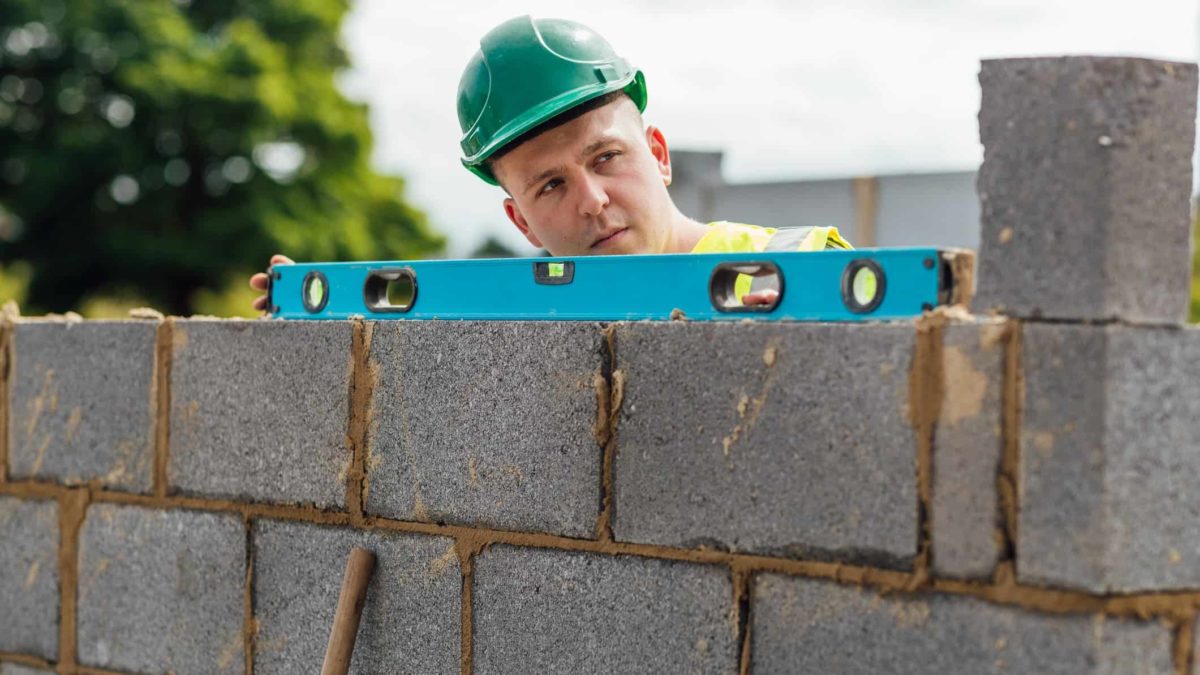
    a bricklayer peers over the top of a brick wall he is laying with a level measuring tool on top and looks critically at the work he is carrying out.

    The Brickworks Limited (ASX: BKW) share price went nowhere over the last six months.

    Brickworks owns a significant portfolio of investment assets, including a 26.1% stake in Washington H Soul Pattinson Ltd (ASX: SOL) and property development ventures, partnering with Goodman Group (ASX: GMG).

    During the same period, its business partner Goodman Group (ASX: GMG) saw its share price gain nearly 50%.

    In this article, I will explore recent developments in Australia’s industrial property market, with a focus on Sydney, and what they mean for Brickworks shares.

    Australia’s industrial property vacancy is the lowest level globally

    Last week, CBRE Group released its property market review report for the six months ending 30 June 2024. In this report, the property group emphasised that although there was an increase in the nation’s industrial property vacancy, it remains among the lowest globally. According to CBRE:

    The national vacancy rate has increased to 1.9% for H1 2024, with upward movement recorded for most major markets across Australia. This rate is still the lowest level globally.

    Despite the rise in space availability, we still do not expect to see the national average vacancy rate to surpass 4% in 2024.

    Super prime grade stock is still being readily absorbed in the market at strong rental levels, and we do not anticipate demand for good quality assets in core locations to fall.

    The vacancy rate in Sydney, where Brickworks is developing its land holdings with Goodman Group, rose from 0.5% six months ago to 2% in 1H CY24.

    While it was disappointing to see the upward movement, the CBRE report highlights that this is still below the equilibrium rate of 4% and pre-pandemic level of above 5%.

    As the shortage in the industrial property market continues, the current pre-commitment rate for the new supply is strong at 75%.

    What does it mean for Brickworks shares?

    The high pre-commitment rate for industrial properties is one of many reasons Bell Potter remains positive on Brickworks shares. The analysts at the broker said:

    Despite some recent normalisation in market rent growth and vacancies, near-term supply in BKW’s precincts continues to remain heavily pre-committed.

    BKW has recently secured DA approval for Oakdale East 2 (250k sqm GLA) and last month announced Amazon (58k sqm GLA) as its anchor tenant, providing the group with strong optionality and, in our view, an effective 12 to 18 month lead on most incoming local supply.

    Brickworks appears undervalued compared to the company’s own estimation of its net asset value (NAV). In its May 2024 trading update, the company estimated its NAV at around $5.6 billion or $36.68 per share. This is far above its share price of $26.84 today.

    In the same update in May, the company highlighted its current rent is well below the market. This indicates there’s room for further income growth from its property ventures as rental terms come into effect. Management said:

    Theses structural trends, along with land supply issues, have driven up rent for prime industrial property in western Sydney by 55% in the past two years. We estimate that the current passing rent within the Industrial JV Trust of $147/m2 is now 35% below average market rent of $225/m2.

    The Brickworks share price is flat today at $26.84.

    The post Time to buy Brickworks shares on Australia’s world-beating stat? appeared first on The Motley Fool Australia.

    Should you invest $1,000 in Brickworks Limited right now?

    Before you buy Brickworks Limited shares, consider this:

    Motley Fool investing expert Scott Phillips just revealed what he believes are the 5 best stocks for investors to buy right now… and Brickworks Limited wasn’t one of them.

    The online investing service he’s run for over a decade, Motley Fool Share Advisor, has provided thousands of paying members with stock picks that have doubled, tripled or even more.*

    And right now, Scott thinks there are 5 stocks that may be better buys…

    See The 5 Stocks
    *Returns as of 24 June 2024

    More reading

    John Mackey, former CEO of Whole Foods Market, an Amazon subsidiary, is a member of The Motley Fool’s board of directors. Motley Fool contributor Kate Lee has positions in Brickworks. The Motley Fool Australia’s parent company Motley Fool Holdings Inc. has positions in and has recommended Amazon, Brickworks, and Goodman Group. The Motley Fool Australia has positions in and has recommended Brickworks. The Motley Fool Australia has recommended Amazon and Goodman Group. The Motley Fool has a disclosure policy. This article contains general investment advice only (under AFSL 400691). Authorised by Scott Phillips.

  • I’d buy this ASX growth share in a heartbeat

    a person holds a cardboard box with a recycling symbol containing plastic packaging material.

    I’m excited by the potential of certain ASX growth shares that are expanding globally. Businesses that are growing beyond Australia’s shores have the potential to unlock larger addressable markets.

    Australia is a great country that ranks well on measurements like per-person wealth and income. However, there are fewer than 30 million people in this sunburnt country. Thus, if a company can successfully expand into North America or Europe, it could be a winner.

    In this article, I’ll discuss the ASX small-cap share, Close The Loop Ltd (ASX: CLG), as a potential market-beating opportunity.

    Two of the main things I look for in an ASX growth share are whether it has a compelling future and whether it’s trading at an appealing price to buy. I think Close The Loop ticks both boxes.

    Exciting potential

    The ASX growth share describes its activities as collecting and repurposing products through takeback programs across its resource recovery division. It also provides sustainable packaging products through its packaging division, which enables “greater recoverability and recyclability”.

    The world wants to be more sustainable over the long term, and Close The Loop is one of the businesses that could enable that change.

    One of Close The Loop’s key clients is HP, which aims to achieve 75% circularity for its products and packaging by 2030. HP ships around 40 million PCs every year, and there are approximately 300 million HP PCs in the market right now, not including HP printers and other products.

    The ASX growth share is the first provider to be appointed as an ‘HP platinum global certified renew partner’. ‘HP renew solutions’ is a global and strategic positioning to “insert HP into the refurbishing and resale of the company’s returned products.” Close The Loop is pursuing a global product takeback programme as a “strategic priority”.

    Over the next 12 months, the company expects to establish new facilities in the US, Europe and Middle East to better serve its global clients in those regions.

    The company also recently mentioned it is opening a new IT refurbishment in Mexico.

    I think the business is capable of delivering ongoing organic growth, synergies with the ISP Tek Services acquisitions and it could potentially make more add-on acquisitions in the future.

    In the FY24 first-half result, Close The Loop’s revenue rose 76%, the gross profit margin improved by 3.4 percentage points to 36.2% and underlying net profit after tax (NPAT) increased by 164% to $13.25 million.

    Attractive valuation of the ASX growth share

    How much is this promising ASX growth share valued at?

    According to the forecast on Commsec, the Close The Loop share price is valued at 7x FY24’s estimated earnings, 6x FY25’s estimated earnings and under 6x FY26’s estimated earnings.

    Considering the exciting appeal of the business, I think the earnings multiple of under 8 times is very appealing.

    The post I’d buy this ASX growth share in a heartbeat appeared first on The Motley Fool Australia.

    Should you invest $1,000 in Close The Loop Ltd right now?

    Before you buy Close The Loop Ltd shares, consider this:

    Motley Fool investing expert Scott Phillips just revealed what he believes are the 5 best stocks for investors to buy right now… and Close The Loop Ltd wasn’t one of them.

    The online investing service he’s run for over a decade, Motley Fool Share Advisor, has provided thousands of paying members with stock picks that have doubled, tripled or even more.*

    And right now, Scott thinks there are 5 stocks that may be better buys…

    See The 5 Stocks
    *Returns as of 24 June 2024

    More reading

    Motley Fool contributor Tristan Harrison has positions in Close The Loop. The Motley Fool Australia’s parent company Motley Fool Holdings Inc. has positions in and has recommended Close The Loop. The Motley Fool Australia has recommended Close The Loop. The Motley Fool has a disclosure policy. This article contains general investment advice only (under AFSL 400691). Authorised by Scott Phillips.